Assessing the U.S. Climate in August 2022
2022-09-09
During August, the average contiguous U.S. temperature was 74.6°F, 2.5°F above the 20th-century average.
NCEI News Feed
http://www.ncei.noaa.gov/news/national-climate-202208
NCEI News Feed
http://www.ncei.noaa.gov/news/national-climate-202208
By Lester Graham, Michigan Radio
The Great Lakes News Collaborative includes Bridge Michigan; Circle of Blue; Great Lakes Now at Detroit Public Television; and Michigan Radio, Michigan’s NPR News Leader; who work together to bring audiences news and information about the impact of climate change, pollution, and aging infrastructure on the Great Lakes and drinking water.
Great Lakes Now
https://www.greatlakesnow.org/2022/09/judge-line-5-enbridge-trespassing-native-american-reservation/
The Fox Locks are run by a volunteer board of directors comprised of community leaders and representatives from state agencies. There are two members each from Brown, Outagamie and Winnebago Counties and designees of the Secretaries of the Departments of Natural Resources, Transportation, and the Director of the State Historical Society.
We had the opportunity to chat with Jean Romback-Bartels, the DNR secretary’s director in Northeast Wisconsin. Jean started her career with the DNR as a wildlife technician, then a park ranger, and was promoted as a land & forestry leader. She holds a bachelor’s degree in wildlife and biology, and a minor in natural resources management and is a dedicated outdoors woman.
Please take a moment to find out why she believes the locks are one of the critical pieces of infrastructure in the State of Wisconsin.
Blog – Fox Locks
http://foxlocks.org/2022/09/08/meet-our-board-jean-romback-bartels/
Blog – Fox Locks
http://foxlocks.org/2022/09/08/meet-our-board-jean-romback-bartels/
The official summer season is over and to mark the end of a busy season, we held a year-end celebration. In attendance—the people who keep the locks functioning and who literally open the gates for you. These are unique jobs that are rooted in the state’s history. When barges and paddle boats used the river as the main transportation route through Northeast Wisconsin, lock tenders and their families lived in homes at the lock. Their job was to open the gates any time a vessel approached, day or night.
Today our traffic is almost all recreational and the lock tenders don’t live at the locks, but they are still there to open the massive gates to let boat traffic through.
Our lock tenders, maintenance team, support staff, and board members gathered to thank everyone for their hard work. This year marked the first we went all cashless, and lock tenders rallied to the task of checking electronic passes. We also acknowledged some milestones in service to the system and recognized these folks:
To top off the evening, our team was treated to a cruise on the Fox River with Captain Dave Peck of River Tyme Tours launching out of River Heath. We thank all of our lock tenders and support teams for their great work and look forward to seeing them next season!
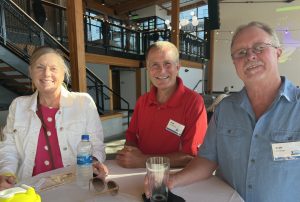
Lock tenders and guests celebrated the end of the ’22 season at Poplar Hall, near Appleton lock 4.
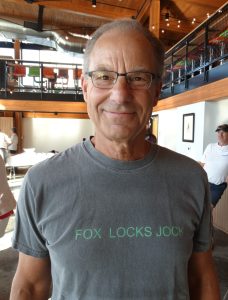
Lock tender Mike Bye shows off his customized shirt!
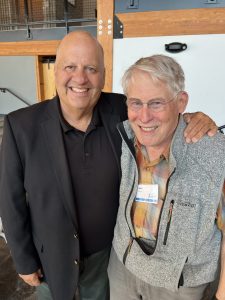
Executive Director Phil Ramlet and Board Member John Vette.
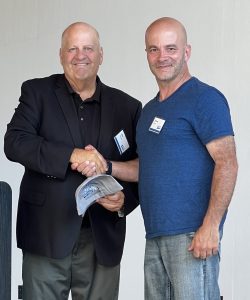
Phil Ramlet recognizes Jeremy Cords for 5 years of service.
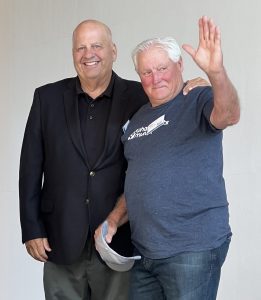
Phil Ramlet recognizes Dick Vande Hey for three years of service.
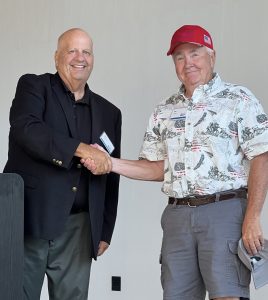
Phil Ramlet recognizes Pat Spaay for six years of service. Pat is a jack of all trades at the locks!
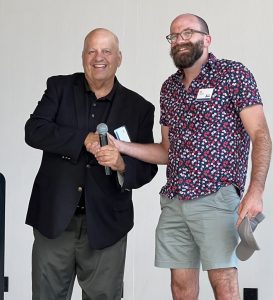
Phil Ramlet thanks Joe Holschuh for opening the locks for two years.

Kathy Lemmer is thanked for being a lock tender for two years–yes, women can open the lock gates, too!
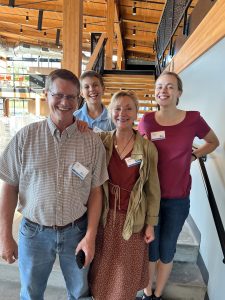
It’s a family affair for the Lasees! Joe is the official lock tender, but his son Elijah accompanies him on most of his shifts.
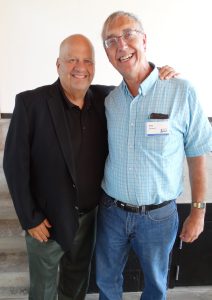
Phil Ramlet with our engineering partner Tim Bolwerk from Westwood Professional Services.
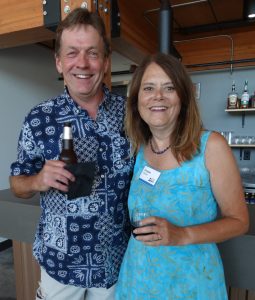
Our resident historian Christine Williams with Tim Vosters. Tim’s family was lock tenders for generations.
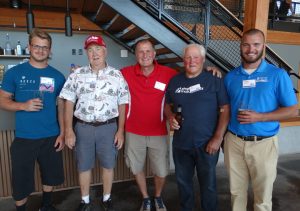
Lock tenders young and old celebrate the end of the boating season!
Blog – Fox Locks
http://foxlocks.org/2022/09/08/fox-locks-team-celebrates-end-of-season/
The official summer season is over and to mark the end of a busy season, we held a year-end celebration. In attendance—the people who keep the locks functioning and who literally open the gates for you. These are unique jobs that are rooted in the state’s history. When barges and paddle boats used the river as the main transportation route through Northeast Wisconsin, lock tenders and their families lived in homes at the lock. Their job was to open the gates any time a vessel approached, day or night.
Today our traffic is almost all recreational and the lock tenders don’t live at the locks, but they are still there to open the massive gates to let boat traffic through.
Our lock tenders, maintenance team, support staff, and board members gathered to thank everyone for their hard work. This year marked the first we went all cashless, and lock tenders rallied to the task of checking electronic passes. We also acknowledged some milestones in service to the system and recognized these folks:
To top off the evening, our team was treated to a cruise on the Fox River with Captain Dave Peck of River Tyme Tours launching out of River Heath. We thank all of our lock tenders and support teams for their great work and look forward to seeing them next season!

Lock tenders and guests celebrated the end of the ’22 season at Poplar Hall, near Appleton lock 4.

Lock tender Mike Bye shows off his customized shirt!

Executive Director Phil Ramlet and Board Member John Vette.

Phil Ramlet recognizes Jeremy Cords for 5 years of service.

Phil Ramlet recognizes Dick Vande Hey for three years of service.

Phil Ramlet recognizes Pat Spaay for six years of service. Pat is a jack of all trades at the locks!

Phil Ramlet thanks Joe Holschuh for opening the locks for two years.

Kathy Lemmer is thanked for being a lock tender for two years–yes, women can open the lock gates, too!

It’s a family affair for the Lasees! Joe is the official lock tender, but his son Elijah accompanies him on most of his shifts.

Phil Ramlet with our engineering partner Tim Bolwerk from Westwood Professional Services.

Our resident historian Christine Williams with Tim Vosters. Tim’s family was lock tenders for generations.

Lock tenders young and old celebrate the end of the boating season!
Blog – Fox Locks
http://foxlocks.org/2022/09/08/fox-locks-team-celebrates-end-of-season/
News | U.S. Climate Resilience Toolkit
News | U.S. Climate Resilience Toolkit
https://resilience.climate.gov/
News | U.S. Climate Resilience Toolkit
News | U.S. Climate Resilience Toolkit
https://toolkit.climate.gov/news/new-tool-understanding-exposure-climate-mapping-resilience-and-adaptation
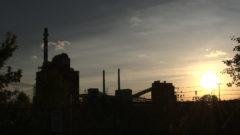
Broadcasting in our monthly PBS television program, The Catch is a Great Lakes Now series that brings you more news about the lakes you love. Go beyond the headlines with reporters from around the region who cover the lakes and drinking water issues. Find all the work HERE.
This month, The Catch features stories from “Poisonous Ponds: Tackling Toxic Coal Ash,” a collaborative project featuring the reporting work of students at Northwestern University’s Medill School of Journalism, Media, Integrated Marketing Communications on Great Lakes Now and Energy News Network programs and websites.
Great Lakes Now
https://www.greatlakesnow.org/2022/09/the-catch-lincoln-stone-quarry-coal-ash/

PFAS, short for per- and polyfluoroalkyl substances, are a group of widespread man-made chemicals that don’t break down in the environment or the human body and have been flagged as a major contaminant in sources of water across the country.
Keep up with PFAS-related developments in the Great Lakes area.
Great Lakes Now
https://www.greatlakesnow.org/2022/09/pfas-news-roundup-indiana-research-universities-study-pfas-epa-designates-forever-chemicals-as-hazardous/
By Keith Schneider, Circle of Blue
The Great Lakes News Collaborative includes Bridge Michigan; Circle of Blue; Great Lakes Now at Detroit Public Television; and Michigan Radio, Michigan’s NPR News Leader; who work together to bring audiences news and information about the impact of climate change, pollution, and aging infrastructure on the Great Lakes and drinking water.
Great Lakes Now
https://www.greatlakesnow.org/2022/09/danger-looms-where-toxic-algae-blooms/
Current Watches, Warnings and Advisories for Brown (WIC009) Wisconsin Issued by the National Weather Service
https://alerts.weather.gov/cap/wwacapget.php?x=WI12640C0B59A0.SpecialWeatherStatement.12640C0BCED0WI.GRBSPSGRB.3b77a733acfe35fc01f412b80021d336
Current Watches, Warnings and Advisories for Brown (WIC009) Wisconsin Issued by the National Weather Service
https://alerts.weather.gov/cap/wwacapget.php?x=WI12640C0A4AEC.SpecialWeatherStatement.12640C0B59A0WI.GRBSPSGRB.3b77a733acfe35fc01f412b80021d336
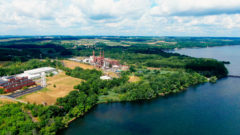
Broadcasting in our monthly PBS television program, The Catch is a Great Lakes Now series that brings you more news about the lakes you love. Go beyond the headlines with reporters from around the region who cover the lakes and drinking water issues. Find all the work HERE.
This month, The Catch features stories from “Poisonous Ponds: Tackling Toxic Coal Ash,” a collaborative project featuring the reporting work of students at Northwestern University’s Medill School of Journalism, Media, Integrated Marketing Communications on Great Lakes Now and Energy News Network programs and websites.
Great Lakes Now
https://www.greatlakesnow.org/2022/09/the-catch-bitcoin-mining-coal-ash/
On Thursday evening, the U.S. Army Corps of Engineers heard from the public regarding construction on Enbridge Energy’s Line 5 during an online event. Read the full story by Great Lakes Now.
Great Lakes Commission
https://www.glc.org/dailynews/20220907-line-5
A cross-border program keeps sea lamprey populations in the Great Lakes at bay. But a two-year disruption was never part of the plan. Now experts predict there will be at least a temporary surge to lamprey populations in the lakes following a dip in control efforts during the early stages of the Covid-19 pandemic. Read the full story by Undark.
Great Lakes Commission
https://www.glc.org/dailynews/20220907-lamprey
The New York state Assembly is putting together a task force to examine economic development and environmental issues unique to the Lake Erie and Lake Ontario watersheds. Read the full story by Spectrum News 1.
Great Lakes Commission
https://www.glc.org/dailynews/20220907-task-force
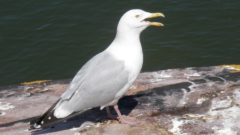
A class of chemical compounds that are no longer produced in significant quantities nor being used in the manufacture of new products, called polychlorinated naphthalenes, or PCNs, has been found in herring gull eggs in the St. Lawrence River; the probable source of these chemical contaminants is the Detroit River. Read the full story by Great Lakes Now.
Great Lakes Commission
https://www.glc.org/dailynews/20220907-herring-gull
It was a banner year for the Great Lakes piping plover. Audubon Great Lakes reports 150 chicks have survived the fledgling process, the largest number since the bird was placed on the federal endangered species list in 1986. Read the full story by WOOD-TV – Grand Rapids, MI.
Great Lakes Commission
https://www.glc.org/dailynews/20220907-plovers
Since their launch August 6th, two uncrewed, drone-operated sailboats are quietly collecting data from Lake Superior to study the accuracy of fish abundancy estimates in the Great Lakes. Read the full story by Wisconsin Public Radio.
Great Lakes Commission
https://www.glc.org/dailynews/20220907-sail-drones
The Lake Superior buoy operated by National Oceanic and Atmospheric Administration, located a mere 50 miles offshore from Grand Marais, Minnesota, experienced anomalously cold water temperatures this year: temperatures that haven’t been recorded in decades. Read the full story by WTIP – North Shore, MN.
Great Lakes Commission
https://www.glc.org/dailynews/20220907-lake-temp
As lake sturgeon populations have decreased in Lake Michigan, the Michigan Department of Natural Resources hope to reintroduce and rehabilitate the lake sturgeon population through a streamside rearing program. Read the full story by WLUC-TV – Marquette, MI.
Great Lakes Commission
https://www.glc.org/dailynews/20220907-sturgeon
The Environmental Protection Agency will be addressing concerns raised by the St. Regis Mohawk Tribe over remediation efforts on New York’s Grasse River after the Tribal Council said the EPA’s chosen remedy to remediate the Grasse River was a “devastating failure.” Read the full story by the Watertown Daily Times.
Great Lakes Commission
https://www.glc.org/dailynews/20220907-grasse-river
An Ottawa County, Michigan, electroplating company and two of its top officers have pleaded guilty to violating the federal Clean Water Act by discharging wastewater with excessive amounts of zinc. Read the full story by Great Lakes Echo.
Great Lakes Commission
https://www.glc.org/dailynews/20220907-clean-water-act
“Something was clearly wrong with Lake Erie.”
That’s how filmmaker David J. Ruck remembers being inspired to begin working on “The Erie Situation,” a feature-length film that’s been shown at film festivals this year and now will air simultaneously on PBS stations in four states at 9 p.m.
Great Lakes Now
https://www.greatlakesnow.org/2022/09/meet-filmmaker-david-j-ruck/
Current Watches, Warnings and Advisories for Brown (WIC009) Wisconsin Issued by the National Weather Service
https://alerts.weather.gov/cap/wwacapget.php?x=WI12640BFBFBA4.SpecialWeatherStatement.12640BFC8C90WI.GRBSPSGRB.3b77a733acfe35fc01f412b80021d336
An Ottawa County, Michigan, electroplating company and two of its top officers have pleaded guilty to violating the federal Clean Water Act by discharging wastewater with excessive amounts of zinc.
The post Guilty pleas in Clean Water Act prosecution first appeared on Great Lakes Echo.Great Lakes Echo
http://greatlakesecho.org/2022/09/07/guilty-pleas-in-clean-water-act-prosecution/
Current Watches, Warnings and Advisories for Brown (WIC009) Wisconsin Issued by the National Weather Service
https://alerts.weather.gov/cap/wwacapget.php?x=WI12640BFB0E24.SpecialWeatherStatement.12640BFC1760WI.GRBSPSGRB.3b77a733acfe35fc01f412b80021d336

For the first time in decades, a new bulk freighter has been built on and launched on the Great Lakes.
The Fincantieri Bay Shipbuilding Company in Sturgeon Bay, Wisconsin unveiled the Mark W. Barker earlier this year after spending nearly three years constructing it. The vessel was commissioned by Cleveland-based Interlake Steamship Company which currently operates about a dozen ships.
Great Lakes Now
https://www.greatlakesnow.org/2022/09/new-great-lakes-freighter-joins-fleet/
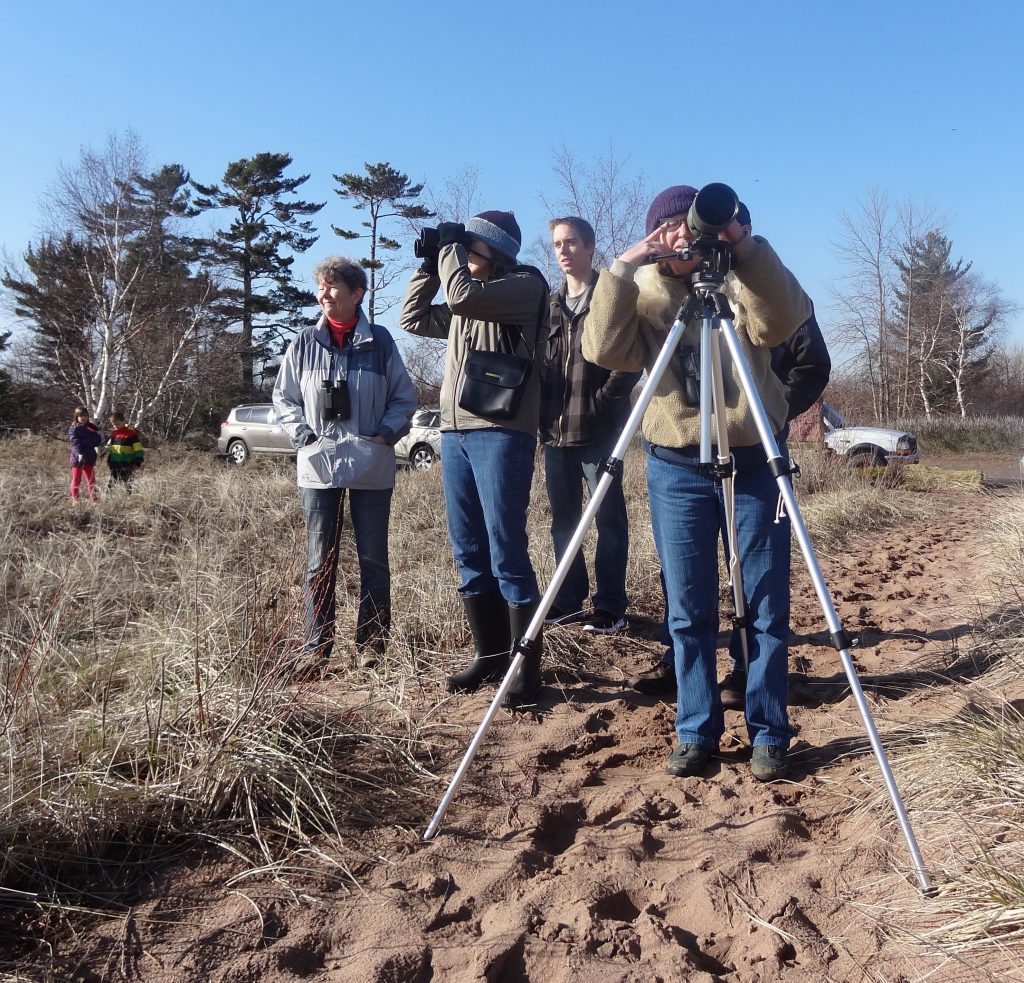
Birders search for birds on Wisconsin Point. Image credit: Marie Zhuikov
Join the Lake Superior National Estuarine Research Reserve from 9-11 a.m., Sept. 21, for a free, bird-focused morning. People of all ages and ability levels are welcome to attend this accessible birding outing led by birding experts from the Hawk Ridge Bird Observatory and the Friends of the Lake Superior Reserve at the Lake Superior Estuarium (3 Marina Drive) on Barker’s Island in Superior.
Move along the boardwalk or paved trails on a guided bird hike or explore bird artifacts like feathers and skulls indoors at your own pace. Fifteen pairs of binoculars will be available, plus a spotting scope, a wheelchair mount for the scope and portable seating.
Light refreshments will be provided. Come and stay for the whole time or part of it.
Registration is not required but is encouraged so that participants can receive email reminders. Register here. (https://lakesuperiornerr.org/event/accessible-bird-observing/)
These activities are designed with access in mind. If you would like to request additional accommodations, please email Luciana.Ranelli@wisc.edu or call Luciana at (715) 399-4085 at least 10 days before the event.
This free event was made possible through the University of Wisconsin–Madison Dean’s Innovation Grant to collaborators from Upham Woods Outdoor Learning Center, the Reserve, Wisconsin Sea Grant, University of Wisconsin Extension, and Bayfield and Ashland counties.
The post Free accessible birding outing first appeared on Wisconsin Sea Grant.News Releases | Wisconsin Sea Grant
News Releases | Wisconsin Sea Grant
https://www.seagrant.wisc.edu/news/free-accessible-birding-outing/?utm_source=rss&utm_medium=rss&utm_campaign=free-accessible-birding-outing
If you’re a Great Lakes lover and podcast listener, you probably already know about the “Teach Me About the Great Lakes” podcast produced by Illinois-Indiana Sea Grant.
But if not, maybe we have one more reason for you to tune in: Great Lakes Now news is now part of the program.
Great Lakes Now
https://www.greatlakesnow.org/2022/09/join-great-lakes-now-on-the-illinois-indiana-sea-grant-podcast/
NCEI News Feed
http://www.ncei.noaa.gov/news/noaa-workshop-supports-uses-ai
Current Watches, Warnings and Advisories for Brown (WIC009) Wisconsin Issued by the National Weather Service
https://alerts.weather.gov/cap/wwacapget.php?x=WI12640BEBA664.SpecialWeatherStatement.12640BECD520WI.GRBSPSGRB.c7af4845f2e9eb88e57e1747a63d15f5
By John Flesher, AP Environmental Writer
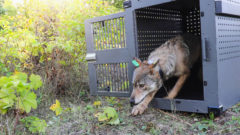
TRAVERSE CITY, Mich. (AP) — Isle Royale National Park’s gray wolf population has reached 28, a dramatic comeback after the species nearly disappeared from the Lake Superior island chain, researchers said.
Health problems from inbreeding caused a die-off that left only two wolves a few years ago, leading park officials to authorize an airlift of mainland replacements.
Great Lakes Now
https://www.greatlakesnow.org/2022/09/ap-isle-royale-wolf-population-surges/
Great Lakes Moment is a monthly column written by Great Lakes Now Contributor John Hartig. Publishing the author’s views and assertions does not represent endorsement by Great Lakes Now or Detroit Public Television.
A class of chemical compounds that are no longer produced in significant quantities nor being used in the manufacture of new products, called polychlorinated naphthalenes, or PCNs, has been found in herring gull eggs in the St.
Great Lakes Now
https://www.greatlakesnow.org/2022/09/great-lakes-moment-herring-gull-eggs-detroit-river/
Illinois state Rep. Marcus Evans has introduced a bill that lays the groundwork for a proposed wind farm in Lake Michigan, about 10 miles from the shores of the Southeast Side of Chicago. Read the full story by the Chicago Tribune.
Great Lakes Commission
https://www.glc.org/dailynews/20220902-offshore-wind
A federal district judge in Michigan denied a request from members of hunting and fishing advocacy groups to intervene in treaty rights negotiations underway among state, federal, and tribal authorities. Read the full story by MLive.
Great Lakes Commission
https://www.glc.org/dailynews/20220902-fishing-rights
Officials at the Sleeping Bear Dunes National Lakeshore in Michigan are confident the recent change in the Platte River outlet did not happen naturally and are seeking those responsible. Read the full story by the Manistee News Advocate.
Great Lakes Commission
https://www.glc.org/dailynews/20220902-platte-river
Dragonflies have gathered in masses in Wisconsin and recent brisk west winds have helped concentrate the migrating dragonflies along Lake Michigan. Read the full story by the Milwaukee Journal Sentinel.
Great Lakes Commission
https://www.glc.org/dailynews/20220902-dragonflies
A stand-up paddler from Kalamazoo, Michigan expects to break a Guinness World Record by paddling approximately 100 miles from Ludington to Suttons Bay, Michigan. Read the full story by the Ludington Daily News.
Great Lakes Commission
https://www.glc.org/dailynews/20220902-paddling
An incredible waterspout swirling over Lake Huron has been captured on camera. Read the full story by The Mirror.
Great Lakes Commission
https://www.glc.org/dailynews/20220902-water-spouts
Environmental activist group, Environmental Defence, claims that not enough has been done to reduce the impacts on Lake Erie from nutrient runoff. Read the full story by The Hamilton Spectator.
Great Lakes Commission
https://www.glc.org/dailynews/20220902-erie
A barge, belonging to Ashton Marine out of Muskegon, Michigan, ran aground early Wednesday on Lake Erie. It got stuck in the sand, about 10 feet offshore from a beach on the western side of Van Buren Point near Dunkirk, New York. Read the full story by The Post Journal.
Great Lakes Commission
https://www.glc.org/dailynews/20220902-barge
A U.S. National Weather Service Station radar signature of an estimated 500,000-member bank and barn swallow and purple martin “roost ring” (or bird doughnut) over Long Point, Ontario has bird enthusiasts fascinated. Read the full story by The Toronto Star.
Great Lakes Commission
https://www.glc.org/dailynews/20220902-bird-migration
During a web conference hosted by the International Joint Commission on Tuesday, Kyle McCune, alternate U.S. chair for all three regional water regulation boards under IJC jurisdiction, explained why water levels are significantly low. Read the full story by the Watertown Daily Times.
Great Lakes Commission
https://www.glc.org/dailynews/20220902-water-levels
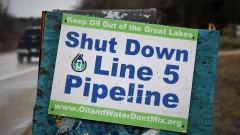
By Lester Graham, Michigan Radio
The Great Lakes News Collaborative includes Bridge Michigan; Circle of Blue; Great Lakes Now at Detroit Public Television; and Michigan Radio, Michigan’s NPR News Leader; who work together to bring audiences news and information about the impact of climate change, pollution, and aging infrastructure on the Great Lakes and drinking water.
Great Lakes Now
https://www.greatlakesnow.org/2022/09/line-5-comments-army-corps-engineers/
How we name things affects how we think about them. We name fields, and forests, and marshes, and streams as separate things, so we tend to think of them as separate things. But separating these habitats in our vocabulary and in our minds obscures the innumerable connections that bind these habitats into a single working landscape.
The post September: Connections first appeared on Great Lakes Echo.Great Lakes Echo
http://greatlakesecho.org/2022/09/02/september-connections/
From lead pipes to PFAS, drinking water contamination is a major issue plaguing cities and towns all around the Great Lakes. Cleaning up contaminants and providing safe water to everyone is an ongoing public health struggle.
Keep up with drinking water-related developments in the Great Lakes area.
Click on the headline to read the full story:
Illinois:
Water at Illinois state prisons is contaminated with toxic metals and other potentially harmful contaminants, including the bacteria that causes Legionnaires disease, a coalition of activists said Thursday, urging Gov.
Great Lakes Now
https://www.greatlakesnow.org/2022/09/drinking-water-news-roundup-safe-drinking-water-business-leaders-raise-awareness/
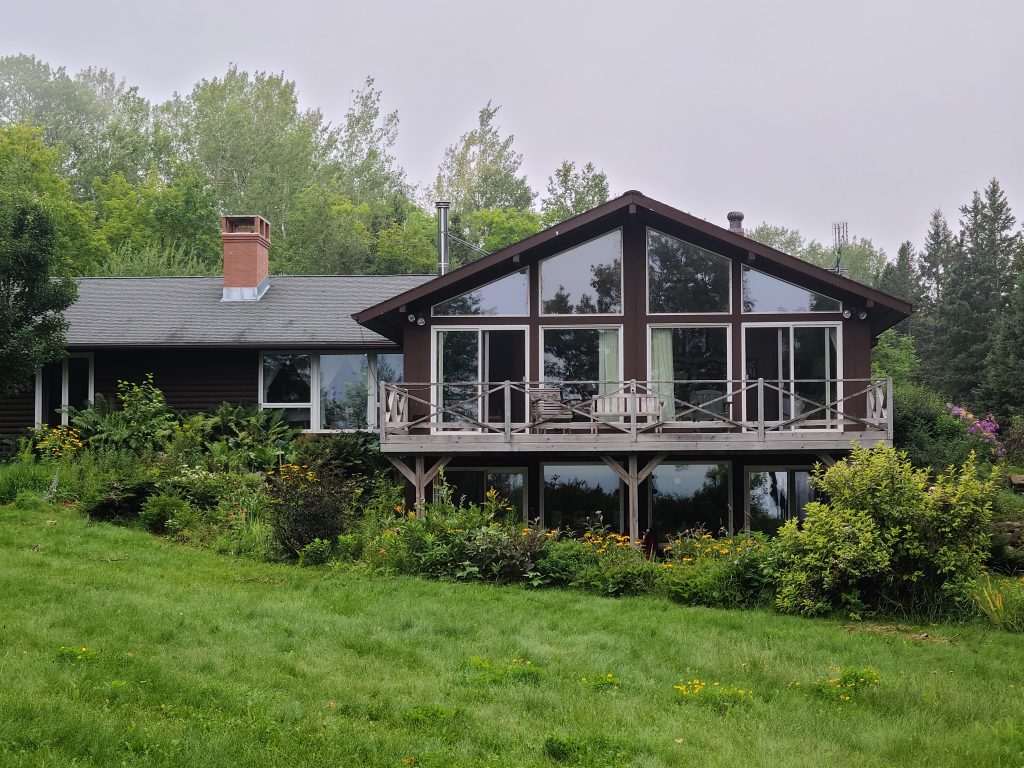
This home in Herbster, Wisconsin, was moved 150 feet back from an eroding Lake Superior bluff in 2003. Image credit: Marie Zhuikov, Wisconsin Sea Grant
The dynamics of land and water were on display for members of the Coastal Hazards of Superior (CHAOS) group when they toured Lake Superior’s South Shore at a homesite in Herbster, Wisconsin, last week. The home, now owned by Dan and Mary Schneider, was moved 20 years ago farther inland from an eroding lake bluff in one of the first efforts to address coastal home erosion and establish setback distances in Bayfield County.
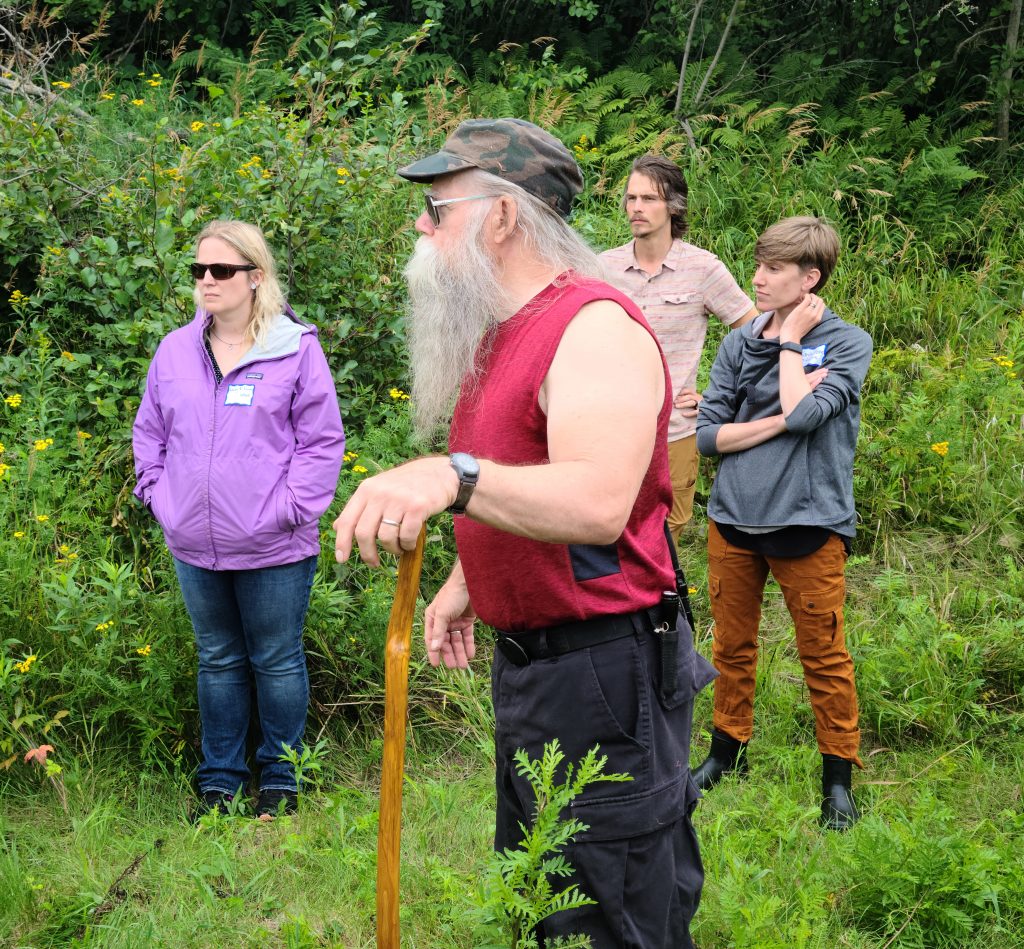
Homeowner Dan Schneider shows CHAOS tour participants some eroding bluff east of his home. Image credit: Marie Zhuikov, Wisconsin Sea Grant
The tour was organized and led by CHAOS Coordinator Sarah Brown and Karina Heim, coastal training coordinator with the National Lake Superior Estuarine Research Reserve. It featured talks by homeowner Dan Schneider, Northland College Professor of Geoscience Tom Fitz, and Bayfield County Land Records Administrator Scott Galetka, who is also a member of Wisconsin Sea Grant’s Outreach and Education Committee.
I was one of the lucky tour participants along with Natalie Chin, Wisconsin Sea Grant’s climate and tourism outreach specialist.
Schneider, who has owned the 52-acre property since 2019, said he was happy to open his homesite for the tour. “The area’s got such an incredible geological history and cultural history, for us, it’s amazing to live here.”
He showed us where the house was originally situated, right on the edge of the 150-foot bluff. It now lies 150 feet farther back. The bluff was eroding from Lake Superior waves at the bottom and from stormwater runoff and groundwater flow at the top.
Moving the 3-bedroom home was a major undertaking. “They (the original owners) found a mover, but then they had to deal with the potable water supply, the electrical supply and the sanitary sewer,” Schneider said.
The spot where the house was moved to offered its own challenges in the form of shallow groundwater. Swales were installed along with drain tiles, ditches and a pond to keep the water from flowing into the house.
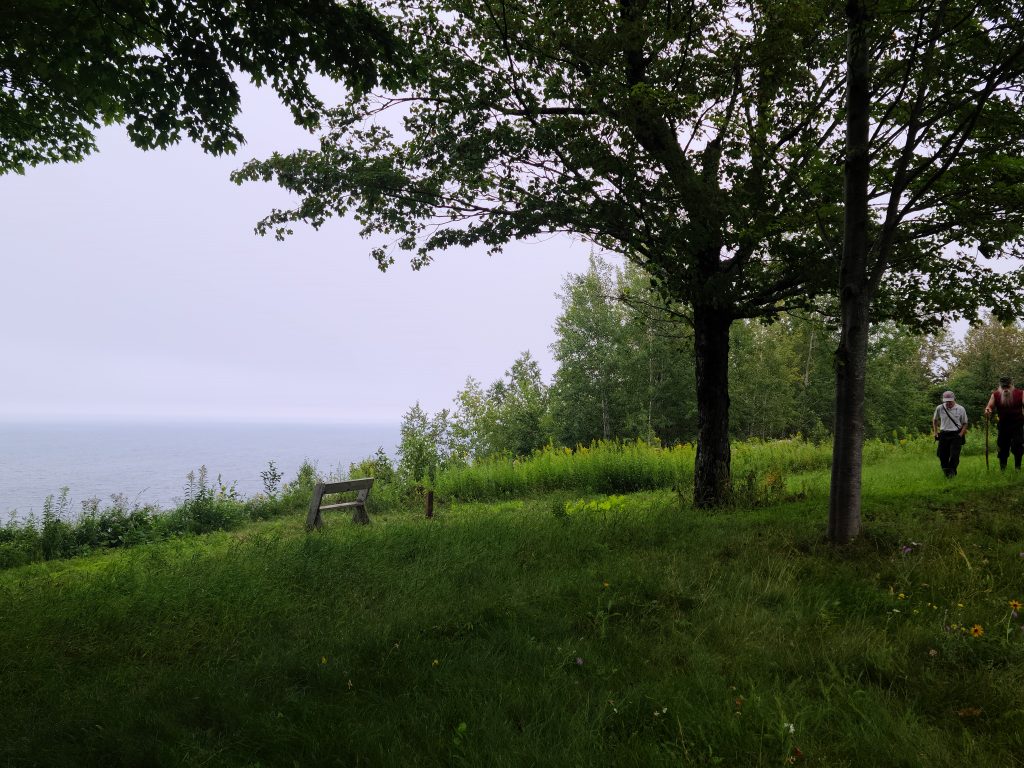
This is the bluff overlooking Lake Superior that was the original site of the home. Image credit: Marie Zhuikov, Wisconsin Sea Grant
Schneider said that not much erosion had occurred on the bluff since the home was moved, but that a bluff east of the house had been eroding actively. We walked about 200 feet in that direction for a view. Dirt and gravel tumbled down the slopes, which were bare of vegetation.
Fitz explained that the slopes were composed of clay and sand, remnants of the last stages of glaciation about 14,000 years ago. “There’s contact between clay of the Miller Creek Formation and sand from the Copper Falls Formation about 15 feet down,” Fitz said. “That contact is probably playing an important role in the stability of this bluff – or rather, the instability.” This sand-clay interaction characterizes much of the geology of Lake Superior’s South Shore.
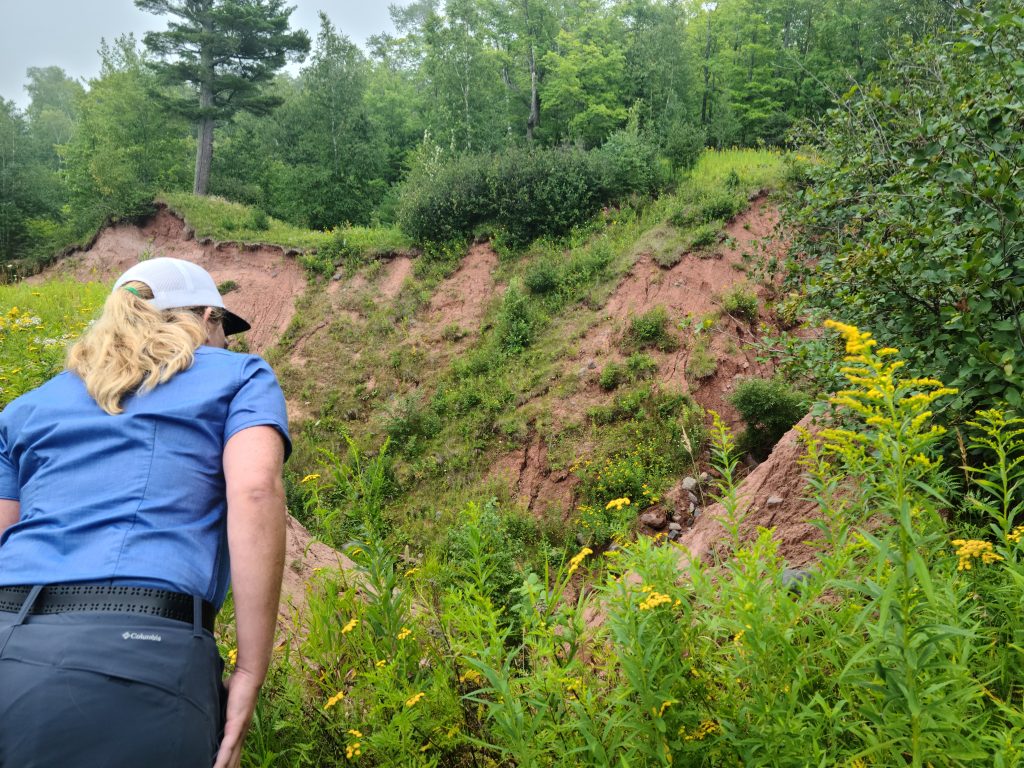
Geology in action — a tour participant peers down into an eroding bluff on the Schneider property. Image credit: Marie Zhuikov, Wisconsin Sea Grant
Fitz described how groundwater was moving along the top of the clay layer and coming out of the side of the bluff, forming erosion. “What we see here is obvious evidence of the power of moving water,” he said, citing clay around the house for the groundwater issues that Schneider has noticed there.
“What we have here is a big, ‘wow.’ Geology in action,” Fitz said.
The good news is that Schneider’s house is safe from erosion thanks to its current setback from the bluff. The bad news is that the eastern ravine is eroding.
Schneider said that when he purchased the property, he noticed the erosion in the ravine, but it didn’t bother him. “I knew in my lifetime I wouldn’t need to worry about it. The privilege of living out here was worth it,” he said.
Back at a picnic table near the original bluff, we heard from Galetka, who explained how Bayfield County tracks coastal land changes over time. One of the ways he currently uses is a drone equipped with a 35 mm camera.
“I began this job in 2007. I’ve seen this program of setbacks and the importance of making sure we have science backing up where homes should go behind the bluff,” Galetka said. “This was the site that sparked everything. It was kind of like the poster child.”
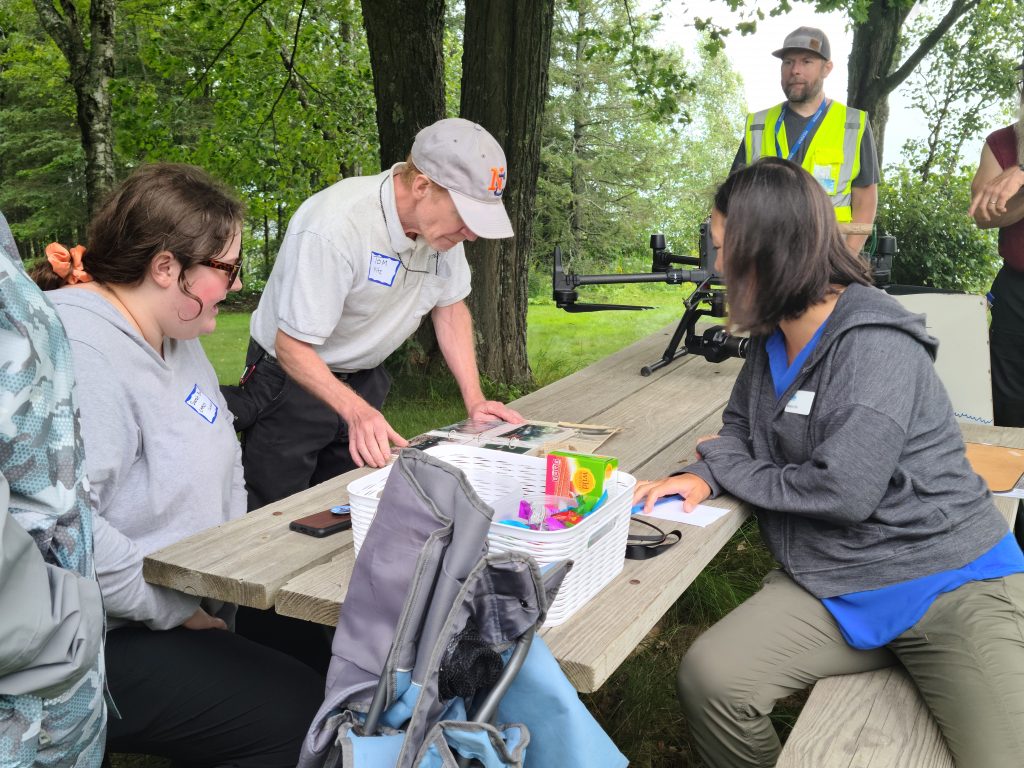
CHAOS Coordinator Sarah Brown (left) and Wisconsin Sea Grant Climate and Tourism Outreach Specialist, Natalie Chin (right) look at photos of the home-moving process with Northland College Geoscience Professor Tom Fitz. Bayfield County Land Records Administrator Scott Galetka is in the background. Image credit: Marie Zhuikov, Wisconsin Sea Grant
The wind was too stiff for Galetka to demonstrate his drone, but that allowed us to have a close look as it rested on the picnic table. He said that technology has advanced greatly since the home was originally moved and that data sets are much more accurate now.
We came away from the tour with a greater appreciation for the intricacies involved in how land and water interact, and admiration for the forethought required to preserve a beautiful Lake Superior home.
For more information about coastal erosion along the South Shore and to hear from Jane Bucy, the original owner of the Schneider home, about the house-moving process, you can watch a YouTube video of the CHAOS group’s June 2022 meeting.
The post Visiting the house that sparked coastal land use setbacks first appeared on Wisconsin Sea Grant.Blog | Wisconsin Sea Grant
https://www.seagrant.wisc.edu/blog/visiting-the-house-that-sparked-coastal-land-use-setbacks/?utm_source=rss&utm_medium=rss&utm_campaign=visiting-the-house-that-sparked-coastal-land-use-setbacks
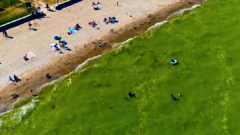
Whether you go out on a boat, to a beach or get your drinking water from Lake Erie, you know harmful algal blooms are a problem.
But these mucky, green blooms are not limited to the southernmost of the Great Lakes. The blooms are a bigger threat in the northernmost lake, the connectors like the Detroit River and Lake St.
Great Lakes Now
https://www.greatlakesnow.org/2022/09/the-erie-situation-and-beyond/