From plovers to friends: how a feathery love triangle spurred Canada and the U.S. to save tiny endangered birds
Great Lakes Commission
https://www.glc.org/dailynews/20230719-plovers

Great Lakes Commission
https://www.glc.org/dailynews/20230719-plovers
A group of Michigan artists, managers and advocates seeking to strengthen and promote links between Great Lakes arts and science as a way of inspiring Great Lakes stewardship will hold its first in-person meeting on July 27 at the Detroit River International Wildlife Refuge. Read the full story by The News-Herald
Great Lakes Commission
https://www.glc.org/dailynews/20230719-art

Laprisha Berry Daniels is the Executive Director at Detroiters Working for Environmental Justice. Daniels is a public health social worker who is interested in focusing on harm-reduction when dealing with the climate crisis. She specializes in developing interventions to help to improve the health and wellbeing of communities.
In her talk on Wednesday, July 12, Daniels said she was inspired by her family’s move to Detroit during the Great Migration.
Great Lakes Now
https://www.greatlakesnow.org/2023/07/ted-countdown-detroiters-working-for-environmental-justice-executive-director-laprisha-berry-daniels-on-supporting-communities-preparing-for-the-future/
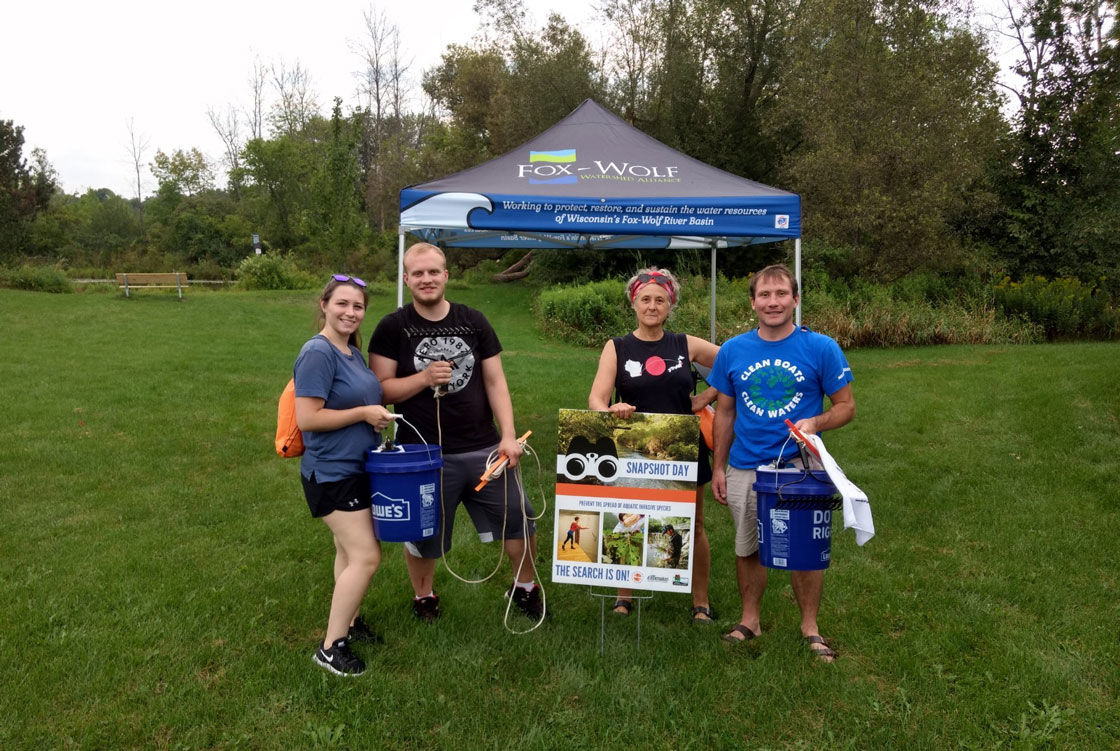
Water lovers of all ages are invited to join the statewide search for aquatic invasive species (AIS) on August 19th, 2023. This fun, hands-on effort, known as AIS Snapshot Day, relies on participants to monitor streams, lakes, and wetlands at designated sites across the state, for signs of non-native plants and animals that pose
risks to Wisconsin waterways and wildlife. Volunteers have a choice to register at one of over twenty event locations hosted by local conservation groups.
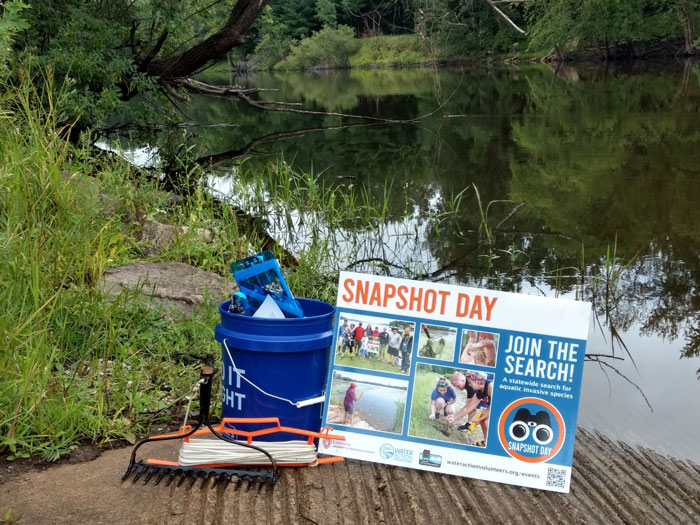

Coordinated in partnership by UW-Madison Division of Extension, UW-Stevens Point Extension Lakes, River Alliance of Wisconsin, and the Wisconsin Department of Natural Resources, Snapshot Day is entering its’ 10th successful year. Information collected will be provided to the Wisconsin Department of Natural Resources to inform and guide monitoring and response efforts. Volunteers are key to the success of the event.
“Projects like AIS Snapshot Day are a fun and simple way for volunteers to get engaged and for the local site leaders and DNR to collaborate” says Maureen Ferry, DNR AIS Monitoring Coordinator. “DNR has a long list of sites with suspected but unverified AIS that AIS Snapshot Day monitoring targets. This increases the chances of volunteers finding a species. Plus, each year, we make new detections.”
Last year over 150 volunteers rolled up their sleeves to monitor at more than 234 sites across the state making for a fun and safe event.
This is a free event. Recommended for ages 8 and up, minors must be accompanied by an adult.
LOCAL EVENT DETAILS:
Saturday, August 19th
8:30 am-12:30 pm
Pamperin Park, Green Bay
REGISTRATION:
Register and see all event details at: https://wateractionvolunteers.org/events/
Advance registration is requested to help Site Leaders build monitoring plans.
Photo Credit: Chris Acy (FWWA)
Questions? Comments? Contact Chris Acy, the AIS Coordinator covering Brown, Outagamie, Fond du Lac, Calumet, and Winnebago Counties at (920) 460-3674 or chris@fwwa.org!
Follow the Fox Wolf Watershed Alliance’s Winnebago Waterways Program on our Winnebago Waterways Facebook page or @WinnWaterways on Twitter! You can also sign-up for email updates at WinnebagoWaterways.org.
Winnebago Waterways is a Fox-Wolf Watershed Alliance program. The Fox-Wolf Watershed Alliance is an independent nonprofit organization that identifies and advocates effective policies and actions that protect, restore, and sustain water resources in the Fox-Wolf River Basin.
Check out the Keepers of the Fox Program at https://fwwa.org/watershed-recovery/lower-fox-recovery/
Reporting invasive species is a first step in containing their spread. Maintaining and restoring our waters and landscapes can reduce the impacts even when we don’t have other management options to an invasive species.
The post *CLICK* Snapshot Day Returns August 19th, 2023 appeared first on Fox-Wolf Watershed Alliance.
Fox-Wolf Watershed Alliance
https://fwwa.org/2023/07/19/click-snapshot-day-returns-august-19th-2023/?utm_source=rss&utm_medium=rss&utm_campaign=click-snapshot-day-returns-august-19th-2023
Water lovers of all ages are invited to join the statewide search for aquatic invasive species (AIS) on August 19th, 2023. This fun, hands-on effort, known as AIS Snapshot Day, relies on participants to monitor streams, lakes, and wetlands at designated sites across the state, for signs of non-native plants and animals that pose
risks to Wisconsin waterways and wildlife. Volunteers have a choice to register at one of over twenty event locations hosted by local conservation groups.

Coordinated in partnership by UW-Madison Division of Extension, UW-Stevens Point Extension Lakes, River Alliance of Wisconsin, and the Wisconsin Department of Natural Resources, Snapshot Day is entering its’ 10th successful year. Information collected will be provided to the Wisconsin Department of Natural Resources to inform and guide monitoring and response efforts. Volunteers are key to the success of the event.
“Projects like AIS Snapshot Day are a fun and simple way for volunteers to get engaged and for the local site leaders and DNR to collaborate” says Maureen Ferry, DNR AIS Monitoring Coordinator. “DNR has a long list of sites with suspected but unverified AIS that AIS Snapshot Day monitoring targets. This increases the chances of volunteers finding a species. Plus, each year, we make new detections.”
Last year over 150 volunteers rolled up their sleeves to monitor at more than 234 sites across the state making for a fun and safe event.
This is a free event. Recommended for ages 8 and up, minors must be accompanied by an adult.
LOCAL EVENT DETAILS:
Saturday, August 19th
8:30 am-12:30 pm
Pamperin Park, Green Bay
REGISTRATION:
Register and see all event details at: https://wateractionvolunteers.org/events/
Advance registration is requested to help Site Leaders build monitoring plans.
Photo Credit: Chris Acy (FWWA)
Questions? Comments? Contact Chris Acy, the AIS Coordinator covering Brown, Outagamie, Fond du Lac, Calumet, and Winnebago Counties at (920) 460-3674 or chris@fwwa.org!
Follow the Fox Wolf Watershed Alliance’s Winnebago Waterways Program on our Winnebago Waterways Facebook page or @WinnWaterways on Twitter! You can also sign-up for email updates at WinnebagoWaterways.org.
Winnebago Waterways is a Fox-Wolf Watershed Alliance program. The Fox-Wolf Watershed Alliance is an independent nonprofit organization that identifies and advocates effective policies and actions that protect, restore, and sustain water resources in the Fox-Wolf River Basin.
Check out the Keepers of the Fox Program at https://fwwa.org/watershed-recovery/lower-fox-recovery/
Reporting invasive species is a first step in containing their spread. Maintaining and restoring our waters and landscapes can reduce the impacts even when we don’t have other management options to an invasive species.
The post *CLICK* Snapshot Day Returns August 19th, 2023 appeared first on Fox-Wolf Watershed Alliance.
Fox-Wolf Watershed Alliance
https://fwwa.org/2023/07/19/click-snapshot-day-returns-august-19th-2023/?utm_source=rss&utm_medium=rss&utm_campaign=click-snapshot-day-returns-august-19th-2023
Water lovers of all ages are invited to join the statewide search for aquatic invasive species (AIS) on August 19th, 2023. This fun, hands-on effort, known as AIS Snapshot Day, relies on participants to monitor streams, lakes, and wetlands at designated sites across the state, for signs of non-native plants and animals that pose
risks to Wisconsin waterways and wildlife. Volunteers have a choice to register at one of over twenty event locations hosted by local conservation groups.
Coordinated in partnership by UW-Madison Division of Extension, UW-Stevens Point Extension Lakes, River Alliance of Wisconsin, and the Wisconsin Department of Natural Resources, Snapshot Day is entering its’ 10th successful year. Information collected will be provided to the Wisconsin Department of Natural Resources to inform and guide monitoring and response efforts. Volunteers are key to the success of the event.
“Projects like AIS Snapshot Day are a fun and simple way for volunteers to get engaged and for the local site leaders and DNR to collaborate” says Maureen Ferry, DNR AIS Monitoring Coordinator. “DNR has a long list of sites with suspected but unverified AIS that AIS Snapshot Day monitoring targets. This increases the chances of volunteers finding a species. Plus, each year, we make new detections.”
Last year over 150 volunteers rolled up their sleeves to monitor at more than 234 sites across the state making for a fun and safe event.
This is a free event. Recommended for ages 8 and up, minors must be accompanied by an adult.
LOCAL EVENT DETAILS:
Saturday, August 19th
8:30 am-12:30 pm
Pamperin Park, Green Bay
REGISTRATION:
Register and see all event details at: https://wateractionvolunteers.org/events/
Advance registration is requested to help Site Leaders build monitoring plans.
Photo Credit: Chris Acy (FWWA)
Questions? Comments? Contact Chris Acy, the AIS Coordinator covering Brown, Outagamie, Fond du Lac, Calumet, and Winnebago Counties at (920) 460-3674 or chris@fwwa.org!
Follow the Fox Wolf Watershed Alliance’s Winnebago Waterways Program on our Winnebago Waterways Facebook page or @WinnWaterways on Twitter! You can also sign-up for email updates at WinnebagoWaterways.org.
Winnebago Waterways is a Fox-Wolf Watershed Alliance program. The Fox-Wolf Watershed Alliance is an independent nonprofit organization that identifies and advocates effective policies and actions that protect, restore, and sustain water resources in the Fox-Wolf River Basin.
Check out the Keepers of the Fox Program at https://fwwa.org/watershed-recovery/lower-fox-recovery/
Reporting invasive species is a first step in containing their spread. Maintaining and restoring our waters and landscapes can reduce the impacts even when we don’t have other management options to an invasive species.
The post *CLICK* Snapshot Day Returns August 19th, 2023 appeared first on Fox-Wolf Watershed Alliance.
Fox-Wolf Watershed Alliance
https://fwwa.org/2023/07/19/click-snapshot-day-returns-august-19th-2023/?utm_source=rss&utm_medium=rss&utm_campaign=click-snapshot-day-returns-august-19th-2023
Nearly 63% of beaches tested in the Great Lakes region last year had at least one day of fecal contamination that exceeded the EPA’s Beach Action Value. That tool helps states determine whether a beach is safe enough to go swimming. Read the full story by Public News Service.
Great Lakes Commission
https://www.glc.org/dailynews/20230719-epa-bacteria-beaches
The wreck of an early wooden schooner that capsized on Lake Michigan 9-1/2 miles southeast of Sheboygan in September 1885 has been listed in the National Register of Historic Places. Read the full story by the Sheboygan Press.
Great Lakes Commission
https://www.glc.org/dailynews/20230719-sheboygan-shipwreck-nationalregister
The Ontario government is investing $6 million to support 30 multi-year projects that will help protect, conserve, and restore the Great Lakes, including two shoreline projects in Niagara. The investments will help reduce plastic litter and control excess nutrients and road salt entering lakes, rivers, and streams. Read the full story by The Niagara Independent.
Great Lakes Commission
https://www.glc.org/dailynews/20230719-cleanup-shores-niagara
Organizations which work to protect Lake Superior are benefitting from an injection of multi-year funding from the province as part of a larger $6 million initiative to protect, conserve, and restore the Great Lakes. The Ontario government has announced 30 “science on the ground” projects so far, which aim to address a variety of challenges. Read the full story by Fort Frances Times.
Great Lakes Commission
https://www.glc.org/dailynews/20230719-greatlakes-cash-rehabilitation
“Drink ‘em and sink ‘em” was the practice of fishermen who threw their beer and pop cans and bottles into the Great Lakes over 40 years ago. Don Fassbender, president of Great Lakes Scuba, a lake preservation dive club, once saw old cans underwater as far as he could see beneath Lake Superior. He posted a video of the dive on YouTube, showing the garbage he found and collected. Read the full story by the Gladwin County Record & Beaverton Clarion.
Great Lakes Commission
https://www.glc.org/dailynews/20230719-scubadivers-greatlakes-cleanup
Ships carrying an estimated 12 million tons of cargo have passed through the St. Lawrence Seaway system into the Great Lakes through the end of June, roughly the same amount as last year. Read the full story by The Northwest Times of Indiana.
Great Lakes Commission
https://www.glc.org/dailynews/20230719-internationalshipping-greatlakes
A ship that hasn’t been seen for almost a century and a half has been confirmed as found. The Great Lakes Shipwreck Museum in Paradise, Michigan announced an expedition on Lake Superior last year that led to the discovery of the Satellite, a tugboat that sank June 21, 1879. Read the full story by the Manistee News Advocate.
Great Lakes Commission
https://www.glc.org/dailynews/20230719-shipwreck-lakesuperior
Lead levels in drinking water in the city of Eastpointe, MI have exceeded state action levels for the second time in a year. Read the full story by The Detroit News.
Great Lakes Commission
https://www.glc.org/dailynews/20230719-highleadlevels-eastpointe-drinkingwater
A new shipping facility for agricultural products officially opened in Port Milwaukee on Tuesday. It’s one of the first facilities in the Great Lakes-St. Lawrence Seaway to move bulk agricultural exports, including dried distillers grains. Read the full story by Wisconsin Public Radio.
Great Lakes Commission
https://www.glc.org/dailynews/20230719-portmilwaukee-ag-shipping
On Thursday, July 27, Mayor Justin Bibb will invite public comments on “initial thoughts and sketches” for an emerging plan for the Cleveland lakefront in a meeting at the Great Lakes Science Center. Read the full story by The Plain Dealer.
Great Lakes Commission
https://www.glc.org/dailynews/20230719-cleveland-publiccomment-lakefront-development

With nearly 125 million buildings across the United States, all these spaces account for about 30 percent of the country’s emissions. In 2014, Donnel Baird created BlocPower to get these spaces off fossil fuels by changing out old water systems, gas ovens, gas and oil furnaces and air conditioning units with electric equipment, like air source heat pumps, which are compatible with renewable energy options.
Great Lakes Now
https://www.greatlakesnow.org/2023/07/ted-countdown-blocpower-ceo-donnel-baird-greening-americas-buildings-improving-communities/

A gorgeous home landscape does not need to come at the price of clean lakes, rivers, and streams. We can have both. To make it happen, we all need to think a little differently.
Less hard surfaces
The more concrete or blacktop your property has, the more water will run off the property and into storm drains and ditches. 75% more rain water sinks into the ground in a natural versus developed area. Stormwater that flows from developed areas also carries oil, grease, fertilizer, bacteria, exhaust particles, and more.
Planning for minimal hard surface on your property makes good sense. Consider the amount of runoff that will be generated by roofs, pavements, and sidewalks. Focus on natural plantings to slow water and allow it to filter into the ground rather than becoming runoff. Where needed, install pavers or bricks that allow water to sink in the ground.
Minimizing runoff reduces damage to your property and others down stream. It may also save you money if you live in a city that has a stormwater utility, since stormwater utility fees are based on the amount of runoff your property sends to the storm sewer system.
Rain gardens are slight depressions in a yard that acts as receiving areas for rain water that runs off your roof and downspouts. Rain gardens capture rainwater before it picks up oil, grease, fertilizer, pet waste, or other contaminants. Rain gardens replenish groundwater by infiltrating runoff, rather than passing it into the stormwater sewer. Often they are planted with native plants that thrive on moisture, but can withstand a dry period too.
A rain barrel captures water that flows from a roof through downspouts. Commonly, the rain barrel is a 55-gallon drum designed specifically to hold water without creating a mosquito breeding habitat. A tight fitting lid, seal for the downspout, and filtered overflow valve all overflow water to move away from the rain barrel.
Northeast Wisconsin Stormwater Consortium (NEWSC) P.O. Box 1861 Appleton, WI 54912 l 920.851.4336
RenewOurWaters.org

Stormwater is rain or snowmelt and water from things people do, like washing the car or watering the lawn. As water makes its way to the storm drain it picks up pollutants like oil from car leaks and bacteria from pet waste. When we choose products carefully and dispose of products properly, we can greatly reduce the amount of pollution that enters our local waters through runoff.
Untreated runoff is the biggest threat to our nation’s water quality, according to the U.S. Environmental Protection Agency. Let’s make the small, important changes that will reduce that threat and improve water quality and our lives!

—

—
The post The Perfect Landscape appeared first on Fox-Wolf Watershed Alliance.
Fox-Wolf Watershed Alliance
https://fwwa.org/2023/07/18/the-perfect-landscape/?utm_source=rss&utm_medium=rss&utm_campaign=the-perfect-landscape

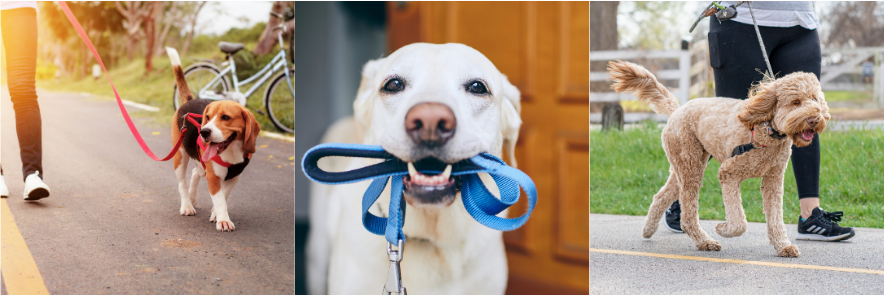
Your dog brings a lot of joy to your life. Enjoying your four legged friend doesn’t need to come at the price of clean water. We can have both, but to make that happen, we all need to think a little differently
Pet waste is not only an unpleasant find on a yard or sidewalk, it also carries bacteria that causes beach closings in the summer.
Before dumping your dirty water into the sanitary sewer, filter the water to make sure that any fiber or debris does not go down the drain. Debris in the wash water can clog the pipes. Dispose of the filtered material in the garbage, provided that the carpet was not contaminated with hazardous materials.
Campylobacteriosis and Salmonellosis are often the cause of the “24-hour bug”. They are transferred through fecal material from an infected person or animal
Toxoplasmosis is carried by a single-celled parasite that lives in infected animal feces (typically cats). In pregnant women, it can pass through the umbilical cord to the unborn fetus, causing serious abnormalities.
Prevent bacteria in our streams by carrying small plastic bags when walking your dog. Collect droppings, tie a knot in the bag, and dispose of it properly. Do not throw pet waste down a sewer.
At home, pick up pet waste often. Even waste in your backyard can pollute local waterways. You can flush the waste down the toilet or put it in your trash can (be sure to check your local ordinances first!).
Northeast Wisconsin Stormwater Consortium (NEWSC) P.O. Box 1861 Appleton, WI 54912 l 920.851.4336
RenewOurWaters.org

Stormwater is rain or snowmelt and water from things people do, like washing the car or watering the lawn. As water makes its way to the storm drain it picks up pollutants like oil from car leaks and bacteria from pet waste. When we choose products carefully and dispose of products properly, we can greatly reduce the amount of pollution that enters our local waters through runoff.
Untreated runoff is the biggest threat to our nation’s water quality, according to the U.S. Environmental Protection Agency. Let’s make the small, important changes that will reduce that threat and improve water quality and our lives!

—

—
The post Good Dog, Good Owner appeared first on Fox-Wolf Watershed Alliance.
Fox-Wolf Watershed Alliance
https://fwwa.org/2023/07/18/good-dog-good-owner/?utm_source=rss&utm_medium=rss&utm_campaign=good-dog-good-owner

This article was republished here with permission from Planet Detroit.
By Nina Ignaczak, Planet Detroit
As Michigan deals with periodic wildfire smoke drifting across its borders, the Michigan Department of Environment, Great Lakes and Energy has a new advisory protocol to inform the public about resulting poor air quality.
Great Lakes Now
https://www.greatlakesnow.org/2023/07/record-air-pollution-canadian-wildfires-prompts-state-change-how-issues-air-quality-alerts/
The project is meant to help prevent catastrophic damage to the Great Lakes fishery.
The post Des Plaines River is a site of new impediments to voracious species first appeared on Great Lakes Echo.Great Lakes Echo
http://greatlakesecho.org/2023/07/17/des-plaines-river-is-a-site-of-new-impediments-to-voracious-species/

By Janelle D. James, Bridge Michigan
The Great Lakes News Collaborative includes Bridge Michigan; Circle of Blue; Great Lakes Now at Detroit Public Television; and Michigan Radio, Michigan’s NPR News Leader; who work together to bring audiences news and information about the impact of climate change, pollution, and aging infrastructure on the Great Lakes and drinking water.
Great Lakes Now
https://www.greatlakesnow.org/2023/07/michigan-air-quality-unhealthy-again-monday-canadian-wildfires/
Three years ago, Viking, the luxury cruise line, struck a deal with the National Oceanic and Atmospheric Administration to launch passenger cruises on the Great Lakes with a scientific bent, allowing passengers to assist with laboratory experiments. Read the full story by Bridge Magazine.
Great Lakes Commission
https://www.glc.org/dailynews/20230717-science-cruises
Some environmental advocates are unhappy with some of Ohio’s new Lake Erie plans, as it is not a regulatory document. Read the full story by WTVG-TV – Toledo, OH.
Great Lakes Commission
https://www.glc.org/dailynews/20230717-erie-guidelines
The director of the Central Michigan University Institute for Great Lakes Research joined two submersible owners under Lake Michigan at Beaver Island this week to assist the station’s water quality and fisheries research. Read the full story by MLive.
Great Lakes Commission
https://www.glc.org/dailynews/20230717-private-submersibles
Several wetland restoration and enhancement projects have been announced for Lake Huron and Lake Erie, as part of a multi-million dollar investment from the Ontario government. Read the full story by CKXS – Wallaceburg, Ontario.
Great Lakes Commission
https://www.glc.org/dailynews/20230717-wetland-restoration
A no-contact order remains in place for a section of the St. Joseph River in Southwest Michigan a week after sewage spilled into the river. A lag between the time of the spill and the warning means some people went into the Lake Michigan tributary without realizing they could be in danger. Read the full story by the MLive.
Great Lakes Commission
https://www.glc.org/dailynews/20230717-kayakers-sewage
In Michigan, a project to shore up South Haven’s South Beach and protect it from erosion that occurred in 2019 due to record-high water levels on Lake Michigan is nearing completion. This past week, the United States Army Corps of Engineers began the finishing work on the project that will add approximately 57,000 cubic yards of dredged material from the Black River Channel to expand the sand on the beach that was washed away during the high-water levels. Read the full story by the South Haven Tribune.
Great Lakes Commission
https://www.glc.org/dailynews/20230717-south-beach
Michigan residents are being warned to be prepared for another season of harmful algal blooms in the Great Lakes. The Michigan Department of Environment, Great Lakes, and Energy is advising people on what to do if they encounter the algae. Read the full story by WXPR – Rhinelander, WI.
Great Lakes Commission
https://www.glc.org/dailynews/20230717-algae-michigan
A new state of the art wastewater treatment plant is up and running in the City of Cheboygan, Michigan. The new facility will enhance public health safeguards, better protect Lake Huron, and reduce costs through state assisted funding. Read the full story by WPBN-TV – Traverse City, MI.
Great Lakes Commission
https://www.glc.org/dailynews/20230717-cheboygan-wastewater
Potash shipments at the port of Thunder Bay, ON have made a strong comeback in June reaching 31 per cent higher than June 2022. Chris Heikkinen, director of business development with the port, says the reason for the uptick is “it’s timing more than anything.” Read the full story by the Chronicle Journal.
Great Lakes Commission
https://www.glc.org/dailynews/20230717-potash
In New York, Chautauqua Institution provided an opportunity last month for the public to learn more about the array of research and management efforts taking place on and around Chautauqua Lake. Read the full story by the Post-Journal.
Great Lakes Commission
https://www.glc.org/dailynews/20230717-institution-event

I Speak for the Fish is a monthly column written by Great Lakes Now Contributor Kathy Johnson, coming out the third Monday of each month. Publishing the author’s views and assertions does not represent endorsement by Great Lakes Now or Detroit Public Television.
Great Lakes Now
https://www.greatlakesnow.org/2023/07/i-speak-for-the-fish-facing-wrath-crayfish/
Ah, a summer day at the beach: cool water, warm sand and a beverage at hand. Wisconsin’s 180 public beaches are one of the state’s most-valued assets. They provide recreational opportunities, economic benefits for coastal communities and enhance the quality of life for residents.
Keeping those beaches safe for people to use is a continuing process. Beach managers use levels of Escherichia coli (E. coli), a bacterium from fecal pollution in water to know when to keep beaches open or closed. It’s far from a perfect indicator, however. E. coli can come from many sources, not all of it harmful to humans, and it can persist in the environment sometimes for weeks after it was introduced. In fact, sand can contain more E. coli than water. This can make a beach manager’s job complicated.

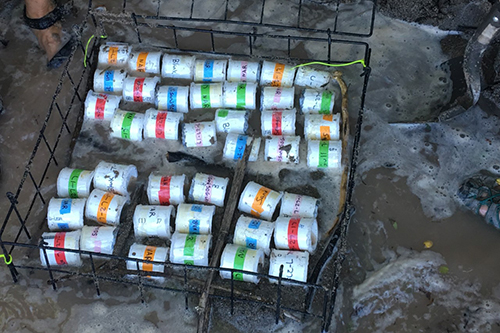
Microcosms containing E. coli samples were buried in sand for six weeks at several beaches in a related project by McLellan. Image credit: Natalie Rumball
Sea Grant-funded researchers Sandra McLellan and Gyaneshwar Prasad, both with the University of Wisconsin-Milwaukee, are building on previous research to find ways to decomplicate beach managers’ lives by determining what factors could limit long-term survival of E. coli on beaches.
McLellan, a professor in the School of Freshwater Sciences, explained the pros and cons of E. coli as an indicator.
“It’s a great indicator because it’s so easy for people to culture in the lab. It’s easy to count. Where it’s not a good indicator is it really doesn’t tell you anything about the source of what’s there. You don’t know where to direct your management strategies. Should I be chasing away the birds or should I be looking for a leaking sewage pipe nearby? And then to top it off, the other downside is the E. coli survives outside of a host. There’s prolonged survival in the sand and maybe even growth if enough nutrients are available,” McLellan said.
Once outside a human or animal gut, E. coli usually only live a couple of days. But under certain circumstances, it can live for week or even indefinitely in sand.
With graduate student Sophia Ward’s help, McLellan and Prasad are studying sand and water at six Lake Michigan beaches: two in Kenosha County, two in Manitowoc County and two in Milwaukee County. McLellan thinks this array of beaches will provide good representation of what goes on around the Lake Michigan shoreline.

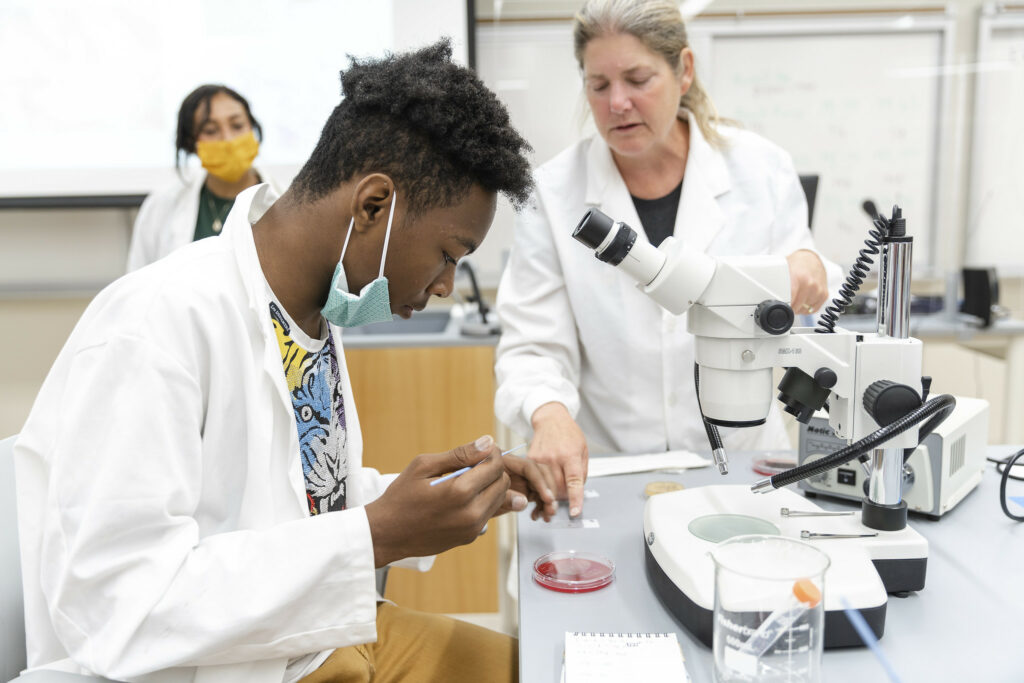
Sandra McLellan interacts with high school students who are studying E. coli in a program she ran in partnership with the Sixteenth Street Clinic in Milwaukee in 2021. Image credit: Wisconsin Sea Grant
They are also testing for levels of nutrients such as carbon, nitrogen, phosphorus and iron. In addition, they are conducting laboratory experiments to “starve” long-lived E. coli of these nutrients to see what drives their survival.
For the lab experiments, E. coli is mixed with sand and packed into small microcosms (miniature environments). McLellan describes them as four-inch diameter PVC pipes cut into four-inch sections. “We bury them in a bed of sand and keep them nice and moist. This helps us mimic what happens at the beach. The water can pass through, but the E. coli can’t escape from those little microcosms.”
The E. coli contain an extra piece of DNA that has a green fluorescent protein engineered in such a way that when the cell is starved, it lights up. The researchers then feed them with water containing varying amounts carbon, nitrogen, phosphorus and iron. They remove the microcosms periodically and count the E. coli to see how many have survived and see if any display the fluorescent-green markers of starvation.
From preliminary experiments, McLellan suspects carbon might be the most important factor that allows E. coli to persist. In beach environments, carbon is often provided by decaying plant life, especially leaves and the nuisance algae, Cladophora.
Once this limiting factor is confirmed, McLellan and her team will develop a scorecard for the potential of long-term E. coli reservoirs for each beach. “By scoring how easily or how much E. coli is growing in the sand at these beaches, it can help beach managers direct their attention to what might be some probable sources at their beaches,” McLellan said. They are also taking nutrient levels into account.
“The scorecard is developing. I think once we understand the dynamic range of what these beaches look like, then we’ll have a better idea of what the scorecard will actually look like,” she added. The information will also be useful to the Wisconsin Department of Natural Resources, which heads the Wisconsin beach monitoring program.
The post Persistent Pollution: Researchers investigate the key to E. coli bacteria survival in Lake Michigan beach sand and water first appeared on Wisconsin Sea Grant.News Releases | Wisconsin Sea Grant
News Releases | Wisconsin Sea Grant
https://www.seagrant.wisc.edu/news/persistent-pollution-researchers-investigate-the-key-to-e-coli-bacteria-survival-in-lake-michigan-beach-sand-and-water/
NCEI News Feed
https://www.ncei.noaa.gov/news/enso-detection-and-monitoring-depends-data
Current Watches, Warnings and Advisories for Brown (WIC009) Wisconsin Issued by the National Weather Service
https://alerts.weather.gov/cap/wwacapget.php?x=WI126654A5F13C.AirQualityAlert.126654B40C90WI.GRBAQAGRB.da5a7ed5beb109af88bb4b1c4265f55a
Current Watches, Warnings and Advisories for Brown (WIC009) Wisconsin Issued by the National Weather Service
https://alerts.weather.gov/cap/wwacapget.php?x=WI126654A45778.SpecialWeatherStatement.126654A47C30WI.GRBSPSGRB.47a4c4767dbd26d7484e0fb0d41919b2
Current Watches, Warnings and Advisories for Brown (WIC009) Wisconsin Issued by the National Weather Service
https://alerts.weather.gov/cap/wwacapget.php?x=WI12665497BA90.AirQualityAlert.126654A69F10WI.GRBAQAGRB.95772b461ecdeafcc9c0642321d118ec
Current Watches, Warnings and Advisories for Brown (WIC009) Wisconsin Issued by the National Weather Service
https://alerts.weather.gov/cap/wwacapget.php?x=WI12665497BA90.AirQualityAlert.126654A69F10WI.GRBAQAGRB.95772b461ecdeafcc9c0642321d118ec
Current Watches, Warnings and Advisories for Brown (WIC009) Wisconsin Issued by the National Weather Service
https://alerts.weather.gov/cap/wwacapget.php?x=WI126654954D78.SpecialWeatherStatement.126654957294WI.GRBSPSGRB.940d7b3678472919033e33d5c588d613
Current Watches, Warnings and Advisories for Brown (WIC009) Wisconsin Issued by the National Weather Service
https://alerts.weather.gov/cap/wwacapget.php?x=WI126654887918.AirQualityAlert.126654A69F10WI.GRBAQAGRB.95772b461ecdeafcc9c0642321d118ec
The U.S. Environmental Protection Agency and partners are seeking input on their latest plan to guide restoration and protection of the Great Lakes under an updated action plan for the Great Lakes Restoration Initiative from 2025 to 2029. Read the full story by Wisconsin Public Radio.
Great Lakes Commission
https://www.glc.org/dailynews/20230714-epa-input
The Great Lakes Shipwreck Historical Society announced Wednesday the discovery of a tug boat that sank into the waters of Lake Superior 144 years ago. The historical society said the Satellite sank on June 21, 1879, either as a result of a mechanical problem or because the boat struck a floating log. Read the full story by WPBN-TV – Traverse City, MI.
Great Lakes Commission
https://www.glc.org/dailynews/20230714-shipwreck

We are at a choice point when it comes to our relationship with water, says noted water expert Peter Gleick.
We can continue on our current path, which has evolved over centuries and includes unsustainable water use and ecological destruction. Both further worsened as we grapple with the effects of climate change.
Great Lakes Now
https://www.greatlakesnow.org/2023/07/book-review-water-scientist-offers-positive-vision-avoid-dystopian-future/
The Chicago Park District released three endangered piping plover chicks Wednesday at Montrose Beach along Lake Michigan, hoping to help the species which is nearly extinct in the Great Lakes region. Read the full story by WMAQ-TV – Chicago, IL.
Great Lakes Commission
https://www.glc.org/dailynews/20230714-piping-plovers
Several types of technology are deployed along beaches in the Great Lakes region to remove trash and other marine debris, both large and small. Read the full story by WLUK-TV – Green Bay, WI.
Great Lakes Commission
https://www.glc.org/dailynews/20230714-marine-debris
The U.S. Army Corps of Engineers, Detroit District will begin planned maintenance work in the navigation channel in Charlevoix, Michigan to replace deteriorating timber fenders along the channel revetments. Read the full story by MLive.
Great Lakes Commission
https://www.glc.org/dailynews/20230714-channel-repair
Several beaches along Lake Erie’s Presque Isle are restricted for swimming due to E. coli. Officials are searching for the reason. Read the full story by the Erie Times-News.
Great Lakes Commission
https://www.glc.org/dailynews/20230714-presque-isle