Assessing the U.S. and Global Climate in September 2024
NCEI News Feed
https://www.ncei.noaa.gov/news/assessing-us-and-global-climate-september-2024
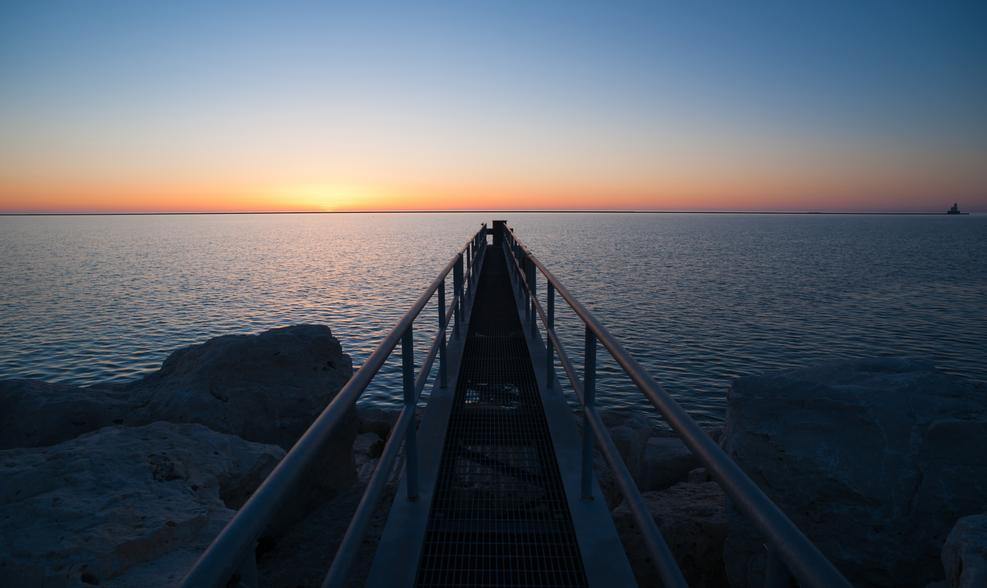
During September, the global surface temperature was 2.23°F (1.24°C) above the 20th-century average. The September average temperature of the contiguous U.S. was 68.6°F, 3.8°F above average.
NCEI News Feed
https://www.ncei.noaa.gov/news/assessing-us-and-global-climate-september-2024
NCEI News Feed
https://www.ncei.noaa.gov/news/assessing-us-and-global-climate-september-2024

Long after the Halloween season has ended, some of the Great Lakes’ most infamous invasive species remain a scary sight: blood-sucking parasites with suction-cup mouths, thousands of rotting fish carcasses washed ashore and sharp mussel shells that puncture the feet of unsuspecting beachgoers.
At least 188 nonnative aquatic species have been introduced to the Great Lakes, and over a third have become invasive, meaning they can have negative health, ecological and socioeconomic impacts when introduced to new ecosystems.
Great Lakes Now
https://www.greatlakesnow.org/2024/10/great-lakes-most-unwanted-top-10-invasive-species/
The leadership of the Alliance for the Great Lakes reflects its commitment to ensuring a thriving future for both the lakes and the communities that rely on them. At this year’s annual board retreat, we welcomed new leadership dedicated to advancing our mission: to protect, conserve, and restore the Great Lakes, ensuring healthy water for people and wildlife. Board members provide critical strategic guidance to the organization and represent a wide range of interests and expertise from around the Great Lakes region.
Laura Payne assumes the role of Board Chair, joined by Nicole Chavas as Nominations Chair, Tim Frick as Treasurer, and David Hackett as Vice Chair for Development. Each new officer brings a unique perspective to help strengthen our efforts to safeguard clean and affordable water, restoring resilience to the lakes, and elevating local voices in decision-making.


As we celebrate new leadership, we also honor the contributions of Jo-Elle Mogerman, who served as Board Chair for 12 years, and Tom Langmyer, Nominations Chair for six years. Vanessa Tey Iosue and Daniel Guzman also conclude their terms, each having brought invaluable insight and leadership to their roles on the board.


Joel Brammeier, the Alliance’s President & CEO, shared his gratitude: “The heart of our mission beats with the dedication of leaders like those departing, and we are excited to welcome new officers who will continue our efforts to create a future where all communities can rely on the Great Lakes for generations to come.”
For a complete listing of the Alliance for the Great Lakes directors and officers, visit our Board of Directors page.
The post Alliance for the Great Lakes Announces New Board Officers appeared first on Alliance for the Great Lakes.
News - Alliance for the Great Lakes
https://greatlakes.org/2024/10/alliance-for-the-great-lakes-announces-new-board-officers/
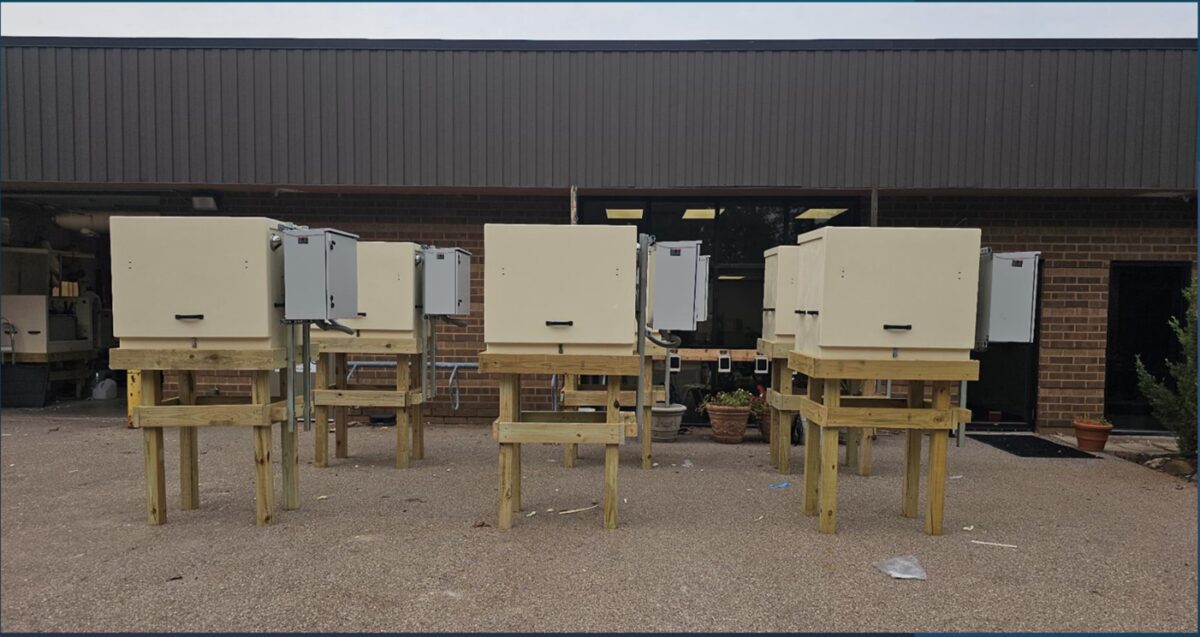
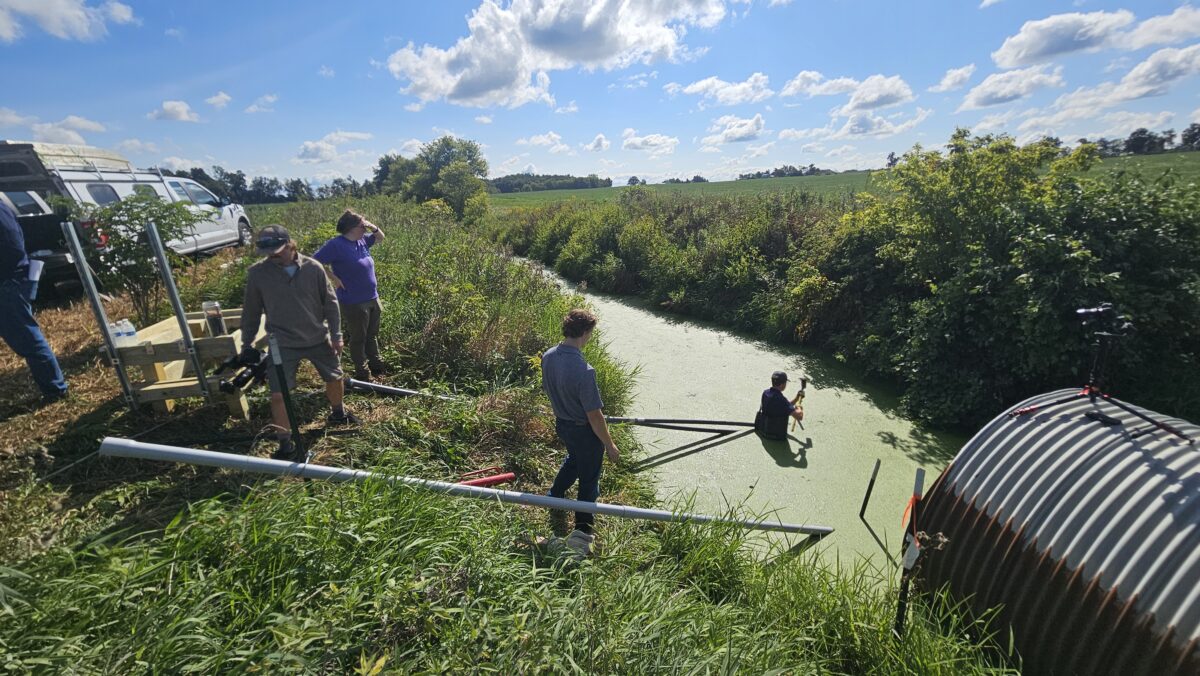
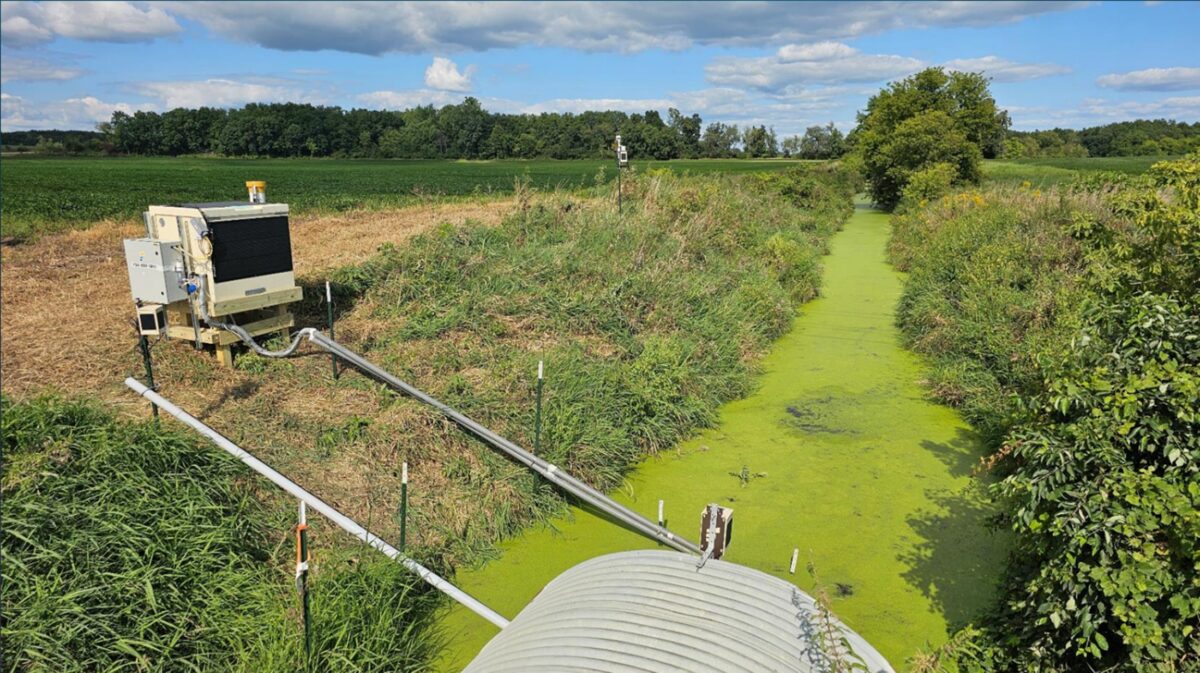
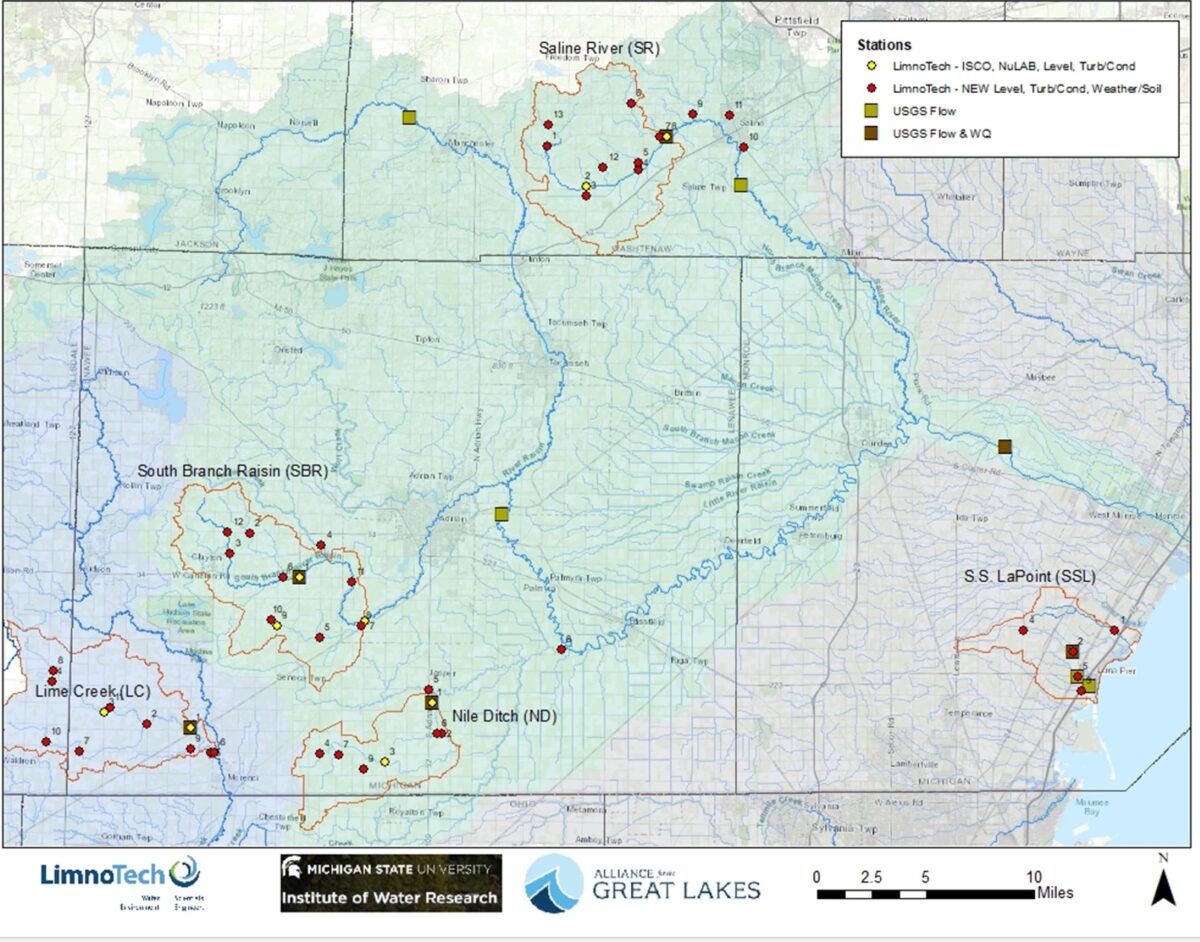
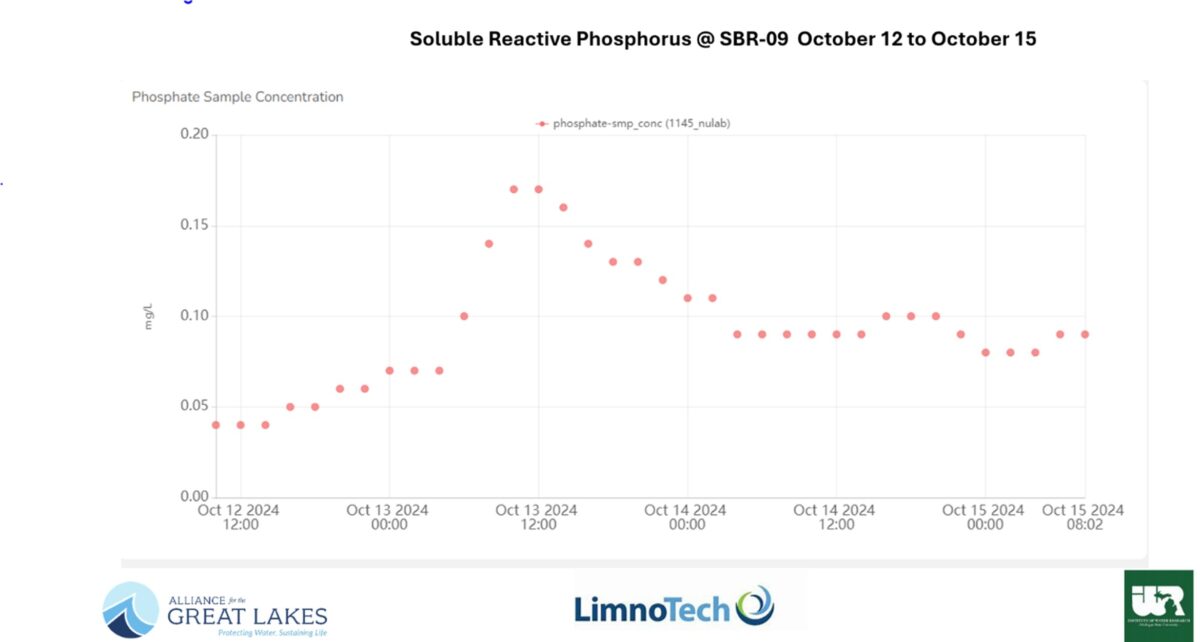
Lansing, Michigan (October 24, 2024) – A critical milestone in the fight against algal blooms on Lake Erie was reached as the installation of water quality monitoring equipment in five critical sub-watersheds feeding into the lake’s western basin was finalized. The monitoring network has started collecting data and is now the most comprehensive monitoring network in these sub-watersheds with a goal of better understanding headwater water quality and flow trends.


Lake Erie’s bloom is a persistent threat to human health and the local economy while also driving up drinking water costs. Blooms are fueled largely by nutrient runoff. In the Western Lake Erie Basin, agricultural land is the primary source for nonpoint nutrient pollution. To prevent blooms from damaging our economy and the environment, it’s critical to reduce the amount of nutrients entering rivers and streams in the WLEB.
The new monitoring network was made possible thanks to Governor Gretchen Whitmer’s bipartisan budget, which provided the funding for a $4.86 million grant from the Michigan Department of Agriculture and Rural Development (MDARD), and a $600,000 grant from the Erb Family Foundation.
The Alliance for the Great Lakes is working in partnership with MDARD to increase the department’s ability to track and monitor water quality in five of Michigan’s priority sub-watersheds in the WLEB. Technical assistance is being provided by the Michigan State University’s Institute of Water Research, LimnoTech and Freeboard Technology. The project runs through 2029, and continuous data will be available throughout the monitoring effort’s lifetime.


One approach to fight algal blooms has been to spend government funds at both the state and federal levels on farm-level conservation practices. Despite years of work and hundreds of millions in taxpayer funds spent, that approach has largely failed. Alliance for the Great Lakes research shows that farm conservation measures in Ohio and Michigan are woefully underfunded and, despite years of investment, adoption rates of conservation practices are still far behind where they need to be. Given the magnitude of the problem and the inadequate funding, states must prioritize and target funding to the highest priority areas and the most cost-efficient practices.
“Water quality data indicate a lack of progress on achieving appreciable reductions of nutrient losses from agricultural sources. Progress moving forward is going to take a change in approach, a commitment to research, investments in monitoring, and enhanced expertise on the ground,” said Dr. Tim Boring, MDARD Director. The improved monitoring is essential to better understand the local hydrology, transport mechanisms, and the impacts of agronomic practices. Functioning alongside new research into areas such as soil health, this monitoring data informs necessary changes in targeting and incentivization approaches.
Boring added that achieving improved environmental outcomes is a core mission area of MDARD’s new Regenerative Agriculture program. The program aims to deliver greater farm prosperity, improved farm ecosystems, increased community health, and a more vibrant food system. This ambitious approach is focused on realizing more definitive outcomes, including water quality.
“Understanding, tracking, and predicting where nutrient pollution comes from is difficult due to weather, cropping complexities, and a lack of data. This makes properly targeting conservation funding complicated,” said Tom Zimnicki, Alliance for the Great Lakes’ Agriculture and Restoration Policy Director.
“Understanding how nutrient pollution and water moves through the watershed will equip agencies and practitioners with accurate data to better target conservation and land management practices to improve water quality outcomes. We applaud the leadership of MDARD Director Boring who has continually emphasized the importance of expanding monitoring and data collection to help guide conservation decision-making.”


###
Contact: Don Carr, Media Director, Alliance for the Great Lakes dcarr@greatlakes.org
The post Monitoring Milestone in Fight Against Lake Erie Pollution appeared first on Alliance for the Great Lakes.
News - Alliance for the Great Lakes
https://greatlakes.org/2024/10/monitoring-milestone-in-fight-against-lake-erie-pollution/

This story was originally published by Grist. Sign up for Grist’s weekly newsletter here.
Helene and Milton, the two massive hurricanes that just swept into the country — killing hundreds of people, and leaving both devastation and rumblings of political upheaval in seven states — amounted to their own October surprise.
Great Lakes Now
https://www.greatlakesnow.org/2024/10/the-climate-stakes-of-the-harris-trump-election/
By Donté Smith As the crisp autumn air settles over Michigan, the gentle chug of steam engines echoes through Coldwater. The Little River Railroad, a historic steam railway, invites passengers to step back in time for a ride filled with charm and nostalgia. It’s one of 55 steam locomotives in the state, 15 of them still […]
The post Steam railroad takes passengers on journey through time first appeared on Great Lakes Echo.Great Lakes Echo
http://greatlakesecho.org/2024/10/23/steam-railroad-takes-passengers-on-journey-through-time/
As a River Alliance supporter, you may recall the long, drawn-out saga of the hydroelectric dam on the Pine River in Florence County. A new settlement agreement has been reached between the Michigan Department of Natural Resources and WE Energies. WE Energies will permanently cease electric generating activities at the Pine Project as of July 1, 2038.
While we are grateful to the Michigan DNR and Michigan Attorney General for litigating this case, litigation should not have been necessary because this dam should have been removed in 2025 as stipulated in the 1997 Wilderness Shores Settlement Agreement.
In a press release in 2000, River Alliance provided this explanation of the Pine Dam Project: “This dam is slated for removal through a landmark federal hydropower relicensing agreement in the Menominee River Basin. The agreement has been called “a model for the nation” by Interior Secretary Bruce Babbitt. Wisconsin Electric has agreed to remove the 43-foot high Pine Dam when its license expires in 25 years. Removal of this dam will restore this state-designated wild river to free-flowing conditions, including uncovering two eight-foot and one 12-foot waterfall. In addition, a half-mile of rapids and high-quality trout habitat will be restored. The River Alliance was the lead citizen group in Wisconsin involved in this unprecedented relicensing process.”

We know the work to protect our waters is never ending, and results often take time. This case, unfortunately, is one of many examples of why our organization and others must be prepared to advocate for decades when needed. On hearing this news, former River Alliance Executive Director Todd Ambs aptly stated, “Hard to believe that this resolution will come more than a quarter of a century after Sara Johnson [River Alliance’s first Executive Director, who passed away in 2024] led the effort for the River Alliance to reach this agreement and that the Pine Dam will finally be removed more than a decade after she left us. We are only here for a short time, but we can make an impact that lasts far longer.”

2038 feels like a long time from now, but in just four years (2028) WE Energies will need to initiate the license surrender process consistent with the Wilderness Shores Settlement Agreement. This process includes a detailed decommissioning plan with a surrender application to the Federal Energy Regulatory Commission (FERC) for the Pine Dam, located in Florence, Wisconsin, by 2032 and to cease hydropower generation and remove the dam no sooner than July 1, 2038. This settlement enforces the intent of the Wilderness Shores Settlement Agreement for removal of Pine Dam, albeit at a later date.
River Alliance will continue to work with all of the parties involved to ensure the new settlement is followed. This extended timeframe gives Florence County time to plan for the changes and opportunities dam removal can bring to the local economy. For many years, local advocates have proposed showcasing the Pine River and its waterfalls as a tourist destination. The section between the rapids above LaSalle Falls to the end of the gorge rapids below the triple drops of Breakwater Falls is the single most dramatic stretch of river topography in the entire Midwest. It is an incredible jewel, a unique, spectacular natural wonder featuring six waterfalls, two rock-walled gorges, and five sets of major rapids. We encourage the community to see the free-flowing river as an aesthetic and economic asset and spend this time strategically planning for the future.
Given this history, River Alliance, MHRC, and the resource agencies must remain vigilant to ensure that the terms of this 2024 settlement agreement are fully implemented.
This message is made possible by generous donors who believe people have the power to protect and restore water. Support our work with your contribution today.
The post Pine River to be restored at end of hydroelectric dam’s federal license appeared first on River Alliance of WI.
Blog - River Alliance of WI
https://wisconsinrivers.org/pine-dam-settlement-2024/
University of Toledo researchers hope to better understand how harmful algal bloom toxins affect people, especially those with health conditions like asthma. Read the full story by The Associated Press.
Great Lakes Commission
https://www.glc.org/dailynews/20241023-toxic-algae
Emerging carbon sequestration facilities in Indianna and Illinois are on the forefront of government strategies to slash fossil fuel emissions and meet climate goals. These facilities aim to permanently sequester planet-warming carbon dioxide deep underground, but if operations leak, they can pose significant risks to water resources. Read the full story by WBEZ – Chicago, IL.
Great Lakes Commission
https://www.glc.org/dailynews/20241023-carbon-storage
Nutrient runoff from agricultural fields accounts for about 80% of the nutrients that flow into Lake Erie. Farmers are working to minimize impacts by applying fertilizer pellets beneath the soil surface rather than atop where rain can wash it away. Read the full story by The Associated Press.
Great Lakes Commission
https://www.glc.org/dailynews/20241023-erie-algae
Fisheries biologists aim to help fish and other species while causing as little harm as possible in the process. On the Great Lakes, there are many guidelines and regulations in place to ensure ethical fisheries research. Read the full story by the Great Lakes Now.
Great Lakes Commission
https://www.glc.org/dailynews/20241023-fisheries-research
For now, the Environmental Protection Agency can move forward with plans to establish new, federal carbon pollution standards for power plants. A group representing businesses in the Great Lakes region said the standard change is needed and hopes for more legal victories in the future. Read the full story by WXPR – Rhinelander, WI.
Great Lakes Commission
https://www.glc.org/dailynews/20241023-carbon-rule
Last week, a Wisconsin Department of Natural Resources team began investigating the quagga mussel’s prevalence and its long-term impact in Geneva Lake. Read the full story by WUWM – Milwaukee, WI.
Great Lakes Commission
https://www.glc.org/dailynews/20241023-inland-quagga-mussels
On a foggy night 170 years ago, two ships sailing on Lake Huron collided, causing damage to both, records say. Both crews survived and today, the wooden two-masted schooners rest intact and upright at the bottom of the Great Lake. Read the full story by MLive.
Great Lakes Commission
https://www.glc.org/dailynews/20241023-sunken-ships
A former sand mining site in Ottawa County, Michigan, is now operating as a sprawling public park, open for residents to paddle the waters, explore paved paths, overlook a glistening inland lake, and even camp overnight. Read the full story by MLive.
Great Lakes Commission
https://www.glc.org/dailynews/20241023-new-park
By Anna Rossow Capital News Service Some residents across Michigan are becoming more familiar with unexpected visitors roaming the streets. Coyote sightings in residential neighborhoods have become more common due to the canines’ drive for food and quick adaptability skills, experts say. Coyotes prey on rabbits, chipmunks and squirrels, small animals that enter in and […]
The post Coyotes roaming Michigan first appeared on Great Lakes Echo.Great Lakes Echo
http://greatlakesecho.org/2024/10/22/coyotes-roaming-michigan/

By Juanpablo Ramirez-Franco, WBEZ
This coverage is made possible through a partnership between WBEZ and Grist, a nonprofit, independent media organization dedicated to telling stories of climate solutions and a just future. Sign up for WBEZ newsletters to get local news you can trust.
Great Lakes Now
https://www.greatlakesnow.org/2024/10/the-nations-first-commercial-carbon-storage-plant-is-in-illinois-it-leaks/

Great Lakes Now, Ideastream Public Media, Native News Online, Planet Detroit, Wisconsin Public Radio, and Grist held a discussion last week about the national, regional and statewide climate implications of the upcoming election.
Great Lakes Now Host Anna Sysling moderated a panel of journalists as they spoke about the big topics they are covering and thinking about in advance of voting day.
Great Lakes Now
https://www.greatlakesnow.org/2024/10/virtual-town-hall-what-does-election-mean-for-great-lakes-climate-and-environment/

I Speak for the Fish is a monthly column written by Great Lakes Now Contributor Kathy Johnson, coming out the third Monday of each month. Publishing the author’s views and assertions does not represent endorsement by Great Lakes Now or Detroit Public Television.
Great Lakes Now
https://www.greatlakesnow.org/2024/10/i-speak-for-the-fish-wheres-the-line-in-fisheries-research/
The Great Lakes Observing System (GLOS) aims to map the Great Lakes by 2030 through its project called Lakebed 2030. A bill to fund this effort— the Great Lakes Mapping Act — was tabled in the U.S. Congress earlier this year and it is unlikely to get passed before the U.S. election on November 5. Read the full story by Toronto.com.
Great Lakes Commission
https://www.glc.org/dailynews/20241021-lakebed-mapping
Because capturing and converting nutrients is such a critical function to wetland ecosystems, Bowling Green State University (BGSU) researchers aim to study common wetland plants to identify which species promote these functions more than others to better inform wetland design in the future. Read the full story by The Toledo Blade.
Great Lakes Commission
https://www.glc.org/dailynews/20241021-wetland-plant-research
Visitors at the Holiday Beach Conservation Area in Ontario can become “citizen scientists” to help keep an eye on erosion of its Lake Erie shoreline. Two stands allow those strolling along the sand to place their mobile phones into the cradle, snap a photo of the shoreline and upload it to the CoastReach website. Read the full story by the Windsor Star.
Great Lakes Commission
https://www.glc.org/dailynews/20241021-community-erosion-monitoring
The Wisconsin Historical Society announced this past week that the wreck of the Pride, which sank in a tornado off of Egg Harbor 126 years ago, is now listed on the national register. It was placed on the Wisconsin State Register of Historic Places on May 24 and now is the 31st shipwreck in Door County waters on the state and national registers. Read the full story by the Green Bay Press-Gazette.
Great Lakes Commission
https://www.glc.org/dailynews/20241021-historic-shipwreck
The small farming community of Teeswater, Ontario, will vote in a referendum on whether or not they’re willing to host Canada’s largest underground storage facility of spent nuclear fuel. Less than 45 minutes from the Bruce Nuclear Generating Station on Lake Huron, Teeswater is one of two locations being considered to host the facility. Read the full story by CBC News.
Great Lakes Commission
https://www.glc.org/dailynews/20241021-nuclear-storage
An abandoned boat was discovered washed ashore along Lake Michigan in Milwaukee after strong winds caused the boat to break loose. The U.S. Coast Guard is working with the boat’s owner and their insurance company to remove the boat. Read the full story by WISN-TV – Milwaukee, WI.
Great Lakes Commission
https://www.glc.org/dailynews/20241021-boat-ashore
The annual “Salmon Run” in Buchanan, Michigan, is happening now. Every year, these fish travel from big bodies of water, in this case Lake Michigan, and return to their birthplace to spawn. Read the full story by WNDU-TV – South Bend, IN.
Great Lakes Commission
https://www.glc.org/dailynews/20241021-salmon-run
The Alvin Buckingham – a double-masted schooner that ran aground on a Lake Huron reef 154 years ago – now rests under eight feet of water about 1.2 miles offshore in the National Oceanic and Atmospheric Administration Thunder Bay National Marine Sanctuary. Read the full story by MLive.
Great Lakes Commission
https://www.glc.org/dailynews/20241021-sanctuary-shipwreck
The Algoma Guardian, a Canadian bulk carrier, was navigating the St. Lawrence River Saturday afternoon when it started to spew smoke. The ship was back up and running Sunday morning; there’s no belief that the incident created any other problems on the river for other ships. Read the full story by WWNY-TV – Carthage, NY.
Great Lakes Commission
https://www.glc.org/dailynews/20241021-ship-smoke
According to an online survey, Wisconsinites’ top philanthropic priority if they suddenly struck it rich would be to protect the Great Lakes and their shorelines. Read the full story by WLUK-TV – Green Bay, WI.
Great Lakes Commission
https://www.glc.org/dailynews/20241021-philanthropy-survey
By Ruth Thornton Standing next to a converted hoop house in one of the back areas of John Ball Zoo in Grand Rapids, David Pavlik points to a line of small cloth-covered cages filled with yellow black-eyed Susans and small orange butterflies. “These cages out here are females that have already bred in the facility,” […]
The post The Poweshiek skipperling has disappeared from most of Michigan’s prairies. Now scientists are raising them in zoos for release back into the wild. first appeared on Great Lakes Echo.Great Lakes Echo
http://greatlakesecho.org/2024/10/21/the-poweshiek-skipperling-has-disappeared-from-most-of-michigans-prairies-now-scientists-are-raising-them-in-zoos-for-release-back-into-the-wild/
Explore the intersection of science and writing about the Great Lakes during a science café at 6-9 p.m., Nov. 8, Paradise North Distillery (101 Bay Beach Road, Suite 5) in Green Bay.
“Connections: The Science + Literature of the Great Lakes,” will feature Sally Cole-Misch, author of “The Best Part of Us,” a book that charts the path of a young girl torn between Great Lakes natural history and urban realities. Cole-Misch will be in conversation with Julia Noordyk, Wisconsin Sea Grant water quality and coastal communities outreach specialist.
Cole-Misch’s book is being featured in the Great Lakes, Great Read Program, which is designed to inspire passion and connection to the Great Lakes Watershed through reading. Noordyk and Cole-Misch will be joined for questions and answers by Joanne Robertson, author of “The Water Walker,” the Great Lakes, Great Read children’s book.
Refreshments will be available. Science café sponsors include Wisconsin Sea Grant, the Green Bay National Estuarine Research Reserve designation, McDonald Companies and the Freshwater Collaborative of Wisconsin.
The post Great Lakes Science Café offered in Green Bay first appeared on Wisconsin Sea Grant.News Releases | Wisconsin Sea Grant
News Releases | Wisconsin Sea Grant
https://www.seagrant.wisc.edu/news/great-lakes-science-cafe-offered-in-green-bay/

By Lester Graham, Michigan Public
The Great Lakes News Collaborative includes Bridge Michigan; Circle of Blue; Great Lakes Now at Detroit PBS; Michigan Public, Michigan’s NPR News Leader; and The Narwhal who work together to bring audiences news and information about the impact of climate change, pollution, and aging infrastructure on the Great Lakes and drinking water.
Great Lakes Now
https://www.greatlakesnow.org/2024/10/consequences-of-less-ice-on-lakes-due-to-climate-change/
New projects to improve the health of Lake Erie and the Detroit River have financial backing from the federal government. The Essex Region Conservation Authority’s projects will get $15-million from the Ministry of Environment and Climate Change’s Great Lakes Fresh Water Ecosystem Initiative for two habitat projects planned for the Detroit River Area of Concern. Read the full story by Windsor News Today.
Great Lakes Commission
https://www.glc.org/dailynews/20241018-new-funds-for-aoc
The 17th Annual Freshwater Summit will be held on October 30 in Traverse City, Michigan and will feature presentations on aging whitefish populations, effective swimmer’s itch prevention strategies, a microplastic survey, and a workshop on climate anxiety. Read the full story by WWTV-TV – Cadillac, MI.
Great Lakes Commission
https://www.glc.org/dailynews/20241018-annual-freshwater-summit
As Western New York prepares for the cold winds of winter, New York Sea Grant and local groups are trying to prepare residents off Lake Erie for seiche events, with massive waves that can cause major damage. Read the full story by WBFO – Buffalo, NY.
Great Lakes Commission
https://www.glc.org/dailynews/20241018-seiche-events
The very dry September combined with the typical seasonal decline in water levels are bringing Great Lakes’ water levels down to lowest level in several years. Read the full story by MLive.
Great Lakes Commission
https://www.glc.org/dailynews/20241018-low-water-levels
A state park with several historical elements, including two Lake Superior lighthouses, is getting a new long-range management plan and officials are seeking public input. Read the full story by MLive.
Great Lakes Commission
https://www.glc.org/dailynews/20241018-lake-superior-lighthouses
The city of Cleveland will receive nearly $60 million in federal grant money for the proposed North Coast Connector project. The project aims to enhance waterfront access by increasing connection between Cleveland residents and the lakefront. Read the full story by WKYC-TV – Cleveland, OH.
Great Lakes Commission
https://www.glc.org/dailynews/20241018-cleveland-lakefront
Each Great Lake is now at least four degrees warmer than the typical surface water temperature for this date. Read the full story by MLive.
Great Lakes Commission
https://www.glc.org/dailynews/20241018-lake-temperature
Wisconsin ranks second in the nation for dam failures in the last two decades, raising concern over whether extreme storms driven by climate change may overwhelm them and communities downstream. Read the full story by Wisconsin Public Radio.
Great Lakes Commission
https://www.glc.org/dailynews/20241018-wi-dam-failures
Last December, the Coast Guard announced it was closing its station in Ashtabula, Ohio and downsizing its station in Fairport Harbor, Ohio because of understaffing. On Wednesday in Ashtabula, local leaders said that ending staffing there this summer did not end the calls for help they would have answered. Read the full story by WEWS-TV – Cleveland, OH.
Great Lakes Commission
https://www.glc.org/dailynews/20241018-staffing-coast-guard
The Pennsylvania Fish and Boat Commission (PFBC) is finalizing its Strategic Plan for Management of Trout Fisheries, which involves wild trout and finding places to stock 4.2 million hatchery trout each year. The plan is open for public comment until November 2nd. Read the full story by the Pocono Record.
Great Lakes Commission
https://www.glc.org/dailynews/20241018-trout-stocking

By Kelly House, Bridge Michigan
The Great Lakes News Collaborative includes Bridge Michigan; Circle of Blue; Great Lakes Now at Detroit Public Television; Michigan Public, Michigan’s NPR News Leader; and The Narwhal who work together to bring audiences news and information about the impact of climate change, pollution, and aging infrastructure on the Great Lakes and drinking water.
Great Lakes Now
https://www.greatlakesnow.org/2024/10/michigan-a-top-winner-of-climate-funds-trump-wants-to-revoke/
By Ruth Thornton Early fall temperatures in Michigan will likely be higher than average, according to the National Weather Service, but are predicted to return to normal for the winter if long-term predictions hold up. Cort Scholten, a meteorologist with the National Weather Service in Grand Rapids, Michigan, said precipitation amounts are expected to be […]
The post Warmer-than-normal fall likely in Michigan first appeared on Great Lakes Echo.Great Lakes Echo
http://greatlakesecho.org/2024/10/18/warmer-than-normal-fall-likely-in-michigan/
Forget Michael Myers—the real monsters this Halloween are lurking beneath the surface of the Fox-Wolf Watershed! As you plan your spooky adventures, whether you’re trick-or-treating in the Fox Valley or Green Bay, meet the environmental threats that haunt our lakes and rivers. These villains won’t be defeated with a hockey mask or kitchen knife, but with a little teamwork, we can keep our waters monster-free and Halloween fun watershed-friendly. 
Just as Michael Myers stalks Laurie Strode, these environmental villains silently threaten our waterways. From slimy algae to invasive zebra mussels, these monsters might be out of sight, but they’re dangerously real. Let’s meet them—and learn how to fight back!
“Possessing Waters, Spewing Green Goo!”
Where It Strikes: Fox River, Lake Winnebago, Green Bay
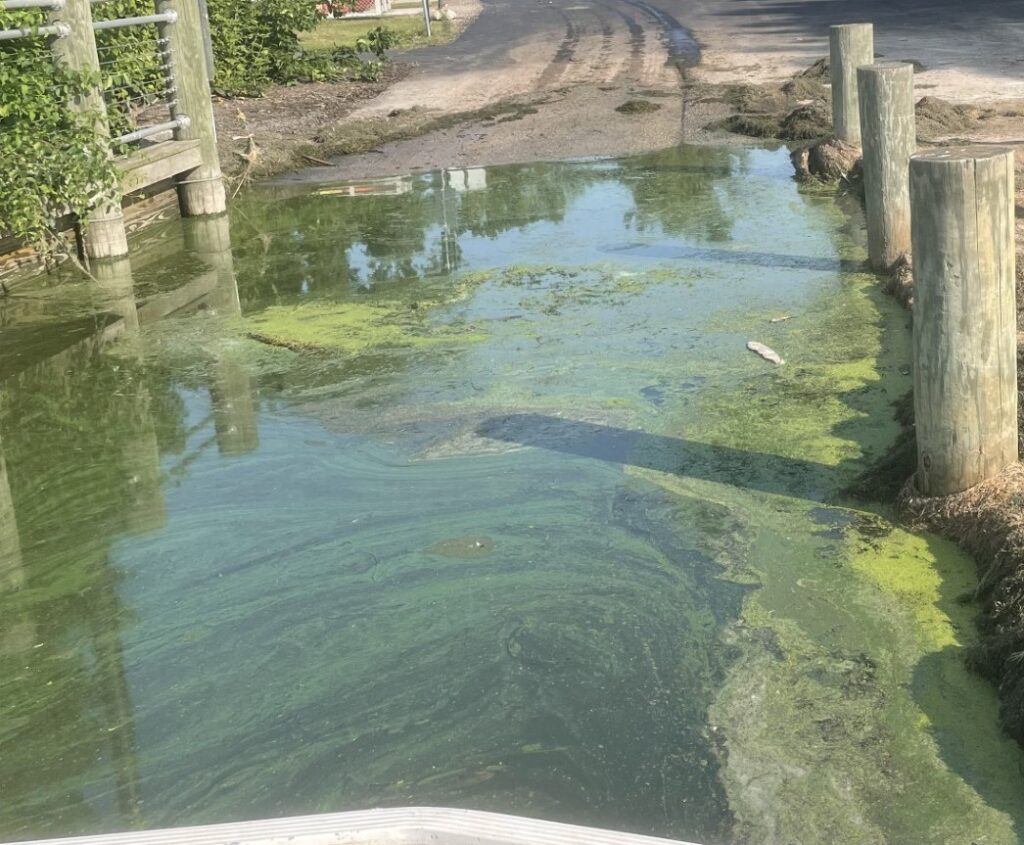
The Phosphorist is here—an evil force that takes control of lakes and rivers, just like a demonic possession in The Exorcist. It uses phosphorus from fertilizers, grass clippings, and animal waste as its unholy fuel, spreading thick, green algae blooms that choke the life out of every waterway it touches. Under the Phosphorist’s grip, fish gasp for oxygen, plants wilt, and the once-beautiful waters are transformed into slimy, stinking nightmares.
Like a possessed soul, the lake becomes corrupted—its clear waters replaced by murky, algae-filled sludge. And just like an exorcism gone wrong, the Phosphorist keeps returning after every storm, bringing new blooms and foul odors. Unless the right steps are taken, this toxic force will haunt our rivers and lakes forever.
How to Fight It:

The horde just keeps coming!
Where It Strikes: Lake Winnebago, Fox River, Wolf River
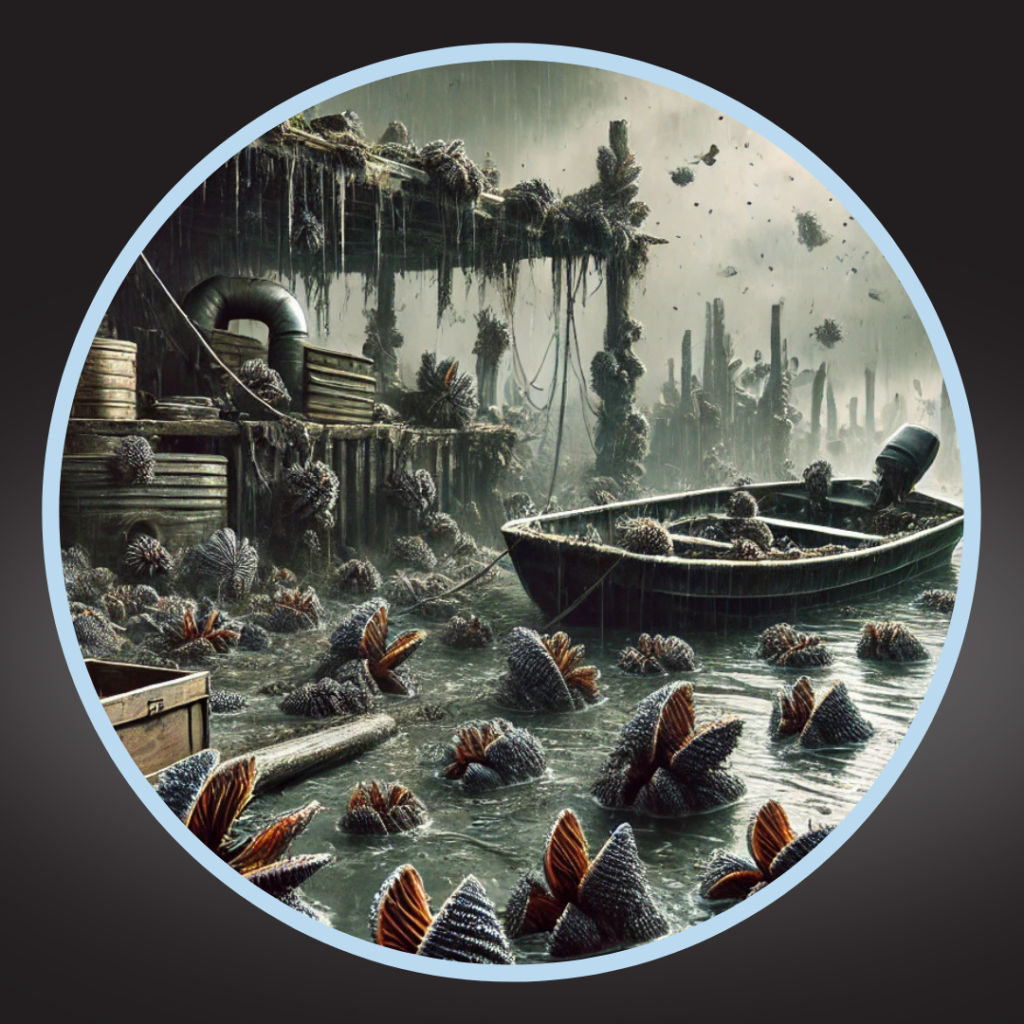
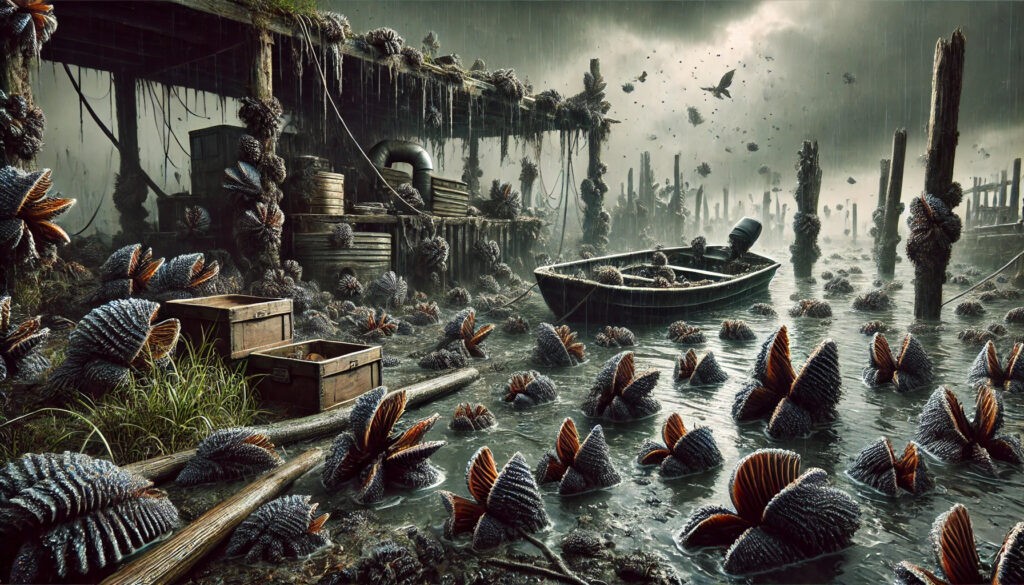
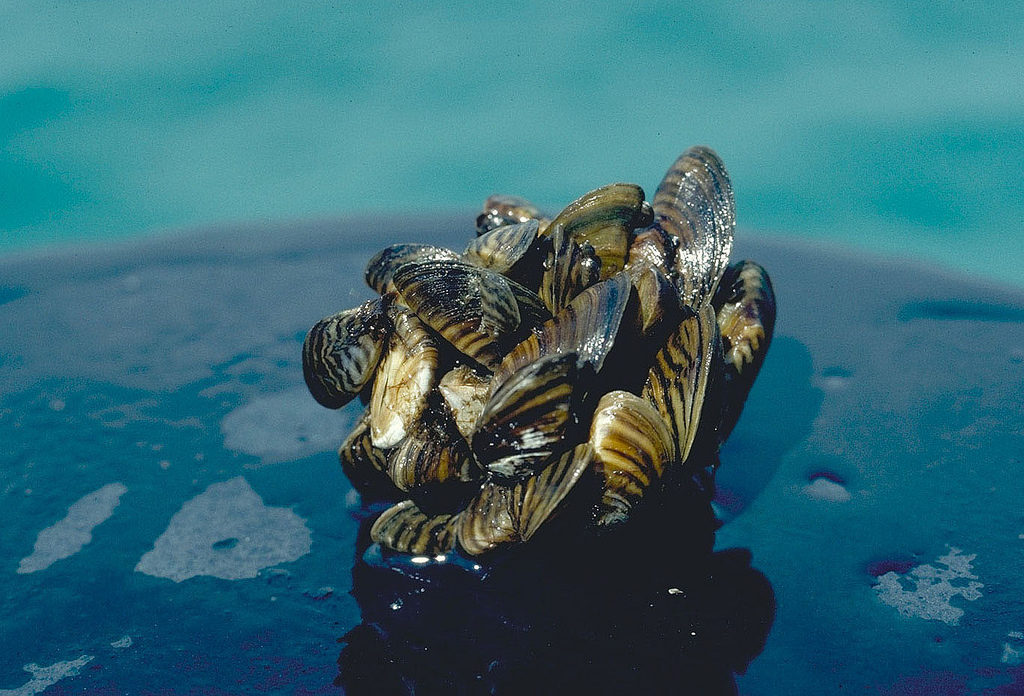
Clingers are like the Clickers from The Last of Us—unstoppable, relentless, and spreading wherever they can latch on. These zombie-like zebra mussels invade lakes and rivers, clinging to boats, docks, and water pipes with an iron grip. Once they infest a waterway, they multiply fast, draining the nutrients that fish and plants need to survive. With fewer native species thriving, the water becomes too clear—making the perfect environment for harmful algae to grow.
Just like in a post-apocalyptic world, the Clingers creep silently from lake to lake, hitching rides on boats and fishing gear. Their jagged shells litter beaches, cutting into bare feet, while colonies clog water pipes and infrastructure. Without action, the Clingers will spread through the Fox-Wolf Watershed, turning vibrant ecosystems into lifeless wastelands faster than a horde of Clickers on the move.
How to Fight It:

The Bloodsuckers of the Watershed
Where They Strike: Great Lakes, Rivers, and Streams near Green Bay
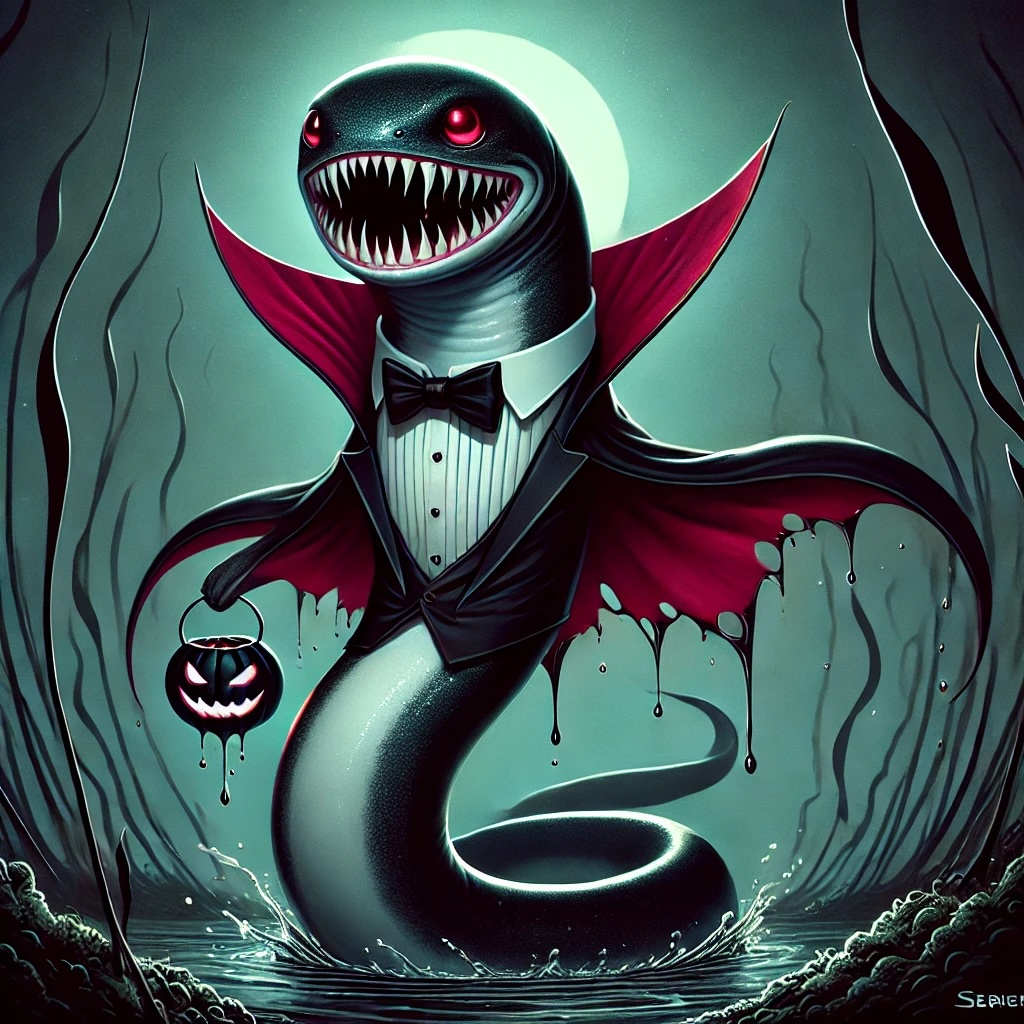
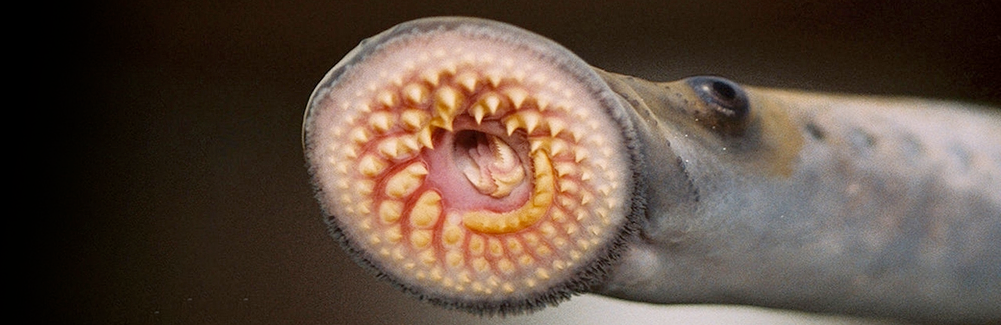
Beware the Lampire—a sea lamprey terror lurking in rivers and lakes, feeding on fish like a vampire of the deep. With its suction-cup mouth full of sharp teeth, it clamps onto its prey and drains their blood, leaving them too weak to survive. This invasive creature has slithered into the Great Lakes and waterways near Green Bay, turning once-thriving ecosystems into watery graveyards. Just like the infamous Nosferatu, it sneaks in silently, looking creepy and leaving destruction in its wake—making it harder for native fish to survive.
How to Fight It:

A Nightmare on Every Street!
Where It Strikes: Parking Lots, Streets, and Sidewalks
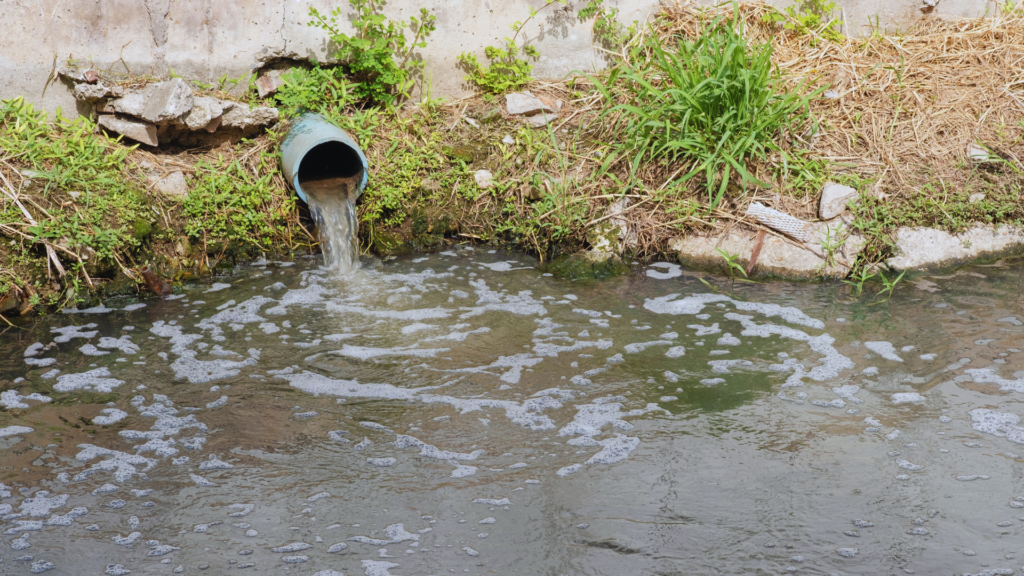
Freddy haunts dreams with terror, Floody haunts streets and waterways with polluted runoff. As rain pours down, stormwater gathers oil, fertilizer, pet waste, and trash, sweeping it all into nearby rivers and lakes. Fish and plants suffer in his toxic nightmare, while algae thrive on the chaos. If this waterborne slasher isn’t stopped, his sludge-filled trail will make rivers too dangerous for swimming and fishing—turning every trip to the lake into a horror story.
How to Fight It:

“It’s ALLLITTER!”
Where It Strikes: Beaches, Parks, and Shorelines
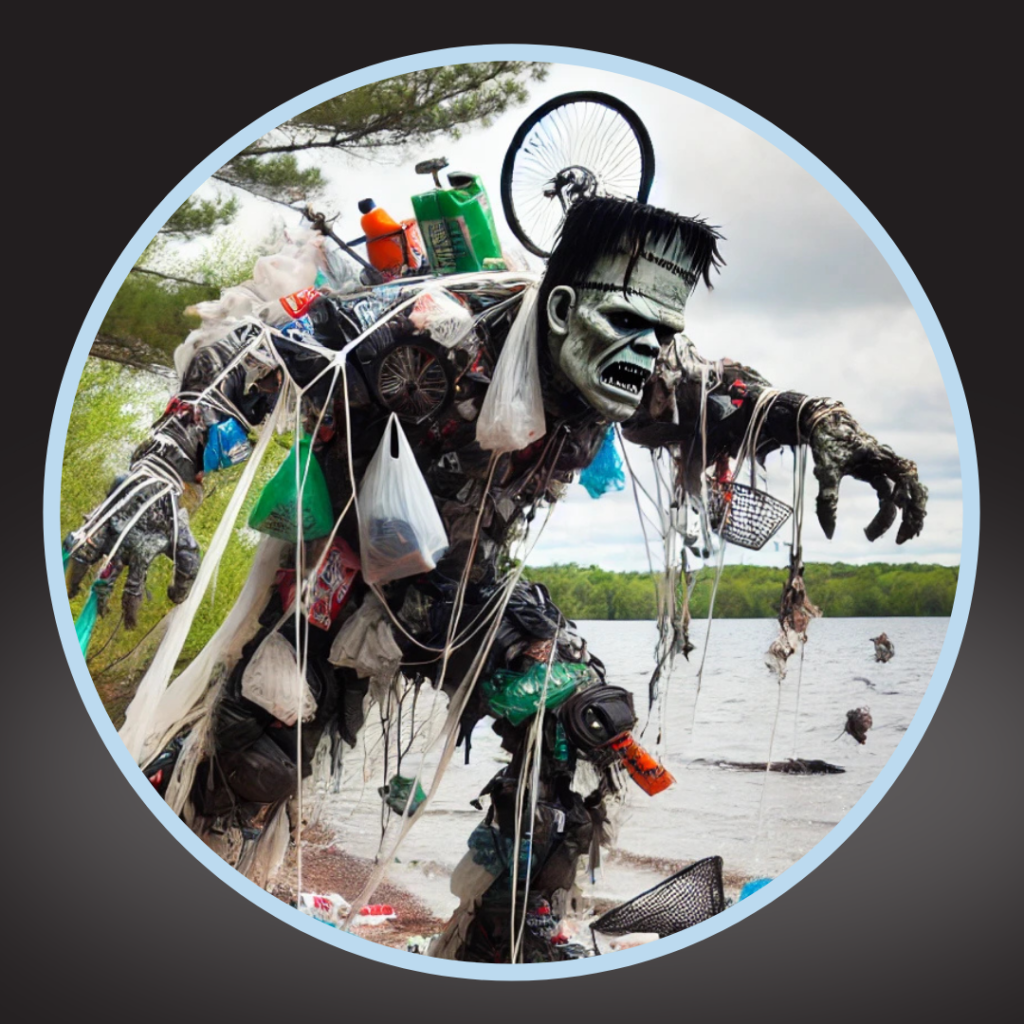
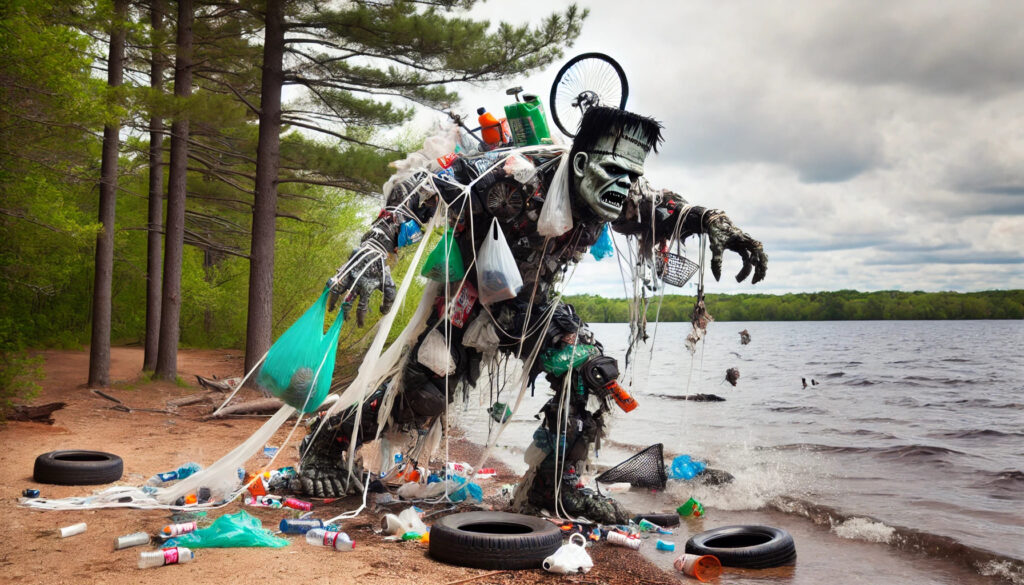
Like Frankenstein’s monster, Trashenstein is cobbled together from every discarded bottle, wrapper, and bag. With every piece of trash, it surges back to life—“It’s aliiive!”—growing larger and more destructive. Trashenstein clogs rivers, traps animals in plastic, and turns parks into horror scenes that even Victor Frankenstein would fear. The more litter left behind, the harder it is to stop this monster from rampaging across shorelines and waterways.
How to Fight It:

Halloween is about more than costumes and candy—it’s also a chance to protect the environment! As you head out for trick-or-treating in Green Bay or the Fox Valley, follow these simple tips to keep the fun Fox-Wolf friendly.
Swap plastic bags for reusable ones that can hold more candy and last longer. Plus, no more worrying about your bag ripping halfway through the night! Using reusable bags also keeps stray plastic out of the environment. Win-win!
Staying close to home isn’t just more fun—it helps the environment, too! Driving less means fewer pollutants like oil, gas, and tire particles washing into rivers and lakes when it rains. Bonus: It’s a great way to meet neighbors and see more decorations!
Why take the car when you can stroll, pedal, or roll? Walking or biking with friends means fewer emissions, cleaner air, and more candy time! And the best part? The adventure is just as sweet as the treats.
Keep the streets looking great by bringing along a small bag to pick up any stray wrappers or bottles you find. A cleaner neighborhood means less litter ending up in storm drains—and cleaner rivers and lakes for everyone to enjoy.
Share these simple tips with friends, family, and neighbors. When everyone pitches in, the impact really adds up! A small effort from each of us makes our water cleaner and our Halloween so sustainable-it’s scary!
Whether you’re trick-or-treating in the Fox Valley or Green Bay, Halloween can be about more than just spooky fun. Every action you take—from picking up trash to planting rain gardens—helps protect the Fox-Wolf Watershed from real environmental monsters.
Together, we can banish Flooddy Krueger, Trashenstein, and all the other monsters from our rivers and lakes. This Halloween, let’s enjoy the fun while making a difference for the environment. 
Photo Credit: Yuliya Karshirina, Kelly Reyer, T. Lawrence (NOAA)
Questions? Comments? Contact Chris Acy, the AIS Coordinator covering Brown, Outagamie, Fond du Lac, Calumet, and Winnebago Counties at (920) 460-3674 or chris@fwwa.org!
Follow the Fox Wolf Watershed Alliance on our Fox-Wolf Watershed Alliance Facebook page or @fox_wolf_watershed_alliance on Instagram! You can also sign-up for email updates at fwwa.org.
The Fox-Wolf Watershed Alliance is an independent nonprofit organization that identifies and advocates effective policies and actions that protect, restore, and sustain water resources in the Fox-Wolf River Basin.
This Halloween, let’s have fun while doing a little good for the watershed! With just a few small changes, you can enjoy trick-or-treating and help protect our beautiful rivers, lakes, and parks. Here’s how you and your friends can make a difference:
The post Trick or Treating in the Fox Valley & Green Bay: Beware the Monsters Threatening Our Watershed appeared first on Fox-Wolf Watershed Alliance.
Fox-Wolf Watershed Alliance
https://fwwa.org/2024/10/18/trick-or-treating-fox-valley-green-bay-monsters-watershed/?utm_source=rss&utm_medium=rss&utm_campaign=trick-or-treating-fox-valley-green-bay-monsters-watershed

Too many people take the Great Lakes for granted. We asked you what you would miss most in a day without our amazing freshwater resource, and you responded.
Today, October 17, is Imagine a Day Without Water, a national movement highlighting the value of water in our lives.
To mark the day, we’re sharing your words to remind everyone why the Great Lakes and clean water matter so much in our lives – and why it’s so important to protect them.
“Access to an abundance of fresh water.” – Shannon, Ohio
“I would miss the St. Lawrence River, the cool water, the fish and wind and waves. The sunset, the breeze through the Thousand Islands, the swirling currents, and all the animals that live in the foliage along the shores.” – Marie, New York
“Were [the lakes] depleted or severely polluted, billions and billions of living creatures would die, and barren lands would result. They give life-drinking water to millions of animals, plants and oxygen producers, and humans. They give renewal and peace to soul and spirit.” – Patricia, Michigan
“It is only a short drive for me to take a turn in the road to see Lake Huron. As soon as I do that, my spirit quiets down, and I feel peace.” – Veronica, Michigan
“While access to fresh water for drinking is what I would miss most, I would also miss summer swimming along the lakefront at Promontory Point, taking in the sunrise, seeing the cormorants and bass and enjoying the community of my fellow swimmers.” – Dana, Illinois
“We Americans are privileged to have this magnificent, beautiful, bountiful, life-giving resource in our country… We must take care of our Great Lakes; it is our duty to protect them.” – Gail, Illinois
“The magnificent vista of sky and sea especially when a storm is brewing or has just passed.” Elaine, New York
“Without our Great Lakes, I would miss most, my first glass of cold fresh water directly from the tap.” – Andy, Ontario
“I would miss the tap water coming out of my sink. I have heard terrible stories of other places having bad tap water. I am so grateful for having clean, fresh, non-polluted drinking water to drink from.” – Christi, Illinois
“Born and raised by the shores of Lake Michigan and transplanted by Superior’s, I have lived my whole life enjoying the water itself and the abundant biodiversity that shares these Great Lakes with us. They are my home and their inhabitants, my family. I would miss my home and my family.” – Aleks, Wisconsin
“Anchoring into the sound of the waves and the gulls, feeling the cold water breathe into me, seeing the sun glimmer across the surface. There’s nothing that brought me peace in the way that Lake Michigan did when I lived in Chicago.” – McKalah, Indiana
“Truth is, without the Great Lakes we probably wouldn’t be here. Next time you cross the Mighty Mac or take a ferry to Mackinaw Island; take a moment to really appreciate how spectacular the Great Lakes are. Next time you catch a fish in one of the five most amazing freshwater lakes on earth, think about what it would be like if that lake wasn’t there.” – Robyn, Michigan
Thank you for sharing the ways we are all connected with the lakes! These are the reasons we are fighting to protect our most precious resource: the fresh, clean, and natural waters of the Great Lakes.
The post What Would you Miss Most in a Day Without the Great Lakes? appeared first on Alliance for the Great Lakes.
News - Alliance for the Great Lakes
https://greatlakes.org/2024/10/what-would-you-miss-most-in-a-day-without-the-great-lakes/

By Nina Misuraca Ignaczak, Planet Detroit
This article was republished with permission from Planet Detroit. Sign up for Planet Detroit’s weekly newsletter here.
Federal aid is coming to Michigan’s sweet cherry farmers, who lost much of their crops this year due to erratic weather patterns and subsequent pest infestations.
Great Lakes Now
https://www.greatlakesnow.org/2024/10/federal-aid-to-rescue-michigan-cherry-farmers-after-devastating-crop-loss/
NCEI News Feed
https://www.ncei.noaa.gov/news/update-hurricane-helenes-impacts-ncei