Staying One Step Ahead of Tsunamis
2026-03-23
An explanation of the types of tsunami data that NCEI stewards, as well as its practical applications.
NCEI News Feed
https://www.ncei.noaa.gov/news/staying-one-step-ahead-tsunamis
NCEI News Feed
https://www.ncei.noaa.gov/news/staying-one-step-ahead-tsunamis
NCEI News Feed
https://www.ncei.noaa.gov/news/staying-one-step-ahead-tsunamis
NCEI News Feed
https://www.ncei.noaa.gov/news/staying-one-step-ahead-tsunamis
NCEI News Feed
https://www.ncei.noaa.gov/news/staying-one-step-ahead-tsunamis
NCEI News Feed
https://www.ncei.noaa.gov/news/staying-one-step-ahead-tsunamis
NCEI News Feed
https://www.ncei.noaa.gov/news/staying-one-step-ahead-tsunamis
NCEI News Feed
https://www.ncei.noaa.gov/news/staying-one-step-ahead-tsunamis
NCEI News Feed
https://www.ncei.noaa.gov/news/staying-one-step-ahead-tsunamis
NCEI News Feed
https://www.ncei.noaa.gov/news/staying-one-step-ahead-tsunamis
NCEI News Feed
https://www.ncei.noaa.gov/news/staying-one-step-ahead-tsunamis
NCEI News Feed
https://www.ncei.noaa.gov/news/staying-one-step-ahead-tsunamis
NCEI News Feed
https://www.ncei.noaa.gov/news/staying-one-step-ahead-tsunamis
NCEI News Feed
https://www.ncei.noaa.gov/news/staying-one-step-ahead-tsunamis
NCEI News Feed
https://www.ncei.noaa.gov/news/staying-one-step-ahead-tsunamis
NCEI News Feed
https://www.ncei.noaa.gov/news/staying-one-step-ahead-tsunamis
NCEI News Feed
https://www.ncei.noaa.gov/news/staying-one-step-ahead-tsunamis
NCEI News Feed
https://www.ncei.noaa.gov/news/staying-one-step-ahead-tsunamis
NCEI News Feed
https://www.ncei.noaa.gov/news/staying-one-step-ahead-tsunamis
NCEI News Feed
https://www.ncei.noaa.gov/news/staying-one-step-ahead-tsunamis
NCEI News Feed
https://www.ncei.noaa.gov/news/staying-one-step-ahead-tsunamis
NCEI News Feed
https://www.ncei.noaa.gov/news/staying-one-step-ahead-tsunamis
It’s the same story every year: In February or March, a warm spell arrives that makes us think the long winter is finally over. Then, just as quickly, cold weather returns and we’re back to bundling up. This is a false spring, and it feels nature is playing a trick on us. But what is it, really?
#GreatLakes #Weather #Spring #Winter #Science #Ecology
===========================================
Website: https://greatlakesnow.org
Facebook: https://www.facebook.com/greatlakesnow
X: https://www.x.com/greatlakesnow
Instagram: https://www.instagram.com/greatlakesnoworg
Newsletter: https://www.greatlakesnow.org/great-lakes-now-newsletter/
To learn more about supporting Detroit PBS and Great Lakes Now, visit https://www.detroitpbs.org/
The post Is “false spring” really a thing? appeared first on Great Lakes Now.
Great Lakes Now
https://www.greatlakesnow.org/2026/03/23/is-false-spring-really-a-thing/

Last month, I had the opportunity to participate in discussions around the release of the State of the Great Lakes (SOGL) Report. Sitting alongside scientists, federal agency representatives, community members, and regional partners at the Great Lakes Public Forum, I was reminded of something fundamental: the Great Lakes are resilient, but they are not invincible.
The State of the Great Lakes Report 2025 is a collaborative binational assessment by the United States and Canada under the Great Lakes Water Quality Agreement (GLWQA), which paints a picture of progress and persistent challenges for the water that sustains us, our communities, and our economies.
The report provides a valuable binational snapshot of ecosystem health and highlights important gains. It also reveals persistent gaps and, perhaps most importantly, raises questions about whether we are prepared for what lies ahead.
Across the Great Lakes Basin, the report shows that the Great Lakes continue to be an excellent source of drinking water and that beaches remain safe for swimming and recreation throughout much of the season, affirming their immense value as natural resources for millions of people. But this progress did not happen by accident. The Great Lakes Restoration Initiative (GLRI) has been one of the most effective federal investments in freshwater protection, accelerating cleanup in long-polluted Areas of Concern (AOC) and restoring habitat across the region.
Through coordinated and collaborative efforts, GLRI funding has supported contaminated sediment removal, wetland and shoreline restoration, and long-term monitoring that delivers measurable community and ecological benefits. The delisting of Muskegon Lake stands as a powerful example of what sustained commitment can achieve, transforming a once-degraded water body into a restored ecosystem that supports recreation, local economy, and wildlife vitality. As the Alliance advocates for GLRI reauthorization in 2026, these successes demonstrate that when we invest in science-based restoration and strong partnerships, we protect drinking water, strengthen communities, and move the Great Lakes from recovery toward long-term resilience.
The overall assessment remains largely “fair” and “unchanging.” That tells a nuanced story. Some long-term efforts are working. Legacy toxic chemicals continue to decline in many areas. Certain habitat restoration initiatives have delivered measurable ecological improvements. New introductions of invasive species have slowed compared with previous decades.
But other trends are troubling. Nutrient pollution continues to drive harmful algal blooms, particularly in Lake Erie, threatening drinking water supplies, public health, fisheries, and local economies. What is especially concerning is that this pattern persists despite more than a decade of significant investment in voluntary best management practices. While voluntary programs have generated important partnerships and localized improvements, basin-wide nutrient reductions have not occurred at the scale or speed required to meet water quality targets. This reality reinforces the need for stronger, enforceable standards and accountability mechanisms alongside continued technical and financial support that is adapted and directed at incentivizing the practices that work best. If we are serious about protecting the Great Lakes, nutrient pollution must be addressed not only through incentives, but through clear regulatory frameworks that ensure measurable, basin-wide reductions.
Climate change, now referred to as climate trends in the report, is amplifying hydrological extremes. Shoreline erosion, warming waters, drought periods, and habitat shifts are accelerating. Invasive species already established in the basin continue to reshape food webs. At the same time, real progress is being made through renewable energy investments, climate adaptation planning, wetland restoration, green infrastructure, and regional collaboration under frameworks like the Great Lakes Compact and GLRI. Yet this progress remains uneven and fragile, as climate impacts often outpace policy responses and funding stability, underscoring the need for sustained, science-based, and climate resilient water management across the basin.
One area that deserves greater urgency and attention is wetlands. Wetlands are natural infrastructure. They filter pollutants, recharge groundwater, buffer floods, stabilize shorelines, and provide essential habitat for fish and wildlife. While the report recognizes habitat conditions, it does not fully capture the accelerating pressures on coastal and inland wetlands, including development, shoreline hardening, hydrologic alteration, and climate-driven water level fluctuations. At the same time, the likelihood that federal wetland protections will be weakened under ongoing changes to the Water of the United States (WOTUS) rule makes this moment even more consequential. As the scope of federal jurisdiction is reduced, wetlands that lack continuous surface connections, especially isolated and headwater wetlands, are increasingly excluded from Clean Water Act protection. This reality means states across the Great Lakes basin must step up to fill emerging regulatory gaps.
As we face more intense storms and fluctuating lake levels, wetlands are among our most effective and cost-efficient climate adaptation tools. Protecting and restoring them cannot remain optional or secondary. It must be central to the region’s next phase of action through science-based stronger-state level protections, clear regulatory standards, and sustained restoration investment.
Strong science underpins sound water policy. Monitoring networks across the basin, tracking nutrients, contaminants, water levels, and ecosystem indicators, allow us to identify emerging threats and respond early. But monitoring capacity is only as strong as the institutions that support it. We are increasingly concerned about constraints on federal and state agency resources, threats to regulatory authorities, and reductions in scientific staffing. For example, the Great Lakes Environmental Research Laboratory (GLERL) experienced significant staffing reductions in 2025, with independent reporting indicating that the laboratory has lost roughly 35% of its approximately 48 person workforce as key scientists, communication staff, and probationary employees were dismissed or left under pressure from federal hiring freezes. This loss has created serious gaps in harmful algal bloom monitoring and other core research functions. If scientific capacity erodes, early warning systems weaken. And when early warning systems weaken, communities pay the price.
The report provides a comprehensive overview of many indicators, but some emerging threats deserve deeper integration. Microplastics are now widespread across the basin, from open waters to drinking water sources. PFAS and other emerging contaminants pose long-term threats to public health, wildlife, and fisheries. While these issues are acknowledged in broader research discussions, they are not yet fully integrated into basin-wide condition assessments to the extent warranted. We cannot manage what we do not comprehensively measure.
Another critical dimension is water infrastructure. Although the report does not focus on these aspects of water quality, aging drinking water, wastewater, and stormwater systems shape water quality outcomes every day. Combined sewer overflows, failing pipes, and inequitable access to safe water and sewer service remain pressing challenges, impacting human health and well-being along with ecosystem health. Properly scoped, designed and implemented, water and sewer infrastructure is environmental protection, as well as public health protection and climate resilience.
Without sustained investment, equitable prioritization of infrastructure projects and equitable funding mechanisms, progress on ecosystem and human health will be limited.
At the Alliance for the Great Lakes, our work intersects directly with the trends identified in the SOGL report:
The report affirms that these priorities are not abstract. They are essential to the region’s stability. Perhaps the most important question is not where we stand today, but whether the region is positioned to meet the next three years of challenges.
Although SOGL no longer uses the terminology of climate change, we know that changes in physical conditions (as it is now described) are increasing. Development pressures continue. Industrial water demand is growing. Emerging contaminants are expanding faster than regulatory frameworks. If scientific capacity is weakened, if regulatory authorities are constrained, or if environmental protections are rolled back, the progress documented in the report could stall or reverse. The Great Lakes require consistent stewardship, not episodic attention.
Participating in the State of the Great Lakes discussions reinforced both my optimism and my urgency. The Great Lakes Basin has a strong foundation of binational cooperation. Decades of cleanup efforts have delivered measurable results. Community leadership is rising. But resilience is not automatic. It must be built through science, policy, infrastructure, and public engagement. The Great Lakes are resilient waters. Our institutions must be just as resilient. The work ahead demands that we act with ambition recognizing that protecting the largest freshwater system on Earth is not a one-time achievement but a continuous responsibility.
The post What the State of the Great Lakes Report Tells Us About Our Future appeared first on Alliance for the Great Lakes.
News - Alliance for the Great Lakes
News - Alliance for the Great Lakes
https://greatlakes.org/2026/03/what-the-state-of-the-great-lakes-report-tells-us-about-our-future/
Winter maintenance at the Soo Locks in Sault Ste. Marie, Michigan, is wrapping up as the U.S. Army Corps of Engineers prepares to mark the start of the 2026 Great Lakes shipping season. Read the full story by WPBN-TV – Traverse City, MI.
Great Lakes Commission
https://www.glc.org/dailynews/20260320-poe-lock
The Michigan Department of Natural Resources (DNR) surveys the diverse and important Great Lakes fisheries every year between April and November. Surveying for 2025 has concluded, and DNR fisheries biologists are now synthesizing the findings and preparing for next year’s surveys. Read the full story by the Oscoda Press.
Great Lakes Commission
https://www.glc.org/dailynews/20260320-huron-fisheries-surveys
After heavy March rainfall in the Great Lakes region, the International Lake Ontario-St. Lawrence River Board is now predicting water levels to slightly exceed the average but adds that flooding risk remains minimal. Read the full story by WROC-TV – Rochester, NY.
Great Lakes Commission
https://www.glc.org/dailynews/20260320-ontario-water-levels
Fisheries experts from Ohio, Michigan, New York and Pennsylvania and the province of Ontario will gather for the annual Lake Erie Committee meetings of the Great Lakes Fishery Commission to establish total allowable catch limits for Lake Erie walleye and yellow perch harvests in 2026. Read the full story by the Cleveland Plain Dealer.
Great Lakes Commission
https://www.glc.org/dailynews/20260320-erie-fisheries
In February 2025, a stream in Ontario’s Lake Simcoe watershed was saltier than ocean water due to winter road salt runoff. Accumulating levels of salt in the water impacts groundwater, fish, and drinking water. Read the full story by Great Lakes Now.
Great Lakes Commission
https://www.glc.org/dailynews/20260320-salt-simcoe
U.S. Transportation Secretary Sean Duffy announced Tuesday that more than $1 billion has been delivered to fund replacement of a major bridge connecting Duluth, Minnesota, and Superior, Wisconsin. The money will go to fund the $1.8 billion replacement of the Blatnik Bridge. Read the full story by Wisconsin Public Radio.
Great Lakes Commission
https://www.glc.org/dailynews/20260320-blatnik-bridge
The inspector general for the Environmental Protection Agency is warning people about eating fish from the contaminated Eighteenmile Creek in Niagara County, New York. The lack of signage by the creek warning of fish consumption advisories and the contamination has been a problem for years. State authorities say they do not have the power to erect any signs. Read the full story by WIVB-TV – Buffalo, NY.
Great Lakes Commission
https://www.glc.org/dailynews/20260320-eighteenmile-creek
An iconic Lake Michigan lighthouse, the Big Sable Point Lighthouse in Mason County, Michigan, could be restored two years earlier than expected due to the unanticipated speed with which the project has received support. Read the full story by MLive.
Great Lakes Commission
https://www.glc.org/dailynews/20260320-michigan-lighthouse
Waste and litter are often found on or in lakes and streams during ice fishing season in the Great Lakes region. The Keep It Clean campaign uses different educational, legislative and enforcement methods to remind fishers, campers and everyday citizens to be aware of garbage they bring on their trips. Read the full story by Great Lakes Echo.
Great Lakes Commission
https://www.glc.org/dailynews/20260320-ice-fishing-trash
New York’s Scajaquada Creek was the site of a more subdued, long-term environmental catastrophe compared to its infamous neighbor, the Love Canal. Read the full story by Great Lakes Now.
Great Lakes Commission
https://www.glc.org/dailynews/20260320-scajaquada-creek
Enjoy River Alliance of Wisconsin’s Winter 2026 WaterWays newsletter. To get a copy of WaterWays, become a River Alliance member or pick up a print copy at local events with our partners across Wisconsin. Download a PDF copy of the full newsletter.
by Allison Werner, Executive Director

To be honest, I am running out of ways to say how our organization is navigating the continued obstacles we are facing.
What I keep coming back to is the reminder that none of this is new. Oppression isn’t new. Injustice isn’t new. Greed isn’t new. Pollution isn’t new.
What is also not new? Resistance. Organizing. Community.
The River Alliance team has spent a lot of time, over many years, learning about and discussing environmental justice and our nation’s long history of environmental racism that led to the need for a movement for environmental justice.
We have always believed that everyone deserves clean water. It is such a basic thing to say. However, when there are people in this state that currently can’t drink their water because it will make them sick, our state has failed in this very basic right. If we can’t agree on the basic need of clean water for the health of Wisconsin families- our friends, our neighbors, how are we going to agree to work on other basic needs and rights?
For decades we and others have demanded that polluters be held accountable. While there have been victories in the past and present, corporations have influenced and prevailed far too many times. Now federal laws and rules are being dismantled, which will require Wisconsin and our local communities to use the laws and regulations we still have to protect ourselves.
We saw this coming. We knew our governmental systems were weak and our relative abundance of water would make us a target for corporations to move here to use and pollute our waters.
We believe the solutions lie in community, local decisions, and building new systems that manage water and agriculture in truly sustainable and ethical ways. Our goals have to be clean water for all and everyone, especially the most impacted and marginalized, need to be included in the decision making process so that all voices are not just heard, but included in shaping how our future looks.
We created the current federal and state systems, which means we can change them as well.
We believe there is a future where we work in community to shape better systems that are just and equitable. This will not be easy, but nothing important is ever easy or quick. We’ve been doing this work for more than 30 years and are more dedicated than ever to persevere and stand up for what is right.

By Stacy Harbaugh, Communications Director
It felt like a breath of relief when the Town of Campbell received nearly $40 million from the U.S. Department of Agriculture to fund a municipal water system to alleviate PFAS-contaminated drinking water. Those funds arrived due to the relentless advocacy by residents and community leaders seeking solutions to water pollution.
However, Campbell leaders like Lee Donahue reminded us these funds were a loan, not a gift. Residents must still finance and repay an unfathomable amount to have safe drinking water instead of relying on bottled water for drinking and cooking.
Our state leaders must make local residents’ concerns about their water a top priority. Too often, legislators prioritize industry concerns over those of families in their district. Since the 2023 state budget was approved, the Joint Finance Committee and state legislators had refused to release over $125 million in earmarked funds to help PFAS-impacted communities while they debated spending conditions. Among those conditions was defining an “innocent landowner” whose land is polluted with PFAS.
While some landowners and farmers have been truly passive receivers of contaminated sludge from wastewater treatment plants and paper mills, culpable industries pressured lawmakers for exemptions to our state’s Spills Law.
Let’s be clear about liability for pollution. Companies like 3M, DuPont, and Tyco have known since at least the 1970s that PFAS chemicals were toxic. Because our state and federal government didn’t prevent this pollution, taxpayers and communities like Campbell must now pressure our government to provide a remedy in support of their right to clean water. Making Swiss cheese out of our Spills Law only passes more unjust costs to Wisconsin’s people.
Justice means helping Wisconsinites secure clean drinking water now and passing laws that stop the next “forever chemical.” Pollution is expensive. Smart leaders know we must prevent it now or pay later with bottled water, critical investments in advanced water treatment, and health care bills.
Wisconsinites cannot wait for lawsuit settlements to fund cleaning up their drinking water. Progress means the legislature releases clean water funds, hires experts to administer remediation grants, tightens clean water standards, and bans PFAS-style chemicals to prevent further water damage.
As of the time of this publication, the Assembly voted on PFAS bills and sent them to the Senate for a vote. River Alliance supports the compromise that the Assembly unanimously approved and we are hopeful that the Senate will approve the legislation later in March.
Visit our PFAS bill update blog post to learn what’s next.
By Mike Tiboris, Agriculture and Water Policy Director
 River Alliance continues to explore the deeper structural obstacles to water protection. Our work on farm finance is a great example of this long-term, systems-change thinking.
Farmers may want to do more to protect water through conservation projects, but their priority is making enough to pay back their operational loans. Water protection necessarily becomes an extra and voluntary expense. Decreases in federal grant funding for farm conservation don’t help either.
There is a significant gap between the way farmers and their lenders think about risk. Farmers, and the conservation professionals who support them, think about the long-term risks of not protecting their soil and water, while lenders are squarely focused on the loan repayment risks. It’s important to close this gap and build a shared mission among lenders, conservationists, and farm business managers. We believe this shared goal, especially in a changing climate, improves water protection by making it central to farm financial stability.
River Alliance, with support from WiSys (the Wisconsin System Foundation) through a grant from the Wisconsin Economic Development Corporation, has launched a series of workshops designed to strengthen coordination across these sectors. These workshops bring together lenders, farm business managers, and conservation professionals to better understand one another’s roles and to identify practical opportunities for collaboration.
 The first of four planned workshops was held in partnership with the Delta Institute at the Sustainable Agriculture Summit in Anaheim, California, in November, where we introduced these ideas to a national audience of lenders and sustainability leaders from major food companies. We also connected with the Environmental Defense Fund research team whose work helped inspire this approach.
The upcoming workshops will take place in Wisconsin with a focus on regions where new relationships between lenders and conservation professionals can have the greatest impact.
By Ellen Voss, Climate Resilience Director
 The looming threat of hyperscale data center expansion has been top of mind for many Wisconsin communities this past year, and for good reason. As our state, nation, and world face unprecedented energy demands in the coming decades, we need to take a hard look at the environmental and community costs associated with these facilities and what we might be losing forever in the process if we allow them unchecked access in our state.
As an organization that’s been paying close attention to water quality and water quantity issues for over 30 years, we’re especially concerned with the exceedingly high and often undisclosed demands these large consumers place on our priceless water resources.
River Alliance is focused on preparing for the future when tech companies turn their attention to hydropower. Our organization has a long history of monitoring hydropower impacts statewide and weighing in during relicensing opportunities that set the operational course and establish the environmental footprint of hydro projects for the next half century. For us, the nexus between energy generation and impacts to rivers is at the heart of our organizational history and remains one of the core ways we protect our state’s water.
 Hydropower will likely play a role in meeting the staggering scale of future data center power demands. Our role, as always, will be to make sure that in return for using our shared water resources, aquatic life and communities that depend on fresh, abundant water are not sacrificed in the process.
As we look ahead to a future with an unpredictable climate, aging infrastructure, and unprecedented energy demands, we need to take a hard look at water and energy uses and impacts, consider all the variables, and strike a balance that meets our needs while protecting our iconic Wisconsin landscape.
State legislators have introduced legislation, Assembly bill 840 and Senate Bill 843, that starts to address data center expansion concerns. The bills passed the Assembly in January and had a Senate hearing on February 17 where we testified against the bills because of the on-site renewable energy requirement. We are in support of a statewide moratorium on data center approvals. A statewide – or even local – pause on data centers is a more than fair action to help communities across the state get the time to research and make policy decisions to best protect our water and cost to Wisconsinites.
Nature loving photographers sent us incredible images for our photo contest last year. Winners of the 2024 photo contest served as judges and picked these winners from the following categories. We were also pleased to welcome back a PFD category for images of safe paddlers wearing safety vests.
Visit wisconsinrivers.org and subscribe to our Word on the Stream e-newsletter to learn when our 2026 photo contest will be announced.

Best in show
“Light shining down on Cascade Falls” in Osceola, WI by John Cuoco

People
“Fall Fly Fishing” in the LaFarge Driftless Area by Ann Paese

Animals
“Great Catch” taken at Pettenwell Dam near Necedah, WI by Dan Fearing
‘

Landscapes
“Zoe’s Presence” taken on the banks of the Wisconsin River in Merrill, WI by Kira Ashbeck

Plants
“Mushrooms, Lake Wissota State Park” by Kay Christianson

PFD
“Jungle Tour” on the Wolf River in Fremont, WI by Judy Johnson
 By Evan Arnold, Development Director
We’re excited to bring back our 17th annual Wild & Scenic Film Festival this year. While the in-person event will be held at the Barrymore Theatre in Madison on April 30, we’re also bringing back the video on-demand program for our supporters outside of Madison.
If you’re reading this newsletter, you’re a River Alliance donor and we’d love to send you access to the films on April 30. To receive access to the films, we must have your current email address on file.
Contact us at earnold@wisconsinrivers.org before April 25 to update your email address or sign up for our Word On The Stream e-newsletter at wisconsinrivers.org/newsletter-signup.
The Wild & Scenic Film Festival on-demand program is made possible by the support of Wisconsin Public Radio.
Clean water is vital to our economy and communities. River Alliance of Wisconsin’s annual business sponsors share our commitment to making our environment and communities healthy, vibrant and fun places to live, work and play.
We’d like to extend a special thank you to our annual business sponsors:
Barrymore Theatre
Circle M Market Farm
Delta Beer Lab
Delta Properties
Econoprint
Inter-Fluve
Milespaddled.com
Numbers 4 Nonprofits
Learn more about becoming an annual business sponsor at wisconsinrivers.org/sponsorship.
In 2026 we’re welcoming Meg Galloway as the Board of Directors Vice Chair. Now serving as a Senior Policy Advisor at the Association of State Floodplain Managers, Meg brings over 40+ years of experience as an environmental engineer specializing in water quality management and public safety, and is a great resource to River Alliance.
We’re also grateful for the contributions of Kristin Schultheis who has recently served as Vice Chair and has been a strong leader at River Alliance in our work for justice, equity, diversity and inclusion.
And three cheers to Brenda Coley upon her retirement and many years of service through Milwaukee Water Commons. Brenda continues to be a leader on River Alliances’ board and we’re deeply grateful for the deep wisdom she shares with us. Milwaukee Water Commons welcomed Adriana “Nanis” Rodriguez as a co-executive director who will bring deep anti-racism leadership from her work with Public Allies Wisconsin.
Did you know that four times the number of people get River Alliance of Wisconsin news through our Word on the Stream email newsletter than on social media?
Our promise to you is to send emails you’ll want to read. If you’re not getting the Word on the Stream, subscribe today at the top of wisconsinrivers.org or contact Communications Director Stacy Harbaugh at sharbaugh@wisconsinrivers.org to troubleshoot your subscription.
River Alliance of Wisconsin donors receive our triennial member newsletter by mail. To become a member, donate online.
This message is made possible by generous donors who believe people have the power to protect and restore water. Receive more updates in your inbox. Sign up for our e-newsletter to receive biweekly news and special alerts.
The post Winter 2026 newsletter appeared first on River Alliance of WI.
Blog - River Alliance of WI
https://wisconsinrivers.org/winter-2026-newsletter/
Nearly a century ago, arctic grayling disappeared from Michigan’s waters due to overfishing, destructive logging practices, and predation by introduced species. Today, efforts are underway to restore these long-lost fish to the state.
On the Great Lakes Now YouTube channel, explore the years-long process behind bringing arctic grayling back to Michigan’s waters.
#GreatLakes #Fish #Environment #Fishing #Grayling #ArcticGrayling #Michigan
===========================================
Website: https://greatlakesnow.org
Facebook: https://www.facebook.com/greatlakesnow
X: https://www.x.com/greatlakesnow
Instagram: https://www.instagram.com/greatlakesnoworg
Newsletter: https://www.greatlakesnow.org/great-lakes-now-newsletter/
To learn more about supporting Detroit PBS and Great Lakes Now, visit https://www.detroitpbs.org/
The post Restoring a Long-Lost Fish appeared first on Great Lakes Now.
Great Lakes Now
https://www.greatlakesnow.org/2026/03/18/restoring-a-long-lost-fish/
No matter the season, organizations across the Great Lakes region are fighting to keep waterways garbage-free.
The post Trash on ice sparks movement to keep waterways clean first appeared on Great Lakes Echo.Great Lakes Echo
https://greatlakesecho.org/2026/03/18/trash-on-ice-sparks-movement-to-keep-waterways-clean/
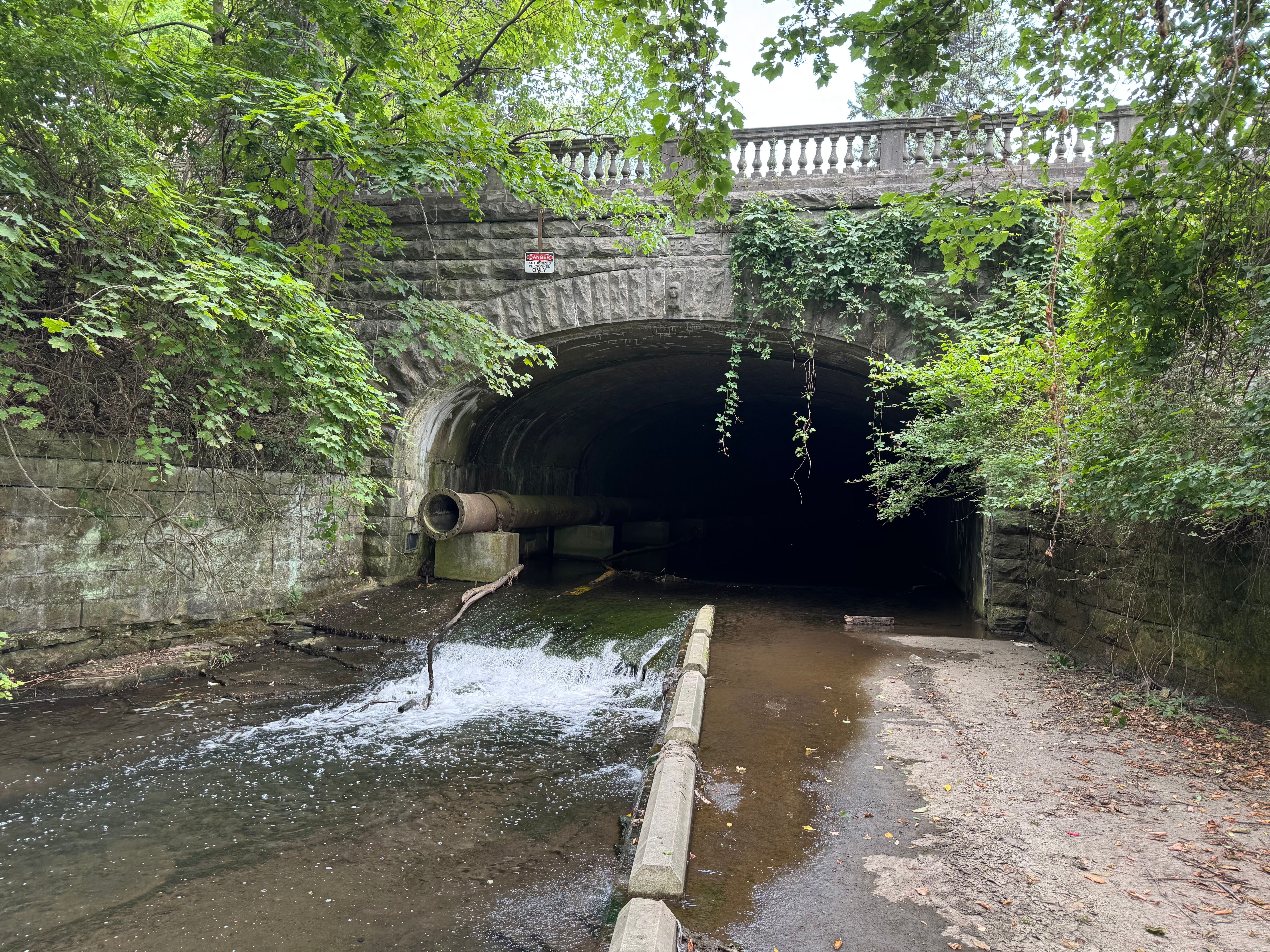
New York’s Scajaquada Creek was the site of a more subdued, long-term environmental catastrophe compared to its infamous neighbor, the Love Canal. Instead of a chemical company burying thousands of tons of toxic waste over a couple decades, the suburban Buffalo stream was the site of industrial and municipal waste disposal. This went on for nearly a century before several miles of it were literally buried in a massive public works project in the 1920s. Only in recent decades has serious attention been given to transforming Scajaquada back into some version of a healthy stream.
“We like to say Scajaquada Creek encapsulates everything you could do wrong to a creek,” said Jill Spisiak Jedlicka, executive director at Buffalo Niagara Waterkeeper. “It’s only 13 miles long with a small watershed. It’s really an example of what not to do to a creek.”
Since before the turn of the century the stream, which forms in Lancaster about 14 miles east of downtown Buffalo, had been mistreated. For decades its main function was to carry away raw sewage in addition to a steady flow of waste from the region’s industries. Scajaquada Creek has remained in such bad shape that in 2014 western New York artist and conservationist Alberto Rey included it in his Biological Regionalism series which includes waters in the greatest of distress.
“It was buried because it was actually voted on in a public referendum in the 1920s. The creek was so polluted they said ‘The creek must go,’” Spisiak Jedlicka explained. “So they buried it underground, instead of addressing the problem.”
Subsequently, portions of the creek which were buried became new land that was later developed. Today there are roads and parking lots sitting directly atop the creek as it makes its way to the Niagara River near its confluence with Lake Erie, then Lake Ontario. In addition to hiding a portion of the stream a century ago, wetlands that once helped mitigate pollution have been largely eliminated in the name of development. A shopping mall was built in 1989 which destroyed 65%of the watershed’s wetlands. In addition, raw sewage dumped into the creek from municipalities meant the waterway was loaded with human waste and bacteria. According to The Investigative Post, in May 2014 raw sewage combined with stormwater overflow was dumped into Scajaquada on 283 separate discharges.
Reports from the same year indicate that decaying fecal matter covered the creek bed, as thick as five feet in some places. In addition, polychlorinated biphenyls (PCBs) and other dangerous chemicals were found in quantities high enough for the New York Department of Health to issue advisories against consumption of any fish from the stream.
While there have been murmurs of “daylighting” portions of the creek, the consensus is that’s not likely to happen. But in recent years, ideas and money have made their way into the hands of those working to fix the creek. While heavy industry is no longer the creek’s major polluter, the population at large is.
During the last several days of 2025, reports estimate that at least 37 million gallons of untreated or partially treated sewage flowed into the Buffalo-area waterways during a rain and snow-melt event.
Buffalo’s combined sewer overflow (CSO) system, where stormwater inundates city sewer systems during heavy rains, is currently the major polluter of the creek. During heavy precipitation events, stormwater flows into sewer lines beneath the city and when too much water inundates the system, the storm water combines with raw sewage and often flows into Scajaquada.
According to Rosaleen Nogle, principal sanitary engineer for the Buffalo Sewer Authority, more than 95% of Buffalo’s infrastructure is the CSO system, and that isn’t likely to change anytime soon.
“In an older city like Buffalo, it’s very difficult to separate because there’s so much infrastructure underground already,” she said, citing right-of-ways that include gas, electric and cable lines. “Not only is it much more difficult, it’s much more expensive.”
Nogle said the installation of innovative systems like “Smart Sewer” stations are helping to alleviate CSO events. Those systems open and close underground gates during heavy rains channeling stormwater into available underground pipes. Utilizing some of the city’s older and larger pipes to store CSO for future treatment prevents stormwater runoff combined with sewage from entering streams and rivers.
“Basically it’s storing in place using the excess space we have,” she said. “We have about 10 installations today and we’re continuing to advance the use of this technology to manage our system and store where we have the capacity, optimizing the amount of flow coming through our treatment plant.”
Overflows during storm events have led to litigation. The New York Department of Environmental Conservation filed its most recent lawsuit against BSA for failing to meet terms of a prior long term control plan. That litigation, according to Jedlicka, was a formality needed to reach a new agreement between the state and the Buffalo Sewer Authority in an ongoing effort to improve Scajaquada and other streams in the region.
While there are plenty of downsides to Scajaquada, there are upsides, too. Like the fact that despite pollution, a wide variety of wildlife still call it home. Surveys included in a 2024 Army Corps of Engineers study indicates the presence of turtles, beaver, fox and mink in the stream and its smaller tributaries. Flying residents include songbirds, owls, hawks, ducks, herons and swans, among others. A surprising amount of fish species are also found in the stream.
Likely the most well-known residents are found at Forest Lawn, a 269-acre cemetery in the heart of the city. It’s the site where the longest hidden portion of the creek emerges from a tunnel.
“We have a lot of Canada geese here, I’d say that’s our bread-and-butter,” explained, Jennifer Kovach, executive administrative assistant. “Sometimes people mention coyotes, I’m not sure if we have any right now, but every so often we’ll get them. And we’ve had an owl that’s been nesting here so we have baby owls every spring and little mink that run through, and wood chucks. But the best-known is the deer. We hear about them every day.”
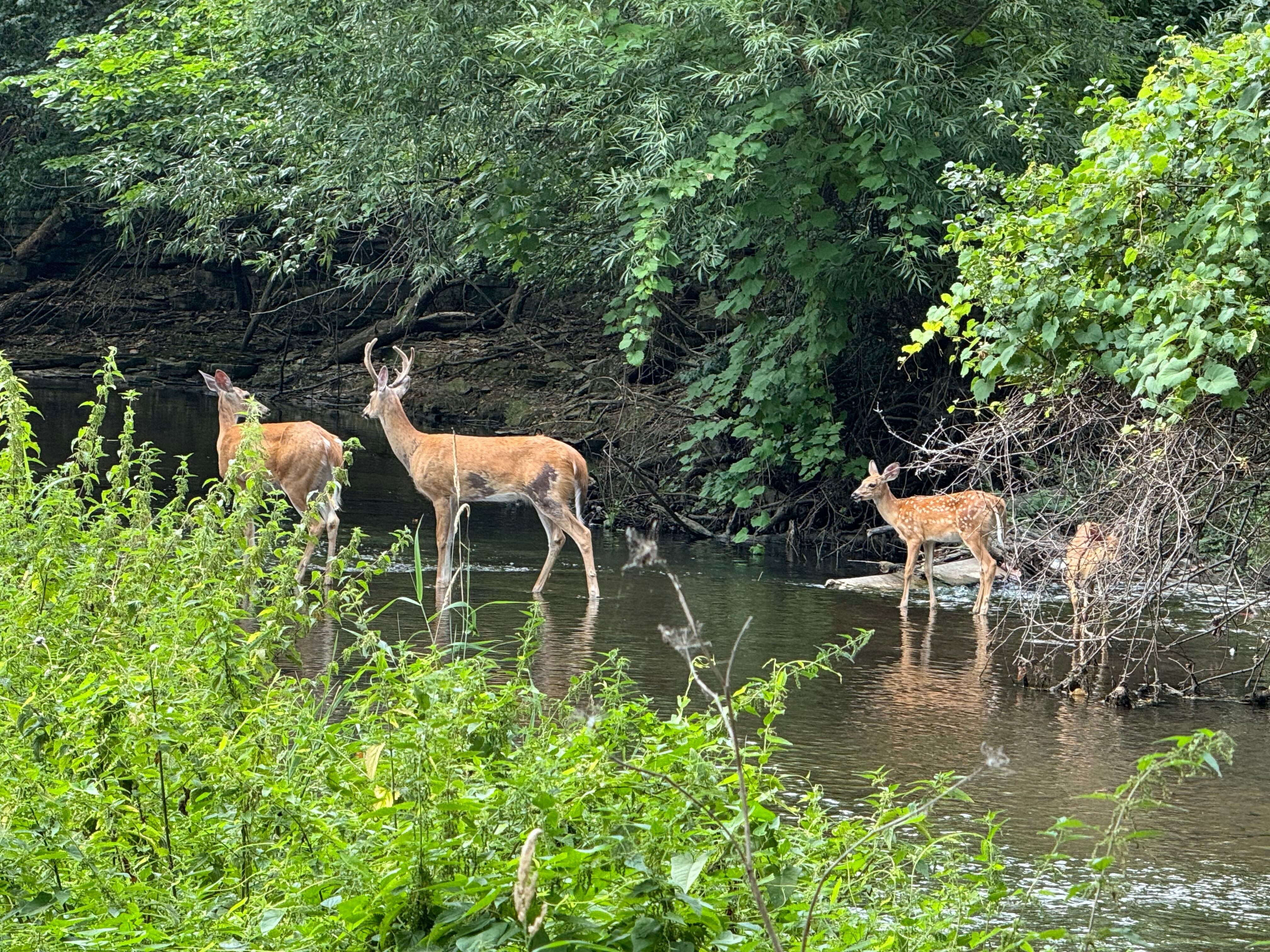
The deer she mentions are a small herd including several leucistic individuals (all white, yet not albino) that reside at Forest Lawn, on the banks of Scajaquada.
“One time we had a deer out on Delaware Avenue and someone called to let us know our deer left,” she chuckled. “I told them, it’s not our deer and they have free will so they can leave and come back, whatever they want to do.”
Kovach said because of the large number of trees at Forest Lawn, during spring the cemetery becomes a birding hotspot.
“We’re on the flight path for migrating warblers so lots of birders will come and literally stake out all day in the spring with their long lens cameras and get some spectacular shots,” she said.
According to Kovach, improvements to the creek are an ongoing endeavor.
“We work with Buffalo Niagara Waterkeeper and did a really big restoration project on the creek about seven years ago,” she said. “We’re constantly doing work on the creek. Down near the S-curves we restored the wetlands where it used to be kind of a big pit. Now it’s all native grass species and native trees and it’s really a beautiful area to walk around in.”
Waterkeeper is engaged in spring shoreline cleanups as well as smaller, focused cleanups in addition to public awareness campaigns.
“We’ve witnessed local anglers fishing it, in particular certain immigrant communities who rely on it despite the consumption warnings,” Jedlicka said. “They actually catch fish, like bottom-feeding carp and so we try to do some outreach with that. There are some people that paddle the headwaters, but for the most part in the lower creek people don’t come into contact with the water.”
Water quality improvement projects meant to help the stream were announced by the NYDEC on Jan. 17. The Buffalo Sewer Authority will receive $10 million to install infrastructure to reduce CSO events on both Scajaquada and nearby Black Rock Canal. An additional $10 million in water quality improvements will take place in the Town of Cheektowaga to renovate a half mile of sewer infrastructure including 1,200 manhole covers to reduce CSO during storms.
Jedlicka said ongoing partnerships have helped the efforts, including funding from the Margaret L. Wendt Foundation and the Ralph Wilson Jr. Foundation. And the continuing cleanup couldn’t be done without Mother Nature, as well.
“You have to remember the creek water isn’t polluted 100 percent of the time,” she explained. “It’s fed by clean, cold spring water so there’s a lot of natural inputs that help keep the creek alive so that when there’s not an overflow happening, it can sustain fish and wildlife which is why we keep working at this — if we can just eliminate as much discharge as we can and mitigate it, the creek will begin to repair itself. It’s not all doom and gloom.”
The post Scajaquada Creek, a Cautionary Tale appeared first on Great Lakes Now.
Great Lakes Now
https://www.greatlakesnow.org/2026/03/18/scajaquada-creek-a-cautionary-tale/
Buffalo Niagara Waterkeeper has announced a $1.6 million grant program through the Great Lakes Restoration Initiative to support environmental restoration projects in Western New York communities. The Western New York Great Lakes Restoration Grant Program will award funding ranging from $25,000 to $500,000 to community projects addressing invasive species, habitat restoration or nonpoint source water pollution. Read the full story by the Clarence Bee.
Great Lakes Commission
https://www.glc.org/dailynews/20260318-restoration-grants
To prepare for the opening of the Montreal-Lake Ontario section of the St. Lawrence Seaway Sunday morning, the Canadian Coast Guard icebreaker Martha L. Black arrived in Montreal to transit the distance of the Seaway and to create a path where needed. Read the full story by NNY360.
Great Lakes Commission
https://www.glc.org/dailynews/20260318-seaway-opening
President Donald Trump said he’s working to save the Great Lakes from invasive carp, but the announcement comes as the U.S. Army Corps of Engineers has paused funding for the Brandon Road Interbasin Project that aims to block invasive carp from reaching the Great Lakes. The pause is part of a broader administrative review despite Congress already appropriating $274 million for the $1.15 billion project. Read the full story by Wisconsin Public Radio.
Great Lakes Commission
https://www.glc.org/dailynews/20260318-invasive-carp-funding
This week, growers across the Lake Erie grape belt were abruptly informed in a letter that one of their processors, “Refresco,” will no longer buy their grapes effective immediately. According to a representative on the Pennsylvania Farm Bureau board of directors, the agreement termination impacts 126 growers in Pennsylvania and New York, with 2,600 acres of grapes having nowhere to ship; in 2025, that had an economic impact of about $5 million. Read the full story by WJET-TV – Erie, PA.
Great Lakes Commission
https://www.glc.org/dailynews/20260318-grape-growers
Minnesota Historical Society crews began scaffolding around the iconic Split Rock Lighthouse on the North Shore of Lake Superior, part of a three-month restoration project to repair damaged bricks and mortar. To help prevent future cracking, the historical society will also install moisture sensors and a new HVAC system to help circulate air around the building to prevent condensation. Read the full story by Minnesota Public Radio.
Great Lakes Commission
https://www.glc.org/dailynews/20260318-lighthouse-restoration
The Wisconsin Historical Society announced March 11 that the wreck of the 144-foot-long, three-masted schooner F.J. King, which sank in 1886, is now listed on the Wisconsin State Register of Historic Places. The shipwreck is historically significant because the remains are a very intact example of a shipping vessel unique to the Great Lakes and should continue to provide maritime archaeological information. Read the full story by the Green Bay Press-Gazette.
Great Lakes Commission
https://www.glc.org/dailynews/20260318-shipwreck-preservation
As the S.S. Badger car and passenger ferry gears up for its 2026 season, Lake Michigan Carferry, Inc., which owns the Badger, announced that long-time chief engineer Kevin Diedrich is retiring. Since joining the Badger’s crew in 2001, Diedrich has worked every position in the engine department, according to the company. Read the full story by the Manitowoc Herald Times Reporter.
Great Lakes Commission
https://www.glc.org/dailynews/20260318-carferry-season
Pennsylvania State Senator Dan Laughlin, a Republican from Erie, introduced a bill in the Pennsylvania Senate to increase the penalties for anglers who intentionally foul hook or snag a fish in the Commonwealth. The legislation would allow the Pennsylvania Fish & Boat Commission to increase penalties for certain violations, such as snagging, without impacting other regulatory provisions. Read the full story by Erie Times-News.
Great Lakes Commission
https://www.glc.org/dailynews/20260318-fishing-fines
The U.S. Coast Guard is set to reopen multiple regulated waterways in the northern Great Lakes, starting on Thursday, March 19. According to a Coast Guard announcement, the waterways include the Pipe Island Passage, West Neebish Channel and the waters between St. Ignace, Michigan, and Mackinac Island. Read the full story by The Sault Ste. Marie Evening News.
Great Lakes Commission
https://www.glc.org/dailynews/20260318-waterway-reopening
According to the Mayor of Avon Lake, Ohio, residents have informed city officials that they want more access to Lake Erie. Avon Lake’s Planning Commission will consider a proposal to rezone the land where the now-demolished Avon Lake Power Plant stood along the edge of Lake Erie from industrial to special commerce accompanied by a lakefront mixed-use overlay district. Read the full story by The Chronicle-Telegram.
Great Lakes Commission
https://www.glc.org/dailynews/20260318-lakeshore-redevelopment
According to a research scientist at the Large Lakes Observatory on Lake Superior, because lake ice cover is impacted so heavily by weather, and Minnesota’s winter weather has become more variable, so too, has the “ice out” date each year for many lakes across the state. In addition to the ecological impact of ice out variability, the increasingly unpredictable season shift impacts human communities and industry. Read the full story by WTIP – Grand Marais, MN.
Great Lakes Commission
https://www.glc.org/dailynews/20260318-ice-variability
By Leah Borts-Kuperman, The Narwhal
The Great Lakes News Collaborative includes Bridge Michigan, Circle of Blue, Great Lakes Now, Michigan Public and The Narwhal who work together to bring audiences news and information about the impact of climate change, pollution, and aging infrastructure on the Great Lakes and drinking water. This independent journalism is supported by the Charles Stewart Mott Foundation.
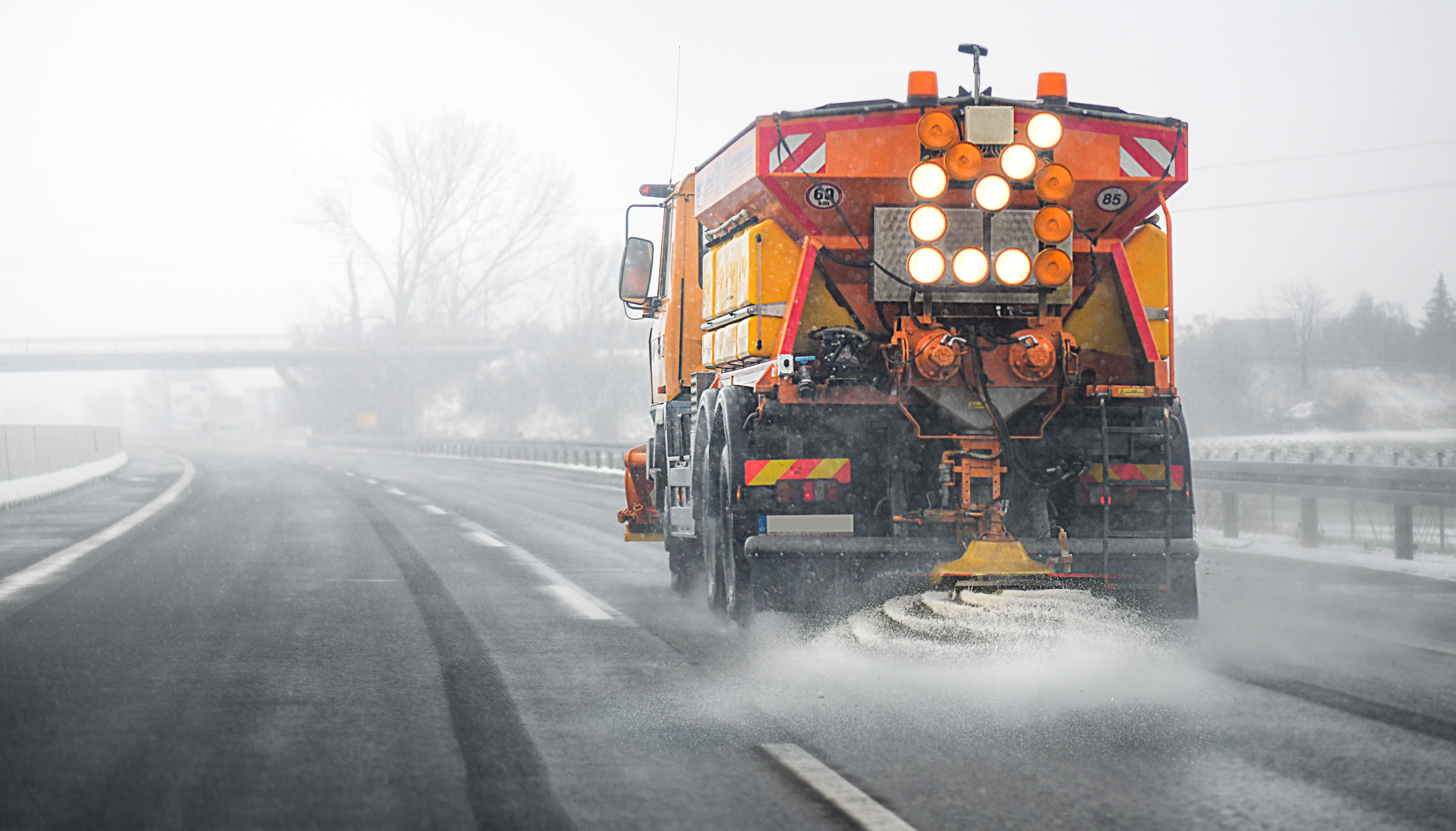
In February 2025, a small freshwater stream in Newmarket, Ont., was saltier than the ocean. The source? Winter road salt, washing off local parking lots and highways into the Lake Simcoe watershed.
As a result, concentrations of chloride — one of two minerals that make up table salt — in Western Creek exceeded 26,000 milligrams per litre of water. Meanwhile seawater typically sits at 19,400 milligrams of chloride per litre of water, according to the local conservation authority.
For Christopher Wellen, an environmental scientist focused on hydrology and associate professor at Toronto Metropolitan University, this finding was not surprising: the Simcoe region, and many others across southern Ontario, have big salt problems.
“It washes away from the roads, but it doesn’t just disappear,” Wellen said. “It goes where the water goes — that’s our groundwater, it’s our lakes, it’s our rivers — and has effects there.”
For decades, the concentration of road salt in Lake Simcoe has been on the rise: 120,000 tonnes of it are used by communities in the watershed annually, Lake Simcoe Region Conservation Authority has reported. That amounts to roughly 227 kilograms of salt per person in the region every year.
Heavy salting in winter is not unusual, but Lake Simcoe has been monitored for decades, so it can act as a case study of exactly what happens when this much road salt is being applied. And it illuminates the environmental impact across the province where high-traffic areas, surrounded by cities, towns and a dense network of roadways, are inundated with salt.
Road salt is primarily made up of sodium chloride and is used to remove ice from roadways in the winter. But oversalting has widespread impacts on ecosystems, harming aquatic life and depleting biodiversity year-round.
“Every organism that lives in streams and rivers and lakes … has tolerances for all sorts of things like temperature fluctuations and salt fluctuations,” Wellen said. “If the water becomes too salty, they can find it really difficult to reproduce and thrive and continue to exist, basically.”
All this chloride does not break down, or simply wash away. It accumulates over time.
“It’s quite possible that, if things don’t change, the food web could be quite affected,” Wellen added. The problem starts at the bottom of the food chain, he said, and makes its way up.
Since fish are mobile, they can generally avoid areas with high salt concentrations. The pronounced impacts are on the more stationary species, like critters that live in riverbeds. They also make up the base of the food chain, so when they are unable to survive the salty water, organisms higher up lose their food supply.
The Lake Simcoe Region Conservation Authority says on its website that winter salt has become a topic of “great concern” in the watershed, particularly because there isn’t an effective way to remove it. And Lake Simcoe, the largest lake wholly in southern Ontario, supplies drinking water for hundreds of thousands of residents — with hundreds of thousands more relying on groundwater aquifers in the watershed.
In Canada, the federal government provides long- and short-term guidelines for exposure to chloride before aquatic life is affected. At a concentration of 640 milligrams of chloride per litre of water for as little as 24 hours, aquatic life could be severely affected. For longer-term exposure, concentrations beyond 120 milligrams of chloride per litre of water would see harm to aquatic life such as a fish species declining over time.
David Lembcke, director of watershed science and monitoring at Lake Simcoe Region Conservation Authority, jokingly equates the latter threshold to a pack-a-day cigarette habit: “You’re going to have long-term impacts from that. There are some sensitive biota in the lake that will probably have reproductive, developmental, long-term impacts at those levels.”
The authority produced a report more than a decade ago that already showed chloride concentrations were impacting these aquatic species in 64 per cent of the Lake Simcoe watershed.
In the lake itself, the concentration in February was around 61 milligrams of chloride per litre of water, Lembcke said, which is about half of the long-term exposure guideline set by the province. But that level has been steadily increasing by 0.7 milligrams of chloride per litre of water annually, according to the conservation authority. Elsewhere in the watershed, especially in tributaries in urban areas like Hotchkiss Creek and West Holland River, concentrations regularly exceed both guidelines, Lembcke said, and long after winter ends.
“We have this incredibly persistent, relentless increasing trend in lake [salt] concentrations,” Lembcke said. “Certainly the potential is there: if we don’t curb the amount of salt that we’re using, drinking water could be impacted.”
For drinking water, the Ontario objective is 250 milligrams of chloride per litre of water, but this is based on taste, not health considerations. For people who need to limit their sodium intake for things like high blood pressure, or kidney or liver diseases, Health Canada recommends that salt in water shouldn’t exceed 20 milligrams per litre.
In Waterloo, Ont., groundwater and consequently drinking water has already been impacted; given high concentrations in some areas, the city has to mix groundwater from different wells to average out chloride levels across the region. They’ve campaigned hard for curbing road salt use, since current water and wastewater treatment doesn’t remove salt, and the municipality explains on their website that removing it requires expensive, energy-intensive treatment. And that would mean higher water costs for the community.
While some communities look to solutions such as replacements for road salt, they also carry their own challenges: alternatives like beet juice or sodium acetate can be prohibitively expensive, and their long-term effects on ecosystems aren’t entirely known.
Some experts and activists are looking to stop the problem at its source. Commercial parking lots are among the biggest culprits for oversalting, likely since they are liable for any injury that occurs on snow or ice on their properties.
“The problem that we keep seeing is that small businesses or big parking lots are oversalting, and it’s a perverse incentive structure where they feel like they have to do it to protect themselves against the slip and fall [lawsuits],” Jonathan Scott, executive director of the Rescue Lake Simcoe Coalition, said. Scott is chair of the Nottawasaga Valley Conservation Authority and a Bradford West Gwillimbury councillor.
“It’s not any safer. It’s worse for the environment. It’s worse for small businesses in terms of increased costs,” he said.
Proponents including Scott and Lembcke are arguing to modernize the law by offering limited liability, or a stronger defence against being sued, to those businesses who get an accepted certification such as Smart About Salt, and learn how to implement best salting practices for public safety and the environment alike.
“If you’re following best practices and if you’re doing the right thing as a winter maintenance operator, that should be a defence for the operator and the property owner against slip and fall claims,” Scott said. “It seems like such a simple pro-business, pro-environment legal reform that wouldn’t cost us anything.”
Scott points to New Hampshire, a state with comparable winter conditions to Ontario, as an example. The state reduced its salt pollution by 25 to 45 per cent by granting limited liability protection to certified commercial salt applicators.
Wellen and his team have done modelling studies to see what would happen if a legal reform like this was adopted in the Lake Simcoe area; he said the results are promising, finding it could decrease the concentrations in the lake significantly by the end of the century.
But the province, who would have to make that regulatory change, has yet to sign on.
“It seems to be one of those problems that’s entirely of our own making, in which case it should be something that we can fix,” Lembcke said. “I’m optimistic that it’s something that we can address.”
— With files from Fatima Syed
The post Winter road salt is threatening Lake Simcoe and Ontario watersheds year-round appeared first on Great Lakes Now.
Great Lakes Now
https://www.greatlakesnow.org/2026/03/18/winter-road-salt-is-threatening-lake-simcoe-and-ontario-watersheds-year-round/
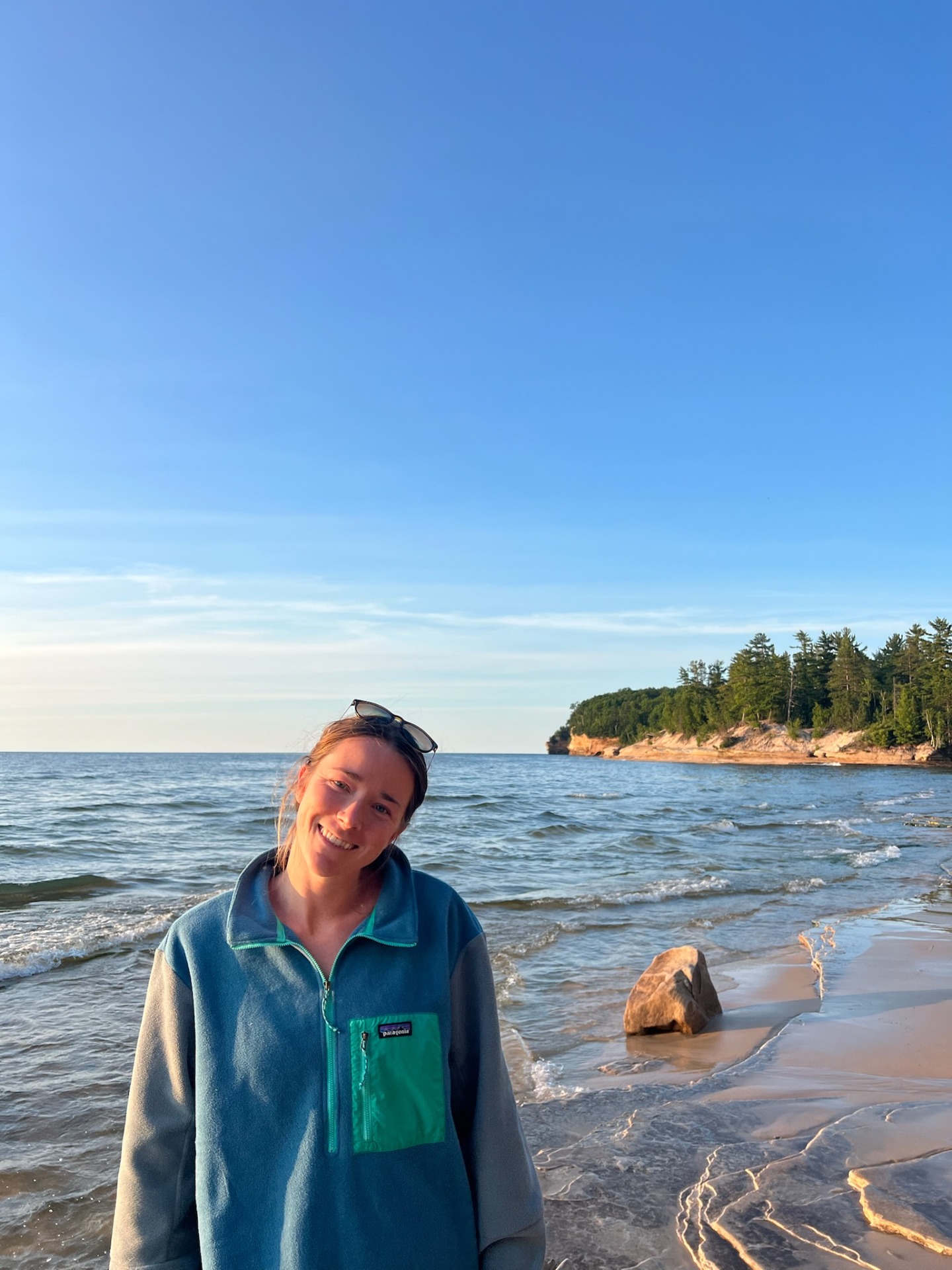
Cailin Young at the Pictured Rocks National Lakeshore along Lake Superior. (Submitted photo)
Cailin Young grew up watching sunsets on the California coast, but she doesn’t play favorites when it comes to big bodies of water.
“Looking out over Lake Michigan or Lake Superior, it pulls the same feeling out of me that looking at the ocean does,” she said. “I love the Great Lakes.”
As the inaugural Keillor-Wisconsin Great Lakes Coastal Leadership Academy Fellow, Young is busy getting acquainted with Wisconsin’s 800-plus miles of coastline. She’s charged with developing a series of workshops about coastal processes to help communities find ways to adapt to the ever-changing weather and water conditions of Lakes Superior and Michigan.
The Coastal Leadership Academy workshops will include discussions of how to deal with coastal hazards — things like high and low water levels, erosion, flooding, and storms — in ways that make sense for communities. A big city on Lake Michigan, for example, might address bluff erosion differently from a small town on Lake Superior.
“The goal is for attendees to walk away with a broader understanding and awareness of the different range of adaptation strategies they could implement, and how to take into consideration what does your community value and what would work for your shoreline,” she said.
Young, who hails from southern California, became interested in the Great Lakes while attending graduate school at the University of Michigan. Her capstone project explored Great Lakes policy and offered recommendations for protecting the open-water ecosystems of the lakes, which aren’t explicitly protected under any law.
Shipwrecks, on the other hand, are. And they’re often in open water.
“A lot of times, there’s fish habitat or reefs around the shipwreck,” said Young. “So, one of our recommendations to Michigan’s Department of Natural Resources was to open up that legislative language to allow for protection of ecosystems that are also in the same area.”
Her project also introduced her to coastal processes and resiliency, knowledge she’s been building upon as she designs the Coastal Leadership Academy workshops. Right now, Young is tailoring the workshops to be regionally specific. The pilot workshops will be held in three Great Lakes communities in Wisconsin: two on Lake Michigan and one on Lake Superior.
“What’s going to work on Lake Michigan isn’t necessarily going to work on Lake Superior. Even within Wisconsin, communities are completely different,” said Young. “There’s no one-size-fits all solution.”
Great Lakes communities may have different needs and priorities, Young notes, but they’re alike in how they regard the Midwest’s mighty inland seas.
“I love how they’re a uniting force. Everybody loves the Great Lakes. Everybody in this region knows about them,” said Young. “I really like that it’s a shared identity amongst multiple states.”
The post Keillor Fellow helps coastal communities adapt to Great Lakes’ highs and lows first appeared on Wisconsin Sea Grant.News Releases | Wisconsin Sea Grant
News Releases | Wisconsin Sea Grant
https://www.seagrant.wisc.edu/news/keillor-fellow-helps-coastal-communities-adapt-to-great-lakes-highs-and-lows/