Traverse City, Michigan, officials say the still-unfinished FishPass structure on the Boardman River helped keep upstream water levels lower than they likely would have been under the former dam, sparing the city from a larger disaster during recent flooding. Read the full story by MLive.

Original Article

Great Lakes Commission

Great Lakes Commission

https://www.glc.org/dailynews/20260429-traverse-city

Laura Andrews

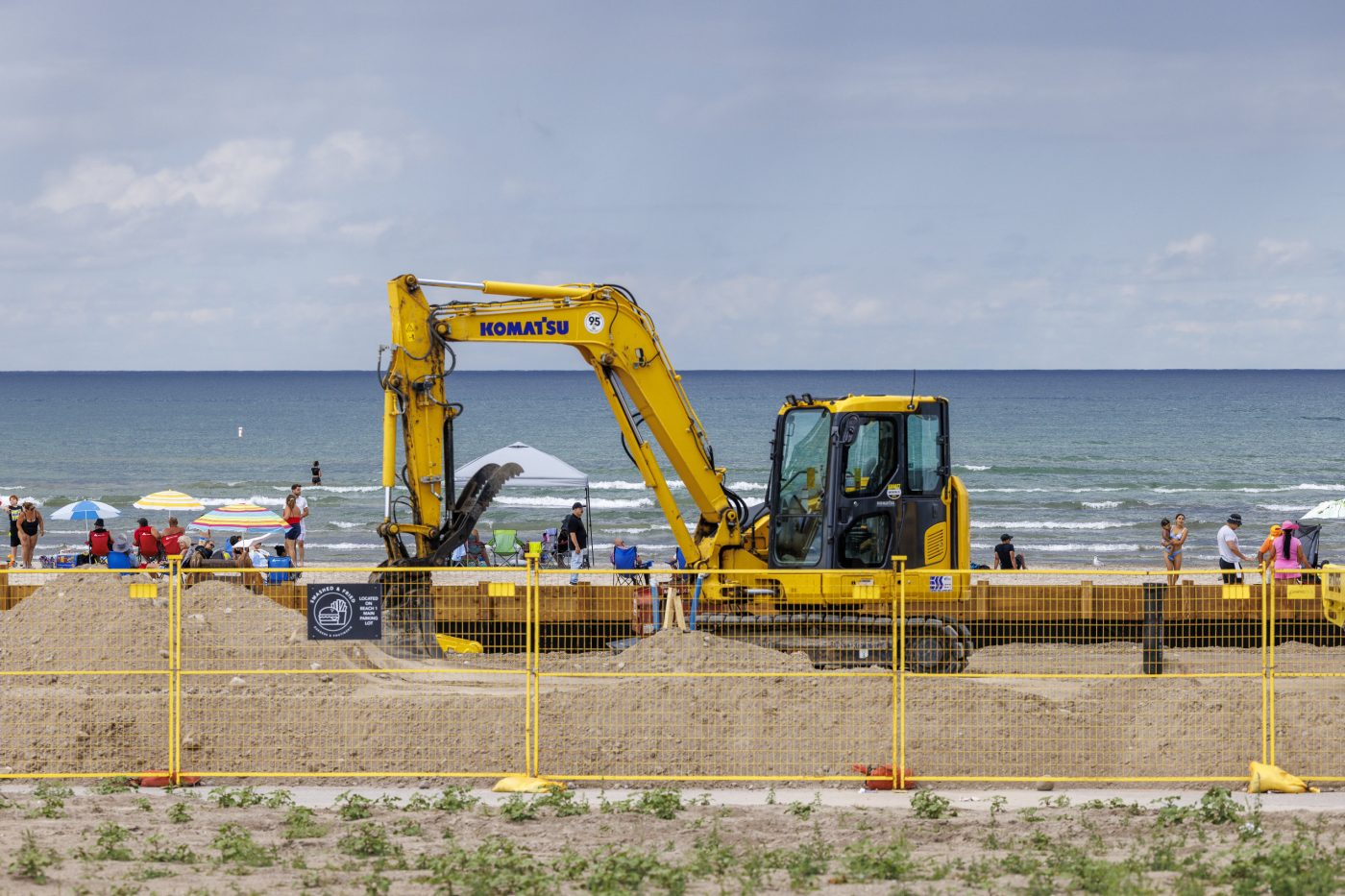
Any day now, a piping plover will make its seasonal return to Wasaga Beach in Ontario, as it has done every spring for nearly 20 years. Due to the elimination of key protections, the plover’s beachfront home is less secure this year. Read the full story by Great Lakes Now. 

Original Article

Great Lakes Commission

Great Lakes Commission

https://www.glc.org/dailynews/20260429-canada-plover

Laura Andrews

By Juanpablo Ramirez-Franco

This coverage is made possible through a partnership between WBEZ and Grist, a nonprofit environmental media organization.


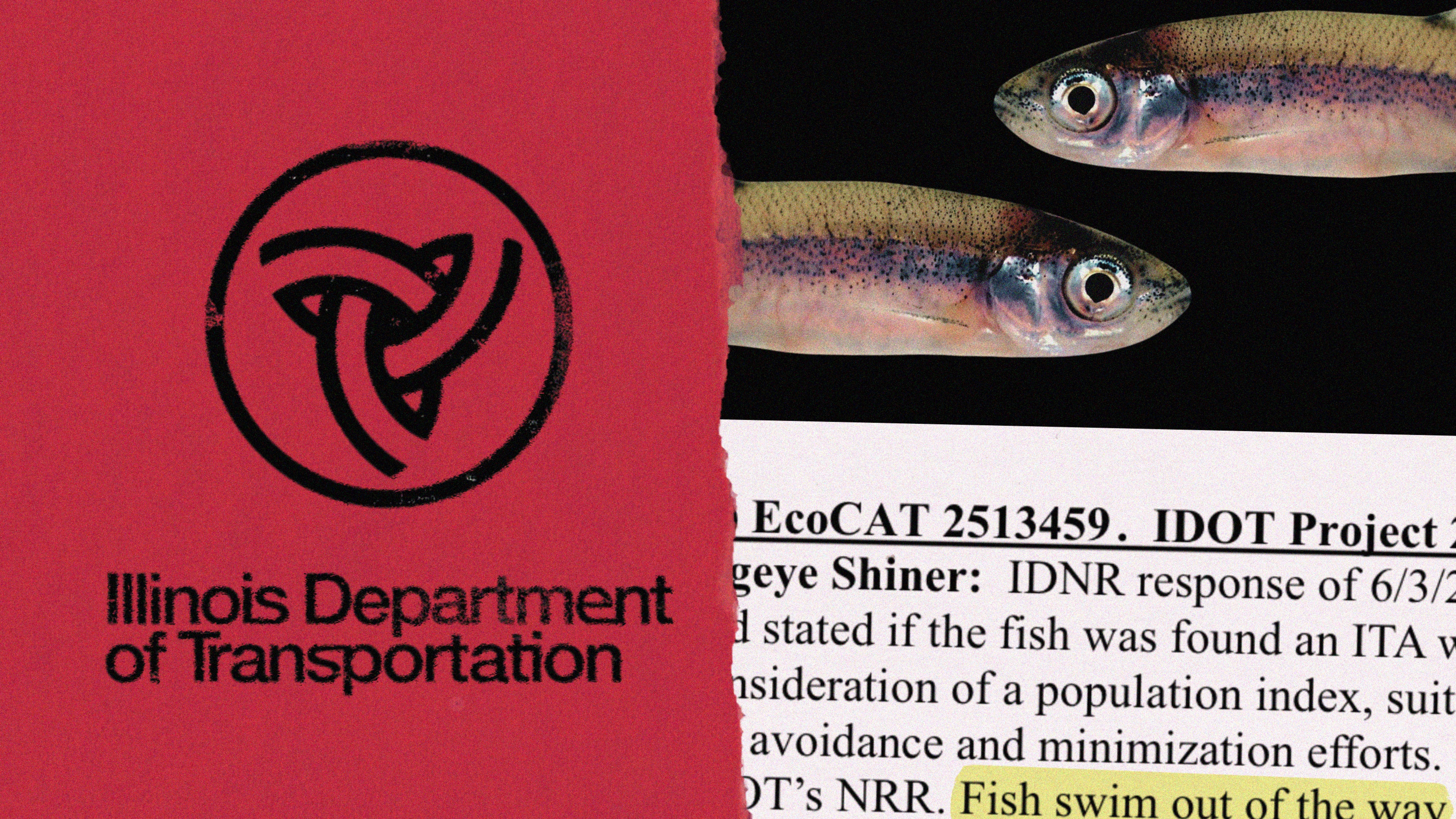
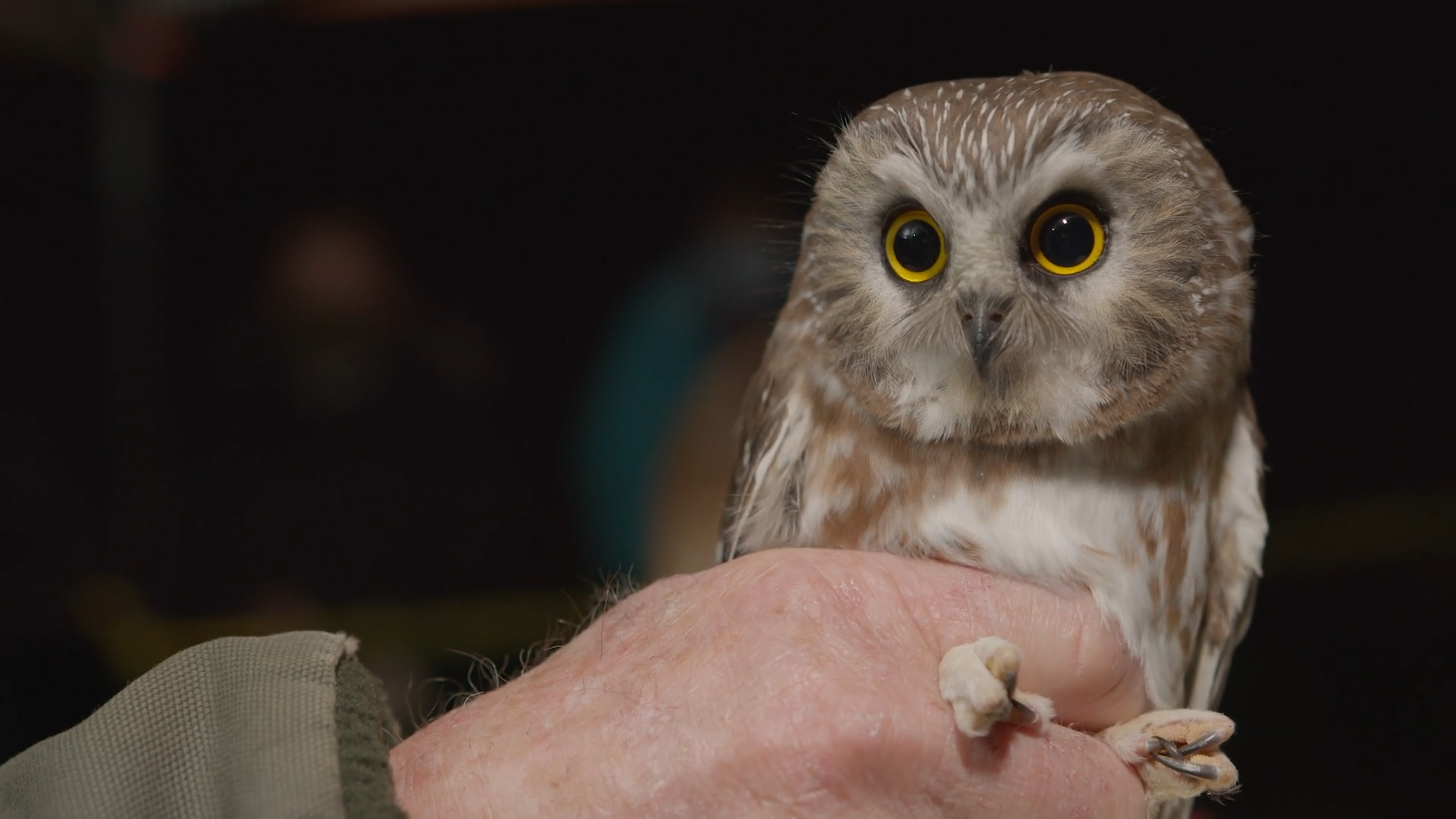
In the creeks and rivers of southern Illinois, a school of bigeye shiners darting along the edge of a stream is a sign of healthy water.

The freshwater fish, which is on the state’s endangered species list, has managed to survive despite habitat loss driven by decades of construction and industrial farm runoff. But an ongoing dispute between two state agencies over state species protections is testing how the tiny fish will endure.

Last summer, the state’s top wildlife regulators faced resistance from the Illinois Department of Transportation when trying to protect the shiner. The Illinois Department of Natural Resources recommended that IDOT crews mapping out construction at a site in Union County should first survey the area and find out if the shiner was present. If so, IDNR would ask them to apply for a permit to minimize impacts to the paper clip-sized fish before proceeding.

IDOT declined. The department’s reason, among others, was simple: “Fish swim away.”

The standoff between IDOT and IDNR, outlined in internal state documents obtained by WBEZ and Grist, is at the center of an ongoing clash that broke out last year after IDOT repeatedly ignored recommendations from state experts to pursue permits designed to protect imperiled species during road, bridge and other transportation work.

The widening rift between the state’s largest public landowner and its top wildlife conservation agency shows how state-funded transportation projects may have overridden Illinois’ Endangered Species Protection Act in 11 cases in the past year.

In response to IDOT’s handling of species protections, IDNR ended a decade-old agreement with the agency last fall that allowed IDOT to fast track through environmental reviews.

IDNR impact assessment manager Bradley Hayes pointed to “IDOT’s apparent automatic response to decline ITA recommendations” in his cancellation letter obtained by WBEZ and Grist.

An ITA, or incidental take authorization, is a permit that allows for the accidental harm of a protected species during the construction of an approved project, like building a road or fixing a bridge. These permits involve lengthy reviews in which applicants must outline potential impacts to listed species, require a public comment period and feedback from conservation specialists. The entire process can take at least five to six months.

Still, experts say these permits are crucial because they minimize harm to protected species and provide legal cover from criminal charges that can accompany the unintentional killing of a state-listed species.

IDOT’s Jack Elston responded to the termination letter at the end of last year disputing the initial allegations from the environmental regulators, saying that “IDOT does not make automatic responses regarding the IDNR recommendation for an ITA.”

In a joint statement from IDOT and IDNR to WBEZ and Grist, IDOT spokeswoman Maria Castaneda said, “IDOT continues to consult with IDNR and considers recommendations from IDNR along with multiple other factors, including known information about the species, other environmental surveys, engineering, costs and public safety.”

Castaneda added that the agencies are currently drafting a new agreement and that the agreement on file was outdated. “Updated language was needed,” she said.

Despite the agreement expiring at the beginning of 2019, IDOT continued to conduct environmental reviews until lDNR stepped in to stop them last fall.

Email exchanges between IDNR officials obtained by WBEZ and Grist show concern about how IDOT was conducting its environmental reviews.

Last December, IDOT’s Elston wrote that “fish swim away from construction noise” as justification for several projects that could harm fish and mollusks, like the harlequin darter and the American brook lamprey. In another instance, Elston wrote that the relocation of state-endangered mussels in White County was unnecessary and would delay a project by at least a construction season and add about $2 million in costs.

But emails obtained from IDNR officials showed increasing concerns with that rationale.

The American brook lamprey, for example, is unlikely to “swim away” from construction noise. It spends much of its life burrowed in sediment and dies not long after spawning.

“We are the experts,” wrote Todd Strole, IDNR assistant director, in an email earlier this year preparing for a meeting with IDOT. “Fish are not the same, some don’t swim away.”

In another email, Ann Holtrop, head of IDNR’s division of natural heritage, wrote: “We are open to professional dialog with IDOT but planning and engineering needs don’t negate or override the recommendations by scientists.”

The Illinois dispute reflects a broader erosion of species protections nationwide, according to the Natural Resources Defense Council’s Rebecca Riley. Despite massive popularity, the Endangered Species Act, credited with resuscitating the bald eagle, grizzly bear and gray wolf, is once again under attack by the Trump administration.

During his first term, President Donald Trump advanced new guidance under the ESA which undercut species protection, at least until the the Biden administration undid the Trump-era rules. The Trump administration has submitted a new set of rules currently under consideration.

WBEZ and the Chicago Sun-Times reached out to Gov. JB Pritzker’s office for comment on how the state’s internal dispute fits into the Trump administration’s ongoing rollback of federal species protections; however, the Governor’s office offered no comments beyond what IDOT and IDNR provided.

The post Illinois state agencies at odds over endangered species protections appeared first on Great Lakes Now.

Original Article

Great Lakes Now

Great Lakes Now

https://www.greatlakesnow.org/2026/04/29/illinois-state-agencies-at-odds-over-endangered-species-protections/

WBEZ


By Fatima Syed and Will Pearson, The Narwhal

The Great Lakes News Collaborative includes Bridge MichiganCircle of BlueGreat Lakes NowMichigan Public and The Narwhal who work together to bring audiences news and information about the impact of climate change, pollution, and aging infrastructure on the Great Lakes and drinking water. This independent journalism is supported by the Charles Stewart Mott Foundation.


Any day now, a piping plover will make its seasonal return to Wasaga Beach, as it has done every spring for nearly 20 years. This time, its beachfront home could be a little less secure, which is why a new court case is pressuring the federal government to ensure the plover is kept safe. 

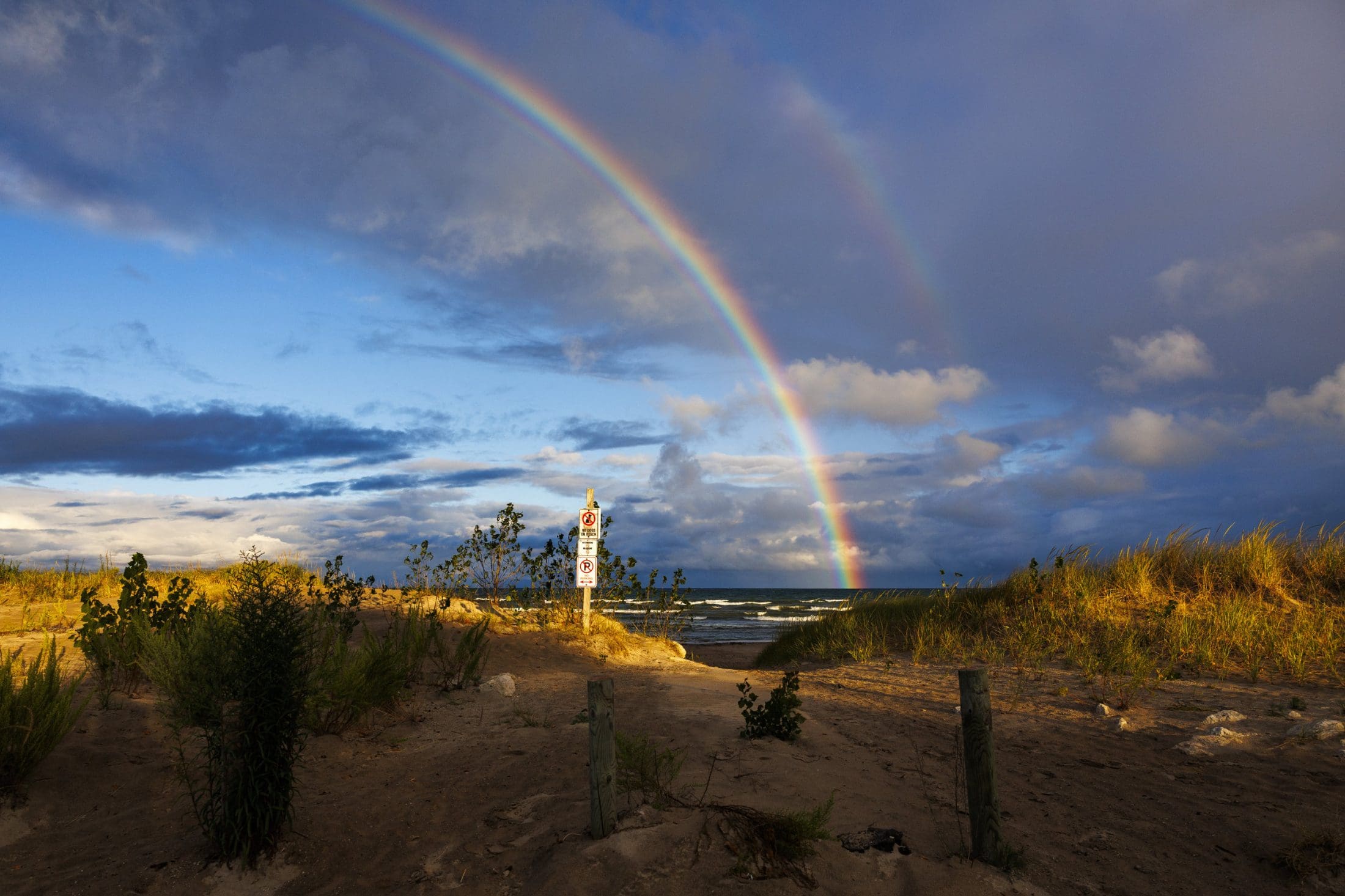
The world’s longest freshwater beach provides the perfect habitat for the tiny endangered birds, offering natural sand dunes and shrubbery for nesting and growing their population. 

For decades, both the Georgian Bay beach and the plover have been protected by the Ontario government through two main tools. First, the designation of Wasaga Beach as a provincial park, which meant  development and disruption of the sandy shore was off-limits. Second, the plover was offered extra protection under the provincial Endangered Species Act. 

Neither of those protections stand anymore.

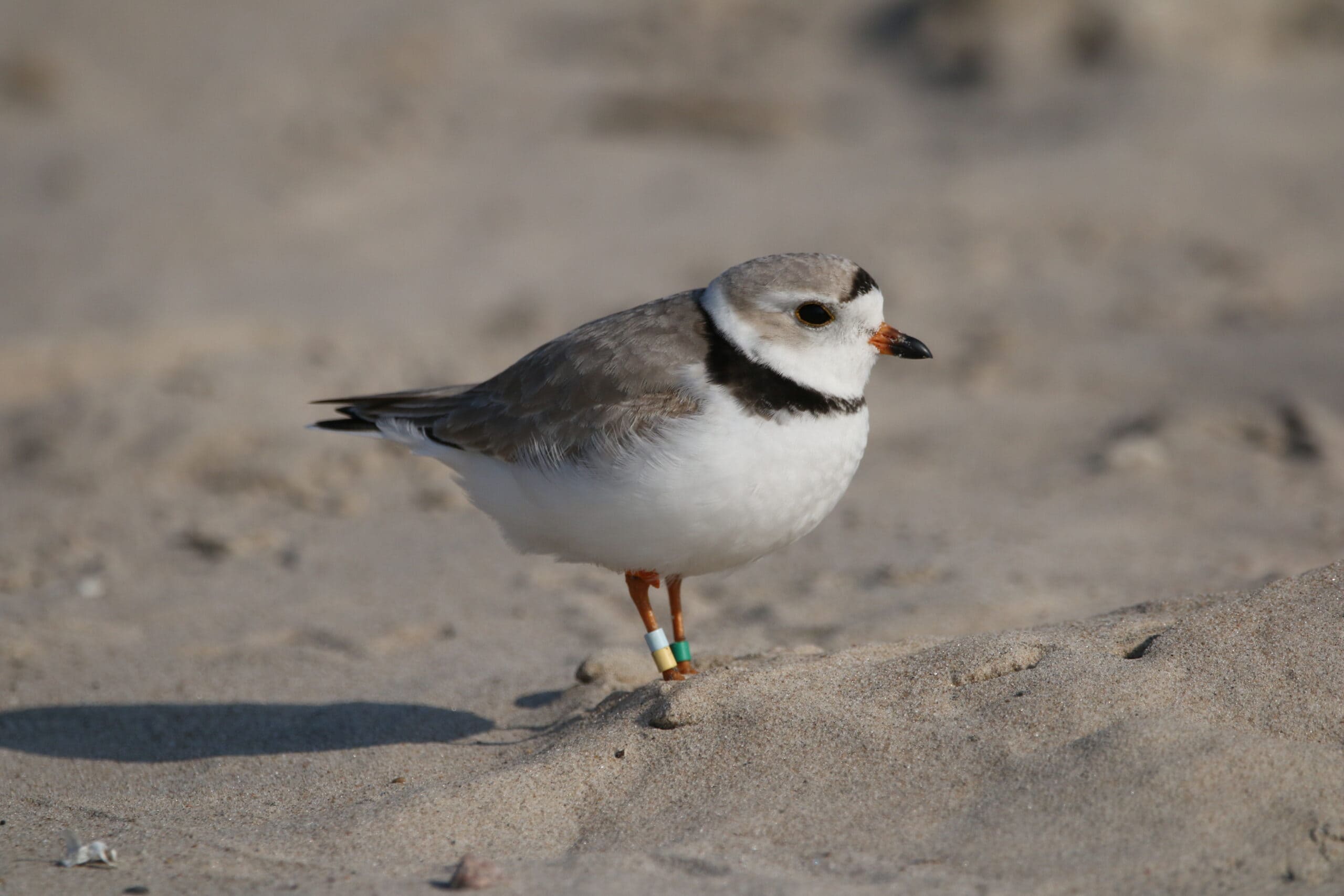
Piping plovers were considered extinct in Ontario by the 1980s, but the species has been making a tentative comeback in the Great Lakes region in recent decades. Photo: Supplied by Birds Canada

Last fall, the Doug Ford government removed a majority of the beachfront from Wasaga Beach Provincial Park and transferred it to the local municipality in an effort to boost tourism development. And just last month, the government officially repealed the Endangered Species Act and replaced it with much weaker legislation that no longer recognizes the plover on its list of protected species.

The town has promised it will protect the plover after the transfer — and has begun working with Birds Canada on its habitat protection — but residents are not convinced. Two local officials agreed to speak to The Narwhal on the condition their names be kept confidential, for fear of retribution. They said on Apr. 13, a tractor owned by the municipality was seen raking more beachfront than was previously permitted — an action that could damage habitat and destroy plover nests. Though the raking hasn’t been repeated, many are concerned the beach is unprotected. The town did not respond to The Narwhal’s request for comment by the time of publication. 

As a result, environmental groups are taking the matter to federal court. 

In January, Ecojustice, on behalf of Environmental Defence and Ontario Nature, petitioned the federal government for an emergency order to offer protections for the piping plover by March, before machines are brought in to clear the beach after winter, and the birds begin migrating back. The federal government did not respond by that deadline.

In response, the groups have asked for a judicial review by the Federal Court of Canada into the delay and to compel Environment Minister Julie Dabrusin to make a recommendation to cabinet to issue the emergency protection.

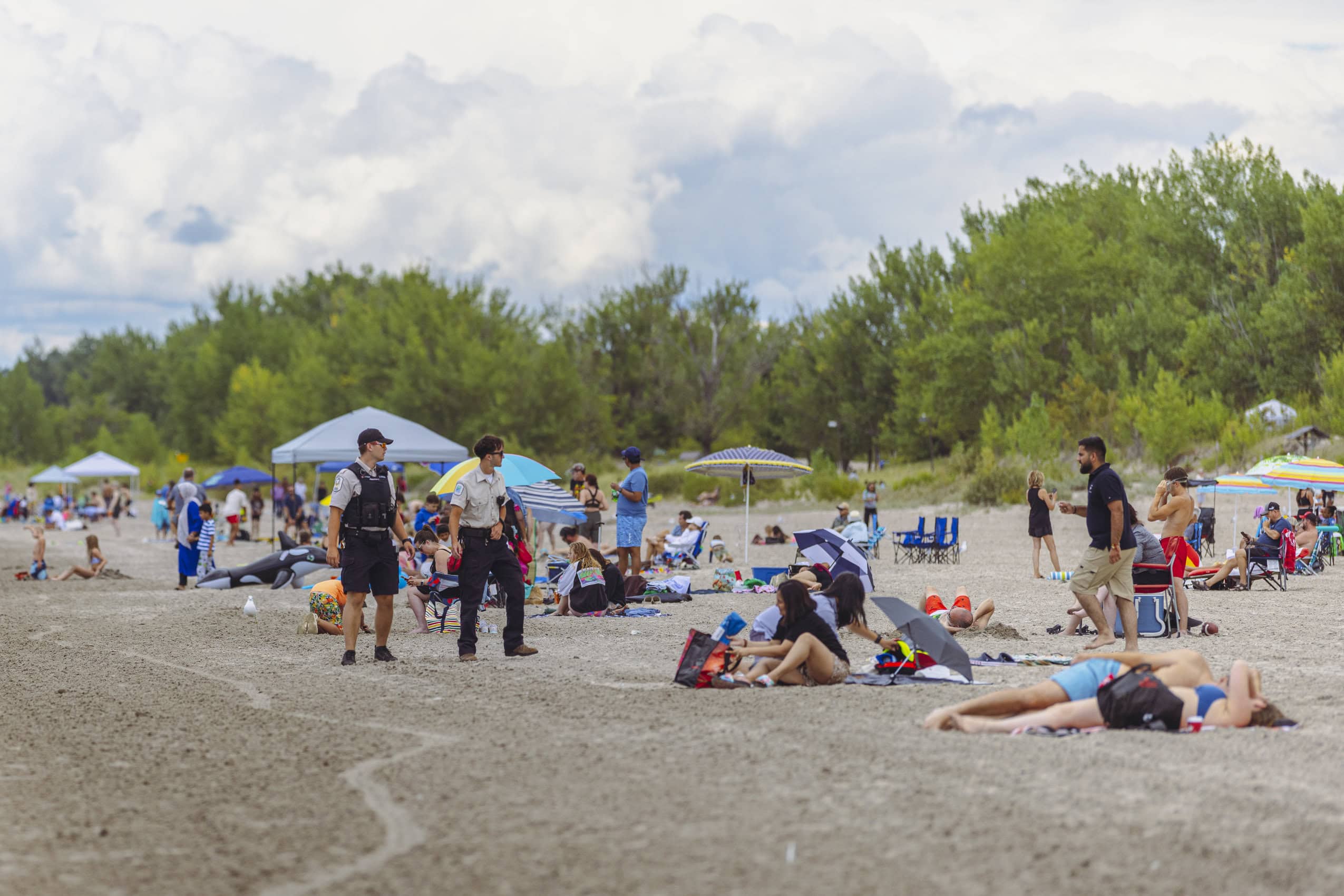
At Wasaga Beach, the endangered piping plover is forced to share space with an increasing number of vacationing beachgoers. Until recently, Ontario Parks staff were responsible for managing that tension. Photo: Carlos Osorio / The Narwhal

The groups have also asked the court for an urgent, temporary order — or an injunction — to prohibit any raking or harmful development on the beach, which is federally recognized as a critical habitat. 

Here’s what you need to know about the tiny bird and its fate in Wasaga Beach.

What are piping plovers? And why are they endangered?

Piping plovers are sprightly shorebirds, each no bigger than a cotton ball, that can sometimes be seen bounding over Great Lakes beaches in the summertime. But seeing them isn’t easy — their sandy colour blends into their surroundings and they’ve become extremely rare in Ontario due to human encroachment.

The main threat to the piping plover is human disturbance,” according to the Government of Ontario, “since the sandy beaches where plovers live are also popular for human recreation which can destroy nests.”

Plovers generally spend winters in the United States and Mexico, but return to more northern climates to nest for the summer.

For a long time, the Great Lakes were a prime destination for would-be plover parents. It’s been estimated that the region was once home to up to 800 breeding pairs. But the Great Lakes plover population cratered in the 1960s and ’70s, and the bird was considered extinct in Ontario by 1986.

But in recent decades, plovers have been staging a tentative comeback in the Great Lakes. A breeding pair returned to Sauble Beach (now Saugeen Beach) in 2007, sparking hope and enthusiasm among bird watchers and conservationists in the area. The birds have been spotted in the region annually since then.

But plovers’ hold is anything but secure. Some years pass with only a handful of breeding pairs observed, and other years come and go with no fledglings reaching maturity.

Why is Wasaga Beach important to plovers? And what do they like about it?

“Wasaga Beach is the most important and most productive nesting site for piping plovers in our province.”

That’s what Sydney Shepherd, the Ontario piping plover coordinator for Birds Canada, told The Narwhal last summer. The beach has been home to 59 nests and 87 fledglings since the birds returned about two decades ago, according to Birds Canada, a national conservation group. 

While plovers have been observed on other beaches in the Great Lakes region, none are anywhere near as popular with plovers as Wasaga Beach. The plovers that have been born on Wasaga Beach make up nearly 50 per cent of all fledglings in Ontario, and many of them have gone on to establish their own nests elsewhere in the region. 

Plovers tend to value Wasaga Beach for different reasons than human beachgoers. While tourists might prefer a well-groomed beach for lounging, plovers require naturalized shorelines: shrubbery and sand dunes offer cover from predators. That means of all the 14 kilometres of beachfront at Wasaga, only a small fraction near the northeastern tip of the park is suitable plover habitat.

What’s happening at Wasaga Beach?

The fortunes of the Town of Wasaga Beach have long been tied to the sandy shoreline that gives the town its name. Tourism to the area is the main economic driver, drawing more than 1.6 million visitors a year according to the municipality’s website.

But while tourism brings opportunity to the residents of Wasaga Beach, it also puts pressure on plover habitat. Until recently, that tension was managed by staff at Wasaga Beach Provincial Park, who were mandated to preserve and protect the sand dunes and other beach areas that plovers frequent.

The vast majority of the beachfront had long been within the boundaries of Wasaga Beach Provincial Park, and some in the town believed the park hindered efforts to spruce it up and develop new amenities and attractions to boost tourism revenue.

The Town of Wasaga Beach is moving ahead with a plan to redevelop a portion of its beachfront. To facilitate the process, the Government of Ontario has removed 60 hectares of beachfront from Wasaga Beach Provincial Park, limiting provincial protections of piping plover habitat in the process. Photo: Carlos Osorio / The Narwhal

The Doug Ford government heard those concerns and acted on them. Ontario would sever more than half of the beachfront from the park and hand it over to the town to manage, Ford announced in 2025. Earlier this year, the province confirmed its intention to move forward with that plan, despite 98 per cent of formal citizen feedback on the plan being negative.

The Narwhal confirmed that transfer has now happened. 

All of the suitable plover habitat on Wasaga Beach is within the land set to be removed from the provincial park, meaning the habitat will no longer be protected by a provincial park designation.

The town, for its part, says it’s committed to protecting piping plovers. But it has yet to release its full redevelopment plans, and that leaves conservationists worried that the beach’s plover habitat is threatened.

Shepherd told The Narwhal this week that Birds Canada is in the process of formalizing their role with the Town of Wasaga Beach. The group is “seeking a committed partnership” to support the long-term protection and recovery of piping plovers that would enable them to monitor and protect the nests and the birds, and also increase education and awareness of the species. 

“So far, we have collaborated for one training session for [town] staff to begin to introduce what piping plover conservation entails,” she said in an email.

Are piping plovers otherwise protected?

The removal of provincial park designation from plover habitat on Wasaga Beach comes on the heels of other policy changes that weaken species protection in Ontario.

In 2025, Ontario repealed its Endangered Species Act and replaced it with new legislation called the Species Conservation Act, a weaker set of rules that drops some key protections.

One difference between the two acts is the newer one adopts a more narrow definition of “habitat” than the former act. When it comes to legal protections for the habitats of endangered species, the new legislation’s scope is limited to the specific area an animal nests or dens in, rather than the larger area it uses to travel or find food.

But even that limited protection doesn’t stand for piping plovers, which have been removed from Ontario’s list of protected species. With the loss of provincial park status, the plover habitat has been stripped of another protection that could have restricted the beach grooming activities that render Wasaga Beach unsuitable for plovers — and appear to have already begun.

That’s why environmental groups are now turning to the federal government to fill the gap. Nationally, there is a species-at-risk law that can be invoked for the protection of an endangered species and the broader habitat it needs to survive. The question is whether the federal government will use it to save the piping plover’s favourite Ontario beach.

Updated on April 22, 2026, at 2:55 p.m. ET: this story has been corrected to note that piping plovers have been removed from the Government of Ontario’s list of protected species, meaning even the individual and its nest are not provincially protected.

The post Will Canada protect the piping plover before it returns to Wasaga Beach? appeared first on Great Lakes Now.

Original Article

Great Lakes Now

Great Lakes Now

https://www.greatlakesnow.org/2026/04/29/will-canada-protect-the-piping-plover-before-it-returns-to-wasaga-beach/

The Narwhal

Today students from across the western Lake Erie basin will gather in Sarnia and Point Edward, Ontario for the Lake Erie Student Summit, a hands-on event focused on building the knowledge, skills, and connections needed to protect this globally significant freshwater ecosystem. Read the full story by Stratford Today.

Original Article

Great Lakes Commission

Great Lakes Commission

https://www.glc.org/dailynews/20260429-erie-student-summit

Nichole Angell

Today students from across the western Lake Erie basin will gather in Sarnia and Point Edward, Ontario for the Lake Erie Student Summit, a hands-on event focused on building the knowledge, skills, and connections needed to protect this globally significant freshwater ecosystem. Read the full story by Stratford Today.

Original Article

Great Lakes Commission

Great Lakes Commission

https://www.glc.org/dailynews/20260429-erie-student-summit

Nichole Angell

Michigan Trout Unlimited is looking for residents to help collect stream samples to be tested for didymosphenia geminate, an algae nicknamed “didymo” or “rock snot”, that has been found in at least six Michigan rivers since 2015. Read the full story by Bridge Michigan.

Original Article

Great Lakes Commission

Great Lakes Commission

https://www.glc.org/dailynews/20260429-rock-snot-testing

Nichole Angell

A major sewer project has closed the entire Petoskey State Park in northern Michigan for months. The current phase of construction is now closing the park’s stretch of Lake Michigan and Little Traverse Bay shoreline. Read the full story by MLive.

Original Article

Great Lakes Commission

Great Lakes Commission

https://www.glc.org/dailynews/20260429-closed-shoreline

Nichole Angell

Federal regulators ordered a sweeping round of engineering reviews and safety assessments at dams near Black Lake and Cheboygan, Michigan after flooding caused debris jams, gate problems, erosion, sinkholes and other trouble across the watershed. Read the full story by MLive.

Original Article

Great Lakes Commission

Great Lakes Commission

https://www.glc.org/dailynews/20260429-dam-inspections

Nichole Angell

A viral social media post claiming two great white sharks are headed for the Great Lakes is making the rounds and it’s completely false. Great Lakes waters are too cold and too fresh for Great White sharks to survive, and it would be an impossible journey for the fish from the ocean to the Great Lakes. Read the full story by WDIV-TV-Detroit, MI.

Original Article

Great Lakes Commission

Great Lakes Commission

https://www.glc.org/dailynews/20260429-false-post

Nichole Angell

Michigan’s maritime strategy, a 10-year plan aimed at driving economic growth and creating well-paying jobs across the maritime industry is finalized. The strategy calls for major upgrades to Michigan’s ports and expanded workforce development in marine sectors to strengthen the Great Lakes economy. Read the full story by WILX-TV-Lansing, MI.

Original Article

Great Lakes Commission

Great Lakes Commission

https://www.glc.org/dailynews/20260429-maritime-strategy

Nichole Angell

Last week’s torrents of rain pushed Milwaukee into its rainiest April on record, resulting in about 2.7 billion gallons of untreated wastewater discharged into local waterways and Lake Michigan. Read the full story by the Milwaukee Journal Sentinel.

Original Article

Great Lakes Commission

Great Lakes Commission

https://www.glc.org/dailynews/20260427-milwaukee-wastewater

Taaja Tucker-Silva

Federal regulators are investigating dam owners in Cheboygan County, Michigan, for issues that may have worsened recent flooding. Problems at three dams included debris, leakage, erosion, and sinkholes, prompting immediate inspections. Read the full story by the Detroit Free Press.

Original Article

Great Lakes Commission

Great Lakes Commission

https://www.glc.org/dailynews/20260427-cheboygan-dam

Taaja Tucker-Silva

Months of drought and hot temperatures have impacted water levels in Illinois, leading to concerns about water supply. Those concerns are furthered by the development of data centers, particularly in regions with depleted aquifers. Read the full story by Capital News Illinois.

Original Article

Great Lakes Commission

Great Lakes Commission

https://www.glc.org/dailynews/20260427-illinois-water

Taaja Tucker-Silva

Flood waters are slowly receding in Northern Michigan as residents begin the lengthy cleanup process. Dramatic aerial footage showed the flood waters surrounding hundreds of homes along Black Lake and Black River on Monday. Read the full story by MLive.

Original Article

Great Lakes Commission

Great Lakes Commission

https://www.glc.org/dailynews/20260427-michigan-floods

Taaja Tucker-Silva

The Lake Huron grasshopper is considered a threatened species and can only be found in a handful of locations, including along the beaches of Tiny Township, Ontario. The public has until May 4 to comment on a possible recovery strategy for the insect. Read the full story by Simcoe.com.

Original Article

Great Lakes Commission

Great Lakes Commission

https://www.glc.org/dailynews/20260427-grasshopper

Taaja Tucker-Silva

IN THIS EPISODE:

On Kelleys Island, Tom and Paula Bartlett are on a mission to band 100,000 birds. When winter hits, it’s up to icebreakers and tugboats to keep the lakes moving. Can your yard become a national park?

For years, scientists believed that many migrating birds would avoid crossing the Great Lakes. But thanks to bird banders like Tom and Paula Bartlett, we know know that many birds do cross the lakes, stopping on small islands. On Kelley’s Island in Ohio, Tom and Paula are on a mission to band 100,000 birds.

When winter descends, traveling the lakes becomes a dangerous proposition for freighters. Ice can trap even the largest ships in place, and it’s up to a small fleet of U.S. and Canadian Coast Guard icebreakers and tugboats working in tandem to keep vital shipping routes moving.

What if your yard were part of a national park? That’s the idea behind the Homegrown National Park Movement, an effort to get property owners to see their land as part of a larger ecosystem. GLN’s Lisa John Rogers spoke with the movement’s co-founder Doug Tallamy to find out more.

The post Banding Birds and Breaking Ice appeared first on Great Lakes Now.

Original Article

Great Lakes Now

Great Lakes Now

https://www.greatlakesnow.org/2026/04/27/banding-birds-and-breaking-ice/

Great Lakes Now

Check out @SciNC’s video about the Crush Truck: https://www.youtube.com/watch?v=GpDRtKC92DU

And the full Earth Month playlist from PBS: https://www.youtube.com/playlist?list=PLnNZYWyBGJ1F8ofFm4H9UTrHxqU8zngK4

For years, scientists believed that many migrating birds would avoid crossing the Great Lakes. But thanks to bird banders like Tom and Paula Bartlett, we know know that many birds do cross the lakes, stopping on small islands. On Kelley’s Island in Ohio, Tom and Paula are on a mission to band 100,000 birds.

#Birds #Birding #Nature #Wildlife #EarthMonth #GreatLakes #Ohio
===========================================
Website: https://greatlakesnow.org
Facebook: https://www.facebook.com/greatlakesnow
X: https://www.x.com/greatlakesnow
Instagram: https://www.instagram.com/greatlakesnoworg
Newsletter: https://www.greatlakesnow.org/great-lakes-now-newsletter/

To learn more about supporting Detroit PBS and Great Lakes Now, visit https://www.detroitpbs.org/

===========================================

“A Bird in the Hand” was produced by Christy Frank Photography LLC and @RunningWildTVSeries in partnership with Great Lakes Now/Detroit PBS

Produced, Shot, Written, and Edited by
Christy Frank and Alex Goetz

Narrated by
Rob Green

Featuring original music by
Steve Madewell and Bill Lestock

The post Tracking the Birds of the Great Lakes appeared first on Great Lakes Now.

Original Article

Great Lakes Now

Great Lakes Now

https://www.greatlakesnow.org/2026/04/27/tracking-the-birds-of-the-great-lakes/

Great Lakes Now

By James Bruggers, Inside Climate News

This article originally appeared on Inside Climate News, a nonprofit, non-partisan news organization that covers climate, energy and the environment. Sign up for their newsletter here.


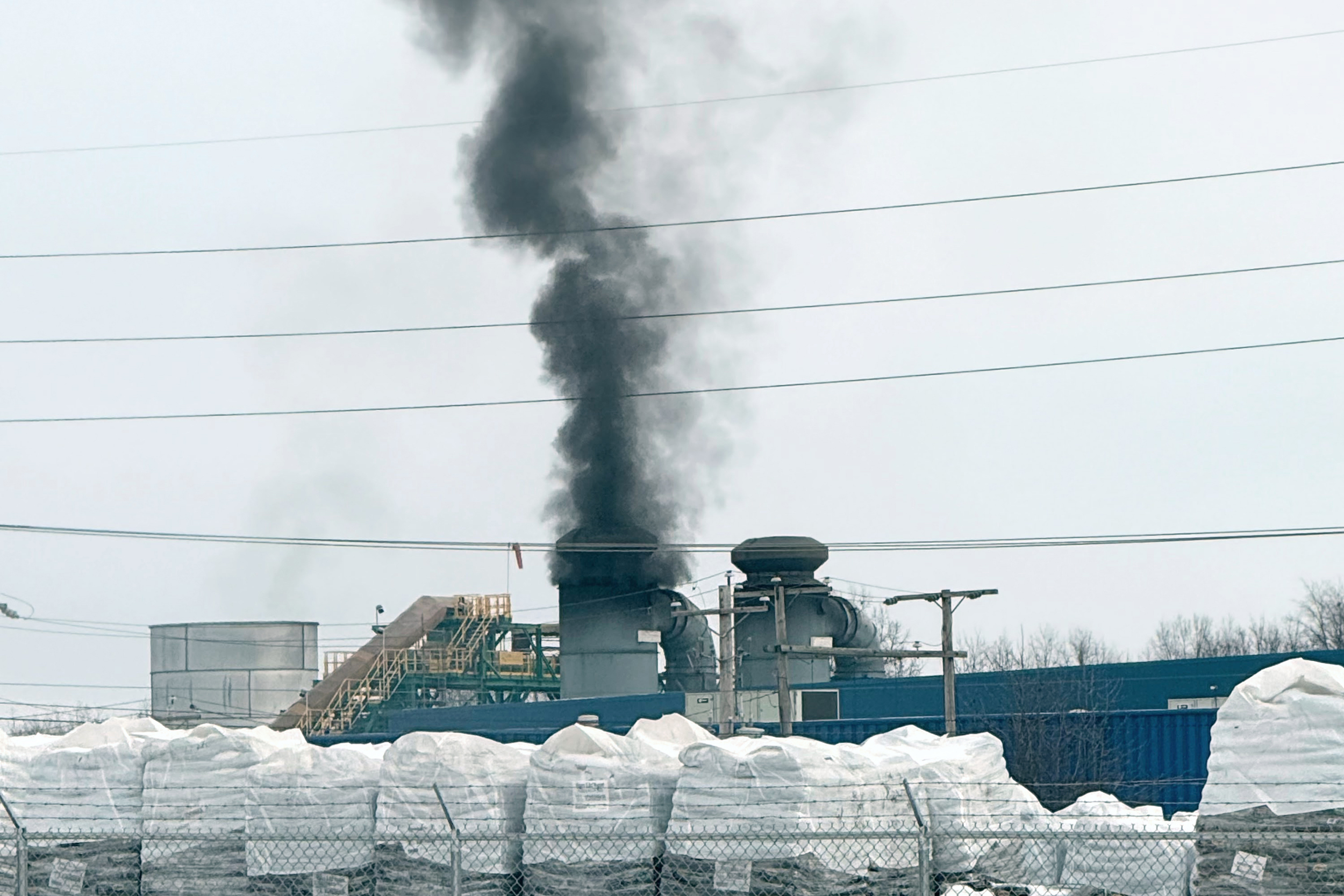
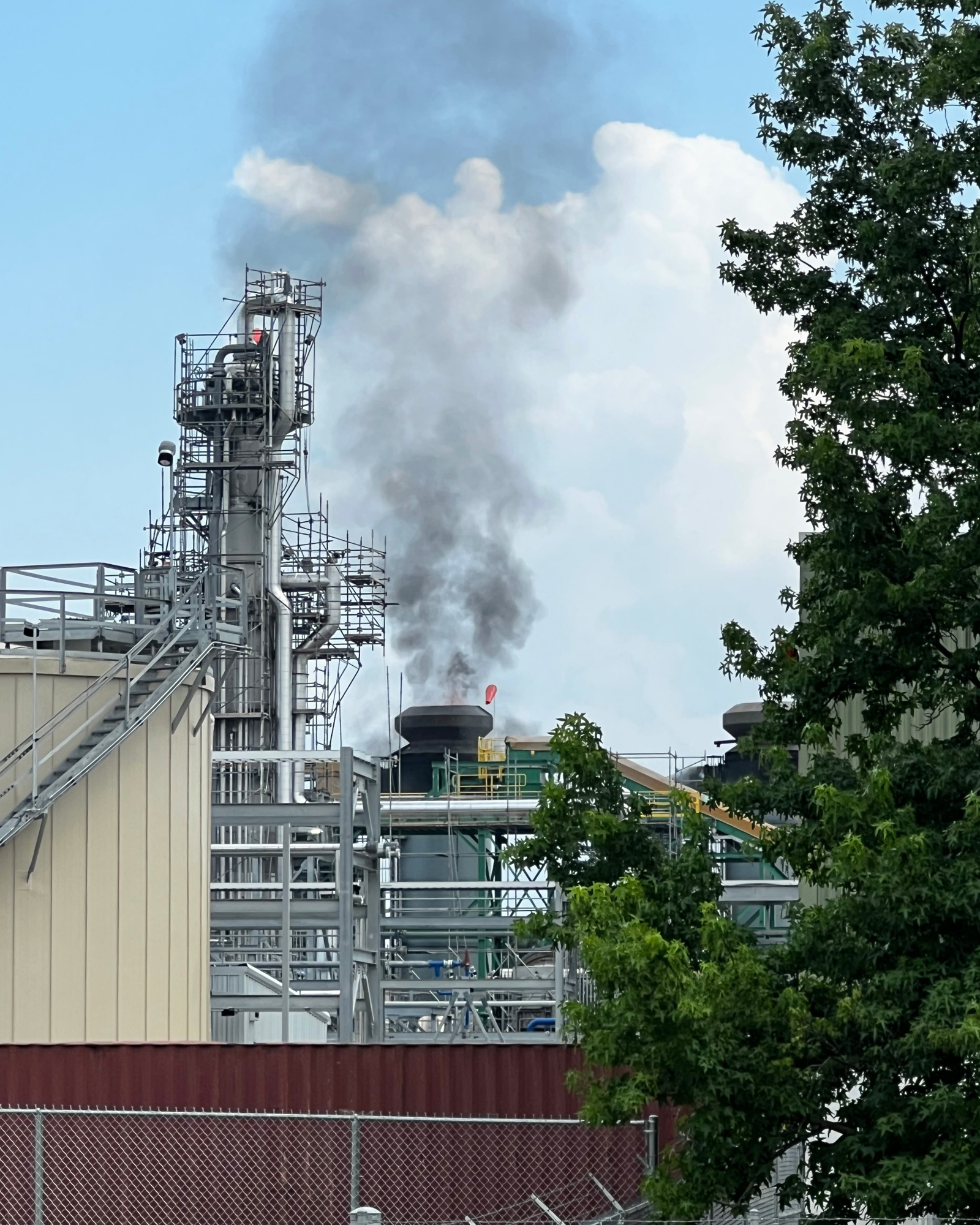
Belching smoke from a new plastic waste processing plant in central Ohio has stirred opposition to an even larger “chemical recycling” factory planned for Arizona by the same company.

The Freepoint Eco-Systems plant near Hebron, Ohio, fired up its processing kilns for the first time in 2024. Since then, it’s faced multiple citizen complaints about sooty emissions, from black clouds of smoke to flames. Dozens of times, plant operators have bypassed normal pollution controls to vent gases through a flare after upsets in their manufacturing processes, including emergency shutdowns, according to the Ohio Environmental Protection Agency.

The state regulator has issued four notices of violation to the company, according to an agency database, and launched an enforcement case after the latest one in December.  

The Ohio plant’s troubled track record should be a red flag to officials who oversee permitting for the company’s plans for Eloy, Arizona, about 60 miles south of Phoenix on Interstate 10, said Kevin Greene, a pollution-prevention expert who lives in nearby Tucson and retired from the Illinois Environmental Protection Agency.

Another warning should be the industry’s “troubling” underperformance when attempting to use chemical processes to turn mixed plastic waste into fuels or new plastic feedstocks, said Greene. 

“How about a six-month pause on this project while they investigate what’s going on in Hebron and take another look at the industry in general?” Greene suggested in an interview with Inside Climate News.

At least one Eloy city councilmember, Josephine “JoAnne” Galindo, said she’s concerned enough to want to be part of a potential Eloy delegation to visit Ohio, tour the Freepoint plant there and meet with local government and company officials.

“I would want to know more,” Galindo said. “I’m always concerned about the safety of my community.”

Freepoint officials declined a request for an interview on either their Ohio plant’s environmental performance or their proposed Arizona facility. 

In a written statement, the company said it has “invited officials from Arizona to tour our Ohio facility to see the sophistication of our operations and the scale of the plastic waste we are working to process. We’re currently scheduling this visit.”

In Ohio, the company is working with environmental and occupational safety and health officials and the local fire department “to ensure compliance with health, safety and environmental requirements,” the statement said. Freepoint officials, the statement added, “have implemented a number of operational improvements.”

In February, at public meetings in Arizona, a Freepoint representative put a positive spin on the situation.

“You get the benefit of being the second mover,” Geof Storey, the company’s chief development officer, told the Pinal County Board of Supervisors. “We are only going to build this one if the first one works. You are going to get all [the] learnings and all the benefits of that [Ohio] project.”

To the Eloy City Council the same week, he added, “We are still working out some of the kinks.”

The Ohio plant, located about 30 miles east of Columbus near Interstate 70, is designed to process up to 175 million pounds of plastic waste annually. The waste is sourced from plastic packaging companies and community recycling programs throughout the region, including as far away as Louisville, Kentucky. 

Freepoint Eco-Systems, a subsidiary of global trading and finance firm Freepoint Commodities, envisions at least a half-dozen facilities in the United States, Storey told Arizona officials. The Eloy facility would collect waste plastic from as far away as California and Colorado, as well as from Phoenix and Tucson, he added. A company PowerPoint presentation said its capacity would be more than twice the Ohio plant’s.

That would make the Eloy plant one of the largest in the world, said Rita O’Connell, a national organizer with the environmental group Beyond Plastics. But O’Connell also noted that the company’s PowerPoint contains a disclaimer that “there can be no assurances that information relied upon in preparing this presentation will prove accurate or any of the projections will be realized.”

The Freepoint Eco-Systems Hebron chemical recycling plant is seen in July 2025. Photo: Courtesy of Shawn Jones via Inside Climate News

Deregulatory Agenda Boosts Chemical Recycling

Industry officials have advocated for chemical recycling of plastics for years—often under the umbrella term of “advanced recycling”—as a solution to the global plastic waste crisis. 

Typically, that’s done with a technology called pyrolysis, the process of decomposing materials at very high temperatures in an oxygen-free environment. Traditional uses range from making tar from timber for wooden ships to transforming coal into coke for steelmaking.

More recently, major oil companies and small startups alike have sought to develop the technology as an alternative for recycling a wide variety of plastic waste. So far, they’ve been met with limited success and serious pushback from environmental groups viewing it as akin to incineration.

But one of the biggest criticisms is the paucity of plastic waste that pyrolysis actually turns into new plastic. 

For example, a 2024 lawsuit by California Attorney General Rob Bonta—against ExxonMobil’s pyrolysis-based chemical recycling operation at its Baytown complex near Houston—claimed decades of recycling deception contributed to a plastics crisis in California and around the world. In the lawsuit, which is still pending, Bonta asserted that no more than 8 percent of the incoming plastic waste to ExxonMobil’s plant is converted to feedstocks for new plastic. 

The lawsuit claimed the remaining waste becomes fuel, which is subsequently burned. 

After the lawsuit was filed, ExxonMobil responded that “advanced recycling works. To date, we’ve processed more than 60 million pounds of plastic waste into usable raw materials, keeping it out of landfills.”

The United Nations estimates that the world produces roughly 882 billion pounds of plastic waste each year.

Freepoint, which also uses pyrolysis, declined to say how much of the waste plastic it takes in becomes new plastic.

Storey told Arizona officials its plants divert waste from landfills and offset in-the-ground oil demand. 

Company officials said 70 percent of incoming plastic waste is converted into something called pyrolysis oil, or pyoil, which is used as a feedstock to create new products. About 25 percent is converted into gas used to heat the kilns. The rest becomes something called char, what Storey described as “black carbon.”

Storey said the pyoil gets sent to petrochemical customers on the Gulf Coast. There, company officials said, it serves as a “substitute for crude oil to create new plastics and other products.”

“What products our customers manufacture and where they distribute them,” the company said, “is up to our customers.”

The chemical industry has already worked to ease regulations on advanced recycling in dozens of states, including Arizona and Ohio. And in March, after groups of chemical and plastics industry lobbyists visited the U.S. Environmental Protection Agency’s headquarters, the EPA took an initial step to exempt pyrolysis from federal Clean Air Act regulations.

Beyond Plastics’ O’Connell, who is based in New Mexico, said the chemical industry seems to have accelerated its push for chemical recycling as the Trump administration rolls back a wide range of environmental rules. At least three recycling and chemical regulation bills pending in Congress aim to boost chemical recycling of plastic waste, she said.

Fewer than 10 chemical recycling plants are operating in the United States, often in a limited capacity, said O’Connell, whose group follows the industry’s performance.

But Oil and Gas Watch, a petrochemical tracker created by the Environmental Integrity Project, identifies about 40 potential new chemical recycling facilities in the works. Some are proposed, some are in the permitting process and some are approved for construction.

“Given the national atmosphere, it’s possible we’re about to see the lights go on on a bunch of these proposals that haven’t moved in a while, because there seems to be a lot of energy in this direction,” O’Connell said. “It all points to a huge industry push to leverage this Congress and EPA to get chemical recycling rolling nationally.”

Children play in Hebron’s Evans Park with black smoke emitting from a nearby chemical recycling plant about a mile and a half away in July 2025. Photo: Courtesy of Shawn Jones via Inside Climate News

Ohio EPA Opens an Enforcement Case

It was a little more than a year ago when Amanda Rowoldt, an Ohio organizer with the environmental group Moms Clean Air Force, was driving by the Freepoint facility near Hebron and saw black smoke billowing out of the stacks. She took a video and filed a complaint with the Ohio EPA.

“Long story short, they were found in violation of exceeding their particulate limits,” Rowoldt.

Numerous pollution incidents followed. A local nonprofit newsroom covering Licking County, The Reporting Project, affiliated with Denison University’s journalism program, took notice.

Denison is a small private liberal arts college located about 10 miles away in Granville. Doug Swift, who teaches at Denison and is an advisor of The Reporting Project, said a plastics recycling theme in an investigative reporting track resulted in a series of articles. 

One of the stories, published Feb. 26, revealed the citizen complaints, the state’s violation notices and a 911 call last May from a resident a quarter-mile away reporting “a factory on fire.”

“It was a great series to push out into the community, and it did alert some of our most engaged and knowledgeable citizens to the plant and to a technology most didn’t know anything about,” Swift said. He described the Hebron area as something of a local news desert, often ignored by commercial news outlets in the region.

Hebron Mayor Valerie Mockus said her municipality has no jurisdiction over the plant because it’s located just outside city limits, in an industrial park in Union Township. Still, she said she’s been concerned about environmental incidents there, though she is working to keep an open mind.

“I am very interested in finding ways to address problems with novel solutions,” Mockus said. “We have a problem with too much plastic. Is this a way to address that? But I was disappointed to hear about the negative side effects.”

She described her community as working class, its residents familiar with plumes of evaporated vapor coming from industrial stacks. “When it comes out black,” she added, “everybody pauses.”

According to the company’s air-quality permit from the Ohio EPA, the plant is allowed to emit certain levels of toxic fine particles, volatile organic compounds, nitrogen oxides, hydrochloric acid, and dioxins—pollutants that collectively can damage lungs, cause cancer and create havoc with other bodily systems.

Ohio EPA’s most recent notice in mid-December alleges air-permit violations including excess emissions of particulates, a toxic mix that can include soot, smoke and a variety of chemicals. Since then, the agency has opened an enforcement case against the company, said Max Moore, a spokesman for the Ohio EPA.

The state agency required the company to conduct emissions testing to get a clearer picture of what’s being released into the air, Moore said. Visible particulate emissions exceeded an opacity limit 18 times from Feb. 1 through March 31, he said. Nitrogen oxides from a test in February also exceeded a permit limit, he added.

On April 3, an Ohio EPA official chastised Freepoint for repeatedly failing to quickly notify the agency of plant malfunctions, according to an email that Inside Climate News obtained through a public-records request.

“This issue has been beaten to death at this point, but we still are not receiving immediate notifications of malfunctions,” the state official wrote, citing an example of a late afternoon March 30 notice to regulators of an early morning March 27 malfunction. 

“If it helps, think of it like calling the fire department when there’s a fire,” the official told the company representatives. “That’s immediate. You wouldn’t wait eight hours or until the next day.”

A company representative said that afterward, “we promptly changed our reporting process to ensure it’s in line with their requirements.”

The Ohio EPA’s Moore said the goal “is to get the facility back into compliance.”

Pollution and Fire Videos

Cat Adams, a Columbus-based organizer with the Buckeye Environmental Network, said several workers have sought her out to describe unsafe working conditions, including dust, chemical spills and fire hazards. She hears from area residents about the plant, too.

“There’s a group of people in the community who are worried about it, and they want something done,” Adams said.

Shawn Jones is one of them. He was an eyewitness to the May 27 fire and took a video of it. In subsequent months, he’s kept a close eye, documenting other incidents of billowing smoke. “I’ve probably seen that 15 times,” Jones said, adding that he’s concerned about the health and safety of both people in the community and workers inside the plant.

He said he’s not sure what, if anything, Ohio EPA officials will do to force the company to comply with environmental regulations.

“I’d like them to shut the whole place down,” Jones said. “It’s such a new process. They clearly don’t have it figured out yet.”

He said it feels like Freepoint is “doing sandbox experiments in the backyards of thousands of people. They can, because of the lack of zoning here.”

In Arizona, Greene, the former Illinois environmental official, said he and an Eloy resident, Ralph Atchue, are asking Pinal County air quality officials to strengthen a permit they issued the company three years ago. The reason they’re citing: the company’s pollution record in Ohio. 

Greene also suggests that the city of Eloy should ask for fenceline air-quality monitoring to give the community real-time data on any leaks and equipment failures.

Noting that the company has essentially described its Ohio plant as a test case, Greene added: “I’d like to know what’s going to be redesigned [for Eloy], or what’s going to be improved. But I also want to make sure there will be the appropriate safeguards in place to ensure that it doesn’t happen in Eloy—and that it doesn’t recur in Hebron.”


The post Ohio Plastic Waste Plant to Expand Nationally appeared first on Great Lakes Now.

Original Article

Great Lakes Now

Great Lakes Now

https://www.greatlakesnow.org/2026/04/24/ohio-plastic-waste-plant-to-expand-nationally/

Inside Climate News

Michigan and parts of Wisconsin are in the midst of a historic flooding event in spring 2026. Days of heavy rainfall on top of snow have sent lakes and rivers over their banks and threatened several dams in both states.  Read the full story by Great Lakes Now.

Original Article

Great Lakes Commission

Great Lakes Commission

https://www.glc.org/dailynews/20260424-extreme-precipitation

Autumn McGowan