Field Report: Manitowish Waters Labor Day weekend rice camp

Every fall for hundreds of years, families and tribes have gathered for wild rice season on the lakes and streams of what is now known as northern Wisconsin. For the Anishinaabe—including Ojibwe and other related tribes—this annual gathering remains a vital cultural and social tradition, encompassing far more than food gathering.

Manoomin is not simply a “food that grows on water.” At the heart of tribal beliefs, it is recognized as a Sacred Living Being—and, unfortunately, it is very much under threat.

This year, following in the rice camp tradition, GLIFWC and UW–Trout Lake Station hosted an intergenerational, intertribal Manoomin/Manōmaeh (“Wild Rice”) Camp over Labor Day weekend at the North Lakeland Discovery Center in Manitowish Waters. Esiban Parent (GLIFWC), Sagen Quale (UW graduate student), and Dr. Gretchen Gerrish (UW–Trout Lake Station) did an outstanding job organizing the event.

Roger LaBine (member and elder of the Lac Vieux Desert Band of Lake Superior Chippewa) stands with River Alliance's Johnson Bridgwater next to forked branches handmade for push-pull poles used to steer canoes in manoomin harvests.
Roger LaBine (member and elder of the Lac Vieux Desert Band of Lake Superior Chippewa) stands with River Alliance’s Johnson Bridgwater next to forked branches handmade for push-pull poles used to steer canoes in manoomin harvests.

Rice camp is a deeply hands-on experience—a time when wisdom and knowledge about harvesting, processing, and cooking wild rice are passed down each fall. Because Manoomin is regarded as a Sacred Being, the camp also includes ceremony and other cultural practices that can only be learned firsthand or by invitation.

There are no spectators at rice camp—your moments are spent either learning, teaching, or building the tools essential for traditional wild rice gathering (or “ricing”). All the while, participants are storing and sharing knowledge that keeps this living tradition thriving.

The basic process of preparing wild rice begins with the harvest. Gathering wild rice is done from a canoe using a push pole, a pair of rice knockers, and two people working together. After harvesting, the rice is spread out in the sun to dry, giving rice worms and spiders a chance to leave before processing begins.

The traditional process of preparing wild rice involves three main steps: parching, threshing (also known as “dancing the rice” or “jigging”), and winnowing.

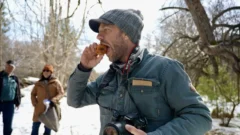
Paddlers in canoes gather a the edge of a lake with manoomin to learn from Kathleen Smith how to identify the plant that is central to the Ojibwe origin story and modern culture.

Parching—or roasting—dries the grain to preserve it and makes the hull brittle. Threshing removes the dried husks from the kernels, traditionally done by “dancing” or “jigging” on the rice. Winnowing uses wind to separate the loose, light chaff from the heavier, processed rice grains. At that point, you have ready-to-cook rice. All of these activities took place at this year’s camp, along with workshops where participants hand-crafted their own traditional ricing tools.

River Alliance's Evan Arnold sands whittled branches used as knockers to tap manoomin into birch baskets in canoes during wild rice harvests.
River Alliance’s Evan Arnold sands whittled branches used as knockers to tap manoomin into birch baskets in canoes during wild rice harvests.

“Whether I was carving rice knockers, building push poles, crafting birchbark baskets, enjoying delicious manoomin meals, or paddling through rice beds, my experiences at Rice Camp helped cement my connection to the unique and valuable waters we have right here in Wisconsin, and strengthened my resolve to continue to protect them.” – Evan Arnold, River Alliance Development Director

Saying rice camp is the heart and soul of Manoomin is a bit simplistic, but it is certainly appropriate. For anybody wanting a deeper connection to our world, or seeking new ways to grow your stewardship, a single weekend at rice camp can easily unlock a lifetime pursuit and passion. 

Please consider attending a rice camp next year, whether this camp in 2026 or another rice camp in the upper Midwest in September and October. Learn how to become a Manoomin Steward volunteer with River Alliance of Wisconsin and subscribe to our ManoomiNews newsletter today to get future stories like this one and more delivered to your inbox.


This message is made possible by generous donors who believe people have the power to protect and restore water. Subscribe to our Word on the Stream email newsletter to receive stories, action alerts and event invitations in your inbox. Take a deeper dive into the topic of manoomin by subscribing to our ManoomiNews newsletterSupport our work with your contribution today.

The post Field Report: Manitowish Waters Labor Day weekend rice camp appeared first on River Alliance of WI.

Original Article

Blog - River Alliance of WI

Blog - River Alliance of WI

https://wisconsinrivers.org/2025-intertribal-rice-camp-report/
Allison Werner

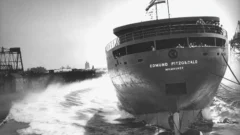
In “The Gales of November,” author John U. Bacon investigates the sinking of the Edmund Fitzgerald

By Doug Tribou, John U. Bacon and Caoilinn Goss, Michigan Public

The Great Lakes News Collaborative includes Bridge Michigan; Circle of Blue; Great Lakes Now at Detroit PBS; Michigan Public, Michigan’s NPR News Leader; and The Narwhal who work together to bring audiences news and information about the impact of climate change, pollution, and aging infrastructure on the Great Lakes and drinking water.

Read Now at Great Lakes Now.

Original Article

Great Lakes Now

Great Lakes Now

https://www.greatlakesnow.org/2025/10/in-the-gales-of-november-author-john-u-bacon-investigates-the-sinking-of-the-edmund-fitzgerald/

Michigan Public

By Anna Barnes
The Detroit River serves as an important geographic feature, connecting lakes St. Clair and Erie and creating a natural border between the U.S. and Canada. Despite its physical prominence in Detroit, its rich cultural significance is lost among many community residents. Programs are underway to address that disconnect.

The post Detroit River-based program aims to foster stewardship through community connection first appeared on Great Lakes Echo.

Original Article

Great Lakes Echo

Great Lakes Echo

https://greatlakesecho.org/2025/10/22/detroit-river-based-program-aims-to-foster-stewardship-through-community-connection/

Anna Barnes

Soil is more than just dirt under our feet; it's the foundation of our food, communities, and perhaps surprisingly, cleaner water. At Fox-Wolf, we know how important properly managed soil is for improved water quality, and farmers across the Basin know how important healthy soil is for growing good crops. We're working together [...]

The post Different Reasons, Same Results. Farming for Water Quality appeared first on Fox-Wolf Watershed Alliance.

Original Article

Fox-Wolf Watershed Alliance

Fox-Wolf Watershed Alliance

https://fwwa.org/2025/10/21/different-reasons-same-results-farming-for-water-quality/?utm_source=rss&utm_medium=rss&utm_campaign=different-reasons-same-results-farming-for-water-quality

Tim Burns

Points North: How ‘Bout Them Apples?

By Austin Rowlader, Interlochen Public Radio

Points North is a biweekly podcast about the land, water and inhabitants of the Great Lakes.

This episode was shared here with permission from Interlochen Public Radio. 

Luke Marion is on Beaver Island in Lake Michigan looking for apple trees.

Read Now at Great Lakes Now.

Original Article

Great Lakes Now

Great Lakes Now

https://www.greatlakesnow.org/2025/10/points-north-how-bout-them-apples/

Interlochen Public Radio

Ohio to fast-track energy at former coal mines and brownfields

By Kathiann M. Kowalski

This story was originally published by Canary Media.

A new law in Ohio will fast-track energy projects in places that are hard to argue with: former coal mines and brownfields.

But how much the legislation benefits clean energy will depend on the final rules for its implementation, which the state is working out now.

Read Now at Great Lakes Now.

Original Article

Great Lakes Now

Great Lakes Now

https://www.greatlakesnow.org/2025/10/ohio-to-fast-track-energy-at-former-coal-mines-and-brownfields/

Canary Media

Last week, Illinois announced it had acquired land needed to move forward with a $1.15 billion barricade aimed at keeping the invasive silver carp from entering the channel that connects the Mississippi River Basin with the Great Lakes. Read the full story by the Chicago Sun-Times.

Original Article

Great Lakes Commission

Great Lakes Commission

https://www.glc.org/dailynews/20251020-illinois-carp-progress

Autumn McGowan

The Ontario government pushed forward TC Energy’s proposal to build a large pumped storage project on Lake Huron’s Georgian Bay, despite early expert advice it would be costly and not meet the province’s current energy needs. Read the full story by BarrieToday.com.

Original Article

Great Lakes Commission

Great Lakes Commission

https://www.glc.org/dailynews/20251020-georgianbay-pumpedstorage

Autumn McGowan

In Northville, Michigan, part of the Rouge River — sealed inside a 1,200-foot concrete tunnel in 1962 to create land for fairgrounds and, later, a racetrack — has finally been uncovered, the centerpiece of a $350 million redevelopment reshaping the city. Read the full story by the Detroit Free Press.

Original Article

Great Lakes Commission

Great Lakes Commission

https://www.glc.org/dailynews/20251020-rougeriver-project

Autumn McGowan

Park trails along Lake Michigan’s shoreline in Michigan and Wisconsin are eroding due to more frequent extreme precipitation events, plus increased foot traffic from visitors in undesignated recreation areas. Read the full story by WCMU Public Media.

Original Article

Great Lakes Commission

Great Lakes Commission

https://www.glc.org/dailynews/20251020-trail-erosion

Autumn McGowan

Every year, the Great Lakes Shipwreck Museum holds a private memorial ceremony for those with a connection to the Edmund Fitzgerald on the anniversary of the ship’s sinking. In honor of this year’s 50th anniversary, there will also be a ceremony for the public. Read the full story by WBUP – Marquette, MI.

Original Article

Great Lakes Commission

Great Lakes Commission

https://www.glc.org/dailynews/20251020-shipwreckmuseum-fitzgerald

Autumn McGowan

Should I Stay, or Should I Go: Tracking Partial Migration Frequency of Yellow Perch (Perca flavescens)

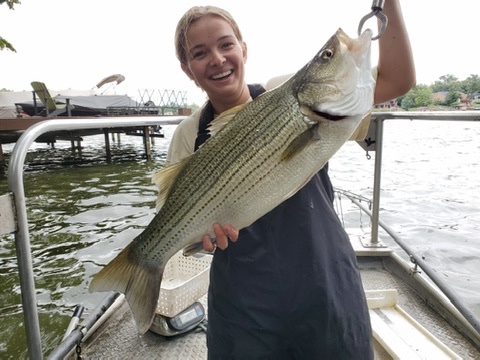
A person holding a fish.

Anna Hill, submitted photo.


Studying fish comes with many challenges, and one of the biggest is that they are constantly on the move. Because of this, tracking fish has become a major focus in aquatic science in recent years. With tools like acoustic telemetry, scientists can now monitor fish movement at both fine and large spatial scales.
 
Much like how cell towers use signals to track phones, a network of receivers can record the movements of individual fish over time. Scientists use this technology to study yellow perch in Lake Michigan, a species that is important to both the ecosystem and local fisheries.
 
Join Anna Hill for an overview of her work tracking fish. Originally from Chicago, Hill is a master’s degree student at Purdue University co-advised by Tomas Höök and Paris Collingsworth. She completed her undergraduate degree in marine science from the University of Delaware. She has worked as an aquatic technician in both freshwater and marine systems.
Learn more about this event.
 
Questions? Contact Anne Moser or Ginny Carlton.
The post Join us for “Students Ask Scientists” on November 6 first appeared on Wisconsin Sea Grant.

Original Article

News Releases | Wisconsin Sea Grant

News Releases | Wisconsin Sea Grant

https://www.seagrant.wisc.edu/news/join-us-for-students-ask-scientists-on-november-6/

Ginny Carlton

By Georgia Hill
Utility companies have a history of using “dark money” to influence Michigan elections. Now, organizations are attempting to advance ballot initiatives aimed at stopping utility companies from contributing to politicians who run for or hold offices that impact them. 

The post Ballot proposals advance, aiming to get ‘dark money’ out of politics first appeared on Great Lakes Echo.

Original Article

Great Lakes Echo

Great Lakes Echo

https://greatlakesecho.org/2025/10/20/ballot-proposals-advance-aiming-to-get-dark-money-out-of-politics/

Great Lakes Echo

* WHAT...Temperatures in the lower to middle 30s will result in frost formation. * WHERE...Portions of central, east central, and northeast Wisconsin. * WHEN...From 2 AM to 8 AM CDT Monday. * IMPACTS...Frost could harm sensitive outdoor vegetation. Sensitive outdoor plants may be killed if left uncovered.

Original Article

Current watches, warnings, and advisories for Brown County (WIC009) WI

Current watches, warnings, and advisories for Brown County (WIC009) WI

https://api.weather.gov/alerts/urn:oid:2.49.0.1.840.0.04406730ed76d3bf4e42c161fa3e082b079a5170.001.1.cap

NWS

* WHAT...Temperatures in the lower to middle 30s will result in frost formation. * WHERE...Portions of central, east central, and northeast Wisconsin. * WHEN...From 2 AM to 8 AM CDT Monday. * IMPACTS...Frost could harm sensitive outdoor vegetation. Sensitive outdoor plants may be killed if left uncovered.

Original Article

Current watches, warnings, and advisories for Brown County (WIC009) WI

Current watches, warnings, and advisories for Brown County (WIC009) WI

https://api.weather.gov/alerts/urn:oid:2.49.0.1.840.0.04406730ed76d3bf4e42c161fa3e082b079a5170.001.1.cap

NWS

* WHAT...Temperatures in the lower to middle 30s will result in frost formation. * WHERE...Portions of central, east central, and northeast Wisconsin. * WHEN...From 2 AM to 8 AM CDT Monday. * IMPACTS...Frost could harm sensitive outdoor vegetation. Sensitive outdoor plants may be killed if left uncovered.

Original Article

Current watches, warnings, and advisories for Brown County (WIC009) WI

Current watches, warnings, and advisories for Brown County (WIC009) WI

https://api.weather.gov/alerts/urn:oid:2.49.0.1.840.0.05bc04c468b05e5c9da7d8cf26a8d2ace8bc8a79.001.1.cap

NWS

By Julia Belden
The Michigan Department of Environment, Great Lakes and Energy and governor are marking Michigan’s first Microplastics Awareness Week. Scientists are now finding microplastics in the human body but don’t know their long-term effects.

The post Michigan launches first annual Microplastics Awareness Week first appeared on Great Lakes Echo.

Original Article

Great Lakes Echo

Great Lakes Echo

https://greatlakesecho.org/2025/10/18/michigan-launches-first-annual-microplastics-awareness-week/

Great Lakes Echo

A bitcoin mine came to Michigan’s Upper Peninsula, and Dafter Township isn’t happy

By Tom Perkins, Inside Climate News

This article originally appeared on Inside Climate News, a nonprofit, non-partisan news organization that covers climate, energy and the environment. This is the last of three articles about Michigan communities organizing to stop the construction of energy-intensive computing facilities.

Read Now at Great Lakes Now.

Original Article

Great Lakes Now

Great Lakes Now

https://www.greatlakesnow.org/2025/10/a-bitcoin-mine-came-to-michigans-upper-peninsula-and-dafter-township-isnt-happy/

Inside Climate News

When the U.S. Coast Guard closed its Grand Marais, Minnesota, station in 2022, it left a gap in safety coverage along a large stretch of Lake Superior. In response, the Grand Portage Band of Lake Superior Chippewa has launched what the tribe says is the first Indigenous-led coast guard in the nation. Read the full story by Minnesota Public Radio.


Original Article

Great Lakes Commission

Great Lakes Commission

https://www.glc.org/dailynews/20251017-indigenous-coast-guard

James Polidori

A fresh wave of midges — tiny, non-biting insects — has swarmed parts of Northeast Ohio this week, creating a rare sight for mid-October. Ohio Department of Natural Resources officials said the late-season emergence is tied to Lake Erie’s lingering warmth. Read the full story by The Plain Dealer.

Original Article

Great Lakes Commission

Great Lakes Commission

https://www.glc.org/dailynews/20251017-midge-emergence

James Polidori

Village of Fredonia, New York, officials are urging residents to conserve water in any way they can due to a lack of rain. According to village officials, the water reservoir is in extreme danger of reaching a critically low point, which could hamper the village’s ability to produce and supply adequate drinking water. Read the full story by Spectrum News 1.

Original Article

Great Lakes Commission

Great Lakes Commission

https://www.glc.org/dailynews/20251017-drought-conservation

James Polidori

The success of a sturgeon restocking program along the Maumee River led the Ohio Department of Natural Resources (DNR) to expand it this year to the Cuyahoga and Sandusky rivers. On October 4, the Ohio DNR had 2,000 baby lake sturgeon released into the Cuyahoga River. Read the full story by The Toledo Blade.

Original Article

Great Lakes Commission

Great Lakes Commission

https://www.glc.org/dailynews/20251017-sturgeon-restocking

James Polidori

Ohio state lawmakers are proposing legislation to ban oil and gas drilling under Lake Erie. While federal law currently prohibits drilling under the Great Lakes, the bill’s sponsors say the state needs to enact its own protections. Read the full story by WTVG – Toledo, OH.

Original Article

Great Lakes Commission

Great Lakes Commission

https://www.glc.org/dailynews/20251017-drilling-ban-legislation

James Polidori

In a proclamation, Michigan Governor Gretchen Whitmer dedicated Oct. 19-26 as Microplastics Awareness Week. The week includes events in which the public can learn about microplastics, participate in cleanups and discover practical solutions to reduce plastic waste at home. Read the full story by Michigan Public.

Original Article

Great Lakes Commission

Great Lakes Commission

https://www.glc.org/dailynews/20251017-microplastics-proclamation

James Polidori

For the first time in its history, the St. Croix Chippewa Indians of Wisconsin released lake sturgeon into Clam Lake as part of efforts to restore the ancient fish. The tribe has been working for years to bring sturgeon back to the Clam River system, which is home to a remnant population of the native fish. Read the full story by Wisconsin Public Radio.

Original Article

Great Lakes Commission

Great Lakes Commission

https://www.glc.org/dailynews/20251017-sturgeon-release

James Polidori

Community members, environmental professionals, and researchers will gather later this month for the 18th Annual Freshwater Summit, an event focused on the latest research and regional efforts to protect the Great Lakes. Read the full story by WWTV – Traverse City, MI.

Original Article

Great Lakes Commission

Great Lakes Commission

https://www.glc.org/dailynews/20251017-freshwater-summit

James Polidori

From invasive species and pollution to the escalating impacts of climate change, Lake Michigan and the other Great Lakes are grappling with a host of environmental challenges. But in Chicago, scientists and environmentalists are on the front lines, dedicating their time to finding solutions. Read the full story by WLS-TV – Chicago, IL.

Original Article

Great Lakes Commission

Great Lakes Commission

https://www.glc.org/dailynews/20251017-environmental-solutions

James Polidori

The F.T. Barney, a two-masted schooner, collided with another ship on Oct. 23, 1868, and quickly sank to the bottom of Lake Huron. According to the NOAA Thunder Bay National Marine Sanctuary, divers can clearly see its intact stern cabin, erect main mast, and a cargo hold still full of coal off the coast of Rogers City, Michigan. Read the full story by MLive.

Original Article

Great Lakes Commission

Great Lakes Commission

https://www.glc.org/dailynews/20251017-intact-shipwreck

James Polidori

Summary

The Advocacy Director will lead the Alliance’s work to build a powerful, coalition-driven movement to ensure the Great Lakes are sustained for today and tomorrow. With a focus on state-level and regional policy, the Advocacy Director will lead campaign planning, stakeholder engagement, and decision-maker education efforts to further the Alliance’s water policy goals. This work spans all of the Alliance issue areas across the Great Lakes region, including but not limited to agriculture, water infrastructure, plastics and other pollutants, water supply, and invasive species.

The Advocacy Director has primary responsibility for building the campaign structures and relationships necessary to advance regional and state-level legislative and regulatory policy agendas. The Advocacy Director will work collaboratively with various Alliance staff – including policy experts in water resources and water infrastructure, and communications, media relations, local partnerships and government affairs staff – as partners in campaign strategy development and execution. The Advocacy Director will be a public figure for the organization who speaks with authority and diplomacy. They will cultivate and sustain relationships that further the Alliance’s water policy goals, including with elected and appointed officials, academics, trade associations and businesses, community-based organizations, and NGOs. The Advocacy Director will also train, organize, and create opportunities for the Alliance’s supporters to participate in lawmaker education and other forms of advocacy. The Advocacy Director will provide counsel to the Alliance’s Vice Presidents and the President & CEO on policy opportunities and strategy across the region.

In a typical week, the Advocacy Director might:

  • Track the progress of state legislation related to Great Lakes issues and advise the Alliance’s policy experts on any important developments  
  • Build and convene with in-state coalitions to explore joint opportunities to advance campaign goals and align messaging
  • Receive a briefing from an Alliance policy expert on a new report and discuss its implications for campaign strategy
  • Coordinate with the communications staff to send an Action Alert to supporters
  • Conduct a webinar for Alliance supporters to prepare for an upcoming lawmaker education event
  • Schedule and lead a meeting with a state representative in a key legislative district
  • Brainstorm with Alliance policy experts on analyses, fact sheets, or other materials that could support lawmaker education on a topic of interest
  • Attend a trade association meeting to network with important campaign stakeholders
  • Draft or review a blog post, op-ed, or press release on a notable policy achievement
  • Talk to key media on the record to advance the Alliance’s policy goals

Responsibilities

In consultation and coordination with Alliance leadership and other staff Directors, the Advocacy Director will:

   Campaign Leader

  • Develop structures and systems that support collaborative internal campaign planning and implementation
  • Build and manage campaign plans that engage the Alliance’s research, policy recommendation, relationship and communication resources to advance policy wins
  • Ensure that campaigns have clear prioritization and alignment in asks, timing and stakeholder relevance at the federal, state and local levels
  • Create and implement systems for tracking and reporting on state bills and regulatory actions related to the Alliance’s policy priorities
  • Identify and prioritize campaign strategies and geographic focus based on a regional Great Lakes agenda and our ability to leverage external political, economic and cultural conditions to shift policy
  • Connect campaign goals to real-world outcomes that have an impact on the Great Lakes and the lives of people who depend on them
  • Recommend and inform opportunities for program expansion and directional adjustments that increase our chances of policy success

Movement Builder

  • Seek out and build coalitions of partners that are capable of successfully advancing policy changes, including elected and appointed officials, academics, trade associations and businesses, community-based organizations, and NGOs.
  • Foster and strengthen long-term relationships with executive and legislative leaders in key states who can drive policy change
  • Develop capacity for Alliance staff, supporters, and local partner organizations to lead on state and regional campaigns
  • Generate regular short-term policy, organizing and communication successes as we advance toward our long-term goals
  • Lead campaign tactics related to organizational supporter activation, briefing and testimony for decision makers, conference presentations and other external relations activities

Manager

  • Develop a plan to build and manage a team of advocacy experts, including state and sub-regional staff who are directly employed or individuals contracted to support the Alliance
  • Motivates and mentors staff that work in multiple locations as team members, peers and collaborators
  • Establishes and manages to multiyear expense budgets and work plans to implement the strategic plan
  • Builds and maintains relationships with program staff at institutional philanthropic supporters and develops proposals and report to advance grant-funded work of program
  • Engages in regular reflection on and cultivation of a values-based organizational culture

Work Relationships

The Advocacy Director reports to the Vice President for Programs. Campaign strategy development and implementation is a highly collaborative process at the Alliance, and the Advocacy Director will be responsible for convening policy experts including the Director of Water Resources and Director of Water Infrastructure, and will manage campaign development with the Movement Building team including Directors who lead on communications, media relations, local partnerships, and federal government affairs to align on policy objectives and leverage the team’s diverse skills to advance organizational campaign work. They collaborate as needed with the Finance and Operations Team on project and budget management.

Supervisory Responsibilities

The Advocacy Director is a newly created position and does not currently supervise staff; however, team growth is expected over the next two years with state and sub-regional staff who are directly employed or individuals contracted to support the Alliance.

Physical Demands/Work Environment

This position is remote and will be located within the Great Lakes region, with a preference for a part of the region impacted by current work, and for proximity to a major airport. Overnight travel within the Great Lakes region is required, with an average of once per month. A driver’s license and comfort with solo travel by car is required. If the candidate is in the Chicago area, the Alliance’s downtown headquarters office is available for in-office work.

Knowledge/Skills

  • Deep expertise and experience in building and executing successful coalition-driven public campaigns to advance environmental policy goals, with a preference for direct experience in the Great Lakes and/or water space.
  • A track record showing successes that address the expressed needs of communities impacted by pollution, water loss, resource degradation and other stressors.
  • Trusted relationships and credibility with influential leaders of relevant Great Lakes region stakeholders, including elected and appointed officials, academics, trade associations and businesses, community-based organizations, and NGOs, particularly in Illinois, Michigan, Ohio, and/or Wisconsin.
  • Experience successfully managing campaign teams that include peers and external partners, often working multiple issues in parallel that may compete for resources and attention.
  • Solid understanding of state fiscal/budgeting, legislative, and regulatory processes and opportunities to influence decision-making.
  • Staff management, mentoring and supervisory experience.
  • Experience addressing the needs of major philanthropic foundations.
  • Ability to create and communicate information using compelling public speaking and visual tools.
  • Commitment to building and managing inclusive internal and external teams that cut across diversities of race, gender, culture, socioeconomic class, political affiliation, and geography.
  • Commitment to Alliance values of community, relationships, courage, integrity, and optimism and principles of diversity, equity, inclusion and justice.
  • Collaborative, collegial, humble, with a good sense of humor and ability to adapt to diverse work styles; adept at working in teams and independently in both virtual and in-person settings.
  • Familiar with Microsoft Office Suite and project management software.
  • Undergraduate degree (advanced degree preferred) and 10+ years of experience in public campaign spaces such as policy advocacy, politics, media or marketing.
  • The selected candidate must be able to pass a background check.

Job Parameters

  • This position is full-time and consistent with Alliance employment policy. The Alliance has defined salary ranges that are evaluated annually, and it is customary for candidates to join at the lower half of the range to leave room for learning and development in the role. It is uncommon for starting salaries to fall above the mid-point. However, because we are specifically seeking a candidate with significantly more experience than the typical baseline for a Director role, we are prepared to offer a higher starting salary than the entry point of the range. The salary range for this position starts at $120,000 and we negotiate salaries with final candidates based on their experience in similar roles and expertise related to the qualifications.
  • Excellent benefits, including medical, dental, short- and long-term disability, life insurance, FSA, 11 paid holidays plus the business days between 12/26 and 12/30 (staff who must work on any paid holidays may take those holidays at another time subject to the employee handbook), 3 weeks’ annual vacation to start + PTO, and Fidelity 401(k) with employer match of up to 6% of salary, eligible after 30 days.
  • This position can be performed remotely from anywhere within the Great Lakes region, with a preference for a part of the region impacted by current work, and for proximity to a major airport.

Application Process

Please e-mail a cover letter, resume, references, and writing or work sample that demonstrates relevant qualifications to hr@greatlakes.org. Include the job title in the subject line.

Applications will be accepted and reviewed on a rolling basis starting on October 15, 2025, and until the position is filled. Materials should be compatible with Microsoft Word or Adobe Acrobat. Applicants will receive confirmation of receipt of their materials, further guidance, and updates about the hiring process by e-mail, with interviews provided for finalists. No phone inquiries, please.

About the Alliance for the Great Lakes

Our vision is a thriving Great Lakes and healthy water that all life can rely on, today and far into the future.

The mission of the Alliance for the Great Lakes is to protect, conserve, and restore the Great Lakes, ensuring healthy water in the lakes and in our communities for all generations of people and wildlife.

To achieve our vision and mission, everyone in our organization will live our values of Community, Relationships, Courage, Integrity and Optimism, and weave the principles of Justice, Equity, Diversity and Inclusion into all our work.

 For more information about the Alliance’s programs and work, please visit us online at www.greatlakes.org.

The post Advocacy Director appeared first on Alliance for the Great Lakes.

Original Article

News - Alliance for the Great Lakes

News - Alliance for the Great Lakes

https://greatlakes.org/2025/10/advocacy-director/

Michelle Farley

By Mia Litzenberg

Climate change is creating new challenges for Great Lakes coastal communities. To tackle these hazards, the Niagara Peninsula Conservation Authority launched the Lake Ontario Coastal Resilience Pilot Project last summer. Over the next four years, the project aims to engage communities in developing a coastal resilience plan.

The post New Lake Ontario initiative tackles climate hazards alongside Lakes Huron and Superior projects first appeared on Great Lakes Echo.

Original Article

Great Lakes Echo

Great Lakes Echo

https://greatlakesecho.org/2025/10/17/new-lake-ontario-initiative-tackles-climate-hazards-alongside-lakes-huron-and-superior-projects/

Great Lakes Echo

Lessons Learned from the soil health challenge In the fall of 2022, 9 farms across 4 counties planted cover crops on 400 acres. That small beginning quickly grew, and over the next four years, 22 farmers from 9 counties and more than 1,500 acres joined in on [...]

The post Lessons Learned from the Soil Health Challenge appeared first on Fox-Wolf Watershed Alliance.

Original Article

Fox-Wolf Watershed Alliance

Fox-Wolf Watershed Alliance

https://fwwa.org/2025/10/16/lessons-learned-from-the-soil-health-challenge/?utm_source=rss&utm_medium=rss&utm_campaign=lessons-learned-from-the-soil-health-challenge

Tim Burns

Upon his retirement, Bill Davis’ impact on Wisconsin’s water will continue

In October, Senior Legal Analyst Bill Davis retired. His impact on Wisconsin’s environmental policies and the advocates who work to protect our water goes deep.

Bill’s background

Bill has worked to advance clean water policies throughout his career. He led groups including the Sierra Club–Wisconsin, Wisconsin’s Environmental Decade (now known as Clean Wisconsin), Citizens for a Better Environment, and the State Environmental Leadership Program.

He spent decades pushing for policy and litigation solutions to toxins, PCBs, dioxins, and solid waste.

Impact on River Alliance of Wisconsin and our partners

Six years ago, Bill and I discussed the challenges we were seeing in achieving strong water policy in Wisconsin and the need to set new long-term strategies to reimagine how we protect Wisconsin’s water. We quickly added Bill to the River Alliance team to develop big-picture strategies for change. He launched the Wisconsin Water Agenda and inspired our Clean Water Now referendum campaign.

His knowledge of water law and lobbying has made him a sounding board on state policy priorities and legal advice, not just for River Alliance, but for many of our partner organizations.

Bill has been a leading legal consultant for Wisconsin’s PFAS coalition alongside local grassroots organizations like Save Our H2O and statewide groups like Wisconsin Conservation Voters. He was a key legal advisor in Midwest Environmental Advocates’ friend-of-the-court intervention in defending the state’s Spills Law from a challenge by Wisconsin Manufacturers and Commerce that went to the state Supreme Court.

In his role at River Alliance, Bill also guided dozens of local groups across the state, helping them develop decision-making tools like bylaws and best practices, strengthening their organizations to carry out their water-protection missions.

Central Wisconsin Basin Plan: Applying the Wisconsin Water Agenda

Because our rivers and groundwater don’t recognize the boundaries of counties and cities, Bill saw a clear need for a comprehensive water management strategy.
His vision for a Central Wisconsin Basin Plan is coming to life through the dedicated work of many partners including the Department of Natural Resources, the North Central Wisconsin Planning Commission, UW-Stevens Point, municipalities and county governments, drinking water utilities, and nonprofits like Wisconsin’s GreenFire and Wisconsin Trout Unlimited. The project is focused on systemic changes, coordinated governmental cooperation, and how to increase clean water ethics and literacy. Bill will continue to serve as an advisor to this effort.

Our organization is stronger thanks to Bill, and luckily, everyone on our team has been able to learn from him. We are ready to carry on his legacy.

– Allison Werner, Executive Director


Kind words from folks who have worked with Bill Davis

“I hope and trust that Bill will be available, on occasion, to provide his sage counsel to various nonprofits when they face difficult governance or financial choices. Bill’s expertise and insights in this arena are some of the best that I have ever seen, and I know that many groups across Wisconsin – and, in fact, around the country – run better and with greater financial accountability, thanks to Bill’s tremendous work.” – Todd Ambs, retired Director of Healing Our Waters-Great Lakes Coalition, Wisconsin Department of Natural Resources Water Division, Deputy DNR Secretary

“I just want to thank Bill for all the years of service to Wisconsin and the Great Lakes and also for all the years we’ve worked together. He has been more than a colleague to me though; he has been a mentor, a reality backstop when I’ve needed advice, and most importantly a good friend.” – Dave Blouin, Sierra Club

“In my four years working in environmental politics, Bill has easily been one of the most encouraging coalition partners. His institutional knowledge, his legal expertise and ability to scout out the tripwires, his stories about where coalitions have worked well, his cautionary tales about where trust and progress have broken down, and his encouragement to stick with the work – it’s all been more important to me than he knows.” – Peter Burress, Wisconsin Conservation Voters

“When Bill moved to the River Alliance, our conversations continued, as we both had considerable experience on water issues, and I believe we both have been frustrated over the inadequacies in the Clean Water Act’s approach to achieving ‘the national goal that the discharge of pollutants into the navigable waters be eliminated by 1985,’ and the ‘national policy that the discharge of toxic pollutants in toxic amounts be prohibited.’ It has been quite some time since a 1985 calendar hung on either of our walls, and achieving these goals remains for another generation or more to work on.” – Dennis Grezinski, Milwaukee attorney


This message is made possible by generous donors who believe people have the power to protect and restore water. Our donors read this first in our fall 2025 WaterWays newsletter. Subscribe to our Word on the Stream email newsletter to receive stories, action alerts and event invitations in your inbox. 

The post Upon his retirement, Bill Davis’ impact on Wisconsin’s water will continue appeared first on River Alliance of WI.

Original Article

Blog - River Alliance of WI

Blog - River Alliance of WI

https://wisconsinrivers.org/bill-davis-retires/

Allison Werner

With the 2025 migratory season underway in Wisconsin, waterfowl hunters have the perfect opportunity to achieve one of the most important habitat conservation efforts possible while out in the field - to prevent the spread of aquatic invasive species (AIS). AIS put the health of Wisconsin’s waterbodies at risk. A few minutes of prevention [...]

The post Hunting Reminder: Phragmites Use appeared first on Fox-Wolf Watershed Alliance.

Original Article

Fox-Wolf Watershed Alliance

Fox-Wolf Watershed Alliance

https://fwwa.org/2025/10/15/hunting-reminder-phragmites-use/?utm_source=rss&utm_medium=rss&utm_campaign=hunting-reminder-phragmites-use

Chris Acy

Michigan’s premier birding hotspot is nestled at the tip of Whitefish Point where the land juts out into Lake Michigan and acts as a natural migration corridor. Thousands of birds travel through the flyway with over 340 species on record. Read the full story by MLive.

Original Article

Great Lakes Commission

Great Lakes Commission

https://www.glc.org/dailynews/20251015-birding-hotspot

Nichole Angell

After a dry summer and fall, The International Lake Ontario–St. Lawrence River Board says it will temporarily increase outflows from Lake Ontario this week to help recreational boaters on Lac Saint-Louis, southwest of Montreal, remove their watercraft for the season. Read the full story by CBC News.

Original Article

Great Lakes Commission

Great Lakes Commission

https://www.glc.org/dailynews/20251015-grounded-boats

Nichole Angell

A 24-year-old adventurer canoed the Great Loop, a 6,000 mile trip between the Great Lakes and Florida. The Michigander returned home to share his journey about enduring obstacles like floodwaters, fire ants, invasive carp. Read the full story by MLive.

Original Article

Great Lakes Commission

Great Lakes Commission

https://www.glc.org/dailynews/20251015-great-loop-paddling

Nichole Angell

Initiatives such as the Michigan Lighthouse Assistance Program and the Save Our Lights program have raised money to keep historic lighthouses along the Great Lakes coastline intact amidst initiatives to privatize their control. Read the full story by Midland Daily News.

Original Article

Great Lakes Commission

Great Lakes Commission

https://www.glc.org/dailynews/20251015-lighthouse-funding-need

Nichole Angell

The St. Clair Region Conservation Authority is celebrating a successful first year of the Sydenham Phosphorus Reduction Initiative, a project focused on improving water quality in the Sydenham River and protecting the long-term health of Lake Erie. Read the full story by the Sydenham Current.

Original Article

Great Lakes Commission

Great Lakes Commission

https://www.glc.org/dailynews/20251015-phosphorus-reduction

Nichole Angell

Recovery efforts have delisted the once threatened Lake Erie water snake, a native of the Great Lakes islands. The species can grow up to 3.5 feet long and their favorite prey is the round goby, an invasive, nuisance fish species. Read the full story by The Columbus Dispatch.

Original Article

Great Lakes Commission

Great Lakes Commission

https://www.glc.org/dailynews/20251015-water-snake

Nichole Angell

Two statewide environmental advocacy groups and other local leaders met at a library in Erie, Pennsylvania to highlight the threat and urgency of mitigating harmful algal blooms and call the public to action. Read the full story by WJET – Erie, PA.

Original Article

Great Lakes Commission

Great Lakes Commission

https://www.glc.org/dailynews/20251015-erie-algal-blooms

Nichole Angell

The Lake Superior and Mississippi Railroad brings passengers on a 2-hour through the St. Louis River estuary aboard what most call the Duluth River Train. To celebrate the railroad’s 45th anniversary, the train is open for its longest season ever. Read the full story by WIDO – Duluth, MN.

Original Article

Great Lakes Commission

Great Lakes Commission

https://www.glc.org/dailynews/20251015-river-train

Nichole Angell

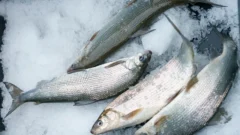
What to know about Michigan whitefish crisis, from limits to solutions

By Kelly House, Bridge Michigan

The Great Lakes News Collaborative includes Bridge Michigan; Circle of Blue; Great Lakes Now at Detroit PBS; Michigan Public, Michigan’s NPR News Leader; and The Narwhal who work together to bring audiences news and information about the impact of climate change, pollution, and aging infrastructure on the Great Lakes and drinking water.

Read Now at Great Lakes Now.

Original Article

Great Lakes Now

Great Lakes Now

https://www.greatlakesnow.org/2025/10/what-to-know-about-michigan-whitefish-crisis-from-limits-to-solutions/

Bridge Michigan

Library

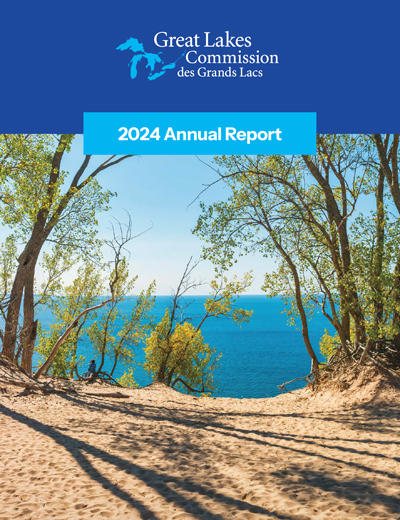
2024 Great Lakes Commission Annual Report

The 2024 Great Lakes Commission Annual Report includes highlights and key accomplishments from the year under the leadership of Chair Mary Mertz and Executive Director Erika Jensen. The Commission’s annual reports traditionally include a summary of highlights from the year as well as financial information and commissioner rosters.

Download PDF | Published October 2025


Original Article

Great Lakes Commission

Great Lakes Commission

https://www.glc.org/library/2024-glc-annual-report

Laura Andrews

A Michigan town hopes to stop a data center with a 2026 ballot initiative

By Tom Perkins, Inside Climate News

This article originally appeared on Inside Climate News, a nonprofit, non-partisan news organization that covers climate, energy and the environment. This is the second of three articles about Michigan communities organizing to stop the construction of energy-intensive computing facilities.

Read Now at Great Lakes Now.

Original Article

Great Lakes Now

Great Lakes Now

https://www.greatlakesnow.org/2025/10/michigan-town-effots-to-stop-data-center/

Inside Climate News

By Lauren Coin

Park trails along Lake Michigan’s shoreline in Wisconsin and Michigan are eroding because of more frequent extreme precipitation events and increased foot traffic from visitors in undesignated recreation areas.

The post Increased precipitation, foot traffic pose trail erosion problems at Lake Michigan parks first appeared on Great Lakes Echo.

Original Article

Great Lakes Echo

Great Lakes Echo

https://greatlakesecho.org/2025/10/15/increased-precipitation-foot-traffic-pose-trail-erosion-problems-at-lake-michigan-parks/

Great Lakes Echo