U.S. Supercomputers for Weather and Climate Forecasts Get Upgraded
2022-07-01
Green Bay, WI
https://www.weather.gov/www.noaa.gov/news-release/us-supercomputers-for-weather-and-climate-forecasts-get-major-bump
Green Bay, WI
https://www.weather.gov/www.noaa.gov/news-release/us-supercomputers-for-weather-and-climate-forecasts-get-major-bump
July is our warmest month, its steamy days and sticky nights giving us a little taste of the tropics. When we look for ways to beat July’s heat, we often end up in the water – sprinklers, backyard pools, or one of Michigan’s many lakes. So let’s take a few minutes on this hot July day to think about how cool water is.
The post July: Stay cool first appeared on Great Lakes Echo.Great Lakes Echo
http://greatlakesecho.org/2022/07/01/july-stay-cool/
By Kelly House, Bridge Michigan
The Great Lakes News Collaborative includes Bridge Michigan; Circle of Blue; Great Lakes Now at Detroit Public Television; and Michigan Radio, Michigan’s NPR News Leader; who work together to bring audiences news and information about the impact of climate change, pollution, and aging infrastructure on the Great Lakes and drinking water.
Great Lakes Now
https://www.greatlakesnow.org/2022/06/borrow-free-camping-gear-michigan/
Ann Arbor, Mich. – Hundreds of organizations across the region will be working together to educate the public about aquatic invasive species (AIS) during the fourth annual Great Lakes AIS Landing Blitz, to be held July 1-10, 2022. Volunteers and professional inspectors will show boaters how to prevent the spread of AIS, ways to identify AIS, and how to report AIS, which are recognized as one of the most significant threats to the ecological and economic health of the Great Lakes. This annual event is sponsored by state and provincial agencies with the support of the Great Lakes Commission (GLC) and partner organizations.
“Aquatic invasive species don’t respect political boundaries, so the states and provinces must continue to work together through successful partnerships like the annual AIS Landing Blitz to prevent new invasions and reduce the damage from species already here,” said GLC Chair Todd Ambs of Wisconsin. “The GLC is proud to support this partnership to communicate directly with the public at landing sites across the basin.”
New this year, digital marketing strategies and coordinated social media outreach will help broaden the public reach of the event and continue to promote participation. Targeted audience outreach will work to ensure that as many boaters in the Great Lakes region are aware of the event and informed about how to clean, drain, dry, and disinfect their boat and gear.
For more information on the Great Lakes AIS Landing Blitz, including educational materials, location, and volunteer opportunities, visit www.glc.org/blitz.
The Great Lakes Commission, led by chair Todd L. Ambs, deputy secretary of the Wisconsin Department of Natural Resources (retired), is a binational government agency established in 1955 to protect the Great Lakes and the economies and ecosystems they support. Its membership includes leaders from the eight U.S. states and two Canadian provinces in the Great Lakes basin. The GLC recommends policies and practices to balance the use, development, and conservation of the water resources of the Great Lakes and brings the region together to work on issues that no single community, state, province, or nation can tackle alone. Learn more at www.glc.org.
Great Lakes Commission
https://www.glc.org/news/ais-blitz-july-063022

This lesson will explore the phenomenon of invasive species in the Great Lakes, specifically the sea lamprey, to help students learn how predator-prey relationships affect populations in an ecosystem, why invasive species like the sea lamprey pose a threat to the Great Lakes, and which efforts can most successfully control them.
Great Lakes Now
https://www.greatlakesnow.org/2022/06/2206-invasive-species-lesson-plan/
By Lester Graham, Michigan Radio
The Great Lakes News Collaborative includes Bridge Michigan; Circle of Blue; Great Lakes Now at Detroit Public Television; and Michigan Radio, Michigan’s NPR News Leader; who work together to bring audiences news and information about the impact of climate change, pollution, and aging infrastructure on the Great Lakes and drinking water.
Great Lakes Now
https://www.greatlakesnow.org/2022/06/bird-flu-killed-threatened-caspian-terns/
Chicago, IL (June 30, 2022) – Earlier today, NOAA and its research partners released the annual western Lake Erie harmful algal bloom forecast. In response, Alliance for the Great Lakes Agriculture and Restoration Policy Director Tom Zimnicki made the following statement:
“Each summer, western Lake Erie is plagued by harmful algal blooms fueled by nutrient pollution flowing off upstream agricultural lands. While this year’s bloom is forecasted to be relatively mild compared to past years, even a smaller bloom can turn toxic and threaten drinking water safety. The cost burden of these blooms on ratepayers is real. According to new research from the Alliance for the Great Lakes, a family of five in Toledo is paying roughly an additional $100/year in their water bill because of this pollution. The Alliance remains committed to addressing water pollution in western Lake Erie and working with Ohio lawmakers to solve this problem. Downstream ratepayers should not have to shoulder the financial burden or health impacts of this pollution problem.”
###
Media Contact: Jennifer Caddick, jcaddick@greatlakes.org
The post Alliance Statement on the 2022 Western Lake Erie Harmful Algal Bloom Forecast appeared first on Alliance for the Great Lakes.
News - Alliance for the Great Lakes
News - Alliance for the Great Lakes
https://greatlakes.org/2022/06/alliance-statement-on-the-2022-western-lake-erie-harmful-algal-bloom-forecast/
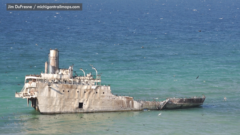
This month of The Catch features a look at shoreline shipwrecks in Michigan.
Author and editorial director of MichiganTrailMaps.com Jim DuFresne published a “Landlubbers Guide to Shoreline Shipwrecks,” and takes Great Lakes Now on a virtual tour of some of his favorites which include wrecks on the shores of Sleeping Bear Dunes and Isle Royale National Park.
Great Lakes Now
https://www.greatlakesnow.org/2022/06/the-catch-shoreline-shipwrecks/
The study in the journal “Science of the Total Environment” found that five million people exceeded the recommended fish intake of two meals or 12 ounces per week, as suggested by the Environmental Protection Agency. Notably, women, nonwhites, younger residents and those with lower education levels were less aware of fish advisories, and thus more prone to eat more than the recommended amount.
The post Only half of Great Lakes residents are aware of advisories for safely eating fish first appeared on Great Lakes Echo.Great Lakes Echo
http://greatlakesecho.org/2022/06/30/only-half-of-great-lakes-residents-are-aware-of-advisories-for-safely-eating-fish/
NCEI News Feed
http://www.ncei.noaa.gov/news/humans-ncei-sarah-morison
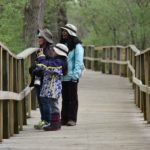
A lakeside view and twittering morning avian chorus make for a great combination, and all along the Great Lakes there are plenty of great locations to experience both those things.
Installing a bird feeder is an easy way to enjoy birds right outside your door, but county parks and birding walks are a great way to learn about birds too, Kimberly Kaufman said in an interview with Great Lakes Now.
Great Lakes Now
https://www.greatlakesnow.org/2022/06/trails-for-best-view-of-birds/
By Ed White, Associated Press
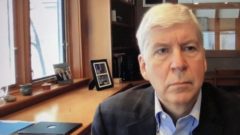
DETROIT (AP) — The Michigan Supreme Court on Tuesday threw out charges against former Gov. Rick Snyder and others in the Flint water scandal, saying a judge sitting as a one-person grand jury had no power to issue indictments under rarely used state laws.
Great Lakes Now
https://www.greatlakesnow.org/2022/06/ap-court-kills-flint-water-charges-ex-governor/
The National Oceanic and Atmospheric Administration has awarded the University of Michigan a five-year, $53 million grant to continue and expand the Cooperative Institute for Great Lakes Research, which leads research for sustainability in the Great Lakes. Read the full story by The Detroit News.
Great Lakes Commission
https://www.glc.org/dailynews/20220629-um-research
The Lake Michigan and Lake Huron waters governed by an 1836 treaty are at the heart of negotiations between Michigan, the federal government and Native American tribes to determine how much and what kinds of fish can be harvested by recreational, state-licensed and Native American commercial fishers. Read the full story by Great Lakes Echo.
Great Lakes Commission
https://www.glc.org/dailynews/20220629-fishing-rights
A representative of the Great Lakes Fishery Commission is cautiously optimistic that sea lamprey populations will be held in check in the next couple of years in the Great Lakes, even though control measures had to be curtailed recently due to the pandemic. Read the full story by The Manitoulin Expositor.
Great Lakes Commission
https://www.glc.org/dailynews/20220629-lamprey
After a hiatus of nearly a decade, it’s a novelty for the port of Duluth-Superior to welcome cruise ships. The experience is just as novel for the guests disembarking to spend a day in the Twin Ports. Read the full story by the Duluth News Tribune.
Great Lakes Commission
https://www.glc.org/dailynews/20220629-cruise
High water levels along Lake Michigan could increase the danger of toxic contamination from industrial facilities along Wisconsin’s lakefront as climate change is expected to cause more intense storms, according to a new report. Read the full story by Wisconsin Public Radio.
Great Lakes Commission
https://www.glc.org/dailynews/20220629-contamination
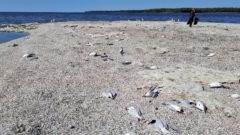
Wildlife biologists are finding whole colonies of birds dead or dying on islands in Lake Michigan. They are Caspian terns, which are listed as threatened in Michigan and endangered in Wisconsin. Read and hear the full story by Michigan Public Radio.
Great Lakes Commission
https://www.glc.org/dailynews/20220629-bird-flu
The Lake Michigan Coastal Program is looking for public input on funding priorities for 2023 grants, the Indiana Department of Natural Resources announced. Read the full story by WBND-TV- South Bend, IN.
Great Lakes Commission
https://www.glc.org/dailynews/20220629-coastal-program
New research into Great Lakes water levels looks farther into the future to predict how much climate change will increase lake levels in four of the five Great Lakes. Read the full story by Great Lakes Now.
Great Lakes Commission
https://www.glc.org/dailynews/20220629-water-levels
A new report said steel walls near the Michigan City, Indiana coal plant aren’t keeping coal ash waste from getting into Lake Michigan and Trail Creek — and it will likely get worse over time. But the northern Indiana utility NIPSCO — which owns the plant — said info in the report has been “cherry-picked.” Read the full story by WVPE– Elkhart, IN.
Great Lakes Commission
https://www.glc.org/dailynews/20220629-coal-ash
Lake Ontario is clean enough for swimming, says Toronto Public Health, but an unofficial survey by CBC News has found few people are taking the plunge this early in the season because it’s so cold. Read the full story by CBC News.
Great Lakes Commission
https://www.glc.org/dailynews/20220629-lake-ontario
This week, the House Appropriations Committee is looking at various draft budget bills for Fiscal Year 2023, including the Interior, Environment, and Related Agencies funding bill, which is proposing robust funding increases for the Department of Interior and the Environmental Protection Agency (EPA). The bill contains $368 million for the Great Lakes Restoration Initiative, $20 million above current funding levels. The funding bill also contains $2.88 billion for the Clean Water and Drinking Water State Revolving Funds, which help communities pay for wastewater and drinking water infrastructure projects, respectively. Funding for the two SRF programs represent about an $118 million increase over current budget levels.
The Healing Our Waters-Great Lakes Coalition is pleased to see increases for the Great Lakes Restoration Initiative (GLRI) and the State Revolving Funds (SRFs), as these programs are at the heart of cleaning up the Great Lakes region and providing safe, clean drinking water for all.
Though increases are something to celebrate, unfortunately, the GLRI and SRFs were not funded at fully authorized levels: $400 million for the GLRI and $2.75 billion for each SRF program ($5.5 billion total authorization). The failure to budget for the full authorized amount – essentially leaving money on the table – is concerning, as there remains much work to do to tackle serious threats in the region, including toxic pollution, degraded fish and wildlife habitat, invasive species, and farm and city runoff pollution. The longer it takes for these problems to be solved, the worse and more expensive they will get.
The backlog of infrastructure work is well-known. The eight-state region of Illinois, Indiana, Michigan, Minnesota, New York, Ohio, Pennsylvania, and Wisconsin needs more than $188 billion over 20 years to fix, repair, and update its drinking water and wastewater infrastructure. The Coalition heralded last year’s bipartisan infrastructure law as a game-changer not only for the sizeable investment it was making now – but also because the law was dramatically increasing the amount the U.S. Congress could invest every year during the annual appropriations process. The failure to follow through is a missed opportunity.
Of note, full authorization of the GLRI has bipartisan support in the U.S. House of Representatives. Just in late spring, a bipartisan group of 47 members of the House sent a letter to subcommittee chairs advocating for such, recognizing the importance of the program and its positive impact on the environmental and economic health of the region.
Approved by the subcommittee, the draft funding bill is now going to full markup in the House Appropriations Committee, and we hope to see the funding numbers go up to their fully authorized amounts.
The post House Committees to Take Up Spending Bills This Week appeared first on Healing Our Waters Coalition.
Healing Our Waters Coalition
https://healthylakes.org/house-committees-to-take-up-spending-bills-this-week/
Current Watches, Warnings and Advisories for Brown (WIC009) Wisconsin Issued by the National Weather Service
https://alerts.weather.gov/cap/wwacapget.php?x=WI1263FB6A58A8.SpecialWeatherStatement.1263FB6AA6C8WI.GRBSPSGRB.3b77a733acfe35fc01f412b80021d336
Current Watches, Warnings and Advisories for Brown (WIC009) Wisconsin Issued by the National Weather Service
https://alerts.weather.gov/cap/wwacapget.php?x=WI1263FB699044.SpecialWeatherStatement.1263FB69FED0WI.GRBSPSGRB.3b77a733acfe35fc01f412b80021d336
The Clean Water Act provides us with 50 years of useful imperfection. We should apply it's lessons to the environmental challenges facing us today - and perhaps be a less patient as we chase perfect solutions.
The post Fifty-year-old pollution law is proof that we can address other wicked challenges first appeared on Great Lakes Echo.Great Lakes Echo
http://greatlakesecho.org/2022/06/29/fifty-year-old-pollution-law-is-proof-that-we-can-address-other-wicked-challenges/
Current Watches, Warnings and Advisories for Brown (WIC009) Wisconsin Issued by the National Weather Service
https://alerts.weather.gov/cap/wwacapget.php?x=WI1263FB5CC79C.SpecialWeatherStatement.1263FB5CE54CWI.GRBSPSGRB.8277e56207786573290cdaabd01b78b5
Using sensor technology to develop a recreational contact warning tool for the Grand River, Grand Rapids, MI
Region 3: Great Lakes
http://www.usgs.gov/centers/upper-midwest-water-science-center/news/using-sensor-technology-develop-recreational
NCEI News Feed
http://www.ncei.noaa.gov/news/nasa-develop-summer-2022-term-ncei
This article was republished here with permission from Great Lakes Echo.
By Kurt Williams, Great Lakes Echo
Editor’s note: This is the last in a series of stories about profound ecological changes that test our ability to manage the Great Lakes.
Great Lakes Now
https://www.greatlakesnow.org/2022/06/history-future-human-impact-great-lakes-ecology/
By Steve Karnowski, Associated Press
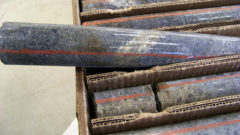
ST. PAUL, Minn. (AP) — The U.S. Forest Service issued a draft environmental assessment Thursday to lay the foundation for a proposed 20-year moratorium on copper-nickel mining upstream from the Boundary Waters Canoe Area Wilderness.
Formally, the proposal would “withdraw” from new mineral leasing for 20 years about 352 square miles within the Rainy River watershed in the Superior National Forest around the town of Ely.
Great Lakes Now
https://www.greatlakesnow.org/2022/06/ap-feds-draft-assessment-minnesota-mine/
For decades, people have largely ignored the Earth’s decay, treating climate change as a problem that can be postponed. Ranae Lenor Hanson, a retired professor and activist, rejects that fallacy and defends the Earth, its waters and all its creatures in her book Watershed: Attending to a Body and Earth in Distress.
The post Finding home in our own bodies can rekindle connection to nature first appeared on Great Lakes Echo.Great Lakes Echo
http://greatlakesecho.org/2022/06/28/finding-home-in-our-own-bodies-can-rekindle-connection-to-nature/
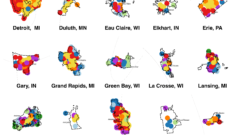
Love staring at a map and discovering something interesting? Then “Mapping the Great Lakes” is for you. It’s a monthly Great Lakes Now feature created by Alex B. Hill, a self-described “data nerd and anthropologist” who combines cartography, data, and analytics with storytelling and human experience.
Great Lakes Now
https://www.greatlakesnow.org/2022/06/mapping-great-lakes-cities/
NCEI News Feed
http://www.ncei.noaa.gov/news/June-2022-regional-climate-impacts-and-outlooks
A $6.7 million federal grant from the EPA’S Great Lakes Restoration Initiative will help scientists at Buffalo State and Cornell University further study mussels in the Great Lakes. Read the full story by Spectrum 1 News.
Great Lakes Commission
https://www.glc.org/dailynews/20220627-mussel-study
In response to growing alewife numbers, the Michigan Department of Natural Resources (DNR) is advancing a proposal this summer to boost the number of chinook, or “king” salmon it stocks in the lake to 1 million fish next year. Read the full story by MLive.
Great Lakes Commission
https://www.glc.org/dailynews/20220627-chinook
Despite the work being done since the Great Lakes Water Quality Agreement, the people of the U.S. and Canada have become complacent too soon after the pact’s early success. Read the full story by the Milwaukee Independent.
Great Lakes Commission
https://www.glc.org/dailynews/20220627-commentary
Mayors from multiple Great Lakes coastal communities are coming together to urge the Ontario government to develop a marine strategy for the province. Read the full story by The Star.
Great Lakes Commission
https://www.glc.org/dailynews/20220627-coastal-communities
New York Sea Grant (NYSG) and the New York State Department of Environmental Conservation (DEC) have announced the Summer 2022 Great Lakes Ecosystem Education Exchange (GLEEE) Workshops for teachers, environmental educators, and homeschoolers at sites in Oswego, Massena, Rochester, and Buffalo. Read the full story by Oswego County Today.
Great Lakes Commission
https://www.glc.org/dailynews/20220627-education-program
The U.S. Department of Agriculture’s Natural Resources Conservation Service (NRCS) has announced a second round of funding through the Environmental Quality Incentives (EQIP) Cover Crop Initiative. Read the full story by Ohio’s Country Journal.
Great Lakes Commission
https://www.glc.org/dailynews/20220627-cover-crops
The Ohio Department of Natural Resources Office of Coastal Management is moving away from Sandusky, although it will remain in Erie County. Read the full story by the Sandusky Register.
Great Lakes Commission
https://www.glc.org/dailynews/20220627-coastal-management
The Great Lakes Surf Rescue Project is continuing its education program this summer to raise awareness about water safety and signs of drowning. Read the full story by WWTV- TV – Cadillac, MI.
Great Lakes Commission
https://www.glc.org/dailynews/20220627-water-safety
Aquatic Invasive Species Awareness Week, which begins July 1, serves as a collaborative outreach campaign to raise awareness about preventing the spread of aquatic invasive species through recreational boating and related activities. Read the full story by the Manistee News Advocate.
Great Lakes Commission
https://www.glc.org/dailynews/20220627-landing-blitz
Three research buoys have been placed in Lake Michigan for the first full season of data collection as part of research being conducted by Northwestern Michigan College and Michigan Technological University. Read the full story by WPBN-TV – Traverse City, MI.
Great Lakes Commission
https://www.glc.org/dailynews/20220627-buoys
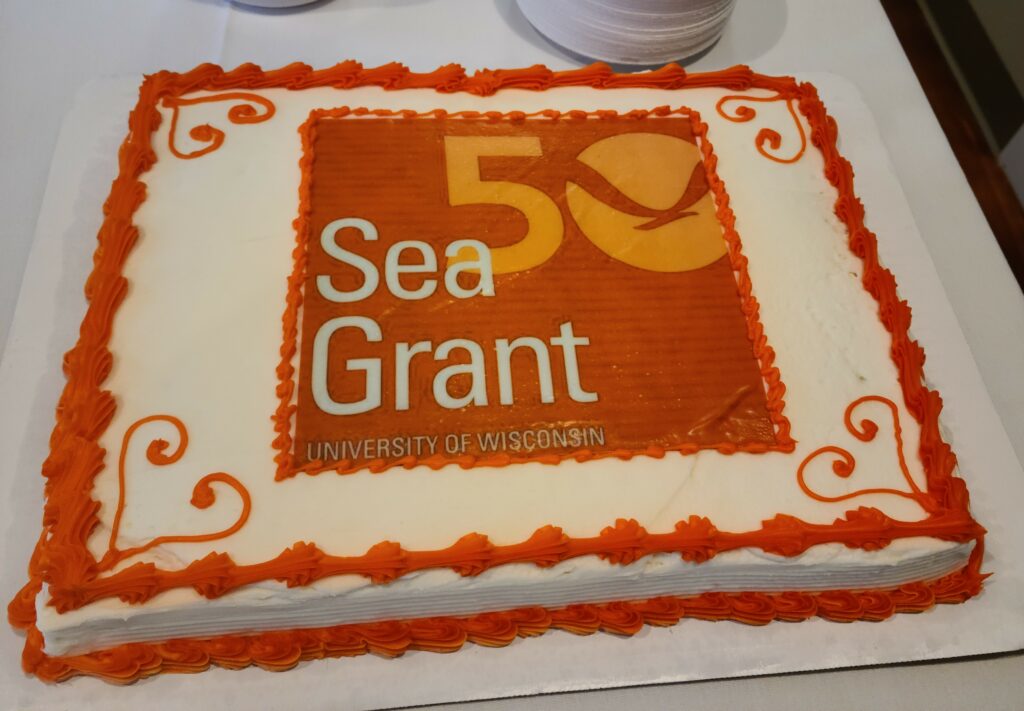
Image credit: Marie Zhuikov, Wisconsin Sea Grant
The final River Talk for the 2021-22 season was held in May at the Lake Superior Estuarium and online. Jim Hurley, director of Wisconsin Sea Grant, presented, “Sea Grant at 50: Looking Back, Moving Forward,” examining the formation of this science-based organization devoted to sustainable use and protection of Great Lakes resources. He also discussed Sea Grant’s current work and where it is headed as it looks forward to the next 50 years.
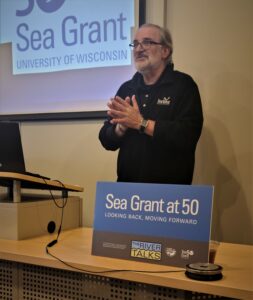
Jim Hurley, Wisconsin Sea Grant Director. Image credit: Marie Zhuikov, Wisconsin Sea Grant
Hurley is also a professor in the Department of Civil and Environmental Engineering at the University of Wisconsin-Madison. His research interests include the cycling of mercury in the Great Lakes. He is the third director in Wisconsin Sea Grant’s history, having taken the helm in 2012. From 2017 to 2019, he also served as president of the national Sea Grant Association.
Hurley began by saying, “I’m darn proud to be able to give this talk and to be a part of an organization that I have so much respect for and that’s surrounded by so many great people.” He continued by describing the federal legislative history of Sea Grant’s founding and then went on to describe the accomplishments of the other Wisconsin Sea Grant directors before him.
He noted Robert Ragotzkie (director from 1968-1991) for thinking thematically about the areas that Wisconsin Sea Grant concentrates on for its research and outreach programs. “Also, Bob talked about Lake Superior’s circulation. He was thinking about Lake Superior in oceanographic terms and how that affected pollution distribution,” Hurley said. Ragotzkie also conducted climate research at this early stage.
Ragotskie gathered the program’s first cadre of extension agents and formed partnerships with other organizations. Hurley credited this start as the basis for the more than 240 partner organizations that Sea Grant works with today. Ragotskie’s strength was putting together teams of partners to study issues such as PCB pollution in the Fox River near Green Bay. He also established the program’s first communications team, which led to the formation of the popular Earthwatch Radio program, which was used by stations across the county.
Anders Andren (director from 1991-2012) took Ragotskie’s thematic area idea and brought it to Sea Grant at the national level through his work with the Sea Grant Association, which is made up of directors from all of the Sea Grant programs across the country. Hurley said Andren did that to, “get people in New Jersey Sea Grant that were doing the same thing as Florida Sea Grant or Oregon Sea Grant together to talk about similar types of issues, and then try to aggregate the results.”
Under Andren’s technological leadership, Wisconsin Sea Grant developed a website and an online submission system for research proposal submissions and reviews. Also during his tenure, the university’s Water Resources Institute’s management combined with Sea Grant under one umbrella organization known as the Aquatic Sciences Center.
“Another thing that occurred during Anders’ term is that the Great Lakes came together better, I think, than any other network in the county,” Hurley said. This has led to cooperative regional research and outreach projects. “It gives you such a great network, such a community of practice that can interact.”
The program also began concentrating on coastal community issues, providing funding for shipwreck research and working on harbor and recreation projects.
Hurley has continued the thematic area tradition. He’s also been emphasizing actionable science, which he classifies as research projects “that people can use.” He is also encouraging integration of science communications and social science into research. “The most successful projects are those developed with stakeholders at the table,” Hurley said. “We’re starting to see more of those.”
Since 2016, Wisconsin Sea Grant has also enlarged the number of postgraduate fellowships offered, with the help of Associate Director Jennifer Hauxwell and half a dozen partner organizations. Hurley rounded out the subject of accomplishments under his watch by discussing PFAS (per- and polyfluoroalkyl substances) research. He said the impetus began in Superior, Wisconsin, with the Huskey Refinery fire, which was doused with firefighting foam that contains PFAS. Staff at the National Lake Superior Estuarine Research Reserve requested help from Sea Grant to analyze water samples from a local creek.
“There was only one lab in the state that was certified to analyze the water for PFAS. We knew that had to change. We had some extra funding available. We were able to aid the State Laboratory of Hygiene, which is the state’s environmental research lab and its public health lab to build capacity to analyze for PFAS in water,” Hurley said. Now, the State Laboratory of Hygiene has opened a Center for PAFS Research. Sea Grant has also hired an emerging contaminants specialist (Gavin Dehnert) who focuses on PFAS and was active in proposing PFAS drinking water standards for the state.
Wisconsin Sea Grant continues to have a strong communications program that has moved from the era of radio into podcasting, video and blogging. “Communications has also changed with the times and I really feel it’s ahead of the curve,” Hurley said.
Other issues of focus include climate change, Great Lakes water level changes and encouraging diversity, equity, inclusion and environmental justice in programs. Sea Grant has hired a consultant and is in the process of becoming more inclusive as an organization. One of the first areas to benefit has been Sea Grant’s fellows program and undergraduate internships.
The program ended with testimonials from several partners. These included Jenny Van Sickle, president of the Superior City Council; Deanna Erickson, director of the National Lake Superior Estuarine Research Reserve; Joel Hoffman, acting chief, ecosystems branch for the U.S. Environmental Protection Agency; Gene Clark, retired Sea Grant coastal engineer; and Alex Frei, research and fellowship coordinator, Minnesota Sea Grant. Here’s a sampling of their kind words.
Jenny Van Sickle, City of Superior City Council:
For someone like me, who grew up in a lot of turmoil and violence, being near the water was free and it was fun. I’m thankful to the educators who took us out of the classroom on onto the beach. There are a lot of people who make sure our water is clean, free and accessible. I just want you to know that it really matters. I want to thank Sea Grant and wish you a happy birthday. We’ve been close partners for a long time.
Deanna Erickson, National Lake Superior Estuarine Research Reserve:
Something that’s really been remarkable to me from the very beginning of the Reserve’s formation . . . is how we were different yet complementary. That’s what makes a good relationship. The Reserve focuses on the St. Louis River Estuary and along Lake Superior, but Sea Grant gets to have this awesome statewide perspective. So, the Sea Grant folks that share our office space and share our community, bring that to us and help make us part of that, too. They also bring expertise that the National Estuarine Research Reserves don’t really have.
Joel Hoffman, U.S. Environmental Protection Agency:
Again and again, Sea Grant has set the gold standard on how to protect our coastal natural resources and our coastal communities. I’m really excited to see what you’re going to do in the next 50 years.
Watch the video of this talk on the Reserve’s YouTube site.
River Talks is taking a hiatus during the summer but will return in the fall for another season of talks focused on the St. Louis River and the organizations that help us understand it.
The post Let there be cake! Sea Grant celebrates 50 years at River Talks first appeared on Wisconsin Sea Grant.Blog | Wisconsin Sea Grant
https://www.seagrant.wisc.edu/blog/let-there-be-cake-sea-grant-celebrates-50-years-at-river-talks/?utm_source=rss&utm_medium=rss&utm_campaign=let-there-be-cake-sea-grant-celebrates-50-years-at-river-talks
New research into Great Lakes water levels looks farther into the future to predict how much climate change will increase lake levels in four of the five Great Lakes.
The predictions for the levels between now and 2050 show average increases from 2010-2019 levels of Lake Superior rising 19 centimeters (7.5 inches), Lake Erie 28 centimeters (11 inches) and lakes Michigan and Huron by 44 centimeters (17.3 inches).
Great Lakes Now
https://www.greatlakesnow.org/2022/06/great-lakes-water-levels-increase-next-few-decades/
Michigan’s only venomous snake, the eastern massasauga rattlesnake, has been suspected or proven responsible for at least 75 bites reported in the state from 2003 through 2020, according to the most comprehensive tally ever of such incidents.
The post Largest tally of snakebites in Michigan first appeared on Great Lakes Echo.Great Lakes Echo
http://greatlakesecho.org/2022/06/27/largest-tally-of-snakebites-in-michigan/
In a marketing event Wednesday, Illinois officials announced the focus-group-approved name for the prolific invasive species, Asian carp: now rebranded as Copi. Read the full story by The Washington Post.
Great Lakes Commission
https://www.glc.org/dailynews/20220624-copi
Lake Michigan sediment cores reveal changes to the Great Lakes over the past few hundred years. Significant changes can be observed from both humans and invasive quagga mussels. Read the full story by Great Lakes Echo.
Great Lakes Commission
https://www.glc.org/dailynews/20220624-human-impact
University of Texas researchers are looking at the indirect impacts of 6PPD-quinone, an antioxidant added to car tires to prolong their life, on Great Lakes fish. Read the full story by Great Lakes Now.
Great Lakes Commission
https://www.glc.org/dailynews/20220624-tire-chemicals