The City of St. Catharines, Ontario is advocating for a proposed cross-lake hovercraft service during sit downs with provincial ministers at the Association of Municipalities of Ontario conference this week. The service would create a rapid transit link between St. Catharines and Toronto. Read the full story by the St. Catharines Standard.

Original Article

Great Lakes Commission

Great Lakes Commission

https://www.glc.org/dailynews/20230825-hovercraft

Jill Estrada

...AREAS OF FOG EXPECTED TO DEVELOP LATE TONIGHT... Areas of fog should develop across the region late tonight. Locally dense fog, with visibilities of 1/4 mile or less, will be possible. The fog will persist until 8 am or 9 am Friday before lifting. Motorists traveling across the region late tonight and early

Original Article

Current Watches, Warnings and Advisories for Brown (WIC009) Wisconsin Issued by the National Weather Service

Current Watches, Warnings and Advisories for Brown (WIC009) Wisconsin Issued by the National Weather Service

https://alerts.weather.gov/cap/wwacapget.php?x=WI12665B2391CC.SpecialWeatherStatement.12665B24C2E0WI.GRBSPSGRB.8a912f378fb16563976e7026f85ca5b7

w-nws.webmaster@noaa.gov

The Fox Locks pre-date the Civil War, so there is a large body of historical information on the system. We are lucky to have an amateur historian on staff, and these are excerpts from Scott Thompson’s greater research into the system.

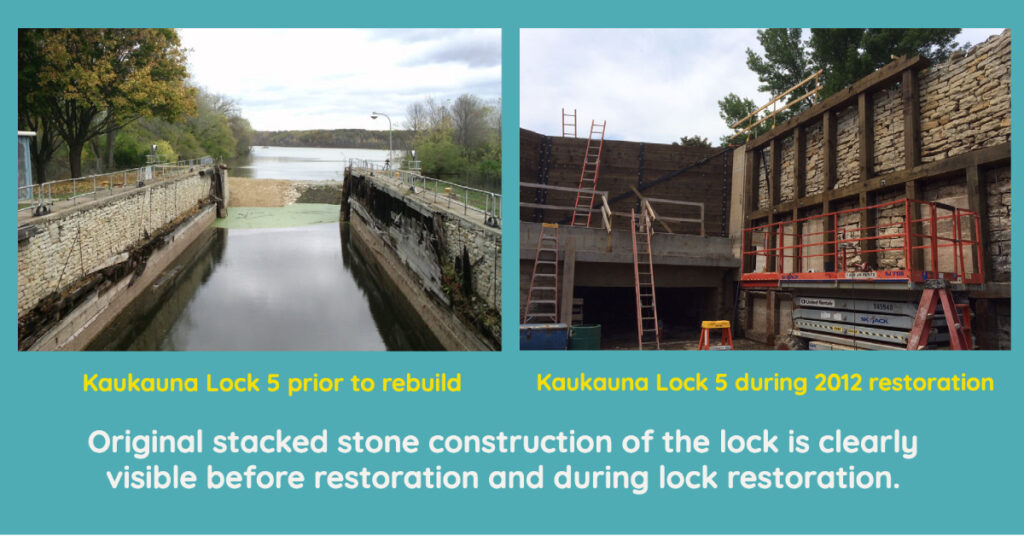
Stacked Stone construction was the earliest method of building the Fox River Locks and was used until the Army Corps of Engineers took over management in the 1880s. At that time, locks were rebuilt with quarried limestone blocks and concrete. Fortunately for us, Kaukauna Lock 5’s original construction somehow avoided the limestone block upgrade and retains the original stacked stone construction style. It is the only operating lock in the system with this style. 


The walls of this lock are 6’wide at the top and 12 ‘ wide at the bottom which is anchored into the bedrock. In the photo refurbishing is about to start on this lock with the construction of an earthen coffer dam on the downstream side.The ragged looking debris on the stone walls is the remnants of a system of support timbers, tie rods and planking. The timbers and tie rods help keep the stone in place, while the planking helped protect the boat hulls during a lockage. Mostly wooden boat hulls in the old days!


It sounds like the big challenge with this construction style was the freeze/thaw cycle that took place early and late in the season. Water loves to find its way into the small cracks and crevices and doesn’t completely drain out. Freezing temps would create ice and damaging expansion forces. But again, somehow this lock survived and was eventually restored true to its original construction.

Original Article

Blog – Fox Locks

Blog – Fox Locks

https://foxlocks.org/blog/history-short-locks-made-of-stacked-stone/

Fox Locks

Energy News Roundup: Climate action plan in Illinois, Offshore wind project in Lake Erie

Keep up with energy-related developments in the Great Lakes area with Great Lakes Now’s biweekly headline roundup.

Click on the headline to read the full story:


Illinois

Wind, solar training facility opens in Bloomington — Pantagraph

Officials unveil a new technical training center in Bloomington, Illinois, that will train at least 100 people annually for wind and solar jobs.

Read Now at Great Lakes Now.

Original Article

Great Lakes Now

Great Lakes Now

https://www.greatlakesnow.org/2023/08/energy-news-roundup-climate-action-plan-illinois-offshore-wind-lake-erie/

Kathy Johnson

Science Says What? The weight of the world rests on a small Canadian lake

Science Says What? is a monthly column written by Great Lakes now contributor Sharon Oosthoek exploring what science can tell us about what’s happening beneath and above the waves of our beloved Great Lakes and their watershed.

A tiny lake just an hour’s drive from Toronto made headlines earlier this summer as the best place in the world to illustrate the dawn of a new geological epoch – the Anthropocene.

Read Now at Great Lakes Now.

Original Article

Great Lakes Now

Great Lakes Now

https://www.greatlakesnow.org/2023/08/science-says-what-weight-world-rests-small-canadian-lake/

Sharon Oosthoek

A Community-Led Approach To Stopping Flooding Expands

By Maia McDonald and Katrina Pham, Borderless

This piece is part of a collaboration that includes the Institute for Nonprofit News, Borderless, Ensia, Planet Detroit, Sahan Journal, and Wisconsin Watch, as well as the Guardian and Inside Climate News. The project was supported by the Joyce Foundation. 

Read Now at Great Lakes Now.

Original Article

Great Lakes Now

Great Lakes Now

https://www.greatlakesnow.org/2023/08/community-led-approach-stopping-flooding-expands/

Borderless Magazine

Donald Jodrey headshot.
Don Jodrey, Director of Federal Government Relations

Note: This blog is part of a periodic series of updates from Don Jodrey, the Alliance’s Director of Federal Government Relations, with his view on Great Lakes policy from Washington, DC.

At the beginning of the year, we announced an ambitious Great Lakes federal policy agenda. We also noted that it was the start of a new Congress and an era of divided government. We predicted that there were likely to be major policy disagreements between the Republican House, the Democratic Senate, and the Biden administration that might result in a stalemate or lack of progress on some issues.

We’re now past the halfway mark of the year, and Congress is on its August recess. So we’re asking: Are Great Lakes priorities making progress? And what else can we do to advocate for the Great Lakes?

Budget battles: Funding holds for Great Lakes Restoration Initiative, but disagreements threaten water infrastructure & environmental justice

After several months of protracted negotiations to deal with the debt ceiling, which resulted in legislation to keep nondefense spending flat in FY 2024 and provide a small 1% increase in FY 2025, both the House and Senate Appropriations Committees have marked up the bills that contain funding for the Great Lakes Restoration Initiative (GLRI). The House committee provided $368 million, which is the same as last year’s enacted level, while the Senate committee provided a $5 million increase for a total of $373 million. These funding levels are well short of the program’s authorized level of $425 million. However, given the major funding reductions proposed by the House elsewhere in the bill and in the debt ceiling agreement, holding the GLRI program at the same level as last year demonstrates the strong bipartisan support for this program throughout the Great Lakes delegation.

Unfortunately, water infrastructure programs did not fare well in the House bill markup. The House Appropriations Committee proposed steep cuts – more than $1.7 billion – to water infrastructure funding that supports state clean water and drinking water programs. House Republicans rationalized these reductions by noting that the Infrastructure Investment and Jobs Act of 2021 provided major increases for water infrastructure for the next several years. However, the House’s proposed reduction is alarming. These cuts are not consistent with the debt ceiling agreement both parties agreed to earlier this year and backtrack on much-needed federal support for essential drinking water, sewer, and stormwater projects. 

The House also proposes eliminating environmental justice funding for the Environmental Protection Agency and rescinding more than $1.4 billion in funding for environmental and climate justice programs provided by the Inflation Reduction Act. 

In contrast, the Senate Appropriations Committee proposes to maintain water infrastructure and environmental justice funding consistent with last year’s level and with the Inflation Reduction Act.

Given these major policy disagreements over federal funding, it is highly unlikely that the House and Senate will be able to come to agreement on the individual spending bills this year. The potential for a government shutdown is high and a continuing resolution is a certainty. The debt ceiling deal requires Congress to pass all 12 annual spending bills by January 1, and if they are not passed or a short-term funding extension is in place, then an automatic funding reduction of 1% will occur.

Plastics legislation is introduced in the Senate

The Senate Environment and Public Works Committee has held several hearings on the topic of plastic pollution this year. Sen. Dick Durbin (D-IL) has introduced “The Plastic Pellet Free Waters Act” to begin the effort to address the problems posed by plastic pellets in our waters, including the Great Lakes. The bill would require the Environmental Protection Agency, using its Clean Water Act regulatory authorities, to prohibit the discharge of plastic pellets and other pre-production plastics into waterways from facilities and sources that make, use, package, or transport plastic pellets. Plastic pellets, like other microplastics, pose a danger to human health, as well as to fish, wildlife, and ecosystems. It is estimated that more than 250,000 tons of plastic pellets are in our waterways, and more than 42 of 66 beaches in the Great Lakes have been found to have serious pollution issues associated with plastic pellets. Although a companion House bill has not yet been introduced and other plastic pollution reduction measures are likely to be introduced in the Senate in the coming months, this is likely to be an area that Congress will debate for some time. 

On the Administrative side, the Environmental Protection Agency (EPA) recently released for public comment its draft national strategy to address plastic pollution. We at the Alliance, along with some of our partners, strongly advocated that EPA utilize its existing authorities under the Clean Water Act to regulate and reduce microplastic pollution in our water.

Stay tuned for the Farm Bill

Both the House and Senate Agriculture Committees have held hearings and significant outreach on the 2023 Farm Bill and have introduced “marker bills” (bills that will not be passed but that are placeholders) for this must-pass piece of legislation. It is likely that legislative text will emerge in September. But the disagreements in funding between the House and the Senate for some Farm Bill programs indicate that this traditionally bipartisan piece of legislation may face some tough challenges this year. We have encouraged Great Lakes members to support increased funding for conservation programs, as well as provisions to ensure accountability for conservation programs that address agricultural runoff pollution.

Engineering and design continues for invasive carp protections

The U.S. Army Corps of Engineers is continuing its pre-construction, engineering, and design work for invasive carp protections at Brandon Road Lock and Dam in Illinois. This important project is intended to stop the spread of invasive carp into the Great Lakes. The project received much-needed funding boosts from the States of Illinois and Michigan, which included funds in their state budgets to cover the state share of the construction costs for the project. The next step is for the State of Illinois and the Corps to sign a project partnership agreement so that the first phase of construction may commence in mid-2024.

Looking ahead, your voice matters

The legislative process will continue for the rest of the year – and, as noted earlier, there are major disagreements between the House and Senate over funding. Your voice can make a difference. Contact Congress about the issues that are of concern to you, particularly in areas where major reductions to clean and safe drinking water programs are proposed, or if federal legislation would be helpful to address a particular need like reducing plastic pollution or addressing harmful nutrient runoff. Let your members of Congress know how important clean and healthy Great Lakes are to you.

Protect the Great Lakes & Our Communities

Too many Great Lakers experience polluted water – whether it is lead-tainted water coming from taps in homes or algal blooms fouling beaches. Visit our Action Center and learn how you can take action.

Take Action

The post DC Update: Are Great Lakes Priorities Advancing in an Era of Divided Government? appeared first on Alliance for the Great Lakes.

Original Article

News - Alliance for the Great Lakes

News - Alliance for the Great Lakes

https://greatlakes.org/2023/08/dc-update-are-great-lakes-priorities-advancing-in-an-era-of-divided-government/

Judy Freed

Pentagon to address PFAS at Wurtsmith base near Oscoda

By Mike Wilkinson, Bridge Michigan

The Great Lakes News Collaborative includes Bridge Michigan; Circle of Blue; Great Lakes Now at Detroit Public Television; and Michigan Radio, Michigan’s NPR News Leader; who work together to bring audiences news and information about the impact of climate change, pollution, and aging infrastructure on the Great Lakes and drinking water.

Read Now at Great Lakes Now.

Original Article

Great Lakes Now

Great Lakes Now

https://www.greatlakesnow.org/2023/08/pentagon-address-pfas-wurtsmith-base-oscoda/

Bridge Michigan

Toxins from cyanobacterial blooms can be airborne, but the threat to public health is unclear

By Lester Graham, Michigan Radio

The Great Lakes News Collaborative includes Bridge Michigan; Circle of Blue; Great Lakes Now at Detroit Public Television; and Michigan Radio, Michigan’s NPR News Leader; who work together to bring audiences news and information about the impact of climate change, pollution, and aging infrastructure on the Great Lakes and drinking water.

Read Now at Great Lakes Now.

Original Article

Great Lakes Now

Great Lakes Now

https://www.greatlakesnow.org/2023/08/toxins-cyanobacterial-blooms-airborne-threat-to-public-health-unclear/

Michigan Radio

...HEAT ADVISORY REMAINS IN EFFECT UNTIL 7 PM CDT THIS EVENING... * WHAT...Heat index values up to 105. * WHERE...Menominee, Marathon, Shawano, Waupaca, Outagamie, Brown, Kewaunee, Calumet, Manitowoc and Southern Oconto County Counties. * WHEN...Until 7 PM CDT this evening.

Original Article

Current Watches, Warnings and Advisories for Brown (WIC009) Wisconsin Issued by the National Weather Service

Current Watches, Warnings and Advisories for Brown (WIC009) Wisconsin Issued by the National Weather Service

https://alerts.weather.gov/cap/wwacapget.php?x=WI12665B0713A8.HeatAdvisory.12665B13FA00WI.GRBNPWGRB.859401776a564e69fd6adc560b71730d

w-nws.webmaster@noaa.gov

On one evening each August, the organization Milwaukee Water Commons holds their We Are Water event to celebrate the gift of Lake Michigan. The event serves as a reminder of water’s essential role in taking care of us and the recognition of our duty to safeguard its existence. Read the full story by WUWM – Milwaukee, WI.

Original Article

Great Lakes Commission

Great Lakes Commission

https://www.glc.org/dailynews/20230823-we-are-water-celebration-lakemichigan

Hannah Reynolds

Oswego, Illinois, was recently granted its Lake Michigan Water Allocation Permit from the Illinois Department of Natural Resources. To get permission to tap Lake Michigan water, Oswego had to meet several criteria, including providing evidence that the aquifer it currently uses is no longer able to meet the village’s needs and that the other water source alternatives are not as viable. Read the full story by the Patch.

Original Article

Great Lakes Commission

Great Lakes Commission

https://www.glc.org/dailynews/20230823-oswego-permit-lakemiwater

Hannah Reynolds

Benton Harbor, Michigan, residents have been inundated with challenges facing their water system for years, such as lead in pipes, ineffective corrosion treatment, and threats of water shut-offs. After years of public interest campaigns and $45 million in federal aid, almost all the lead pipes have been replaced. However, now residents have another issue to worry about – rising water bills. Read the full story by Bridge Michigan.  

Original Article

Great Lakes Commission

Great Lakes Commission

https://www.glc.org/dailynews/20230823-bentonharbor-leadlines-expensivewaterbills

Hannah Reynolds

In celebration of World Water Week, the Cedar Tree Institute hosted the Gift of Water Gala at Peter White Public Library located in Marquette, Michigan. “The Gift of Water” is a newly published anthology filled with essays about conservation and preservation, specifically focusing on and written by people connected to the Great Lakes. Read the full story by WLUC-TV – Marquette, MI.

Original Article

Great Lakes Commission

Great Lakes Commission

https://www.glc.org/dailynews/20230823-giftofwater-safeguarding-water

Hannah Reynolds

Authorities have now determined that 1,500 gallons of diesel fuel leaked from a cargo ship into Lake Michigan, after it was breached earlier this month. Officials are still investigating what caused the Manitowoc’s hull breach Aug. 3, off the coast of Manistee, Michigan. Read the full story by WKAR – East Lansing, MI.

Original Article

Great Lakes Commission

Great Lakes Commission

https://www.glc.org/dailynews/20230823-manitowoc-diesalspill-lakemichigan

Hannah Reynolds

Minnesota U.S. Eighth District Congressman Pete Stauber has received the 2023 “Legislator of the Year” award from the Great Lakes Maritime Task Force for his work in supporting the maritime needs of the Great Lakes Navigation System, mining industry, the Duluth-Superior Port, and the Great Lakes. Read the full story by the Mesabi Tribune.  

Original Article

Great Lakes Commission

Great Lakes Commission

https://www.glc.org/dailynews/20230823-stauber-greatlakes-award

Hannah Reynolds

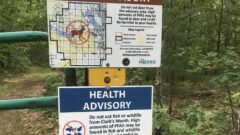
After years of rallying, recent national directives to further mitigate PFAS will address two sites on the former Wurtsmith Air Force Base in Oscoda, Michigan, that have been leaching PFAS into nearby water bodies including the AuSable River and Clark’s Marsh. Last week, one of the suggested plans was officially adopted by the Department of Defense. Read the full story by WJRT-TV – Flint, MI.

Original Article

Great Lakes Commission

Great Lakes Commission

https://www.glc.org/dailynews/20230823-pfascleanup-oscoda-nationalpolicy

Hannah Reynolds

In summer 2023, 31 undergraduates in the Freshwater@UW Summer Research Opportunities Program fanned out across Wisconsin, connecting with mentors and others within their cohort. They gained valuable research, career-building and, well, life experiences. Then they gathered their thoughts from the previous 10 weeks and put them into a reflections document.

Sea Grant provided support for the program, along with the Freshwater Collaborative of Wisconsin, the University of Wisconsin Water Resources Institute and the University of Wisconsin-Madison Graduate School. The Sea Grant blog will periodically share these student reflections.

This post features Laura Zapata, mentored by Prof. Grace Bulltail of UW-Madison, who analyzed wetlands’ water quality data to better understand impacts on wild rice, particularly under a changing climate.

I’m from Pacoima, a largely low-income Latine neighborhood that happens to be the most polluted area in the area of LA County, California, where I am from. During my senior year of high school, the news that the power plant by my house had been leaking methane for years reaffirmed my decision to pursue a career in the environment. Although harmful to my community, that event opened my eyes to the reality of environmental injustice and the need for people from diverse backgrounds to work on problems relating to the environment to ensure our communities are served equitably.

Now, I’m studying chemical engineering at UCLA where I expect to obtain my bachelor’s in June of 2025. My desire to create solutions to environmental problems has led me to pursue research in a variety of areas. Most recently, I completed a project at the UCLA SEALab on the post-compaction behavior of common soil-based biofilter amendments, as well as a group project where we provided data visualizations for UCLA Sustainability. Through my academic and research experiences, I’ve become interested in water treatment and management, particularly stormwater treatment as well as green infrastructure and environmental remediation.

This interest led me to apply to the Freshwater@UW program where I had the pleasure of conducting an analysis of Great Lakes Indian Fish and Wildlife Commission (GLIFWC) monitored wild rice sites from the lens of water quality.

Wild rice is a grain native to the Great Lakes region and a key part of Ojibwe culture. Unfortunately, it has faced a decline from historic levels due to habitat loss and degradation. Organizations that work to preserve remaining wild rice beds, such as GLIFWC, face the challenge of assessing the effects of various water quality parameters in their areas of work. GLIFWC in particular has water quality data that has yet to be examined for use in wild rice work; the potential of this data from wild rice sites is unfulfilled without analysis.

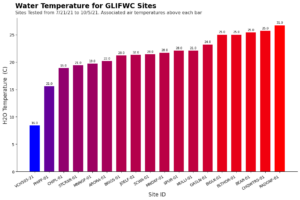
Graph of blue, magenta and red lines

Image credit: Laura Zapata

I was able to assist by identifying key contaminants and water quality factors for wild rice growth and graphing their presence at all sites. Data was supplied from GLFIWC’s lab reports that reported 31 parameters for 13 sites and field data with nine parameters from 17 sites. Historical water quality data for a site of interest, Chequamegon Waters Flowage, was obtained from the EPA. The data was visualized through histograms, a trend graph, and heat maps of various contaminant concentrations. My project presents data visualizations that can be used to guide GLIFWC’s wild rice preservation initiatives.

In this project, I used Python to process and graph the data provided by GLIFWC and downloaded from the EPA. I also made use of ArcGIS to map key water quality indicators. This was a particularly rewarding experience since I was able to learn how to use Python for data analysis, an area I had scarce experience with, through the course of my project. I also became familiar with the basics of ArcGIS, which I look forward to applying in my future work.

The post Research scholars’ reflections first appeared on Wisconsin Sea Grant.

Original Article

Blog | Wisconsin Sea Grant

Blog | Wisconsin Sea Grant

https://www.seagrant.wisc.edu/blog/research-scholars-reflections/

Moira Harrington

...FOG MAY IMPACT TRAVEL EARLY THIS MORNING... Areas of fog have developed across central into east-central Wisconsin early this morning. Visibilities were generally in the 1 to 3 mile range, however there were pockets of locally dense fog with a visibility of a quarter of a mile or less. Surface observations indicated that dense fog was occurring at

Original Article

Current Watches, Warnings and Advisories for Brown (WIC009) Wisconsin Issued by the National Weather Service

Current Watches, Warnings and Advisories for Brown (WIC009) Wisconsin Issued by the National Weather Service

https://alerts.weather.gov/cap/wwacapget.php?x=WI12665B06795C.SpecialWeatherStatement.12665B06BF48WI.GRBSPSGRB.9f377e56d53acf2a31bd0077f16f66b9

w-nws.webmaster@noaa.gov

...HEAT ADVISORY NOW IN EFFECT FROM 10 AM THIS MORNING TO 7 PM CDT THIS EVENING... * WHAT...Heat index values up to 105 expected. * WHERE...Marathon, Calumet, Manitowoc, Brown, Kewaunee, Menominee, Outagamie, Shawano, Southern Oconto County, and Waupaca Counties. * WHEN...From 10 AM this morning to 7 PM CDT this evening.

Original Article

Current Watches, Warnings and Advisories for Brown (WIC009) Wisconsin Issued by the National Weather Service

Current Watches, Warnings and Advisories for Brown (WIC009) Wisconsin Issued by the National Weather Service

https://alerts.weather.gov/cap/wwacapget.php?x=WI12665B05F61C.HeatAdvisory.12665B13FA00WI.GRBNPWGRB.859401776a564e69fd6adc560b71730d

w-nws.webmaster@noaa.gov

Invasive Species Outreach Featured in Wings Over Wisconsin Kids Fishing Event Clip

During the summer months, our Aquatic Invasive Species Coordinator Chris exhibits at all sorts of events talking about Fox-Wolf’s work in the watershed as well as aquatic invasive species (AIS). Events include fishing tournaments, public festivals, expos, and kids fishing field days. At the Wings Over Wisconsin – Denmark Chapter’s annual Kids Fishing event, Chris is able to talk with over 150 fifth and sixth grade students about the importance of preventing the spread of invasive species while fishing. As part of the the event in 2023, the Larry Smith Outdoors show did a feature on the amazing event and interviewed Chris for the video. It’s absolutely incredible to work with such amazing partners in our watershed and be apart of such great events! Check out the feature below and be on the lookout for the clip with Fox Wolf’s own AIS Coordinator Chris!

Video Credit: Larry Smith Outdoors Show

Photo Credit: Chris Acy (Fox-Wolf Watershed Alliance)

Questions? Comments? Contact Chris Acy, the AIS Coordinator covering Brown, Outagamie, Fond du Lac, Calumet, and Winnebago Counties at (920) 460-3674 or chris@fwwa.org!

Follow the Fox Wolf Watershed Alliance’s Winnebago Waterways Program on our Winnebago Waterways Facebook page or @WinnWaterways on Twitter! You can also sign-up for email updates at WinnebagoWaterways.org.

Winnebago Waterways is a Fox-Wolf Watershed Alliance program. The Fox-Wolf Watershed Alliance is an independent nonprofit organization that identifies and advocates effective policies and actions that protect, restore, and sustain water resources in the Fox-Wolf River Basin.

Check out the Keepers of the Fox Program at https://fwwa.org/watershed-recovery/lower-fox-recovery/

Reporting invasive species is a first step in containing their spread. Maintaining and restoring our waters and landscapes can reduce the impacts even when we don’t have other management options to an invasive species.

The post Fox-Wolf Outreach Highlighted In Larry Smith Outdoors Show appeared first on Fox-Wolf Watershed Alliance.

Original Article

Fox-Wolf Watershed Alliance

Fox-Wolf Watershed Alliance

https://fwwa.org/2023/08/22/fox-wolf-outreach-highlighted-in-larry-smith-outdoors-show/?utm_source=rss&utm_medium=rss&utm_campaign=fox-wolf-outreach-highlighted-in-larry-smith-outdoors-show

Chris Acy

...HEAT ADVISORY REMAINS IN EFFECT FROM 10 AM TO 9 PM CDT WEDNESDAY... * WHAT...Heat index values up to 105 expected. * WHERE...Marathon, Calumet, Manitowoc, Brown, Kewaunee, Outagamie, Shawano, and Waupaca Counties. * WHEN...From 10 AM to 9 PM CDT Wednesday.

Original Article

Current Watches, Warnings and Advisories for Brown (WIC009) Wisconsin Issued by the National Weather Service

Current Watches, Warnings and Advisories for Brown (WIC009) Wisconsin Issued by the National Weather Service

https://alerts.weather.gov/cap/wwacapget.php?x=WI12665AF84954.HeatAdvisory.12665B144820WI.GRBNPWGRB.8ab6428ed53927e78001ae77047e548f

w-nws.webmaster@noaa.gov

Invasive European Frogbit Mapping and Control Work Ongoing

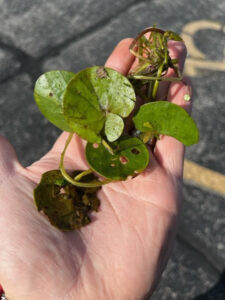
The Fox-Wolf Watershed Alliance has partnered with the Wisconsin Department of Natural Resources, Brown County, and other local partners to confront an invasive species in the Bay of Green Bay. European frogbit was first discovered in the wild in Wisconsin late last summer and the known general extent at that time ranged from the City of Marinette to the City of Oconto. Additional monitoring by partners found additional populations within and beyond that range reaching all of the way to the Brown and Door County.
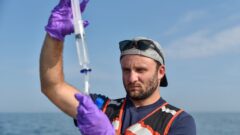
To help reduce the population in the Green Bay area, Fox-Wolf is assisting in monitoring and control work for European Frogbit (EFB). Our aquatic invasive species coordinator Chris is joining partners on large group work days to find and remove EFB. One of the recent large group work days was filmed by Dan Larson from Com-Video Productions as part of a documentary on Green Bay; the same producer that brought you the documentary Power of the River. Check out his clip of our European Frogbit monitoring days below!

The free-floating European Frogbit is native to Europe, Africa, and Asia. It likes slow-moving habitats like sheltered inlets, rivers, and ditches. The plant resembles native water lilies but is much smaller and doesn’t root in the lake bottom. The plant forms dense mats that can interfere with boaters and shade-out native plants. If you see European frog-bit, take a few photos, make note of the location, date and time of the finding, and report to Amanda Smith, WI DNR Regional Invasive Species Coordinator.

Video Credit: Dan Larson (Com-Video Productions)

Photo Credit: Chris Acy (Fox-Wolf Watershed Alliance)

Questions? Comments? Contact Chris Acy, the AIS Coordinator covering Brown, Outagamie, Fond du Lac, Calumet, and Winnebago Counties at (920) 460-3674 or chris@fwwa.org!

Follow the Fox Wolf Watershed Alliance’s Winnebago Waterways Program on our Winnebago Waterways Facebook page or @WinnWaterways on Twitter! You can also sign-up for email updates at WinnebagoWaterways.org.

Winnebago Waterways is a Fox-Wolf Watershed Alliance program. The Fox-Wolf Watershed Alliance is an independent nonprofit organization that identifies and advocates effective policies and actions that protect, restore, and sustain water resources in the Fox-Wolf River Basin.

Check out the Keepers of the Fox Program at https://fwwa.org/watershed-recovery/lower-fox-recovery/

Reporting invasive species is a first step in containing their spread. Maintaining and restoring our waters and landscapes can reduce the impacts even when we don’t have other management options to an invasive species.

The post Fox-Wolf, Partners Tackle Invasive Plant in Green Bay appeared first on Fox-Wolf Watershed Alliance.

Original Article

Fox-Wolf Watershed Alliance

Fox-Wolf Watershed Alliance

https://fwwa.org/2023/08/22/fox-wolf-partners-tackle-invasive-plant-in-green-bay/?utm_source=rss&utm_medium=rss&utm_campaign=fox-wolf-partners-tackle-invasive-plant-in-green-bay

Chris Acy

Scientists are learning just how complicated it will be to reduce toxic blooms in Lake Erie

By Lester Graham, Michigan Radio

The Great Lakes News Collaborative includes Bridge Michigan; Circle of Blue; Great Lakes Now at Detroit Public Television; and Michigan Radio, Michigan’s NPR News Leader; who work together to bring audiences news and information about the impact of climate change, pollution, and aging infrastructure on the Great Lakes and drinking water.

Read Now at Great Lakes Now.

Original Article

Great Lakes Now

Great Lakes Now

https://www.greatlakesnow.org/2023/08/scientists-learning-complicated-reduce-toxic-blooms-lake-erie/

Michigan Radio

...HEAT ADVISORY IN EFFECT FROM 10 AM TO 9 PM CDT WEDNESDAY... * WHAT...Heat index values of 100 to 105 expected. * WHERE...Marathon, Calumet, Manitowoc, Brown, Kewaunee, Outagamie, Shawano, and Waupaca Counties. * WHEN...From 10 AM to 9 PM CDT Wednesday. * IMPACTS...Hot temperatures and high humidity may cause heat

Original Article

Current Watches, Warnings and Advisories for Brown (WIC009) Wisconsin Issued by the National Weather Service

Current Watches, Warnings and Advisories for Brown (WIC009) Wisconsin Issued by the National Weather Service

https://alerts.weather.gov/cap/wwacapget.php?x=WI12665AF69758.HeatAdvisory.12665B144820WI.GRBNPWGRB.8ab6428ed53927e78001ae77047e548f

w-nws.webmaster@noaa.gov

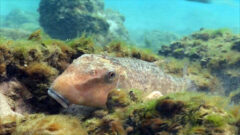
I Speak for the Fish – Giddy up sucker

I Speak for the Fish is a monthly column written by Great Lakes Now Contributor Kathy Johnson, coming out the third Monday of each month. Publishing the author’s views and assertions does not represent endorsement by Great Lakes Now or Detroit Public Television. 

Read Now at Great Lakes Now.

Original Article

Great Lakes Now

Great Lakes Now

https://www.greatlakesnow.org/2023/08/i-speak-for-the-fish-giddy-up-sucker/

Kathy Johnson

Great Lakes microplastics concentrations exceed safe levels for wildlife

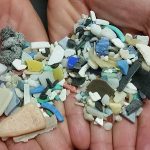
Nearly 90 percent of water samples taken from the Great Lakes over the last ten years exceed safe levels for wildlife. Researchers from the University of Toronto and the Winnipeg-based International Institute for Sustainable Development came to this conclusion after conducting a comprehensive review of microplastics studies.

At the levels surveyed, the researchers say fish and other aquatic wildlife are at risk of ingesting enough microplastics to fill their guts, diluting their regular food and its nutritional value.

Read Now at Great Lakes Now.

Original Article

Great Lakes Now

Great Lakes Now

https://www.greatlakesnow.org/2023/08/great-lakes-microplastics-concentrations-exceed-safe-levels-for-wildlife/

Sharon Oosthoek

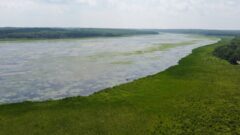
Survival of wild rice threatened by climate change, increased rainfall in northern Minnesota

By  Andrew Hazzard, Sahan Journal 

This piece is part of a collaboration that includes the Institute for Nonprofit News, Borderless, Ensia, Planet Detroit, Sahan Journal, and Wisconsin Watch, as well as the Guardian and Inside Climate News. The project was supported by the Joyce Foundation. 

ONAMIA, MINN.—Todd Moilanen paddles gently through wild rice beds on Ogechie Lake, trying not to disturb a loon sleeping on its back on a nest of reeds a few feet away.

Read Now at Great Lakes Now.

Original Article

Great Lakes Now

Great Lakes Now

https://www.greatlakesnow.org/2023/08/survival-wild-rice-threatened-climate-change-increased-rainfall-northern-minnesota/

Sahan Journal

Cleanup crews are trying to determine how much runoff from an industrial fire in Etobicoke, Ontario, has made its way into Lake Ontario. Although containment measures along Mimico Creek were reinforced last Wednesday, Thursday’s rain enabled the spill to move further down the creek to Lake Ontario. Read the full story by CBC News.

Original Article

Great Lakes Commission

Great Lakes Commission

https://www.glc.org/dailynews/20230821-spill-runoff

James Polidori

Low water levels are critical for manoomin, a sacred crop for the Ojibwe people of the Great Lakes region. But climate change caused by the burning of fossil fuels is bringing more rain and flooding to Minnesota and the Upper Midwest, making harvests of wild rice less reliable. Read the full story by Minnesota Public Radio.

Original Article

Great Lakes Commission

Great Lakes Commission

https://www.glc.org/dailynews/20230821-manoomin-threats

James Polidori

Cruise ships provide a valuable commodity to the tourism areas of Georgian Bay in Lake Huron, but also produce non-garbage waste in the form of sewage or grey water. Transport Canada announced voluntary environmental measures for cruise ships in April of this year, before making them mandatory in late June; enforcement and a $250,000 maximum penalty would be imposed on non-compliant vessels. Read the full story by MidlandToday.

Original Article

Great Lakes Commission

Great Lakes Commission

https://www.glc.org/dailynews/20230821-cruise-regulation

James Polidori

City engineers are installing a water retention basin in Montreal, Québec, to end the need to dump excess sewage into the Lachine Canal during intense rainstorms, which happens five times each summer, on average. Every time the sewage water is diverted into the canal, authorities have to close it to recreational use for 72 hours. The St. Lawrence River into which the canal flows is also affected. Read the full story by The Montreal Gazette.

Original Article

Great Lakes Commission

Great Lakes Commission

https://www.glc.org/dailynews/20230821-water-retention

James Polidori

Groundwater treatment systems will be installed near the former Wurtsmith Air Force Base in Oscoda, Michigan, to address contamination from high levels of PFAS, an abbreviation for perfluoroalkyl and polyfluoroalkyl substances, in groundwater. Read the full story by The Associated Press.

Original Article

Great Lakes Commission

Great Lakes Commission

https://www.glc.org/dailynews/20230821-treatment-installation

James Polidori

In Flint, Michigan, more than 100 hatchery-raised lake sturgeon were released Saturday into the Flint River. The prehistoric type of fish used to be abundant in the Great Lakes but are now Federally listed species of concern. Read the full story by MLive.

Original Article

Great Lakes Commission

Great Lakes Commission

https://www.glc.org/dailynews/20230821-sturgeon-restoration

James Polidori

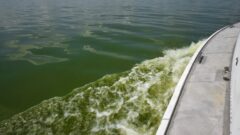
For two decades, scientists have been studying toxic cyanobacterial blooms that have been expanding in the western basin of Lake Erie and causing dead zones in the central basin. The nutrient pollution that causes it, primarily from agriculture, is not regulated. Read the full story by Michigan Radio.

Original Article

Great Lakes Commission

Great Lakes Commission

https://www.glc.org/dailynews/20230821-algae-reduction

James Polidori

Nearly 80 years after a plane flown by a member of the Tuskegee Airmen went down in Lake Huron, some of the wreckage has been recovered. Although the famed Tuskegee Airmen were based out of Alabama, advanced training exercises were conducted in Michigan during World War II. Read the full story by MLive.

Original Article

Great Lakes Commission

Great Lakes Commission

https://www.glc.org/dailynews/20230821-plane-recovery

James Polidori

Fairgoers to the Illinois State Fair chowed down this week on various forms of deep-fried copi, better known until last year as Asian carp. State conservation officials launched a rebranding effort last summer promoting copi as a light, tasty, protein-packed fish that’s more palatable than the notion of an aquatic invader. Read the full story by the Chicago Sun-Times.

Original Article

Great Lakes Commission

Great Lakes Commission

https://www.glc.org/dailynews/20230821-copi-branding

James Polidori

Sailing Saugatuck, a family-owned charter company that’s been sailing on Lake Michigan for 14 years, runs a two-hour sunset sail aboard the Schooner Serenity every day during the summertime in Saugatuck, Michigan, through October 7. Read the full story by MLive.

Original Article

Great Lakes Commission

Great Lakes Commission

https://www.glc.org/dailynews/20230821-sailing-trip

James Polidori

Two new grants set to build water-related workforce development

The labor landscape in Wisconsin is closely bound to demographics and it comes down to this simple reality: shoes are not being filled.

U.S. Census data shows Wisconsinites of traditional retirement age, 65, have increased 42% since 2005. At the same time, the number of people entering the workforce is contracting because state birth rates have slowed and there are fewer young people. Another aspect of this workforce-shortage trend is that young people are bypassing Wisconsin, choosing to work and live elsewhere as they chase their American dreams.

Now, thanks to an infusion of two new grants, Wisconsin Sea Grant is positioned to facilitate the paths young people are considering as they sort through workforce choices, including where they may eventually want to find training and education, take a job and make a home.

With $592,332 in support from the Freshwater Collaborative of Wisconsin (FWC) over two years, the Freshwater@UW Summer Research Opportunities Program will continue its work to develop Wisconsin’s next generation of freshwater scientists.

The program matches water-related mentors from throughout the University of Wisconsin System with undergraduates to guide them in an immersive research experience and acquaint them with the many graduate school opportunities in Wisconsin.

 The program just wrapped up its second summer, which attracted 31 students from across the nation to work on the system campuses at Eau Claire, Green Bay, La Crosse, Madison, Milwaukee, Oshkosh and Superior.

Closeup of a smiling person

Alison Mikulyuk is coordinating the work of summer research scholars.

Sea Grant’s Alison Mikulyuk coordinates the program which, she said, is growing freshwater research and the workforce through collaborative, cross-system programming that trains and will, ultimately, recruit, retain and diversify the next generation of water professionals.

“The program attracts talented students to the Badger State where they gain skills that are directly applicable to future work in Wisconsin,” Mikulyuk said. “Having just seen these young people through the summer, I’m incredibly inspired. The students made an impressive showing at the recent Summer Research Symposium, and so many of them have had life-altering experiences that I know will fuel their future accomplishments.”

The second two-year FWC grant will provide $207,400 for a project called “Partnering to Boost Aquaculture Workforce Development in Wisconsin.”

Sharon Moen, food-fish outreach coordinator, conducted a 2020 needs assessment of Wisconsin’s food-fish farmers and heard over and over again the need to bring young people into the industry.

“The U.S. imports more than 70% of its fish and shrimp. About half of these imports come from overseas farms. Meanwhile, consumers are calling for locally produced food that supports American jobs, and the health of themselves and their loved ones. Wisconsin aquaculture, aquaculture being another word for fish farming, is primed to meet that demand,” Moen said. “The industry just needs workers and this project will expand training opportunities, linking commercial fish farms in the state to high schools, colleges and universities to foster farm experiences and skill-building workshops.”

Close-up of smiling person

Sharon Moen will work with colleagues on aquaculture industry workforce development.

She said one such idea for that skill-building will be supporting high school teams to participate in an existing annual aquaculture competition. Students design and build a system to grow fish.

Moen will work with Sea Grant colleagues Dong-Fang Deng and Emma Hauser, both aquaculture outreach and education specialists. Deng is based at the University of Wisconsin-Milwaukee and Hauser works out of UW-Steven’s Point Northern Aquaculture Demonstration Facility on the Bayfield Peninsula, not too far from Lake Superior.

“With Dong-Fang’s and Emma’s connections and our collective enthusiasm for this project, we are looking forward to successfully inspiring young people to enter the aquaculture workforce. It can offer a good standard of living and a remarkable quality of life,” Moen said.

The Freshwater Collaborative of Wisconsin is a partnership of Wisconsin’s 13 public universities, connecting with industry partners, local communities, policymakers and advocacy groups. Its mission is to establish Wisconsin as a world leader in freshwater science, technology, entrepreneurship and economic growth. The Freshwater Collaborative of Wisconsin is training the next generation of scientists to solve global water resource problems through academic programs, collaborative research and career development across the UW System.

The post Filling water shoes first appeared on Wisconsin Sea Grant.

Original Article

News Releases | Wisconsin Sea Grant

News Releases | Wisconsin Sea Grant

https://www.seagrant.wisc.edu/news/filling-water-shoes/

Moira Harrington

In this second part of a two-part series on Wisconsin Sea Grant’s Summer Outreach Opportunities Program Scholars, we introduce six more scholars working on five projects.

***

What did you do this summer?

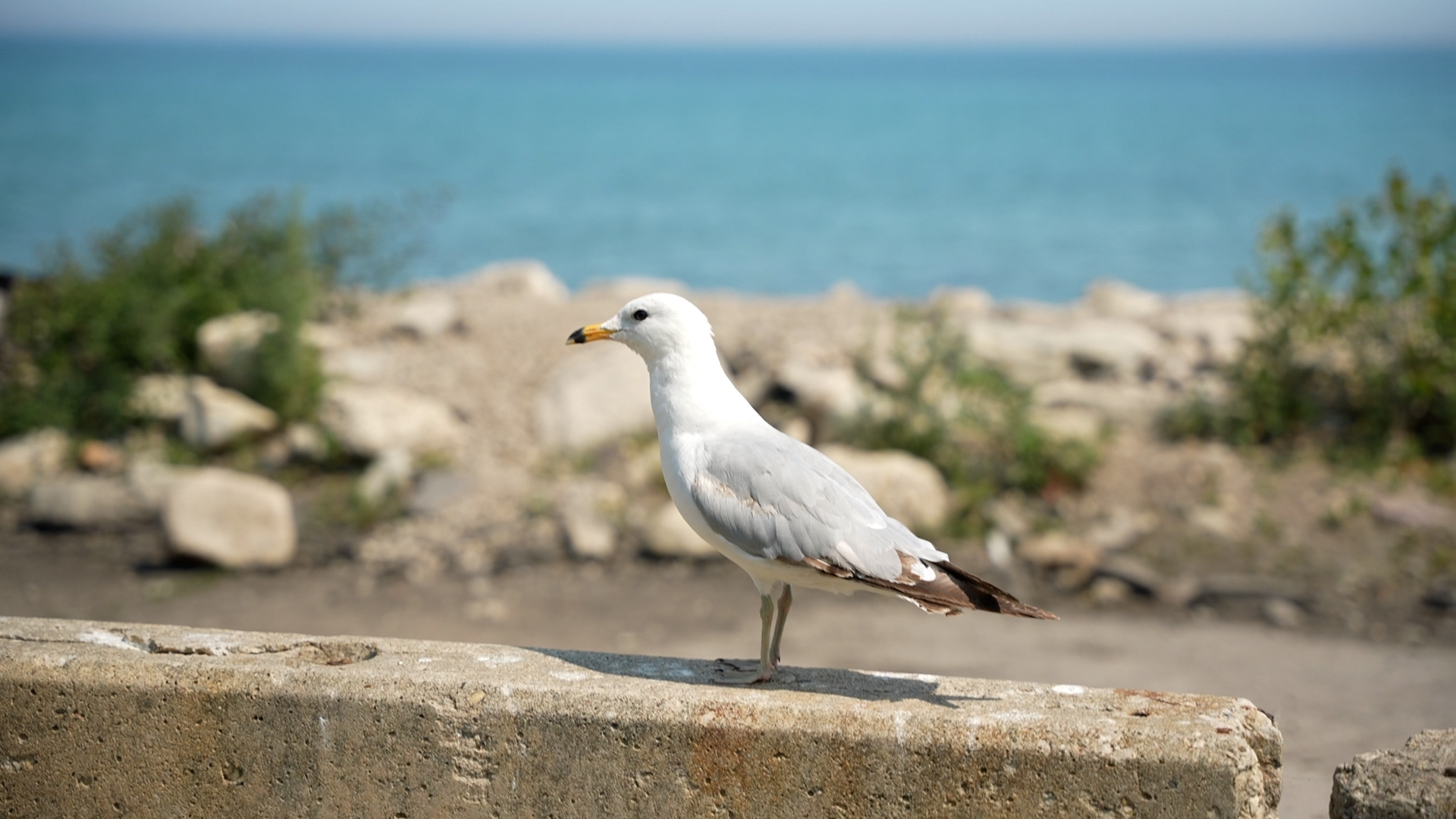
A seagull

A seagull enjoys summer at Bradford Beach in Milwaukee.
Photo credit: Wisconsin Sea Grant

It’s a question that, in the middle of August, might prompt panicked reexamination of how you spent the long, warm days of a fleeting season.

For Wisconsin Sea Grant’s Summer Outreach Opportunities Program scholars, the answers come easily.

This summer, 12 undergraduate students from across the country spent a jam-packed 10 weeks collaborating with outreach specialists on coastal and water resources projects across Wisconsin. Scholars conducted research, engaged kids and adults and shared the stories of Great Lakes science, all while working alongside mentors to explore careers and graduate education in the aquatic sciences.

Whether they wrangled fish in Green Bay or researched green infrastructure in Ashland, scholars have much to share about how they spent their summers. Here’s a snapshot of the final five projects in our series.


Project: Climate Change and Green Infrastructure

It’s summer in Ashland, Wisconsin, and summer scholar Alexander Wuethrich is already thinking about winter.

Alex Wuethrich

Summer scholar Alex Wuethrich. Photo credit: Alex Wuethrich

Wuethrich, a senior at Northland College majoring in climate science with a minor in physics, is working under the mentorship of Climate and Tourism Outreach Specialist Natalie Chin to research the ways the city of Ashland can use green infrastructure to absorb and slow the flow of stormwater into Lake Superior. He’s focusing on rainwater—but also snow.

Wuethrich explained that the city receives so much snow in winter that crews remove it from city streets and take it to a snow dump site. The current location makes it easy for polluted runoff to enter local waterways.

“Right now, [the site] is at the top of a ravine that leads into a river,” said Wuethrich. As the snow melts, water carries all the sediment, salt and pollutants picked up from city streets into the river, which leads to Lake Superior.

One option is constructing a wetland, which can slow down water and allow sediments to settle out. Wetland plants can also remove heavy metals. Said Wuethrich, “It’ll bring out a lot of those contaminants that we want to keep out of the water system.”

The city can also take measures to prevent pollutants from being on the street in the first place. Enter the street sweeper.

“Learning about how much of a difference [street sweeping] can make was a real eye-opener for me,” Wuethrich said. Working along sweeper routes for three days, he discovered they do more than just tidy up roads. “[Street sweepers] can also pick up heavy metals and other things from cars…like lead and copper that’ll naturally wear off.” Street sweepers also collect dust and sediment before rainwater washes them into the lake.

In addition to getting a crash course in public works, Wuethrich has been using GIS to map storm sewers and catchment basins in the city and developed educational materials on green infrastructure and how to maintain stormwater ponds in the city. He also created a list of trees that, if approved by the city council, would shape what trees can be planted along city streets. The list prioritizes salt- and drought-tolerant native species that could adapt to a warmer, climate-changed future.

The summer scholar experience has underlined that getting involved matters. Said Wuethrich, “It makes a big difference what your local administrators are doing.”


Project: Eat Wisconsin Fish

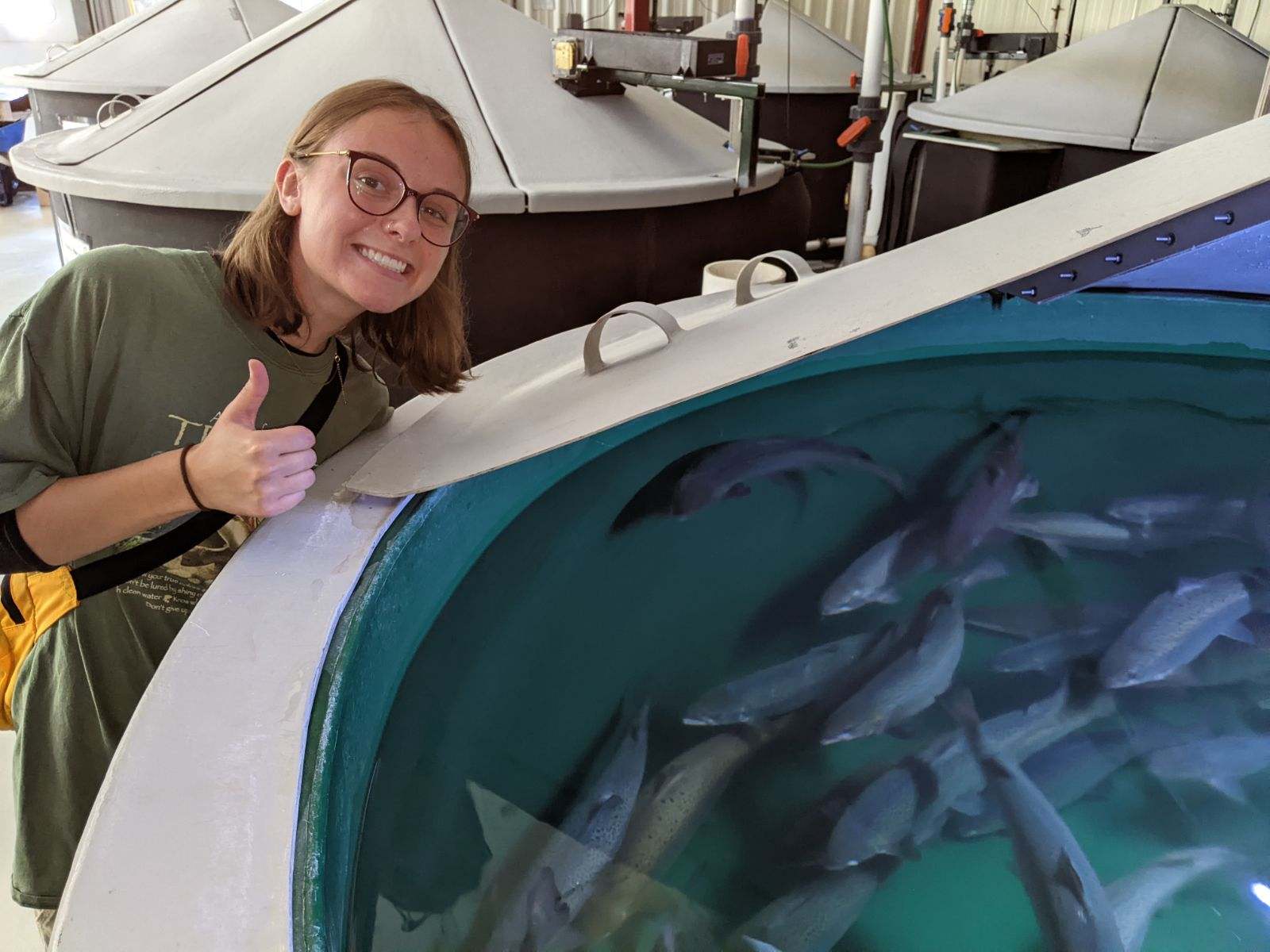
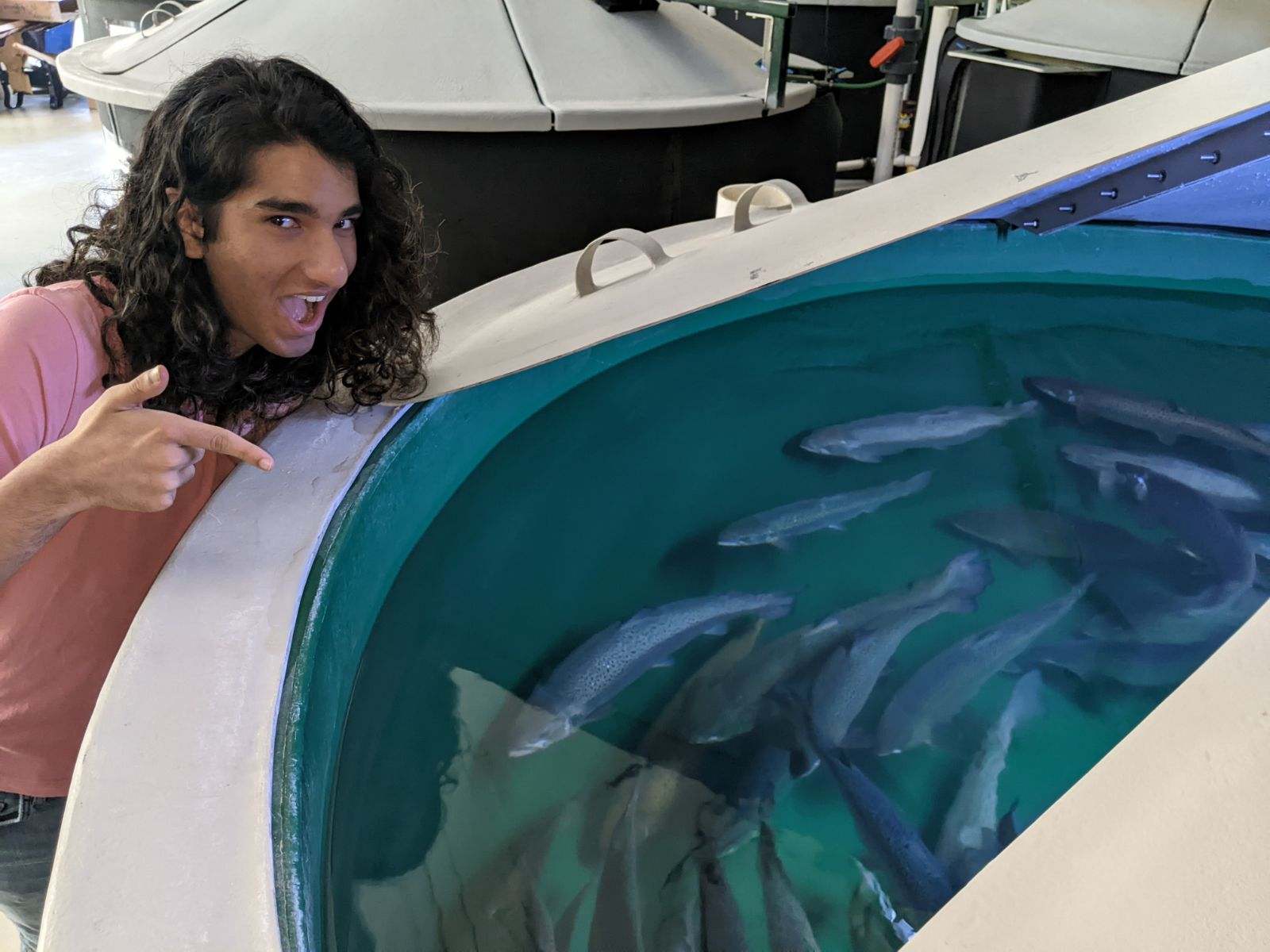
For Jojo Hunt and Crow Idnani, this was the summer of fish. Paired with Food-Fish Outreach Coordinator Sharon Moen and Aquaculture Outreach and Education Specialist Emma Hauser in Superior, Wisconsin, the scholars spent their summers immersed in the commercial fishing and aquaculture industries across the state: visiting producers, learning about the industry and sharing what they’ve learned. Both scholars completed projects that seek to educate and connect consumers with fish caught or farmed in Wisconsin.

Jojo Hunt gives the thumbs up next to a large tank of fish

Jojo Hunt at the UW-Stevens Point Northern Aquaculture Demonstration Facility. Photo credit: Jojo Hunt

Hunt, a junior at the University of Denver majoring in GIS with minors in computer science and math, is updating the fish finder map on the Eat Wisconsin Fish website, which helps consumers find local businesses that raise or sell Wisconsin fish.

“The main goal of the map is to bring more attention and awareness to where [the businesses] are and what they do and hopefully break some of those stereotypes,” she said, pointing to the misconception that farm-raised fish is unsustainable.

Hunt is also experimenting with different map-making tools to feature profiles of the producers alongside the data. “I thought it’d be kind of nice to see those right under the map to make the points have a story,” said Hunt.

Crow Idnani at the UW-Stevens Point Northern Aquaculture Demonstration Facility

Crow Idnani at the UW-Stevens Point Northern Aquaculture Demonstration Facility. Photo credit: Crow Idnani

Idnani is also working to dispel myths about aquaculture by suggesting updates to A Consumer’s Guide for Wisconsin Farm-Raised Fish, a publication of the UW–Stevens Point Northern Aquaculture Demonstration Facility (NADF) and the Wisconsin Department of Agriculture, Trade and Consumer Protection. The current guide provides an overview of the aquaculture industry in Wisconsin but can get overly technical. Idnani, a sophomore at Cornell University majoring in environmental science with an eye toward science communication, is reviewing the guide through a consumer lens so that it is more useful for the general public.

A creative piece is in the works, too. Idnani is also writing an article tracing the life of an Atlantic salmon at NADF, from when the fish hatches to when it is harvested. Idnani, Hauser and Moen plan to pitch the story to a regional publication to get it in front of audiences outside the aquaculture industry.

From measuring and sorting Atlantic salmon at the NADF facility to preparing shore lunches and teaching kids about aquaculture, the scholars have—unsurprisingly—learned a lot about all things fish.

Said Idnani, “I never grilled a fish until coming here; I never handled a live fish until coming here. It’s been a lot of firsts, but I’ve enjoyed it.”


Projects: PFAS Bioaccumulation in Plants and Animals Associated with Aquatic Ecosystems

Assessing Aquatic Plant Management Tools for Invasive, Native and Nontarget Organisms in Lake Ecosystems

Britta McKinnon

Summer scholar Britta McKinnon. Photo credit: Britta McKinnon

Britta McKinnon and Heidi Wegehaupt spent their summers in lakes and labs working to paint a more complete picture of how contaminants enter and impact aquatic ecosystems. The scholars participated in two research projects: one focused on poly- and perfluoroalkyl substances (PFAS), and the other on herbicides.

McKinnon, a junior at UW–Milwaukee majoring in aquatic sciences, focused primarily on PFAS. Under the direction of Emerging Contaminants Scientist Gavin Dehnert, she identified potential sources of PFAS in northern Wisconsin. McKinnon paid special attention to airports, which use PFAS-containing foams to extinguish fires, as well as landfills and papermills. She noted lakes that may be affected by contaminated runoff.

PFAS can persist in water for a long time. Sometimes called “forever chemicals,” they do not break down easily and can get taken up by plants and animals—and eventually humans—in a process known as bioaccumulation. McKinnon developed a series of factsheets explaining what PFAS are, how they enter and move through the environment and the concerns they pose for human health.

In sharing information with others, she learned a lot about PFAS herself. For example: PFAS are not one substance but many. “I had no idea that there are thousands of different types,” said McKinnon.

Herbicides, not PFAS, were the subject of Heidi Wegehaupt’s research this summer. Working with Dehnert and aquatic invasive outreach specialist Tim Campbell, Wegehaupt collected water and fish samples across three lakes in northern Wisconsin to determine how the herbicide 2,4-Dicholrophenoxyacetic acid affects nonnative Eurasian watermilfoil, the intended target, and nontarget aquatic organisms.

Said Wegehaupt, “Each waterbody has a unique ecological composition, meaning they all react to herbicides differently.”

Knowing how the herbicide affects nontarget species like fish will help lake associations make informed decisions about how to manage invasive species on their lake.

In collecting samples from different lakes, Wegehaupt, a senior at UW–Madison majoring in conservation biology with a certificate in environmental studies, learned she loved fieldwork.

“My favorite part of this experience so far has been spending time at the lakes we’re sampling and just taking the time to enjoy being outside. Getting to know the lakes we work on and talking with locals has been enlightening to my experience as a whole,” said Wegehaupt.

McKinnon, on the other hand, was excited about the lab work. In addition to her PFAS research, McKinnon helped the research team test the impacts of herbicides on fish scale growth. It reminded her of her favorite class, chemistry. Said McKinnon, “I found that I’m in love with the laboratory aspects.”

Neither scholar had previous experience in environmental toxicology but both used the summer to explore which aspects of the research process resonated with them.

Said Wegehaupt, “I still have one year left at UW, so hopefully this opportunity helps me form a path for the future.”


Project: Expanding Voices Heard in the Wisconsin Water Library

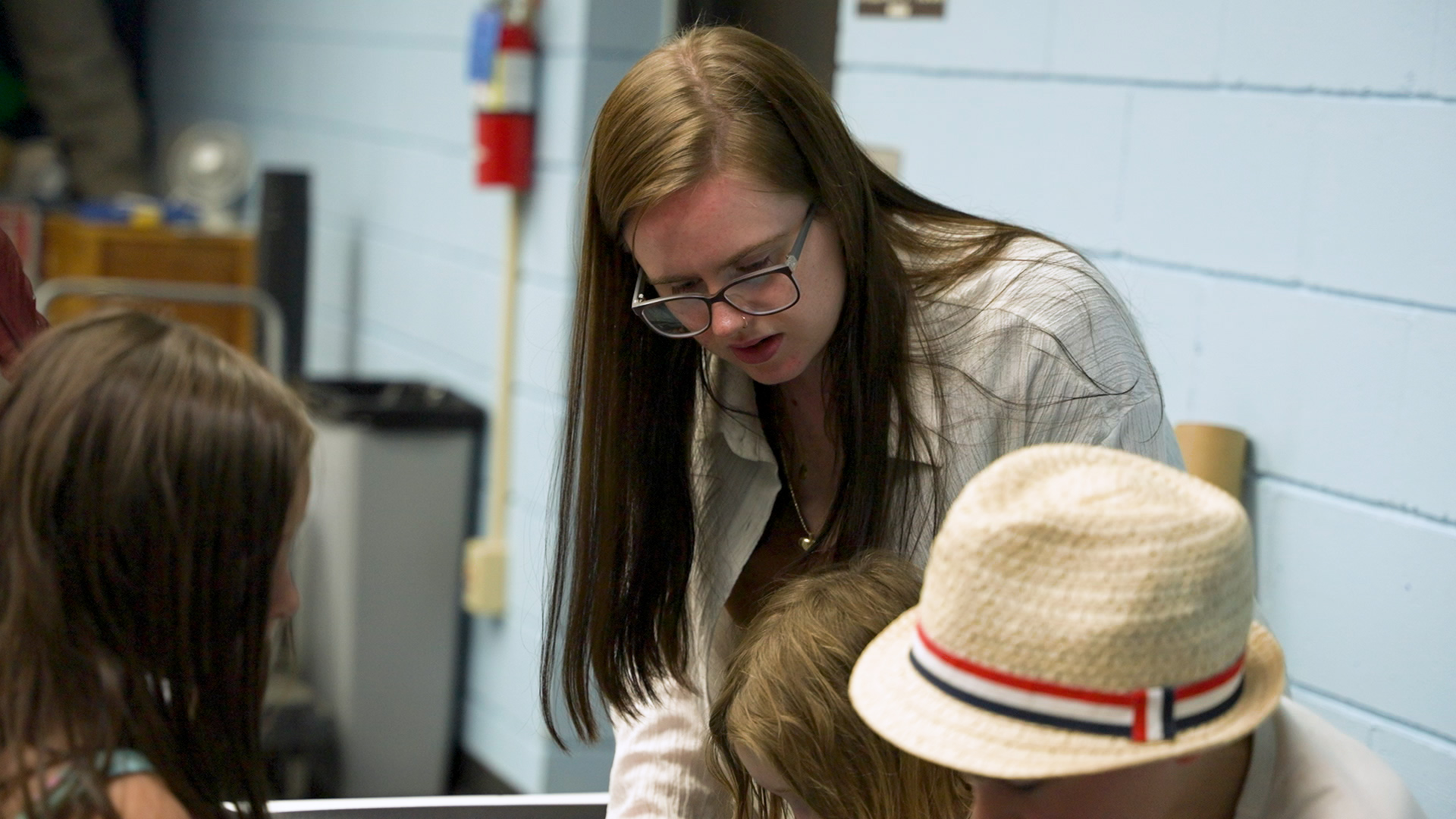
India-Bleu Niehoff helps children with an activity at the library.

India-Bleu Niehoff helps children with an activity at the library. Photo credit: Wisconsin Sea Grant

As a summer scholar with the Wisconsin Water Library at UW–Madison, India-Bleu Niehoff learned quickly that working at a small library means variety is routine.

“It’s a special academic library, which basically means you do everything,” said Niehoff.

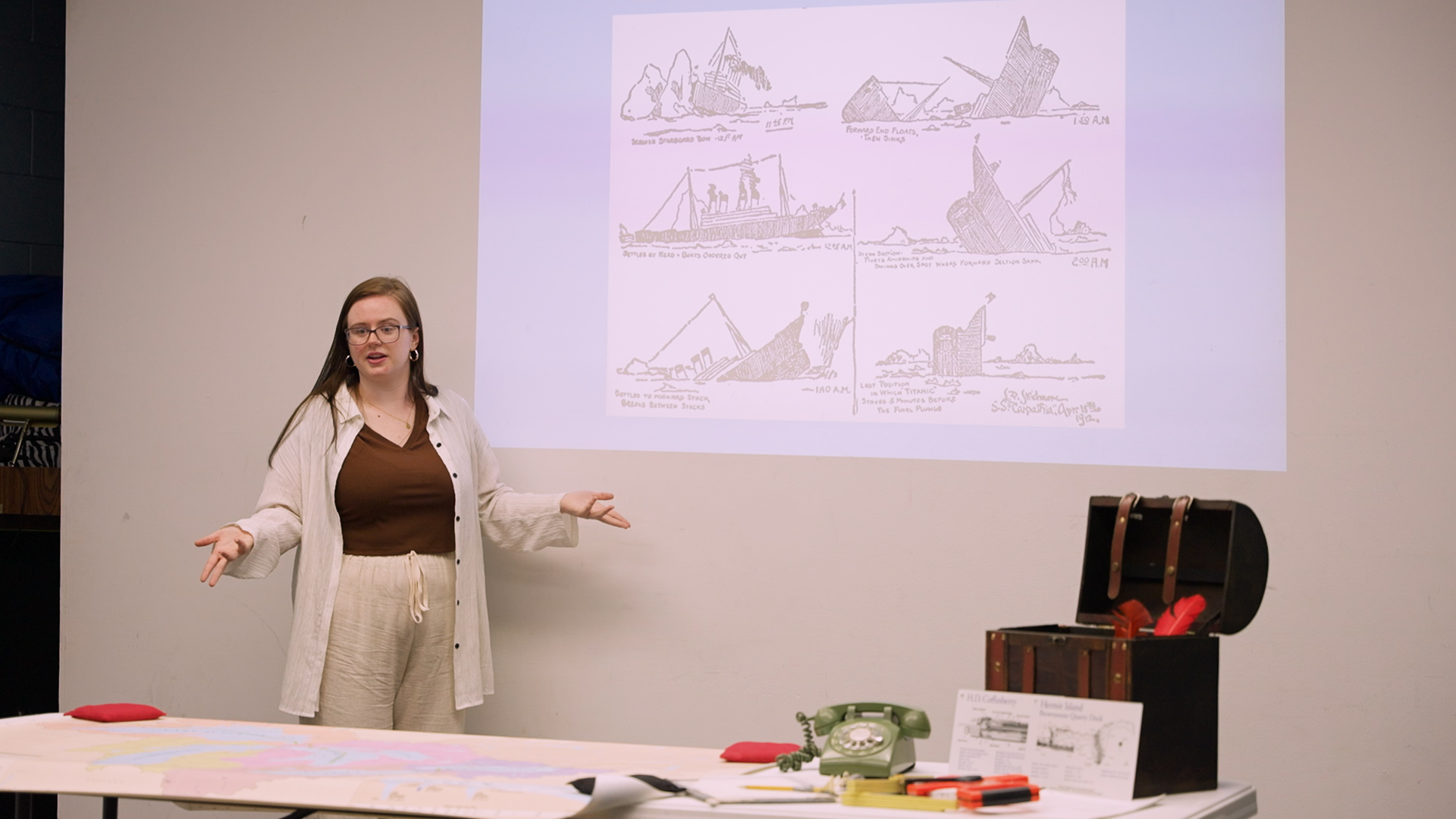
There’s the minding of books, of course—over 35,000 about the Great Lakes and waters of Wisconsin—but then there’s the sharing of books through blog posts, book clubs and library programming across the state. Alongside Senior Special Librarian and Education Coordinator Anne Moser, Niehoff led lessons on shipwrecks and sturgeon and coached kids how to use remotely operated vehicles (ROVs) constructed from clothes hangers.

A rising graduate student in library and information studies, Niehoff was game for it all.  

One of her projects was to help coordinate the fall edition of the Maadagindan! Start Reading! book club. A collaboration between Wisconsin Sea Grant, the Wisconsin Water Library and the Great Lakes Indian Fish and Wildlife Commission, Maadagindan! brings together parents and educators to discuss children’s books about Ojibwe culture and language. Meetings also feature an honored guest, usually the author, illustrator or a member of the Ojibwe community who speaks to the themes or importance of the book.

Niehoff researched and helped select the four books, all of which are written by Indigenous women authors. It was difficult to choose just four. As she learned, it’s easy to get lost down the dazzling rabbit hole of books.

“Once you start searching, you keep finding,” she said.

Niehoff also wrote blog posts for the Water Library’s Aqualog blog, the first of which centers on underrepresented groups in nature. The two-part post outlines resources about the history of racism in conservation as well as organizations working to make the outdoors accessible to everyone. The second post, currently under development, will feature resources about Indigenous women in STEM.

India-Bleu Niehoff leads an activity about Great Lakes shipwrecks

Niehoff leads an activity about Great Lakes shipwrecks. Photo credit: Wisconsin Sea Grant

Said Niehoff, “I’ve really enjoyed looking into stuff I’m passionate about and interested in and then accumulate it and make it something that’s available to other people.”

And let’s not forget about the shipwrecks and sturgeon. Niehoff and Moser travelled across the state, from Madison to Sheboygan to Eau Claire, delivering Great Lakes education programming for kids at local libraries. They read books, led kids in the Japanese art of gyotaku and printed fish on paper and played Great Lakes trivia. Watching Moser, Niehoff learned how to engage kids when reading aloud.

Everybody was learning something.

“Going to local communities and sharing this information [was] really enjoyable. Especially because it’s not just kids, it’s parents and whatever grown-up that’s with them,” said Niehoff.

The summer scholar experience allowed Niehoff to experience many different aspects of working at a library, from cataloguing books to leading kids in crafts. Struck by the breadth of the discipline, she’s got a lot to think about going into her first year of grad school.

Said Niehoff, “There are so many different directions you can go.”


The post Summer scholars dip toes into water-related careers: Part two first appeared on Wisconsin Sea Grant.

Original Article

News Releases | Wisconsin Sea Grant

News Releases | Wisconsin Sea Grant

https://www.seagrant.wisc.edu/news/summer-scholars-dip-toes-into-water-related-careers-part-two/

Jenna Mertz

...UPDATED AIR QUALITY ADVISORY REMAINS IN EFFECT UNTIL 11 PM CDT TONIGHT... The Wisconsin Department of Natural Resources has updated the Air Quality Advisory for Fine Particles which will now remain in effect until 11:00 PM CDT tonight. This advisory affects people living in the following counties: Brown, Calumet, Door, Florence,

Original Article

Current Watches, Warnings and Advisories for Brown (WIC009) Wisconsin Issued by the National Weather Service

Current Watches, Warnings and Advisories for Brown (WIC009) Wisconsin Issued by the National Weather Service

https://alerts.weather.gov/cap/wwacapget.php?x=WI12665AC807D0.AirQualityAlert.12665AC84B00WI.GRBAQAGRB.95772b461ecdeafcc9c0642321d118ec

w-nws.webmaster@noaa.gov

...UPDATED AIR QUALITY ADVISORY REMAINS IN EFFECT UNTIL 11 PM CDT FRIDAY... The Wisconsin Department of Natural Resources has updated the Air Quality Advisory for Fine Particles which will now remain in effect until 11:00 PM CDT tonight. This advisory affects people living in the following counties: Brown, Calumet, Door, Florence,

Original Article

Current Watches, Warnings and Advisories for Brown (WIC009) Wisconsin Issued by the National Weather Service

Current Watches, Warnings and Advisories for Brown (WIC009) Wisconsin Issued by the National Weather Service

https://alerts.weather.gov/cap/wwacapget.php?x=WI12665ABB81F4.AirQualityAlert.12665AC8F2F8WI.GRBAQAGRB.95772b461ecdeafcc9c0642321d118ec

w-nws.webmaster@noaa.gov