A recent sunny morning on the Memorial Union Terrace of the University of Wisconsin-Madison seemed a literal representation of the sunny outlook of the nine undergraduate students assembled to kick off their 10-week summer freshwater research experiences.

Students were nationally recruited and hail from Michigan Technological University, University of the Sciences, James Madison University, North Carolina State University, Skidmore College and Beloit College. Three students didn’t have to travel far. They are currently enrolled at UW-Madison. Six of the students self-identify as underrepresented.
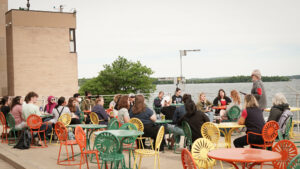
Group of people sitting outdoors in colorful chairs

Undergraduate summer research students, mentors and Sea Grant Director Jim Hurley gather for a kick off meeting of the 10 week experience. Photo: Bonnie Willison

The cohort is the inaugural group of a new program to offer student research opportunities to enhance workforce development skills and expose undergraduates to graduate studies across the University of Wisconsin System and under the auspices of Water@UW-Madison, which connects water scholars across the state’s flagship campus.

“I’m thinking about going to graduate school and this internship will prepare me for freshwater research in both the lab and the field,” said Lily Wagner who smiled through a conversation despite being jetlagged following her return just hours earlier from a semester abroad in Copenhagen studying environmental sciences of the Arctic.

She will join the lab of Christy Remucal of the Department of Civil and Environmental Engineering to understand the degradation rate of the aquatic pesticide 3-trifluoromethyl-4-nitrophenol, which is used to control populations of invasive sea lamprey in the Great Lakes watershed.

Faculty mentors also have high hopes for the pilot research program. “This is a fantastic opportunity for our Water@UW-Madison community to come together in a different way; to share research with a new generation of water scientists,” said Grace Wilkinson, Center for Limnology.

Wilkinson reported being undaunted by the lack of a track record on the program and is looking forward to shepherding a student through a project that will look at how nutrient-rich waters in Dane County are transforming, storing or moving organic material and how the cycle is affected by climate change and anthropogenic pressures.

Her student, Victoria Wright, has experience in science communication. Wilkinson said she’ll tap into Wright’s expertise in creating communications products that will be used as part of a community science monitoring program based at two urban ponds in Middleton.

In remarks to the group, Wisconsin Sea Grant and University of Wisconsin Water Resources Institute (WRI) Director Jim Hurley called out features of the Memorial Union’s surroundings that are emblematic of UW-Madison’s leadership in water—nearby buildings, including the Center for Limnology and the Water Science and Engineering Laboratory; Lake Mendota, known as the world’s most-studied lake; and a plaque commemorating former UW-Madison President Edward A. Birge, often cited as the founder of the study of limnology.
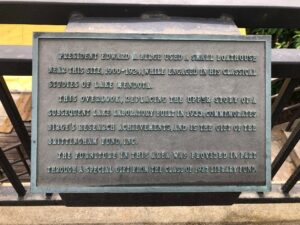
Metal plaque with four paragraphs

A plaque on the UW-Madison campus details a history of water research.

Hurley said through the years countless research ideas have been sparked sitting alongside Lake Mendota, over beverages and in the company of enthusiastic scientific peers, and he was confident the 2022 Water@UW-Madison summer research students would be similarly inspired.

Sea Grant and its sister organization WRI are funding the program, as well as the Freshwater Collaborative of Wisconsin. The Freshwater Collaborative is part of a statewide initiative with support from the Wisconsin Legislature and Gov. Evers that is tackling 10 grand water challenges, as well as curriculum development, undergraduate research opportunities, career development and field training experiences for students with an interest in water-related offerings on UW System campuses. The collaborative is also a partnership of universities, connecting with industry, local communities, policymakers and advocacy groups. Its mission is to establish Wisconsin as a world leader in freshwater science, technology, entrepreneurship and economic growth.


The post Summer of research kicks off first appeared on Wisconsin Sea Grant.

Original Article

News Releases | Wisconsin Sea Grant

News Releases | Wisconsin Sea Grant

https://www.seagrant.wisc.edu/news/summer-of-research-kicks-off/?utm_source=rss&utm_medium=rss&utm_campaign=summer-of-research-kicks-off
Moira Harrington

In our newest TikTok, Echo reporter Shelby Frink discusses the results of a recent study published in Agricultural and Resources Economic Review that explores how climate change impacts milk and feed production.

The post Climate change increases milk production: TikTok edition first appeared on Great Lakes Echo.

Original Article

Great Lakes Echo

Great Lakes Echo

http://greatlakesecho.org/2022/06/02/climate-change-increases-milk-production-tiktok-edition/

Guest Contributor

The Catch: Current issues in Canadian water infrastructure

This month of The Catch features stories from our partners in the Great Lakes News Collaborative. The collaborative’s investigation of the cost of water in the Great Lakes region was the focus of the latest episode.

Toronto-based journalist Andrew Reeves discusses a piece he wrote for Great Lakes Now about the history and current issues in Canadian water infrastructure.

Read Now at Great Lakes Now.

Original Article

Great Lakes Now

Great Lakes Now

https://www.greatlakesnow.org/2022/06/the-catch-canadian-water-infrastructure/

GLN Editor

EPA: Two toxic hot spots in Michigan will take longer to clean up than many others in Great Lakes states

By Lester Graham, Michigan Radio

The Great Lakes News Collaborative includes Bridge Michigan; Circle of Blue; Great Lakes Now at Detroit Public Television; and Michigan Radio, Michigan’s NPR News Leader; who work together to bring audiences news and information about the impact of climate change, pollution, and aging infrastructure on the Great Lakes and drinking water.

Read Now at Great Lakes Now.

Original Article

Great Lakes Now

Great Lakes Now

https://www.greatlakesnow.org/2022/06/toxic-hot-spots-michigan-great-lakes-states/

Michigan Radio

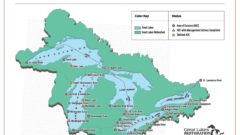
The U.S. Environmental Protection Agency has set a goal of completing work to delist 22 of the 25 remaining Areas of Concern in the Great Lakes region. Of the three remaining AOCs that won’t be completely cleaned up, two are in Michigan. Read and hear the full story by Michigan Radio.


Original Article

Great Lakes Commission

Great Lakes Commission

https://www.glc.org/dailynews/20220601-aoc-cleanup

Jill Estrada

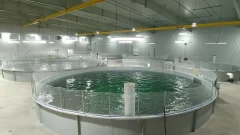
Massive salmon farm gets green light from Ohio DNR

Despite overwhelming public opposition based on public comments received by the Ohio Department of Natural Resources, the agency approved a water withdrawal and consumptive use permit for Massachusetts-based Aquabounty on March 14.

The permit will allow operators to pull about 28 million gallons from the Michindoh Aquifer to fill tanks at its state-of-the-art Atlantic salmon rearing facility in Pioneer, Ohio.

Read Now at Great Lakes Now.

Original Article

Great Lakes Now

Great Lakes Now

https://www.greatlakesnow.org/2022/06/salmon-farm-ohio-dnr/

James Proffitt

News

Great Lakes HABs Collaborative releases two fact sheets on human health and harmful algal blooms

Ann Arbor, Mich. – The Great Lakes HABs Collaborative today released two new fact sheets on the impacts of harmful algal blooms (HABs) on human health. The GLC released the fact sheets in advance of HABs season in the Great Lakes basin; early season projections for the annual bloom in Lake Erie began in May and are accessible on  NOAA’s website and also shared on Blue Accounting’s website.

The first fact sheet summarizes emerging research on chronic HABs toxin exposure on the body, including on the respiratory, neurological and cardiovascular systems. According to recent lab studies, HAB toxins may cause inflammation in the lungs and disrupt lung cell structure; may damage neurons and disrupt normal brain cell function; and can lead to cardiac inflammation and tissue scarring. Frequency of exposure, dose, and personal health conditions play an important role in how any of the various toxins that may be produced by a HAB can affect a person’s health. When spending time along Great Lakes coasts and inland waters, it is important to be aware of any signs posting local health advisories, which may include warnings related to the presence of a HAB.

The second fact sheet summarizes the current understanding of the effects of inhalation of HABs aerosols: when a HAB is agitated (by waves, wind, or boat traffic), it may release aerosols into the air, and aerosols generated from water with HABs have been found to contain HAB toxins. Some animal studies have demonstrated negative health consequences such as inflammation from the inhalation of HABs aerosols and some water users have reported respiratory irritation. An epidemiological study found respiratory symptoms were more likely in humans exposed to high levels of HAB aerosols.

“We already knew that the annual bloom in Western Lake Erie, and other HABs across the Great Lakes, have adverse effects on the environment and economy in communities across the basin,” said Todd L. Ambs, chair of the Great Lakes Commission, which leads the Great Lakes HABs Collaborative in partnership with the U.S. Geological Survey – Great Lakes Science Center. “Now emerging science is showing us that the human health effects of HABs can be broad and serious as well. This is more evidence that we need to act now on a federal, regional, jurisdictional, and local level to combat HABs in the Great Lakes basin.”

Freshwater HABs are an annual occurrence during the summer and fall in the nearshore areas of the Great Lakes, as well as in inland waterbodies, and have the potential to disrupt ecosystems, impact water and air quality, and deter recreation. The Great Lakes HABs Collaborative is working to establish a common agenda on science and management needs to help the region work together to prevent and manage HABs.


The Great Lakes Commission, led by chair Todd L. Ambs, deputy secretary of the Wisconsin Department of Natural Resources (retired), is a binational government agency established in 1955 to protect the Great Lakes and the economies and ecosystems they support. Its membership includes leaders from the eight U.S. states and two Canadian provinces in the Great Lakes basin. The GLC recommends policies and practices to balance the use, development, and conservation of the water resources of the Great Lakes and brings the region together to work on issues that no single community, state, province, or nation can tackle alone. Learn more at www.glc.org.

CONTACT

For media inquiries, please contact Hannah Reynolds, hreynolds@glc.org.

Recent GLC News

Upcoming GLC Events

View GLC Calendar

ARCHIVES

Original Article

Great Lakes Commission

Great Lakes Commission

https://www.glc.org/news/habs-factsheets-060122

Hannah Reynolds

Since 2019, just over a dozen inner-city families in the heart of Minneapolis have cared for small prairies full of native plants in the boulevard strips adjacent to their homes. The project is aimed at  increasing urban biodiversity. It is called City Backyard Science and is funded by the University of Minnesota Institute on the Environment.

The post Urban ecology is in the hands of Minnesota citizens first appeared on Great Lakes Echo.

Original Article

Great Lakes Echo

Great Lakes Echo

http://greatlakesecho.org/2022/06/01/urban-ecology-is-in-the-hands-of-minnesota-citizens/

Guest Contributor

The Catch: E. Coli and faulty septic systems

This month of The Catch features stories from our partners in the Great Lakes News Collaborative. The collaborative’s investigation of the cost of water in the Great Lakes region was the focus of the latest episode.

Michigan Radio‘s Lester Graham discusses a story he’s been following in northern Michigan on Elk Lake, where plant life and E.Coli are showing up in previously crystal-clear water.

Read Now at Great Lakes Now.

Original Article

Great Lakes Now

Great Lakes Now

https://www.greatlakesnow.org/2022/05/the-catch-septic-systems/

GLN Editor

Dr. Sherri Mason headshot.

In today’s episode, we’re chatting with Dr. Sherri Mason, a leading expert on plastic pollution. Her award-winning work has drawn international attention to the threat of microplastics in our waters and led to the passage of national legislation banning microbeads. She serves as Director of Sustainability at Penn State Erie, The Behrend College.

Dr. Mason shares some fascinating perspectives on plastic pollution in the Great Lakes:

  • Sometimes it’s hard to wrap our heads around the issue of microplastics because they’re basically invisible. Why should we be concerned about microplastics?
  • There’s relatively little research about plastic pollution in the Great Lakes as compared to the oceans. Plastic pollution in the oceans is certainly a big issue but the Great Lakes are our drinking water. Why does that disparity exist?
  • Dr. Mason says “I’m not anti-plastic. I’m anti-stupid plastic.” What does she mean by that?
  • The microbeads story is a great example of how science can change public policy. What does she see as the next big plastics policy area that needs to be tackled?
  • Once we start thinking about plastic, we start realizing that it is everywhere and it’s easy to get overwhelmed. Where would Dr. Mason suggest our listeners start to help keep plastic out of the Great Lakes?

Resources
Plastic-Free Great Lakes

The post Dr. Sherri Mason – Plastic Pollution appeared first on Alliance for the Great Lakes.

Original Article

News - Alliance for the Great Lakes

News - Alliance for the Great Lakes

https://greatlakes.org/2022/05/dr-sherri-mason-plastic-pollution/

Judy Freed

European frogbit, an invasive species, has been documented in Wisconsin, where it could threaten native plants, fish and invertebrates. The small, green, heart-shaped lily pad, forms dense mats along the surface of the water, blocking out sunlight that submergent plants need to survive.

The post Rising water makes Lake Michigan wetlands vulnerable to invaders first appeared on Great Lakes Echo.

Original Article

Great Lakes Echo

Great Lakes Echo

http://greatlakesecho.org/2022/05/31/rising-water-makes-lake-michigan-wetlands-vulnerable-to-invaders/

Guest Contributor

...AIR QUALITY ADVISORY ISSUED FOR SHORELINE WISCONSIN... The Wisconsin Department of Natural Resources has issued an Air Quality Advisory for Ozone which will remain in effect until 11:00 PM CDT tonight. This advisory affects people living in the following counties: Brown, Calumet, Door, Kewaunee, Manitowoc, southern Marinette, and southern Oconto.

Original Article

Current Watches, Warnings and Advisories for Brown (WIC009) Wisconsin Issued by the National Weather Service

Current Watches, Warnings and Advisories for Brown (WIC009) Wisconsin Issued by the National Weather Service

https://alerts.weather.gov/cap/wwacapget.php?x=WI1263F5847180.AirQualityAlert.1263F591DF00WI.GRBAQAGRB.ec8586610c017e3b61503aff62a72b6b

w-nws.webmaster@noaa.gov

Fifteen businesses, including Ford Motor Co., General Mills, General Motors and two West Michigan microbreweries, have written to Michigan Gov. Gretchen Whitmer in support of her administration’s carbon neutrality goals.

The post Businesses signal support of Michigan’s climate goals first appeared on Great Lakes Echo.

Original Article

Great Lakes Echo

Great Lakes Echo

http://greatlakesecho.org/2022/05/30/businesses-signal-support-of-michigans-climate-goals/

Guest Contributor

Infrastructure plan: $33M to clean up hundreds of oil wells

By Janet McConnaughey, Associated Press

NEW ORLEANS (AP) — About $33 million of the $1 trillion bipartisan infrastructure plan recently signed into law by President Joe Biden will go toward cleanning up 277 of an estimated 15,000 abandoned oil and gas wells on federal land, the nation’s interior secretary said Wednesday.

Read Now at Great Lakes Now.

Original Article

Great Lakes Now

Great Lakes Now

https://www.greatlakesnow.org/2022/05/ap-infrastructure-plan-clean-up-wells/

The Associated Press

IDEM Testing Confirms “Forever Chemicals” in Some Public Water Systems

By Enrique Saenz, Indiana Environmental Reporter

Final results of the first phase of statewide community water system testing confirmed the presence of PFAS chemicals in the treated drinking water of nearly a dozen Indiana communities.

The presence of PFAS chemicals in drinking water could be exposing thousands of Hoosiers to a series of adverse health conditions ranging from increased risk of kidney and testicular cancers to high cholesterol levels.

Read Now at Great Lakes Now.

Original Article

Great Lakes Now

Great Lakes Now

https://www.greatlakesnow.org/2022/05/testing-confirms-forever-chemicals-water-systems/

Indiana Environmental Reporter

Water’s True Cost: The Great Lakes Now Episode Quiz

Great Lakes Now episodes are packed with important information on current topics.

In “Water’s True Cost,” learn about the aging infrastructure problem in Michigan and how many households struggle to pay their water bills. And in “The Catch” we look at the same problem in Ontario, the problem of Michigan’s lacking sewer regulations, and a new series on Great Lakes policy.

Read Now at Great Lakes Now.

Original Article

Great Lakes Now

Great Lakes Now

https://www.greatlakesnow.org/2022/05/waters-true-cost-the-great-lakes-now-episode-quiz/

Tynnetta Harris

Inflation, increased labor costs and supply chain issues have ballooned the estimated cost of a major reconstruction project at the Soo Locks shipping complex according to lawmakers, who say the pricey effort has doubled or tripled in price from current projections. Read the full story by Mlive.com

Original Article

Great Lakes Commission

Great Lakes Commission

https://www.glc.org/dailynews/20220527-soo-locks

Jill Estrada

Today, the Marblehead Lighthouse, the oldest continuously operating lighthouse in the Great Lakes located along the south shore of Lake Erie, is as much tourist attraction as navigational aid, due to GPS and other on-shore landmarks. Read the full story by The Plain Dealer.

Original Article

Great Lakes Commission

Great Lakes Commission

https://www.glc.org/dailynews/20220527-lighthouse

Jill Estrada

NOAA and other organizations are actively monitoring Great Lakes algae. The Harmful Algal Bloom (HAB) Monitoring System has been operational for several years. A new system was just launched in April of 2022 called Seagull. Both are expected to continue to be updated with new features and functionality. Read the full story by Thumbwind.

Original Article

Great Lakes Commission

Great Lakes Commission

https://www.glc.org/dailynews/20220527-algal-blooms

Jill Estrada

A federal appeals court has declined to disturb an Indiana Supreme Court ruling, later codified into Indiana law, which declared that Lake Michigan’s shoreline is — and always has been — owned by the state for the public’s use. Read the full story by the Associated Press.

Original Article

Great Lakes Commission

Great Lakes Commission

https://www.glc.org/dailynews/20220527-indiana-shoreline

Jill Estrada

A federal appeals court has declined to disturb an Indiana Supreme Court ruling, later codified into Indiana law, which declared that Lake Michigan’s shoreline is — and always has been — owned by the state for the public’s use. Read the full story by the Associated Press.

Original Article

Great Lakes Commission

Great Lakes Commission

https://www.glc.org/dailynews/20220527-coal

Jill Estrada

Reducing levels of the nutrient phosphorus to control harmful algal blooms in places like Lake Erie is actually advantageous to toxic cyanobacteria strains, which can lead to an increase in toxins in the water, according to a new modeling study. Read and hear the full story by Phys.org.

Original Article

Great Lakes Commission

Great Lakes Commission

https://www.glc.org/dailynews/20220527-phosphorus

Jill Estrada

While forests are known to enhance the water quality of nearby watersheds, oftentimes people don’t recognize forests’ role in providing clean drinking water, according to a new study from Michigan State University. Read the full story by Great Lakes Echo.

Original Article

Great Lakes Commission

Great Lakes Commission

https://www.glc.org/dailynews/20220527-forests

Jill Estrada

Birders, biologists, conservationists and those who happened to be swept up in the tale of two little birds gathered this week at Montrose Beach in Chicago, Illinois to mark the end of one story — while another was just beginning. Read the full story by The Chicago Tribune.

Original Article

Great Lakes Commission

Great Lakes Commission

https://www.glc.org/dailynews/20220527-monty-rose

Jill Estrada

Episode 2205: The Cost of Drinking Water

Based on an independent project by the Great Lakes News Collaborative to better understand the real cost of water, this lesson will explore the costs associated with providing drinking water to communities in the Great Lakes and across the U.S. Students will learn how water infrastructure systems naturally age and need to be maintained, upgraded, fixed, or replaced, and how that life cycle of the infrastructure affects water quality and cost to communities who depend on fresh, clean water.

Read Now at Great Lakes Now.

Original Article

Great Lakes Now

Great Lakes Now

https://www.greatlakesnow.org/2022/05/episode-2205-drinking-water-lesson-plan/

Gary Abud Jr.

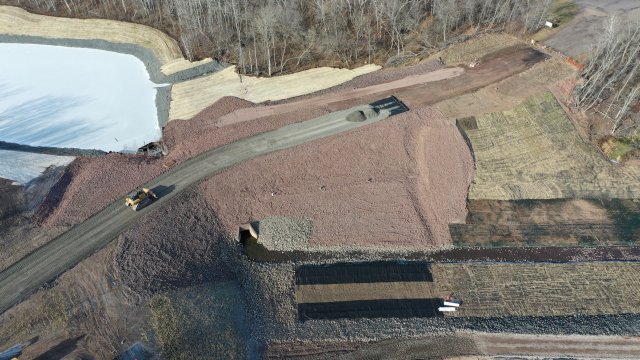
What the Spirit Lake Great Lakes Legacy Act cleanup site looked in the winter of 2021-22. Image credit: U.S. Environmental Protection Agency

On Feb. 9, River Talks featured Mark Loomis, project manager for the Legacy Act Project at Spirit Lake on the St. Louis River in Duluth. Loomis presented an update, providing images and information on the remediation project’s status.

The Great Lakes Legacy Act (GLLA) is a voluntary program between the U.S. Environmental Protection Agency and U.S. Steel. Contractors from both organizations work to reduce the effects of contaminated sediments in Great Lakes Areas of Concern. These contaminants are large contributors to environmental degradation in the Great Lakes.

How does this work? Loomis shed some light on the process in the Spirit Lake project area. First comes removal. Mechanical excavation or hydraulic dredging removes the unwanted material, and then residual covers are placed over the sites. “That material is put into two on-site disposal facilities. Each of those facilities has a different method,” said Loomis, “Another mechanism that we’re using for remediation is called capping.” Capping is the act of placing protective layers of sand and carbon to stop contaminants from rising up through the water.

Other mechanisms include Enhanced Monitored Natural Recovery, which helps to speed up recovery, Monitored Natural Recovery, which simply observes recovery, and finally, habitat restoration. With this process, the integrity of Spirit Lake improves and habitat space for aquatic species increases.

Hydraulic dredging is a large focus of the Spirit Lake Project. “Hydraulic dredging in its simplest form is a cutter head that spins and eats up the sediment. It gets sucked through a series of pipes and pumps and is brought to a Geotube bag-field,” said Loomis. Dredging activities are currently taking place in the Wire Mill Delta. After the dredging is completed, the next step is to place a residual cover. “The residual cover water treatment plant takes clean material that is on the land, and we pump it through pipes in slurry. It’s then broadcast out to the spreader treatment plant.”

Despite working in his field for over a decade, Loomis still thought that seeing Geotubes get filled was “neat.” The pipe from the dredges goes through a series of treatment plants that prepare the contents for the Geotubes. These Geotubes run across the entirety of the upland confined disposal facility. Sediment remains inside of the Geotubes while the water runs out back into the lake.

With more and more Geotubes filling up and dewatering, the project staff plan to layer more on top. When the field is complete, it should stand about four Geotubes high.

The Legacy Act also focuses on upland habitat restoration. Loomis highlighted a specific upstream portion of land near Spirit Lake where native plants were planted last year. “We were in a constant mental and physical battle with geese and deer who saw this as a delicious buffet,” Loomis said. Despite the feud with wildlife, Loomis reported that the process is going well.

Loomis gives a more comprehensive list of past progress to date during his presentation, which is available online. To watch a video of this presentation, visit the Lake Superior Estuarine Research Reserve’s YouTube site.

For more information on the series, visit the River Talks page: go.wisc.edu/4uz720.


The post An update on the Spirit Lake Great Lakes Legacy Act Project with Mark Loomis first appeared on Wisconsin Sea Grant.

Original Article

Blog | Wisconsin Sea Grant

Blog | Wisconsin Sea Grant

https://www.seagrant.wisc.edu/blog/an-update-on-the-spirit-lake-great-lakes-legacy-act-project-with-mark-loomis/?utm_source=rss&utm_medium=rss&utm_campaign=an-update-on-the-spirit-lake-great-lakes-legacy-act-project-with-mark-loomis

Eva Ryan

PFAS News Roundup: New York bill bans PFAS in clothes, Ohio city files lawsuit, Wisconsin struggles to set standards

PFAS, short for per- and polyfluoroalkyl substances, are a group of widespread man-made chemicals that don’t break down in the environment or the human body and have been flagged as a major contaminant in sources of water across the country.

Keep up with PFAS-related developments in the Great Lakes area.

Read Now at Great Lakes Now.

Original Article

Great Lakes Now

Great Lakes Now

https://www.greatlakesnow.org/2022/05/pfas-news-roundup-new-york-clothes-ohio-lawsuit-wisconsin-standards/

Tynnetta Harris

As Sea Grant celebrates its 50th year, it’s catching up with former employees to capture memories and add to the year of commemoration.

Gene Clark knew from a young age that he would work as a chemist in a lab. He loved chemistry class, experiments and even failed experiments. He said, “I just loved testing things out. When they didn’t work, why didn’t they work?”

Then he attended a high school career talk discouraging pure chemistry in favor of chemical engineering. The speaker focused more on the downsides of chemistry than the positive aspects of chemical engineering, leaving Clark disheartened and confused — and questioning his career choice.

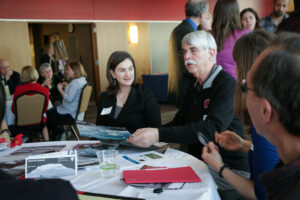
Group of people sitting at tables.

Gene Clark at an event in 2019. Photo: Bonnie Willison

Fortunately, his advisor was able to explain how a chemical engineering degree uses science-based processes and test results to solve real-world problems, and requires plenty of those chemistry classes Clark enjoyed. He realized, “No one had ever told me about what a career in the engineering field was or could do.”

Newly informed and encouraged, Clark decided to pursue chemical engineering. The result was a 35-year-long award-winning career that contributed to solving many engineering issues, benefitting diverse groups such as homeowners, kayakers, the Great Lakes shipping industry and marina operators. For some career highlights, see “A Career Solving Wicked, Sticky and Humongous Coastal Engineering Problems.”

Learning the trade

Clark began at the University of Wisconsin-Madison’s chemical engineering program and stayed for two and a half years. In his junior year, he discovered a love for the oceans and scuba diving on a vacation with a fellow mechanical engineer. A Wisconsin native, Clark had never been diving before, and the experience left him awestruck.

Shortly after his return, Clark was studying in a student lounge and noticed a poster on the wall promoting ocean engineering at Texas A & M. He kept thinking about it, and after his next study session, took the poster with him.

Despite being only vaguely familiar with Texas A & M, Clark transferred. He said, “I assumed it was in Texas, I knew they had a good football team, and I hoped it was near the Gulf of Mexico—two out of three wasn’t bad.” The course of study was similar to a civil engineering program but was a bachelor’s degree in ocean engineering — particularly engineering principles related to oil rig structures — but he especially enjoyed a class about beaches. He was having fun and landing on the dean’s list, so upon graduation, he decided to continue with a master’s degree at the University of Florida.

He enjoyed the same level of academic success and fun at that program. “I made sure I stretched an 18-month master’s degree into a two-year master’s degree, so I could go scuba diving and go on the beaches.

During that time, Clark also made a valuable connection with a group from the U.S. Army Corps of Engineers office in Vicksburg, Mississippi, who were taking classes for one semester. He was offered a job there upon graduation and stayed for three years. By then, he had a young family and wanted to move back to Wisconsin. The only catch: He didn’t have any job leads in the state, or even any ideas about where to start.

“I didn’t know who was doing coastal engineering in the Great Lakes. I had no clue,” he said.

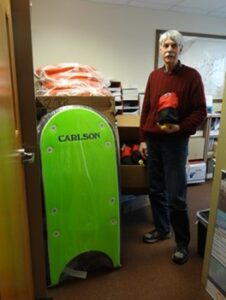
Man standing near green board

Gene Clark found working in the Great Lakes region rewarding. Here he is posing with water safety equipment. Photo: Marie Zhuikov

Clark made a visit to the coastal engineering professor at UW-Madison’s Civil and Environmental Engineering Department. He was impressed with Clark’s experience and degrees and offered him a year’s worth of funding on one of his current projects. (The project was funded by Sea Grant, but Clark wouldn’t realize that until later.) From there, he earned a second master’s degree and was offered a job at Warzyn Engineering. Warzyn transferred him to Minnesota to a division that did more dam work and less coastal work, so Clark went back to the job search. He landed a position as the Minnesota state lakeshore engineer located in Duluth, Minnesota, and stayed for 10 years.

He said, “That’s where I really learned my education and outreach because I was getting grants from the coastal program or the Great Lakes Commission to do demonstration projects on Lake Superior or work with individual property owners, but yet still working with a state agency.”

Working with Wisconsin Sea Grant

After 10 years in Minnesota, Clark was settled and enjoying his work. He was always skilled in working with teams and had formed close relationships with many colleagues, including Phil Keillor, who was the coastal engineer for Wisconsin Sea Grant. One day, he received a call from Keillor announcing that he was retiring and suggesting that Clark might want to apply for the position. Clark wasn’t sure he wanted to leave Minnesota to take Keillor’s position in Madison, but in a happy coincidence, another Sea Grant specialist announced his retirement at the same time. When Harvey Hoven retired from his position as the coastal business specialist in Superior, Wisconsin, Clark had the ability to take the new position without moving.

He said, “It just fell in my lap. …and it was the best move I ever made.”

Clark went on to spend 15 years as Sea Grant’s coastal engineering specialist. It was an ideal position for someone who loves both science and working with people.

He said, “The way that Wisconsin Sea Grant is set up and operates is just so ideal for providing information and assistance to communities and property owners and other states’ programs. We could deliver a product that was honest, it was non-biased and it was science-based information.”

Whether he was working with partners from the UW-Madison Civil and Environmental Engineering Department to develop a system to protect kayakers from unexpected high waves, harbor operators to identify causes and solutions for freshwater steel corrosion, port authorities to find beneficial uses for dredged sediment or homeowners facing eroding shorelines, Clark always enjoyed collaborating with others.

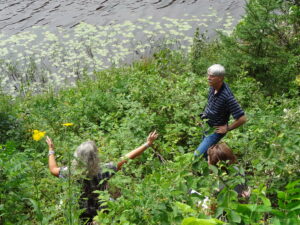
Man and woman standing near water and in tall grass.

Interacting, hands-on, with stakeholders in the field, Gene Clark inspected a coastal area following a 2011 flood. Photo: Marie Zhuikov

“And it didn’t take long, whenever I would meet with people or groups of people, for them to realize I’m not selling a product, I’m trying to help them. And I point out pros and cons, and then let them make the difference,” he said.

“It was all fulfilling. It wasn’t work. It was a blessing to be part of that,” he said.

Clark retired in 2019.

The future

The Covid pandemic limited Clark’s ability to meet with people, but he has been able to continue his work on two programs. One is based on a small grant from the U.S. Army Corps of Engineers to review two drafts of their National Shoreline Management Study, providing technical and practical report support. The second is a small grant from the Natural Resources Foundation of Wisconsin, providing technical assistance to the rehab project team. With partners at Sea Grant, Wisconsin Department of Natural Resources, Wisconsin Coastal Management Program and the UW-Madison Civil and Environmental Engineering Department, Clark has been working to improve beach quality on degraded beaches without disturbing natural coastal processes. The team started with the Kenosha Dunes and continued with other degraded beaches in southeast Wisconsin.

This project illustrates what Clark calls “a couple of very positive paradigm shifts,” which are the movement toward nature-based shoreline designs and the beneficial use of dredged material. When he started his career, shoreline protection consisted primarily of concrete, large rocks and sheetpile – now nearly all projects are focused on greener, more natural designs that provide habitat and allow for natural coastal processes. Reusing clean dredged material has also become more and more accepted, saving landfill space and providing valuable fill material.

Clark also serves as a technical advisor to Wisconsin Sea Grant’s current coastal engineer, Adam Bechle, who has been hard at work continuing all of the projects Clark started, plus beginning his own. Clark said, “I can’t think of a better person to have in this position than Adam. He has the perfect mix of an excellent coastal engineering education and the ability to convey information to all levels of audiences. Wisconsin Sea Grant’s future is bright with respect to coastal engineering.”


The post Hard work, joy and more than a bit of luck add up to an accomplished coastal engineering career first appeared on Wisconsin Sea Grant.

Original Article

News Releases | Wisconsin Sea Grant

News Releases | Wisconsin Sea Grant

https://www.seagrant.wisc.edu/news/hard-work-joy-and-more-than-a-bit-of-luck-add-up-to-an-accomplished-coastal-engineering-career/?utm_source=rss&utm_medium=rss&utm_campaign=hard-work-joy-and-more-than-a-bit-of-luck-add-up-to-an-accomplished-coastal-engineering-career

Elizabeth White

Soo Locks project no longer fully funded

After a big announcement in January celebrating $479 million directed to fully fund the construction of a new lock, the Army Corps of Engineers has had to walk it back, according to a report by The Detroit News.

The billion-dollar project, authorized by Congress at $922 million in 2018, is now estimated to be “somewhere between two times and three times” the cost, Sen.

Read Now at Great Lakes Now.

Original Article

Great Lakes Now

Great Lakes Now

https://www.greatlakesnow.org/2022/05/soo-locks-project-no-longer-fully-funded/

Natasha Blakely

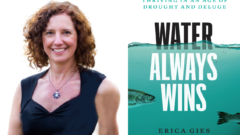
Water Always Wins: “Quietly radical” book makes case for Slow Water

While growing up in California, Erica Gies became aware of the state’s water scarcity, which she told Great Lakes Now has led to a “low-key obsession about water for just about everyone in the state.”

California’s droughts have been a regular occurrence that put a spotlight on the importance of water for Gies, fostering a writing career on the topic that has spanned 15 years.

Read Now at Great Lakes Now.

Original Article

Great Lakes Now

Great Lakes Now

https://www.greatlakesnow.org/2022/05/water-always-wins-book/

Gary Wilson

...PATCHY DENSE FOG EXPECTED THIS MORNING... Areas of fog will continue across eastern Wisconsin until mid- morning. The fog may reduce the visibility to less than a quarter mile at times, resulting in locally hazardous driving conditions. Motorists should be alert for fog and rapidly fluctuations in the visibility. When driving in fog, be sure to slow down, keep a safe

Original Article

Current Watches, Warnings and Advisories for Brown (WIC009) Wisconsin Issued by the National Weather Service

Current Watches, Warnings and Advisories for Brown (WIC009) Wisconsin Issued by the National Weather Service

https://alerts.weather.gov/cap/wwacapget.php?x=WI1263F5465B5C.SpecialWeatherStatement.1263F546F350WI.GRBSPSGRB.54e5ef070b45e49081402cfe9ce09122

w-nws.webmaster@noaa.gov

While forests are known to enhance the water quality of nearby watersheds, oftentimes people don’t recognize forests' role in providing clean drinking water, according to a new study from Michigan State University. The research was conducted at three watersheds in Michigan: the heavily urbanized Detroit River Watershed, the less populated and heavily forested Au Sable River Watershed and the more populated agricultural, forested and urban Lower Grand River Watershed.

The post Study finds need for public to see connection between forests and clean drinking water first appeared on Great Lakes Echo.

Original Article

Great Lakes Echo

Great Lakes Echo

http://greatlakesecho.org/2022/05/26/study-finds-need-for-public-to-see-connection-between-forests-and-clean-drinking-water/

Guest Contributor

The SS Meteor (taken in 2012). Image credit: Marie Zhuikov, Wisconsin Sea Grant

A momentous event happened last week in Superior, Wisconsin. After 10 years of working in Wisconsin Sea Grant’s Lake Superior Field Office next to the SS Meteor – the last remaining whaleback ship in the world – I finally took a tour of it.

I’d written about the ship before in a story about maritime history geocaching – the ship is one of the stops in a Wisconsin Sea Grant-funded outreach project designed to highlight the history of the state’s shipping industry. And, I’d walked around the outside of it plenty on my daily roams around Barker’s Island, but I’d never been inside before. A tour was one thing I mentally wrote down on my Barker’s Island Bucket List. I meant to get around to it, but never did.

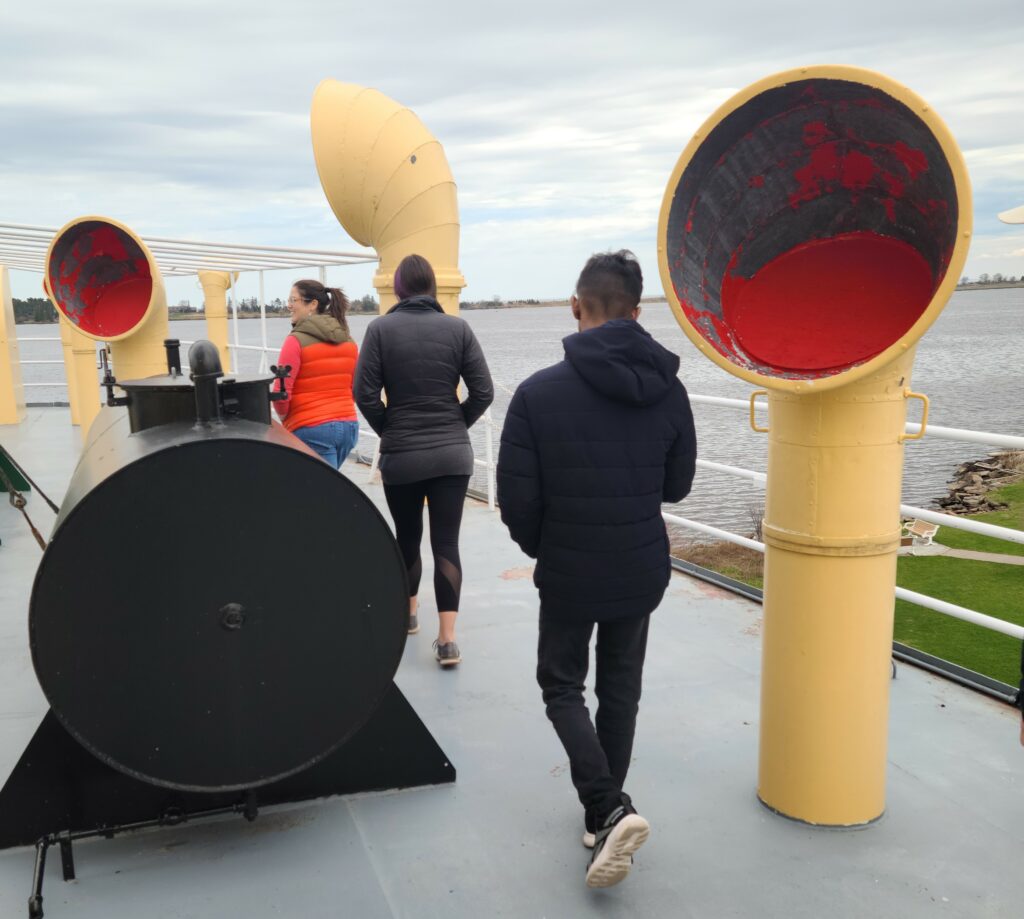
Tour participants walk on top of the ship among the vents. Image credit: Marie Zhuikov, Wisconsin Sea Grant

The free visit was arranged by my office partners, the National Lake Superior Estuarine Research Reserve, to train volunteers who work at their interpretive center during the summer. They had room, so invited their officemates (like me), along.

We met inside the ship in the gift shop for a short orientation, then went back outside and up a ramp where we were able to wander among the tall vents that brought air into the ship while keeping sea spray out. Along the way, our tour guide explained that the ship was built locally by Captain Alexander McDougall. Whalebacks were a new innovation in ship design back in the late 1800s, known for their cigar-shaped steel hulls that rode low in the water when loaded with cargo. Waves just washed over them, and the water was easily shed, unlike with typical ships. The Meteor carried a variety of cargoes over the years, including iron ore, grain, gravel, cars and oil.

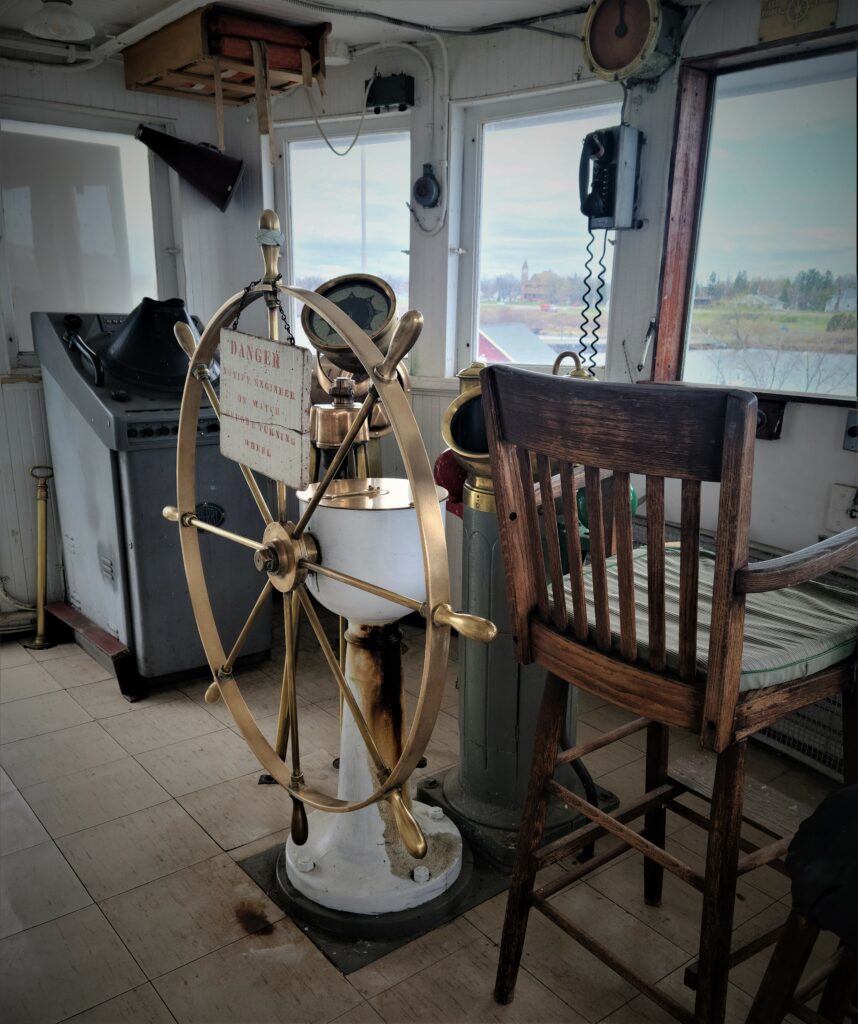
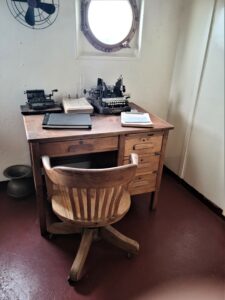
After climbing a stairway, we went inside, taking a peek into the pilot house and then descending a short stairway to the living quarters. The officers’ quarters were closer to the bow of the ship, while the lowly seamen slept near the rear of the ship, above the noisy engine. The captain had his own spacious office and private bathroom.

The pilothouse. Image credit: Marie Zhuikov, Wisconsin Sea Grant

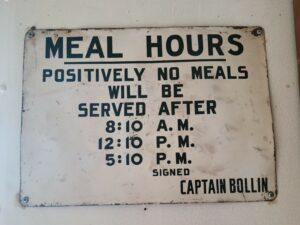
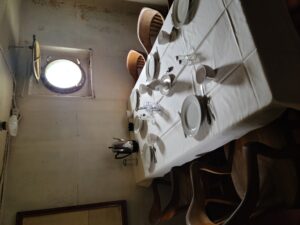
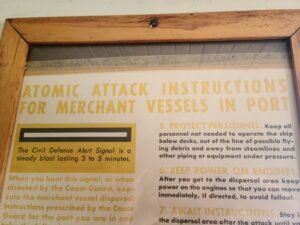
The kitchen and dining rooms were on the deck below the bedrooms. The crew and officers had separate dining rooms. Timeliness of dining must have been an issue, since there were signs in both rooms proclaiming strict serving hours. Another historic placard described steps to take in event of an atomic bomb attack.

Below the dining deck were the engine room and storage areas. The ship’s last load must have been oil, since the smell of petroleum was strong as we walked through, and we could see pools of oil seeping up from sand used to cover it.

The Meteor was built in 1896 and ended her shipping career in 1969 when she ran aground on a shoal off Marquette, Michigan. Because of severe damage to the hull, the shipping company chose not to repair her. Recognizing the ship’s historic importance, the Meteor was purchased, repaired, and began use as a museum ship in 1971.

Our tour ended with a stroll through historical displays that provided more information about McDougall and the ship. The excursion was better than I’d imagined, sitting so close to the attraction for all these years.

If you’re ever in Superior, consider taking a tour of this fascinating piece of maritime history.

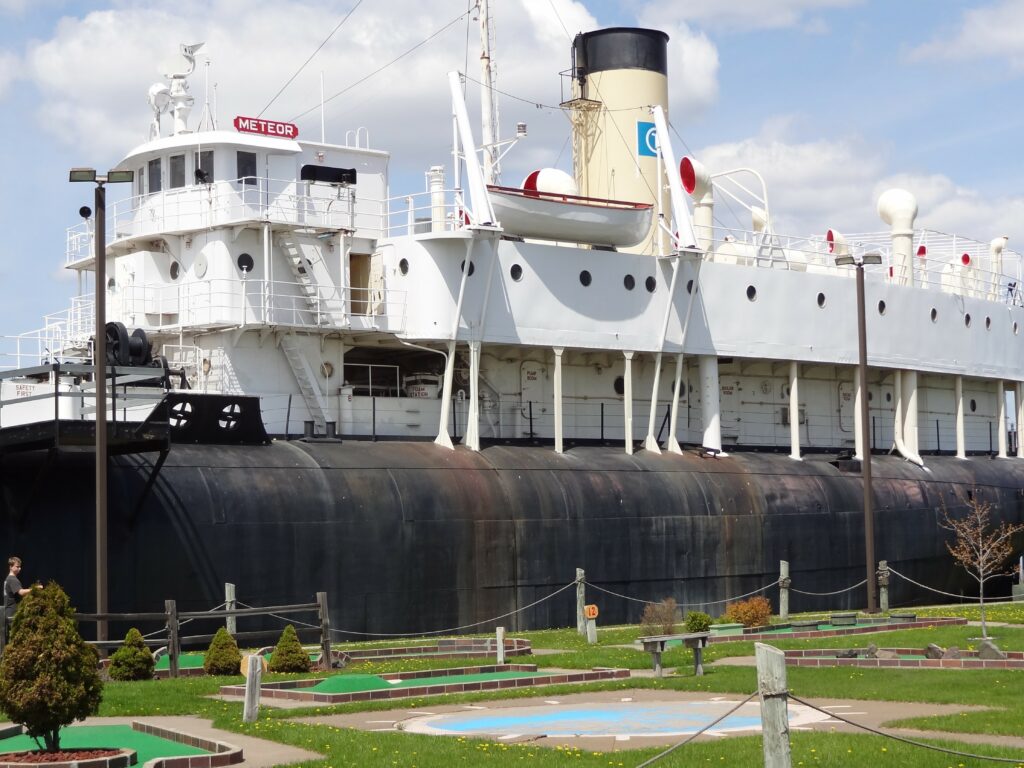
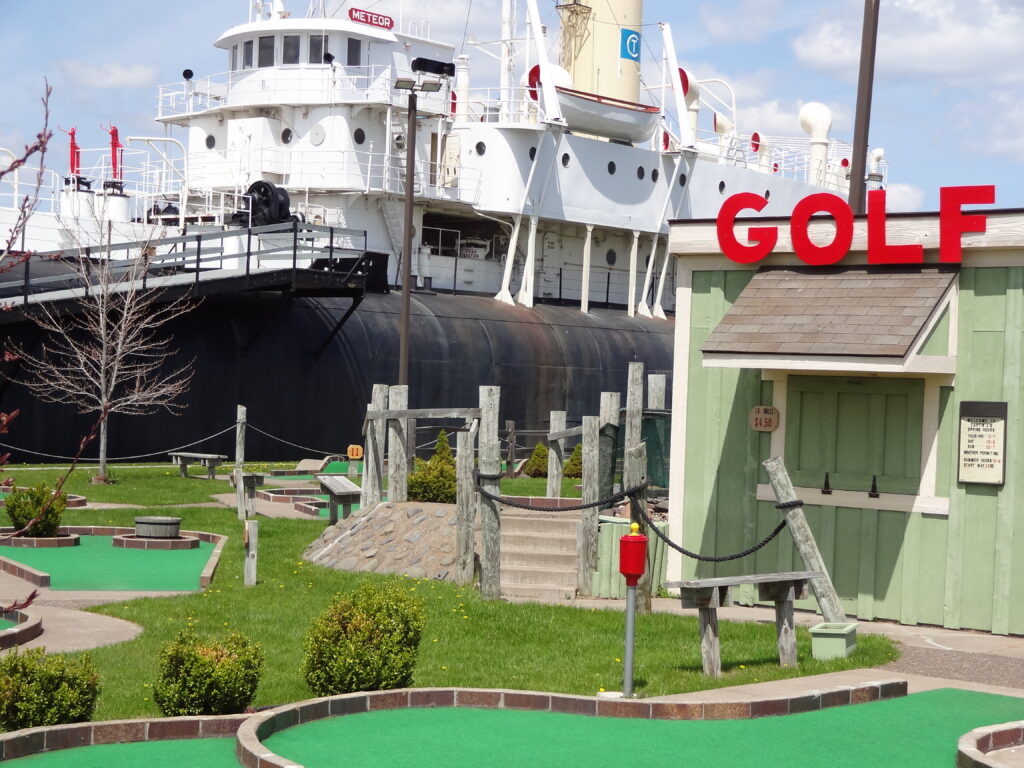
Now all that’s left for me to do on my Barker’s Island Bucket List is to take advantage of the mini golf course that’s between my office and the ship!

The SS Meteor and Mini Golf Course on Barker’s Island in Superior. Image credit: Marie Zhuikov, Wisconsin Sea Grant

The post A long-awaited tour of the SS Meteor first appeared on Wisconsin Sea Grant.

Original Article

Blog | Wisconsin Sea Grant

Blog | Wisconsin Sea Grant

https://www.seagrant.wisc.edu/blog/a-long-awaited-tour-of-the-ss-meteor/?utm_source=rss&utm_medium=rss&utm_campaign=a-long-awaited-tour-of-the-ss-meteor

Marie Zhuikov

Despite the unpredictability of the global market, officials expect the St. Lawrence Seaway and Great Lakes to see stable growth during the 2022 shipping season, just like it did during a global pandemic. Read the full story by The Plain Dealer.

Original Article

Great Lakes Commission

Great Lakes Commission

https://www.glc.org/dailynews/20220525-shipping-stable

Theresa Gruninger