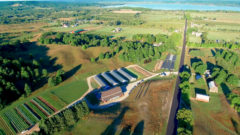
Saved from recent high-water levels that threatened its very foundation, Fishtown in Leland, one of Northern Michigan’s most iconic tourist attractions is working to help with a save of its own: preserving the state’s fading commercial fishing heritage. Read the full story by Traverse Magazine. 

Original Article

Great Lakes Commission

Great Lakes Commission

https://www.glc.org/dailynews/20221019-fishtown-mifadingfishingheritage

Hannah Reynolds

A study soon to be released reveals that due to the COVID-19 pandemic forcing limited treatment control on sea lamprey, there was an increase in the invasive species numbers throughout the Great Lakes. Read the full story by the Manitoulin Expositor.

Original Article

Great Lakes Commission

Great Lakes Commission

https://www.glc.org/dailynews/20221019-pandemic-negativeimpacts-invasivespeciescontrol-greatlakes

Hannah Reynolds

The U.S. Supreme Court may decide next week whether to hear an appeal filed by three lake-adjacent property owners in the town of Porter who have been unsuccessful in their attempts to claim ownership of a private beach on Lake Michigan Read the full story by Northwest Indiana Times.

Original Article

Great Lakes Commission

Great Lakes Commission

https://www.glc.org/dailynews/20221019-ussupremecourt-lakemi-beachowners

Hannah Reynolds

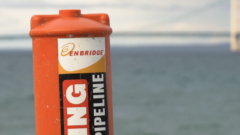
Enbridge Energy, the owner and operator of the Line 3 pipeline project in northern Minnesota, will pay more than $11 million after investigations identified water quality violations and three aquifer breaches related to the pipeline’s construction. Read the full story by WIZM – La Crosse, WI.

Original Article

Great Lakes Commission

Great Lakes Commission

https://www.glc.org/dailynews/20221019-minnesota-pipelineviolations

Hannah Reynolds

Great Lakes, Chicago River and Asian carp in the spotlight in Elizabeth Kolbert’s “Under a White Sky”

For Elizabeth Kolbert, the path to writing a book on our penchant to control nature started with a guided tour on the infamously reversed Chicago River.

Kolbert wanted to get a close look at the Asian carp issue and talk to the people on the front lines of efforts to repel the carp advance to the Great Lakes.

Read Now at Great Lakes Now.

Original Article

Great Lakes Now

Great Lakes Now

https://www.greatlakesnow.org/2022/10/great-lakes-chicago-river-asian-carp-elizabeth-kolbert/

Gary Wilson

Lake Superior State University is surveying river habitats to learn how to rescue native mussels threatened by hydropower dams. The project is funded by WE Energies which put money into a mitigation fund as part of a settlement agreement.

The post University researchers rescue mussels from dams first appeared on Great Lakes Echo.

Original Article

Great Lakes Echo

Great Lakes Echo

http://greatlakesecho.org/2022/10/19/university-researchers-rescue-mussels-from-dams/

Guest Contributor

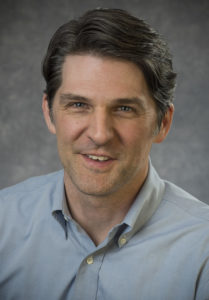
Joel Brammeier headshot.
Joel Brammeier, ​President & CEO

Molly Flanagan joined the Alliance for the Great Lakes staff in April 2015 as Vice President for Policy after seven years as senior program officer at the Joyce Foundation. Molly is responsible for leading all aspects of the Alliance’s strategic policy, advocacy, and reform efforts to protect and restore the Great Lakes.

As the Alliance’s Cleveland Local Partnerships Manager, Jennifer Lumpkin leads the local partnerships work in Cleveland, focusing on cultivating relationships with decision makers and local leaders to advance water affordability and lead service line replacement campaigns.


Resources

The Great Lakes Should Not Leave Anyone Behind – Alliance for the Great Lakes

4 Ways Climate Change Is Challenging the Great Lakes – Alliance for the Great Lake

The Great Lakes Compact and Climate Change – Alliance for the Great Lakes

Lakes Chat Podcast

Subscribe to the Lakes Chat Podcast

Every Tuesday, the Alliance for the Great Lakes will chat with special guests about Great Lakes issues and dig into what it all means for you and your community. Subscribe to our Podcast on Apple Podcasts, Spotify, Amazon Music, and Deezer (more platforms coming soon).

Hear More Episodes

The post Great Lakes Forum and Clean Water Act Anniversary appeared first on Alliance for the Great Lakes.

Original Article

News - Alliance for the Great Lakes

News - Alliance for the Great Lakes

https://greatlakes.org/2022/10/great-lakes-forum-and-clean-water-act-anniversary/

Michelle Farley

...WIND ADVISORY REMAINS IN EFFECT UNTIL 7 PM CDT THIS EVENING... * WHAT...Northwest winds 20 to 30 mph with gusts to 35 to 45 mph. * WHERE...Manitowoc, Brown, Florence, Kewaunee, Northern Marinette County, Southern Marinette County, and Southern Oconto County Counties. * WHEN...Until 7 PM CDT this evening.

Original Article

Current Watches, Warnings and Advisories for Brown (WIC009) Wisconsin Issued by the National Weather Service

Current Watches, Warnings and Advisories for Brown (WIC009) Wisconsin Issued by the National Weather Service

https://alerts.weather.gov/cap/wwacapget.php?x=WI1264129B46F4.WindAdvisory.126412A78CC0WI.GRBNPWGRB.3f8043c822935e96e64d555605960388

w-nws.webmaster@noaa.gov

Chicago, IL (October 18, 2022) – Today marks the 50th anniversary of the Clean Water Act. Alliance for the Great Lakes President & CEO Joel Brammeier issued the following statement about this historic legislation:

“The Clean Water Act has been essential in helping the Great Lakes region recover and thrive since it was passed following the catastrophic burning of the Cuyahoga River 53 years ago. This event and other similar crises dramatically highlighted what happens when we don’t protect waterways from industrial and sewage pollution. Today, many parts of the Great Lakes are far cleaner than they were 50 years ago.

“While we must continue to fight for compliance with this historic environmental legislation, we also must build on the Clean Water Act’s precedent and, thanks to the Bipartisan Infrastructure Law, focus the next 50 years on issues the Clean Water Act didn’t address: namely, emerging chemicals and other toxins that pollute our water, toxic algae blooms, the growing stress climate change is placing on our lakes, and harmful lead pipes that make our neighbors sick. Americans everywhere, particularly in communities like Toledo, Ohio; and Flint and Benton Harbor, Michigan know that access to clean water can’t be taken for granted.

“The Alliance for the Great Lakes looks forward to continuing to work with our state partners throughout the region, the U.S. EPA, and members of Congress to make sure the Lakes are protected and can continue to be enjoyed for generations to come.”

###

Media contact: Please connect with our media team at TeamGreatLakes@mrss.com.

The post Statement: 50th Anniversary of the Clean Water Act appeared first on Alliance for the Great Lakes.

Original Article

News - Alliance for the Great Lakes

News - Alliance for the Great Lakes

https://greatlakes.org/2022/10/statement-50th-anniversary-of-the-clean-water-act/

Judy Freed

...WIND ADVISORY REMAINS IN EFFECT UNTIL 7 PM CDT THIS EVENING... * WHAT...Northwest winds 20 to 30 mph with gusts up to 50 mph. * WHERE...Manitowoc, Brown, Florence, Kewaunee, Northern Marinette County, Southern Marinette County, and Southern Oconto County Counties. * WHEN...Until 7 PM CDT this evening.

Original Article

Current Watches, Warnings and Advisories for Brown (WIC009) Wisconsin Issued by the National Weather Service

Current Watches, Warnings and Advisories for Brown (WIC009) Wisconsin Issued by the National Weather Service

https://alerts.weather.gov/cap/wwacapget.php?x=WI1264129AA1B8.WindAdvisory.126412A78CC0WI.GRBNPWGRB.3f8043c822935e96e64d555605960388

w-nws.webmaster@noaa.gov

PFAS News Roundup: Petition says EPA loophole lets “forever chemicals” evade review

PFAS, short for per- and polyfluoroalkyl substances, are a group of widespread man-made chemicals that don’t break down in the environment or the human body and have been flagged as a major contaminant in sources of water across the country.

Keep up with PFAS-related developments in the Great Lakes area.

Read Now at Great Lakes Now.

Original Article

Great Lakes Now

Great Lakes Now

https://www.greatlakesnow.org/2022/10/pfas-news-roundup-petition-says-epa-loophole-lets-forever-chemicals-evade-review/

Kathy Johnson

Joel Brammeier headshot.
Joel Brammeier, ​President & CEO

Nothing beats a road trip after a long hiatus from travel. Covering ground by car gives me an opportunity to reconnect with places around the Great Lakes that I have not been to in years. At the end of September, I drove from Chicago to Niagara Falls, Ontario, for the triennial Great Lakes Public Forum – more on that in a moment.  

In three days, I saw and sometimes touched two Great Lakes (Michigan and Ontario), one really excellent lake (St. Clair), three mighty rivers (St. Clair, Detroit, and Niagara), and of course, the majestic Niagara Falls. 500 miles from end to end, and every drop of the water is shared. I missed Lake Erie only because I ran out of time for another detour.  

Seeing all this connected water in just a few days reminded me how urgent it is for us all to expand the vision of what it means to restore our Great Lakes. While we are making great strides in cleaning up the sins of the past, the lakes are changing before our eyes. Many communities still won’t enjoy the benefits of living so close to such immense fresh water even if we achieve current restoration goals. 

The trip would be worthwhile even with no destination, but I was bound to and from the Great Lakes Public Forum. The Forum happens every three years as a follow-up to the triennial “State of the Great Lakes” report issued by the United States and Canada. The report and the Forum are requirements under the Great Lakes Water Quality Agreement between the two countries. This year the Agreement celebrated its 50th anniversary. Many of the attendees are government officials from the U.S. Environmental Protection Agency, Environment Canada, and the state and provincial levels. The idea is that the governments review and discuss the findings with advocates, scientists, and, more generally, the people of the Great Lakes. I want to share a bit of what I saw and heard because it tells part of the story of what’s needed for a restored and protected Great Lakes in the future. 

Credit where it’s due. We are making admirable progress toward cleaning up the Great Lakes “Areas of Concern,” which are highly contaminated waters designated in 1987. In the U.S, much of the pollution in these “AOCs” lingered until the creation of the Great Lakes Restoration Initiative. Congress appropriated an additional $1 billion in 2021 to fast-track cleanup of most of these sites by 2030. Advocates in Canada continue to seek a larger federal investment in Great Lakes restoration. Beach health continues to improve with reductions in chronic sewage overflows and increases in cleaning up stormwater with natural solutions and better infrastructure design, operations, and management. 

Not all the news is good. Invasive species already in the Great Lakes continue to devastate the ecology and economy of the region, requiring ongoing vigilance and spending. Nutrient pollution hotspots, largely fed by agriculture, plague large watersheds like Green Bay, Saginaw Bay, and Lake Erie. Algal blooms are showing up in cold Lake Superior. Our waters and lands are showing the impacts of a changing climate. While some fish consumption advisories are improving, emerging pollutants like PFAS and plastics are less “emerging” and more “present.”  

Disconnects abound. Sometimes government agencies are having one conversation while advocates are demanding another. Take drinking water.  The report gives Great Lakes drinking water a “good” or “green” score because the lakes can serve as a reliable source of drinking water when treated. But for someone who gets their water from Lake Erie, where the intakes have alert systems to detect the presence of toxic algae, that doesn’t feel right. And hundreds of communities that rely on lake water but distribute it through lead pipes don’t see their drinking water as “good.”  

Algal blooms and nutrient pollution is another searing hot example. While most of the presentations focused on understanding blooms and the investment being made in voluntary cleanups, questions from the audience were much more pointed. Are you going to regulate farms and animal feedlots to reduce pollution? Why are people bearing the cost and health burden of this pollution when we know what the problem is and what would solve it? Are people in those communities going to have a say in deciding how cleanup happens? And over and over – why is this taking so long? 

Many people, myself included, want answers from our elected officials who have the power to change policy and get more forceful in cleaning up farms and ensuring safe drinking water. It was clear those answers were not in that room. There were not many U.S. advocates in the room either, and I think that’s partially because people know the Forum is not where critical water decisions are made. 

Reflecting the people of the Great Lakes. Indigenous voices and advocates had a strong presence at the event. Ontario Regional Chief Glen Hare gave opening comments on day two, describing the personal and tragic impacts on families that lack of access to clean water is having on Ontario First Nations communities. It echoed stories I have listened to from residents in American Great Lakes cities. After Chief Hare’s remarks, he sat with U.S. EPA Region 5 Administrator Debra Shore and Canada’s Minister of Environment and Climate Change Steven Guilbeault for an armchair conversation. Having seats at the table for more voices at high government decision-making levels is vital for sovereign Indigenous nations and all people and communities directly impacted by pollution. The U.S. has a long way to go to demonstrate that our governments are listening and taking the advice and direction of communities on the front lines of Great Lakes challenges. 

What’s next? Water is water, and we need it to be safe and plentiful in all its forms for all forms of life. But it’s clear that current policies and practices rooted in decades of history are not keeping up with our changing climate or addressing the reality that many lower-income communities and communities of color still do not enjoy the benefits of a safe and clean Great Lakes. We need a “whole system” approach to restoring and protecting the Great Lakes. One that is rooted in the science of the lakes as they are today and will be in the future. An approach that shows how decisions are made with the people impacted by those decisions fully at the table. One that makes sure the lakes and their waters are there for all life, when and how we need them.  

The Great Lakes should not leave anyone behind. That’s why the Alliance and I are building these ideas and principles into the critical programs that make a change on the ground. It’s a long road, and I’m glad you are on it with me.  

Act Now to Keep Plastic Out of the Great Lakes

Plastic pollution in the Great Lakes is going to get worse unless we do something about it. Add your name to the Plastic Free Great Lakes Pledge now.

Take the Pledge

The post The Great Lakes Should Not Leave Anyone Behind appeared first on Alliance for the Great Lakes.

Original Article

News - Alliance for the Great Lakes

News - Alliance for the Great Lakes

https://greatlakes.org/2022/10/the-great-lakes-should-not-leave-anyone-behind/

Michelle Farley

Enbridge will pay $11M fine for Minnesota water violations

By Andy BalaskovitzEnergy News Network

This story was first published on the Energy News Network and was republished here with permission.

PIPELINES: Enbridge will pay more than $11 million to settle water quality violations and three aquifer breaches related to Line 3 construction in northern Minnesota; Attorney General Keith Ellison also announced a misdemeanor criminal charge for the company’s alleged taking of water without a permit. 

Read Now at Great Lakes Now.

Original Article

Great Lakes Now

Great Lakes Now

https://www.greatlakesnow.org/2022/10/enbridge-will-pay-11m-fine-for-minnesota-water-violations/

Energy News Network

...WIND ADVISORY IN EFFECT UNTIL 7 PM CDT THIS EVENING... * WHAT...Northwest winds 15 to 30 mph with gusts up to 50 mph. * WHERE...Manitowoc, Brown, Florence, Kewaunee, Northern Marinette County, Southern Marinette County, and Southern Oconto County Counties. * WHEN...Until 7 PM CDT this evening.

Original Article

Current Watches, Warnings and Advisories for Brown (WIC009) Wisconsin Issued by the National Weather Service

Current Watches, Warnings and Advisories for Brown (WIC009) Wisconsin Issued by the National Weather Service

https://alerts.weather.gov/cap/wwacapget.php?x=WI126412998F1C.WindAdvisory.126412A78CC0WI.GRBNPWGRB.3f8043c822935e96e64d555605960388

w-nws.webmaster@noaa.gov

To help reach net zero carbon emissions by 2050, Michigan officials have created a 100,000 acre project in the Pigeon River Country State Forest that will sell carbon credits to businesses interested in offsetting emissions.

The post Michigan carbon offsets: Success or scam? first appeared on Great Lakes Echo.

Original Article

Great Lakes Echo

Great Lakes Echo

http://greatlakesecho.org/2022/10/18/michigan-carbon-offsets-success-or-scam/

Guest Contributor

Clean Water Act at 50: environmental gains, challenges unmet

By John Flesher, Associated Press

Lifelong Cleveland resident Steve Gove recalls when the Cuyahoga River symbolized shame — fetid, lifeless, notorious for catching fire when sparks from overhead rail cars ignited the oil-slicked surface.

“It was pretty grungy,” said the 73-year-old, a canoeist in his youth who sometimes braved the filthy stretch through the steelmaking city.

Read Now at Great Lakes Now.

Original Article

Great Lakes Now

Great Lakes Now

https://www.greatlakesnow.org/2022/10/ap-clean-water-act-at-50/

The Associated Press

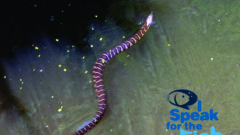
I Speak for the Fish: Water snakes are spooktacular

When it comes to Halloween, I’m a Hallmark participant.

I like costume parties and I’ve mooched enough candy to make a significant contributor to my dentist’s children’s college fund. But I do not visit haunted houses and fail to see the appeal of fear.

I have an adventurous spirit but I do not think I’m overly courageous.

Read Now at Great Lakes Now.

Original Article

Great Lakes Now

Great Lakes Now

https://www.greatlakesnow.org/2022/10/i-speak-for-the-fish-water-snakes-are-spooktacular/

Kathy Johnson

The nonprofit group Friends of the Apostle Islands, with a funding match from the National Park Service, plans to improve wheelchair access to the Apostle Islands National Lakeshore. Read the full story by Wisconsin Public Radio.

Original Article

Great Lakes Commission

Great Lakes Commission

https://www.glc.org/dailynews/20221017-apostle-islands

Jill Estrada

The Port of Cleveland, Ohio’s board of directors took a vital step forward this week in embarking on a $300 million, multi-decade and ‘transformational’ project that would dramatically redefine the eastern shoreline of Lake Erie. Read and hear the full story by WEWS-TV – Cleveland, OH.

Original Article

Great Lakes Commission

Great Lakes Commission

https://www.glc.org/dailynews/20221017-cleveland-cheers

Jill Estrada

Cruise ships docked in Detroit, Michigan more than 50 times during the 2022 season, a record and more than double the amount of dockings in Detroit in 2019, the Detroit/Wayne County Port Authority and a coalition of Midwest states, cruise lines and others said Friday. Read the full story by The Detroit Free Press.

Original Article

Great Lakes Commission

Great Lakes Commission

https://www.glc.org/dailynews/20221017-cruise-activity

Jill Estrada

Sofia Johansson headshot.

This post is by Sofia Johansson, who worked as the Alliance for the Great Lakes’ Public Policy and Governance Intern this summer. She is a third-year Environmental and Urban Studies major at the University of Chicago and is originally from Madison, Wisconsin. She is passionate about environmental justice, equity, and sustainability in planning and policy.


For more than 30 years, thousands of Adopt-A-Beach volunteers have helped clean up litter, most of it plastic, from beaches across the Great Lakes region. This year, the program reached a major milestone—half a million pounds of litter picked up since volunteers started collecting beach data nearly 20 years ago. But beach cleanups alone can’t solve the magnitude of the Great Lakes’ plastic problem. A more systemic solution is required.

Plastic has been found in Great Lakes fish dating back to the 1950s. That means, for nearly seven decades, there have been microplastics in our water—water we drink, swim in, fish from, and cherish. Most of that time, we didn’t know it was there. But now, the research is overwhelming. The amount of microplastics in the surface water of the Great Lakes is estimated at 1.2 million particles/km2. This is higher than plastic concentrations in the widely publicized Great Pacific Garbage Patch. Moreover, researchers estimate that over 22 million pounds of plastic enter the Great Lakes annually. That is an exorbitantly high amount of plastic, so why are we letting it continue?

The politics of plastic

The reasons often trace back to the political power of the plastic industry. They have focused on the individual responsibility of consumers rather than changes in industry practices. They also try to limit legislative action to measures promoting recycling, even though the US recycled less than 6% of its plastic waste in 2021, and recycling is considered an ineffective reducer of plastic pollution. But they do this to absolve industry of any responsibility and to make us think that individuals are responsible for plastic pollution as opposed to the plastic industry itself, which has promoted the use of plastics in almost every facet of our lives.

As such, the plastics lobby has repeatedly challenged legislation that creates meaningful systemic changes, such as single-use plastic bans, reductions in production, and extended producer responsibility.

Therefore, the Great Lakes states and the federal government have seriously lagged in plastic pollution policy. Five of the eight states have preemption laws, often called “bans on bans,” that prevent any level of local government from passing legislation to reduce plastic pollution. The plastics lobby has worked with the American Legislative Exchange Council (ALEC) to develop a model preemptive bill for states to pass. And Congress has passed little legislation to deal with the scope of the problem.

What’s at stake?

But what’s at stake? What happens if we continue letting corporate interests and financial gain pollute our water? The Great Lakes are home to thousands of species, provide drinking water for 10% of Americans (and 25% of Canadians), and support a multi-trillion-dollar economy. Beyond the numbers, the Great Lakes are fundamental to the life and health of the Midwest.

Human health is a serious concern regarding plastics in our lakes. Though research is just beginning, microplastics have been found in Great Lakes tap water, beer, fish, and dozens of other consumables across the globe. Data compiled from several studies indicate that humans may ingest up to 5 grams of plastic a week, equivalent to the mass of a credit card. Researchers suggest most of the plastic humans ingest may come from drinking water and have detected plastic in our blood, lungs, hair, saliva, and stool.

The smaller the plastic, the more dangerous. Once in the body, microplastics may translocate, cross cell membranes, permeate tissue, and linger in human organs, potentially causing chronic inflammation. They also leach dangerous chemicals and toxins, such as phthalates, polychlorinated biphenyls (PCBs), and bisphenol A (BPA). These and other chemicals have been found in the water and microplastics of the Great Lakes. They are carcinogens, reproductive toxicants, and endocrine-disrupting chemicals (EDCs). EDCs, which disrupt hormones and can cause metabolic changes, have been heavily linked to a long list of health issues, including diabetes, neurological diseases, many different cancers, and reproductive damage. In short, microplastics, which have been allowed to increase and accumulate in our water, could have devastating impacts on our health and the health of future generations.

Federal action is needed

Given that states are not dealing with this problem and local governments sometimes find their hands tied, it is imperative that the federal government take comprehensive action that puts the responsibility on the producer to truly reduce plastic pollution, protect Great Lakes ecosystems, and ensure our health. An essential first step at the national level is passing the Plastic Pellet Free Waters Act, introduced by Sen. Durbin of Illinois, which prohibits the discharge of plastic pellets and other pre-production plastic materials into our water from any point source. These pellets are commonly found on Great Lakes beaches. In addition to this first step, more is required to deal with the magnitude of the problem in a comprehensive fashion. Congress should also pass the Break Free from Plastic Pollution Act, which creates a national extended producer responsibility program, phases out single-use plastic products, and targets microplastics in the environment, along with many other comprehensive measures.

Plastic pollution is a growing threat to our environment and our health and will continue to be until Congress takes comprehensive action to address this problem. The time to act on this is now.

Tell Congress: Keep Plastic “Nurdles” Out of the Great Lakes

“Nurdles” are tiny plastic pellets used as a raw material in the manufacture of plastic products. Researchers have found them on beaches in all 5 Great Lakes.

Take Action

The post Why the Great Lakes Need Comprehensive Solutions to Plastic Pollution appeared first on Alliance for the Great Lakes.

Original Article

News - Alliance for the Great Lakes

News - Alliance for the Great Lakes

https://greatlakes.org/2022/10/why-the-great-lakes-need-comprehensive-solutions-to-plastic-pollution/

Judy Freed

Researchers at University of Toronto have discovered a new way to boost plant growth in rooftop gardens using granulated biochar.

The post A soil breakthrough plants hope in city rooftops first appeared on Great Lakes Echo.

Original Article

Great Lakes Echo

Great Lakes Echo

http://greatlakesecho.org/2022/10/17/a-soil-breakthrough-plants-hope-in-city-rooftops/

Guest Contributor

The Catch: Why lightning bug population is dimming

Broadcasting in our monthly PBS television program, The Catch is a Great Lakes Now series that brings you more news about the lakes you love. Go beyond the headlines with reporters from around the region who cover the lakes and drinking water issues. Find all the work HERE.

This month, The Catch features why lightning bugs are in trouble.

Read Now at Great Lakes Now.

Original Article

Great Lakes Now

Great Lakes Now

https://www.greatlakesnow.org/2022/10/the-catch-lightning-bug-population-dimming/

GLN Editor

Top research scientists from across the country are working to control the impacts of the invasive zebra and quagga mussels with biocontrol agents in labs, while others are experimenting with blunt instruments, deep down on the bottom of Lake Michigan. Read and listen to the full story by WIAA – Interlochen, MI.

Original Article

Great Lakes Commission

Great Lakes Commission

https://www.glc.org/dailynews/20221014-mussel-control

James Polidori

Two months after a break in the Great Lakes Water Authority pipeline that supplies Flint, Michigan’s drinking water, the city has completed the process of reintroducing GLWA water into its distribution system. On Thursday, Oct. 13, Flint’s water supply returned to a mix of 95% water from GLWA and 5% from Genesee County. Read the full story by MLive.

Original Article

Great Lakes Commission

Great Lakes Commission

https://www.glc.org/dailynews/20221014-flint-water

James Polidori

An oil spill at Oswego Harbor, New York leaked between 500 to 750 gallons of fuel oil into Lake Ontario from March 8 to March 11, 2022. Remediation and site restoration work concluded in August, while monitoring of groundwater quality, storm sewer discharges, and the shoreline will continue for at least another year on a quarterly basis. Read the full story by Oswego County News Now.

Original Article

Great Lakes Commission

Great Lakes Commission

https://www.glc.org/dailynews/20221014-oil-spill-report

James Polidori

A 20 year-long restoration effort on the Boardman-Ottaway River in Traverse City, Michigan is nearing completion, but a legal roadblock has delayed the effort which includes a “FishPass” component to identify methods of sorting fish moving through a new dam. Read the full story by the Cheboygan Daily Tribune.

Original Article

Great Lakes Commission

Great Lakes Commission

https://www.glc.org/dailynews/20221014-fish-sorting

James Polidori

As climate change threatens the water supplies of the American Southwest, scientists from multiple research centers in the Great Lakes anticipate rising interest in migration to the water-abundant Great Lakes region. Read the full story by WJBK – Detroit, MI.

Original Article

Great Lakes Commission

Great Lakes Commission

https://www.glc.org/dailynews/20221014-climate-migration

James Polidori

Toronto, Ontario residents living above a tunnel designed to reduce the discharge of untreated stormwater and combined sewer overflows into Lake Ontario have complained of the foul stench from accumulated sewage in the pumping station. Read the full story by CBC News.

Original Article

Great Lakes Commission

Great Lakes Commission

https://www.glc.org/dailynews/20221014-sewer-overflow-tunnel

James Polidori

With the help of the University of Toledo’s expert faculty, important advancements have been made in monitoring cyanotoxin levels in Lake Erie during the harmful algal bloom season, including testing a new real-time algae sensor inside a water treatment plant. Read the full story by The Toledo Blade.

Original Article

Great Lakes Commission

Great Lakes Commission

https://www.glc.org/dailynews/20221014-algal-bloom-sensors

James Polidori

At the Great Lakes Commission meeting on Wednesday, several local leaders gathered at one Bayfront hotel. Each year, stakeholders meet to discuss their progress, voice concerns and talk about solutions to challenges facing the Great Lakes. Read the full story by WJET-TV – Erie, PA.

Original Article

Great Lakes Commission

Great Lakes Commission

https://www.glc.org/dailynews/20221014-glc-meeting

James Polidori

The Michigan Maritime Museum reopened its campus in South Haven in August after a nearly year-long rebuild. A grand opening of the new $3.6 million Maritime Heritage Center took place on September 30, 2022. Read the full story by WWMT – Kalamazoo, MI.

Original Article

Great Lakes Commission

Great Lakes Commission

https://www.glc.org/dailynews/20221014-museum-opening

James Polidori

At the Alliance for the Great Lakes Board of Directors meeting on September 16 in Chicago, the Board welcomed two new directors for a three-year term.

David Hackett

David Hackett is Senior Counsel at Baker McKenzie, LLP in Chicago, Illinois. He advises senior management, legal departments, and boards of major corporations and nonprofits on compliance, risk, environmental, and sustainability matters. Following his tenure with the Environmental Enforcement Division of the US Department of Justice, David joined the Firm, where he has played a formative role in establishing the Firm’s compliance, environmental, climate, and ESG practices. At Baker McKenzie, David has served as the managing partner of North America, a member of the Global Executive Committee, and a Chicago office managing partner. He has also been the North America Chair of the Compliance Practice Group and the Banking, Finance, and Major Projects Practice Group.

He advises or sits on the Board of numerous nonprofits, including  Alliance for the Great Lakes, World Business Council for Sustainable Development, National Parks Conservation Association Midwest Advisory Board, Prince of Wales Charitable Foundation Accounting for Sustainability, Chicago Civic Consulting Alliance, Chicago Academy of Science/Peggy Notebaert Nature Museum, Chicago CRED, and the UN Global Compact US Board.

He is a graduate of Haverford College and the University of Pennsylvania Law School.

Alan D. Steinman, Ph.D.

Alan (Al) Steinman is the Allen and Helen Hunting Research Professor at Grand Valley State University’s Annis Water Resources Institute (AWRI). He was the Director of AWRI from 2001 until 2022. Previously, he was Director of the Lake Okeechobee Restoration Program at the South Florida Water Management District. He has published over 190 scientific articles, book chapters, and books; has been awarded over $60 million in grants for scientific and engineering projects and over $5 million in private fund-raising, and has testified before the U.S. Congress and the Michigan and Florida state legislatures.

Some of Dr. Steinman’s professional service activities include membership on the National Academy of Sciences Committee to Review Everglades Restoration and science advisory boards/committees for the Great Lakes Advisory Board of the U.S. EPA, the International Joint Commission, and the University of Michigan’s Water Center. His community service includes serving on the Boards of the Community Foundation for Muskegon County, The Nature Conservancy (MI chapter), Congregation B’Nai Israel, Goodwill International of West Michigan, West Michigan Symphony, and the Land Conservancy of West Michigan.

Dr. Steinman holds a Postdoctoral Research Fellowship from Oak Ridge National Laboratory, a Ph.D. in Botany/Aquatic Ecology from Oregon State University, an M.S. in Botany from the University of Rhode Island, and a B.S. in Botany from the University of Vermont (Phi Beta Kappa). Steinman’s research interests include aquatic ecosystem restoration, harmful algal blooms, phosphorus cycling, and water policy.

For a complete listing of Alliance for the Great Lakes directors and officers, visit our Board of Directors page.

The post Alliance for the Great Lakes Board of Directors Welcomes Two New Members appeared first on Alliance for the Great Lakes.

Original Article

News - Alliance for the Great Lakes

News - Alliance for the Great Lakes

https://greatlakes.org/2022/10/alliance-for-the-great-lakes-board-of-directors-welcomes-two-new-members-2/

Michelle Farley

Underconsumption of fruits and vegetables is a universal problem. However, a study from the University of Guelph in Ontario introduces a new technique called “nudging” to increase fruit and vegetable consumption in its students. 

The post Study nudges college students to eat more fruits, veggies first appeared on Great Lakes Echo.

Original Article

Great Lakes Echo

Great Lakes Echo

http://greatlakesecho.org/2022/10/14/study-nudges-college-students-to-eat-more-fruits-veggies/

Guest Contributor

Energy News Roundup: Indigenous communities in Canada, U.S. offer clean energy solutions

Keep up with energy-related developments in the Great Lakes area with Great Lakes Now’s biweekly headline roundup.

Click on the headline to read the full story:


Illinois

  • Illinois grapples with implementing 100% clean energy law — E & E News

With a 100% carbon-free electricity target by 2045, Illinois must now grapple with the complexities over how exactly to reach that goal.

Read Now at Great Lakes Now.

Original Article

Great Lakes Now

Great Lakes Now

https://www.greatlakesnow.org/2022/10/energy-news-roundup-indigenous-communities-clean-energy-solutions/

Kathy Johnson