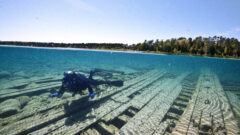
Archeologists, historians and divers are trying to digitally capture more than 1,000 shipwrecks at the bottom of the Great Lakes before they become unrecognizable after a combination of invasive mussels and climate change have accelerated their deterioration at an alarming rate. Read the full story by CBC News.

Original Article

Great Lakes Commission

Great Lakes Commission

https://www.glc.org/dailynews/20231004-ghosts
Laura Andrews

Thousands of water utilities across the Great Lakes region and nationwide will decide in the next three months whether to join two multibillion-dollar, class-action settlements against the largest producers of toxic PFAS chemicals that have tainted drinking water supplies. Read the full story by Great Lakes Now.

Original Article

Great Lakes Commission

Great Lakes Commission

https://www.glc.org/dailynews/20231004-pfas

Laura Andrews

A water levels forecast could help coastal communities deal with the highs and lows of the Great Lakes, not only for things like habitat and ecosystem restoration, but also for navigation, infrastructure and city planning. Read the full story by WUWM – Milwaukee, WI.

Original Article

Great Lakes Commission

Great Lakes Commission

https://www.glc.org/dailynews/20231004-waterlevels

Laura Andrews

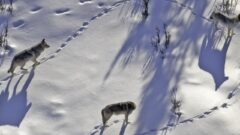
More and more these days, conservationists are struggling over whether and how to intervene in the face of rapid human-induced ecosystem changes. In Michigan, the wolves of Isle Royale in Lake Superior are one example. Read the full story by Great Lakes Now.

Original Article

Great Lakes Commission

Great Lakes Commission

https://www.glc.org/dailynews/20231004-isleroyale

Laura Andrews

We’ve all heard that no two snowflakes are alike. But few people know that most are similar enough they can be classified.

Michael Notaro with the University of Wisconsin-Madison is teaching Wisconsin school children the similarities in snowflakes to share the wonder of nature and information about the Great Lakes climate, but also to expand an international environmental database.

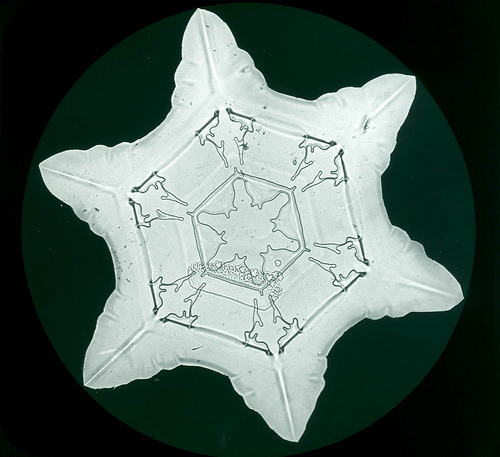
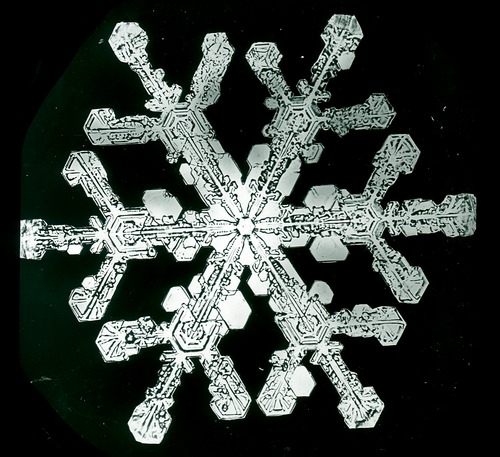
An “ordinary dendritic” snowflake crystal. This means it has six branches. Image credit: The Bentley Collection, UW- Madison.

The database is called GLOBE, which stands for Global Learning and Observations to Benefit the Environment. This environmental education youth citizen science program began in 1995 and is run by NASA (National Aeronautics and Space Administration). It is sponsored by the National Oceanic and Atmospheric Administration (NOAA), the National Science Foundation and the U.S. Department of State. According to Notaro, more than 40,000 schools in 127 countries participate by inputting data such as temperature, wind speed, soil moisture and bird migration from their communities into the online GLOBE database.

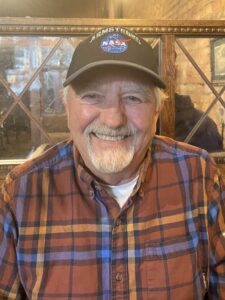
Notaro, director for the Nelson Institute Center for Climatic Research, said his Sea Grant-funded Snow-GLOBE Youth Citizen Science Collaborative project helps address a lack of climate science education in the classroom.

“There’s very little time allocated toward the topics of weather and climate, particularly climate change,” he said. “Also, a lot of educators have expressed discomfort in terms of their training and teaching related to climate. So, I’m trying to provide the tools for the teachers, the training for the teachers, and also the opportunities for the students to learn how to become citizen scientists – that they themselves, even as a young person, can support some of the missions of NASA, NOAA and other agencies.”

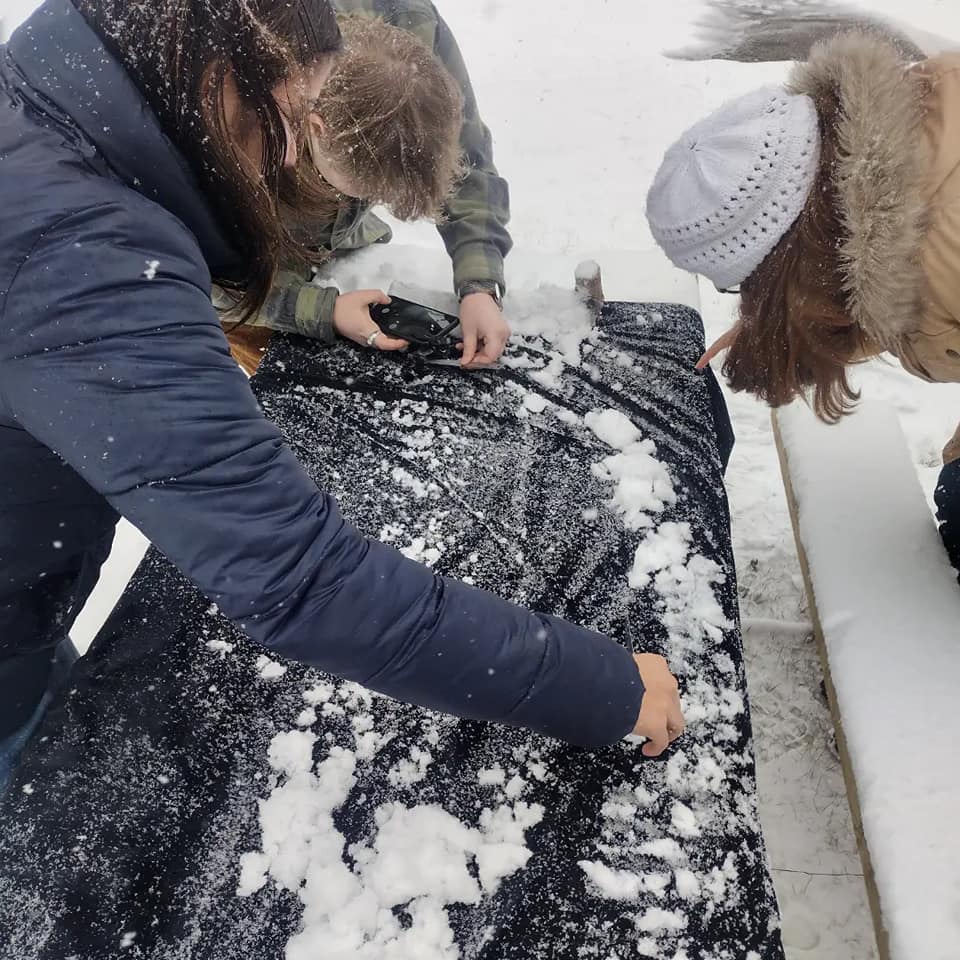
Darien Becker, environmental educator with Welty Environmental Center (right), instructs two interns from Beloit Memorial High School on how to identify snowflakes using the Snow-GLOBE protocol. Image credit: Aaron Wilson, Welty Environmental Center.

He’s currently working with eight schools and three environmental centers across Wisconsin in Beloit, Racine and Door County. The children measure snow depth, snowfall amounts and their liquid equivalents. This data has a home in GLOBE already. What doesn’t have a home is snowflake classification. Notaro would like to change that.

The children take photos of snowflakes with their cellphones and a special lens, which Notaro provides. “They start with a wooden board with black velvet. The flake falls on it. Then you use a clip-on macro lens to take a photo and a high-precision ruler to estimate the crystal’s diameter. I also provided information like images from the Bentley Library,” Notaro said.

The Bentley Collection is housed at UW-Madison’s Space Science and Engineering Center. It contains photomicrographs (photos taken through a microscope) by Wilson Bentley, a homeschooled Vermont farm boy who developed a passion for studying water in all its forms. Snowflakes were his specialty, and he sold collections to universities across the United States, including UW-Madison.

Based on the shape of the crystal, the students can classify what type of snowflake it is. Some of the options include columns, hexagons, two branches, four branches, and the typical Christmas-card version with six branches.

Notaro said the photography activity is a hit. “Kids are interested in their cell phones, as we know. Kids are interested in photography. This connects those interests to science.”

A plate snowflake with simple extensions. Image credit: The Bentley Collection, UW-Madison.

Such data will help track what’s going on with snow in Wisconsin. Notaro’s goal is to expand the project to more middle schools, high schools and environmental centers in Wisconsin and across the Great Lakes.

“Ideally, I hope to find a school where there are three or more teachers interested in participating,” he said. “That helps with the longevity of their involvement. And then I usually set up a professional development workshop near them. I’ll order GLOBE equipment, so I supply all the equipment that they need. Then I provide training and calibration instructions and work with the school.”

Interested educators can contact Notaro at mnotaro@wisc.edu.

“This upcoming winter we’ll be able to get some data collected. The goal is building up the schools and the resources toward data collection. I hate to say it, but hopefully, it snows a lot,” Notaro said.

The post Hoping for snow: Wisconsin snow data project captures snowflake images and students’ attention first appeared on Wisconsin Sea Grant.

Original Article

News Releases | Wisconsin Sea Grant

News Releases | Wisconsin Sea Grant

https://www.seagrant.wisc.edu/news/hoping-for-snow-wisconsin-snow-data-project-captures-snowflake-images-and-students-attention/

Marie Zhuikov

Climate change means that the Great Lakes region’s trademark red, orange and yellow fall leaves will be more intense for a shorter period in the next decade. 

The warming climate will also cause the leaves to change later in the season, scientists say. 

The post Changing climate changes colors first appeared on Great Lakes Echo.

Original Article

Great Lakes Echo

Great Lakes Echo

http://greatlakesecho.org/2023/10/04/changing-climate-changes-colors/

DeShawn Johnson

Not many of us have seen the birth — and death — of an entire ecosystem, right in our own backyard. But when Tom Mace was 9 or 10 years old, he and his best friend did.

Tom grew up less than 100 feet from the wetlands in Menasha. After a day of catching bait for fishing, he and his best friend came home with two buckets of leopard frogs. When his mom insisted that the creatures couldn’t stay in the buckets overnight, they released them into the wetlands nearby. The next year, “you could hardly hear anything for all the chirping of the frogs.”

The frog population boomed, and the mosquito population dropped. The year after that, black bass moved in and nested, feeding on the frogs. But he never got to see what would have happened in the following year. Instead, a developer filled in the wetlands and built a neighborhood. It killed all the frogs, and the next year the bass left too.

“We lost the wetlands, lost the frogs, lost the bass,” Tom said. “So that’s the sad story of why you don’t fill in wetlands.”

Tom Mace, retired environmental scientist

Tom understood what this experiment was teaching him, and it launched him into a long career in environmental research and monitoring. From the rivers in northern Maine to the mountains of Mexico, and from the glaciers and sea ice of the arctic to the dry land of the American southwest, Tom watched the data accumulate steadily.

“I’m a data and measurement guy,” he said. “There’s data there. Real honest to goodness measurements.” One of his last tasks before retirement was to look ahead to the year 2080 to identify future vulnerabilities. If we don’t make changes to the ecosystem now, what is at risk of damage or loss in the future?

Now that he has moved back home to Menasha, he can’t help but apply this kind of thinking to the same wetlands and lakes he loved as a boy. “I can see how things are, how they used to be (because I grew up here), and I can look ahead based on what I know about changing climate.”

He worries about the blue-green algae that blooms in Lake Winnebago, and whether a large bloom could one day overwhelm our ability to screen toxins out of the drinking water for 200,000 people. He worries that too much vegetation in the water will create anoxic zones – areas of the lake without dissolved oxygen. “Fish can swim out of small zones, but a big zone means dead sturgeon.” And he doesn’t want to see that.

What Tom does want is to preserve all of the natural resources of this community for future generations. And he hopes that everyone is able to find common ground in that goal and not wait any longer to get started.

“If we had understood this in the 1970s, we would have a lot less to do,” Tom noted. “And if we wait until 2050, we’ll be in real trouble.”

“Is Fox-Wolf going to have a big enough impact to cause change?” Tom asked. It depends on whether or not people are willing to act on what we know.

He encourages everyone to look at the data and use their critical thinking skills. “We can’t undo everything,” he said, “but we can change what we’re doing now.”

Watershed Moments is a new publication of Fox-Wolf Watershed Alliance, sharing the stories of how your donations have impacted lives in our community. Read our latest project updates, make a secure online donation, or become a member at www.fwwa.org

The post Watershed Moments: We Lost the Wetlands appeared first on Fox-Wolf Watershed Alliance.

Original Article

Fox-Wolf Watershed Alliance

Fox-Wolf Watershed Alliance

https://fwwa.org/2023/10/03/watershed-moments-lost-wetlands/?utm_source=rss&utm_medium=rss&utm_campaign=watershed-moments-lost-wetlands

Sharon Cook

PFAS News Roundup: Can we get rid of ‘forever chemicals’?

Keep up with PFAS-related developments in the Great Lakes area with Great Lakes Now’s biweekly headline roundup.

Click on the headline to read the full story:


Indiana

What to do if there are PFAS in your Indiana drinking water — Louisville Public Media

So far, Indiana Department of Emergency Management has found unhealthy levels of PFAS in 19 drinking water utilities.

Read Now at Great Lakes Now.

Original Article

Great Lakes Now

Great Lakes Now

https://www.greatlakesnow.org/2023/10/pfas-news-roundup-can-we-get-rid-of-forever-chemicals/

Kathy Johnson

I’m working to revitalize an Indigenous language and bring it into the future

By John-Paul Chalykoff, Algoma University

 is an independent and nonprofit source of news, analysis and commentary from academic experts.

Language is foundational to Indigenous communities, including my own, and a vital connection to our cultures.

It is well documented how residential schools in Canada and boarding schools in the U.S. 

Read Now at Great Lakes Now.

Original Article

Great Lakes Now

Great Lakes Now

https://www.greatlakesnow.org/2023/10/im-working-to-revitalize-an-indigenous-language-and-bring-it-into-the-future/

The Conversation

Lianne Leddy grew up with stories of the uranium mining that poisoned her Anishinaabek community in Ontario.

Now, she’s retelling these stories through Serpent River Resurgence, her new book based on documents and interviews from family and friends who lived through the environmental crisis.

The post Serpent River Resurgence documents uranium pollution of First Nation community first appeared on Great Lakes Echo.

Original Article

Great Lakes Echo

Great Lakes Echo

http://greatlakesecho.org/2023/10/03/serpent-river-resurgence-documents-uranium-pollution-of-first-nation-community/

Daniel Schoenherr

Tracing for human remains on shipwrecks with environmental DNA

Out of three locations around the world, the Great Lakes region was chosen to host a new Department of Defense study. The Defense POW/MIA Accounting Agency, or DPAA, is actively engaged in the Missing in Action Recovery and Identification Project. Its goal is to locate and repatriate the remains of military personnel in conflict areas to provide closure to their families.

Read Now at Great Lakes Now.

Original Article

Great Lakes Now

Great Lakes Now

https://www.greatlakesnow.org/2023/10/tracing-for-human-remains-on-shipwrecks-with-environmental-dna/

Lisa John Rogers

Great Lakes Moment: Detroit’s new Ralph Wilson Park will provide habitats for a healthy ecosystem

Great Lakes Moment is a monthly column written by Great Lakes Now Contributor John Hartig. Publishing the author’s views and assertions does not represent endorsement by Great Lakes Now or Detroit Public Television.

For over 100 years the Detroit River was perceived as a working waterway that supported industry and commerce.

Read Now at Great Lakes Now.

Original Article

Great Lakes Now

Great Lakes Now

https://www.greatlakesnow.org/2023/10/great-lakes-moment-detroits-new-ralph-wilson-park-will-provide-habitats-for-a-healthy-ecosystem/

John Hartig

A study by the University of Minnesota and Grand Portage Band of Lake Superior Chippewa found that 117 chemicals from DEET bug spray, antidepressants, hormones, antifungals, antihistamines, antibiotics, and heart medications are found in fish and water in lakes across Northeastern Minnesota. Read the full story by the Duluth News Tribune.

Original Article

Great Lakes Commission

Great Lakes Commission

https://www.glc.org/dailynews/20231002-minnesota-fish-chemicals

Taaja Tucker-Silva

The Winnebago Water Level Assessment Team provides a collaborative opportunity for stakeholder representatives and experts to develop realistic and achievable water level recommendations and related goals that reasonably balance the top priorities of multiple system users and the health of the lakes.

Meeting details:
Date: September 27, 2023
Time: 1:00 pm to 3:30 pm
Facilitator: Katie Reed, Winnebago Waterways Program Coordinator, Fox-Wolf Watershed Alliance, katherine@fwwa.org, (920)851-6472 & Jessica Schultz, Executive Director, Fox-Wolf Watershed Alliance, jessica@fwwa.org
Location: Fox-Wolf Watershed Alliance office in Appleton (see agenda for address)

CLICK HERE for the meeting agenda

CLICK HERE for the meeting notes and presentation slides

To visit the WWLAT website for other meeting notes and updates, CLICK HERE.

Winnebago Waterways is a Fox-Wolf Watershed Alliance recovery initiative. Contact us at wwinfo@fwwa.org

The post WWLAT MEETING: Sept. 27, 2023 appeared first on Fox-Wolf Watershed Alliance.

Original Article

Fox-Wolf Watershed Alliance

Fox-Wolf Watershed Alliance

https://fwwa.org/2023/10/02/wwlat_2022_09_29-2/?utm_source=rss&utm_medium=rss&utm_campaign=wwlat_2022_09_29-2

Katie Reed

Based on 2023 trawl surveys of state waters it conducts annually, the Ohio Division of Wildlife is rating this year’s walleye hatch as exceptional. That marks the fifth time in nine years dating back to 2015 that the walleye hatch has earned the division’s highest ranking. Read the full story by The Columbus Dispatch.

Original Article

Great Lakes Commission

Great Lakes Commission

https://www.glc.org/dailynews/20231002-ohio-walleye-hatch

Taaja Tucker-Silva

In a September 6 survey, the U.S. Fish and Wildlife Service detected no evidence of invasive silver carp eDNA in the St. Joseph River near Berrien Springs, Michigan, after routine testing this summer turned up a single, positive sample. Read the full story by WXMI-TV – Grand Rapids, MI.

Original Article

Great Lakes Commission

Great Lakes Commission

https://www.glc.org/dailynews/20231002-carp-edna-update

Taaja Tucker-Silva

Beaver Island, the largest island in Lake Michigan, is regarded among scientists to be one of the most ecologically pristine and biologically diverse spots in the Great Lakes region. Locals and scientists from Central Michigan University work to protect its unique habitats. Read the full story by MLive.

Original Article

Great Lakes Commission

Great Lakes Commission

https://www.glc.org/dailynews/20231002-beaver-island

Taaja Tucker-Silva

The Lake Ontario – St. Lawrence River Plan 2014 determines how much water should be released from Lake Ontario into the St. Lawrence River by the Moses-Saunders Power Dam in Massena, New York. In September, the International Lake Ontario-St. Lawrence River Board deviated from Plan 2014 to provide higher and more predictable water levels on Lake St. Lawrence and the upper St. Lawrence River but in October has gone back to following Plan 2014 directives as Lake Ontario levels continue their seasonal decrease. Read the full story by the Niagara Gazette.

Original Article

Great Lakes Commission

Great Lakes Commission

https://www.glc.org/dailynews/20231002-ontario-water-levels

Taaja Tucker-Silva

The Lake Express car ferry, designed to bypass Chicago area traffic, connects Milwaukee, Wisconsin to Muskegon, Michigan. In its 20th season, the high-speed catamaran is expected to have a banner year, experiencing increased traveler volumes in spring and summer even prior to the closure of the S.S. Badger car ferry in August. Read the full story by MLive.

Original Article

Great Lakes Commission

Great Lakes Commission

https://www.glc.org/dailynews/20231002-lake-express

Taaja Tucker-Silva

The Platte River State Fish Hatchery in Benzie County, Michigan has stocked over 2 million salmon weighing over 79 tons this season. Coho salmon egg take will occur at the Platte River State Fish Hatchery around the third week of October and last for several weeks. Read the full story by WPBN/WGTU-TV – Traverse City, MI.

Original Article

Great Lakes Commission

Great Lakes Commission

https://www.glc.org/dailynews/20231002-fish-hatchery

Taaja Tucker-Silva

The Michigan Department of Natural Resources plans to stock adult Arctic grayling in select Upper Peninsula, Michigan lakes this fall as part of an effort to reintroduce the once iconic fish. The Arctic grayling was abundant in northern Michigan until the 1930s when intense logging wiped out its shaded spawning habitat. Read the full story by Michigan Radio.

Original Article

Great Lakes Commission

Great Lakes Commission

https://www.glc.org/dailynews/20231002-arctic-grayling

Taaja Tucker-Silva

October 1 marks the 135th anniversary of a tragedy in the waters of Lake Huron off the shore of the thumb of Michigan that resulted in the loss of five crew members of the barge St. Clair who died despite the heroic efforts of the U.S. Life-Saving Service Station in Harbor Beach, Michigan. Read the full story by the Huron Daily Tribune.

Original Article

Great Lakes Commission

Great Lakes Commission

https://www.glc.org/dailynews/20231002-st-clair-barge

Taaja Tucker-Silva

The boundaries for two mosquito species, the yellow fever mosquito and the Asian tiger mosquito, are moving northward into the Great Lakes Basin, bringing with them the ability to transmit diseases of public importance including Zika, dengue, and yellow fever, according to a study by the Environmental Protection Agency. Read the full story by The Daily Telegram.

Original Article

Great Lakes Commission

Great Lakes Commission

https://www.glc.org/dailynews/20231002-invasive-mosquitoes

Taaja Tucker-Silva

All are invited to attend the last in a series of three events designed for birders of all skills and abilities. Join “Everyone Can Bird: World Migratory Bird Day,” 9:30-11:30 a.m., Saturday, Oct. 14, at. Hawk Ridge in Duluth.

Designed with accessibility in mind, the event will provide American Sign Language interpretation, stationary birding options, binoculars and spotting scopes for use. Expert birding guides will lead discussion and aid observation. The Friends of the Lake Superior Reserve, Hawk Ridge, Lake Superior Reserve, Wisconsin Sea Grant, Embark Support Employment and the Minnesota Land Trust sponsor the “Everyone Can Bird” series.

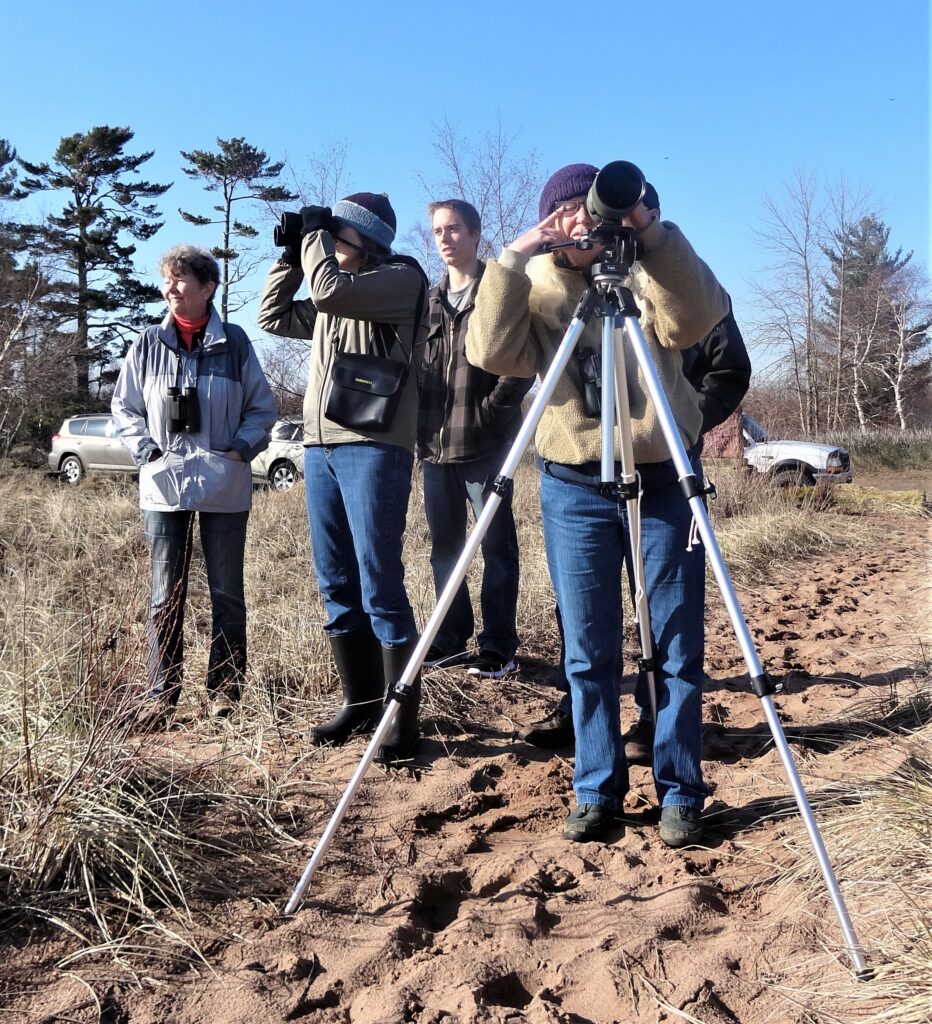
Birders practicing their craft on World Migratory Bird Day a few years ago. Image credit: Marie Zhuikov, Wisconsin Sea Grant

Free transportation is available, departing from the Superior Public Library (530 Tower Ave.) at 9 a.m. People driving themselves should access Hawk Ridge on East Skyline Parkway from Glenwood Ave. and continue past the first overlook on the paved road another half mile or so on the gravel road to another overlook. Look for Hawk Ridge Bird Observatory signage and the count platform. Accessible parking is available near the welcome table and Hawk Ridge merchandise trailer. Look for parking guidance via signage.

This event will include an “Eyes on the Skies” educational program from 10-11 a.m. in the outdoor classroom at Hawk Ridge, located up a gravel trail from the bird viewing location along the road. Learn about the history of the fall migration along the tip of Lake Superior and how to identify common raptors. In bad weather, the “Eyes on the Skies” program will be held indoors at the nearby Lester Amity Ski Chalet. An additional “Eyes on the Skies” program will be held at 11 a.m. outdoors on Hawk Ridge as part of Hawk Ridge’s Duluth Community Day events.

Registration is encouraged but not required. Learn more or register at https://go.wisc.edu/wwi6l1. These activities are designed with access in mind. People who would like to request additional accommodations should email Luciana.Ranelli@wisc.edu or call Luciana at 715-399-4085 at least 10 days before the event.

“Everyone Can Bird” is part of Duluth Community Day at Hawk Ridge. Both programs celebration World Migratory Bird Day, the raptors migrating through Hawk Ridge and people out enjoying nature together. For more on the family activities happening on Oct. 14 from 9:30-11:30 a.m., visit hawkridge.org.

The post Everyone can bird final outing on Oct. 14 first appeared on Wisconsin Sea Grant.

Original Article

News Releases | Wisconsin Sea Grant

News Releases | Wisconsin Sea Grant

https://www.seagrant.wisc.edu/news/everyone-can-bird-final-outing-on-oct-14/

Marie Zhuikov

Spring flooding can be a concern across much of the upper Midwest. The USGS excels at measuring stream discharge, or the volume of water moving through a stream per unit of time, which helps us monitor flooding in real-time.

Original Article

Upper Midwest Water Science Center

Upper Midwest Water Science Center

https://www.usgs.gov/centers/upper-midwest-water-science-center/news/2023-quarter-4-usgs-stream-discharge-and-national?utm_source=comms&utm_medium=rss&utm_campaign=news

jvelkoverh@usgs.gov

Below are all products released by the Upper Midwest Water Science Center in the fourth quarter of fiscal year 2023 (July 1, 2023 - September 31, 2023)

Original Article

Wisconsin

Wisconsin

https://www.usgs.gov/centers/upper-midwest-water-science-center/news/upper-midwest-water-science-center-products-2?utm_source=comms&utm_medium=rss&utm_campaign=news

jvelkoverh@usgs.gov

...AREAS OF FOG WILL BURN OFF BY MID-MORNING... Areas of fog will gradually burn off by 10 am this morning. The fog may be locally dense in some spots with a visibility of a quarter of a mile or less through 8 am. The fog is most prevalent across north-central Wisconsin from Merrill northward to Vilas County.

Original Article

Current Watches, Warnings and Advisories for Brown (WIC009) Wisconsin Issued by the National Weather Service

Current Watches, Warnings and Advisories for Brown (WIC009) Wisconsin Issued by the National Weather Service

https://alerts.weather.gov/cap/wwacapget.php?x=WI126665A28978.SpecialWeatherStatement.126665A2EB20WI.GRBSPSGRB.3b77a733acfe35fc01f412b80021d336

w-nws.webmaster@noaa.gov

...AREAS OF FOG COULD IMPACT TRAVEL UNTIL MID-MORNING... Areas of fog will continue past sunrise across north-central and northeast Wisconsin. The fog may be locally dense in some spots with a visibility of a quarter of a mile or less. The fog is most prevalent across north-central Wisconsin from Merrill northward to Vilas County. For the rest of the region, the fog

Original Article

Current Watches, Warnings and Advisories for Brown (WIC009) Wisconsin Issued by the National Weather Service

Current Watches, Warnings and Advisories for Brown (WIC009) Wisconsin Issued by the National Weather Service

https://alerts.weather.gov/cap/wwacapget.php?x=WI126665A25840.SpecialWeatherStatement.126665A29D00WI.GRBSPSGRB.3b77a733acfe35fc01f412b80021d336

w-nws.webmaster@noaa.gov

Science Says What? How an airlift of wolves saved Isle Royale’s ecosystem and sparked a conservation controversy

Science Says What? is a monthly column written by Great Lakes now contributor Sharon Oosthoek exploring what science can tell us about what’s happening beneath and above the waves of our beloved Great Lakes and their watershed.

The wolves of Isle Royale recently came within a hair’s breadth of dying out — victims of years of inbreeding.

Read Now at Great Lakes Now.

Original Article

Great Lakes Now

Great Lakes Now

https://www.greatlakesnow.org/2023/09/science-says-what-how-an-airlift-of-wolves-saved-isle-royales-ecosystem-and-sparked-a-conservation-controversy/

Sharon Oosthoek

Summary 

Title: Director, Clean Water & Equity  

Status: Full-time, Exempt  

Location: This position is remote and will be located within the Great Lakes states or Washington D.C., with a preference for proximity to a major airport. 

Role: The Director of Clean Water and Equity will develop and execute campaigns to advance the Alliance for the Great Lakes’ (Alliance) water infrastructure program goals as guided by our strategic plan. The Director leads these campaigns across the Great Lakes region with an initial focus on Ohio, Michigan, and Illinois. The Director is responsible for building and maintaining relationships with partner organizations, stakeholders representing a variety of interests, and decision-makers. The Director identifies and pursues opportunities to advance and improve water policies, programs, and funding across the region. The Director works closely with the water infrastructure team and other program staff working on our water infrastructure goals at the local, state, and federal levels to integrate this work. 

Structure: The Clean Water and Equity Director reports to the COO / VP of Programs. They collaborate with other directors and VPs as a team leading the Alliance’s program work. The Director supports media and communications staff to advance strategic media campaigns, public education, and constituency growth in support of our goals. The Director supervises a Water Policy Analyst and Senior Program Manager, with the potential for a third team member to be added in 2024. 

Compensation and Benefits: Salary range begins at $100,000, with the starting salary determined commensurate with experience. Medical, dental, short- and long-term disability, life insurance, FSA, 11 paid holidays plus the business days between 12/26 and 12/30 (staff who must work on any holidays may take those holidays at another time subject to the employee handbook), 3 weeks vacation to start + PTO, Fidelity 401(k) with employer match of up to 6% of salary.  

Work Environment: Fully remote with some travel required. Overnight travel within the Great Lakes region is required, with an average of once per month. A driver’s license and comfort with solo travel by car is required. If the candidate is located in the Chicago area, the Alliance’s downtown headquarters office is available for in-office work. 

_________________________________________________________________________________  

Overview 

The Alliance seeks its next Director, Clean Water & Equity to lead the Alliance’s work to advance drinking water, wastewater and stormwater policy goals in the Great Lakes states. The Director develops and implements advocacy strategies supporting equitable access to clean water, increased water infrastructure investment, and engagement of public officials, organizations, and businesses in service of these priorities. The Director serves as a strategist, convener and relationship builder.  They work collaboratively with Alliance staff and external partners to ensure timely and high-quality delivery of written policy analysis and recommendations, advocacy actions, and grant and partnership deliverables in support of the Clean Water & Equity portfolio. 

Current core projects include 1) the State Revolving Fund (SRF) Advocates’ Forum, a national network supporting organizations advocating for equitable and just delivery of federal and state water infrastructure funds 2) state-level efforts to reform and improve SRF programs with an emphasis on advocacy around Intended Use Plans. The Director will set direction for and implement organizational clean water goals related to water infrastructure investment, drinking water safety, including lead service line replacement, nature-based solutions, and water services affordability across the region with a near-term emphasis on Illinois, Ohio and Michigan. They identify and strengthen relationships with diverse allies across the Great Lakes region to advance program and policy priorities.

The Director is a public figure for the organization who speaks with authority and diplomacy, is regarded as a regional thought leader on water issues and cultivates extensive partner relationships that further the Alliance’s clean water & equity goals. The Director manages relationships with state decision-makers, agency staff, businesses, partners, and other individuals across the Great Lakes region. The Director provides counsel to the Alliance’s senior staff on meaningful community engagement and works as a team with our local and federal policy staff. 

The Director will start work from a position of strength. Our staff of 26 and 18-member Board of Directors include some of the country’s leading Great Lakes advocates, experts and communicators. Our organization has a well-regarded record of recent and historic successes dating to 1970. The Alliance’s capacity stands tall among state and regional environmental advocacy organizations across the country, with more than $10 million in assets, of which more than 70% is unrestricted. The Alliance is growing toward an operating budget of $5 million by the end of 2024. 

The  goals of this position  are to: 

By the end of 2024: 

  • Play a lead role in the State Revolving Fund Advocates Forum, a national network of  organizations focused on ensuring that federal water infrastructure funds are allocated to communities that need it most 
  • Ensure Great Lakes states, particularly Illinois and Michigan, are doing a better job of directing water infrastructure funding to disadvantaged communities 
  • Partner with organizations in Illinois, Michigan, and Ohio to advance one piece of high-priority water infrastructure legislation in each state  
  • Recommend  water infrastructure policy goals for the Alliance’s next strategic plan 

Within five years: 

  • The Alliance is recognized as a leader in the Great Lakes region on drinking water, wastewater and stormwater infrastructure policy and funding 
  • Multiple Great Lakes states have made substantial progress since 2024 in advancing water infrastructure restoration projects that protect public and lake health 
  • The Alliance has clear policy goals and sufficient staff capacity and structure to deliver on those goals 

A typical week for the Director might begin with a meeting with the Water Infrastructure team to ensure everyone is clear on their goals for the week and any obstacles or opportunities are identified and decisions are made regarding next steps. You touch base with the Media Director about a report on where water infrastructure funding is being directed in Michigan to ensure that the release and talking points are solid, and that external partners feel well-prepared to share their stories and provide supportive comments. Midweek, you have a call from an Ohio legislator who wants to introduce legislation to ban water shut-offs in the state. You commit to helping get bipartisan cosponsor signed onto the bill and, organizing a lobby day with partners in Ohio, and sharing a quick update with your Ohio coalition. There is an upcoming water week in Washington, so on Friday, you book a flight to go to DC a month from now to meet with Great Lakes members of Congress along with our Director of Federal Affairs to highlight the importance of federal water infrastructure funding to their constituents. You review the most recent quarter’s work plan metrics and prepare a brief to present to the Leadership Team the following week. 

Responsibilities 

Strategy 

  • Set direction for organizational clean water and equity goals related to water infrastructure investment, drinking water safety, nature-based solutions, and water services affordability across the region with a near-term emphasis on Illinois, Ohio and Michigan. 
  • Works with Alliance staff to align and integrate policy and funding campaigns across local, state and federal levels of government 
  • Builds and sustains a strong and diverse set of trusted relationships with advocates, decision-makers and other stakeholders that informs organizational strategy and tactics 
  • Maintains expertise in relevant funding mechanisms, regulations and administrative programs, and uses that knowledge to inform Alliance strategy 
  • Designs and executes multi-year policy reform campaigns in Great Lakes states to implement Alliance strategic plan water infrastructure priorities. 
  • Recommends future long-term strategic options for the Alliance to fill gaps in water infrastructure advocacy across the region, and to center our Diversity, Equity, Inclusion and Justice principles through the program. 

Advocate 

  • Accountable for delivering policy change for the Alliance’s Clean Water & Equity work across the region. 
  • Creates regular short-term policy, organizing and communication successes as we advance toward our long-term goals. 
  • Ensures policy goals are connected to real-world outcomes that have an impact on the lives of people 
  • Ensures Alliance advocacy agendas are supportive of the needs of our partner organizations. 
  • Collaborates with Alliance staff and external partners to create work products including reports, stories, and media placements to advance thought leadership of Alliance with decision makers. 
  • Builds and leverages relationships outside of the traditional environmental community, including with environmental justice leaders, labor leaders, municipalities, and businesses. 
  • Collaborates with NGO partners and community organizations for decision maker education on water issues (e.g., lobby days, legislative briefings, advocacy workshops, etc.) 
  • Supports Alliance media and communication staff in development of mass advocacy campaigns, supporter activation, conference presentations and media engagement on policy priorities.  

Manager & Institutional Leader 

  • Ensures this work contributes to the Alliance’s role as a collaborative and contributing member of the environmental community in the Great Lakes region 
  • Presents and reports on the Alliance’s Clean Water & Equity work to Alliance leadership, including to the Board of Directors 
  • Manages a team of policy analysts and advocates 
  • Supports the Development Team in building and maintaining critical personal relationships with institutional and individual donors that support this work 
  • Serves as a voice of authority and insight to traditional media, social networks and to the Alliance’s supporters.  
  • Actively engages in organizational discussions to help steer the direction and culture of the Alliance. 
  • Expands the Alliance’s regional network of NGO and community-based organizations. 
  • Motivates and mentors staff that work in multiple locations to execute campaigns as team members, peers and collaborators. 

Knowledge/Skills  

  • Leadership ability and experience as demonstrated by a track record of successful problem identification, mentorship, relationship and partnership building, conflict resolution, and strategic decision-making both internal and external to an organization.  
  • Demonstrated success at motivating key influencers to act in a coordinated and strategic manner. 
  • Strong existing network of relevant and influential leaders in one or more areas of geographic focus for the Alliance, i.e., Illinois, Ohio, or Michigan. 
  • Prior demonstrated success at managing multiple closely aligned and well-coordinated priorities at the same time. 
  • Fundamental commitment to socioeconomic and racial equity in clean water outcomes and demonstrated skills in identifying the policy options that advance equity. 
  • Top echelon skills at writing and speaking to motivate powerful people. 
  • Staff management and/or mentoring experience. 
  • Experience with and commitment to use of project management software. 
  • Driven by a strong commitment to public interest work and the values of the organization. 
  • Optimistic outlook both internally and externally 
  • Committed to a big-tent approach to water advocacy that bring together science, data, relationships, stories and winning strategy 
  • Bachelor’s degree required, advanced degree preferred. Leadership of significant past successful campaigns may substitute for advanced degree. 
  • Minimum of 7 years of experience culminating in proven leadership of state, regional or national scale advocacy, political or marketing campaigns. 

Job Parameters 

  • This position is full-time and consistent with Alliance employment policy. The salary range begins at $100,000 with a starting salary determined commensurate with experience. 
  • Excellent benefits, including medical, dental, short- and long-term disability, life insurance, FSA, 11 paid holidays plus the business days between 12/26 and 12/30 (staff who must work on any holidays may take those holidays at another time subject to the employee handbook), 3 weeks vacation to start + PTO, and Fidelity 401(k) with employer match of up to 6% of salary, eligible after 30 days. 
  • This position is remote and will be located within the Great Lakes watershed, with a preference for the southern part of the region and proximity to a major airport, with occasional travel required. If located in Chicago, an office is available downtown for use.

Application Process 

Please e-mail a cover letter, resume, references, and writing or work sample that demonstrates relevant qualifications to: hr@greatlakes.org. Include the job title in the subject line. 

Applications will be accepted until the position is filled. Materials should be compatible with Microsoft Word or Adobe Acrobat. Applicants will receive confirmation of receipt of their materials and further guidance and updates about the hiring process by e-mail, with interviews provided for finalists. No phone inquiries please. 

The Alliance for the Great Lakes is an Equal Opportunity Employer. The search process will reinforce the Alliance’s belief that achieving diversity requires an enduring commitment to inclusion that must find full expression in our organizational culture, values, norms, and behaviors.  

Our vision is a thriving Great Lakes and healthy water that all life can rely on today and far into the future. We aspire to be a voice for the lakes, and to support the voices of the communities that depend on the lakes and their waters.

The missionof the Alliance for the Great Lakes is to protect, conserve and restore the Great Lakes, ensuring healthy water in the lakes and in our communities for all generations of people and wildlife. We advance our mission as advocates for policies that support the lakes and communities by building the research, analysis and partnerships that motivate action and by educating and uniting people as a voice for the Great Lakes.   

To achieve our vision and mission, everyone in our organization will live our values of Community, Relationships, Courage, Integrity and Optimism and weave the principles of Justice, Equity, Diversity and Inclusion into all our work. Each value and principle is backed by measurable goals and expectations for our Board of Directors and staff.  

The post Director, Clean Water & Equity  appeared first on Alliance for the Great Lakes.

Original Article

News - Alliance for the Great Lakes

News - Alliance for the Great Lakes

https://greatlakes.org/2023/09/director-clean-water-equity/

Michelle Farley

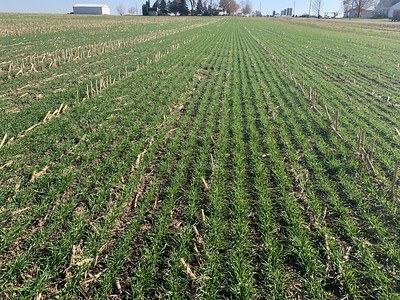
When making conservation plans, producers and conservation professionals alike want to know the impact that farm practices have on our local water.  Through work funded by Great Lakes Restoration Initiative, Fox-Wolf Watershed Alliance and Outagamie County have developed a Farm Progress Report to tell the story of conservation, one farm at a time.

The Farm Progress Report utilizes data from SNAP+, a program widely used by Wisconsin farmers, to generate modeled soil and phosphorus loss on each field based on soil type, phosphorus test results, and field management (tillage, manure management, crop cycle, etc).

This information is then compiled to create per field and per farm loss data, which is compared to the local conservation goal of 1 lb per acre per year of phosphorus loss and 0.5 tons per acre per year of soil loss.  This information is visualized in the Farm Progress Report through simple to read graphs that include the annual average compared to the community goal as well as tables that list the top ten fields to improve.

The Farm Progress Report has two purposes:

  1. Farm Knowledge: For farmers to understand the impact of their current farm practices on water quality, the goals for the community, and how they can make changes on their farm to improve their phosphorus and soil loss
  2. Communication: Farmers can utilize the Farm Progress Report to communicate with their local communities to show the positive impact they are having as well as to their processors to show that they have adopted conservation practices that may meet the processor’s environmental standards

A Farm Progress report was generated for each producer participating in the GLRI grant project and Fox-Wolf Watershed Alliance and Outagamie County LWCD met with each farm, along with their agronomist.  The Farm Progress Report was presented to each farm with an explanation of where the data was derived from, the community goal, and where their current farm practices compared to the goal.  Feedback was solicited from the producer and their agronomist on the information presented and the response was positive.  Producers understood the how the data was derived, how their on-field practices generated that data, and were interested in the potential of using the Farm Progress Report to communicate the great work they are doing to meet conservation goals in their watershed.

Further work will need to be done to streamline the data collection and input process and to ensure that the SNAP+ system is used consistently across the basin.  Overall, the Farm Progress Report was well received by farmers and they expressed interest in continuing to use it to watch their progress toward improving water quality.  Fox-Wolf Watershed Alliance intends to continue developing the report and promoting its widespread adoption to producers outside of this project.

Questions? Contact us:

Basin Agriculture Coordinator: Justin Loehrke, 920.841-6938 or justin@fwwwa.org

Climate Smart Agriculture Project Manager: Katie Woodrow, 920.915.5767 or katie@fwwa.org

To receive periodic updates on these projects as well as many others, please subscribe to our newsletters: CLICK HERE

The post Farm Progress Report – A Tool to Tell the Conservation Story appeared first on Fox-Wolf Watershed Alliance.

Original Article

Fox-Wolf Watershed Alliance

Fox-Wolf Watershed Alliance

https://fwwa.org/2023/09/29/farm-progress-report/?utm_source=rss&utm_medium=rss&utm_campaign=farm-progress-report

Katie Woodrow

Editor: In the public interest and in accordance with Federal Aviation Administration regulations, the USGS is announcing this low-level airborne project. Your assistance in informing the local communities is appreciated.

Original Article

Midcontinent Region

Midcontinent Region

https://www.usgs.gov/news/state-news-release/media-alert-low-level-flights-image-geology-over-parts-arkansas-illinois?utm_source=comms&utm_medium=rss&utm_campaign=news

apdemas@usgs.gov

 Editor: In the public interest and in accordance with Federal Aviation Administration regulations, the USGS is announcing this low-level airborne project. Your assistance in informing the local communities is appreciated. 

Original Article

Midcontinent Region

Midcontinent Region

https://www.usgs.gov/news/state-news-release/media-alert-low-level-airplane-flights-image-geology-over-parts-minnesota?utm_source=comms&utm_medium=rss&utm_campaign=news

apdemas@usgs.gov

Book Review: Saving our changing menu in the Great Lakes region and beyond

The Great Lakes region is known for its abundance. Vineyards flourish near the shores of lakes Erie and Michigan.  Maple trees flow freely with sap that is made into syrup every spring.  And of course, Great Lakes’ freshwater fish like perch, walleye and whitefish make their way onto our dinner plates.  

Read Now at Great Lakes Now.

Original Article

Great Lakes Now

Great Lakes Now

https://www.greatlakesnow.org/2023/09/book-review-saving-our-changing-menu-in-great-lakes-region-and-beyond/

Capri S. Cafaro

Manoomin was once widespread across Michigan and the entire Upper Great Lakes. But hundreds of years of European settlement removed it from much of the landscape as settlers trenched and drained natural waterways, destroying countless acres of natural habitat. Now Great Lakes tribes like Bay Mills are working to restore wild rice to the ecosystem not only to reclaim cultural heritage but also to build thriving beds of the native species for the future. Read the full story by MLive.

Original Article

Great Lakes Commission

Great Lakes Commission

https://www.glc.org/dailynews/20230929-wildrice-greatlakes-anishinaabe

Hannah Reynolds

The U.S. Environmental Protection Agency approved a plan Thursday to reduce the amount of phosphorus flowing into the Maumee River and eventually into Lake Erie, where the farm nutrient is considered the main contributor to the creation of harmful algal blooms. Read the full story by The Plain Dealer.

Original Article

Great Lakes Commission

Great Lakes Commission

https://www.glc.org/dailynews/20230929-usepa-passesplan-habs

Hannah Reynolds

A beloved Windsor landmark’s tenure in Reaume Park has come to an end after 45 years of shooting water jets in the air and covering visitors with refreshing mist from the Detroit River. The Charles Brooks Memorial Peace Fountain — the biggest floating fountain in the world — was disconnected and barged to Lakeview Park Marina for the last time on Thursday. Read the full story by the Windsor Star.

Original Article

Great Lakes Commission

Great Lakes Commission

https://www.glc.org/dailynews/20230929-floating-peace-fountain

Hannah Reynolds

A federal judge on Thursday dismissed state officials from a lawsuit related to past lead contamination in a small southwestern Michigan city’s drinking water but said the case could proceed against city officials, including the mayor. Read the full story by ABC News.

Original Article

Great Lakes Commission

Great Lakes Commission

https://www.glc.org/dailynews/20230929-lawsuit-michigan-bentonharbor

Hannah Reynolds

The $7 million project, part of the massive Great Lakes Restoration Initiative, first dredged tons of muck out of the lake that had settled there over decades. Then it deepened parts of the lake and restored aquatic habitat and fish spawning habitat. Read the full story by the Duluth News Tribune.

Original Article

Great Lakes Commission

Great Lakes Commission

https://www.glc.org/dailynews/20230929-perch-stlouisriver

Hannah Reynolds

A new Michigan bill package is set to be introduced to the Senate next week regarding water affordability. The package includes creating a fund to help people statewide who are struggling to pay their water bills, but not everyone is on board. Read the full story by WDIV-TV – Detroit, MI.  

Original Article

Great Lakes Commission

Great Lakes Commission

https://www.glc.org/dailynews/20230929-wateraffordability-mi

Hannah Reynolds

The Ports of Indiana have an annual economic impact of $8.7 million, a new study concluded. Indianapolis-based port authority the Ports of Indiana commissioned the study to determine the economic contributions of its ports at Burns Harbor, Jeffersonville and Mount Vernon. The study looked at domestic cargo, international freight, wages, taxes and the economic output of companies at the ports, such as all the steel service centers that operate out of the Ports of Indiana-Burns Harbor. Read the full story by the Northwest Times of Indiana.  

Original Article

Great Lakes Commission

Great Lakes Commission

https://www.glc.org/dailynews/20230929-portsofindiana-economicimpactstudy

Hannah Reynolds

The Door County Maritime Museum’s annual Maritime Speaker Series kicks off its 2023-24 season Oct. 5 with the chance for guests to watch, listen and learn both in person and online. The speakers present on a variety of topics ranging from historical to current issues affecting the Great Lakes and the economy that relies on them. The programs are held the first Thursday of each month from October through May. Read the full story by the Green Bay Press Gazette.

Original Article

Great Lakes Commission

Great Lakes Commission

https://www.glc.org/dailynews/20230929-greatlakes-fringehistory-maritime

Hannah Reynolds

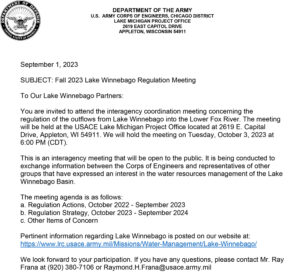
Interested in joining other stakeholders in ongoing discussions about water levels in the Winnebago System?

The Winnebago Water Level Assessment Team (WWLAT) provides a collaborative opportunity for stakeholder representatives and experts to develop realistic and achievable water level strategy recommendations and related goals that reasonably balance the top priorities of multiple system users and the health of the Winnebago System. This team is led separately from the Army Corps public input process by Fox-Wolf Watershed Alliance. Recommendations from the WWLAT are submitted to the Army Corps to help inform the Corps regulation of Lake Winnebago.

Visit the WWLAT website: CLICK HERE

The post Army Corps: Oct 3, 2023 appeared first on Fox-Wolf Watershed Alliance.

Original Article

Fox-Wolf Watershed Alliance

Fox-Wolf Watershed Alliance

https://fwwa.org/2023/09/29/acoe-fall-2023-strategy-meeting/?utm_source=rss&utm_medium=rss&utm_campaign=acoe-fall-2023-strategy-meeting

Katie Reed