Army Corps to fast track review of Line 5 tunnel project

By Izzy Ross, Interlochen Public Radio

This coverage is made possible through a partnership between Interlochen Public Radio and Grist, a nonprofit environmental media organization.

The federal review of the Line 5 tunnel project will be sped up under new emergency permitting procedures announced by the Army Corps of Engineers this week.

Read Now at Great Lakes Now.

Original Article

Great Lakes Now

Great Lakes Now

https://www.greatlakesnow.org/2025/04/army-corps-to-fast-track-review-of-line-5-tunnel-project/
Interlochen Public Radio

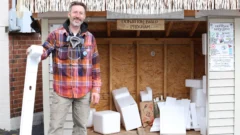
Northeast Ohio surf shop owner making waves with boards made from used foam

By Zaria Johnson, Ideastream Public Media

This story was originally published by Ideastream.

Expanded polystyrene foam is typically used in everything from packaging for new TVs to carry-out food containers, but Jeffrey McNaught, owner of Edgewater Surf in Rocky River, found an eco-friendly use for something that usually ends up in landfills.

Read Now at Great Lakes Now.

Original Article

Great Lakes Now

Great Lakes Now

https://www.greatlakesnow.org/2025/04/northeast-ohio-surf-shop-owner-making-waves-with-boards-made-from-used-foam/

Ideastream Public Media

Wisconsinites voted for Clean Water Now: what’s next?

This month, Democratic legislators, Representative Darrin Madison, Senator Mark Spreitzer, and Senator Jodi Habush Sinykin, have reintroduced a Green Amendment to the state constitution. The move would formalize peoples’ rights to a clean, safe, and healthy environment.

Here’s how the amendment would read:

SECTION 1. Section 27 of article I of the constitution is created to read: [Article I] Section 27 The people, including future generations, have the right to a clean, safe, and healthy natural environment, including clean water, clean air, healthy soils, self-sustaining ecosystems, and a safe and stable climate, and to the preservation of the natural, cultural, and healthful qualities of the environment. These rights shall never be infringed, shall be subject to strict scrutiny review in court, shall be protected equitably for all communities in the state, and are self- executing.

(2) The state, as trustee, shall protect Wisconsin’s natural resources for all of the people of this state, including future generations.

There is deep gridlock at the state capitol and the state legislature’s resistance to making progress on the systemic changes we need to fully protect our drinking water, rivers, and lakes from pollution has been a barrier to our rights to clean water protection. The Green Amendment is a sign that we need some path forwards to meaningfully address critical water issues in Wisconsin.

Here’s how the Wisconsin state constitution is amended

The state legislature must pass the proposed change in two separate sessions. After that, the amendment goes to a statewide vote. If a majority of voters approve it, the constitution is officially changed. If not, it fails. 

Wisconsinites have already voted for clean water

The good news is that many voters in Wisconsin have already voted for their desire for the state government to recognize their rights to a clean environment. Clean Water Now referendums in 2021 and 2022 showed strong, nonpartisan success when voters were directly asked on their ballots how much they care about Wisconsin’s water.

The question was simple: Should the State of Wisconsin establish a right to clean water to protect human health, the environment, and the diverse cultural and natural heritage of Wisconsin?

Here’s what happened:

In the spring of 2021, voters in Marquette County (73%), Portage County (77%) and Wood County (76%) approved referendums.

In the spring of 2022, voters in Eau Claire County (79%) and La Crosse County (86%) approved referendums.

In the fall of 2022, voters in Adams (79.7%), Bayfield (80%), Green (84%), Juneau (79.6%), and Outagamie (79.5%) Counties approved referendums.

Local governments have stepped up to pass resolutions too. Monroe County was the first to pass a Clean Water Now resolution on March 22, 2022 (PDF). Ashland County approved an inspiring resolution in support of clean water on October 9, 2023 (JPG) and Marinette County passed a resolution on December 19, 2023 (PDF). 

When voters are asked if they believe in the right to clean water, they vote YES in strong numbers that transcend political party lines.

However, through a bad deal with Governor Evers over shared revenue funding, state legislators took away citizens’ rights to add advisory referendums to local ballots. Though state leaders took away our right to voice our opinions directly on our ballots, they can’t deny the overwhelming, nonpartisan success of the Clean Water Now referendums or our basic right to clean water. The Green Amendment could be another way of letting voters express how important the right to a clean environment is to us. 

Wisconsinites can protect water now

The people of Wisconsin don’t have to wait for the passage of a Green Amendment to make progress on protecting Wisconsin’s clean water and heritage of our beloved natural spaces. Our next state budget has several key issues legislators can support for the health of people and our environment. 

We can do something about PFAS pollution

The Joint Finance Committee has the power to release $125 million in funds to help families who can’t drink their water due to PFAS contamination. Those funds that were already approved in the last state budget are being withheld due to partisan political conflicts. The Governor’s proposed budget includes the $125 million and an additional $18.6 million for the DNR to support PFAS monitoring and remediation across Wisconsin. PFAS is truly a statewide problem that impacts people’s drinking water in big cities and small towns alike. 

We can do something about lead pipes

The proposed state budget includes two critical investments that will support much-needed drinking water, wastewater, and stormwater infrastructure across Wisconsin. First, there is a proposed $200 million to support lead service line replacement through the DNR’s Safe Drinking Water Loan program. There is also a proposed $725.9 million in revenue bonds that will fund state match requirements and expand loan opportunities through the Drinking Water Loan Program and the Clean Water Fund Program. 

We can do something about stewardship of land and water

Legislators also have the power to renew and fund the Knowles-Nelson Stewardship Program which is wildly popular across the political spectrum of voters. Those funds do everything from park maintenance and installing accessible fishing docks, to putting forests and riverfront property into conservation protection agreements so future generations can enjoy green spaces.

While we wait for a Green Amendment, we need legislators to take action today to protect our drinking water and respect what voters have already called for.


This message is made possible by generous donors who believe people have the power to protect and restore water. Subscribe to our Word on the Stream email newsletter to receive stories, action alerts and event invitations in your inbox.  Support our work with your contribution today.

The post Wisconsinites voted for Clean Water Now: what’s next? appeared first on River Alliance of WI.

Original Article

Blog - River Alliance of WI

Blog - River Alliance of WI

https://wisconsinrivers.org/green-amendment-reintroduced/

Allison Werner

In Indiana, natural gas is clean energy now

Catch the latest energy news from around the Great Lakes region. Check back for these biweekly Energy News Roundups

Indiana now defines natural gas and propane as clean energy under a law signed by Gov.

Read Now at Great Lakes Now.

Original Article

Great Lakes Now

Great Lakes Now

https://www.greatlakesnow.org/2025/04/in-indiana-natural-gas-is-clean-energy-now/

Nicole Pollack, Great Lakes Now

No Mow May is trending again—but is it actually the best move for your lawn and your water? It’s a tempting idea—skip mowing for a month to help bees and early-season pollinators. And yes, it can make a difference. But before you park the mower for May, let’s talk about what really works best [...]

The post No Mow May or Low-Mow Lawn? Here’s What to Know Before You Stash the Mower appeared first on Fox-Wolf Watershed Alliance.

Original Article

Fox-Wolf Watershed Alliance

Fox-Wolf Watershed Alliance

https://fwwa.org/2025/04/16/no-mow-may-vs-low-mow-lawn-care/?utm_source=rss&utm_medium=rss&utm_campaign=no-mow-may-vs-low-mow-lawn-care

Dan Beckwith

Environmental Protection Agency Director Lee Zeldin issued guidance to limit federal protections for wetlands last week that environmental advocates say will lead to more pollution in the Great Lakes. Read the full story by WXPR – Rhinelander, WI.

Original Article

Great Lakes Commission

Great Lakes Commission

https://www.glc.org/dailynews/20250416-wetland-protections

Nichole Angell

During the winter of 2023, scientists braved frigid temperatures and deep snow to document winter lightning along the easternmost shores of Lake Ontario as part of a National Science Foundation-funded study. Read the full story by Great Lakes Echo.

Original Article

Great Lakes Commission

Great Lakes Commission

https://www.glc.org/dailynews/20250416-winter-lightening

Nichole Angell

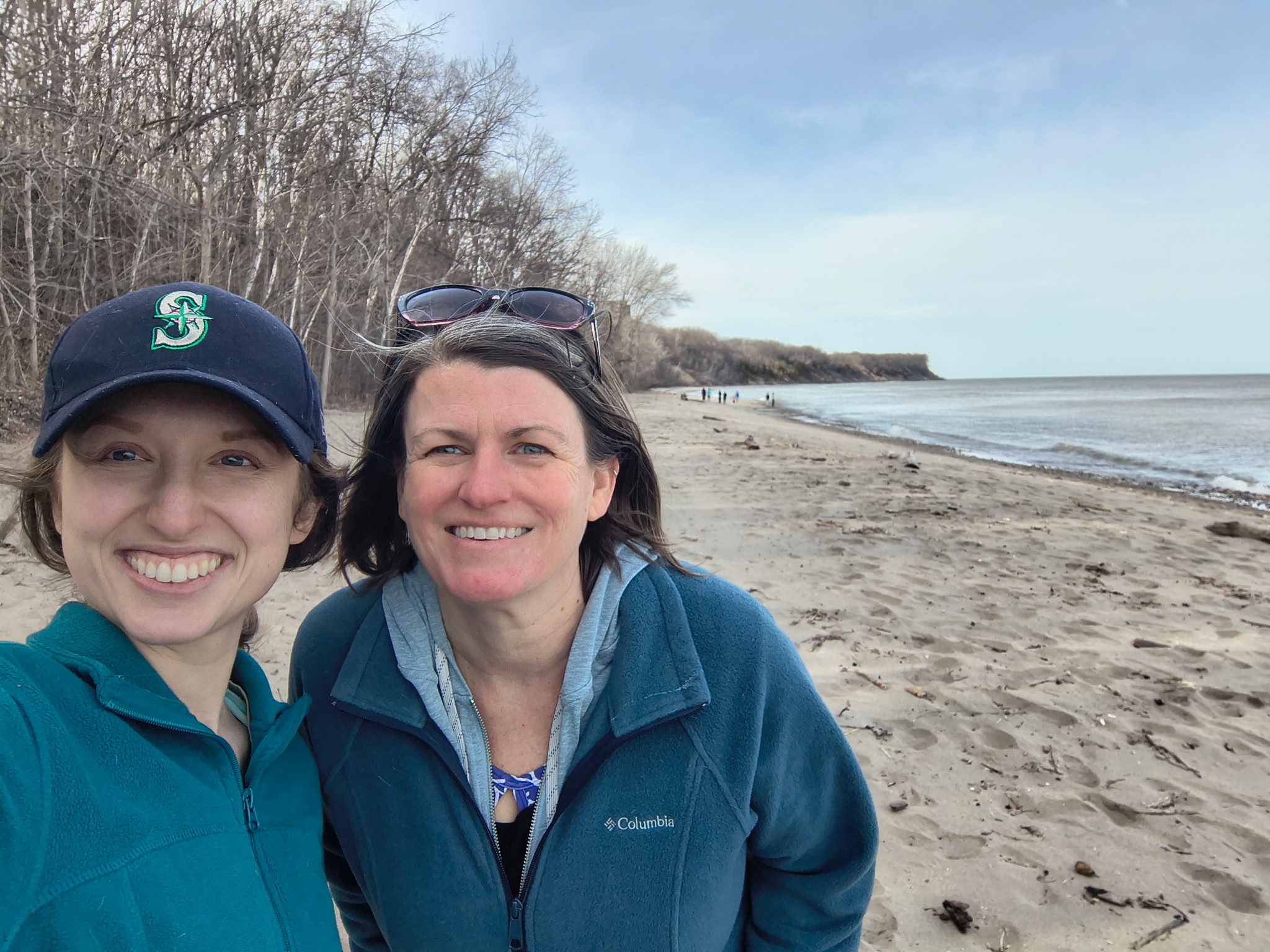
New coastal resilience specialist Carrie Malone smiles alongside Sea Grant's Deidre Peroff on a Lake Michigan beach.

Sea Grant colleagues Carrie Malone (left) and Deidre Peroff (right) enjoy a walk along Lake Michigan. Photo: Carrie Malone

Carrie Malone likes working on projects with people. It’s a fitting skillset for her new role as Wisconsin Sea Grant’s coastal resilience and adaptation outreach specialist.

“I want to come up with ideas and problem solve,” Malone said. “I want projects that I get to see through and that make a difference to people.”

Located in Sea Grant’s field office at the University of Wisconsin-Milwaukee School of Freshwater Sciences, Malone will partner with local communities to build resilience to changing lake levels, flooding and other coastal issues that come with living along a Great Lake. The position is new, so her first order of business is getting her bearings and identifying projects to work on. “I’m really excited to have the freedom to navigate my own route,” she said.

The needs and interests of the community will help Malone chart that course. With a master’s degree in sustainable urban planning and design, she often thinks about the ways governments can work with residents to achieve common goals.

“There’s only so much that the average person can do,” she said. “So, we have a job as municipalities or institutions or state or federal governments to say, okay, we have the capacity that you don’t, so we’re going to make your lives easier.”

Malone saw firsthand how community engagement can improve lives while working with the Office of Sustainability and Innovation at the City of Ann Arbor in Michigan. She was part of a team tasked with implementing the city’s carbon neutrality plan, which included projects like community solar panels and home weatherization. These were priorities identified by residents, but city used its resources to bring them to life. The team also strived to make it easier for residents to give feedback on projects by providing meals at public meetings and activities for children.

 “[The office] just really gets things done and in a very community-engaged way,” said Malone.

Building relationships with community partners also has another perk: helping Malone get to know Milwaukee. Originally from Washington and accustomed to the mountains and ocean views of the Pacific Northwest, she’s excited to gaze over the open water of Lake Michigan and try new things.

“I’m ready to be surprised. I’m ready to throw a bunch of spaghetti at the wall, and some things will stick, and some things won’t, and that’s alright,” she smiled. “I’ll keep throwing things.”

The post Sea Grant welcomes new coastal resilience specialist first appeared on Wisconsin Sea Grant.

Original Article

News Releases | Wisconsin Sea Grant

News Releases | Wisconsin Sea Grant

https://www.seagrant.wisc.edu/news/sea-grant-welcomes-new-coastal-resilience-specialist/

Jenna Mertz

Spring Break Staycation: Foraging with the Family

This is a part of “A Year in the Wild Kitchen of the Great Lakes,” a series in partnership with expert forager Lisa M. Rose, with the mission of nurturing a deeper connection with the natural world through foraging. To get started with your foraging journey, begin here with our “Framework to Sustainable and Safe Practices.” 

This spring break, transform your usual holiday into an educational excursion that connects your family with the natural world.

Read Now at Great Lakes Now.

Original Article

Great Lakes Now

Great Lakes Now

https://www.greatlakesnow.org/2025/04/spring-break-staycation-foraging-with-the-family/

Lisa M. Rose

Meet the scientists exploring Great Lakes hidden habitats

Researchers are using cutting-edge technology to map the lakebeds of the Great Lakes, uncovering valuable data about the ecosystems beneath the surface.

At Michigan Technological University’s Great Lakes Research Center, Hayden Henderson and his team are part of an ongoing effort to document benthic. Using a wide array of technology, they’re gathering detailed images of the lakebeds, providing vital information to fishery and resource managers.

Read Now at Great Lakes Now.

Original Article

Great Lakes Now

Great Lakes Now

https://www.greatlakesnow.org/2025/04/meet-the-scientists-exploring-great-lakes-hidden-habitats/

Great Lakes Now

ENOUGH WATER TO LAST Experiencing the reality of water scarcity Dennis Kittel uses a specialized net to search for microplastics. “When you live in Wisconsin, you don’t think about water,” said Dennis Kittel, citizen scientist and retired engineer. “You expect to go anywhere and find a bubbler. But in [...]

The post Watershed Moments: Enough Water to Last appeared first on Fox-Wolf Watershed Alliance.

Original Article

Fox-Wolf Watershed Alliance

Fox-Wolf Watershed Alliance

https://fwwa.org/2025/04/15/watershed-moments-enough-water-to-last/?utm_source=rss&utm_medium=rss&utm_campaign=watershed-moments-enough-water-to-last

Sharon

How community gardens serve as ‘third places’ for Detroiters

Toward the end of 2023, I was newly unemployed and living by myself for the first time. 

In between jobs, searching for employment and a means of fulfillment and community, I began to reflect on how my mom got into gardening. In the dead of winter, memories of childhood summers spent pulling weeds, tilling soil and fleeing the occasional garter snake alongside her began to color my mind. 

Read Now at Great Lakes Now.

Original Article

Great Lakes Now

Great Lakes Now

https://www.greatlakesnow.org/2025/04/community-gardens-third-places-for-detroiters/

Ethan Bakuli

Commercial fishing on the Great Lakes was built on lake whitefish, but for the past two decades, that species has been on the decline. It’s now on the brink of collapse in parts of two of the Great Lakes with scientists searching for ways to save the species. Read the full story by National Public Radio.

Original Article

Great Lakes Commission

Great Lakes Commission

https://www.glc.org/dailynews/20250414-lake-whitefish

Autumn McGowan

There are concerns about how federal funding cuts might hamper environmental enforcement in the Great Lakes   region, but state and local governments along with volunteer organizations in recent years have proven they are willing to step up on such issues. Read the full story by the Chicago Tribune.

Original Article

Great Lakes Commission

Great Lakes Commission

https://www.glc.org/dailynews/20250414-local-support-lake-michigan

Autumn McGowan

The Great Lakes water levels have started their seasonal rise as the snow has melted and spring rains begin. While the water levels have increased in the past month, all Great Lakes are still several inches below their levels at the same time last year. Read the full story by MLive.

Original Article

Great Lakes Commission

Great Lakes Commission

https://www.glc.org/dailynews/20250414-water-levels

Autumn McGowan

The Great Lakes Fishery Commission says it is hopeful that efforts to prevent invasive carp from migrating into the Great Lakes will continue as planned, given the recent discussion at the White House between Michigan’s Governor Gretchen Whitmer and President Donald Trump. Read the full story by CBS News Detroit.

Original Article

Great Lakes Commission

Great Lakes Commission

https://www.glc.org/dailynews/20250414-invasive-carp

Autumn McGowan

Wisconsin Department of Natural Resources crews operating the Root River Steelhead Facility in Racine this spring have processed a record number of steelhead, or rainbow trout. Fertilized eggs from the fish are taken to state hatcheries. Read the full story by Milwaukee Journal Sentinel.

Original Article

Great Lakes Commission

Great Lakes Commission

https://www.glc.org/dailynews/20250414-steelhead

Autumn McGowan

Climate change is making it easier for Great Lakes waterbirds to get sick, according to a recent study that identified avian diseases in the Great Lakes, including botulism and avian influenza, that could be primed for outbreaks amid warming waters and shifting migration patterns. Read the full story by the Alpena News.

Original Article

Great Lakes Commission

Great Lakes Commission

https://www.glc.org/dailynews/20250414-great-lakes-waterbirds

Autumn McGowan

The Kenosha Sportfishing and Conservation Association received 40,000 chinook salmon fingerlings from the Wisconsin Department of Natural Resources at the Kenosha Salmon Rearing Pond. The nonprofit group is working to restore Lake Michigan’s ecosystem by stocking it with salmon annually. Read the full story by Spectrum News 1.

Original Article

Great Lakes Commission

Great Lakes Commission

https://www.glc.org/dailynews/20250414-salmon

Autumn McGowan

In accordance with the International Joint Commission Order of Approval governing its operation, preparations are now underway for the New York Power Authority to begin removal of the Lake Erie-Niagara River Ice Boom as ice conditions and safe working conditions allow.  Read the full story by WBEN-TV – Buffalo, NY.

Original Article

Great Lakes Commission

Great Lakes Commission

https://www.glc.org/dailynews/20250414-erie-niagara-ice-boom

Autumn McGowan

In accordance with the International Joint Commission Order of Approval governing its operation, preparations are now underway for the New York Power Authority to begin removal of the Lake Erie-Niagara River Ice Boom as ice conditions and safe working conditions allow.  Read the full story by WBEN-TV – Buffalo, NY.

Original Article

Great Lakes Commission

Great Lakes Commission

https://www.glc.org/dailynews/20250414-erie-niagara-ice-boom

Autumn McGowan

The lights are coming back on. How can utilities prepare for next time?

By Izzy Ross, Interlochen Public Radio

This coverage is made possible through a partnership between Interlochen Public Radio and Grist, a nonprofit environmental media organization.

David Thom has one of those jobs where sometimes, unexpectedly, the phone rings late at night.

Read Now at Great Lakes Now.

Original Article

Great Lakes Now

Great Lakes Now

https://www.greatlakesnow.org/2025/04/the-lights-are-coming-back-on-how-can-utilities-prepare-for-next-time/

Interlochen Public Radio

Fish, mines and Indigenous Rights ensnared in court case in northern Ontario

By Emma McIntosh, The Narwhal

Emma and photographer Christopher Katsarov Luna spent four days in northwestern Ontario, including visits to White Lake and Netmizaaggamig Nishnaabeg.

The Great Lakes News Collaborative includes Bridge Michigan, Circle of Blue, Great Lakes Now at Detroit PBS, Michigan Public and The Narwhal who work together to bring audiences news and information about the impact of climate change, pollution, and aging infrastructure on the Great Lakes and drinking water.

Read Now at Great Lakes Now.

Original Article

Great Lakes Now

Great Lakes Now

https://www.greatlakesnow.org/2025/04/fish-mines-and-indigenous-rights-ensnared-in-court-case-in-northern-ontario/

The Narwhal

Alberto Rey: Art all about Earth

Alberto Rey’s artistic passions are wide-ranging. But water and wildlife may most succinctly describe them. The retired State University of New York — Fredonia professor of art has waded into drawing, painting, ceramics and filmmaking all while diving headfirst into the deepest affection for the natural world.  

The 64-year-old Cuban-born artist moonlights as an Orvis-endorsed fly fishing guide on Western New York’s Lake Erie tributaries.

Read Now at Great Lakes Now.

Original Article

Great Lakes Now

Great Lakes Now

https://www.greatlakesnow.org/2025/04/alberto-rey-art-all-about-earth/

James Proffitt, Great Lakes Now

Michigan Gov. Gretchen Whitmer and Michigan House Speaker Matt Hall, R-Richland Township, met with President Donald Trump on Wednesday to discuss the need to ensure barriers are put in place to keep invasive carp out of Lake Michigan. Read the full story by the Detroit Free Press.


Original Article

Great Lakes Commission

Great Lakes Commission

https://www.glc.org/dailynews/20250411-invasive-carp-barriers

James Polidori

U.S. Rep. Hillary Scholten of Grand Rapids, Michigan, says harbor dredging efforts along the Lake Michigan shoreline are uncertain right now with federal spending cuts, even as ports are increasingly busy. Scholten says Grand Haven could lose $88 million in business revenue if the dredging to clear the channel doesn’t happen. Read the full story by WGHN – Grand Haven, MI.


Original Article

Great Lakes Commission

Great Lakes Commission

https://www.glc.org/dailynews/20250411-dredging-funding-cuts

James Polidori

Newly published research from the U.S. Geological Survey looked at more than 25 years of annual sea lamprey data to assess the effectiveness of lamprey control funding. The research showed that after 2020 and 2021, years when control activities stopped altogether or were scaled back to varying degrees on all five Great Lakes due to the COVID-19 pandemic, lamprey populations increased the most in the lakes with the largest reductions in control. Read the full story by the Detroit Free Press.


Original Article

Great Lakes Commission

Great Lakes Commission

https://www.glc.org/dailynews/20250411-lamprey-impacts

James Polidori

Anxieties are mounting that a water pollution laboratory buttressing Lake Superior’s North Shore is slated to be closed, potentially terminating work for dozens of scientists and shuttering an economic engine for northern Minnesota. Read the full story by The Minnesota Star Tribune.


Original Article

Great Lakes Commission

Great Lakes Commission

https://www.glc.org/dailynews/20250411-epa-lab-closure

James Polidori

Despite decades-long efforts to clean up toxic hot spots along Michigan’s Great Lakes shores, a recent study shows that the health of waterbirds in some areas continues to suffer. It found that infertility and weakened immune systems were more prevalent at the contaminated sites than in birds in more pristine areas along Lake Superior at the St. Marys River. Read the full story by Great Lakes Echo.

Original Article

Great Lakes Commission

Great Lakes Commission

https://www.glc.org/dailynews/20250411-waterbird-health

James Polidori

Macomb County Public Works Commissioner Candice Miller is asking the State of Michigan to take action following an alleged “sickening release” of 1.2 million gallons of raw sewage from neighboring Oakland County on April 3. Read the full story by MWYD-TV – Detroit, MI.

Original Article

Great Lakes Commission

Great Lakes Commission

https://www.glc.org/dailynews/20250411-sewage-release

James Polidori

The H2Ohio program helps farmers grow crops more efficiently while also protecting the environment. A recently proposed 44 percent reduction to the program could have serious consequences, not just for farmers but for the general public as well. Read the full story by The Toledo Blade.

Original Article

Great Lakes Commission

Great Lakes Commission

https://www.glc.org/dailynews/20250411-h2ohio-spending-cuts

James Polidori

The Wisconsin Supreme Court could hear a case in the coming years centered around Enbridge Energy’s reroute of the pipeline known as Line 5. About 12 miles of the pipeline cuts through the Bad River Band of Lake Superior Chippewa’s reservation, though the easements for the land the pipeline is on have expired. Read the full story by the Milwaukee Journal Sentinel.

Original Article

Great Lakes Commission

Great Lakes Commission

https://www.glc.org/dailynews/20250411-pipeline-reroute-case

James Polidori

As the executive director of the Western Lake Superior Sanitary District (WLSSD) prepares to leave her post, the WLSSD fired up a trio of generators that now convert biogas from the operation of its Duluth sewage-processing facility into power. The new equipment is expected to slash the plant’s annual electrical bill by more than $1 million. Read the full story by the Duluth News Tribune.

Original Article

Great Lakes Commission

Great Lakes Commission

https://www.glc.org/dailynews/20250411-biogas-power-generation

James Polidori

‘Forest-to-table’: Rural, Indigenous communities rely on forests for food, medicine and cultural values, research shows

This article was republished here with permission from Great Lakes Echo.

By Victoria Witke, Great Lakes Echo

When Roger LaBine was younger, he often drove his grandfather to the Ottawa National Forest to hunt porcupines.

“In the fall after the leaves had fallen, he’d take the .22 when we’d go out and hunt porcupine,” LaBine said.

Read Now at Great Lakes Now.

Original Article

Great Lakes Now

Great Lakes Now

https://www.greatlakesnow.org/2025/04/rural-indigenous-communities-rely-on-forests-for-food-medicine-and-cultural-values-research-shows/

Great Lakes Echo

CHICAGO, IL (April 10, 2025) – Yesterday, Michigan Governor Gretchen Whitmer and Speaker of the Michigan House Matt Hall engaged with the White House on finalizing the pending Brandon Road invasive carp barrier project. After more than a decade of planning and design, the Brandon Road project was scheduled to move forward in 2025. This project is intended to stop invasive carp from entering the Great Lakes and causing irreversible damage to the Great Lakes and to the people who call it home.  

“We greatly appreciate Michigan Governor Whitmer’s and Michigan Speaker Matt Hall’s commitment to the Brandon Road project and applaud their continued efforts to get this critical invasive carp barrier built,” said Joel Brammeier, president and CEO of the Alliance for the Great Lakes and Marc Smith, Great Lakes policy director for the National Wildlife Federation in a joint statement.

The Brandon Road Lock and Dam was identified as the crucial bottleneck where layered underwater deterrent technologies will be used to stop invasive carp populations from moving into the Great Lakes. Using the Illinois River and other waterways to expand their territory, invasive carp pose a significant threat to the world class fishery and economic vitality of Lake Michigan and the other Great Lakes.  

These invasive fish have already wreaked havoc on the Mississippi and Illinois Rivers, causing damage to native fish populations by outcompeting them for food. Silver carp leap into the air when startled, posing the risk of serious injury to people and making infested waters off-limits to boating. Great Lakes communities and industries would be deeply harmed if invasive carp were to get into the Great Lakes or its tributaries and inland lakes.  

# # #

Contacts:

  • Don Carr, Media Director, Alliance for the Great Lakes, dcarr@greatlakes.org
  • Anna Marie Zorn, Great Lakes Senior Communications Manager, National Wildlife Federation zorna@nwf.org  

More about Invasive Carp

Read more about the invasive carp approaching Lake Michigan and the Brandon Road project designed to stop them.

Read More

The post Michigan Governor and House Speaker Working to Keep Invasive Carp Out of the Great Lakes appeared first on Alliance for the Great Lakes.

Original Article

News - Alliance for the Great Lakes

News - Alliance for the Great Lakes

https://greatlakes.org/2025/04/michigan-governor-and-house-speaker-working-to-keep-invasive-carp-out-of-the-great-lakes/

tfazzini