By Lillian Williams

he shrinking number of farms in Michigan – down by about 1,300 between 2023 and 2024 – and the trend of existing farms to expand to survive is changing the culture of rural communities.

The post Shifting farm economy means changes for rural communities first appeared on Great Lakes Echo.

Original Article

Great Lakes Echo

Great Lakes Echo

https://greatlakesecho.org/2026/02/28/shifting-farm-economy-means-changes-for-rural-communities/
Capital News Service

Energy company Enbridge has finally started work on rerouting an aging oil pipeline around a tribal reservation in northern Wisconsin after seven years of legal wrangling, moving ahead despite two new lawsuits that still could delay the project indefinitely. Read the full story by the Associated Press.

Original Article

Great Lakes Commission

Great Lakes Commission

https://www.glc.org/dailynews/20260227-enbridge-reroute

Taaja Tucker-Silva

On Friday, February 20, the Wisconsin Assembly unanimously passed two bills to help residents with PFAS mitigation after 30 months of debate. Governor Tony Evers approved $125 million for PFAS cleanup in 2023, but Republican lawmakers disagreed with how the funds would be distributed. Read the full story by Great Lakes Now.

Original Article

Great Lakes Commission

Great Lakes Commission

https://www.glc.org/dailynews/20260227-wisconsin-pfas

Taaja Tucker-Silva

The “nurdles” that scattered along I-196 and into Michigan’s Kalamazoo river after a January 27 semi-truck crash are the same industrial pellets that researchers have been finding for years on Great Lakes beaches, underscoring the threat of microplastics to Great Lakes ecosystems. Read the full story by MLive.

Original Article

Great Lakes Commission

Great Lakes Commission

https://www.glc.org/dailynews/20260227-oodles-of-nurdles

Taaja Tucker-Silva

Although this year is an exception, Lake Erie has seen more low‑ or no‑ice winters over the past 50 years. With less ice, storms are more likely to drive water inland. Officials are developing new ways to protect shorelines from sudden flooding and longer storm seasons. Read the full story by the New York Times.

Original Article

Great Lakes Commission

Great Lakes Commission

https://www.glc.org/dailynews/20260227-erie-surges

Taaja Tucker-Silva

For one day last week, Lake Superior gave thousands of people a rare gift — then took it back. The Apostle Islands ice caves, accessible for the first time since 2015, drew visitors from across the country before a winter storm shattered the ice shelf less than 24 hours after they opened. Read the full story by the Ashland Daily Press.

Original Article

Great Lakes Commission

Great Lakes Commission

https://www.glc.org/dailynews/20260227-ice-caves

Taaja Tucker-Silva

The AquaHacking Challenge is a free program challenging students, researchers, and professionals to safeguard the Great Lakes and the St. Lawrence. The launch of the challenge celebrates the program’s 10th anniversary and its expanding footprint across the United States and Canada. Read the full story by WDIV-TV – Detroit, MI.

Original Article

Great Lakes Commission

Great Lakes Commission

https://www.glc.org/dailynews/20260227-aquahacking

Taaja Tucker-Silva

Peer-reviewed studies have detected microplastics in Lake Michigan and the other Great Lakes. The findings raise urgent questions about what everyday plastic use is sending into the lake and the millions of people who rely on it. Read the full story by The Fulcrum.

Original Article

Great Lakes Commission

Great Lakes Commission

https://www.glc.org/dailynews/20260227-lake-plastic

Taaja Tucker-Silva

A recent study featuring Grand Rapids, Michigan suggests that climate migration may not significantly change how some cities grow.

The post Climate migration may not dramatically reshape city growth, study finds first appeared on Great Lakes Echo.

Original Article

Great Lakes Echo

Great Lakes Echo

https://greatlakesecho.org/2026/02/26/climate-migration-may-not-dramatically-reshape-city-growth-study-finds/

Isabella Figueroa Nogueira

When it comes to our Great Lakes priorities, how are our representatives in Washington doing and where should they focus their efforts in 2026? Thanks to Great Lakes advocates like you, Congress recently passed legislation that rejected steep cuts and instead protected funding for programs critical to the health of our lakes and the people who depend on them. At the same time, the Great Lakes enter 2026 with a reduced federal presence due to program pullbacks and staff reductions. Our just-released federal priorities lay out a 2026 agenda for decision makers. Hear from our team and ask your questions about the Great Lakes and Washington.

Featuring:

  • Joel Brammeier, President and CEO
  • Megan Cunningham, Vice President for Programs
  • Moderated by Tom Fazzini, Communications Director

Related Links:

Protect the Great Lakes

Your contribution supports advocacy that protects the Great Lakes today and far into the future.

Give a gift today

The post Webinar: Washington Update: Protecting the Great Lakes and Looking Ahead to 2026 appeared first on Alliance for the Great Lakes.

Original Article

News - Alliance for the Great Lakes

News - Alliance for the Great Lakes

https://greatlakes.org/2026/02/webinar-washington-update-protecting-the-great-lakes-and-looking-ahead-to-2026/

tfazzini

Scott and Shelly Christie didn’t set out to restore a field. When they bought their place in Waushara County in 2010, the plan was practical. The farmhouse could hold office space for Shelly’s landscaping business. The open ground could store equipment. And like a lot of rural properties, part of the acreage could be [...]

The post Watershed Moments: From Farm Field to Future Habitat appeared first on Fox-Wolf Watershed Alliance.

Original Article

Fox-Wolf Watershed Alliance

Fox-Wolf Watershed Alliance

https://fwwa.org/2026/02/25/farm-field-future-habitat/?utm_source=rss&utm_medium=rss&utm_campaign=farm-field-future-habitat

Fox-Wolf Watershed Alliance

As goes Iron Range iron ore pellet production, so goes the iron ore docks in Duluth, Minnesota, and Superior, Wisconsin. Iron ore tonnage shipped from the Port of Duluth-Superior fell 14.9 percent in 2025 compared to 2024. Read the full story by the Mesabi Tribune.

Original Article

Great Lakes Commission

Great Lakes Commission

https://www.glc.org/dailynews/20260225-iron-ore-shipments-pellet-production-decline

Hannah Reynolds

Local groups in Michigan’s Upper Peninsula are promoting National Invasive Species Awareness Week by educating the public and organizing efforts to protect ecosystems, such as cleaning boats to prevent the spread of invasive species and planning spring removal and native planting activities. Read the full story by WLUC-TV – Negaunee, MI.  

Original Article

Great Lakes Commission

Great Lakes Commission

https://www.glc.org/dailynews/20260225-upperpeninsula-supports-national-invasive-species-awareness-week

Hannah Reynolds

A coalition of Wisconsin environmental advocacy groups filed a lawsuit Monday challenging an administrative law judge’s decision to uphold the Department of Natural Resource’s permit approval to reroute the Enbridge Line 5 oil pipeline across northern Wisconsin. A similar lawsuit has also been filed by the Bad River Band of Lake Superior Chippewa. The tribe for years has fought against the pipeline, which currently runs across its land.  Read the full story by the Wisconsin Examiner.

Original Article

Great Lakes Commission

Great Lakes Commission

https://www.glc.org/dailynews/20260225-environmental-groups-challenge-dnr-line5-decision

Hannah Reynolds

An unusually snowy 2025–2026 season has helped draw tourists to northern Wisconsin’s outdoor winter attractions like the Apostle Islands ice caves, but many locals and industry groups say that reliably snowy winters are becoming less common and more unpredictable. Read the full story by Wisconsin Public Radio.

Original Article

Great Lakes Commission

Great Lakes Commission

https://www.glc.org/dailynews/20260225-snowy-season-wisconsin-boost-tourism

Hannah Reynolds

The Supreme Court on Tuesday heard arguments in a long-running dispute over the fate of an oil and gas pipeline in the Great Lakes. Michigan state officials had sued a Canadian company that operates a section of the pipeline, known as Line 5, which snakes under the Straits of Mackinac between Michigan’s Lower and Upper Peninsulas. Read the full story by The New York Times.

Original Article

Great Lakes Commission

Great Lakes Commission

https://www.glc.org/dailynews/20260225-supreme-court-fate-greatlakes-pipeline

Hannah Reynolds

If you go ice fishing around Door County and have a shanty out on the bay of Green Bay or Lake Michigan, you’ve got a little more than two weeks left to get the shanty off the ice. Read the full story by Green Bay Press-Gazette.

Original Article

Great Lakes Commission

Great Lakes Commission

https://www.glc.org/dailynews/20260225-ice-fishing-door-county-dnr-reminders-ice-shanties

Hannah Reynolds

With frequent sub-freezing temperatures in Michigan this winter, it has been a great year for ice fishing. Stable ice conditions have allowed anglers the opportunity to get out on the ice and participate in a northern winter tradition. Read the full story by the Lasco Press.

Original Article

Great Lakes Commission

Great Lakes Commission

https://www.glc.org/dailynews/20260225-gennessee-county-fishing-opportunities

Hannah Reynolds

On Friday, February 20 the Wisconsin Assembly unanimously passed two bills to help residents with PFAS mitigation after 30 months of debate. Gov. Tony Evers approved $125 million for per- and polyfluoroalkyl substances (PFAS) cleanup in 2023, but Republican lawmakers disagreed with how the funds would be distributed, including the need to add protections for businesses and “innocent landowners” or people who bought contaminated property but weren’t responsible for the original spill. One bill allows for a series of grants to pay for testing and remediation, while the other bill exempts certain businesses and people from having to pay for cleanup, including any municipal services who use PFAS for emergencies by using firefighting foam.

In Minnesota, a study suggests about 99% of PFAS can be destroyed while turning solid waste into energy and ash at combustion facilities. Incineration is often seen as a controversial method for dealing with “forever chemicals” because it is still unclear if the substances only contribute to air pollution through manufacturing, or if incineration only works under very specific circumstances (at a certain temperature, and for a certain amount of time) without further contributing to the problem. 

The Illinois Commerce Commission (ICC) received a rate request from Illinois American Water for approximately $577 million to fund upgrades related to emerging contaminations like PFAS and continuing to replace lead service lines. According to CBS News, this proposed rate increase would mean an additional $14 a month for residential water customers and $28 a month for those with sanitary wastewater systems. 

This is the fourth rate hike in a decade. In an interview with CBS News, Chicago resident Susan Srail said that residents are already billed “…at the least, $180 a month. There are some people that are paying $300 a month.”

Recent reporting by Bridge Michigan suggests that PFAS levels are actually declining in Great Lakes fish. A study published in January 2026 used archived trout and walleye samples from 1975 to 2020 to track pollutants. Researchers found that average contamination levels reached their lowest by 2020. For example, PFAS in freeze-dried tissue samples from fish in Lake Erie “peaked at close to 450 nanograms per gram in 2005 but were closer to 50 nanograms per gram in 2020.”

Two bills related to “forever chemicals” passed through the New York State Senate, and now await final votes in the state Assembly. One bill will expand regulation of chemical discharge in the state’s groundwater, lakes and rivers. The other bill will restrain PFAS in consumer products like cookware, cleaning products and dental floss, according to WAMC

Meanwhile, a new permit is under consideration at the Ohio Environmental Protection Agency (EPA) to help expand the state’s data center boom. The new permit would allow data centers to discharge wastewater right into rivers and streams. According to Circle of Blue: “the Ohio permit would apply to water that circulates through data centers to absorb heat from servers, towers and boilers. Recent investigations have shown that chemicals such as PFAS and nitrates, which are harmful to human health, are a part of these effluents, or untreated discharges.”

Testing at Pittsburgh International Airport shows that PFAS levels of one particular compound are over 15,000 times the EPA’s safety levels. The airport sits on the Montour Run watershed, which leads to the Ohio River and is a source of drinking water for millions of Americans. 

More PFAS news in case you missed it:

  • In Canada, reporting from the CBC shows that Transport Canada was worried about PFAS in the 1980s according to files obtained through an access-to-information request.
  • The burden of advocacy falls on Indiana firefighters facing PFAS-related cancers
  • Three Olympic boardsport athletes were disqualified over their use of wax containing “forever chemicals.”
  • An op-ed penned by cardiologist Dr. Pierce Vatterott for The Hill makes the case for why medical care requires the use of some per- and polyfluoroalkyl substances. 
  • The U.S. Forest Service will stop issuing gasoline and water repellant pants for firefighters that contain PFAS. This move was inspired by original reporting by ProPublica.

The post Wisconsin finally unlocks $125 million funding for PFAS cleanup appeared first on Great Lakes Now.

Original Article

Great Lakes Now

Great Lakes Now

https://www.greatlakesnow.org/2026/02/25/wisconsin-finally-unlocks-125-million-funding-for-pfas-cleanup/

Lisa John Rogers, Great Lakes Now

By Elaine Anselmi, The Narwhal

Photography by Carlos Osorio

The Great Lakes News Collaborative includes Bridge MichiganCircle of BlueGreat Lakes NowMichigan Public and The Narwhal who work together to bring audiences news and information about the impact of climate change, pollution, and aging infrastructure on the Great Lakes and drinking water. This independent journalism is supported by the Charles Stewart Mott Foundation.


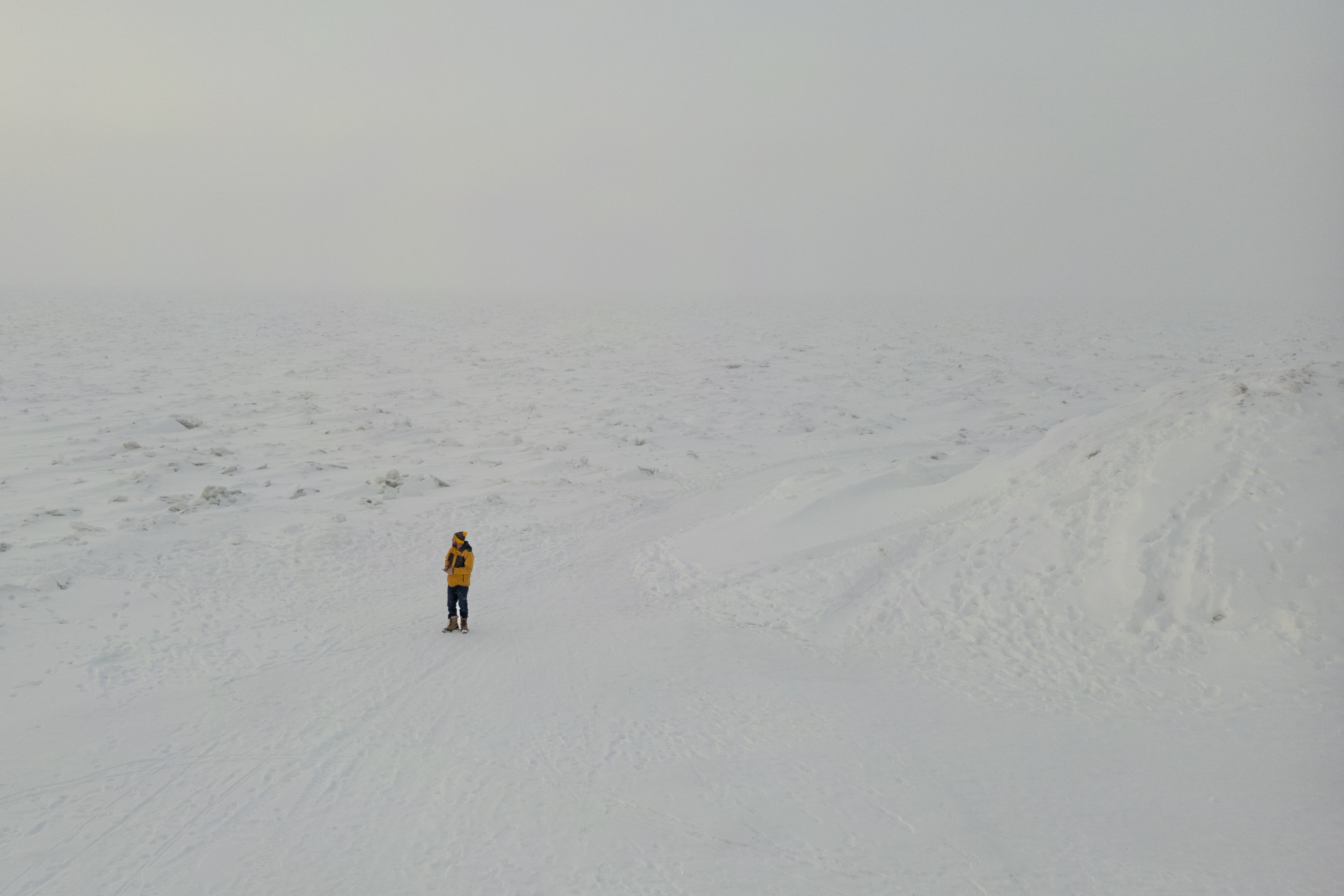
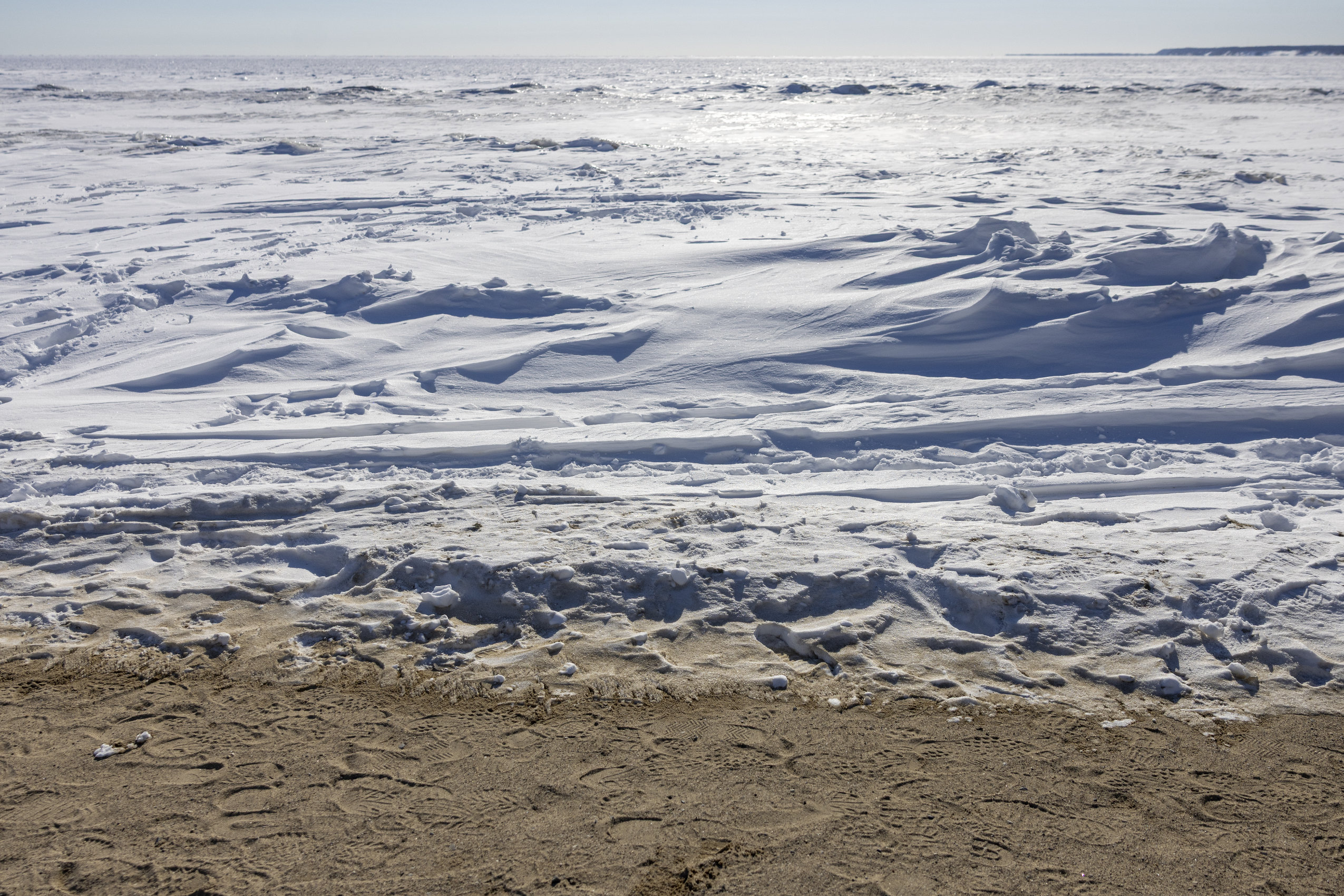
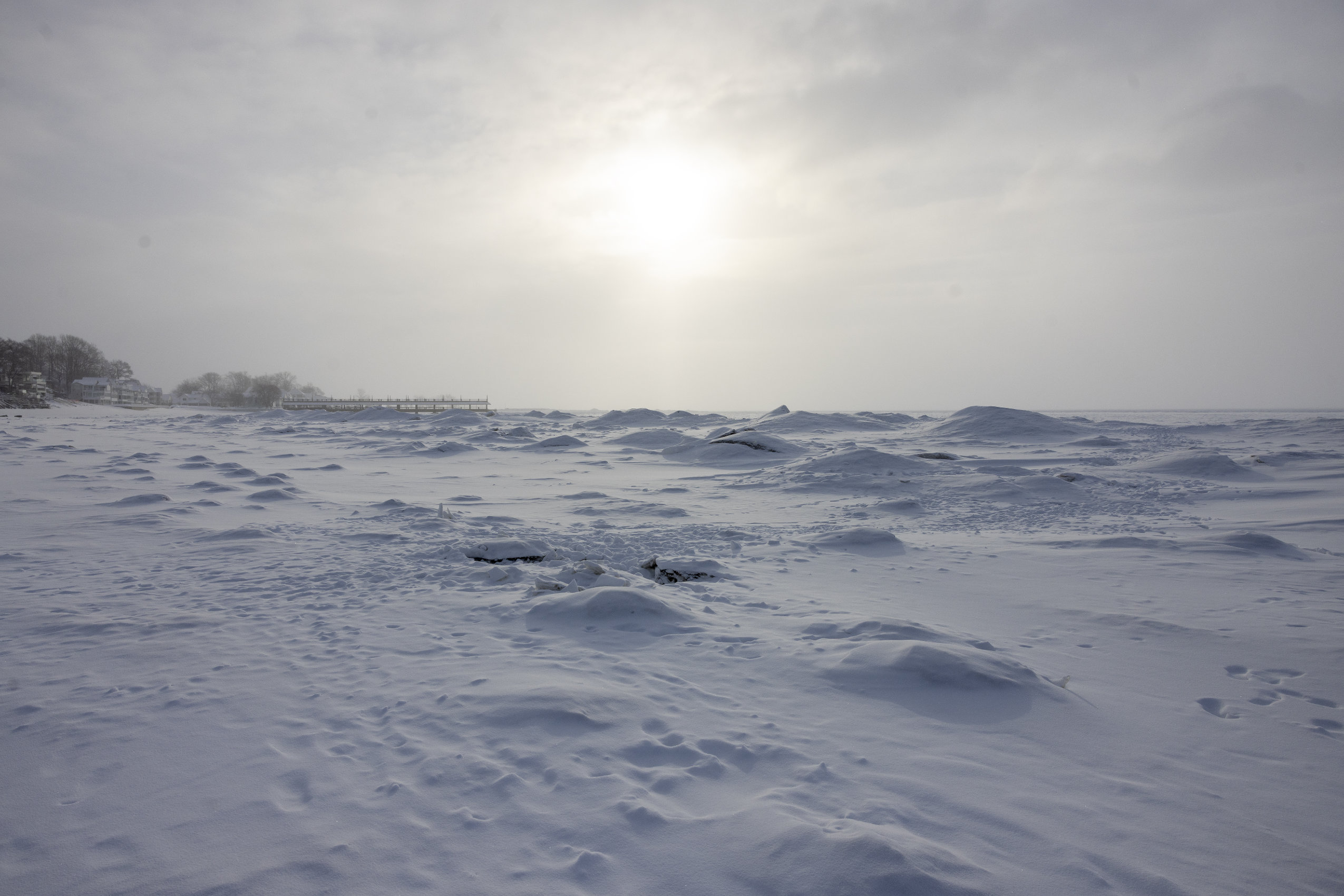
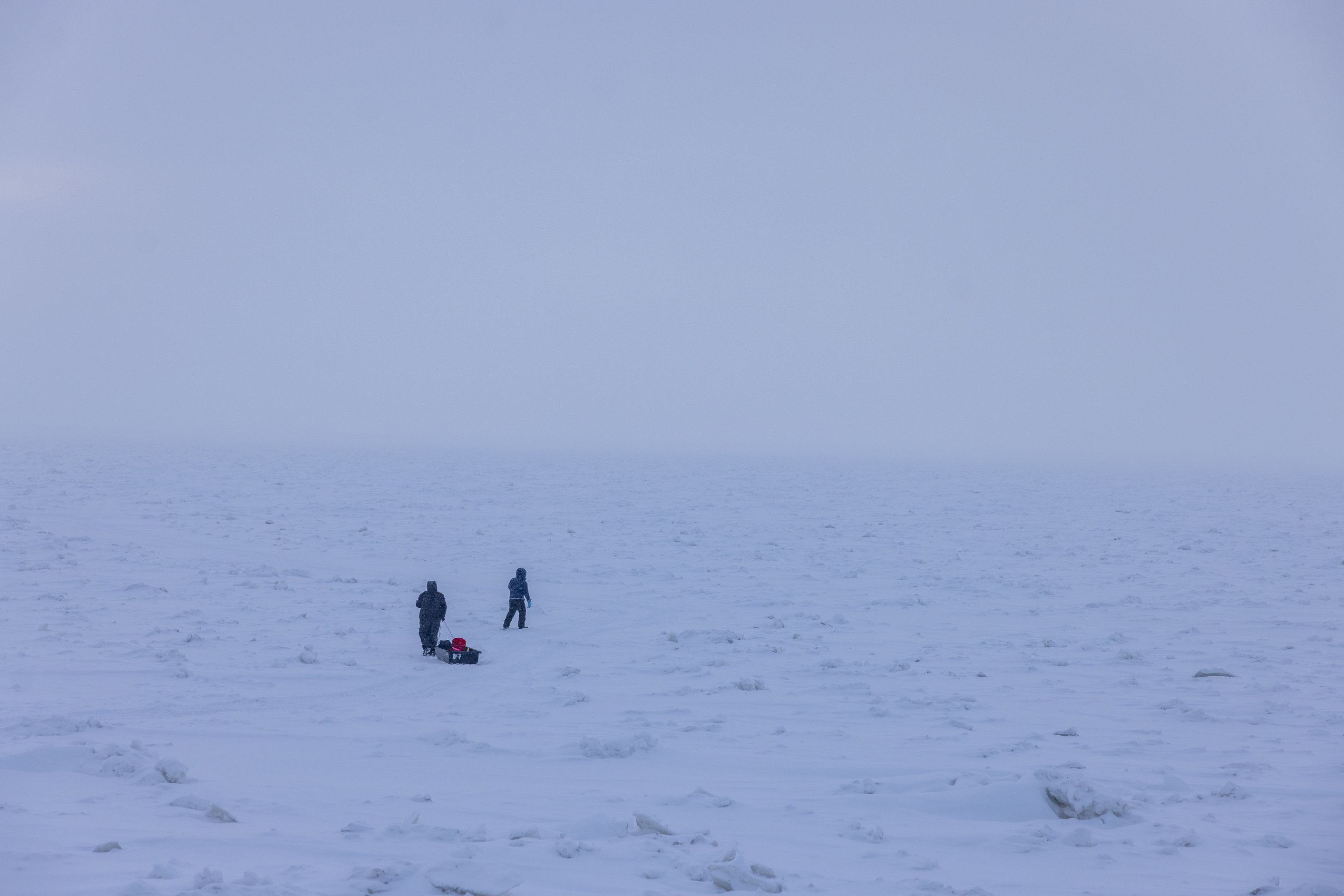
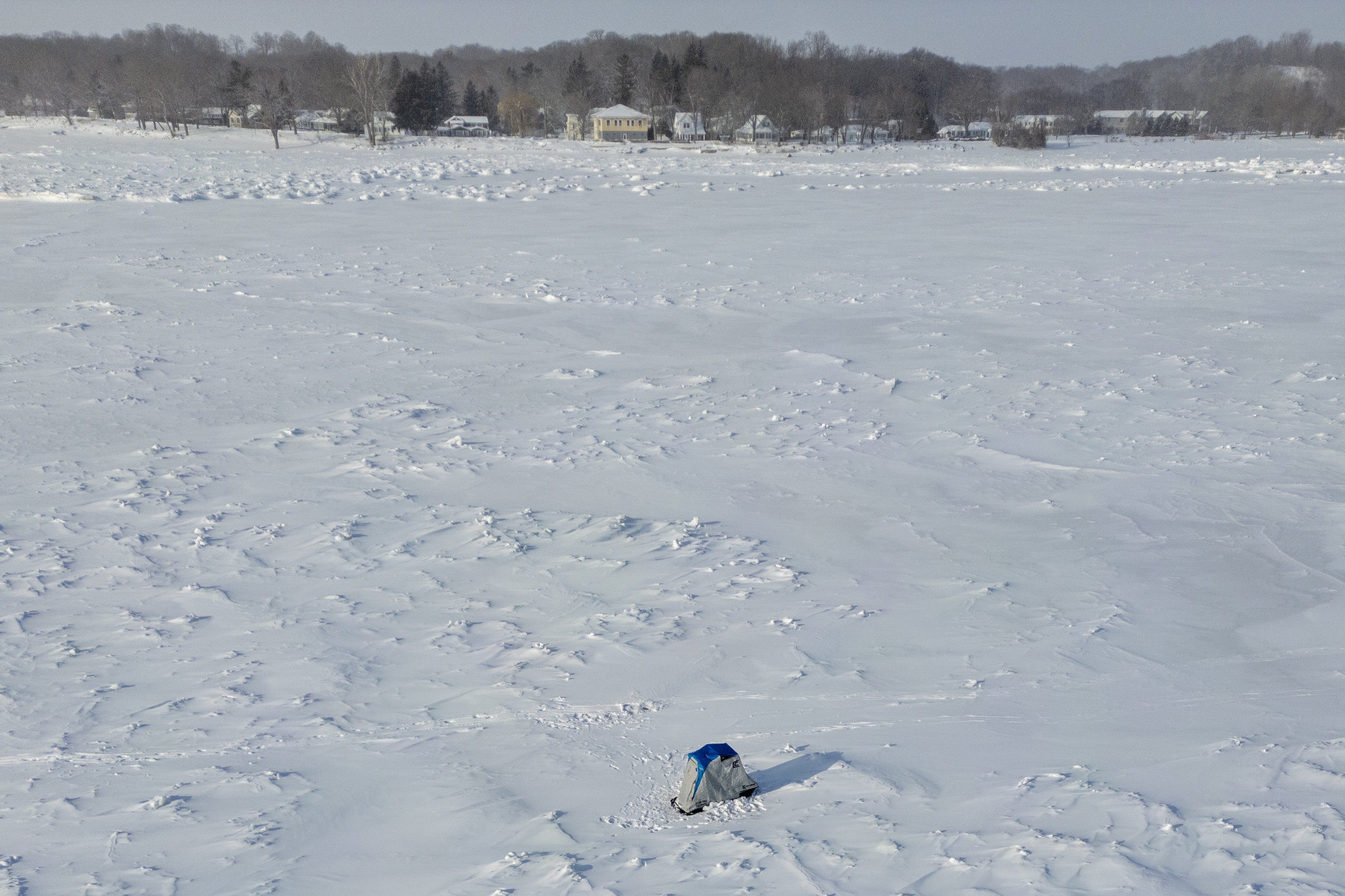
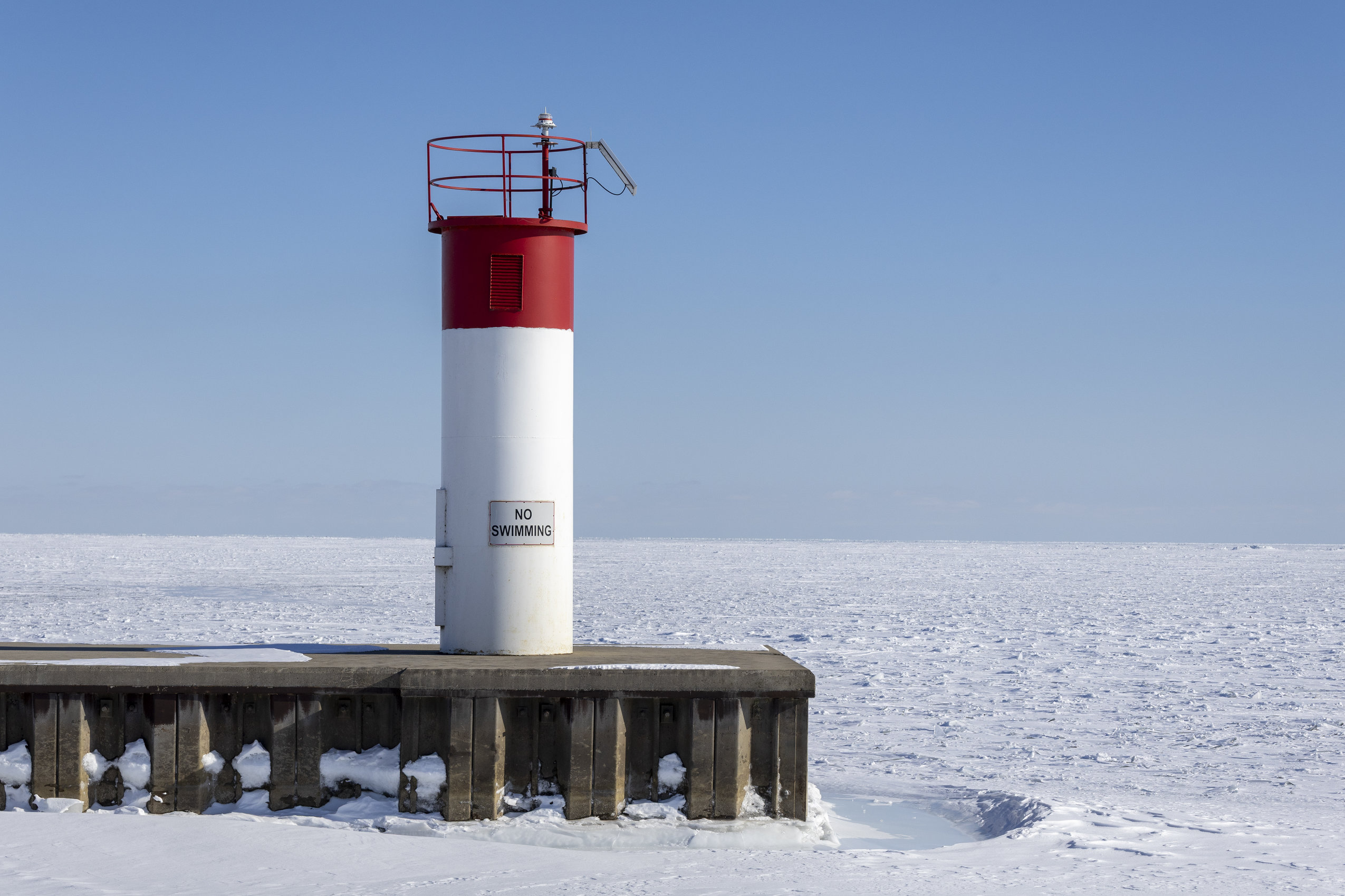
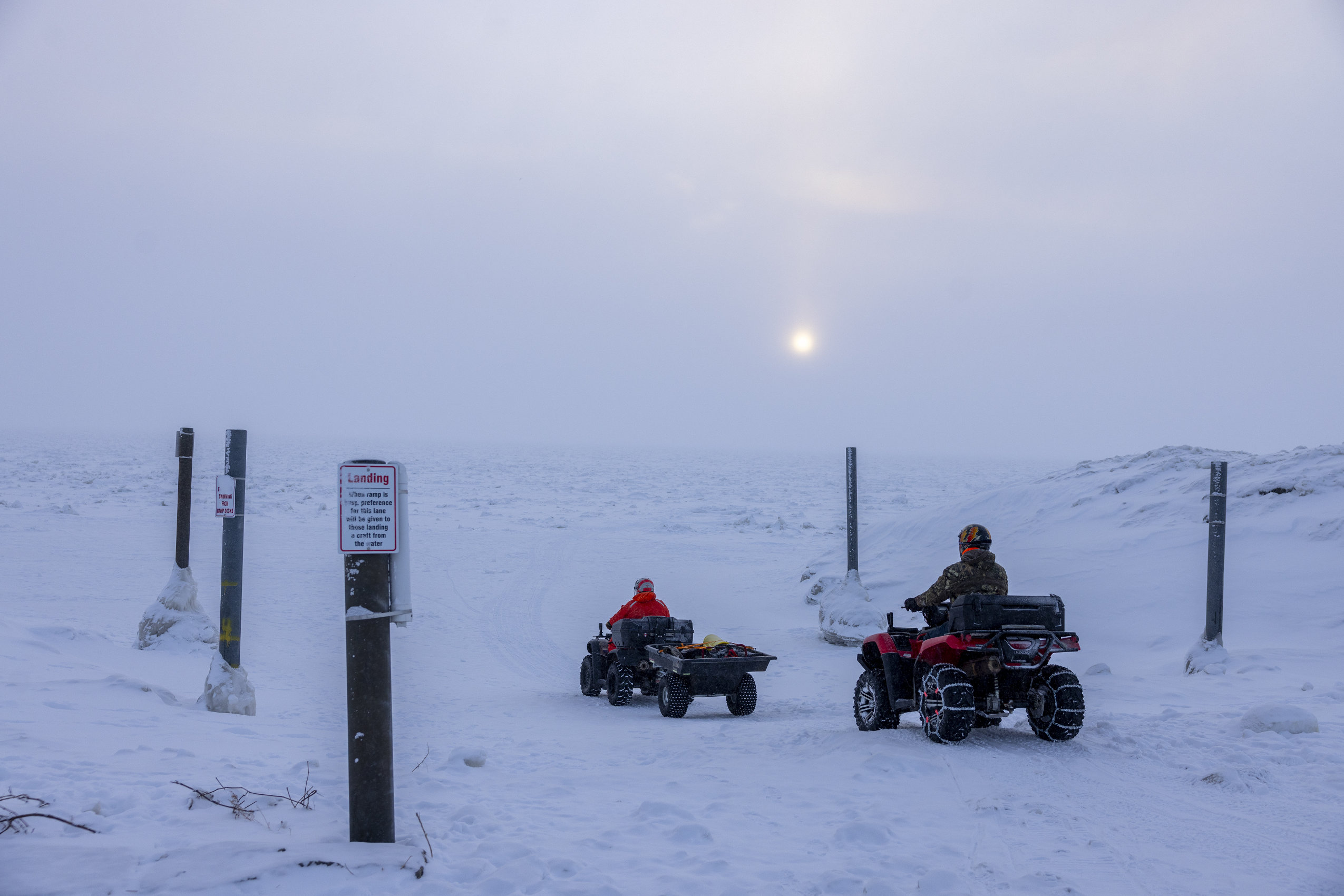
The cold snap held its grip on southern Ontario for weeks. On the shores of Lake Erie, some speculated this could be the year the ice makes it all the way across — something that hasn’t happened in three decades.

Erie, the shallowest of the Great Lakes, typically sees the most ice cover. Still, the most recent full freeze-up was in 1996, according to National Oceanic and Atmospheric Administration data.

On a Sunday in early February, as ice cover crept over 95 per cent, locals and visitors braved frigid temperatures to look out across the frozen surface. 

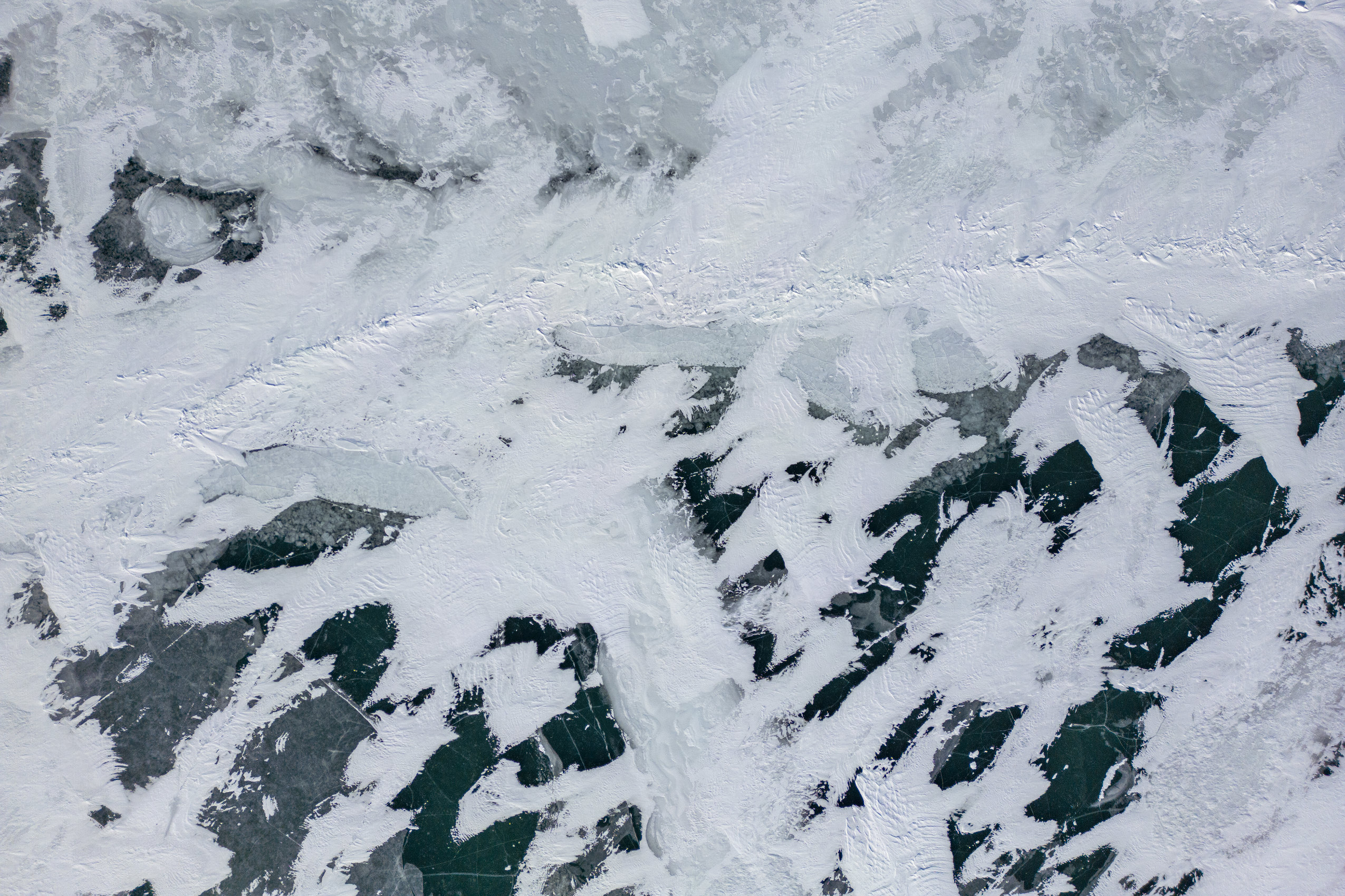
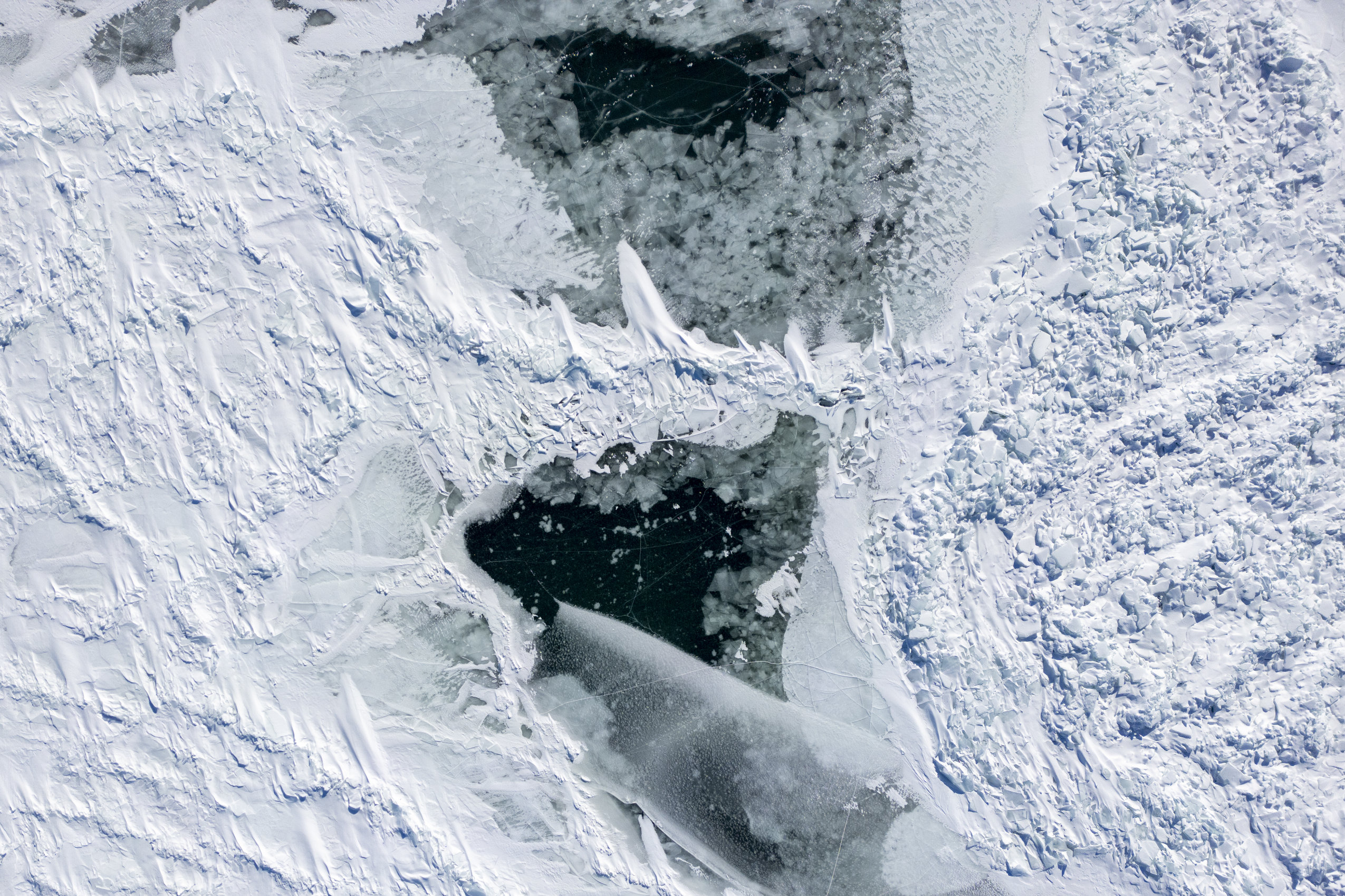
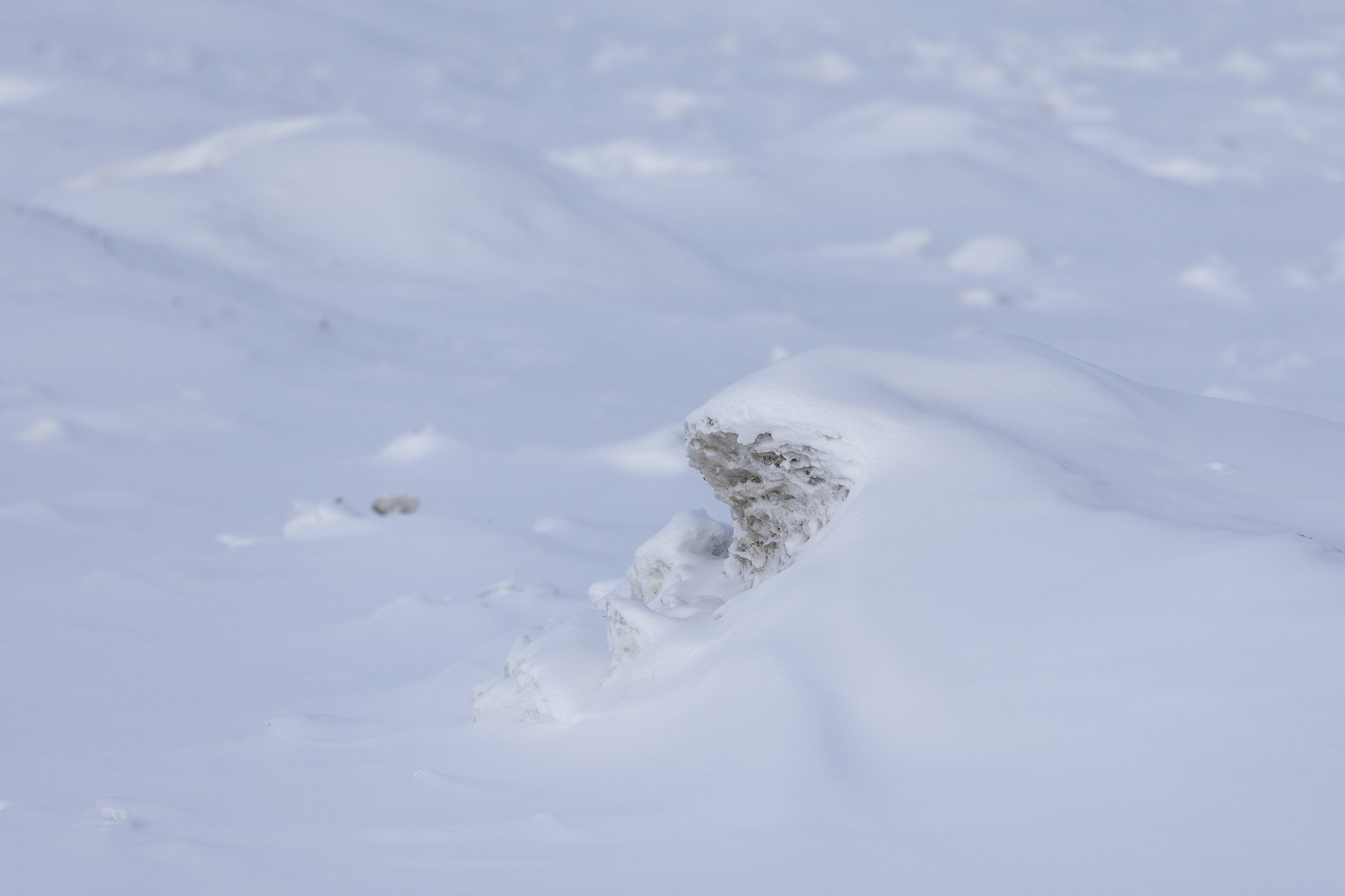
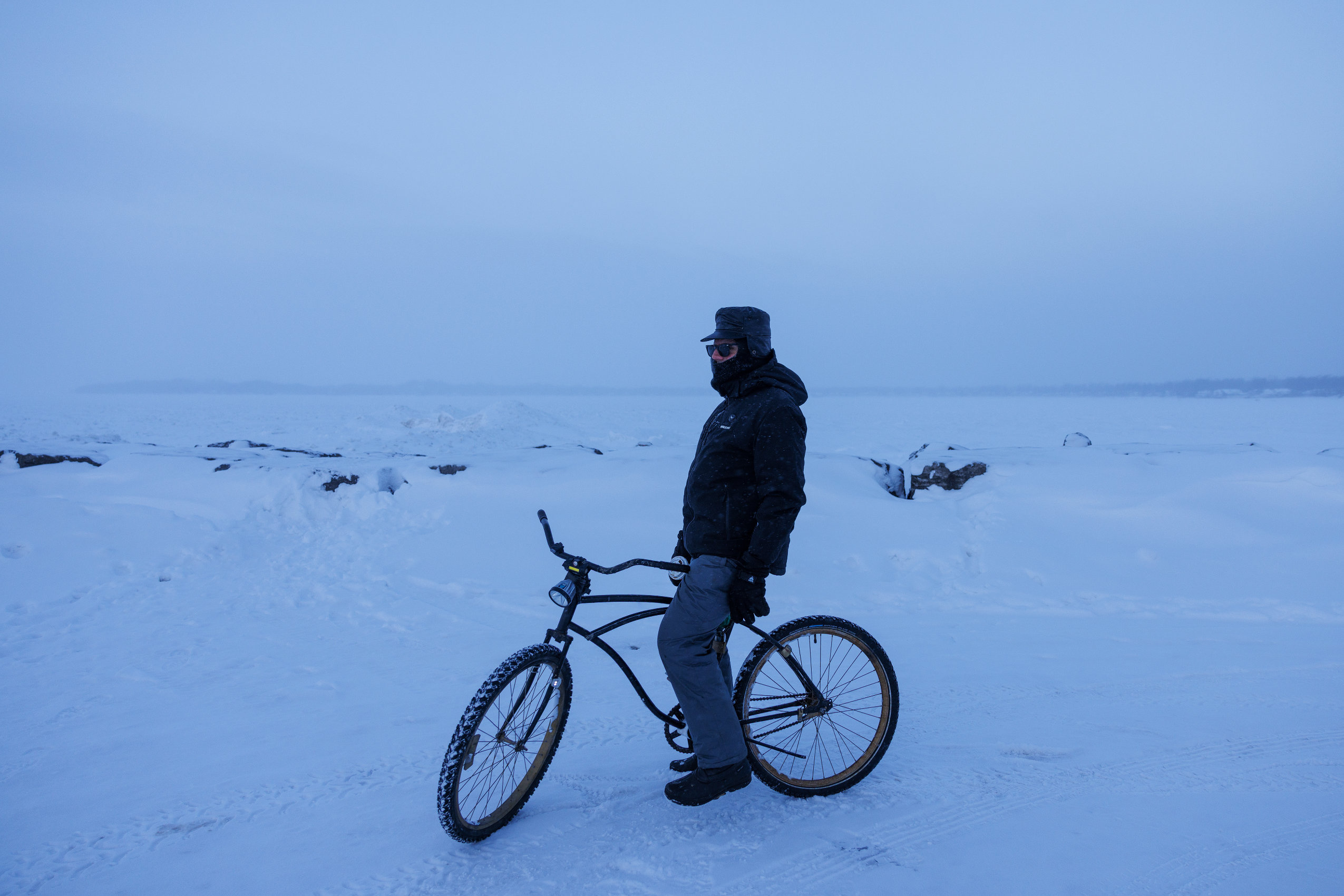
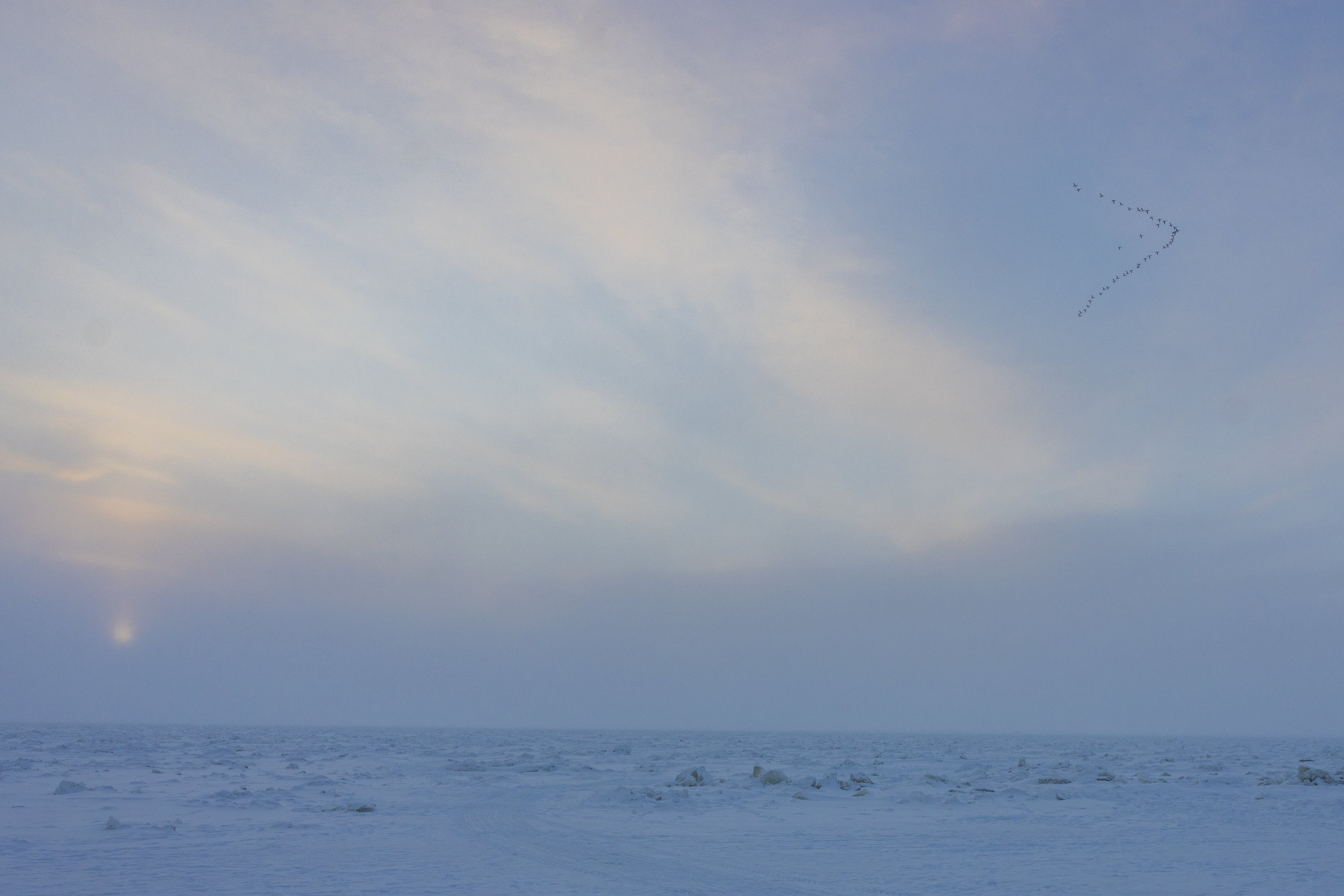
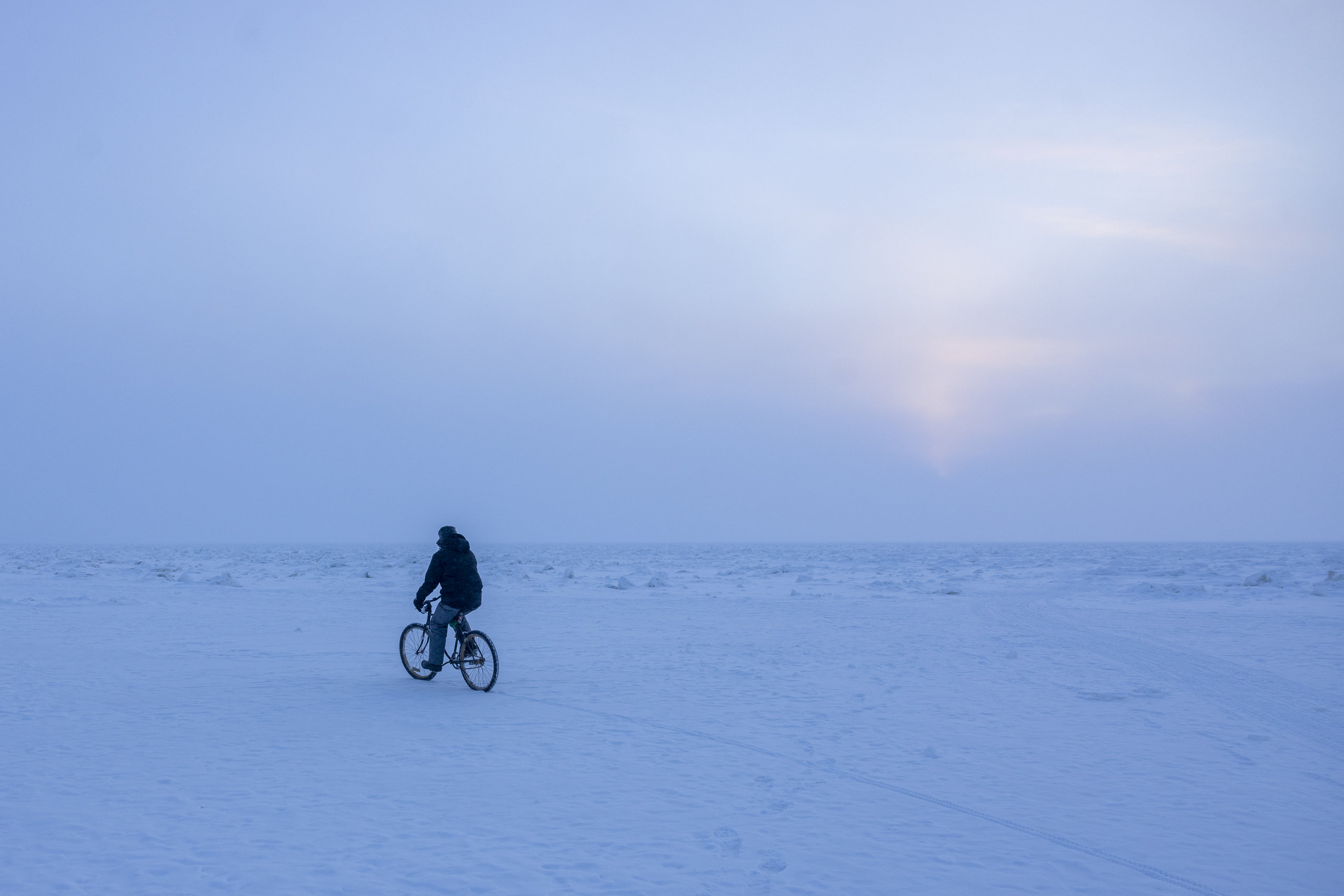
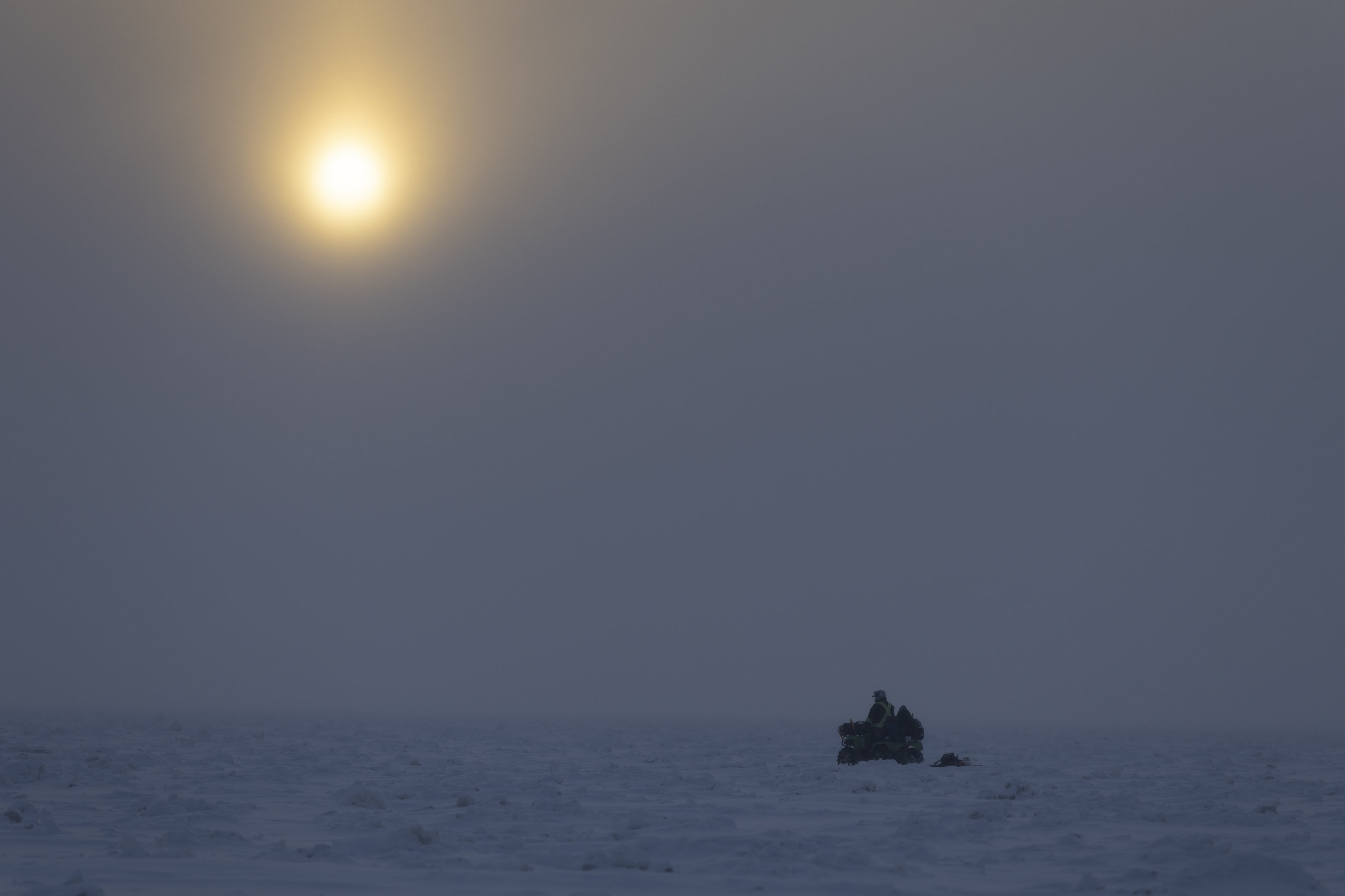
Among them was photographer Carlos Osorio, who captured the lake and the people who set out across it — on foot, studded-tire bicycle or all-terrain vehicle. Wind had sculpted blowing snow into rippling waves, as if the water, on a blustery summer day, suddenly stood still.

“When you think about water freezing, you think about smooth ice, and then you come here and the ice almost looks like frozen waves,” Frank said. “You can just imagine the water swelling up and down, but it’s not, it’s just frozen.”

Jay Augustine, a four-year resident of Crystal Beach, Ont., rode his bike with studded tires on the frozen lake.
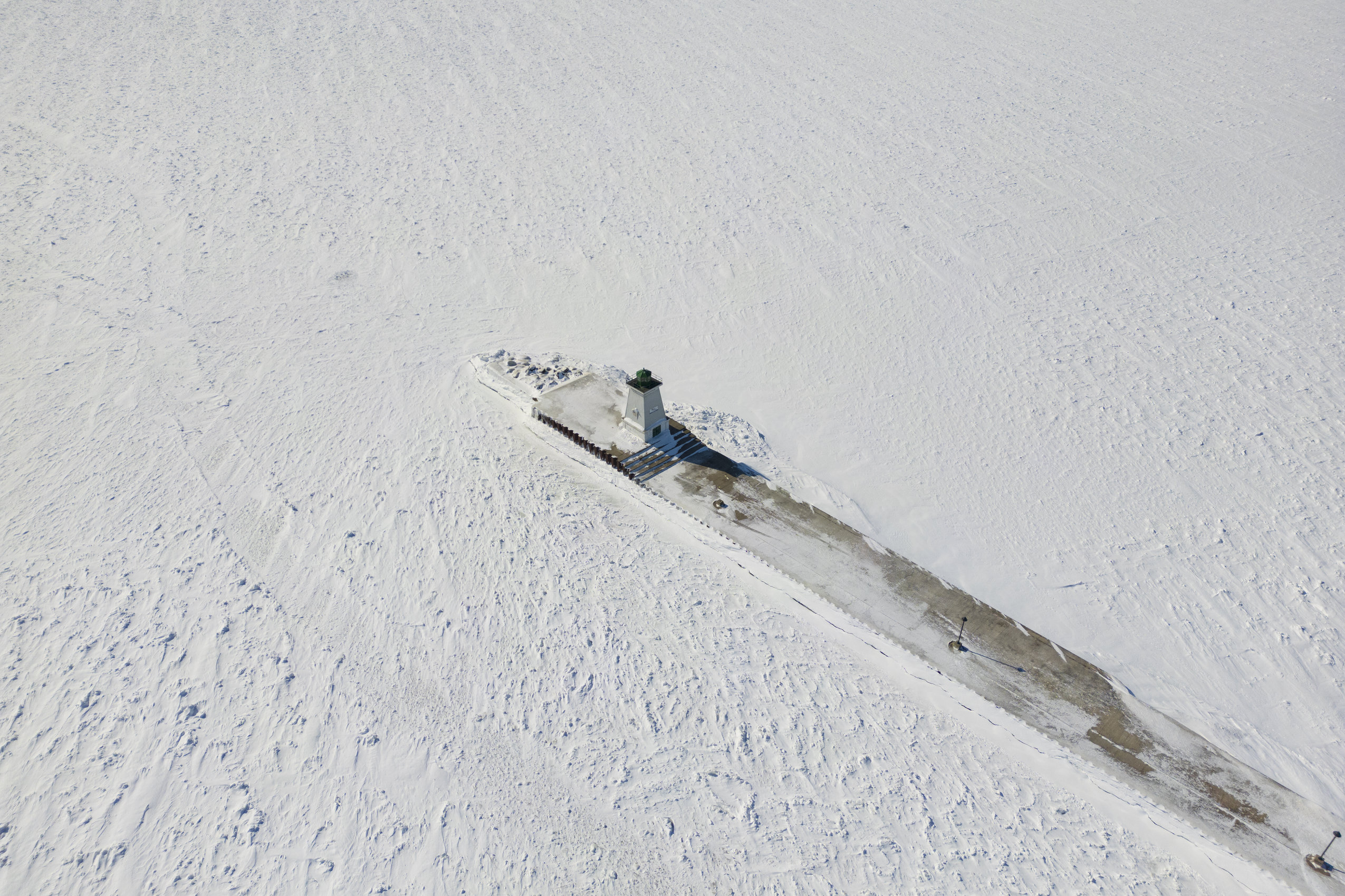
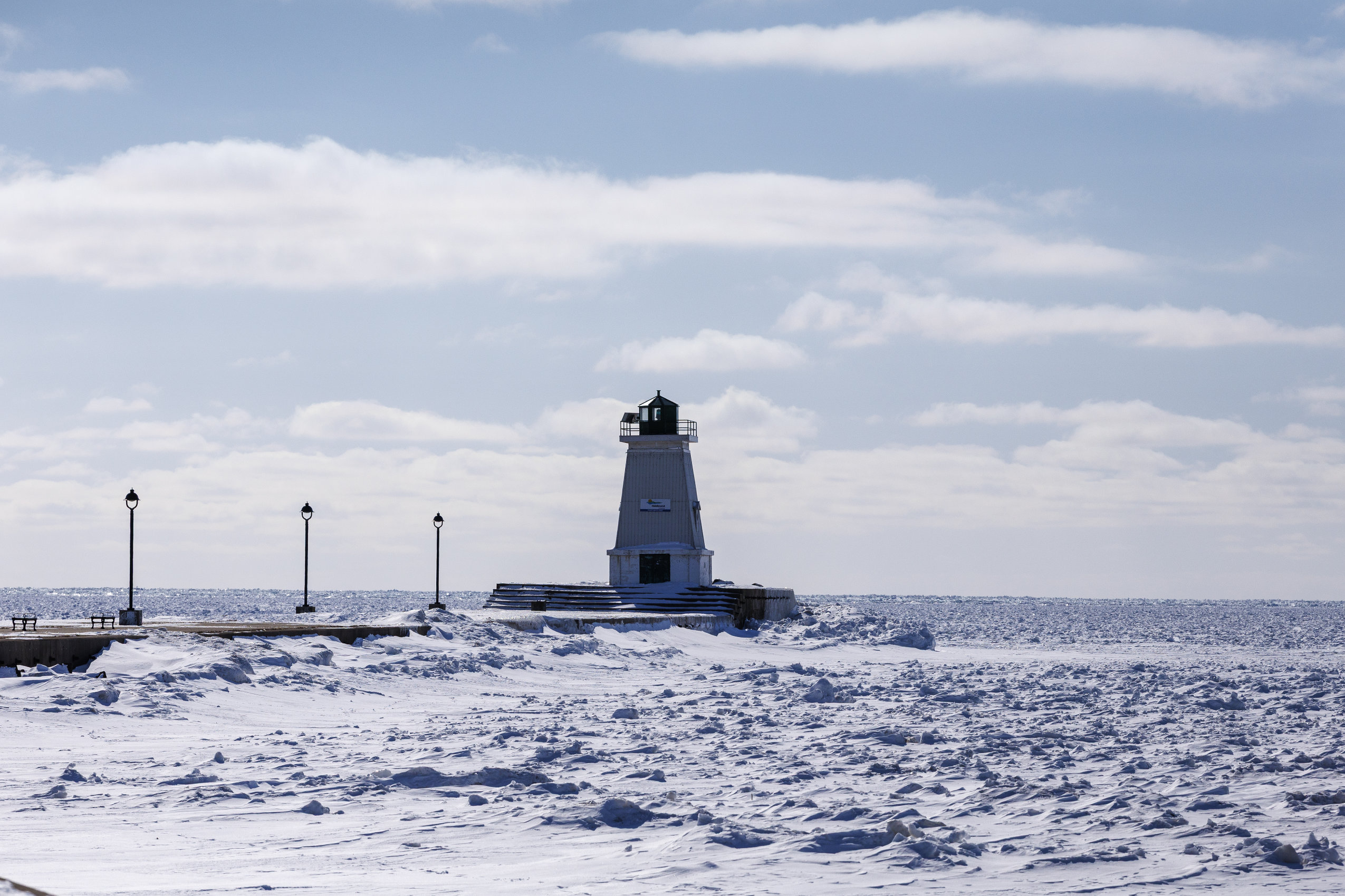
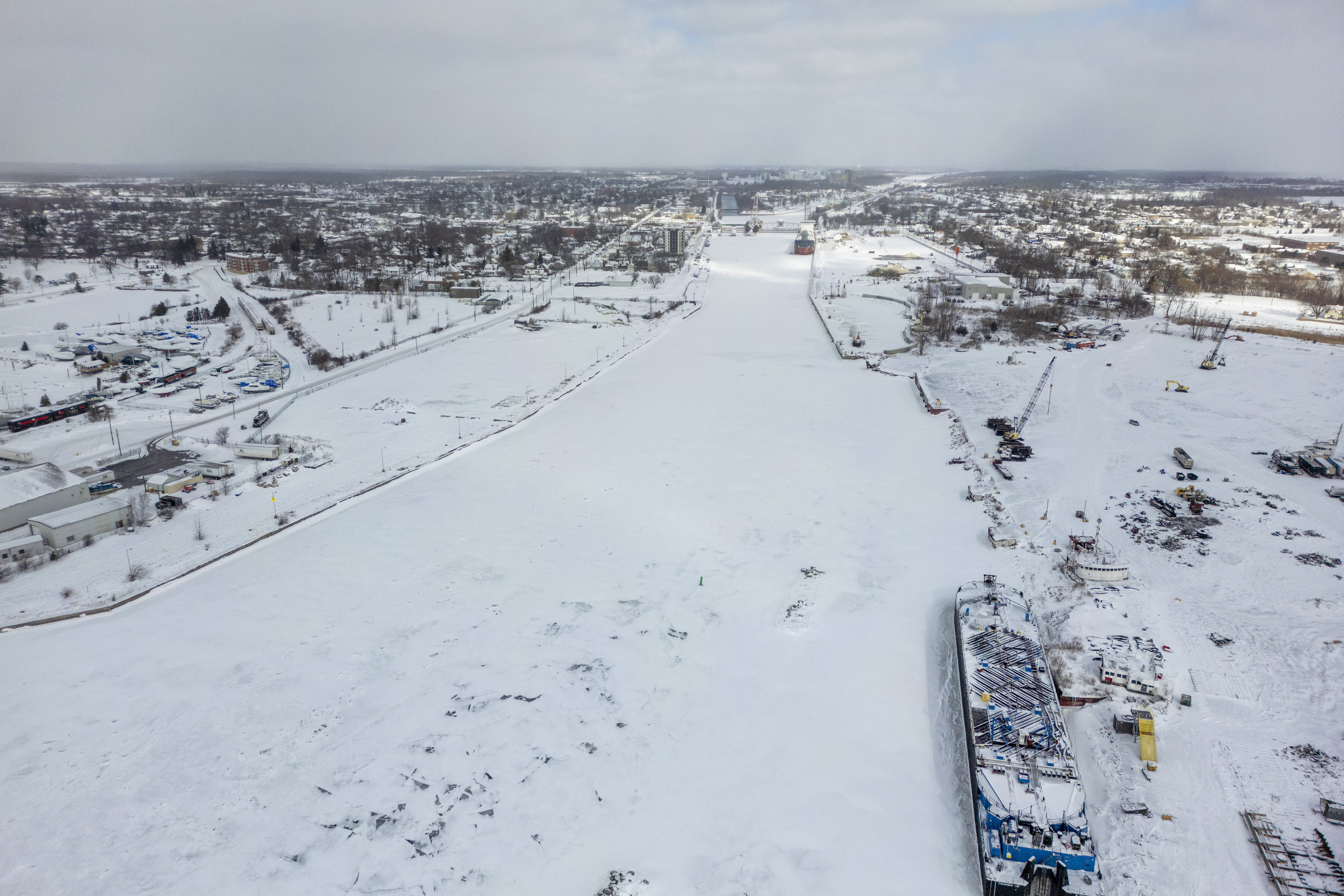
In Port Colborne, Ont., the Welland Canal that opens into Lake Erie froze over in the cold snap of early 2026.
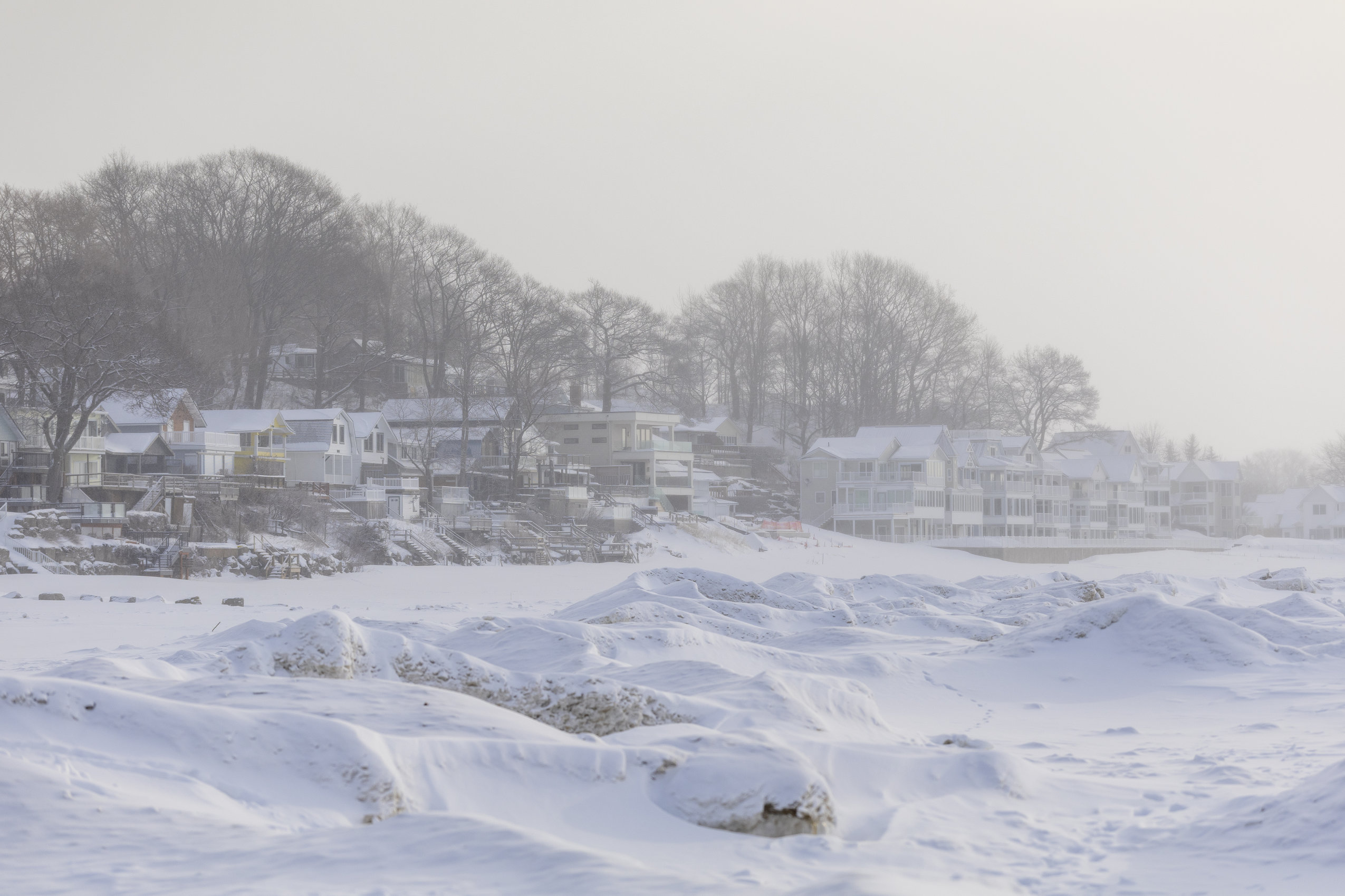
The town of Crystal Beach, Ont., crawls with tourists in the summer, but the snow-covered sand and piers sat quiet on a cold day in February.

“This is exceptional,” Gerald Meyering said, marveling at the amount of ice and snow on the lake, compared to recent mild winters.

— With files from Carlos Osorio

The post ‘So still, so quiet’: Lake Erie, frozen in a moment of time appeared first on Great Lakes Now.

Original Article

Great Lakes Now

Great Lakes Now

https://www.greatlakesnow.org/2026/02/24/so-still-so-quiet-lake-erie-frozen-in-a-moment-of-time/

The Narwhal

In September of 2025, dozens of people with indigenous roots from across the Great Lakes gathered on the banks of Michigan’s Au Sable River to harvest manoomin– or wild rice– the traditional way.

Manoomin is making a comeback in the Great Lakes. Once bountiful across the region, its existence has been threatened by dams and environmental pressures. Today, there is an effort among Anishinaabek peoples to restore and reconnect with this culturally important food.

Learn more on the Great Lakes Now YouTube channel.

This story was co-produced by Great Lakes Now, @OneDetroit, and BridgeDetroit.

#GreatLakes #Michigan #WildRice #Manoomin #Indigenous #History

===========================================
Website: https://greatlakesnow.org
Facebook: https://www.facebook.com/greatlakesnow
X: https://www.x.com/greatlakesnow
Instagram: https://www.instagram.com/greatlakesnoworg
Newsletter: https://www.greatlakesnow.org/great-lakes-now-newsletter/

To learn more about supporting Detroit PBS and Great Lakes Now, visit https://www.detroitpbs.org/

The post Harvesting Wild Rice the Traditional Way appeared first on Great Lakes Now.

Original Article

Great Lakes Now

Great Lakes Now

https://www.greatlakesnow.org/2026/02/24/harvesting-wild-rice-the-traditional-way/

Great Lakes Now

By Bauyrzhan Zhaxylykov

Bankruptcies of Michigan farmers are troubling despite a dip in their Chapter 12 filings last year. Major reasons are higher expenses for inputs such as fertilizer coupled with flat commodity prices.

The post Michigan farmers face bankruptcies, other financial challenges first appeared on Great Lakes Echo.

Original Article

Great Lakes Echo

Great Lakes Echo

https://greatlakesecho.org/2026/02/24/michigan-farmers-face-bankruptcies-other-financial-challenges/

Capital News Service

Target Conservation: Alternative Management for Increased Profits By Johnny Behrendt, Pheasants Forever | Written for the Winter 2025 Basin Buzz A common deterrent to the incorporation of conservation in farm business planning is the idea that it comes at a cost: fewer acres means less profits. While this may be [...]

The post Targeted Conservation: Alternative Management for Increased Profits appeared first on Fox-Wolf Watershed Alliance.

Original Article

Fox-Wolf Watershed Alliance

Fox-Wolf Watershed Alliance

https://fwwa.org/2026/02/23/targeted-conservation-alternative-management-for-increased-profits/?utm_source=rss&utm_medium=rss&utm_campaign=targeted-conservation-alternative-management-for-increased-profits

Tim Burns

In Traverse City, Michigan, crews are pouring a massive sorting channel that will form the core of the FishPass project, a globally unique structure in northern Michigan that’s designed to let native fish move upstream while blocking harmful invasive species like sea lamprey. Read the full story by MLive.

Original Article

Great Lakes Commission

Great Lakes Commission

https://www.glc.org/dailynews/20260223-fishpass-construction

Nichole Angell

The Bad River Band of Lake Superior Chippewa has filed a petition with Wisconsin’s Iron County Circuit Court to review a decision allowing Enbridge’s Line 5 reroute project to move forward as well as put a stop to construction until the Court considers their legal claims. Read the full story by the Wisconsin Public Radio.

Original Article

Great Lakes Commission

Great Lakes Commission

https://www.glc.org/dailynews/20260223-line5-opposition

Nichole Angell

The community-led Indigenous water research initiative, Ohneganos Ohnegahdę:gyo, has worked to address water insecurity through holistic capacity building grounded in Indigenous knowledge. These efforts will be expanded through a new Haudenosaunee Environmental Research Institute with Indigenous partnering hubs across the Great Lakes region. Read the full story by the Great Lakes Echo.

Original Article

Great Lakes Commission

Great Lakes Commission

https://www.glc.org/dailynews/20260223-water-insecurity

Nichole Angell

Part of Arcadia Dunes: The C.S. Mott Nature Preserve, Overlook Trail is a popular, universally accessible path that starts at Baldy Trailhead, just north of Arcadia off the M-22 scenic byway. All year round, this short walk through the woods ends with dazzling views of Lake Michigan from atop a high bluff. Read the full story by MLive.

Original Article

Great Lakes Commission

Great Lakes Commission

https://www.glc.org/dailynews/20260223-michigan-trail

Nichole Angell

Minnesota officials are calling on the city of Duluth to pay for a mistake believed to have led to a Tischer Creek fish kill that began in 2024. The city released about 1.7 million gallons from a drinking water reservoir into a designated trout stream causing damage along a 2-mile stretch of the waterway. Read the full story by Duluth News Tribune.

Original Article

Great Lakes Commission

Great Lakes Commission

https://www.glc.org/dailynews/20260223-duluth-fish-kill

Nichole Angell

The New York Department of State is developing an immersive extended reality experience and modular exhibit highlighting at least two “iconic” shipwrecks in what’s now the federally designated Lake Ontario National Marine Sanctuary. Read the full story by WXXI – Rochester, NY.

Original Article

Great Lakes Commission

Great Lakes Commission

https://www.glc.org/dailynews/20260223-shipwreck-exhibit

Nichole Angell

PFAS are posing a threat to the Great Lakes, one of America’s most vital water resources. Here’s what we’re learning about how PFAS are getting into the lakes, the risks they’re posing, and how to reduce those risks in the future. Read the full story by the Ohio Capital Journal.

Original Article

Great Lakes Commission

Great Lakes Commission

https://www.glc.org/dailynews/20260223-pfas

Nichole Angell

The Canadian Coast Guard Auxiliary has launched a recruitment campaign for volunteer search and rescue crew members. The unit provides marine search and rescue support across Lakes Erie and St. Clair and the Detroit River. Read the full story by The Windsor Star.

Original Article

Great Lakes Commission

Great Lakes Commission

https://www.glc.org/dailynews/20260223-coast-guard-volunteer

Nichole Angell

Almost a century ago, arctic grayling vanished from Michigan’s waters. Explore an effort to restore this long-lost fish. In Ontario, citizen scientists work to understand the damage that road salt is doing to local waterways. Author and forester Ethan Tapper discusses what it means to love a forest.

#GreatLakes #Fish #Ecology #Environment #Winter #Forest #Trees #Ontario #Michigan
===========================================
Website: https://greatlakesnow.org
Facebook: https://www.facebook.com/greatlakesnow
X: https://www.x.com/greatlakesnow
Instagram: https://www.instagram.com/greatlakesnoworg
Newsletter: https://www.greatlakesnow.org/great-lakes-now-newsletter/

To learn more about supporting Detroit PBS and Great Lakes Now, visit https://www.detroitpbs.org/

The post Restoring Grayling and Salting Roads | Great Lakes Now | Full Episode appeared first on Great Lakes Now.

Original Article

Great Lakes Now

Great Lakes Now

https://www.greatlakesnow.org/2026/02/23/restoring-grayling-and-salting-roads-great-lakes-now-full-episode/

Great Lakes Now

By Mia Litzenberg

The Six Nations of the Grand River face ongoing water insecurity from pollution, climate change and corporate extraction. Many years of Indigenous water advocacy have led to the development of a new Haudenosaunee Environmental Research Institute as the next step to overcome these challenges.

The post Water is Life, Six Nations lead international approach to long-standing water insecurity first appeared on Great Lakes Echo.

Original Article

Great Lakes Echo

Great Lakes Echo

https://greatlakesecho.org/2026/02/22/water-is-life-six-nations-lead-international-approach-to-long-standing-water-insecurity/

Mia Litzenberg

Flint, Michigan, is known for having significantly higher-than-average water rates, with residents paying some of the highest water bills in the nation, even after the Flint Water Crisis. Residents are facing a proposed 6.83% rise in water rates in 2026.  Read the full story by the Flint Courier News.

Original Article

Great Lakes Commission

Great Lakes Commission

https://www.glc.org/dailynews/20260220-flint-water-rates

Autumn McGowan

The New York State Department of Environmental Conservation announced the release of proposed changes to coolwater sportfish regulations that will help protect fish while spawning, increase the reproductive capacity of walleye in Lake Ontario’s eastern basin, and eliminate unnecessary special regulations. Read the full story by Lake Placid News.

Original Article

Great Lakes Commission

Great Lakes Commission

https://www.glc.org/dailynews/20260220-dec-regulations

Autumn McGowan

Saginaw Bay supports a productive fishery today, but much of its historic habitat was lost decades ago. Rock reefs are a critical habitat, and rebuilding reefs does not recreate the past — but it strengthens the ecological foundation needed to support resilient fish populations in the future. Read the full story by the Ludington Daily News.

Original Article

Great Lakes Commission

Great Lakes Commission

https://www.glc.org/dailynews/20260220-saginaw-bay-reefs

Autumn McGowan

Freighters cruise up and down the Detroit River, returning from or headed to the Great Lakes. But what happens when those freighters need something from the mainland? It turns out these boats utilize a unique mail service in Detroit that has been operating for more than 150 years. Read the full story by the Michigan Public.

Original Article

Great Lakes Commission

Great Lakes Commission

https://www.glc.org/dailynews/20260220-ship-mail

Autumn McGowan

By Ada Tussing

If you’ve noticed fewer birds in the sky recently, they haven’t all flown south for the winter. The North American bird population has dropped nearly 30% in the last 50 years. Mariette Nowak's book "Birdscaping for Wisconsin and the Great Lakes Region" offers a solution: birdscaping.

The post Fight climate change from your garden with ‘birdscaping’ first appeared on Great Lakes Echo.

Original Article

Great Lakes Echo

Great Lakes Echo

https://greatlakesecho.org/2026/02/20/fight-climate-change-from-your-garden-with-birdscaping/

Ada Tussing