News

Great Lakes Commission releases 2026 agenda for the Great Lakes basin

Ann Arbor, Michigan — The Great Lakes Commission (GLC) today released its 2026 agenda for the Great Lakes. The binational government agency calls for continued strategic investment in the lakes, which hold 95% of America’s fresh surface water and provide drinking water for more than 47 million people in the U.S. and Canada.
 
“Protecting the Great Lakes safeguards public health while supporting an $81 billion regional recreation economy, an agricultural economy valued at more than $24 billion in the U.S., and a $51 billion maritime transportation system,” said GLC Chair Tim Bruno, Great Lakes Program Coordinator at the Pennsylvania Department of Environmental Protection. “The Great Lakes Commission calls on our federal partners to maintain strong support for the Great Lakes Restoration Initiative and other programs critical for our region.”
 
In 2026, the GLC urges Congress and the administration to: reauthorize and fully fund the Great Lakes Restoration Initiative; invest in the Great Lakes Navigation System; fund the GLC to fulfill its unique role in the region; provide clean and safe drinking water; pass a Farm Bill; reduce the impacts of harmful algal blooms; prevent damage from aquatic invasive species; and contribute to a resilient Great Lakes basin.
 
The agenda is being shared in advance of Thursday’s Great Lakes Day, an annual event organized by the GLC and the Northeast Midwest Institute. More than 15 members of Congress who play a critical role in shaping Great Lakes policies are scheduled to speak at the Great Lakes Congressional Breakfast Reception, which will be held March 5 in Washington, D.C. The 2026 Great Lakes Commission Semiannual Meeting will also be held earlier in the week in D.C.
 
For more information on the GLC and its work, visit www.glc.org.

The Great Lakes Commission, led by chair Timothy Bruno, Great Lakes Program Coordinator at the Pennsylvania Department of Environmental Protection, is a binational government agency established in 1955 to protect the Great Lakes and the economies and ecosystems they support. Its membership includes leaders from the eight U.S. states and two Canadian provinces in the Great Lakes basin. The GLC recommends policies and practices to balance the use, development, and conservation of the water resources of the Great Lakes and brings the region together to work on issues that no single community, state, province, or nation can tackle alone. Learn more at www.glc.org.

Contact

For media inquiries, please contact Beth Wanamaker, beth@glc.org.

Recent GLC News

Upcoming GLC Events

View GLC Calendar

Archives

Original Article

Great Lakes Commission

Great Lakes Commission

https://www.glc.org/news/priorities-030226

Beth Wanamaker

Mike Shriberg, University of Michigan

What began as a straightforward question from one water-quality advocate has morphed into a high-stakes battle over an oil pipeline at the highest levels of the U.S. government – with implications that go far beyond the fate of a technical legal conflict.

The question arose after a 2010 Enbridge Energy oil spill in Michigan. The advocate asked what other Michigan waterways were at risk from crude oil spills. But in the wake of, among other issues, two ships doing damage to an underwater section of another Enbridge oil pipeline, the conflict has now come all the way to the U.S. Supreme Court.

On Feb. 24, 2026, the justices heared oral arguments and will thereafter deliberate about the future of Enbridge Energy’s Line 5 oil pipeline, which runs through Michigan and Wisconsin.

As a water policy scholar with a focus on the Great Lakes, I have participated directly in the Line 5 debate as a gubernatorial appointee to an advisory board, as well as analyzed its implications. I see this moment in the Supreme Court as one layer of a complex debate that Line 5 has stirred up about states’ rights, Indigenous rights and the future of the fossil fuel economy.

Enbridge Energy vs. Dana Nessel

The actual issue in front of the Supreme Court is procedural: In 2019, Michigan Attorney General Dana Nessel sued Enbridge in a Michigan state court, seeking to shut down the pipeline, alleging “violations of the public-trust doctrine, common-law public nuisance, and the Michigan Environmental Protection Act.” Federal law allowed Enbridge to seek to move the case to federal court within 30 days of the initial filing.

Enbridge did not do so, but the Canada-based multinational company has since argued that it still should be allowed to deal with the case in federal court, as it is doing in a similar case brought by Michigan Gov. Gretchen Whitmer in 2020.

The specific question before the Supreme Court is a very technical legal one: Even though Enbridge failed to request the move to federal court in a timely way, should that prevent Enbridge from moving it later?

A sensitive waterway

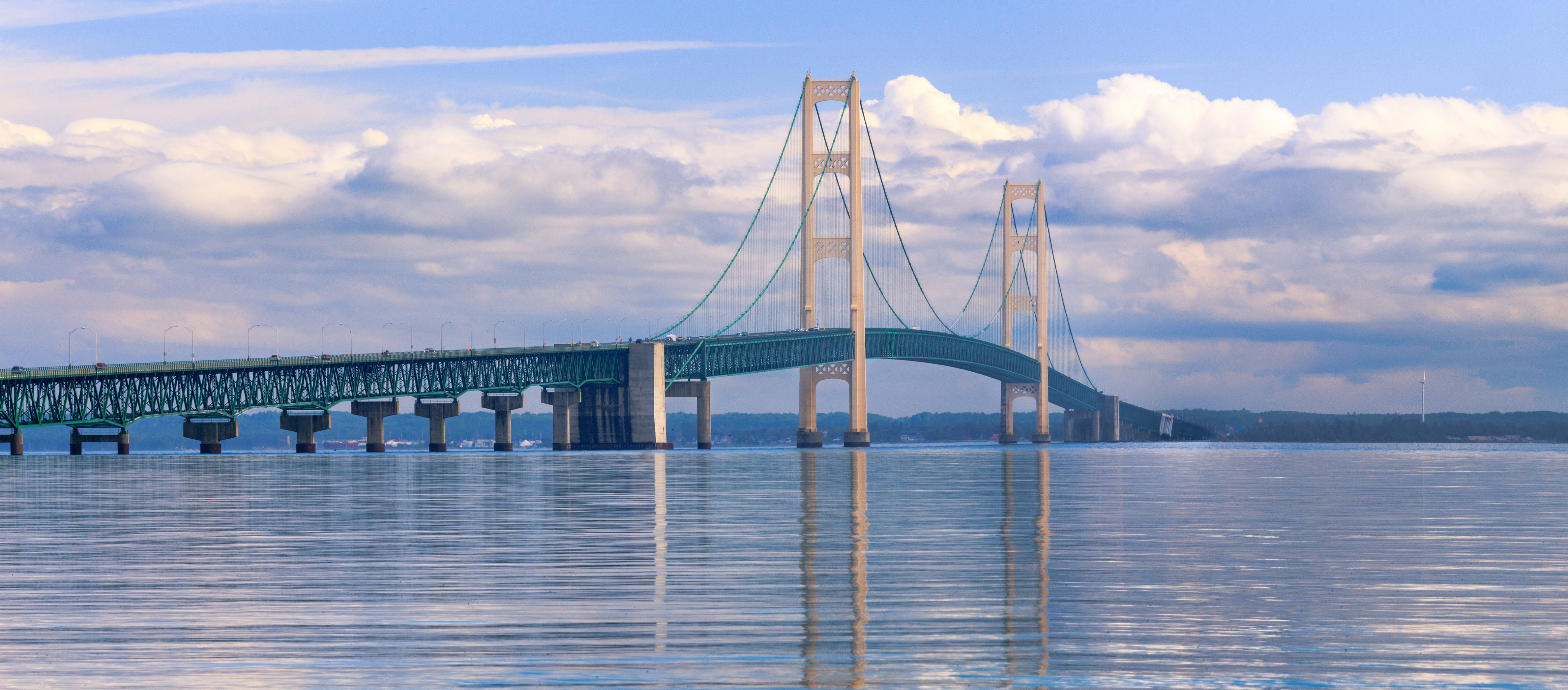
There is no debate that Line 5’s crossing of the Straits of Mackinac – which separate Michigan’s Upper and Lower Peninsulas right where Lakes Michigan and Huron meet – lies within Michigan’s territorial boundaries.

The lawsuits from Nessel and Whitmer are attempting to stop Enbridge from operating the pipeline in this sensitive area of the Great Lakes.

The risks became clearer to the public when a ship’s anchor struck the underwater pipeline in 2018 and another ship damaged one of the pipe’s supports in 2020. In the 2018 incident, some fluid – not crude oil – leaked into the lake water.

But Enbridge is refusing to shut the pipeline down. The company says the dispute belongs in federal court because state laws and regulations generally do not apply to this pipeline, which carries mostly Canadian oil to mostly Canadian refineries, using Michigan and the Great Lakes as a shortcut. Enbridge maintains that a treaty with Canada supersedes state authority.

The ruling from the Supreme Court will likely be narrow and procedural. However, all parties seem to agree that the decision will also have much wider consequences, including being a key determinant and signal of states’ rights to protect their waterways and other natural resources in the face of industry opposition.

Bad River Band vs. Enbridge Energy

Meanwhile, in Wisconsin, the Line 5 oil pipeline passes through the reservation of the Bad River Band of Lake Superior Chippewa, and the pending legal outcome in a separate federal court case is well beyond procedural.

The band revoked Enbridge’s easement in 2013, but Enbridge has refused to remove the pipeline, so – after years of failed negotiations – the Bad River Band sued in 2019.

U.S. District Judge William Conley ruled in 2023 that Enbridge had been trespassing for 10 years and awarded US$3 million in damage payments. Conley gave Enbridge until June 2026 to find an alternative route around the Bad River Band’s land, or shut the pipeline down.

As this date approaches with no clear resolution in sight, the Trump administration joined Enbridge in seeking to reverse that decision and keep Line 5 open. While Conley’s decision is being contested by both Enbridge and the Bad River Band in an appeals court one level below the U.S. Supreme Court, the status of the pipeline during this legal process is very much in question.

Line 5 cannot operate without the Bad River Band reservation section, but the deeper issue is about Indigenous peoples’ rights to control their own lands and future on reservations. If Enbridge wins, many analysts believe that Indigenous rights to self-determination on reservations will be significantly eroded.

Attempts to reroute

Enbridge has a two-pronged strategy to save Line 5 from decommissioning: fight in the courts against the state of Michigan and the Bad River Band, while simultaneously working to reroute the pipeline around these problematic areas.

In the Straits of Mackinac, that means attempting to put Line 5 in a tunnel underneath Lake Michigan. This requires federal permits – which will likely be issued soon – as well as state permits. The permission issued by the Michigan Public Service Commission to build the tunnel is being challenged in the Michigan Supreme Court, while advocates are pressuring Whitmer not to issue another state permit that is also required.

The situation is similar in Wisconsin, where federal permits for rerouting the pipeline outside the reservation – but not beyond the watershed serving the Bad River Band’s land – were issued in October 2025 by the Trump administration. The state permit is caught up in legal and political challenges.

In each case, the immediate issue is about the direct environmental impacts of the projects. But also in each case, the underlying battle is about the long-term effects of projects involving fossil fuels. Environmental advocates want the state and federal agencies to consider the permits in light of the potential for more climatic, health and environmental damage from burning the oil the pipeline carries. Enbridge and its allies want to focus narrowly on local ecological impacts and not on the larger debate about the future of fossil fuels.

The bigger debate

As the highest court in the land considers what some might see as a very mundane and localized issue, I believe it’s useful to peel back the layers and see deeper meaning. Jeffrey Insko, an American studies professor at Oakland University and tireless chronicler and analyst of the Line 5 saga, summarizes this depth well:

“If shutting down Line 5 were about nothing more than getting an aging pipeline out of the water, if it weren’t about addressing the climate crisis, about reducing fossil fuel consumption, about a habitable future, about cultivating better relations with the more-than-human world, about respecting Indigenous rights and lifeways, it wouldn’t be a movement worth having. It would just be a technical problem with a technical solution, one that basically accepts the way things are. But shutting down Line 5 is ultimately a step toward changing the way things are.”

The Supreme Court’s ruling may be on technical grounds, but its repercussions could be very wide indeed.

This story was updated Feb. 24, 2026, with the fact that oral arguments at the Supreme Court had concluded.

Mike Shriberg, Professor of Practice & Engagement, School for Environment & Sustainability; Director of the University of Michigan Water Center, University of Michigan

This article is republished from The Conversation under a Creative Commons license. Read the original article.

The post Supreme Court’s Michigan pipeline case is about Native rights and fossil fuels, not just technical legal procedure appeared first on Great Lakes Now.

Original Article

Great Lakes Now

Great Lakes Now

https://www.greatlakesnow.org/2026/03/02/supreme-courts-michigan-pipeline-case-is-about-native-rights-and-fossil-fuels-not-just-technical-legal-procedure/

The Conversation

Arctic grayling were once abundant in Michigan’s waters. But almost a century ago, habitat destruction, overfishing, and predation by introduced species decimated their populations. By 1936, the fish had vanished from Michigan entirely. Today, and effort is underway to restore self-sustaining populations of this long-lost fish

#Fish #GreatLakes #Environment #Fishing #Ecology #FreshwaterFish

===========================================
Website: https://greatlakesnow.org
Facebook: https://www.facebook.com/greatlakesnow
X: https://www.x.com/greatlakesnow
Instagram: https://www.instagram.com/greatlakesnoworg
Newsletter: https://www.greatlakesnow.org/great-lakes-now-newsletter/

To learn more about supporting Detroit PBS and Great Lakes Now, visit https://www.detroitpbs.org/

===========================================

“Restoring the Long-Lost Arctic Grayling” was produced by Great Lakes Now/Detroit PBS in partnership with Running Wild Media.

Produced and Written by
Justin Grubb

Narrated by
Rob Green

Edited by
Jordan Wingrove

Camera
Justin Grubb
Alex Goetz
Danielle Grubb

The post Restoring the Long-Lost Arctic Grayling | Great Lakes Now appeared first on Great Lakes Now.

Original Article

Great Lakes Now

Great Lakes Now

https://www.greatlakesnow.org/2026/03/02/restoring-the-long-lost-arctic-grayling-great-lakes-now/

Great Lakes Now

By Lillian Williams

he shrinking number of farms in Michigan – down by about 1,300 between 2023 and 2024 – and the trend of existing farms to expand to survive is changing the culture of rural communities.

The post Shifting farm economy means changes for rural communities first appeared on Great Lakes Echo.

Original Article

Great Lakes Echo

Great Lakes Echo

https://greatlakesecho.org/2026/02/28/shifting-farm-economy-means-changes-for-rural-communities/

Capital News Service

Energy company Enbridge has finally started work on rerouting an aging oil pipeline around a tribal reservation in northern Wisconsin after seven years of legal wrangling, moving ahead despite two new lawsuits that still could delay the project indefinitely. Read the full story by the Associated Press.

Original Article

Great Lakes Commission

Great Lakes Commission

https://www.glc.org/dailynews/20260227-enbridge-reroute

Taaja Tucker-Silva

On Friday, February 20, the Wisconsin Assembly unanimously passed two bills to help residents with PFAS mitigation after 30 months of debate. Governor Tony Evers approved $125 million for PFAS cleanup in 2023, but Republican lawmakers disagreed with how the funds would be distributed. Read the full story by Great Lakes Now.

Original Article

Great Lakes Commission

Great Lakes Commission

https://www.glc.org/dailynews/20260227-wisconsin-pfas

Taaja Tucker-Silva

The “nurdles” that scattered along I-196 and into Michigan’s Kalamazoo river after a January 27 semi-truck crash are the same industrial pellets that researchers have been finding for years on Great Lakes beaches, underscoring the threat of microplastics to Great Lakes ecosystems. Read the full story by MLive.

Original Article

Great Lakes Commission

Great Lakes Commission

https://www.glc.org/dailynews/20260227-oodles-of-nurdles

Taaja Tucker-Silva

Although this year is an exception, Lake Erie has seen more low‑ or no‑ice winters over the past 50 years. With less ice, storms are more likely to drive water inland. Officials are developing new ways to protect shorelines from sudden flooding and longer storm seasons. Read the full story by the New York Times.

Original Article

Great Lakes Commission

Great Lakes Commission

https://www.glc.org/dailynews/20260227-erie-surges

Taaja Tucker-Silva

For one day last week, Lake Superior gave thousands of people a rare gift — then took it back. The Apostle Islands ice caves, accessible for the first time since 2015, drew visitors from across the country before a winter storm shattered the ice shelf less than 24 hours after they opened. Read the full story by the Ashland Daily Press.

Original Article

Great Lakes Commission

Great Lakes Commission

https://www.glc.org/dailynews/20260227-ice-caves

Taaja Tucker-Silva

The AquaHacking Challenge is a free program challenging students, researchers, and professionals to safeguard the Great Lakes and the St. Lawrence. The launch of the challenge celebrates the program’s 10th anniversary and its expanding footprint across the United States and Canada. Read the full story by WDIV-TV – Detroit, MI.

Original Article

Great Lakes Commission

Great Lakes Commission

https://www.glc.org/dailynews/20260227-aquahacking

Taaja Tucker-Silva

Peer-reviewed studies have detected microplastics in Lake Michigan and the other Great Lakes. The findings raise urgent questions about what everyday plastic use is sending into the lake and the millions of people who rely on it. Read the full story by The Fulcrum.

Original Article

Great Lakes Commission

Great Lakes Commission

https://www.glc.org/dailynews/20260227-lake-plastic

Taaja Tucker-Silva

A recent study featuring Grand Rapids, Michigan suggests that climate migration may not significantly change how some cities grow.

The post Climate migration may not dramatically reshape city growth, study finds first appeared on Great Lakes Echo.

Original Article

Great Lakes Echo

Great Lakes Echo

https://greatlakesecho.org/2026/02/26/climate-migration-may-not-dramatically-reshape-city-growth-study-finds/

Isabella Figueroa Nogueira

When it comes to our Great Lakes priorities, how are our representatives in Washington doing and where should they focus their efforts in 2026? Thanks to Great Lakes advocates like you, Congress recently passed legislation that rejected steep cuts and instead protected funding for programs critical to the health of our lakes and the people who depend on them. At the same time, the Great Lakes enter 2026 with a reduced federal presence due to program pullbacks and staff reductions. Our just-released federal priorities lay out a 2026 agenda for decision makers. Hear from our team and ask your questions about the Great Lakes and Washington.

Featuring:

  • Joel Brammeier, President and CEO
  • Megan Cunningham, Vice President for Programs
  • Moderated by Tom Fazzini, Communications Director

Related Links:

Protect the Great Lakes

Your contribution supports advocacy that protects the Great Lakes today and far into the future.

Give a gift today

The post Webinar: Washington Update: Protecting the Great Lakes and Looking Ahead to 2026 appeared first on Alliance for the Great Lakes.

Original Article

News - Alliance for the Great Lakes

News - Alliance for the Great Lakes

https://greatlakes.org/2026/02/webinar-washington-update-protecting-the-great-lakes-and-looking-ahead-to-2026/

tfazzini

Scott and Shelly Christie didn’t set out to restore a field. When they bought their place in Waushara County in 2010, the plan was practical. The farmhouse could hold office space for Shelly’s landscaping business. The open ground could store equipment. And like a lot of rural properties, part of the acreage could be [...]

The post Watershed Moments: From Farm Field to Future Habitat appeared first on Fox-Wolf Watershed Alliance.

Original Article

Fox-Wolf Watershed Alliance

Fox-Wolf Watershed Alliance

https://fwwa.org/2026/02/25/farm-field-future-habitat/?utm_source=rss&utm_medium=rss&utm_campaign=farm-field-future-habitat

Fox-Wolf Watershed Alliance

As goes Iron Range iron ore pellet production, so goes the iron ore docks in Duluth, Minnesota, and Superior, Wisconsin. Iron ore tonnage shipped from the Port of Duluth-Superior fell 14.9 percent in 2025 compared to 2024. Read the full story by the Mesabi Tribune.

Original Article

Great Lakes Commission

Great Lakes Commission

https://www.glc.org/dailynews/20260225-iron-ore-shipments-pellet-production-decline

Hannah Reynolds