Young Leaders in the Environmental Justice Movement
Wisconsin Water Library
https://waterlibrary.aqua.wisc.edu/young-leaders-in-the-environmental-justice-movement/

By: India-Bleu Niehoff, Water Library Student Assistant Earth Day, which takes place on April 22 of every year, started in the spring of 1970. It was invented by Wisconsin Senator […]
Wisconsin Water Library
https://waterlibrary.aqua.wisc.edu/young-leaders-in-the-environmental-justice-movement/

By Maria Parazo Rose
This story was originally published by Grist. Sign up for Grist’s weekly newsletter here.”
This story is published as part of the Global Indigenous Affairs Desk, an Indigenous-led collaboration between Grist, High Country News, ICT, Mongabay, Native News Online, and APTN.
Great Lakes Now
https://www.greatlakesnow.org/2024/05/indigenous-peoples-rush-to-stop-false-climate-solutions-ahead-of-next-international-climate-meeting/
Scientists and experts at the U.S. Geological Survey now have access to historic natural resource investments through the Bipartisan Infrastructure Law with approval of $7 million for science support of wildland fire management.
Midcontinent Region
https://www.usgs.gov/news/featured-story/bipartisan-infrastructure-law-funds-stoke-wildland-fire-science-investments?utm_source=comms&utm_medium=rss&utm_campaign=news
By Wajeeha Kamal Editor’s note: This is one in a series of stories coming out of a recent meeting of the Society of Environmental Journalists in Philadelphia. Communities are suffering in silence. There’s no question that mainstream media doesn’t cover the systemic inequalities exposed and exacerbated by environmental habits, said Evlondo Cooper, senior writer for […]
The post Reporting on climate change impacts on marginalized communities first appeared on Great Lakes Echo.Great Lakes Echo
http://greatlakesecho.org/2024/05/02/reporting-on-climate-change-impacts-on-marginalized-communities/

By Kelly House, Bridge Michigan
The Great Lakes News Collaborative includes Bridge Michigan; Circle of Blue; Great Lakes Now at Detroit PBS; Michigan Public, Michigan’s NPR News Leader; and The Narwhal who work together to bring audiences news and information about the impact of climate change, pollution, and aging infrastructure on the Great Lakes and drinking water.
Great Lakes Now
https://www.greatlakesnow.org/2024/05/new-study-great-lakes-beaches-are-littered-with-plastic-trash/

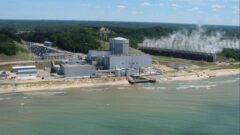
There are a lot of eyes on Michigan’s Palisades nuclear power plant as the public and private sectors try, together, to bring it back from the dead.
Plenty of nuclear reactors in the United States have successfully started back up after prolonged stretches of inactivity. The difference is that every other nuclear plant that restarted after an extended outage retained its operating license, meaning that it had to comply with strict federal maintenance standards, even at the times when it wasn’t sending electricity out onto the grid.
Great Lakes Now
https://www.greatlakesnow.org/2024/05/the-murky-process-of-reopening-palisades-and-why-its-a-turning-point-for-nuclear/
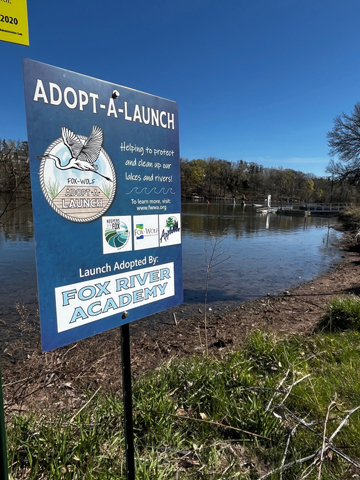
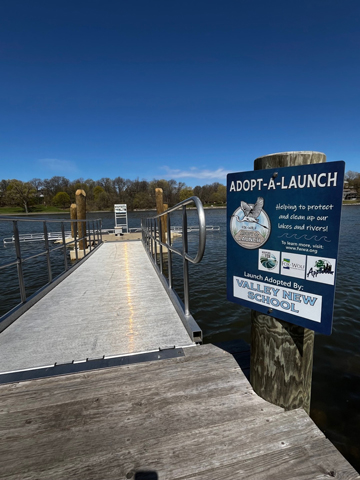
The Fox-Wolf Watershed Alliance’s Adopt a Launch Program is off to its fastest start in years! As we end the month of April, we have had four new launches be adopted across the watershed.
With several more launch adoptions underway, 2024 is shaping to be one of the largest increases in boat launches adopted in the Program’s history. The Fox-Wolf Adopt-a-Launch Program works to improve and clean up the lakes and rivers by engaging community members through volunteer efforts at boat launches. Volunteers are helping to identify new introductions of aquatic invasive species (AIS), prevent the spread of aquatic invasive species by removing plant and debris at launch sites, improve and protect habitat and water quality by removing garbage, help ensure recreational boating facilities are maintained by reporting issues, and develop a sense of pride and ownership for the waterways. Want to get involved? Here’s how to join our amazing volunteers!
Photo Credit: Chris Acy
Questions? Comments? Contact Chris Acy, the AIS Coordinator covering Brown, Outagamie, Fond du Lac, Calumet, and Winnebago Counties at (920) 460-3674 or chris@fwwa.org!
Follow the Fox Wolf Watershed Alliance’s Winnebago Waterways Program on our Winnebago Waterways Facebook page or @WinnWaterways on Twitter! You can also sign-up for email updates at WinnebagoWaterways.org.
Winnebago Waterways is a Fox-Wolf Watershed Alliance program. The Fox-Wolf Watershed Alliance is an independent nonprofit organization that identifies and advocates effective policies and actions that protect, restore, and sustain water resources in the Fox-Wolf River Basin.
Check out the Keepers of the Fox Program at https://fwwa.org/watershed-recovery/lower-fox-recovery/
Reporting invasive species is a first step in containing their spread. Maintaining and restoring our waters and landscapes can reduce the impacts even when we don’t have other management options to an invasive species.
The post Adopt a Launch Program Flourishes Early in 2024 appeared first on Fox-Wolf Watershed Alliance.
Fox-Wolf Watershed Alliance
https://fwwa.org/2024/05/01/adopt-a-launch-program-flourishes-early-in-2024/?utm_source=rss&utm_medium=rss&utm_campaign=adopt-a-launch-program-flourishes-early-in-2024
Healing Our Waters-Great Lakes Coalition
Contact: Lindsey Bacigal, BacigalL@nwf.org, (734) 887-7113
Jordan Lubetkin, Lubetkin@nwf.org, (734) 904-1589
ANN ARBOR, MICH. (May 1, 2024)—New bipartisan federal legislation boosting investments in Great Lakes restoration and protection advanced out of a U.S. Senate committee today, paving the way for the full chamber to vote on legislation authorizing $500 million to be spent annually to clean up toxic pollution, curb farm and urban runoff, restore habitat, and confront invasive species.
The bill, the Great Lakes Restoration Initiative (GLRI) Act of 2024, was passed out of the Senate Environment and Public Works Committee by voice vote. The next step is for the full Senate to vote on the bill, which is sponsored by Great Lakes Taskforce co-chairs, U.S. Sens. Debbie Stabenow (D-Mich.) and J.D. Vance (R-Ohio).
Passage of the bill is a top priority for the Healing Our Waters-Great Lakes Coalition, which sent letters of support to Senate and House leadership today in anticipation of the committee’s vote.
“We thank U.S. Sens. Debbie Stabenow (D-Mich.) and J.D. Vance (R-Ohio) for their bipartisan leadership and standing up for the 42 million people who depend on the Great Lakes for their drinking water,” said Laura Rubin, director of the Healing Our Waters-Great Lakes Coalition. “We also thank Committee Chairman Tom Carper (D-Del.) and Ranking Member Shelley Moore Capito (R-W.V.) for making Great Lakes restoration and protection a national issue and for moving this bill out of committee. Federal investments to restore the Great Lakes have been producing results for our drinking water, public health, jobs, and quality of life. But serious threats remain. We look forward to working with the Great Lakes congressional delegation to pass this bipartisan bill to tackle serious threats to our waters, before the problems get worse and more expensive to solve.”
The Great Lakes Restoration Initiative Act of 2024 reauthorizes the successful federal program for five more years, from fiscal years 2027 through 2031, to invest up to $500 million annually to restore and protect the Great Lakes and the streams, rivers and wetlands that feed them, by restoring habitat, cleaning up toxic pollution, reducing urban and farm runoff, and managing invasive species, with an increased focus on reaching those most impacted by pollution and addressing the growing threats of climate change.
Senate co-sponsors of the bill, in addition to Sens. Stabenow and Vance, include Sens. Tammy Baldwin (D-Wis.), Sherrod Brown (D-Ohio), Robert Casey (D-Pa.), Tammy Duckworth (D-Ill.), Richard Durbin (D-Ill.), John Fetterman (D-Pa.), Kirsten Gillibrand (D-N.Y.), Amy Klobuchar (D-Minn.), Gary Peters (D-Mich.), Chuck Schumer (D-N.Y.), Tina Smith (D-Minn.), and Todd Young (R-Ind.).
Companion legislation in the U.S. House has been put forward by Great Lakes Taskforce co-chairs, Reps. David Joyce (R-Ohio), Debbie Dingell (D-Mich.), Bill Huizenga (R-Mich.), and Marcy Kaptur (D-Ohio).
Since 2004, the Healing Our Waters-Great Lakes Coalition has been harnessing the collective power of more than 180 groups representing millions of people, whose common goal is to restore and protect the Great Lakes. Learn more at HealthyLakes.org or follow us on Twitter, Facebook, Bluesky, Mastodon, and Threads @HealthyLakes.
Latest Updates - Healthy Lakes
https://www.healthylakes.org/latest-updates/great-lakes-bill-advances-out-of-senate-committee
When reporting in rural communities, journalists must “listen and shut up.”
That was the advice of former Native News Online managing editor and author Valerie Vande Panne, a panelist at a session of the recent Society of Environmental Journalists annual conference in Philadelphia.
The post Rural reporting needs trust, common ground first appeared on Great Lakes Echo.Great Lakes Echo
http://greatlakesecho.org/2024/05/01/rural-reporting-needs-trust-common-ground/
In Ohio, the Lucas County Commissioners, along with Toledo’s mayor, are set to announce a lawsuit Wednesday aimed at preventing pollution in Lake Erie. The lawsuit aims to compel the U.S. EPA to comply with its obligations under the Clean Water Act to prevent harmful algal blooms in western Lake Erie. Read the full story by WTOL-TV – Toledo, OH.
Great Lakes Commission
https://www.glc.org/dailynews/20240501-erie-lawsuit
Last August, the dry-bulk vessel Algoma Niagara released thousands of gallons of oily bilge water into Lakes Superior, Erie, and Michigan. The discharges are among numerous reported violations that have landed the ship’s owner before a federal judge in Buffalo, New York. Read the full story by The Buffalo News.
Great Lakes Commission
https://www.glc.org/dailynews/20240501-bilge-discharge
The Great Lakes Shipwreck Historical Society announced today that it has found the final resting place of a 735-ton wooden steamship, the Adella Shores, which sank in Lake Superior in 1909. The group located the ship in 650 feet of water, about 40 miles northwest of Whitefish Point in Michigan’s Upper Peninsula. Read the full story by MLive.
Great Lakes Commission
https://www.glc.org/dailynews/20240501-shipwreck-found
The historic suite of power plant pollution standards announced last week by the U.S. Environmental Protection Agency include a rule that will force power plant owners to clean up their coal ash pollution. There are more than 100 coal ash waste sites along the shores of the Great Lakes. Read the full story by The Chicago Sun-Times.
Great Lakes Commission
https://www.glc.org/dailynews/20240501-coal-ash
Swimmer’s itch, which is caused by a snail and bird parasite, can be reduced by relocating merganser ducklings to beaches where snails are absent. A recent study found that after three years the new method can prevent up to 99% of swimmer’s itch cases. Read the full story by Bridge Michigan.
Great Lakes Commission
https://www.glc.org/dailynews/20240501-swimmers-itch
A single cargo ship can carry enough goods to replace nearly 3,000 semi-trucks—that’s why some are calling for a shipping boom in the Great Lakes. Read the full story by National Geographic.
Great Lakes Commission
https://www.glc.org/dailynews/20240501-shipping-emissions
Researchers forced to cut short an annual survey of wildlife on Isle Royale, Michigan, in Lake Superior this winter due to unusually warm weather announced that they managed to gather data that shows the wolf population is stable. Read the full story by The Associated Press.
Great Lakes Commission
https://www.glc.org/dailynews/20240501-isle-royale
On Tuesday, Enbridge announced it has retained a joint venture partnership between two construction companies to lead construction of the Great Lakes Tunnel in the Straits of Mackinac. Enbridge is preparing to begin construction as soon as possible following the receipt of environmental permits for the tunnel project from the U.S. Army Corps of Engineers. Read the full story by WWTV-TV – Cadillac, MI.
Great Lakes Commission
https://www.glc.org/dailynews/20240501-tunnel-contractors
Summertime calls for good vibes, much-needed time in the sun, and a creature many aren’t fans of — fishflies. But fishflies, or mayflies, are indicators of clean water. Read the full story by Circle of Blue.
Great Lakes Commission
https://www.glc.org/dailynews/20240501-fishflies-return
In a recent editorial, The Toledo Blade sparked controversy by implying the International Joint Commission (IJC) supported the lawsuit between Ohio municipalities and federal regulators regarding Lake Erie water pollution, though the IJC maintains neutrality. Read the full story by The Toledo Blade.
Great Lakes Commission
https://www.glc.org/dailynews/20240501-blade-editorial
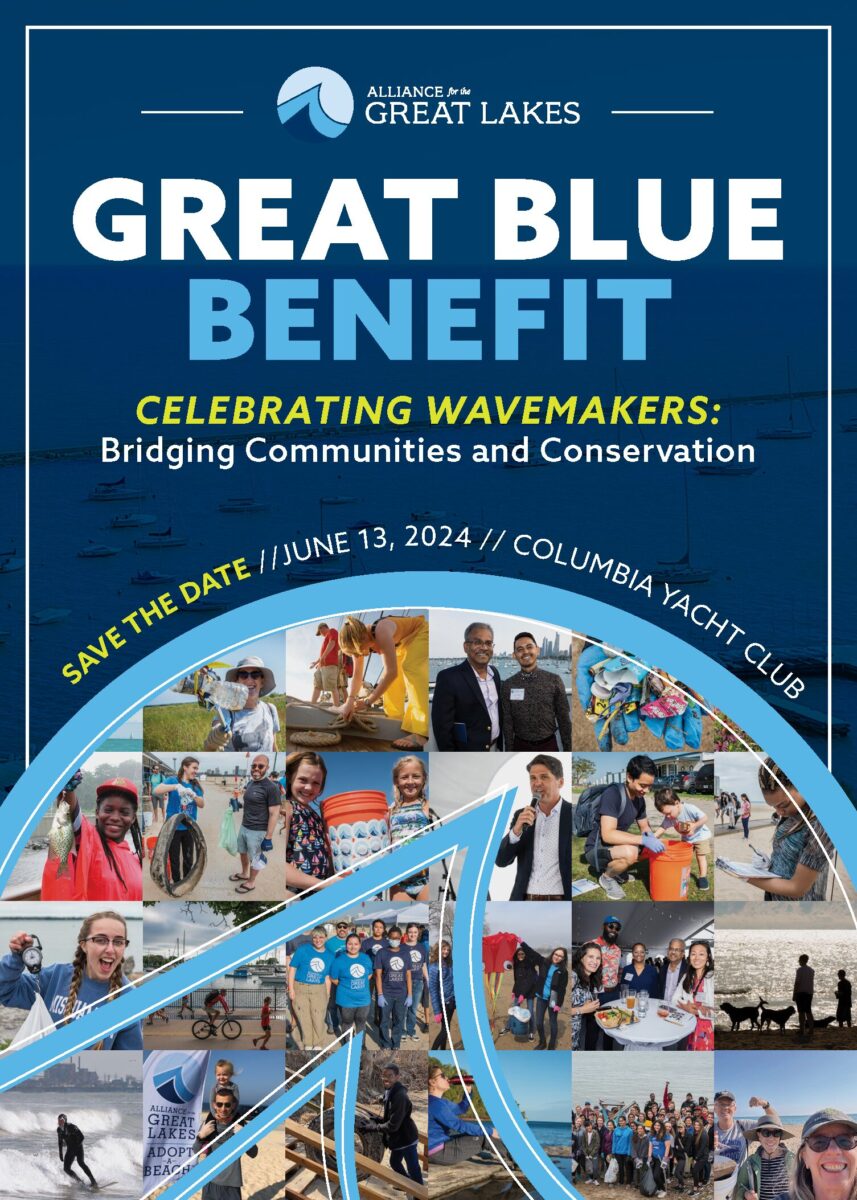
We are excited to unveil the inaugural honorees of the Alliance for the Great Lakes 2024 Wavemaker Awards. As we launch this esteemed recognition for the first time, we celebrate the outstanding contributions of individuals and organizations who have been instrumental in conserving and elevating the Great Lakes. These Wavemakers have not only dedicated themselves to our cause but have also inspired a wave of proactive engagement across our communities. Their efforts embody the deep commitment required to safeguard the environmental integrity of our cherished Great Lakes region. Join us in honoring their enduring impact at the 2024 Great Blue Benefit, themed “Celebrating Wavemakers: Bridging Communities and Conservation.”

Gerald (Jerry) W. Adelmann
President Emeritus of Openlands
Jerry Adelmann has been a pivotal figure in conservation since he joined Openlands in 1980, coordinating groundbreaking projects like the Illinois and Michigan Canal National Heritage Corridor. His leadership has resulted in significant conservation achievements including the creation of the Midewin National Tallgrass Prairie and the preservation of the Openlands Lakeshore Preserve.

Michael S. Davidson
President and CEO of Openlands
Michael Davidson, with over 25 years in mission-driven leadership, has significantly shaped environmental strategies in the Chicago region. His notable contributions include leading initiatives that integrate community engagement with environmental sustainability, advancing urban conservation and local food system projects.

Mary Peterson
Friends of Sleeping Bear Dunes Volunteer
Mary Peterson has dedicated over a decade to the Friends of Sleeping Bear Dunes, coordinating volunteer efforts and enhancing visitor experiences. Her leadership in volunteer coordination and community engagement has been instrumental in maintaining and protecting the Sleeping Bear Dunes.

Brenda Santoyo
Illinois Water Justice Coalition member, and Water Justice Program Manager at the Little Village Environmental Justice Organization (LVEJO)
Brenda Santoyo advocates for clean water and healthy living conditions in Chicago’s underserved communities. Her leadership in the Water Justice Program at LVEJO has been crucial in shaping policies and practices for environmental justice and sustainability.

Asiana Spaw
Documentary Filmmaker: Microplastics: Not a Small Problem
Asiana Spaw has used her filmmaking to spotlight environmental issues, particularly microplastic pollution in the Great Lakes. Her documentary “Microplastics: Not a Small Problem” has raised awareness and prompted discussions on sustainable environmental practices.

Iyanna Simba
Illinois Water Justice Coalition member, and City Programs Director at the Illinois Environmental Council
Iyanna Simba leads citywide initiatives at the Illinois Environmental Council, focusing on water policy and environmental advocacy in Chicago. Her efforts in coalition building and policy development have been key to advancing environmental justice and sustainable urban practices.
On Thursday, June 13, 2024 our Great Blue Benefit takes place at the beautiful Columbia Yacht Club in Chicago, Illinois. This special event is not just an opportunity to recognize the incredible efforts of our honorees but also a time to enjoy the camaraderie of those who share our commitment.

Supporting Our Mission
All proceeds from the Great Blue Benefit will directly support the Alliance for the Great Lakes’ ongoing initiatives to ensure our waters are clean, safe, and accessible for all generations.
The post Announcing Our 2024 Wavemaker Honorees appeared first on Alliance for the Great Lakes.
News - Alliance for the Great Lakes
https://greatlakes.org/2024/05/announcing-our-2024-wavemaker-honorees/
NCEI News Feed
https://www.ncei.noaa.gov/news/next-generation-climate-dataset-built-seamless-integration
Sea Grant research and outreach projects took center stage in the latest issue of “Oceanography,” the official journal of The Oceanography Society. Published yesterday, the issue features 36 articles contributed by Sea Grant authors across 29 programs and the National Sea Grant Office.
“Sea Grant’s success and impact continues to rely on the power of collaboration,” said Jonathan Pennock, director of the National Sea Grant College Program. “This special issue showcases and celebrates the breadth of Sea Grant’s work.”
Articles cover a range of topics including aquaculture, marine debris research, green infrastructure, science communication and community partnerships, highlighting the wide scope of contributions Sea Grant makes to the environmental and marine sciences.
Tim Cambell, Julia Noordyk, Bonnie Willison and Marie Zhuikov with Wisconsin Sea Grant co-authored five articles with staff from other Sea Grant Programs across the country. Emma Hauser represented the Wisconsin program on the cover. Many other staff members helped review the articles, providing input and editing services.
Campbell, aquatic invasive species outreach specialist, contributed to two articles:
Examples of Sea Grant Efforts to Improve Aquatic Invasive Species Research, Outreach, and Management
SPOTLIGHT • Alien Language: Reflections on the Rhetoric of Invasion Biology
Noordyk, water quality and coastal communities outreach specialist, contributed to:
Willison, video and podcast producer; and Zhuikov, senior science communicator; contributed to:
Storytelling in the Field with Sea Grant’s Science Communicators
Hauser, aquaculture education and outreach specialist, is featured in one of the cover images holding a net over an aquaculture tank.
Ultimately, this special issue is a reflection of Sea Grant’s scientific contributions and a look toward what is to come. Mona Behl, associate director of Georgia Sea Grant and a contributor to the special issue, said she hopes this issue will inspire new opportunities.
“Sea Grant is just one of many organizations that is committed to increasing the usefulness of science for societal good,” Behl said. “We invite readers of this special issue to join us in envisioning new pathways for collaboration, impact and innovation to propel toward a future where scientific advancements are accessible, equitable and transformative.”
The post Wisconsin Sea Grant staff contribute to special “Oceanography” journal issue first appeared on Wisconsin Sea Grant.News Releases | Wisconsin Sea Grant
News Releases | Wisconsin Sea Grant
https://www.seagrant.wisc.edu/news/wisconsin-sea-grant-staff-contribute-to-special-oceanography-journal-issue/

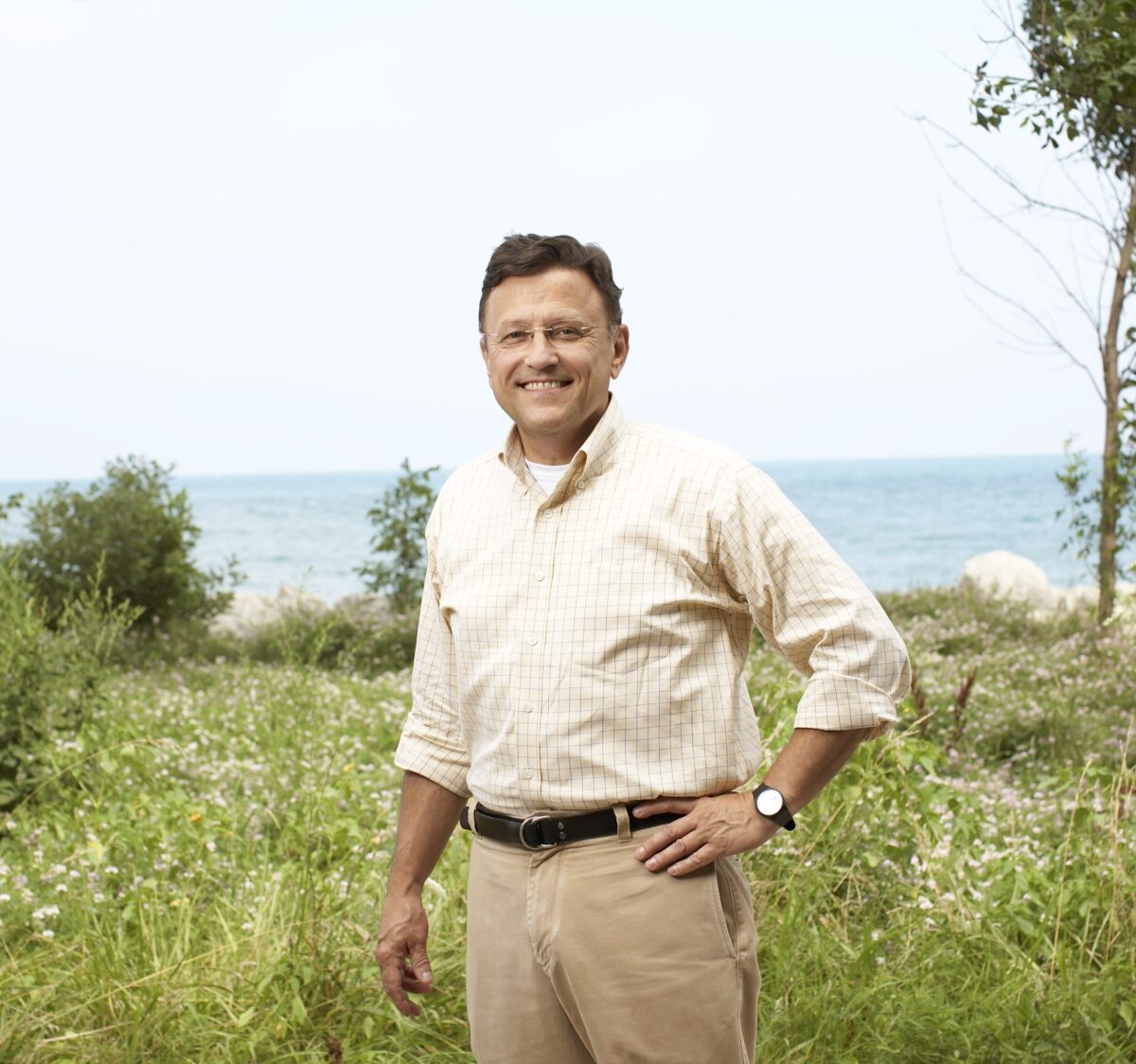
Waves of Change is an online interview series highlighting the diverse faces and perspectives shaping the environmental justice movement throughout the Great Lakes region.
This month, we spoke with Gary Swick, educator and president of Friends of the Fox River.
Listen to the full interview
The Fox River is a tributary of the Illinois River and flows over 200 miles from southern Wisconsin to Ottawa, Illinois.
Great Lakes Now
https://www.greatlakesnow.org/2024/04/waves-of-change-meet-educator-and-friends-of-the-fox-river-president-gary-swick/
Karmen Anderson was initially drawn to apply for a communications assistant job with the Wisconsin Clean Marina Program due to the organization’s focus on sustainability. An environmental policy and planning major at the University of Wisconsin-Green Bay, Anderson was intrigued by the program’s mission to work with marinas in preventing pollution and protecting fish, wildlife and public health.
She got the job and for the past three years has been learning about the marina industry and gaining communications experience by handling the program’s social media accounts, newsletters and news releases. Anderson was also able to attend several Wisconsin Marine Association conferences and accompany her supervisor, Wisconsin Clean Marina Program Coordinator Theresa Qualls, on visits to marinas.

Karmen Anderson, Wisconsin Clean Marina Program communications assistant. She’ll soon be the village planner for the Wisconsin town of Plover. Submitted image.
“It was interesting learning about an industry I knew nothing about. I got to see all the different practices marinas do for clean marina certification, like implementing oil spill kits and landscaping for pollution prevention. I also loved meeting new people and learning from them,” Anderson said.
Notable among those she met was Wisconsin Governor Tony Evers. “We were at Saxon Harbor Marina, which was celebrating reopening after severe flood damage. Meeting the governor was a highlight.”
Marinas, related industries and services contribute more than $2.7 billion to Wisconsin’s economy. The Wisconsin Clean Marina Program was launched in 2010, and 23 Wisconsin marinas have since taken steps to voluntarily adopt practices to become certified.
One of Anderson’s favorite communications projects was helping develop a promotional video for the program. “I loved hearing the marina manager’s testimonial – that the community actually likes the work done through the clean marina program as well as the resources and benefits it provides to marinas.”
She also enjoyed working with Qualls. “You can definitely tell she loves what she does,” Anderson said. “The way she communicates with the marinas and the relationships she has with them are great.”
Anderson is set to graduate this spring and credits her clean marina experience with helping her nab a full-time job as a village planner for Plover, Wisconsin.
“This position gave me a lot of experience in communication and outreach. I definitely plan to bring that into my new job, which entails a lot of work with the community and developers,” Anderson said.
The Wisconsin Clean Marina Program is administered by University of Wisconsin Sea Grant in partnership with the Wisconsin Marine Association, Wisconsin Coastal Management Program, and Wisconsin Department of Natural Resources with funding from Fund for Lake Michigan.
The post Student gained valuable experience through the Wisconsin Clean Marina Program first appeared on Wisconsin Sea Grant.Blog | Wisconsin Sea Grant
https://www.seagrant.wisc.edu/blog/student-gained-valuable-experience-through-the-wisconsin-clean-marina-program/
Environmental reporting experts at the recent Society of Environmental Journalists conference in Philadelphia discussed how to report on climate in a more productive way.
Allen Arthur, the engagement director at Solutions Journalism Network, emphasized the need to avoid negative sentiments while engaging in the climate crisis dialogue to promote engagement in community-based activities.
The post Experts give insights on effective, ethical environmental reporting first appeared on Great Lakes Echo.Great Lakes Echo
http://greatlakesecho.org/2024/04/30/experts-give-insights-on-effective-ethical-environmental-reporting/

“Nibi Chronicles,” a monthly Great Lakes Now feature, is written by Staci Lola Drouillard. A direct descendant of the Grand Portage Band of Ojibwe, she lives and works in Grand Marais on Minnesota’s North Shore of Lake Superior. Her two books “Walking the Old Road: A People’s History of Chippewa City and the Grand Marais Anishinaabe” and “Seven Aunts” were published 2019 and 2022, and she is at work on a children’s story.
Great Lakes Now
https://www.greatlakesnow.org/2024/04/nibi-chronicles-the-return-of-nenookaasiwag/
Ann Arbor, Mich. – The Great Lakes Commission (GLC) today issued a request for proposals (RFP) for a new opportunity associated with the GLC’s longstanding Great Lakes Sediment and Nutrient Reduction Program (GLSNRP) grant program. This pilot program will support conservation districts in deploying the Agricultural Conservation Planning Framework (ACPF). ACPF is a free ArcGIS toolbox designed to help local farming communities address their soil and water conservation needs using high resolution geo-spatial data.
Conservation districts are eligible to receive funding of up to $10,000 to support work over a one-year period. Applicants are invited to submit proposals describing how funding will help to facilitate project planning for precision sediment and nutrient pollution reduction. The RFP offers three options for districts (or groups of districts working as a coalition) based on existing local knowledge of the geographic information system (GIS) software powering the ACPF. The due date for applications is 5:00 p.m. Eastern on June 14. Funding decisions are anticipated by August 2024 for selected projects to begin work no later than October 1, 2024.
Application information and materials are available through the GLSNRP webpage. A webinar for applicants will be offered on May 17 at 11:00 a.m. Eastern to discuss the application process and provide information on the ACPF. To register for the webinar visit https://bit.ly/acpfwebinar. A recording of the webinar will also be posted to the webpage for those unable to attend the live session.
As a reminder, the GLSNRP application period for applicants with shovel-ready conservation projects is also open now, with applications due on April 29 at 5:00 p.m. Eastern. For more information on either program, please contact Connor Roessler at croessler@glc.org or 734-396-6085.
The Great Lakes Commission, led by chair Mary Mertz, director of the Ohio Department of Natural Resources, is a binational government agency established in 1955 to protect the Great Lakes and the economies and ecosystems they support. Its membership includes leaders from the eight U.S. states and two Canadian provinces in the Great Lakes basin. The GLC recommends policies and practices to balance the use, development, and conservation of the water resources of the Great Lakes and brings the region together to work on issues that no single community, state, province, or nation can tackle alone. Learn more at www.glc.org.
For media inquiries, please contact Beth Wanamaker, beth@glc.org.
Great Lakes Commission
https://www.glc.org/news/rfp-acpf-042924
The Michigan Climate Action Network says it will join challenges to a permit approved last December by the Michigan Public Service Commission for Enbridge’s Line 5 tunnel project beneath the Straits of Mackinac. Read the full story by Interlochen Public Radio.
Great Lakes Commission
https://www.glc.org/dailynews/20240429-line-5
The population of sea lampreys in the Great Lakes could increase significantly in the next year or two, and it’s currently unclear how quickly the population can be culled back. Read the full story by WGN-TV – Chicago, IL.
Great Lakes Commission
https://www.glc.org/dailynews/20240429-sea-lamprey
As each wave crashes into the edge of Township Park in Geneva-on-the-Lake, Ohio, the land continues to disintegrate. Despite emergency measures taken four years ago, more permanent action needs to be taken soon. Read the full story by WEWS-TV – Cleveland, OH.
Great Lakes Commission
https://www.glc.org/dailynews/20240429-lake-erie-erosion
The Fond du Lac Band of Lake Superior Chippewa will partner with a University of Wisconsin research reserve to preserve the western end of popular Wisconsin Point, the Lake Superior sandbar in Superior, Wisconsin, that for centuries has played an integral role for area Anishinaabe. Read the full story by the Star Tribune.
Great Lakes Commission
https://www.glc.org/dailynews/20240429-sandbar
The Wisconsin Department of Natural Resources is considering making new rules for walleye bag limits. Exactly what the new rules will look like remains unclear. Read the full story by the Duluth News Tribune.
Great Lakes Commission
https://www.glc.org/dailynews/20240429-walleye-limit
Last week, a few satellite images snapped over the Great Lakes revealed an odd-looking spot in the middle of the southern half of Lake Michigan. The spot represents an eddy of warm water moving westward across the lake. Read the full story by MLive.
Great Lakes Commission
https://www.glc.org/dailynews/20240429-satellite-spot
The Minnesota Department of Natural Resources issued a first-of-its-kind order to protect a central Minnesota trout stream affected by farmers pumping groundwater to irrigate their crops. Read the full story by Minnesota Public Radio.
Great Lakes Commission
https://www.glc.org/dailynews/20240429-trout-stream
After hearing all about the 100% Fish Project that started in Iceland, the executive director of the Conference of Great Lakes and St. Lawrence Governors and Premiers started wondering if the project could help the struggling Great Lakes fishery. He took the idea home to find out. Read the full story by Interlochen Public Radio.
Great Lakes Commission
https://www.glc.org/dailynews/20240429-100-fishproject
In Ohio, a group of senior engineering students at the University of Toledo decided to tackle remediation of farm field fertilizer runoff for a final graduation project. Read the full story by The Blade.
Great Lakes Commission
https://www.glc.org/dailynews/20240429-ut-engineering
Current watches, warnings, and advisories for Brown County (WIC009) WI
https://api.weather.gov/alerts/urn:oid:2.49.0.1.840.0.db5fb1aa79961d1d695e4134d9e6ee6c5144948a.001.1.cap
Current watches, warnings, and advisories for Brown County (WIC009) WI
https://api.weather.gov/alerts/urn:oid:2.49.0.1.840.0.1238e7d419768dd6a9643ca053002082cd81ae5a.001.1.cap
Current watches, warnings, and advisories for Brown County (WIC009) WI
https://api.weather.gov/alerts/urn:oid:2.49.0.1.840.0.af822f3adfb40c5fbe5105c5a57ed0c8ea060292.002.1.cap
Current watches, warnings, and advisories for Brown County (WIC009) WI
https://api.weather.gov/alerts/urn:oid:2.49.0.1.840.0.0aaeb8e38e6fba4d9a3c14e8a590f41f8d48e80f.001.1.cap
Current watches, warnings, and advisories for Brown County (WIC009) WI
https://api.weather.gov/alerts/urn:oid:2.49.0.1.840.0.fa7689045912a84f84ac596d14dd87d9f7b6ea88.001.1.cap

By Daniel Wanschura, Interlochen Public Radio
Points North is a biweekly podcast about the land, water and inhabitants of the Great Lakes.
This episode was shared here with permission from Interlochen Public Radio.
Dave Naftzger found out about the 100% Fish Project entirely by accident.
Great Lakes Now
https://www.greatlakesnow.org/2024/04/points-north-more-than-just-filet-of-fish/
Green Bay, WI
https://www.weather.gov/www.weather.gov/grb/042784_tornadoes
Environmental advocates in the Chicago area and northwest Indiana applauded a tough new slate of U.S. Environmental Protection Agency rules for coal-fired power plants, including a sweeping regulation to sharply limit greenhouse gas pollution at coal-burning plants. Read the full story by WTTW-TV – Chicago, IL.
Great Lakes Commission
https://www.glc.org/dailynews/20240426-coal-regulations
Through expansive cleaning efforts, Muskegon Lake in Muskegon, Michigan, has gone through every step required to remove its designation as an Area of Concern. However, residents of lower socioeconomic communities are raising concerns that the cleaned-up shoreline would be taken over by private interests. Read the full story by Bridge Michigan.
Great Lakes Commission
https://www.glc.org/dailynews/20240426-cleanup-equity
Last winter, the ponds in the park where marbled crayfish – a Great Lakes invasive species – were first discovered in Ontario were drained in hopes that the crayfish would freeze to death. But that didn’t happen, likely thanks to the unseasonably warm weather and their burrowing ability. Now the Invading Species Awareness Program of the Ontario Federation of Anglers and Hunters has launched a regional sweep from Ottawa to Windsor. Read the full story by Great Lakes Now.
Great Lakes Commission
https://www.glc.org/dailynews/20240426-invasive-crayfish
A 15-year-old piping plover, known by researchers as Of,gb:X,Y, or “Gabby,” was confirmed this week as having once again migrated from her wintering grounds in Cumberland Island, Georgia, to the Sleeping Bear Dunes National Lakeshore in Michigan for another summer breeding season. Read the full story by MLive.
Great Lakes Commission
https://www.glc.org/dailynews/20240426-plover-breeding
A project that helps prevent plastic pollution from entering Lake Superior and Thunder Bay’s local waterways is receiving $45,000 in funding from Ontario. Cutting-edge catch basin filters called LittaTraps will be placed at city parks, waterfront areas and parking lots to capture microplastics before they enter marine ecosystems. Read the full story by CBC News.
Great Lakes Commission
https://www.glc.org/dailynews/20240426-plastic-cleanup
The U.S. Environmental Protection Agency kicked off an $84 million dredging project in the lower Rouge River around Zug Island in southeast Michigan this month, aiming to remove the pollution that makes the Rouge one of the most toxic sites in the Great Lakes. Read the full story by The Detroit News.
Great Lakes Commission
https://www.glc.org/dailynews/20240426-dredging-project
A cutting-edge, high-efficiency cement carrier will make its way to the Great Lakes next year. According to Eureka Shipping, the state-of-the-art mechanical/pneumatic cement ship is designed to replace two older vessels while maintaining the same cargo capacity. Read the full story by the Welland Tribune.
Great Lakes Commission
https://www.glc.org/dailynews/20240426-ship-replacement