More than 700 freshwater researchers and practitioners are attending the International Association for Great Lakes Research’s 67th annual conference in Windsor, Ontario. Presentation topics include algal blooms, climate change, the emergence of PFAS chemicals, and pollution caused by microplastics. Read the full story by The Toledo Blade.

Original Article

Great Lakes Commission

Great Lakes Commission

https://www.glc.org/dailynews/20240522-iaglr-2024

Taaja Tucker-Silva

Michigan’s most popular state park is launching a new electronic beach warning system that can automatically alert authorities of a drowning. The system is the latest effort to keep swimmers safe amid a spate of drowning deaths. Read the full story by Bridge Michigan.

Original Article

Great Lakes Commission

Great Lakes Commission

https://www.glc.org/dailynews/20240522-beach-tech

Taaja Tucker-Silva

Over 20,000 individual cruise passengers are expected on the Great Lakes this year—double the number from 2014. There will be six cruise lines operating in the Great Lakes that are expected to make about 600 port visits this year. Read the full story by Bridge Michigan.

Original Article

Great Lakes Commission

Great Lakes Commission

https://www.glc.org/dailynews/20240522-cruising-expectations

Taaja Tucker-Silva

The Hamilton-Oshawa Port Authority has reached an agreement with the owner of the decommissioned Somerset Generation Station to build a new Lake Ontario “short sea shipping corridor” and port at the 1,800-acre site in Barker, New York. Read the full story by the Niagara Gazette.

Original Article

Great Lakes Commission

Great Lakes Commission

https://www.glc.org/dailynews/20240522-ontario-port

Taaja Tucker-Silva

Concrete and steel casks storing spent nuclear fuel rods await relocation to a permanent underground chamber for indefinite cooling. Until that facility is built, they slowly accumulate on concrete pads along the Michigan coast. Read the full story by MLive.

Original Article

Great Lakes Commission

Great Lakes Commission

https://www.glc.org/dailynews/20240522-nuclear-waste

Taaja Tucker-Silva

Bald eagles are back in a big way: after 50 years of conservation efforts, the Ontario government made the bald eagle’s recovery official in 2023, announcing them no longer at risk. What’s happened to bald eagles is a story of recovery, but only if we actually learn from it. Read the full story by Bridge Michigan.

Original Article

Great Lakes Commission

Great Lakes Commission

https://www.glc.org/dailynews/20240522-bald-eagles

Taaja Tucker-Silva

Scientists have been discovering small changes on Lake Michigan that could lead to big impacts on fishing, tourism and those who make their livelihood on the water. A slightly warmer, windier, and wetter climate has already begun to change the footprint of the lake and its impact on West Michigan. Read the full story by WOOD-TV – Grand Rapids, MI.

Original Article

Great Lakes Commission

Great Lakes Commission

https://www.glc.org/dailynews/20240522-michigan-changes

Taaja Tucker-Silva

The impact of maritime trade is multifaceted, from affecting the air quality of the surrounding Detroit River corridor to the arrival of invasive species. A series of initiatives are in motion to assess carbon emissions from port operations and bolster efforts to protect the waterway. Read the full story by Bridge Detroit.

Original Article

Great Lakes Commission

Great Lakes Commission

https://www.glc.org/dailynews/20240522-detroit-maritime

Taaja Tucker-Silva

This year, a joint effort by various non-profits and government organizations raised over 11,500 coho salmon to combat invasive alewives. Over the past 50 years they have released over 1 million coho salmon into the Manitowoc River in Manitowoc, Wisconsin. Read the full story by WFRV-TV – Manitowoc, WI.

Original Article

Great Lakes Commission

Great Lakes Commission

https://www.glc.org/dailynews/20240522-wisconsin-coho

Taaja Tucker-Silva

A judge is limiting development near the shoreline on Carleton Island in the St. Lawrence River near Cape Vincent, New York. The Thousand Islands Land Trust filed a lawsuit earlier this spring to stop a neighboring property owner from development that it argues violates a conservation easement. Read the full story by North Country Public Radio.

Original Article

Great Lakes Commission

Great Lakes Commission

https://www.glc.org/dailynews/20240522-carleton-island

Taaja Tucker-Silva

TORNADO WATCH 281 REMAINS VALID UNTIL MIDNIGHT CDT TONIGHT FOR THE FOLLOWING AREAS IN WISCONSIN THIS WATCH INCLUDES 7 COUNTIES IN EAST CENTRAL WISCONSIN CALUMET MANITOWOC WINNEBAGO IN NORTHEAST WISCONSIN BROWN DOOR KEWAUNEE OUTAGAMIE THIS INCLUDES THE CITIES OF ALASKA, APPLETON, CLAY BANKS, DARBOY, DUNDAS, DUVALL, GREEN BAY, INSTITUTE, KEWAUNEE, MACKVILLE, MANITOWOC, MENASHA, NEENAH, NORMAN, NORTHERN LAKE WINNEBAGO, OSHKOSH, POINT BEACH STATE PARK, POTAWATOMI STATE PARK, RANKIN, RIO CREEK, ROSTOK, SHOTO, TWO RIVERS, VALMY, WINNEBAGO, AND WITTMAN FIELD.

Original Article

Current watches, warnings, and advisories for Brown County (WIC009) WI

Current watches, warnings, and advisories for Brown County (WIC009) WI

https://api.weather.gov/alerts/urn:oid:2.49.0.1.840.0.ee830218fddad00ce31abb8f7e461f7db446bd38.002.1.cap

NWS

At 944 PM CDT, Doppler radar was tracking strong thunderstorms along a line extending from near Kaukauna to near Chilton to near St Anna. Movement was northeast at 55 mph. HAZARD...Wind gusts up to 50 mph. SOURCE...Radar indicated. IMPACT...Gusty winds could knock down tree limbs and blow around unsecured objects. Locations impacted include... Green Bay, Manitowoc, Bay Shore Park, Kaukauna, Little Chute, Kimberly, Chilton, Brillion, Denmark, and Cleveland.

Original Article

Current watches, warnings, and advisories for Brown County (WIC009) WI

Current watches, warnings, and advisories for Brown County (WIC009) WI

https://api.weather.gov/alerts/urn:oid:2.49.0.1.840.0.b8f62648b0950c52b3977a62a83d05e3c4abc10a.001.1.cap

NWS

TORNADO WATCH 281 REMAINS VALID UNTIL MIDNIGHT CDT TONIGHT FOR THE FOLLOWING AREAS IN WISCONSIN THIS WATCH INCLUDES 9 COUNTIES IN EAST CENTRAL WISCONSIN CALUMET MANITOWOC WINNEBAGO IN NORTHEAST WISCONSIN BROWN DOOR KEWAUNEE MARINETTE OCONTO OUTAGAMIE THIS INCLUDES THE CITIES OF ALASKA, APPLETON, BROOKSIDE, CLAY BANKS, DARBOY, DUNBAR, DUNDAS, DUVALL, GOODMAN, GREEN BAY, HARMONY, INSTITUTE, KEWAUNEE, LITTLE SUAMICO, MACKVILLE, MANITOWOC, MENASHA, NEENAH, NIAGARA, NORMAN, NORTHERN LAKE WINNEBAGO, OCONTO, OSHKOSH, PEMBINE, PENSAUKEE, PESHTIGO, POINT BEACH STATE PARK, PORTERFIELD, POTAWATOMI STATE PARK, RANKIN, RIO CREEK, ROSTOK, SHOTO, SOBIESKI, TWO RIVERS, VALMY, WINNEBAGO, AND WITTMAN FIELD.

Original Article

Current watches, warnings, and advisories for Brown County (WIC009) WI

Current watches, warnings, and advisories for Brown County (WIC009) WI

https://api.weather.gov/alerts/urn:oid:2.49.0.1.840.0.5a9ffc08fbb065570bfe2c8961c0de6bd64034d1.002.1.cap

NWS

THE NATIONAL WEATHER SERVICE HAS ISSUED TORNADO WATCH 281 IN EFFECT UNTIL MIDNIGHT CDT TONIGHT FOR THE FOLLOWING AREAS IN WISCONSIN THIS WATCH INCLUDES 18 COUNTIES IN CENTRAL WISCONSIN MARATHON PORTAGE WAUSHARA WOOD IN EAST CENTRAL WISCONSIN CALUMET MANITOWOC WINNEBAGO IN NORTH CENTRAL WISCONSIN LANGLADE LINCOLN IN NORTHEAST WISCONSIN BROWN DOOR KEWAUNEE MARINETTE MENOMINEE OCONTO OUTAGAMIE SHAWANO WAUPACA THIS INCLUDES THE CITIES OF ALASKA, ANGELICA, ANTIGO, APPLETON, ARNOTT, AURORAVILLE, BAKERVILLE, BLOOMVILLE, BORTH, BROOKSIDE, BRYANT, CLAY BANKS, CLINTONVILLE, DARBOY, DEERBROOK, DOERING, DUNBAR, DUNDAS, DUVALL, ELCHO, GLEASON, GOODMAN, GREEN BAY, HARMONY, HARRISON, HOFA PARK, INSTITUTE, JEFFRIS, KEMPSTER, KESHENA, KEWAUNEE, KING, LIND CENTER, LITTLE SUAMICO, MACKVILLE, MANITOWOC, MARSHFIELD, MENASHA, MERRILL, NEENAH, NEOPIT, NEVA, NEW LONDON, NIAGARA, NORMAN, NORTHERN LAKE WINNEBAGO, NORTHPORT, OCONTO, OSHKOSH, PEMBINE, PENSAUKEE, PESHTIGO, PINE RIVER, PLOVER, POINT BEACH STATE PARK, POLAR, PORTERFIELD, POTAWATOMI STATE PARK, RANKIN, RIO CREEK, ROSTOK, RURAL, SHAWANO, SHOTO, SILVER LAKE, SOBIESKI, STEVENS POINT, THORNTON, TWO RIVERS, VALMY, WAUPACA, WAUSAU, WAUTOMA, WINNEBAGO, WISCONSIN RAPIDS, AND WITTMAN FIELD.

Original Article

Current watches, warnings, and advisories for Brown County (WIC009) WI

Current watches, warnings, and advisories for Brown County (WIC009) WI

https://api.weather.gov/alerts/urn:oid:2.49.0.1.840.0.f32592e1b48cd0348f657c4c9dae7982481e015d.001.1.cap

NWS

* WHAT...Visibility one quarter to one half mile in dense fog. * WHERE...Portions of central, east central, north central, and northeast Wisconsin. * WHEN...Until 10 AM CDT Tuesday. * IMPACTS...Low visibility could make driving conditions hazardous.

Original Article

Current watches, warnings, and advisories for Brown County (WIC009) WI

Current watches, warnings, and advisories for Brown County (WIC009) WI

https://api.weather.gov/alerts/urn:oid:2.49.0.1.840.0.42b497d63a4e60f1bfd51aeb98bcc291a2c5bc63.001.1.cap

NWS

I Speak For The Fish: Are muskies still the readers’ favorite?

I Speak for the Fish is a monthly column written by Great Lakes Now Contributor Kathy Johnson, coming out the third Monday of each month. Publishing the author’s views and assertions does not represent endorsement by Great Lakes Now or Detroit Public Television. 

Read Now at Great Lakes Now.

Original Article

Great Lakes Now

Great Lakes Now

https://www.greatlakesnow.org/2024/05/i-speak-for-the-fish-are-muskies-still-the-readers-favorite/

Kathy Johnson, Great Lakes Now

Over 70 Exotic Pets Surrendered, To Be Rehomed

Seventy animals were turned in at an exotic pet surrender event in Kimberly, Wisconsin, on Sunday.  Thirty seven people attended and there was a Facebook Reach of 13,000 people.  Included in the surrenders were a four parakeets, a ferret, three red eared sliders, and a 13 foot reticulated python!

The Exotic Pet Surrender Event was held March 18th, 2024 between 9 AM and 1 PM at the Kimberly Public Library.  J&R Aquatic Animal Rescue was accepting fish, invertebrates, reptiles, pet birds, small mammals, and plants — no questions asked.

In some areas, there are no rehoming options for exotic animals such as fish, birds, and reptiles. Some pet owners that are unable to care for their pet may think that releasing the animal is the right thing to do, however, releasing a pet is harmful for the animal and the environment.
This event brought together a collection of rehoming partners that provide responsible alternatives to release for exotic pet owners who are no longer able to care for their pets. J&R Aquatic Animal Rescue (JRAAR) hosted the event with help from another area organization; the Fox-Wolf Watershed Alliance.

Questions regarding the Exotic Pet Surrender Event or about future surrenders or events can be directed to John Moyles of J&R Aquatic Animal Rescue. He can be reached at adoptions@jraar.org

For information on future pet surrender events happening across the state of Wisconsin, visit https://www.jraar.org/

Photo Credit: Chris Acy, J&R Aquatic Animal Rescue

Questions? Comments? Contact Chris Acy, the AIS Coordinator covering Brown, Outagamie, Fond du Lac, Calumet, and Winnebago Counties at (920) 460-3674 or chris@fwwa.org!

Follow the Fox Wolf Watershed Alliance’s Winnebago Waterways Program on our Winnebago Waterways Facebook page or @WinnWaterways on Twitter! You can also sign-up for email updates at WinnebagoWaterways.org.

Winnebago Waterways is a Fox-Wolf Watershed Alliance program. The Fox-Wolf Watershed Alliance is an independent nonprofit organization that identifies and advocates effective policies and actions that protect, restore, and sustain water resources in the Fox-Wolf River Basin.

Check out the Keepers of the Fox Program at https://fwwa.org/watershed-recovery/lower-fox-recovery/

Reporting invasive species is a first step in containing their spread. Maintaining and restoring our waters and landscapes can reduce the impacts even when we don’t have other management options to an invasive species.

The post Exotic Pet Surrender in Kimberly Gives Pet Owners Options appeared first on Fox-Wolf Watershed Alliance.

Original Article

Fox-Wolf Watershed Alliance

Fox-Wolf Watershed Alliance

https://fwwa.org/2024/05/20/exotic-pet-surrender-in-kimberly-gives-pet-owners-options/?utm_source=rss&utm_medium=rss&utm_campaign=exotic-pet-surrender-in-kimberly-gives-pet-owners-options

Chris Acy

Article provided by: Wisconsin AIS Partnership

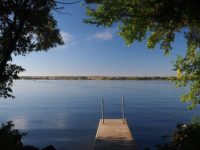
One of the many challenges facing a healthy waterbody is how to prevent the spread of aquatic invasive species (AIS) to protect the ecological, social, and economic benefits that we so greatly cherish in Wisconsin. Prevention of AIS is key to the long-term sustainability of ‘lake life’ and needs to be at the forefront of any protection strategy. Simply put, an ounce of prevention is worth a pound of cure. But if only it were just that simple. The variables and situations that can impact a waterbody may seem so limitless that it can be daunting to know where to start. As a lake resident, you might consider questions such as:
Does the boat launch near my house have an AIS prevention sign?
What if a new AIS is documented in our lake?
What are people doing upstream that could impact our lake?
Do they follow AIS prevention laws?
Where will the next visiting boat come from and will they have taken prevention steps?
What if they didn’t? What then? What next?…

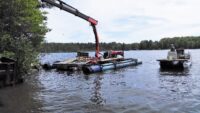
The problem can feel overwhelming. The important thing is that each of us can do something. Big or small. Simple or complex. New or old. Every action counts and every action matters. As a lake resident, you are in a unique stakeholder position to do something particularly powerful and that is to flex your consumer power when it comes to services that you might need as part of your lake life. These might be services such as dock and lift installation/maintenance, shoreline construction work, etc. Any activity that involves installing, removing, operating, and transporting water-related equipment, structures, and gear presents a high risk of inadvertently transporting and spreading AIS without proper decontamination. While everyone is required to “inspect, remove, and drain” per Wisconsin State Statutes NR40, these steps might not always be 100% effective especially for high-risk users such as service providers who are often working on multiple lakes in a single day and interacting with lake water and sediment in ways that recreational users are not. These kinds of service providers need to follow the same prevention steps that we all do, but they are not required to take the extended steps, such as spraying equipment with a bleach solution, making it all the more important for consumers to advocate for their lake.
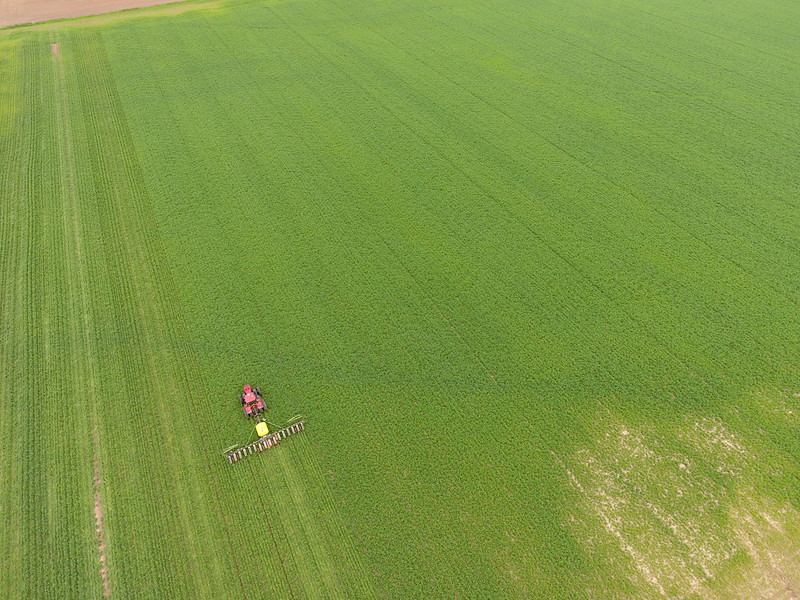
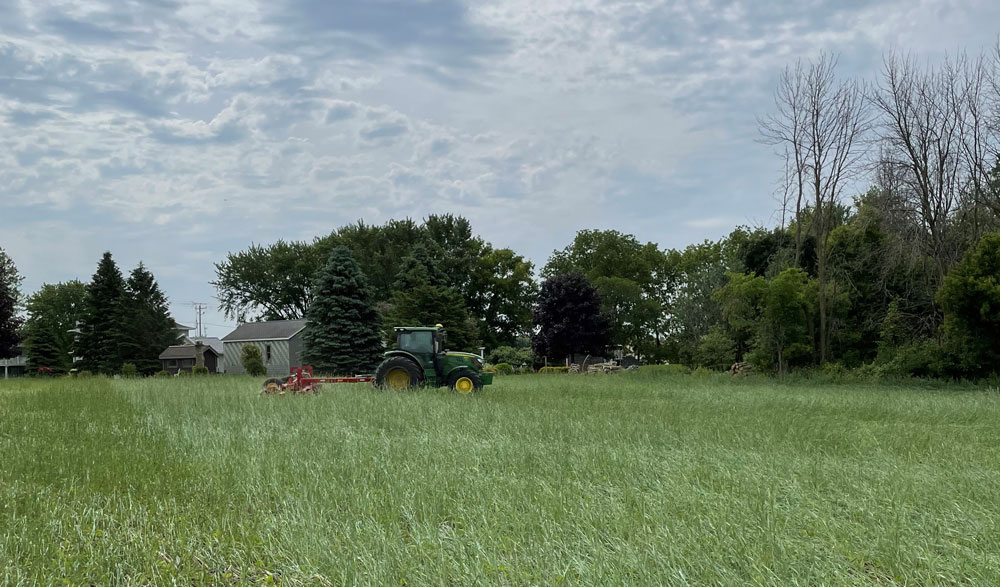
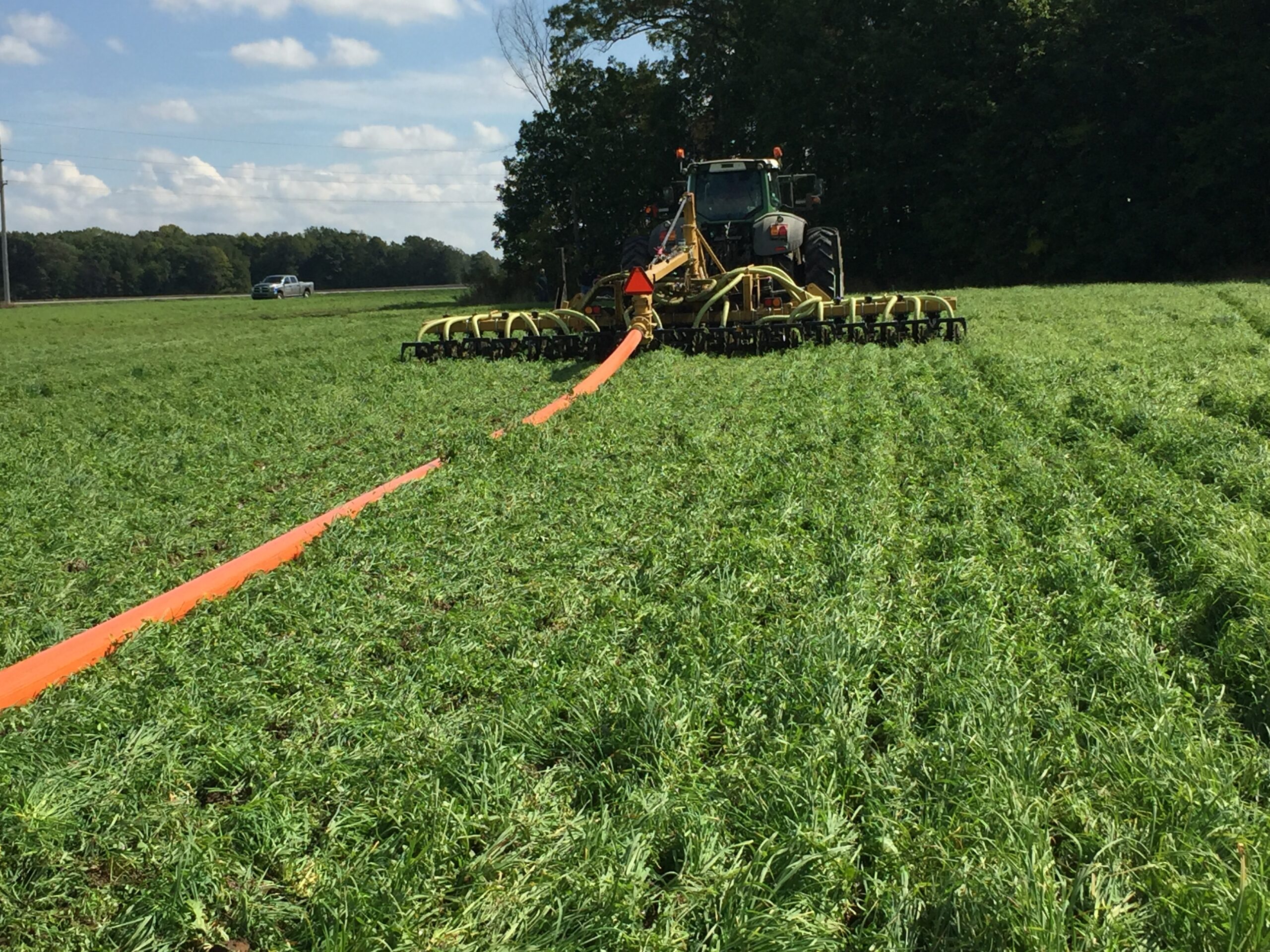
To flex your consumer muscle, here are some simple ideas to consider –

• Ask your existing or prospective provider what AIS prevention steps they take.
• Build ‘decontamination’ into the service contract. Ask that the provider implement at least one decontamination option (see figure) and provide you with documentation such as a video, logbook, or arrange to witness it in-person.
• Talk with your neighbor or lake group to discuss the possibility of hiring the same provider to reduce the number of providers coming to the lake throughout the season.

Thank you for being a steward of your lake!

Photo Credit: Steph Boismenue, McGhiever

Questions? Comments? Contact Chris Acy, the AIS Coordinator covering Brown, Outagamie, Fond du Lac, Calumet, and Winnebago Counties at (920) 460-3674 or chris@fwwa.org!

Follow the Fox Wolf Watershed Alliance’s Winnebago Waterways Program on our Winnebago Waterways Facebook page or @WinnWaterways on Twitter! You can also sign-up for email updates at WinnebagoWaterways.org.

Winnebago Waterways is a Fox-Wolf Watershed Alliance program. The Fox-Wolf Watershed Alliance is an independent nonprofit organization that identifies and advocates effective policies and actions that protect, restore, and sustain water resources in the Fox-Wolf River Basin.

Check out the Keepers of the Fox Program at https://fwwa.org/watershed-recovery/lower-fox-recovery/

Reporting invasive species is a first step in containing their spread. Maintaining and restoring our waters and landscapes can reduce the impacts even when we don’t have other management options to an invasive species.

The post How Lake Stewardship & Consumer Power Can Help Prevent the Spread of AIS appeared first on Fox-Wolf Watershed Alliance.

Original Article

Fox-Wolf Watershed Alliance

Fox-Wolf Watershed Alliance

https://fwwa.org/2024/05/20/how-lake-stewardship-consumer-power-can-help-prevent-the-spread-of-ais/?utm_source=rss&utm_medium=rss&utm_campaign=how-lake-stewardship-consumer-power-can-help-prevent-the-spread-of-ais

Chris Acy

Continuous Cover System

The U.S. Department of Agriculture (USDA) launched its Partnerships for Climate Smart Commodities program in 2023 to increase adoption of climate smart practices on farms across the country and to work to develop markets that could lead to premiums for commodities grown using these practices.

Fox-Wolf Watershed Alliance secured Climate Smart funding because many of the same practices that USDA supports for carbon capture also build soil health and reduce runoff resulting in improved water quality.

Agriculture is a vital part of Northeast Wisconsin’s landscape. To ensure NE Wisconsin farmer’s remain competitive in a changing market, this program is offering technical assistance and cost share to help farmers work toward adoption of climate smart practices.


Cost Share & Incentive Rates

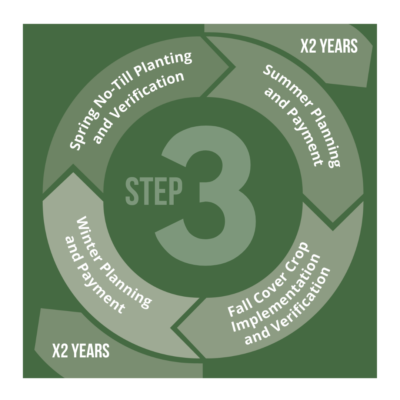
The annual payment will be divided equally and paid during the semi-annual (summer and winter) planning meetings following the implementation of practice.

  • Cover Crop and No-Till System $78/acre x 2 years
  • 2-Year Practice Implementation Incentive +$40/acre one time incentive payment
  • Accurate Whole Farm SnapPlus $5/acre (max of $1500)

  • Farm Progress Report Meetings +$625 one time incentive payment
  • Low Disturbance Manure Application (Optional) $28.11

Practice Implementation Cycle

Enrollment

Ready to start farming Climate Smart? To begin enrollment, review the Continuous Cover System program requirements. When you are ready to enroll, complete and submit the required application documents. Simply download, fill out, and scan and email or mail to Fox-Wolf. Fox-Wolf Watershed Alliance will respond within 2 weeks upon receipt of application. Timeline is dependent upon verifying eligibility through USDA FSA.

Review Practice Requirements and Eligibility

Before filling out the required enrollment paperwork, please review the Farm Climate Smart program requirements and eligibility to determine if you qualify.

Program requirements and eligibility can be found in the Requirements and Eligibility document. If you have questions regarding eligibility, contact your County Land Conservation Department Climate Smart staff.

Download and Fill Out Documents

To begin enrollment, download and fill out the Producer Application, Privacy Information Release Request, and Field Enrollment forms. To download, click the image and follow the download instructions prompted by your browser.

All documents may be filled out online or by hand. Either way you decide to complete the application, the documents must be signed and dated by hand or as a encrypted digital signature.

Practice Requirements

Cover Crop Requirements

  • Cover crops must be no-till planted.
  • Field rotation must be annual crops for the two years of the contract.
  • Crops grown as commodities will not be considered cover crops.
  • Wheat grown as a commodity does not qualify as a cover crop but is eligible for a one-time no-till payment.
  • Cover crops may be harvested as forage before termination.
  • Managed grazing of cover crops must receive prior approval by Climate Smart staff.
  • Cover crop mixes must include at least 1 over-wintering species at a pre-approved rate.
  • Cover crop planting timing and rates will follow page 12 of NRCS Tech Note 7.
    • Any deviations to timing and rates must be pre-approved.
  • Cover crop establishment requires a minimum of 8 live plants per square foot representing all species planted by freeze up or Dec. 1st.

Tillage Requirements

  • No-till allows only in-row soil disturbance during the contract period.
  • Removing residue from directly within the row (i.e. strip-till or row cleaners) is acceptable, but may only be done at the time of spring planting.
  • Vertical tillage may not be used.

Planning & Additional Requirements

  • Participation in semi-annual (winter and summer) planning meetings with County Land Conservation Climate Smart staff to prepare for upcoming conservation work
  • Provide an accurate and complete whole farm SnapPlus database to Fox-Wolf Watershed Alliance to generate a Farm Progress Report. Participate in one Farm Progress Report meeting
  • Work with Climate Smart staff to ensure proper documentation of implemented practices is complete, providing the following information: Crop and cover crop species, population, planting dates, equipment used for planting or other use, row spacing or drilled depth, seed cost, herbicide cost, type, and rate for cover crops, historical (3 previous years) tillage and conservation practices.
  • Install Project Signage at the field’s edge closest to the road on at least one enrolled field.

Farms that are located within the 21 counties of the Fox-Wolf Basin (see map) are considered eligible. Farms located within the watershed boundaries will receive priority. Fox-Wolf will evaluate applications based on suitability and availability of technical assistance and reserves the right to decline enrollment from farms in counties outside the core (Brown, Calumet, Fond du Lac, Outagamie, Shawano, Waupaca, Waushara, and Winnebago) watershed boundaries.

Additional requirements apply, as outlined in the Requirements for Enrollment section above.  For scenario specific questions, please contact Fox-Wolf at Climatesmart@fwwa.org or your County Land Conservation Climate Smart staff listed below.

Partnerships for Climate Smart Commodities is a USDA program “committed to supporting a diverse range of farmers, ranchers, and private forest landowners through Partnerships for Climate-Smart Commodities. This effort will expand markets for America’s climate-smart commodities, leverage the greenhouse gas benefits of climate-smart commodity production, and provide direct, meaningful benefits to production agriculture, including for small and underserved producers.  USDA is investing more than $3.1 billion for 141 projects through this effort and all the projects require meaningful involvement of small and underserved producers.”

For more information, please visit USDA’s Partnership for Climate Smart Commodities website.

No, farms of all sizes are eligible to apply. Farms that are able to enroll 100+ acres will have priority for the Continuous Cover System, but funding is also available for smaller farms.

Producers who are already utilizing cover crops and no-till on their farms are eligible, but only on fields that are not currently being managed with cover crops/no-till. Fields must be moving from a conventional system to a soil health system.

Producers who are already implementing cover crops and no-till on large portions of their farms are not considered eligible for the Continuous Cover System.

No, fields receiving cost share must be moving from conventional management to soil health systems.

Producers must be enrolled with FSA (have a Farm ID) before signing a contract. If a producer is not currently enrolled, they can become enrolled and then participate in the project.

Technical support to assist with FSA enrollment is available, through this program, by Wisconsin Farmers Union.  Please see the Contact Information section below to be connected with Wisconsin Farmers Union directly.

No, LDMA is currently available for cost share only as part of the Continuous Cover System (cover crops and no-till).

Field eligibility will be determined by the County Land Conservation Climate Smart staff. We are looking to choose producers who will continue implementing practices long term.

Yes, a variety of practices that have been defined by USDA NRCS as Climate Smart (providing a climate benefit) are eligible through Farm Climate Smart.  

In partnership with Pheasants Forever, cost-share funds for Tree or Shrub Planting and Precision Agriculture Analysis farm planning are available.

Funding is available for additional conservation practices that primarily address the needs of small or underserved producers.  This list of practices is under development and will be included in the Climate Smart Practice list as details are finalized.

For more details on practice standards and cost share, please see the full list of additional practices here.

Underserved Producers are defined by USDA FSA and USDA NRCS guidelines.  Detailed resources can be found on their website and are summarized below.

  • Small Producers: Those making less than $350,000 in gross annual income
  • Limited Resource Farmer: Those with direct or indirect gross farm sales not more than the current indexed value in each of the previous two years, and who have a total household income at or below the national poverty level for a family of four, or less than that of 50% of the county median household income in each of the previous two years. Self-Determination tool found here.
  • Beginning Farmer: Producers who: 1) have not operated a farm or ranch, or who have operated a farm or ranch for not more than 10 consecutive years, and 2) those who will materially and substantially participate in the operation of the farm or ranch. In the case of a contract with an individual or with the immediate family, material and substantial participation requires that the individual provide substantial day-to-day labor and management of the farm or ranch, consistent with the practices in the county where the farm is located. In the case of a contract made with a legal entity, all members must meet these requirements.
  • Socially Disadvantaged Farmer: A producer who is a member of a socially disadvantaged group. A socially disadvantaged group is a group whose members have been subject to racial or ethnic prejudice because of their identity as members of a group without regard to their individual qualities. Socially disadvantaged groups consist of the following:
    • American Indian or Alaskan Native
    • Asian
    • Black or African-American
    • Native Hawaiian or other Pacific Islander
    • Hispanic
  • Veteran Farmer: A producer who served in the U.S. Army, Navy, Marine Corps, Air Force, or Coast Guard, including the reserve component thereof; was released from service under conditions other than dishonorable; and has not operated a farm or ranch, or has operated a farm or ranch for not more than 10 years; or who first obtained status as a veteran during the most recent 10-year period. A legal entity or joint operation can be a Veteran Producer only if all individual members independently qualify.
  • Women Farmer: For an entity, at least 50% ownership in the farm business must be held by women.
  • Specialty Crop Grower: A producer who grows fruits & vegetables, tree nuts, dried fruits, and/or horticultural and nursery crops; including but not limited to floriculture crops, Christmas Trees, and plants grown for medicinal purposes (see full list here). *While all Specialty Crop Growers qualify for cost-share, Growers must be able to demonstrate the ability to implement cost-share practices (ex. aquaponic growers would be disqualified as they cannot implement cost-shareable practices).
One initial meeting is required for enrollment producers with County staff and Fox-Wolf Watershed Alliance. Additional meetings may be required or requested depending upon producer’s interest and/or circumstances. Contact County Land Conservation Department or Fox-Wolf Climate Smart staff to determine requirements for your situation.
For producers enrolled in the Continuous Cover System, meetings will occur following year 1 (two cropping seasons).
The contracted fields cannot be changed during the contract period. Producers that are interested in enrolling in additional fields should contact Fox-Wolf and a new contract for those acres will be drafted. New acres enrolled will be subject to the two-year contract from the time of signature of the new contract.

Contact Information

Fox-Wolf Watershed Alliance

Project Management

Katie Woodrow
(920) 915-5767
katie@fwwa.org

Tim Burns
(920) 841-0104
tim@fwwa.org

Dedicated County Land Conservation Climate Smart staff are located in 8 counties throughout the Fox-Wolf Basin. Contact the staff person in the county nearest to you to determine program eligibility and to begin enrollment.

Brown County

Brent Levash
(920) 391-4620
brent.levash@browncountywi.gov

Calumet County

Autumn Gomez-Tagle
(920) 849-1493
autumn.gomeztagle@calumetcounty.org

Fond du Lac County

Justin Loehrke
(920) 414-0096
justin.loehrke@fdlco.wi.gov

Outagamie County

Andy Kiefer
(920) 832-5073
andy.kiefer@outagamie.org

Shawano County

Bill Koepke
(715) 526-4620
bill.koepke@shawanocountywi.gov

Waupaca County

Stefan Stults
(715) 258-6245
stefan.stults@co.waupaca.wi.us

Waushara County

Kaylee Overby
(920) 787-0443
kaylee.overby@wausharacountywi.gov

Winnebago County

Eric Bertram
(920) 232-1958
ebertram@winnebagocountywi.gov

Have a question?

Need help enrolling? Maybe a question about eligibility? Confused about program requirements?

Fill out the Contact Us form and we will get back to you as soon as we can!

The post Continuous Cover System appeared first on Fox-Wolf Watershed Alliance.

Original Article

Fox-Wolf Watershed Alliance

Fox-Wolf Watershed Alliance

https://fwwa.org/2024/05/20/continuouscover/?utm_source=rss&utm_medium=rss&utm_campaign=continuouscover

Tim Burns

Each year, the Great Lakes attract several million tourists from the U.S. and around the world. The Great Lakes hold one-fifth of all the fresh water on the Earth’s surface with a combined coastline extending for over 10,000 miles. However, those are some rather basic facts – whether it’s pirates, shipwrecks, or Babe Ruth’s first official home run, these fascinating tidbits are a bit less straightforward. Read the full story by Classic City News. 

Original Article

Great Lakes Commission

Great Lakes Commission

https://www.glc.org/dailynews/20240520-greatlakes-facts

Hannah Reynolds

The 2023 animated movie “Elemental” imagines a world of anthropomorphized elements: earth, water, air and fire. References to chemistry are woven into the plot. There is an Alkali Theater; Mineral Lake, which displays different colors when exposed to flame; and the Wetro mass transit system whose timetable is based on the periodic table of elements.

In the non-cinematic world, there can also be a bit of drama when chemicals come together. Researchers laid out the action in “Microbially-Mediated Aerobic Oxidation of Trace Element-Bearing Pyrite in Neutral PH-Sandstone Aquifer Sediments,” https://doi.org/10.1039/D3VA00399J. It appeared in the April 12 issue of “Environmental Science: Advances,” published by the Royal Society for Chemistry.

The “setting” was Trempealeau County in west-central Wisconsin.

The “action” revolved around the region’s pyrite-bearing geological strata of an aquifer that was exposed to oxygen as a result of human activities or through natural processes such as groundwater fluctuation or a fissure in overlaying rock and soil. The research team—the cast, if you will—demonstrated the ability of aerobic microbial metabolism to promote oxidation of pyrite in this instance of now-exposed circumneutral-pH sandstone. The process results in the release of naturally occurring contaminants iron, manganese, aluminum, cadmium, chromium, cobalt, copper, nickel and vanadium into the groundwater at a scale of months to years. Contaminants, of course, could then contaminate drinking water for residents in the area of these microbially affected aquifers.

Closeup of person standing in front of evergreen trees.
Eric Roden was part of study with recently published results. It offers details on how microbes can accelerate the oxidization of pyrite, which in turn releases naturally occurring contaminants into groundwater. UW-Madison photo.

The “cast” of this research drama included Eric Roden, a geomicrobiologist scientist at the University of Wisconsin-Madison. He said the oxidation, “Would happen with or without microbial activity, but the key aspect of  Lisa’s work is that microbes get energy from the pyrite and they accelerate the reaction.”

The Lisa he referred to is Lisa Haas, another critically important cast member. She is the paper’s lead author and now a geoscientist at the Wisconsin Geological and Natural History Survey. As a graduate student on this research team, she conducted experiments with oxidized Wonnewoc Formation and Tunnel City Group geologic material. Haas infused the material in unfiltered groundwater that included the native aquifer microorganisms.

The work was funded in 2019 by the University of Wisconsin Water Resources Institute (“Microbially Mediated Oxidation of Trace Element-Bearing Sulfide Minerals in Sandstones of Trempealeau County, Wisconsin”. In 2020, Haas said, “What we did is collect groundwater with some of those native microorganisms, and I put them in a vial and monitored chemical compounds that are produced as a result of this mineral dissolving and found that, with the native microbial communities, pyrite will dissolve faster than [it does] abiotically.”

Person wearing hard hat standing in sandy area digging with a shovel.
Researcher Lisa Haas collecting a sample in west-central Wisconsin. Contributed photo.

Haas further investigated pyrite oxidation in Tunnel City Group overburden (that is, the formation laying on top of the more desirable Wonnewoc Formation material if you are seeking sand for frac-sand mining operations) and unprocessed sand from the Wonnewoc material. This work explored what it means if, “the sand that is not used contains pyrite and you throw that in a pond or in a pile and it rains and the water seeps down through that pile into a pond and the pyrite gets oxidized, now you’ve got frac sand ponds and then acidic metal-rich groundwater could leach down into the groundwater,” said Roden.

The implications of these oxidation-jump-starting microbes for homeowners or public water system managers are, “If there was (water) pumping—anywhere in the state—and that pumping led to input of oxygen-containing fluid to previously reduced (previously reduced means it hasn’t already been exposed to oxygen) pyrite-rich aquifers, then we’ve got a—problem,” Roden said. “If there’s frac sand mining, you can pull out pyrite-containing material that’s not used and expose that to rain depending on the nature of the solid phase geochemistry of the formation and the rates of fluid, you could again have a problem.”

This recently published work built on two previous paths of study:

UW-Madison Ph.D. students Elizabeth Percak-Dennett and Stephanie Napieralski were the first group to show that at neutral PH microbes can accelerate pyrite oxidization. Roden said, “At the very beginning, before it goes acidic and that whole set of interactions that is so well known in acid mine drainage and biomining everything else before that happens before it goes acidic, other kinds of microbes accelerate the initial oxidization process.”

As a student, Haas had also worked with others, including study lead Jay Zambito formerly with WGNHS and now a professor at Beloit College, to characterize and map the presence of sulfide minerals and their potential for surface and groundwater contamination in the Wonnewoc Formation and Tunnel City Group. They determined that these geological formations have the potential for surface and groundwater contamination associated with oxidation of naturally occurring sulfide minerals.

As a microbiologically oriented geoscientist, Roden recounted how his attempts to understand this earlier Haas and Zambito work made for humorous interchanges. “Lisa laid all this stuff out and she had all these maps. It took me a long time, but finally I got it, ‘Oh, layers within the same geological formation are oxidized is here and reduced is here…let’s study them both by way of comparison!’”

While those maps and the larger theme of this research are not going to appear on the silver screen, they do provide more than the fluff of a tub of popcorn. It’s important knowledge to share because it provides guidance about private and municipal drinking water wells in places with pyrite formations that could gain dubious fame thanks, in part, to microbial communities.

The post New paper demonstrates the role of microbes in oxidizing pyrite first appeared on WRI.

Original Article

News Release | WRI

News Release | WRI

https://www.wri.wisc.edu/news/new-paper-demonstrates-the-role-of-microbes-in-oxidizing-pyrite/

Moira Harrington

A Lake Erie documentary series produced in Erie is up for a prestigious award. ‘Lake Erie, Our Kin,’ a two-part series produced by Erie-based filmmakers John C. Lyons and Melissa A. Troutman has been nominated for two Emmy Awards in the Societal Concerns category in the 55th annual Central Great Lakes Emmy Awards. Read the full story by WJET-TV – Erie, PA. 

Original Article

Great Lakes Commission

Great Lakes Commission

https://www.glc.org/dailynews/20240520-lakeerie-documentary-emmyawards

Hannah Reynolds

The S.S. Badger is back in service after a longer-than-expected offseason. It’s a sound that people in Manitowoc have waited 10 months for; the blowing horn of the S.S. Badger. The ferry, which is the largest one to cross Lake Michigan, arrived in Manitowoc at noon Friday. Read the full story by WTAQ-TV – Green Bay, WI. 

Original Article

Great Lakes Commission

Great Lakes Commission

https://www.glc.org/dailynews/20240520-ssbadger-lakemichigancrossings

Hannah Reynolds

Michigan Clean Water Corps organization held its annual Cooperative Lakes Monitoring Program on Saturday in Crystal Falls, Michigan. The purpose of the program is to help volunteers monitor indicators of water quality in their lakes. The program aims to teach attendees how to do things like measuring the clarity of the water. Read the full story by WLUC-TV – Negaunee, MI. 

Original Article

Great Lakes Commission

Great Lakes Commission

https://www.glc.org/dailynews/20240520-michigancleanwatercorp-lakemonitoringefforts

Hannah Reynolds

More than $77 million in infrastructure and expansion projects are now being developed at Ports of Indiana-Burns Harbor as a record construction season kicks off in the Lake Michigan port. Read the full story by Maritime Logistics Professionals. 

Original Article

Great Lakes Commission

Great Lakes Commission

https://www.glc.org/dailynews/20240520-maritime-projects-lakemichigan

Hannah Reynolds

The toxic algae blooms that befoul Lake Erie and other regional waterways each summer are stinky, ugly and dangerous. They’ve killed dogs, sickened boaters and triggered rashes and respiratory problems for beachgoers — and there’s little doctors can do to help. However, there’s hope that medicine will eventually be available for people who are regularly exposed to the toxin. Read the full story by Bridge Michigan. 

Original Article

Great Lakes Commission

Great Lakes Commission

https://www.glc.org/dailynews/20240517-greatlakes-algae-sickness

Hannah Reynolds

Rural Michigan residents who suffer from a chronic illness that requires specialized treatment may have to drive hours to receive care.

That barrier to access to health care is one reason rural county death rates tend to be higher than their urban counterparts, according to Robert Howe, the medical director of the Western Upper Peninsula Health Department.

The post Limited access to health care contributes to higher rural death rates first appeared on Great Lakes Echo.

Original Article

Great Lakes Echo

Great Lakes Echo

http://greatlakesecho.org/2024/05/20/limited-access-to-health-care-contributes-to-higher-rural-death-rates/

Guest Contributor

At 1023 PM CDT, Doppler radar was tracking strong thunderstorms along a line extending from near Black Creek to near Kaukauna. Movement was east at 40 mph. HAZARD...Wind gusts up to 40 mph. SOURCE...Radar indicated. IMPACT...Gusty winds could knock down tree limbs and blow around unsecured objects. Locations impacted include... Green Bay, Bellevue Town, Oneida, De Pere, Howard, Ashwaubenon, Bellevue, Allouez, Ledgeview, and Hobart.

Original Article

Current watches, warnings, and advisories for Brown County (WIC009) WI

Current watches, warnings, and advisories for Brown County (WIC009) WI

https://api.weather.gov/alerts/urn:oid:2.49.0.1.840.0.dec83b6f05495862cd0fed04fd4d3f4337e8e427.001.1.cap

NWS

It’s OK to mow in May − the best way to help pollinators is by adding native plants

By Christina Grozinger and Harland Patch, Penn State

 is an independent and nonprofit source of news, analysis and commentary from academic experts.

It’s a simple idea: Stop mowing your lawn in the month of May to let flowers in the lawn, such as dandelions and clover, grow and support bees and other pollinators.

Read Now at Great Lakes Now.

Original Article

Great Lakes Now

Great Lakes Now

https://www.greatlakesnow.org/2024/05/the-best-way-to-help-pollinators-is-by-adding-native-plants/

The Conversation

Disappointed dogs, sad skiers, frustrated fishermen

Hayward, Wisconsin got its first snow of the season on Halloween. But then Thanksgiving came, and Christmas, with no more white flakes. The new year started equally warm and snowless, and the organizers of the iconic American Birkebeiner ski race began to really worry. The February 24, 2024 race would be the 50th anniversary of the country’s most famous (and largest) cross-country ski event, and it would also be a World Cup competition, drawing top competitors from around the globe.

Read Now at Great Lakes Now.

Original Article

Great Lakes Now

Great Lakes Now

https://www.greatlakesnow.org/2024/05/disappointed-dogs-sad-skiers-frustrated-fishermen/

Kari Lydersen

It’s taken over 30 years to restore Michigan’s Muskegon Lake and while many Muskegon residents are excited about the revitalized lake, others are concerned that the restored areas will attract high-end development and lead to less public access of the water. Read the full story by Great Lakes Echo.

Original Article

Great Lakes Commission

Great Lakes Commission

https://www.glc.org/dailynews/20240517-pfas-in-rain

Theresa Gruninger

A considerable amount of “forever chemicals” are making their way into the Great Lakes via the air and rain, a new study says. Findings published in Environmental Science and Technology, show that rain is primary way PFAS end up in Lake Superior, offering a stark reminder that even the lake that’s considered the most pristine isn’t safe from the toxic chemicals. Read the full story by the Milwaukee Journal Sentinel.

Original Article

Great Lakes Commission

Great Lakes Commission

https://www.glc.org/dailynews/20240517-pfas-in-rain

Theresa Gruninger

In an interview, the executive director of a Chicago-based water innovation hub discusses the need to focus on innovation and why water abundance is a double-edged sword. Read the full story by Great Lakes Now.

Original Article

Great Lakes Commission

Great Lakes Commission

https://www.glc.org/dailynews/20240517-chicago-city-water

Theresa Gruninger

Montréal played host to a landmark agreement as officials from Montréal, Québec City, and Milwaukee inked a pledge to turn the Great Lakes and St. Lawrence River Basin into an economic hub with a focus on sustainability. Read the full story by Hoodline.

Original Article

Great Lakes Commission

Great Lakes Commission

https://www.glc.org/dailynews/20240517-blue-green-economic-conference

Theresa Gruninger

St. Lawrence Seaway officials and guests gathered in Massena, New York Monday to celebrate the official opening of a new $7 million visitor center. The new facility includes a museum with 38 exhibits and a three-story viewing platform overlooking one of the Seaway’s two locks for huge ocean-going freighters. Read the full story by North Country Public Radio.

Original Article

Great Lakes Commission

Great Lakes Commission

https://www.glc.org/dailynews/20240517-visitor-center

Theresa Gruninger

A bill containing $12 million to install a barrier in the Mississippi River in southern Minnesota to prevent invasive carp from swimming upstream is headed to Governor Tim Walz. If signed funding will become available July 1. Read the full story by Minnesota Public Radio.

Original Article

Great Lakes Commission

Great Lakes Commission

https://www.glc.org/dailynews/20240517-invasive-carp

Theresa Gruninger

The Coast Guard warns that water temperatures in the St. Lawrence River range from 49 to 50 degrees Fahrenheit, and despite the recent warm weather, boaters should follow safety precautions to prevent hypothermia. Read the full story by WWTI-TV – Watertown, NY.

Original Article

Great Lakes Commission

Great Lakes Commission

https://www.glc.org/dailynews/20240517-cold-water-st-lawrence

Theresa Gruninger

* WHAT...Visibility one quarter mile or less in dense fog. * WHERE...Door, Outagamie, Brown, Kewaunee, Winnebago, Calumet, Manitowoc, Southern Marinette County and Southern Oconto County Counties. * WHEN...Until 8 AM CDT this morning. * IMPACTS...Hazardous driving conditions due to low visibility. * ADDITIONAL DETAILS...The visibility will vary between just a few hundred yards to a mile or two, so be alert when driving. The fog should dissipate by around 8 am. Short air travel delays are possible.

Original Article

Current watches, warnings, and advisories for Brown County (WIC009) WI

Current watches, warnings, and advisories for Brown County (WIC009) WI

https://api.weather.gov/alerts/urn:oid:2.49.0.1.840.0.30b6e2f243d9a77bcadb7d205aeafc46f7d00e5b.001.1.cap

NWS

It’s taken over 30 years and $80 million to restore Muskegon Lake and a few nearby smaller bodies of water.

Decades of pollution and rapid urbanization created ecological problems so severe that the lake was designated a “Great Lakes Area of Concern” by the U.S. and Canada in 1987.

The post Community input sought for cleaned-up lakes, shorelines first appeared on Great Lakes Echo.

Original Article

Great Lakes Echo

Great Lakes Echo

http://greatlakesecho.org/2024/05/17/community-input-sought-for-cleaned-up-lakes-shorelines/

Guest Contributor

Areas of dense fog have formed near the bay, Lake Michigan, and in parts of the Fox Valley. The dense fog is patchy, but could produce hazardous travel conditions. Slow down if you encounter fog, and allow extra time to reach your destination. The fog should clear quickly a few hours after sunrise.

Original Article

Current watches, warnings, and advisories for Brown County (WIC009) WI

Current watches, warnings, and advisories for Brown County (WIC009) WI

https://api.weather.gov/alerts/urn:oid:2.49.0.1.840.0.392dc7edf4f2d10ae7af1783969ae4e79e27fb12.001.1.cap

NWS

At 503 PM CDT, Doppler radar was tracking a two strong thunderstorms. One was located near Central Lake Winnebago, or 10 miles southeast of Oshkosh, and another over southern Manitowoc County near St Nazianz. The storms were moving northeast at 35 mph. HAZARD...Wind gusts up to 40 mph and pea size hail. SOURCE...Radar indicated. IMPACT...Gusty winds could knock down small tree limbs and blow around unsecured objects. Minor hail damage to vegetation is possible. Locations impacted include... Oshkosh, Manitowoc, Chilton, Brillion, Denmark, Cleveland, Valders, St. Nazianz, St Anna, and Camp Rokilio Scout Camp.

Original Article

Current watches, warnings, and advisories for Brown County (WIC009) WI

Current watches, warnings, and advisories for Brown County (WIC009) WI

https://api.weather.gov/alerts/urn:oid:2.49.0.1.840.0.99f65a123db08f7775784a409b2b95460e98e585.001.1.cap

NWS

Energy News Roundup: Industry groups fight federal emissions rules they say will hurt region

A fuel industry group is spending $6.6 million on ads in Michigan, Ohio, Pennsylvania, Wisconsin and other swing states that take aim at the Biden administration’s tailpipe emissions standards. The Environmental Protection Agency (EPA) rule was in the works for years before being finalized in March. It aims to shift the majority of the country’s new car sales to electric and hybrid vehicles by 2032.

Read Now at Great Lakes Now.

Original Article

Great Lakes Now

Great Lakes Now

https://www.greatlakesnow.org/2024/05/energy-news-roundup-industry-groups-fight-federal-emissions-rules-they-say-will-hurt-region/

Nicole Pollack, Great Lakes Now

While it feels like winter in the Great Lakes is long gone, the official ice season for the lakes has just recently concluded. The northernmost regions of Lake Superior often have lake ice throughout April, even during particularly mild winters … Continue reading

Original Article

NOAA Great Lakes Environmental Research Laboratory

NOAA Great Lakes Environmental Research Laboratory

https://noaaglerl.blog/2024/05/16/a-final-look-at-record-low-great-lakes-ice-in-2024/

Gabrielle Farina

Dams may slow harmful algal blooms in urban lakes, expert says

This article was republished here with permission from Great Lakes Echo.

By Elinor Epperson and Daniel Schoenherr, Great Lakes Echo

Like clockwork, Michigan’s Ford Lake and its downstream neighbor, Belleville Lake, turn bright green every summer due to harmful algal blooms.

The lakes, located near Ypsilanti in the southeast part of the state, have struggled for decades with phosphorus pollution that spurs algae growth.

Read Now at Great Lakes Now.

Original Article

Great Lakes Now

Great Lakes Now

https://www.greatlakesnow.org/2024/05/dams-may-slow-harmful-algal-blooms-in-urban-lakes-expert-says/

Great Lakes Echo