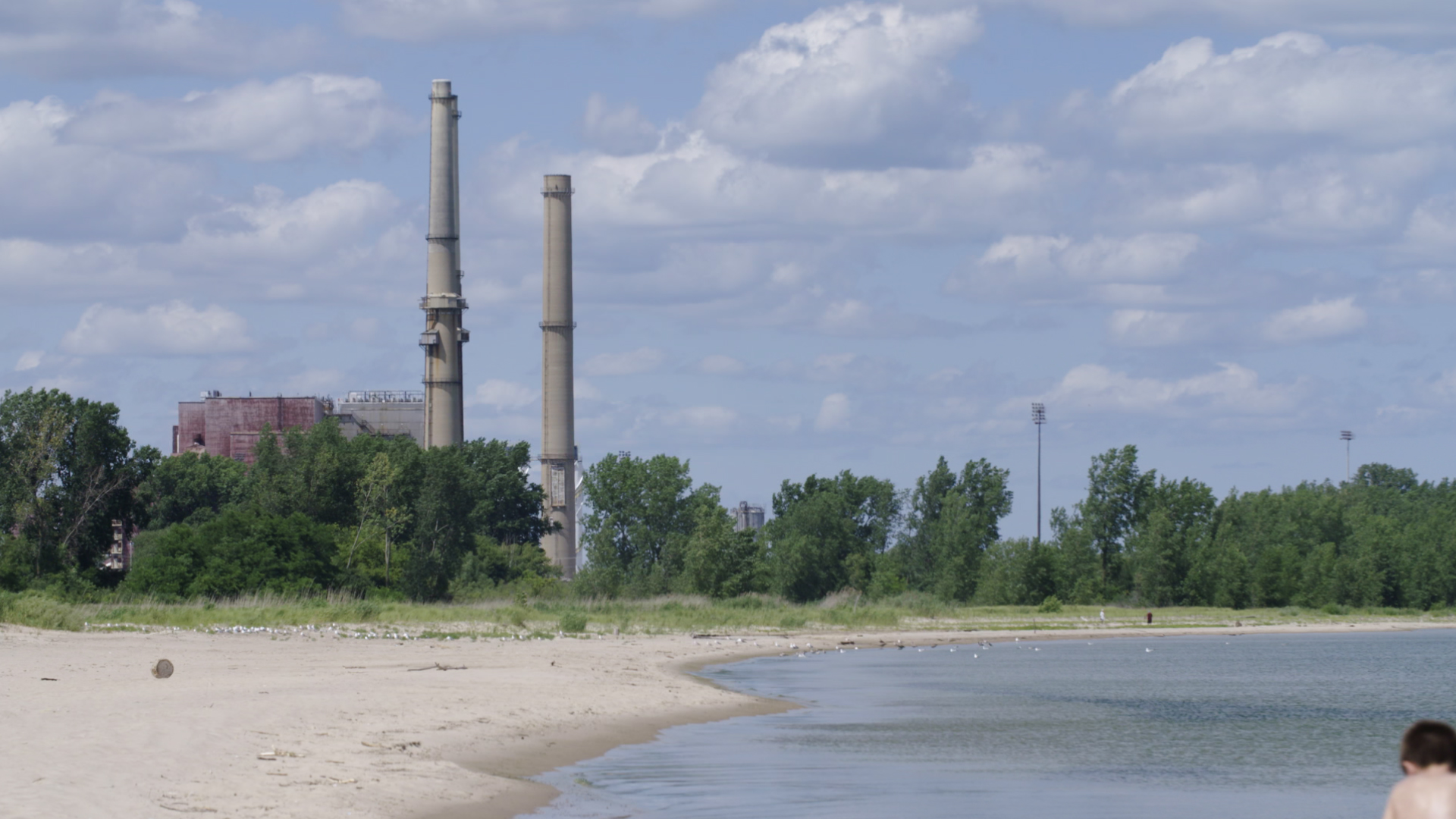
The Thousand Islands Land Trust and the Ontario Bays Initiative Land Trust are teaming up to ensure Cherry Island, in Lake Ontario’s Chaumont Bay, will remain undeveloped. They’ll also work together to protect Cherry Island’s wildlife habitat and water quality. Read the full story by WWNY-TV – Carthage, NY.

Original Article

Great Lakes Commission

Great Lakes Commission

https://www.glc.org/dailynews/20260204-cherry-island

Autumn McGowan

By Vivian La, Interlochen Public Radio

This coverage is made possible through a partnership between IPR and Grist, a nonprofit environmental media organization.

Michigan researchers have gone back in time to get a picture of ice cover on the Great Lakes since the late 19th century.

Using historical temperature records from weather stations around the region, researchers improved their understanding of where ice might have formed and for how long it lasted — spanning the last 120 years.

Their findings were published in the journal Scientific Data last month. Researchers said this new data record could help with efforts like research on fish in the winter, regional climate and improving safety on the ice.

“Lake ice is really part of the system, part of our life. It matters [for] our culture, regional weather, safety, everything,” said Ayumi Fujisaki-Manome, study co-author and associate director for the Cooperative Institute for Great Lakes Research at the University of Michigan.

There’s a “pretty good satellite record” of Great Lakes ice cover from the last 45 years, she said. But research into the region’s historical climate requires a longer timescale and there isn’t good data specific to ice.

According to researchers, there’s a general gap in scientific knowledge about winter on the Great Lakes — buoys get pulled out because of harsh conditions.

There are good weather observations, though. And air temperature is a good proxy for ice cover on the lakes because ice typically forms when there’s several cold days in a row.

To peer into the past, researchers looked at temperature records from weather stations all around the Great Lakes, limiting their study to stations with the most consistent data since 1897.

They calculated ice cover using this information, and the end result was a dataset that can be compared to present day conditions. Researchers said it can inform future research on how animals behave during the winter, for example.

“A lot of the biological conditions under ice are really poorly understood,” said Katelyn King, fisheries research biologist for the Michigan Department of Natural Resources and the study’s lead author. King is using the data set to study the historic decline of whitefish in the Great Lakes.

King said this dataset is a helpful baseline as the region continues to shift under climate change. Research shows that average temperatures in the region have increased in the last two decades, frost seasons are shortening, and heavy snow or rainstorms are becoming more frequent.

Still, year-to-year variability is the new normal. Ice cover on the Great Lakes was relatively close to average last winter, but followed historic lows the season prior.

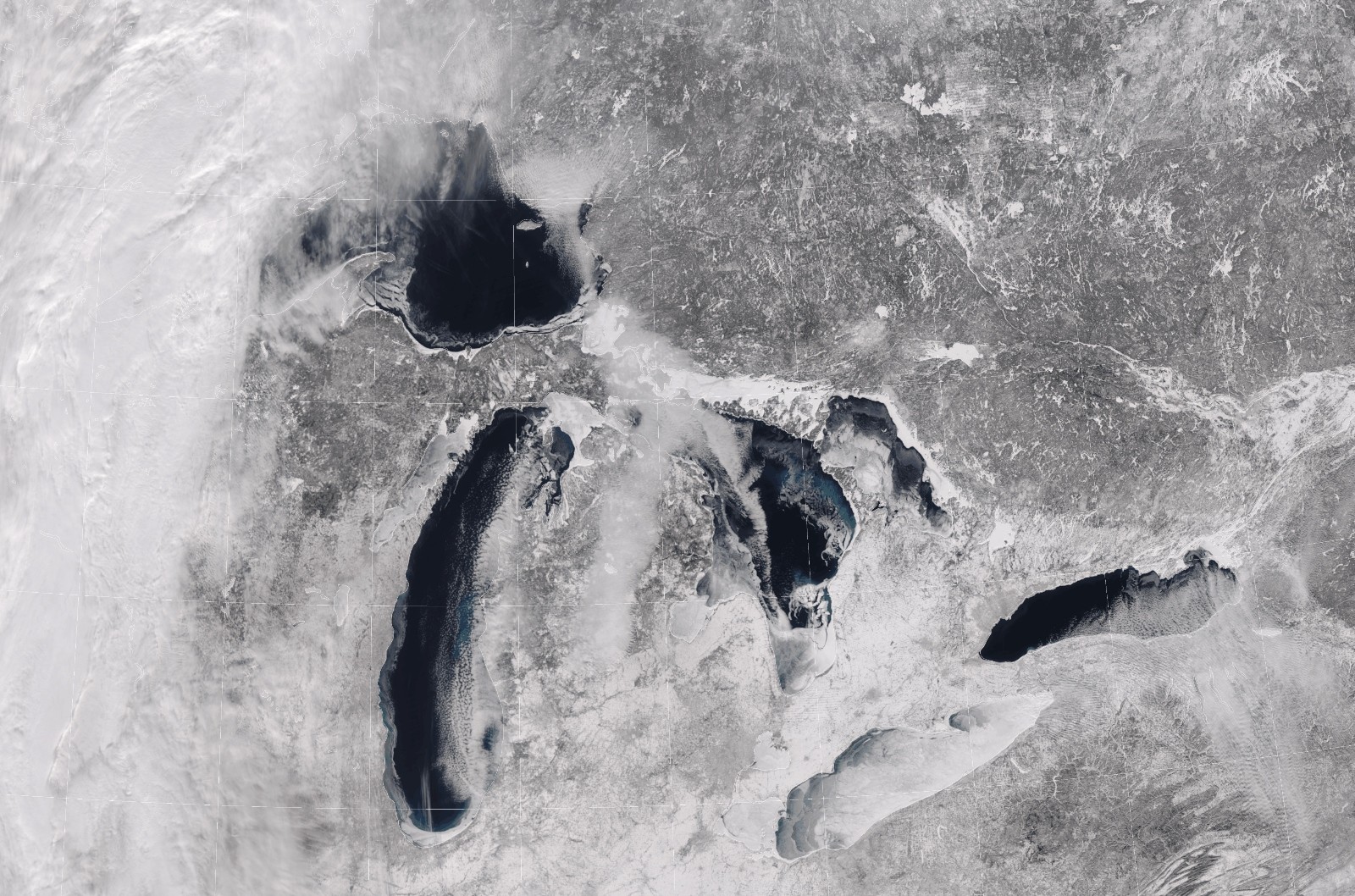
And so far this winter, cold temperatures in recent weeks have contributed to some of the highest ice cover on the Great Lakes in years, according to data tracked by the U.S.’s National Oceanic and Atmospheric Administration.

“These really extreme years where we have really cold weather or really warm weather is just a sign that long-term climate is changing,” King said. “It really affects all of us in our day-to-day.”

The post New ice cover data offers insight into whitefish declines, climate change appeared first on Great Lakes Now.

Original Article

Great Lakes Now

Great Lakes Now

https://www.greatlakesnow.org/2026/02/04/new-ice-cover-data-offers-insight-into-whitefish-declines-climate-change/

Interlochen Public Radio

TheTheT The Army Corps of Engineers has announced details of their upcoming Winnebago 2026 Lake Winnebago Winter Coordination Video Conference which is open to the public: Feb. 18, 2026 - Lake Winnebago Winter Coordination Video Conference Army Corps website: https://www.lrd.usace.army.mil/Missions/Projects/Article/3623884/lake-winnebago/ DEPARTMENT OF THE ARMY U.S. ARMY CORPS OF ENGINEERS, CHICAGO [...]

The post Army Corps: Winter 2026 Call – Feb. 18, 2026 appeared first on Fox-Wolf Watershed Alliance.

Original Article

Fox-Wolf Watershed Alliance

Fox-Wolf Watershed Alliance

https://fwwa.org/2026/02/03/acoe-winter-2024-strategy-call-notice-2/?utm_source=rss&utm_medium=rss&utm_campaign=acoe-winter-2024-strategy-call-notice-2

Katie Reed

Janet McCabe, Indiana University

When I worked for the Environmental Protection Agency in the 2010s as an Obama administration appointee, I helped write and review dozens of regulations under the Clean Air Act. They included some groundbreaking rules, such as setting national air quality standards for ozone and fine particulate matter.

For each rule, we considered the costs to industry if the rule went into effect – and also the benefits to people’s health.

Study after study had demonstrated that being exposed to increased air pollution leads to more asthma attacks, more cardiovascular disease and people dying sooner than they would have otherwise. The flip side is obvious: Lower air pollution means fewer asthma attacks, fewer heart problems and longer lives.

To use this information in making decisions, we needed to have a way to compare the costs of additional pollution controls to industry, and ultimately, to consumers, against the benefits to public health. A balanced approach meant putting a dollar value on health benefits and weighing them against the seemingly more easily, though not always accurately, predicted costs of complying with the regulations.

We were able to make these decisions because environmental economists since the 1980s have developed and continually improved robust methodologies to quantify the costs to society of air pollution’s effect on human health, such as workdays lost and hospital visits.

Now, however, the Trump administration is dropping one whole side of that cost-benefit equation. The EPA wrote in January 2026 that it will stop quantifying the health benefits when assessing the monetary impact of new pollution regulations and regulation changes involving pollutants that contribute to ozone, or smog, and fine particulate matter, known as PM2.5.

The result leaves government decision-makers without a way to clearly compare regulatory costs to health benefits. It will almost certainly lead to an increase in harmful pollution that America has made so much progress reducing over the decades.

Cost-benefit rules go back to Ronald Reagan

The requirement that agencies conduct a thorough cost-benefit analysis dates back to President Ronald Reagan’s efforts to cut regulatory costs in the 1980s.

In 1981, Reagan issued an executive order requiring cost-benefit analysis for every economically significant regulation. He wrote that, to the extent permitted by law, “Regulatory action shall not be undertaken unless the potential benefits to society for the regulation outweigh the potential costs to society.”

Chart shows economy growing 321% while emissions of common pollutants fell.
Comparison of growth areas and declining emissions, 1970-2023.
EPA

In 1993, President Bill Clinton issued another executive order, EO 12866, which to this day governs federal agency rulemaking. It states: “In deciding whether and how to regulate, agencies should assess all costs and benefits of available regulatory alternatives. … Costs and benefits shall be understood to include both quantifiable measures (to the fullest extent that these can be usefully estimated) and qualitative measures of costs and benefits that are difficult to quantify, but nevertheless essential to consider.”

Quantifying human health benefits

In response to these directives, environmental economists have generated rigorous, peer-reviewed and data-driven methods and studies to inform both sides of the cost-benefit equation over the past four decades.

Estimating costs seems like it would be relatively straightforward, even if not always precisely on the money. Industry provides the EPA with predictions of costs for control technology and construction. Public review processes allow other experts to opine on those estimates and offer additional information.

For a system as complex as the power grid, however, it’s a lot more complicated. Starting in the 1990s, the EPA developed the Integrated Planning Model, a complex, systemwide model used to evaluate the cost and emissions impacts of proposed policies affecting power plants. That model has been improved and updated, and has repeatedly undergone peer review in the years since.

On the health benefits side, in 2003, EPA economists developed the Environmental Benefits Mapping and Analysis Program, which uses a wide range of air quality data to assess changes in health effects and estimates the monetized value of avoiding those health effects.

For example, when the EPA was developing carbon pollution standards for power plants in 2024, it estimated that the rule would cost industry US$0.98 billion a year while delivering $6.3 billion in annual health benefits. The benefit calculation includes the value of avoiding approximately 1,200 premature deaths; 870 hospital and emergency room visits; 1,900 cases of asthma onset; 360,000 cases of asthma symptoms; 48,000 school absence days; and 57,000 lost work days.

The EPA has used these toolsets and others for many regulatory decisions, such as determining how protective air quality standards should be or how much mercury coal-fired power plants should be permitted to emit. Its reports have documented continual refinement of modeling tools and use of more comprehensive data for calculating both costs and benefits.

Not every health benefit can be monetized, as the EPA often acknowledges in its regulatory impacts assessments. But we know from years of studies that lower levels of ozone and fine particles in the air we breathe mean fewer heart attacks, asthma cases and greater longevity.

The Trump EPA’s deregulation sledgehammer

The U.S. EPA upended the practice of monetizing health costs in January 2026. In a few paragraphs of a final rulemaking about emissions from combustion turbines, the EPA stated that it would no longer quantify the health benefits associated with reduced exposure to ozone and PM2.5.

The agency said that it does not deny that exposure to air pollution adversely affects human health, including shortening people’s lives. But, it says, it now believes the analytical methods used to quantify health benefits from reduced air pollution are not sufficiently supported by the underlying science and have provided a false sense of precision.

As a result, the EPA decided it will no longer include any quantification of benefits, though it will consider qualitative effects.

Understanding the qualitative effects is useful. But for the purposes of an actual rule, what matters is what gets quantified.

The new decision hands a sledgehammer to deregulators because in the world of cost-benefit analysis, if an impact isn’t monetized, it doesn’t exist.

What does this mean?

Under this new approach, the EPA will be able to justify more air pollution and less public health protection when it issues Clean Air Act rules.

Analysis of new or revised rules under the Clean Air Act will explain how much it would cost industry to comply with control requirements, and how much that might increase the cost of electricity, for example. But they will not balance those costs against the very real benefits to people associated with fewer hospital or doctor visits, less medication, fewer missed school or workdays, and longer life.

Costs will easily outweigh benefits in this new format, and it will be easy for officials to justify ending regulations that help improve public health across America.

I know the idea of putting a dollar value on extra years of human life can be uncomfortable. But without it, the cost for industry to comply with the regulation – for reducing power plant emissions that can make people sick, for example – is the only number that will count.The Conversation

Janet McCabe, Visiting Professor, Indiana University McKinney School of Law and O’Neill School of Public and Environmental Affairs, Indiana University

This article is republished from The Conversation under a Creative Commons license. Read the original article.

The post EPA’s new way of evaluating pollution rules hands deregulators a sledgehammer and license to ignore public health appeared first on Great Lakes Now.

Original Article

Great Lakes Now

Great Lakes Now

https://www.greatlakesnow.org/2026/02/03/epas-new-way-of-evaluating-pollution-rules-hands-deregulators-a-sledgehammer-and-license-to-ignore-public-health/

The Conversation

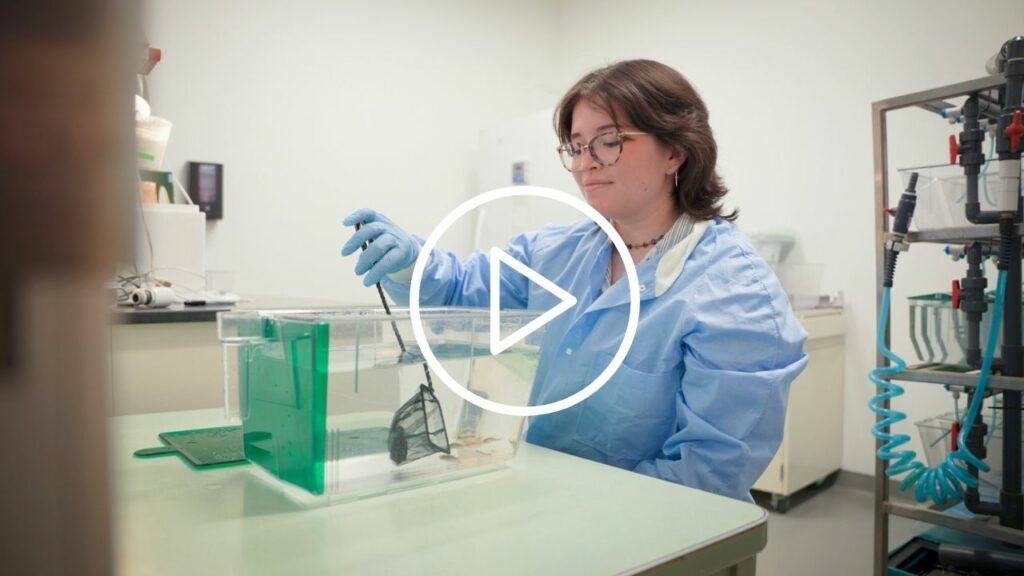
Video thumbnail showing a student working with zebra fish in a lab

Watch “How do PFAS affect Wisconsin’s fish?” (Video by Bonnie Willison / ASC)

In order to become big fish, baby fish face seemingly impossible odds. They evade predators, find food, and fend off disease — all while being smaller than the size of a fingernail. But what if contaminants in the water affect their ability to respond to those challenges and survive?

With funding from Wisconsin Sea Grant, University of Wisconsin–La Crosse Professor Tisha King-Heiden is studying how per- and polyfluoroalkyl substances, or PFAS, impact the nervous and immune systems of young fish. PFAS are a family of chemicals found in non-stick and waterproof household products, from food packaging to dental floss. They’re widespread in lakes and rivers across Wisconsin. 

“What I’m interested in is how exposure to environmental contaminants during early stages of embryonic development can lead to adverse health effects later on in life,” said King-Heiden. 

Her work on the project is personal. King-Heiden lives on French Island in Campbell, Wisconsin, where the groundwater is contaminated with PFAS. 

“It hit home pretty hard. I’ve been on bottled water now for going on five years,” she said. “So I just wanted to try to contribute a little bit more to understanding what the risks are and what they aren’t, because there’s still quite a few unknowns.”

New PFAS, new fish

With over 7,000 types of PFAS, King-Heiden is zeroing in on three newer chemicals: PFHxS, PFUNdA, and PFNA. Not much is known about how they affect fish, as past studies have primarily focused on older, “legacy” PFAS that are no longer used but remain in the environment. 

 ”The vast majority of information we have is on PFOA and PFOS. So those are […] the original PFAS chemicals,” she said.

PFHxS, PFUNdA, and PFNA have slightly different chemical structures than the legacy PFAS, which may affect how they accumulate in and affect fish. 

Another novel aspect of King-Heiden’s project is the type of fish she’s studying: fathead minnow, walleye, and sturgeon. Many PFAS studies use zebrafish, a popular lab species from southern Asia.

“I wanted to try something different and start working with some other prevalent species that are more ecologically and culturally relevant to people living in Wisconsin,” she said.

Measuring tail flicks and body bends

To evaluate the effects of PFAS on fish, King-Heiden and her team are collecting data on hatching success, growth, and immune system responses. They’ve also developed a series of behavioral tests to gauge how the nervous system develops.

The first test? Watching fish embryos for tail flicks.

“It’s the same thing that humans feel when they can start to feel the fetus moving,” said King-Heiden. “If they are flicking their tails too much, or if they’re not flicking them enough, it can give us an idea of how PFAS is impacting that nervous system development.”

After the fish hatch, the team then measures how well they can respond to stimuli. King-Heiden explained that during this time, fish develop neurons along their body that help them sense movement in the water. And when they do detect movement — a lurking predator, perhaps — the fish bends into the shape of “C” and swims away. It’s called a C-start response.

Video thumbnail showing Tisha King-Heiden and a student looking at a computer

Watch “The C-start: Sea Grant funded research.” (Video by Bonnie Willison / ASC)

“It’s an autonomic reflex, like the knee-jerk reflex,” she said. 

Using a high-speed camera, the team measures how long it takes for a fish to respond to a vibration sent through the water. The longer the response time, the more likely the neurons are damaged. 

The final behavioral test raises the stakes. Instead of contending with vibrations, a baby fish is placed in a container with a hungry adult fish.

“We give them a certain amount of time and see if the fish can actually escape that predator,” King-Heiden said. Cumulatively, the tests can indicate how the nervous system is developing and how baby fish might survive in the wild.

Protecting wild fish and people

While PFAS concentrations in lakes and rivers may not be high enough to kill baby fish, they could make them more susceptible to predation and disease. King-Heiden said that could spell trouble for wild fish populations, especially if they’re dealing with other issues, like invasive species. 

“If you add other environmental contaminants and stressors like disease to that mix, you can exacerbate the problem,” she said. 

Human health is also a concern, as people catch and eat fish from contaminated water. Understanding if and how the new PFAS accumulate in tissues of fish can help set consumption advisories that keep people safe. King-Heiden is also developing a communication campaign to engage local communities around PFAS, fish, and human health.

“We can try to help explain why it’s important for us to spend the money to clean up PFAS, to spend the money to support the research that’s going to find the most cost-effective way of cleaning up our drinking water for both human health as well as our wildlife,” she said. 

The post Measuring the impact of PFAS on Wisconsin’s fish first appeared on Wisconsin Sea Grant.

Original Article

News Releases | Wisconsin Sea Grant

News Releases | Wisconsin Sea Grant

https://www.seagrant.wisc.edu/news/measuring-the-impact-of-pfas-on-wisconsins-fish/

Jenna Mertz

The long-term cold spell that has settled over Michigan has quickly expanded the ice cover on the Great Lakes and other waterways, forcing vessels to adapt, creating fears of ice jams and providing leisure activities for those wanting to take advantage of the thick ice. Read the full story by The Detroit News.

Original Article

Great Lakes Commission

Great Lakes Commission

https://www.glc.org/dailynews/20260202-cold-spell-ice

Nichole Angell

State officials are currently working to fully document the beauty, vastness, and variety of Michigan’s dunes with an enormous scientific project that could carry legal implications for coastal areas and the ability to build near them. Read the full story by MLive.

Original Article

Great Lakes Commission

Great Lakes Commission

https://www.glc.org/dailynews/20260202-michigan-dunes

Nichole Angell

Lake Erie is completely frozen over, with surveys showing an average ice thickness of about one foot, according to the U.S. Coast Guard website. The formation poses both opportunities and risks as winter settles in for the season. Read the full story by the Star Beacon.

Original Article

Great Lakes Commission

Great Lakes Commission

https://www.glc.org/dailynews/20260202-frozen-erie

Nichole Angell

An incidental catch of a lake sturgeon is rare. But it’s less of an angler’s tall tale than it once was, thanks to a collaborative effort to bring this legendary species back to the waters where it once swam abundantly in the eastern and central United States and Canada. Read the full story by The Toledo Blade.

Original Article

Great Lakes Commission

Great Lakes Commission

https://www.glc.org/dailynews/20260202-sturgeon-reintroduction

Nichole Angell

Benton Harbor residents and business owners can push forward on their lawsuit alleging the state of Michigan knowingly subjected people in the southwestern Michigan town to lead-tainted water for years, according to a new ruling from the state Court of Appeals. Read the full story by the Detroit Free Press.

Original Article

Great Lakes Commission

Great Lakes Commission

https://www.glc.org/dailynews/20260202-lead-lawsuit

Nichole Angell

In Traverse City, Michigan, a fish obstacle course is keeping unwanted species out of a river. As dams come down around the world, native fish are returning to their home waters. But invasive species are taking advantage of that same access. So how do we separate native fish from undesirable fish?

In Traverse City, researchers are testing an innovative solution called FishPass. This system sorts native fish from invasive species using a combination of obstacles, bubble curtains, adjustable currents, and cameras that hone in on identifying features. The goal is to open the door to native fish like sturgeon, while turning away invasive species like sea lamprey.

#GreatLakes #Fish #Fishing #Ecology #Sturgeon #SeaLamprey #Dam #Michigan #TraverseCity
===========================================
Website: https://greatlakesnow.org
Facebook: https://www.facebook.com/greatlakesnow
X: https://www.x.com/greatlakesnow
Instagram: https://www.instagram.com/greatlakesnoworg
Newsletter: https://www.greatlakesnow.org/great-lakes-now-newsletter/

To learn more about supporting Detroit PBS and Great Lakes Now, visit https://www.detroitpbs.org/
===========================================

“How This River Keeps Unwanted Fish Away” was produced by Great Lakes Now/Detroit PBS.

Produced and Written by
Kathy Johnson

Narrated by
Rob Green

Edited by
Bill Allesee

Camera
Greg Lashbrook

Additional Material
Team Elmer’s
Great Lakes Fishery Commission
Jon Lemerond
PolkaDot Perch
Bubbletubing.com
Shedd Aquarium
Into the Outdoors Education Network
Conservation Resource Alliance
AECOM
John H. Bolf Jr.
Andrea Miehls, Great Lakes Fishery Commission

The post How This River Keeps Unwanted Fish Away | Great Lakes Now appeared first on Great Lakes Now.

Original Article

Great Lakes Now

Great Lakes Now

https://www.greatlakesnow.org/2026/02/02/how-this-river-keeps-unwanted-fish-away-great-lakes-now/

Great Lakes Now

By Joshua Kim

Following the passing of new legislation by the Illinois General Assembly, the Regional Transport Authority, soon to be the Northern Illinois Transit Agency, will receive an additional $1.2 billion for its annual budget this year. The additional funding will be used to improve “frequency, reliability, and safety”

The post More funding approved to improve the Greater Chicago Area’s public transit first appeared on Great Lakes Echo.

Original Article

Great Lakes Echo

Great Lakes Echo

https://greatlakesecho.org/2026/02/01/more-funding-approved-to-improve-the-greater-chicago-areas-public-transit/

Joshua Kim

for immediate release Fox-Wolf Watershed Alliance mobilizing volunteers May 2 across Northeast Wisconsin APPLETON, Wis—Registration is now open for the 2026 Fox-Wolf Watershed Cleanup, a region-wide volunteer event that brings together people of all ages to remove trash from parks, trails, riverbanks, lakeshores, and more. The Cleanup will take place on Saturday, [...]

The post MEDIA RELEASE: Registration Opens for One of Wisconsin’s Largest Watershed Cleanups appeared first on Fox-Wolf Watershed Alliance.

Original Article

Fox-Wolf Watershed Alliance

Fox-Wolf Watershed Alliance

https://fwwa.org/2026/02/01/media-release-registration-opens-for-one-of-wisconsins-largest-watershed-cleanups/?utm_source=rss&utm_medium=rss&utm_campaign=media-release-registration-opens-for-one-of-wisconsins-largest-watershed-cleanups

Dan Beckwith

By Joshua Kim

“Chicago Transit Hikes," a new book by Lindsay Welbers, aims to help Chicago residents and visitors reach outdoor recreation sites car-free.

The post Book helps residents, visitors, use Chicago’s public transit to access recreational sites first appeared on Great Lakes Echo.

Original Article

Great Lakes Echo

Great Lakes Echo

https://greatlakesecho.org/2026/01/30/book-helps-residents-visitors-use-chicagos-public-transit-to-access-recreational-sites/

Joshua Kim

A Shorewood Municipal Court judge has ruled in favor of allowing less public beach access along Lake Michigan in Wisconsin – but the issue may not be settled yet. The case garnered attention as Wisconsin’s chance to finally settle the issue of where public access to Lake Michigan ends and where private landowners’ rights begin.  Read the full story by the Milwaukee Journal Sentinel.

Original Article

Great Lakes Commission

Great Lakes Commission

https://www.glc.org/dailynews/20260130-beach-access

Taaja Tucker-Silva

PFAS are posing a threat to the Great Lakes, one of America’s most vital water resources. There are many ways that PFAS enters the Great Lakes, including through rivers, groundwater, and even rain and snowfall. Read the full story by The Conversation.

Original Article

Great Lakes Commission

Great Lakes Commission

https://www.glc.org/dailynews/20260130-pfas-origins

Taaja Tucker-Silva

A new construction project will restore 16 acres of wetlands and 2,000 feet of shoreline within Lake Erie’s Sandusky Bay near Sandusky, Ohio. It’s a fraction of the 11,000 linear feet of shoreline the Nature Conservancy is working to restore altogether. Read the full story by The Ohio Newsroom.

Original Article

Great Lakes Commission

Great Lakes Commission

https://www.glc.org/dailynews/20260130-sandusky-bay

Taaja Tucker-Silva

The U.S. Coast Guard Cutter Neah Bay recently assisted with ice-breaking operations to free the 1,004-foot icebound freighter, American Spirit, on Lake Erie. Neah Bay broke through the ice to free, assist, and escort the vessel crossing the Great Lakes. Read the full story by the Port Clinton News Herald.

Original Article

Great Lakes Commission

Great Lakes Commission

https://www.glc.org/dailynews/20260130-ice-breaking

Taaja Tucker-Silva

Sixty-one acres of rare and fragile ravine and shoreline habitats along Lake Michigan near Lake Forest, Illinois, will soon be restored and stabilized thanks to a $5.75 million federal grant. The project will also improve public access, as well as create offshore reefs and habitats in the lake itself. Read the full story by The Daily Herald.

Original Article

Great Lakes Commission

Great Lakes Commission

https://www.glc.org/dailynews/20260130-shoreline-restoration

Taaja Tucker-Silva

Arctic temperatures have anglers cutting holes in thick ice to go fishing, a welcome change after the warmer than usual winters in recent years. From ponds and lakes to the broad, ice-covered waters of Lake Erie, there are reports anglers are already finding success. Read the full story by The Plain Dealer.

Original Article

Great Lakes Commission

Great Lakes Commission

https://www.glc.org/dailynews/20260130-erie-ice-fishing

Taaja Tucker-Silva

Muskellunge— or muskie— are one of the largest and most prized fish in the Great Lakes. But hundreds of years of shoreline development have shrunk the spawning grounds of these massive swimmers. 

For decades, the Michigan DNR has raised and stocked muskies with the goal of releasing 40,000 fingerlings every year. Learn more about Michigan’s muskie operation on the Great Lakes Now YouTube channel.

#GreatLakes #fishing #freshwaterfish #muskie
===========================================
Website: https://greatlakesnow.org
Facebook: https://www.facebook.com/greatlakesnow
X: https://www.x.com/greatlakesnow
Instagram: https://www.instagram.com/greatlakesnoworg
Newsletter: https://www.greatlakesnow.org/great-lakes-now-newsletter/

To learn more about supporting Detroit PBS and Great Lakes Now, visit https://www.detroitpbs.org/

The post Stocking the Great Lakes Spotted Muskie appeared first on Great Lakes Now.

Original Article

Great Lakes Now

Great Lakes Now

https://www.greatlakesnow.org/2026/01/29/stocking-the-great-lakes-spotted-muskie/

Great Lakes Now

Help Stop the Introduction of Invasive Plants into Wisconsin Gardens Original Story By Melinda Myers “Defending our Health by Stopping the Spread” is this year’s focus for National Invasive Species Awareness Week (NISAW), Feb 23-27, 2026. This international event is designed to increase awareness about invasive species. Who better to enlist in this effort [...]

The post Planning Your Garden? Check Your Online Plants Before Purchasing appeared first on Fox-Wolf Watershed Alliance.

Original Article

Fox-Wolf Watershed Alliance

Fox-Wolf Watershed Alliance

https://fwwa.org/2026/01/28/planning-your-garden-check-your-online-plants-before-purchasing/?utm_source=rss&utm_medium=rss&utm_campaign=planning-your-garden-check-your-online-plants-before-purchasing

Chris Acy

Governor Gretchen Whitmer announced the Michigan Maritime Strategy, a 10-year plan with the goal to boost the state’s maritime industry, create jobs, and protect the Great Lakes. Read the full story by WBUP-TV – Marquette, MI.

Original Article

Great Lakes Commission

Great Lakes Commission

https://www.glc.org/dailynews/20260128-gov-whitmer-ten-year-maritime-strategy-michigan

Hannah Reynolds

The Great Lakes Fishery Commission and U.S. Fish and Wildlife Service are seeking public comments on a proposed seasonal sea lamprey barrier on the Sucker River in Michigan’s Upper Peninsula. The barrier is designed to block the invasive lamprey’s spread and make control efforts more effective. Read the full story by Michigan Public Radio.

Original Article

Great Lakes Commission

Great Lakes Commission

https://www.glc.org/dailynews/20260128-public-feedback-sea-lamprey-barrier-upper-peninsula

Hannah Reynolds

The international ice bridge connecting the U.S. and Canada is officially open. When the conditions are right, an approximately 12-mile stretch of Lake Huron creates a frozen path between Drummond Island, Michigan and St. Joseph Island, Ontario. Read the full story by MLive.

Original Article

Great Lakes Commission

Great Lakes Commission

https://www.glc.org/dailynews/20260128-frozen-lake-huron-international-ice-bridge

Hannah Reynolds

A multimillion-dollar project will begin later this year to restore the shoreline, bluffs and ravines at the Jean and John Greene Nature Preserve in Lake Forest, Illinois, along Lake Michigan. Read the full story by the Daily Herald.

Original Article

Great Lakes Commission

Great Lakes Commission

https://www.glc.org/dailynews/20260128-window-past-preservationist-restore-lake-michigan

Hannah Reynolds

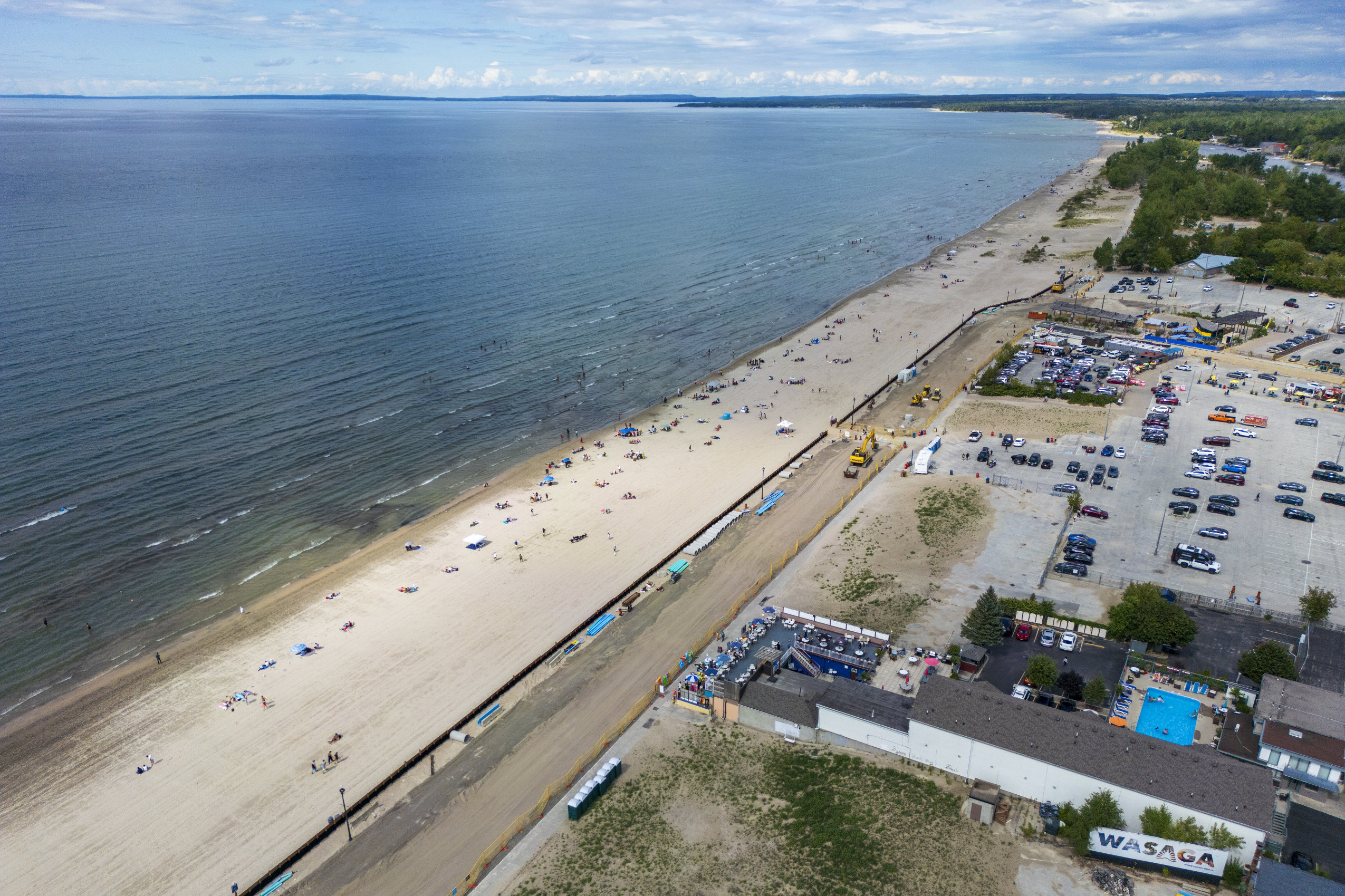
Ontario’s government has decided to transfer about 60 % of Wasaga Beach Provincial Park to the Town of Wasaga Beach to support local tourism and economic development, even though roughly 98% of public comments opposed the change due to concerns it could endanger sensitive piping plover habitat and reduce public protections for the shoreline. Read the full story by Great Lakes Now.

Original Article

Great Lakes Commission

Great Lakes Commission

https://www.glc.org/dailynews/20260128-ontario-wasaga-beach

Hannah Reynolds

Lake Erie is now nearly completely frozen over with rapidly growing ice cover due to persistent Arctic cold, making it the most ice-covered of the Great Lakes this winter. Officials warn despite a Great Lake being fully frozen, shifting ice can be unstable and hazardous. Read the full story by Erie Times-News.

Original Article

Great Lakes Commission

Great Lakes Commission

https://www.glc.org/dailynews/20260128-lake-erie-frozen-over-safety

Hannah Reynolds

The Lake Huron Coastal Centre’s Coast Watchers community science program is celebrating 20 years of shoreline monitoring, with volunteer citizen scientists collecting long-term data on coastal conditions, wildlife, pollution and storm impacts that help track environmental trends and support conservation and resiliency efforts along the Lake Huron coast. Read the full story by Kincardine News.

Original Article

Great Lakes Commission

Great Lakes Commission

https://www.glc.org/dailynews/20260128-lakehuron-coastline-monitoring-program

Hannah Reynolds

A prolonged cold spell is rapidly increasing ice coverage on Lake Superior — with ice cover jumping from about 6% to around 31% in recent weeks — as persistent sub-zero temperatures continue across the region. Read the full story by MPR News.

Original Article

Great Lakes Commission

Great Lakes Commission

https://www.glc.org/dailynews/20260128-cold-persists-lakesuperior-icecover

Hannah Reynolds

The U.S. Coast Guard is asking those using the ice on the bays of Green Bay and Sturgeon Bay for fishing and recreation to be especially aware as the service’s ice breaking operations continue in the waters around Door County, Wisconsin. Read the full story by the Green Bay Press-Gazette.

Original Article

Great Lakes Commission

Great Lakes Commission

https://www.glc.org/dailynews/20260128-coast-guard-advises-icebreaking-greenbay

Hannah Reynolds

Lake Zurich, Illinois, officials last week authorized revenue bond issues of $52 million to secure low-interest loans from the Illinois Environmental Protection Agency as part of the village’s transition to Lake Michigan water. The target date for the transition is 2028. Read the full story by the Daily Herald.

Original Article

Great Lakes Commission

Great Lakes Commission

https://www.glc.org/dailynews/20260128-lake-zurich-lake-michigan-water

Hannah Reynolds

PFAS compromise bills must limit spills law exemptions

UPDATE – March 17: River Alliance of Wisconsin applauds the Wisconsin State Senate for unanimously approving PFAS bills AB 130 and AB131 to send the bills to Governor Evers to sign. On February 20, the Wisconsin State Assembly voted unanimously on bills that would release the long-awaited PFAS trust fund money to help fund PFAS remediation projects.

Clean water advocates voiced clear concerns during the years-long debate over spending the state budget funds and how to define innocent landowners. Ultimately legislators wrote a compromise that will make some needed progress in creating remediation grants and some limited exemptions to the state’s Spills Law.

It is because of people living with PFAS pollution who have tirelessly steered legislators into action to meaningfully release funds for drinking water remediation in Wisconsin. We encourage Governor Evers to sign this legislation and state legislators to continue to work to ban the use of PFAS-style chemicals.


On January 21, 2026, state legislators held another hearing on policies and funding for addressing PFAS contamination. The bills are the result of many months of debate and compromise. Through the whole process, we’ve listened to leaders of impacted communities and experts across the state and held firm on three core issues.

We insisted that since the 2023 state budget was passed, the Joint Finance Committee has always had the power to release the over $125 million of funds earmarked for action on PFAS. Though JFC leaders refused to release the money to communities with contaminated water, this legislation would finally move dollars out the door.

We insisted that our state should not make Swiss cheese out of our Spills Law with broad and vague exemptions for corporate pollution accountability. While we would prefer fewer exemptions to the Spills Law, we understand the need to exempt truly passive receivers, like farmers.

Finally, we insisted that there was no community left behind when it comes to accessing the funds needed to test, filter and remediate drinking water resources. We cannot support a bill that would create new policies and grant programs without hiring state experts to administer grants and enforce laws. The only way we would support this legislation is with an amendment to hire adequate DNR staff.

With the legislative session winding down and elections coming this fall, legislators are under pressure to have some progress to report to their constituents. Governor Evers has signaled his optimistic support for this compromise. However, from the start, this bill was an effort to exempt big businesses under the guise of helping innocent landowners. Adding further exemptions to protect already identified polluters is unacceptable.

It is only due to the many hours – years, in fact – of vocal members of impacted communities and clean water advocates that got PFAS contamination to be a household word and to push state leaders to do the right thing for our water.

We’re only at the beginning of providing remedies for communities living with water pollution. The people of Wisconsin cannot wait for funds from lawsuit settlements over PFAS pollution to get help for their drinking water. The state legislature must release the funds, hire the staff, and set their sights on the next step which is to ban PFAS-style chemicals and prevent further damage to our water.

Contacting your legislators will make an impact. 

Please contact your State Representative to let them know the people of Wisconsin have waited for action on PFAS for far too long and they should support Assembly Substitute Amendment 1 to AB 131, and Assembly Substitute Amendment 1 to AB 130 without further exemptions. 


This message is made possible by generous donors who believe people have the power to protect and restore water. Subscribe to our Word on the Stream email newsletter to receive stories, action alerts and event invitations in your inbox.  Support our work with your contribution today.

The post PFAS compromise bills must limit spills law exemptions appeared first on River Alliance of WI.

Original Article

Blog - River Alliance of WI

Blog - River Alliance of WI

https://wisconsinrivers.org/pfas-bill-compromises/

Allison Werner

By Isabella Figueroa Nogueira

A recent study examines how solar projects could be planned in ways that benefit rural communities without significantly increasing electricity costs.

The post Solar projects bring larger economic gains to smaller communities, study shows first appeared on Great Lakes Echo.

Original Article

Great Lakes Echo

Great Lakes Echo

https://greatlakesecho.org/2026/01/27/solar-projects-bring-larger-economic-gains-to-smaller-communities-study-shows/

Isabella Figueroa Nogueira

By Fatima Syed, The Narwhal

The Great Lakes News Collaborative includes Bridge Michigan; Circle of Blue; Great Lakes Now at Detroit PBS; Michigan Public, Michigan’s NPR News Leader; and The Narwhal who work together to bring audiences news and information about the impact of climate change, pollution, and aging infrastructure on the Great Lakes and drinking water. This independent journalism is supported by the Charles Stewart Mott Foundation.

The Ontario government is moving ahead with plans to transfer management of 60 per cent of Wasaga Beach from the province to the town, despite receiving feedback from thousands of Ontarians decrying the proposal as potentially endangering sensitive piping plover habitat and affecting beach access.

The Doug Ford government received 14,233 comments over a 30-day period last summer, about 98 per cent of which were in opposition to the proposal. Many expressed concerns that erasing provincial protection could mean the loss of sand dunes in favour of hotels, condos and other beachfront development.

“We did not consider any changes to the proposal based on the feedback received, given the Town of Wasaga Beach’s commitments to keeping the beach public, not building on the beach and protecting environmentally sensitive dunes,” the government said in its decision.

Under Ontario’s Environmental Bill of Rights, the government is required to post moves with environmental or energy implications to the publicly accessible Environmental Registry of Ontario to allow for widespread feedback from industry, experts and residents. (The Ford government has, though, exempted several projects and types of notices from the registry, such as the Ontario Place redevelopment and permits to harm at-risk species, under Bill 5.)

Last June, the Ford government posted its decision to amend the Provincial Parks and Conservation Reserves Act, the legislation which created more than 340 parks across Ontario. The amendment would permit the transfer of 60 hectares, or three per cent, of Wasaga Beach Provincial Park, which protects the world’s longest freshwater beach and surrounding natural areas, to the town’s management to help boost tourism and the local economy.

The transfer includes more than half, or 60 per cent, of the beachfront, which contains all the sand dunes and vegetation that serve as nesting area for the piping plover.

Among the roughly two per cent of respondents that supported the move for the sake of economic development and revitalization, there was also a push for “continued environmental management and continued public access.”

Most of the comments on the registry posting highlighted the consequences of losing this beach environment, or even threatening it with increased development.

“Once this precedent is set, we risk irreversible environmental degradation, reduced public access and the commercialization of what should remain a protected, public space for generations to come,” one local resident wrote. “Tourism and environmental stewardship are not mutually exclusive, and development must not come at the cost of conservation.”

“Public land — especially waterfront property as ecologically and recreationally important as Wasaga Beach — should remain in public hands and under provincial protection,” another wrote.

None of this swayed the province. The amendments to enable the transfer were passed in Ontario’s 2025 budget, released last fall. With the recent decision, the government will now advance the transfer to the town.

This is not the first time the Ford government has disregarded feedback through the Environmental Registry of Ontario. The Auditor General of Ontario has repeatedly called out this government for failing to adhere to its own laws — at times “deliberately” — that require it to meaningfully consult the public through the registry.

In late 2022, for example, the government received more than 30,000 comments about its plans to remove 7,400 acres of land from the protected Greenbelt. In spite of this, “no changes were made to the proposal as a result of public consultation,” the government’s posting on the registry read.

In choosing not to consider any changes based on public feedback, the government’s decision said the lands removed from provincial protection in Wasaga Beach “will continue to be subject to Ontario’s species protection and environmental laws.”

However, shortly before announcing this transfer, the Ford government weakened species protections through its controversial Bill 5, as well as exempting certain postings from the environmental registry. The provincial parks legislation was the last law standing to protect plover habitat in Wasaga Beach.

The post Ontario will sever Wasaga Beach park despite 98% disapproval in public comments appeared first on Great Lakes Now.

Original Article

Great Lakes Now

Great Lakes Now

https://www.greatlakesnow.org/2026/01/27/ontario-will-sever-wasaga-beach-park-despite-98-disapproval-in-public-comments/

The Narwhal