Assessing the Global Temperature and Precipitation Analysis in January 2026
NCEI News Feed
https://www.ncei.noaa.gov/news/global-climate-202601
NCEI News Feed
https://www.ncei.noaa.gov/news/global-climate-202601
NCEI News Feed
https://www.ncei.noaa.gov/news/global-climate-202601

NCEI News Feed
https://www.ncei.noaa.gov/news/global-climate-202601
NCEI News Feed
https://www.ncei.noaa.gov/news/global-climate-202601
NCEI News Feed
https://www.ncei.noaa.gov/news/global-climate-202601
NCEI News Feed
https://www.ncei.noaa.gov/news/global-climate-202601
NCEI News Feed
https://www.ncei.noaa.gov/news/global-climate-202601
NCEI News Feed
https://www.ncei.noaa.gov/news/global-climate-202601
NCEI News Feed
https://www.ncei.noaa.gov/news/global-climate-202601
NCEI News Feed
https://www.ncei.noaa.gov/news/global-climate-202601
NCEI News Feed
https://www.ncei.noaa.gov/news/global-climate-202601
NCEI News Feed
https://www.ncei.noaa.gov/news/global-climate-202601
NCEI News Feed
https://www.ncei.noaa.gov/news/global-climate-202601
NCEI News Feed
https://www.ncei.noaa.gov/news/global-climate-202601
NCEI News Feed
https://www.ncei.noaa.gov/news/global-climate-202601
NCEI News Feed
https://www.ncei.noaa.gov/news/global-climate-202601
NCEI News Feed
https://www.ncei.noaa.gov/news/global-climate-202601
NCEI News Feed
https://www.ncei.noaa.gov/news/global-climate-202601
NCEI News Feed
https://www.ncei.noaa.gov/news/global-climate-202601

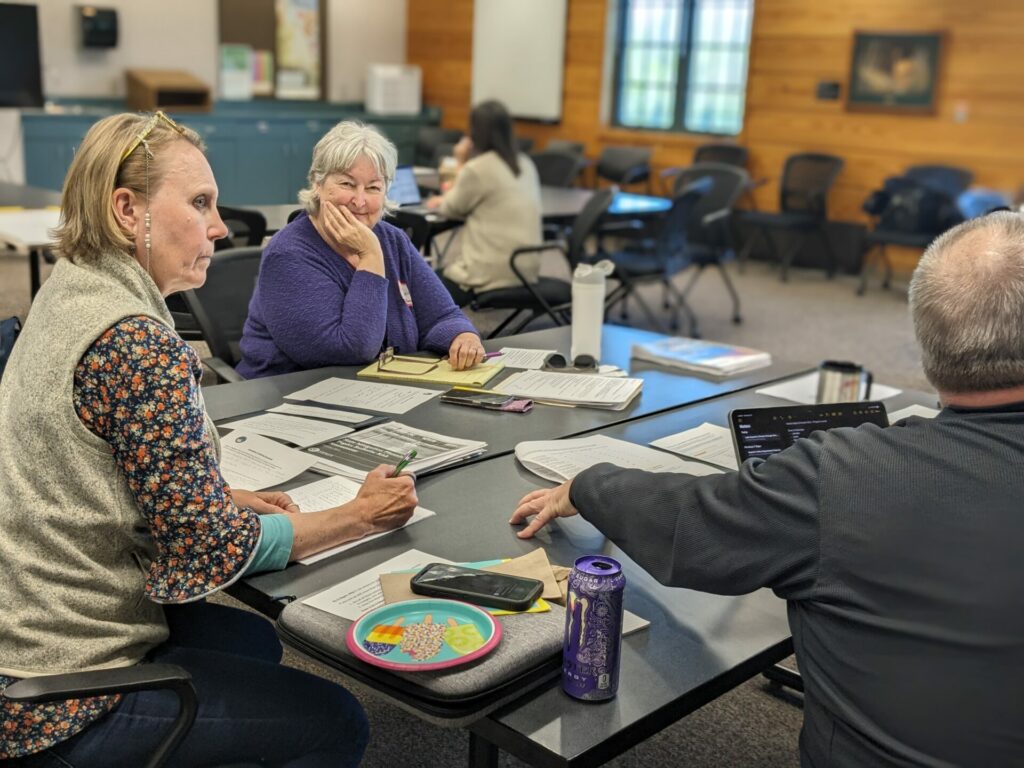
A community team talks through program goals at an Enduring Lake Superior Communities Program workshop. (Photo by Natalie Chin / ASC)
Recent weather impacts in northern Wisconsin have increased the challenges coastal communities face like erosion, flooding, and shoreline damage. A program from Wisconsin Sea Grant and the Lake Superior National Estuarine Research Reserve offers local officials a chance to tackle those challenges together.
The Enduring Lake Superior Communities Program provides a yearlong opportunity for municipal teams to work on a goal of their choosing to address community resilience. Now accepting applications for its third year, the program is open to teams of two to four people from the four Lake Superior coastal counties — Douglas, Bayfield, Ashland, or Iron — and may include representatives from multiple jurisdictions.
The program offers up to $2,000 in funding support, tailored guidance from natural resource professionals, and connections with other Lake Superior communities facing similar challenges.
In 2025, participating teams included staff from the Bayfield County Health Department and community members from the town of Marengo. The health department team examined potential extreme weather impacts on local public water and sewer systems through a survey of utilities operators and a detailed analysis of water infrastructure needs. The Town of Marengo team hosted their first annual town picnic, conducted a survey of their residents’ extreme weather preparedness needs, and developed a comprehensive emergency preparedness and action plan.
Feedback from a 2025 participant shows the value of the program: “Community preparedness has proven to be essential in northern rural regions. From floods to fires to public water failures, not being prepared has led to devastation in poor, aging rural communities in the past and present day.”
Teams who want to participate in this year’s Enduring Lake Superior Communities Program can now apply at https://go.wisc.edu/3apv86. The deadline to submit applications is April 10, 2026. Teams will be selected and notified in May, with the program starting in June.
Applicants are encouraged to seek support for a new coastal resilience effort or an ongoing effort. This could include developing a new resource or tool, conducting an assessment, bringing people together in dialogue, or developing a specific community resilience plan. Program facilitators are happy to meet with prospective applicants to answer any questions and talk through project ideas.
For more information, visit Enduring Lake Superior Communities.
###
The University of Wisconsin Aquatic Sciences Center administers Wisconsin Sea Grant, the Wisconsin Water Resources Institute, and Water@UW. The center supports multidisciplinary research, education, and outreach for the protection and sustainable use of Wisconsin’s water resources. Wisconsin Sea Grant is one of 34 Sea Grant programs supported by the National Oceanic and Atmospheric Administration in coastal and Great Lakes states that encourage the wise stewardship of marine resources through research, education, outreach, and technology transfer.
The post Lake Superior community leaders work together on coastal resilience projects; funding for 2026 projects available first appeared on Wisconsin Sea Grant.News Releases | Wisconsin Sea Grant
News Releases | Wisconsin Sea Grant
https://www.seagrant.wisc.edu/news/lake-superior-community-leaders-work-together-on-coastal-resilience-projects-funding-for-2026-projects-available/
An obstacle course is being built to keep invasive species out of a river.
FishPass is a project on the Boardman-Ottaway River in Traverse City, Michigan. Its goal is to allow desirable fish into the river while keeping unwanted, invasive species out. By using different obstacles, environmental conditions, and recognition technologies, FishPass will sort the fish that enter from Lake Michigan and only allow certain species upstream.
Learn more about FishPass on the Great Lakes Now YouTube channel or at GreatLakesNow.org
#GreatLakes #Fish #LakeMichigan #InvasiveSpecies #Fishing
===========================================
Website: https://greatlakesnow.org
Facebook: https://www.facebook.com/greatlakesnow
X: https://www.x.com/greatlakesnow
Instagram: https://www.instagram.com/greatlakesnoworg
Newsletter: https://www.greatlakesnow.org/great-lakes-now-newsletter/
To learn more about supporting Detroit PBS and Great Lakes Now, visit https://www.detroitpbs.org/
The post This Fish Obstacle Course Keeps Invasive Species Out appeared first on Great Lakes Now.
Great Lakes Now
https://www.greatlakesnow.org/2026/02/10/this-fish-obstacle-course-keeps-invasive-species-out/

Catch the latest energy news from around the region. Check back for these monthly Energy News Roundups.
Michigan is taking on oil companies. Its approach hasn’t been tried before. In a lawsuit filed in federal court, the state’s attorney general, Dana Nessel, accused four companies and an industry lobbying group of forming a “cartel” and colluding to undermine research on climate change and suppress the growth of renewable energy and electric vehicles. Michigan has some of the highest electricity rates in the region, and the measures the companies took to prevent competition with gasoline vehicles inflated costs for ratepayers, the suit alleged.
A bribery trial is underway in Ohio for two former FirstEnergy executives accused of orchestrating the largest public corruption scheme in state history. Prosecutors allege former CEO Chuck Jones and senior vice president Michael Dowling paid a $4.3 million bribe to Sam Randazzo, the former chairman of Ohio’s Public Utilities Commission. Attorneys for former Ohio House Speaker Larry Householder, who was convicted in federal court of taking a $61 million bribe from FirstEnergy in exchange for favorable legislation, said he is open to taking a plea deal to avoid a state trial.
Burning trash and wood for electricity can officially qualify as carbon-free in Minnesota. The state’s 2023 clean energy law requires all electricity generated in Minnesota to come from carbon-free sources by 2040. State utility regulators decided burning trash or biomass can be considered carbon-free under the law if a life-cycle analysis shows burning would result in fewer carbon emissions than another disposal method. Only a tiny fraction of Minnesota’s power comes from burning trash and biomass, but environmental groups are concerned the practice will become more widespread as a result of regulators’ decision.
Another shuttered nuclear site is attracting notice. This time, it’s in Wisconsin. EnergySolutions, the Utah company that owns the Kewaunee Power Station site near Lake Michigan, announced it has notified federal regulators of its plans to pursue new nuclear generation at the site. In a statement, Ken Robuck, the company’s president and CEO, called the notice an “important milestone” for nuclear power in Wisconsin. EnergySolutions is currently studying the site’s “suitability for new nuclear construction,” he said.
And months after Michigan announced it was canceling support for a controversial EV battery plant due to its lack of progress, both sides are saying they’re owed money. Nessel, the state’s attorney general, has joined the effort to recover millions in incentives paid to Gotion, Inc. for the central Michigan factory. Gotion said in a court filing that it plans to seek damages from the township where the factory was proposed, arguing the delay was the township’s fault. The company appears to have abandoned the project.
More energy news, in case you missed it:
The post Michigan accuses oil companies of blocking EVs, inflating power costs appeared first on Great Lakes Now.
Great Lakes Now
https://www.greatlakesnow.org/2026/02/10/michigan-accuses-oil-companies-of-blocking-evs-inflating-power-costs/
In partnership with library associations, education groups, Sea Grant programs, and universities throughout the eight Great Lakes states and two Canadian provinces, the Wisconsin Water Library and Wisconsin Sea Grant, along with the Library of the Great Lakes, are excited to announce the books selected for the 2026 basin-wide shared-reading experience, Great Lakes, Great Read.
Great Lakes, Great Read is based on the One Book, One Community model where reading programs choose one book for libraries, community groups, and the public to read and enjoy together over the course of a year.
“It is incredibly exciting to launch the second year of a community read about the Great Lakes, especially as it gives us an opportunity to celebrate this beautiful watershed through literature. I can’t wait for readers to sit down with the three chosen titles and learn about the rich history and science of the Great Lakes,” said Anne Moser, director of the Wisconsin Water Library.
The titles for the 2026 Great Lakes, Great Read are:
The picture book selection, “SPORT – Ship Dog of the Great Lakes,” by Pamela Cameron is the true story of a puppy rescued during a storm by a sailor working on a Great Lakes tender (a boat that brings supplies to the various lighthouse keepers in the lakes). A delightful tale with wonderful illustrations, Cameron introduces us to Sport and his human companions as they deliver essentials to keep the lights on and ships safe in Lake Michigan.
The middle grade selection is “SAVING OUR STURGEON: Protecting Wisconsin’s Ancient Fish.” Author Rebecca Hogue Wojahn introduces readers to a very peculiar fish and the successful efforts that led to its continuing survival. Concerted efforts by children, indigenous communities, community scientists, and government organizations contributed to the return of the threatened species. With terrific illustrations and maps, we can all learn from this book.
John U. Bacon’s latest New York Times bestseller, “THE GALES OF NOVEMBER: The Untold Story of the Edmund Fitzgerald,” is our adult selection and is the definitive account of America’s most haunting maritime disaster. Bacon also provides a fascinating look at the history of Great Lakes shipping, the sailors and their families who dedicated their lives to the lakes, based on more than 100 interviews with the families, friends, and former crewmates of those lost.
“It is a great honor to have my book picked by the Library of the Great Lakes as one of its Great Lakes, Great Read selection — a wonderful way to reach those who love the Great Lakes as I do,” Bacon said.
The Great Lakes, Great Read website offers further details on the authors, their books, a toolkit, and other resources. Look for future announcements of region-wide webinars with each of the authors.
Several organizations, including the Library of the Great Lakes, the Gail Borden Public Library, Saginaw District Library, Swim Drink Fish, Biinaagami Project, Great Lakes Odyssey, and the Wisconsin Water Library at the University of Wisconsin–Madison, partnered in 2024 to create and carry out the Great Lakes, Great Read program. In-kind support was provided by the staff with the Wisconsin Water Library and Wisconsin Sea Grant and by the Wisconsin Library Association.
For more information, contact Anne Moser at akmoser@aqua.wisc.edu.
***
The University of Wisconsin Aquatic Sciences Center administers Wisconsin Sea Grant, the Wisconsin Water Resources Institute, and Water@UW–Madison. The center supports multidisciplinary research, education, and outreach for the protection and sustainable use of Wisconsin’s water resources. Wisconsin Sea Grant is one of 34 Sea Grant programs supported by the National Oceanic and Atmospheric Administration in coastal and Great Lakes states that encourage the wise stewardship of marine resources through research, education, outreach, and technology transfer.
The post Great Lakes, Great Read program announces 2026 book selections first appeared on Wisconsin Sea Grant.News Releases | Wisconsin Sea Grant
News Releases | Wisconsin Sea Grant
https://www.seagrant.wisc.edu/news/great-lakes-great-read-program-announces-2026-book-selections/
For media inquiries, please contact Beth Wanamaker, beth@glc.org.
Great Lakes Commission
https://www.glc.org/news/blitz-rfp-021026

The federal government plays a critical role in protecting the Great Lakes. It’s responsible for funding projects, administering programs, and enforcing environmental safeguards. The Alliance for the Great Lakes advocates directly to federal decision-makers to ensure the voices of the Great Lakes region are heard. Each year, we update and release our federal policy priorities to guide this work.
The Alliance for the Great Lakes has identified the top five opportunities for Congress and the Trump Administration to address challenges facing the Great Lakes. Federal water programs must be fully funded and prioritize communities where the burden of pollution hits hardest. This requires federal agencies to support scientific research and retain staff necessary to maintain long-term program integrity to protect the Great Lakes and the communities that depend on them.
Read on for full details of our 2026 Great Lakes federal policy priorities, or download the fact sheet to learn more.

Based on EPA survey data, the Great Lakes region needs at least $290.3 billion over the next twenty years to fix failing water infrastructure. Current federal funding programs are not fully funded and will not meet this need. Congress must provide additional funds for water infrastructure, and it must be structured to reach communities with the highest needs.
In 2026, we urge Congress to:
In 2026, we urge the U.S. Environmental Protection Agency to:
Download the water infrastructure fact sheet.

The Great Lakes Restoration Initiative (GLRI) is one of the most important tools in the region’s toolbox to protect and restore the lakes. The program will require reauthorization by the end of 2026.
In 2026, we urge Congress to:
Download the Great Lakes restoration fact sheet.

Agriculture is the largest unaddressed source of nonpoint pollution in the Great Lakes region. Runoff from agricultural lands puts the Great Lakes at risk by polluting drinking water, threatening wildlife, and harming the regional economy. In 2026, Congress can pass a Farm Bill that ensures farms produce clean water, not pollution, along with their crops.
In 2026, we urge Congress to pass a Farm Bill that:
Download the agriculture fact sheet.

Researchers estimate that 22 million pounds of plastic pollution enter the Great Lakes annually. Plastic pollution isn’t just an unsightly problem in our waterways. It poses a serious threat to human and wildlife health. Congress has an opportunity to be a leader on reducing plastic pollution.
In 2026, we urge Congress to:
In 2026, we urge the U.S. Environmental Protection Agency to:
Download the plastic pollution fact sheet.

Invasive species have caused irreparable harm to the Great Lakes ecosystem and cost the region billions of dollars. Preventing them from ever entering is the best way to protect the Great Lakes. The battle against invasive species is primarily focused on stopping invasive carp from entering the Great Lakes.
In 2026, we urge Congress to:
In 2026, we urge the U.S. Army Corps of Engineers to:
Download the invasive species fact sheet.
The post Top 5 Great Lakes Federal Policy Priorities for 2026 appeared first on Alliance for the Great Lakes.
News - Alliance for the Great Lakes
https://greatlakes.org/2026/02/top-5-great-lakes-federal-policy-priorities-for-2026/
By Justin Fox Clausen
Lawmakers are making another effort to adopt Michigan’s first statewide septic code with mandatory inspections, intended to protect drinking water from contamination. It’s the only state without one.
The post Michigan is last state without a septic system code. Will that change? first appeared on Great Lakes Echo.Great Lakes Echo
https://greatlakesecho.org/2026/02/10/michigan-is-last-state-without-a-septic-system-code-will-that-change/
The U.S. Army Corps of Engineers released the final version of its Environmental Impact Statement on Enbridge’s proposed Line 5 tunnel project, starting a 30-day waiting period before making its final decision on whether to grant the pipeline company a permit to move forward with the proposal. Read the full story by Michigan Advance.
Great Lakes Commission
https://www.glc.org/dailynews/20260209-line5-report
The U.S. Environmental Protection Agency and Canadian officials met in Chicago last week to discuss shared priorities and success stories throughout the Great Lakes watershed following the 2025 State of the Great Lakes Report. Read the full story by Ideastream Public Media.
Great Lakes Commission
https://www.glc.org/dailynews/20260209-state-of-greatlakes
A proposal to build an underwater line to transmit electricity from Canada to Erie County is once again seeking government approvals. Read the full story by the Erie-Times News.
Great Lakes Commission
https://www.glc.org/dailynews/20260209-erie-electricity
Although Lake Erie’s surface had been nearing a complete freeze — a state it has not reached in 30 years — the chances of it reaching 100 percent have now waned after strong north winds over the weekend disrupted the amount of ice coverage. Read the full story by The Chronicle.
Great Lakes Commission
https://www.glc.org/dailynews/20260209-erie-freeze
The 2026 lake sturgeon fishing season on Black Lake in Michigan’s Cheboygan County lasted only 48 minutes for 679 registered anglers — 31 minutes longer than last year. The harvest limit for the 2026 season on Black Lake was six lake sturgeon. Read the full story by the Alpena News.
Great Lakes Commission
https://www.glc.org/dailynews/20260209-sturgeon-fishing
Concerns over data centers in Michigan have led to advocates pushing for the Michigan Legislature to enact a one-year moratorium on the construction of new data centers until more comprehensive regulations can be put into place. Read the full story by Great Lakes Echo.
Great Lakes Commission
https://www.glc.org/dailynews/20260209-mi-data-centers
The Edsel & Eleanor Ford House received a $7 million NOAA grant in 2023 to restore Michigan’s Ford Cove, improve wildlife habitat along Lake St. Clair and improve visitor access. Now, the restoration project has entered its second phase featuring a “highly visible shoreline transformation.” Read the full story by the Detroit News.
Great Lakes Commission
https://www.glc.org/dailynews/20260209-ford-house-restoration
NCEI News Feed
https://www.ncei.noaa.gov/news/national-climate-202601
NCEI News Feed
https://www.ncei.noaa.gov/news/national-climate-202601
NCEI News Feed
https://www.ncei.noaa.gov/news/national-climate-202601
NCEI News Feed
https://www.ncei.noaa.gov/news/national-climate-202601
NCEI News Feed
https://www.ncei.noaa.gov/news/national-climate-202601
NCEI News Feed
https://www.ncei.noaa.gov/news/national-climate-202601
NCEI News Feed
https://www.ncei.noaa.gov/news/national-climate-202601
NCEI News Feed
https://www.ncei.noaa.gov/news/national-climate-202601
NCEI News Feed
https://www.ncei.noaa.gov/news/national-climate-202601
NCEI News Feed
https://www.ncei.noaa.gov/news/national-climate-202601
NCEI News Feed
https://www.ncei.noaa.gov/news/national-climate-202601
NCEI News Feed
https://www.ncei.noaa.gov/news/national-climate-202601
NCEI News Feed
https://www.ncei.noaa.gov/news/national-climate-202601
NCEI News Feed
https://www.ncei.noaa.gov/news/national-climate-202601
NCEI News Feed
https://www.ncei.noaa.gov/news/national-climate-202601
NCEI News Feed
https://www.ncei.noaa.gov/news/national-climate-202601
NCEI News Feed
https://www.ncei.noaa.gov/news/national-climate-202601




