The U.S. states and Canadian provinces that border the Great Lakes and St. Lawrence River produce $9.3 trillion in total economic activity each year. The region’s leaders are coordinating to boost that higher while also protecting the  environment. Read the full story by The Daily News.

Original Article

Great Lakes Commission

Great Lakes Commission

https://www.glc.org/dailynews/20251010-us-canadian-leaders-enhancing-greatlakes-cooperation
Hannah Reynolds

The state of Michigan’s budget includes notable investments in conservation and restoration. Highlights include waterfront land conservation and funding to support an effort to reintroduce Arctic grayling to select rivers in the northern lower peninsula. Read the full story by Interlochen Public Radio.

Original Article

Great Lakes Commission

Great Lakes Commission

https://www.glc.org/dailynews/20251010-beaches-fishes-trees-northern-michigan

Hannah Reynolds

In Ohio, the combination of drought and the current cyanobacteria blue-green algal bloom in the Sandusky Bay could result in fish kills, but favorable fall weather is likely to arrive in time to avoid the problem. Read the full story by the Fremont News-Messenger.

Original Article

Great Lakes Commission

Great Lakes Commission

https://www.glc.org/dailynews/20251010-fishkills-drought-algalbloom

Hannah Reynolds

More than 120 people recently rolled up their sleeves to tackle litter on the Cobourg shoreline of Lake Ontario, collecting 1,200 pieces of plastic and other debris as part of the inaugural Great Lakes Coastal Cleanup. Read the full story by KawathaNOW.

Original Article

Great Lakes Commission

Great Lakes Commission

https://www.glc.org/dailynews/20251010-greatlakes-coastal-cleanup-coburg-volunteers

Hannah Reynolds

* WHAT...Temperatures as low as 30 will result in frost formation. * WHERE...Portions of central, east central, and northeast Wisconsin. * WHEN...Until 9 AM CDT this morning. * IMPACTS...Frost could harm sensitive outdoor vegetation. Sensitive outdoor plants may be killed if left uncovered.

Original Article

Current watches, warnings, and advisories for Brown County (WIC009) WI

Current watches, warnings, and advisories for Brown County (WIC009) WI

https://api.weather.gov/alerts/urn:oid:2.49.0.1.840.0.7c068c3cf3f6d47c2af73550383e75235cb32b07.001.1.cap

NWS

* WHAT...Temperatures as low as 30 will result in widespread frost formation. * WHERE...Portions of central, east central, and northeast Wisconsin. * WHEN...From 1 AM to 9 AM CDT Thursday. * IMPACTS...Frost could harm sensitive outdoor vegetation. Sensitive outdoor plants may be killed if left uncovered.

Original Article

Current watches, warnings, and advisories for Brown County (WIC009) WI

Current watches, warnings, and advisories for Brown County (WIC009) WI

https://api.weather.gov/alerts/urn:oid:2.49.0.1.840.0.474bc3cd57dfd55114606a376efa3e7581a0d214.002.1.cap

NWS

* WHAT...Temperatures from 32 to 36 will result in widespread frost formation. * WHERE...Portions of central, east central, and northeast Wisconsin. * WHEN...From 1 AM to 9 AM CDT Thursday. * IMPACTS...Frost could harm sensitive outdoor vegetation. Sensitive outdoor plants may be killed if left uncovered. * ADDITIONAL DETAILS...The growing season has ended in Vilas, Oneida, Forest, Florence, northern Marinette, Lincoln, Langlade and northern Oconto counties, so frost and freeze headlines will no longer be issued there this fall.

Original Article

Current watches, warnings, and advisories for Brown County (WIC009) WI

Current watches, warnings, and advisories for Brown County (WIC009) WI

https://api.weather.gov/alerts/urn:oid:2.49.0.1.840.0.03515bd3248ae5555a5cfa234d29312505cb3e72.001.1.cap

NWS

After decades of cleanup efforts and community engagement, Muskegon Lake, between Lake Michigan and the city that bears its name in Michigan, has been removed from a U.S. and Canadian list of most polluted sites. Read the full story by the Detroit Free Press.

Original Article

Great Lakes Commission

Great Lakes Commission

https://www.glc.org/dailynews/20251008-muskeon-lake-delisted

Taaja Tucker-Silva

At a time of rising temperatures and water levels, along with the threat of wildfires and smoke, many are reassessing where to live and Buffalo, New York, is embracing the “climate haven” tag. Read the full story by Great Lakes Now.

Original Article

Great Lakes Commission

Great Lakes Commission

https://www.glc.org/dailynews/20251008-buffalo-climate-haven

Taaja Tucker-Silva

Chicago has more than 412,000 confirmed and suspected lead service lines — the most of any city in the country — but replacements are lagging and millions of dollars in federal and city loans dedicated to replacing lead pipes remain unused. Read the full story by Great Lakes Now.

Original Article

Great Lakes Commission

Great Lakes Commission

https://www.glc.org/dailynews/20251008-chicago-lead-pipes

Taaja Tucker-Silva

The replica Seneca Chief, a floating museum and tribute to the original vessel that carried New York Governor DeWitt Clinton in 1825, will stop at ports in the Mohawk Valley, New York, to mark the 200th anniversary of opening of the Erie Canal. Read the full story by the Utica Observer Dispatch.

Original Article

Great Lakes Commission

Great Lakes Commission

https://www.glc.org/dailynews/20251008-seneca-chief

Taaja Tucker-Silva

Nearly 30 agencies from Michigan, Indiana, and Ohio gathered in St. Ignace, Michigan, this week for a large-scale emergency response training simulating a midair plane crash over Lake Huron near the Mackinac County Airport. Read the full story by WWTV-TV – Cadillac, MI.

Original Article

Great Lakes Commission

Great Lakes Commission

https://www.glc.org/dailynews/20251008-huron-training

Taaja Tucker-Silva

A federal judge ruled that the now-defunct Erie Coke Corporation on the shores of Lake Erie in Erie, Pennsylvania, must pay $700,000 for a multi-year conspiracy to violate the U.S. Clean Air Act, a decision some environmental activists said isn’t enough. Read the full story by WJET-TV – Erie, PA.

Original Article

Great Lakes Commission

Great Lakes Commission

https://www.glc.org/dailynews/20251008-erie-coke-fine

Taaja Tucker-Silva

By Isabella Figueroa Nogueira
A recent collaborative study, conducted through the Great Lakes Indian Fish and Wildlife Commission, the College of Menominee Nation in Kenosha, Wisconsin, nine tribal entities and academic researchers to understand how climate change threatens the lake sturgeon and to develop adaptation strategies rooted in tribal knowledge.

The post Western and Indigenous knowledge will help lake sturgeon, study shows  first appeared on Great Lakes Echo.

Original Article

Great Lakes Echo

Great Lakes Echo

https://greatlakesecho.org/2025/10/08/western-and-indigenous-knowledge-will-help-lake-sturgeon-study-shows/

Great Lakes Echo

* WHAT...Temperatures as low as 30 will result in frost formation. * WHERE...Waushara, Calumet, Winnebago, Brown, Outagamie, and Waupaca Counties. * WHEN...Until 9 AM CDT this morning. * IMPACTS...Frost could harm sensitive outdoor vegetation. Sensitive outdoor plants may be killed if left uncovered.

Original Article

Current watches, warnings, and advisories for Brown County (WIC009) WI

Current watches, warnings, and advisories for Brown County (WIC009) WI

https://api.weather.gov/alerts/urn:oid:2.49.0.1.840.0.a7e2d85619ffa88a5832f45daf534e21795fa4d4.004.1.cap

NWS

* WHAT...Temperatures as low as 30 will result in frost formation. * WHERE...Waushara, Calumet, Winnebago, Brown, Outagamie, and Waupaca Counties. * WHEN...From 3 AM to 9 AM CDT Wednesday. * IMPACTS...Frost could harm sensitive outdoor vegetation. Sensitive outdoor plants may be killed if left uncovered.

Original Article

Current watches, warnings, and advisories for Brown County (WIC009) WI

Current watches, warnings, and advisories for Brown County (WIC009) WI

https://api.weather.gov/alerts/urn:oid:2.49.0.1.840.0.aa4906d049f5898e45fd77276863fa1cabf586a6.004.1.cap

NWS

* WHAT...Temperatures as low as 32 to 37 will result in frost formation, especially in sheltered areas. * WHERE...Waushara, Calumet, Winnebago, Brown, Outagamie, and Waupaca Counties. * WHEN...From 3 AM to 9 AM CDT Wednesday. * IMPACTS...Frost could harm sensitive outdoor vegetation. Sensitive outdoor plants may be killed if left uncovered.

Original Article

Current watches, warnings, and advisories for Brown County (WIC009) WI

Current watches, warnings, and advisories for Brown County (WIC009) WI

https://api.weather.gov/alerts/urn:oid:2.49.0.1.840.0.0c90172e82db65d9327ef5ea1f6f26f107b9fe9a.005.1.cap

NWS

How Buffalo, New York has adapted to and embraced an influx of climate migrants

Buffalo is not a place that typically makes national headlines outside of football season. But in late July, the city did exactly that for one hugely significant reason: it became the last large city in the U.S. Lower 48 to have never reached 100 F.

At a time of rising temperatures and water levels, along with the threat of wildfires and smoke, many are reassessing where to live and Buffalo is embracing the “climate haven” tag.

Read Now at Great Lakes Now.

Original Article

Great Lakes Now

Great Lakes Now

https://www.greatlakesnow.org/2025/10/how-buffalo-new-york-has-adapted-to-and-embraced-an-influx-of-climate-migrants/

Stephen Starr, Great Lakes Now

How Buffalo, New York has adapted to and embraced an influx of climate migrants

Buffalo is not a place that typically makes national headlines outside of football season. But in late July, the city did exactly that for one hugely significant reason: it became the last large city in the U.S. Lower 48 to have never reached 100 F.

At a time of rising temperatures and water levels, along with the threat of wildfires and smoke, many are reassessing where to live and Buffalo is embracing the “climate haven” tag.

Read Now at Great Lakes Now.

Original Article

Great Lakes Now

Great Lakes Now

https://www.greatlakesnow.org/2025/10/how-buffalo-new-york-has-adapted-to-and-embraced-an-influx-of-climate-migrants/

Stephen Starr, Great Lakes Now

* WHAT...Temperatures in the lower to middle 30s will result in frost formation. * WHERE...Waushara, Calumet, Winnebago, Brown, Outagamie, and Waupaca Counties. * WHEN...From 3 AM to 9 AM CDT Wednesday. * IMPACTS...Frost could harm sensitive outdoor vegetation. Sensitive outdoor plants may be killed if left uncovered.

Original Article

Current watches, warnings, and advisories for Brown County (WIC009) WI

Current watches, warnings, and advisories for Brown County (WIC009) WI

https://api.weather.gov/alerts/urn:oid:2.49.0.1.840.0.a763e726b8327565385cc9d3263843e254e09b3a.003.1.cap

NWS

* WHAT...Temperatures as low as 32 will result in frost formation. * WHERE...Waushara, Calumet, Winnebago, Brown, Outagamie, and Waupaca Counties. * WHEN...From 3 AM to 9 AM CDT Wednesday. * IMPACTS...Frost could harm sensitive outdoor vegetation. Sensitive outdoor plants may be killed if left uncovered.

Original Article

Current watches, warnings, and advisories for Brown County (WIC009) WI

Current watches, warnings, and advisories for Brown County (WIC009) WI

https://api.weather.gov/alerts/urn:oid:2.49.0.1.840.0.040bc89a93ba4967932d41ddaf1189419de1e8f9.003.1.cap

NWS

How an unusual Door County landscape is helping researchers learn how Great Lake water levels affect groundwater and forests in coastal areas 

Landscapes tell a story. That can be obvious to the casual observer traveling around the state, whether it’s taking a scenic fall drive through the Driftless Area in southwest Wisconsin, exploring the potholes and drumlins of Kettle Moraine State Forest near Milwaukee, or kayaking among the water-etched sea caves off Lake Superior’s Apostle Islands.

To the trained eye, those landscapes also tell a story, but one goes beyond a quick photo and may provide answers to important research questions. University of Wisconsin-Madison Professor Steven Loheide, graduate student Eric Kastelic, Freshwater@UW summer students Lucie Carignan and Ella Flattum, and collaborators are focusing their collective scientific gaze on a particular section along Door County’s southeast coast for clues to a decades-old question: How do Great Lakes water level changes affect groundwater and forests along our coasts?

The Ridges Sanctuary is a 1,700-acre nature preserve tucked along the bottom half of Door County as it pokes into Lake Michigan just above the community of Bailey’s Harbor. Initially established in 1937 as Wisconsin’s first land trust, the sanctuary is a National Natural Landmark noted for a rich concentration of rare plants, including 25 species of orchids. What really sets this place apart from other preserves, however, is the 30 or so swales and crescent-shaped ridges that line the sanctuary from west to east.

These are the areas where Loheide, Kastelic, and team have concentrated their efforts. The sandy formations represent former beaches caused by changes in Lake Michigan water levels during the past millennia. Each is peppered with black and white spruce, balsam fir, and white pine. Between these ridges are swales, which are wet, lower areas, each containing their own collection of diverse marsh and bog flora. 

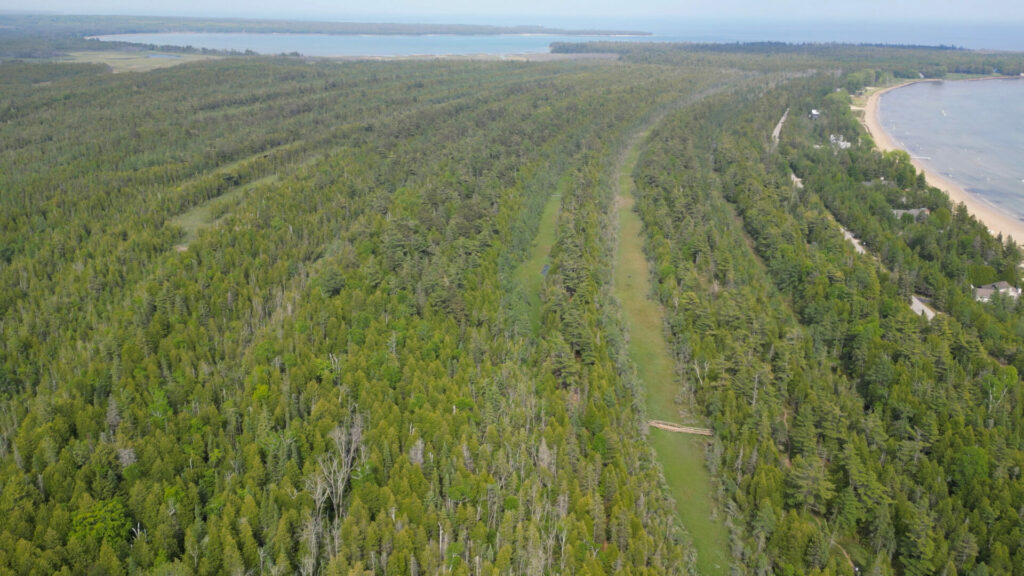
A drone photo of a ridge and swale ecosystem from above, showing parallel strips of forest and wetland next to Lake Michigan.

In ridge and swale ecosystems, forested ridges and marshy wetlands run in long strips parallel to the shore, like here at the Ridges Sanctuary.

 “What we’re interested in is how the Great Lakes and the changing water levels within the Great Lakes affect the ridge and swale ecosystems,” said Loheide. “There’s a tight connection between the surface water, the Great Lakes, and then the groundwater, which is underneath the subsurface but is feeding the wetlands and feeding the forests in these systems.”

Scientists have known for some time that water levels fluctuate in all five Great Lakes. Historically they change not just annually but over several decades with the record high being more than 6 feet higher than the record low. For Loheide, what he and his fellow researchers are most interested in are more recent water level changes.

“On short, seasonal scales, you might have a foot of variability from high water levels in one year to low water levels in that same year,” explained Loheide. “But when you look at it at a longer time frame, we see that there are cycles. For instance, in the early 2000s through about 2012-2013, we were in a low water state. That whole time, there were still ups and downs every year, but we were at low water levels, and then we went from near record lows then to record highs in 2017, 2018, and 2019. That really quick swing is something that we’re interested in.

“There’s always been a lot of variability, but we’re seeing what seems to be sometimes faster changes from low water level conditions to high water conditions, so more extremes.  And we’re actually going through the same thing right now,” said Loheide. “The high-water levels of 4-6 years ago are now dropping to below average water levels on Lake Michigan.”

Those faster water level changes could have greater impact on coastal ecosystems, and that’s where Loheide’s team has zeroed in their research efforts.

“Even since last year, lake levels have gone down about 10 inches. What does that mean for the groundwater system? Are we draining water out of the groundwater system? How much change in storage is there of our groundwater resource, and how does that affect other hydrologic and ecological processes?”

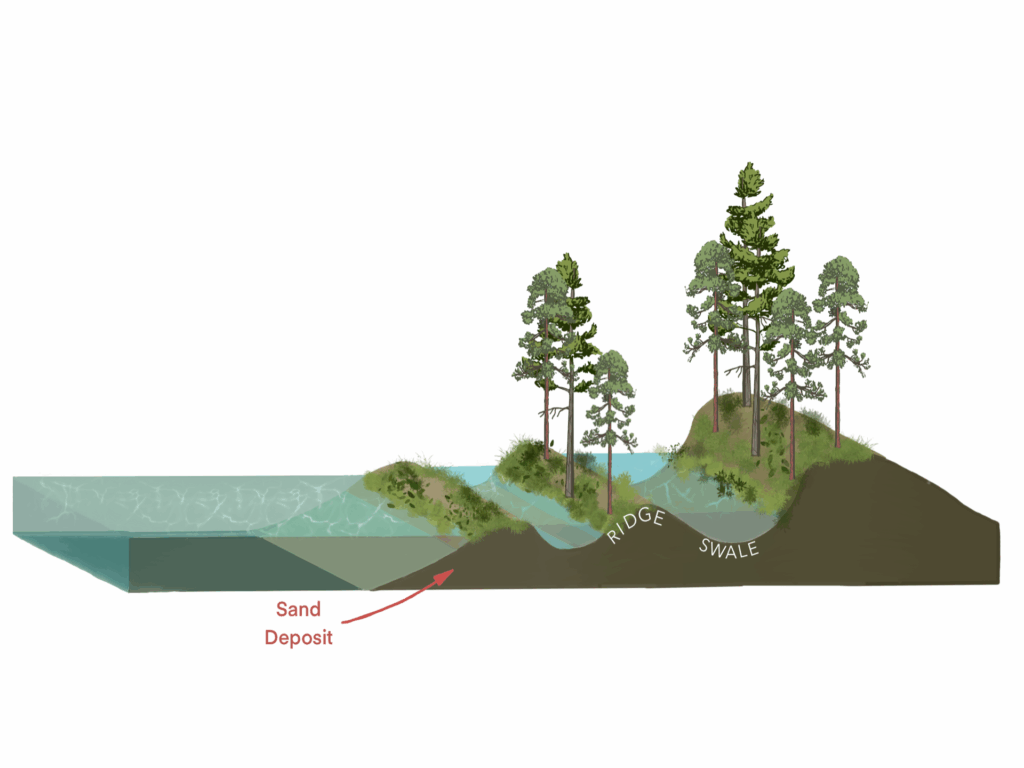
An illustrated cross-section graphic shows how the water from a lake merges with groundwater to form swales between ridges.

Great Lakes water levels impact the groundwater levels within ridge and swale ecosystems, as seen here in a cross-section created by Lucie Carignan.

Not just water and systems may be impacted, Loheide added.  “We’ve been studying trees and groundwater in Wisconsin for over a decade now, and we’ve been surprised by some of the things we’ve learned, that groundwater is used by trees. Even in a wet climate like Wisconsin where we get a lot of rain, we’re seeing that trees, particularly if they’re in sandy soils that drain really quickly, do depend on shallow groundwater, and if they have access to shallow groundwater, they do better.”

Given we know Great Lake levels fluctuate and those levels are connected to our coastal ecosystems, the team is looking at the Ridges and those funky swales lining the landscape to help them sketch out the rest of the story. “Our interest in the swales is knowing that we have lake levels that are driving changes in groundwater levels, how does that affect the ecosystem?” Loheide noted.  “How does that affect tree growth? How does that affect whether the forest might be vulnerable to either drought conditions where there’s limited water availability and the trees don’t have access to shallow groundwater, versus what happens during really high lake stages, and you end up with the roots of the plants being saturated, having low oxygen availability that can be fatal to the trees?”

The team has developed an ecohydrological observatory at The Ridges, which besides the cool name is also a great way to continuously monitor groundwater levels and changes that occur daily as the trees start to use water, from when the sun rises higher in the sky and exerts its considerable influence on the flora to when things start to shut down in the evening.

Loheide’s team, however, is looking beyond daily data. “We’re really hoping to leverage long-term data sets, and that’s coming from the trees themselves. If we core the trees, we can see variability in the annual growth. When conditions are good, when you’re getting the right amount of rain, when groundwater’s at the right level, we see larger growth rings. But, we see narrow growth rings during dry years or years where groundwater is not available, or even when groundwater’s too shallow,” said Loheide. “So that gives us an opportunity to not just have the data we collect during this two-year project, but to have a record that extends over a hundred years with some of these older trees.”

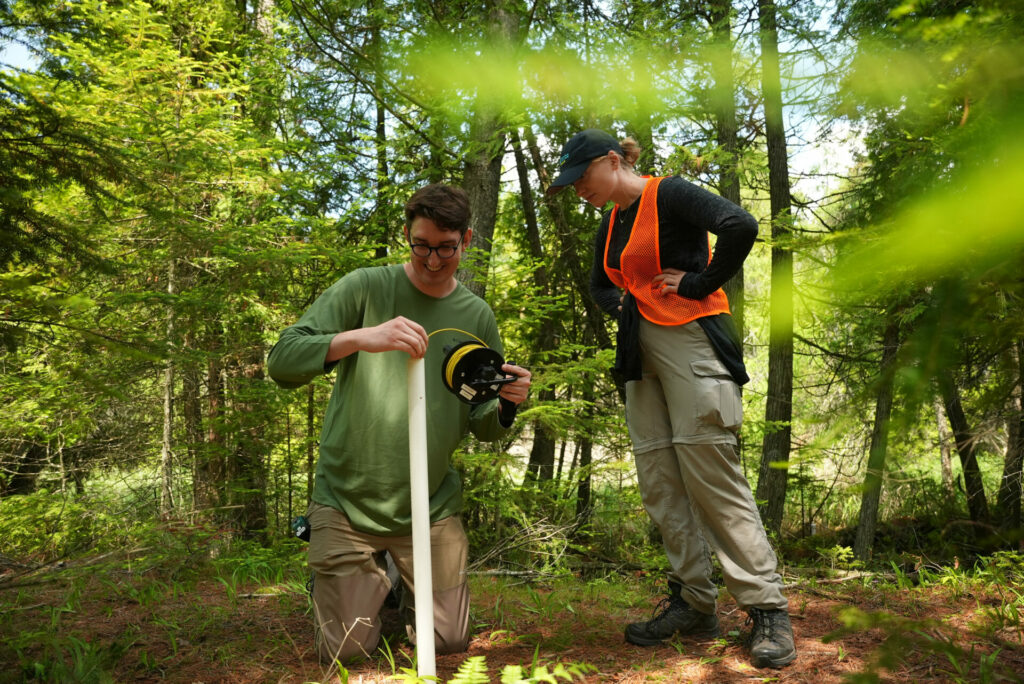
Graduate student Eric Kastelic and undergraduate researcher Lucie Carignan check in on a groundwater monitoring well that they installed at the Ridges Sanctuary, which gives them groundwater level measurements multiple times every hour.

Graduate student Eric Kastelic and undergraduate researcher Lucie Carignan check in on a groundwater monitoring well that they installed at the Ridges Sanctuary, which gives them groundwater level measurements multiple times every hour.

 
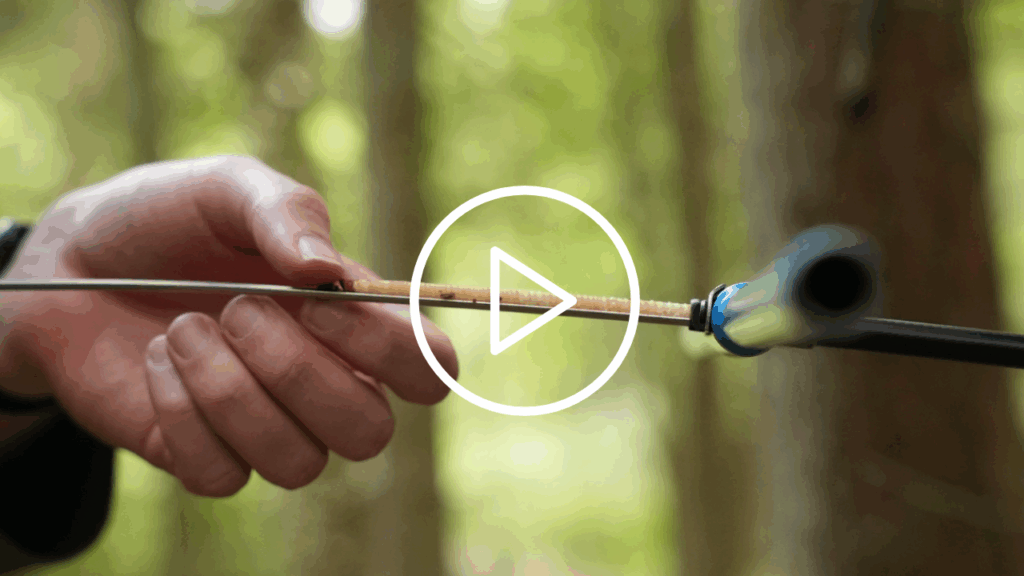
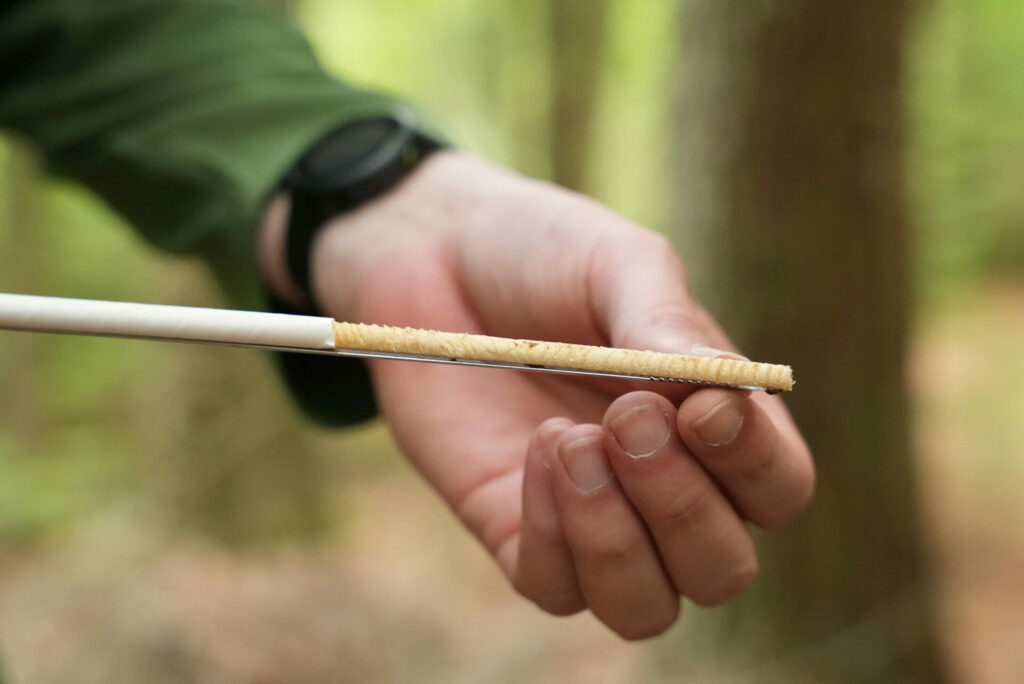
Close up of Eric Kastelic's hand holding a pencil-sized tree core.

By taking tree cores of red and white pine trees, the research team can analyze tree growth patterns going back almost 150 years.

The two-year project window Loheide references comes from funding through the Aquatic Science Center’s Water Resources Institute. Additional work was done by Joe Binzley (Hilldale Undergraduate Researcher 2025, UW-Madison) and collaborators from the Ridges Sanctuary, UW-Platteville TREES Lab, and the Wisconsin Department of Natural Resources. 

Loheide said that the findings his team develops could be used to better understand how extreme changes in water levels impact groundwater and flora not only at the Ridges but also for other areas throughout the Great Lakes.  

“We’re hopeful that we can use remote sensing tools to try to compare other sites, and if satellite data can show us how transpiration or water use might be changing,” Loheide said. “There are new satellites out there that are at fine scale that we might actually be able to see and map out the spatial variability within ridge and swale wetlands, and then also compare among them what the response is. 

“We’re excited about what the future holds.” 

The post The Swale Tale first appeared on Wisconsin Sea Grant.

Original Article

News Releases | Wisconsin Sea Grant

News Releases | Wisconsin Sea Grant

https://www.seagrant.wisc.edu/news/the-swale-tale/

Andrew Savagian

Millions in loans to replace lead pipes pumping water into Chicago homes remain unspent

By Keerti Gopal & Juanpablo Ramirez-Franco

This story is a partnership between GristInside Climate News, and WBEZ, a public radio station serving the Chicago metropolitan region. 

Millions of dollars in federal and city loans dedicated to replacing lead pipes that pump water into people’s homes remain unused, a city official said, at the same time that officials are struggling to keep up with state and federal deadlines to warn people of the risks.

Read Now at Great Lakes Now.

Original Article

Great Lakes Now

Great Lakes Now

https://www.greatlakesnow.org/2025/10/lead-pipes-chicago-city-council-notification-federal-loans-unspent/

Inside Climate News and Grist

The Great Lakes St. Lawrence Governors and Premiers Leadership Summit finished in Quebec City, Quebec, over the weekend. The biennial meeting is the group’s first since U.S. President Donald Trump returned to the White House in January. Read the full story by The Canadian Press.

Original Article

Great Lakes Commission

Great Lakes Commission

https://www.glc.org/dailynews/20251006-greatlakes-biennial-meeting

Autumn McGowan

With all the legal appeals exhausted, and the municipality of South Bruce Peninsula in Ontario conceding that the beach belongs to the First Nation, it was time for Saugeen First Nation’s Saugeen Beach Victory Celebration on Saturday, October 4. Read the full story by The Owen Sound Sun Times.

Original Article

Great Lakes Commission

Great Lakes Commission

https://www.glc.org/dailynews/20251006-saugeen-celebration

Autumn McGowan

A project to restore Great Lakes coastal habitat includes rebuilding a barrier beach along the shoreline, re-establishing historic wetlands and clearing invasive cattails at Lynde Shores Conservation Area in Ontario. Read the full story by Durham Region News.

Original Article

Great Lakes Commission

Great Lakes Commission

https://www.glc.org/dailynews/20251006-lynde-shores-conservation

Autumn McGowan

Gannon University’s Project NePTWNE marked a significant milestone with the opening of the Center for Lake Erie Education and Research (CLEER) at the Blasco Library in Erie, Pennsylvania. The new center, part of Gannon University’s initiative to foster a community of Lake Erie stewards, offers interactive exhibits and educational experiences focused on the Great Lakes. Read the full story by WJET-TV – Erie, PA.

Original Article

Great Lakes Commission

Great Lakes Commission

https://www.glc.org/dailynews/20251006-gannon-lakeerie-center

Autumn McGowan

By Eric Freedman 

 The Michigan Court of Appeals has cleared the city of South Haven of liability in the 2020 drowning of an 18-year-old swimmer at a public beach on the Lake Michigan coast.

The post Michigan court clears South Haven in beach drowning suit  first appeared on Great Lakes Echo.

Original Article

Great Lakes Echo

Great Lakes Echo

https://greatlakesecho.org/2025/10/05/michigan-court-clears-south-haven-in-beach-drowning-suit/

Eric Freedman

At 938 PM CDT, Doppler radar was tracking a line of strong thunderstorms extending from 7 miles northeast of New London to 18 miles east of Kewaunee, or extending from 20 miles south of Shawano to 18 miles east of Kewaunee, moving east at 15 mph. HAZARD...Wind gusts up to 30 mph and pea size hail. SOURCE...Radar indicated. IMPACT...Gusty winds could knock down tree limbs and blow around unsecured objects. Minor damage to outdoor objects is possible. Locations impacted include... Green Bay, Appleton, Kewaunee, Bay Shore Park, New London, Algoma, Luxemburg, Denmark, Black Creek, Bellevue, Oneida, De Pere, Howard, Ashwaubenon, Allouez, Suamico, Ledgeview, Hobart, Seymour and Wrightstown.

Original Article

Current watches, warnings, and advisories for Brown County (WIC009) WI

Current watches, warnings, and advisories for Brown County (WIC009) WI

https://api.weather.gov/alerts/urn:oid:2.49.0.1.840.0.05ef59ecfe32a7256a0ee17541425f0b7e6f3559.001.1.cap

NWS

In the middle of Lake Superior, near the boundary between Canadian and US waters, sits the Superior Shoal, a mountain that’s completely underwater. Known to some as the “Freshwater Everest,” filmmakers and researchers are now exploring it with underwater drones. Read the full story by Bridge Michigan.

Original Article

Great Lakes Commission

Great Lakes Commission

https://www.glc.org/dailynews/20251003-superior-drone-exploration

Nichole Angell

The Michigan Department of Environment, Great Lakes and Energy announced Wednesday that, after decades of community engagement and cleanup efforts, a west Michigan Lake has been removed from a list of the most polluted sites in the Great Lakes region. Read the full story by Michigan Advance.

Original Article

Great Lakes Commission

Great Lakes Commission

https://www.glc.org/dailynews/20251003-mukegon-cleanup

Nichole Angell

It’s ‘see ya later alligator’ for the newest resident at Detroit’s Belle Isle. An alligator was captured on cell phone footage by a woman who was paddle-boating at Belle Isle on Sunday. The animal has now been captured and found a new home in Westland, Michigan, at the Great Lakes Serpentarium. Read the full story by WJBK-TV – Detroit, MI.

Original Article

Great Lakes Commission

Great Lakes Commission

https://www.glc.org/dailynews/20251003-alligator-rehome

Nichole Angell

Despite a 55% cut to its portion of H2Ohio funding, the Ohio Department of Natural Resources is “still in the fight” to build, expand, or enhance wetlands as a means of controlling western Lake Erie algal blooms. Read the full story by The Toledo Blade.

Original Article

Great Lakes Commission

Great Lakes Commission

https://www.glc.org/dailynews/20251003-wetland-protection

Nichole Angell

The Ohio Department of Natural Resources will release 2,000 fingerling sturgeon into the Cuyahoga River, hoping that in 15 to 20 years they will come back to reproduce. The goal is to reestablish a healthy sturgeon population in Lake Erie that was depleted starting in the 1800s. Read the full story by The Plain Dealer.

Original Article

Great Lakes Commission

Great Lakes Commission

https://www.glc.org/dailynews/20251003-sturgeon-stocking

Nichole Angell

A coalition of maritime groups says the St. Lawrence-Great Lakes waterway is the logistical and industrial backbone of North America and will require major infrastructure investments, a faster shift to new energy sources, and a stronger shipbuilding industry.  Read the full story by the Welland Tribune.

Original Article

Great Lakes Commission

Great Lakes Commission

https://www.glc.org/dailynews/20251003-st-lawrence-investment-need

Nichole Angell