The Michigan Natural Resources Commission voted Thursday to expand the areas where people can spearfish lake trout, northern pike and walleye. Starting in April 2026, anglers will be allowed to spearfish for the three gamefish in parts of Lake Erie and Lake Superior and expanded portions of Lake Michigan. Read the full story by Bridge Michigan.

Original Article

Great Lakes Commission

Great Lakes Commission

https://www.glc.org/dailynews/20251107-spearfishing-access
James Polidori

The S.O.N.S. (Save Our Native Species) of Lake Erie Fishing Club received around 1,500 brown trout from the Linesville Fish Hatchery in Crawford County, Pennsylvania. The fish are only a few inches in size, and will be cared for at the hatchery until they’re ready to be released into Presque Isle Bay. Read the full story by WJET – Erie, PA.

Original Article

Great Lakes Commission

Great Lakes Commission

https://www.glc.org/dailynews/20251107-trout-hatchery

James Polidori

The Ohio Lake Erie Commission is now accepting applications for grants of up to $50,000, which are available to local governments, research institutions and nonprofit groups for projects that will improve water quality, restore habitats, and strengthen the long-term sustainability of Lake Erie. Read the full story by The Plain Dealer.

Original Article

Great Lakes Commission

Great Lakes Commission

https://www.glc.org/dailynews/20251107-sustainability-grants

James Polidori

The New York State Department of Environmental Conservation says 1,000 young lake sturgeon were released into Cattaraugus Creek this week as part of a long-term plan to reestablish the fish in one of its former spawning grounds along Lake Erie. Read the full story by Fingerlakes1.com.

Original Article

Great Lakes Commission

Great Lakes Commission

https://www.glc.org/dailynews/20251107-sturgeon-release

James Polidori

Pre-proposal submissions for the Michigan Department of Natural Resources’ (DNR) yearly fisheries habitat grants are now being accepted. Each year, the DNR allocates $1.5 million in fisheries habitat grants to governments and nonprofit organizations around the state. Read the full story by Great Lakes Echo.

Original Article

Great Lakes Commission

Great Lakes Commission

https://www.glc.org/dailynews/20251107-fisheries-grants

James Polidori

According to the Great Lakes Shipwreck Historical Society, the Edmund Fitzgerald’s 200-pound bronze bell was recovered on July 4, 1995, through a joint expedition. Every year, the original bell is tolled 29 times in honor of the 29 men who perished. Read the full story by WXYZ – Detroit, MI.

Original Article

Great Lakes Commission

Great Lakes Commission

https://www.glc.org/dailynews/20251107-fitzgerald-bell

James Polidori

By Eric Freedman

A horse-drawn carriage. A runaway horse. A crash. Sounds like an old-fashioned drama – not a bizarre 21st-century event. But that’s what happened three years ago when a visitor was injured while riding in a horse-drawn omnibus at Greenfield Village. The Court of Appeals has refused to reinstate her negligence suit against The Henry Ford and the driver.

The post Michigan court refuses to reinstate lawsuit over runaway carriage horse at Greenfield Village   first appeared on Great Lakes Echo.

Original Article

Great Lakes Echo

Great Lakes Echo

https://greatlakesecho.org/2025/11/07/michigan-court-refuses-to-reinstate-lawsuit-over-runaway-carriage-horse-at-greenfield-village/

Eric Freedman

Joel Brammeier headshot.
Joel Brammeier, ​President & CEO

We’re celebrating a major win: Muskegon Lake, a 4,149-acre lake that drains into the western shore of Lake Michigan, has officially been removed from the list of the most environmentally degraded areas in the Great Lakes.

It’s thanks to decades of collaborative restoration efforts among local communities, state and federal agencies, and advocates, as well as consistent federal funding that the Alliance for the Great Lakes has fought hard to maintain.

For years, the lake was ringed by factories, foundries, and paper plants. Locals talked about being able to tell which factory was operating based on the color of the water that day. The heavy industry left behind a legacy of pollution that landed the lake on the federal government’s list of “Areas of Concern” – 43 highly degraded areas along the Great Lakes in need of significant remediation.

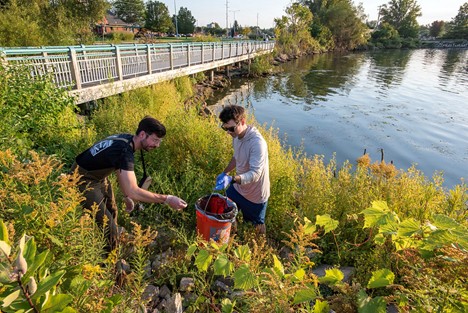
Alliance for the Great Lakes Adopt-a-Beach volunteers cleaning shoreline litter at Muskegon Lake. PC: Lloyd DeGrane

In all, more than 190,000 cubic yards of contaminated sediment were remediated from Muskegon Lake – enough to fill roughly 9 football fields, each 10 feet deep. Beaches have reopened, wetlands are restored, and new recreation opportunities are fueling the local economy. A study by Grand Valley State University estimates that for every dollar spent on the restoration, there were six dollars in economic benefit.

On the day Muskegon came off the list, Dr. Alan Steinman, an Alliance Board member who was active in the cleanup efforts for decades, said it best: “It’s a huge day for Muskegon.”

Our work isn’t done. There are 23 remaining U.S. Areas of Concern. And the major federal program that supports their cleanup – the Great Lakes Restoration Initiative – needs to be reauthorized next year. We’re fighting to make sure it’s renewed and fully funded.

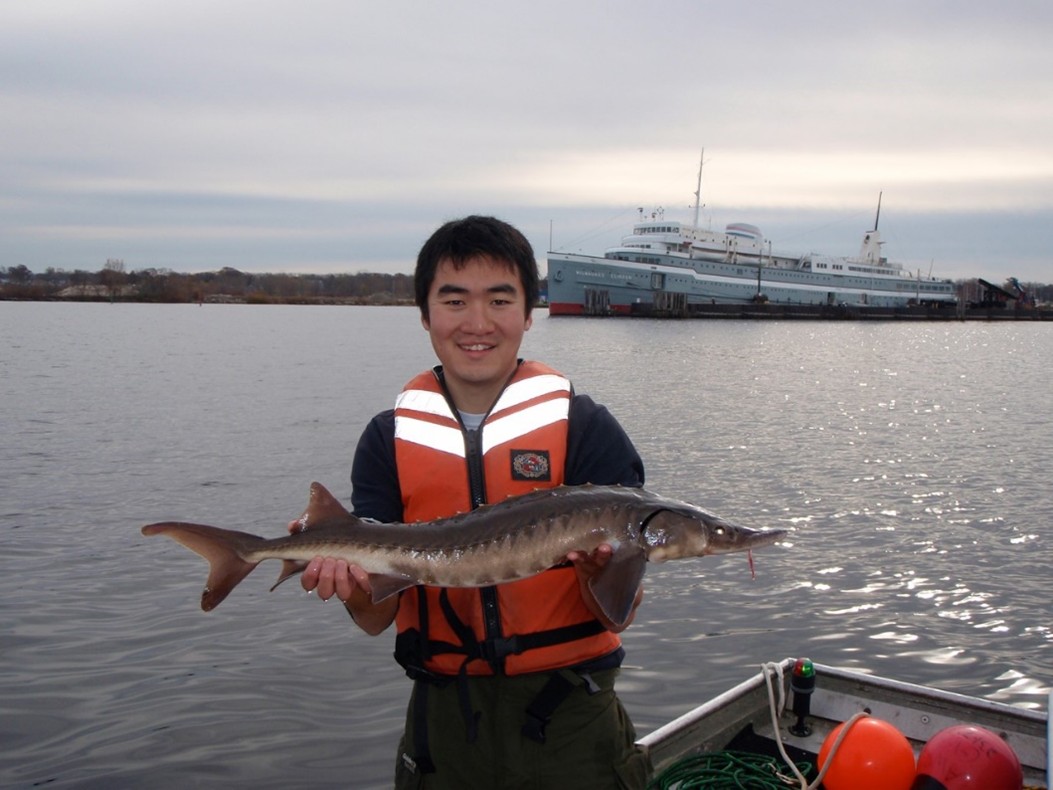
A graduate student with Annis Water Resources Institute at Grand Valley State University holds a lake sturgeon found in Muskegon Lake.

Muskegon Lake’s restoration was possible because The Great Lakes Restoration Initiative had long-term support across many administrations and from both political parties. It’s a model for what we can achieve with consistent bipartisan commitment to the lakes we all share.

And it’s a reminder of why we can’t stop fighting for Great Lakes restoration.

Thank you for your support, which makes wins like this possible.

More about Great Lakes restoration

Read more about the Great Lakes Restoration Initiative, one of the most important tools in the region’s toolbox to support on-the-ground restoration projects, from wetland restoration to cleaning up toxic hot spots.

Read more

The post Big win: One of the most polluted areas in the Great Lakes is now restored appeared first on Alliance for the Great Lakes.

Original Article

News - Alliance for the Great Lakes

News - Alliance for the Great Lakes

https://greatlakes.org/2025/11/big-win-one-of-the-most-polluted-areas-in-the-great-lakes-is-now-restored/

tfazzini

The State Revolving Fund (SRF) Advocates Forum (Forum) brings together community leaders from more than 36 states advocating for critical water infrastructure funding needs to replace lead service lines, upgrade storm sewer systems that flood during storms, and more. SRFs are a significant funding source for local governments and utilities to pay for these critical water infrastructure projects. SRFs combine state and federal funds to support loan funding for projects (including some principal forgiveness), but each state administers its own program, resulting in varying priorities and rules for accessing financing and funding across states. The SRF Forum helps leaders navigate the patchwork of state SRF rules to make them more accessible, secure the needed funding, and ultimately provide clean and safe drinking water and necessary wastewater and stormwater services for their residents.

A newly released report authored by the Forum co-conveners – Alliance for Great Lakes, Environmental Policy Innovation Center, PolicyLink, and River Network – and with vital input from Forum members, documents Forum members’ advocacy journeys engaging with state staff across the country to focus SRF funding on communities with the highest need. The annual SRF Advocates Engagement Report highlights SRF Forum advocates’ successes, lessons learned, and strategic pivots to strengthen the broader movement for equitable water infrastructure funding. Through this report, we celebrate the advocates’ momentum while also highlighting the remaining urgent SRF program changes needed to support communities trying to access these funds.

What did we hear from advocates about their experiences with SRF programs in our SRF Engagement Survey and interviews with advocates? 

Across two periods, 2021–2022 and 2023–2024, SRF Forum members: 

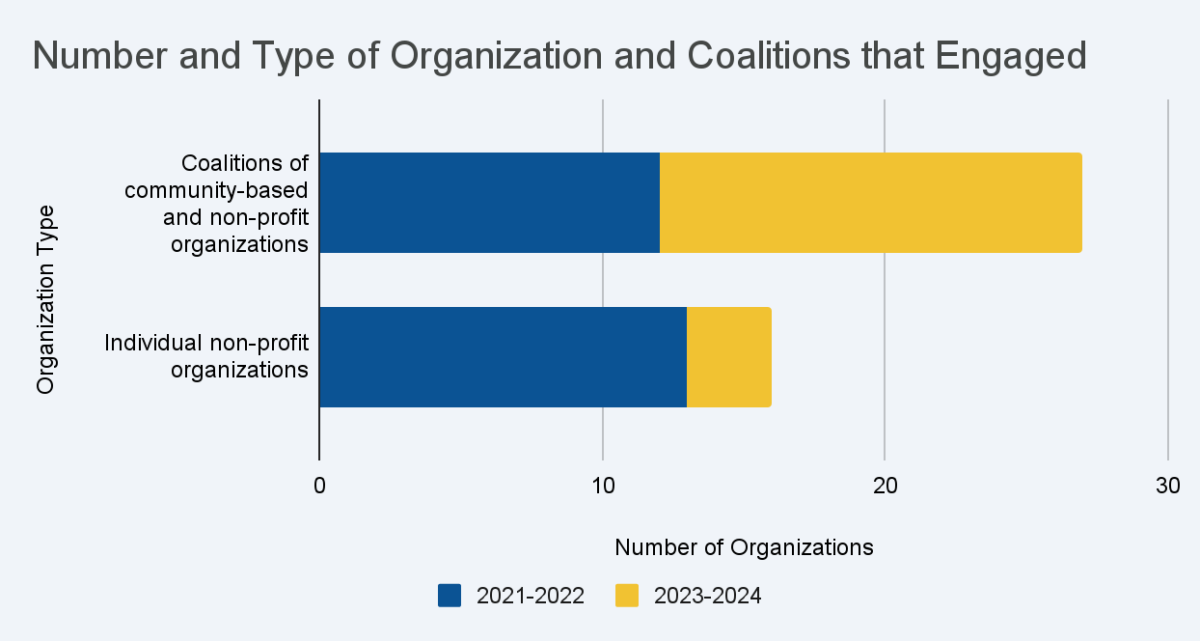
  • Emphasized the effectiveness of coordinated and coalition-based movements, leaning into shared capacity across several organizations to build relationships with state agencies to analyze and reform SRF policies. Most survey respondents (72%) stressed the importance of coalitions, with 63% of in-depth interview participants describing them as essential for sustaining advocacy efforts.
Chart showing the number and type of organization and coalitions that engaged
  • Shared the SRF policy areas most important to their work, including:
    • Helping small and otherwise vulnerable communities receive priority for principal forgiveness and other preferred loan terms. For example, advocates recommended increasing the total allocation of principal forgiveness available for communities in need, along with raising caps on the amount of principal forgiveness one community can receive toward a project. 
    • Providing technical assistance to make the SRFs more accessible for utilities serving low-income residents. For example, advocates focused on maximizing technical assistance funding to help state-defined disadvantaged communities advance projects to the Fundable List. 

Why are the SRFs important to advocates? 

The two federal SRF programs – the Clean Water SRF and the Drinking Water SRF – have provided more than $200 billion in financing for water infrastructure over the past several decades. When the Infrastructure Investment and Jobs Act (IIJA) was enacted in 2021, it infused an additional $43 billion into the SRF programs over five years (2022–2026). However, right now the U.S. Congress is considering changes to and reductions in the federal funding for these programs, making education about and advocacy around the SRFs more important than ever. 

Over the past four years, the SRF Forum has developed a robust library of resources, learning sessions, and peer-led learning spaces. This report provides a snapshot of the extensive work and dedication of advocates supported by these tools, and experiences shared by their peers in the SRF Forum, to secure robust investment in our communities’ water resources. Going forward, members of the SRF Forum can continue to rely on these resources and community of practice to collectively keep advocating for federal and state investment in the SRFs during this critical time. 

If you are interested in engaging with state SRF administrators on your state’s policies, we have resources for you! If you are an advocate interested in SRF policy reform, please join our community of practice. Become a member today.

To learn more about the SRF Advocates Forum, visit the website.

Join the SRF Advocates Forum

Help improve your community’s water infrastructure. If you’re a community leader who would like support engaging with state SRF administrators on your state’s policies, join today.

Join Today

The post New Report: Working Together to Improve Water Infrastructure appeared first on Alliance for the Great Lakes.

Original Article

News - Alliance for the Great Lakes

News - Alliance for the Great Lakes

https://greatlakes.org/2025/11/working-together-to-improve-water-infrastructure/

tfazzini

Going Country at Farrand Hall

Situated in a town of a little over a thousand people in Colon, Michigan, is an idyllic and pastoral outdoor dining experience just 250 feet from a main road. Guests are recommended to order a glass of wine, wander the property grounds, and soak in their surroundings before taking a seat at a banquet-style table.

Read Now at Great Lakes Now.

Original Article

Great Lakes Now

Great Lakes Now

https://www.greatlakesnow.org/2025/11/going-country-at-farrand-hall/

S. Nicole Lane

The U.S. Army Corps of Engineers on Oct. 29 approved energy company Enbridge’s plans to reroute an aging oil pipeline around a northern Wisconsin tribal reservation. Enbridge wants to build a new 41-mile segment of pipeline around the reservation of the Bad River Band of Lake Superior Chippewa to replace a 12-mile segment that now crosses tribal land. Read the full story by Iron Mountain Daily Press.

Original Article

Great Lakes Commission

Great Lakes Commission

https://www.glc.org/dailynews/20251105-army-corps-approves-enbridge-pipeline-wisconsin

Hannah Reynolds

Construction is now underway on a $2.2 million project approved this summer for a new trail in Plainfield Township, Michigan. When completed, it will help connect a network of pedestrian trails running from Lake Michigan to mid-Michigan. Read the full story by MLive.

Original Article

Great Lakes Commission

Great Lakes Commission

https://www.glc.org/dailynews/20251105-construction-project-trail-system-lake-michigan

Hannah Reynolds

A unique dataset of shipwreck sonar scans, captured by researchers from the University of Michigan and Michigan Technological University, has been selected for inclusion in the National Artificial Intelligence Research Resource (NAIRR) Pilot. The dataset, known as AI4Shipwrecks, is one of only ten chosen for the national initiative focused on advancing artificial intelligence. Read the full story by Hydro International.

Original Article

Great Lakes Commission

Great Lakes Commission

https://www.glc.org/dailynews/20251105-lakehuron-shipwrecks-american-ai-research

Hannah Reynolds

A new study from Loyola University Chicago finds that muskrats – the humble, semi-aquatic rodents long overshadowed by beavers – may play a crucial role in restoring the health of the Great Lakes wetlands. Read the full story by WBBM – Chicago, IL.

Original Article

Great Lakes Commission

Great Lakes Commission

https://www.glc.org/dailynews/20251105-loyola-study-greatlakes-wetlands-muskrats

Hannah Reynolds

U.S. Congressional committees have approved the Great Lakes Fisheries Research Reauthorization Act in both the House and the Senate, clearing them for full votes in both bodies. The legislation would authorize funding for the U.S. Geological Survey’s (USGS) Great Lakes Science Center for another five years. Read the full story by SeafoodSource.

Original Article

Great Lakes Commission

Great Lakes Commission

https://www.glc.org/dailynews/20251105-us-congressional-committees-greatlakes-fisheries

Hannah Reynolds

Butterfly populations are in decline across the continental U.S., dropping by 22% between 2000 and 2020. To help combat that trend, the John Ball Zoo launched its Great Lakes Rare Butterfly Program in 2021 to protect the region’s most threatened species. Read the full story by the Daily Press.

Original Article

Great Lakes Commission

Great Lakes Commission

https://www.glc.org/dailynews/20251105-grandrapids-zoo-greatlakes-butterflies

Hannah Reynolds

Each year, the Michigan Department of Natural Resources allocates $1.5 million in fisheries habitat grants to governments and nonprofit organizations around the state. Pre-proposal submissions for the yearly fisheries habitat grants are now being accepted. Read the full story by the Daily Press.

Original Article

Great Lakes Commission

Great Lakes Commission

https://www.glc.org/dailynews/20251105-state-soliciting-fisheries-habitat-projects

Hannah Reynolds

American Cruise Lines’ American Patriot cruise ship, built in 2025, will stop in Sheboygan, Wisconsin, four times in 2026 on the Lake Michigan & Upper Peninsula cruise line, one of the company’s three Great Lakes cruises. Read the full story by The Post-Crescent.

Original Article

Great Lakes Commission

Great Lakes Commission

https://www.glc.org/dailynews/20251105-sheboygan-lake-michigan-cruise-ship-2026

Hannah Reynolds

By Finn Mills 

Pre-proposal submissions for the Michigan Department of Natural Resources’ yearly fisheries habitat grants are now being accepted. Each year, the DNR allocates $1.5 million in fisheries habitat grants to governments and nonprofit organizations around the state.

The post Michigan soliciting fisheries habitat projects  first appeared on Great Lakes Echo.

Original Article

Great Lakes Echo

Great Lakes Echo

https://greatlakesecho.org/2025/11/05/michigan-soliciting-fisheries-habitat-projects/

Capital News Service

Ontario is subsidizing an energy project in Georgian Bay despite expert advice

By Fatima Syed, The Narwhal

The Great Lakes News Collaborative includes Bridge Michigan, Circle of Blue, Great Lakes Now at Detroit PBS, Michigan Public and The Narwhal who work together to bring audiences news and information about the impact of climate change, pollution, and aging infrastructure on the Great Lakes and drinking water.

Read Now at Great Lakes Now.

Original Article

Great Lakes Now

Great Lakes Now

https://www.greatlakesnow.org/2025/11/ontario-is-subsidizing-an-energy-project-in-georgian-bay-despite-expert-advice/

The Narwhal

Sludge is used as fertilizer across Wisconsin. How much is tainted by PFAS?

By Danielle Kaeding, Wisconsin Public Radio

This article was republished here with permission from Wisconsin Public Radio.

On a Saturday in June, Nancy Sattler bats away flies while standing in the shade of the Moen Lake boat landing near the town of Stella.

Read Now at Great Lakes Now.

Original Article

Great Lakes Now

Great Lakes Now

https://www.greatlakesnow.org/2025/11/sludge-is-used-as-fertilizer-across-wisconsin-how-much-is-tainted-by-pfas/

Wisconsin Public Radio

West winds gusting to 30 to 40 mph, low relative humidity and mild temperatures will result in elevated fire weather conditions this afternoon. The Wisconsin Department of Natural Resources has increased fire danger into the high category. Residents are urged to be careful with any activities that could potentially lead to a wildland fire. Campfires, outdoor grills, smoking materials, chain saws, and all-terrain vehicles all have the potential to throw a spark and ignite a wildfire.

Original Article

Current watches, warnings, and advisories for Brown County (WIC009) WI

Current watches, warnings, and advisories for Brown County (WIC009) WI

https://api.weather.gov/alerts/urn:oid:2.49.0.1.840.0.7f85c22673dafa86ecde94833d3add2db1ceb509.001.1.cap

NWS

The risk of an Edmund Fitzgerald-type disaster is never zero, but improvements in weather forecasting, Great Lakes bottom mapping, and other safety technology make such a disaster far less likely. Read the full story by the Detroit Free Press.

Original Article

Great Lakes Commission

Great Lakes Commission

https://www.glc.org/dailynews/20251103-fitzgerald-disasters

Taaja Tucker-Silva

Theories about how the Edmund Fitzgerald sank range from striking a shoal and suffering bottom damage, to flooding through the freighter’s hatch covers, to rogue waves, and to structural flaws in the ship. Read the full story by the Detroit Free Press.

Original Article

Great Lakes Commission

Great Lakes Commission

https://www.glc.org/dailynews/20251103-fitzgerald-mystery

Taaja Tucker-Silva

Lake trout have made a strong recovery in Lake Superior thanks to successful lamprey control. This has allowed the Fond du Lac Band to resume subsistence netting for the first time in over 160 years. Read the full story by Minnesota Public Radio.

Original Article

Great Lakes Commission

Great Lakes Commission

https://www.glc.org/dailynews/20251103-superior-trout

Taaja Tucker-Silva

They’re known as the gales of November, and they conjure images of hurricane-force winds, towering waves, ice-cold temperatures, and bobbing ships. Maritime historians estimate they are responsible for roughly half of Great Lakes shipwrecks.  Read the full story by The Sault News.

Original Article

Great Lakes Commission

Great Lakes Commission

https://www.glc.org/dailynews/20251103-november-gales

Taaja Tucker-Silva

Environmental activists and lawmakers are pushing for action as abandoned boats are being left on the shores of Wisconsin’s rivers and lakes. Wisconsin law does not currently require swift removal of abandoned boats from state waters. Read the full story by Spectrum News 1.

Original Article

Great Lakes Commission

Great Lakes Commission

https://www.glc.org/dailynews/20251103-abandoned-boats

Taaja Tucker-Silva

Two Ontario fisheries facilities along Lake Erie are getting $10 million facelifts to protect local fisheries and jobs. Planned improvements include replacing aging infrastructure, expanding facility space, and incorporating new technologies to improve efficiency and safety. Read the full story by CK News Today.

Original Article

Great Lakes Commission

Great Lakes Commission

https://www.glc.org/dailynews/20251103-ontario-fisheries

Taaja Tucker-Silva

One of the last remaining large urban coastal wetlands on Lake Ontario received a $1.61 million boost from Ottawa this year, with work restoring the health of under-threat Second Marsh in Ottawa already underway. Read the full story by INsauga.

Original Article

Great Lakes Commission

Great Lakes Commission

https://www.glc.org/dailynews/20251103-ontario-wetlands

Taaja Tucker-Silva

Environmental professionals, business leaders, and others discussed the challenges facing the Great Lakes at the 18th annual Freshwater Summit in Traverse City, Michigan. One focus at the summit is how climate change could impact the health of the Great Lakes. Read the full story by WPBN/WGTU-TV – Traverse City, MI.

Original Article

Great Lakes Commission

Great Lakes Commission

https://www.glc.org/dailynews/20251103-freshwater-summit

Taaja Tucker-Silva

By Eric Freedman

Empty lots in deindustrialized cities like Detroit may contribute to bird species diversity, says a new study by researchers at MSU and Carleton University in Canada. The study is based on sound recordings collected at 110 sites in 11 Detroit neighborhoods. The study recommends that vacant land management in the city takes a balanced approach that considers the needs of both residents and birds. There are other concerns about vacant land, too, including as sites for solar arrays.

The post Vacant lots boost diversity among Detroit’s birds, study finds first appeared on Great Lakes Echo.

Original Article

Great Lakes Echo

Great Lakes Echo

https://greatlakesecho.org/2025/11/03/vacant-lots-boost-diversity-among-detroits-birds-study-finds/

Eric Freedman

West winds gusting to 25 to 35 mph, low relative humidity and mild temperatures will result in elevated fire weather conditions this afternoon. Residents are urged to be careful with any activities that could potentially lead to a wildland fire. Campfires, outdoor grills, smoking materials, chain saws, and all-terrain vehicles all have the potential to throw a spark and ignite a wildfire.

Original Article

Current watches, warnings, and advisories for Brown County (WIC009) WI

Current watches, warnings, and advisories for Brown County (WIC009) WI

https://api.weather.gov/alerts/urn:oid:2.49.0.1.840.0.7cdd7d91a1e00c9a99f68934f0ea8c576f9e2eb6.001.1.cap

NWS

West winds gusting to 25 to 35 mph, low relative humidity and mild temperatures will result in elevated fire weather conditions Monday afternoon. Residents are urged to be careful with any activities that could potentially lead to a wildland fire. Campfires, outdoor grills, smoking materials, chain saws, and all-terrain vehicles all have the potential to throw a spark and ignite a wildfire.

Original Article

Current watches, warnings, and advisories for Brown County (WIC009) WI

Current watches, warnings, and advisories for Brown County (WIC009) WI

https://api.weather.gov/alerts/urn:oid:2.49.0.1.840.0.eead17338e28b8c066f540e99134d45424917077.001.1.cap

NWS

Environmental groups are blasting what some are calling a “premature and unlawful decision” by the U.S. Army Corps of Engineers to approve federal permits for the Enbridge Line 5 pipeline project in northern Wisconsin.  Read the full story by the Wisconsin Examiner.

Original Article

Great Lakes Commission

Great Lakes Commission

https://www.glc.org/dailynews/20251031-line5-reactions

Autumn McGowan

The Wisconsin Department of Natural Resources is proposing to reduce the number of whitefish that commercial fishers can take from Lake Michigan as the population has seen a dramatic decline in the past two decades. Read the full story by Wisconsin Public Radio.

Original Article

Great Lakes Commission

Great Lakes Commission

https://www.glc.org/dailynews/20251031-whitefish-harvest-limits

Autumn McGowan

More than five years after first announcing stricter controls on industrial farm pollution meant to keep pollutants out of Michigan’s waterways, state environmental regulators will finally start enforcing the controls. Read the full story by Bridge Michigan.

Original Article

Great Lakes Commission

Great Lakes Commission

https://www.glc.org/dailynews/20251031-farm-pollution-regulation

Autumn McGowan

A plan is underway to build a massive artificial intelligence data center in Washtenaw County’s Saline Township to support OpenAI. A chief criticism of data centers has been their high usage of water and power. Read the full story by the Detroit Free Press.

Original Article

Great Lakes Commission

Great Lakes Commission

https://www.glc.org/dailynews/20251031-michigan-ai-datacenter

Autumn McGowan

Hellbenders, North America’s largest amphibian, are an endangered species and an indicator of good water quality in Ohio’s streams. The Columbus Zoo and Aquarium recently released 116 eastern hellbender salamanders as part of a program that stretches back a decade. Read the full story by the Akron Beacon Journal.

Original Article

Great Lakes Commission

Great Lakes Commission

https://www.glc.org/dailynews/20251031-hellbender

Autumn McGowan

On Michigan’s Beaver Island, located in Lake Michigan, the cost to ferry a vehicle back and forth to the mainland can be a steep deterrent to removing broken down cars that end up leaking fluids into the water supply. A recent project is cleaning up the clunker cars.  Read the full story by MLive.

Original Article

Great Lakes Commission

Great Lakes Commission

https://www.glc.org/dailynews/20251031-beaver-island-junkcars

Autumn McGowan

News

Great Lakes Commission passes resolutions on AI/computing infrastructure and water use; elects new leadership at meeting in Duluth

Duluth, Minnesota – At its Annual Meeting, held this week on the shores of Lake Superior in Duluth, Minnesota, the Great Lakes Commission (GLC) passed resolutions calling for advancement of non-potable water reuse and coordinated resource management in the development of AI and computing infrastructure, as well as prevention of plastic pollution and harmonization of stormwater management in the Great Lakes and St. Lawrence River region.

“The economy of the Great Lakes region is supported by access to water — from industry to agriculture and outdoor recreation to shipping,” said GLC Executive Director Erika Jensen. “Our commissioners have noted a growing need to understand the impacts that new technologies will have on the Great Lakes and the roles that water recycling and reuse can play.”

At the meeting, the GLC also elected new leadership: Chair Timothy Bruno, Great Lakes Program Coordinator at the Pennsylvania Department of Environmental Protection, and Vice Chair James Jennings, Director of the Illinois Environmental Protection Agency.

“I’m honored for the opportunity to serve as chair of the Great Lakes Commission,” said Chair Bruno. “This critical agency brings the region together to work on issues that no single community, state, province, or nation can tackle alone. On behalf of the GLC, I’d also like to extend our gratitude to immediate past chair Mary Mertz, director of the Ohio Department of Natural Resources, for her incredible leadership over her two terms as chair of the agency.”

The Annual Meeting featured remarks from Duluth Mayor Roger Reinert and journalist Peter Annin, author of Purified: How Recycled Sewage Is Transforming Our Water and The Great Lakes Water Wars and executive director of the Burke Center for Ecosystem Research. Attendees also heard from expert panels on microplastics, harmful algal blooms, and water reuse and students participating in environmental programs at Duluth Public Schools. On Wednesday evening, attendees celebrated the 70th anniversary of the GLC, which was established in 1955 by the Great Lakes Basin Compact. The Compact was ratified by the Great Lakes state legislatures and granted consent by the U.S Congress in 1968.

In advance of the meeting, GLC leadership planted two trees on the Superior Hiking Trail. As a founding member of the Great Lakes St. Lawrence Trees and Green Events initiatives, the GLC has committed to using sustainable practices at its meetings and supporting the initiative’s goal of planting 250 million trees in the Great Lakes basin by 2033. The GLC also hosted a tour of the St. Louis River Estuary on the Duluth River Train; representatives of the Minnesota and Wisconsin Departments of Natural Resources, the Minnesota Pollution Control Agency, and the Fond du Lac Band of Lake Superior Chippewa outlined remediation and restoration work underway in the estuary. Additionally, the GLC hosted a screening of the film Ripples of Plastic, which explores the unseen impacts of plastic pollution in the Great Lakes, including contamination, microplastics, and human health effects, and a conversation with the filmmaker.

The GLC will next convene in Washington, D.C. for its Semiannual Meeting and Great Lakes Day on March 3-5, 2026. More information will be available on the GLC’s website in advance of the meeting. 


The Great Lakes Commission, led by chair Timothy J. Bruno, Great Lakes Program Coordinator at the Pennsylvania Department of Environmental Protection, is a binational government agency established in 1955 to protect the Great Lakes and the economies and ecosystems they support. Its membership includes leaders from the eight U.S. states and two Canadian provinces in the Great Lakes basin. The GLC recommends policies and practices to balance the use, development, and conservation of the water resources of the Great Lakes and brings the region together to work on issues that no single community, state, province, or nation can tackle alone. Learn more at www.glc.org.

Contact

For media inquiries, please contact Beth Wanamaker, beth@glc.org.

Recent GLC News

Upcoming GLC Events

View GLC Calendar

Archives

Original Article

Great Lakes Commission

Great Lakes Commission

https://www.glc.org/news/am-103025

Beth Wanamaker

Patchy fog, locally dense in spots, with a visibility of 1/4 mile or less, has developed across portions of the Fox Valley early this morning. Air temperatures were hovering around freezing as well, therefore some icy spots are also possible. Motorists, including morning commuters, should allow for a little extra time to reach your destination, slow down, and use your low beam headlights if you encounter dense fog. The fog should burn off by 10 am.

Original Article

Current watches, warnings, and advisories for Brown County (WIC009) WI

Current watches, warnings, and advisories for Brown County (WIC009) WI

https://api.weather.gov/alerts/urn:oid:2.49.0.1.840.0.b28612f4990a11d0d8164e70f7a02bfb77d36707.001.1.cap

NWS