This story was produced by @tvotoday

Salt trucks are a familiar sight in the Great Lakes region. Every winter, roads and sidewalks are covered with salt to melt ice and prevent accidents. But is the salt doing more harm than good? Citizen scientists in Ontario have been studying how salt is impacting local waterways and advocating for stronger limits on its use.

===========================================
Website: https://greatlakesnow.org
Facebook: https://www.facebook.com/greatlakesnow
X: https://www.x.com/greatlakesnow
Instagram: https://www.instagram.com/greatlakesnoworg
Newsletter: https://www.greatlakesnow.org/great-lakes-now-newsletter/

To learn more about supporting Detroit PBS and Great Lakes Now, visit https://www.detroitpbs.org/
===========================================

“Is Road Salt Destroying Ontario’s Waterways?” was produced by TVO in partnership with Great Lakes Now/Detroit PBS.

Produced and Written by
Jeyan Jeganathan

Camera
Ricardo Diaz
Max Stussi

Edited by
David Erwin
Marisa Gatto

Additional Editing
Bill Allesee

Additional Material
CP24
Global News
CBC News
Friends of the Muskoka Watershed
The Canadian Press
Colin Perkel
Paul Kazulak

The post Should we use less road salt? | Great Lakes Now appeared first on Great Lakes Now.

Original Article

Great Lakes Now

Great Lakes Now

https://www.greatlakesnow.org/2026/03/09/should-we-use-less-road-salt-great-lakes-now/

Great Lakes Now

By Sonja Krohn

DTE and Consumers Energy, Michigan's largest electric utilities, have ramped up tree trimming to improve reliability. Despite improvements, Michigan has the poorest reliability record among the Great Lakes states, the Citizens Utility Board of Michigan says.

The post Utilities ramp up tree trimming to address long-standing reliability problems first appeared on Great Lakes Echo.

Original Article

Great Lakes Echo

Great Lakes Echo

https://greatlakesecho.org/2026/03/09/utilities-ramp-up-tree-trimming-to-address-long-standing-reliability-problems/

Capital News Service

By Justin Fox Clausen

A new bill in Michigan would prohibit home insurance companies from denying, canceling or raising premiums for homeowners and tenants based on the breeds of their dogs.

The post Bill would ban ‘dog-scrimination’ by insurers first appeared on Great Lakes Echo.

Original Article

Great Lakes Echo

Great Lakes Echo

https://greatlakesecho.org/2026/03/07/bill-would-ban-dog-scrimination-by-insurers/

Capital News Service

On Great Lakes Day, the Great Lakes Commission convened in Washington, D.C., to discuss future policies impacting the lakes with leaders and lawmakers. The Michigan Department of Environment, Great Lakes, and Energy is working against invasive species and threats to the Great Lakes. Read the full story by WDIV-TV – Detroit, MI.

Original Article

Great Lakes Commission

Great Lakes Commission

https://www.glc.org/dailynews/20260306-egle-greatlakes-partners-stronger-freshwater-protections

Hannah Reynolds

A coalition representing more than 400 mayors and cities across the Great Lakes and St. Lawrence region met with members of congress and senators to share top priorities, including the impact proposed port fees would have on Great Lakes shipping and regional economies in the U.S. and Canada. Read the full story by The St. Catharines Standard.

Original Article

Great Lakes Commission

Great Lakes Commission

https://www.glc.org/dailynews/20260306-strong-future-together-great-lakes-mayors

Hannah Reynolds

For decades, a key provision of the Clean Water Act has allowed states to weigh in on, and sometimes derail, federal water permits. Now the Trump administration is poised to roll back that power. Opponents of the move, including Minnesota, say it could imperil their ability to protect clean water. Read the full story by The Minnesota Star Tribune.

Original Article

Great Lakes Commission

Great Lakes Commission

https://www.glc.org/dailynews/20260306-epa-curb-state-input-water-permits

Hannah Reynolds

The proposed Great Lakes Way trail system in southeast Michigan still lacks a permanent organization to coordinate and steward the project, raising concerns about long-term management and promotion. Supporters say establishing a dedicated lead group is essential to maintain the trail network and fully realize its tourism and economic benefits. Read the full story by Crain’s Detroit Business.

Original Article

Great Lakes Commission

Great Lakes Commission

https://www.glc.org/dailynews/20260306-greatlakes-way-threatens-regional-tourism

Hannah Reynolds

A shipwreck hunter discovered the wreck of the Lac La Belle, a luxury steamer that sank in 1872 in Lake Michigan, about 20 miles off the Wisconsin coast, after searching for nearly 60 years. The well-preserved wreck, first located in 2022 and recently documented with dives and 3D imaging, offers historians a rare underwater “time capsule” from the era of Great Lakes passenger steamships. Read the full story by Wisconsin Public Radio.

Original Article

Great Lakes Commission

Great Lakes Commission

https://www.glc.org/dailynews/20260306-shipwreck-hunter-luxury-ship-found

Hannah Reynolds

An agreement approved by some Wisconsin counties would allow the oil company Enbridge to reimburse local law enforcement for equipment, training, and policing costs related to potential protests during construction of a rerouted section of the Line 5 pipeline. Critics argue the arrangement could bias police toward the company and increase tensions with Indigenous groups and environmental activists opposing the project. Read the full story by WXPR – Rhinelander, WI.

Original Article

Great Lakes Commission

Great Lakes Commission

https://www.glc.org/dailynews/20260306-enbridge-pipeline-wisconsin

Hannah Reynolds

U.S. Coast Guard ice-breaking operations on the Great Lakes have been reduced after two cutters experienced mechanical failures, limiting the fleet’s ability to keep shipping routes open during heavy winter ice. The breakdowns occurred in Sault Ste. Marie, Michigan, forcing the Coast Guard to operate with fewer vessels while crews work to repair the equipment and maintain key navigation channels. Read the full story by WBKB-TV – Alpena, MI.

Original Article

Great Lakes Commission

Great Lakes Commission

https://www.glc.org/dailynews/20260306-coast-guard-ice-breaking-equipment-failures-great-lakes

Hannah Reynolds

The Nature Conservancy in Ohio will host two open houses to share updates and answer community members’ questions about coastal wetland developments and plans in Sandusky Bay. The projects are part of the Sandusky Bay Initiative, an effort to improve the health of the Lake Erie watershed. Read the full story by the Fremont News-Messenger.

Original Article

Great Lakes Commission

Great Lakes Commission

https://www.glc.org/dailynews/20260306-conservancy-group-sandusky-bay-updates

Hannah Reynolds

Randall Volmer doesn’t just spend time near water. He studies it. Since retiring in 2020, he’s been out most days with a camera, watching how light shifts and deciding when to wait and when to click. “I think it’s therapeutic for me,” he said. “It sort of just sort of calms me and relaxes [...]

The post Watershed Moments: What He Couldn’t Paddle Past appeared first on Fox-Wolf Watershed Alliance.

Original Article

Fox-Wolf Watershed Alliance

Fox-Wolf Watershed Alliance

https://fwwa.org/2026/03/05/watershed-moments-what-he-couldnt-paddle-past/?utm_source=rss&utm_medium=rss&utm_campaign=watershed-moments-what-he-couldnt-paddle-past

Fox-Wolf Watershed Alliance

By Sonja Krohn

The dry conditions and drought that Michigan is experiencing this winter may adversely affect the upcoming crop growing season.

The post ‘None of this is normal’ – Michigan watches winter drought ahead of growing season first appeared on Great Lakes Echo.

Original Article

Great Lakes Echo

Great Lakes Echo

https://greatlakesecho.org/2026/03/05/none-of-this-is-normal-michigan-watches-winter-drought-ahead-of-growing-season/

Capital News Service

Every winter, ice boaters race across frozen waterways, chasing serious speeds.

Meet Ron Sherry. He’s an Iceboat World Champion and iceboat designer who build DN Class boats from his workshop in Michigan.

On the Great Lakes Now YouTube channel, learn more about this high-speed sport and join GLN contributor Ward Detwiler for his first time boating on ice.

#GreatLakes #Iceboat #Iceboating #Winter #WinterSports
===========================================
Website: https://greatlakesnow.org
Facebook: https://www.facebook.com/greatlakesnow
X: https://www.x.com/greatlakesnow
Instagram: https://www.instagram.com/greatlakesnoworg
Newsletter: https://www.greatlakesnow.org/great-lakes-now-newsletter/

To learn more about supporting Detroit PBS and Great Lakes Now, visit https://www.detroitpbs.org/

The post Inside a Champion Iceboater’s Workshop appeared first on Great Lakes Now.

Original Article

Great Lakes Now

Great Lakes Now

https://www.greatlakesnow.org/2026/03/05/inside-a-champion-iceboaters-workshop/

Great Lakes Now

A Grand Bend, Ontario, resident made a simple commitment to pick up one bag of garbage a day for a whole month along the Lake Huron shoreline. The one-month pledge never ended, and she has now picked up 1,300 bags of garbage to show her love and gratitude for the lake. Read the full story by the Price Albert Daily Herald.

Original Article

Great Lakes Commission

Great Lakes Commission

https://www.glc.org/dailynews/20260304-shoreline-clean-up

Nichole Angell

The New York State Department of Environmental Conservation and New York Sea Grant have $200,000 available for projects benefiting New York’s Great Lakes basin by demonstrating the application of ecosystem-based management approaches to local watershed challenges. Read the full story by the Finger Lakes Times.

Original Article

Great Lakes Commission

Great Lakes Commission

https://www.glc.org/dailynews/20260304-shoreline-restoration-funding

Nichole Angell

Roughly 653 registered anglers from 10 states gathered to participate in the 2026 Black Lake sturgeon season in northern Michigan. Within 48 minutes, six sturgeon were caught, and anglers were told that the tightly managed season had already come to a close. Read the full story by Great Lakes Echo.

Original Article

Great Lakes Commission

Great Lakes Commission

https://www.glc.org/dailynews/20260304-sturgeon-season

Nichole Angell

Arctic grayling were once abundant in Michigan’s waters. But almost a century ago, habitat destruction, overfishing, and predation by introduced species decimated their populations. Today an effort is underway to restore self-sustaining populations of this long-lost fish. Read the full story by the Great Lakes Now.

Original Article

Great Lakes Commission

Great Lakes Commission

https://www.glc.org/dailynews/20260304-grayling-restoration

Nichole Angell

Glen Arbor, Michigan, a city located on the eastern shoreline of Lake Michigan, earned the Tree City USA designation from the Arbor Day Foundation in late February, becoming the latest in a line of communities to achieve national recognition for its commitment to urban forestry. Read the full story by MLive.

Original Article

Great Lakes Commission

Great Lakes Commission

https://www.glc.org/dailynews/20260304-tree-city

Nichole Angell

We are on the cusp of the start of the seasonal water level rise on the Great Lakes. Snowmelt over the past few weeks has started the water level rise on Lake Michigan and Lake Huron, but Lake Superior hasn’t risen or fallen in the past month. Read the full story by MLive.

Original Article

Great Lakes Commission

Great Lakes Commission

https://www.glc.org/dailynews/20260304-water-levels

Nichole Angell

Joel Brammeier headshot.
Joel Brammeier, ​President & CEO

On Friday, December 19, 2025, the Alliance for the Great Lakes joined three other environmental groups and filed a petition in the D.C. Circuit Court of Appeals. The petition challenges the U.S. Environmental Protection Agency’s Final Standards on ballast water discharges by vessels, including those navigating the Great Lakes. These standards are required under the Vessel Incidental Discharge Act of 2018, which the Alliance helped lead through Congress.

The Environmental Law & Policy Center filed the petition on behalf of itself, the Alliance, Minnesota Environmental Partnership, and National Wildlife Federation. Together, we are charging that the new standards don’t provide sufficient protection from invasive species being released from ballast water.

The reason? EPA’s final rule simply does not protect the Great Lakes from the threat of invasive species spreading.

EPA’s Final Standards only apply to ocean-going vessels and new “Lakers”, or ships that only travel on the Great Lakes. Each Laker holds enough Great Lakes water equal to almost 25 Olympic-sized swimming pools. The 63 vessels in the Laker fleet each make 50 to 100 trips annually across the Great Lakes. Lakers can enable aquatic invasive species to hitch a ride in the ballast water they take in and then spread further throughout the Great Lakes when the ballast water is discharged. With no natural predators or controls in their new ecosystem, invasive species out-compete native species, degrade habitat, alter the food web, and threaten the diversity or abundance of native species. Lakers also have the potential to take up toxins from harmful algal blooms and wildlife pathogens, then release them in another port with their ballast water.

Most Lakers operating on the Great Lakes will never be “new” under EPA’s definition. New Lakers are rarely constructed. An estimated 90% of existing Lakers have been operating in the Great Lakes and St. Lawrence Seaway since before 2009. Practically, this means the bulk of freshwater vessels will be operating on the lakes without ever being required to treat their ballast water. There is also a statutory requirement that oceangoing vessels and Lakers avoid taking up ballast water in areas with known infestations or populations of harmful organisms and pathogens – a requirement EPA completely ignores in its Final Standards.

Exempting any Lakers from regulations is the wrong approach to combat invasive species. While tens of millions of Americans rely on the Great Lakes for their drinking water, a healthy Lake Erie, Lake Superior, Lake Ontario, Lake Huron, and Lake Michigan are also economic engines. They generate billions of dollars in the fishing, recreation, and tourism industries. If it were its own country, the Great Lakes region would have a GDP of $6 trillion – making it the third biggest economy in the world. Invasive species put that engine at grave risk.  

The Alliance believes the common-sense approach is to require ballast water management systems for all cargo vessels and ensure the lakes are protected no matter when a ship was built or how long it operates. We look forward to working with our partners in the months to come as we make this case in court.

The post Why the Alliance is Challenging the EPA’s Final Rule on Vessel Discharges appeared first on Alliance for the Great Lakes.

Original Article

News - Alliance for the Great Lakes

News - Alliance for the Great Lakes

https://greatlakes.org/2026/03/why-the-alliance-is-challenging-the-epas-final-rule-on-vessel-discharges/

Judy Freed

Six Nations of the Grand River is one of the most highly populated Indigenous communities in Canada with around 29,000 residents. A primary source of water is from the McKenzie Creek, which is mostly used for agricultural purposes for the Six Nations and non-Indigenous communities throughout the watershed. 

According to a recent study, Ontario’s McKenzie Creek watershed is likely to face increasing levels of water scarcity throughout the rest of the century. This research examines how water scarcity, due to factors like climate change, land use and water consumption, will have impacts for agricultural production for the Six Nations.

“I live on reserve and it’s just something that you don’t really think about on a daily basis until you’re actually living it, where you see your appliances die early because of the hardness of the water,” said Six Nations Senior Manager of the Environment Sara Curley-Smith.

Of the water available for Six Nations, the people here also face ongoing challenges with water quality. This compounds the effects of water insecurity.

“You have the majority of families at Six Nations that are water insecure already, so if they’re water insecure in good times, you can’t imagine what’s coming our way in the next 50 years,” said emeritus professor of Indigenous Studies at McMaster University Dawn Martin-Hill, who was also involved with the study.

Martin-Hill leads the Ohneganos Indigenous Water Research Program, which the study was a part of. She is also part of an initiative to create a Haudenosaunee Environmental Research Institute that centers Indigenous knowledge to better understand these issues. Part of her interview is also featured in the article, “Water is Life, Six Nations lead international approach to long-standing water insecurity.”

“In the design of the project we consulted with the environmental folks at Six Nations, the fish and wildlife folks, leaders, traditional knowledge holders, we just got a sense of what their concerns and priorities were,” Martin-Hill said. “Climate change came up quite a bit because cities and towns have access to that information and modeling, whereas reserves and reservations do not.”

Throughout the project process, Indigenous traditional knowledge holders helped guide the scientists on where and when to conduct the research, Martin-Hill said.

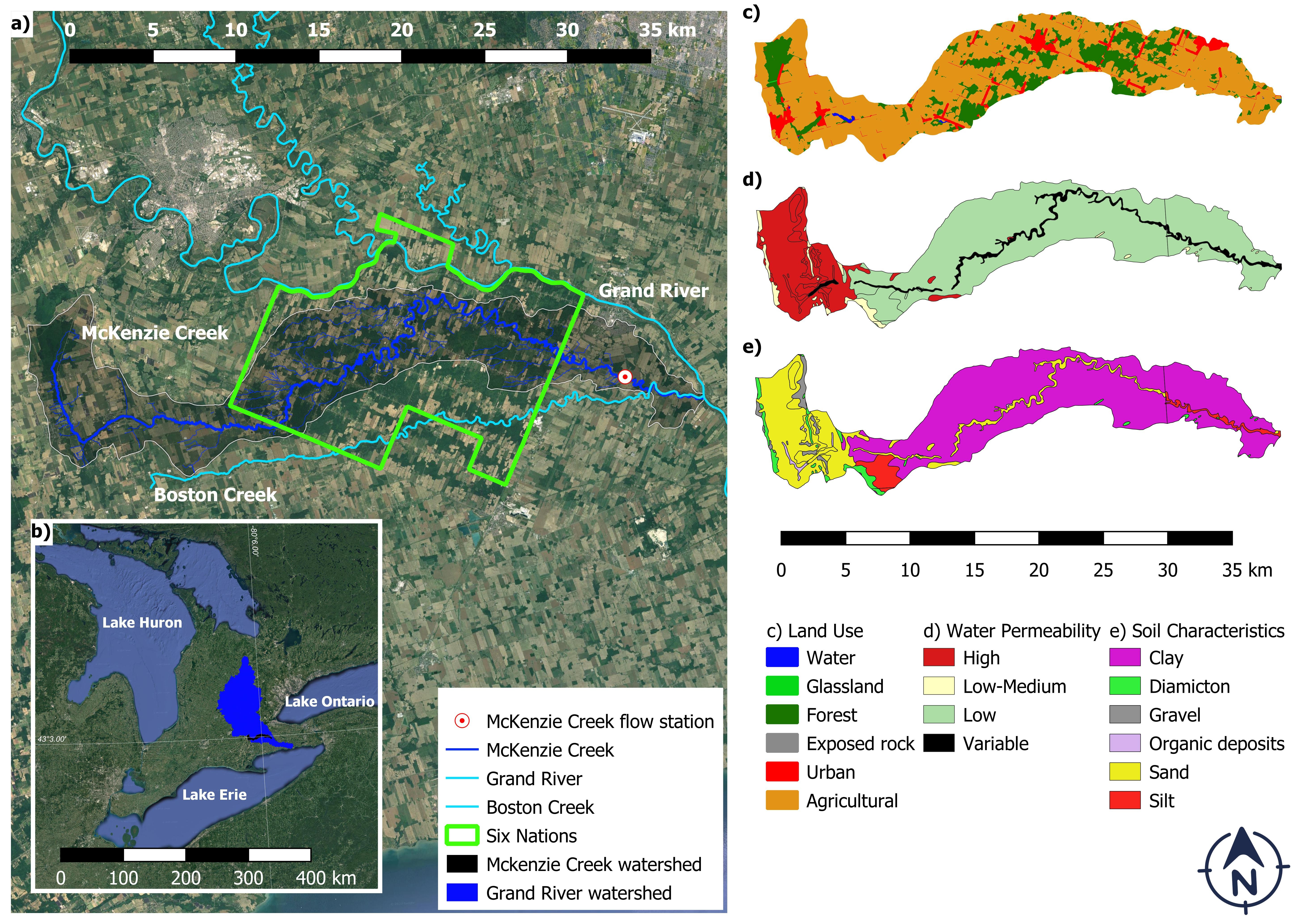
This led to a focus on the McKenzie Creek subwatershed, which was understudied compared to the Grand River watershed, according to Tariq Deen, lead author of the study at McMaster University.

Map of the study area for “Blue and Green Water Scarcity in the McKenzie Creek Watershed of the Great Lakes Basin.” Credit: Dr. Tariq Deen

“That’s why that project was so beneficial in terms of process, because traditional ecological knowledge was the foundation of it,” said Smith.

Traditional ecological knowledge incorporates Western and Indigenous knowledge together in dialogue, Martin-Hill said, to better understand the environment.

The McMaster University study based its projections of water scarcity off of the Intergovernmental Panel on Climate Change (IPCC) Representative Concentration Pathway scenarios 4.5 and 8.5, which signify medium and high greenhouse gas emission and climate warming levels. 

The study by hydrologists and geographers looks at the projected levels for two types of water; blue and green water. While the study anticipates increased levels of water scarcity for both types of water in the future, Six Nations has already experienced these challenges. 

Blue water is fresh water that can be extracted for human activities.

To account for blue water scarcity, the study used two scenarios. The first was a low estimate scenario using monthly agricultural water consumption patterns. The second scenario estimated higher water consumption using the maximum amount of water that could be extracted, assuming this would occur with warming climate trends and an increase in agriculture.

“Under that scenario, we saw that blue water scarcity would increase to a level where it would negatively affect the ecosystem,” said Deen.

Another study on the Grand River watershed from the University of Guelph found similar trends in blue water scarcity considering increasing water demands due to climate change.

“This is a common trend where if you have more withdrawals and more agriculture use, there would be some scarcity that would be coming in,” said author and University of Guelph associate professor in water resources engineering Prasad Daggupati.  

However, water use data for the Six Nations was not included in the water scarcity estimates of the McMaster University study. This is because the Grand River Conservation Authority, who manages the McKenzie Creek watershed, does not collect water use data for the Six Nations. This means the water scarcity levels projected in both blue water scenarios are a low estimate.

“Under climate change scenarios, we saw that green water scarcity would increase throughout the next century,” Deen said.

Similar future patterns for green water scarcity were also found in the University of Guelph study, which used the same Representative Concentration Pathways to account for future impacts of climate change. 

Green water is the type of water that remains in the soil for plant growth.

“Moving into the future, obviously with increased precipitation, there would be more evapotransportation happening up, which would result in having less soil water available, which is green water,” said Daggupati.

Evapotranspiration is the process where water on land and in plants evaporates into the air.  

On top of agriculture and climate factors, corporations like Nestlé and BlueTriton have a history of extracting water without consulting and securing consent from Six Nations.

“We believe there are good veins of water that are much deeper than what wells were dug to, and that’s the water that Nestlé had been taking which we didn’t know about – 3.6 million liters every day for the last decade,” Martin-Hill said. 

The Six Nations pursued legal action and were able to get Nestlé and BlueTriton to stop their water extraction operations under previous laws requiring Indigenous consultation.

“The problem however has been made much worse because of the Bill 5 that the new federal government and Doug Ford passed so that they can bypass any kind of consultation for development, such as water extraction,” Martin-Hill said. 

According to Smith, this is a big issue because 70% of the community relies on groundwater. This issue is further exacerbated by the potential for wells running dry and the inability to support the agriculture that a lot of people at Six Nations rely on.

“I think our people have a problem with the way Western science compartmentalizes and silos things such as water,” Martin-Hill said. “We see ourselves as a part of the natural world.”

The post Climate change is worsening water crisis for Canada’s largest First Nations population appeared first on Great Lakes Now.

Original Article

Great Lakes Now

Great Lakes Now

https://www.greatlakesnow.org/2026/03/04/climate-change-is-worsening-water-crisis-for-canadas-largest-first-nations-population/

Mia Litzenberg, Great Lakes Now

The 2026 sturgeon season on Black Lake in Michigan lasted all of 48 minutes before the annual quota – six – was reached. There were 653 anglers competing for them.

The post Conservation, research and community collaboration aid in successful 2026 Black Lake sturgeon season first appeared on Great Lakes Echo.

Original Article

Great Lakes Echo

Great Lakes Echo

https://greatlakesecho.org/2026/03/03/conservation-research-and-community-collaboration-aid-in-successful-2026-black-lake-sturgeon-season/

Anna Ironside

By Juanpablo Ramirez-Franco, WBEZ

This coverage is made possible through a partnership between WBEZ and Grist, a nonprofit environmental media organization.

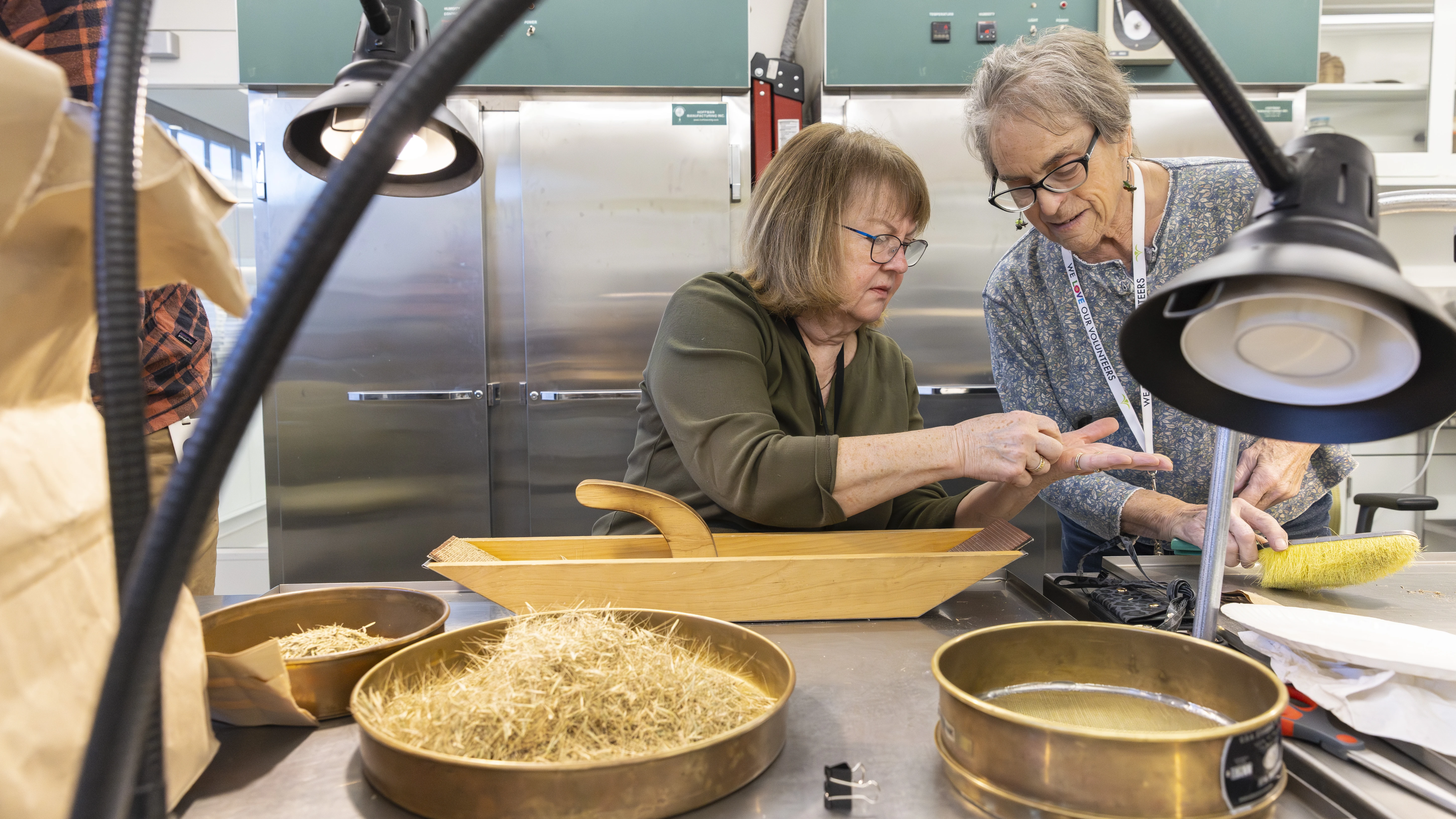
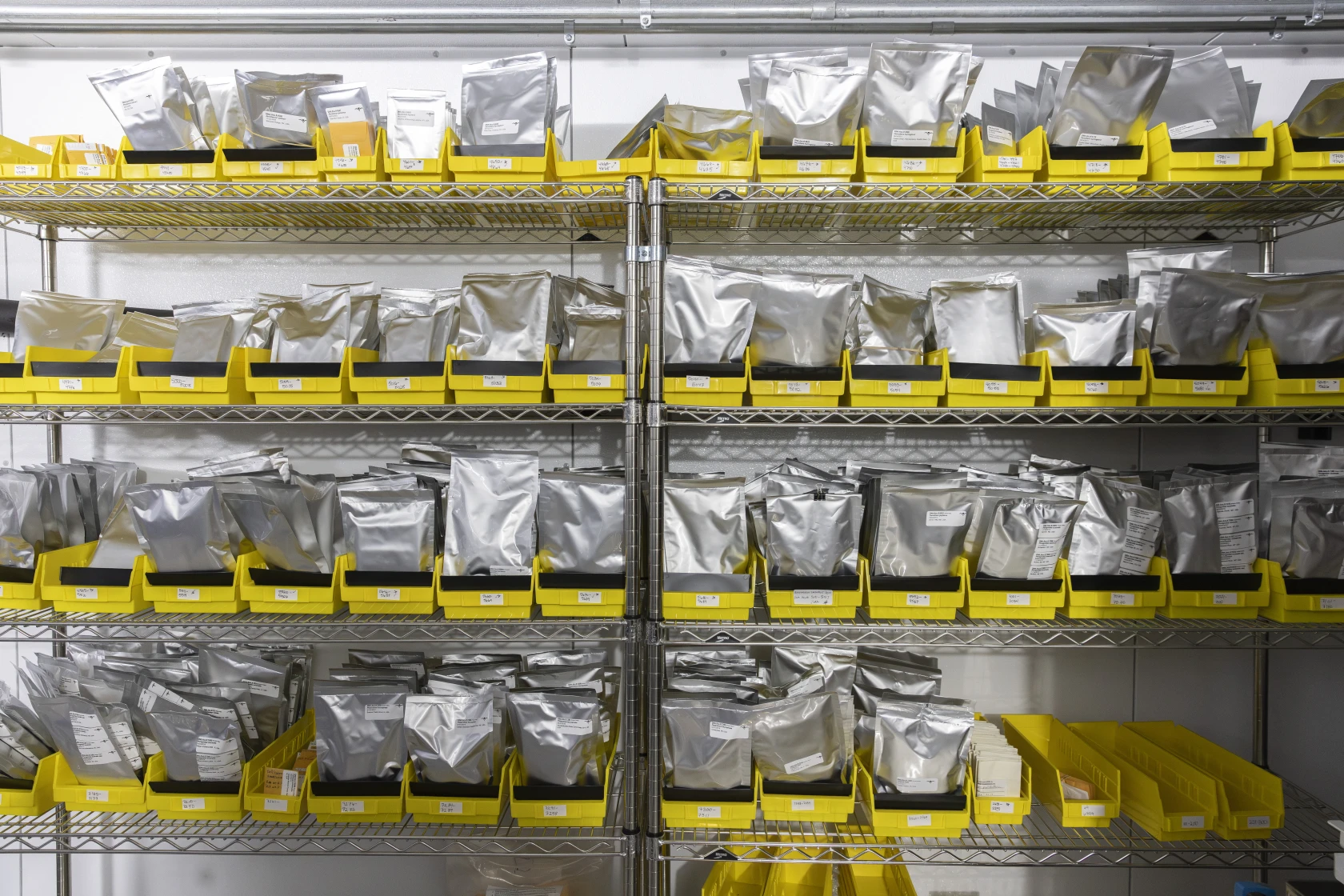
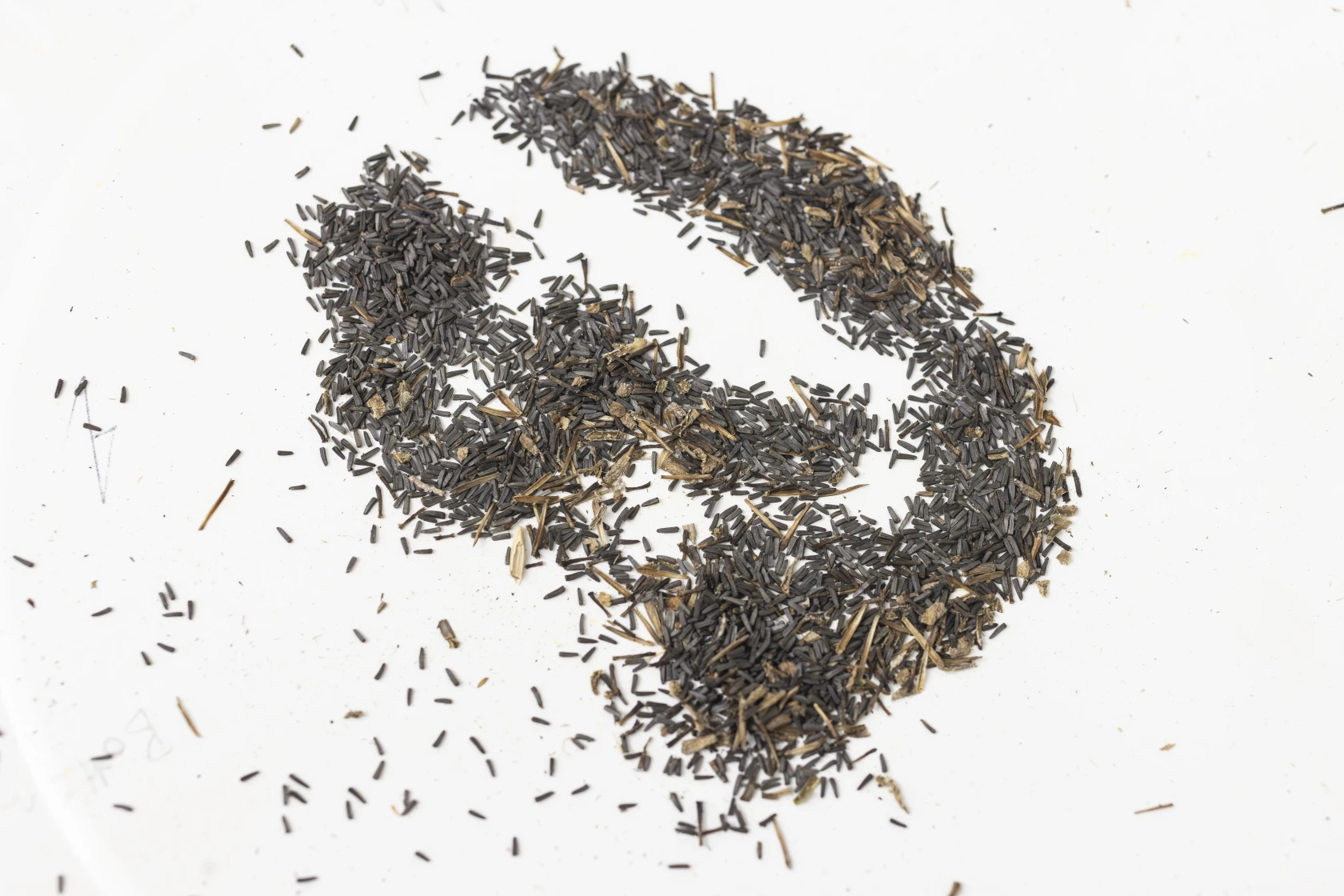
Under the warm light of a hanging lamp, Marty Landorf carefully crumbled the dried flower head of a black-eyed Susan between her fingers, teasing apart the chaff to uncover its puny black seeds. Each one was destined for long-term cold storage alongside roughly 46 million other seeds at the Chicago Botanic Garden.

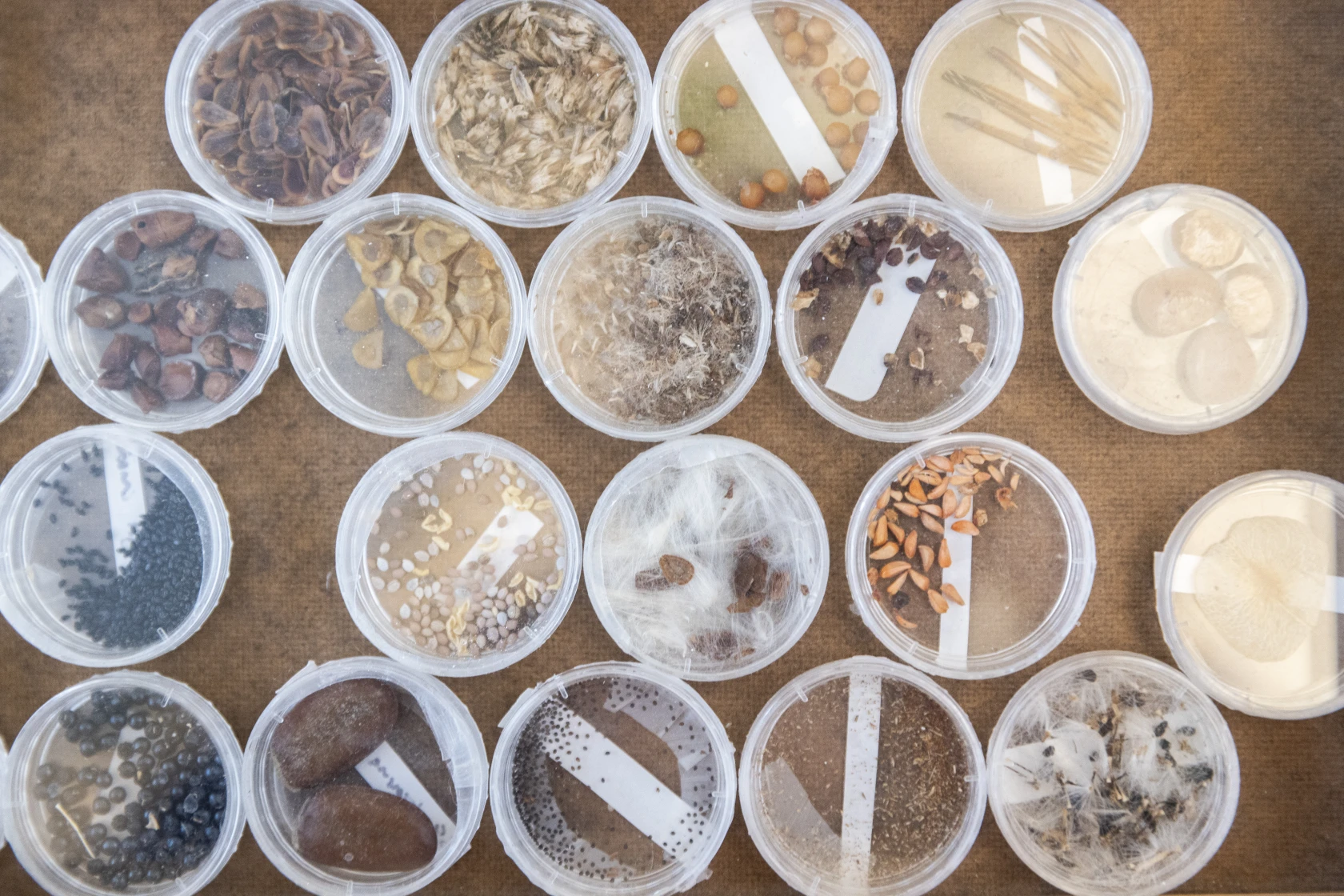
Every seed in the garden’s vault is different. Some seeds have hooks. Others verge on microscopic. A few carry a sharp, deterring scent. And some, like the airborne seeds of the milkweed, the host plant for monarch caterpillars, are fastened to silky fluff that drifts everywhere, hitching rides on volunteers’ clothes and following them home.

“Fluff is fun,” Landorf said laughing, seated alongside five other volunteers cleaning, counting, and sorting seeds at a long metallic table in the garden’s seed bank preparation lab.

For all their variation, these seeds share a common trait: They’re native to the Midwest. These species genetically adapted over thousands of years and sustain the region’s ecosystems. That evolutionary inheritance makes them indispensable for restoring the nation’s remaining prairies, wetlands, and woodlands.

Seeds displayed at the seed bank in the Carr Administrative Center of the Chicago Botanic Gardens on February 10, 2026. | Manuel Martinez/WBEZ

The problem: Native seeds are in short supply. And climate change is intensifying demand.

“Climate change is affecting our weather and the frequency of natural disasters,” said Kayri Havens, chief scientist at the Chicago Botanic Garden. “Wildfires becoming more common, hurricanes becoming more common — that increases the need for seed.”

In 2024, the Chicago Botanic Garden, a 385-acre public garden and home to one of the nation’s leading plant conservation programs, helped launch the Midwest Native Seed Network, a first step in improving the region’s fragile seed supply. The coalition now includes roughly 300 restoration ecologists, land managers, and seed growers across 150 institutions in 11 states. Together, they are researching which species are most in demand, where they are likely to thrive, and what it will take to produce them at scale and get them in the ground.

The collaborative is compiling information on seed collection, processing, germination, and propagation while identifying regional research gaps and planning collaborative projects to close them. For example, the network is currently collecting research on submerged aquatic plants such as pondweeds, and other species that are challenging to germinate, like the bastard toadflax, a partially parasitic perennial herb.

“We’re addressing these local, regional, and national shortages of native seed that are really just hindering our ability to restore really diverse habitats, build green infrastructure, and support urban gardens,” said Andrea Kramer, director of restoration at the Chicago Botanic Garden.

Sarah Hollis-research assistant at the Chicago Botanic Gardens in Highland Park Illinois tours the seed bank in the Carr Administrative Center on February 10, 2026. | Manuel Martinez/WBEZ

Last year, the network undertook its first major project: a large-scale survey of more than 50 partners across the region. The results were stark. More than 500 are effectively unavailable for restoration. In some cases, it’s because no one grows them. In others, the seeds are available, but the cost — even at a couple of dollars per packet — becomes prohibitive when restoration projects require thousands of pounds. And for certain finicky species, the bottleneck is technical: Researchers and growers still don’t fully understand how to germinate them reliably or help them thrive in restoration settings.

Kramer said that ultimately the goal is to connect the people who need seeds with those who know how to grow them. While the network does not sell seeds, it works with organizations and partners that do. “We are using the network to help elevate what we all know and share what we know to make it easier,” she said.

The shortage itself is not new. In 2001, following sweeping wildfires in the West, Congress tasked federal agencies, including the Bureau of Land Management and the U.S. Forest Service — which combined manage approximately one-fifth of the nation’s public lands — to craft an inter-agency, public-private partnership to increase the availability of native seeds. But according to a 2023 report, which identified the lack of native seeds as a major obstacle for ecological restoration projects across the United States, those efforts remain unfinished.

Wildfires have scorched more than 170 million acres in the U.S. between 2000 and 2025, according to the National Interagency Fire Center. In 2020 alone, the Bureau of Land Management purchased roughly 1.5 million pounds of seed to rehabilitate burned landscapes. In a bad fire year, the agency can buy as much as 10 million pounds.

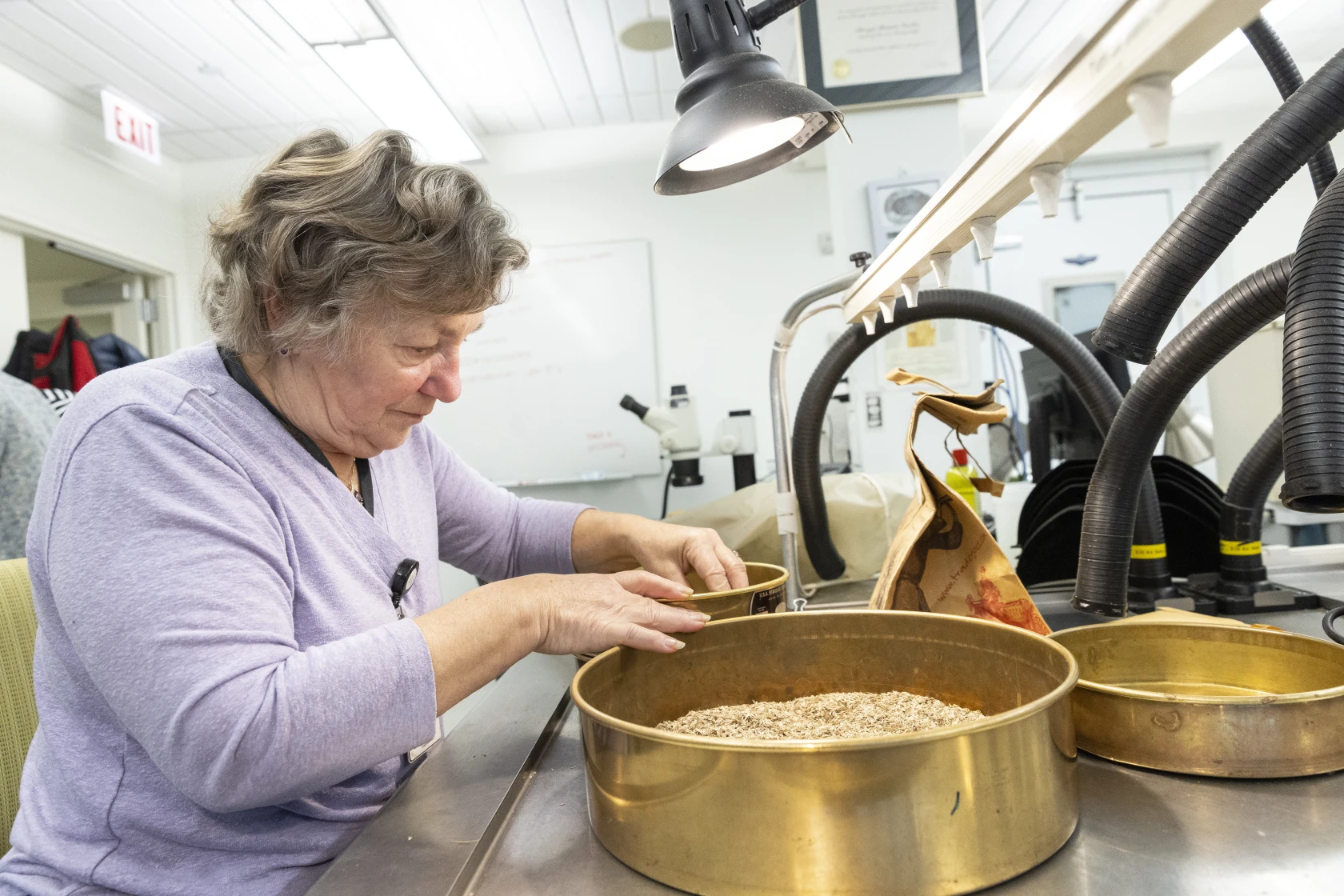
Marta Raiff, a volunteer, at the Chicago Botanic Gardens in Highland Park Illinois works on separating the seeds from the chaff at the seed bank in the Carr Administrative Center on February 10, 2026. | Manuel Martinez/WBEZ

The 2021 Bipartisan Infrastructure Law dedicated $1.4 billion for ecosystem restoration over five years, including $200 million for the National Seed Strategy, a coalition of 12 federal agencies and various private partners established in 2015 to provide genetically diverse native seeds for restoration. The following year, the Inflation Reduction Act invested nearly $18 million to develop an interagency seed bank for native seeds. And in 2024, the Interior Department announced an initial round of $1 million for a national seed bank for native plants.

“The U.S. does have a major seed bank run by the [Department of Agriculture], and it mostly banks crops,” said Havens, the scientist at the Chicago Botanic Garden.“But we don’t have that kind of infrastructure in place for native seed.”

Momentum for establishing a native seed bank stalled following funding cuts by the Trump administration. In early 2025, the Department of Government Efficiency cut 10 percent of the staff at the National Plant Germplasm System, which is home to one of the largest and most diverse plant collections in the world.

Marty Landorf, a volunteer, at the Chicago Botanic Gardens in Highland Park Illinois works on separating the seeds from the chaff at the seed bank in the Carr Administrative Center on February 10, 2026. | Manuel Martinez/WBEZ

“If something isn’t supported on a national level, then it becomes incumbent on states and regions to do that kind of work,” Havens said. “So that’s why we’re focusing right now in the Midwest.”

The network is the first of its kind in the Midwest, though similar initiatives have been active elsewhere in the country for years. Today, there are more than 25 similar networks operating across the U.S. In the western United States, these coalitions have come together in response to post-wildfire restoration projects.

“One of the reasons why we were among the first is because of this federal land ownership that we have in the West, whereas in the Midwest, it’s more private land,” said Elizabeth Leger, a professor at the University of Nevada in Reno and co-founder of the Nevada Native Seed Partnership. More than 90% of all federal land is located in 11 western states.

Kramer said she hopes to run the seed availability survey again in 20 years and get a different response.

“I want them to say, ‘We have access to all the seed we need,’” said Kramer. “And we can move on to the next challenging question, like, ‘Why isn’t the seed establishing in my restoration? Or, how do we manage the next challenge coming with climate change?’”

This story has been updated with the correct spelling of Elizabeth Leger’s name.

The post A network is racing to save the Midwest’s native seeds appeared first on Great Lakes Now.

Original Article

Great Lakes Now

Great Lakes Now

https://www.greatlakesnow.org/2026/03/03/a-network-is-racing-to-save-the-midwests-native-seeds/

WBEZ

This winter’s extreme conditions along New York’s Great Lakes are amplifying the natural action of wind, water, ice, and storms that can cause significant shoreline erosion and economic damage to coastal businesses and personal properties, structures, and operations. New York Sea Grant is encouraging shoreline property owners to reach out for free assistance in planning how to identify the best options for remediation and restoration from winter’s impact. Read the full story by the Finger Lakes Times.

Original Article

Great Lakes Commission

Great Lakes Commission

https://www.glc.org/dailynews/20260302-ny-erosion

Autumn McGowan

The fight over mining near the Boundary Waters Canoe Area Wilderness in Minnesota has reached a critical turning point as the U.S. Senate prepares to take up H.J. Res. 140. This resolution seeks to overturn the 20-year mineral withdrawal that currently protects roughly 225,000 acres of the Superior National Forest within the Rainy River watershed. Read the full story by Quetico Superior Wilderness News.

Original Article

Great Lakes Commission

Great Lakes Commission

https://www.glc.org/dailynews/20260302-boundarywaters-mining

Autumn McGowan

As federal trappers remove thousands of beavers each year — including from prized trout streams — Wisconsin regulators face calls to weigh the critter’s flood-control benefits against long-standing views of them as a nuisance. Read the full story by Wisconsin Watch.

Original Article

Great Lakes Commission

Great Lakes Commission

https://www.glc.org/dailynews/20260302-beavers

Autumn McGowan

As boating season approaches, the Ohio Department of Natural Resources and the Ohio Clean Marinas Program are reminding boaters to recycle shrink wrap this spring instead of having it end up in landfills or waterways. Read the full story by Spectrum News 1.

Original Article

Great Lakes Commission

Great Lakes Commission

https://www.glc.org/dailynews/20260302-boaters-shrinkwrap

Autumn McGowan

About 4,300 swimmers gathered at Chicago’s North Avenue Beach for the 26th annual Polar Plunge into the 35-degree Lake Michigan, put on by Special Children’s Charities to raise money for Special Olympics Illinois. Read the full story by the Chicago Sun-Times.

Original Article

Great Lakes Commission

Great Lakes Commission

https://www.glc.org/dailynews/20260302-chicago-polar-plunge

Autumn McGowan