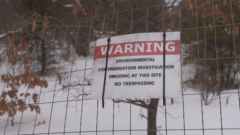
Why should we care about invasive species?
Experts explain the impact of three of the most unwanted species in Ontario, Canada. Read the full story by CBC News.
Great Lakes Commission
https://www.glc.org/dailynews/20220307-invasive-species
Experts explain the impact of three of the most unwanted species in Ontario, Canada. Read the full story by CBC News.
Great Lakes Commission
https://www.glc.org/dailynews/20220307-invasive-species
Residents of Michigan can expect to experience more frequent torrential downpours, heavy lake effect snowstorms, flooded homes and streets, oppressive heat waves, crop failures, and more. Read the full story by MLive.
Great Lakes Commission
https://www.glc.org/dailynews/20220307-climate
The state of Michigan last week announced that 31 projects will share $3.6 million in grants through the Michigan Invasive Species Grant Program. Read the full story by the Oscoda Press.
Great Lakes Commission
https://www.glc.org/dailynews/20220307-invasive
Secretary of Interior Deb Haaland and Ohio Congressperson Marcy Kaptur emphasized the importance of conserving wildlife and growing the U.S. Fish and Wildlife Service. Read and hear the full story by WTOL– TV – Toledo, OH.
Great Lakes Commission
https://www.glc.org/dailynews/20220307-wetlands
Current Watches, Warnings and Advisories for Brown (WIC009) Wisconsin Issued by the National Weather Service
https://alerts.weather.gov/cap/wwacapget.php?x=WI1263E8397FFC.SpecialWeatherStatement.1263E83A09E0WI.GRBSPSGRB.678500c005046086d6b3e5f3170d0588
Current Watches, Warnings and Advisories for Brown (WIC009) Wisconsin Issued by the National Weather Service
https://alerts.weather.gov/cap/wwacapget.php?x=WI1263E8390EB4.SpecialWeatherStatement.1263E83994B0WI.GRBSPSGRB.678500c005046086d6b3e5f3170d0588
The bothersome gypsy moth will now be known as the spongy moth. The Entomological Society of America made the change because the word “gypsy” is considered a derogatory slur against the Romani people. The word was dropped from its list of common names last July and the new name was just announced.
The post Invasive species now called spongy moth first appeared on Great Lakes Echo.Great Lakes Echo
http://greatlakesecho.org/2022/03/07/2147874/
Current Watches, Warnings and Advisories for Brown (WIC009) Wisconsin Issued by the National Weather Service
https://alerts.weather.gov/cap/wwacapget.php?x=WI1263E828DE90.FloodAdvisory.1263E8296810WI.GRBFLSGRB.9242911f9d3c99f7021ea55eab1f2507
Current Watches, Warnings and Advisories for Brown (WIC009) Wisconsin Issued by the National Weather Service
https://alerts.weather.gov/cap/wwacapget.php?x=WI1263E82881FC.FloodAdvisory.1263E828F2E0WI.GRBFLSGRB.63b51a1ac0ea7c9eda650357ae10a813
Current Watches, Warnings and Advisories for Brown (WIC009) Wisconsin Issued by the National Weather Service
https://alerts.weather.gov/cap/wwacapget.php?x=WI1263E81C5BD4.SpecialWeatherStatement.1263E828CBD0WI.GRBSPSGRB.9df2a60c455fa926c712867f418f2f04
Current Watches, Warnings and Advisories for Brown (WIC009) Wisconsin Issued by the National Weather Service
https://alerts.weather.gov/cap/wwacapget.php?x=WI1263E81AE920.SpecialWeatherStatement.1263E81B3740WI.GRBSPSGRB.5199cfc5720e987df04b1ced99c804a1
Current Watches, Warnings and Advisories for Brown (WIC009) Wisconsin Issued by the National Weather Service
https://alerts.weather.gov/cap/wwacapget.php?x=WI1263E81A5708.SpecialWeatherStatement.1263E81ACDC8WI.GRBSPSGRB.bc3f97c0948dfb2ef4d7d7bac9c3579f
Current Watches, Warnings and Advisories for Brown (WIC009) Wisconsin Issued by the National Weather Service
https://alerts.weather.gov/cap/wwacapget.php?x=WI1263E819220C.SpecialWeatherStatement.1263E81A73F0WI.GRBSPSGRB.bc3f97c0948dfb2ef4d7d7bac9c3579f
THIS WEEK: Freshwater Heroes Honored on World Water Day, March 22–Register Today! + Study Looks at Climate Change Impacts to Great Lakes During Winter + Water Watchers Get Wellness and Organization Support + Drinking Water Contaminated near Canadian Forces Detachment Mountain View

Join us to recognize our amazing Freshwater Hero award recipients at the Virtual Online Ceremony – Tuesday, March 22nd, 2022, 12-1pm (ET). The event coincides with World Water Day and will celebrate selected people, organizations, and communities throughout the Great Lakes Region who are committed to protecting our earth’s precious freshwater resources. This free event will inspire you and give you hope as we share stories of a few people, organizations, and communities making a difference. Register here.
Climate change is impacting ice cover on the Great Lakes. Extreme early freezes, early thaws and extreme fluctuations in temperature are causing thinner average ice cover overall. Professor David Richardson of the Global Lake Ecological Observatory Network warns that “Less ice during the winter means warmer lakes during the summer”, which could lead to bigger algal blooms and the loss of fish species. A new cross border study with American and Canadian scientists will collect winter climate data on all five of the Great Lakes to provide a better understanding of the impacts of extreme fluctuations and more.
As we approach the two-year anniversary of the pandemic, we are reminded of the importance of continuing healthy habits for wellness. Freshwater Future’s Water Watchers & Wellness Program provides a space for leaders and volunteers with community groups to practice wellness and stay up to date with insightful information for managing nonprofits. This is your last opportunity to join! The next session will focus on Getting & Managing Grants, (Thursday, March 24, 2022 at 11:30 am ET), Register Now.
Toxic chemicals, benzene, per- and polyfluoroalkyl substances (PFAS) have been found in wells near the Canadian Forces Detachment Mountain View. Private wells around the Canadian Forces Detachment have tested for PFAS (called forever chemicals for their persistence) and benzene in amounts above the provincial guidelines but below federal guidelines. Firefighting foams are believed to be the source of the pollution. All affected properties are being provided bottled water until a long-term solution can be found.
Blog – Freshwater Future
https://freshwaterfuture.org/freshwater-weekly/freshwater-future-weekly-march-4-2022/

By Lester Graham, Michigan Radio
The Great Lakes News Collaborative includes Bridge Michigan; Circle of Blue; Great Lakes Now at Detroit Public Television; and Michigan Radio, Michigan’s NPR News Leader; who work together to bring audiences news and information about the impact of climate change, pollution, and aging infrastructure on the Great Lakes and drinking water.
Great Lakes Now
https://www.greatlakesnow.org/2022/03/gas-oil-industry-price-hikes-enbridge-line-5-shut-down/
A shipwreck dating back to the 1890s has been discovered in Lake Superior. The Great Lakes Shipwreck Historical Society announced Thursday that the 172-foot schooner-barge Atlanta was found 35 miles off Deer Park, Michigan. Read the full story by MLive.
Great Lakes Commission
https://www.glc.org/dailynews/20220304-shipwreck
State Assembly member Patrick Burke has introduced legislation in Albany to create a Great Lakes Bill of Rights, that would secure legal rights for the entire ecosystem, and give people and nature a role in the decision-making process regarding current and future Great Lakes projects. Read the full story by WBFO – Buffalo, NY.
Great Lakes Commission
https://www.glc.org/dailynews/20220304-bill
The U.S. Army Engineer Research and Development Center and the U.S. Army Corps of Engineers are collaborating with U.S. Environmental Protection Agency and the U.S. Geological Survey to find solutions to water quality issues within the Great Lakes. Read the full story by The Vicksburg Post.
Great Lakes Commission
https://www.glc.org/dailynews/20220304-water-quality
All boaters in Ontario are now required by law to clean their boats before they take them out on the water. Read the full story by Great Lakes Echo.
Great Lakes Commission
https://www.glc.org/dailynews/20220304-watercraft
The Great Lakes Marsh Monitoring Program began more than 25 years ago, and to this day, continues to work with both professional and citizen scientists to monitor the health of wetlands in the region. Read the full story by the Toronto Star.
Great Lakes Commission
https://www.glc.org/dailynews/20220304-wetlands
President Biden was in Superior, Wisconsin Wednesday to publicize his infrastructure law and discuss the nation’s need for infrastructure investment, and the billion-dollar investment dedicated to Great Lakes restoration. Read the full story by KAAL-TV – Austin, MN.
Great Lakes Commission
https://www.glc.org/dailynews/20220304-biden
For the first time in Michigan history, the potential climate impacts of a proposed industrial installation were allowed to be considered during a permit hearing under the Michigan Environmental Protection Act. Read the full story by the Petosky New-Review.
Great Lakes Commission
https://www.glc.org/dailynews/20220304-line-5
What happens when the warming climate upends your way of life and your livelihood? Anishinaabe-kwe journalist Jolene Banning explored that question with Phillip “Benny” Solomon, a member of Fort William First Nation, located on the northern shores of Gitchigumi, otherwise known as Lake Superior. Read the full story by The Narwhale.
Great Lakes Commission
https://www.glc.org/dailynews/20220304-ice
There’s only one legal underground ‘geologic’ nuclear waste storage facility in the world. Another proposed site, on the US-Canada border and just miles from the Great Lakes, is sparking controversy. Read the full story by The Independent.
Great Lakes Commission
https://www.glc.org/dailynews/20220304-nuclear-waste
On Thursday night, Canada’s Ambassador to the U.S. hosted the Great Lakes Day Fireside Chat with discussion on creating a Canadian version of the Great Lakes Restoration Initiative and contributing more to the Great Lakes Fishery Commission. Read the full story WWTV-TV – Cadillac, MI.
Great Lakes Commission
https://www.glc.org/dailynews/20220304-canada
Racine County, Wisconsin
CCO Meeting:
Tuesday, March 29, 2022
Open House:
Tuesday, March 29, 2022, from 4-7pm CT
https://us02web.zoom.us/j/88052699805?pwd=cEp3bkI1d0ZGUGg5ZlZNRGMwRksyZz09
Great Lakes Coastal Flood Study
https://www.greatlakescoast.org/2022/03/04/lake-michigan-community-consultation-officers-meeting-and-open-house-for-racine-county-wisconsin/
Current Watches, Warnings and Advisories for Brown (WIC009) Wisconsin Issued by the National Weather Service
https://alerts.weather.gov/cap/wwacapget.php?x=WI1263E80AF8A8.SpecialWeatherStatement.1263E80C4320WI.GRBSPSGRB.e1ae724017be2a10443f5b652ce3656c
March is a big time for underwater storms. The combination of melting snow, saturated soils, and rain falling on frozen ground means that the most frequent and most severe floods typically occur in March here in Michigan. These floods may carry 100 or even 1000 times as much water as the stream carries on a dry summer day.
The post March: Stormy Weather first appeared on Great Lakes Echo.Great Lakes Echo
http://greatlakesecho.org/2022/03/04/march-stormy-weather/

PFAS, short for per- and polyfluoroalkyl substances, are a group of widespread man-made chemicals that don’t break down in the environment or the human body and have been flagged as a major contaminant in sources of water across the country.
Keep up with PFAS-related developments in the Great Lakes area.
Great Lakes Now
https://www.greatlakesnow.org/2022/03/pfas-wisconsin-weakened-state-standards-trout-contaminated/
It's part of an effort to increase visibility and experiment with news delivery.
The post Echo hits Instagram first appeared on Great Lakes Echo.Great Lakes Echo
http://greatlakesecho.org/2022/03/03/echo-hits-instagram/

By Darlene Superville, Fatima Hussein and Chris Megerian, Associated Press
SUPERIOR, Wis. (AP) — President Joe Biden, struggling to regain his political footing as the midterm elections approach, visited the crucial state of Wisconsin on Wednesday to promote one of his top accomplishments, a bipartisan infrastructure measure that will distribute billions of dollars to fix roads, bridges and other public works.
Great Lakes Now
https://www.greatlakesnow.org/2022/03/ap-biden-cabinet-domestic-agenda/

CHICAGO (AP) —
The Adler Planetarium in Chicago will open this week for the first time since it closed its doors nearly two years ago because of the COVID-19 pandemic.
The famed planetarium on the shores of Lake Michigan will on March 4 reopen, joining the ranks of museums and other institutions that have opened their doors once again in recent days months after the pandemic forced them to close.
Great Lakes Now
https://www.greatlakesnow.org/2022/03/ap-chicago-adler-planetarium-reopening/

Just like the atmosphere and the ocean, lakes can be subject to extreme spikes in temperature, and new research shows that the vast majority of these heatwaves over the past 25 years are the result of human-caused climate change.
Iestyn Woolway – a climate scientist at Bangor University in Wales – and his colleagues analysed satellite data of surface temperatures in lakes around the world, including the Great Lakes, to identify when and where heatwaves occurred since the satellites came online in 1995.
Great Lakes Now
https://www.greatlakesnow.org/2022/03/lake-heatwaves-human-climate-change/
University of Wisconsin-Green Bay research supported in part by Wisconsin Sea Grant has now made it to publication, shedding valuable light on how the bay of Green Bay has changed over time.
“Benthos of Green Bay, Lake Michigan revisited after 40 years: A temporal update and assessment of environmental associations” was published in the Journal of Great Lakes Research and is available online. Until this effort, the benthos of lower Green Bay had not been comprehensively studied since 1978. (The benthos encompasses the organisms found on the bottom, or in the bottom sediments, of a body of water.)

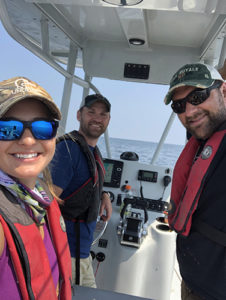
From left to right, Cadie Olson, Chris Houghton and Brandon Falish are shown conducting research on Green Bay. Findings from this work were recently published in the Journal of Great Lakes Research. (Photo: Cadie Olson)
Cadie R. Olson, who worked with UW-Green Bay scientist Chris Houghton on this effort while she was a graduate student, is the paper’s first author. In addition to Olson and Houghton, other contributors include biology professor Patrick Forsythe.
“We are delighted that this collaborative effort among Wisconsin Sea Grant, the Wisconsin Department of Natural Resources, the EPA and UW-Green Bay is being shared through the Journal of Great Lakes Research,” said Olson. “This project has implications for water quality, ecosystem function and management of the Area of Concern. Green Bay continues to prove that is it is a complex and dynamic ecosystem, and benthos are no exception. We hope that this data will be used to help determine water quality criteria, prioritize areas of restoration, and develop our knowledge of benthic responses to introductions of non-native species.”
Houghton expects the work to be widely cited into the future. Yet, he noted, “Our recently published research is really just the tip of the iceberg in understanding the Green Bay benthos and ecosystem. Now that we know how things have changed over the last 40 years, and what organisms are now present, we can do the work understanding how benthic communities support upper trophic levels, from bait fish to yellow perch and walleye, to muskellunge and pelicans. In the future, we will seek to finish our survey in the area north of Oconto and Sturgeon Bay, and continue the collaborations that were developed during this project.”
The Sea Grant-funded project from which the team’s paper sprang was titled “Spatial and temporal distribution of the benthic macro-invertebrate community of Lower Green Bay, 1938-present.” You can find our 2019 coverage of that work here. The team’s research built upon a trove of historical documents that had been assembled by UW-Green Bay professor emeritus Hallett J. “Bud” Harris and are now kept in the campus library.
Olson now works for the Missouri Department of Natural Resources, having completed her master’s in May 2021. “It has been an adjustment going from large lakes to streams, but I’m thrilled that I’m continuing to apply my knowledge of macroinvertebrates and learn more about them in a different ecosystem,” said Olson of the transition.
Learn more about the Green Bay research in a Wisconsin Sea Grant presentation given by Olson and Brandon Falish on Oct. 22, 2020, as part of the “Lake Talks” series.
The post Sea Grant-supported work on the bay of Green Bay published in Journal of Great Lakes Research first appeared on Wisconsin Sea Grant.News Releases | Wisconsin Sea Grant
News Releases | Wisconsin Sea Grant
https://www.seagrant.wisc.edu/news/sea-grant-supported-work-on-the-bay-of-green-bay-published-in-journal-of-great-lakes-research/?utm_source=rss&utm_medium=rss&utm_campaign=sea-grant-supported-work-on-the-bay-of-green-bay-published-in-journal-of-great-lakes-research
Ann Arbor, Mich. – The Great Lakes Commission today issued a request for proposals (RFP) for the 2022 Great Lakes Sediment and Nutrient Reduction Program grant program.
For more than 30 years, the Great Lakes Sediment and Nutrient Reduction Program has provided grants to reduce nutrients and sediments from entering the Great Lakes. This year’s program will continue to help local partners take action to reduce nutrient loads from agricultural watersheds, reduce untreated stormwater runoff, and restore shoreline and streambanks in the Great Lakes basin.
Through the program, nonfederal units of government, tribes, and incorporated nonprofit organizations are eligible to receive grants for up to $200,000, supporting work over a period of up to three years. Applicants are invited to submit proposals for activities associated with one of three project types: 1) agricultural nonpoint; 2) stormwater; and 3) Great Lakes shoreline or streambanks.
The due date for applications is 5:00 p.m. Eastern on April 22, 2022. Applications will be reviewed by representatives from the eight Great Lakes states, plus federal partners at the U.S. Department of Agriculture’s Natural Resource Conservation Service (NRCS) and U.S. Environmental Protection Agency (U.S. EPA). Final decisions on funded projects are anticipated in summer 2022. Selected projects would begin work not later than October 1, 2022.
The Great Lakes Commission has managed the Great Lakes Sediment and Nutrient Reduction Program for more than three decades. Since 2010, the program has benefitted from funding through the Great Lakes Restoration Initiative. Funded projects support progress toward the achievement of GLRI Action Plan objectives and goals. The program is a partnership with NRCS, U.S. EPA, and the Great Lakes states. Please visit www.nutrientreduction.org for more information.
An informational webinar for applicants will be offered on March 24, 2022, at 10:00 a.m. Eastern to discuss funding priorities and the application process. To register for the webinar, visit https://bit.ly/3s746up.
For more information, please contact GLC Program Manager Nicole Zacharda at nzacharda@glc.org or 734-396-6084.
The Great Lakes Commission, led by chair Todd L. Ambs, deputy secretary of the Wisconsin Department of Natural Resources (retired), is a binational government agency established in 1955 to protect the Great Lakes and the economies and ecosystems they support. Its membership includes leaders from the eight U.S. states and two Canadian provinces in the Great Lakes basin. The GLC recommends policies and practices to balance the use, development, and conservation of the water resources of the Great Lakes and brings the region together to work on issues that no single community, state, province, or nation can tackle alone. Learn more at www.glc.org.
Great Lakes Commission
https://www.glc.org/news/glsnrp-030322
New legislation in Ontario can result in a fine if boats are not cleaned properly when they are moved from one body of water and into another. Boaters are now required to drain water from their boat and equipment and remove aquatic plants, animals and algae from boats, equipment, vehicles and trailers, according to the new rules. It is now illegal to place a boat in any body of water if there are aquatic weeds, animals or algae still on it.
The post New Ontario watercraft regulations fight invasive species first appeared on Great Lakes Echo.Great Lakes Echo
http://greatlakesecho.org/2022/03/03/new-ontario-watercraft-regulations-fight-invasive-species/

By Tracy Samilton, Michigan Radio
The Great Lakes News Collaborative includes Bridge Michigan; Circle of Blue; Great Lakes Now at Detroit Public Television; and Michigan Radio, Michigan’s NPR News Leader; who work together to bring audiences news and information about the impact of climate change, pollution, and aging infrastructure on the Great Lakes and drinking water.
Great Lakes Now
https://www.greatlakesnow.org/2022/03/trial-lawsuit-engineering-flint-water-crisis/

Steadier federal funding instead of annual appropriations coming out of debates, direct investment for local communities to meet federal mandates, a dual focus on environmental clean up and economic development.
Those would be three benefits of a Great Lakes Authority, according to Rep. Marcy Kaptur (D-OH) who spoke today during the Great Lakes Week session organized by the Great Lakes Commission.
Great Lakes Now
https://www.greatlakesnow.org/2022/03/great-lakes-authority-proposed-ohio-congress-marcy-kaptur/
The Great Lakes Commission and other partners will meet with Congress this week to discuss to talk about its priorities, including invasive species, maritime transportation, coastal resiliency, and coordination with Canada. Read and hear the full story by WDET – Detroit, MI.
Great Lakes Commission
https://www.glc.org/dailynews/20220302-funding
The 2021 Michigan State of the Great Lakes report was released Monday by the Michigan Department of Environment, Great Lakes, and Energy’s Office of the Great Lakes. Read the full story by the Manistee News Advocate.
Great Lakes Commission
https://www.glc.org/dailynews/20220302-sogl-report
Researchers from U.S. and Canadian universities and government agencies have been collecting samples to boost knowledge of what happens in the five great lakes when they’re covered partially or completely with ice. Read the full story by The Associated Press.
Great Lakes Commission
https://www.glc.org/dailynews/20220302-ice-research
New York Governor Hochul announced the availability of $2 million of federal funding available for fisheries on the Great Lakes who were impacted by the COVID-19 pandemic. Read the full story by WWTI-TV – Watertown, NY.
Great Lakes Commission
https://www.glc.org/dailynews/20220302-fisheries-funding
The Michigan Department of Natural Resources this week announced new fishing regulations which will begin to go into effect April 1. Read the full story by Great Lakes Now.
Great Lakes Commission
https://www.glc.org/dailynews/20220302-fishing-regulations
A major report from the UN’s Intergovernmental Panel on Climate Change released Monday finds that global warming is happening even faster than expected. In the Midwest, extreme flooding expected to increase in frequency and intensity. Read the full story by WXYZ-TV – Detroit, MI.
Great Lakes Commission
https://www.glc.org/dailynews/20220302-climate-report
A retired 50-foot state research vessel will sail into a new mission as an educational tool in Alpena, Michigan. The vessel will help visitors can learn about aquatic invasive species in the Great Lakes and their effects on fisheries. Read the full story by MLive.
Great Lakes Commission
https://www.glc.org/dailynews/20220302-research-boat
The Great Lakes, including areas like Manitoulin Island, are expected to see a major increase in cruise ship sailings compared to figures from 2019, the last year cruise ships sailed on the Great Lakes. Read the full story by The Manitoulin Expositor.
Great Lakes Commission
https://www.glc.org/dailynews/20220302-cruise-ships
On March 1, Transport Canada said that it will soon ban Russian ships and fishing vessels from entering Canadian ports and internal waters, including the Great Lakes and St. Lawrence Seaway. Read the full story by WWTI – TV – Watertown, NY.
Great Lakes Commission
https://www.glc.org/dailynews/20220302-russian-ships
On the heels of his State of the Union address Tuesday, President Joe Biden will visit Superior, Wisconsin, to tout the federal infrastructure law that will bring billions to Minnesota and Wisconsin, including to the interchange that connects the two states. Read the full story by WCCO – TV – Minneapolis, WI.
Great Lakes Commission
https://www.glc.org/dailynews/20220302-biden-visit

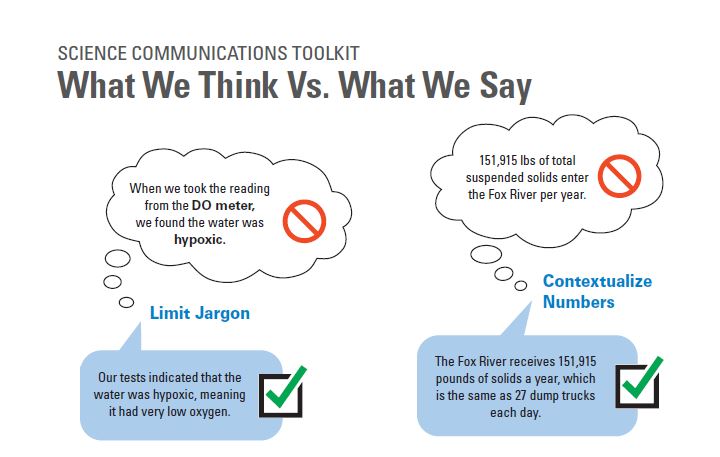
An example of information provided by the Science Communications Toolkit.
Looking for help communicating about science to a nonscientist audience? A new publication is available to help students and researchers. Written by Amy Lentz, a graduate of the University of Wisconsin-Milwaukee’s School of Freshwater Sciences professional master’s program and edited by Wisconsin Sea Grant Social Science Outreach Specialist Deidre Peroff, this free, downloadable “Science Communications Toolkit” offers tips to help make science more understandable to audiences such as elected officials, possible employers, grade-school students and reporters.
In addition, the publication contains suggestions for developing effective graphs, PowerPoint slides and social media messages. Funding was provided by Wisconsin Sea Grant in partnership with the University of Wisconsin-Green Bay in Manitowoc and the Southeastern Wisconsin Watersheds Trust, Inc.
Take a look and make your science stand out.
The post New science communication tool available first appeared on Wisconsin Sea Grant.News Releases | Wisconsin Sea Grant
News Releases | Wisconsin Sea Grant
https://www.seagrant.wisc.edu/news/new-science-communication-tool-available/?utm_source=rss&utm_medium=rss&utm_campaign=new-science-communication-tool-available
Researchers in Ohio are getting ready to expand one of seven treatments for a widespread disease that kills beech trees. The invasive beech leaf disease causes dark striping on leaves and makes them thick, leathery and disfigured before killing the tree.
The post Hope spreads for infected trees first appeared on Great Lakes Echo.Great Lakes Echo
http://greatlakesecho.org/2022/03/02/hope-spreads-for-infected-trees/