By Vivian La, IPR

This story is made possible through a partnership between Interlochen Public Radio and Grist, a nonprofit environmental media organization.


No one wants to drive in an ice storm.

But one year ago — during the devastating northern Michigan ice storm that knocked down trees, snapped utility poles, and took out power for thousands — Wanda Whiting had to get her husband to a hospital. He was having a heart episode and calling an ambulance to their rural home in Lewiston would take too long. She had no choice but to brave the roads.

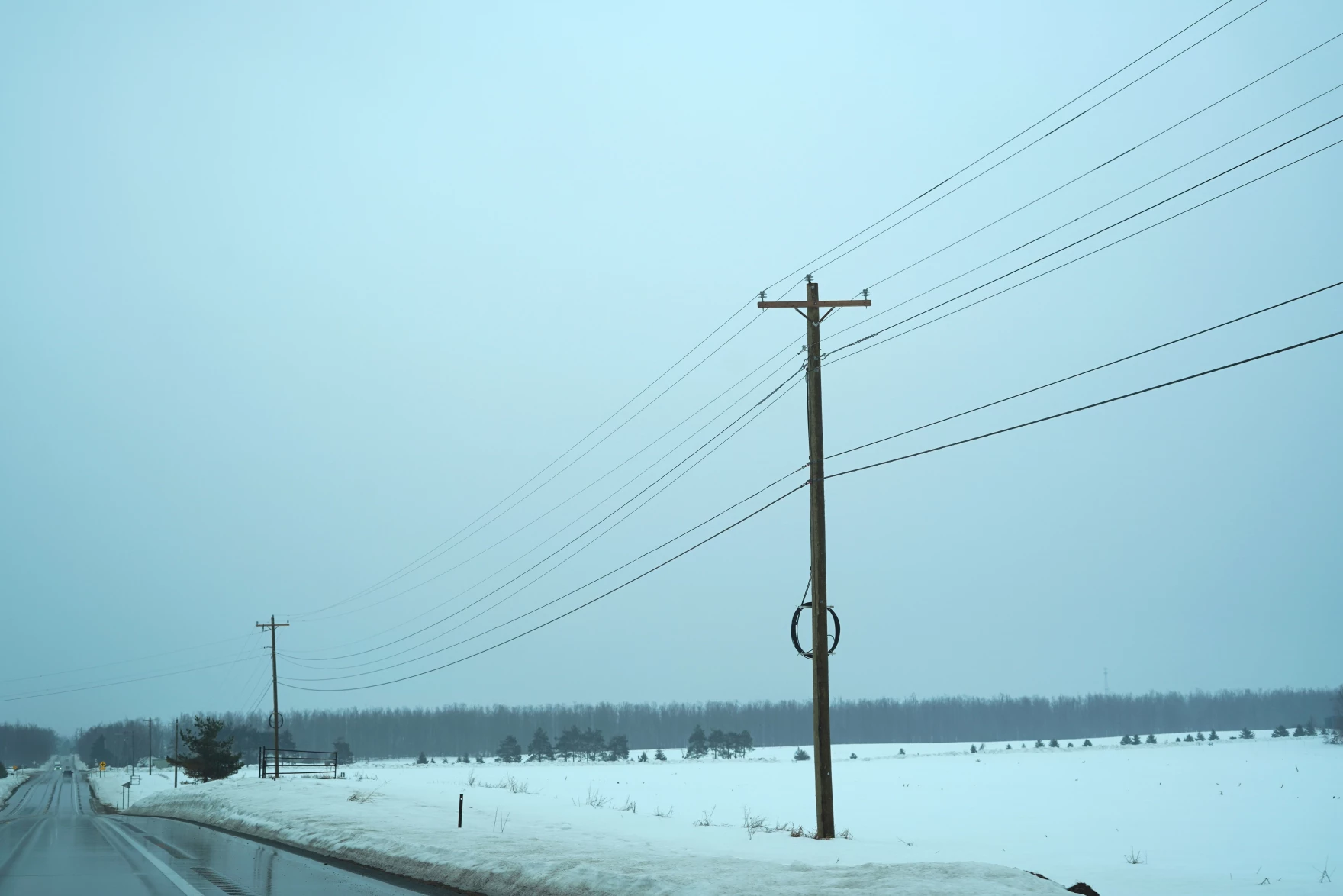
While driving the route almost exactly a year later, Whiting recalled the mess of dropped power lines and broken poles “like matchsticks” that littered the highway shoulder along the 20-mile stretch to Gaylord

“These were all down. Everything was down. These poles are all broken, snapped,” she said. Whiting remembered getting lost on dark roads with dead streetlights. She was trying to meet an ambulance at a halfway point. Arriving at the rendezvous parking lot, she had to drive across thick wires that had fallen on the roadway.

Her husband made it to the hospital. And eventually, in the weeks that followed, the power lines and poles went back up.

But Whiting can’t help but wonder how those wires will fare whenever she sees a forecast for snow and ice. And if there’s an alternative solution.

“And if it meant going underground, then by God, go underground,” she said.

After the storm

Burying power lines often comes up as a potential solution for preventing outages and minimizing the costs of storm recovery. And for good reason — underground wires are proven to increase reliability, according to researcherselectric utilities and regulators.

Now, as recovery from the ice storm continues a year later, some residents are calling for a more reliable grid that can withstand worsening extreme weather.

But burying lines is expensive, and utilities say those costs often outweigh potential benefits.

Last year, the storm knocked out power for some 200,000 people. Recovery cost utilities hundreds of millions of dollars, leading to increased electric bills for ratepayers across the region, as emergency federal aid hit delays.

The state’s largest electric co-op, Great Lakes Energy Cooperative, saw more than 66,000 power outages last year from the storm, and recovery costs totaled more than $150 million. In response to the storm, the co-op implemented a policy in December that requires any new lines to be installed underground, in an effort to increase resiliency.

“I think there’s reliability benefits for our membership, because it’s going to help prevent outages over the long term,” said Shari Culver, chief operating officer for Great Lakes Energy.

IPR reached out to the other hard-hit electric cooperative — Presque Isle Electric & Gas Co-Op — for comment about burying lines, but they declined due to ongoing discussions with federal agencies about pending storm relief funds.

Consumers Energy, another large electric provider in the region, says they hear from customers “consistently” about burying more lines. Last week, the Michigan Public Service Commission approved a $276.6 million rate hike for Consumers Energy — the largest increase in decades — to improve reliability for customers, which includes undergrounding some lines. Regulators said a typical residential customer using 500 kilowatt-hours a month will see an increase of $6.46, or 6.1%, in their monthly bill.

“There’s no better way to improve the resilience of the grid than just to get the lines out of the way of all the trees and ice and wind. Now, it comes at a cost,” said Greg Salisbury, Consumers Energy’s senior vice president of electric distribution. The company estimates it’s about $400,000 per mile to bury a line.

This year, Consumers Energy plans to bury more than 10 miles of lines around the state. That’s a small number, compared to the nearly 100,000 miles in the utility’s system, of which about 15% is already underground.

“Our viewpoint is that each circuit needs to be treated with the right interventions to get the best outcomes for the best cost for those customers,” Salisbury said.

To bury or not to bury

Burying power lines is relatively easier and cheaper with new construction, as crews install other utilities like water or gas. It’s in relocating the existing overhead lines where expenses for construction, labor and materials can add up quickly.

Burying electric lines isn’t a one-size-fits-all approach, either. Smaller utilities like Traverse City Light & Power (TCLP) are dealing with a different environment than rural co-ops, for example. In the city, there are more sidewalks, buildings, streets and other wires.

“There’s just not a lot of room to place that equipment in town without getting easements and such,” said Tony Chartrand, director of electric engineering and operations for TCLP, which has more than 170 miles of electric lines over 16 square miles in the city.

But, Chartrand said, for the municipal electric utility, there are still situations where burying makes more sense than stringing wires from poles. About half of TCLP’s lines are already buried, most running through conduit pipes, which protect wires from the elements or from accidental damage from other utility work.

TCLP tries to be proactive with burying power lines in hard-to-reach areas, like in people’s backyards, Chartrand said. In some cases, burying a residential line is cheaper than the costs of repairing aboveground wires after a tree falls on it.

Still, buried lines present their own challenges if there’s an outage. Unlike the clear visual cue of a branch hanging from overhead wires, problems underground require more equipment to find and fix.

“There’s times where, even if it is in conduit, we can’t just pull the wire out. We actually have to dig it up. And of course, that’s a whole ordeal and takes a lot of time,” Chartrand said.

There’s a lot of attention on grid reliability right now, he said.

“Part of that solution is undergrounding lines. But it’s not necessarily undergrounding everything. It’s trying to balance that cost with the benefit that we’re trying to do,” Chartrand said.

Ice storms and climate change

That balance could get harder to find as extreme weather worsens with climate change. Research suggests that northern Michigan could see more ice storms in the future, as a warming world shifts the range for freezing rain further north.

“Places where it used to be cold, below freezing all the time, it’s not always below freezing anymore,” said Richard B. Rood, a professor emeritus at the University of Michigan who studies how ice and freezing rain are changing.

It often takes big storms, like last year’s, for governments, utilities and people to spend money on planning for a warming world. And Rood sees that as a problem.

“You can’t think of what we’re experiencing as, ‘this is how it used to be, and this is where it will be.’ You are right in the middle of the change here,” Rood said.

Some policy experts say we won’t see more buried lines without significantly bringing down the costs to utilities. Eric Paul Dennis, research associate of infrastructure policy at the Citizens Research Council, said that could involve improving how we coordinate infrastructure projects so you only “dig once.”

“No one thinks that the best option is to operate outdated unreliable infrastructure and just fix it when it goes down,” he said. “But there are trade-offs. Investments must be recovered in rates. No option will be one hundred percent reliable.”

Still, only considering costs to utilities leaves out how much society benefits from having reliable electric service — roads are safer, food doesn’t spoil, people contribute to the economy.

“This is not because the utilities or people who run them don’t care, this is just the system we have,” Dennis said.

The post The northern Michigan ice storm battered the electric grid. Is burying power lines the solution? appeared first on Great Lakes Now.

Original Article

Great Lakes Now

Great Lakes Now

https://www.greatlakesnow.org/2026/03/30/the-northern-michigan-ice-storm-battered-the-electric-grid-is-burying-power-lines-the-solution/

Interlochen Public Radio

The Michigan Department of Natural Resources surveys the Great Lakes fisheries every year between April and November. This information directly informs fisheries management decisions — such as stocking levels or regulated catch limits — and provides data on the success of past actions. Read the full story by the Iron Mountain Daily.

Original Article

Great Lakes Commission

Great Lakes Commission

https://www.glc.org/dailynews/20260330-fish-assessments

Nichole Angell

After a day and a half of the Soo Locks being open, shipping has come to a standstill. Ice conditions and a lack of heavy U.S. Coast Guard icebreakers are creating delays for American shipping and manufacturing. Some U.S. shipping companies have suffered more than 24-hour delays. Read the full story by WLUC – TV – Negaunee, MI.

Original Article

Great Lakes Commission

Great Lakes Commission

https://www.glc.org/dailynews/20260330-ice-jam

Nichole Angell

Some of the most skilled construction jobs in the Great Lakes happen in the water itself. Divers often contend with thick layers of invasive mussels that completely cover the structures they’re working on. One team near Port Huron, Michigan, has developed a method for obliterating the mollusks. Read the full story by Great Lakes Now.

Original Article

Great Lakes Commission

Great Lakes Commission

https://www.glc.org/dailynews/20260330-mussel-removal

Nichole Angell

Researchers are trying to determine how blue-green algae toxins affect people’s health when breathed through the air. Residents age 10 and older, who live, work, or recreate near Lake Erie in Lucas, Ottawa, and Sandusky counties in Ohio are invited to take part in a study to understand this potential relationship. Read the full story by WTOL – TV – Toledo, OH.

Original Article

Great Lakes Commission

Great Lakes Commission

https://www.glc.org/dailynews/20260330-algal-bloom-health-effects

Nichole Angell

A new augmented-reality floor map of the Great Lakes region has arrived at the Bruce County Museum and Cultural Centre in Ontario. The experience shares Indigenous knowledge and guides users along the path of an Anishinaabe Water Walker. Read the full story by The Owen Sound Sun Times.

Original Article

Great Lakes Commission

Great Lakes Commission

https://www.glc.org/dailynews/20260330-ar-map

Nichole Angell

With no end in sight for historically low water levels in Lac St. Louis and Lake of Two Mountains, plans are being put in place to draw down Lake Ontario in order to keep the St. Lawrence Seaway at required operational levels. Read the full story by the Montreal Gazette.

Original Article

Great Lakes Commission

Great Lakes Commission

https://www.glc.org/dailynews/20260330-water-level-manipulation

Nichole Angell

Postage stamps featuring wildlife are helping to fund conservation and bring awareness to communities about habitat protection throughout the Great Lakes region. These stamps showcase wildlife artwork and are used as licenses for bird hunting, while also granting a free annual pass to national wildlife refuges.  Read the full story by Great Lakes Echo.

Original Article

Great Lakes Commission

Great Lakes Commission

https://www.glc.org/dailynews/20260330-wildlife-stamps

Nichole Angell

When a thousand‑year storm overwhelmed Milwaukee, one man faced a critical decision. Plus, why do false springs show up every year? What causes them? And as the Great Lakes are increasingly seen as a climate haven, are climate migrants already arriving in the region?

#GreatLakes #Weather #Climate #Floods #ClimateChange

===========================================
Website: https://greatlakesnow.org
Facebook: https://www.facebook.com/greatlakesnow
X: https://www.x.com/greatlakesnow
Instagram: https://www.instagram.com/greatlakesnoworg
Newsletter: https://www.greatlakesnow.org/great-lakes-now-newsletter/

To learn more about supporting Detroit PBS and Great Lakes Now, visit https://www.detroitpbs.org/

The post How do you manage a thousand-year flood? | Great Lakes Now | Full Episode appeared first on Great Lakes Now.

Original Article

Great Lakes Now

Great Lakes Now

https://www.greatlakesnow.org/2026/03/30/how-do-you-manage-a-thousand-year-flood-great-lakes-now-full-episode/

Great Lakes Now

By Juanpablo Ramirez-Franco

This coverage is made possible through a partnership between WBEZ and Grist, a nonprofit environmental media organization.

Illinois is in the midst of a public health crisis. Nearly 1.5 million service lines — the pipes that carry drinking water to homes and businesses — contain or are suspected to contain lead, a neurotoxin linked to cognitive, reproductive and cardiovascular problems.

Now, public health and workforce advocates want to turn the state’s long-overdue pipe replacement backlog into a statewide economic engine, creating up to 90,000 jobs over a decade.

A recent report proposes a plan to replace the state’s staggering inventory of toxic lead pipes and create tens of thousands of jobs. To do so, the analysis calls on state and local officials to fast-track pipe replacements for communities that have suffered from the most lead exposure and to use the projects to build a more diverse local workforce. It also urges the Illinois General Assembly to help plug a multibillion-dollar budget gap for lead pipe replacements.

“The longer we put off taking care of our water infrastructure, the more expensive it’s going to get, the more that we’re going to be looking at water rates increasing to deal with that, and the more people are going to be in the position where they’re not going to have access to safe and clean drinking water,” said Justin Williams, a senior manager at the Metropolitan Planning Council, one of the policy think tanks that helped develop the plan. “And that’s not a situation we should be in as a state or region.”

Several other regional and national nonprofits also worked on the analysis, including Current, a water solutions hub; Elevate, an organization working on water and energy affordability issues; and HIRE360, a workforce development group.

Illinois has the most lead pipes in the country. The state estimates it has 667,000 known lead service lines and another 820,000 suspected lines. Chicago alone accounts for nearly 30 percent of those pipes.

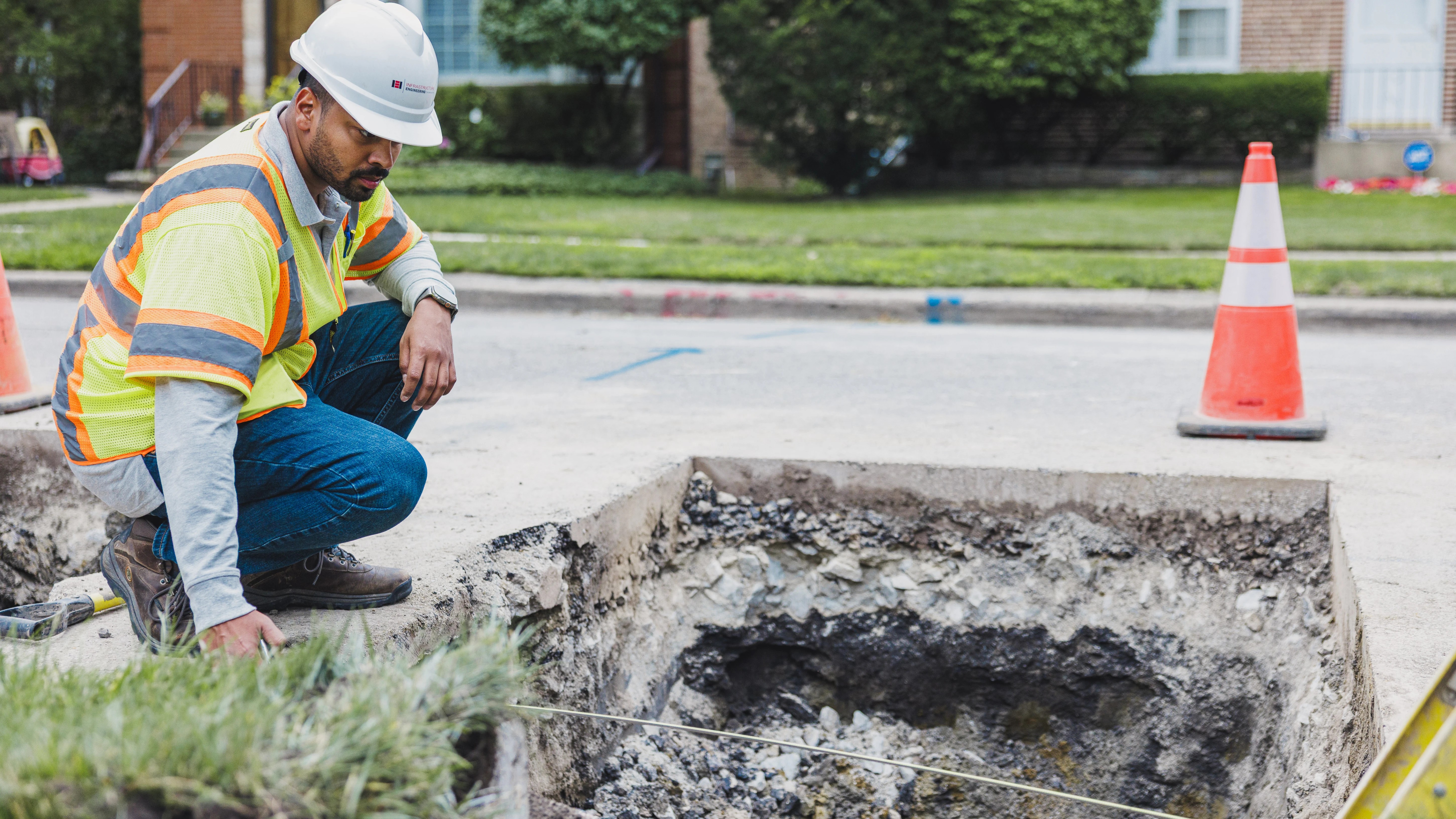
Replacing these service lines is expensive. In a 2022 report, the Illinois Environmental Protection Agency found that a single service line replacement can cost anywhere from $4,000 to $13,000 across the state. In Chicago, the price tag is even higher: City officials estimated that replacements cost more than $30,000 per line on average.

State officials have estimated that replacing all the known or suspected lead pipes across Illinois could cost between $6 billion and $10 billion. The Biden-era Infrastructure Investment and Jobs Act, also known as the bipartisan infrastructure law, set aside $15 billion over five years to help states replace lead pipes. Illinois is estimated to receive about $1 billion, but given the state’s unique needs, that number “is probably on the low side,” Williams said.

The report makes the case that state lawmakers must approve dedicated, sustained and predictable funding to close the multibillion-dollar shortfall. Without long-term guarantees, replacements will likely remain inefficient and delayed.

“It’s a bit of a chicken and egg: Unless you know how much money is going to be allocated to this — how many opportunities are coming down the pipe — they’re not going to add additional people to apprenticeship programs,” said Jay Rowell, executive director at HIRE360.

Using workforce projections from the American Water Works Association and the U.S. Environmental Protection Agency, the report’s authors calculated that already allocated federal funds could generate approximately 2,000 direct jobs and 9,000 indirect jobs. If legislatures closed the multibillion-dollar funding gap, those figures could jump substantially to 35,000 direct jobs and 55,000 indirect jobs — a total of 90,000 jobs over a decade.

“We’re calling attention not only to the problem, but also to some of the opportunities to get more candidates engaged in apprenticeships,” Rowell said. “This is a really big problem that needs very thoughtful, state-led solutions.”

A major pillar of the report is diversifying the building trades. An analysis of Chicago’s workforce found that only 3.8% of registered apprentices are women and just 10% are Black. To bridge this gap, the report advocates for requiring utilities and municipalities to include diversity and equity requirements in project contracts.

The report’s authors argue that Illinois has the rare opportunity to tackle two challenges at once: address its toxic legacy while laying the groundwork for a more inclusive economy. The financial and political hurdles remain high, but advocates say the cost of inaction is higher.

“We are the envy of the world in terms of our access to fresh drinking water,” Williams said. “We need to be really thoughtful stewards of that, and that means investing in that the same way we invest in other infrastructure.”

The post Can replacing Illinois’ toxic lead pipes lead to a workforce boom? appeared first on Great Lakes Now.

Original Article

Great Lakes Now

Great Lakes Now

https://www.greatlakesnow.org/2026/03/30/can-replacing-illinois-toxic-lead-pipes-lead-to-a-workforce-boom/

WBEZ

By Anna Ironside Postage stamps featuring wildlife are helping to fund conservation and bring awareness to communities about habitat protection throughout the Great Lakes region by centering species like the wood duck (Aix sponsa), wild turkey (Meleagris gallopavo) and piping plover (Charadrius melodus).

Original Article

Great Lakes Echo

Great Lakes Echo

https://greatlakesecho.org/2026/03/29/wildlife-stamps-aim-to-improve-conservation-across-the-great-lakes-region/

Anna Ironside

By Anna Ironside Postage stamps featuring wildlife are helping to fund conservation and bring awareness to communities about habitat protection throughout the Great Lakes region by centering species like the wood duck (Aix sponsa), wild turkey (Meleagris gallopavo) and piping plover (Charadrius melodus).

Original Article

Great Lakes Echo

Great Lakes Echo

https://greatlakesecho.org/2026/03/29/wildlife-stamps-aim-to-improve-conservation-across-the-great-lakes-region/

Anna Ironside

Shovel Going Into The Ground? Make a Plan Whether starting to remove invasive plants, doing shoreline restoration, or even planting a new garden, it is always best to start with a plan. Make a sketch of the existing landscape including planting beds, permanent plants and structures. A plan helps save you time and money [...]

The post Removing Invasive Species On Your Property? Stay Safe and Plan appeared first on Fox-Wolf Watershed Alliance.

Original Article

Fox-Wolf Watershed Alliance

Fox-Wolf Watershed Alliance

https://fwwa.org/2026/03/27/removing-invasive-species-on-your-property-stay-safe-and-plan/?utm_source=rss&utm_medium=rss&utm_campaign=removing-invasive-species-on-your-property-stay-safe-and-plan

Chris Acy

Some of the most skilled construction jobs in the Great Lakes happen in the water itself. Commercial divers are more than just divers– they’re jacks of all trades, able to do whatever is needed to get the job done.

But before they can get to work, they often need to contend with thick layers of invasive mussels that completely cover the structures they’re working on. One team near Port Huron, MI has developed a method for obliterating the mollusks.

Watch the full video on the Great Lakes Now YouTube channel.

#GreatLakes #Mussels #InvasiveSpecies #Diving #CommercialDiving
===========================================
Website: https://greatlakesnow.org
Facebook: https://www.facebook.com/greatlakesnow
X: https://www.x.com/greatlakesnow
Instagram: https://www.instagram.com/greatlakesnoworg
Newsletter: https://www.greatlakesnow.org/great-lakes-now-newsletter/

To learn more about supporting Detroit PBS and Great Lakes Now, visit https://www.detroitpbs.org/

The post How commercial divers obliterate invasive mussels appeared first on Great Lakes Now.

Original Article

Great Lakes Now

Great Lakes Now

https://www.greatlakesnow.org/2026/03/27/how-commercial-divers-obliterate-invasive-mussels/

Great Lakes Now

By Justin Fox Clausen Two insects are under consideration as Michigan's official state insect: the stonefly and, more recently, the Huron River leafhopper. The state is one of two in the country without an official insect.

Original Article

Great Lakes Echo

Great Lakes Echo

https://greatlakesecho.org/2026/03/27/stoneflies-or-leafhoppers-which-could-become-the-official-state-insect/

Capital News Service

Rep. Kristen McDonald Rivet of Michigan celebrated the bipartisan American Water Stewardship Act after it passed the U.S. House. This allows reauthorization of funds for several regional water quality programs nationwide. The Great Lakes Restoration Initiative, or GLRI, protects and restores the Great Lakes ecosystem, targeting pollution and invasive species. Read the full story by WNEM-TV – Saginaw, Michigan.

Original Article

Great Lakes Commission

Great Lakes Commission

https://www.glc.org/dailynews/20260327-glri-funding

Nichole Angell

After a day and a half of the Soo Locks being open, shipping has come to a standstill. Ice conditions and a lack of heavy U.S. Coast Guard icebreakers are creating delays for American shipping and manufacturing. Some U.S. shipping companies have suffered more than 24-hour delays. Read the full story by WLUC – TV – Negaunee, MI.

Original Article

Great Lakes Commission

Great Lakes Commission

https://www.glc.org/dailynews/20260327-soo-locks-down

Nichole Angell

Between the U.S. and Canadian Coast Guards, 11 ice-breaking ships operate on the Great Lakes. The U.S. supplies nine of them of which 2 are down for repair and will likely be months before they are back on the water. Read the full story by Michigan Public.

Original Article

Great Lakes Commission

Great Lakes Commission

https://www.glc.org/dailynews/20260327-icebreakers-down

Nichole Angell

The “living” sand dune along Lake Michigan has buried beach parking lot and infrastructure within Indiana Dunes National Park. Annually the dune sand moves about five to ten feet toward the water, causing beach erosion. Read the full story by MLive.

Original Article

Great Lakes Commission

Great Lakes Commission

https://www.glc.org/dailynews/20260327-moving-dune

Nichole Angell

Shrubbery and young trees crowding the forest floor have choked the red pine stands of Park Point for nearly two centuries. This spring, a prescribed burn on Duluth’s beloved sandbar aims to help red pines regenerate by removing 17 acres of the combustible understory. Read the full story by the Minnesota Star Tribune.

Original Article

Great Lakes Commission

Great Lakes Commission

https://www.glc.org/dailynews/20260327-duluth-prescribed-burn

Nichole Angell

Over 4 miles out from Cleveland, Ohio, salt mines exist 18,00 feet under Lake Erie. The mines are millions of years old and every day between 11,000-14,000 tons of salt are processed there to be applied to winter roadways. Read the full story by WANE-TV – Fort Wayne, Indiana.

Original Article

Great Lakes Commission

Great Lakes Commission

https://www.glc.org/dailynews/20260327-erie-salt-mine

Nichole Angell

Cruise the Great Lakes officials spent time in Erie, Pennsylvania, to determine if the city can be a port site in the future. Representatives gave a rundown of the economic and tourism impact of the cruises.  Read the full story by the Erie-Times News.

Original Article

Great Lakes Commission

Great Lakes Commission

https://www.glc.org/dailynews/20260327-great-lakes-cruises

Nichole Angell

In the late 1800s, a Great Lakes ship captain had more to worry about than icy water and temperamental gales. There were pirates on the lakes that had their eyes set on precious cargo like timber, cattle and leather goods. Actor Tom Kastle and director Francisco Torres explain how they bring the centuries-old pirate from the sea to the stage. Read the full story by the Wisconsin Public Radio.

Original Article

Great Lakes Commission

Great Lakes Commission

https://www.glc.org/dailynews/20260327-great-lakes-pirates

Nichole Angell