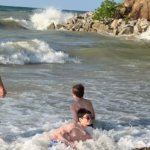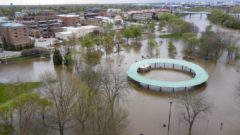
Since 2010, The Great Lakes Surf Rescue Project (GLSRP) has tracked over 843 Great Lakes drownings. The not-for-profit group says drowning numbers will go down as more people, especially children, are educated about the many aspects of water safety. Read the full story by CKLW – Windsor, ON.

Original Article

Great Lakes Commission

Great Lakes Commission

https://www.glc.org/dailynews/20200526-glsrp
Jill Estrada

On Friday, lawyers for the state of Michigan and Canadian petroleum giant Enbridge faced off in oral arguments in Ingham County Circuit Court stemming from Michigan Attorney General Dana Nessel’s lawsuit challenging the 1953 easement that made way for the pipeline’s construction. Read the full story by Bridge Magazine.

Original Article

Great Lakes Commission

Great Lakes Commission

https://www.glc.org/dailynews/20200526-enbridge

Jill Estrada

The Farmory, an indoor growing center in Green Bay, Wisconsin, provides educational programming about sustainable agriculture and aquaculture. It’s also home to the state’s first bio-secure yellow perch hatchery. Read the full story by Wisconsin Public Radio.

Original Article

Great Lakes Commission

Great Lakes Commission

https://www.glc.org/dailynews/20200526-yellow-perch

Jill Estrada

Two decades after the environmental awakening that saw the EPA’s creation and the first earth day, after the environmental disasters of the decades previous, Michigan would take a clear-eyed look at the challenges of the coming years in the form of the Michigan’s Environment and Relative Risk report. Read the full story by Great Lakes Echo.

Original Article

Great Lakes Commission

Great Lakes Commission

https://www.glc.org/dailynews/20200526-environmental+risk

Jill Estrada


This week, students will learn how the Great Lakes and the land around them – called the Great Lakes watershed or basin – are connected. What we do on the land often ends up in our water. We can each do our part to protect the Great Lakes from pollution. For our final H.O.M.E.School video we’re focusing on plastic pollution with a visit from another Alliance staff member.

Time/Materials

This activity will take between 30 minutes and an hour.

You’ll need:

  • Computer

Ready? Head to the Classroom!

Watch the video below to learn about plastic pollution in the Great Lakes. 

Share the Learning

Ask your kids: What do you like best about the Great Lakes? What are some problems that the lake and beaches, and the fish and birds that live around the Great Lakes face? Have you seen pollution on the ground, at the beach, or in the water? What ideas do you have for protecting the Great Lakes and the HOMES of so many fantastic fish and birds?

Activity

Take our Plastic Pollution Quiz to test your knowledge on just how long it takes some of the litter found on our beaches to break down!

Extra Credit

Watch Nate Drag create the Great Blue Heron he showed in his video. Then make a Great Lakes creature out of plastic litter. Take a photo or video of your creation, and share it on social media. Tag us and we may share it with others!

Deep Dive

Want to learn more? Check out these resources!

Find more Great Lakes lessons at H.O.M.E.School.


The post H.O.M.E.School Week 8: Plastic Pollution appeared first on Alliance for the Great Lakes.

Original Article

News – Alliance for the Great Lakes

News – Alliance for the Great Lakes

https://greatlakes.org/2020/05/homeschool-plastic-pollution/

Kirsten Ballard

Virus upsets summer plans for Isle Royale park

HOUGHTON, Mich. (AP) — Wolves and moose won’t notice much human company at Isle Royale National Park.

The remote island in Lake Superior said it’s delaying the summer opening because of coronavirus restrictions. Camping might become available by late June or July but there will be no ferry service.

Read Now at Great Lakes Now.

Original Article

Great Lakes Now

Great Lakes Now

https://www.greatlakesnow.org/2020/05/ap-isle-royale-covid-19/

The Associated Press

Indiana Dunes starts beach parking information line

PORTER, Ind. (AP) — Indiana Dunes National Park has started an information line to help visitors find an open beach with available parking amid severe shoreline erosion along Lake Michigan and the need for social distancing.

Beginning Saturday morning, visitors can call 219-395-1003 to hear recorded information on available parking at Indiana Dunes National Park beaches and nearby Indiana Dunes State Park.

Read Now at Great Lakes Now.

Original Article

Great Lakes Now

Great Lakes Now

https://www.greatlakesnow.org/2020/05/ap-indiana-dunes-covid-19-beach-parking/

The Associated Press

Many of the locks feature portages for kayaks or canoes and it is a great way to visit the locks and the Fox River. However, in recent years, people have been trespassing on the land and accessing the river at the closed Rapide Croche lock.

According to Wisconsin state statute, this lock must remain closed to boaters to prevent the spread of invasive species and it is not safe for pedestrians as high water has caused erosion on the banks. The property along the lock is fenced, “no trespassing” signs are posted, and the Fox River Navigational System Authority does not staff the lock.

Any person transporting a watercraft from the Fox River at the Rapide Croche lock has the potential to transport invasive species. Please understand that any person trespassing on this property is breaking state law. Also understand that the site is being monitored with cameras and periodic inspections. There are no businesses or organizations that have permission to use portage at this lock, so please pay attention to the no trespassing signs and enjoy the river at another portage site.


Original Article

Blog – Fox Locks

Blog – Fox Locks

http://foxlocks.org/2020/05/24/attention-kayakers-rapide-croche-lock-remains-closed/

Fox Locks

...PATCHY OF DENSE FOG ACROSS EAST-CENTRAL WISCONSIN THIS MORNING... Latest surface observations and webcams indicated patchy dense fog across east-central Wisconsin. The visibility was below 1/4 mile in a few places, which will result in hazardous travel conditions.

Original Article

Current Watches, Warnings and Advisories for Brown (WIC009) Wisconsin Issued by the National Weather Service

Current Watches, Warnings and Advisories for Brown (WIC009) Wisconsin Issued by the National Weather Service

https://alerts.weather.gov/cap/wwacapget.php?x=WI125F4D00F53C.SpecialWeatherStatement.125F4D018BA0WI.GRBSPSGRB.ac3f24996c964d1ebd7a8fbc8af6defb

w-nws.webmaster@noaa.gov

More Than Dow: Chemicals, contaminants and untreated sewage all washed out by Midland dam breaks

A lot of focus has been placed on Dow Chemical Company—which is headquartered in Midland, Michigan—after two dams breached and flooded many areas around Midland County including near a Superfund site.

Dow stated in a press release Thursday that there were “no reported product releases” and though the floodwaters entered an on-site brine pond used for groundwater remediation, “material from the brine pond does not create any risk to residents or the environment.”

But while there might not be new contamination issues to deal with, much of the progress on the cleanup of Dow’s last chemical contamination might be lost.

Read Now at Great Lakes Now.

Original Article

Great Lakes Now

Great Lakes Now

https://www.greatlakesnow.org/2020/05/chemicals-contaminants-untreated-sewage-midland-dam-breaks/

Natasha Blakely

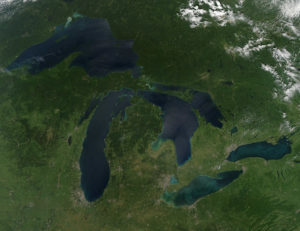
Photo credit: Great Lakes algal blooms, August 2010, NASA Earth Observatory.

“Trimming our Sails: Land-Based Workshops about the Great Lakes and Inland Waters,” is a virtual, 6-week workshop series that explores how people influence the Great Lakes and vice versa.

Designed for any fourth- through twelfth-grade formal, non-formal or informal educator in Minnesota or Wisconsin, the series is offered by the Center for Great Lakes Literacy (CGLL). Participants will learn from educators who have participated in shipboard science workshops, researchers, and CGLL staff about Great Lakes science along with classroom and field applications. 

Registration is required so a Zoom link can be sent.  Registration deadline is June 16. For more information, visit the workshop web page.

Original Article

News Releases – Wisconsin Sea Grant

News Releases – Wisconsin Sea Grant

https://www.seagrant.wisc.edu/news/minnesota-and-wisconsin-educators-invited-to-land-based-water-workshop/

Marie Zhuikov

As high lake levels continue to erode Indiana’s Lake Michigan shore, the Northwestern Indiana Regional Planning Commission is collecting information about the damage to help convince the state to declare a public emergency in the region and allocate funding to help with repairs. Read the full story by the Times of Northwest Indiana.

Original Article

Great Lakes Commission

Great Lakes Commission

https://www.glc.org/dailynews/20200522-nirpc

Ned Willig

Ohio regulators approved the siting of six wind turbines on Lake Erie with the condition that the turbines stop during the night between March and November to limit the risk to birds and bats. The company developing the wind farm says these conditions effectively kill the project. Read the full story by the Cleveland Plain Dealer.

Original Article

Great Lakes Commission

Great Lakes Commission

https://www.glc.org/dailynews/20200522-wind-turbines

Ned Willig

The Great Lakes shipping industry has been hit by high water levels that delayed shipping and fluctuating demands for shipments as the coronavirus shuts down the economy. While demand for shipping wheat and grain products have been strong, iron ore shipments for manufacturing have contracted, placing the industry in flux. Read the full story by WorkBoat.

Original Article

Great Lakes Commission

Great Lakes Commission

https://www.glc.org/dailynews/20200522-shipping

Ned Willig

Flood raises fears of pollution at Michigan toxic waste site

By John Flesher, AP Environmental Writer

TRAVERSE CITY, Mich. (AP) — It took seven years to settle on a plan for cleansing two rivers and floodplains polluted with dioxins from a Dow Chemical Co. plant in central Michigan. The work itself has lasted nearly twice as long, with plenty still to do.

Read Now at Great Lakes Now.

Original Article

Great Lakes Now

Great Lakes Now

https://www.greatlakesnow.org/2020/05/ap-michigan-flood-pollution-dioxins-superfund-site/

The Associated Press

A USGS hydrologic technician finishes installation of a rapid-deployment streamgage on the Tittabawassee River in Midland, Michigan. A USGS crew in the distance makes streamflow measurements using a boat-mounted acoustic Doppler current profiler.(Credit: Tom Weaver, USGS)

The USGS Tittabawassee River in Midland streamgage measured record water levels, called river stage, at about 35 feet on Wednesday. This level is the highest ever recorded during the streamgage’s 84 years of record, and exceeds the previous highest stage by about two feet. Water levels are beginning to recede as of this morning, and two two-person USGS crews are on site measuring streamflow. They also installed a rapid-deployment gage to provide backup to the permanent streamgage at the Midland site.

Strong storms passed through parts of the Midwest starting last Thursday, causing minor-to-major flooding in some lower Michigan locations. On Tuesday, May 19, two large dams on the Tittabawssee River failed in succession, causing two lakes upstream of Midland to drain. The USGS crews will continue to monitor water levels and streamflow as flooding continues.

Elsewhere in Michigan, the USGS Rifle River streamgage near Sterling crested on Tuesday with a record streamflow of 7,460 cubic feet per second. There are currently four single-person USGS crews measuring streams throughout lower Michigan, not including the Midland-based crews, and they will continue to monitor flooding for at least another day.

Information collected by the USGS during flooding is critical for resource managers and emergency responders to help protect life and property. The USGS coordinates efforts with the National Weather Service, US Army Corps of Engineers, Bureau of Reclamation and many local and state partners.

There are about 200 streamgages in Michigan that measure water levels, streamflow and rainfall. When flooding occurs, USGS crews make numerous streamflow measurements to verify the data USGS provides to federal, tribal, state and local agencies, as well as to the public.

For more than 125 years, the USGS has monitored flow in selected streams and rivers across the U.S. The information is routinely used for water supply and management, monitoring floods and droughts, bridge and road design, determination of flood risk and for many recreational activities.

Access current flood and high flow conditions across the country by visiting the USGS WaterWatch website. Receive instant, customized updates about water conditions in your area via text message or email by signing up for USGS WaterAlert. See where floodwaters go by following a stream trace at Streamer. View water data on your mobile device. Learn how a USGS streamgage works.

Original Article

USGS News: Upper Midwest Water Science Center

USGS News: Upper Midwest Water Science Center

https://www.usgs.gov/news/usgs-crews-measure-major-flooding-lower-michigan

mlubeck@usgs.gov

PFAS News Roundup: EPA says limits will take more than a year, Navy halts shipments to burn plant

PFAS, short for per- and polyfluoroalkyl substances, are a group of widespread man-made chemicals that don’t break down in the environment or the human body and have been flagged as a major contaminant in sources of water across the country.

Keep up with PFAS-related developments in the Great Lakes area.

Read Now at Great Lakes Now.

Original Article

Great Lakes Now

Great Lakes Now

https://www.greatlakesnow.org/2020/05/pfas-epa-limits-new-york-burn-plant-wisconsin/

Natasha Blakely

COVID-19 has devastated communities across the Great Lakes region, and has deepened many already existing racial and social inequities in public health outcomes, access to safe and clean drinking water, and many other areas. At the same time, many HOW Coalition members and other organizations are working within the communities that the Coronavirus pandemic has hit the hardest, advocating for and providing relief to those who need it most.

To support in these efforts, the HOW Coalition is offering help to member NGOS and frontline groups, and to facilitate members helping other members in this time of crisis. Working with our network of Coalition members, the Governance Board, and the Equity Advisory and Action Committee, we are offering financial resources and human resources (technical, policy, research, communication skills) through a small grant program (details below).

We recognize that many of our member groups and frontline groups and individuals need additional financial resources along with additional skills-based resources during the pandemic.  Through the Coalition’s relationships we hope to identify and provide these needed resources.

The HOW Coalition has up to $25,000 in funds and is developing a resource bank of skills and services available from HOW member groups.  The HOW Coalition is starting this effort with $25,000 but we are seeking opportunities to increase the amount of these funds.

Please click here to see the application. 

HOW is accepting applications from member frontline groups that focus on providing needed funds or resources to organizations for services during the pandemic.  Preference will be given to HOW member groups and we will encourage membership for others.

Applications can be brief and should not exceed one page.  Applications MUST include:

  • Goals for the proposed activity, the tactics and activity that will be employed, and the outcome/s (e.g. people served).
  • An explanation of why the applicant/organization is best positioned to do this work.
  • The budget needed for the work (financial or resource)
  • A timeline for work
  • Application forms can be found here

Please do not exceed one page for the narrative of the application.  Typical awards will be between $1,000-5,000.

Applications will be reviewed on a rolling basis.  You can expect a response within 2 weeks from your application. There is no deadline for application.

Examples of project or needs that would be fundable include (but are not limited to):

Research—research on public drinking water stations, policy options, or other strategy

Trainings–remote work skills and tools, outreach strategies, cultural sensitivity

Writing–grant deliverables, translation services, press releases

Communications—assistance with setting up email list serves, zoom meetings or subscriptions, media training and advice, review of communications materials

Policy—consultation on strategy and implementation

Materials or supplies—masks, gloves, food, bottled water, printing

Staff—specific and time limited staffing needs

Direct Lobbying is ineligible.

A final report on how the funds were used, the outcome, and any lessons learned is required within a month of the completion of the project.

The post COVID-19 Crisis Help to Frontline Communities appeared first on Healing Our Waters Coalition.

Original Article

Healing Our Waters Coalition

Healing Our Waters Coalition

https://healthylakes.org/covid-19-crisis-help-to-frontline-communities/

Pavan Vangipuram

Illinois governor activates Guard to help prepare for flooding

SPRINGFIELD, Ill. (AP) — Gov. J.B. Pritzker has activated nearly 60 Illinois National Guard soldiers and ordered additional steps by the state to prepare for projected flooding along the Illinois River and other streams.

The National Weather Service forecasts the Illinois River will reach major flood stage Saturday morning at Meredosia, about 50 miles (80 kilometers) west of Springfield, and continue to rise through the middle of next week.

Read Now at Great Lakes Now.

Original Article

Great Lakes Now

Great Lakes Now

https://www.greatlakesnow.org/2020/05/ap-illinois-governor-national-guard-flood/

The Associated Press

The devastation wreaked by the collapse of the Edenville Dam followed a 16-year battle between the dam’s owner and federal and Michigan state regulators that ultimately failed to bring the dam into compliance. Read the full story by WXYZ – TV – Detroit, MI.

Original Article

Great Lakes Commission

Great Lakes Commission

https://www.glc.org/dailynews/20200521/Edenville+Dam

Jill Estrada

The Ozaukee Washington Land Trust is raising funds to purchase 131 acres of lakefront property in Port Washington, Michigan to create a natural recreation area, similar to Lion’s Den Gorge Nature Preserve. Read the full story by the Milwaukee Journal Sentinel.

Original Article

Great Lakes Commission

Great Lakes Commission

https://www.glc.org/dailynews/20200521/recreation

Jill Estrada

The failure of two mid-Michigan dams called attention to the safety of many others around the state, many of which experts said were aging and needed expensive maintenance to avoid catastrophic failures. Read the full story by WWMT – TV – Kalamazoo, MI.

Original Article

Great Lakes Commission

Great Lakes Commission

https://www.glc.org/dailynews/20200521/dam+failure

Jill Estrada

Is America prepared to handle natural disasters during the COVID-19 pandemic?

By Ari Kelo, theRising

This story originally appeared in theRising and is republished here as part of Covering Climate Now, a global journalism collaboration strengthening coverage of the climate story.

From lengthened hurricane seasons to deadly bushfires, the natural disasters symptomatic of climate change are becoming more and more pronounced each year.

Read Now at Great Lakes Now.

Original Article

Great Lakes Now

Great Lakes Now

https://www.greatlakesnow.org/2020/05/america-prepared-natural-disasters-covid-19-coronavirus/

theRising

Memorial Day has long been seen as the kickoff of summer. In a time of COVD-19 safer-at-home practices, the promise of a season of outdoor pleasures is even more sweet this year. For many in Wisconsin, boating is one of those pleasures. Here are five things to know about boating in the Badger State, and about a Wisconsin Sea Grant-supported initiative, the Wisconsin Clean Marina Program.

When it comes to boating, Wisconsin’s got historical cred.

With the Mississippi, Wisconsin and St. Croix rivers, the Great Lakes and 15,000 inland lakes, it’s only natural people in this state find ways to float upon water bodies. Entrepreneurs have stepped in to fill the need.

A native of Mequon, Wisconsin, ,started manufacturing motorboat engines out of his machine shop in 1939. That was the birth of Mercury Marine, now the world’s largest manufacturer of boat engines. Builders have also set up shop here, including Manitowoc’s luxury yacht maker Burger Boat Co., which had its origins in crafting commercial fishing vessels beginning in the mid-1800s.  

Mrs. Puff wouldn’t find work in Wisconsin.

Mrs. Puff is the beleaguered boat-driving instructor in the animated television program SpongeBob Squarepants. While SpongeBob is a hapless pupil and in Wisconsin Mrs. Puff would likely encounter more skilled boat operators, state law doesn’t require in-person instruction.

To operate a boat, those who are at least 16 years old and born on or after Jan. 1, 1989, must pass an online boater safety course and carry a boater safety certification card, which is like a driver’s license. The Department of Natural Resources provides the training, issues the card and handles registration for all watercraft longer than 12 feet. Sailboards and manually powered watercraft like a kayak or canoe don’t need to be registered.

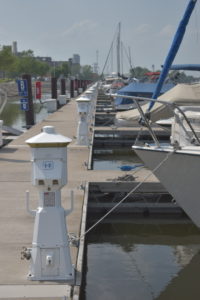
A Clean Marina in Wisconsin. Image by Marie Zhuikov, Wisconsin Sea Grant.

Boater Safety Certification Card in hand. Now, off to a marina.

The Wisconsin Marine Association notes that marinas and related industries and services contribute more than $2.7 billion to Wisconsin’s economy. The association counts more than 170 boating facilities in Wisconsin. Some of these businesses opt to become a certified Clean Marina.

A certified Clean Marina. What is that?

A Clean Marina voluntarily adopts practices to reduce water pollution from its facility and boaters. The efforts lead to clean lakes and rivers, which are good for business. There are currently 20 certified marinas in Wisconsin and another 20 establishments are working through the rigorous steps to become certified. Marinas see the benefits of becoming certified—creating a safer and healthier place to work and recreate, gaining an enhanced image among boaters and the community, and preventing pollution and the spread of aquatic invasive species.

It comes down to details.

Marinas perform a self-evaluation of their business using the Clean Marina Guidebook and certification checklist from the Wisconsin Clean Marina Program. The guidebook and checklist include things like preventing and cleaning up fuel spills, reducing stormwater pollution and educating boaters. Marinas also host visits from the program coordinator to ensure adherence to the practices.

The Clean Marina Program is administered by Wisconsin Sea Grant in partnership with the Wisconsin Marine Association, Wisconsin Coastal Management Program, Wisconsin Department of Natural Resources and Fund for Lake Michigan.

For more information, contact Theresa Qualls, Wisconsin Clean Marina coordinator, quallst@uwgb.edu.

Original Article

Blog – Wisconsin Sea Grant

Blog – Wisconsin Sea Grant

https://www.seagrant.wisc.edu/blog/take-5-summer-boating-and-the-wisconsin-clean-marina-program/

Moira Harrington

Midland Flooding: Climate change and rains exacerbate dam infrastructure issues

After two dams collapsed under a deluge of stormwater on Tuesday, many residents of Midland, Michigan, have evacuated or are being evacuated.

Michigan Gov. Gretchen Whitmer declared a state of emergency for Midland County on Tuesday after the Edenville and Sanford dams breached.

“If you have not evacuated the area, do so now and get somewhere safe,” Whitmer said. 

Read Now at Great Lakes Now.

Original Article

Great Lakes Now

Great Lakes Now

https://www.greatlakesnow.org/2020/05/midland-flooding-climate-change-infrastructure/

Natasha Blakely

The Alliance’s Adopt-a-Beach program would not be possible without the involvement of hundreds of Team Leaders like you each year. We are grateful for your efforts to protect the Great Lakes and to keep our beaches safe and beautiful.

On this page you will find the following:

COVID-19 Safety

It’s been a challenging year and we’re excited to return to a more normal Adopt-a-Beach season this summer. However COVID-19 related rules and guidelines vary around the Great Lakes region. Adopt-a-Beach Team Leaders and volunteers must follow federal, state, and local coronavirus-related guidelines and should use their best judgement when planning and attending cleanup events.

Before planning an Adopt-a-Beach cleanup, Team Leaders should:

  • Contact the beach landowner (e.g. state or local park district, etc.) to ask about any restrictions on events at your selected beach or shoreline. Confirm that they will allow you to host an Adopt-a-Beach event at the location. NOTE: Chicago and Cleveland cleanups do not need to contact the landowner.
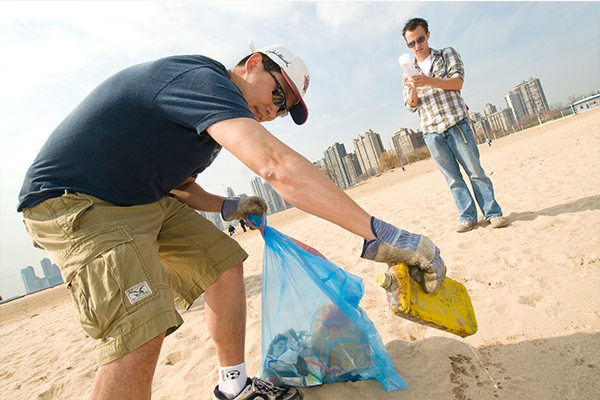
  • Wear gloves when handling litter or other debris.
  • Wash your hands. Check to be sure you and your volunteers can access water at the cleanup location (e.g. bathrooms facilities, etc.). If not, bring plenty of soap and water or hand sanitizer with you to the cleanup event.
  • If you are feeling ill or have been exposed to someone who may be ill, cancel or postpone your Adopt-a-Beach event or find another volunteer to lead the event. For more information on the symptoms of COVID-19, visit the U.S. Centers for Disease Control website.
  • If a volunteer attending your event appears to be ill, do not allow them to participate in the event and contact local health authorities and Alliance staff.  
  • If you or a volunteer learns after the event that they were exposed to COVID-19 and may have exposed other attendees, contact local health authorities and Alliance staff.
  • Check local, state, and federal guidelines for additional restrictions or guidelines including travel restrictions, group size limitations, special closures or restrictions in parks and other shoreline areas, and other local health and safety guidelines. Here are links to the COVID-19 resource pages for each of the Great Lakes states:

Illinois: https://coronavirus.illinois.gov/s/
Chicago: For up-to-date information, visit the Chicago Park District’s  COVID-19 page.

Indiana: https://www.coronavirus.in.gov/

Michigan: https://www.michigan.gov/coronavirus/

Minnesota: https://www.health.state.mn.us/diseases/coronavirus/prevention.html

New York: https://coronavirus.health.ny.gov/home

Ohio: https://coronavirus.ohio.gov/wps/portal/gov/covid-19/home

Pennsylvania: https://www.health.pa.gov/topics/disease/coronavirus/Pages/Coronavirus.aspx

Wisconsin: https://www.dhs.wisconsin.gov/covid-19/index.htm

  • Encourage all event attendees to register in advance with the new Adopt-a-Beach website. With the new website, we have made it as easy as possible for volunteers to register for cleanups. And, it is very easy for Team Leaders to cancel events and share updates with registered attendees. It will be the best way for Team Leaders and Alliance staff to keep in touch with volunteers if cleanup events are canceled or postponed.

Alliance for the Great Lakes staff will update this guidance as appropriate and will communicate any new guidelines with Team Leaders and volunteers. If you have any questions, please do not hesitate to contact us at adoptabeach@greatlakes.org.

High Water Levels

Many of the Great Lakes continue to experience high water levels.

Team Leaders should keep in mind the following safety and logistics concerns when scheduling and leading cleanup events:

  • Before scheduling your event, visit your preferred cleanup location to be sure it is still a feasible site for your event. Some beaches are currently underwater. Other beach and shoreline areas are significantly smaller and cannot accommodate large groups.
  • Pay close attention to weather events, particularly with high winds. Waves may reach further onto a beach than you are used to, submerging most of the area. Waves can be very powerful. Be cautious and keep your distance.
  • Be aware of submerged hazards. Although the majority of cleanups are held on solid ground, some volunteers enter the water. High water levels may submerge hazards such as piers, breakwaters, or natural formations.

General Adopt-a-Beach Safety Guidelines

We have plenty of resources to help Adopt-a-Beach Team Leaders plan a fun and safe cleanup event. Our Team Leader How-To Guide is a helpful step-by-step guide for organizing an event. And, you can also check out this quick refresher video.

Adopt-a-Beach Team Leaders should stress personal safety with all volunteers at your event including:

  • Never pick up dead animals or feces. Leave them where they are found.
  • Be cautious with suspicious looking items. Contact authorities or the park manager to alert them or to ask for guidance.
  • Be cautious with sharp objects such as broken glass or syringes/needles. Team Leaders should bring a container, such as a bucket or an empty plastic soda bottle, for sharp objects.
  • If children are volunteering at your event, tell them not to pick up items they are unsure of and to find an adult for help.

If you have any questions, please do not hesitate to contact us at adoptabeach@greatlakes.org.

The post Safety and Your Adopt-a-Beach Cleanup appeared first on Alliance for the Great Lakes.

Original Article

News – Alliance for the Great Lakes

News – Alliance for the Great Lakes

https://greatlakes.org/2021/06/safety-and-your-adopt-a-beach-cleanup/

Judy Freed