June 2020 Regional Climate Impacts and Outlooks
NCEI News Feed
http://www.ncei.noaa.gov/news//news/june-2020-regional-climate-impacts-and-outlooks
NCEI News Feed
http://www.ncei.noaa.gov/news//news/june-2020-regional-climate-impacts-and-outlooks
NCEI News Feed
http://www.ncei.noaa.gov/news/june-2020-regional-climate-impacts-and-outlooks
By Ed White, Associated Press Writer
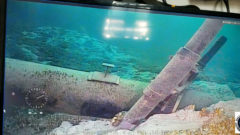
DETROIT (AP) — A judge shut down an energy pipeline in Michigan’s Great Lakes on Thursday, granting a request from the state after the owner reported problems with a support piece far below the surface.
Enbridge Inc. has not provided enough information to Michigan officials to show that continued operation of the west leg of the Line 5 twin pipeline is safe, Ingham County Judge James Jamo said.
Great Lakes Now
https://www.greatlakesnow.org/2020/06/ap-judge-shuts-down-energy-pipeline-michigan-great-lakes/

Fighting Fatbergs
SEGMENT 1 | Macomb County, Michigan
In 2019, a 19-ton glob of garbage and waste clogged a southeast Michigan sewer.
Called a “fatberg,” the blockage was made of fats, oils and greases bound together mainly by disposable wipes. Great Lakes Now introduced you to the Macomb County fatberg in our “Waters Infected” episode last year.
Great Lakes Now
https://www.greatlakesnow.org/2020/06/fighting-fatbergs/

Keep up with energy-related developments in the Great Lakes area with Great Lakes Now’s biweekly headline roundup.
In this edition: Ontario Power Generation formally withdraws its application to construct a repository for nuclear waste near Lake Huron; Illinois looks to construct offshore energy wind turbines but faces resistance; University of Minnesota may expand viability of geothermal energy in Midwest; and flood-ravaged Midland, Michigan, coming around on renewable energy.
Great Lakes Now
https://www.greatlakesnow.org/2020/06/energy-nuclear-huron-renewables-midland-wind-geothermal/

In May, the self-cloning marbled crayfish clawed Michigan and regional headlines by officially becoming an outlaw. And even though the little bugger—a popular species for aquarium aficionados—hasn’t committed any offenses in Michigan yet, wildlife authorities are hoping to stay one step ahead of the critters.
And the same goes for many others.
Great Lakes Now
https://www.greatlakesnow.org/2020/06/great-lakes-aquatic-invasive-species-list/
Because of high water levels on the Great Lakes, Pigeon Lake in Ottawa County, Michigan, has been designated as “slow, no wake” for boaters to prevent shoreline erosion. Read the full story by MLive.
Great Lakes Commission
https://www.glc.org/dailynews/20200625-wake
Former Michigan Governor Rick Snyder will be questioned under oath on June 25 about the Flint water scandal. The deposition is focused on what his administration knew, and what was done — or not done — to protect people in Flint from the toxic water. Read the full story by WXYZ-TV – Detroit, MI.
Great Lakes Commission
https://www.glc.org/dailynews/20200625-flint
High groundwater and floodwater infiltration into sewer lines are overwhelming sewer systems in Muskegon, Michigan. Read the full story by MLive.
Great Lakes Commission
https://www.glc.org/dailynews/20200625-sewer
After a call to a poacher hotline, multiple Ohio state agencies are investigating anglers from Tennessee and Florida who may have exceeded state take limits on walleye set in place to protect the fish population in the Ohio waters of Lake Erie. Read the full story by The Plain Dealer.
Great Lakes Commission
https://www.glc.org/dailynews/20200625-walleye
Leaders in Gladwin County, Michigan, are asking their community to take part in a ‘call to action’ after last month’s devastating flood throughout Mid-Michigan. Read the full story by WNEM-TV – Saginaw, MI.
Great Lakes Commission
https://www.glc.org/dailynews/20200625-floods
Park Ridge, Illinois, has extended its agreement with the city of Chicago to contract for Lake Michigan water through the Chicago filtration system through Dec. 31, 2029, a 10-year contract. Read the full story by Journal & Topics.
Great Lakes Commission
https://www.glc.org/dailynews/20200625-water
Safety experts say it makes no sense to reopen museums and movie theaters in Chicago, but keep beaches closed. Without lifeguards on duty to watch over those who choose to swim in Lake Michigan, experts are worried it could be a recipe for disaster. Read the full story by WLS-TV – Chicago, IL.
Great Lakes Commission
https://www.glc.org/dailynews/20200625-beaches
There may funding available for major infrastructure projects around Western New York as part of a $1.5 trillion federal legislative package that is slated to be introduced within days. Read the full story by WBFO-TV – Buffalo, NY.
Great Lakes Commission
https://www.glc.org/dailynews/20200625-infrastructure
The Port of Monroe in Michigan is in the midst of handling one of its largest cargo endeavors, as the port has become a congregation and distribution hub for wind tower segments. Read the full story by the Ionia Sentinel-Standard.
Great Lakes Commission
https://www.glc.org/dailynews/20200625-port
A resolution adopted by the Michigan House of Representatives supports the construction of a tunnel under the Straits of Mackinac to support Line 5. Read the full story by WLUC-TV – Lansing, MI.
Great Lakes Commission
https://www.glc.org/dailynews/20200625-tunnel
The 2020 election has unfolded at a critical juncture for the Great Lakes and the communities who call this region home. We’ve seen progress over the last 15 years to restore and protect the Great Lakes.
But more work remains. Though a scheduled debate between major party Presidential candidates Donald Trump and Joe Biden in Michigan had to be canceled recently due to the Coronavirus pandemic, the environmental issues that are pressing upon Great Lakes communities have not let up – indeed, the pandemic has exposed critical fault lines in the infrastructure needed to protect the Great Lakes.
That’s why the Healing Our Waters – Great Lakes Coalition is urging White House aspirants Donald Trump and Joe Biden to support a robust clean water platform to tackle Great Lakes issues now and beyond. Environmental stewardship and healthy communities are not only about fixing problems as they arise – they’re also about putting solutions in place for the long term that leave no community behind. We are asking candidates to:
Invest in Water Infrastructure
The COVID-19 pandemic has deepened already existing inequities when it comes to water rates and affordability. The pandemic illustrated how water shutoffs impact low-income communities and communities of color. These impacts have been growing for decades because of disinvestment in community water infrastructure. The federal government’s contribution to local water infrastructure projects has declined from 63 percent of water infrastructure spending in 1977 to 9 percent today. This disinvestment has left communities struggling with high rates and unsafe water.
To stand up for Great Lakes communities, candidates must triple federal investments to fix our region’s water infrastructure. A staggering $179 billion is needed to address the infrastructure backlog in the Great Lakes states of Illinois, Indiana, Michigan, Minnesota, New York, Ohio, Pennsylvania and New York. And climate change will only exacerbate existing challenges due to more intense rain events that can overwhelm antiquated infrastructure. Our next president must make our water infrastructure backlog a priority.
Support Great Lakes Restoration
The Great Lakes Restoration Initiative is producing results to protect and restore the Great Lakes from a variety of threats in the 10 years it has been in place. But much more work needs to be done. The next president must ramp up Great Lakes Restoration Initiative funding to $475 million to boost the work already done in cleaning up toxic contamination, reducing polluted runoff, stopping invasive species, restoring wetlands and other habitats, and responding to emerging threats.
The Great Lakes are the source of drinking water for 30 million Americans, and provide billions of dollars in fishing, recreation, tourism and other industries to local economies. Over the past decade, the Great Lakes Restoration Initiative has provided the communities that live around the Great Lakes untold economic and social benefits. Studies show that the GLRI returns to the community $3 in economic benefit for every $1 invested. You can find a list of some of the great projects we’ve written about here.
Support Clean Water Protections
Clean water is a basic human need, but too many towns and cities are still living with unsafe drinking water, due to well-known contaminants like lead and emerging contaminants such as toxic PFAS. Federal laws that help communities protect drinking water from threats like lead and PFAS must be rigorously enforced. Candidates who support the Great Lakes must commit to enforcing clean water and drinking water laws and developing tougher standards to help community’s clean-up and prevent public health problems from legacy pollutants, existing contamination, and emerging threats in the region’s waterways.
Control Invasive Species
The Great Lakes support a $7 billion fishing industry that is being threatened by invasive species – particularly Asian Carp. In places in the Illinois River, where the carp have taken over, these invasive fish make up 90 percent of the aquatic life present. It is vital that Asian Carp not be allowed to take root in the Great Lakes. The next President must commit to building new prevention measures at Brandon Road Lock and Dam to prevent the transfer of Asian Carp from the Mississippi River Basin to the Great Lakes Basin.
End Toxic Algal Blooms
Toxic blooms of algae are a significant threat to the ecology of the Great Lakes and the safety of the drinking water for those who live in Great Lakes communities. In 2014, a toxic algal outbreak blanketed western Lake Erie, prompting Toledo city officials to issue a “do not drink” advisory impacting more than 400,000 people. Slow progress has been made towards the 40 percent Lake Erie phosphorus reduction target for 2025, and both observed and projected climate change impacts, such as increases in heavy rainfall and rising temperatures, are increasing the prevalence and threats posed by HABs across the region. Candidates must explain how they will reduce harmful algal blooms across the region by linking the region’s Farm Bill conservation funding and Clean Water Act programs to numeric, water-quality based outcomes.
The post The 2020 Election: A Critical Time for the Great Lakes appeared first on Healing Our Waters Coalition.
Healing Our Waters Coalition
https://healthylakes.org/the-2020-election-a-critical-time-for-the-great-lakes/
NCEI News Feed
http://www.ncei.noaa.gov/news/ncei-archives-cosmic-2-data
NCEI News Feed
http://www.ncei.noaa.gov/news//news/ncei-archives-cosmic-2-data
NCEI News Feed
http://www.ncei.noaa.gov/news/ncei-archives-cosmic-2-data
Pleas find below all of the available presentations given during each webinar session.
Dr. Peter Hammer: The Historic Harm, Inequities, & Water Affordability: Rates, Race, & Infrastructure
Dr. Sujata Shetty: Equity and Water Affordability: Toledo Poverty Study
Dr. Hope Bland: Systemic Racism: What is it & What’s Our Next Move?
Dr. Pam Oatis: Ending Racism Water Equity
Blog – Freshwater Future
https://freshwaterfuture.org/uncategorized/session-presentations/

The pandemic raises questions: As stay-at-home orders end around the Great Lakes, does Wisconsin’s experience opening businesses predict anything for other communities that depend on tourism? How are researchers, reef restorers and hydroponic farms reacting to the pandemic? Plus, with an increase in use of personal wipes, will there be more fatbergs growing in our sewer systems?
Great Lakes Now
https://www.greatlakesnow.org/2020/06/unlocking-the-lakes-episode-1015/
The Council from Tiny Township, Ontario, unanimously approved a motion demanding upper levels of government push for action to manage high-water levels in Lakes Huron and Michigan. Read the full story by OrilliaMatters.com
Great Lakes Commission
https://www.glc.org/dailynews/20200624-high-water-Ontario
During a summer recreation season already hampered by pandemic-related delays and restrictions, many of Michigan’s state parks are now wrestling with another force of nature: historically high water along the Great Lakes that is reshaping shorelines, eroding beaches, submerging docks and piers, and rendering roads and trails inaccessible. Read the full story by MLive.
Great Lakes Commission
https://www.glc.org/dailynews/20200624-high-water-michigan
The pavilion at Orchard Beach State Park in Manistee, Michigan, is expected to be moved to a picnic area within the park this fall due to threat from Lake Michigan erosion at a cost of about $1.5 million. Read the full story by MLive.
Great Lakes Commission
https://www.glc.org/dailynews/20200624-historic-building-erosion
On Tuesday, a joint Michigan senate committee heard from the Federal Energy Regulatory Commission about its role with the dams that failed in Midland County and caused catastrophic flooding. Read the full story by WEYI – TV – Flint, MI.
Great Lakes Commission
https://www.glc.org/dailynews/20200624-senate-dam-failure
$850,000 in provincial funding was allotted to the Invasive Species Centre in Sault Ste. Marie for developing new measures to prevent and manage invasive species infiltrating Canada’s natural ecosystems Read the full story by Northern Ontario Business.
Great Lakes Commission
https://www.glc.org/dailynews/20200624-invasives-ontario
An Ontario nuclear power generating company has officially dropped its pursuit of a deep underground storage facility for low- to intermediate-level radioactive waste within a half-mile of Lake Huron. Read the full story by Detroit Free Press.
Great Lakes Commission
https://www.glc.org/dailynews/20200624-radioactive-huron
The ceremony was jointly held by Fincantieri Bay Shipbuilding and The Interlake Steamship Company and recognized the first U.S.-flagged Great Lakes bulk carrier to be built in more than 35 years. Read the full story by WLUK – TV – Green Bay, WI.
Great Lakes Commission
https://www.glc.org/dailynews/20200624-new-freighter
Michigan regulators are encouraged by preliminary test results that show low pollutant levels in sediments deposited in the Tittabawassee and Saginaw river floodplains downstream of the Dow Chemical Co. in MIdland, MI following historic flooding. Read the full story by MLive.
Great Lakes Commission
https://www.glc.org/dailynews/20200624-dioxin-dow
North Olmsted, OH codes require stormwater to be maintained entirely on the property where development is proposed; the undeveloped condition of the property is the benchmark for new developments, meaning that the property cannot release more stormwater off their property than if the property was completely undeveloped. Read the full story by Cleveland.com.
Great Lakes Commission
https://www.glc.org/dailynews/20200624-stormwater-development
The restoration work is re-establishing natural and ecological function to approximately 1,700 feet of stream in Mentor, OH due to the Chagrin River Watershed Partners, Lake County Soil & Water Conservation District, and funding from the Ohio Environmental Protection Agency; the city recently learned that the Ohio EPA has recommended a second grant toward the next phase of the project. Read the full story by The News-Herald.
Great Lakes Commission
https://www.glc.org/dailynews/20200624-stream-restoration
Great Lakes Echo
http://greatlakesecho.org/2020/06/24/gloom-doom-and-ruin-draw-visitors-to-detroit-study-says/

MACKINAW CITY, Mich. (AP) — Michigan’s attorney general on Monday asked a judge to shut down a pipeline in the Great Lakes after an energy company discovered that an anchor support had shifted deep below the surface.
Enbridge Inc. insists the Line 5 pipeline itself was not damaged, and the company resumed the flow of oil and natural gas liquids in the west leg of the twin system Saturday.
Great Lakes Now
https://www.greatlakesnow.org/2020/06/ap-michigan-judge-shut-enbridge-pipeline/
Current Watches, Warnings and Advisories for Brown (WIC009) Wisconsin Issued by the National Weather Service
https://alerts.weather.gov/cap/wwacapget.php?x=WI125F52F813D0.SpecialWeatherStatement.125F52F889C8WI.GRBSPSGRB.cdc1ff113f80474f83c6e7685b61e187
The Northeast Ohio Regional Sewer District has completed its second of seven tunnels to store combined sewer overflows and keep sewage from polluting Lake Erie. Read the full story by The Plain-Dealer.
Great Lakes Commission
https://www.glc.org/dailynews/20200623-sewer-district
Independent experts are questioning the adequacy of plans to examine how much fluorochemical pollution is entering Michigan’s Rogue River from Wolverine World Wide contamination sites and subsequently washing downstream toward Lake Michigan. Read the full story by MLive.
Great Lakes Commission
https://www.glc.org/dailynews/20200623-PFAS-rogue
In March, COVID-19 brought the Great Lakes economy and society in general to a grinding halt. Three months later, it’s not yet business as usual and challenges remain. Read the full story by Great Lakes Now.
Great Lakes Commission
https://www.glc.org/dailynews/20200623-covid
After more than a century in which Cleveland, Ohio, has hardened its shoreline with concrete, steel and boulders to defend against storms, the city and four other agencies are looking at a softer, greener and more natural solution to climate change and rising lake levels. Read the full story by The Plain Dealer.
Great Lakes Commission
https://www.glc.org/dailynews/20200623-recycled-river-sediment
There have been more than a dozen significant rollbacks of water-related protections that affect the Great Lakes area. Read the full story by Great Lakes Now.
Great Lakes Commission
https://www.glc.org/dailynews/20200623-regulatory-rollbacks
Michigan’s attorney general on Monday asked a judge to shut down the Line 5 pipeline in the Great Lakes after Enbridge discovered that an anchor support had shifted deep below the surface. Read the full story by The Associated Press.
Great Lakes Commission
https://www.glc.org/dailynews/20200623-shut-down-pipeline
The Michigan Department of Natural Resources has issued a safety notice for paddlers along a popular stretch of the Boardman River in Traverse City due to high water. Read the full story by MLive.
Great Lakes Commission
https://www.glc.org/dailynews/20200623-dnr-issues-caution
Following flooding that caused the failure of two dams on the Tittabawassee River, officials say hundreds of residents in Gladwin and Midland counties are experiencing issues with their water wells. Some of the wells aren’t working properly, others are dry. Read the full story by MLive.
Great Lakes Commission
https://www.glc.org/dailynews/20200623-water-issues
The Wisconsin Department of Natural Resources is holding a series of webinars to introduce a “Total Maximum Daily Loads for Total Phosphorus and Total Suspended Solids in the Northeast Lakeshore Basin” (TMDL) study. Watch the full story by The Kewaunee County Comet.
Great Lakes Commission
https://www.glc.org/dailynews/20200623-tmdl-webinar
Michigan Gov. Gretchen Whitmer demanded that Enbridge Energy provide proof that the damage to one of its dual oil pipelines under the Straits of Mackinac will not pose a threat to the area. Read the full story by The Associated Press.
Great Lakes Commission
https://www.glc.org/dailynews/20200623-pipeline-answers
A new culvert may replace the existing one that drains South Bar Lake into Lake Michigan. The current culvert is failing, with high water, winds and waves clogging it with sand about once a week. Read the full story by Traverse City Record Eagle.
Great Lakes Commission
https://www.glc.org/dailynews/20200623-culvert
Port of Monroe received the Robert J. Lewis Pacesetter Award, a recognition given to domestic shipping industry leaders by the St. Lawrence Seaway Development Corp. Read the full story by The Monroe News.
Great Lakes Commission
https://www.glc.org/dailynews/20200623-port-award
Three months after Ontario declared its COVID-19 emergency, nixing crowds and shutting down many public spaces, Southwestern Ontario’s two biggest beach enclaves – Grand Bend and Port Stanley – threw open their lakeside stretches of sand for the first time Monday since the pandemic began. Read the full story by The London Free Press.
Great Lakes Commission
https://www.glc.org/dailynews/20200623-ontario-beaches-open
“The Forever Chemicals” examined the impact of PFAS contamination in west Michigan communities: private wells that tapped into groundwater near industrial dump sites were delivering PFAS-laden drinking water to unsuspecting residents for years until the contamination was detected and reported. Read the full story by Great Lakes Now.
Great Lakes Commission
https://www.glc.org/dailynews/20200623-forever-chemical
Conditions across the Lake Superior were drier than average in May and the water level rose less than it typically does. Nonetheless, an exceptional volume of water remains in the system and all of the Great Lakes remain near or above record-high water levels for this time of year. Read the full story by Sault Online.
Great Lakes Commission
https://www.glc.org/dailynews/20200623-superior-water-levels