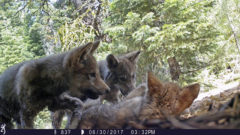
After the Department of the Interior announced Thursday the delisting of the Grey Wolf from the Endangered Species Act (ESA), management for wolf populations will be handed over to state jurisdiction in 60 days. In Wisconsin, the Department of Natural Resources will handle the task. Read the full story by Spectrum News.

Original Article

Great Lakes Commission

Great Lakes Commission

https://www.glc.org/dailynews/20201102-wisconsin-wolves

Jill Estrada

The U.S. Coast Guard is reminding people of the dangers presented by cold weather as cold air and water temperatures significantly decrease survival time for anyone immersed in the water or exposed to the elements. Read the full story by the Manistee News Advocate.

Original Article

Great Lakes Commission

Great Lakes Commission

https://www.glc.org/dailynews/20201102-coast-guard

Jill Estrada

Construction for FishPass hasn’t started just yet, but Great Lakes Fishery Commission, Grand Traverse Band of Ottawa and Chippewa Indians and other project partners celebrated the project’s start in Traverse City, Michigan. Read the full story by The Associated Press.

Original Article

Great Lakes Commission

Great Lakes Commission

https://www.glc.org/dailynews/20201102-fishpass-traverse-city

Jill Estrada

Great Lakes Moment: Sacred Land of the Wyandot of Anderdon Nation

Great Lakes Moment is a monthly column written by Great Lakes Now Contributor John Hartig. Publishing the author’s views and assertions does not represent endorsement by Great Lakes Now or Detroit Public Television.

Metropolitan Detroit sits on the traditional territory of the Wyandot of Anderdon Nation.

Read Now at Great Lakes Now.

Original Article

Great Lakes Now

Great Lakes Now

https://www.greatlakesnow.org/2020/11/great-lakes-moment-wyandot-anderdon-nation-six-points/

John Hartig

ANN ARBOR, MICH. (October 30, 2020) – The Healing Our Waters-Great Lakes Coalition named Marnie Urso as co-chair of their governance board. Urso serves as the policy director of Audubon Great Lakes, a regional office of National Audubon Society, where she works to advance environmental and policy initiatives in the Great Lakes region. She will officially start her co-chair role on November 2, 2020.

“We are thrilled to welcome Marnie Urso as the new co-chair of the Healing Our Waters-Great Lakes Coalition,” said Laura Rubin, director of the Healing Our Waters-Great Lakes Coalition. “Her passion and expertise will be essential in our efforts to restore and protect the Great Lakes and to support the millions of people who rely on the lakes for their drinking water, public health, jobs, and quality of life. Federal investments in the Great Lakes are producing results, but serious threats remain. We look forward to continue our strong relationship with Audubon to make the restoration and protection of the Great Lakes a national priority.”

“Healthy waters mean healthy people, birds and wildlife,” said Urso. “I am honored to be named co-chair of the Healing Our Waters-Great Lakes Coalition. Protecting and restoring the Great Lakes is critical for the health and quality of life of the region and nation. I look forward to working with the Coalition in this new role to work for the equitable protection and restoration of this vital resource for all who depend upon it.”

The Great Lakes still face great threats but thanks to Healing Our Waters-Great Lakes Coalition and its members, the region is cleaning up toxic pollution that threatens people and wildlife, reducing polluted runoff that causes harmful algal blooms, stopping invasive species that harm wildlife and outdoor recreation, reversing habitat destruction that harms the environment and hurts the economy, and fixing the region’s aging water infrastructure. Federal investments are producing results in communities across Illinois, Indiana, Michigan, Minnesota, New York, Ohio, Pennsylvania and Wisconsin.

As policy director of Audubon Great Lakes (a member of the Healing Our Waters-Great Lakes Coalition), Urso leads conservation policy initiatives in Illinois, Indiana, Michigan, Ohio and Wisconsin, working to mobilize Audubon’s 52 chapters and over 300,000 members across the region. Audubon Great Lakes works to conserve and restore the Great Lakes coastal ecosystem for the benefit of birds, other wildlife and people. Urso has been working to advance environmental public policy initiatives in the Great Lakes region and Washington DC for over 20 years – the last 15 of those with the National Audubon Society. Her primary focus over the course of her career has been state and federal policies focusing on Great Lakes restoration and climate change.

Audubon Great Lakes is a regional office of Audubon, learn more at gl.audubon.org and follow them on Facebook, Twitter and Instagram.

The National Audubon Society protects birds and the places they need, today and tomorrow. Audubon works throughout the Americas using science, advocacy, education, and on-the-ground conservation. State programs, nature centers, chapters, and partners give Audubon an unparalleled wingspan that reaches millions of people each year to inform, inspire, and unite diverse communities in conservation action. A nonprofit conservation organization since 1905, Audubon believes in a world in which people and wildlife thrive.

Since 2004, the Healing Our Waters-Great Lakes Coalition has been harnessing the collective power of more than 165 groups representing millions of people, whose common goal is to restore and protect the Great Lakes. Learn more at www.healthylakes.org or follow us on Twitter @healthylakes.

The post Great Lakes Coalition Names Audubon’s Marnie Urso as Co-Chair appeared first on Healing Our Waters Coalition.

Original Article

Healing Our Waters Coalition

Healing Our Waters Coalition

https://healthylakes.org/great-lakes-coalition-names-audubons-marnie-urso-as-co-chair/

Pavan Vangipuram

...WIND ADVISORY NOW IN EFFECT UNTIL 4 PM CST THIS AFTERNOON... * WHAT...Northwest winds 20 to 30 mph with gusts up to 45 mph. * WHERE...Portions of east central and northeast Wisconsin. * WHEN...Until 4 PM CST this afternoon. * IMPACTS...Gusty winds could blow around unsecured objects. Tree limbs could be blown down and a few power outages may

Original Article

Current Watches, Warnings and Advisories for Brown (WIC009) Wisconsin Issued by the National Weather Service

Current Watches, Warnings and Advisories for Brown (WIC009) Wisconsin Issued by the National Weather Service

https://alerts.weather.gov/cap/wwacapget.php?x=WI125F6F75F504.WindAdvisory.125F6F7658A0WI.GRBNPWGRB.368577b51001e99e81514443bf96eb7f

w-nws.webmaster@noaa.gov

...LAKESHORE FLOOD ADVISORY REMAINS IN EFFECT UNTIL 6 PM CST THIS EVENING... * WHAT...Minor lakeshore flooding along the east side of the bay. * WHERE...Door, Brown and Kewaunee Counties. * WHEN...Until 6 PM CST this evening. * IMPACTS...Some water on low lying roads and property along the

Original Article

Current Watches, Warnings and Advisories for Brown (WIC009) Wisconsin Issued by the National Weather Service

Current Watches, Warnings and Advisories for Brown (WIC009) Wisconsin Issued by the National Weather Service

https://alerts.weather.gov/cap/wwacapget.php?x=WI125F6F752E94.LakeshoreFloodAdvisory.125F6F823F80WI.GRBCFWGRB.485a7293ef7b62042009154f8355f12e

w-nws.webmaster@noaa.gov

...WIND ADVISORY REMAINS IN EFFECT UNTIL 2 PM CST THIS AFTERNOON... * WHAT...Northwest winds 20 to 30 mph with gusts up to 45 mph expected. * WHERE...Portions of central, east central, north central and northeast Wisconsin.

Original Article

Current Watches, Warnings and Advisories for Brown (WIC009) Wisconsin Issued by the National Weather Service

Current Watches, Warnings and Advisories for Brown (WIC009) Wisconsin Issued by the National Weather Service

https://alerts.weather.gov/cap/wwacapget.php?x=WI125F6F752D04.WindAdvisory.125F6F760A80WI.GRBNPWGRB.7b1208accc9dad95c6fc342ac84d716f

w-nws.webmaster@noaa.gov

...LAKESHORE FLOOD ADVISORY IN EFFECT UNTIL 6 PM CST THIS EVENING... * WHAT...Minor lakeshore flooding along the east side of the bay. * WHERE...Door, Brown and Kewaunee Counties. * WHEN...Until 6 PM CST this evening. * IMPACTS...Some water on low lying roads and property along the

Original Article

Current Watches, Warnings and Advisories for Brown (WIC009) Wisconsin Issued by the National Weather Service

Current Watches, Warnings and Advisories for Brown (WIC009) Wisconsin Issued by the National Weather Service

https://alerts.weather.gov/cap/wwacapget.php?x=WI125F6F740F14.LakeshoreFloodAdvisory.125F6F823F80WI.GRBCFWGRB.485a7293ef7b62042009154f8355f12e

w-nws.webmaster@noaa.gov

...WIND ADVISORY IN EFFECT FROM 6 AM THIS MORNING TO 2 PM CST THIS AFTERNOON... * WHAT...Northwest winds 20 to 30 mph with gusts up to 45 mph expected. * WHERE...Portions of central, east central, north central and northeast Wisconsin.

Original Article

Current Watches, Warnings and Advisories for Brown (WIC009) Wisconsin Issued by the National Weather Service

Current Watches, Warnings and Advisories for Brown (WIC009) Wisconsin Issued by the National Weather Service

https://alerts.weather.gov/cap/wwacapget.php?x=WI125F6F73F678.WindAdvisory.125F6F760A80WI.GRBNPWGRB.7b1208accc9dad95c6fc342ac84d716f

w-nws.webmaster@noaa.gov

...STRONG AND GUSTY NORTHWEST WINDS EXPECTED SUNDAY... While gusty winds to 30 or 35 mph continue this evening at many locations, another surge of strong gusty winds is expected to arrive late tonight into Sunday morning. Most will see winds peak in the 40 to 45 mph range on Sunday morning into early Sunday afternoon. Locally higher wind gusts up to 50 mph will be possible

Original Article

Current Watches, Warnings and Advisories for Brown (WIC009) Wisconsin Issued by the National Weather Service

Current Watches, Warnings and Advisories for Brown (WIC009) Wisconsin Issued by the National Weather Service

https://alerts.weather.gov/cap/wwacapget.php?x=WI125F6F734CF0.SpecialWeatherStatement.125F6F74D200WI.GRBSPSGRB.150e2071f8e443f7238e6002d210a806

w-nws.webmaster@noaa.gov

Great Lakes Energy News Roundup: Climate Jobs Illinois, Line 3, natural gas in Minnesota

Keep up with energy-related developments in the Great Lakes area with Great Lakes Now’s biweekly headline roundup.

In this edition: Michigan environmental justice advocates claim state can’t wait to 2050 for clean energy, Minnesota nuclear power plant to construct pilot facility to produce hydrogen energy, and Ohio nuclear energy company faces dangerous court motion from environmental groups.

Read Now at Great Lakes Now.

Original Article

Great Lakes Now

Great Lakes Now

https://www.greatlakesnow.org/2020/10/great-lakes-energy-illinois-minnesota-natural-gas/

Ian Wendrow

Trump officials end gray wolf protections across most of US

BLOOMINGTON, Minn. (AP) — Trump administration officials on Thursday stripped Endangered Species Act protections for gray wolves in most of the U.S., ending longstanding federal safeguards and putting states and tribes in charge of overseeing the predators.

Read Now at Great Lakes Now.

Original Article

Great Lakes Now

Great Lakes Now

https://www.greatlakesnow.org/2020/10/ap-trump-officials-end-gray-wolf-protections-across-us/

The Associated Press

Participants in this year’s St. Lawrence River Institute’s River Symposium Science Day in Cornwall, Ontario, learned about the important waterway and the impact it has had on Akwesasne residents over thousands of years. Read the full story by The Gananoque Reporter.

Original Article

Great Lakes Commission

Great Lakes Commission

https://www.glc.org/dailynews/20201030-river-symposium

Ken Gibbons

In Ontario, Waterfront Toronto announced that the new Cherry Street North bridge has been completed, and is embarking on a journey down the St. Lawrence from Nova Scotia to Toronto for installation. The bridge will connect the new “Villiers Island” to Toronto and the revitalized Port Lands. Read the full story by Toronto Urbanized.

Original Article

Great Lakes Commission

Great Lakes Commission

https://www.glc.org/dailynews/20201030-Toronto

Ken Gibbons

In Ohio, the Ottawa Soil and Water Conservation District is offering property owners and farmers in the Turtle Creek and Portage River watersheds financial incentives through new cost-sharing programs for nutrient best management practices. Read the full story by the Port Clinton News-Herald.

Original Article

Great Lakes Commission

Great Lakes Commission

https://www.glc.org/dailynews/20201030-nutrient-trapping

Ken Gibbons

The new USGS National Water Dashboard, or NWD, provides critical information to decision-makers, emergency managers and the public during flood events, informing decisions that can help protect lives and property.

“The National Water Dashboard is a much-needed advancement that will help keep communities across the country safe during extreme weather conditions,” said Tim Petty, Ph.D., Department of the Interior Assistant Secretary for Water and Science, from an agricultural round table with the Water Subcabinet in Janesville, Wisconsin. “The development of a comprehensive tool that can provide real-time, critical information on mobile devices is great news for areas in our country that are prone to flooding or drought. In addition to giving the public key information on what’s happening in their communities, it will also help improve the response of federal, state and local agencies during storms, floods and drought conditions.”

“Our vision is the National Water Dashboard will be a one-stop resource for all available USGS water data used by the public to make decisions that can preserve life and property,” said Jim Reilly, Ph.D., director of the USGS. “The USGS will continue to build out this tool incorporating future advances in water information so the public will have the latest and best information on hazards and resources.”

Information from the NWD will help inform forecasting, response and recovery efforts for agencies such as the National Weather Service, the Federal Emergency Management Agency, the U.S. Army Corps of Engineers, and other federal, state and local agencies. The tool can be used by forecasters and local emergency managers as they issue flood- and evacuation warnings, verify safe evacuation routes and coordinate emergency response efforts. The NWD can assist the USACE as they manage water supplies in river basins and operate flood-control reservoirs. During a drought, the tool can help state resource managers identify areas where water supplies are at risk.

“The National Water Dashboard is an exceptional tool for staying up to date on real-time USGS water information coupled with forecasts and warnings from NOAA’s National Weather Service,” said retired Navy Rear Adm. Tim Gallaudet, Ph.D., assistant secretary of commerce for oceans and atmosphere and deputy NOAA administrator. “Giving individuals access to water information whether it be a flood or drought, on their mobile device, will help protect lives and property."

The NWD presents real-time stream, lake and reservoir, precipitation and groundwater data from more than 13,500 USGS observation stations across the country. This information is shown along with NOAA weather data such as radar, watches and warnings, past precipitation totals, precipitation forecasts and drought conditions from other open water-data sources. The NWD also links to the USGS WaterAlert system, which sends out instant, customized updates about water conditions.

"The National Water Dashboard builds on the USGS Texas Water Dashboard that was created in 2016," said Don Cline, Ph.D, USGS Associate Director for Water Resources. "Expanding this tool nationwide will increase the ease and ability for the public to have access to USGS real-time water data at all times to help make informed decisions regarding the safety of their families and homes."

"The U.S. Army Corps of Engineers values the continued partnership and active engagement within our Federal family,” said Chandra S Pathak, Policy Advisor and Senior Engineer for the U.S. Army Corps of Engineers Engineering and Construction Division. “The new USGS National Water Dashboard is well suited to support the ever-evolving needs for increased hazard risk awareness and mitigation actions toward preparedness and response."
 

Take the National Water Dashboard Map for a Spin

Can you see the effects of Hurricane Zeta on local streams?

Here’s how you can search:
This image shows Hurricane Zeta’s landfall on the Gulf coast. Flow conditions can be explored by clicking on the option in the Layers menu, along with other dataset choices such as weather radar and GOES satellite data. Blue circles show where streamgage water levels are rising, while orange/red dots show sites where levels are receding. Clicking on the legend button will bring up information about the symbols used in the map.

What were rainfall totals when Hurricane Zeta made landfall?

Users can click on the rain layers to get real-time USGS information on precipitation totals. The purple diamonds shown on the map illustrate moderate to heavy rainfall on the Gulf coast. Here users can also view NWS radar information that shows anticipated weather to come.

Can you find information about hurricane warnings along the Gulf Coast?

In addition to current conditions provided by USGS observation stations, the NWD allows you to connect with valuable forecast information from the National Weather Service. The red shaded areas display current hurricane watches, while the orange areas are warnings. Find and click on a blue circle. Doing so will provide the latest information about a streamgage site that is above normal flow status. If flooding is above NWS flood stage, the circle will have a magenta halo around it (no sites are experiencing NWS flood stage on the shown map).


Can you find areas that are experiencing no-flow or drought conditions? 

The NWD allows users to monitor a wide variety of natural hazards, including real-time fire warnings from the National Weather Service.

The Drought Monitor is a useful index to understand the impact of drought conditions on streamflow statewide or within individual basins. This image from October 27, 2020, shows areas in the Western and Northeast U.S. that are experiencing lower flows and significant drought conditions. The dark red boxes along the West Coast are the current fire warnings posted from the National Weather Service that are a result of the ongoing extreme drought conditions. The red colored dots represent the low streamflow conditions at USGS gauges.


What are conditions like for rafting the Colorado River in the Grand Canyon right now? 
Here’s how you might find out:

In addition to its value in protecting life and property and in managing water use, the NWD can provide adjunct benefits to the American public, such as recreational planning. The Colorado River is a popular recreation destination for white-water rafting. The NWD is a useful application to explore local streamflow conditions before heading out on your next float trip. Just click directly on a specific site to get the latest information. In this example, the streamflow at 09402500 Colorado River near Grand Canyon, Arizona, is shown to be 11,900 cubic feet per second. You can see its flow rate is considered above normal for this day of the year by the light-blue color of the station. From this view, users can also see streamflow values of other local waterways at a glance.
 

What’s Your Source?

The NWD uses real-time data from the USGS National Water Information System. NWIS is the world's largest authoritative enterprise water information system, which is foundational to advancing USGS science priorities and meeting the needs of stakeholders. Data in NWIS have been collected from more than 1.9 million sites through time, with some real-time stations in operation for more than 100 years. Visit the USGS NWIS website to learn more.

Original Article

USGS News: Upper Midwest Water Science Center

USGS News: Upper Midwest Water Science Center

https://www.usgs.gov/news/usgs-unveils-mobile-flood-tool-nation

jlavista@usgs.gov

Genesee County, Michigan, has agreed to sell its last remaining parcel of property near Lake Huron, netting $600,000 from the land that remained after construction of a Lake Huron intake for the Karegnondi Water Authority pipeline. Read the full story by MLive.

Original Article

Great Lakes Commission

Great Lakes Commission

https://www.glc.org/dailynews/20201030-genesee-county

Ken Gibbons

Protections for most gray wolves will once again be eliminated under a final rule announced by the Trump administration. The decision removes gray wolves, except for the Mexican wolf, from the endangered species list in the lower 48 states. The final rule would take effect in January. Read the full story by Wisconsin Public Radio.

Original Article

Great Lakes Commission

Great Lakes Commission

https://www.glc.org/dailynews/20201030-gray-wolf

Ken Gibbons

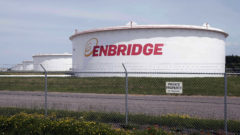
A group of Native American tribal citizens utilized a remote-operated underwater vehicle in the Straits of Mackinac to take a look at Enbridge’s Line 5 oil and natural gas pipelines. They may have inadvertently confirmed the most important finding in Great Lakes archaeology in at least a decade. Read the full story by the Detroit Free Press.

Original Article

Great Lakes Commission

Great Lakes Commission

https://www.glc.org/dailynews/20201030-ice-age

Ken Gibbons

The U.S. Geological Survey announced Friday the completion of a new mobile tool that provides real-time information on water levels, weather and flood forecasts all in one place on a computer, smartphone or other mobile device. 

Original Article

Upper Midwest Water Science Center

Upper Midwest Water Science Center

http://www.usgs.gov/news/national-news-release/usgs-unveils-mobile-flood-tool-nation

jlavista@usgs.gov

A $2.9 million cleanup of contaminated sediments along the Detroit River will help bring a new look to the Motor City and set the stage for the completion of the Riverwalk by linking two popular waterfront parks.

Original Article

Great Lakes Echo

Great Lakes Echo

http://greatlakesecho.org/2020/10/30/detroit-river-cleanup-brings-new-look-to-motor-city/

Guest Contributor

A $2.9 million cleanup of contaminated sediments along the Detroit River will help bring a new look to the Motor City and set the stage for the completion of the Riverwalk by linking two popular waterfront parks.

Original Article

Great Lakes Echo

Great Lakes Echo

http://greatlakesecho.org/2020/10/30/detroit-river-cleanup-brings-new-look-to-motor-city/

Guest Contributor

Books have the power to inspire and enlighten. Diversity in books, especially in literature published for youth, is essential. All children must see themselves in the pages of the books they read, especially as we inspire and motivate the next generation of Great Lakes and water leaders. The library continues to develop our collection to […]

Original Article

Wisconsin Water Library

Wisconsin Water Library

https://waterlibrary.aqua.wisc.edu/diverse-literature-belongs-in-our-library/?utm_source=rss&utm_medium=rss&utm_campaign=diverse-literature-belongs-in-our-library

Anne Moser

This past week, the Invasive Species Centre – through the Asian Carp Canada program – presented a panel of experts to discuss the threat of Asian carps, and the measures being taken to keep these invasive species out of our Great Lakes. Read the full story by the Kingston Herald.

Original Article

Great Lakes Commission

Great Lakes Commission

https://www.glc.org/dailynews/20201029-carp-session

Jill Estrada

The coronavirus pandemic is encouraging more Ohioans to be hikers, bicyclists, kayakers, and campers while at the same time devastating other parts of Lake Erie’s tourism-based economy, such as amusement parks and waterparks. Read the full story by the Toledo Blade.

Original Article

Great Lakes Commission

Great Lakes Commission

https://www.glc.org/dailynews/20201029-erie-recreation

Jill Estrada

The coronavirus pandemic is encouraging more Ohioans to be hikers, bicyclists, kayakers, and campers while at the same time devastating other parts of Lake Erie’s tourism-based economy, such as amusement parks and waterparks. Read the full story by the Toledo Blade.

Original Article

Great Lakes Commission

Great Lakes Commission

https://www.glc.org/dailynews/20201029-erie-recreation

Jill Estrada

Tamaracks are Wisconsin’s only native coniferous tree that is not an evergreen. The trees can be found throughout Wisconsin, but their numbers are dropping. Since 2000, over 150,000 acres of tamaracks have died across the Great Lakes states due to warmer temperatures, droughts and the eastern larch beetle, according to Treehaven at the University of Wisconsin-Stevens Point. Read the full story by the Milwaukee Journal Sentinel.

Original Article

Great Lakes Commission

Great Lakes Commission

https://www.glc.org/dailynews/20201029-wisconsin-tamarack

Jill Estrada

The COVID-19 pandemic brought droves of people to Wisconsin’s outdoors this year. And a study released Wednesday but conducted before the arrival of the coronavirus lays out just how important activities like biking, camping, hiking, golf and scores of other outdoor activities are to the state’s bottom line. Read the full story by the Wisconsin State Journal.

Original Article

Great Lakes Commission

Great Lakes Commission

https://www.glc.org/dailynews/20201029-wisconsin-tourism

Jill Estrada

Dams are inspected by the state of Michigan on a cycle of every three years. A recent inspection ordered by Macomb County Public Works Commissioner Candice Miller found the county’s dams to be in good shape with any chance of failure being highly unlikely. Read the full story by the Macomb Daily.

Original Article

Great Lakes Commission

Great Lakes Commission

https://www.glc.org/dailynews/20201029-macomb-dams

Jill Estrada

Dams are inspected by the state of Michigan on a cycle of every three years. A recent inspection ordered by Macomb County Public Works Commissioner Candice Miller found the county’s dams to be in good shape with any chance of failure being highly unlikely. Read the full story by the Macomb Daily.

Original Article

Great Lakes Commission

Great Lakes Commission

https://www.glc.org/dailynews/20201029-macomb-dams

Jill Estrada

Great Lakes Dredge & Dock Company, the nation’s largest provider of dredging services, announced October 22 that it is moving its national headquarters to Houston, Texas, from Oak Brook, Ill. The company will maintain a business and operations support center in the Oak Brook area. Read the full story by the Waterways Journal.

Original Article

Great Lakes Commission

Great Lakes Commission

https://www.glc.org/dailynews/20201029-gldd

Jill Estrada

There are an estimated 6.1 to 9.3 million lead service lines – pipes carrying drinking water – across the country. Ohio is second in the nation for lead service lines at an estimated 650,000 lead service lines carrying water to families’ homes, second only to IL. While it is unclear how much money it will really take to fully remove lead service lines in Ohio, on the low end it can run approximately $2,400 a line and on the high end approximately $7,100 a line, which could mean anywhere from $1.95 B to $4.62 B over 20 years to fully replace the lead service lines. 

Recently the Ohio EPA announced up to $20 million in grant-like funding to eligible lead service line replacement projects through the state’s Drinking Water Assistance Fund for fiscal years (July 1st – June 30th) 2021 and 2022. Communities can receive up to $1 million per a year. The funding criteria does require the replacement of both the public and private lead service line. The private service line is the line that runs generally from the curb of your house inside the house. 

Is your community taking advantage of this funding? Call your local elected officials to find out. 


As a mom I worry about my children and as a scientist and environmentalist, I probably know too much to taper my worrying. I worry about the food they are eating, about their mental and social well-being, and about what is in the water they are drinking. I worry so much, that when news of Flint, MI and then Sebring, OH’s lead-in-water crisis broke, I called their school districts’ operation manager to find out the last time they tested for lead in the school system. I also made my husband watch the documentary made about the Flint water crisis – there was a lot of anger and tension that night watching the documentary and rightfully so. 

No parent should ever have to worry if their child is unbeknownst to them being poisoned by lead. When I watched and heard stories about parents unknowingly giving their children water tainted with lead, it brought me to my knees. I saw and heard their pain and I knew the lives of these families had been changed forever. This is why I work so hard with my colleagues daily to fully remove lead service lines from communities across the Great Lakes and to make sure those unable to afford to replace their private water lead service line have access to grant funding. It is also why Freshwater Future trains community members on how to take action and protect themselves, while also working to change policies. It is why I, and my colleagues, also work with partners across the Great Lakes that deal with lead in paint, because we know we must take a one-touch approach to removing lead from houses completely. 


Author: Kristy Meyer, Freshwater Future Director of Policy

Original Article

Blog – Freshwater Future

Blog – Freshwater Future

https://freshwaterfuture.org/uncategorized/ohio-environmental-protection-agency-provides-funding-for-lead-service-line-replacement/

Alexis Smith

Protecting our children and family from lead based products go back as far as we can remember. In 1978, the use of lead based paint was banned inside buildings. During those times, great harm was discovered when the paint began to crack and chip, due to the bumping and rubbing against walls and window sills. Breaking down into dust and contaminating the air with microscopic particles unseen to the eye and inhaled, thus elevating blood lead levels and risk of lead poisoning. Air quality within the family’s home once compromised has been corrected and readjusted for a safer and healthier home by using water-based paint. Be that as it may, lead continues to persist as an everyday challenge for people within their home, if it is not the air being compromised, it’s their drinking water.
Lead service lines (LSL) have been known to increase the lead content within our drinking water for centuries. In 1986, new LSL’s were banned to be installed though existing lines were permitted to stay. Instead of removing them completely alternative strategies were implemented such as lining the pipes with a corrosion control solution to reduce the amount of lead leaching into the water, partial lead line replacement, and a federal lead regulation disallowing lead levels in water to surpass 15 parts per billion (ppb). 

The Center of Disease Control (CDC) pronounced the partial lead line replacement could backfire and substantially increase the content of lead in water. Similar to lead paint, if the LSL is disturb it would release higher concentrations of lead than if the pipe remained static. Making full lead line replacement superior.

To be clear there is no safe level of lead in your water, and full lead line replacement is the best option to eliminate lead from our water. However, the greater the concentration of lead the greater risk of health impairments. According to the CDC, exposure to high levels of lead may cause anemia, weakness, kidney and brain damage. Very high lead exposure can cause death. Lead can cross the placental barrier, which means pregnant women who are exposed to lead also expose their unborn child. Lead can damage a developing baby’s nervous system. Children who survive severe lead poisoning may be left with mental retardation and behavioural disorders that include but are not limited to increased aggression which may lead to more violence, and a decreased IQ level. 

Equitable opportunities sit at the heart of Freshwater Future’s core values. Lead is a serious issue and all communities should be given the proper care and resources to protect themselves and their family. That is why Freshwater Future has created a slew of content regarding lead to serve as an additional resource hub for community members looking for more information on how to protect their families and their drinking water from lead exposure.


Author: Brandon Tyus, Freshwater Future Community Programming & Policy Associate

Original Article

Blog – Freshwater Future

Blog – Freshwater Future

https://freshwaterfuture.org/uncategorized/how-the-lead-did-we-get-here/

Alexis Smith

Home to more than 30 million Americans, the Great Lakes region boasts a $7 billion commercial, recreational and tribal fisheries industry, which is reliant on a healthy ecosystem to thrive. Unfortunately, non-native species have taken hold in many of the lakes and surrounding wetlands and habitat. These aquatic and terrestrial invasive species are altering the basic functions of the Great Lakes and its connected waterways, disrupting fisheries and wildlife, hurting outdoor recreation, harming the economy, damaging infrastructure, and disrupting our way of life.

One of the biggest threats to Great Lakes fisheries and the broader Great Lakes economy is the invasive Asian Carp species, which already worked its way through the Mississippi River Watershed. Asian Carp has wrought profound economic and ecological damage in the ecosystems in which it has taken root. In places like the Illinois River, these invasive fish take over and make up 90 percent of the aquatic life present. In addition to the immense environmental damage they have caused, they present a threat to boaters—as the large fish, when startled by boats, jump out of the water and harm humans.

It is imperative to stop the invasive Asian Carp from entering the Great Lakes. Chief among prevention methods are the construction of new defenses to repel the fish at Brandon Road Lock and Dam in Illinois, which would provide a crucial block for Asian Carp to enter the Great Lakes watershed from the Mississippi River watershed, where it has already taken hold.

The Brandon Road Lock and Dam is a proposed project that would be built on the Chicago River, below where it meets Lake Michigan. This project would provide a partial separation between the two watersheds, providing extra defense against Asian carp. Congress is poised to authorize construction of the project, which will follow the completion of preliminary engineering designs. A final agreement allowing the blueprints to be drawn up between the Army Corps and Illinois, where the project will be built is still pending.

Asian carp are not the only species threatening the Great Lakes – nor is the connection between the Lake Michigan and the Mississippi River the only means by which invasive species can enter the great lakes.  Another way invasive species can enter the Great Lakes comes from the ballast water, which ships take on to ensure consistent displacement as cargo is loaded and unloaded. This water is transported from port to port, and with it comes all manner of aquatic life, native and invasive. These vessels have the responsibility to not pollute waters with their discharge. Under the Vessel Incidental Discharge Act (VIDA), the US EPA has the authority to protect U.S. waters from harmful biological pollution and needs to set strong standards that protect our Great Lakes, environment, economy, and communities from the harmful effects of non-native species. EPA proposed new discharge standards on Monday, October 26, which they claim will reduce ballast water’s environmental impact. It is accepting public comment on this proposal until November 25.

The 2020 election comes at a crucial moment for the Great Lakes and the communities that call this region home. We call on both major party presidential candidates, Joe Biden and Donald Trump, to pledge to build new prevention methods such as the Brandon Road Lock and Dam, as well as strengthen protections that clamp down on biological pollution from international vessels that discharge ballast water in the Great Lakes and other U.S. waters. These steps must be taken to ensure healthy lakes for the future to come.

The post Controlling Invasive Species in the Great Lakes: A 2020 Priority appeared first on Healing Our Waters Coalition.

Original Article

Healing Our Waters Coalition

Healing Our Waters Coalition

https://healthylakes.org/controlling-invasive-species-in-the-great-lakes-a-2020-priority/

Pavan Vangipuram

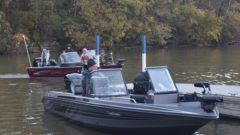
Fall Brawl: Sheffield Lake fishing derby inspires intense angling

Anglers as a group are generally nice people – polite, kind, generous and peaceful. But throw out a couple high-end, super-sweet fishing machines and stacks of cash, and they’ll brawl hard. For six weeks.

The 10th Annual B’Laster Fall Brawl began at 12:01 a.m Oct. 16 and runs through 8:00 a.m.

Read Now at Great Lakes Now.

Original Article

Great Lakes Now

Great Lakes Now

https://www.greatlakesnow.org/2020/10/fall-brawl-sheffield-lake-fishing-derby/

James Proffitt