Assessing the U.S. Temperature and Precipitation Analysis in March 2026
NCEI News Feed
https://www.ncei.noaa.gov/news/national-climate-202603
NCEI News Feed
https://www.ncei.noaa.gov/news/national-climate-202603
NCEI News Feed
https://www.ncei.noaa.gov/news/national-climate-202603
NCEI News Feed
https://www.ncei.noaa.gov/news/national-climate-202603
NCEI News Feed
https://www.ncei.noaa.gov/news/national-climate-202603
NCEI News Feed
https://www.ncei.noaa.gov/news/national-climate-202603
NCEI News Feed
https://www.ncei.noaa.gov/news/national-climate-202603
NCEI News Feed
https://www.ncei.noaa.gov/news/national-climate-202603
NCEI News Feed
https://www.ncei.noaa.gov/news/national-climate-202603
NCEI News Feed
https://www.ncei.noaa.gov/news/national-climate-202603
NCEI News Feed
https://www.ncei.noaa.gov/news/national-climate-202603
NCEI News Feed
https://www.ncei.noaa.gov/news/national-climate-202603
NCEI News Feed
https://www.ncei.noaa.gov/news/national-climate-202603
NCEI News Feed
https://www.ncei.noaa.gov/news/national-climate-202603
NCEI News Feed
https://www.ncei.noaa.gov/news/national-climate-202603
NCEI News Feed
https://www.ncei.noaa.gov/news/national-climate-202603
NCEI News Feed
https://www.ncei.noaa.gov/news/national-climate-202603
NCEI News Feed
https://www.ncei.noaa.gov/news/national-climate-202603
NCEI News Feed
https://www.ncei.noaa.gov/news/national-climate-202603
NCEI News Feed
https://www.ncei.noaa.gov/news/national-climate-202603
NCEI News Feed
https://www.ncei.noaa.gov/news/national-climate-202603
NCEI News Feed
https://www.ncei.noaa.gov/news/national-climate-202603
NCEI News Feed
https://www.ncei.noaa.gov/news/national-climate-202603
NCEI News Feed
https://www.ncei.noaa.gov/news/national-climate-202603
NCEI News Feed
https://www.ncei.noaa.gov/news/national-climate-202603
NCEI News Feed
https://www.ncei.noaa.gov/news/national-climate-202603
NCEI News Feed
https://www.ncei.noaa.gov/news/national-climate-202603
NCEI News Feed
https://www.ncei.noaa.gov/news/national-climate-202603
NCEI News Feed
https://www.ncei.noaa.gov/news/national-climate-202603
NCEI News Feed
https://www.ncei.noaa.gov/news/national-climate-202603
NCEI News Feed
https://www.ncei.noaa.gov/news/national-climate-202603
NCEI News Feed
https://www.ncei.noaa.gov/news/national-climate-202603
NCEI News Feed
https://www.ncei.noaa.gov/news/national-climate-202603
NCEI News Feed
https://www.ncei.noaa.gov/news/national-climate-202603
NCEI News Feed
https://www.ncei.noaa.gov/news/national-climate-202603
NCEI News Feed
https://www.ncei.noaa.gov/news/national-climate-202603
NCEI News Feed
https://www.ncei.noaa.gov/news/national-climate-202603
NCEI News Feed
https://www.ncei.noaa.gov/news/national-climate-202603
NCEI News Feed
https://www.ncei.noaa.gov/news/national-climate-202603
NCEI News Feed
https://www.ncei.noaa.gov/news/national-climate-202603
NCEI News Feed
https://www.ncei.noaa.gov/news/national-climate-202603
NCEI News Feed
https://www.ncei.noaa.gov/news/national-climate-202603
NCEI News Feed
https://www.ncei.noaa.gov/news/national-climate-202603
NCEI News Feed
https://www.ncei.noaa.gov/news/national-climate-202603
NCEI News Feed
https://www.ncei.noaa.gov/news/national-climate-202603
Great Lakes Echo
https://greatlakesecho.org/2026/04/08/study-highlights-need-for-community-engagement-in-great-lakes-protection/
CHICAGO, IL (April 7, 2026) – Today, the Alliance for the Great Lakes and its partners announced a new, publicly available dashboard that provides near real-time data about water quality in the Western Basin of Lake Erie.
Nutrient pollution is a severe threat to water quality across the Great Lakes region, with particularly acute impacts in the Western Basin of Lake Erie. Excess phosphorus runoff fuels harmful algal blooms that contaminate drinking water sources, threaten public health, degrade aquatic ecosystems, and disrupt local economies dependent on fishing and tourism. Compounding the problem, there has historically been no centralized system for monitoring water quality upstream of Lake Erie, leaving the sources of nutrient pollution largely untracked and making it difficult to strategically allocate conservation funding to the areas where it can have the greatest impact.
To address this data gap, the Michigan Department of Agriculture and Rural Development (MDARD), awarded a $4.86 million grant to the Alliance for the Great Lakes and its partners, LimnoTech and Michigan State University, to install water quality monitoring equipment across five priority sub-watersheds. The project is also supported by a $600,000 grant from the Erb Family Foundation.
“To protect Lake Erie from pollution, we have to know where it comes from and how it travels through the watershed,” said Angela Blatt, Alliance for the Great Lakes’ Senior Agriculture Policy Manager. “This monitoring network and the public dashboard will help agencies, farmers, and communities better target conservation and land management practices to prevent pollution from running off the landscape into our shared water. We applaud the leadership of Director Boring, who has continually emphasized the importance of expanding monitoring and data collection to help guide conservation decision making.”
“At MDARD, we’re focused on science-driven solutions that improve our understanding of nutrient loss and transport so we can make meaningful progress toward water quality improvements. This expanded monitoring network and the new nutrient tracking dashboard are concrete examples of the innovation that the public and private sectors can deliver when we work together,” said MDARD Director Tim Boring. “These powerful tools will provide real-time data that helps agencies and organizations – and the farmers and communities we serve – take targeted actions to keep nutrients on fields and out of our waterways. I’m proud to support this work and grateful to our fellow partners for bringing this dashboard to life.”
The project uses higher spatial density monitoring instrumentation with a particular focus on understanding phosphorus trends. The comprehensive monitoring network has been collecting data since October 2024, and now this information is available on a public dashboard at: https://greatlakes.org/wlebmonitoring/. Findings based on the first year of data collection underscore the role of landscape characteristics and targeted restoration in mitigating event-driven runoff and sediment losses.
“This project uses high tech sensors and sampling methods to get a glimpse of how fast water runs off the landscape and how much sediment and phosphorus is in that runoff at 50 points within these watersheds. Every rain event is an opportunity to look for signs of progress and improvements in each of these sub-watersheds. We will be able to detect changes faster and report back on progress sooner than downstream monitoring,” said Ed Verhamme, Senior Engineer at LimnoTech, who is working to maintain the equipment on behalf of MDARD.
The monitoring spans five of Michigan’s priority sub-watersheds – Lime Creek, Stony Creek (South Branch River Raisin), the headwaters of the Saline River, Nile Ditch, and the S.S. LaPointe Drain. The system, which is currently funded through 2029, tracks area hydrology, sediment transport, and phosphorus transport across these landscapes. To develop a more complete understanding of nutrient loading in these priority watersheds, the project’s monitoring extends beyond streams to include subsurface agricultural drains.
“Edge-of-field studies show in certain areas that most of the phosphorus leaving farm fields is transported through tile drainage systems,” said Jeremiah Asher, Assistant Director of the Institute of Water Research at Michigan State University. “By deploying a high-density subsurface monitoring network in the South Branch of the River Raisin, we aim to improve our ability to understand, predict, and ultimately manage nutrient losses from these pathways.”
The online dashboard makes most of the project data available for viewers to see real-time conditions at all 50 locations. A project landing page shows each watershed and allows the viewer to navigate the different types of sensors and view recent and historical data trends. The project dashboard also has sign-in capabilities where users can download data.
###
Contact: Don Carr, Media Director, Alliance for the Great Lakes dcarr@greatlakes.org
The post New Public Dashboard Provides Data on Water Pollution Flowing into Lake Erie appeared first on Alliance for the Great Lakes.
News - Alliance for the Great Lakes
https://greatlakes.org/2026/04/new-public-dashboard-provides-data-on-water-pollution-flowing-into-lake-erie/
Seeing the value of wetlands through his grandfather’s eyes was a revelation for filmmaker Ben Albert. More than just wet, bug-infested places, Ben got to see wetlands as a diverse and delightful ecosystem, if you approach them with the same curiosity as his grandfather, Cal DeWitt.
River Alliance of Wisconsin’s Agriculture and Water Policy Director Mike Tiboris interviewed Ben at the 98.7 FM WVMO studios to talk about the deeper meaning of Ben’s project documenting the Waubesa Wetlands. This interview was featured on the VMO Show on March 31, 2026.
Ben’s film “An Invitation to Wonder” is now being aired on PBS affiliates across the country. Wisconsinites can stream it now on PBS Passport. Learn more about the film at waubesafilm.com.
The following interview has been lightly edited for brevity and clarity.
Tiboris: Welcome to the VMO show. I’m Mike Tiboris from River Alliance of Wisconsin. And today on the program, I’m joined by Ben Albert, the Milwaukee-based documentary filmmaker whose recent film, “An Invitation to Wonder,” will have a special free community showing at the McFarland Performing Arts Center on April 9th at 6:30 p.m. The award-winning film explores the Waubesa Wetland south of Monona with retired UW-Madison wetland scientist Calvin DeWitt, who also happens to be Ben’s grandfather. Ben Albert, thanks for joining me today.
Ben: Hi, Mike. Thank you for having me on your show.
Mike: So, Ben, tell us a little bit about the film and what inspired you to make it.
Ben: “An Invitation to Wonder” explores Waubesa Wetlands, just south of Madison. And it really aims to uncover the mysteries and magic of wetland ecosystems in a way that I feel like not many other films have done. These are some of the most misunderstood and underrepresented habitats on the planet. So, the film is trying to provide a new lens on wetlands. But it also is definitely… it’s a family story.
There’s kind of three characters. There’s the wetland, of course, and then there’s my grandfather, Cal DeWitt. And I’m also in the film. When I was a kid, I actually spent a lot of time in the wetland. My mom would drop my siblings and I off at my grandparents house. Almost every Friday growing up, my grandma would take us out into the marsh with a dip net and a bucket and we would net through the creek and uncover this really amazing web of life that was there that you don’t really see on the surface when you go out to a wetland ecosystem. Lots of people think of it as just a green, wet place. But when you look beneath the surface and uncover some of the organisms there, it is just this fascinating web of life.
Mike: You mentioned that your grandfather is a sort of character in the film, and I wonder a little bit about what lessons you learned filming it with him that were new to you from your experience with him as a child.
Ben: Yeah, a lot of lessons. Some people might know my grandpa, some people might not, but he is just an incredibly passionate scientist. He has lived on the edge of the wetland for over 50 years, him and my grandma Ruth. And he also taught at UW-Madison and taught in environmental science. And then brought his students out to the marsh to teach wetland ecology courses. So he’s very connected to this land, both with his studies and his personal life.
So I knew that just with his very unique perspective and then my experiences as a kid in the marsh that there was a story there and I just I didn’t know what it was at the time when I started but I wanted to uncover that. He instilled so much wisdom on me through that process and he loves to tell stories. I think one of the most amazing moments is I got to take him out canoeing in the marsh again. I’m not going to say too much about it because it’s in the film. But you know, he had just turned 86 years old. And just seeing the wonder, the childlike wonder and curiosity that he still has at his old age was very inspiring to me. And I think that’s something that we can all strive to maintain as we grow up. And I think it’s a way that we can, no matter where you are in the world or what your situation is, be able to find some of that wonder and curiosity and joy of, you know, just the world. And in his life, he focused that on this specific wetland. But I think it’s very universal and something that we can take away that applies to other things in life as well.
Mike: If you’re just joining us, I’m here today with Wisconsin-based documentary filmmaker Ben Albert, whose recent film about Lake Waubesa’s wetlands will be having a free community showing at the McFarland Performing Arts Center on April 9th. Ben, before the track break there, you were talking about wonder, and the movie’s called “An Invitation to Wonder.” So what does wonder mean in that context?
Ben: Yeah, in the context of this film, “An Invitation to Wonder” is taking wetland ecosystems, this unglamorous place that, you know, I think a lot of people when they think of wetlands, it’s a green, wet, bug-infested place that’s maybe a little bit you know, uninhabitable, kind of scary to some people, but when you spend the time out there as my grandfather has done and then later as I do through the film I spent around six months filming in the wetland. Three of those months were consistently going out almost every day. But the invitation to wonder is looking at this place with my grandfather’s perspective honestly with a perspective that if you look closely and you’re patient that the wonder is always there. Specifically talking with the natural world I think this applies to, you know, much beyond just wetland ecosystems.
I hope that people after watching this can take that message and look at what might be in their own backyard and, you know, think just like, do I actually understand this place that I live? I think a big issue that we have with, you know, our relationship with the natural world is well, just that we don’t have that relationship anymore. Like we’ve lost that connection to where we live in a sense. So the invitation to wonder is kind of thinking about what’s around me, what’s in my own backyard, what’s in my neighborhood, and really thinking about the natural world as being part of our communities again, I think is very important.
Mike: I think a lot of listeners are pretty familiar with the chain of lakes around Madison connected by the Yahara River, but probably less so with the Waubesa Wetlands specifically. What are some surprising and interesting things about it that you’d like to share?
Ben: Yeah, I mean, I think one of the most surprising things for me was just how wild the wetlands felt when I was exploring them. I only saw about maybe five other people my entire summer there. And the animals there are also still, like, you can kind of tell when you’re in a place that has been… there’s not a huge human presence. The wildlife in Waubesa Wetlands are not habituated to people. So, for example, sandhill cranes in the wetland, I was lucky to get within a quarter mile of a crane or else it would spook and, you know, you would see it flying away in the distance and I would lose my shot of it. But if you go into Madison, Wisconsin, you know, in the city, we have sandhill cranes that you can walk up 15 ft next to.
So it was very interesting to be in a place that still felt very wild. Even like the blackbirds, the blackbirds would always kind of alarm all the other critters and animals I was there when I was trying to when I was canoeing through or walking through. There’d be sometimes blackbirds flying over my head shooting off their alarm calls. And then I knew I was toast trying to film anything else for the next few hours because everything knew of my presence. So that’s one thing. I would say I also just learned a bit more about the importance of the wetland for water, for filtering our water, the amount of water it holds is just extraordinary. It can be flooding up and down the Yahara chain. In Waubesa Wetlands you don’t really notice the flooding because it just absorbs the water. And it also releases an incredible amount of water. Just deep spring alone pumps out about 10,000 gallons of water per minute. And that, of course, feeds into the rest of the water system. So, it’s a very important habitat for us right here in Madison.
Mike: Welcome back to the VMO show. I’m speaking today with Wisconsin documentary filmmaker Ben Albert, whose film, “An Invitation to Wonder” about the Waubesa Wetlands, will have a free community showing on April 9th, and tickets can be reserved at the McFarland Performing Arts Center website. So, Ben, tell me about the filming process for the documentary. How did you go about capturing the experience of the wetlands?
Ben: So this was my first long- form documentary. Up until this point I had made maybe a 10-minute documentary and for that I had an outline and did pre-production and had the narrative arc set in a way. But for this film, I felt like I had to just go out and experience the wetland for myself before I could even really decide what the story should be or what the most impactful parts of the film would be. And of course, I knew my grandpa was going to be a character. And he was going to help guide the story, but other than that, I just took it one day at a time.
And as I mentioned earlier, I camped at my grandparents’, at their house. They live on a glacial drumlin that’s surrounded basically 360 degrees by the marsh. So they’re just immersed in this world and it’s a pretty incredible spot to live. And gives me incredible access to this habitat. So I camped in their backyard. It was COVID time. I had a bit of a reset in my life and had the time to do this film. I think a lot of us were in that situation during COVID and yeah, it was just a natural… the story just unfolded naturally day after day of really just canoeing out into the marsh. I usually went out around sunrise with my camera and it was interesting because especially during the first few months I usually had an objective I wanted to complete that day. Like I really had hoped to film sandhill cranes nesting in the spring and filming their colts, you know, as they grow. Never filmed them. Never, never found a nest.
And then there was, you know, a few other sequences I was really hoping to capture. And every time I went out to capture those things, the wetland would always throw something else at me that would distract me and bring my attention to something else for the day. And at first that was very frustrating because it was hard to, you know, have an intentional story going into this. But I realized over time that I had to just let go of my human expectations and ideas of what the film should be and just experience it and capture it as it is. And that really led to me being able to capture a portrait of the whole ecosystem. And I don’t want to say the whole ecosystem because I think the film, you know, it’s just the surface of this place. Even though we go deep and we go underwater, we talk about the history. I really think that there’s so much more mystery and things to discover there that we don’t know about yet. and my grandpa would say the same.
But the story just really unfolded naturally in that way and all those little tangents I talked about allowed me to capture this portrait of the whole habitat. Then I sent it to a few friends for feedback. I also have a co-writer/producer who helped with the project, Moss Hegge. And they are very good with narrative storytelling. So they looked at it and helped me determine what the missing pieces were. And a big one was just the third character, which ended up being myself. And I don’t love, you know, being in front of the camera, but what we decided was just that… my relationship with my grandfather and with the wetland was a key part to the story as well because really it’s… at its core, you know, it’s my grandpa passing on that knowledge and wisdom that he’s learned from the wetland to me and then me being able to present that to more people. I ended up doing… ended up narrating the film, some of the film, just to help guide certain pieces. And I also had all of this footage that was just candid moments of me in the wetland experiencing different things, struggling through the peat, going out at midnight, to go under a full moon. And I was never planning to include it in the film, but after making that decision to have myself as a character, I was able to weave in these very authentic, candid moments into the film that I think helped tie it all all together.
Mike: You’re listening to the VMO show and I’m talking to documentary filmmaker Ben Albert today. His documentary about our very own Waubesa Wetlands will have a free community showing on Thursday, April 9th at the McFarland Performing Arts Center. We’re very lucky to have such abundant water in Wisconsin. How do you suggest that people get a better connection with the water around them?
Ben: It’s funny, I don’t want to encourage thousands of people to go explore Waubesa Wetlands because we want to keep these places wild. But I think just discovering where you live and going out in a canoe or kayak is really the only way, the best way to do it. There’s only so much you can learn about through a film or through a textbook. And I think just going out and experiencing yourself is the best way to do that.
Mike: And having such a great documentary will be a way that people can experience it. Ben, can you give the audience a little bit of a preview of what they should expect?
Ben: Yeah, I think “An Invitation to Wonder” will force you to slow down a little bit. We really wanted to give that authentic feeling of being in the natural world where you’re… you open yourself to learning from it. And that doesn’t happen quickly like a lot of other nature documentaries that throw in the fast chase scene of the lion or, you know, are cutting the sequences really quick. That’s not really how it is how it feels like to be in nature. So, we wanted to portray it accurately. But I think it’s a beautiful film in the sense that you really get to experience what a wetland… what it’s like to be in a marsh and you get to see past what the vast majority of the public’s perception is of wetlands. You get to see the mysterious aspects of this place. You get to see under the surface. You know, half of a wetland is the hydrology system and under the water, which I fortunately with some camera techniques was able to capture that.
So, yeah, I hope it is something new to most audiences. And you get to witness my grandpa and his… who’s lived in the town of Dunn, just south of … near McFarland for over most of his life, was very active in that community and the town of Dunn, you know, my grandpa worked with them and with his neighbors to actually preserve the marsh in the 1970s. So, it used to be unprotected. There were even proposals, I believe, for a highway to be built through this place and the town came together as a community really through what we’ve been talking about just falling in love with the land. And through that they were able to gain the support to protect it permanently and it still is protected permanently.
Mike: Ben Albert’s award-winning documentary, “An Invitation to Wonder” about the Waubesa Wetlands, will be shown at the McFarland Performing Arts Center on Thursday, April 9th at 6:30 p.m. The showing is free and all ages, though tickets may be reserved in advance through the McFarland Performing Arts Center’s website. More information about the film can be found at waubesafilm.com. Ben Albert, thanks for joining me on the VMO show.
Ben: Thanks so much for having me on.
– Stacy Harbaugh, Communications Director
This message is made possible by generous donors who believe people have the power to protect and restore water. Subscribe to our Word on the Stream email newsletter to receive stories, action alerts and event invitations in your inbox. Support our work with your contribution today.
The post Ben Albert: The Wonder of a Wisconsin Wetland appeared first on River Alliance of WI.
Blog - River Alliance of WI
https://wisconsinrivers.org/ben-albert-waubesa-wetlands-film/

By Tracy Samilton, Michigan Public
The Great Lakes News Collaborative includes Bridge Michigan; Circle of Blue; Great Lakes Now at Detroit PBS; Michigan Public, Michigan’s NPR News Leader; and The Narwhal who work together to bring audiences news and information about the impact of climate change, pollution, and aging infrastructure on the Great Lakes and drinking water. This independent journalism is supported by the Charles Stewart Mott Foundation. Find all the work HERE.
U.S. Secretary of Health and Human Services Robert F. Kennedy Jr. and Environmental Protection Agency Administrator Lee Zeldin announced new initiatives to tackle microplastics in the human body and drinking water on Thursday.
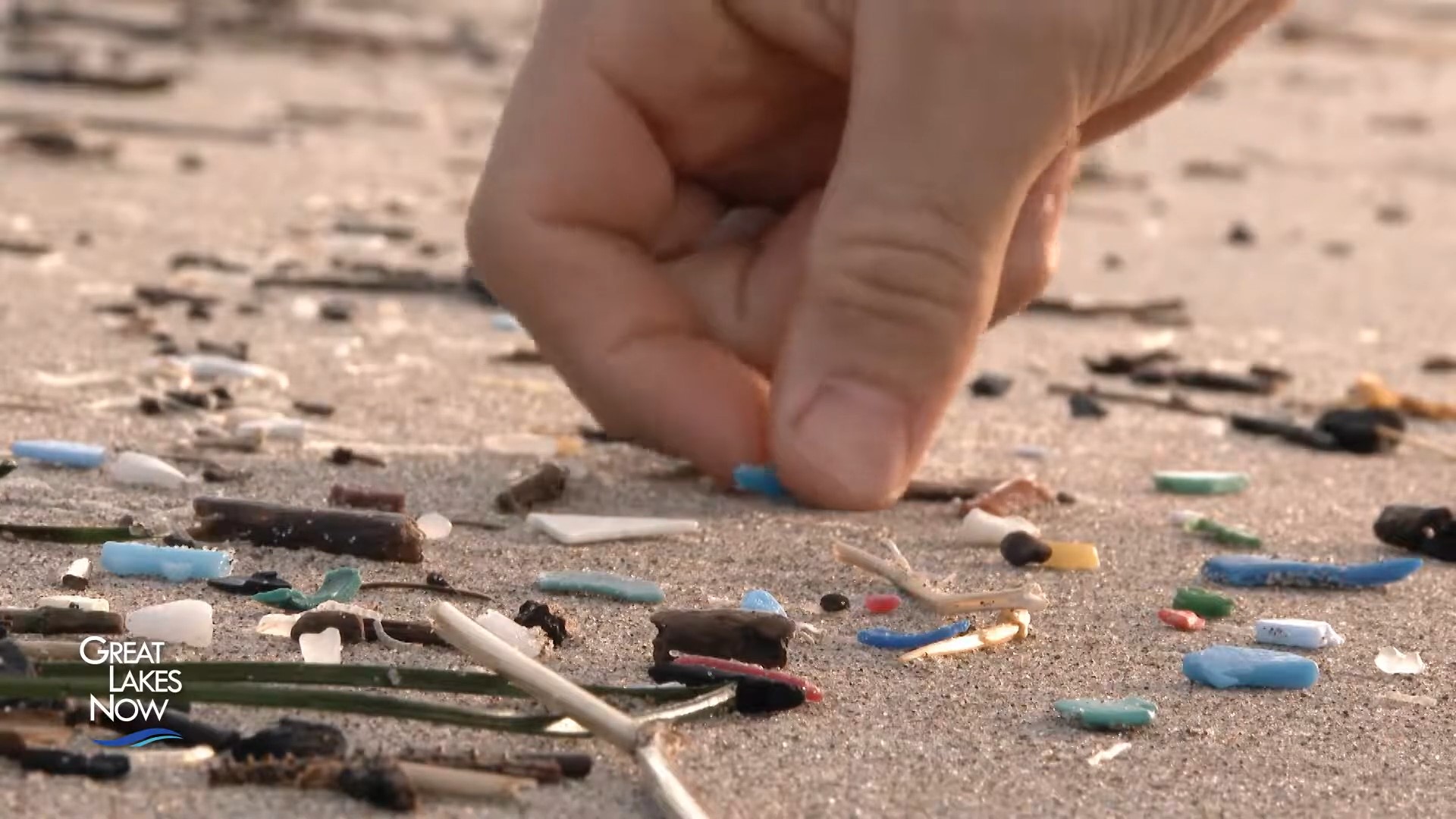
Microplastics are tiny pieces of plastic – as small as nano-sized pieces – that are increasingly ubiquitous in water supplies and in the human body.
Zeldin said the environmental agency will add microplastics and pharmaceuticals to its list of concerning chemicals in drinking water. “For the first time in the program’s history, EPA is designating both microplastics and pharmaceuticals as priority contaminant groups,” he said.
Kennedy said the government will create a $144-million program called STOMP (Systematic Targeting of Microplastics).
“We are focusing on three questions, what is in the body, what’s causing harm, and how do we remove it?” Kennedy said. “We still do not have clear answers about causation or solutions,” Kennedy said. “We do not yet understand how these particles interact with the immune system, the endocrine system or the neurological system, and we do not have validated methods to remove them safely.”
But a number of environmental groups said the actions taken by the government aren’t sufficient.
“Microplastics are a serious – and growing – threat to our health and our environment,” Erin Doran of Food & Water Watch said in a statement. “Without monitoring of our drinking water, we can’t know the full scale of this crisis. Today’s announcement …ultimately falls short on its own. It does not reflect the urgent need for a comprehensive nationwide monitoring program for microplastics in drinking water now.”
Samantha Pickering leads the public and environmental public health program at the Michigan Environmental Council. She said the EPA’s acknowledgment of the problem is a good thing, but there’s more that should be done now, like adding microplastics to the government’s official list of contaminants in drinking water that must be monitored.
She said she agrees with the EPA that much more research needs to be done to determine the health effects of microplastics. But she said there’s enough evidence already that microplastics are bad for the environment and for humans.
“I appreciate that the EPA is acknowledging that they’re going to start watching it. but it needs to be shifted into a precautionary approach. I don’t see why they wouldn’t be able to start taking action,” she said.
Pickering said some states, including California and Michigan, are ahead of the U.S. EPA in tackling the problem. “Having the Great Lakes ecosystem, and so much Great Lakes shoreline, we’re a bit more responsible for our stewardship.”
Michigan will be conducting a pilot to test five different drinking water systems for the contaminants, she noted, and it will also, for the next three years, test about 200 of its inland lakes and streams for microplastics.
And Pickering said California has passed a law requiring the adoption of a system for testing drinking water supplies, as well as projects to keep plastics out of the marine environment.
The post U.S. EPA announces action on microplastics, but Michigan critics say it’s not enough appeared first on Great Lakes Now.
Great Lakes Now
https://www.greatlakesnow.org/2026/04/07/u-s-epa-announces-action-on-microplastics-but-michigan-critics-say-its-not-enough/

By James Bruggers, Inside Climate News
This article originally appeared on Inside Climate News, a nonprofit, non-partisan news organization that covers climate, energy and the environment. Sign up for their newsletter here.
When former top Environmental Protection Agency official Judith Enck noticed a cavalcade of chemical and plastics industry lobbyists visiting the agency’s Washington headquarters in February, she wondered what could be up.
An answer came weeks later: The agency is moving toward resurrecting a proposal from the first Trump administration to ditch Clean Air Act regulations involving one of the industry’s go-to methods for chemically processing plastic waste into new industrial feedstocks or fuels.
The EPA is curiously approaching this by embedding a request for comments on so-called “advanced recycling” via a method known as pyrolysis in a rulemaking on an entirely different category of waste incineration.
“I thought, could it be a mistake, or are they quietly trying to push this through?” Enck, a former EPA regional administrator during the Obama presidency, wondered in an interview on Tuesday. Just one paragraph related to advanced recycling of plastics was included in a 17-page Federal Register notice for a proposed rule on wood incineration.
Either way, the stakes are significant, according to industry and environmental advocates alike.
For several years, industry officials have pushed chemical processing of plastic waste as a primary solution to the global plastic waste crisis, while advocating for regulatory relief at the state and federal levels. The industry has also pressed for such processing to be a pillar of a possible global plastics treaty.
“We support policies that recognize the products of advanced recycling as recycling and policies that recognize advanced recycling as a highly engineered manufacturing process that can produce new virgin equivalent plastics and chemicals,” according to the website of the American Chemistry Council, the chemical industry’s primary lobbying group in the United States.
But environmental advocates view much of what the industry calls either chemical recycling or advanced recycling — and particularly the method known as pyrolysis — as a dirty, polluting sham.
“It’s not recycling,” said James Pew, director of the federal clean air practice at the environmental group Earthjustice. “To the extent these incinerators produce anything significant other than toxic pollution, a very small portion of the plastic waste they burn is turned into an oily waste that can be fed back into the chemical production process or burned [as] dirty fuel. And it encourages unlimited production of single-use plastics.”
The EPA’s movement toward easing clean-air rules to boost chemical processing of plastic waste comes amid growing concerns about a global plastics crisis.
The United Nations Environment Programme has estimated that the world produces 430 million metric tons of plastic each year, over two-thirds of which are short-lived products that soon become waste. A growing amount, or 139 million metric tons in 2021, gets tossed after just a single use.
Plastic production is set to triple by 2060 under a “business-as-usual” scenario, and less than 9 percent is recycled. Plastic production and the mismanagement of plastic waste contribute to climate change, biodiversity loss and pollution, U.N. officials have concluded.
Scientists have also found the smallest of plastic particles inside human bodies, increasing the risk of respiratory, reproductive and gastrointestinal problems and some cancers.

Because plastics are made of thousands of chemicals, they are not easily recyclable. Most plastic recycling is done through a mechanical process that separates certain types by chemical composition, then cleans, shreds, melts and remolds them.
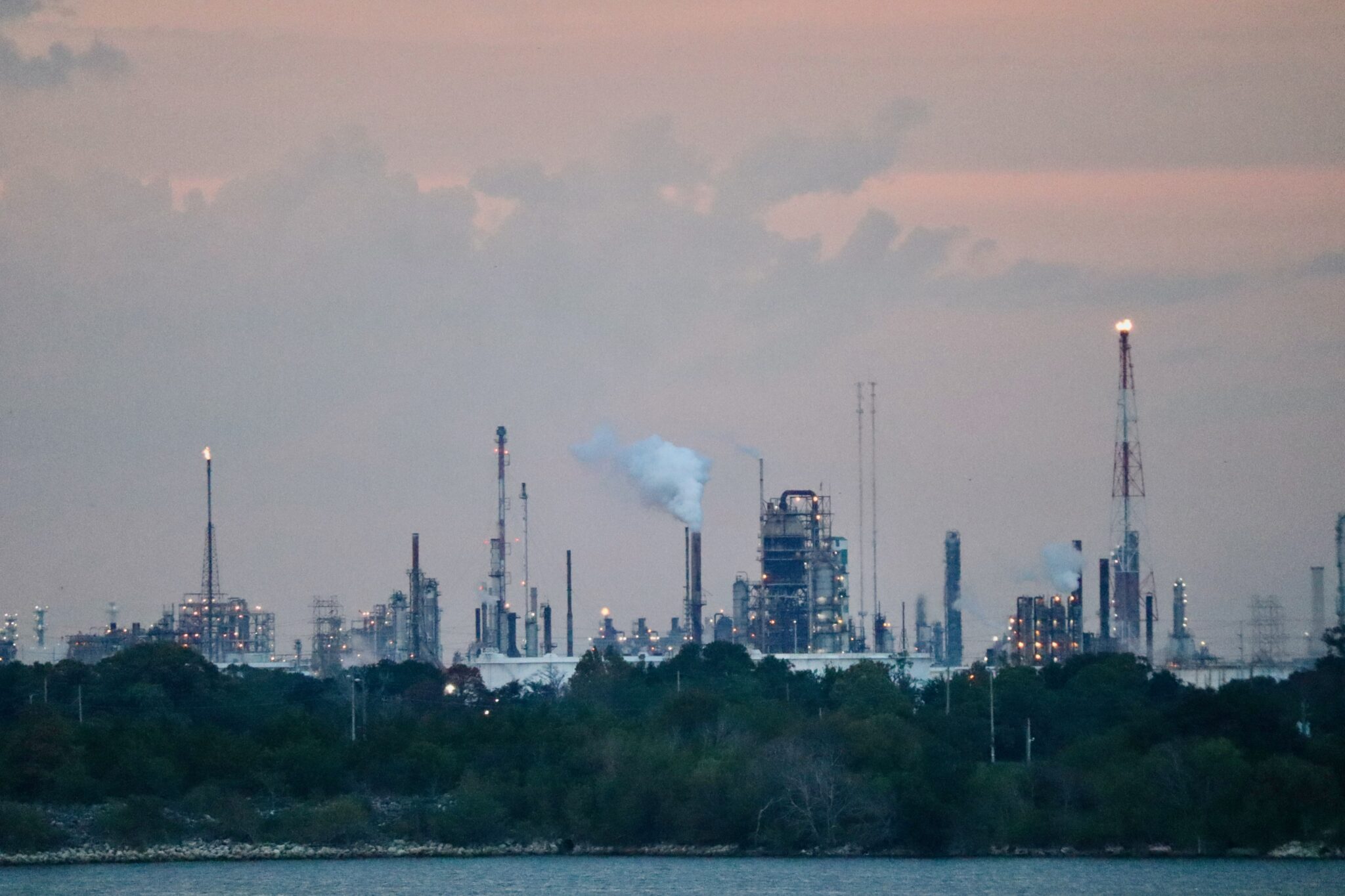
Pyrolysis, or the process of decomposing materials at very high temperatures in an oxygen-free environment, has been around for centuries. Traditional uses range from making tar from timber for wooden ships to transforming coal into coke for steelmaking.
More recently, major oil companies and small startups alike have sought to develop the technology as an alternative for recycling a wide variety of plastic waste, with limited success and serious pushback from environmental interests.
A 2023 report from Enck’s Beyond Plastics and the International Pollutants Elimination Network examined 11 chemical recycling plants operating in the United States. Noting low output of recycled plastics and challenges such as fires and spills at production units, the report concluded the technology “has failed for decades, continues to fail, and there is no evidence that it will contribute to resolving the plastics pollution crisis.”
The chemical industry, however, has been steadfast in its backing of chemical recycling, including the pyrolysis method. On the same day the EPA announced it was developing a new rule on advanced recycling, the American Chemistry Council praised the agency. Since no oxygen is involved in pyrolysis, the group said, the process cannot be considered incineration and should not be regulated as such.
“These advanced recycling technologies convert used plastic into valuable feedstocks to make new products, rather than combusting the plastic for energy purposes or landfilling it,” said Ross Eisenberg, president of an arm of the council called America’s Plastic Makers, in a press release.
The details of what the EPA will propose have not yet been revealed. But the agency’s March 17 announcement and supporting documents point to the kind of regulatory relief it sought to provide during the first Trump term—before running out of time.
Pyrolysis has largely been regulated as incineration for three decades and has therefore had to meet stringent emission requirements for burning solid waste under the federal Clean Air Act.
In the final months of the first Trump administration, the EPA proposed an industry-friendly rule change stating that pyrolysis does not involve enough oxygen to constitute combustion, and that emissions from the process should therefore not be regulated as incineration.
In 2023, the Biden administration reversed course after much criticism from environmental groups and some members of Congress.
The agency that year noted that it had “received significant adverse comments” on the provision. In taking final action to withdraw the proposal, the agency said the move would “prevent any regulatory gaps and ensure that public health protections are maintained.”
The EPA’s recent request for comment on pyrolysis was included in a rule-making involving incinerators that burn wood or yard waste, which are sometimes used after natural disasters such as hurricanes. “Revising the definition would clarify that the … rule does not regulate pyrolysis units used in advanced recycling operations,” the agency said.
Beyond Plastics counted 13 representatives from chemical companies or lobbying associations on the EPA headquarters visitor log for Feb. 10, a month before the announcement. Three senior officials from the American Chemistry Council visited on Feb. 12.
“While communities across the country are dealing with the health and environmental costs of plastic pollution, the industry appears to have a direct line to the agency that is supposed to protect us,” Enck said. “These visitor logs are particularly concerning at a time when the Trump administration is rolling back environmental protections and is quietly proposing to remove Clean Air Act requirements from so-called ‘chemical recycling’ facilities. Why did the EPA bury such a major proposed change?”
A written statement from the EPA press office said existing solid waste incineration and pyrolysis regulations were vague, and that the agency is seeking information on an “appropriate remedy.”
The agency has scheduled an online virtual public hearing for April 6.
Matthew Kastner, senior director of media relations for the American Chemistry Council, pointed to occasions in 2023 and 2024 when Enck appeared on the EPA visitor log. Both his group and hers, he said, “have the right under the First Amendment to petition the government.”
He added that the council’s member companies are regulated by the EPA, “thus engagement on issues ranging from compliance to policy development is both appropriate and expected.”
Earthjustice’s Pew is concerned that the EPA will exempt pyrolysis units from Clean Air Act permitting and any requirement to measure or report their emissions. The result would be, he said, “a perverse incentive” to build more of them.
“As a practical matter, this definition change would mean EPA is completely deregulating a whole class of incinerators, these so-called pyrolysis units,” he added. “And their pollution is really toxic.”
The post After Chemical Industry Lobbying, EPA Considers Dropping Clean Air Protections for Plastic Waste Recycling appeared first on Great Lakes Now.
Great Lakes Now
https://www.greatlakesnow.org/2026/04/07/after-chemical-industry-lobbying-epa-considers-dropping-clean-air-protections-for-plastic-waste-recycling/

The Trump administration plans to close four US Forest Service research facilities in Michigan, shifting scientists out of the state as it reorganizes and consolidates the agency.
Officials have not announced a closure date for the facilities, located in the Lower Peninsula communities of East Lansing and Wellston, between Manistee and Cadillac, and the Upper Peninsula communities of Houghton and L’Anse, saying changes will be implemented over the next year.
The Forest Service headquarters will also move from Washington, DC, to Salt Lake City in what Agriculture Secretary Brooke Rollins described as a measure to save money, boost logging and put workers “closer to the landscapes we manage.”
“Establishing a western headquarters in Salt Lake City and streamlining how the Forest Service is organized will position the Chief and operation leaders closer to the landscapes we manage and the people who depend on them,” Rollins said in a news release.
The announcement prompted dismay in Houghton, where workers with the US Forest Service Northern Research Station collaborate closely with researchers at Michigan Technological University and the Michigan Department of Natural Resources. A smaller group in L’Anse conducts forest inventories and analysis.
“It’s very disappointing,” said David Flaspohler, dean of the university’s College of Forest Resources and Environmental Science. “I understand priorities change from one administration to the next, and this administration is interested in increasing the volume of timber that is coming off of the national forests. To do that in a sustainable, safe way, you have to have people that are trained in the latest science and silviculture.”
Flaspohler estimated between 20 and 25 people work at the Houghton station, including scientists and other staff. The station has a “multidecadal history of partnerships” with researchers and foresters in the UP, he said.
The heavily forested Upper Peninsula contains more than 8 million acres of forestland, split roughly evenly between private or locally owned timberland and state and federal forests.
Beyond conducting research that aims to keep northern forests healthy and productive, Flaspohler said, the lab is an important economic contributor to a region with scarce jobs.
“This lab with its many employees — who all had salaries and invested in the region just like any employed person does — that’s going to be lost.”
The Michigan facilities are part of a network of 57 nationwide. Nineteen will remain following the closures, with the Forest Service instead establishing regional hubs that serve multiple states.
A Madison, Wisconsin, hub will serve Michigan, Illinois, Indiana, Iowa, Wisconsin, Minnesota and Missouri.
Michigan DNR spokesperson John Pepin said leaders in the state Forestry Resources Division are not yet sure how the changes will affect the state agency, which works closely with federal partners.
“It’s pretty apparent that the details and individual impacts to a lot of programs are not worked out yet,” Pepin said.
The biggest change appeared to be in Houghton, Pepin said. The facility houses the Northern Institute for Applied Climate Science, which Pepin said is relocating to Fort Collins, Colorado.
He said DNR and university officials in Michigan and other Great Lakes states “have worked closely” with the institute for many years assessing the climate vulnerability of forests, developing adaptation strategies and applying it to forest management.
It wasn’t clear whether layoffs would occur as part of the reorganization, but the administration’s announcement emphasized the reduction of “administrative duplication.”
“The Forest Service will provide employees and partners with detailed transition guidance as different milestones approach,” stated an agency release.
Agency spokespeople did not immediately respond to emailed questions from Bridge Michigan.
Phone calls to Forest Service facilities in Houghton and Lansing were not answered. A person who picked up the phone in the Huron-Manistee National Forest, which includes the Wellston office, declined to comment. Bridge Michigan was unable to locate a phone number for the L’Anse facility.
While an agency press release described the move as a “structural reset and a common-sense approach to improve mission delivery,” some critics have described it as an effort to shrink the Forest Service and shift its mission away from protecting forests and toward logging and privatization.
Utah has been a frequent battleground for debates about public lands, from the fight over Bears Ears National Monument to a lawsuit by the state of Utah that aimed to take control of millions of acres of federal land and Utah Senator Mike Lee’s repeated efforts to sell off public land.
“This reorganization will wreak havoc on the Forest Service management and organization, adding fuel to the unpopular narrative by officials like Senator Mike Lee that public lands should be sold off to private industry” said Josh Hicks, Conservation Campaigns Director at The Wilderness Society. “At a time when wildfires are getting worse, and access to public lands is already under strain, the last thing we need is an unnecessary reorganization.”
The post Trump administration plans closure of 4 Michigan forestry research centers appeared first on Great Lakes Now.
Great Lakes Now
https://www.greatlakesnow.org/2026/04/06/trump-administration-plans-closure-of-4-michigan-forestry-research-centers/