The anonymous buyer seeking to purchase an environmentally sensitive area of land along the Lake Michigan shoreline is doing so to keep the property on the tax rolls, instead of allowing it to become a “never-ending expense.”. Read the full story by the Milwaukee Journal Sentinel.

Original Article

Great Lakes Commission

Great Lakes Commission

https://www.glc.org/dailynews/20220401-lake-michigan

Jill Estrada

Energy News Roundup: Weatherization money going to states for low-income homes, misinformation derails energy projects

Keep up with energy-related developments in the Great Lakes area with Great Lakes Now’s biweekly headline roundup.

Click on the headline to read the full story:

Illinois:

  • Illinois AG files suit against Marathon over crude oil spill in Cahokia Creek – KSDK

The lawsuit filed against Marathon Pipe Line in Madison County Court alleges multiple violations of the Illinois Environmental Protection Act.

Read Now at Great Lakes Now.

Original Article

Great Lakes Now

Great Lakes Now

https://www.greatlakesnow.org/2022/04/weatherization-money-low-income-homes-misinformation-energy-projects/

Natasha Blakely

Healing Our Waters-Great Lakes Coalition

Contact:
Lindsey Bacigal, BacigalL@nwf.org, (734) 887-7113
Jordan Lubetkin, Lubetkin@nwf.org, (734) 904-1589

President’s Budget FAQ

How do Great Lakes and clean water programs fare in the Biden Administration’s budget?
The Biden Administration’s FY2023 proposed $5.8 trillion budget request provides significant boosts in funding for key environmental, clean water, and Great Lakes programs. Increases to key agencies such as the EPA, United States Geological Survey (USGS), United States Fish and Wildlife Service (USFWS), and National Oceanic and Atmospheric Administration (NOAA) serve to build up staff capacity to effectively implement and enhance Great Lakes restoration and protection. However, the Great Lakes Restoration Initiative (GLRI) was only funded at $340.1 million–a reduction of $8 million from current funding levels and far short of the $400 million that Congress has authorized for the program.

What’s the major take-away from the budget?
Overall, the Biden Administration’s proposed budget supports clean water priorities, providing a solid foundation on which Congress can start the annual appropriations process. It boosts funding to reduce lead in drinking water, maintains funding for the nation’s primary water infrastructure loan programs, and increases the EPA’s budget to confront climate change and address environmental injustices. However, it comes up short in funding the nation’s principal Great Lakes restoration program–the Great Lakes Restoration Initiative. 

The Biden Budget makes a big deal about increasing staffing at agencies like the EPA. Why is this important in terms of efforts to restore the Great Lakes restoration and other clean water priorities?
The EPA is the nation’s environmental watchdog, and it needs to have adequate staffing to do the job–including the administration of programs like the Great Lakes Restoration Initiative. The Biden Administration has proposed an increase in EPA agency staffing by 1,900 employees to more than 16,200 staff. This investment recognizes the need for employees who enforce environmental laws, better consult with local communities in restoration and protection efforts, and expedite the EPA’s work. EPA staffing was drastically cut by the Trump Administration, so this effort to rebuild the Agency’s capacity is sorely needed to address the multitude of environmental issues across the nation.  

How does the Biden budget compare with previous budgets?
The Biden budget includes game changing funding increases that would dramatically expand and strengthen key agencies, though a few questions remain regarding primary Great Lakes and water infrastructure programs coming up short of authorization levels. The Biden budget includes the largest funding level ever for the EPA: $11.9 billion for fiscal year 2023–a $2.6 billion increase from the current fiscal year funding from Congress ($9.56 billion). 

What do you like about the Biden Administration’s proposed budget?
Clearly, the Biden Administration is prioritizing clean water protections and investments that will help the nation address serious pollution challenges. It supports foundational environmental programs and provides support to the federal agencies charged with carrying out the work. It addresses climate change–which is causing all sorts of problems for the environment and economy–and it is prioritizing getting help to the communities most impacted by pollution.

What don’t you like about the Biden Administration’s proposed budget?
The real head-scratcher in the Biden Budget is the cut to the Great Lakes Restoration Initiative (GLRI). Not only was this marquee program not fully funded, the proposal unintentionally put forth an $8 million cut from the recently enacted FY22 level of $348 million, which passed before the budget was written. Further, the request is far below the GLRI’s authorized funding level of $400 million. This is disappointing, as the federal investments through the program have been producing results for many years. Yet, serious threats remain and more work needs to be done. Many communities are still grappling with health-threatening pollution and lack of access to clean, safe, and affordable water. Now is not the time to cut back on this successful program.

Explain the significance of the Biden Administration’s request versus the amount Congress has authorized. Why is this important?
There is a limit to how much the federal government can spend on programs like the Great Lakes Restoration Initiative, which is referred to as an authorization. Congress has authorized up to $400 million in funding for the GLRI in FY23. The Healing Our Waters-Great Lakes Coalition has urged the Biden Administration and the U.S. Congress to fund the GLRI and other clean water programs at their authorized levels (in this case, $400 million) for several reasons. The most important reason is that there is still a glaring need: The region still suffers from toxic pollution, sewage overflows, and harmful algal blooms that close beaches, poison drinking water, and make fish unsafe to eat. These are serious public health threats that need to be addressed. It is also important to address these problems now, because delay will only make the problem worse and more costly to solve.

Why did the Biden Administration propose cutting the Great Lakes Restoration Initiative?
We don’t know! Federal investments to restore the Great Lakes have been producing results in local communities, and we need to keep up the good work to make sure that everyone has access to clean, safe and affordable drinking water. We don’t agree with this decision and will work with Congress to fund the GLRI to FY23 authorized levels..

The bipartisan infrastructure law is going to provide billions of dollars of new funding for clean water priorities over the next five years, including $1 billion for Great Lakes restoration actions. Doesn’t that make up for any cuts in the Biden Administration budget?
The bipartisan infrastructure law is going to be transformational over the next five years–injecting long-overdue federal investment to update our nation’s inadequate drinking water and wastewater infrastructure, as well as bolster Great Lakes restoration investments. That said, it will not fix all of our problems. For instance, the Great Lakes states of Illinois, Indiana, Michigan, New York, Ohio, Pennsylvania, and Wisconsin have a staggering $188 billion of work needed to update their drinking water and wastewater infrastructure. So while the bipartisan infrastructure law deserves to be celebrated and appreciated–it truly is a game changer–it will be important in future years to not allow these funds to supplant annual federal investments. For instance, the $1 billion in the bipartisan infrastructure law is targeted to cleaning up almost all of the most contaminated sites in the Great Lakes by 2030, but annual appropriations are still needed to address the other four remaining GLRI program areas

What comes next?
Presidential budgets kick off the annual budgeting process. Congress controls the purse strings and will have the final say in terms of what programs get funded at what levels in the next federal budget. The proposed budget emphasizes the Biden Administration’s commitment to clean water protection, ecosystem restoration, and addressing environmental injustice. This is a strong starting point for the U.S. House and Senate to begin debate on next year’s funding package. The Healing Our Waters-Great Lakes Coalition looks forward to working with Congress to ensure that Great Lakes and clean water priorities receive the attention they deserve in the final funding package.


Biden budget, by the numbers

Agency Funding

  • EPA
    • $11.9 billion budget request for the agency, an increase of $2.3 billion (a nearly 24% increase over fiscal year 2022 (FY22) enacted).
  • NOAA
    • $6.9 billion request for the agency, an increase of over $1 billion (a nearly 17% increase over FY22 enacted).
  • USGS
    • $2 billion appropriations request for the agency, an increase of over $300 million (a 21% increase over FY22 enacted).
  • USFWS
    • $3.7 billion request for the agency, an increase of $350 million (a 21% increase over FY22 enacted).

Water Infrastructure
Overall, the President’s budget includes $4.4 billion for water infrastructure, advancing efforts to upgrade drinking water and wastewater infrastructure which will protect water quality, enhance community resilience, and ensure communities have safe drinking water. 

Funding for specific programs, includes:

  • State Revolving Funds (pg. 13-15, 61-64, EPA’s budget breakdown)
    • CWSRF
      • The Clean Water SRF, which helps communities fix and upgrade wastewater infrastructure, was funded at $1.64 billion. Congress funded the program at $1.64 billion in the current fiscal year. 
      • This funding level is lower than the FY23 authorized level, which is $4.38 billion.
    • DWSRF
      • The Drinking Water SRF, which helps communities fix and upgrade drinking water infrastructure, was funded at $1.13 billion. Congress funded the program at $1.13 billion in the current fiscal year.
      • This funding level is lower than the FY23 authorized level, which is $3.87 billion. 
  • Other key programs
    • Overall
      • According to the EPA’s budget breakdown, “In FY 2023, a combined $340.7 million is requested to implement programs created by AWIA [America’s Water Infrastructure Act] across four program projects, including: Drinking Water Infrastructure Resilience, Sewer Overflow and Stormwater Reuse grants, Technical Assistance for Wastewater Treatment Work, and Water Infrastructure Workforce Investment” (pg. 60).
        • Sewer Overflow and Stormwater Reuse Grants
          • $280 million request for the program, which meets FY23 authorization levels, and is an increase from FY22 enacted at $43 million
        • Water Infrastructure Workforce Development
          • $17.711 million request for the program, a significant increase from the FY22 enacted level of $4 million
      • The Biden Administration’s budget also proposes $560 million to support 20 new grant programs authorized by the Drinking Water and Wastewater Infrastructure Act (pg. 64, EPA’s budget breakdown). A few highlights include:
        • $50 million for the Household Decentralized Wastewater Grant Program
        • $75 million for the Infrastructure Resilience and Sustainability Grant Programs, which includes $50 million for Midsize and Large Drinking Water System Infrastructure Resilience and Sustainability and $25 million for the Clean Water Infrastructure Resiliency and Sustainability Program

Climate
The Biden Administration is integrating consideration of climate change impacts across agency decision-making and investing in science, resilience, and public engagement. The following breaks down agency investments in relation to climate change. 

  • EPA
    • The President’s budget prioritizes EPA funding for tackling the climate crisis.
    • This includes $100 million in grants to Tribes and states that will support on-the-ground efforts to reduce greenhouse gas emissions and increase resiliency in the nation’s infrastructure. 
  • NOAA
    • According to an NOAA press release, the budget proposes $350 million to expand NOAA’s role in climate science with the goal of building critical climate products and services to enhance federal and local responses to climate change and build resiliency across communities. 
    • Also proposed, $491 million to restore marine, estuarine, coastal, and Great Lakes ecosystems. 
  • USGS
    • According to a USGS press release, “The 2023 budget funds critical science on climate change as it relates to ecosystems, species and biodiversity—including science on species at-risk of needing protection under the Endangered Species Act.”
    • The same release states, “One key focus in the 2023 budget is understanding the impacts of sea-level rise and extreme storm events on coastal wetland ecosystems. The USGS would expand decision-support tools for conserving biodiversity in the face of climate-related impacts and develop tools and models for predicting the impacts of a changing climate on water availability and ecosystem health.”
  • USFWS
    • As per an USFWS press release, “The Service is focusing on climate change across all of its programs. The Service’s Science Applications activity, consisting of Cooperative Landscape Conservation and Science Support programs, works with partners in developing plans to conserve landscapes across the country to address climate change as well as other conservation needs. The Service is requesting a total of $57.5 million for these programs.”
  • Army Corps of Engineers
    • The President’s budget includes $600,000 for the Great Lakes Coastal Resiliency Study.
    • Of note, the Healing Our Waters-Great Lakes Coalition requested $3 million for the study. Though lower than requested, a second year of funding to move this study forward is positive progress. 

Environmental injustice
According to an EPA press release, “The Budget invests more than $1.45 billion across the Agency’s programs that will help create good-paying jobs, clean up pollution, advance racial equity, and secure environmental justice for all communities.” In FY23 this will include “$300.8 million and 211.9 FTE in the Environmental Justice program will expand support for community-based organizations, indigenous organizations, Tribes, states, local governments, and territorial governments in pursuit of identifying and addressing environmental justice issues through multi-partner collaborations” (pg. 10, EPA budget breakdown). 

The EPA is also aiming to implement the Biden Administration’s Justice40 Initiative, “with the goal of delivering at least 40 percent of the overall benefits of relevant federal investments to underserved and overburdened communities” (pg. 10, EPA budget breakdown). 

The EPA has requested $295 million for the Environmental Justice program (pg. 4, EPA budget breakdown), which includes:

  • $140 million for environmental justice implementation grants (an increase from the FY22 enacted level of $94 million)
  • $50 million for competitive grants to reduce the disproportionate health impacts of environmental pollution in environmental justice communities
  • $25 million for an Environmental Justice Community Grant Program for grants to nonprofits to reduce the disproportionate health impacts of environmental pollution in environmental justice communities
  • $25 million for an Environmental Justice State Grant Program for grants to states to create or support state environmental justice programs
  • $25 million for a Tribal Environmental Justice Grant Program for grants to tribes or intertribal consortia to support tribal work to eliminate disproportionately adverse human health or environmental effects on environmental justice communities in Tribal and Indigenous communities
  • $15 million for a competitive Community-based Participatory Research Grant Program for grants to institutions of higher education to develop partnerships with community-based organizations to improve the health outcomes of residents and workers in environmental justice communities
  • $10 million for an Environmental Justice Training Program for grants to nonprofits for multi-media or single media activities to increase the capacity of residents of underserved communities to identify and address disproportionately adverse human health or environmental effects of pollution. 

Invasive species
Key federal agencies are proposing funding increases for action against invasive species, including invasive carp. Examples include: 

  • USGS is requesting $47.9 million for the Biological Threats and Invasive Species Research Program–an increase of $7.5 million over fiscal year 2022 enacted, with an expanded focus on climate-driven invasive species.
  • USFWS is requesting an expansion of the aquatic invasive species program.
  • The Army Corps of Engineers is advancing construction on the Brandon Road Lock and Dam by including $47.9 million in the budget request. This is important in the effort to keep invasive carp out of the Great Lakes. They are also requesting $14.3 million for supporting operations and maintenance of the Chicago Sanitary Ship Canal. 

Lead
The President’s budget is requesting $182 million for the Reducing Lead in Drinking Water program, which is an increase of more than $160 million over previously enacted. This includes a request of $80 million for the Safe Water for Small and Disadvantaged Communities Drinking Water grant program, a large increase from the $27 million enacted in FY22; and $36.5 million to continue funding of the Voluntary School and Child Care Lead Testing grant program. 

PFAS
As per the EPA’s press release, “PFAS are a group of man-made chemicals that threaten the health and safety of communities across the Nation. As part of the President’s commitment to tackling PFAS pollution, the Budget provides approximately $126 million in FY 2023 for EPA to increase its understanding of human health and ecological effects of PFAS, restrict uses to prevent PFAS from entering the air, land, and water, and remediate PFAS that have been released into the environment. EPA will continue to act on the Agency’s PFAS Strategic Roadmap to safeguard communities from PFAS contamination.”

The post President’s Budget FAQ appeared first on Healing Our Waters Coalition.

Original Article

Healing Our Waters Coalition

Healing Our Waters Coalition

https://healthylakes.org/presidents-budget-faq/

Lindsey Bacigal

Animal migrations are among nature’s most stirring spectacles. So why do so few of us know about spectacular migrations that happen every spring, right in our own back yards? Because these are migrations of fish, out of sight beneath the surfaces of our rivers and streams.

The post April: Hidden Migrations first appeared on Great Lakes Echo.

Original Article

Great Lakes Echo

Great Lakes Echo

http://greatlakesecho.org/2022/04/01/april-hidden-migrations/

Guest Contributor

Michigan Gov. Whitmer signs over $4.7B for infrastructure

LANSING, Mich. (AP) — Michigan is investing more than $4.7 billion to improve infrastructure, including drinking water upgrades, internet access and fixing roads, bridges and dams.

The spending plan includes some of the biggest infrastructure investments in state history, Gov. Gretchen Whitmer said Wednesday before signing the bipartisan legislation in Grand Rapids.

Read Now at Great Lakes Now.

Original Article

Great Lakes Now

Great Lakes Now

https://www.greatlakesnow.org/2022/03/ap-gov-whitmer-signs-4-7b-infrastructure/

The Associated Press

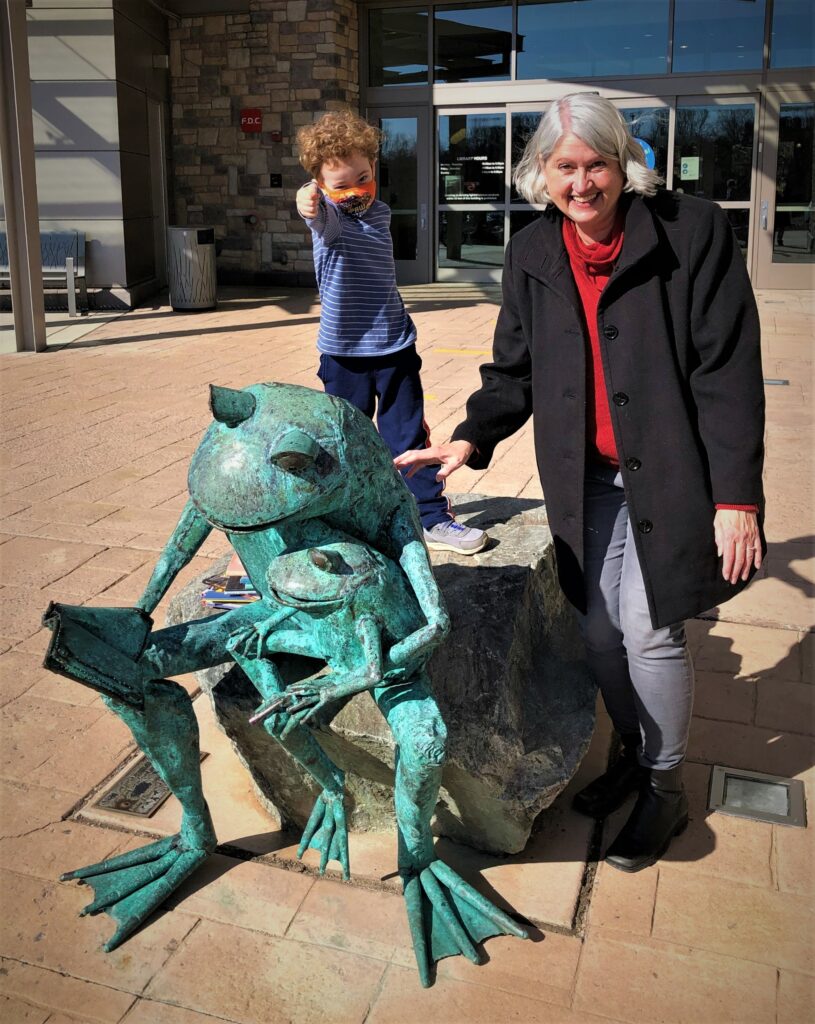
Moira Harrington (right) and her cute nephew outside of his favorite “local library.” Submitted image.

I’ve had a love affair with libraries all of my life. For the 2022 celebration of National Library Week, which starts Sunday, it feels good to reflect on how these public spaces can be portals that transport readers to new ways of thinking and into new worlds.

My first library card was created on a manual typewriter at the Monroe Street Branch of the Madison (Wisconsin) Public Library system by some caring librarian. Being the proud owner of that small, tan passport to innovative ideas and faraway places, I am sure I skipped the six blocks back to my home.

More than 50 years later, I don’t have to go six blocks to find a library (much less skip). The Wisconsin Water Library is literally steps outside of my office door. It’s one of more than 5,150 specialty libraries in this country and boasts a 30,000-item collection available to any Wisconsin resident.

Our librarian, Anne Moser, is a bundle of energy—not only acting as a custodian of the books, magazines, DVDs, manuals and journals—but also engaging in outreach that takes her to all corners of Wisconsin. In addition, she recently started a Book Club called Maadagindan! (Start Reading!) Literature for Young People About the Great Lakes and Ojibwe Culture. A recent presentation as part of Sea Grant’s Lake Talk series also offers details.

Anne is inspiring youth through books and I’m grateful to have recently shared my 4-year-old nephew’s enthusiasm for libraries. He lives in another state, so I don’t see him as often as I’d like. On a visit last month, though, I accompanied him to his, “local library,” as he always refers to it.

Here’s a snap of us celebrating after collecting a large stack of books, which are just barely visible to the left at his feet. Before his mother, my sister, took this photo, he insisted on staging it to be sure the books would be part of the moment.

Learn more about the nation’s libraries at the American Library Association’s website.

The post Love your local library during National Library Week, and every week first appeared on Wisconsin Sea Grant.

Original Article

Blog | Wisconsin Sea Grant

Blog | Wisconsin Sea Grant

https://www.seagrant.wisc.edu/blog/love-your-local-library-during-national-library-week-and-every-week/?utm_source=rss&utm_medium=rss&utm_campaign=love-your-local-library-during-national-library-week-and-every-week

Moira Harrington

Report: Climate change threatens these 29 Michigan chemical sites

By Kelly House, Bridge Michigan

The Great Lakes News Collaborative includes Bridge Michigan; Circle of Blue; Great Lakes Now at Detroit Public Television; and Michigan Radio, Michigan’s NPR News Leader; who work together to bring audiences news and information about the impact of climate change, pollution, and aging infrastructure on the Great Lakes and drinking water.

Read Now at Great Lakes Now.

Original Article

Great Lakes Now

Great Lakes Now

https://www.greatlakesnow.org/2022/03/climate-change-threatens-michigan-chemical-sites/

Bridge Michigan

Michigan parks, more popular than ever, struggle to staff up for summer

By Kelly House, Bridge Michigan

The Great Lakes News Collaborative includes Bridge Michigan; Circle of Blue; Great Lakes Now at Detroit Public Television; and Michigan Radio, Michigan’s NPR News Leader; who work together to bring audiences news and information about the impact of climate change, pollution, and aging infrastructure on the Great Lakes and drinking water.

Read Now at Great Lakes Now.

Original Article

Great Lakes Now

Great Lakes Now

https://www.greatlakesnow.org/2022/03/michigan-parks-struggle-staff-up-summer/

Bridge Michigan

Note: This blog is part of a periodic series of updates from Don Jodrey, the Alliance’s Director of Federal Government Relations, with his view on Great Lakes policy from Washington, DC.

Last year Congress and the Biden Administration delivered on historic investments in water programs which brought significant funding to the Great Lakes region. The bipartisan Infrastructure Investment and Jobs Act of 2021 (IIJA) included nearly $50 billion in water infrastructure funding, $1 billion for the Great Lakes Restoration Initiative, and $226 million for the Brandon Road Lock and Dam project to halt the spread of invasive carp.

Last year’s achievements are a tough act to follow. The FY 2023 President’s Budget, the first step in the federal government budget process, was released earlier this week by the White House. While it supports increased funding for the U.S. Environmental Protection Agency overall and specifically increases funding for the agency’s environmental justice efforts, the budget falls short in some respects.

Although the FY 2023 President’s Budget proposes some modest additional investments in water infrastructure, it fails to take up the invitation extended by the IIJA which provided for significantly increased authorization levels for the Drinking Water and Clean Water State Revolving Funds (SRFs). The higher authorization – which is a top threshold for program funding – was necessary to address the significant backlog of water infrastructure needs nationwide. Instead, the budget proposes maintaining the SRFs at $3.7 billion, which is the same level that Congress appropriated last year. It proposes modest increases of $22 million for the Reducing Lead in Drinking Water Program ($182 million total) and $46 million for community grants for environmental injustice ($140 million total). Both are important programs but we know that much more is needed to fix failing and outdated sewer and water infrastructure.

For the Great Lakes Restoration Initiative, the budget proposes $340 million, which is an $8 million decrease from the FY 2022 enacted level and well short of the program’s authorized level of $400 million.

The FY 2023 President’s Budget is a starting point as we turn our attention to working with Congress to secure funds that will protect the Great Lakes.

The post DC Update: Biden’s FY23 Budget Proposal & the Great Lakes appeared first on Alliance for the Great Lakes.

Original Article

News - Alliance for the Great Lakes

News - Alliance for the Great Lakes

https://greatlakes.org/2022/03/dc-update-bidens-fy23-budget-proposal-and-the-great-lakes/

Judy Freed

Small portions: Michigan puts PFAS advisory on Lake Superior rainbow smelt

By Kelly House, Bridge Michigan

The Great Lakes News Collaborative includes Bridge Michigan; Circle of Blue; Great Lakes Now at Detroit Public Television; and Michigan Radio, Michigan’s NPR News Leader; who work together to bring audiences news and information about the impact of climate change, pollution, and aging infrastructure on the Great Lakes and drinking water.

Read Now at Great Lakes Now.

Original Article

Great Lakes Now

Great Lakes Now

https://www.greatlakesnow.org/2022/03/pfas-advisory-lake-superior-rainbow-smelt/

Bridge Michigan

DNR issues expansion permit for Kewaunee County factory farm

MADISON, Wis. (AP) — The Wisconsin Department of Natural Resources announced March 25 it will issue a permit that will make it harder for a Kewaunee County factory farm accused of contaminating drinking water to expand.

The Milwaukee Journal Sentinel reported that the permit caps the number of cows at the Kinnard Farms facility at about 8,000 head, the number of cows the farm currently houses.

Read Now at Great Lakes Now.

Original Article

Great Lakes Now

Great Lakes Now

https://www.greatlakesnow.org/2022/03/dnr-issues-expansion-permit-for-kewaunee-county-factory-farm/

The Associated Press

...WINTER WEATHER ADVISORY REMAINS IN EFFECT UNTIL NOON CDT TODAY... * WHAT...Snow. Additional snow accumulations of up to one inch. Winds gusting as high as 35 mph. * WHERE...Portions of east central and northeast Wisconsin. * WHEN...Until noon CDT today.

Original Article

Current Watches, Warnings and Advisories for Brown (WIC009) Wisconsin Issued by the National Weather Service

Current Watches, Warnings and Advisories for Brown (WIC009) Wisconsin Issued by the National Weather Service

https://alerts.weather.gov/cap/wwacapget.php?x=WI1263E9A7B0E8.WinterWeatherAdvisory.1263E9A818D0WI.GRBWSWGRB.ab1769d9217b4e6f8039daf8c684225a

w-nws.webmaster@noaa.gov

...WINTER WEATHER ADVISORY REMAINS IN EFFECT UNTIL NOON CDT TODAY... * WHAT...Snow. Additional snow accumulations of 1 to 2 inches. Winds gusting as high as 35 mph. * WHERE...Portions of central, east central, and northeast Wisconsin. * WHEN...Until Noon CDT today. * IMPACTS...Plan on slippery road conditions. The hazardous

Original Article

Current Watches, Warnings and Advisories for Brown (WIC009) Wisconsin Issued by the National Weather Service

Current Watches, Warnings and Advisories for Brown (WIC009) Wisconsin Issued by the National Weather Service

https://alerts.weather.gov/cap/wwacapget.php?x=WI1263E9A74130.WinterWeatherAdvisory.1263E9A818D0WI.GRBWSWGRB.b6f6acd46ce65c27f5c4fac96900737d

w-nws.webmaster@noaa.gov

...WINTER WEATHER ADVISORY REMAINS IN EFFECT UNTIL NOON CDT TODAY... * WHAT...Mixed precipitation changing to snow. Total snow accumulations of 2 to 4 inches. Minor ice and sleet accumulations, except around a tenth of an inch of ice over Door County. Winds gusting to 30 to 40 mph. * WHERE...Portions of central, east central, and northeast Wisconsin.

Original Article

Current Watches, Warnings and Advisories for Brown (WIC009) Wisconsin Issued by the National Weather Service

Current Watches, Warnings and Advisories for Brown (WIC009) Wisconsin Issued by the National Weather Service

https://alerts.weather.gov/cap/wwacapget.php?x=WI1263E9A6BB98.WinterWeatherAdvisory.1263E9A818D0WI.GRBWSWGRB.b6f6acd46ce65c27f5c4fac96900737d

w-nws.webmaster@noaa.gov

After a four-year hiatus, the Michigan Department of Natural Resources has revived its popular Facebook series “IdentiFriday.” IdentiFriday asks participants to guess the species of a plant or animal based on a small portion of a picture each Friday. The correct answer is then posted with the full photo later in the day.

The post DNR keeps people guessing on social media first appeared on Great Lakes Echo.

Original Article

Great Lakes Echo

Great Lakes Echo

http://greatlakesecho.org/2022/03/31/dnr-keeps-people-guessing-on-social-media/

Guest Contributor

...WINTER WEATHER ADVISORY REMAINS IN EFFECT FROM 3 AM TO NOON CDT THURSDAY... * WHAT...Mixed precipitation expected. Total snow accumulations up to two inches and ice accumulations around a light glaze. Winds gusting as high as 40 mph. * WHERE...Portions of central, east central, and northeast Wisconsin.

Original Article

Current Watches, Warnings and Advisories for Brown (WIC009) Wisconsin Issued by the National Weather Service

Current Watches, Warnings and Advisories for Brown (WIC009) Wisconsin Issued by the National Weather Service

https://alerts.weather.gov/cap/wwacapget.php?x=WI1263E9A5E4C0.WinterWeatherAdvisory.1263E9A818D0WI.GRBWSWGRB.b6f6acd46ce65c27f5c4fac96900737d

w-nws.webmaster@noaa.gov

The pandemic that closed the U.S./Canadian border to people may have opened it to the invasive sea lamprey

This article was republished here with permission from Great Lakes Echo.

By Danielle James, Great Lakes Echo

Great Lakes invasive species cling to shipments and navigate canals to migrate, but one aquatic invader – sea lamprey – benefitted from border closures instead.

Read Now at Great Lakes Now.

Original Article

Great Lakes Now

Great Lakes Now

https://www.greatlakesnow.org/2022/03/border-opened-invasive-sea-lamprey/

Great Lakes Echo

...WINTER WEATHER ADVISORY REMAINS IN EFFECT FROM 3 AM TO NOON CDT THURSDAY... * WHAT...Rain changing to freezing rain and sleet, and then snow. The snow could be moderate or heavy at times Thursday morning. Total snow accumulations of two to four inches and ice accumulations around a light glaze. Winds gusting as high as 35

Original Article

Current Watches, Warnings and Advisories for Brown (WIC009) Wisconsin Issued by the National Weather Service

Current Watches, Warnings and Advisories for Brown (WIC009) Wisconsin Issued by the National Weather Service

https://alerts.weather.gov/cap/wwacapget.php?x=WI1263E9992960.WinterWeatherAdvisory.1263E9A818D0WI.GRBWSWGRB.b6f6acd46ce65c27f5c4fac96900737d

w-nws.webmaster@noaa.gov

Michigan Legislature approves $4.8B infrastructure plan

By David Eggert, Associated Press

LANSING, Mich. (AP) — Michigan lawmakers approved $4.8 billion in spending March 24, mostly for infrastructure upgrades, with an influx of federal pandemic and other funds that will go toward water systems, roads, parks and other priorities including affordable housing.

The huge supplemental budget plan, which Gov.

Read Now at Great Lakes Now.

Original Article

Great Lakes Now

Great Lakes Now

https://www.greatlakesnow.org/2022/03/ap-michigan-legislature-approves-infrastructure-plan/

The Associated Press

News

Great Lakes Commission releases new video highlighting habitat restoration at Powderhorn Lake near Chicago

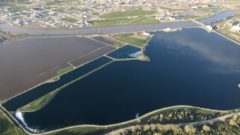
Ann Arbor, Mich. – The Great Lakes Commission (GLC) today released a video highlighting work to restore wetlands and reduce flooding at Powderhorn Lake near Chicago. The video shows how a collaborative effort between local, state, regional and federal organizations is restoring more than 100 acres of wetlands, connecting the lake to its northern neighbor, Wolf Lake, and ultimately Lake Michigan.

Powderhorn Lake is part of one of the few remaining examples of the dune and swale topography – sandy ridges interspersed with water pockets – that once characterized the Calumet Region along the south shore of Lake Michigan. The area is home to 100 bird species, 250 plant species and 2,500 insect species. In addition to reconnecting water flow to Lake Michigan, this project will allow fish passage between the lakes, install water control structures to help prevent future community flooding, and increase hemi-marsh habitat. This work aligns with the Great Lakes Restoration Initiative objective of protecting and restoring communities of native aquatic and terrestrial species important to the Great Lakes.

“The Great Lakes Commission is excited to showcase the collaboration among dedicated partners focused on improving Powderhorn Lake and its surrounding community, the region, and the Great Lakes,” said GLC Chair Todd Ambs, of Wisconsin. “We are proud to coordinate regional partnerships to restore and protect habitat, remediate degraded areas, and ensure resiliency to climate change across the basin.”

A team including Audubon Great Lakes, Forest Preserves of Cook County, the Illinois Department of Natural Resources, the Indiana Department of Natural Resources, and engineers Hey & Associates, Inc. are collaborating with the GLC and National Oceanic and Atmospheric Administration on this project.

For more information on the Powderhorn habitat reconnection project, visit www.glc.org/work/priorityareas/powderhorn.


The Great Lakes Commission, led by chair Todd L. Ambs, deputy secretary of the Wisconsin Department of Natural Resources (retired), is a binational government agency established in 1955 to protect the Great Lakes and the economies and ecosystems they support. Its membership includes leaders from the eight U.S. states and two Canadian provinces in the Great Lakes basin. The GLC recommends policies and practices to balance the use, development, and conservation of the water resources of the Great Lakes and brings the region together to work on issues that no single community, state, province, or nation can tackle alone. Learn more at www.glc.org.

Contact

For media inquiries, please contact Beth Wanamaker, beth@glc.org.

Recent GLC News

Upcoming GLC Events

View GLC Calendar

ARCHIVES

Original Article

Great Lakes Commission

Great Lakes Commission

https://www.glc.org/news/powderhorn-033022

Beth Wanamaker

...WINTER WEATHER ADVISORY REMAINS IN EFFECT FROM 3 AM TO NOON CDT THURSDAY... * WHAT...Rain will change to freezing rain and sleet, and then to snow. The snow could be heavy at times. Snow accumulations of two to four inches are expected and a small ice accumulation. Winds could gust to 35 mph.

Original Article

Current Watches, Warnings and Advisories for Brown (WIC009) Wisconsin Issued by the National Weather Service

Current Watches, Warnings and Advisories for Brown (WIC009) Wisconsin Issued by the National Weather Service

https://alerts.weather.gov/cap/wwacapget.php?x=WI1263E998D6F4.WinterWeatherAdvisory.1263E9A818D0WI.GRBWSWGRB.b6f6acd46ce65c27f5c4fac96900737d

w-nws.webmaster@noaa.gov

Surf and Slide: The Great Lakes Now Episode Quiz

Great Lakes Now tries to make every episode interesting and educational.

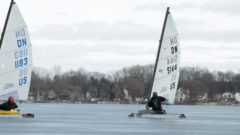
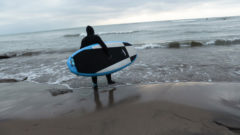
In “Surf and Slide,” GLN Host Ward Detwiler learns ice boating from one of the best in the world – right in southeast Michigan. Follow along with the all-women surfing group Lake Surfistas as they strive to make lake surfing more welcoming and stay warm in winter waves.

Read Now at Great Lakes Now.

Original Article

Great Lakes Now

Great Lakes Now

https://www.greatlakesnow.org/2022/03/surf-and-slide-episode-quiz/

Natasha Blakely

...WINTER WEATHER ADVISORY IN EFFECT FROM 3 AM TO NOON CDT THURSDAY... * WHAT...Rain will change to freezing rain and sleet, and then snow. The snow could be heavy at times Thursday morning. Total snow accumulations of two to four inches and a small ice accumulation is expected. Winds gusting as high as 35 mph.

Original Article

Current Watches, Warnings and Advisories for Brown (WIC009) Wisconsin Issued by the National Weather Service

Current Watches, Warnings and Advisories for Brown (WIC009) Wisconsin Issued by the National Weather Service

https://alerts.weather.gov/cap/wwacapget.php?x=WI1263E998C178.WinterWeatherAdvisory.1263E9A818D0WI.GRBWSWGRB.b6f6acd46ce65c27f5c4fac96900737d

w-nws.webmaster@noaa.gov

President Joe Biden’s proposed $5.8 trillion budget calls for $340 million in funding for the federal Great Lakes Restoration Initiative and at least $300 million for electrifying the federal fleet, as well as $126 million to combat PFAS contamination. Read the full story by The Detroit News.

Original Article

Great Lakes Commission

Great Lakes Commission

https://www.glc.org/dailynews/20220330-budget

Theresa Gruninger

Ohio’s Defiance County soil and water conservation office, the City of Defiance, and the Great Lakes Commission, with property owners Mike and Michelle Zeedyk, signed an agreement for an experimental water quality project that aims to reduce nutrient loading into the Maumee River. Read the full story by The Crescent-News.

Original Article

Great Lakes Commission

Great Lakes Commission

https://www.glc.org/dailynews/20220330-nutrient-loading

Theresa Gruninger

A group of U.S. representatives from throughout the Great Lakes region has signed on to a bill, recently introduced by U.S. Rep. Marcy Kaptur, D-Toledo, aiming to create a new entity dedicated to developing the area’s communities and conserving its vital natural resources. Read the full story by the Fremont News Messenger.

Original Article

Great Lakes Commission

Great Lakes Commission

https://www.glc.org/dailynews/20220330-great-lakes-authority

Theresa Gruninger

The U.S. Army Corps of Engineers has awarded a $3.3 million dollar contract to a Rochester firm to make repairs to the west pier at Little Sodus Bay in Fair Haven in Cayuga County, New York. The repairs will ensure that boaters have safe passage between Little Sodus Bay, Lake Ontario, and the rest of the Great Lakes. Read the full story by FingerLakes1.

Original Article

Great Lakes Commission

Great Lakes Commission

https://www.glc.org/dailynews/20220330-pier-repair

Theresa Gruninger

The city of Kewaunee, Wisconsin, received a grant from the state’s Harbor Assistance Program to improve the moorings in its Harbor Park for the Tug Ludington, a World War II vessel that has been a popular tourist attraction in the city. Read the full story by the Green Bay Press Gazette.

Original Article

Great Lakes Commission

Great Lakes Commission

https://www.glc.org/dailynews/20220330-tugboat

Theresa Gruninger

Salt deposited over the winter season is an inevitable part of road safety, but is the amount of salt too much? Fresh water resources in Michigan have a lot of salt in them, and scientific projections show that the water, and crowning Great Lakes waters, are indeed getting, and will continue to get, saltier. Read the full story by Jalopnik.

Original Article

Great Lakes Commission

Great Lakes Commission

https://www.glc.org/dailynews/20220330-road-salt

Theresa Gruninger

Friends of Second Marsh president Peter Taylor said his group’s vision is to re-purpose the old GM headquarters in Oshawa, Ontario, into a ‘Great Lakes Centre for education and research’. Read the full story by Insauga.

Original Article

Great Lakes Commission

Great Lakes Commission

https://www.glc.org/dailynews/20220330-friends-of-second-marsh

Theresa Gruninger

...SIGNIFICANT SNOW AND ICE POSSIBLE LATE TONIGHT INTO THURSDAY... A low pressure system over Illinois is expected to rapidly intensify late tonight as it moves into northern Lower Michigan. It will bring rain changing to freezing rain, sleet and snow to the Fox valley and lakeshore areas after midnight tonight through midday Thursday. Travel could become difficult Thursday morning.

Original Article

Current Watches, Warnings and Advisories for Brown (WIC009) Wisconsin Issued by the National Weather Service

Current Watches, Warnings and Advisories for Brown (WIC009) Wisconsin Issued by the National Weather Service

https://alerts.weather.gov/cap/wwacapget.php?x=WI1263E99844DC.SpecialWeatherStatement.1263E998E248WI.GRBSPSGRB.54e5ef070b45e49081402cfe9ce09122

w-nws.webmaster@noaa.gov

...HAZARDOUS TRAVEL ACROSS NORTHERN WISCONSIN THIS MORNING... Although temperatures have climbed above freezing across much of central and east central Wisconsin early this morning, freezing rain continued over north central and far northeast Wisconsin. Untreated secondary roads, bridges, on and off ramps, and overpasses will remain ice or sleet covered and slippery through

Original Article

Current Watches, Warnings and Advisories for Brown (WIC009) Wisconsin Issued by the National Weather Service

Current Watches, Warnings and Advisories for Brown (WIC009) Wisconsin Issued by the National Weather Service

https://alerts.weather.gov/cap/wwacapget.php?x=WI1263E99802D8.SpecialWeatherStatement.1263E9988870WI.GRBSPSGRB.3b77a733acfe35fc01f412b80021d336

w-nws.webmaster@noaa.gov

With a worldwide increase in need for food and oil, the soybean industry shows no signs of slowing down. Expanding consumer interest in plant-based foods as popular substitutes for meat could create more opportunities.

The post Meat substitutes, greener fuel drive soybean demand first appeared on Great Lakes Echo.

Original Article

Great Lakes Echo

Great Lakes Echo

http://greatlakesecho.org/2022/03/30/meat-substitutes-greener-fuel-drive-soybean-demand/

Guest Contributor

...HAZARDOUS TRAVEL STILL POSSIBLE IN EAST CENTRAL WISCONSIN INTO THE EARLY MORNING... Although temperatures have climbed above freezing in east central Wisconsin, untreated secondary roads, bridges, on and off ramps and overpasses may still be sleet covered and slippery in spots. Conditions should improve as temperatures slowly rise overnight.

Original Article

Current Watches, Warnings and Advisories for Brown (WIC009) Wisconsin Issued by the National Weather Service

Current Watches, Warnings and Advisories for Brown (WIC009) Wisconsin Issued by the National Weather Service

https://alerts.weather.gov/cap/wwacapget.php?x=WI1263E996EBF0.SpecialWeatherStatement.1263E9977700WI.GRBSPSGRB.f78a67b308ead913b6602ecedbbe287d

w-nws.webmaster@noaa.gov

...SLEET AT THE SURFACE UNDER THUNDERSTORMS IN EAST-CENTRAL WI THIS EVENING... An area of sleet is moving across central and east-central Wisconsin this evening accompanied by a period of rain and thunder. Areas affected by sleet and rain will see a deterioration of road conditions with slick conditions for the early overnight

Original Article

Current Watches, Warnings and Advisories for Brown (WIC009) Wisconsin Issued by the National Weather Service

Current Watches, Warnings and Advisories for Brown (WIC009) Wisconsin Issued by the National Weather Service

https://alerts.weather.gov/cap/wwacapget.php?x=WI1263E9969D6C.SpecialWeatherStatement.1263E996EC54WI.GRBSPSGRB.d65efe55088dd94d9c460efb2df919a6

w-nws.webmaster@noaa.gov

Drinking Water News Roundup: Best tasting water in the world in Ohio, nation’s worst waterways in Indiana

From lead pipes to PFAS, drinking water contamination is a major issue plaguing cities and towns all around the Great Lakes. Cleaning up contaminants and providing safe water to everyone is an ongoing public health struggle.

Keep up with drinking water-related developments in the Great Lakes area.

Click on the headline to read the full story:

Illinois:

  • Gladstone warns residents of water nitrate levels, says infants younger than 6 months should not drink it—WQAD8

The Village of Gladstone is warning residents with infants younger than 6 months of high levels of nitrate in the town’s drinking water.

Read Now at Great Lakes Now.

Original Article

Great Lakes Now

Great Lakes Now

https://www.greatlakesnow.org/2022/03/drinking-water-news-roundup-best-tasting-water-ohio-worst-waterways-indiana/

Maya Sundaresan

Episode 2203: Sailing Close to the Winter Wind

This lesson will explore the phenomenon of wind in the winter through the pastime of ice boating to learn about the science behind how winds are produced, sailboats move, and how wind can be a renewable source of energy. Learners will engage in design projects to build a wind-powered sail cart, anemometer, and windmill.

Read Now at Great Lakes Now.

Original Article

Great Lakes Now

Great Lakes Now

https://www.greatlakesnow.org/2022/03/2203-ice-boating-lesson-plan/

Gary Abud Jr.

Contact:
Lindsey Bacigal, BacigalL@nwf.org, (734) 887-7113
Jordan Lubetkin, Lubetkin@nwf.org, (734) 904-1589

Biden Budget on Clean Water: Boost to Water Infrastructure, Cuts to Great Lakes Restoration

ANN ARBOR, MICH. (March 29, 2022)—The Biden Administration’s proposed budget, released yesterday, cuts the Great Lakes Restoration Initiative, boosts funding to reduce lead in drinking water, maintains funding for the nation’s primary water infrastructure loan programs, and increases the EPA’s budget to confront climate change and address environmental injustices.

“The Biden Administration’s proposed budget supports clean water priorities broadly, while coming up short in funding the nation’s marquee Great Lakes restoration program,” said Laura Rubin, director of the Healing Our Waters-Great Lakes Coalition. “Federal investments to restore the Great Lakes and address pollution have been immensely important over the years. However, serious threats remain, and with many communities still grappling with health-threatening pollution, it’s important that the federal government do all that it can to ensure that every person has access to clean, safe and affordable water.

“The Biden Administration’s proposed budget provides a strong starting point for the U.S. House and Senate to discuss how best the country can meet its clean water goals. The Healing Our Waters-Great Lakes Coalition looks forward to working with members of Congress to make sure Great Lakes and clean water priorities receive the attention they deserve in the federal budget in order to protect our Great Lakes, drinking water, public health, and way of life.”

The Biden Administration’s budget contains:

  • $11.9 billion for the U.S. EPA for fiscal year 2023. Congress funded the agency at $9.56 billion in the current fiscal year.
  • $340.1 million for the Great Lakes Restoration Initiative to restore and protect the Great Lakes. Congress funded the GLRI at $348 in the current fiscal year.
  • $1.64 billion for the Clean Water State Revolving Fund, which helps communities fix and upgrade wastewater infrastructure. Congress funded the program at $1.64 billion in the current fiscal year.
  • $1.13 billion for the Drinking Water State Revolving Fund, which helps communities fix and upgrade drinking water infrastructure. Congress funded the program at $1.13 billion in the current fiscal year.
  • $140 million for grants to communities to confront environmental injustices. Congress funded the program at $94 million in the current fiscal year.
  • $182 million for the Reducing Lead in Drinking Water program, which is an increase of more than $160 million over previously enacted.

Since 2004, the Healing Our Waters-Great Lakes Coalition has been harnessing the collective power of more than 170 groups representing millions of people, whose common goal is to restore and protect the Great Lakes. Learn more at www.HealthyLakes.org or follow us on Twitter @HealthyLakes

The post Biden Budget on Clean Water: Boost to Water Infrastructure, Cuts to Great Lakes Restoration appeared first on Healing Our Waters Coalition.

Original Article

Healing Our Waters Coalition

Healing Our Waters Coalition

https://healthylakes.org/biden-budget-on-clean-water-boost-to-water-infrastructure-cuts-to-great-lakes-restoration/

Lindsey Bacigal

A Harvard historian’s book about slavery in Detroit- - the last stop on the Underground Railroad – examines how that history was influenced by the region’s geography.

The post Harvard historian examines Detroit slavery link to Great Lakes geography first appeared on Great Lakes Echo.

Original Article

Great Lakes Echo

Great Lakes Echo

http://greatlakesecho.org/2022/03/29/harvard-historian-examines-detroit-slavery-link-to-great-lakes-geography/

Guest Contributor

Surfing the Great Lakes: Want to know where to start?

Sunny weather, bikinis and board shorts, the salt spray of the ocean – surfing tends to conjure a very specific image in most people’s minds, and it’s on the ocean coasts, not the freshwater ones in the Midwest.

But to a small community around the Great Lakes region, surfing looks very different – featuring more full-body coverage and ice-cold weather.

Read Now at Great Lakes Now.

Original Article

Great Lakes Now

Great Lakes Now

https://www.greatlakesnow.org/2022/03/surfing-great-lakes-where-to-start/

Natasha Blakely

Mapping the Great Lakes: Lighthouse search

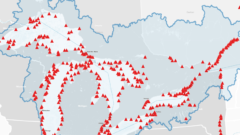
Love staring at a map and discovering something interesting? Then “Mapping the Great Lakes” is for you. It’s a monthly Great Lakes Now feature created by Alex B. Hill, a self-described “data nerd and anthropologist” who combines cartography, data, and analytics with storytelling and human experience.

Read Now at Great Lakes Now.

Original Article

Great Lakes Now

Great Lakes Now

https://www.greatlakesnow.org/2022/03/mapping-great-lakes-lighthouses/

Alex Hill

A River Talk participant forms a wild rice knocker into shape during the March talk. Image credit: Michael Anderson

The River Talk for March was held as an evening in-person event during the 12th annual St. Louis River Summit at the University of Wisconsin-Superior.

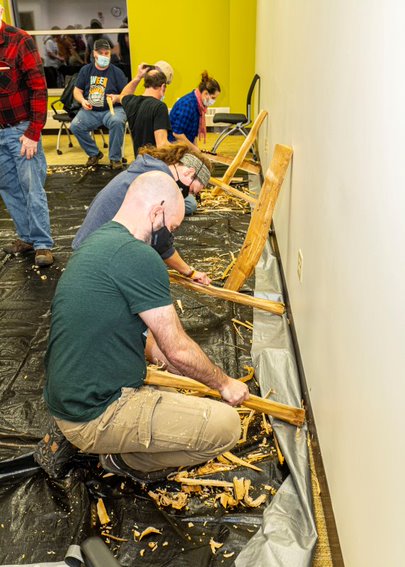
This particular talk required hands-on participation. Marne Kaeske, cultural preservation specialist with the 1854 Treaty Authority, led an activity where attendees constructed their own wild rice harvesting sticks, called, “Bawa’iganaakoog” in Ojibwe. Wild rice is a grass that can grow to reach 8 feet tall.

River Talkers use the wall to brace their work on wild rice knocking sticks. Image credit: Michael Anderson

Kaeske explained that she learned to make rice knockers from cedar because the wood is lightweight. Rice is harvested by two people. One paddles or push-poles the canoe through the wild rice (manoomin) beds found in wetlands while the other uses the sticks to bend the rice over the canoe, tapping the wild rice seeds into it. Hand-harvesting wild rice can be time-consuming, so the lighter the sticks, the less tired a ricer’s arms will get.

Different resource management agencies have different requirements for the length of wild rice sticks. Kaeske said current 1854 Treaty Authority Ceded Territory Code regulations call for “round, smooth cedar, no longer than 32-inch” sticks. In Wisconsin, they can be 38 inches.

One problem in efforts to preserve wild rice beds comes from people harvesting the rice too early. “We live by the clock and the calendar nowadays instead of by waiting and living on the rice lake until it’s time to rice,” Kaeske said. When people harvest the rice before it is mature, it lessens the good seed for the next year’s crop and can damage the plants.

“When you harvest wild rice, you’re also reseeding the lake,” Kaeske said. “Rice is an annual plant.”

Rice knockers aren’t something a person can buy in a store. Kaeske showed the audience how she learned to do it. After a short introduction, she offered the tools needed (measuring tape, planers and an ax) and let participants “go to town” on the wood she provided.

She explained that all the bark needs to be removed as well as any rotten wood. The sticks are usually tapered, larger where the hand grips and smaller on the ends.

By the end of the class, everyone had sticks to take home and they were ready for ricing season, which usually occurs in late summer or early fall.

The remaining River Talks for this season will be held April 13 and May 11. For more information, visit the River Talks page: go.wisc.edu/4uz720.

The post A River Knock first appeared on Wisconsin Sea Grant.

Original Article

Blog | Wisconsin Sea Grant

Blog | Wisconsin Sea Grant

https://www.seagrant.wisc.edu/blog/a-river-knock/?utm_source=rss&utm_medium=rss&utm_campaign=a-river-knock

Marie Zhuikov

The 2022 commercial shipping season is underway after the opening of the Soo Locks at midnight March 25th. The Edgar B. Speer was the first freighter through the Poe Lock in Sault Ste. Marie and was presented with a plaque to the ship’s captain and hat to each crew member. Read the full story by WPBN-TV – Traverse City, MI.

Original Article

Great Lakes Commission

Great Lakes Commission

https://www.glc.org/dailynews/20220328-shipping-opens

Patrick Canniff