The Province of Ontario has earmarked about $66,000 so that five Indigenous communities can assess fish consumption levels in parts of Lake Superior that remain classified as “areas of concerns” due to historical pollution. Read the full story by the Chronical Journal.

Original Article

Great Lakes Commission

Great Lakes Commission

https://www.glc.org/dailynews/20230424-fish-consumption
James Polidori

The Great Lakes Environmental Festival kicked off Friday in downtown Manistee, Michigan, at West Shore Community College. The festival was started by husband and wife, Dr. Ziggy Kozicki and Dr. Stephanie Baiyasi-Kozicki in a college classroom in 2007; since then, the festival has grown to teach communities about environmental issues and ways people can keep the Earth clean. Read the full story by WWTV-TV – Cadillac, MI.

Original Article

Great Lakes Commission

Great Lakes Commission

https://www.glc.org/dailynews/20230424-environmental-festival

James Polidori

Lesson Plan: How Is Our Climate Changing?

This lesson will explore the phenomenon of disappearing ice in the Great Lakes and the impact this has on ice fishing as a result of climate change. Students will explore the global average temperatures over time, model the greenhouse effect, conduct an experiment to model ocean acidification, and create an infographic to communicate the issue of climate change and how the impacts of human activites on the natural system can be reduced.

Read Now at Great Lakes Now.

Original Article

Great Lakes Now

Great Lakes Now

https://www.greatlakesnow.org/2023/04/climate-change-lesson-plan/

Gary Abud Jr.

Adopt-a-Beach volunteers are on the front lines of keeping litter off our beaches and out of the Great Lakes. But did you know that these volunteers are also citizen scientists?

This year marks twenty years of data collection by Adopt-a- Beach volunteers. The Alliance for the Great Lakes created its online Great Lakes litter database in 2003 and added data collection to the Adopt-a-Beach program.

Filling a Data Gap, Identifying Troubling Trends

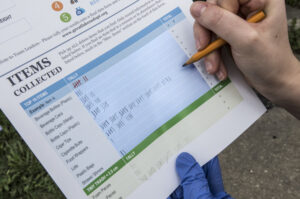
A hand recording litter counts on a form.

While scientists have been studying plastic pollution in the ocean for decades, there is much less research about plastic pollution in the Great Lakes. Adopt-a-Beach data collection is one way our Great Lakes community is beginning to fill that gap. The litter data collected by Adopt-a-Beach volunteers spans beaches and shorelines across all five Great Lakes. No lab or individual researcher could collect this extensive data set on their own. Volunteers have steadily created this dataset with each cleanup over the past twenty years.

Volunteers use a datasheet at every beach cleanup to tally each item they pick up. The event’s team leader tallies up all the data collected at the event and enters it into our online system. Counting each cigarette butt, bottle cap, or piece of tiny trash can sometimes feel a bit silly on the beach. But the power of all that information in one place is impressive, and it is showing us some troubling trends.

So, what do the data tell us? It’s not a pretty picture. Roughly 85% of the litter picked up at cleanups is made entirely or partially of plastic. Most of the litter picked up by volunteers falls into the category of “tiny trash,” which are pieces 5 millimeters or less. These are pieces of larger items that have broken down over time. Food-related trash, such as plastic bottles, plastic cutlery, and takeout containers, is about 25% of the litter picked up by volunteers.

A Clear and Present Danger

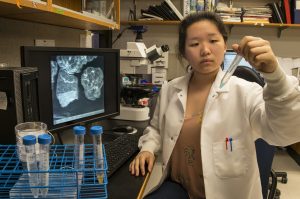
A researcher examines a test tube containing microplastics.

While beach litter is a serious concern, it is just the most visible part of a bigger problem. Sun, waves, and other environmental factors break down plastic left on the beach or other places into smaller and smaller pieces. And microfibers from our clothes or plastic packaging from detergent packs wash down the drain into our waterways. These microplastics are often invisible but are dangerous to wildlife, which mistake them for food.

Plastic has been found in Great Lakes fish dating back to the 1950s. That means, for nearly seven decades, there have been microplastics in the lakes, which are a drinking water source for about 40 million people. Today, researchers from the Rochester Institute of Technology estimate that over 22 million pounds of plastic enter the Great Lakes annually. And University of Toronto researchers calculated that the amount of microplastics in the surface water of the Great Lakes is estimated at 1.2 million particles/km2. This is higher than plastic concentrations in the widely publicized Great Pacific Garbage Patch.

Microplastics have been found in drinking water, bottled water, and beer. And it’s estimated that we each ingest about a credit card-sized amount of plastic each week. Much remains to be learned about the impacts of plastic on human health, but the early picture is concerning.

Plastic Producers Must Take Responsibility

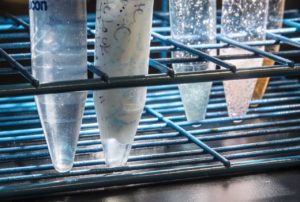
Microplastics in test tubes.

Adopt-a-Beach volunteers do a great job keeping plastic out of our lakes and educating their communities about the plastic pollution problem. But beach cleanups alone can’t solve the magnitude of the Great Lakes’ plastic problem. A more systemic solution is required.

Currently, most efforts to stop plastic pollution put the responsibility on the last person who uses the plastic, such as recycling. But expecting end users to bear the burden of managing plastic pollution isn’t effective. For instance, only a fraction of plastic produced each year can be recycled, leaving the remainder to end up in landfills or as litter that lands in our waterways. This leaves the disposal burden – and significant costs – on individuals, small business owners, and local governments.

The alternative is to require plastic producers to be responsible for their products through their lifecycle, called extended producer responsibility. The concept is not new. Many European countries have such laws. And California recently passed legislation bringing the concept to the United States. These laws reduce or eliminate the most problematic plastics like styrofoam, require plastic manufacturers to pay for disposal, or eventually change their practices to produce less plastic in the first place.

For the first time, we have included plastic pollution as a top issue in our federal Great Lakes policy agenda. We are urging Congress to be a leader in curbing plastic pollution and pass legislation that:

  • Makes plastic producers responsible for reduction of waste
  • Reduces the federal government’s use of single-use plastics
  • Funds additional research on the public health impact of plastics

How You Can Help

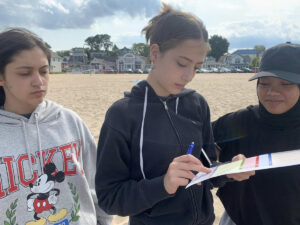
Adopt-a-Beach volunteers record litter data on the beach.

Solving our Great Lakes plastic pollution problem will take all of us. Here are several ways you can help:

Refuse single-use plastics.

The best way to prevent plastic pollution from getting into the lakes is to stop using it in the first place.

Your voice makes a difference.

Visit our action center to send a letter to your members of Congress, urging them to adopt extended producer responsibility legislation.

Join a beach cleanup.

Adopt-a-Beach volunteers are on the frontlines of keeping plastic pollution out of the Great Lakes. It’s fun, easy, and an excellent way for your family, community group, or business to give back to the lakes. Learn how you can join a cleanup or host one of your own.

The post 20 Years of Adopt-a-Beach Data Collection: What Have We Learned? appeared first on Alliance for the Great Lakes.

Original Article

News - Alliance for the Great Lakes

News - Alliance for the Great Lakes

https://greatlakes.org/2023/04/20-years-of-adopt-a-beach-data-collection-what-have-we-learned/

Judy Freed

Over half the land in Michigan is occupied by forests. The majority of that wilderness — 20 million acres — is in the hands of private citizens. This land is vital to keeping the state’s natural resources bountiful, including one of the largest freshwater supplies in the world, the Great Lakes. Read the full story by WWTV – TV – Cadillac, MI.

Original Article

Great Lakes Commission

Great Lakes Commission

https://www.glc.org/dailynews/20230421-forests

Jill Estrada

After conducting two public meetings and a public survey, Indiana DNR is implementing a new stocking strategy for Chinook salmon in Lake Michigan this month, stocking 75,000 Chinook salmon in East Chicago, 100,000 in the Little Calumet River, and 100,000 in Trail Creek. Read the full story by KPC News.

Original Article

Great Lakes Commission

Great Lakes Commission

https://www.glc.org/dailynews/20230421-salmon

Jill Estrada

According to the Minnesota Pollution Control Agency, PFAS contamination has been found in groundwater at 59 closed landfills in 41 counties at levels that exceed the Minnesota Department of Health’s health-based guidance values for PFAS. Read the full story by WDIO – TV – Duluth, MN.

Original Article

Great Lakes Commission

Great Lakes Commission

https://www.glc.org/dailynews/20230421-pfas

Jill Estrada

Nibi Chronicles: Greeting Old Man Maple during the Sap Boiling Moon

Editor’s Note: “Nibi Chronicles,” a monthly Great Lakes Now feature, is written by Staci Lola Drouillard. A direct descendant of the Grand Portage Band of Ojibwe, she lives and works in Grand Marais on Minnesota’s North Shore of Lake Superior. Her two books “Walking the Old Road: A People’s History of Chippewa City and the Grand Marais Anishinaabe” and “Seven Aunts” were published 2019 and 2022, and she is at work on a children’s story.

Read Now at Great Lakes Now.

Original Article

Great Lakes Now

Great Lakes Now

https://www.greatlakesnow.org/2023/04/nibi-chronicles-sap-boiling-moon/

Staci Lola Drouillard

As part of Gov. Mike DeWine’s H2Ohio initiative, the Ohio Department of Natural Resources (ODNR) Division of Wildlife is collaborating with The Nature Conservancy (TNC) on two coastal wetland restoration projects at Pickerel Creek Wildlife Area in Sandusky County. Read the full story by USA Today.

Original Article

Great Lakes Commission

Great Lakes Commission

https://www.glc.org/dailynews/20230421-wetlands-restoration

Jill Estrada

The Ministry of the Environment, Conservation and Parks has cut a $75,000 annual grant that helped the Hamilton Conservation Authority offset the cost of monitoring the water quality of five creeks flowing into Cootes Paradise. Read the full story by The Spec.

Original Article

Great Lakes Commission

Great Lakes Commission

https://www.glc.org/dailynews/20230421-monitoring-cut

Jill Estrada

Wisconsin Sea Grant (WISG) today announced it is expanding a successful marine-debris-prevention project in Milwaukee and will build on that success to spark similar awareness and action in a fellow Great Lakes city, Cleveland.

Marine debris is an increasing global problem that causes negative impacts in oceans, the Great Lakes and other waterways. Nearly 22 million pounds of plastics enter the Great Lakes each year, according to a Rochester Institute of Technology study.

Plastic trash spread on a blue background

A collection of plastic trash recently removed from a Wisconsin waterway. Image: Bonnie Willison, Wisconsin Sea Grant

In Milwaukee, this pollution affects Lake Michigan and local watersheds, which serve as a source of drinking water, offer recreation for residents and support ecosystems for wildlife and fish. With plastic pollution on the rise, the Lake Michigan freshwater ecosystem and the people surrounding it are at risk of negative health impacts that can be mitigated by increasing awareness of plastic pollution through youth education, actionable science and civic action. Similarly, plastic pollution is a problem in Lake Erie’s ecosystem and for those who live, work and recreate in Cleveland.

In 2021, WISG joined forces with Milwaukee Riverkeeper, a key player in an initiative called Plastic-Free MKE, to coordinate Milwaukee youth to lead civic engagement projects on how to reduce single-use plastics in their schools. As part of an initial grant received from the National Sea Grant Office’s Marine Debris program, the groups created a plastics audit, shared a plastics education toolkit about how plastics impact water quality and human health and provided resources to students and teachers on how they can reduce plastic pollution in their homes and schools.

“We’re excited to see Plastic-Free MKE be a model for other cities that have great intentions towards reducing single-use plastics but needed some support to be more organized to build a local coalition in their city,” said Deidre Peroff, WISG social scientist. “I look forward to continuing collaborating on this initiative in Milwaukee as well. We plan to continue our partnership with Milwaukee Public Schools to get more plastics education into classrooms and provide space for students to lead the effort.”

Close-up a smiling person wearing a plaid scarf and blue shirt.

Social Scientist Deidre Peroff is looking forward to continuing marine debris education in Milwaukee Public Schools.

Peroff said she and Milwaukee Riverkeeper will share their success from Plastic-Free MKE with businesses and individuals in Cleveland to encourage the reduction of single-use plastics, which ultimately protects the waters, wildlife and people’s health

 This project was competitively selected. It was part of a competition through two opportunities supported by the federal Bipartisan Infrastructure Law and leveraging funds from the Inflation Reduction Act: The Marine Debris Challenge Competition and The Marine Debris Communication Action Coalitions. The laws are infusing a total of $27 million nationwide, administered through the National Oceanic and Atmospheric Administration, to marine debris education, prevention, cleanup and research initiatives. In addition to the project in Wisconsin, another 18 community-based projects are being funded, along with 10 research projects. The Wisconsin project is funded at $300,000 for two years.

The post Milwaukee marine debris prevention program to expand first appeared on Wisconsin Sea Grant.

Original Article

News Releases | Wisconsin Sea Grant

News Releases | Wisconsin Sea Grant

https://www.seagrant.wisc.edu/news/milwaukee-marine-debris-prevention-program-to-expand/?utm_source=rss&utm_medium=rss&utm_campaign=milwaukee-marine-debris-prevention-program-to-expand

Moira Harrington

...MINOR RIVER FLOODING, FAST FLOWS, AND AREAS OF LOW-LAND FLOODING WILL CONTINUE THROUGH THIS WEEKEND... Minor flooding is expected to continue on some streams, rivers, and low-lying areas this weekend. Flows will continue to be fast, especially on the Menominee and Wisconsin rivers. With runoff from recent rain and snow melt continuing, river levels

Original Article

Current Watches, Warnings and Advisories for Brown (WIC009) Wisconsin Issued by the National Weather Service

Current Watches, Warnings and Advisories for Brown (WIC009) Wisconsin Issued by the National Weather Service

https://alerts.weather.gov/cap/wwacapget.php?x=WI126643102384.HydrologicOutlook.126643116E60WI.GRBESFGRB.9a74e37923d995b15714a656c5ebca0a

w-nws.webmaster@noaa.gov

Note: This blog is part of a periodic series of updates from Don Jodrey, the Alliance’s Director of Federal Government Relations, with his view on Great Lakes policy from Washington, DC.

Donald Jodrey headshot.
Don Jodrey, Director of Federal Government Relations

Early this year, we published our list of federal priorities for 2023, and chief among them was the need to increase funding for water infrastructure. We believe that clean water is a basic need.  No one should be without clean, safe, affordable drinking water or worried about sewage back-ups in their homes or community flooding that damages property. With communities across the Great Lakes grappling with antiquated drinking water and sewer systems, we have called on Congress to more than double current annual levels of funding for both the Clean Water and Drinking Water State Revolving Funds from $2.5 billion to $8.7 billion, which is the authorized level of funding for those programs that Congress established in the Infrastructure Investment and Jobs Act of 2021. 

New data from the U.S. Environmental Protection Agency (US EPA) shows the urgent need for water infrastructure funding. The agency just released its 7th Drinking Water Information Needs Survey and Assessment (DWINSA), which estimates that there is a $625 billion backlog in drinking water systems nationwide. Based upon more than 3,500 individual survey responses from public drinking water systems around the country, the 7th DWINSA represents drinking water infrastructure projects that are necessary over the next 20 years for public water systems to be able to provide safe drinking water to the public. For the first time, information on lead service line needs is included, and it is worth noting that the backlog represents a 32% increase since the last survey was completed about five years ago.

Given that water infrastructure needs are growing, it is gratifying to see that some Members of Congress are taking up the charge. One of our newest Great Lakes members, first-term Representative Emilia Sykes from Ohio’s 13th congressional district, is leading the way.  Representative Sykes, along with Representative Grace Napolitano from California’s 31st congressional district, both recently submitted a letter to the House Appropriations Committee signed by 31 other members of Congress calling for increased funding for water infrastructure.  Representatives Sykes and Napolitano, both members of the House Transportation and Infrastructure Committee, noted the importance that access to clean water has for both public health and economic benefits and requested increased funding for both the Clean Water and Drinking Water State Revolving Funds, the Sewer Overflow and Stormwater Municipal Grant Program, the Low-Income Household Water Assistance Program, and numerous other smaller programs that support water infrastructure workforce development and environmental justice.  We appreciate their leadership and know that increasing federal appropriations for water infrastructure will be a tough sell this year in Congress, but given the unrelenting need, it is an issue that deserves our continued attention.  


Protect the Great Lakes & Our Communities

Too many Great Lakers experience polluted water – whether it is lead-tainted water coming from taps in homes or algal blooms fouling beaches. Visit our Action Center and learn how you can take action.

Take Action

The post DC Update: House water champions emerge amidst rising national backlog of water infrastructure projects appeared first on Alliance for the Great Lakes.

Original Article

News - Alliance for the Great Lakes

News - Alliance for the Great Lakes

https://greatlakes.org/2023/04/dc-update-house-water-champions-emerge-amidst-rising-national-backlog-of-water-infrastructure-projects/

Michelle Farley

U.S. Counts on “Climate-Smart” Farms to Slow Global Warming

By Keith Schneider, Circle of Blue

The Great Lakes News Collaborative includes Bridge Michigan; Circle of Blue; Great Lakes Now at Detroit Public Television; and Michigan Radio, Michigan’s NPR News Leader; who work together to bring audiences news and information about the impact of climate change, pollution, and aging infrastructure on the Great Lakes and drinking water.

Read Now at Great Lakes Now.

Original Article

Great Lakes Now

Great Lakes Now

https://www.greatlakesnow.org/2023/04/climate-smart-farms-slow-global-warming/

Circle of Blue

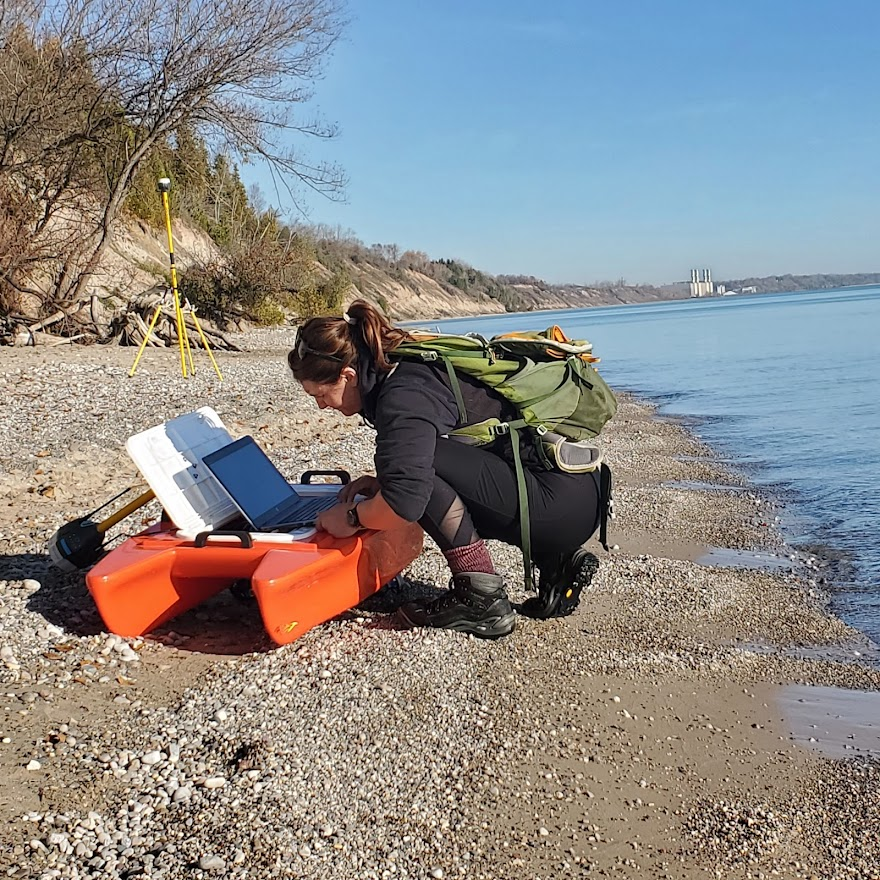
Chelsea Volpano works with a remote-controlled boat used to research erosion along Lake Michigan. Image credit: Chelsea Volpano, University of Wisconsin-Madison

High water levels in Lake Michigan since 2013 have caused erosion rates that are faster than usual, especially in 2020, when lake levels set records. This has created an urgent need to know more about erosion processes along and in the lake.

Lucas Zoet with the University of Wisconsin-Madison Department of Geoscience and his research team are looking at bluff erosion and sediment movement at two Wisconsin sites along Lake Michigan in a holistic way to better understand erosion rates and where the eroding sediment goes. This information will help guide shore protection and bluff stabilization processes and preserve beaches for recreation.

The two study sites are located just south of Port Washington and at Point Beach State Forest, which is farther north, near Two Rivers. The researchers chose those sites because they offer good representations of different erosion processes. The Port Washington site sits on a bluff, the Point Beach State Forest site is composed of sand dunes.

Lucas Zoet, University of Wisconsin-Madison. Submitted image

“The processes on these sites can be applied all over the place in Wisconsin,” Zoet said. “Lots of the bluffs we have are generally similar to those at the Port Washington site, composed of a mix of glacial tills and various lake deposits that are interbedded. So just understanding these processes at a base level, they should be generally applicable to more or less everywhere.”

The project’s holistic approach is unique. “The real strength of this project is that it doesn’t break the whole system up into little chunks, like we study this part and then we don’t know how it works because it’s in isolation from this other part. Instead, we’re trying to look at the whole continuous system, from what’s happening onshore, to what’s happening on the beach, to what’s happening in the nearshore over multiple years. We can study this on a representative timescale. Not just in a week or a month, but over seasons, which we know is such a big player in the Great Lakes region,” Zoet said.

Compared to the well-studied processes that happen on marine coastlines, winter is the season that makes erosion issues in the Great Lakes distinctive. Zoet said that cold weather impacts erosion differently.

“We have this season where the bluffs freeze solid, the shore ice forms – all these different components that drastically alter sediment transport. You don’t see that if you’re looking at beaches in North Carolina or Oregon,” Zoet said.

To study the onshore section, Zoet, J. Elmo Rawling with the Wisconsin Geological and Natural History Survey and Ph.D. student Chelsea Volpano, use drones and trail cams to gather data. To study the beach, Volpano conducts wading surveys. For these, Zoet said Volpano carries a staff with a GPS unit on it to measure lakebed elevation.

“She walks out into the water up to about her waist, about a meter deep and just does that over and over. So, with that, she can connect the onshore component to the offshore component for this continuous map that’s called topo-bathy,” Zoet said. This type of field work is uncommon. “She might be one of the only people to do these wading surveys in near-freezing waters, repeatedly throughout the years,” Zoet added.

To study the nearshore area, the team uses a medium-sized remote-controlled boat that contains an instrument that measures the elevation of the lakebed for a full 3D map of the system. By repeating these measurements over time, the team can assess how the lakebed is changing and where the sediment is going.

(Drone footage by the research team of a landslide area along Lake Michigan.)

One aspect of communicating the project involves Great Lakes Quests. These are story maps compiled by Justin Hougham, University of Wisconsin-Madison, and Sea Grant. The Port Washington site is already part of the Quest database, but the Point Beach State Forest isn’t, and will be added.

The project will also be communicated through public workshops for educators and property owners along Lake Michigan who are concerned about coastal erosion. “We’ll do a walk of the terrain with them and we’ll probably bring a couple of the instruments we use, like the drone and the remote-controlled boat,” Zoet said. The first workshop is planned for September 2024.

Zoet has a long-standing working relationship with the College of Menominee Nation in Wisconsin. He’s currently helping design the college’s new geoscience program. Faculty members at the college plan to recommend students who could help work on the story maps for the project and computer mapping.

Summing up this multifaceted project, Zoet said, “In the end, I think we’ll learn a lot about the processes, but we’ll also learn a lot about how to better advise coastal managers, county managers and parks managers.”

The research team uses a remote-controlled boat to measure the elevation of the lakebed along Lake Michigan. Image credit: Chelsea Volpano, University of Wisconsin-Madison

The post Gaining a big picture of bluff erosion and sand movement along Lake Michigan first appeared on Wisconsin Sea Grant.

Original Article

News Releases | Wisconsin Sea Grant

News Releases | Wisconsin Sea Grant

https://www.seagrant.wisc.edu/news/gaining-a-big-picture-of-bluff-erosion-and-sand-movement-along-lake-michigan/?utm_source=rss&utm_medium=rss&utm_campaign=gaining-a-big-picture-of-bluff-erosion-and-sand-movement-along-lake-michigan

Marie Zhuikov

...Strong thunderstorms will impact much of central, east central and northeast Wisconsin through 645 AM CDT... At 515 AM CDT, Doppler radar was tracking clusters of strong thunderstorms throughout central, east central and parts of northeast Wisconsin. These storms were producing hail up to a half inch in diameter and brief heavy downpours. Movement was northeast

Original Article

Current Watches, Warnings and Advisories for Brown (WIC009) Wisconsin Issued by the National Weather Service

Current Watches, Warnings and Advisories for Brown (WIC009) Wisconsin Issued by the National Weather Service

https://alerts.weather.gov/cap/wwacapget.php?x=WI12664300FAA8.SpecialWeatherStatement.126643012C44WI.GRBSPSGRB.263766ff6094ac547714fd7671d80406

w-nws.webmaster@noaa.gov

...MINOR RIVER FLOODING, FAST FLOWS, AND AREAS OF LOW LAND FLOODING WILL CONTINUE THIS WEEK... Minor flooding is expected to continue on some streams, rivers, and low lying areas this week. A few locations on the Menominee River could see levels at moderate flood stage. Flows will continue to be fast, especially on the Menominee and Wisconsin rivers.

Original Article

Current Watches, Warnings and Advisories for Brown (WIC009) Wisconsin Issued by the National Weather Service

Current Watches, Warnings and Advisories for Brown (WIC009) Wisconsin Issued by the National Weather Service

https://alerts.weather.gov/cap/wwacapget.php?x=WI126642F320F4.HydrologicOutlook.1266431131D4WI.GRBESFGRB.9a74e37923d995b15714a656c5ebca0a

w-nws.webmaster@noaa.gov

We are looking for 10-15 volunteers to help plant 2,720 plant plugs for a wetland restoration on the west side of Lake Winnebago.

Volunteers are needed May 5th, 6th, and possibly 7th at Kalbus Country Harbor in Oshkosh. Each day will start at 9:00 am. Volunteers are welcome to volunteer as much or as little as available.

To sign up, please contact John by May 1st at: 920-426-0062 (via text or call) or email kalbuscamping@gmail.com

We will have some tools available, but recommend bringing what you prefer to use with you, dress for the weather, and be prepared to get dirty. For those who sign-up, John will follow  up with additional details.

Read more about the Kalbus restoration project: CLICK HERE

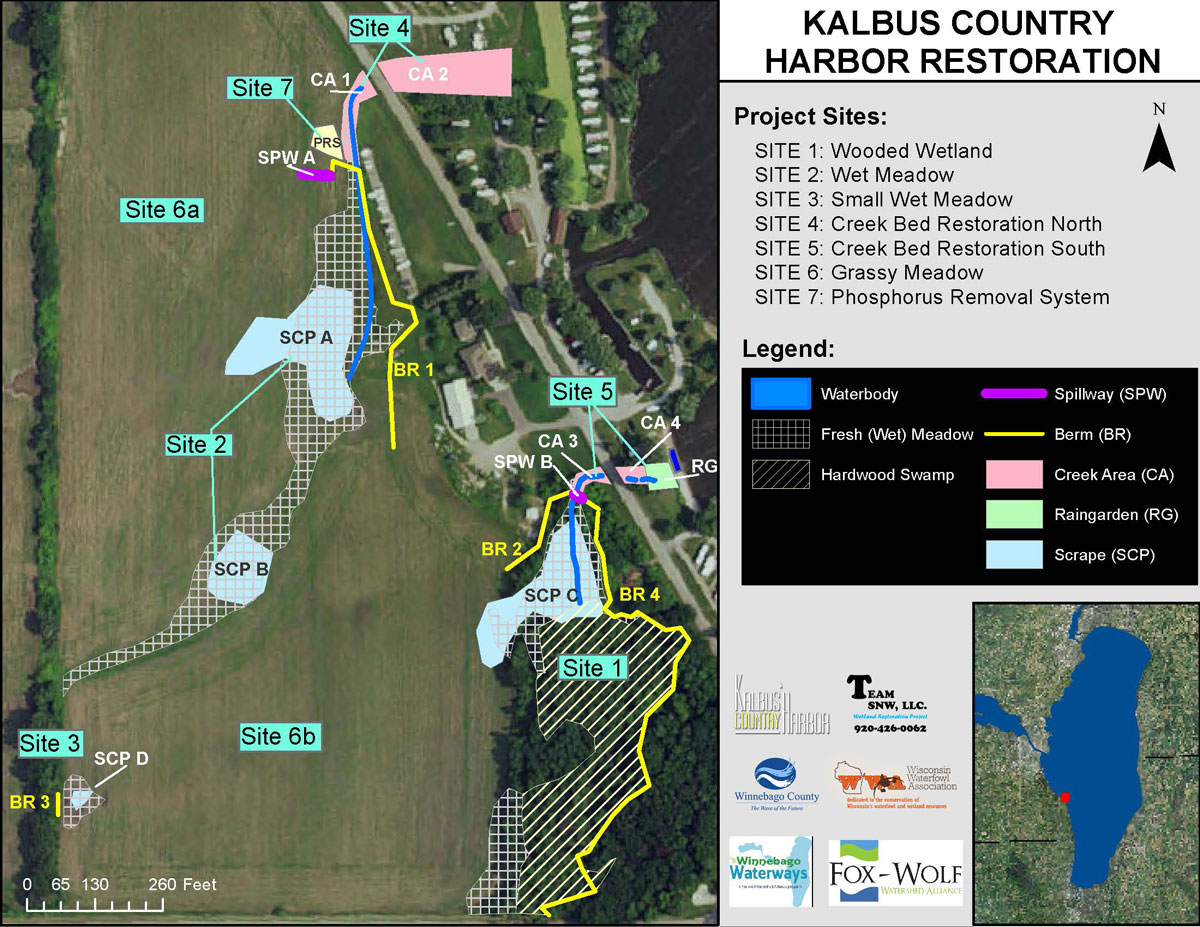
Project site map

Project funding and partners:

Winnebago Waterways is a Fox-Wolf Watershed Alliance recovery initiative. Contact us at wwinfo@fwwa.org

The post Volunteers needed – Wetland Restoration Planting appeared first on Fox-Wolf Watershed Alliance.

Original Article

Fox-Wolf Watershed Alliance

Fox-Wolf Watershed Alliance

https://fwwa.org/2023/04/19/kalbus-wetland-project-volunteers/?utm_source=rss&utm_medium=rss&utm_campaign=kalbus-wetland-project-volunteers

Korin Doering

Many along Lake Ontario are waiting for the next report from the International Joint Commission and the International Lake Ontario-St. Lawrence River Board, which will include insights on the potential for flooding this season. Read the full story by WROC-TV – Rochester, NY.

Original Article

Great Lakes Commission

Great Lakes Commission

https://www.glc.org/dailynews/20230419-ijc-report

Theresa Gruninger

When lake sturgeon were designated as a threatened species in Michigan in 1994, conservation programs to protect the fish and help regenerate the population took action. Today, researchers are learning more about the cryptic fish in order to better protect them.  Read the full story by WOOD-TV – Grand Rapids, MI.

Original Article

Great Lakes Commission

Great Lakes Commission

https://www.glc.org/dailynews/20230419-lake-sturgeon

Theresa Gruninger

Offshore wind farms in the Great Lakes could provide enough carbon-free energy to meet all of Ontario’s growing demand at nearly half the cost of new nuclear reactors. There’s just one problem: Ontario declared a moratorium on offshore wind projects in 2011. Read the full story by the Toronto Star.

Original Article

Great Lakes Commission

Great Lakes Commission

https://www.glc.org/dailynews/20230419-offshore-wind

Theresa Gruninger

The Great Lakes account for 90% of North America’s fresh water and 20% of the global supply, yet water affordability is a real issue in many Great Lakes states as households contend with some of the most expensive tap water rates in the nation.Read the full story by WKSU- Kent, OH. 

Original Article

Great Lakes Commission

Great Lakes Commission

https://www.glc.org/dailynews/20230419-water-accessibility

Theresa Gruninger

Rain may be mixed with a little sleet this morning. It should not cause any travel issues.

Original Article

Current Watches, Warnings and Advisories for Brown (WIC009) Wisconsin Issued by the National Weather Service

Current Watches, Warnings and Advisories for Brown (WIC009) Wisconsin Issued by the National Weather Service

https://alerts.weather.gov/cap/wwacapget.php?x=WI126642F25C14.SpecialWeatherStatement.126642F2AD54WI.GRBSPSGRB.670272ffdeab82d92d5ab990673d0435

w-nws.webmaster@noaa.gov

This week marks national volunteer appreciation week, and on this Lakes Chat episode, we’re chatting about volunteering to help the Great Lakes.

Guests included:

Olivia Reda – the Alliance for the Great Lakes Volunteer Engagement Manager.

Eileen Ryan is a long-time Alliance Ambassador and an Adopt-a-Beach volunteer.

Novem Cheng, a volunteer with the Alliance Ambassador and Adopt-a-Beach programs.

Resources:

Become an Adopt-a-Beach™ Team Leader – Alliance for the Great Lakes

Adopt-a-Beach™ – Alliance for the Great Lakes


Subscribe to the Lakes Chat Podcast

Every Tuesday, the Alliance for the Great Lakes will chat with special guests about Great Lakes issues and dig into what it all means for you and your community. Subscribe to our Podcast on Apple Podcasts, Spotify, Amazon Music, and Deezer (more platforms coming soon).

Hear More Episodes

The post Celebration of National Volunteer Week: Adopt-a-Beach Volunteers Season 2, Episode 15 appeared first on Alliance for the Great Lakes.

Original Article

News - Alliance for the Great Lakes

News - Alliance for the Great Lakes

https://greatlakes.org/2023/04/celebration-of-national-volunteer-week-adopt-a-beach-volunteers-season-2-episode-15/

Michelle Farley

Climate change could spell catastrophe for Detroit’s older homes

Climate change continues to have an impact on some residents in Southeast Michigan. For the average homeowner, when it rains, one may grab a good book, kick their feet up and relax under the gloomy skies. For Detroit resident Semone Alexander, every time it rains, it’s anything but relaxing.  

As heavy rains have become more frequent in the last half-decade, so has the flooding of Alexander and other residents’ homes— so much so that many of the homes have fallen into disrepair. 

Read Now at Great Lakes Now.

Original Article

Great Lakes Now

Great Lakes Now

https://www.greatlakesnow.org/2023/04/climate-change-could-spell-catastrophe-for-detroits-older-homes/

Jonathan Shead

In the world of NOAA, some of the most significant scientific advancements come as a response to natural disasters. Events like hurricanes, wildfires, and floods influence the creation of new solutions to the problems these disasters cause. Over the past … Continue reading

Original Article

NOAA Great Lakes Environmental Research Laboratory

NOAA Great Lakes Environmental Research Laboratory

https://noaaglerl.blog/2023/04/18/close-to-homes-how-glerls-great-lakes-expertise-helps-combat-flooding-in-the-lake-champlain-richelieu-river-basin/

Gabrielle Farina

Fox-Wolf Watershed Alliance is an award-winning organization, doing work in Northeast Wisconsin to protect and restore our waters.

This April, our Trash Free Waters program received the Ed Thompson Liberty Award from the Libertarian Party of Wisconsin for the valuable work we do in the community. This award recognizes that Trash Free Waters inspires and empowers local volunteerism on a significant scale.

The Trash Free Waters program offers targeted campaigns, cleanup events, and education to help prevent and reduce litter. The annual Watershed Cleanup deploys over 1,500 volunteers at over 60 sites in the Fox-Wolf River basin. In 2022, volunteers at the Cleanup picked up over 8,400 pounds of trash.

Fox-Wolf is an independent non-profit organization, and our work relies on cultivating a broad base of partnerships. This collaboration allows us to take a holistic approach to watershed management, bringing together individuals, businesses, farmers, government agencies, and city/county staff.

The post Trash Free Waters program recognized for volunteer power appeared first on Fox-Wolf Watershed Alliance.

Original Article

Fox-Wolf Watershed Alliance

Fox-Wolf Watershed Alliance

https://fwwa.org/2023/04/18/trash-free-waters-program-recognized-for-volunteer-power/?utm_source=rss&utm_medium=rss&utm_campaign=trash-free-waters-program-recognized-for-volunteer-power

Sharon Cook

Among the species that newly receive threatened status are the Eastern whip-poor-will, evening grosbeak, golden-winged warbler, Northern goshawk, spruce grouse and upland sandpiper.

The post Lark sparrow left Michigan. Seven more birds are in danger. But each of us can help them survive first appeared on Great Lakes Echo.

Original Article

Great Lakes Echo

Great Lakes Echo

http://greatlakesecho.org/2023/04/18/lark-sparrow-left-michigan-seven-more-birds-are-in-danger-but-each-of-us-can-help-them-survive/

Vladislava Sukhanovskaya

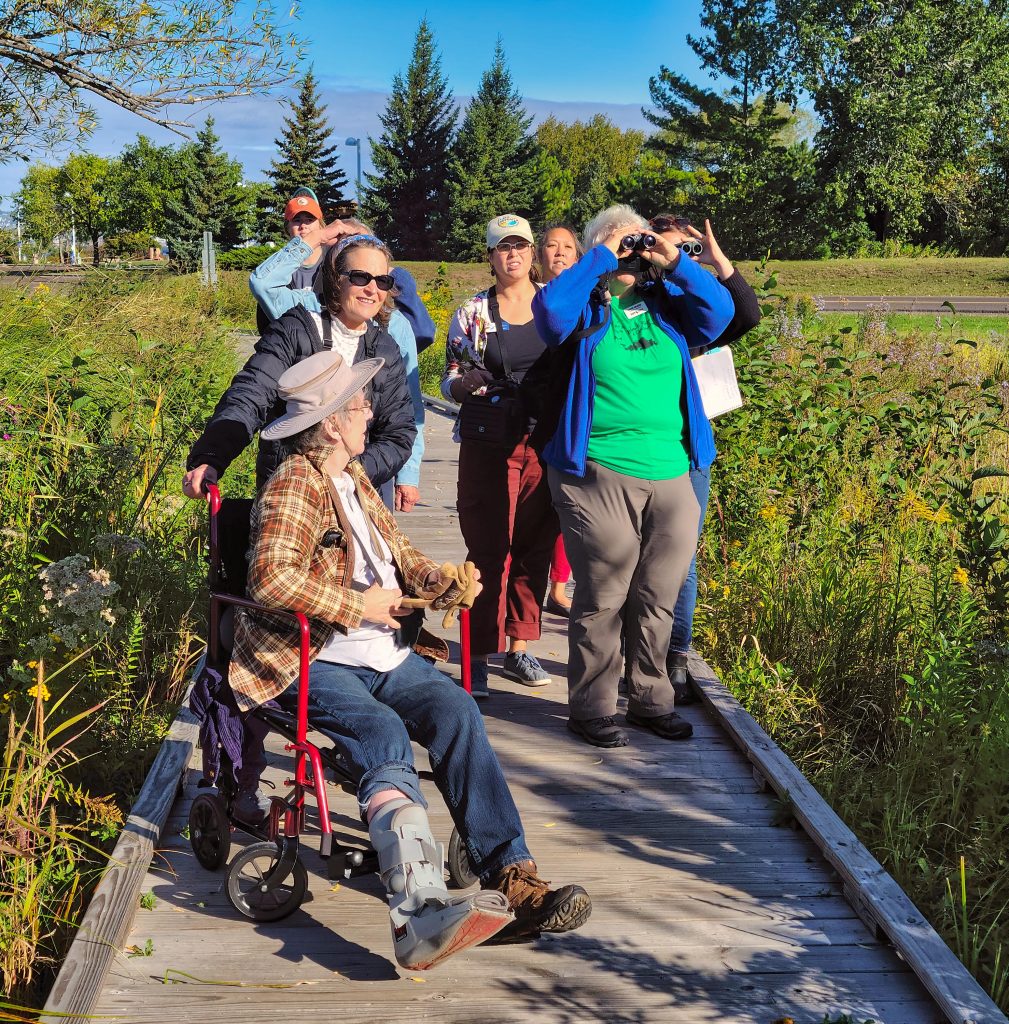
Participants of an accessible birding event spot birds on Barker’s Island in Superior, Wisconsin. Image credit: Marie Zhuikov, Wisconsin Sea Grant

All are invited to attend the first in a series of three events designed for birders of all skills and abilities. Join “Everyone Can Bird: Spring Arrivals,” 9:30-11:30 a.m., Saturday, May 6, at Boy Scout Landing Public Water Access, 11 Commonwealth Ave., Duluth. 

Designed with accessibility in mind, the event will provide American Sign Language interpretation, stationary birding options, binoculars and spotting scopes for use. Expert birding guides will lead discussion and aid observation. The Friends of the Lake Superior Reserve, Hawk Ridge, Lake Superior Reserve, Wisconsin Sea Grant, and the Minnesota Land Trust are hosting the “Everyone Can Bird” series.

Spring is a great time to spot waterfowl, tree sparrows and bald eagles along the St. Louis River as some birds arrive or travel through after winter. Come and observe which feathery friends await. Light refreshments will be provided. 

In addition to the May 6 event, “Everyone Can Bird” opportunities will be held Aug. 2 at Barker’s Island in Superior, and Oct. 14 at Hawk Ridge in Duluth. The series builds on a previous accessible birding event hosted by the same partners that took place last September on Barker’s Island. 

Registration is encouraged but not required. Learn more or register at bit.ly/4331le7.These activities are designed with access in mind. People who would like to request additional accommodations should email Luciana.Ranelli@wisc.edu or call Luciana at 715-399-4085 at least 10 days before the event.

Boy Scout Landing Public Water Access is a collaborative project of the city of Duluth and Minnesota Department of Natural Resources and is one of the public ways to access the St. Louis River freshwater estuary. This “Everyone Can Bird” event occurs the weekend before fishing opener.


The post Everyone can bird, first of three accessible birding events first appeared on Wisconsin Sea Grant.

Original Article

News Releases | Wisconsin Sea Grant

News Releases | Wisconsin Sea Grant

https://www.seagrant.wisc.edu/news/everyone-can-bird-first-of-three-accessible-birding-events/?utm_source=rss&utm_medium=rss&utm_campaign=everyone-can-bird-first-of-three-accessible-birding-events

Marie Zhuikov

I Speak for the Fish: Eyeballing Walleye

I Speak for the Fish is a monthly column written by Great Lakes Now Contributor Kathy Johnson, coming out the third Monday of each month. Publishing the author’s views and assertions does not represent endorsement by Great Lakes Now or Detroit Public Television. 

Read Now at Great Lakes Now.

Original Article

Great Lakes Now

Great Lakes Now

https://www.greatlakesnow.org/2023/04/i-speak-for-fish-eyeballing-walleye/

Kathy Johnson

I Speak for the Fish: Eyeballing Walleye

I Speak for the Fish is a monthly column written by Great Lakes Now Contributor Kathy Johnson, coming out the third Monday of each month. Publishing the author’s views and assertions does not represent endorsement by Great Lakes Now or Detroit Public Television. 

Read Now at Great Lakes Now.

Original Article

Great Lakes Now

Great Lakes Now

https://www.greatlakesnow.org/2023/04/i-speak-for-fish-eyeballing-walleye/

Kathy Johnson

The Ontario government is investing nearly $1 million to support Indigenous-led projects and increased collaboration with Indigenous organizations and youth to help protect and restore the Great Lakes. Read and listen to the full story by Muskoka411.

Original Article

Great Lakes Commission

Great Lakes Commission

https://www.glc.org/dailynews/20230417-ontario-indigenousleaders-greatlakes

Hannah Reynolds

A little bird that lives along the Lake Michigan shoreline is showing new signs of life thanks to the efforts from a team at Sleeping Bear Dunes National Lakeshore. Forty years ago, the Great Lakes piping plover was on the brink of extinction. While the population has rebounded, the birds are still considered extremely vulnerable. Read the full story by WOOD-TV – Grand Rapids, MI.

Original Article

Great Lakes Commission

Great Lakes Commission

https://www.glc.org/dailynews/20230417-pipingplover-greatlakes-preservingmichigan

Hannah Reynolds

The MV Federal Dart arrived at the Port of Thunder Bay on Friday marking it as the first ocean-going “salty” vessel of the 2023 shipping season. The five-year-old Marshall Islands-flagged bulker berthed at Superior Elevator and loaded with Canadian wheat before heading back on a 15-day voyage to the United Kingdom. Read the full story by the Thunder Bay Chronicle Journal.

Original Article

Great Lakes Commission

Great Lakes Commission

https://www.glc.org/dailynews/20230417-salty-thunderbay

Hannah Reynolds

It felt like peak beach season for most of the week and first responders are already looking ahead to the summer tourism season. One way the City of South Haven tries to protect everyone who visits Lake Michigan is through a buoy that monitors water conditions 24/7. Read the full story by WWMT-TV – Kalamazoo, MI.

Original Article

Great Lakes Commission

Great Lakes Commission

https://www.glc.org/dailynews/20230417-southhaven-buoymonitoring-24/7

Hannah Reynolds

More than a dozen environmental groups are suing the federal Environmental Protection Agency over its failure to set water pollution limits for some industrial contaminants as well as its reluctance to update decades-old standards for others, arguing that the agency’s inaction amounts to a “free pass to pollute” for hundreds of chemical and fertilizer plants, oil refineries, plastics manufacturers and other industrial facilities. Read the full story by the Wausau Pilot and Review.  

Original Article

Great Lakes Commission

Great Lakes Commission

https://www.glc.org/dailynews/20230417-epa-sued-pfas-pollutionlimits

Hannah Reynolds