Potential hydrogen source could power trucks while reducing greenhouse gases

This article was republished here with permission from Great Lakes Echo.

By Jake Christie,  Great Lakes Echo

Researchers have located a promising underground region in the Midwest that could have stores of fuel.

But they’re not looking for oil. They’re looking for hydrogen.

Read Now at Great Lakes Now.

Original Article

Great Lakes Now

Great Lakes Now

https://www.greatlakesnow.org/2023/06/potential-hydrogen-source-power-trucks-reducing-greenhouse-gases/
Great Lakes Echo

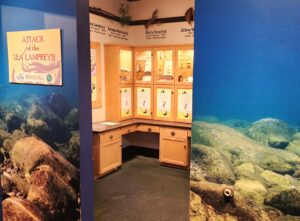
Visitors to the Wisconsin Maritime Museum in Manitowoc can now get up close and personal with one of the Great Lake’s most infamous invasive fish, the sea lamprey. The new exhibit, entitled “Attack of the Sea Lampreys,” was made possible through a collaboration between Wisconsin Sea Grant and the Great Lakes Fishery Commission and tells the story of how sea lamprey were introduced to the Great Lakes, their impact and the ongoing efforts to manage them.

The entrance to "Attack of the Sea Lamprey," a new exhibit at the Wisconsin Maritime Museum.

The entrance to “Attack of the Sea Lampreys,” a new exhibit at the Wisconsin Maritime Museum. Photo: Kevin Cullen

Chief curator Kevin Cullen and the education team revamped an invasive species lab on the museum’s lower level to house the new exhibit. The space was largely dormant and full of locked cabinets. Said Cullen, “People would just pass by it, so it became a really good opportunity to enhance a space that was already there.”  

The redesigned space provides a more interactive, sensory experience. Visitors can now open the cabinet doors to find answers to questions about sea lamprey, such as how many eggs they lay or bones they have. Content is written at a middle-school reading level, and many items are meant to be touched and handled, making the exhibit ideal for kids and families.

The irrefutable stars of the show, however, are the lamprey. Thanks to support and a custom-built tank from the Great Lakes Fishery Commission, museum-goers can enjoy watching over a dozen lamprey hanging out, their toothy maws suctioned to the side of the glass.

Cullen said initial feedback has been positive. “[Visitors] love it. I think they’re creeped out by these things and fascinated to see them.”

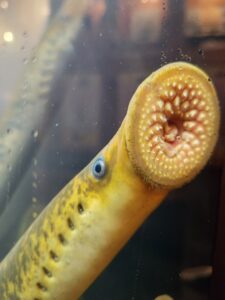
The creep factor is due largely to how sea lamprey feed. A parasitic fish, sea lamprey latch onto larger fish and suck out blood and body fluids. Their mouths are disc-shaped and ringed with rows of horned teeth to better grab flesh. Once suctioned onto a host, sea lamprey then use their sharp tongue to bore a hole in the fish, usually near its heart. A single lamprey can kill up to 40 pounds of fish.

A sea lamprey suctions on to the walls of a glass tank. Its mouth is disc-shaped with circular rows of teeth.

A sea lamprey suctions its mouth onto the walls of a glass tank at the Wisconsin Maritime Museum. Photo: Kevin Cullen

For many, the story of sea lamprey is the stuff of nightmares—or at least a low-budget horror film. Titus Seilheimer, the fisheries specialist with Wisconsin Sea Grant who helped the museum secure the lamprey tank, hopes the exhibit helps visitors see another story.

“It’s one of the great success stories of invasive species management,” said Seilheimer.

Originally from the Atlantic Ocean, sea lamprey arrived in the Great Lakes via shipping canals, landing in Lakes Michigan and Superior by the 1930s and 1940s. By the mid-twentieth century, the lamprey population exploded, devastating the Great Lakes fishery and ecosystem. It wasn’t until the discovery of TFM, a chemical that selectively kills lamprey, that numbers decreased.

The population of sea lamprey is now 90% lower than what it was at its peak. But because lamprey can lay up to 100,000 eggs, that success is tenuous. Said Seilheimer, “If you take your foot off the gas, you see lamprey numbers increase.” Continuous management is required to keep the population in check.

The exhibit is a reminder of how humans have shaped and continue to shape the Great Lakes ecosystem. Said Cullen, “I hope [visitors] have a sense of responsibility when they leave that how they behave in the Great Lakes basin affects others.”

“Attack of the Sea Lampreys” at the Wisconsin Maritime Museum is now open to the public.

The post New exhibit at Wisconsin Maritime Museum showcases history and management of sea lamprey in the Great Lakes first appeared on Wisconsin Sea Grant.

Original Article

News Releases | Wisconsin Sea Grant

News Releases | Wisconsin Sea Grant

https://www.seagrant.wisc.edu/news/new-exhibit-at-wisconsin-maritime-museum-showcases-history-and-management-of-sea-lamprey-in-the-great-lakes/?utm_source=rss&utm_medium=rss&utm_campaign=new-exhibit-at-wisconsin-maritime-museum-showcases-history-and-management-of-sea-lamprey-in-the-great-lakes

Jenna Mertz


Some great news if you love water, music, and great company. The De Pere and Little Kaukauna locks will be open extended hours on Tuesdays this summer for two community music festivals.

The Little Kaukauna lock will be open until 9:30 p.m. on June 27, July 11, July 25, August 8, and August 22 for Wrightstown’s Tunes on Tuesdays concerts. For more info, please visit https://www.foxcities.org/events/tunes-on-tuesday/ .

Also on Tuesdays, the De Pere lock will be open until 9:30 for Knights on the Fox, the free community concert at St. Norbert College. The concerts are on July 11, July 18, July 25, August 1, and August 8. Boaters can take in the fun from the water, or dock at the Thompson Marina on campus. For more information, please visit https://www.snc.edu/community/communityprograms/kotf.html


Original Article

Blog – Fox Locks

Blog – Fox Locks

https://foxlocks.org/blog/boat-to-the-beat/

Fox Locks

Wisconsin’s Busiest Boating Holiday; Help Prevent Invasive Species This July 4th

Every year, tens of thousands of Wisconsinites and visitors take to the water in early July to celebrate summer and the 4th of July, the state’s busiest boating holiday. Starting this summer, our long running Clean Boats Clean Waters Landing Blitz has been fulling incorporated into the Great Lakes Landing Blitz, joining all of the Great Lakes states and provinces in the effort to educate boaters that simple clean up steps and draining water from the boat and live wells can help to prevent the spread of aquatic invasive species (AIS).

In Wisconsin, from June 30-July 9, many boaters will be greeted at landings and access points by volunteers and regional aquatic invasive species prevention partners sharing the simple but powerful message: YOU can protect lakes and rivers form aquatic invasive species impacts. Clean Boats Clean Waters boat inspectors will give out a brand new red, white, and blue boat trailer sticker with a boat graphic showing people all the places where plants, tiny animals and potentially contaminated water can hide.


“It only takes a minute to remove plants, animals, mud or debris from boats, trailers and equipment and to drain all water from bilges, livewells and bait buckets,” said Erin McFarlane, the Statewide CBCW Educator with Extension Lakes. “These simple steps help keep invasive species from hitching a ride from one lake or river to another.”

Do your part to keep Wisconsin waters healthy and stop the spread of AIS by following these easy steps:

  • Inspect boats, trailers and equipment for attached aquatic plants or animals.
  • Remove all attached plants or animals and mud
  • Drain all water from boats, motors, livewells and other equipment.
  • Never move live fish away from a waterbody.
  • Dispose of unwanted bait in the trash.
  • Buy minnows from a Wisconsin bait dealer.

Following these steps helps boaters comply with Wisconsin state law which prohibits the transport of aquatic invasive species. To learn more about invasive species and their impacts to Wisconsin’s waters and economy, visit the DNR’s Aquatic Invasive Species Efforts webpage.

Photo Credit: Alyssa Reinke (FWWA)

Questions? Comments? Contact Chris Acy, the AIS Coordinator covering Brown, Outagamie, Fond du Lac, Calumet, and Winnebago Counties at (920) 460-3674 or chris@fwwa.org!

Follow the Fox Wolf Watershed Alliance’s Winnebago Waterways Program on our Winnebago Waterways Facebook page or @WinnWaterways on Twitter! You can also sign-up for email updates at WinnebagoWaterways.org.

Winnebago Waterways is a Fox-Wolf Watershed Alliance program. The Fox-Wolf Watershed Alliance is an independent nonprofit organization that identifies and advocates effective policies and actions that protect, restore, and sustain water resources in the Fox-Wolf River Basin.

Check out the Keepers of the Fox Program at https://fwwa.org/watershed-recovery/lower-fox-recovery/

Reporting invasive species is a first step in containing their spread. Maintaining and restoring our waters and landscapes can reduce the impacts even when we don’t have other management options to an invasive species.

The post Ready for the Blitz? 2023 Great Lakes Landing Blitz June 29-July 9 appeared first on Fox-Wolf Watershed Alliance.

Original Article

Fox-Wolf Watershed Alliance

Fox-Wolf Watershed Alliance

https://fwwa.org/2023/06/20/ready-for-the-blitz-2023-great-lakes-landing-blitz-june-29-july-9/?utm_source=rss&utm_medium=rss&utm_campaign=ready-for-the-blitz-2023-great-lakes-landing-blitz-june-29-july-9

Chris Acy

PFAS News Roundup: Everyday items found contaminated, PFAS removal in Minnesota estimated to cost billions

PFAS, short for per- and polyfluoroalkyl substances, are a group of widespread man-made chemicals that don’t break down in the environment or the human body and have been flagged as a major contaminant in sources of water across the country.

Keep up with PFAS-related developments in the Great Lakes area.

Read Now at Great Lakes Now.

Original Article

Great Lakes Now

Great Lakes Now

https://www.greatlakesnow.org/2023/06/pfas-news-roundup-everyday-items-found-contaminated-pfas-removal-minnesota-estimated-billions/

Kathy Johnson

U.S. District Judge William Conley has ordered Canadian energy company Enbridge to shutter portions of an oil pipeline that runs through Bad River Band land in Wisconsin within three years and to pay the tribe nearly $5.2 million for trespassing plus a portion of its profits until the shutdown is completed. Read the full story by Reuters.

Original Article

Great Lakes Commission

Great Lakes Commission

https://www.glc.org/dailynews/20230619-pipeline-ruling

James Polidori

The Supreme Court’s recent ruling to significantly reduce Clean Water Act wetlands protections has caused alarm among environmental advocates who fear it will endanger crucial habitats and human health and safety. Michigan’s wetlands may fare better than other states because of strong state regulations, including part 303 of Michigan’s Natural Resources and Environmental Protection Act that regulates wetlands not covered by federal law. Read the full story by Planet Detroit.

Original Article

Great Lakes Commission

Great Lakes Commission

https://www.glc.org/dailynews/20230619-wetland-protections

James Polidori

On Friday, Drew Gronewald, an associate professor with the School for Environment and Sustainability at the University of Michigan, delivered his annual presentation on the current state of Great Lakes water levels. After a couple years of record highs, followed by a marked dip, Lake Michigan-Huron in 2023 is relatively unchanged from 2022; however, two factors that influence lake levels, evaporation and precipitation, are increasing in intensity. Read the full story by WTTW-TV – Chicago, IL.

Original Article

Great Lakes Commission

Great Lakes Commission

https://www.glc.org/dailynews/20230619-water-levels

James Polidori

The Lincoln Township Beach on Lake Michigan in Stevensville, Michigan, has been closed for almost three years after high water levels in 2019 made for unfit parking conditions and eroded half of the parking lot and pavilion. In an effort to save one of its only public beaches, Stevensville city officials say they’re putting together plans to revive it. Read the full story by WNDU-TV – South Bend, IN.

Original Article

Great Lakes Commission

Great Lakes Commission

https://www.glc.org/dailynews/20230619-beach-restoration

James Polidori

After years of leasing Lady Michigan to the Friends of the Thunder Bay National Marine Sanctuary for the shipwreck excursions, the owner of the boat decided not to lease it any longer and intended to move it to another location or sell it. On Thursday, Alpena developer Jeff Konczak announced that he and his wife, Tina, purchased the Lady Michigan, ensuring its long-term future in Alpena. Read the full story by The Alpena News.

Original Article

Great Lakes Commission

Great Lakes Commission

https://www.glc.org/dailynews/20230619-shipwreck-boat-sale

James Polidori

The New York State Department of Environmental Conservation has made awards ranging from $25,000 to $50,000 available for local communities to restore and protect water quality in the Finger Lakes watershed. The grants are supported by the state’s Environmental Protection Fund and administered through the DEC’s Finger Lakes Watershed Grant Program. Read the full story by Finger Lakes Times.

Original Article

Great Lakes Commission

Great Lakes Commission

https://www.glc.org/dailynews/20230619-water-quality-grants

James Polidori

On May 18, the National Oceanic and Atmospheric Administration (NOAA) announced that the Lake Erie Quadrangle was officially under consideration for designation as a National Marine Sanctuary. This nomination has been in the works since 2015 and has the potential to transform Erie, Pennsylvania, economically and environmentally. Read the full story by The Erie Reader.

Original Article

Great Lakes Commission

Great Lakes Commission

https://www.glc.org/dailynews/20230619-sanctuary-designation

James Polidori

The Viking Polaris arrived Friday in Algoma, Wisconsin, making its only stop in the state on the ship’s 15-day Great Lakes excursion tour between Duluth and Toronto. Since last fall, the community has been preparing for passengers on the city’s first cruise ship and those that will come on the eight other ships of the summer. Read the full story by WLUK-TV – Green Bay, WI.

Original Article

Great Lakes Commission

Great Lakes Commission

https://www.glc.org/dailynews/20230619-cruise-stop

James Polidori

The Front Range Lighthouse in downtown Cheboygan, Michigan, has been an active aid to navigation since it was built in 1880. Now owned by the Great Lakes Lighthouse Keepers Association (GLLKA), the lighthouse is being restored to the 1940s time period, when bright red daymarks were added to the tower. Read the full story by Cheboygan Daily Tribune.

Original Article

Great Lakes Commission

Great Lakes Commission

https://www.glc.org/dailynews/20230619-lighthouse-restoration

James Polidori

An iconic fixture on the Welland Canal in Port Colborne’s north end, the former Robin Hood Multifoods flour mill has a new owner who has plans to keep the existing workforce and expand the facility. London Agricultural Commodities (LAC) recently announced the purchase of Ceres Global Ag’s Port Colborne terminal (formerly Robin Hood) for $4 million (U.S.). Read the full story by the St. Catharines Standard.

Original Article

Great Lakes Commission

Great Lakes Commission

https://www.glc.org/dailynews/20230619-grain-elevator-ownership

James Polidori

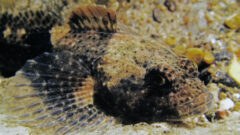
I Speak for the Fish — Searching for the elusive sculpin.

I Speak for the Fish is a monthly column written by Great Lakes Now Contributor Kathy Johnson, coming out the third Monday of each month. Publishing the author’s views and assertions does not represent endorsement by Great Lakes Now or Detroit Public Television. 

Read Now at Great Lakes Now.

Original Article

Great Lakes Now

Great Lakes Now

https://www.greatlakesnow.org/2023/06/i-speak-for-the-fish-searching-elusive-sculpin/

Kathy Johnson

New NASA satellite helps scientists understand Great Lakes

This article was republished here with permission from Great Lakes Echo.

By Jack Armstrong,  Great Lakes Echo

NASA’s new satellite is a huge upgrade for measuring Earth’s surface water that could help scientists. It’s like swapping out your old iPhone for a new model with a better camera, and it could help us better understand the Great Lakes.

Read Now at Great Lakes Now.

Original Article

Great Lakes Now

Great Lakes Now

https://www.greatlakesnow.org/2023/06/new-nasa-satellite-helps-scientists-understand-great-lakes/

Great Lakes Echo

What does the Supreme Court’s wetland ruling mean for Michigan?

This article was republished here with permission from Planet Detroit.

By Brian Allnutt, Planet Detroit

The Supreme Court’s recent ruling to significantly reduce Clean Water Act wetlands protections has caused alarm among environmental advocates who fear it will endanger crucial habitats and human health and safety.

Read Now at Great Lakes Now.

Original Article

Great Lakes Now

Great Lakes Now

https://www.greatlakesnow.org/2023/06/what-does-the-supreme-courts-wetland-ruling-mean-for-michigan/

Planet Detroit

Invasive, parasitic sea lampreys continue to hunt and kill Lake Superior fish above the levels biologists would like to see, especially after the COVID-19 pandemic caused parts of two summer seasons to be lost in the never-ending battle against the eel-like creatures. Read the full story by the Duluth News Tribune.

Original Article

Great Lakes Commission

Great Lakes Commission

https://www.glc.org/dailynews/20230616-lampreys

Jill Estrada

Gray wolves are thriving at Isle Royale National Park five years after authorities began a last-ditch attempt to prevent the species from dying out on the Lake Superior island chain, scientists said Wednesday. Read the full story by the Associated Press.

Original Article

Great Lakes Commission

Great Lakes Commission

https://www.glc.org/dailynews/20230616-wolves

Jill Estrada

The University of Minnesota – Duluth Natural Resources Research Institute has partnered with Lake Superior National Estuarine Research Reserve to take over 300 water samples from eight different locations in the St. Louis River estuary. Read the full story by WDIO – TV – Duluth, MN.

Original Article

Great Lakes Commission

Great Lakes Commission

https://www.glc.org/dailynews/20230616-st-louis-river

Jill Estrada

More than a month after one of the world’s oldest common loons was injured and vanished from a wildlife refuge in Michigan’s Upper Peninsula, the bird was spotted back in the refuge this week – and he might not be swimming alone. Read the full story by MLive.

Original Article

Great Lakes Commission

Great Lakes Commission

https://www.glc.org/dailynews/20230616-loon

Jill Estrada

...AIR QUALITY ADVISORY ISSUED FOR CENTRAL AND EAST CENTRAL WISCONSIN... The Wisconsin Department of Natural Resources has issued an Air Quality Advisory for PM2.5 which will remain in effect until midnight tonight. This advisory affects people living in the following counties: Brown, Calumet, Kewaunee, Manitowoc,

Original Article

Current Watches, Warnings and Advisories for Brown (WIC009) Wisconsin Issued by the National Weather Service

Current Watches, Warnings and Advisories for Brown (WIC009) Wisconsin Issued by the National Weather Service

https://alerts.weather.gov/cap/wwacapget.php?x=WI12664EA17BD0.AirQualityAlert.12664EAEE950WI.GRBAQAGRB.640dab29503639fe4f10a4ceba4daa5f

w-nws.webmaster@noaa.gov

Nibi Chronicles: We are still here, and so is great grandma’s lilac

Editor’s Note: “Nibi Chronicles,” a monthly Great Lakes Now feature, is written by Staci Lola Drouillard. A direct descendant of the Grand Portage Band of Ojibwe, she lives and works in Grand Marais on Minnesota’s North Shore of Lake Superior. Her two books “Walking the Old Road: A People’s History of Chippewa City and the Grand Marais Anishinaabe” and “Seven Aunts” were published 2019 and 2022, and she is at work on a children’s story.

Read Now at Great Lakes Now.

Original Article

Great Lakes Now

Great Lakes Now

https://www.greatlakesnow.org/2023/06/nibi-chronicles-we-are-still-here-great-grandmas-lilac/

Staci Lola Drouillard

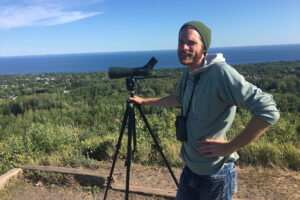
Steve Kolbe on Hawk Ridge in Duluth, Minnesota. Image Credit: Natural Resources Research Institute

The final talk of the 2022-23 River Talk season took place in early May. Steve Kolbe, an avian ecologist with the University of Minnesota Duluth’s Natural Resources Research Institute, gave a presentation about where to find birds in the St. Louis River Estuary and led attendees on a short bird walk on Barker’s Island in Superior near the Lake Superior Estuarium.

“The reason I live in this area is because of birds, specifically because of bird migration,” Kolbe said. “This is an amazing part of the world, both in the fall and in the spring. Birding isn’t just a hobby for me. It’s not just a job. It’s sort of like an obsession.”

Spring

Kolbe began his talk with the snowy owl. They’re often seen in winter on Barker’s Island and the Superior Airport and surrounding area. Their preferred habitat is the Arctic tundra, so they like the open spaces that the airport provides.

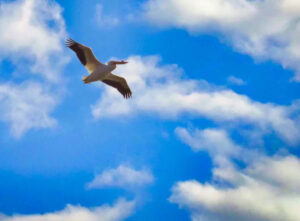
An American white pelican files over the St. Louis River at Chambers Grove. Image credit: Marie Zhuikov

Trumpeter swans are some of the first birds to migrate through in the spring after ice-out. Kolbe often finds them in Rask Bay on the St. Louis River.

American white pelicans stage in groups in the spring in Chambers Grove along the river. “For whatever reason, they like the little island in the middle of the river. They hang out there for almost a month before heading farther north,” Kolbe said.

Bonaparte’s gulls can be found in Lake Superior off Lafayette Square on Park Point en masse. “This is one of my all-time favorite birds and an area specialty. The first week in May, these beautiful, vocal and awesome-looking small gulls with a black head and a silver back with red legs stage on Lake Superior. They hang out for a day or two and then leave in a huge flock,” he said.

Summer

American bitterns breed in Mud Lake and Allouez Bay in wetlands.

Common terns breed on Interstate Island – the sandy island that can be seen off the Blatnik Bridge. Kolbe said they winter in Peru, so they “put on a lot of miles.” The island is protected, so people can’t visit it without a permit. The best place to see them from the mainland is at Rice’s Point boat launch in Duluth with binoculars or a spotting scope.

Fall

For work, Kolbe studies rusty blackbirds. He said this wetland species likes to spend time in North Bay on the river and on many of the islands below the Fond du Lac Dam. Unlike most fall migrants, these blackbirds stay in the area for an extend time – two or three weeks. He suspects they may be using that time to molt their feathers. “Whatever they’re doing, it’s obviously a really important spot,” Kolbe said.

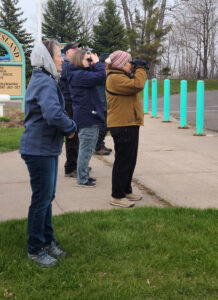
River Talk participants view birds on Barker’s Island. Image credit: Marie Zhuikov, Wisconsin Sea Grant

Parasitic jaegers migrate along Wisconsin Point in September. These birds are known for their feeding style, which involves stealing food from gulls. “They look like a gull mixed with a peregrine falcon,” Kolbe said. “It’s certainly not a bird that you see many places. They nest in the high Arctic and winter at sea. So, it’s cool to be able to see them in Duluth and Superior.”

Flocks of sanderlings and a few piping plovers can be found on area beaches in fall and spring.

Kolbe studied the common nighthawk for his master’s degree. They are another species that migrates en masse along the shore of Lake Superior during fall. “In the second half of August, if you get a really warm day with light winds, go outside in the evening and look up. If you’re lucky, you’ll see something on the order of 15,000 of these birds,” Kolbe said.  He’s been counting the birds during their migration for the past 15 years. He uses the information to develop population trend information for the species. “They seem to be doing OK,” he said.

Hawk Ridge in Duluth is a great place to see hawks and other birds in the spring and fall. Bald eagles are a common species of interest who are here year-round. “It’s really a success story that we’re able to enjoy them so readily and easily around here,” said Kolbe.

During a walk around Barker’s Island, the group saw a mix of birds: buffleheads, a horned grebe, red-winged blackbirds, mallards, a rock pigeon, a common merganser, a song sparrow, ruddy ducks and herring gulls.

River Talks will begin again for its 11th season next fall. In the meantime, there’s a new spinoff series that the Lake Superior National Estuarine Research Reserve has begun for summer, called River Walks. Find more info about it here.


The post Where to find birds in the St. Louis River Estuary first appeared on Wisconsin Sea Grant.

Original Article

Blog | Wisconsin Sea Grant

Blog | Wisconsin Sea Grant

https://www.seagrant.wisc.edu/blog/where-to-find-birds-in-the-st-louis-river-estuary/?utm_source=rss&utm_medium=rss&utm_campaign=where-to-find-birds-in-the-st-louis-river-estuary

Marie Zhuikov

...AIR QUALITY ADVISORY ISSUED FOR CENTRAL AND EAST CENTRAL WISCONSIN... The Wisconsin Department of Natural Resources has issued an Air Quality Advisory for PM2.5 which will remain in effect until midnight tonight. This advisory affects people living in the following counties: Brown, Calumet, Kewaunee, Manitowoc,

Original Article

Current Watches, Warnings and Advisories for Brown (WIC009) Wisconsin Issued by the National Weather Service

Current Watches, Warnings and Advisories for Brown (WIC009) Wisconsin Issued by the National Weather Service

https://alerts.weather.gov/cap/wwacapget.php?x=WI12664EA10C18.AirQualityAlert.12664EA181ACWI.GRBAQAGRB.640dab29503639fe4f10a4ceba4daa5f

w-nws.webmaster@noaa.gov

Energy News Roundup: Minnesota leading in clean energy, coal plant closing in Michigan

Keep up with energy-related developments in the Great Lakes area with Great Lakes Now’s biweekly headline roundup.

Click on the headline to read the full story:


Illinois

Tax credits help lure solar-powered manufacturing plant, 60 new jobs to southern Illinois — Belleville News-Democrat

A new southern Illinois plant that will manufacture components for solar panels and electric vehicles also will be powered by a 15-acre onsite solar project.

Read Now at Great Lakes Now.

Original Article

Great Lakes Now

Great Lakes Now

https://www.greatlakesnow.org/2023/06/energy-news-roundup-minnesota-leading-clean-energy-coal-plant-closing-michigan/

Kathy Johnson

By Eric Freedman A Frankfort, Michigan, man has been arrested on federal charges of vandalism and tampering at Sleeping Bear Dunes National Lakeshore by diverting water from the Platte River within the park. Andrew Howard faces up to six months in jail and a $5,000 fine if convicted. He also could be ordered to pay […]

The post Arrest made in Sleeping Bear Dunes vandalism case first appeared on Great Lakes Echo.

Original Article

Great Lakes Echo

Great Lakes Echo

http://greatlakesecho.org/2023/06/15/arrest-made-in-sleeping-bear-dunes-vandalism-case/

Eric Freedman

...AIR QUALITY ADVISORY ISSUED FOR ALL BUT LAKE MICHIGAN SHORELINE WISCONSIN... The Wisconsin Department of Natural Resources has issued an Air Quality Advisory for PM2.5 which will remain in effect until noon Thursday. This advisory affects people living in the following counties: Brown, Calumet, Florence, Forest, Langlade, Lincoln,

Original Article

Current Watches, Warnings and Advisories for Brown (WIC009) Wisconsin Issued by the National Weather Service

Current Watches, Warnings and Advisories for Brown (WIC009) Wisconsin Issued by the National Weather Service

https://alerts.weather.gov/cap/wwacapget.php?x=WI12664E9298E0.AirQualityAlert.12664EA17BD0WI.GRBAQAGRB.a970c89c1ccaad5961e38ab473d10e74

w-nws.webmaster@noaa.gov

It was 2010 when federal funding in the U.S. to restore the Great Lakes, via the Great Lakes Restoration Initiative, began to flow to the tune of $475 million. Fast-forward to 2023 and a program focused on coastal wetland restoration has been renewed twice by the U.S. Environmental Protection Agency and has received a total of $30 million since 2010. Read the full story by Great Lakes Now.

Original Article

Great Lakes Commission

Great Lakes Commission

https://www.glc.org/dailynews/20230614-coastal-wetland-program

Theresa Gruninger

One of the U.S. Environmental Protection Agency’s research vessels, the Lake Guardian, departed Monday afternoon to start an annual mission to monitor and collect samples of trout, small organisms, and more in Lake Huron. Read the full story by The Alpena News.

Original Article

Great Lakes Commission

Great Lakes Commission

https://www.glc.org/dailynews/20230614-lake-huron-research-survey

Theresa Gruninger

In conjunction with its upcoming exhibit “The Maritime History of Charlevoix,” the Charlevoix Historical Society will present the program “Documenting Shipwrecks of the Great Lakes” on Wednesday, June 28. Read the full story by the Petoskey News-Review.

Original Article

Great Lakes Commission

Great Lakes Commission

https://www.glc.org/dailynews/20230614-shipwreck-program

Theresa Gruninger

Wolves that nearly died out from inbreeding recovered, now helping a remote island’s ecosystem

By John Flesher, AP Environmental Writer

TRAVERSE CITY, Mich. (AP) — Gray wolves are thriving at Isle Royale National Park five years after authorities began a last-ditch attempt to prevent the species from dying out on the Lake Superior island chain, scientists said Wednesday.

Meanwhile, the park’s moose population continues a sharp but needed decline.

Read Now at Great Lakes Now.

Original Article

Great Lakes Now

Great Lakes Now

https://www.greatlakesnow.org/2023/06/ap-wolves-nearly-died-out-recovered-helping-ecosystem/

The Associated Press

U.S. District Judge James G. Carr recently approved a plan that is the result of cooperation between the U.S. EPA, State of Ohio, Lucas County Commissioners, and the Environmental Law & Policy Center. The Consent Decree outlines a timeline Ohio EPA must follow to create a Total Maximum Daily Loads that set maximum amounts of pollutants that may enter the water for Lake Erie. Read the full story by The Country Journal.

Original Article

Great Lakes Commission

Great Lakes Commission

https://www.glc.org/dailynews/20230614-tmdl

Theresa Gruninger

Lake Erie is a great natural resource, but unlocking the lake’s potential, as well as making the shoreline accessible to everyone, has proven to be a significant problem in Northeast Ohio. There is not a simple solution, but Ohio’s Euclid community has at least cracked the code to the point where people have taken notice. Read the full story by WOIO-TV – Cleveland, OH.

Original Article

Great Lakes Commission

Great Lakes Commission

https://www.glc.org/dailynews/20230614-lakefront-acess

Theresa Gruninger

Spiny water flea, Bithotrephes longimanus, are native to brackish Northern European and Asian waterbodies and were inadvertently introduced into the Great Lakes via shipping ballast. Due to their unusually large size for zooplankton, they disrupt the natural food chain and preventing them from invading new areas in the Great Lakes is key. Read the full story by Wisconsin Public Radio.

Original Article

Great Lakes Commission

Great Lakes Commission

https://www.glc.org/dailynews/20230614-spiny-water-flea

Theresa Gruninger