The sinking of the Edmund Fitzgerald not only inspired an iconic ballad from Canadian crooner Gordon Lightfoot, it also led to the advancement of Great Lakes weather monitoring and forecasting that has helped ships navigate storms ever since. Read the full story by The Detroit News.

Original Article

Great Lakes Commission

Great Lakes Commission

https://www.glc.org/dailynews/20231127-storm-navigation

Taaja Tucker-Silva

Two of the biggest fishing derbies in the United States are being contested now on Lake Erie. The Walleye Fall Brawl and the Fall Walleye Slam attract contestants from more than 20 states and the winner of each derby will take home more than $100 thousand in cash, boats, and other prizes. Read the full story by WFXR-TV – Cleveland, OH.

Original Article

Great Lakes Commission

Great Lakes Commission

https://www.glc.org/dailynews/20231127-fishing-derbies

Taaja Tucker-Silva

The National Park Service is excavating a popular beach at Michigan’s Sleeping Bear Dunes National Lakeshore this fall to remove sand and rocks deposited there by annual river dredging, which formerly helped boaters access Lake Michigan. Read the full story by MLive.

Original Article

Great Lakes Commission

Great Lakes Commission

https://www.glc.org/dailynews/20231127-sleepingbear-beach

Taaja Tucker-Silva

November is Historic Bridge Awareness Month and while Michigan is a state defined, in part, by a most iconic bridge—the Mighty Mac—there are many other less mighty but still remarkable bridges to be found across state. Read the full story by MLive.

Original Article

Great Lakes Commission

Great Lakes Commission

https://www.glc.org/dailynews/20231127-michigan-bridges

Taaja Tucker-Silva

Person wearing a plaid shirt and smiling with water in the background.

Mike Smale is assessing 38 wetlands in the Wisconsin part of the Lake Superior watershed to see what vulnerable plant and animal species are present. Submitted photo.

If Mike Smale were king of the world for a day, he might just decree that all city buses in Madison, Wisconsin, be outfitted with front racks to hold kayaks, in addition to bikes, as they are now. That way, a person could stow their kayak, climb onto the bus, ride to a nearby body of water, remove the kayak and have a paddle. This would be the convergence of two things Smale is passionate about – embracing mass transit to reduce emissions and enjoying water.  

“I’m kind of a nerd in that way (supporting eco-friendly trains and buses) on top of being a water nerd,” Smale said.

While filling the role of the J. Philip Keillor Great Lakes – Wisconsin Sea Grant Fellow focused on climate change and coastal wetlands, Smale may not really don the royal mantle and order what’s affixed to buses, but he can embrace his love of water. He took on the 18-month fellowship based at the Wisconsin Department of Natural Resources (DNR) in Madison in mid-June and has a dual-focused appointment.

First, he is tackling what he calls “oddball” tasks, such as collaborating with people in the DNR’s Drinking Water and Groundwater Program, attending conferences and assisting with Sea Grant’s review process to determine a biennial research package. His second focus is assessing how climate change is affecting 38 wetlands in the Wisconsin portion of the Lake Superior watershed.

Smale said, “We are coming up with methods for a framework to evaluate the climate sensitivity of these wetlands. That involves finding out what data is available, working with experts to establish those methods, and how that framework could be representative of true climate sensitivity. And then some mapping (of the wetlands).” The end point will be a scoring table for the sites.

He is looking through the lens of four shifts expected to affect wetlands under a changing climate as identified by the 2021 Wisconsin Initiative on Climate Change Report:

  • Warmer temperatures
  • Increased precipitation
  • Lake level fluctuations
  • Increased lake wind and wave action

Those shifts are being incorporated into a whole-picture analysis of a wetland. Smale elaborated, “Based on communities that are present (in a wetland), we can estimate which wetlands are more or less likely to shift – which wetlands are going to change the most. We’re starting with vegetation, and we are going to move into looking at the climate sensitivity of fish habitat and birds, and also culturally important beings.”

With that data in hand, Smale and his team will next determine how, “Those components or communities will translate, or not translate, into adaptive capacity. We’re asking, ‘How well could these wetlands, even though they’re sensitive, how well could they cope with the change in climate’?”

Smale’s work can also inform assessments throughout the Great Lakes Basin because one source of data is the Coastal Wetland Monitoring Data Program, which includes insights about the region’s fish, frog, bird, macroinvertebrate and vegetation populations, along with water quality. The program is based at Central Michigan University and is supported by contributions from binational governmental agencies, universities and a private business.

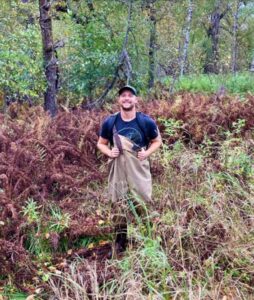
Person wearing waders and standing in brown and green vegetation. Submitted photo.

Smale said through the fellowship he has, “Learned that I like these actionable positions where you’re doing something that is having a visible effect on people’s lives. ” Submitted photo.

“We’re building the framework (in Wisconsin) to, at a very minimum, work with that dataset so it could be extrapolated to all the Great Lakes. We’re finding ways where we could include state data or from other sources to fill out gaps or make it a little bit more robust, more applicable, but other states could also use this data, tweak it to their own framework using their own data sources,” said Smale.

Speaking of tweaks, Smale said he’s so far encountered one in his own fellowship. “When I first started this position, it really seemed like I jumped into Sophie’s (his predecessor in the fellowship, Sophie LaFond Hudson) work. I thought ‘Oh, wow, this is halfway done. What am I going to be doing?’”

As he dug deeper, though, Smale realized he should adjust LaFond Hudson’s work in the aquatic invasive species (AIS) category – to view AIS as an indicator of stress in a wetland not as a community on par with, say, the state of fish and frogs. For example, if nonnative cattails are present, the wetland is near a tipping point toward a monoculture that should be reflected in an individual wetland’s resiliency score.

Adjusting that part of the framework, “Felt like I was regressing back in the project,” he said. “Here, I thought I was halfway done and actually I’m back working on the basics of the project. But after talking it through with Cherie Hagen, who’s my supervisor at the DNR, she’s like, ‘Oh no, this is exactly what you should be doing. You’re building it up more. You’re incorporating exactly the feedback you’re supposed to.’”

In light of this, Smale said, “I guess I was surprised at how much more influence I would have on this project and also kind of the depth that we are working on.”

In addition to the DNR’s Hagen, the Lake Superior basin supervisor in the Office of Great Waters, Smale is also mentored by Madeline Magee, monitoring and beach coordinator in that same DNR office; Sea Grant’s Associate Director Jennifer Hauxwell; and Titus Seilheimer, Sea Grant’s fisheries outreach specialist.  

The post Keillor Fellow, reviewing resilience of coastal wetlands first appeared on Wisconsin Sea Grant.

Original Article

News Releases | Wisconsin Sea Grant

News Releases | Wisconsin Sea Grant

https://www.seagrant.wisc.edu/news/keillor-fellow-reviewing-resilience-of-coastal-wetlands/

Moira Harrington

A charter captain faces prison and a fine when he is sentenced early next year for violating a Coast Guard order to stop commercial operation of his unlicensed boat on Lake St. Clair.

Benajmin Jones, 39, of Detroit pleaded guilty to a felony charge of deliberately violating a July 2021 Coast Guard order with his 39-foot Sea Ray, PWR TOWER, federal prosecutors said.

The post Charter boat captain faces prison for unlicensed vessel first appeared on Great Lakes Echo.

Original Article

Great Lakes Echo

Great Lakes Echo

http://greatlakesecho.org/2023/11/27/charter-boat-captain-faces-prison-for-unlicensed-vessel/

Eric Freedman

...SNOW-COVERED AND SLIPPERY ROADS THIS MORNING... Light snow will continue to fall this morning, before diminishing to flurries from west to east in the afternoon. Additional snow accumulations will only be an inch or so in most areas. Untreated roads and sidewalks will remain snow-covered and slippery. If traveling, remember to turn on your headlights, reduce your

Original Article

Current Watches, Warnings and Advisories for Brown (WIC009) Wisconsin Issued by the National Weather Service

Current Watches, Warnings and Advisories for Brown (WIC009) Wisconsin Issued by the National Weather Service

https://alerts.weather.gov/cap/wwacapget.php?x=WI12666D165914.SpecialWeatherStatement.12666D16E0A0WI.GRBSPSGRB.3b77a733acfe35fc01f412b80021d336

w-nws.webmaster@noaa.gov

...HAZARDOUS TRAVEL POSSIBLE THIS MORNING... Light snow will continue to fall this morning, before diminishing to flurries from west to east in the afternoon. Additional snow accumulations will only be an inch or so in most areas, but it will be enough to produce slippery roads and sidewalks. Take it easy if you are traveling this morning.

Original Article

Current Watches, Warnings and Advisories for Brown (WIC009) Wisconsin Issued by the National Weather Service

Current Watches, Warnings and Advisories for Brown (WIC009) Wisconsin Issued by the National Weather Service

https://alerts.weather.gov/cap/wwacapget.php?x=WI12666D15F834.SpecialWeatherStatement.12666D16714CWI.GRBSPSGRB.3b77a733acfe35fc01f412b80021d336

w-nws.webmaster@noaa.gov

We’re going to need a bigger fishbowl

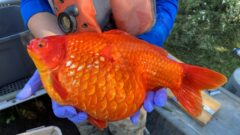
A tiny goldfish might look cute in a fishbowl on your shelf, but if released into the wild it can grow to a terrifying size and become a menace to the ecosystem. They eat pretty much anything and everything, root up plants causing the water to become cloudy and dark, and reproduce and grow so quickly that almost no predators can stop them.

Read Now at Great Lakes Now.

Original Article

Great Lakes Now

Great Lakes Now

https://www.greatlakesnow.org/2023/11/were-going-to-need-a-bigger-fishbowl/

Brian Owens

A recent report by Illinois firm PLG Consulting has found that a potential shutdown of Enbridge Energy’s controversial Line 5 pipeline would have a minimal impact on natural gas prices as existing energy transportation infrastructure could sufficiently address the absence of the petroleum pipeline. Read the full story by Michigan Radio.

Original Article

Great Lakes Commission

Great Lakes Commission

https://www.glc.org/dailynews/20231122-energy-report

James Polidori

An Ohio Sea Grant extension report surveying charter fishing captains about their business in 2020 was compared to survey results from 2010. The report says revenue for Ohio’s Lake Erie charter fishing industry increased more than 50% over this period— considerably higher than inflation. Read the full story by The Beacon.

Original Article

Great Lakes Commission

Great Lakes Commission

https://www.glc.org/dailynews/20231122-fishing-charter-revenue

James Polidori

The Environmental Law & Policy Center, Environmental Integrity Project, and other environmental groups filed comments with the Indiana Department of Environmental Management last week asking for tougher water permit standards to restrict the 5 million pounds a year of discharges now taking place at Cleveland-Cliffs Indiana Harbor in East Chicago, Indiana. Read the full story by The Times of Northwest Indiana.

Original Article

Great Lakes Commission

Great Lakes Commission

https://www.glc.org/dailynews/20231122-discharge-regulation

James Polidori

The five Great Lakes are among the fastest-warming bodies of water on Earth, but major uncertainties and research gaps affect how governments and communities respond, according to the new National Climate Assessment. The report says many effective solutions are grounded in local knowledge, Indigenous leadership, and collaboration with Indigenous Nations and communities. Read the full story by Interlochen Public Radio.

Original Article

Great Lakes Commission

Great Lakes Commission

https://www.glc.org/dailynews/20231122-climate-adaptation

James Polidori

The National Museum of the Great Lakes in Toledo, Ohio, plans to add 5,000 square feet so it can offer more permanent exhibition space, room for temporary exhibits, and a new Great Lakes Community Education Center. The expansion will break ground in the spring of 2024. Read the full story by The Advertiser-Tribune.

Original Article

Great Lakes Commission

Great Lakes Commission

https://www.glc.org/dailynews/20231122-museum-expansion

James Polidori

From Wisconsin’s Great Lakes shipwrecks to a pair of ancient Ho-Chunk dugout canoes found in Lake Mendota, a Wisconsin Historical Society underwater archaeologist has some great stories to tell. Read the full story by Wisconsin State Journal.

Original Article

Great Lakes Commission

Great Lakes Commission

https://www.glc.org/dailynews/20231122-archaeologist-shipwreck-discoveries

James Polidori

A Pennsylvania Fish and Boat Commission survey found most anglers are satisfied with the Commission’s trout program, but responses indicate more public access is desired and that fishing methods are changing. Read the full story by Erie Times-News.

Original Article

Great Lakes Commission

Great Lakes Commission

https://www.glc.org/dailynews/20231122-angler-survey

James Polidori

A University of Wisconsin-Milwaukee Freshwater Sciences graduate student teaches K-12 students about freshwater systems and conservation through their underwater performances as Mermaid Echo. Read the full story by WUWM – Milwaukee, WI.

Original Article

Great Lakes Commission

Great Lakes Commission

https://www.glc.org/dailynews/20231122-conservation-education

James Polidori

The Great Lakes Towing Company announced it has acquired a 62-year-old fireboat from the city of Cleveland, Ohio. The vessel, Anthony J. Celebrezze, was constructed in 1961 by Paasch Marine in Erie, Pennsylvania, and was used by the Cleveland Fire Department until it was replaced with a new vessel in June 2023 and put up for auction. Read the full story by Marine Link.

Original Article

Great Lakes Commission

Great Lakes Commission

https://www.glc.org/dailynews/20231122-fireboat-purchase

James Polidori

A newly discovered chemical compound that makes it difficult for invasive sea lamprey to find their breeding grounds may be a new tool in the toolbox for controlling a parasite that threatens Great Lakes fish.

Anne Scott, an assistant professor at Michigan State University, and her team of researchers are creating a new method of sea lamprey control

The post New compound may expand sea lamprey control first appeared on Great Lakes Echo.

Original Article

Great Lakes Echo

Great Lakes Echo

http://greatlakesecho.org/2023/11/22/new-compound-may-expand-sea-lamprey-control/

Guest Contributor

The Four Sisters: Bangs, Lugalette, Bannock and Frybread

Editor’s Note: “Nibi Chronicles,” a monthly Great Lakes Now feature, is written by Staci Lola Drouillard. A direct descendant of the Grand Portage Band of Ojibwe, she lives and works in Grand Marais on Minnesota’s North Shore of Lake Superior. Her two books “Walking the Old Road: A People’s History of Chippewa City and the Grand Marais Anishinaabe” and “Seven Aunts” were published 2019 and 2022, and she is at work on a children’s story.

Read Now at Great Lakes Now.

Original Article

Great Lakes Now

Great Lakes Now

https://www.greatlakesnow.org/2023/11/the-four-sisters-bangs-lugalette-bannock-and-frybread/

Staci Lola Drouillard

As Great Lakes warm, collaboration and Indigenous self-determination are keys to adapting

By Izzy Ross, Interlochen Public Radio

This coverage is made possible through a partnership with IPR and Grist, a nonprofit independent media organization dedicated to telling stories of climate solutions and a just future.

The five Great Lakes are among the fastest-warming bodies of water on Earth.

Read Now at Great Lakes Now.

Original Article

Great Lakes Now

Great Lakes Now

https://www.greatlakesnow.org/2023/11/as-great-lakes-warm-collaboration-and-indigenous-self-determination-are-keys-to-adapting/

Interlochen Public Radio

A deer with chronic wasting disease has been found in Ogemaw County — a county that had never seen the disease before.

And that worries the Department of Natural Resources.

The post Chronic wasting disease found in new county first appeared on Great Lakes Echo.

Original Article

Great Lakes Echo

Great Lakes Echo

http://greatlakesecho.org/2023/11/21/chronic-wasting-disease-found-in-new-county/

Guest Contributor

Do snitches net fishes? Scientists turn invasive carp into traitors to slow their Great Lakes push

By Todd Richmond, Associated Press

LA CROSSE, Wis. (AP) — Wildlife officials across the Great Lakes are looking for spies to take on an almost impossible mission: stop the spread of invasive carp.

Over the last five years, agencies such as the U.S. Fish and Wildlife Service and Minnesota Department of Natural Resources have employed a new seek-and-destroy strategy that uses turncoat carp to lead them to the fish’s hotspot hideouts.

Read Now at Great Lakes Now.

Original Article

Great Lakes Now

Great Lakes Now

https://www.greatlakesnow.org/2023/11/ap-do-snitches-net-fishes-scientists-turn-invasive-carp-into-traitors-to-slow-their-great-lakes-push/

The Associated Press

The state’s Natural Resources Commission wants to know more before deciding whether to allow the hunting of wolves – if Michigan’s largest predator is taken off the federal endangered species list.

They are one of the most controversial animals in the state, according to Brian Roell, a Department of Natural Resources wildlife biologist.

The post ‘Little Red Riding Hood syndrome:’ Wolf controversy in the UP first appeared on Great Lakes Echo.

Original Article

Great Lakes Echo

Great Lakes Echo

http://greatlakesecho.org/2023/11/20/little-red-riding-hood-syndrome-wolf-controversy-in-the-up/

Guest Contributor

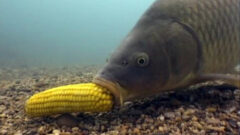
I Speak for the Fish: Carp are crazy about corn

I Speak for the Fish is a monthly column written by Great Lakes Now Contributor Kathy Johnson, coming out the third Monday of each month. Publishing the author’s views and assertions does not represent endorsement by Great Lakes Now or Detroit Public Television. 

Read Now at Great Lakes Now.

Original Article

Great Lakes Now

Great Lakes Now

https://www.greatlakesnow.org/2023/11/i-speak-for-the-fish-carp-are-crazy-about-corn/

Kathy Johnson

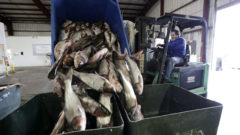
Wildlife officials across the Great Lakes are looking for spies to take on an almost impossible mission: stop the spread of invasive carp. Over the last five years, state and federal agencies have employed a new seek-and-destroy strategy that uses turncoat carp to lead them to the fish’s hotspot hideouts. Read the full story by MPR News.

Original Article

Great Lakes Commission

Great Lakes Commission

https://www.glc.org/dailynews/20231120-invasivecarp-traitors-slow-geatlakespush

Hannah Reynolds

The Canadian government has awarded nearly $4 million to researchers at Lake Superior State University (LSSU) to study the behavior and impacts of oil spilled in the Great Lakes. LSSU plans to collaborate on the research with Algoma University, located across the international border in Sault Ste. Marie, Ontario.  Read the full story by MLive.

Original Article

Great Lakes Commission

Great Lakes Commission

https://www.glc.org/dailynews/20231120-greatlakes-oilspill-canada

Hannah Reynolds

What are the items that Muskegon’s beach cleaning robot picks up the most? Plastic fragments. Grand Valley State University’s Annis Water Resources Institute, which owns and operates the BeBot remote-controlled roving sand sweeper, recorded a total of 6,237 plastic fragments recovered from the beach during summer 2023. Read the full story by MLive.

Original Article

Great Lakes Commission

Great Lakes Commission

https://www.glc.org/dailynews/20231120-trashrobot-muskegonbeach

Hannah Reynolds

The U.S. EPA is providing the Gun Lake Tribal Utility Authority with a $56 million loan to support improvements to the tribe’s drinking water and water wastewater systems. The loan will help fund design and construction of a new wastewater treatment plant, groundwater wells, a new drinking water treatment plant and an elevated water storage tank. Read the full story by MLive.

Original Article

Great Lakes Commission

Great Lakes Commission

https://www.glc.org/dailynews/20231120-westmichigan-tribe-federalloan-waterinfrastructure

Hannah Reynolds

Many who have lived in Michigan for a while know that November tends to have stronger storm systems and strong winds, especially over the Great Lakes. Several storms packing gale-force winds have landed in the history books for being destructive and deadly around this time of year, and there is a reason for that. Read the full story by MLive.

Original Article

Great Lakes Commission

Great Lakes Commission

https://www.glc.org/dailynews/20231120-gales-november-greatlakes

Hannah Reynolds

The US. EPA selected the St. Regis Mohawk Tribe and the Seneca Nation of Indians to receive a total of almost $2 million in Solid Waste for Recycling Grants. These grants will expand recycling infrastructure and education for waste management systems across both nations, complement an existing capital investment project, and directly benefit communities along the St. Lawrence River. Read the full story by Watertown Daily Times.

Original Article

Great Lakes Commission

Great Lakes Commission

https://www.glc.org/dailynews/20231120-stregis-mohawktribe-funding-epa

Hannah Reynolds

Tetra Tech Inc. has garnered a $33 million contract from the United States Army Corps of Engineers to design a new navigation lock on the Illinois River. The navigation lock is one of eight on the Illinois Waterway system connecting Lake Michigan with the Mississippi River on the west side of the state; most of the locks are on the Illinois River. These locks adjust water levels to minimize elevation changes for ships navigating the waterways. Read the full story by the Los Angeles Business Journal.

Original Article

Great Lakes Commission

Great Lakes Commission

https://www.glc.org/dailynews/20231120-tetratech-contract-illinoisriver

Hannah Reynolds

When the 639-foot freighter SS Carl D. Bradley sank 47 miles west of Charlevoix in November 1958, it was one of the worst shipping disasters in Great Lakes history. At the time of the Bradley’s launch in 1927, it was the longest and largest boat on the Great Lakes. It held that title for 22 years before the Edmund Fitzgerald was launched in 1958, just five months before the Bradley was lost. Read the full story by the Petoskey News-Review.

Original Article

Great Lakes Commission

Great Lakes Commission

https://www.glc.org/dailynews/2023112023-bradley-historic-sinking-northernmichigan

Hannah Reynolds

Ducks Unlimited Canada, (DUC), and Raisin Region Conservation Authority, (RRCA), are celebrating the recent acquisition of 10.4 acres, of valuable connective land in the St. Lawrence River watershed. The property allows for an expansion of the Cooper Marsh Conservation Area, a popular destination for nature lovers and birders alike. Read the full story by Cornwall Seaway News.

Original Article

Great Lakes Commission

Great Lakes Commission

https://www.glc.org/dailynews/2023112023-ducksunlimited-canada-raisinregion

Hannah Reynolds

South Milwaukee Police find Gator in Grant Park

Original Story: We Are Green Bay

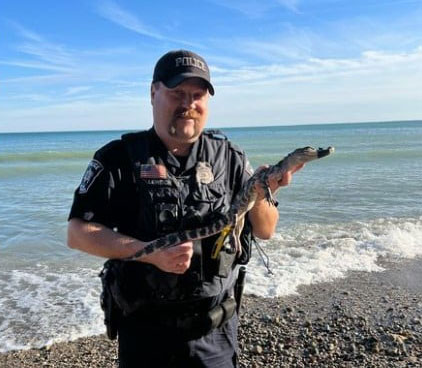
Alligators are native to the southern portion of the United States, which has officials questioning how one ended up on a beach in Wisconsin. According to the South Milwaukee Police Department, officers took a report of an alligator on Lake Michigan Beach in Grant Park.

The Milwaukee Area Domestic Animal Control Commission (MADACC) was also called to the scene to assist in taking the alligator into custody safely. Officer Lewison with the South Milwaukee Police Department was able to locate and take the alligator into custody safely. The gator is now in the hands of MADACC.

It’s been quite the last few months for Wisconsin’s lakeshore, as just two months ago in September, five flamingos showed up at a Port Washington beach. Additionally in August, an ultra-rare Roseate Spoonbill was spotted in Green Bay for the first time in 178 years.

Judging from the size of the alligator, it looks like it was an illegal pet release. While folks may not know what to do with pets that they are no longer able to care for, pets should never be released into the wild. Places like the J&R Aquatic Area Animal Rescue can help rehome your pet at no cost. Make sure your pet isn’t the next one on the evening news!

Photo Credit: South Milwaukee Police

Questions? Comments? Contact Chris Acy, the AIS Coordinator covering Brown, Outagamie, Fond du Lac, Calumet, and Winnebago Counties at (920) 460-3674 or chris@fwwa.org!

Follow the Fox Wolf Watershed Alliance’s Winnebago Waterways Program on our Winnebago Waterways Facebook page or @WinnWaterways on X! You can also sign-up for email updates at WinnebagoWaterways.org.

Check out the Keepers of the Fox Program at https://fwwa.org/watershed-recovery/lower-fox-recovery/

Winnebago Waterways and Keepers of the Fox are Fox-Wolf Watershed Alliance programs. The Fox-Wolf Watershed Alliance is an independent nonprofit organization working to protect and restore water resources in the Fox-Wolf River Basin.

Reporting invasive species is a first step in containing their spread. Maintaining and restoring our waters and landscapes can reduce the impacts even when we don’t have other management options to an invasive species.

The post Alligator Found on Lake Michigan Beach appeared first on Fox-Wolf Watershed Alliance.

Original Article

Fox-Wolf Watershed Alliance

Fox-Wolf Watershed Alliance

https://fwwa.org/2023/11/17/alligator-found-on-lake-michigan-beach/?utm_source=rss&utm_medium=rss&utm_campaign=alligator-found-on-lake-michigan-beach

Chris Acy

Six companies based in Chatham-Kent, Ontario, have signed the 100% Great Lakes Fish Pledge, a first-of-its-kind international effort asking companies to publicly commit to productively using 100 per cent of each commercially caught Great Lakes fish by 2025. Read the full story by The Chatham Voice.

Original Article

Great Lakes Commission

Great Lakes Commission

https://www.glc.org/dailynews/20231117-100-great-lakes-fish

Theresa Gruninger

State and federal officials battling grass carp in Ohio’s Sandusky River have launched a new effort to contain the invasive fish. The Sandusky River Grass Carp Barrier Project, as the project described Monday night is known, is in its first phase: a feasibility study to decide what should be built. Read the full story by the Sandusky Register.

Original Article

Great Lakes Commission

Great Lakes Commission

https://www.glc.org/dailynews/20231117-grass-carp

Theresa Gruninger

A celebration is underway for farmers, scientists, and other conservation professionals as they mark the 10-year anniversary of Wisconsin’s “Lower Fox Demonstration Farm Network.” The effort is geared toward improving the quality of the water throughout the region and reducing sediment and phosphorus loading into Green Bay. Read the full story by WLUK-TV – Green Bay, Wisconsin.

Original Article

Great Lakes Commission

Great Lakes Commission

https://www.glc.org/dailynews/20231117-lower-fox-demonstration-farm-network

Theresa Gruninger

The Cuyahoga River was labeled an “area of concern” in 1987. Since then, the river has made remarkable progress, eliminating five of its designated shortcomings, the latest having to do with the health of fish. Read the full story by The Plain Dealer.

Original Article

Great Lakes Commission

Great Lakes Commission

https://www.glc.org/dailynews/20231117-cuyahoga-river

Theresa Gruninger