As some push for repeal, state seeks input on renewable energy siting law

By Izzy Ross, Interlochen Public Radio

This coverage is made possible through a partnership with IPR and Grist, a nonprofit independent media organization dedicated to telling stories of climate solutions and a just future.

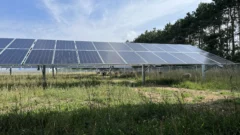
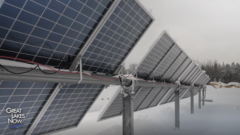
The Michigan Public Service Commission is gathering public input on a controversial new law, Public Act 233, which gives it final authority in approving large renewable energy projects.

Read Now at Great Lakes Now.

Original Article

Great Lakes Now

Great Lakes Now

https://www.greatlakesnow.org/2024/02/as-some-push-for-repeal-state-seeks-input-on-renewable-energy-siting-law/
Interlochen Public Radio

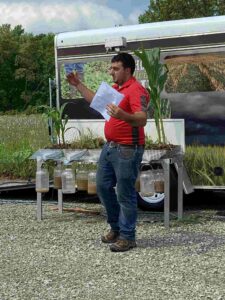
Andy Kiefer shares best practices and ideas with local farmers.

Andy Kiefer never wanted anything to do with agriculture as an adult. He grew up on a multi-generation dairy farm in Sherwood. All he knew was that it was a lot of work, and he didn’t really understand how any of it made a difference. “I thought ag was just kicking rocks!” Andy joked.

All in all, he would rather have been working with his hands as a mechanic. He was fascinated by the wind farms in Fond du Lac, and envisioned an adrenaline-filled career climbing to the top of the turbines to do maintenance and repair. He liked the idea of renewable energy, but was a bit ahead of his time. There wasn’t really a school program for that yet.

He wrote off agriculture. He wrote off renewable energy. But it all came together when his English professor made the class read Omnivore’s Dilemma. Suddenly Andy realized how farming and the environment are connected.

“I didn’t realize you could even farm that way,” Andy said. “It opened my eyes. I made a 180 and fell back in love with agriculture and what it can do. What it can do for our health and for the planet.”

Fresh out of school, Andy started working at the local co-op, telling everyone about what he had learned. “I wanted to become the cover crop guru,” he said, “but it was too new. People weren’t interested.”

Andy needed a way to share what he knew with others who were working in agriculture. When he became the Outagamie County agronomist eight years ago, he was introduced to Fox-Wolf Watershed Alliance.

“Fox-Wolf helps make my job easier,” Andy confirmed. “You do an amazing job filling that piece of helping people understand what is happening in our food system. I enjoy working with you, and with Katie [Woodrow] and what she does to keep me on task with grants and help us get grants.”

The grants and resources that Fox-Wolf provides have helped Andy to encourage farmers to get started in conservation farming. “A farmer may really like the message,” he explained, “but the margins can be so thin. It takes a huge amount of courage to try something new.” A farm may be where you live, but it is also a small business. And for many of our local farmers, there is the added pressure of being a multi-generation farm.

To help farmers, Andy likes to talk about best practices like a dimmer switch. A regular light switch is either on or off. But a dimmer allows you to make gradual change. “People think conservation farming is do it or don’t,” Andy said. But there’s a lot you can do to be better and improving. Even little things start making a difference. Something is better than nothing.”

Over his eight years with Outagamie County, Andy has noticed those small things add up. Last year he was driving down a road where the fields used to be all brown in the fall. But only a few years after advocating for cover crops, just about every field was green. “It just kept going,” Andy said, “for 5-10 miles. It was amazing to see.”

He also appreciates the farmers who talk about their positive experiences. “There’s a 75-year-old farmer who just started doing no-till farming three years ago,” Andy shared. People assume he changed for money, but he did it because the practices work.

“He’d never get up in front of a stage to tell his story, but he will talk with other farmers. He doesn’t realize it, but he’s been a great ambassador and opened people’s eyes to different motivations other than money.”

Profile in Courage

Andy Kiefer shared the story of one farm where having the courage to try something new really paid off.

Ownership was transitioning from one generation to the next. The son really wanted to try some of the conservation farming practices. His dad was really opposed to it. After a lifetime of hard work, he had established a farm that was making money. Why would he want to change?

After several conversations, the dad agreed to try just 60 acres of a cover crop that would stay green on the field in the fall, but would die over the winter. And it turned out, it was a perfect year to try that. Everything went right, and the dad was pleased.

The following year, he committed to 200 acres. And instead of a crop that dies over the winter, he grew plants that would live through the winter. Despite the success of the first year, the next spring was a nightmare for rain. Farmers couldn’t get into the fields to kill off their cover crops. They couldn’t plant their primary crops when they wanted.

Everyone was nervous. But these farmers didn’t give up. It didn’t go how they planned, but they gave it 100%. In the end, it wasn’t the year for a bumper yield. But they did get a respectful enough harvest that now they are fully on board. Even after that challenging year, now 100% of their acres are planted this way.

Watershed Moments is a publication of Fox-Wolf Watershed Alliance, sharing the stories of how your donations have impacted lives in our community. Read our latest project updates, make a secure online donation, or become a member at www.fwwa.org

The post Watershed Moments: What Agriculture Can Be appeared first on Fox-Wolf Watershed Alliance.

Original Article

Fox-Wolf Watershed Alliance

Fox-Wolf Watershed Alliance

https://fwwa.org/2024/02/20/watershed-moments-what-ag-can-be/?utm_source=rss&utm_medium=rss&utm_campaign=watershed-moments-what-ag-can-be

Sharon Cook

2024 Federal Policy Priorities

Significant progress continues to be made in protecting and restoring the Great Lakes, but much more needs to be done. Although increased federal funding from the Infrastructure Investment Act these last two years has allowed states and the federal government to address some key issues, including water infrastructure and the cleanup of toxic legacy pollution, we still have too many Great Lakers experiencing polluted water. Invasive species continue to threaten the lakes, nutrient runoff continues to negatively affect our water quality, and plastic pollutes our beaches and drinking water. 

In our 2024 federal policy priorities, we’ve identified the top five opportunities for Congress and federal agencies to address these challenges. Many of these priorities are familiar and are carried over from last year when Congress made little progress on substantive legislation. For the upcoming year, Congress and the administration must address key issues. These include passing an annual federal budget to provide states with sufficient federal resources to fix our ailing water infrastructure; enacting a Farm Bill that will reduce the flow of nutrient pollution into the lakes; maintaining progress on key federal projects intended to stop invasive species; and providing funding and reauthorization for the Great Lakes Restoration Initiative to continue support for on-the-ground restoration projects.

Equity and justice are embedded throughout these policy priorities and must be considered at every step of the federal decision-making process to ensure that all Great Lakers have access to safe, clean, affordable water. Repairing the long-term harm from environmental injustices isn’t a one-off action and federal decision-makers must prioritize disadvantaged communities where the burden of pollution and the lack of essential services often hit the hardest. Congress and the administration must ensure that community voices are at the table – and listened to – from the beginning of all decision-making.

Read on for full details of our 2024 Great Lakes federal policy priorities, or download the fact sheet to learn more.

Water infrastructure.

Increase water infrastructure funding, prioritize funding for communities most in need  

The Infrastructure Investment and Jobs Act passed by Congress late in 2021 was an important down payment to fix the nation’s failing and outdated water infrastructure. The funding will jump-start efforts to replace dangerous lead pipes, fix leaky pipes, and stop sewage overflows.

However, the funding is only a start. EPA’s 7th national Drinking Water Needs Information Survey and Assessment, completed just last year, estimates that the Great Lakes region will need at least $225.2 billion over the next twenty years to fix our water infrastructure problems. This is an increase from the last national survey and indicates that federal funding is not keeping up with needs. Currently, the infrastructure bill will provide Great Lakes states with an additional $1.8 billion per year for the next five years. It is clearly not enough. We need to keep the pressure on Congress to provide additional funds for water infrastructure programs. Additionally, funding programs must be structured to ensure that money reaches communities with the highest need, such as those with many lead pipes.

In 2024, we urge Congress to: 

  • Increase annual funding to at least $9.3 billion for the Drinking Water and Clean Water State Revolving Funds
  • Increase by $1 billion annual funding levels for lead service line replacement and emerging contaminants
  • Set aside at least 20 percent of the Clean Water State Revolving Fund as grants for green infrastructure projects such as green roofs, permeable pavement, and additional green spaces
  • Pass a federal ban on residential water shutoffs 
  • Establish a federal program to provide financial assistance for water and sewer bills 

In 2024 we urge the U.S. Environmental Protection Agency to: 

  • Require that states accepting federal funds from the Infrastructure Investment and Jobs Act of 2021 are increasing funding and technical assistance for disadvantaged communities so that they are equipped to advance through the SRF selection process 
  • Issue a final Lead and Copper Rule requiring cities to meet ambitious timelines for lead service line replacement

Download the water infrastructure fact sheet.

Agriculture.

Pass a Farm Bill that prioritizes clean water 

Agriculture is the largest unaddressed source of nonpoint pollution in the Great Lakes region. Runoff from agricultural lands puts the Great Lakes at risk. It pollutes drinking water, threatens wildlife, harms the regional economy, and prevents people from enjoying recreation on the Great Lakes. 

Every five years, Congress develops a “Farm Bill,” a major package of legislation that sets the agenda and funding for national farm and food policy. Congress passed a one-year extension of the Farm Bill in 2023, so in 2024 Congress can pass a Farm Bill that ensures farms produce clean water, not pollution, along with their crops.    

In 2024, we urge Congress to pass a Farm Bill that: 

  • Increases funding for U.S. Department of Agriculture conservation programs  
  • Includes provisions to ensure accountability for farm conservation programs aimed at stopping runoff pollution from agricultural lands
  • Reduces funding for concentrated animal feeding operations 

Download the agriculture fact sheet.

Plastic pollution.

Pass legislation to stop plastic pollution  

Researchers estimate that 22 million pounds of plastic pollution enter the Great Lakes each year. Plastic pollution isn’t just an unsightly problem in our waterways. It’s estimated that humans ingest a credit card-sized amount of plastic each week, with unknown long-term consequences for our health. 

For many years, efforts to stop plastic pollution put the responsibility on the end-user, such as recycling. But only a fraction of plastic produced each year is recycled, leaving the remainder to end up in landfills or as litter that lands in our waterways. The alternative is to require plastic producers to be responsible for their products through their lifecycle, which is called extended producer responsibility. Congress has an opportunity to be a leader on this issue.  

In 2024, we urge Congress to pass legislation that: 

  • Makes plastic waste producers responsible for its reduction 
  • Reduces the federal government’s use of single-use plastics, including polystyrene foam 
  • Funds additional research on the public health impact of plastics

Download the plastic pollution fact sheet.

Invasive species.

Protect the Great Lakes from aquatic invasive species  

Invasive species have caused irreparable harm to the Great Lakes ecosystem and cost the region billions of dollars since the late 1980s. Preventing them from ever entering is the best way to protect the Great Lakes. The battle against invasive species is focused on two fronts – stopping invasive carp from entering the Great Lakes and cleaning up ship ballast tanks.  

Established populations of invasive carp are only 50 miles from Chicago and Lake Michigan. But it’s not too late to prevent them from reaching the lakes. The U.S. Army Corps of Engineers has proposed constructing additional carp prevention measures at the Brandon Road Lock and Dam near Joliet, Illinois. The facility is a critical choke point in the waterways leading to Lake Michigan. Congress and federal agencies must continue to support this project. 

The St. Lawrence Seaway opened the Great Lakes to direct ocean-going shipping. Unfortunately, ships brought invasive species along for the ride in their ballast tanks. Although regulations to clean up ship ballast tanks have reduced introductions, loopholes remain for “lakers,” ships operating solely in the Great Lakes. The U.S. EPA can close that loophole. 

In 2024, we urge Congress to: 

  • Include language in the next Water Resources Development Act to authorize 100 percent federal funding for the annual operations and maintenance of the Brandon Road Interbasin Project, which is being implemented to stop invasive carp from entering the Great Lakes 

In 2024, we urge federal agencies to take the following actions: 

  • The U.S. Army Corps of Engineers should execute a Project Partnership Agreement with the State of Illinois for the Brandon Road Interbasin Project so that the project may proceed to phase 1 construction this fall and continue public participation for the project’s implementation
  • The U.S. EPA should issue final rules requiring all vessels operating on the Great Lakes, including lakers, to clean up their ballast tanks

Download the invasive species fact sheet.

Great Lakes restoration.

Fund, update, and reauthorize the Great Lakes Restoration Initiative 

The Great Lakes Restoration Initiative (GLRI) is one of the most important tools in the region’s toolbox to protect and restore the lakes. The program provides funding for on-the-ground restoration projects, from wetland restoration to cleaning up toxic hotspots. In addition to environmental benefits, GLRI funding garners an additional 3-to-1 return in economic benefits.  

While we need continued investment in Great Lakes restoration, the strategy guiding the GLRI was developed almost 20 years ago and needs an update. Federal agencies should revise the Great Lakes restoration strategy to address the next generation of threats to the lakes, including climate change and long-standing environmental injustices. In addition, the program’s authorization will expire in 2026, so action will be needed by Congress in the near future to reauthorize and extend the GLRI program. 

In 2024, we urge Congress to: 

  • Fund the GLRI with at least $450 million in FY 2024
  • Reauthorize the GLRI program at $500 million per year for five years from FY 2027-2031

In 2024, we urge the U.S. Environmental Protection Agency to take the following action: 

  • U.S. EPA should issue the Great Lakes Restoration Initiative Action Plan IV to address environmental injustice, climate resilience, and the next generation of risks to the Great Lakes

Download the Great Lakes restoration fact sheet.

The post Top 5 Great Lakes Federal Policy Priorities for 2024 appeared first on Alliance for the Great Lakes.

Original Article

News - Alliance for the Great Lakes

News - Alliance for the Great Lakes

https://greatlakes.org/2024/02/top-5-great-lakes-federal-policy-priorities-for-2024/

Judy Freed

..FOG AND FREEZING FOG ACROSS PARTS OF CENTRAL AND EASTERN WISCONSIN EARLY THIS MORNING... Areas of fog and freezing fog will continue early this morning. dense fog with visibilities near a 1/4 mile or less expected at times, especially for locations from near Clintonville, to Green Bay and Appleton, to southern Manitowoc County. Moisture from the fog may freeze on untreated roads, bridges, overpasses and intersections, resulting in slippery conditions. If traveling, use caution and be alert for rapidly changing conditions. Slow down if you encounter fog or freezing fog as slick spots may be possible.

Original Article

Current watches, warnings, and advisories for Brown County (WIC009) WI

Current watches, warnings, and advisories for Brown County (WIC009) WI

https://api.weather.gov/alerts/urn:oid:2.49.0.1.840.0.27e80232ecedd5d638a19d76c2eaab1f5804ecf3.001.1.cap

NWS

..FOG AND FREEZING FOG ACROSS EASTERN WISCONSIN EARLY THIS MORNING... Areas of fog and freezing fog will continue early this morning. Visibilities will generally range from 2-5 miles, but may drop below 1 mile, with patchy dense fog with visibilities near a 1/4 mile or less expected at times. Moisture from the fog may freeze on untreated roads, bridges, overpasses and intersections, resulting in slippery conditions. If traveling, use caution and slow down if you encounter fog or freezing fog as slick spots may be possible.

Original Article

Current watches, warnings, and advisories for Brown County (WIC009) WI

Current watches, warnings, and advisories for Brown County (WIC009) WI

https://api.weather.gov/alerts/urn:oid:2.49.0.1.840.0.53dd3b1ff818291fd6487b5c6aeef1a2c49be308.001.1.cap

NWS

About 250 acres of Indiana wetlands have been lost in the two years since wetland protections were eased, according to the Hoosier Environmental Council. 

Since the 2021 law passed, mitigation requirements have decreased.

The post Indiana conservation groups defend state’s wetlands that lost protection first appeared on Great Lakes Echo.

Original Article

Great Lakes Echo

Great Lakes Echo

http://greatlakesecho.org/2024/02/20/indiana-conservation-groups-defend-states-wetlands-that-lost-protection/

Guest Contributor

News

Request for Proposals: Great Lakes Aquatic Invasive Species Landing Blitz

Ann Arbor, Michigan – The Great Lakes Commission (GLC) today issued a request for proposals to support in-person outreach to recreational boaters in coordination with the annual regional Great Lakes Aquatic Invasive Species (AIS) Landing Blitz.

The Landing Blitz is an annual event, coordinated by the GLC, that brings together Great Lakes stakeholders to amplify messaging about preventing the introduction and spread of AIS at boating access sites across the region. Units of government (Indigenous, state or local), lake associations, conservation groups, nonprofit organizations, and institutions of higher education are invited to apply to receive grants for up to $10,000 to support work during the 2024 Blitz period of June 26 – July 6. Applicants should submit proposals for activities that provide in-person outreach to recreational boaters at boat launches.

The due date for grant applications is 5:00 p.m. Eastern on April 5, 2024. Applications will be reviewed by representatives from the eight Great Lakes states. Final decisions on funded projects are anticipated in late April. Selected projects may begin work as soon as June 1, so long as a minimum of three outreach events are planned, and at least one event occurs during the primary event dates of June 26 – July 6.

This funding is intended to expand access to water bodies and access points that have not historically been included as participants in previous Great Lakes AIS Landing Blitz events. For more information, please contact GLC Project Manager Ceci Weibert at cweibert@glc.org or 734-971-9135.


The Great Lakes Commission, led by chair Mary Mertz, director of the Ohio Department of Natural Resources, is a binational government agency established in 1955 to protect the Great Lakes and the economies and ecosystems they support. Its membership includes leaders from the eight U.S. states and two Canadian provinces in the Great Lakes basin. The GLC recommends policies and practices to balance the use, development, and conservation of the water resources of the Great Lakes and brings the region together to work on issues that no single community, state, province, or nation can tackle alone. Learn more at www.glc.org.

Contact

For media inquiries, please contact Beth Wanamaker, beth@glc.org.

Recent GLC News

Upcoming GLC Events

View GLC Calendar

Archives

Original Article

Great Lakes Commission

Great Lakes Commission

https://www.glc.org/news/rfp-blitz-021924

Beth Wanamaker

I Speak for the Fish: Bringing muskie to the masses

I Speak for the Fish is a monthly column written by Great Lakes Now Contributor Kathy Johnson, coming out the third Monday of each month. Publishing the author’s views and assertions does not represent endorsement by Great Lakes Now or Detroit Public Television. 

Read Now at Great Lakes Now.

Original Article

Great Lakes Now

Great Lakes Now

https://www.greatlakesnow.org/2024/02/i-speak-for-the-fish-bringing-muskie-to-the-masses/

Kathy Johnson, Great Lakes Now

A proposed bill in the U.S. House of Representatives would direct the National Oceanic and Atmospheric Administration to conduct high-resolution bathymetric mapping of Great Lakes lakebeds and authorize $200 million in appropriations. Read the full story by WWMT-TV – Kalamazoo, MI.

Original Article

Great Lakes Commission

Great Lakes Commission

https://www.glc.org/dailynews/20240219-lakebed-mapping

Taaja Tucker-Silva

The Duluth Economic Development Authority approved funding to plan to dredge an area where cruise ships can safely navigate to a shoreside U.S. Customs and Border Control facility in Duluth, Minnesota. Read the full story by the Duluth News Tribune.

Original Article

Great Lakes Commission

Great Lakes Commission

https://www.glc.org/dailynews/20240219-duluth-dredging

Taaja Tucker-Silva

Fodor’s travel guide added Lake Superior to its 2024 “No List,” a group of beloved destinations to reconsider for travel, alongside such over-touristed sites or environmental disasters as Venice, Athens, and Chile’s Atacama Desert. Read the full story by The Star Tribune.

Original Article

Great Lakes Commission

Great Lakes Commission

https://www.glc.org/dailynews/20240219-fodors-list

Taaja Tucker-Silva

Chicago will remain the supplier of Lake Michigan water to DuPage County, Illinois for the next 17 years despite plans to seek an alternate supplier. If the DuPage Water Commission cuts ties with Chicago, it could take 12-15 years to build the infrastructure necessary to connect with a different supplier and cost upward of $7 billion. Read the full story by The Daily Herald.

Original Article

Great Lakes Commission

Great Lakes Commission

https://www.glc.org/dailynews/20240219-dupage-water

Taaja Tucker-Silva

The U.S. and Canadian Coast Guards reached a new agreement on icebreaking to allow for Great Lakes shipping, which brings international commerce to Northwest Indiana and iron ore to regional steel mills when the Great Lakes are frozen over. Read the full story by The Times of Northwest Indiana.

Original Article

Great Lakes Commission

Great Lakes Commission

https://www.glc.org/dailynews/20240219-icebreaking-agreement

Taaja Tucker-Silva

The Essex Region Conservation Authority (ERCA) endorsed a plan that will protect the Hillman Marsh near Leamington, Ontario with a high crest, preventing damage from Lake Erie. Without protection from the lake, there’s concern that nearby homes and farmland could flood. Read the full story by the CBC.

Original Article

Great Lakes Commission

Great Lakes Commission

https://www.glc.org/dailynews/20240219-hillman-marsh

Taaja Tucker-Silva

A reauthorization of the Great Lakes Restoration Initiative (GLRI) was introduced in the U.S. House of Representatives last week. Under the introduced bill, GLRI funding would increase to $500 million per year. Read the full story by WSJM – Benton Harbor, MI.

Original Article

Great Lakes Commission

Great Lakes Commission

https://www.glc.org/dailynews/20240219-glri-bill

Taaja Tucker-Silva

On July 2, 1999, 38-year-old Vicky Brockman set out with two friends down the Boundary Waters Canoe Area Wilderness’s Gunflint Trail in Minnesota.

Three days later, the group was stranded in the center of a storm with the strength of a hurricane. They rushed into their tents for shelter.

The post The Midwest’s “first climate change-driven disaster” is documented in a new book. Can we learn from it? first appeared on Great Lakes Echo.

Original Article

Great Lakes Echo

Great Lakes Echo

http://greatlakesecho.org/2024/02/19/the-midwests-first-climate-change-driven-disaster-is-documented-in-a-new-book-can-we-learn-from-it/

Daniel Schoenherr

Teachers and scientists work together on the Lake Guardian 

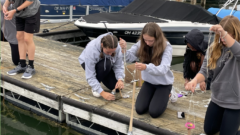
The Lake Guardian is currently in its winter home, nestled along the docks in Milwaukee, Wisconsin. In warmer months, the Environmental Protection Agency (EPA) uses this ship to gather data on water quality, and has for over forty years. And each year since 1991, a group of lucky educators has squeezed on board and, for nine days, also called this ship home. 

Read Now at Great Lakes Now.

Original Article

Great Lakes Now

Great Lakes Now

https://www.greatlakesnow.org/2024/02/teachers-and-scientists-work-together-on-the-lake-guardian/

Lisa John Rogers, Great Lakes Now

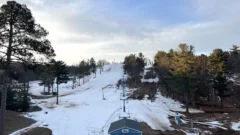
Warm winters are a wet blanket for small ski slopes in northern Michigan

By Izzy Ross, Interlochen Public Radio

This coverage is made possible through a partnership with IPR and Grist, a nonprofit independent media organization dedicated to telling stories of climate solutions and a just future.

  • Winter recreation is a big part of Michigan’s economy, but warm conditions have been tough for some businesses.

Read Now at Great Lakes Now.

Original Article

Great Lakes Now

Great Lakes Now

https://www.greatlakesnow.org/2024/02/warm-winters-are-a-wet-blanket-for-small-ski-slopes-in-northern-michigan/

Interlochen Public Radio

Want a healthy walleye fishery? Stock some muskie

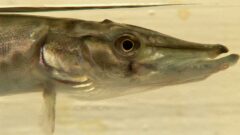
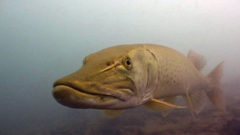
As apex predators, adult muskie occupy the very top tier of the Great Lakes food chain. Reaching up to six foot in length with teeth lining their jaws, the roof of their mouths and their throats, few can escape them. They are feared by most species underwater and revered by many people above.

Read Now at Great Lakes Now.

Original Article

Great Lakes Now

Great Lakes Now

https://www.greatlakesnow.org/2024/02/want-healthy-walleye-fishery-stock-some-muskie/

Kathy Johnson, Great Lakes Now

Members of Congress are proposing legislation to renew the Great Lakes Restoration Initiative and increase annual funding to $500 million to support thousands of projects that address new emerging threats in the Great Lakes region. Read the full story by The Citizen.

Original Article

Great Lakes Commission

Great Lakes Commission

https://www.glc.org/dailynews/20240216-restoration-initiative-funding

Nichole Angell

Lake Erie is the first of the Great Lakes to get connected to the internet with a series of offshore “smart” buoys that make vital information related to water safety, algal blooms, oil spills, and climate monitoring easily accessible. Read the full story Bridge Michigan.

Original Article

Great Lakes Commission

Great Lakes Commission

https://www.glc.org/dailynews/20240216-smart-buoys

Nichole Angell

For decades, whitefish have struggled to breed on the rocky reefs of lakes Michigan and Huron, where their eggs are under attack by invasive species and other threats; but scientists believe that decades of restoration work have made rivers capable of supporting whitefish. Read the full story by Bridge Michigan.

Original Article

Great Lakes Commission

Great Lakes Commission

https://www.glc.org/dailynews/20240216-whitefish-survival

Nichole Angell

To mitigate the risk of harmful algal blooms and water contamination, the Michigan Department of Environment, Great Lakes, and Energy (EGLE) recently changed the permitting purview for the Fremont biodigester facility, located near Muskegon, Michigan. The new permit is financially unfeasible to keep the plant running. Read the full story by Great Lakes Now.

Original Article

Great Lakes Commission

Great Lakes Commission

https://www.glc.org/dailynews/20240216-biodigester-permitting

Nichole Angell

The state of Michigan is exploring a new plan to resume dredging of the Platte River mouth at the Sleeping Bear Dunes National Lakeshore. Michigan Department of Natural Resources (DNR) officials say they are looking into equipment options to ease boater access to Lake Michigan. Read the full story by MLive.

Original Article

Great Lakes Commission

Great Lakes Commission

https://www.glc.org/dailynews/20240216-river-dredging

Nichole Angell

To ensure the Great Lakes will be a sustainable source of clean water in the future, the National Science Foundation granted $160 million to a Chicago-based “innovation hub” to develop methodologies for separating nickel, cobalt, lithium, nitrogen and PFAs from the water supply. Read the full story by the Hyde Park Herald.

Original Article

Great Lakes Commission

Great Lakes Commission

https://www.glc.org/dailynews/20240216-chemical-extraction-funding

Nichole Angell

The Wisconsin Department of Natural Resources’ management crews have begun prescribed burning in marshes, wetlands, and pine barrens to remove dead vegetation, stimulate native plant growth, and provide fire-dependent species an opportunity to thrive. Read the full story by Morning AgClips.

Original Article

Great Lakes Commission

Great Lakes Commission

https://www.glc.org/dailynews/20240216-prescribed-burns

Nichole Angell

Cleveland, Cuyahoga County leaders urge EPA to finalize federal clean car standards

By Stephanie Metzger-Lawrence, Ideastream Public Media

This story was originally published by Ideastream.

Cleveland Mayor Justin Bibb and Cuyahoga County Executive Chris Ronayne want stronger federal clean car standards to protect Northeast Ohioans from health problems resulting from air pollution.

“We call on the EPA to enact the strongest possible clean car standards and urge them to finalize this rule this March,” Bibb said at a press conference Friday.

Read Now at Great Lakes Now.

Original Article

Great Lakes Now

Great Lakes Now

https://www.greatlakesnow.org/2024/02/cleveland-cuyahoga-county-leaders-urge-epa-to-finalize-federal-clean-car-standards/

Ideastream Public Media

WATCH: Why Chicago will take decades to replace lead pipes

In November of 2023, the EPA proposed new rules that would remove lead pipes from America’s drinking water infrastructure over the next decade. But with more lead pipes than any other city, Chicago is a notable exception. Siri Chilukuri covered the story for Grist.

“There are 400,000 pipelines, and that would mean that the city would have to replace 40,000 led pipelines a year to meet that goal,” said Chilukuri.

Read Now at Great Lakes Now.

Original Article

Great Lakes Now

Great Lakes Now

https://www.greatlakesnow.org/2024/02/watch-why-chicago-will-take-decades-to-replace-lead-pipes/

Great Lakes Now

New Study Finds Negative Emotions Drive Preference for Herbicide Treatments


A new study published by University of Wisconsin-Madison researchers is the first to explore what drives lakeshore property owners’ preferences for herbicide treatments of aquatic invasive plants over other management options, even if those treatments may harm native plants and animals. The study found that negative emotions and believing that aquatic invasive species are present in the lake where a property owner lives were the strongest predictors for preferring herbicide treatments. Surprisingly, perceived impacts of aquatic invasive species did not affect preferences for herbicidal treatment of aquatic invasive species.

These results provide an opportunity for natural resource managers to educate lakeshore property owners about alternative methods for managing aquatic invasive plants while still leaving options open for herbicide treatment, if needed. Other management options include manual and mechanical removal as well as simply monitoring, since non-native plants can often co-exist with other native plants in a lake without taking over and becoming a nuisance.
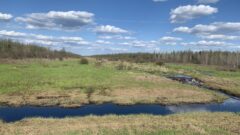
“People can develop negative emotions about a subject either through lived experiences or through communications about the subject,” said Bret Shaw, lead author and a Division of Extension environmental communications specialist and Department of Life Science Communication professor. “Given that the perceived impact of invasive species is not driving preference for using herbicides, it is possible that fear-based aquatic invasive species prevention messages may influence higher risk perceptions that cause property owners to seek herbicidal treatment first. Considering other approaches and messaging strategies, too, may help lake organizations achieve better outcomes with their management efforts.”

Aquatic invasive plants in Wisconsin lakes can negatively impact recreation and property values. Many organizations offer education and outreach programs for boaters and anglers to prevent invasive species spread. However, some lakes already have non-native species that can become invasive, and new

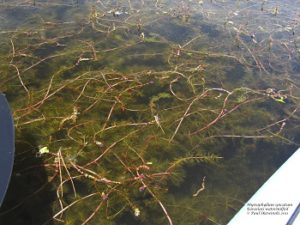
EWM growing in lake

introductions can occur despite widespread prevention efforts. While there are many ways to manage aquatic invasive plants, lakeshore property owners and lake associations often seek permits to use chemical herbicides even though herbicides themselves can carry a potential risk of ecological harm to the treated lake, which is why herbicides may not necessarily be an appropriate as a first course of action in some waterbodies.

Aquatic invasive species are a concern both globally and in Wisconsin, with the Great Lakes on Wisconsin’s borders and another 15,000 inland lakes within them. While the most problematic invasive species aren’t present in most lakes, where they are located, they can reach high densities that can impede boating, negatively affect fishing and alter the ecological functions of a lake. More than $5 million is spent each year in Wisconsin on aquatic invasive species management. However, even with this annual investment and the negative impacts of aquatic invasive species, very little effort has been spent understanding how waterfront property owners feel and think about invasive species management.

“This research is among the first to understand the opinions and beliefs of waterfront property owners about aquatic invasive species management,” said Tim Campbell, the aquatic invasive species program manager for Wisconsin Sea Grant and co-author of the study. “The results of this research will help us create invasive species management education tools and programs that balance efforts to reduce the unwanted impacts of invasive species while protecting the ecological integrity of our lakes.”

Other co-authors include Dominique Brossard, Professor in the Department of Life Sciences Communication (LSC) as well as recent LSC graduate students, Richard Heinrich (LSC Ph.D. ‘23) and Theresa Vander Woude (LSC and Nelson Institute for Environmental Studies, M.S. ‘21). The full study can be found in the journal Biological Invasions here (https://rdcu.be/dvWb9). Alternatively, email tim.campbell@wisc.edu for a copy of the study.

Questions? Comments? Contact Chris Acy, the AIS Coordinator covering Brown, Outagamie, Fond du Lac, Calumet, and Winnebago Counties at (920) 460-3674 or chris@fwwa.org!

Follow the Fox Wolf Watershed Alliance’s Winnebago Waterways Program on our Winnebago Waterways Facebook page or @WinnWaterways on X! You can also sign-up for email updates at WinnebagoWaterways.org.

Check out the Keepers of the Fox Program at https://fwwa.org/watershed-recovery/lower-fox-recovery/

Winnebago Waterways and Keepers of the Fox are Fox-Wolf Watershed Alliance programs. The Fox-Wolf Watershed Alliance is an independent nonprofit organization working to protect and restore water resources in the Fox-Wolf River Basin.

Reporting invasive species is a first step in containing their spread. Maintaining and restoring our waters and landscapes can reduce the impacts even when we don’t have other management options to an invasive species.

The post Herbicide Treatments: Property Owners Preferences Study appeared first on Fox-Wolf Watershed Alliance.

Original Article

Fox-Wolf Watershed Alliance

Fox-Wolf Watershed Alliance

https://fwwa.org/2024/02/15/herbicide-treatments-property-owners-preferences-study/?utm_source=rss&utm_medium=rss&utm_campaign=herbicide-treatments-property-owners-preferences-study

Chris Acy

Horticulturist, author, and speaker Melinda Myers will discuss key invasive plants in Wisconsin, share tips on identification, provide ways to control some of the more common problem plants, and suggest alternative plants foSee attached a recent article that Bret Shaw, myself, and other collaborators recently had published in Biological Invasions. Below and attached is some text that helps explain the results of the paper that you can feel free to use in any newsletters you all provide content for. Also attached is factsheet we produced as part of this project a few years ago that covers some of the other recommendations from this project.r your landscape.  We hope you can join Melinda to learn more about this important issue.

Webinar: February 28th, 2024 6:30pm

Questions? Comments? Contact Chris Acy, the AIS Coordinator covering Brown, Outagamie, Fond du Lac, Calumet, and Winnebago Counties at (920) 460-3674 or chris@fwwa.org!

Follow the Fox Wolf Watershed Alliance’s Winnebago Waterways Program on our Winnebago Waterways Facebook page or @WinnWaterways on X! You can also sign-up for email updates at WinnebagoWaterways.org.

Check out the Keepers of the Fox Program at https://fwwa.org/watershed-recovery/lower-fox-recovery/

Winnebago Waterways and Keepers of the Fox are Fox-Wolf Watershed Alliance programs. The Fox-Wolf Watershed Alliance is an independent nonprofit organization working to protect and restore water resources in the Fox-Wolf River Basin.

Reporting invasive species is a first step in containing their spread. Maintaining and restoring our waters and landscapes can reduce the impacts even when we don’t have other management options to an invasive species.

The post Free Webinar: Create a Beautiful Landscape Free of Invasive Plants appeared first on Fox-Wolf Watershed Alliance.

Original Article

Fox-Wolf Watershed Alliance

Fox-Wolf Watershed Alliance

https://fwwa.org/2024/02/15/free-webinar-create-a-beautiful-landscape-free-of-invasive-plants/?utm_source=rss&utm_medium=rss&utm_campaign=free-webinar-create-a-beautiful-landscape-free-of-invasive-plants

Chris Acy

The Ocean Climate Laboratory released World Ocean Atlas 2023—Global Climatologies of Temperature, Salinity, Dissolved Oxygen, and Inorganic Nutrients.

Original Article

NCEI News Feed

NCEI News Feed

https://www.ncei.noaa.gov/news/World-Ocean-Atlas-2023-v2

laura.ohlmannn

...SNOW LEADING TO SLIPPERY TRAVEL FOR THE MORNING COMMUTE... * WHAT...Snow. Additional snow accumulations of up to an inch. * WHERE...Portions of east central and northeast Wisconsin. * WHEN...Until 8 AM CST this morning. * IMPACTS...Plan on slippery road conditions on untreated roads. The hazardous conditions could impact the morning commute.

Original Article

Current watches, warnings, and advisories for Brown County (WIC009) WI

Current watches, warnings, and advisories for Brown County (WIC009) WI

https://api.weather.gov/alerts/urn:oid:2.49.0.1.840.0.fdafebbb37a4e3708d10e0d3ac8cde7b2d929ce7.003.1.cap

NWS

...SNOW WILL MAKE FOR HAZARDOUS TRAVEL FOR THE MORNING COMMUTE... * WHAT...Snow. Additional snow accumulations of 1 to 3 inches. * WHERE...Portions of east central and northeast Wisconsin. * WHEN...Until 8 AM CST this morning. * IMPACTS...Plan on slippery road conditions. The hazardous conditions will impact the Thursday morning commute.

Original Article

Current watches, warnings, and advisories for Brown County (WIC009) WI

Current watches, warnings, and advisories for Brown County (WIC009) WI

https://api.weather.gov/alerts/urn:oid:2.49.0.1.840.0.189fb6de91b749b919296b2641762f120f058372.004.1.cap

NWS

* WHAT...Snow expected. Total snow accumulations between 2 and 5 inches. The highest totals are expected across Menominee County into Oconto and Marinette counties. * WHERE...Portions of east central and northeast Wisconsin. * WHEN...Until 8 AM CST Thursday. * IMPACTS...Plan on slippery road conditions. The hazardous conditions could impact the Thursday morning commute.

Original Article

Current watches, warnings, and advisories for Brown County (WIC009) WI

Current watches, warnings, and advisories for Brown County (WIC009) WI

https://api.weather.gov/alerts/urn:oid:2.49.0.1.840.0.c33eb9a6c3e8a569d4dff81ded87abe8eeba3be0.004.1.cap

NWS

Preserving Minnesota’s bogs could fight climate change

This article was republished here with permission from Great Lakes Echo.

By Kayla Nelsen, Great Lakes Echo

Researchers in Minnesota are creating a national map to identify peatlands – soggy areas of slowly decaying organic matter – and guides for how to restore them.

Read Now at Great Lakes Now.

Original Article

Great Lakes Now

Great Lakes Now

https://www.greatlakesnow.org/2024/02/preserving-minnesotas-bogs-could-fight-climate-change/

Great Lakes Echo

...SNOW WILL MAKE FOR HAZARDOUS TRAVEL TONIGHT INTO THURSDAY MORNING... * WHAT...Snow expected. Total snow accumulations between 2 and 5 inches. The highest totals are expected across Menominee County into Oconto and Marinette counties. * WHERE...Portions of east central and northeast Wisconsin. * WHEN...From midnight tonight to 8 AM CST Thursday. * IMPACTS...Plan on slippery road conditions. The hazardous conditions could impact the Thursday morning commute.

Original Article

Current watches, warnings, and advisories for Brown County (WIC009) WI

Current watches, warnings, and advisories for Brown County (WIC009) WI

https://api.weather.gov/alerts/urn:oid:2.49.0.1.840.0.90a7546e97319371c016cb147d027eb365457289.004.1.cap

NWS

Conservation groups and water policy experts feared that a U.S. Supreme Court ruling last year would create a patchwork of state wetland protections, threatening water quality in the Great Lakes and Mississippi River watersheds. Now they say that fear is becoming a reality with a new Indiana law that will roll back protections for many of Indiana’s most regulated wetlands. Read the full story by the Milwaukee Journal Sentinel.

Original Article

Great Lakes Commission

Great Lakes Commission

https://www.glc.org/dailynews/20240214-wetland-regulation

James Polidori