Showers and isolated storms will move east across central and east-central Wisconsin early this afternoon. Strongest storms could produce wind gusts up to 50 mph and hail up to half an inch. Gusty winds could knock down tree limbs and blow around unsecured objects. Minor hail damage to vegetation is possible. If outdoors, consider seeking shelter inside a building.

Original Article

Current watches, warnings, and advisories for Brown County (WIC009) WI

Current watches, warnings, and advisories for Brown County (WIC009) WI

https://api.weather.gov/alerts/urn:oid:2.49.0.1.840.0.601caf7fac4c32fefe470bbdd38f35f0febbaeae.001.1.cap


NWS

One of the many challenges of environmental journalism is making the general public care about animals that are not cute or ecosystems that are obscure. 

A recent session of this year’s Society of Environmental Journalists annual conference taught journalists how to do just that. 

The post Making obscure animals and ecosystems compelling characters first appeared on Great Lakes Echo.

Original Article

Great Lakes Echo

Great Lakes Echo

http://greatlakesecho.org/2024/04/23/making-obscure-animals-and-ecosystems-compelling-characters/

Guest Contributor

A band of showers will shift rapidly east across the forecast area this evening. While rainfall amounts will be light, the showers will be accompanied by southwest winds gusting to around 40 mph at times. If you are driving or have outdoor plans this evening, be alert for strong southwest winds gusting to 40 mph, especially when showers are occurring.

Original Article

Current watches, warnings, and advisories for Brown County (WIC009) WI

Current watches, warnings, and advisories for Brown County (WIC009) WI

https://api.weather.gov/alerts/urn:oid:2.49.0.1.840.0.8ba2c9a6b37ea756410ec909a503709d7789c1dd.001.1.cap

NWS

Ohio Birding Transitions

The Biggest Week in American Birding draws a worldwide audience to glimpse dozens of species of migrating birds including the stars of the show, tiny warblers, as well as local birds in northern Ohio — and officials say they’ve been seeing changes in recent years.

“There appears to be a little shifting in the short-distance migrants versus the tropical migrants,” said Mark Shieldcastle, research director at Black Swamp Bird Observatory (BSBO), event host.

Read Now at Great Lakes Now.

Original Article

Great Lakes Now

Great Lakes Now

https://www.greatlakesnow.org/2024/04/ohio-birding-transitions/

James Proffitt, Great Lakes Now

It’s estimated that nearly two-thirds of aquatic invasive species currently in the Great Lakes hitched a ride in the ballast water of cargo ships crossing the ocean. However, the same isn’t true of lakers, or ships that move exclusively within the Great Lakes. While the ballast water of these ships isn’t introducing new species, there’s a good chance it’s spreading invasive species throughout the lakes. Read the full story by Interlochen Public Radio.

Original Article

Great Lakes Commission

Great Lakes Commission

https://www.glc.org/dailynews/20240422-ballastwater-greatlakes

Hannah Reynolds

The National Museum of the Great Lakes located in Toledo, Ohio will break ground on a 5,000-square-foot expansion Monday afternoon to provide additional space for temporary and traveling exhibits, new permanent exhibit spaces, and a community education center. Read the full story by the Toledo Blade.

Original Article

Great Lakes Commission

Great Lakes Commission

https://www.glc.org/dailynews/20240422-nationalmuseum-greatlakes-expansion

Hannah Reynolds

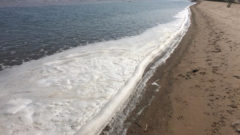
When you walk along the beaches of Lake Erie, you’re going to see litter and a new report found that a lot of that trash is going to be plastic. On average, 86% of the litter collected in a given Adopt-a-Beach season is composed either partially or fully of plastic. Read the full story by Erie Times-News.

Original Article

Great Lakes Commission

Great Lakes Commission

https://www.glc.org/dailynews/20240422-greatlakesbeaches-presqueisle-plasticpollution

Hannah Reynolds

If you spend a lot of time on the water, you might be interested in becoming a water quality monitor. The MiCorps Cooperative Lake Monitoring Program is to help citizen scientists across the state collect water quality information, and other information about their lake’s health, to help understand what’s going on in their lake. Read the full story by WPBN-TV – Traverse City, MI.

Original Article

Great Lakes Commission

Great Lakes Commission

https://www.glc.org/dailynews/20240422-michiganswaterquality-micorp-lakemonitoring

Hannah Reynolds

H2Ohio’s agriculture incentive program is now being offered to producers throughout the state. H2Ohio’s agricultural program, which initially focused solely on farms located in northwest Ohio near Lake Erie, incentivizes farmers to implement science-based, proven best management practices to prevent nutrient runoff and improve water quality. Read the full story by Ohio Ag Net.

Original Article

Great Lakes Commission

Great Lakes Commission

https://www.glc.org/dailynews/20240422-statewideh2ohio

Hannah Reynolds

Lake sturgeon don’t need Endangered Species Act protections, federal wildlife officials announced Monday, saying that stocking programs have helped the prehistoric fish return to areas where they had vanished. Read the full story by WGHP-TV – Madison, WI.

Original Article

Great Lakes Commission

Great Lakes Commission

https://www.glc.org/dailynews/20240422-prehistoric-lakesturgeon

Hannah Reynolds

Dozens of children of the water crisis — now teenagers and young adults — have turned their trauma into advocacy. They provide input on public health initiatives, participate in social issue campaigns, distribute filters and provide free water testing for homeowners. Read the full story by WHNT-TV – Flint, MI.

Original Article

Great Lakes Commission

Great Lakes Commission

https://www.glc.org/dailynews/20240422-flint-environmental-advocacy

Hannah Reynolds

Great Lakes Now talks “Love Canal” with American Experience Executive Producer Cameo George

American Experience’s “Poisoned Ground: The Tragedy at Love Canal” tells the dramatic and inspiring story of ordinary women who fought against overwhelming odds for the health and safety of their families.

In the late 1970s, residents of Love Canal in Niagara Falls, New York discovered that their homes, schools and playgrounds were built on top of a former chemical waste dump.

Read Now at Great Lakes Now.

Original Article

Great Lakes Now

Great Lakes Now

https://www.greatlakesnow.org/2024/04/great-lakes-now-talks-poisoned-ground-the-tragedy-at-love-canal-with-american-experience-executive-producer-cameo-george/

Great Lakes Now

Adopt-a-Beach volunteers and Alliance Ambassadors do so much for the Great Lakes! They organize beach cleanups. They spread the word about how people can protect the lakes. They build community around all five Great Lakes in eight Great Lakes states.

In honor of National Volunteer Month, we asked folks to send our volunteers a few words of appreciation. People across the region showed Great Lakes volunteers their love. Here are just some of the things they said:

“Your work and passion for the Lakes is so appreciated by all those who use and love our lakes! Your work is noticed and appreciated! Thank you!”

Anne S, Minnesota

“Thank you for giving of your time to care for this most amazing planet. Your service and care is most appreciated and a gift to us all.”

Jonathan H, Illinois

“THANK YOU!!  To all of the Team Leaders, Adopt-a-Beach Volunteers and Alliance Ambassadors who help to keep the beaches clean.  You all are the unsung heroes helping to protect the Great Lakes.”

Annette R, Ohio

“From Buffalo, NY, a Great (Lakes) Big Thank You!!”

Jennifer F, New York

“Thank you for your care of creation.”

Carole H, Ohio

“To everyone making a difference by volunteering, THANK YOU! The Great Lakes are a global treasure, and the work you do to improve and protect them while individually small, collectively makes a better planet earth.”

Jim Z, Wisconsin

“Thank you for your valuable time in helping us keep our beaches clean!”

John L, Pennsylvania

“I work at the Alliance, and I know you are the heart of our work! Thank you so much for the time and energy you devote to protecting the Great Lakes. Your work makes a difference every day. I’m grateful to you for your work and look forward to the progress we will make together over the next year.”

Molly F, Illinois

“Thank you for your time & energy to help keep the Great Lakes great. Grateful for you & thank you.”

Anita S, Michigan

“I grew up on Lake Erie, and have lived on Lake Ontario for my adult life.  We go frequently to Lake Huron and Georgian Bay.  Being able to live in this blessed triangle of Ontario is one of the best things in my life. This is why I am writing to thank all the volunteers who look after the lakes and their shores, whether through beach cleanups, or other means. You keep this beloved area safe, and allow it to survive into our challenging and uncertain future, as a refuge and a home for people and creatures of all kinds. Many many thanks from me and my family, and dear friends who are all Great Lakers.”

Mary E, Ontario

Thank you from the bottom of our hearts to all the Adopt-a-Beach volunteers and Alliance Ambassadors working to protect our Great Lakes!

Read all the messages to our volunteers.

The post “Thank you for helping our Great Lakes shine!” appeared first on Alliance for the Great Lakes.

Original Article

News - Alliance for the Great Lakes

News - Alliance for the Great Lakes

https://greatlakes.org/2024/04/thank-you-for-helping-our-great-lakes-shine/

Judy Freed

As part of today’s Earth Day commemorations, the Wisconsin Water Library at the University of Wisconsin-Madison, supported by Wisconsin Sea Grant, and the Wisconsin Library Association announced the books selected for a basin-wide shared-reading experience, Great Lakes, Great Read.

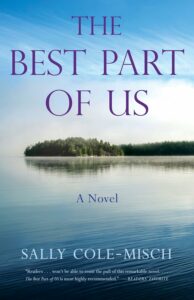
“The Water Walker” by Joanne Robertson is the children’s selection and the adult selection is “The Best Part of Us” by Sally Cole-Misch.

Illustration of person walking past pine trees.

“The Water Walker” is the story of a determined Ojibwe grandmother, a “nokomis,” named Josephine Mandamin who walks to raise awareness of the need to protect “nibi” (water). Robertson wrote and illustrated the book, which was published in 2017.

Published in 2020, Sally Cole-Misch’s award-winning novel, “The Best Part of Us”, explores a family’s ties to an island in the Canadian waters of an inland lake just north of Lake Huron—how those ties are tested both through natural processes and family dynamics.A calm lake and an island in the background.

“The Great Lakes have shaped Wisconsin as we know it. These inland seas provide drinking water and fuel our agriculture, shipping, manufacturing and recreation,” said WWL Senior Special Librarian Anne Moser. “These two books will bring the lakes alive in new and evocative ways. We hope readers will reflect on the lakes and be inspired, become passionate and feel more connected to them.” 

WLA Executive Director Laura Sauser said, “All Wisconsinites are encouraged to read these titles, and we also hope to be a catalyst for libraries throughout the upper Midwestern states and Canadian provinces to engage patrons through a range of activities.”

Both selected authors will be featured in a free webinar series happening on Sept. 25 and Oct. 2 and 9. All events will start at 6 p.m., CT, and will be open to the public.

Both selected authors will be featured in a free webinar series happening on Sept. 25 and Oct. 2 and 9. All events will start at 6 p.m., CT, and will be open to the public. In November, the authors will visit Wisconsin for a variety of events. Please check the Wisconsin Great Lakes, Great Read webpage, https://go.wisc.edu/85b96h, later this summer to learn more.

Currently, the website offers further details on the authors, their books, book discussion questions, an email list signup option and other resources.

This initiative is supported by an Ideas to Action grant from WiLS. Wisconsin Sea Grant and the University of Wisconsin Water Resources Institute support the Wisconsin Water Library. 

The post Great Lakes, Great Read shared-reading initiative announces book selections first appeared on Wisconsin Sea Grant.

Original Article

News Releases | Wisconsin Sea Grant

News Releases | Wisconsin Sea Grant

https://www.seagrant.wisc.edu/news/great-lakes-great-read-shared-reading-initiative-announces-book-selections/

Moira Harrington

The Mississippi River Basin and the Great Lakes-St. Lawrence River Basin supply freshwater and drain wastewater for millions of people.

Two of the largest watersheds in the U.S., they span state and political boundaries. 

The post Covering watershed policy and identity first appeared on Great Lakes Echo.

Original Article

Great Lakes Echo

Great Lakes Echo

http://greatlakesecho.org/2024/04/22/covering-watershed-policy-and-identity/

Kayla Nelsen

Elevated fire weather conditions are expected across all of northeast Wisconsin during the afternoon and into the early evening hours. Mild temperatures in the 60s, low relative humidity values of 20 to 30 percent, and southwest winds of 15 to 25 mph with gusts to 30 mph are expected. Rain showers will arrive this evening, and bring some relief to the fire concerns. Persons are urged to be careful with any activities that could potentially lead to a wildland fire. Campfires, outdoor grills, smoking materials, chain saws, and all-terrain vehicles all have the potential to throw a spark and ignite a fire. Check burning restrictions before burning and make sure to heed any restrictions that are in place in your county.

Original Article

Current watches, warnings, and advisories for Brown County (WIC009) WI

Current watches, warnings, and advisories for Brown County (WIC009) WI

https://api.weather.gov/alerts/urn:oid:2.49.0.1.840.0.0ab21596fabf50c15d528379778fbdff714c5193.001.1.cap

NWS

A robotic beach cleaning device has been procured to remove plastic waste along Lake Michigan beaches and inland lake beaches in Michigan. Currently, 26 beaches are slated to benefit from the robot’s services. Read the full story by the Petoskey News-Review.

Original Article

Great Lakes Commission

Great Lakes Commission

https://www.glc.org/dailynews/20240419-robot-cleaner

Taaja Tucker-Silva

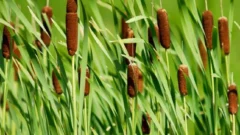
Invasive cattails dominate about 14% of all Great Lakes coastal wetlands. Researchers and land managers are developing creative ways to deal with invasive cattails in hopes of restoring and protecting the health of the wetlands, but it’s not an easy task. Read the full story by Great Lakes Now.

Original Article

Great Lakes Commission

Great Lakes Commission

https://www.glc.org/dailynews/20240419-invasive-cattails

Taaja Tucker-Silva

To fight back against threats to freshwater ecosystems, the University of Windsor (UWindsor) has joined a national research partnership, the Global Water Futures Observatories. An existing partnership of several Ontario universities has joined forces with it to go after increased funding. Read the full story by the Windsor Star.

Original Article

Great Lakes Commission

Great Lakes Commission

https://www.glc.org/dailynews/20240419-uwindsor-partnership

Taaja Tucker-Silva

The City Council in South Haven, Michigan, has prioritized bringing a new lifeguard program to its Lake Michigan beaches, along with other efforts to increase beach safety, highlighting the effort as one of its top priorities for the coming year. Read the full story by MLive.

Original Article

Great Lakes Commission

Great Lakes Commission

https://www.glc.org/dailynews/20240419-michigan-lifeguards

Taaja Tucker-Silva

After more than a year of restoration efforts, the Tawas Lighthouse in Tawas, Michigan, will shine again on May 2. The effort to restore the lighthouse was made possible by a $455,500 grant through the American Rescue Plan Act. Read the full story by the Detroit Free Press.

Original Article

Great Lakes Commission

Great Lakes Commission

https://www.glc.org/dailynews/20240419-tawas-lighthouse

Taaja Tucker-Silva

This new visitor center at the Eisenhower Lock in Massena, New York, highlights how ships move through the St. Lawrence Seaway. The ships carry billions of dollars’ worth of goods on the Seaway between the Atlantic Ocean and Great Lakes every year. Read the full story by North Country Public Radio.

Original Article

Great Lakes Commission

Great Lakes Commission

https://www.glc.org/dailynews/20240419-visitor-center

Taaja Tucker-Silva

Dredging needs to happen on Michigan’s St. Joseph River leading into Lake Michigan but is delayed due to the county’s application for a permit. Dredging cannot occur in May and June, due to the fish spawning season, causing a time crunch. Read the full story by WSBT-TV – South Bend, IN.

Original Article

Great Lakes Commission

Great Lakes Commission

https://www.glc.org/dailynews/20240419-stjoe-dredging

Taaja Tucker-Silva

Finding creative new ways to manage invasive cattails

Hot dog on a stick. Water torch. Supermarket of the swamp.

Cattails go by many names, but almost everyone can recognize the pervasive wetland plant  that grows along lakes, ponds, marshes, and swamps.

Their thin green stems and leaves can reach up to nearly ten feet in height.

Read Now at Great Lakes Now.

Original Article

Great Lakes Now

Great Lakes Now

https://www.greatlakesnow.org/2024/04/finding-creative-new-ways-to-manage-invasive-cattails/

Lily Stewart, Great Lakes Now

New Jersey’s Delaware Bayshore isn’t called the road less traveled without reason.

Persistent rainfall, exacerbated by global warming, has increased the wetlands in this area of Cumberland County.

The post Unearthing climate change challenges along Delaware Bayshore first appeared on Great Lakes Echo.

Original Article

Great Lakes Echo

Great Lakes Echo

http://greatlakesecho.org/2024/04/19/unearthing-climate-change-challenges-along-delaware-bayshore/

Guest Contributor

Good news for Michigan smelt season: PFAS levels lower than feared

By Kelly House, Bridge Michigan

The Great Lakes News Collaborative includes Bridge Michigan; Circle of Blue; Great Lakes Now at Detroit PBS; Michigan Public, Michigan’s NPR News Leader; and The Narwhal who work together to bring audiences news and information about the impact of climate change, pollution, and aging infrastructure on the Great Lakes and drinking water.

Read Now at Great Lakes Now.

Original Article

Great Lakes Now

Great Lakes Now

https://www.greatlakesnow.org/2024/04/good-news-for-michigan-smelt-season-pfas-levels-lower-than-feared/

Bridge Michigan

Energy News Roundup: Key figure in Ohio bribery scandal dead by suicide

In yet another shakeup in the Ohio energy bribery saga that first came to light in 2020, a former state utility regulator was found dead by suicide last week. Sam Randazzo, 74, a longtime lobbyist who was appointed by Gov. Mike DeWine to chair the Ohio Public Utilities Commission, had been charged with taking a $4.3 million bribe from FirstEnergy Corp.

Read Now at Great Lakes Now.

Original Article

Great Lakes Now

Great Lakes Now

https://www.greatlakesnow.org/2024/04/energy-news-roundup-key-figure-in-ohio-bribery-scandal-dead-by-suicide/

Nicole Pollack, Great Lakes Now

Tucked away in the foothills of Appalachia lies Pennsylvania’s Hawk Mountain Sanctuary — a center for environmental education and a flyway for thousands of raptors each year.

Society of Environmental Journalists members attending their recent conference in Philadelphia caught the beginning of the raptor migration season at Hawk Mountain.

The post Revolutionary Raptors: Hawk Mountain Sanctuary takes journalists birding along the Appalachian Trail first appeared on Great Lakes Echo.

Original Article

Great Lakes Echo

Great Lakes Echo

http://greatlakesecho.org/2024/04/18/revolutionary-raptors-hawk-mountain-sanctuary-takes-journalists-birding-along-the-appalachian-trail/

Daniel Schoenherr

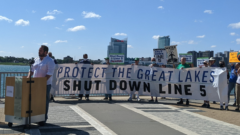
Line 5 activist group wants Gov. Whitmer to “be an advocate” for shutdown

Michigan Gov. Gretchen Whitmer’s record on the Line 5 oil pipeline that traverses the Straits of Mackinac is mixed, according to Lansing advocate Sean McBrearty.

When running for governor in 2018, “Whitmer pledged to do everything in her power to take Line 5 out of the Great Lakes,” McBrearty told Great Lakes Now in a recent interview.

Read Now at Great Lakes Now.

Original Article

Great Lakes Now

Great Lakes Now

https://www.greatlakesnow.org/2024/04/line-5-activist-group-wants-gov-whitmer-to-be-an-advocate-for-shutdown/

Gary Wilson, Great Lakes Now

Central Michigan University’s Institute for Great Lakes Research recently bought a $40K, two-person submersible to complete research at the Beaver Island Biological Station in northern Lake Michigan. The sub will be used for oil pipeline inspections, mapping whitefish spawning habitat, and developing underwater communication technologies among other things. Read the full story by Mlive.

Original Article

Great Lakes Commission

Great Lakes Commission

https://www.glc.org/dailynews/20240417-reserach-submersible

Nichole Angell

Six volunteers in New York, armed with hundreds of feet of spooled wire, a dozen nesting boxes, and a family of bird decoys, hopped on a boat Tuesday morning to help protect a threatened species, the common tern. Read the full story by the Watertown Daily Times.

Original Article

Great Lakes Commission

Great Lakes Commission

https://www.glc.org/dailynews/20240417-common-turn-help

Nichole Angell

Work will take place in Conneaut Creek in northeast Ohio to help reduce the number of sea lampreys in Lake Erie. An estimated 53 miles of stream treatment targeting over 15K larval sea lampreys will save over 300K pounds of fish. Read the full story by the Star Beacon.

Original Article

Great Lakes Commission

Great Lakes Commission

https://www.glc.org/dailynews/20240417-sea-lamprey-control

Nichole Angell

For Love of Water, a group known as FLOW, has filed a brief in the Michigan Court of Appeals to challenge Line 5 permitting. The appeal was filed on behalf of FLOW and other environmental groups, as well as some Native American tribes. Read the full story by The Toledo Blade.

Original Article

Great Lakes Commission

Great Lakes Commission

https://www.glc.org/dailynews/20240417-line5-permit-opposition

Nichole Angell

Every year billions of winged creatures emerge from the water to spend a few hours mating, laying eggs, and then dying, not even pausing to eat. A mayfly hatch might be one of the Great Lakes’ more impressive natural events. Read the full story by Mlive.

Original Article

Great Lakes Commission

Great Lakes Commission

https://www.glc.org/dailynews/20240417-mayfly-hatch

Nichole Angell

A new report from the Alliance for the Great Lakes adds new data showing that America’s plastic addiction and waste-disposal habits are polluting our land and water. The Chicago-based group analyzed 20 years of data from volunteer beach cleanups across the region, finding that the majority of litter is plastic-based. Read the full story by the Manchester Mirror.

Original Article

Great Lakes Commission

Great Lakes Commission

https://www.glc.org/dailynews/20240417-plastic-litter

Nichole Angell

Several improvements will be made to Peninsula Park’s trails in northeastern Wisconsin, increasing sustainability and enhancing the visitor experience. The implementation of the Northern Lake Michigan Coastal Master Plan includes improvements to wildlife areas, state parks, natural areas, state forests, and fishery areas. Read the full story by the WBGA-TV – Green Bay, WI.

Original Article

Great Lakes Commission

Great Lakes Commission

https://www.glc.org/dailynews/20240417-trail-improvements

Nichole Angell

What do you do when an employee comes forward, exposing their company for wrongdoing? 

Environmental journalists discussed how to handle that situation at a recent Society of Environmental Journalist Conference in Philadelphia.

The post How to be a responsible watchdog first appeared on Great Lakes Echo.

Original Article

Great Lakes Echo

Great Lakes Echo

http://greatlakesecho.org/2024/04/17/how-to-be-a-responsible-watchdog/

Anna Barnes

* WHAT...Southeast winds 15 to 25 mph with gusts up to 45 mph. * WHERE...Calumet, Manitowoc, Winnebago, Brown, Kewaunee, and Outagamie Counties. * WHEN...Until 4 AM CDT Wednesday. * IMPACTS...Gusty winds will blow around unsecured objects. Tree limbs could be blown down and a few power outages may result. * ADDITIONAL DETAILS...Winds could gust over 50 mph within heavier showers and/or weak thunderstorms.

Original Article

Current watches, warnings, and advisories for Brown County (WIC009) WI

Current watches, warnings, and advisories for Brown County (WIC009) WI

https://api.weather.gov/alerts/urn:oid:2.49.0.1.840.0.8f8fb9f101583670a5f79ac9d004cc6cf7275e1f.003.1.cap

NWS

Your Foraging Journey: A Framework to Sustainable and Safe Practices

Foraging connects us with the natural world, offering a pathway to understand the land, its cycles, and the bountiful edible plants that grow wild around us. Whether you’re a novice eager to explore the greens outside your doorstep or an experienced forager looking to deepen your practice, this guide provides essential insights into starting your foraging journey, identifying plants, harvesting sustainably, and ensuring safety.

Read Now at Great Lakes Now.

Original Article

Great Lakes Now

Great Lakes Now

https://www.greatlakesnow.org/2024/04/your-foraging-journey-a-framework-to-sustainable-and-safe-practices/

Lisa M. Rose

* WHAT...East winds 15 to 30 mph with gusts up to 45 mph expected. * WHERE...Calumet, Manitowoc, Winnebago, Brown, Kewaunee, Outagamie, and Waupaca Counties. * WHEN...Until 4 AM CDT Wednesday. * IMPACTS...Gusty winds will blow around unsecured objects. Tree limbs could be blown down and a few power outages may result. * ADDITIONAL DETAILS...Winds could gust over 50 mph within heavier showers and/or weak thunderstorms.

Original Article

Current watches, warnings, and advisories for Brown County (WIC009) WI

Current watches, warnings, and advisories for Brown County (WIC009) WI

https://api.weather.gov/alerts/urn:oid:2.49.0.1.840.0.6f405d2e89eb392f120fd2d5b0a30a8918290269.003.1.cap

NWS

State legislature’s inaction on PFAS continues

Governor Evers addresses reporters in front of empty Joint Finance committee seats.One would be forgiven if you thought that by creating a $125 million in funding to help affected communities deal with PFAS in the budget that the legislature was actually concerned about the issue and ready to act.

Unfortunately, everything they have done since they approved the state budget undercuts that conclusion. Today is the latest example in which the Joint Finance Committee refused to answer the Governor’s call for a special session to allocate this money. This ignores the urgent need to send these funds to affected communities, and the calls from dozens of citizens asking the Committee to act.

This follows more than nine months of the negotiations around SB 312, a critically flawed bill the state legislature authored to direct the DNR on how to deal with PFAS. The bill, SB 312, didn’t specifically include funding. Worse, it gave polluters too many loopholes to avoid accountability. The Governor vetoed the bill and we supported that action.

While legislators debated SB 312, state budget funds were already approved and waiting to be released to the DNR to help affected communities with water testing, research, and provide safe drinking water to Wisconsin families. The Joint Finance Committee has had the power to release these funds, but partisan political power plays are getting in the way of meaningful action.

The funds would have been released pursuant to the Department of Natural Resources’ February request to allow the following:

  • provide safe drinking water to affected communities,
  • fund more water testing,
  • help municipal water treatment facilities and businesses find alternatives for clean
  • drinking water,
  • help those with contaminated private drinking wells,
  • cover costs with disposal of contamination, and
  • support further research into the PFAS problem.

The DNR’s formal request for state budget funds has clear direction for the agency to take action to reduce or prevent exposure to PFAS chemicals in water. The funding requested is aligned with the programs in SB 312 that everyone agrees with, and which passed both houses of the legislature.

This is an urgent matter that has been waiting for action for more than 280 days. Wisconsinites deserve action, not meaningless arguments about “legislative intent,” and should not have to wait any longer for access to safe water.

Read more about this issue in the Milwaukee Journal Sentinel, Wisconsin Public Radio, and via the Associated Press.

– Stacy Harbaugh, Communications Director


This message is made possible by generous donors who believe people have the power to protect and restore water. Support our work with your contribution today.

The post State legislature’s inaction on PFAS continues appeared first on River Alliance of WI.

Original Article

Blog - River Alliance of WI

Blog - River Alliance of WI

https://wisconsinrivers.org/pfas-inaction-continues/

Allison Werner