In Traverse City, Michigan, a fish obstacle course is keeping unwanted species out of a river. As dams come down around the world, native fish are returning to their home waters. But invasive species are taking advantage of that same access. So how do we separate native fish from undesirable fish?

In Traverse City, researchers are testing an innovative solution called FishPass. This system sorts native fish from invasive species using a combination of obstacles, bubble curtains, adjustable currents, and cameras that hone in on identifying features. The goal is to open the door to native fish like sturgeon, while turning away invasive species like sea lamprey.

#GreatLakes #Fish #Fishing #Ecology #Sturgeon #SeaLamprey #Dam #Michigan #TraverseCity
===========================================
Website: https://greatlakesnow.org
Facebook: https://www.facebook.com/greatlakesnow
X: https://www.x.com/greatlakesnow
Instagram: https://www.instagram.com/greatlakesnoworg
Newsletter: https://www.greatlakesnow.org/great-lakes-now-newsletter/

To learn more about supporting Detroit PBS and Great Lakes Now, visit https://www.detroitpbs.org/
===========================================

“How This River Keeps Unwanted Fish Away” was produced by Great Lakes Now/Detroit PBS.

Produced and Written by
Kathy Johnson

Narrated by
Rob Green

Edited by
Bill Allesee

Camera
Greg Lashbrook

Additional Material
Team Elmer’s
Great Lakes Fishery Commission
Jon Lemerond
PolkaDot Perch
Bubbletubing.com
Shedd Aquarium
Into the Outdoors Education Network
Conservation Resource Alliance
AECOM
John H. Bolf Jr.
Andrea Miehls, Great Lakes Fishery Commission

The post How This River Keeps Unwanted Fish Away | Great Lakes Now appeared first on Great Lakes Now.

Original Article

Great Lakes Now

Great Lakes Now

https://www.greatlakesnow.org/2026/02/02/how-this-river-keeps-unwanted-fish-away-great-lakes-now/
Great Lakes Now

By Joshua Kim

Following the passing of new legislation by the Illinois General Assembly, the Regional Transport Authority, soon to be the Northern Illinois Transit Agency, will receive an additional $1.2 billion for its annual budget this year. The additional funding will be used to improve “frequency, reliability, and safety”

The post More funding approved to improve the Greater Chicago Area’s public transit first appeared on Great Lakes Echo.

Original Article

Great Lakes Echo

Great Lakes Echo

https://greatlakesecho.org/2026/02/01/more-funding-approved-to-improve-the-greater-chicago-areas-public-transit/

Joshua Kim

for immediate release Fox-Wolf Watershed Alliance mobilizing volunteers May 2 across Northeast Wisconsin APPLETON, Wis—Registration is now open for the 2026 Fox-Wolf Watershed Cleanup, a region-wide volunteer event that brings together people of all ages to remove trash from parks, trails, riverbanks, lakeshores, and more. The Cleanup will take place on Saturday, [...]

The post MEDIA RELEASE: Registration Opens for One of Wisconsin’s Largest Watershed Cleanups appeared first on Fox-Wolf Watershed Alliance.

Original Article

Fox-Wolf Watershed Alliance

Fox-Wolf Watershed Alliance

https://fwwa.org/2026/02/01/media-release-registration-opens-for-one-of-wisconsins-largest-watershed-cleanups/?utm_source=rss&utm_medium=rss&utm_campaign=media-release-registration-opens-for-one-of-wisconsins-largest-watershed-cleanups

Dan Beckwith

By Joshua Kim

“Chicago Transit Hikes," a new book by Lindsay Welbers, aims to help Chicago residents and visitors reach outdoor recreation sites car-free.

The post Book helps residents, visitors, use Chicago’s public transit to access recreational sites first appeared on Great Lakes Echo.

Original Article

Great Lakes Echo

Great Lakes Echo

https://greatlakesecho.org/2026/01/30/book-helps-residents-visitors-use-chicagos-public-transit-to-access-recreational-sites/

Joshua Kim

A Shorewood Municipal Court judge has ruled in favor of allowing less public beach access along Lake Michigan in Wisconsin – but the issue may not be settled yet. The case garnered attention as Wisconsin’s chance to finally settle the issue of where public access to Lake Michigan ends and where private landowners’ rights begin.  Read the full story by the Milwaukee Journal Sentinel.

Original Article

Great Lakes Commission

Great Lakes Commission

https://www.glc.org/dailynews/20260130-beach-access

Taaja Tucker-Silva

PFAS are posing a threat to the Great Lakes, one of America’s most vital water resources. There are many ways that PFAS enters the Great Lakes, including through rivers, groundwater, and even rain and snowfall. Read the full story by The Conversation.

Original Article

Great Lakes Commission

Great Lakes Commission

https://www.glc.org/dailynews/20260130-pfas-origins

Taaja Tucker-Silva

A new construction project will restore 16 acres of wetlands and 2,000 feet of shoreline within Lake Erie’s Sandusky Bay near Sandusky, Ohio. It’s a fraction of the 11,000 linear feet of shoreline the Nature Conservancy is working to restore altogether. Read the full story by The Ohio Newsroom.

Original Article

Great Lakes Commission

Great Lakes Commission

https://www.glc.org/dailynews/20260130-sandusky-bay

Taaja Tucker-Silva

The U.S. Coast Guard Cutter Neah Bay recently assisted with ice-breaking operations to free the 1,004-foot icebound freighter, American Spirit, on Lake Erie. Neah Bay broke through the ice to free, assist, and escort the vessel crossing the Great Lakes. Read the full story by the Port Clinton News Herald.

Original Article

Great Lakes Commission

Great Lakes Commission

https://www.glc.org/dailynews/20260130-ice-breaking

Taaja Tucker-Silva

Sixty-one acres of rare and fragile ravine and shoreline habitats along Lake Michigan near Lake Forest, Illinois, will soon be restored and stabilized thanks to a $5.75 million federal grant. The project will also improve public access, as well as create offshore reefs and habitats in the lake itself. Read the full story by The Daily Herald.

Original Article

Great Lakes Commission

Great Lakes Commission

https://www.glc.org/dailynews/20260130-shoreline-restoration

Taaja Tucker-Silva

Arctic temperatures have anglers cutting holes in thick ice to go fishing, a welcome change after the warmer than usual winters in recent years. From ponds and lakes to the broad, ice-covered waters of Lake Erie, there are reports anglers are already finding success. Read the full story by The Plain Dealer.

Original Article

Great Lakes Commission

Great Lakes Commission

https://www.glc.org/dailynews/20260130-erie-ice-fishing

Taaja Tucker-Silva

Muskellunge— or muskie— are one of the largest and most prized fish in the Great Lakes. But hundreds of years of shoreline development have shrunk the spawning grounds of these massive swimmers. 

For decades, the Michigan DNR has raised and stocked muskies with the goal of releasing 40,000 fingerlings every year. Learn more about Michigan’s muskie operation on the Great Lakes Now YouTube channel.

#GreatLakes #fishing #freshwaterfish #muskie
===========================================
Website: https://greatlakesnow.org
Facebook: https://www.facebook.com/greatlakesnow
X: https://www.x.com/greatlakesnow
Instagram: https://www.instagram.com/greatlakesnoworg
Newsletter: https://www.greatlakesnow.org/great-lakes-now-newsletter/

To learn more about supporting Detroit PBS and Great Lakes Now, visit https://www.detroitpbs.org/

The post Stocking the Great Lakes Spotted Muskie appeared first on Great Lakes Now.

Original Article

Great Lakes Now

Great Lakes Now

https://www.greatlakesnow.org/2026/01/29/stocking-the-great-lakes-spotted-muskie/

Great Lakes Now

Help Stop the Introduction of Invasive Plants into Wisconsin Gardens Original Story By Melinda Myers “Defending our Health by Stopping the Spread” is this year’s focus for National Invasive Species Awareness Week (NISAW), Feb 23-27, 2026. This international event is designed to increase awareness about invasive species. Who better to enlist in this effort [...]

The post Planning Your Garden? Check Your Online Plants Before Purchasing appeared first on Fox-Wolf Watershed Alliance.

Original Article

Fox-Wolf Watershed Alliance

Fox-Wolf Watershed Alliance

https://fwwa.org/2026/01/28/planning-your-garden-check-your-online-plants-before-purchasing/?utm_source=rss&utm_medium=rss&utm_campaign=planning-your-garden-check-your-online-plants-before-purchasing

Chris Acy

Governor Gretchen Whitmer announced the Michigan Maritime Strategy, a 10-year plan with the goal to boost the state’s maritime industry, create jobs, and protect the Great Lakes. Read the full story by WBUP-TV – Marquette, MI.

Original Article

Great Lakes Commission

Great Lakes Commission

https://www.glc.org/dailynews/20260128-gov-whitmer-ten-year-maritime-strategy-michigan

Hannah Reynolds

The Great Lakes Fishery Commission and U.S. Fish and Wildlife Service are seeking public comments on a proposed seasonal sea lamprey barrier on the Sucker River in Michigan’s Upper Peninsula. The barrier is designed to block the invasive lamprey’s spread and make control efforts more effective. Read the full story by Michigan Public Radio.

Original Article

Great Lakes Commission

Great Lakes Commission

https://www.glc.org/dailynews/20260128-public-feedback-sea-lamprey-barrier-upper-peninsula

Hannah Reynolds

The international ice bridge connecting the U.S. and Canada is officially open. When the conditions are right, an approximately 12-mile stretch of Lake Huron creates a frozen path between Drummond Island, Michigan and St. Joseph Island, Ontario. Read the full story by MLive.

Original Article

Great Lakes Commission

Great Lakes Commission

https://www.glc.org/dailynews/20260128-frozen-lake-huron-international-ice-bridge

Hannah Reynolds

A multimillion-dollar project will begin later this year to restore the shoreline, bluffs and ravines at the Jean and John Greene Nature Preserve in Lake Forest, Illinois, along Lake Michigan. Read the full story by the Daily Herald.

Original Article

Great Lakes Commission

Great Lakes Commission

https://www.glc.org/dailynews/20260128-window-past-preservationist-restore-lake-michigan

Hannah Reynolds

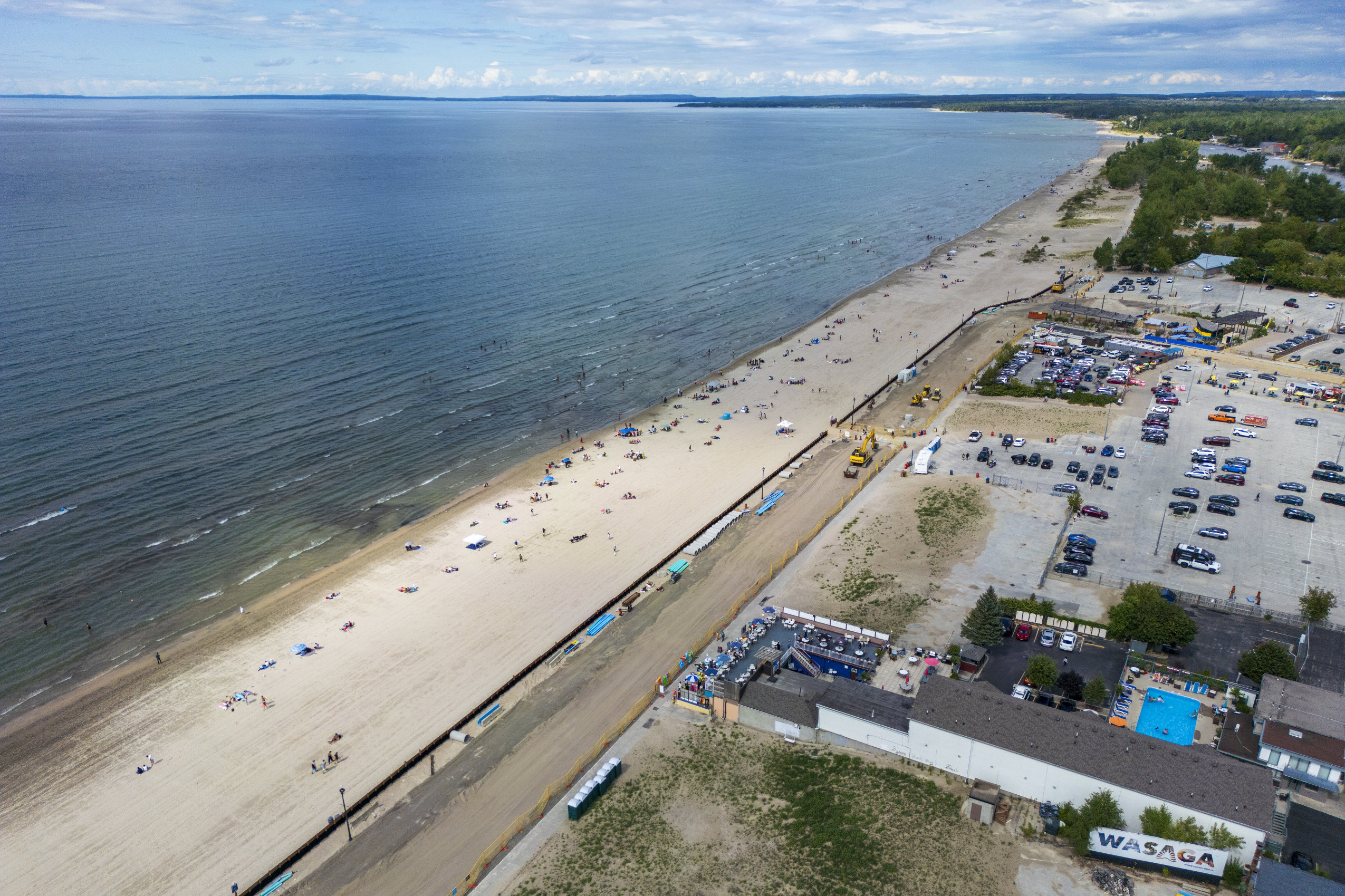
Ontario’s government has decided to transfer about 60 % of Wasaga Beach Provincial Park to the Town of Wasaga Beach to support local tourism and economic development, even though roughly 98% of public comments opposed the change due to concerns it could endanger sensitive piping plover habitat and reduce public protections for the shoreline. Read the full story by Great Lakes Now.

Original Article

Great Lakes Commission

Great Lakes Commission

https://www.glc.org/dailynews/20260128-ontario-wasaga-beach

Hannah Reynolds

Lake Erie is now nearly completely frozen over with rapidly growing ice cover due to persistent Arctic cold, making it the most ice-covered of the Great Lakes this winter. Officials warn despite a Great Lake being fully frozen, shifting ice can be unstable and hazardous. Read the full story by Erie Times-News.

Original Article

Great Lakes Commission

Great Lakes Commission

https://www.glc.org/dailynews/20260128-lake-erie-frozen-over-safety

Hannah Reynolds

The Lake Huron Coastal Centre’s Coast Watchers community science program is celebrating 20 years of shoreline monitoring, with volunteer citizen scientists collecting long-term data on coastal conditions, wildlife, pollution and storm impacts that help track environmental trends and support conservation and resiliency efforts along the Lake Huron coast. Read the full story by Kincardine News.

Original Article

Great Lakes Commission

Great Lakes Commission

https://www.glc.org/dailynews/20260128-lakehuron-coastline-monitoring-program

Hannah Reynolds

A prolonged cold spell is rapidly increasing ice coverage on Lake Superior — with ice cover jumping from about 6% to around 31% in recent weeks — as persistent sub-zero temperatures continue across the region. Read the full story by MPR News.

Original Article

Great Lakes Commission

Great Lakes Commission

https://www.glc.org/dailynews/20260128-cold-persists-lakesuperior-icecover

Hannah Reynolds

The U.S. Coast Guard is asking those using the ice on the bays of Green Bay and Sturgeon Bay for fishing and recreation to be especially aware as the service’s ice breaking operations continue in the waters around Door County, Wisconsin. Read the full story by the Green Bay Press-Gazette.

Original Article

Great Lakes Commission

Great Lakes Commission

https://www.glc.org/dailynews/20260128-coast-guard-advises-icebreaking-greenbay

Hannah Reynolds

Lake Zurich, Illinois, officials last week authorized revenue bond issues of $52 million to secure low-interest loans from the Illinois Environmental Protection Agency as part of the village’s transition to Lake Michigan water. The target date for the transition is 2028. Read the full story by the Daily Herald.

Original Article

Great Lakes Commission

Great Lakes Commission

https://www.glc.org/dailynews/20260128-lake-zurich-lake-michigan-water

Hannah Reynolds

PFAS compromise bills must limit spills law exemptions

UPDATE – March 17: River Alliance of Wisconsin applauds the Wisconsin State Senate for unanimously approving PFAS bills AB 130 and AB131 to send the bills to Governor Evers to sign. On February 20, the Wisconsin State Assembly voted unanimously on bills that would release the long-awaited PFAS trust fund money to help fund PFAS remediation projects.

Clean water advocates voiced clear concerns during the years-long debate over spending the state budget funds and how to define innocent landowners. Ultimately legislators wrote a compromise that will make some needed progress in creating remediation grants and some limited exemptions to the state’s Spills Law.

It is because of people living with PFAS pollution who have tirelessly steered legislators into action to meaningfully release funds for drinking water remediation in Wisconsin. We encourage Governor Evers to sign this legislation and state legislators to continue to work to ban the use of PFAS-style chemicals.


On January 21, 2026, state legislators held another hearing on policies and funding for addressing PFAS contamination. The bills are the result of many months of debate and compromise. Through the whole process, we’ve listened to leaders of impacted communities and experts across the state and held firm on three core issues.

We insisted that since the 2023 state budget was passed, the Joint Finance Committee has always had the power to release the over $125 million of funds earmarked for action on PFAS. Though JFC leaders refused to release the money to communities with contaminated water, this legislation would finally move dollars out the door.

We insisted that our state should not make Swiss cheese out of our Spills Law with broad and vague exemptions for corporate pollution accountability. While we would prefer fewer exemptions to the Spills Law, we understand the need to exempt truly passive receivers, like farmers.

Finally, we insisted that there was no community left behind when it comes to accessing the funds needed to test, filter and remediate drinking water resources. We cannot support a bill that would create new policies and grant programs without hiring state experts to administer grants and enforce laws. The only way we would support this legislation is with an amendment to hire adequate DNR staff.

With the legislative session winding down and elections coming this fall, legislators are under pressure to have some progress to report to their constituents. Governor Evers has signaled his optimistic support for this compromise. However, from the start, this bill was an effort to exempt big businesses under the guise of helping innocent landowners. Adding further exemptions to protect already identified polluters is unacceptable.

It is only due to the many hours – years, in fact – of vocal members of impacted communities and clean water advocates that got PFAS contamination to be a household word and to push state leaders to do the right thing for our water.

We’re only at the beginning of providing remedies for communities living with water pollution. The people of Wisconsin cannot wait for funds from lawsuit settlements over PFAS pollution to get help for their drinking water. The state legislature must release the funds, hire the staff, and set their sights on the next step which is to ban PFAS-style chemicals and prevent further damage to our water.

Contacting your legislators will make an impact. 

Please contact your State Representative to let them know the people of Wisconsin have waited for action on PFAS for far too long and they should support Assembly Substitute Amendment 1 to AB 131, and Assembly Substitute Amendment 1 to AB 130 without further exemptions. 


This message is made possible by generous donors who believe people have the power to protect and restore water. Subscribe to our Word on the Stream email newsletter to receive stories, action alerts and event invitations in your inbox.  Support our work with your contribution today.

The post PFAS compromise bills must limit spills law exemptions appeared first on River Alliance of WI.

Original Article

Blog - River Alliance of WI

Blog - River Alliance of WI

https://wisconsinrivers.org/pfas-bill-compromises/

Allison Werner

By Isabella Figueroa Nogueira

A recent study examines how solar projects could be planned in ways that benefit rural communities without significantly increasing electricity costs.

The post Solar projects bring larger economic gains to smaller communities, study shows first appeared on Great Lakes Echo.

Original Article

Great Lakes Echo

Great Lakes Echo

https://greatlakesecho.org/2026/01/27/solar-projects-bring-larger-economic-gains-to-smaller-communities-study-shows/

Isabella Figueroa Nogueira

By Fatima Syed, The Narwhal

The Great Lakes News Collaborative includes Bridge Michigan; Circle of Blue; Great Lakes Now at Detroit PBS; Michigan Public, Michigan’s NPR News Leader; and The Narwhal who work together to bring audiences news and information about the impact of climate change, pollution, and aging infrastructure on the Great Lakes and drinking water. This independent journalism is supported by the Charles Stewart Mott Foundation.

The Ontario government is moving ahead with plans to transfer management of 60 per cent of Wasaga Beach from the province to the town, despite receiving feedback from thousands of Ontarians decrying the proposal as potentially endangering sensitive piping plover habitat and affecting beach access.

The Doug Ford government received 14,233 comments over a 30-day period last summer, about 98 per cent of which were in opposition to the proposal. Many expressed concerns that erasing provincial protection could mean the loss of sand dunes in favour of hotels, condos and other beachfront development.

“We did not consider any changes to the proposal based on the feedback received, given the Town of Wasaga Beach’s commitments to keeping the beach public, not building on the beach and protecting environmentally sensitive dunes,” the government said in its decision.

Under Ontario’s Environmental Bill of Rights, the government is required to post moves with environmental or energy implications to the publicly accessible Environmental Registry of Ontario to allow for widespread feedback from industry, experts and residents. (The Ford government has, though, exempted several projects and types of notices from the registry, such as the Ontario Place redevelopment and permits to harm at-risk species, under Bill 5.)

Last June, the Ford government posted its decision to amend the Provincial Parks and Conservation Reserves Act, the legislation which created more than 340 parks across Ontario. The amendment would permit the transfer of 60 hectares, or three per cent, of Wasaga Beach Provincial Park, which protects the world’s longest freshwater beach and surrounding natural areas, to the town’s management to help boost tourism and the local economy.

The transfer includes more than half, or 60 per cent, of the beachfront, which contains all the sand dunes and vegetation that serve as nesting area for the piping plover.

Among the roughly two per cent of respondents that supported the move for the sake of economic development and revitalization, there was also a push for “continued environmental management and continued public access.”

Most of the comments on the registry posting highlighted the consequences of losing this beach environment, or even threatening it with increased development.

“Once this precedent is set, we risk irreversible environmental degradation, reduced public access and the commercialization of what should remain a protected, public space for generations to come,” one local resident wrote. “Tourism and environmental stewardship are not mutually exclusive, and development must not come at the cost of conservation.”

“Public land — especially waterfront property as ecologically and recreationally important as Wasaga Beach — should remain in public hands and under provincial protection,” another wrote.

None of this swayed the province. The amendments to enable the transfer were passed in Ontario’s 2025 budget, released last fall. With the recent decision, the government will now advance the transfer to the town.

This is not the first time the Ford government has disregarded feedback through the Environmental Registry of Ontario. The Auditor General of Ontario has repeatedly called out this government for failing to adhere to its own laws — at times “deliberately” — that require it to meaningfully consult the public through the registry.

In late 2022, for example, the government received more than 30,000 comments about its plans to remove 7,400 acres of land from the protected Greenbelt. In spite of this, “no changes were made to the proposal as a result of public consultation,” the government’s posting on the registry read.

In choosing not to consider any changes based on public feedback, the government’s decision said the lands removed from provincial protection in Wasaga Beach “will continue to be subject to Ontario’s species protection and environmental laws.”

However, shortly before announcing this transfer, the Ford government weakened species protections through its controversial Bill 5, as well as exempting certain postings from the environmental registry. The provincial parks legislation was the last law standing to protect plover habitat in Wasaga Beach.

The post Ontario will sever Wasaga Beach park despite 98% disapproval in public comments appeared first on Great Lakes Now.

Original Article

Great Lakes Now

Great Lakes Now

https://www.greatlakesnow.org/2026/01/27/ontario-will-sever-wasaga-beach-park-despite-98-disapproval-in-public-comments/

The Narwhal