Ah, a summer day at the beach: cool water, warm sand and a beverage at hand. Wisconsin’s 180 public beaches are one of the state’s most-valued assets. They provide recreational opportunities, economic benefits for coastal communities and enhance the quality of life for residents.

Keeping those beaches safe for people to use is a continuing process. Beach managers use levels of Escherichia coli (E. coli), a bacterium from fecal pollution in water to know when to keep beaches open or closed. It’s far from a perfect indicator, however. E. coli can come from many sources, not all of it harmful to humans, and it can persist in the environment sometimes for weeks after it was introduced. In fact, sand can contain more E. coli than water. This can make a beach manager’s job complicated.
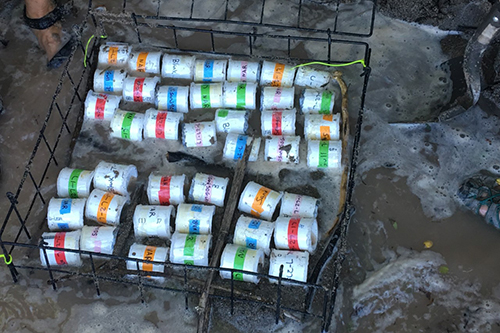
Microcosms containing E. coli samples were buried in sand for six weeks at several beaches in a related project by McLellan. Image credit: Natalie Rumball

Sea Grant-funded researchers Sandra McLellan and Gyaneshwar Prasad, both with the University of Wisconsin-Milwaukee, are building on previous research to find ways to decomplicate beach managers’ lives by determining what factors could limit long-term survival of E. coli on beaches.

McLellan, a professor in the School of Freshwater Sciences, explained the pros and cons of E. coli as an indicator.

“It’s a great indicator because it’s so easy for people to culture in the lab. It’s easy to count. Where it’s not a good indicator is it really doesn’t tell you anything about the source of what’s there. You don’t know where to direct your management strategies. Should I be chasing away the birds or should I be looking for a leaking sewage pipe nearby? And then to top it off, the other downside is the E. coli survives outside of a host. There’s prolonged survival in the sand and maybe even growth if enough nutrients are available,” McLellan said.

Once outside a human or animal gut, E. coli usually only live a couple of days. But under certain circumstances, it can live for week or even indefinitely in sand.

With graduate student Sophia Ward’s help, McLellan and Prasad are studying sand and water at six Lake Michigan beaches: two in Kenosha County, two in Manitowoc County and two in Milwaukee County. McLellan thinks this array of beaches will provide good representation of what goes on around the Lake Michigan shoreline.
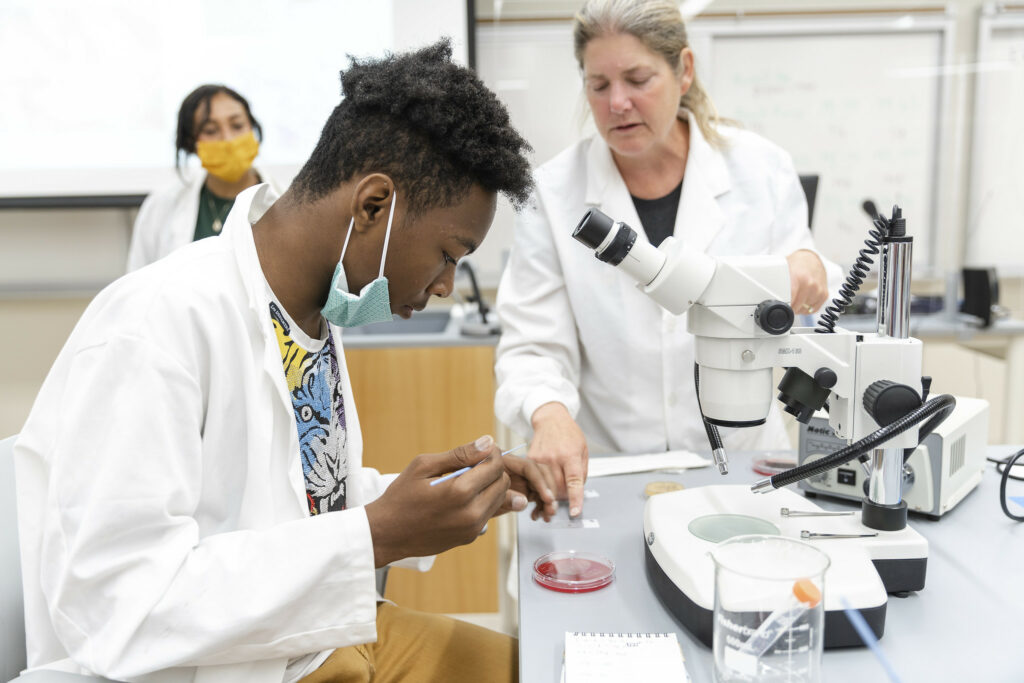
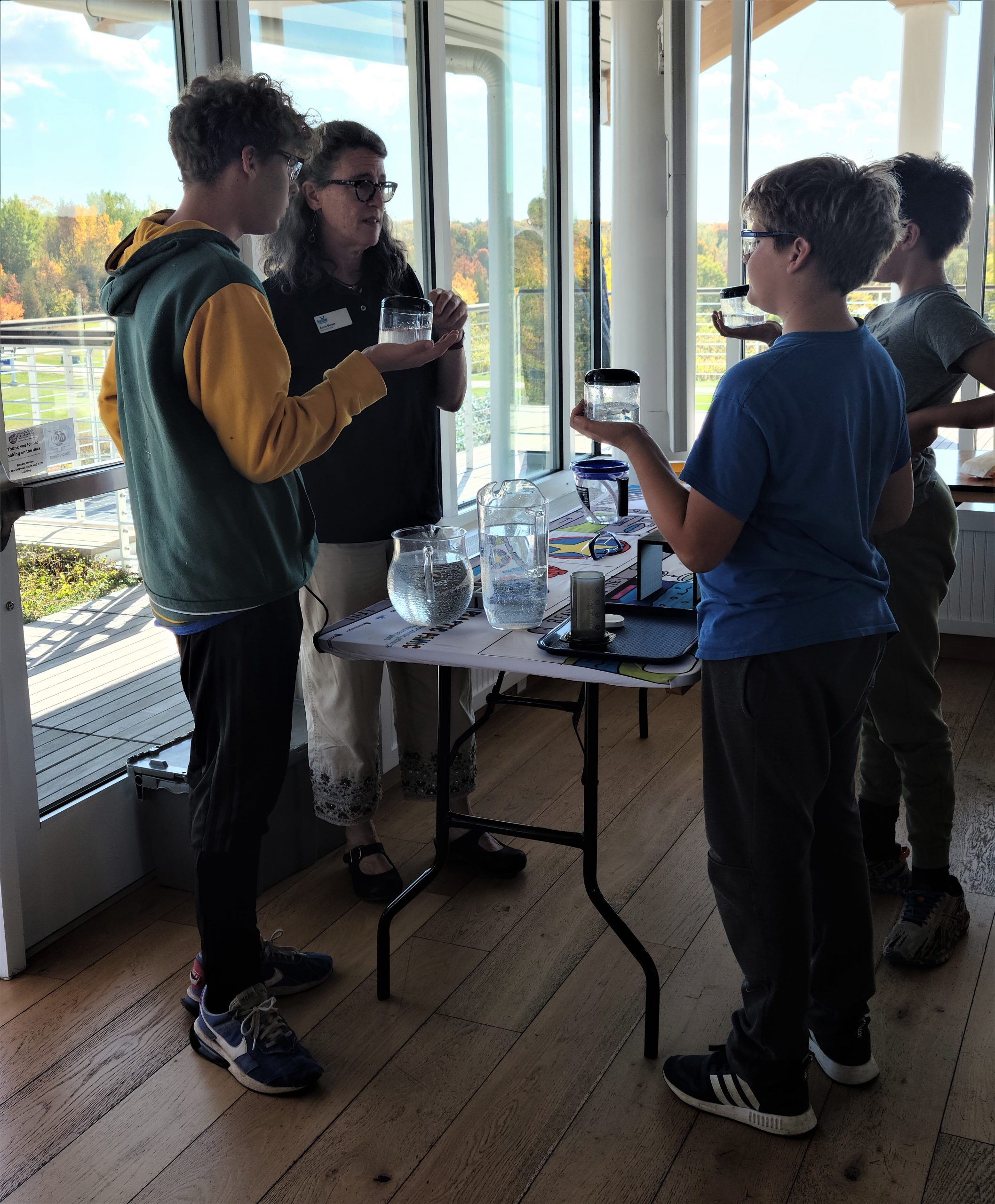
Sandra McLellan interacts with high school students who are studying E. coli in a program she ran in partnership with the Sixteenth Street Clinic in Milwaukee in 2021. Image credit: Wisconsin Sea Grant

They are also testing for levels of nutrients such as carbon, nitrogen, phosphorus and iron. In addition, they are conducting laboratory experiments to “starve” long-lived E. coli of these nutrients to see what drives their survival.

For the lab experiments, E. coli is mixed with sand and packed into small microcosms (miniature environments). McLellan describes them as four-inch diameter PVC pipes cut into four-inch sections. “We bury them in a bed of sand and keep them nice and moist. This helps us mimic what happens at the beach. The water can pass through, but the E. coli can’t escape from those little microcosms.”

The E. coli contain an extra piece of DNA that has a green fluorescent protein engineered in such a way that when the cell is starved, it lights up. The researchers then feed them with water containing varying amounts carbon, nitrogen, phosphorus and iron. They remove the microcosms periodically and count the E. coli to see how many have survived and see if any display the fluorescent-green markers of starvation.

From preliminary experiments, McLellan suspects carbon might be the most important factor that allows E. coli to persist. In beach environments, carbon is often provided by decaying plant life, especially leaves and the nuisance algae, Cladophora.

Once this limiting factor is confirmed, McLellan and her team will develop a scorecard for the potential of long-term E. coli reservoirs for each beach. “By scoring how easily or how much E. coli is growing in the sand at these beaches, it can help beach managers direct their attention to what might be some probable sources at their beaches,” McLellan said. They are also taking nutrient levels into account.

“The scorecard is developing. I think once we understand the dynamic range of what these beaches look like, then we’ll have a better idea of what the scorecard will actually look like,” she added. The information will also be useful to the Wisconsin Department of Natural Resources, which heads the Wisconsin beach monitoring program.

The post Persistent Pollution: Researchers investigate the key to E. coli bacteria survival in Lake Michigan beach sand and water first appeared on Wisconsin Sea Grant.

Original Article

News Releases | Wisconsin Sea Grant

News Releases | Wisconsin Sea Grant

https://www.seagrant.wisc.edu/news/persistent-pollution-researchers-investigate-the-key-to-e-coli-bacteria-survival-in-lake-michigan-beach-sand-and-water/
Marie Zhuikov

Wisconsin Sea Grant is organizing a webinar and has produced a report regarding the status of nature-based jobs in Wisconsin’s northern tier, which includes Douglas, Ashland, Bayfield and Iron counties.

The webinar, “What Does Housing Have to do with Green Infrastructure? Workforce Needs in Northern Wisconsin,” is scheduled for noon-1 p.m., Tuesday July 18 on Zoom. Preregister for it here.

The report it is based on, titled, “Workforce Needs for Nature-Based Solutions in Wisconsin’s Northern Tier,” is available for free download from Wisconsin Sea Grant. It was prepared by Birchline Planning LLC and Water 365 LLC.

Natalie Chin, Wisconsin Sea Grant’s climate and tourism outreach specialist, said the report and webinar deal with projects that implement green infrastructure practices in communities. “It’s using the benefits of nature to help communities mitigate or reduce the impacts of climate change that we’re seeing because of lake levels, warming and more rain,” Chin said.

Examples of nature-based solutions include stabilizing shorelines through planting greenery instead of hardening the shoreline with concrete and installing pervious pavers in parking lots that allow water to infiltrate into the soil instead of running off into storm sewers or waterways.

The report found not only strong capacity, interest and strengths in the region that support use of nature-based solutions, but also several unexpected limitations relating to a region-wide housing shortage and limits on municipal fiscal capacity.

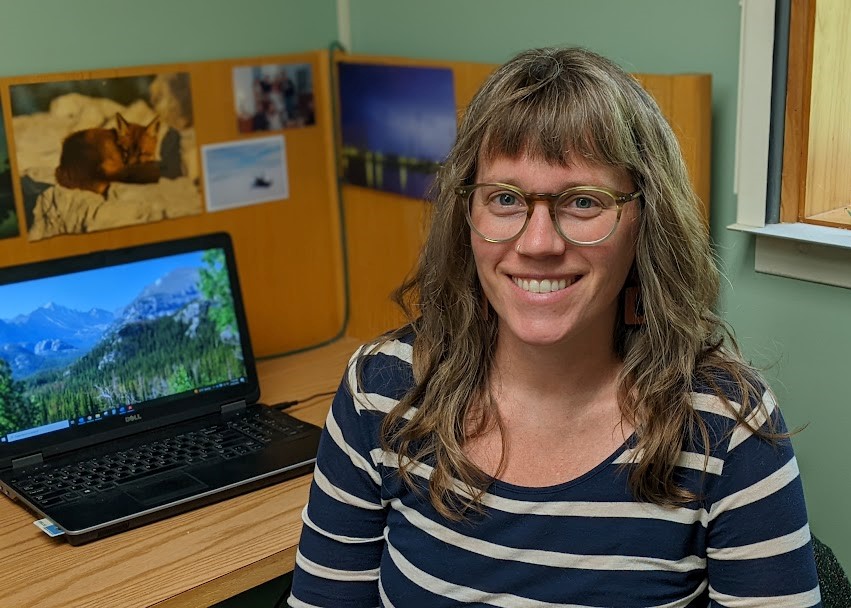
Natalie Chin, climate and tourism outreach specialist, Wisconsin Sea Grant. Image credit: Wisconsin Sea Grant

“Overall, the region’s public, private, educational and nonprofit leaders have an exceptional understanding of nature-based solutions and green infrastructure practices,” said Chin. “However, the region is held back by the sheer lack of people available to carry out this work. Housing availability was cited as the single most difficult limitation on recruitment. Also, communities need more capacity when it comes to project management. Writing grants and executing them is a full-time job just by itself for these types of projects.”

As next steps, this report recommends that Wisconsin Sea Grant and its regional partners consider options to build grant and project management capacity, address the regional housing shortage, work toward legislative reform and facilitate training that will support specific needs in the northern tier around nature-based solutions. Case studies of efforts in other rural regions are provided to illustrate successful strategies from other areas.

During the July 18 webinar, report authors Juli Beth (JB) Hinds and Linda Reid will share their key findings. This will be followed by a panel discussion where people who were interviewed for the report will share their perspectives. These include Alex Faber, executive director, Superior Rivers Watershed Association; Sara Hudson, director, City of Ashland Parks and Recreation; and Philomena Kebec, economic development coordinator, Bad River Band of Lake Superior Chippewa.

The post Webinar and report available about nature-based jobs in northern Wisconsin first appeared on Wisconsin Sea Grant.

Original Article

News Releases | Wisconsin Sea Grant

News Releases | Wisconsin Sea Grant

https://www.seagrant.wisc.edu/news/webinar-and-report-available-about-nature-based-jobs-in-northern-wisconsin/

Marie Zhuikov

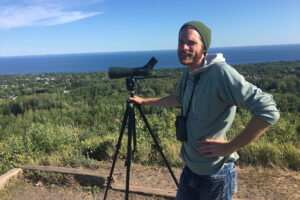
Steve Kolbe on Hawk Ridge in Duluth, Minnesota. Image Credit: Natural Resources Research Institute

The final talk of the 2022-23 River Talk season took place in early May. Steve Kolbe, an avian ecologist with the University of Minnesota Duluth’s Natural Resources Research Institute, gave a presentation about where to find birds in the St. Louis River Estuary and led attendees on a short bird walk on Barker’s Island in Superior near the Lake Superior Estuarium.

“The reason I live in this area is because of birds, specifically because of bird migration,” Kolbe said. “This is an amazing part of the world, both in the fall and in the spring. Birding isn’t just a hobby for me. It’s not just a job. It’s sort of like an obsession.”

Spring

Kolbe began his talk with the snowy owl. They’re often seen in winter on Barker’s Island and the Superior Airport and surrounding area. Their preferred habitat is the Arctic tundra, so they like the open spaces that the airport provides.

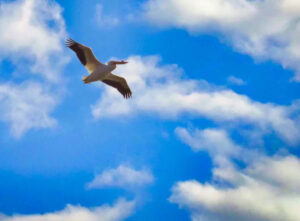
An American white pelican files over the St. Louis River at Chambers Grove. Image credit: Marie Zhuikov

Trumpeter swans are some of the first birds to migrate through in the spring after ice-out. Kolbe often finds them in Rask Bay on the St. Louis River.

American white pelicans stage in groups in the spring in Chambers Grove along the river. “For whatever reason, they like the little island in the middle of the river. They hang out there for almost a month before heading farther north,” Kolbe said.

Bonaparte’s gulls can be found in Lake Superior off Lafayette Square on Park Point en masse. “This is one of my all-time favorite birds and an area specialty. The first week in May, these beautiful, vocal and awesome-looking small gulls with a black head and a silver back with red legs stage on Lake Superior. They hang out for a day or two and then leave in a huge flock,” he said.

Summer

American bitterns breed in Mud Lake and Allouez Bay in wetlands.

Common terns breed on Interstate Island – the sandy island that can be seen off the Blatnik Bridge. Kolbe said they winter in Peru, so they “put on a lot of miles.” The island is protected, so people can’t visit it without a permit. The best place to see them from the mainland is at Rice’s Point boat launch in Duluth with binoculars or a spotting scope.

Fall

For work, Kolbe studies rusty blackbirds. He said this wetland species likes to spend time in North Bay on the river and on many of the islands below the Fond du Lac Dam. Unlike most fall migrants, these blackbirds stay in the area for an extend time – two or three weeks. He suspects they may be using that time to molt their feathers. “Whatever they’re doing, it’s obviously a really important spot,” Kolbe said.

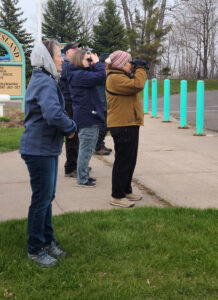
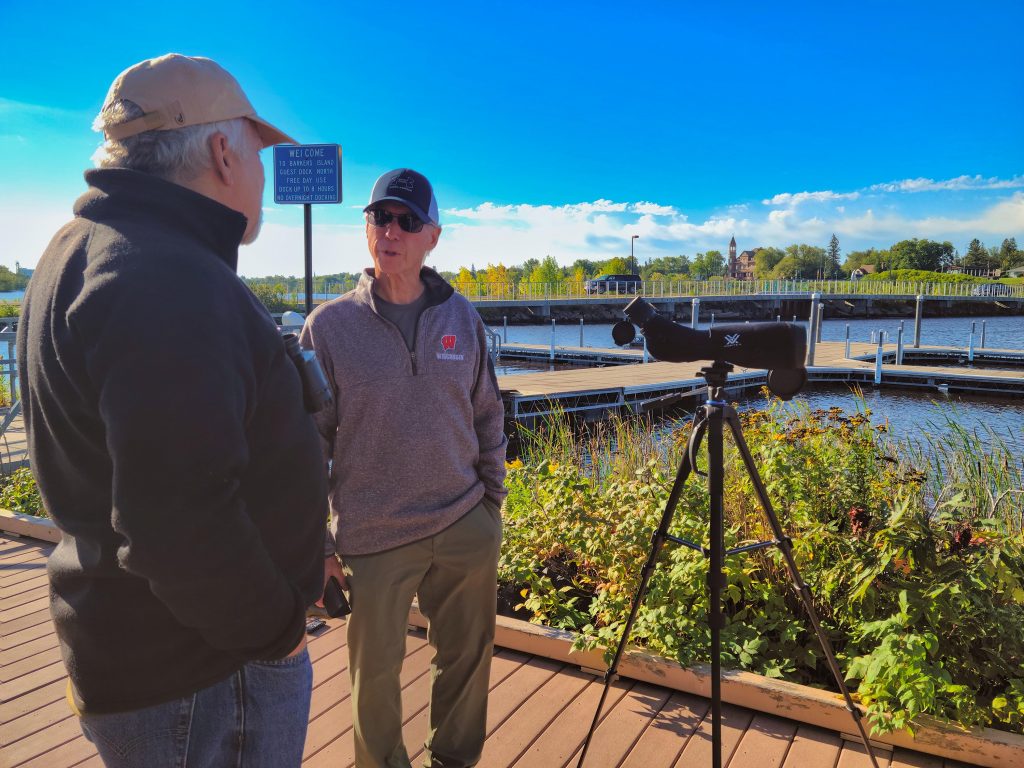
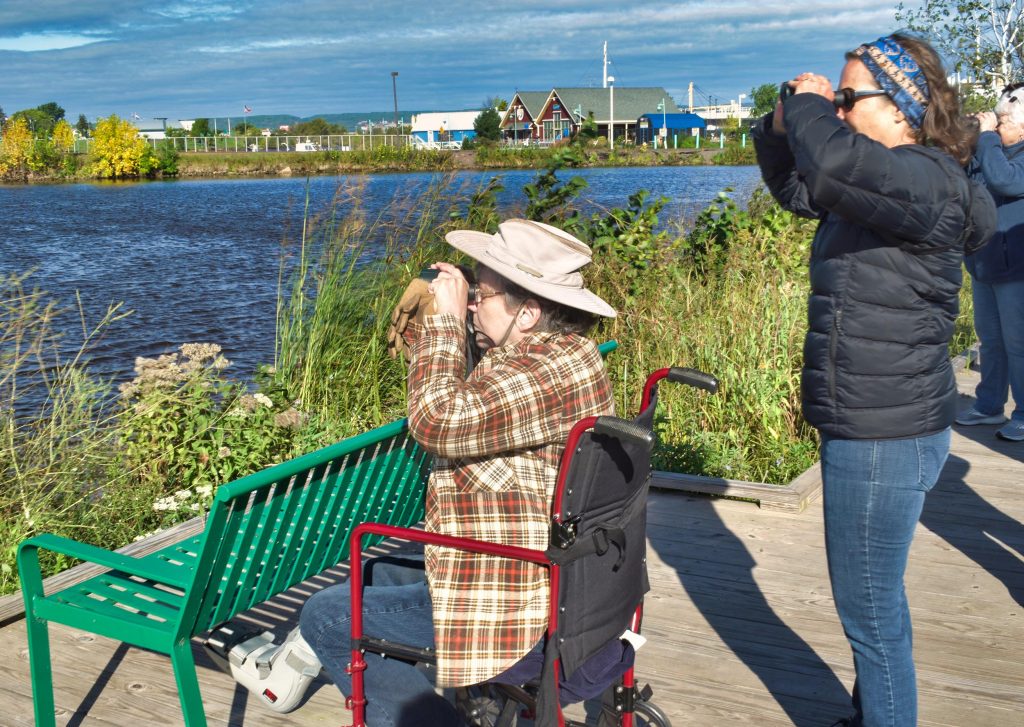
River Talk participants view birds on Barker’s Island. Image credit: Marie Zhuikov, Wisconsin Sea Grant

Parasitic jaegers migrate along Wisconsin Point in September. These birds are known for their feeding style, which involves stealing food from gulls. “They look like a gull mixed with a peregrine falcon,” Kolbe said. “It’s certainly not a bird that you see many places. They nest in the high Arctic and winter at sea. So, it’s cool to be able to see them in Duluth and Superior.”

Flocks of sanderlings and a few piping plovers can be found on area beaches in fall and spring.

Kolbe studied the common nighthawk for his master’s degree. They are another species that migrates en masse along the shore of Lake Superior during fall. “In the second half of August, if you get a really warm day with light winds, go outside in the evening and look up. If you’re lucky, you’ll see something on the order of 15,000 of these birds,” Kolbe said.  He’s been counting the birds during their migration for the past 15 years. He uses the information to develop population trend information for the species. “They seem to be doing OK,” he said.

Hawk Ridge in Duluth is a great place to see hawks and other birds in the spring and fall. Bald eagles are a common species of interest who are here year-round. “It’s really a success story that we’re able to enjoy them so readily and easily around here,” said Kolbe.

During a walk around Barker’s Island, the group saw a mix of birds: buffleheads, a horned grebe, red-winged blackbirds, mallards, a rock pigeon, a common merganser, a song sparrow, ruddy ducks and herring gulls.

River Talks will begin again for its 11th season next fall. In the meantime, there’s a new spinoff series that the Lake Superior National Estuarine Research Reserve has begun for summer, called River Walks. Find more info about it here.


The post Where to find birds in the St. Louis River Estuary first appeared on Wisconsin Sea Grant.

Original Article

Blog | Wisconsin Sea Grant

Blog | Wisconsin Sea Grant

https://www.seagrant.wisc.edu/blog/where-to-find-birds-in-the-st-louis-river-estuary/?utm_source=rss&utm_medium=rss&utm_campaign=where-to-find-birds-in-the-st-louis-river-estuary

Marie Zhuikov

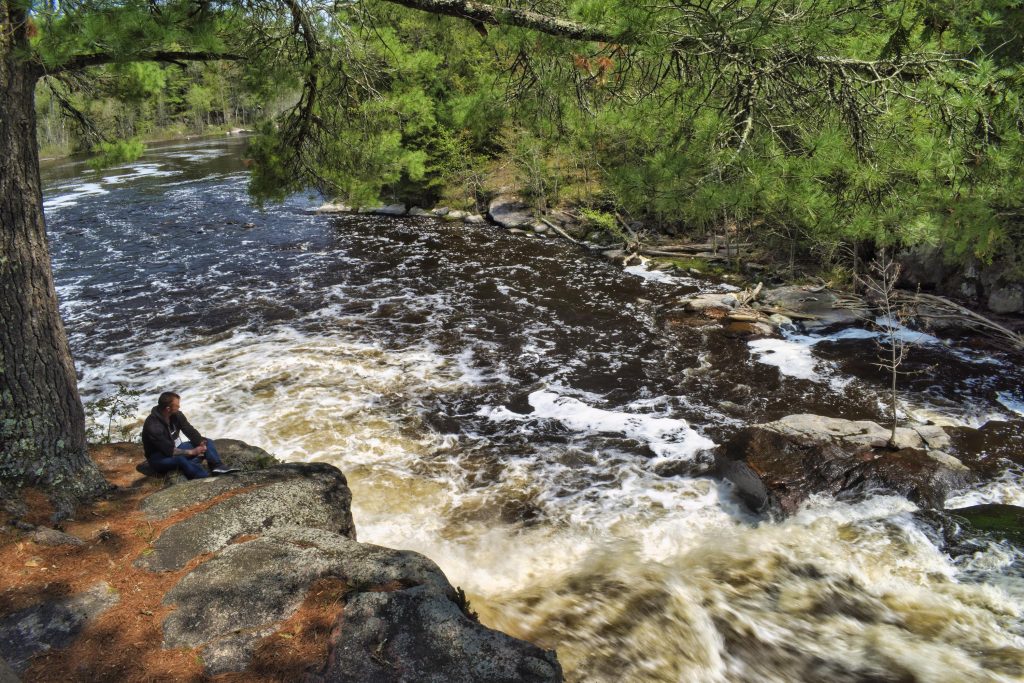
A Wisconsin Idea Seminar participant contemplates the Wolf River at Big Smokey Falls in the Menominee Reservation. Image credit: Marie Zhuikov, Wisconsin Sea Grant

This is the second (and final) story in a series about my weeklong trip around Wisconsin as part of the Wisconsin Idea Seminar. Part 1 described our experience on the University of Wisconsin-Madison campus learning about Ho-Chunk history. Read that story here. This part will describe the rest of the trip in general, focusing on a tour of the Green Bay Packaging Co.

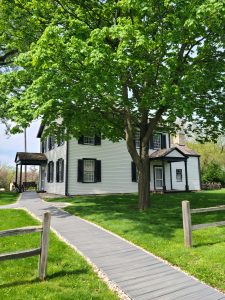
The Historic Indian Agency House in Portage. Image credit: Marie Zhuikov, Wisconsin Sea Grant

Continuing the first day of our tour, a Badger Bus took us to Portage, where we visited the Historic Indian Agency House, which is where the Ho-Chunk people came to collect their government allotments once they were displaced from their lands by settlers. Reading the names of the Native families on the outdoor plaques was a poignant reminder of this traumatic time in history.

Then we traveled to Appleton, where we took a walking tour of the town, learning about

Black history. When the area was first settled, some land and businesses were owned by Black people, but by the 1930s, the town was entirely white due to organized, unofficial harassment that drove Blacks away. That has thankfully turned around so much that there’s even a soul food restaurant in town, which is where we ate supper.

On Day 2, we drove to Green Bay where we toured the impressive Green Bay Packaging Co. There was a rumor floating around on the bus that this was the business that the Green Bay Packers football team was named after. Later, I discovered through my own research that this wasn’t true. The Packers were named after a meat-packing plant, which was one of their first sponsors. See, this Minnesotan really is learning about Wisconsin culture!

Green Bay Packaging makes paper from recycled materials. That paper is then used to make boxes. They don’t make the boxes on-site – they ship their paper elsewhere for that. Two years ago, they expanded their facilities on the same land by the bay. Much of the process is automated. Even so, the company employs more workers than before. In the early 1990s, this mill was one of the first in the world to become totally effluent free (zero discharge of wastewater).

We were led through the plant by Olivia Durocher, project development specialist, and Andrew Stoub, environmental manager. Durocher said that 50% of their recycled materials comes from “big box” companies like Target and Walmart and the other 50% comes from consumers. They produce about 550 tons of paper per year.
“Wisconsin has been a top producer of paper for a long time,” Durocher said. “We’re happy to have a hand in that.”

She explained that a paper fiber can be recycled seven times before it becomes too short to be used any more. That’s why other mills still use trees to make paper. “If you stopped introducing virgin fiber into the system, the entire country would run completely out of boxes in about six months or less. That’s why it’s important to continue to plant trees and use virgin fiber to produce kraft paper. It introduces that virgin fiber into the system. That’s why we can’t have all the mills be recycled mills,” Durocher said.

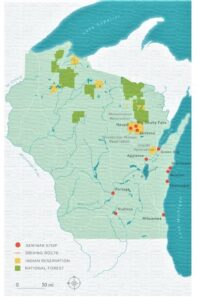
Wisconsin Idea Seminar stops. Image credit: University of Wisconsin-Madison

Stoub said the water used in the plant does not come from the bay. About half of the water is recycled from treated water the mill has already used and half comes from treated wastewater from the city of Green Bay. The company uses the methane gas produced by their wastewater digestor to feed their boilers instead of burning the gas off, which many facilities do. Plus, the gas fuels a generator that produces enough electricity to power the mill’s wastewater treatment plant. “It’s a pretty cool sustainable system,” Stoub said.

During our tour of the plant, most impressive to me was its automated 100,000-square-foot paper warehouse. According to Durocher, it’s the largest vertically stacked paper warehouse in the Western Hemisphere. It holds 8,000 rolls of paper, which is the equivalent of 26,000 tons of paper – about 22 days of inventory. No people are allowed in the warehouse because of the danger of a huge tower of paper falling on them. As you can guess, when they built the floor for the warehouse, they took pains to ensure it was totally level!

We were able to view the warehouse through indoor windows. The paper is moved around by four vacuum cranes (Konecranes), which each employ 14,000 pounds of suction. Compared to mechanical cranes, the vacuum cranes allow workers to store the rolls closer together and move them around faster. Paper from the warehouse is shipped out by rail and trucks. Alas, I don’t have any photos of the warehouse or the inside of the mill because we weren’t allowed to take them.

Stoub said you can tell that a box came from the company’s materials because it will have their logo on it.

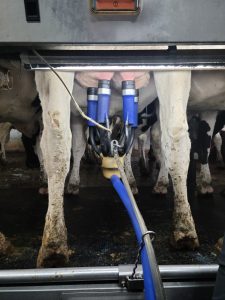
The business end of a cow at Soaring Eagle Dairy. Image credit: Marie Zhuikov, Wisconsin Sea Grant

Highlights from the rest of the five-day trip included a visit to the Menominee Reservation where we learned about their sustainable timber harvesting practices and sawmill operation. We also visited Big Smokey Falls on the Wolf River on the reservation, where we had a chance to get a feel for the land and contemplate what we’d learned so far. That day ended with a tea-making workshop led by Menominee Elder Bonnie McKiernan. We made a mixture that’s good for colds, with bee balm (which I have a ton of in my yard; I did not know it was edible), peppermint and mullein.

On Day 4, we visited Soaring Eagle Dairy in Newton, a woman-run business. I learned more than I ever wanted to know about how that industry runs. Their milk is used by Land-O-Lakes Inc.

During the final day, we took a walking tour of Milwaukee’s South Side and visited Escuela Verde, a charter school. The tour ended with an art project where we were able to reflect on our experiences.

Through it all, our bus driver Bob was with us. He literally held our lives in his hands, and we respected him greatly. He became a favorite among us.

I came away from the experience feeling more familiar with Wisconsin. This Minnesotan still has a lot to learn, but I feel a bit more confident in my knowledge base now.

The post A Wisconsin Idea Adventure: Part 2 first appeared on Wisconsin Sea Grant.

Original Article

Blog | Wisconsin Sea Grant

Blog | Wisconsin Sea Grant

https://www.seagrant.wisc.edu/blog/a-wisconsin-idea-adventure-part-2/?utm_source=rss&utm_medium=rss&utm_campaign=a-wisconsin-idea-adventure-part-2

Marie Zhuikov

I’m a born and bred Minnesotan. I’ve lived there almost my whole life. Sometimes, that can make working for Wisconsin institutions like Sea Grant and the University of Wisconsin-Madison challenging. While I am technically a UW-Madison employee, I live in Duluth, Minnesota, and my office is just across the border in Superior, Wisconsin. Although I’ve worked for Wisconsin Sea Grant 10 years, I’m not as steeped in my workplace’s culture and geography as I am in my home state’s.

Marie Zhuikov. Image credit: John Steffl.

This can lead to some interesting mistakes. One happened a few months ago when a co-worker said they grew up on Wisconsin’s Fox River. I only knew the part of the Fox that connects to Green Bay so, in the story I was writing at the time, I put that person’s birthplace near Green Bay. I was chagrined to learn she actually grew up near Oshkosh on a branch of the river 50 miles away from where I originally placed her.

I hate making mistakes in my stories. Even if it’s just during a draft. So, when I saw an announcement for the Wisconsin Idea Seminar in the UW employee newsletter, I jumped at the chance to apply.

The seminar is an annual five-day immersive study tour of Wisconsin culture and geography for UW-Madison faculty and staff. It’s designed so that participants:

  • Gain a deeper knowledge of the cultural, educational, industrial, social and political realities of Wisconsin
  • Learn firsthand about the social and cultural contexts that shape the lives of many UW students
  • See and experience the university’s connections to the state
  • Understand the public service mission of the university
  • Nurture an increased mutual understanding between the university and the people of Wisconsin

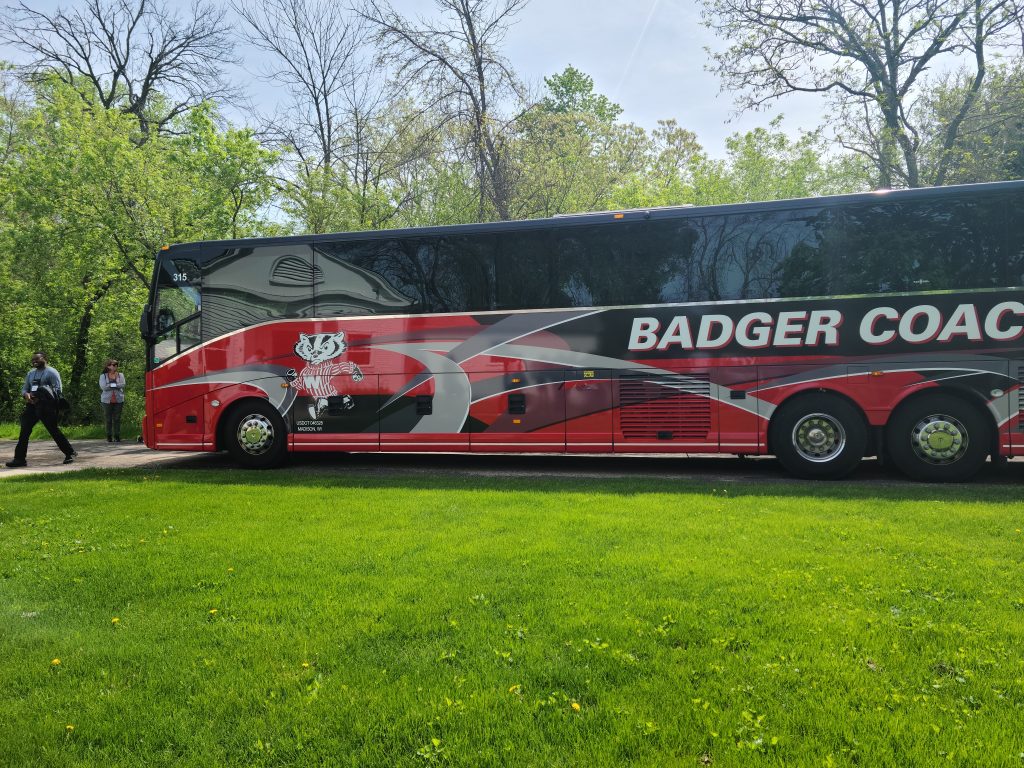
What this looks like in real life is about 40 people on a big red Bucky Badger bus riding around the state, talking to seminar participants and non-participants, diving into activities and drinking in the landscape. The theme this year was Forest + River, which was right up my alley as a water research storyteller who is also a Wisconsin geographically challenged person.

This post focuses on just one of our experiences during the seminar’s first day. I plan to write another post later about the rest of the trip and a visit to the Green Bay Packaging Plant, which makes recycled paper used in boxes.

The Wisconsin Idea tour bus. Image credit: Marie Zhuikov, Wisconsin Sea Grant

*

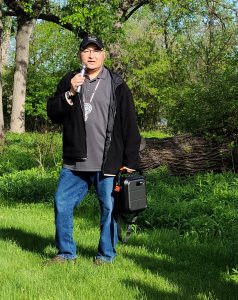
Our experience began on the Madison campus with a walking tour of Ho-Chunk sites. Amid a cacophony of spring birdsong, Bill Quackenbush, tribal historic preservation officer for the Ho-Chunk Nation, took us to several effigy mounds. These are ancient burial mounds formed in the shape of animals — birds, in the case of the two that we viewed.

Bill Quackenbush. Image credit: Marie Zhuikov, Wisconsin Sea Grant

The Madison campus is home to more of these ancient earthen monuments than any other university or college campus anywhere in North America, and probably the world. There are 38 burial mounds. At least 14 others have been lost to development. They are several thousand years old, perhaps as ancient as Egypt’s pyramids.

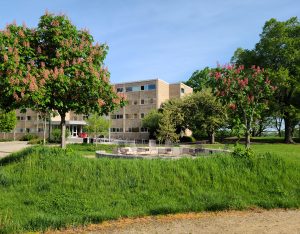
I learned something new right off the bat, mainly that there is a goose-shaped effigy mound right outside the Sea Grant office in Goodnight Hall. Granted, I don’t work on campus, but you’d think I would have heard something about that during my career here! Quackenbush said a Ho-Chunk village used to be where the office building is now located on the shores of Lake Mendota.

He explained how the Ho-Chunk are working to reclaim their culture. “These earth works are one small example of a portion of our life. We are no different today then we were back then. We humans like to take care of not only our babies and our children, but also our ancestors,” Quackenbush said.

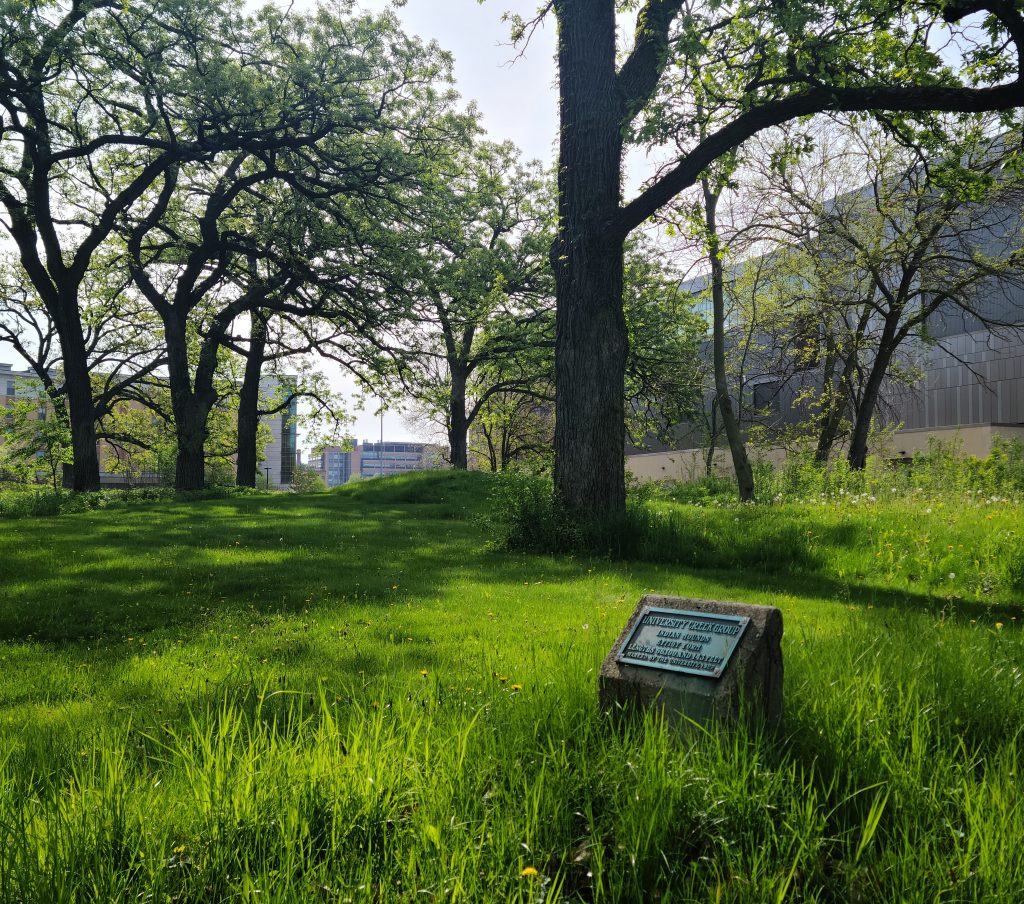
He criticized a stone marker on the mound not only for disturbing the site but for the text on it, which gives the impression that the mound is a thing of the past. “It isn’t a thing of the past at all,” Quackenbush said. “This is ever-present. It’s living and it’s here. Our ancestors are buried in this ground. They’re living, breathing things to us like that tree over there. Their bones have probably returned to the earth by now, but it’s the ground that is sacred to us.

Goodnight Hall, the home of Wisconsin Sea Grant on the UW-Madison campus. Image credit: Marie Zhuikov, Wisconsin Sea Grant

“However, I don’t want to be all doom and gloom. There’s a lot of good things that have come from protecting these mounds,” Quackenbush added.

The mound site was designated on the National Register of Historic Places a few years ago. The University is working to restore an oak savannah that used to exist there.

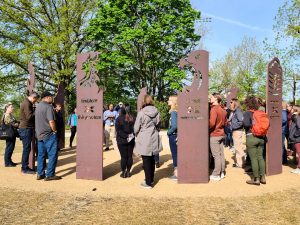
A short walk took us to the Ho-Chunk Clan Circle, a series of 12 metal sculptures that was dedicated earlier this year. Each depicts a clan symbol. Quackenbush said the circle represents the Ho-Chunk people as a whole.

Fittingly to my Sea Grant employment, I found myself standing near the Water Spirit sculpture. Quackenbush said the tribe was involved in the process of creating the circle and that the sculpture offers opportunities for him to meet and speak with more groups such as the Wisconsin Idea Seminar participants. He explained the various clan roles and how they fit into the tribe’s governmental system.

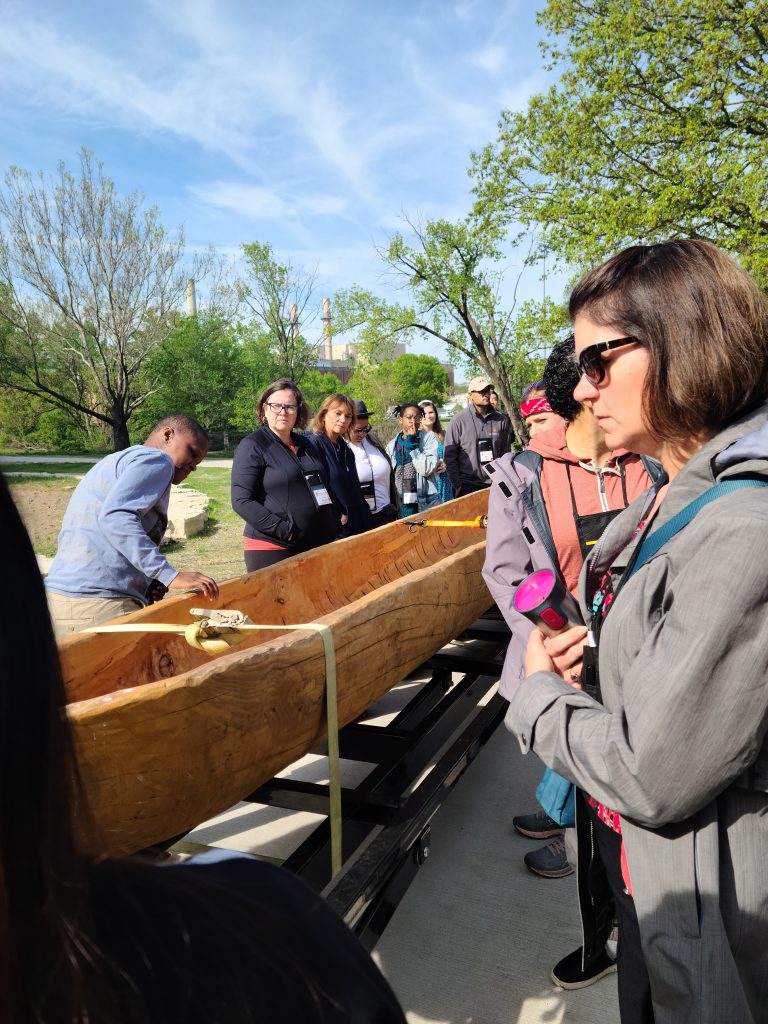
Next, the group was able to view a dugout canoe that Quackenbush built with the help of Ho-Chunk youth. They built it in much the same style as the ancient canoes that were recently discovered in Lake Mendota.

The Ho-Chunk goose effigy burial mound near the Sea Grant office. Image credit: Marie Zhuikov, Wisconsin Sea Grant

“This canoe doesn’t look very exciting, but the journey it’s been on is,” Quackenbush said. “When I saw that the historical society discovered the dugout canoes in the lake behind you as I was drinking my cup of coffee, it shot out of my nostrils! It was amazing to me because we had aspirations of putting one of them together.”

Wisconsin Idea Seminar participants tour the Ho-Chunk Clan Circle. Image credit: Marie Zhuikov, Wisconsin Sea Grant

He worked with Dane County to find a suitable cottonwood tree that was going to be removed for a trail project. The county delivered the tree to a youth education center, which is where Quackenbush and the students worked on it. Everything came together and, like the clan circle, the canoe is a great educational discussion piece.

Amy Rosebrough, interim Wisconsin state archeologist, joined us and described how the historic dugout canoes were found. She also detailed the significance of the new canoe. “These lakes remember. With the canoes, they’re telling the story of the Ho-Chunk presence here.”

Her office’s goal has been to work with Quackenbush and other partners to keep that story alive, “…To let people know that when they’re out there fishing, this isn’t something new. This is something that’s been going on for thousands of thousands of years. It’s not just the mounds, it’s this whole landscape. And to have Bill and his team come through with this new dugout, that was a wonderful thing – to sort of bring that back,” Rosebrough said.

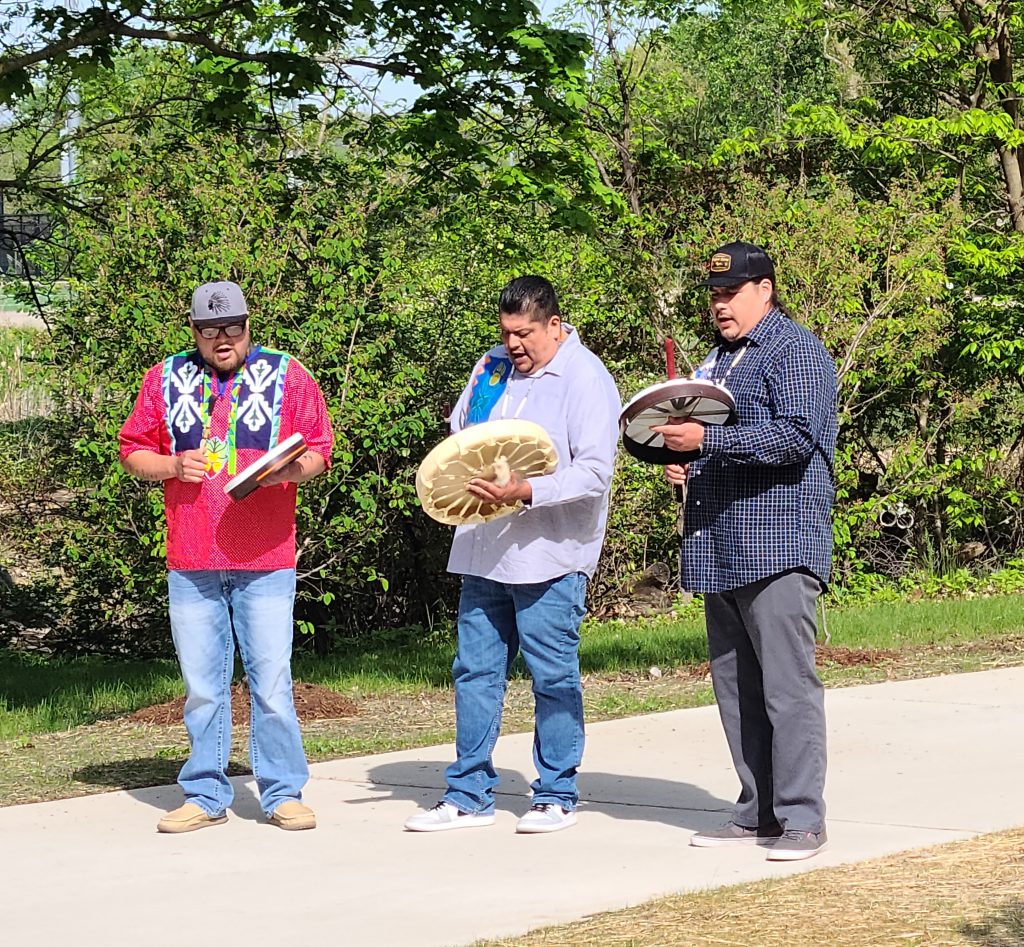
Our visit ended with a Ho-Chunk drum ceremony by the Iron Mound Singers. Listening to them was like hearing the heartbeat of the Earth. That is definitely not something I get to do every day in my job as a science writer. As we walked back to the bus to head to Portage and Appleton, I felt privileged to learn more about Ho-Chunk culture and the history of the land where the university stands.

Wisconsin Idea Seminar participants view a dugout canoe recently made by Quackenbush and Ho-Chunk youth. Image credit: Marie Zhuikov, Wisconsin Sea Grant

The Iron Mound Singers drum for Wisconsin Idea Seminar participants. Image credit: Marie Zhuikov, Wisconsin Sea Grant

The post A Wisconsin Idea Adventure: Part 1 first appeared on Wisconsin Sea Grant.

Original Article

Blog | Wisconsin Sea Grant

Blog | Wisconsin Sea Grant

https://www.seagrant.wisc.edu/blog/a-wisconsin-idea-adventure-part-1/?utm_source=rss&utm_medium=rss&utm_campaign=a-wisconsin-idea-adventure-part-1

Marie Zhuikov

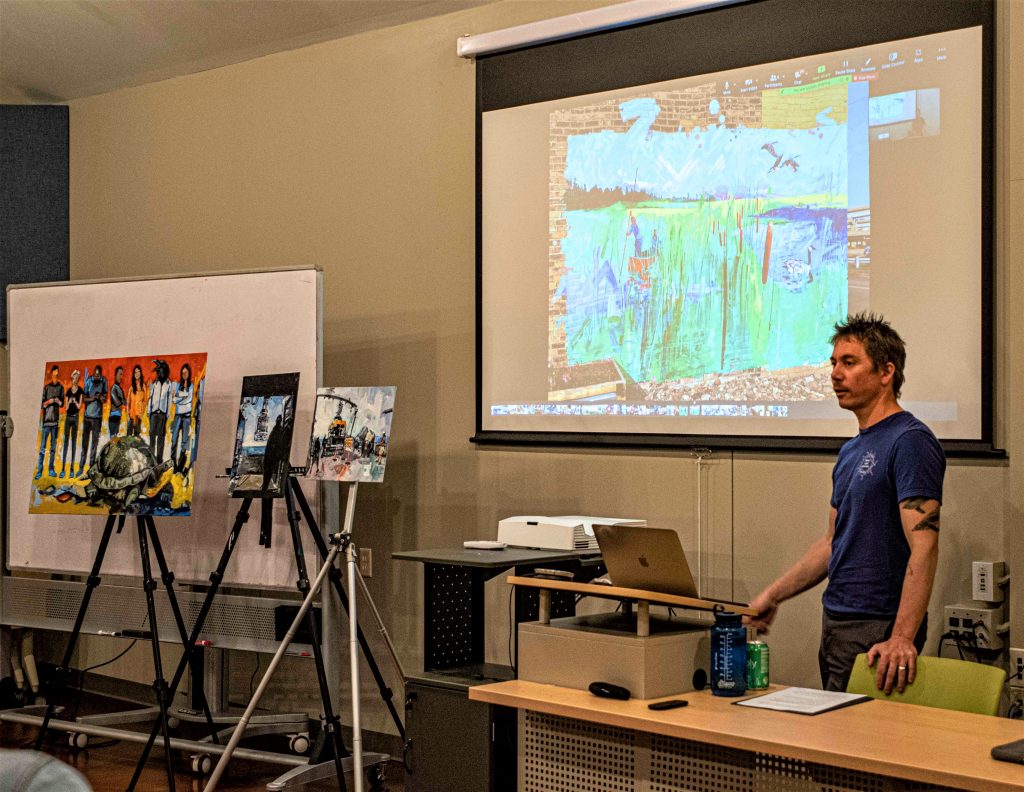
Adam Swanson discussed the intersections between art and science at the April River Talks. He also showed some of his artworks. Image credit: Michael Anderson

Local environmental science painter and muralist Adam Swanson described how he mixes art and science for the April River Talk, held at the Lake Superior Estuarium in Superior.

After he graduated from art school at the University of Minnesota Duluth, he got a job as a carpenter in Antarctica. He worked there periodically for a decade, helping research teams with their carpentry needs, including on their research vessels.

“In 2001, there were all these scientists doing amazing work that I had never heard of before. For instance, I didn’t realize that climate change was caused by human activity but everyone in Antarctica knew that,” Swanson said.

That really struck him. He was “just a working guy” but he admired the scientists’ focus and determination to see their projects through. When he returned to Minnesota, Swanson would paint “little snapshots” of Antarctica when he wasn’t working for pay. “They weren’t really informed by anything real – they were more imaginative or pretty.”

Eventually, he decided to start painting more seriously. “That’s when I started thinking more about the responsibility of scientists to communicate. When I thought about what I wanted to paint, I thought about my time in Antarctica and decided I wanted to be a bridge between scientists and the public,” Swanson said.

He discovered many local projects that deal with climate change, including one in Bovey, Minnesota. He wrote a grant to volunteer time there and paint what he experienced. For his artworks, Swanson takes photos and paints from those.

Swanson has also had the opportunity to visit the Great Lakes Toxicology and Ecology Division Laboratory in Duluth and other local research facilities.

“I was flying by the seat of my pants. I knew there were people (scientists) who would let me into their space because I was polite.” He also went aboard the Blue Heron research vessel, owned by the University of Minnesota Duluth’s Large Lakes Observatory. “I basically just wandered around on board. I wasn’t trying to be an expert. Just like in Antarctica,” Swanson said.

In 2008, Swanson was chosen for an artist residency for two weeks on the Research Vessel Falkor, which is operated by the Schmidt Ocean Institute and travels all around the world. They were studying organisms that live on methane and sulfur in thermal vents. His goal was to capture what was happening on the ship. His tiny studio was in the ship’s wet lab. “I would often have to move all my stuff if someone needed to pipette one thing into another thing,” he said.

Last summer Swanson mentored an artist at the University of Wisconsin’s Trout Lake Research Station in northern Wisconsin. “My student intern was from the Lac du Flambeau Tribe and my science partner worked for the department of natural resources. It was an awesome experience!”

He also paints on commission from photos, paints murals, and applies for grants for art experiences. Recently, he’s been working on a series of paintings of endangered animals in Minnesota. He juxtaposes them with images of people or human activities to show their interconnections and impacts.

“One reason art is a good communicator for science is because it can play around with different ways for people to connect with science. Maybe the moth doesn’t have the right number of legs, or the colors aren’t exactly right. But the artist has that prerogative. I’m not doing scientific illustration. I’m looking for art to push boundaries – push ideas around.”

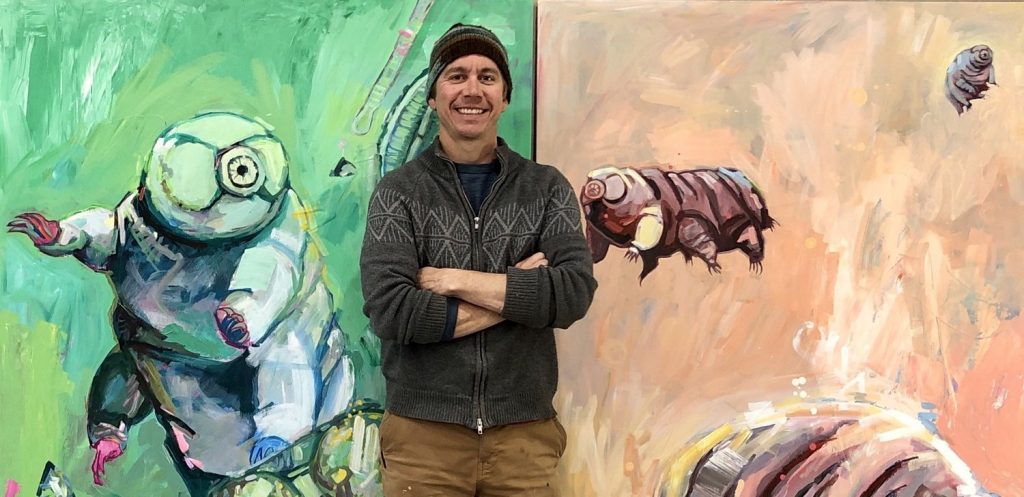
Adam Swanson stands in front of one of his murals that feature tardigrades. Submitted image.

Swanson has completed several murals with school children, taking their input on the subject matter and having them help with the painting. Other murals are on buildings in Superior, Duluth and Minneapolis. One is inside the Estuarium. Another, about wild rice restoration, is in West Duluth.

Tardigrades are one of Swanson’s recent favorite subjects. These microscopic animals live in diverse environments and are extremely durable. They are also known as water bears or moss piglets. Swanson said, “After coming off the endangered animal series, I wanted something more resilient.”

Swanson paints about 100 works per year. He tries not to make them too loaded with meaning. “I roll through ideas. I take some cool, interesting stuff, do as much research as I can, and then put it together.”

Currently, Swanson is working on a series of 10 large-scale pollinator paintings, which he plans to exhibit from 5-7 p.m., May 10, at the Duluth Art Institute (Lincoln Building).

Make a night of it — attend his open reception early, then come to the next River Talk, which will be held from 6-8 p.m., May 10, in-person at the Lake Superior Estuarium.  Steve Kolbe with the University of Minnesota Duluth’s Natural Resources Research Institute will discuss, “How and Where to Find Birds in the St. Louis River Estuary.”


The post Art as a Voice for Science first appeared on Wisconsin Sea Grant.

Original Article

Blog | Wisconsin Sea Grant

Blog | Wisconsin Sea Grant

https://www.seagrant.wisc.edu/blog/art-as-a-voice-for-science/?utm_source=rss&utm_medium=rss&utm_campaign=art-as-a-voice-for-science

Marie Zhuikov

Birding is the topic of the final River Talk of this season. The series will resume in fall. Image credit: Marie Zhuikov, Wisconsin Sea Grant

The River Talks will be held from 6-8 p.m. Wednesday, May 10 with “How and Where to Find Birds in the St. Louis River Estuary,” an in-person presentation at the Lake Superior Estuarium Confluence Room (3 Marina Drive, Barker’s Island in Superior) given by Steve Kolbe with the University of Minnesota Duluth’s Natural Resources Research Institute (NRRI).

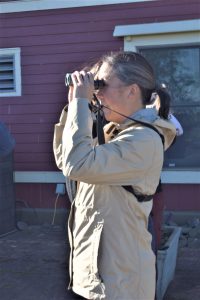
Come learn about where good locations are to see birds in the estuary. Participants will have the chance to view birds on Barker’s Island. Binoculars will be available for those who don’t have some to bring. 

This will be the final River Talks of the season until the series begins again in fall. For more information, visit the River Talks page: go.wisc.edu/4uz720.

The River Talks are sponsored by the Lake Superior National Estuarine Research Reserve and the Wisconsin Sea Grant Program.


The post How and where to find birds in the Estuary first appeared on Wisconsin Sea Grant.

Original Article

News Releases | Wisconsin Sea Grant

News Releases | Wisconsin Sea Grant

https://www.seagrant.wisc.edu/news/how-and-where-to-find-birds-in-the-estuary/?utm_source=rss&utm_medium=rss&utm_campaign=how-and-where-to-find-birds-in-the-estuary

Marie Zhuikov

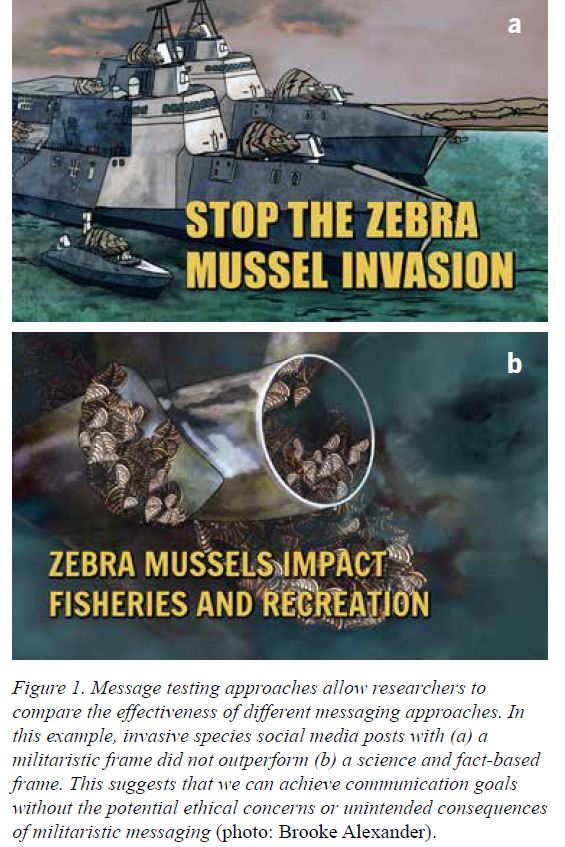
Natural resource management issues often boil down to people management issues. When it comes to lake management, people can be hard to predict. They may say one thing but do another. They may think they’re good environmental stewards even though some of their behaviors suggest otherwise. But to make meaningful progress in aquatic invasive species management issues, human behavior must be taken into account.
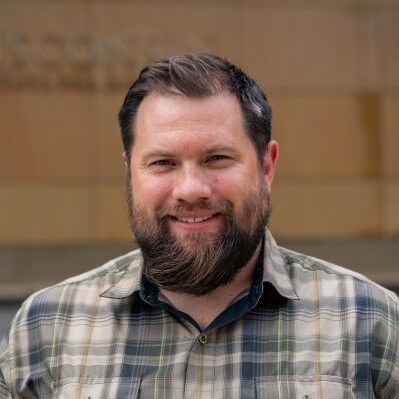
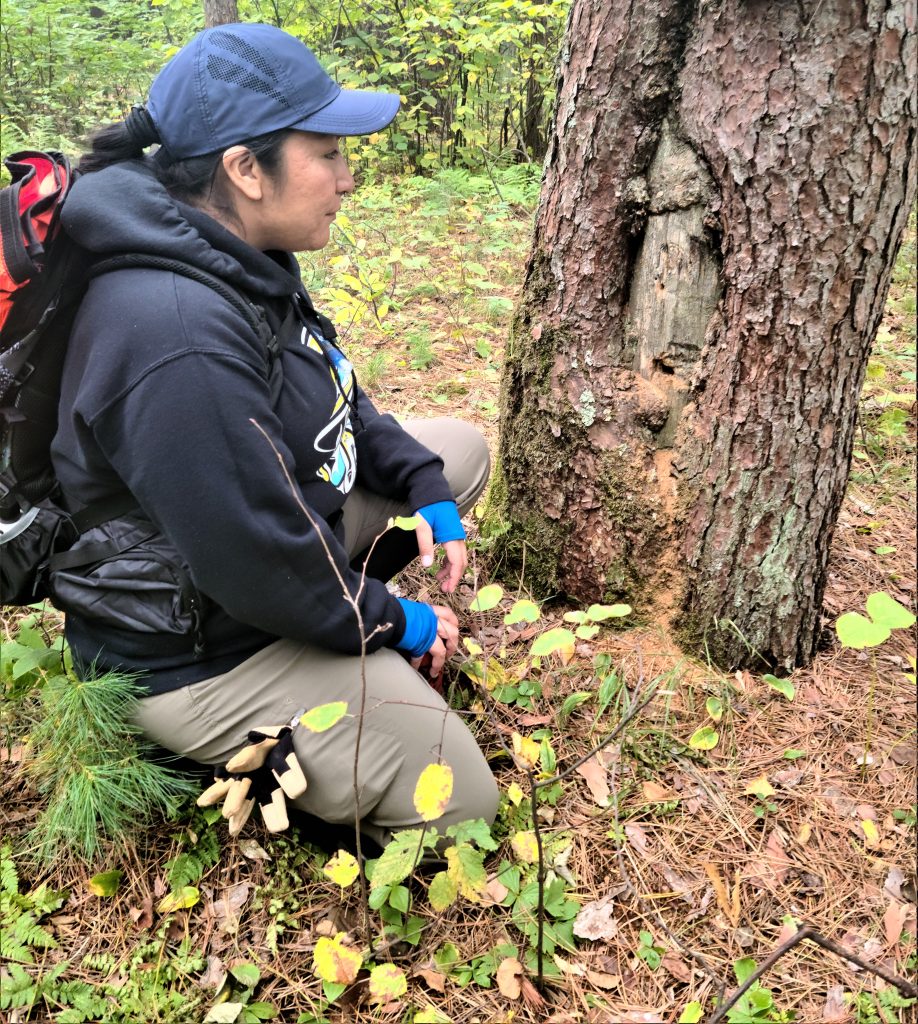
Intersections between natural and social science is the theme of a recent article written by Wisconsin Sea Grant’s Aquatic Invasive Species Outreach Specialist Tim Campbell and University of Wisconsin-Madison Associate Professor and Division of Extension Environmental Communication Specialist Bret Shaw. “Natural and Social Science Work Better Together for Managing AIS” appeared in the spring 2023 issue of “Lakeline,” published by the North American Lake Management Society.

The article outlines effective social science methods, including understanding target audiences, crafting better messages and addressing barriers to behavior change.

The post Aquatic invasive species management through people management first appeared on Wisconsin Sea Grant.
Original Article

Blog | Wisconsin Sea Grant

Blog | Wisconsin Sea Grant

https://www.seagrant.wisc.edu/blog/aquatic-invasive-species-management-through-people-management/?utm_source=rss&utm_medium=rss&utm_campaign=aquatic-invasive-species-management-through-people-management

Marie Zhuikov

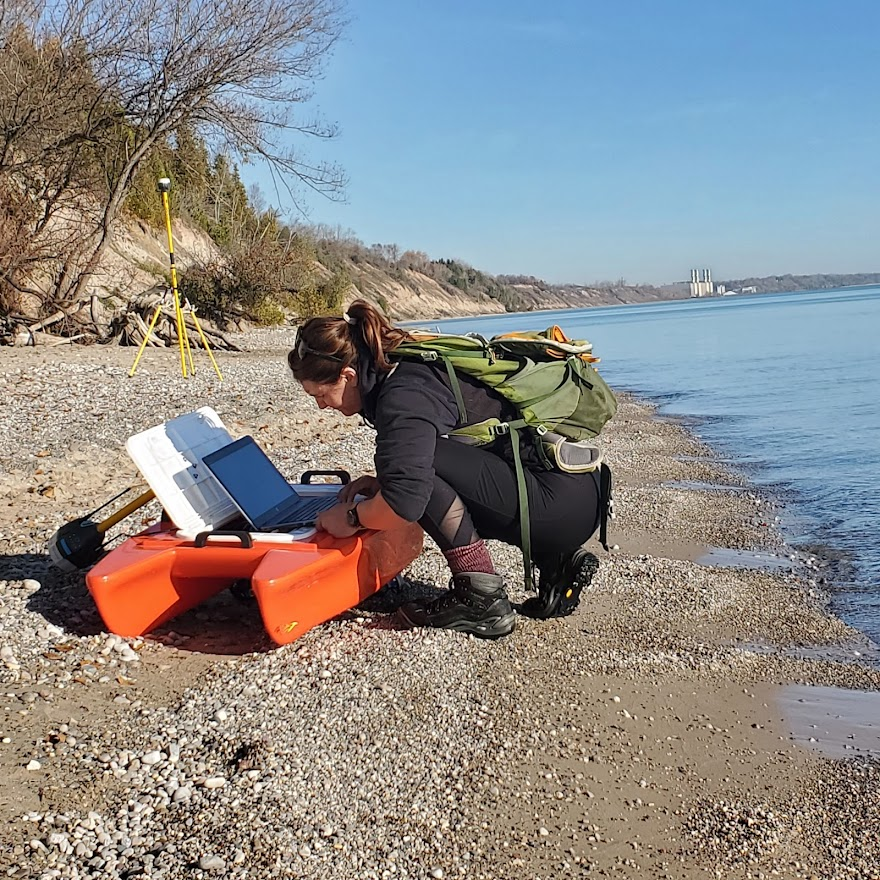
Chelsea Volpano works with a remote-controlled boat used to research erosion along Lake Michigan. Image credit: Chelsea Volpano, University of Wisconsin-Madison

High water levels in Lake Michigan since 2013 have caused erosion rates that are faster than usual, especially in 2020, when lake levels set records. This has created an urgent need to know more about erosion processes along and in the lake.

Lucas Zoet with the University of Wisconsin-Madison Department of Geoscience and his research team are looking at bluff erosion and sediment movement at two Wisconsin sites along Lake Michigan in a holistic way to better understand erosion rates and where the eroding sediment goes. This information will help guide shore protection and bluff stabilization processes and preserve beaches for recreation.

The two study sites are located just south of Port Washington and at Point Beach State Forest, which is farther north, near Two Rivers. The researchers chose those sites because they offer good representations of different erosion processes. The Port Washington site sits on a bluff, the Point Beach State Forest site is composed of sand dunes.

Lucas Zoet, University of Wisconsin-Madison. Submitted image

“The processes on these sites can be applied all over the place in Wisconsin,” Zoet said. “Lots of the bluffs we have are generally similar to those at the Port Washington site, composed of a mix of glacial tills and various lake deposits that are interbedded. So just understanding these processes at a base level, they should be generally applicable to more or less everywhere.”

The project’s holistic approach is unique. “The real strength of this project is that it doesn’t break the whole system up into little chunks, like we study this part and then we don’t know how it works because it’s in isolation from this other part. Instead, we’re trying to look at the whole continuous system, from what’s happening onshore, to what’s happening on the beach, to what’s happening in the nearshore over multiple years. We can study this on a representative timescale. Not just in a week or a month, but over seasons, which we know is such a big player in the Great Lakes region,” Zoet said.
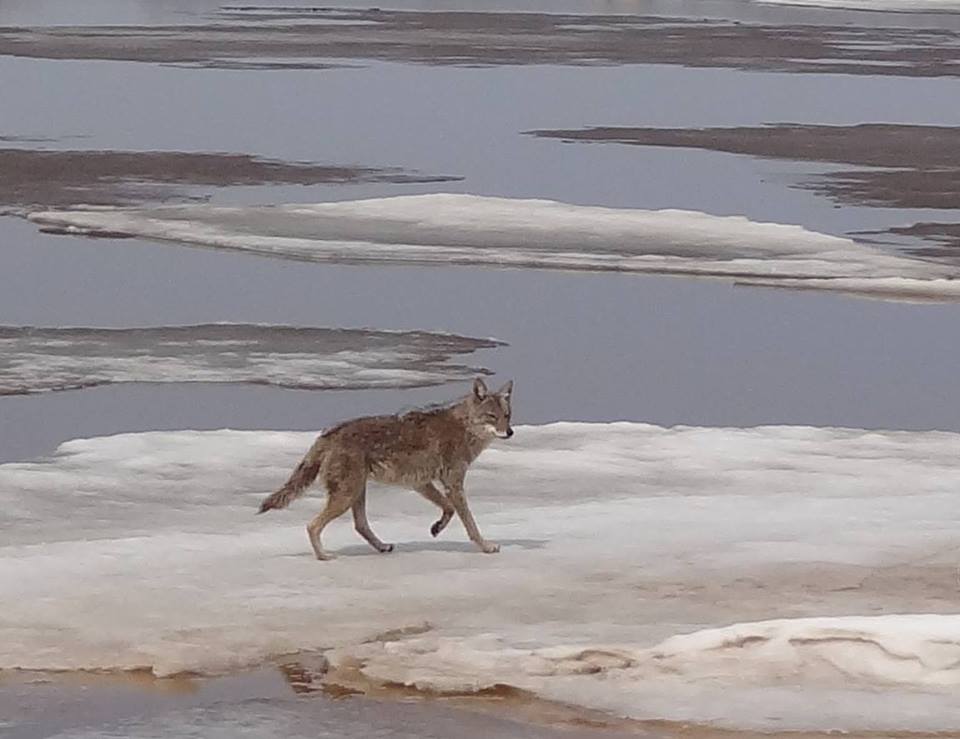
Compared to the well-studied processes that happen on marine coastlines, winter is the season that makes erosion issues in the Great Lakes distinctive. Zoet said that cold weather impacts erosion differently.

“We have this season where the bluffs freeze solid, the shore ice forms – all these different components that drastically alter sediment transport. You don’t see that if you’re looking at beaches in North Carolina or Oregon,” Zoet said.

To study the onshore section, Zoet, J. Elmo Rawling with the Wisconsin Geological and Natural History Survey and Ph.D. student Chelsea Volpano, use drones and trail cams to gather data. To study the beach, Volpano conducts wading surveys. For these, Zoet said Volpano carries a staff with a GPS unit on it to measure lakebed elevation.

“She walks out into the water up to about her waist, about a meter deep and just does that over and over. So, with that, she can connect the onshore component to the offshore component for this continuous map that’s called topo-bathy,” Zoet said. This type of field work is uncommon. “She might be one of the only people to do these wading surveys in near-freezing waters, repeatedly throughout the years,” Zoet added.

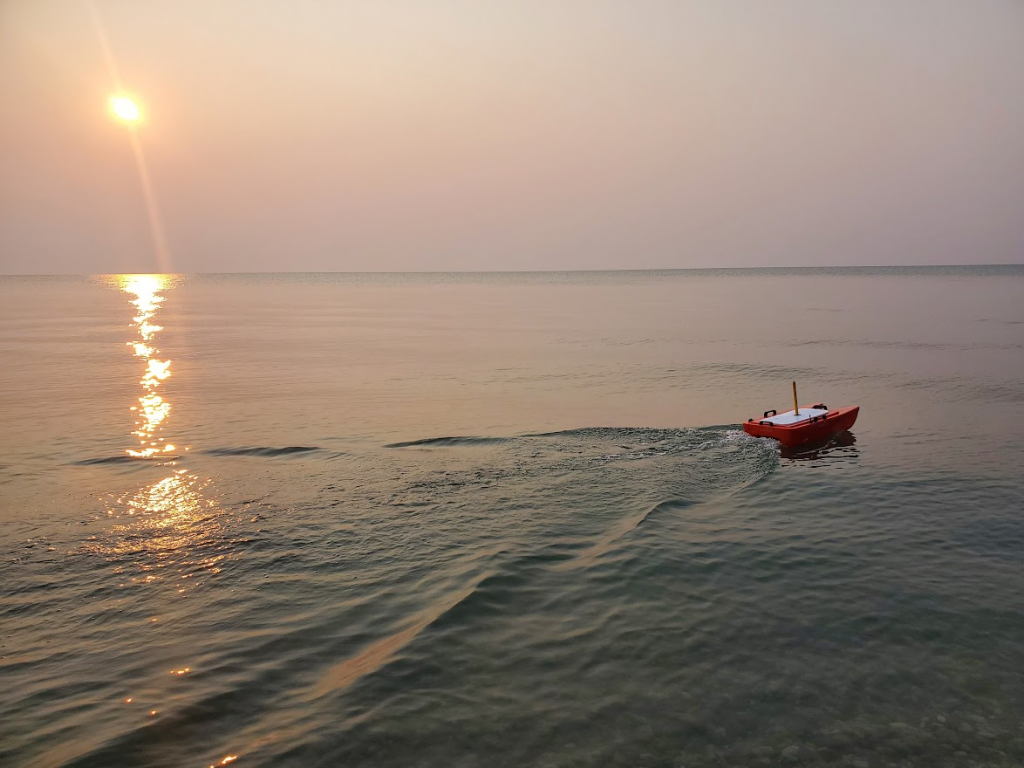
To study the nearshore area, the team uses a medium-sized remote-controlled boat that contains an instrument that measures the elevation of the lakebed for a full 3D map of the system. By repeating these measurements over time, the team can assess how the lakebed is changing and where the sediment is going.

(Drone footage by the research team of a landslide area along Lake Michigan.)

One aspect of communicating the project involves Great Lakes Quests. These are story maps compiled by Justin Hougham, University of Wisconsin-Madison, and Sea Grant. The Port Washington site is already part of the Quest database, but the Point Beach State Forest isn’t, and will be added.

The project will also be communicated through public workshops for educators and property owners along Lake Michigan who are concerned about coastal erosion. “We’ll do a walk of the terrain with them and we’ll probably bring a couple of the instruments we use, like the drone and the remote-controlled boat,” Zoet said. The first workshop is planned for September 2024.

Zoet has a long-standing working relationship with the College of Menominee Nation in Wisconsin. He’s currently helping design the college’s new geoscience program. Faculty members at the college plan to recommend students who could help work on the story maps for the project and computer mapping.

Summing up this multifaceted project, Zoet said, “In the end, I think we’ll learn a lot about the processes, but we’ll also learn a lot about how to better advise coastal managers, county managers and parks managers.”

The research team uses a remote-controlled boat to measure the elevation of the lakebed along Lake Michigan. Image credit: Chelsea Volpano, University of Wisconsin-Madison

The post Gaining a big picture of bluff erosion and sand movement along Lake Michigan first appeared on Wisconsin Sea Grant.

Original Article

News Releases | Wisconsin Sea Grant

News Releases | Wisconsin Sea Grant

https://www.seagrant.wisc.edu/news/gaining-a-big-picture-of-bluff-erosion-and-sand-movement-along-lake-michigan/?utm_source=rss&utm_medium=rss&utm_campaign=gaining-a-big-picture-of-bluff-erosion-and-sand-movement-along-lake-michigan

Marie Zhuikov

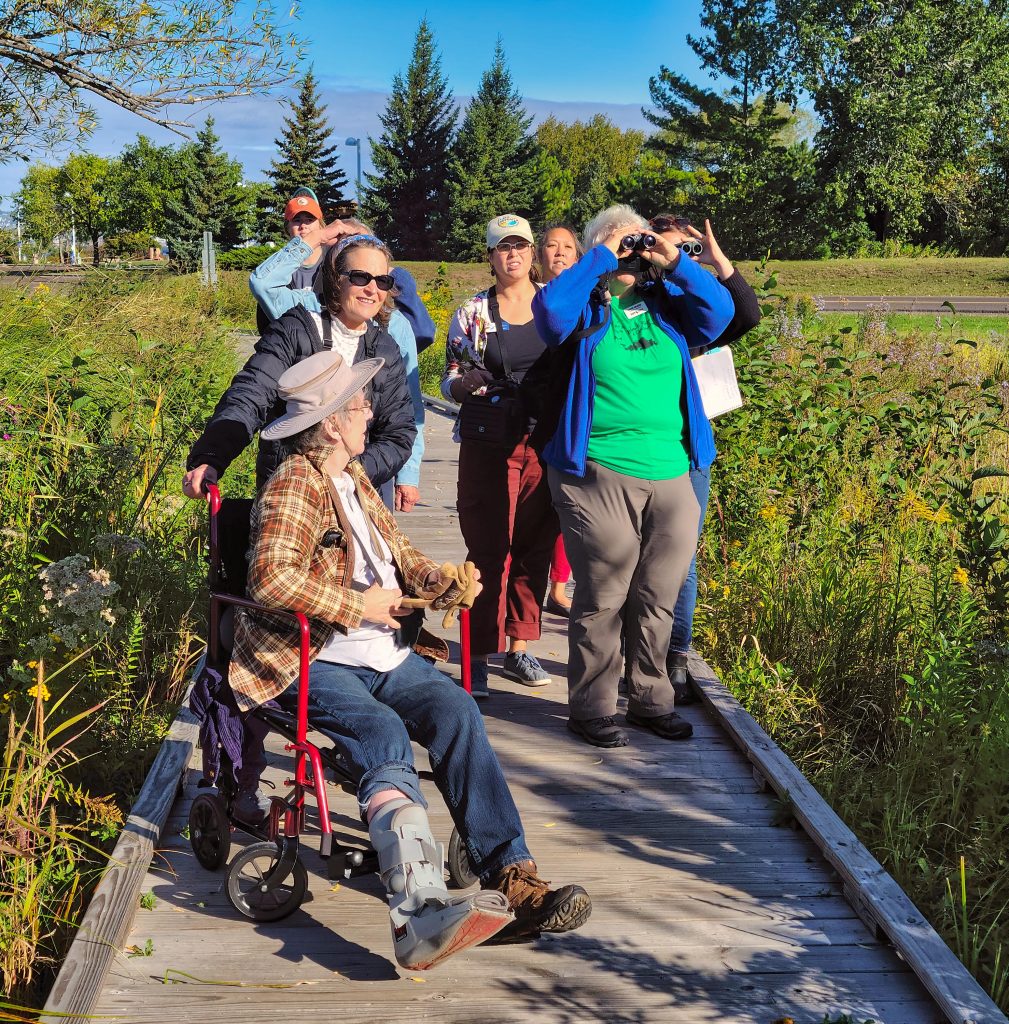
Participants of an accessible birding event spot birds on Barker’s Island in Superior, Wisconsin. Image credit: Marie Zhuikov, Wisconsin Sea Grant

All are invited to attend the first in a series of three events designed for birders of all skills and abilities. Join “Everyone Can Bird: Spring Arrivals,” 9:30-11:30 a.m., Saturday, May 6, at Boy Scout Landing Public Water Access, 11 Commonwealth Ave., Duluth. 

Designed with accessibility in mind, the event will provide American Sign Language interpretation, stationary birding options, binoculars and spotting scopes for use. Expert birding guides will lead discussion and aid observation. The Friends of the Lake Superior Reserve, Hawk Ridge, Lake Superior Reserve, Wisconsin Sea Grant, and the Minnesota Land Trust are hosting the “Everyone Can Bird” series.

Spring is a great time to spot waterfowl, tree sparrows and bald eagles along the St. Louis River as some birds arrive or travel through after winter. Come and observe which feathery friends await. Light refreshments will be provided. 

In addition to the May 6 event, “Everyone Can Bird” opportunities will be held Aug. 2 at Barker’s Island in Superior, and Oct. 14 at Hawk Ridge in Duluth. The series builds on a previous accessible birding event hosted by the same partners that took place last September on Barker’s Island. 

Registration is encouraged but not required. Learn more or register at bit.ly/4331le7.These activities are designed with access in mind. People who would like to request additional accommodations should email Luciana.Ranelli@wisc.edu or call Luciana at 715-399-4085 at least 10 days before the event.

Boy Scout Landing Public Water Access is a collaborative project of the city of Duluth and Minnesota Department of Natural Resources and is one of the public ways to access the St. Louis River freshwater estuary. This “Everyone Can Bird” event occurs the weekend before fishing opener.


The post Everyone can bird, first of three accessible birding events first appeared on Wisconsin Sea Grant.

Original Article

News Releases | Wisconsin Sea Grant

News Releases | Wisconsin Sea Grant

https://www.seagrant.wisc.edu/news/everyone-can-bird-first-of-three-accessible-birding-events/?utm_source=rss&utm_medium=rss&utm_campaign=everyone-can-bird-first-of-three-accessible-birding-events

Marie Zhuikov

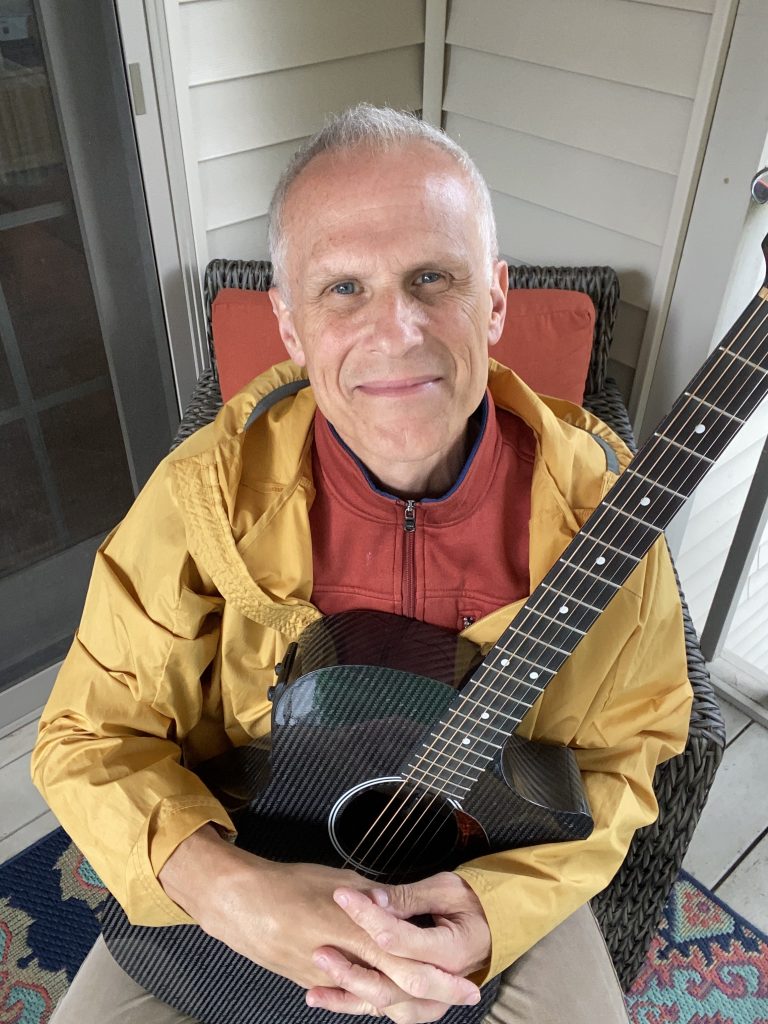
Musician Peter Mayer. Submitted photo

I recently attended a concert by Minnesota musician Peter Mayer and another musician. In case you don’t know, Mayer is known for his environmentally themed songs about interconnectedness and the human journey. He has produced 11 albums over 20 years and has received many artist fellowships.

Mayer wrote a song that’s a favorite of mine called “Ocean Mary.” It’s about a woman who “becomes” the ocean from touching a stream near her home. While Mayer didn’t play that song during his recent concert, I found myself thinking about it and wishing someone would write lyrics for a similar song about the Great Lakes.

Gradually, I had the audacity to realize that maybe I could help bring such a song into being if I tweaked the “Ocean Mary” lyrics a little. So, I did! Here’s the result, used with Mayer’s gracious permission. We thought you might enjoy it as a Sea Grant offering for U.S. National Poetry Month.

Great Lakes Julie

There’s a road in a river town
And on that road is Julie’s home
By her house is a deep ravine
Running there is a magic stream
Laughing over sand and rocks
It runs the length of Julie’s block
Another mile to the riverside
And a hundred more to the Great Lakes wide

Now, down in that ravine one day
By the water, Julie lay
Put her hand in the shallow stream
And Julie had a magic dream
She imagined that, inside her, stirred
All the waters of the Earth
Every puddle, every wave
And every one of the five Great Lakes

She could feel the fishes roam
In her fingers and her toes
And in her chest, the Keweenaw Current flows

Now, ever since her dream that day
People say that Julie’s changed
But they sympathize when they think
It must be strange to be the Great Lakes
She senses when the salmon swim
And waterspouts lick her skin
Canada tickles her left arm
And the moon above tugs her heart
Her front is Duluth, her back Oswego
She recollects the glaciers’ decline
Rip currents run up her spine
And lightning tingles when it strikes

She can feel the fishes roam
In her fingers, in her toes
And in her chest, the Keweenaw Current flows

And all this happened, so it seems
Because of Julie’s magic stream
But some will say that ponds and wells
And even rain can cast a spell
And every water drop you ask
Tells a tale of Great Lakes vast
So be careful when you take a drink
There’s magic in the kitchen sink!

The post Great Lakes Julie first appeared on Wisconsin Sea Grant.

Original Article

Blog | Wisconsin Sea Grant

Blog | Wisconsin Sea Grant

https://www.seagrant.wisc.edu/blog/great-lakes-julie/?utm_source=rss&utm_medium=rss&utm_campaign=great-lakes-julie

Marie Zhuikov

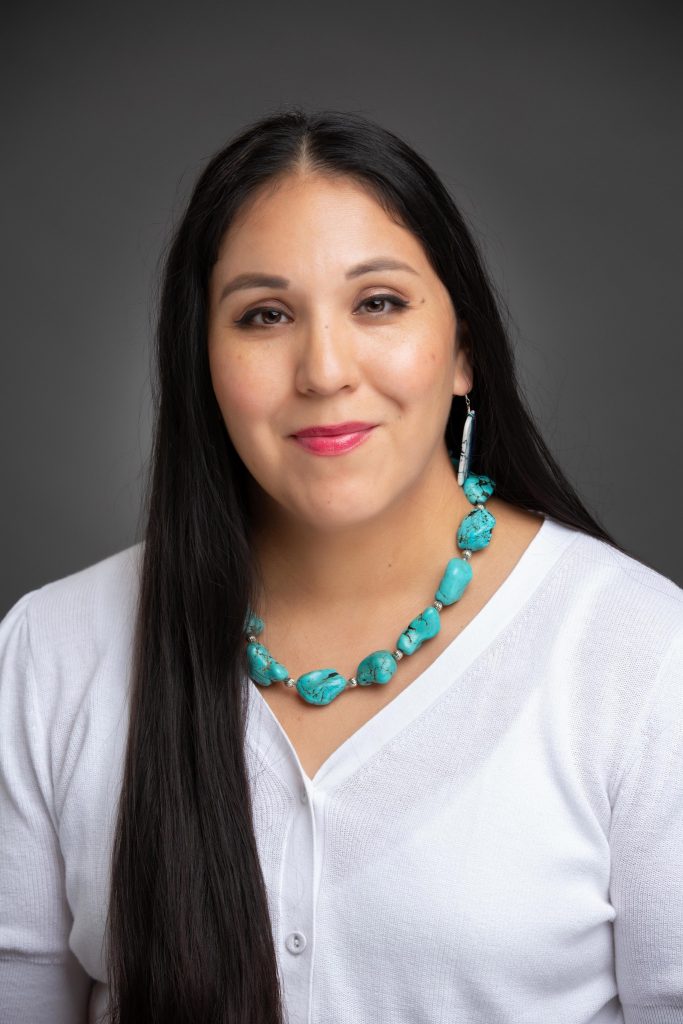
Margaret Ellis, First Nations Graduate Assistant, Wisconsin Sea Grant. Submitted photo.

Margaret Ellis is the latest person to fill the First Nations Graduate Assistantship with Wisconsin Sea Grant and the University of Wisconsin-Green Bay’s Cofrin Center for Biodiversity. Ellis has all the qualifications that look good on paper, plus others that are just as meaningful.

Ellis has a master’s in global Indigenous nations studies with an environmental focus from the University of Kansas and is working toward a Ph.D. in education at UW-Green Bay in First Nations entrepreneurial and small business operations.

“I have the skills; I have the knowledge. My master’s degree was years ago, but you know, I’ve continued to live my life in a certain way that reflects a responsibility to earth and water,” Ellis said.

She also has connections to the Wequiock Creek Natural Area, a 76-acre property with forests, wetlands and prairie she will work on along the lower bay shore area of Green Bay. The area is being restored and is culturally significant to the Oneida, Potawatomi, Ho-Chunk and Menominee nations. Ellis, a member of the Oneida Nation, has been visiting Wequiock Creek since she was a child.

“It was a free place to go and it was beautiful,” she said. “There’s a little waterfall there and so my family would always go there to picnic or just walk around. I was excited to find that connection to the project. I want to bring a voice back to that land and reconnect those nations with the Wequiock area.”

In addition to continuing the tradition of organizing a spring tobacco blessing, Ellis will be helping the Cofrin Center to develop interpretive signage and plant signage featuring Indigenous viewpoints and language. “It’s really about supporting restoration efforts for the natural area and ensuring that the Indigenous knowledge and voice are represented by all the nations that once used the land,” she said.

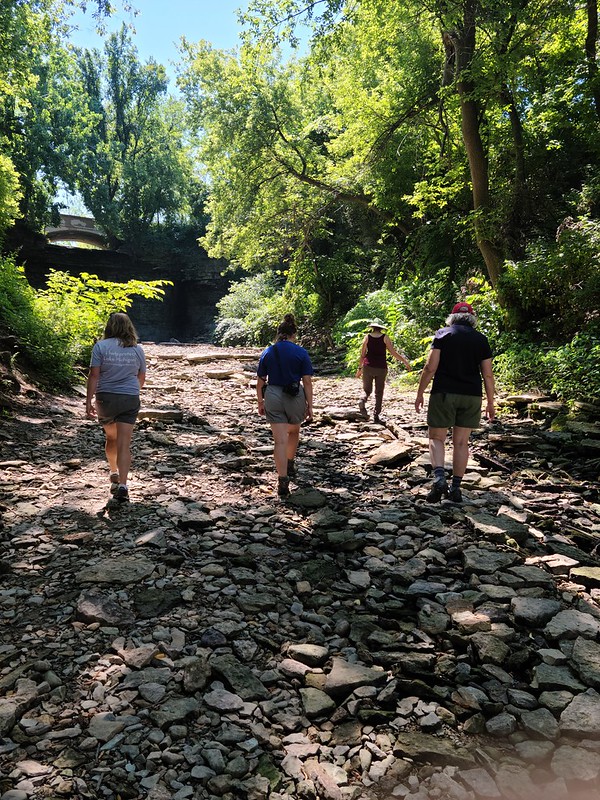
Wisconsin Sea Grant staff members walk the dry bed of Wequiock Creek. Image credit: Marie Zhuikov, Wisconsin Sea Grant

In between her degrees, Ellis co-founded Kenco Tribal Marketing Initiative, a full-service marketing and procurement agency serving tribal businesses, plus she owns Mirax, LLC, an apparel business for nonprofits and Native nations. For her Ph.D. dissertation research, she is building off this to create a small business model that is based on the Oneida Thanksgiving Address. Ellis explained that the address gives thanks to all the elements that are on Earth and in the cosmos – water, the sun, plants and the animals. “I want to support small businesses in creating something that keeps those elements in mind. It’s all about sustainability and conscious consumerism,” Ellis said.

Through her business success, academic achievements, and community grassroots efforts Ellis achieved the National Center for American Indian Enterprise Development 40 under 40 Award, which recognizes Native American citizens for outstanding leadership and community contributions.

Julia Noordyk, Wisconsin Sea Grant water quality and coastal communities specialist, is Ellis’s supervisor. She’s thrilled that Ellis accepted the position.

“Margaret is such an impressive person. She has a lot of positive energy that she’s willing to share. She’s determined to bring the voices of Indigenous women to the table and integrate business practices that protect water resources. I am hopeful that through this position, Sea Grant can help support her academic and professional goals,” Noordyk said.

Ellis recently posted an announcement about her Sea Grant graduate assistantship on social media. She said, “The post just went crazy! I had so many shares, comments and likes. It made me think it’s a sign that I’m in the right place.”

The post Margaret Ellis: Bringing a voice back to the land first appeared on Wisconsin Sea Grant.

Original Article

News Releases | Wisconsin Sea Grant

News Releases | Wisconsin Sea Grant

https://www.seagrant.wisc.edu/news/margaret-ellis-bringing-a-voice-back-to-the-land/?utm_source=rss&utm_medium=rss&utm_campaign=margaret-ellis-bringing-a-voice-back-to-the-land

Marie Zhuikov

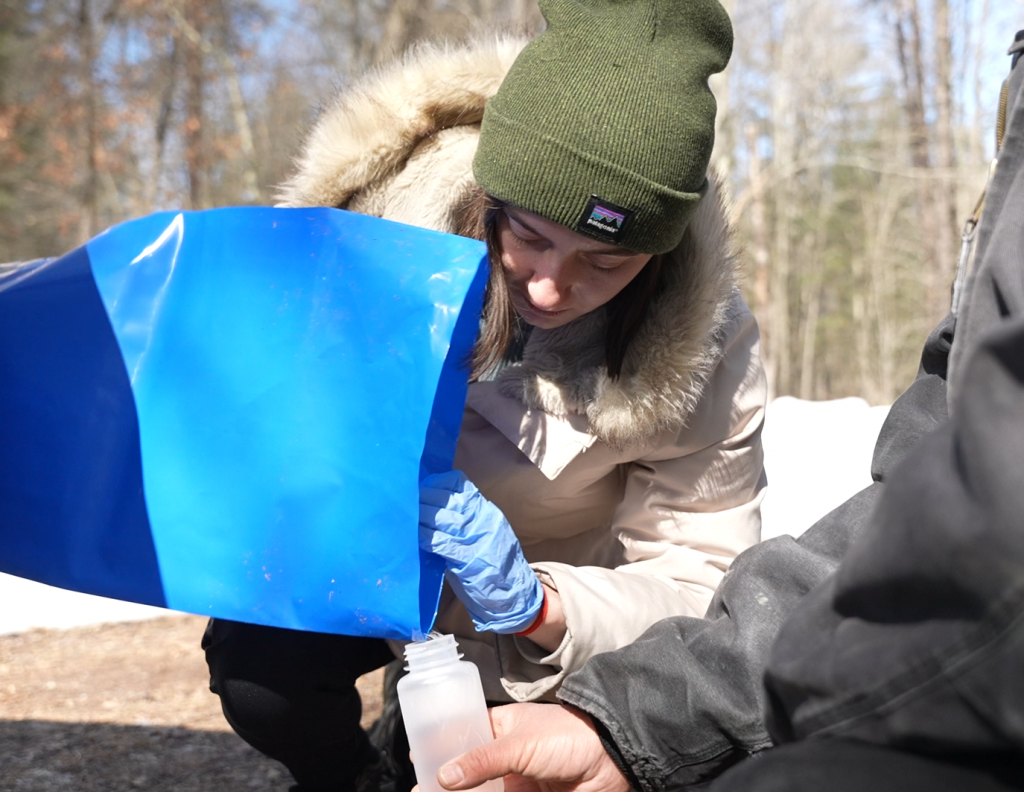
Eve Muslich, University of Wisconsin-Madison, pours maple sap from a collecting bag into a bottle for testing for PFAS. Image credit: Bonnie Willison, Wisconsin Sea Grant

April 3, 2023
By Marie Zhuikov

When Jonathan Gilbert, director of biological services with the Great Lakes Indian Fish and Wildlife Commission, received a report about levels of PFAS (per- and poly-fluoroalkyl substances) in wolves taken during the 2021 hunting season in Wisconsin, he was flummoxed. The scientific report contained terms and measurements that he, even as a biologist, didn’t understand. Gilbert’s quest for answers led to a larger project that is testing maple syrup, walleyes and lake water for PFAS in areas of the Midwest where Ojibwe tribal members harvest food.

During the wolf season, hunters volunteered their wolf remains to GLIFWC for PFAS testing. Gilbert said about 40% of the wolves had detectable levels of these chemicals. He was given Gavin Dehnert’s name as someone who could help answer his questions about the PFAS report. Dehnert, an emerging contaminants scientist, specializes in PFAS. Dehnert works for Wisconsin Sea Grant, a sister agency to the University of Wisconsin Water Resources Institute (WRI).

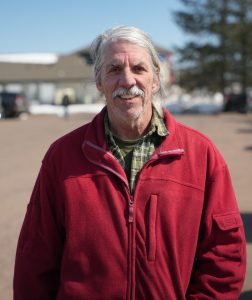
Jonathan Gilbert, Great Lakes Indian Fish and Wildlife Commission. Image credit: Bonnie Willison, Wisconsin Sea Grant

“So, I called him up and we had a nice conversation and he answered all my questions and educated me quite a bit on this,” Gilbert said.

Gilbert needed to present the wolf data to the Voigt Intertribal Task Force – a group composed of 10 of the 11 Ojibwe tribes that harvest from Ceded Territories in parts of Minnesota, Wisconsin and Michigan. The task force ensures safe harvest limits and is advised by GLIFWC. Gilbert invited Dehnert to attend the meeting.

Dehnert said, “We spent probably two to three hours just listening to the questions they had, concerns they had – big questions they were really hoping to answer.” Those questions involved PFAS levels in fish, wild rice, and maple syrup and other things tribal members harvest on a regular basis.

“Gavin kept saying, ‘Well, we don’t know, we don’t know.’ But he took what he heard there, and he wrote up a grant proposal to test the waters in rice lakes and in walleye lakes, and to test the sap of maple trees. That’s exactly what the tribes were telling him they were really concerned about,” Gilbert said.

The three-year tribally driven project, “Quantifying PFAS bioaccumulation and health impacts on economically important plants and animals associated with aquatic ecosystems in Ceded Territories,” was recently funded by the U.S. Geological Survey’s Water Resources Research Act Program, the same program through which WRI is funded.

The project has three goals: 1) Assess aquatic environments for PFAS contamination in the Ceded Territories, 2) Determine the accumulation of PFAS in different plants and animals and 3) Understand the health impacts from PFAS exposure. In addition to Dehnert and Gilbert, the project involves Emily Cornelius Ruhs with the University of Chicago, Sean Strom with the Wisconsin Department of Natural Resources, and Christine Custer and Robert Flynn with USGS.

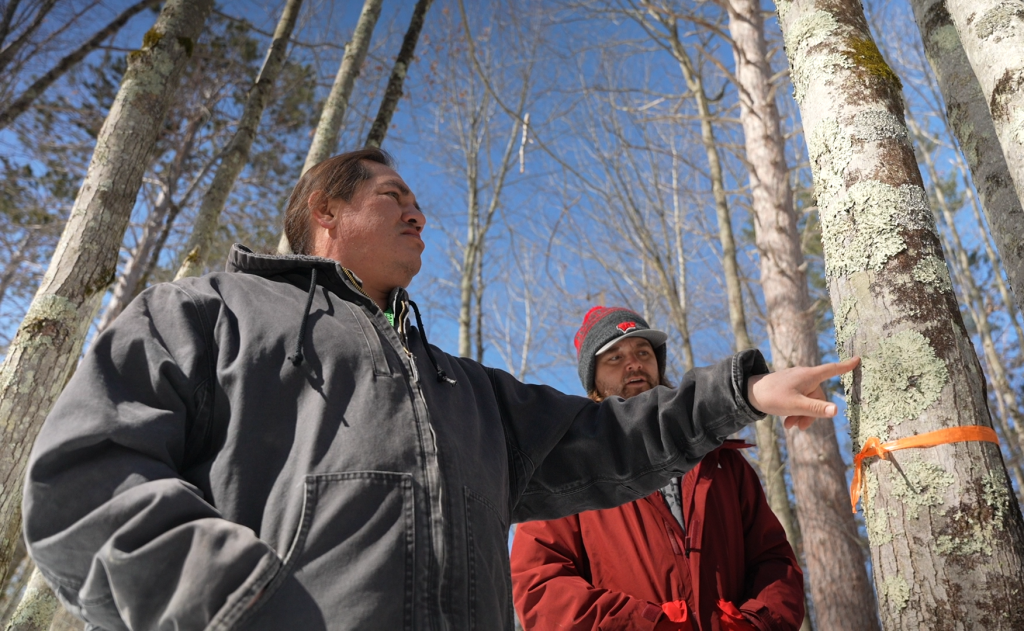
“Zhewaab” Reggie Cadotte, Native American Studies Faculty and Cultural Coordinator, Lac Courte Orielles Ojibwe University, and Gavin Dehnert, Wisconsin Sea Grant, inspect a maple tree for sap sampling on Lac Courte Orielles tribal land in northern Wisconsin. Image credit: Bonnie Willison, Wisconsin Sea Grant

Dehnert said that part one of the project will explore lakes where there’s high harvests of walleye and other fish species and wild rice in Ceded Territories. Researchers will look for the presence of PFAS and determine the levels.

Maple trees were tapped for maple sap collection on Lac Courte Orielles tribal lands to determine levels of PFAS. Image credit: Bonnie Willison, Wisconsin Sea Grant

Part two involves understanding the bioaccumulation of PFAS in harvestable goods. “If we know that it’s in the water source where these walleye or wild rice are living, we want to be able to have some sort of correlation between how much PFAS is in the lake water and then how much is then getting into the fish and wild rice,” Dehnert said. Gilbert stressed that they don’t know how much PFAS moves from the water into fish and plants. They will also test vats of maple sap harvested by tribal members.

Part three will look at impacts on organisms that live in the aquatic environments, focusing on tree swallows. This part, led by Ruhs, will explore how PFAS can impact the immune function of tree swallows in different life stages, from nestlings to adults. The swallows are considered an indicator species for contaminated water because they feed near their nesting area almost solely on aquatic insects. Researchers will take blood samples from the birds and look at white blood cell count and antibodies.

Part one will begin this spring with sampling of maple sap and lake water in 25 lakes.

Dehnert is looking forward to the project.

“It’s not focusing on just science for science. There’s a true actionable side to it. That was why we chose the plants and animals that were highly harvested by these tribes. If you’re finding high concentrations of PFAS in these types of harvestable goods, they are going to disproportionately impact the tribes because they are relying on them for their sustainability and food consumption. Sometimes in science people might look at different plants and animals that don’t really have a cultural tie. So that, to me, has always been why we got so excited about this project,” he said.

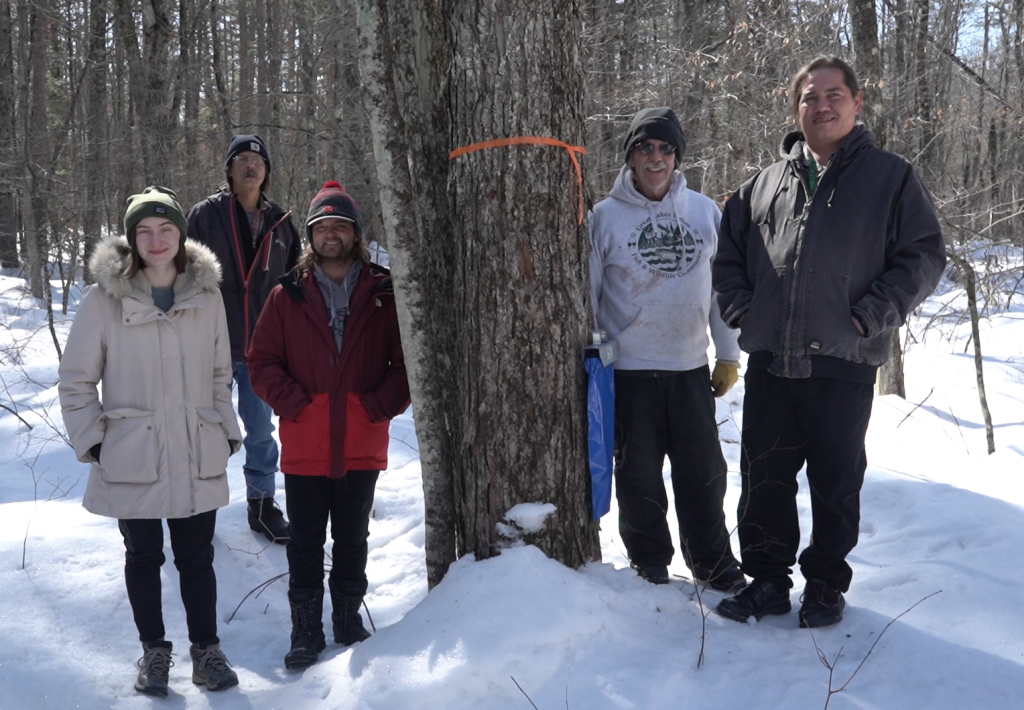
A research project team collects maple tree sap for PFAS sampling on Lac Courte Orielles tribal land in spring 2023. Pictured, left to right, are Eve Muslich, University of Wisconsin-Madison; Andre Bennett, Lac Courte Orielles Ojibwe University; Gavin Dehnert, Wisconsin Sea Grant; Jonathan Gilbert, Great Lakes Indian Fish and Wildlife Commission; and “Zhewaab” Reggie Cadotte, Lac Courte Orielles Ojibwe University. Image credit: Bonnie Willison, Wisconsin Sea Grant
The post New project tests Ceded Territories for PFAS at request of tribes first appeared on WRI.

Original Article

News Release | WRI

News Release | WRI

https://www.wri.wisc.edu/news/new-project-tests-ceded-territories-for-pfas-at-request-of-tribes/?utm_source=rss&utm_medium=rss&utm_campaign=new-project-tests-ceded-territories-for-pfas-at-request-of-tribes

Marie Zhuikov

Adam Swanson stands in front of one of his murals. Submitted image.

The River Talks will be held at 7 p.m. Wednesday, April 12 with “Art as a Voice for Science,” an in-person and virtual presentation at the Lake Superior Estuarium Confluence Room (3 Marina Drive, Barker’s Island in Superior) given by Adam Swanson, local muralist and environmental artist whose work has been exhibited internationally.
Science and art are both attempts to understand and describe the world. Understanding and communicating abstract ideas are important in the modern merging of the two disciplines. Swanson will discuss how he integrates science topics into his artwork, he’ll describe some of his science/art residencies and he will overview other science-based artists he’s met. Refreshments will be provided.

To join by Zoom, please pre-register at this link: https://uwmadison.zoom.us/meeting/register/tJEtd-2vpz8tGd25-1MKz4NAeH5uBroYdAR6

The final River Talks of the season will be held May 10. For more information, visit the River Talks page: go.wisc.edu/4uz720.

The River Talks are sponsored by the Lake Superior National Estuarine Research Reserve and the Wisconsin Sea Grant Program.
 

The post Art as a Voice for Science first appeared on Wisconsin Sea Grant.

Original Article

News Releases | Wisconsin Sea Grant

News Releases | Wisconsin Sea Grant

https://www.seagrant.wisc.edu/news/art-as-a-voice-for-science/?utm_source=rss&utm_medium=rss&utm_campaign=art-as-a-voice-for-science

Marie Zhuikov

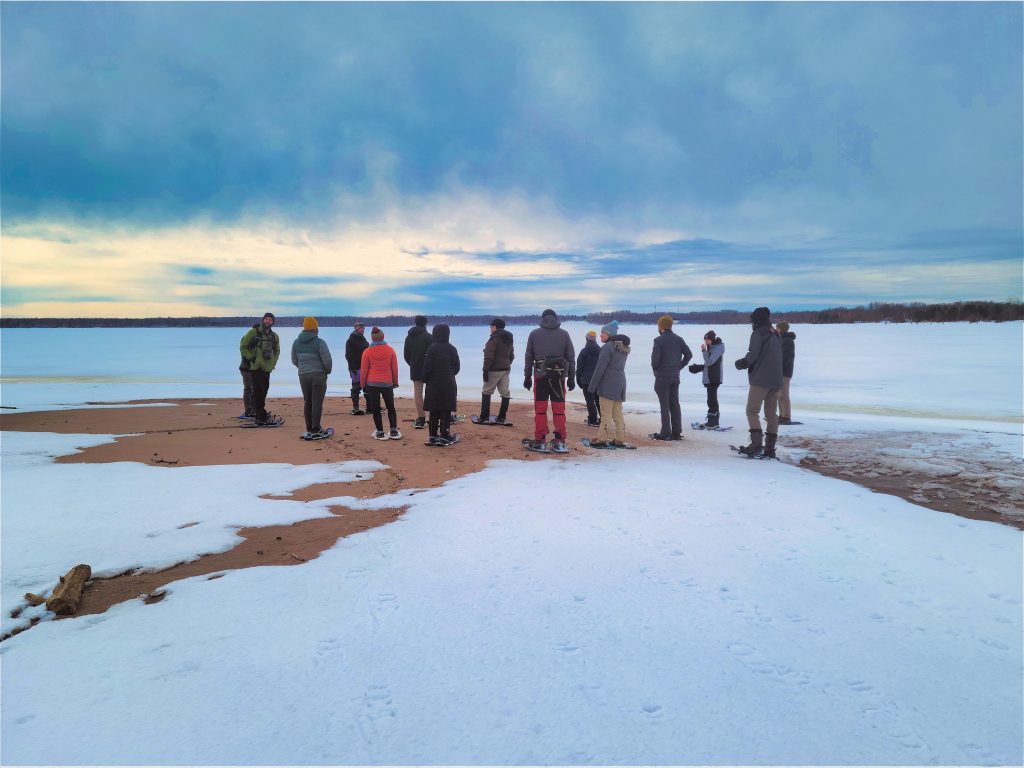
Field trip participants with the St. Louis River Summit learn about efforts to encourage piping plovers to nest on Wisconsin Point. Image credit: Marie Zhuikov, Wisconsin Sea Grant

I participated in a field trip during the recent St. Louis River Summit that involved snowshoeing out to a bird sanctuary on Wisconsin Point, which is near Superior, Wisconsin. The sanctuary is a protected area on a sandy spit of land, specifically designated for endangered shorebirds called piping plovers (Charadrius melodus).

I enjoy any opportunity to visit Wisconsin Point, but I also attended because I was involved in early habitat restoration efforts for these cute little birds before I worked for Wisconsin Sea Grant. I was interested in hearing the latest intel about their status.

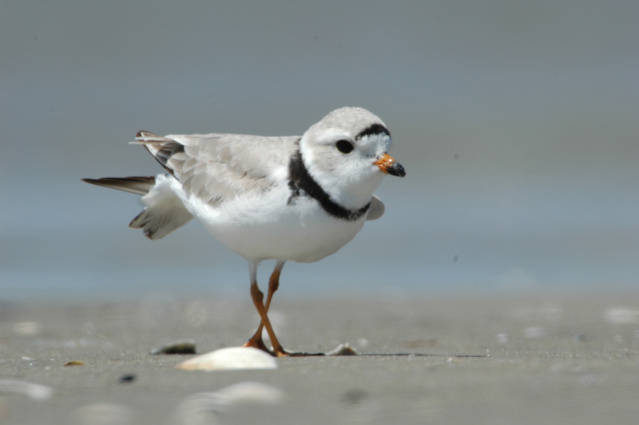
A piping plover. Image credit: U.S. Fish and Wildlife Service

The St. Louis River Estuary had breeding plover pairs up until 1989. The last nesting pair was seen at this bird sanctuary site. Plovers, which look like killdeers, prefer large isolated beaches for nesting. Much of this habitat type has been lost due to development and recreational pressure. Work to increase the population of plovers is going on all across the Great Lakes and in other parts of the country.

Matt Steiger, St. Louis River Area of Concern Coordinator with the Wisconsin Department of Natural Resources (DNR), led the field trip along with David Grandmaison, St. Louis River wild rice and habitat restoration coordinator with the Wisconsin DNR.

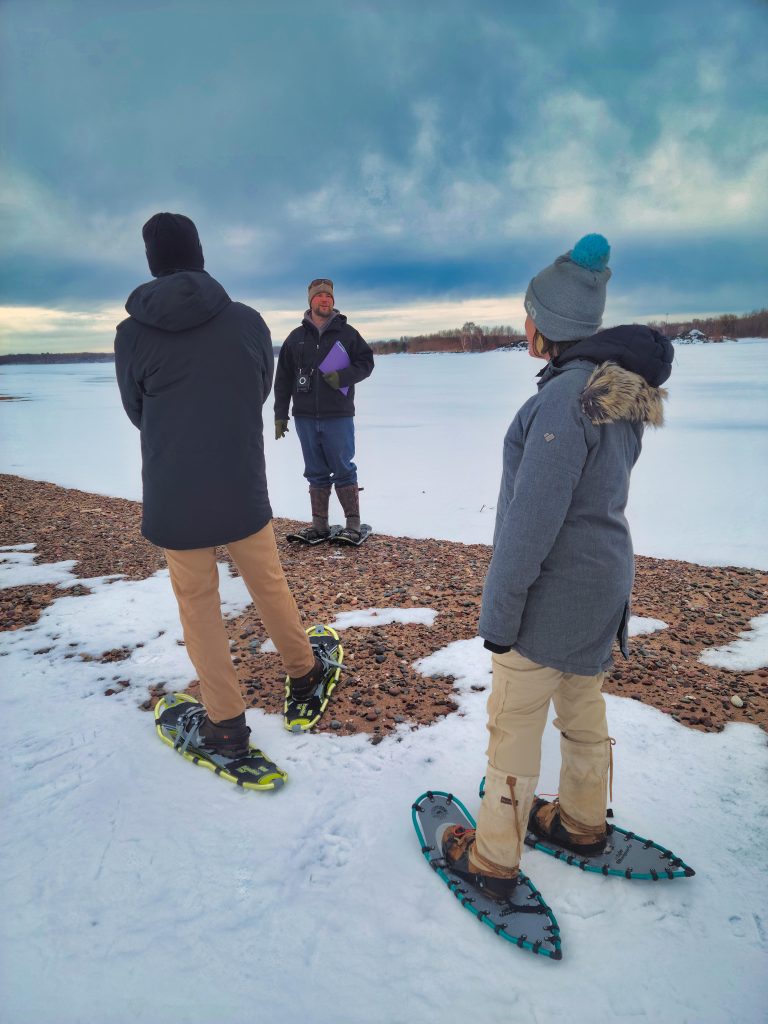
As we snowshoed out to the end of the beach in a cold wind from the northeast, Steiger explained that several projects had taken place on the site over the years to make it attractive to plovers and common terns. The latest was begun with Great Lakes Restoration Initiative funding in 2019, which involved enlarging the beach with clean dredged sand. The goal was to create habitat that would last despite changing water levels in the harbor and storms and would require minimal maintenance. Fourteen acres of nesting and foraging habitat were created along with three “nesting pans” composed of small cobblestones that plovers prefer.

Matt Steiger, WI DNR, (center) discusses the Wisconsin Point Bird Sanctuary restoration efforts to field trip participants. Image credit: Marie Zhuikov, Wisconsin Sea Grant

Piping plover monitors coordinated by the St. Louis River Alliance have kept their eyes peeled for any plovers on this site and others around the estuary. So far, none have nested, but sometimes these efforts take time – decades, even. Steiger said that a female plover was spotted in the sanctuary during the spring 2022 migration season at the same time a male was spotted on nearby Minnesota Point. Let’s hope that someday two plovers will land on the same beach at the same time!

In other areas of the state, Wisconsin Sea Grant has played an integral role in habitat restoration that benefits piping plovers. Our staff were involved in the Cat Island Restoration Project in Green Bay, which created 1,400 acres of barrier islands in Lake Michigan that had previously disappeared due to high lake levels and storms. In 2016, for the first time in 75 years, endangered piping plovers successfully nested on a restored island there and fledged chicks.

Sea Grant was also involved in an earlier effort on Wisconsin Point’s Shaefer Beach to create plover habitat. We were involved in initial design discussions for the bird sanctuary work but are not currently participating. For more information, see this cool post and videos on the Perfect Duluth Day website.

At the end of the tour, Grandmaison described work going on in nearby Allouez Bay to restore wild rice beds. Historically, wild rice was abundant in Allouez bay and throughout the estuary, providing an important food source for Native Americans. Wild rice beds also provided habitat and food for birds and wildlife. Their abundance in the estuary declined significantly in the past century, and today only a sparse remnant stand exists in Allouez Bay. Wild rice seeds were spread throughout the bay. Exclosure fencing was installed protect the seedlings from browsing pressure of Canada geese.

As I snowshoed back to my car, I remained hopeful that someday, Wisconsin Point will be home to nesting piping plovers and lush stands of wild rice, thanks to these efforts.

The post Restoring piping plover habitat on Wisconsin Point first appeared on Wisconsin Sea Grant.

Original Article

Blog | Wisconsin Sea Grant

Blog | Wisconsin Sea Grant

https://www.seagrant.wisc.edu/blog/restoring-piping-plover-habitat-on-wisconsin-point/?utm_source=rss&utm_medium=rss&utm_campaign=restoring-piping-plover-habitat-on-wisconsin-point

Marie Zhuikov

Christine Carlson and Mark McConnell. Image credit: Anna Martineau Merrit

Two speakers shared their wealth of knowledge with a large audience for the March River Talk, held at the Lake Superior Estuarium in Superior. The evening began with Christine Carlson, a historian and columnist for the Fond du Lac Tribe’s newspaper.

The talk was held on March 8, which was International Women’s Day. In honor of this, Carlson highlighted Sophie Bruin, a woman who lived on an island in the St. Louis River between Gary and New Duluth in a one-room cabin with her eight children. Her granddaughter Bea Bruin was in the audience. Newspaper accounts detailed their rescue by rowboat in 1897 when the island flooded. Sophie earned money by selling milk from her four cows. She also had a vegetable garden and hay field off the island.

“She was an incredible woman and that’s why I wanted to highlight Sophie Bruin,” Carlson said.

She then provided the audience with copies of her self-published book, “Wa ye kwaa gichi gamiing: Fond du Lac, End of Great Body of Water & a Visual Feast,” which contains history of the area and many photos.

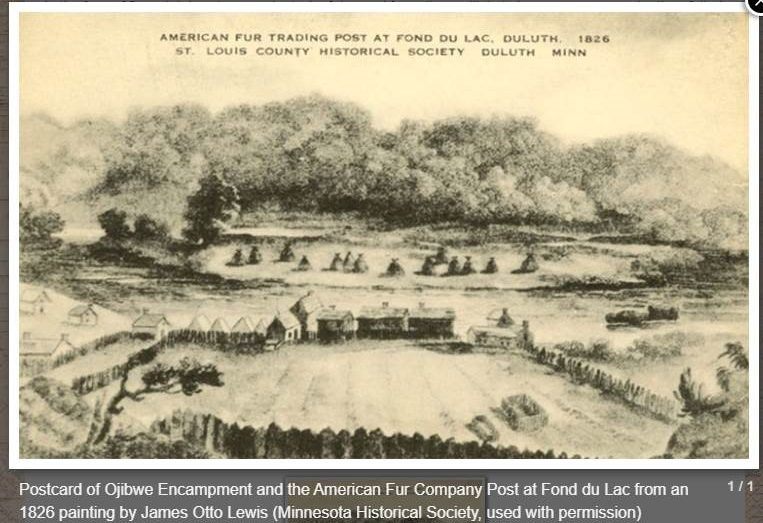
Carlson grew up in Fond du Lac, which was a settlement for the Dakota and Ojibwe peoples and a fur trading post — precursor to the city of Duluth. When the Fond du Lac Reservation was established in 1854, many Native people moved there, but some stayed in the town of Fond du Lac. Carlson described the lives of some of the families that stayed, including the Charettes, LeGardes and Durfees. She also described how Fond du Lac was a popular tourist destination beginning in the late 1800s. Riverboats from Duluth would ferry people to the spot.

“Some of those boats had a thousand people in them. They’d come for picnics – huge picnics in Chambers Grove – the Elks, the newsboys, the police officers. The riverboats docked at 133rd Avenue West, Nekuk Island, and a third location,” Carlson said. The Montauk was perhaps the longest-running riverboat. It sported slot machines, not allowed on land, and offered dancing.

Later, a ski jump called Ojibwe Bowl, a fish hatchery, and an arboretum were built in the community. Carlson recalls sliding down the ski jump hill once competitions were over. “We didn’t have sleds back then. We just had cardboard. It was a big climb and then we’d slide down that hill. What a ride that was, I tell ya,” she said.

The second speaker was Mark McConnell, an Elder with the Fond du Lac Band of Lake Superior Chippewa. His family used to live on Wisconsin Point and like those who Carlson mentioned, did not move to the reservation.

He related seven stories, which are usually only told during winter. He began with a water-based tale about how the loon got its necklace, or the patterning around its neck. His next described why making maple syrup is so labor-intensive. “Everything that we do in our culture for gathering – be it sugar bush, ricing, netting fish – takes a lot of work. I think it gives people more appreciation for the end product,” McConnell said.

His third story described why the black bear’s tail is so short. Others were about how porcupines got their quills, why turtles don’t migrate, and how the Apostle Islands were formed (which involved a giant beaver). His final story dealt with a lost deer hunter who, after falling into a lake, took shelter overnight in winter with a hibernating bear.

McConnell also discussed how fire fits into Ojibwe culture to encourage the growth of blueberries and to honor the dead. It’s nice to see fire coming back,” he said. “It’s not a bad thing if handled carefully.”

The next River Talk will be held on April 12 in-person at the Lake Superior Estuarium and by Zoom. It will feature local environmental science painter and muralist Adam Swanson who will describe how he mixes art and science.

The post History of Fond du Lac and winter Ojibwe stories shared at River Talks first appeared on Wisconsin Sea Grant.

Original Article

Blog | Wisconsin Sea Grant

Blog | Wisconsin Sea Grant

https://www.seagrant.wisc.edu/blog/history-of-fond-du-lac-and-winter-ojibwe-stories-shared-at-river-talks/?utm_source=rss&utm_medium=rss&utm_campaign=history-of-fond-du-lac-and-winter-ojibwe-stories-shared-at-river-talks

Marie Zhuikov

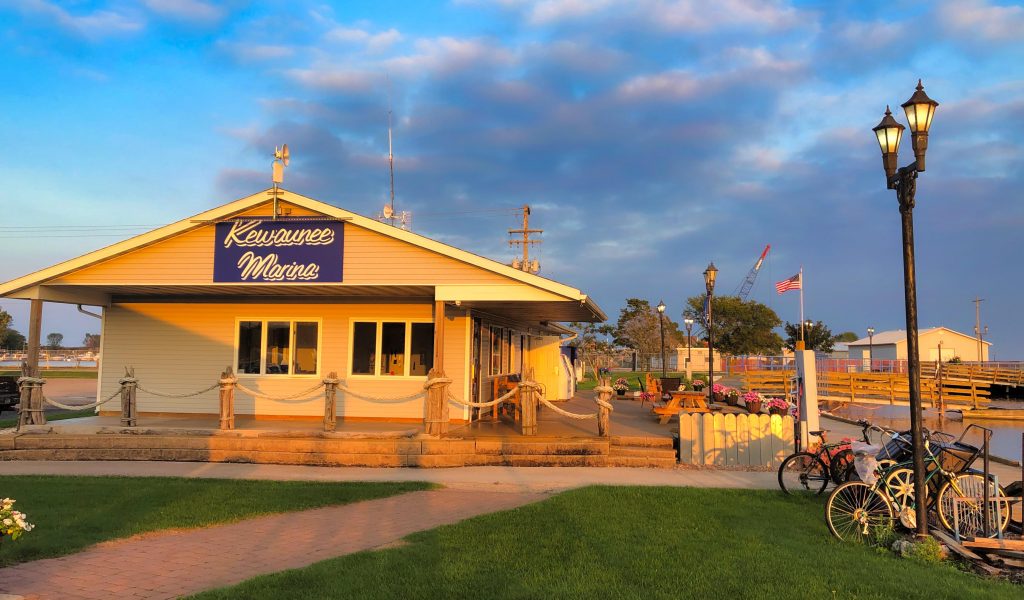
The Kewaunee Marina is working toward certification in the Clean Marina Program. Image credit: Theresa Qualls, Wisconsin Clean Marina Program

Staff at the city marina in Kewaunee, Wisconsin, were interested in voluntarily gaining certification as a clean marina, but several challenges faced them. Lucky for them, the Wisconsin Clean Marina Program not only certifies marinas in the state as environmentally friendly, it also helps them get to that point by providing guidance, training and technical assistance in adopting best management practices (BMPs) that reduce pollution and protect Wisconsin’s waterways.

The Kewaunee Marina sits on Lake Michigan at the base of the Door County peninsula. This 104-slip full-service facility is operated by the city, and features a public boat launch, parking lot, fish cleaning station and campground.

The marina would need to undertake several difficult and costly projects to improve coastal resilience and stay open during high-lake-level years. That’s where Clean Marina Program Coordinator Theresa Qualls comes in. Her program wrote a grant proposal to the Fund for Lake Michigan for money to develop a plan for two big-ticket items the marina needs: a boat washing station and stormwater improvements. The proposal was successful, and the engineering plan is now almost complete.

Once implemented, the boat washing station and stormwater improvements are expected to have major positive impacts on water quality and flooding. Qualls explained that boat washing stations are used at the end of the boating season in the fall. Boats are hauled out on land and their bottoms are pressure-washed to remove dirt and any growths that have accumulated. This usually takes place over the course of a month and involves many boats.

Once implemented, a new boat washing station and stormwater improvements are expected to have major positive impacts on water quality and flooding at the Kewaunee Marina. Image credit: Theresa Qualls

“Traditionally, all of that material would get washed right back into the lake, and the bottom paint kind of sloughs off,” said Qualls. “It can contain metals such as copper. It’s not good for the environment or for water quality and wildlife. So, practices are needed to either collect and treat the wastewater or divert it so it can settle in a different area.”

The plan for Kewaunee Marina involves installing a new boat washing station and directing the wash water into a rain garden, which will naturally clean the water as it filters through the sand and is soaked up by plant roots. The proposed station will also allow boaters to remove aquatic invasive species from their watercraft.

The marina’s large parking lot is prone to flooding, so other improvements include raising the level of the parking lot by 2 feet and planting three rain gardens that can help store up to an inch of rain from storms. “That will help with stormwater pollution as well, and should help solve the flooding issues,” said Qualls.

The engineering consulting company, Ruekert & Mielke, Inc., gathered public input on these plans last fall during a meeting held at the marina. “The people who came to the meeting were really engaged and stayed quite a while, and they had some good ideas,” Quall said.

The Kewaunee Marina engineering plan and cost estimates are expected to be completed by this March. Then Qualls will work with the city to find other grant opportunities for the on-the-ground work.

One hitch is that the boat washing station and the rain gardens can’t get put in until the parking lot gets raised. Qualls and the city will also be seeking funding for that. She is optimistic they can find a way to get all the work done.

“The city of Kewaunee and their public works department have been great partners,” she said. “The marina manager, Augie Kinjerski, has been just fabulous to work with. It’s been a great partnership. They’re all really supportive of this.”

Currently, the Clean Marina Program has 21 certified marinas and 24 pledged marinas. Certified marinas have implemented all the BMPs that are advised by the program. Pledged marinas are facilities that are in the process of becoming certified. Qualls said the Kewaunee Marina became pledged in 2021 and she expects they will become certified in the near future.

“We’ve found that boaters really care about the water and the water resources. They are supportive of this program. And we’ve found that these practices do help improve water quality. Marinas want to be part of it, and they’re really proud once they’re certified,” Qualls said.

For more information about the Clean Marina Program in Wisconsin and other Great Lakes states, take a look at this recent story and video.

The post Kewaunee Marina overcoming challenges for Clean Marina certification first appeared on Wisconsin Sea Grant.

Original Article

News Releases | Wisconsin Sea Grant

News Releases | Wisconsin Sea Grant

https://www.seagrant.wisc.edu/news/kewaunee-marina-overcoming-challenges-for-clean-marina-certification/?utm_source=rss&utm_medium=rss&utm_campaign=kewaunee-marina-overcoming-challenges-for-clean-marina-certification

Marie Zhuikov

The River Talks will be held at 6:30 p.m. Wednesday, March 8 with “History of the Upper Estuary and Fond du Lac Neighborhood: River History and Winter Stories,” an in-person presentation at the Lake Superior Estuarium Confluence Room (3 Marina Drive, Barker’s Island in Superior) given by Christine Carlson, historian and for 13 years, author of a popular column in the Fond du Lac Band of Lake Superior Chippewa newspaper “Nagaajiwanaang Dibaajimowinan,” and Mark McConnell, an Elder with the Fond du Lac Band of Lake Superior Chippewa and collaborator with the Lake Superior National Estuarine Research Reserve education program. Carlson will share historic insights about the Fond du Lac neighborhood of Duluth and McConnell will share traditional winter stories.
This talk is an evening program held in conjunction with the St. Louis River Summit. Summit registration is not required to attend, and the public is welcome. Light refreshments will be provided. Weather dependent, the stories may be told outside the Estuarium around a fire.

Other River Talks will be held April 12 and May 10, 2023. For more information, visit the River Talks page: go.wisc.edu/4uz720.
The River Talks are sponsored by the Lake Superior National Estuarine Research Reserve and the Wisconsin Sea Grant Program.
 

The post River History and Winter Stories first appeared on Wisconsin Sea Grant.

Original Article

News Releases | Wisconsin Sea Grant

News Releases | Wisconsin Sea Grant

https://www.seagrant.wisc.edu/news/river-history-and-winter-stories/?utm_source=rss&utm_medium=rss&utm_campaign=river-history-and-winter-stories

Marie Zhuikov

The River Talks will be held at 7 p.m. Wednesday, Feb. 8 with “We’ve Got Fleas! Invaders and Nonlocal Beings on Water and Land,” a Zoom-only presentation given by Kelsey Taylor with Fond du Lac Natural Resource Management Division and Zach Stewart with Douglas County. Taylor will share information about invasive species, or nonlocal beings, present in our region and how they impact the environment. Stewart will discuss the biology, lifecycle and ecological impacts of the invasive spiny waterflea and share information about how to get involved with the “Stop Spiny” prevention program.
In a change from past events, pre-registration is required. Access it via this link.

Other River Talks will be held March 8, April 12 and May 10, 2023. The March talk will be held in conjunction with the St. Louis River Summit. For more information, visit the River Talks page: go.wisc.edu/4uz720.
The River Talks are sponsored by the Lake Superior National Estuarine Research Reserve and the Wisconsin Sea Grant Program.
The post We’ve got fleas! first appeared on Wisconsin Sea Grant.

Original Article

News Releases | Wisconsin Sea Grant

News Releases | Wisconsin Sea Grant

https://www.seagrant.wisc.edu/news/weve-got-fleas/?utm_source=rss&utm_medium=rss&utm_campaign=weve-got-fleas

Marie Zhuikov

Allie Pesano. Submitted photo.

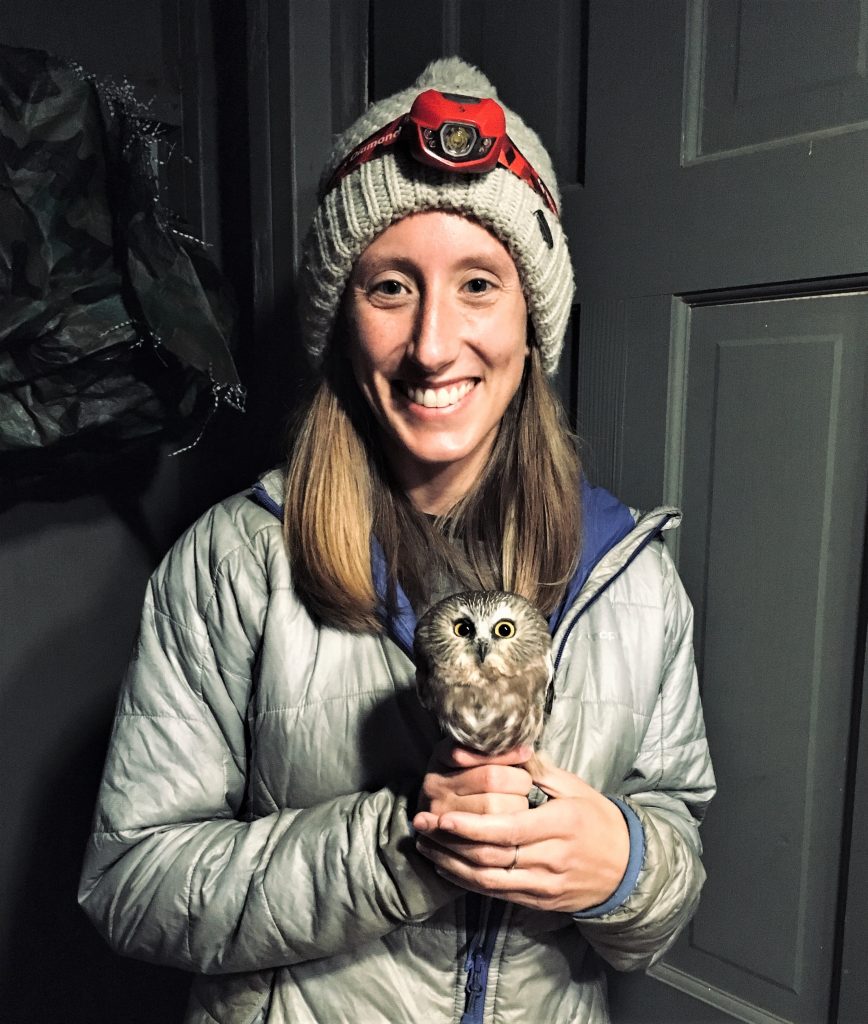
Allie Pesano first got turned onto birds as an undergraduate at Unity College in Maine. She was studying wildlife biology and, for one class, students were required to learn about various common North American wildlife species. The variety of birds sparked her curiosity, ultimately leading to her current six-month fellowship in avian toxicology with the Environmental Protection Agency’s Great Lakes Toxicology and Ecology Division in Duluth, Minnesota.

“I realized that every bird I saw wasn’t the same thing,” Pesano said. “They’re all very nuanced and unique. That led to my interest in learning more about birds in general. Even in my spare time, I would flip through the bird guide and just kind of go on a treasure hunt in my own back yard to see what kinds of birds were around.”

Her back yard was in Syracuse, New York. After obtaining her undergraduate degree, she flitted about the country like a bird, researching migrating hawks in Nevada, nesting endangered sparrows in Florida and resilient saltmarshes in Massachusetts, which, of course, provide homes for wetland birds. Most recently, she graduated with a master’s degree in integrated biosciences from the University of Minnesota Duluth. There, in collaboration with the Hawk Ridge Bird Observatory, she used satellite transmitters to determine where some unique, dark-plumaged red-tailed hawks were migrating from on their way through Duluth. These hawks are usually only found in the western part of North America and are rare in the East. This bird treasure hunt led her to northeastern Canada.

One of the dark-plummaged red-tailed hawks that Pesano studied for her master’s research. This bird was captured in the Twin Cities (Minnesota) in February 2021, and was named “Manley.” He was the first dark red-tailed hawk fitted with a satellite transmitter. Manley spent the last two summers in northern Manitoba and has returned to the same winter territory in the Twin Cities since researchers have been studying his movements. Submitted photo.

“We discovered they had been spending summers and the breeding season in northern Manitoba and Ontario. Birds that look really dark like that would not, to our historical knowledge, be nesting and breeding in those provinces usually. They would more likely nest in Alaska or British Columbia,” Pesano said.

Pesano’s latest quest involves researching the impacts of per- and polyfluorinated alkyl substances (PFAS) on the reproductive success of birds in the Duluth area. Under the mentorships of Matt Etterson and John Haselman at the EPA, Pesano is studying tree swallows, black-capped chickadees and house wrens with another EPA Fellow, Emily Pavlovic. Funded by the University of Wisconsin-Madison but working in Duluth, Pesano is looking into things like the quality and quantity of food to see if there’s any correlation between what the birds are eating and their reproductive success.

The goal of this research is to create a toxicology model that scientists can use to predict, based on contamination concentrations in the environment, what the exposure risk would be to birds in that area.

Pesano checks a tree swallow nest as part of her EPA avian PFAS study. Submitted photo.

The three-year U.S. Environmental Protection Agency Human Health and the Environment Research Fellows program is a partnership between the EPA, the University of Wisconsin-Madison and its Aquatic Sciences Center. The goal is to train the next generation of scientists in environmental and ecosystem health.

The post Allie Pesano: On a treasure hunt for birds first appeared on Wisconsin Sea Grant.

Original Article

News Releases | Wisconsin Sea Grant

News Releases | Wisconsin Sea Grant

https://www.seagrant.wisc.edu/news/allie-pesano-on-a-treasure-hunt-for-birds/?utm_source=rss&utm_medium=rss&utm_campaign=allie-pesano-on-a-treasure-hunt-for-birds

Marie Zhuikov

The November River Talk featured a researcher and a youth panel who spoke to the theme: “Tell us what you Love About the River.” Molly Wick, a Lake Superior National Estuarine Research Reserve Margaret A. Davidson Fellow, described a study she designed to help environmental managers understand how the community benefits from local lakes, rivers and streams and how this work could help make those benefits more accessible to everyone. Afterward, a panel of three young people rounded out the discussion with their personal stories about why the St. Louis River is important to them.

Molly Wick. Image credit: Marie Zhuikov, Wisconsin Sea Grant

The Waterway Benefits study Wick is doing for her doctorate at the University of Minnesota Duluth is in the form of an online survey. Simply, she’s studying why people love the river. “That’s the simple version of it,” Wick said. “Of course, there’s a jargon term for it, too: Cultural Ecosystem Services.”

Wick said that Cultural Ecosystem Services is based on the same framework as Ecosystem Services, which is a method of quantifying dollar values on the benefits that people receive from nature. Examples would be how much money is saved by cities that have a healthy flood plain or how much money is saved by having trees that provide shade to homes instead of the homes needing air conditioning.

She emphasized that Cultural Ecosystem Services differs from Ecosystem Services in that it incorporates all the things that are impossible to put a dollar value on, for example, the feelings that nature gives people.

Wick grew up in Two Rivers, Wisconsin, a town on Green Bay on Lake Michigan that she categorizes as having a lot of water around it. Her family had a tradition of going camping most weekends. They traveled to many Wisconsin state parks and “Basically spent our days hanging out by the lakes.”

They swam, canoed, built sandcastles and foraged for wild foods. Wick said she even had her first romantic kiss on a beach, which is an example of an emotional benefit.

Audience members shared their favorite water experiences or benefits. Reserve Director Deanna Erickson said she lived near the Fox River near Oshkosh as a child. Her neighbor would catch gar fish and bring them over in a bucket for Erickson to see. “As a four- or five-year-old, I thought they were so cool!” she said.

Tom Nicodemus shared his memories of a heron rookery that used to be on Pokegama Bay in Superior.

The goal of Wick’s Waterways Benefits Survey is to help measure the benefits of habitat project investments made in the river to help inform future decision making.

“One of the things I hope to do with the data that I collect is be able to look at how different groups of people have different or similar experiences so that managers can use that information to make better decisions and make access to the water more equitable, as well. I don’t want to put different values on these experiences but raise awareness about what values people hold. Protecting these resources depends on having a better understanding and really getting some information about why we love the river into managers’ hands,” Wick said.

The youth panel was composed of Abbey Watt (ninth grader, Superior High School); Leah Gavin (ninth grader, Superior High School); and Jace Ludwig (fifth grader, Cooper Elementary). They added spirited emotion and energy to the room, which included support of their families and some teachers and friends. Their stories of river connection included humor, home, views of the estuary from bridges and “extra” benefits from activities like ice fishing—family time, eagle sightings and mishaps. All added emphasis with their voice, laugh or things they said that they didn’t initially write down. To get a flavor of the energy in the room as these young people contributed to the River Talk, the essays they read are below:

The St. Louis River
By Abbey Watt

Abbey Watt (right), gives her talk as part of the youth panel while Jace Ludwig preps for his. Image credit: Marie Zhuikov, Wisconsin Sea Grant

There are so many ways that the St. Louis River has impacted my life, whether from seeing its wild waters on my way to and from school or boating through them during the summertime. It connects me and my mom, it connects me and my dad, it connected me and my grandpa, just as it connects to Lake Superior, and I hope it will connect me and my children, though my mom says not for at least 10 years. 

This past couple summers my mom and I have spent countless hours exploring and enjoying all the wonders the river has to offer. We would always make a day of it and pack snacks and lots of extra sunscreen. It is easy for us to lose track of time when relaxed by the rocking of the boat and the sound of the waves splashing against the sides. 

When you’re on the boat, it transports you to a world where nothing really matters – whether you have an exam coming up, whether you have papers due, or just the stress of everyday life – none of that matters when you’re out on the lake or even near it.

My grandfather had been a big fan of fishing on the river, as well as boating, he would troll around just waiting for a fish to bite. Whether the sun was shining or it was super cloudy, it was always a great day to be on the water. Just spending time on the water was a gift in itself.

Every time we drive over the bridge, I take a minute to check up on the river and see how it’s doing that day. Some days the waves topped with white, other days I see only the gentle ripple of the current as the river flows to the lake. It is always a conversation-starter between me and my dad. My favorite view is early in the morning when the fog is still rolling over the bridge and the heat of the river is rising and swirling around. When we drive over the bridge and it is engulfed in fog, it makes me feel like I am in a movie. No matter what the weather is like, the river always glows with elegance and perfection.

Though the river is forever changing, it still feels the same to me. Whenever I come back from a trip, I always look out the window and try to catch a glimpse of the water. That’s how I know I am home.

Many of us, myself included, take our proximity to the river and the lake for granted. We have such an amazing abundance of fresh water running right through our back yard and it is our normal, but for some it is a dream waiting just out of reach. It is a wonder to be able to enjoy time at the beaches, smell the fresh scent of the water, and hear the crashing of waves. 

Some ships pass through the river on the way to deliver cargo. It’s amazing to watch the go by, although it can take a while. Many species of animals rely on its clean water, and the fish depend on the bays and smaller streams to feed and seek shelter. 

I feel like the river is something that connects us all. And Lake Superior is something that connects not only us but people around the world because my father, when he lived all the way across the ocean in Scotland, wrote a paper about the Edmund Fitzgerald. Little did he know he would end up here on our very own Lake Superior. I feel like the water around is just something that connects everything.

Leah Gavin

Leah Gavin. Image credit: Marie Zhuikov, Wisconsin Sea Grant

As someone who has lived in Superior their entire life, I have been around the St. Louis River a lot. But it wasn’t until recently when I was asked to think about it that I realized just how much the river actually means to me.

When I think of the St. Louis River, I think of the hot summer days spent out on my aunt and uncle’s boat. Cruising through the water, relaxing in the sunshine, parking to eat lunch as we listen to the water splash gently against the side of the boat, swimming when we get too warm from the sun, and wrapping up in our towels when we get too cold from the water. I look forward to days like those all year long.

I think of looking out over the river as we drive across the Bong Bridge, and the feeling of pure serenity the view gives me. I think of biking to Billings Park with my friends, taking pictures of each other as though we are professional photographers before sitting at the water’s edge to talk about everything and nothing, spilling our deepest thoughts to the river. I think of taking my younger cousins to the path alongside the water, attempting (and failing) to teach them how to skip stones, watching their curiosity, and trying to answer all of their questions about the world around them. I think of sitting by the river after my grandparents passed away, talking to them as though they could still hear me. And perhaps they could. I think of the early spring and keeping a close eye on the ice, making bets with my mother as to when it will finish melting. I think of leaving for road trips in the early morning, and watching the sun rise over the river, seeing its oranges, pinks, and yellows reflect on the water. Looking out and not being able to tell where the water ends and the sky begins.

What I love about the St. Louis is the peace it brings. The reassurance that no matter what happens it will be there tomorrow. I love the memories it holds, both big and small. I love the beauty of it. But most of all I love the fact that it is and always will be a part of my home.

Jace Ludwig

Jace Ludwig illustrated his talk about the river with photos. Image credit: Marie Zhuikov, Wisconsin Sea Grant

My family and I enjoy ice fishing on the river. We have made many trips out there over the years. We usually go to Kimball’s Bay. Sometimes we use our snowmobile to get onto the ice, and sometimes we make the long walk. We try to pick up any litter that we see on the trail and also on the ice. We don’t want that stuff to get into the river or lake. We also pick it up because once we saw an eagle eating bait that someone dumped out and we thought about how we didn’t want the eagle to eat garbage. We see eagles down there a lot. Once, one flew over our heads and landed on a tree right next to us.

We usually don’t set up our ice house when we fish there. We like to put up tip-ups so we can run around and play. My dad likes to jig for fish while we have snowball fights and go on adventures. Once, during a snowball fight, I stepped right into a hole all the way up to my knee. My boot filled with water and I was pretty soaked. Good thing it was a warm sunny day, or our day would’ve ended right away.

We like to explore different paths and trails around the water’s edge. And we really like to find big hills to use our sleds on. It isn’t fun to walk up the big hills, but it is fun to have a contest on who can make it out onto the ice the furthest. And we do all this while my dad catches perch and crappies. We love that we have this area to make great family memories.

Jace showed images after his talk, including the place where he stepped into the watery ice hole, a sledding hill, and the eagle he mentioned in his story.

The next River Talk will be, “Nimaawanji’idimin Giiwitaashkodeng: Working with Fire to Heal the Land on Wisconsin and Minnesota Points.” It will be an in-person and Zoom presentation by Evan Larson, University of Wisconsin-Platteville, and Melonee Montano, Red Cliff tribal member and University of Minnesota graduate student. They will describe a collaborative project that is bringing information from tree rings and oral history together to understand how the Anishinaabeg people used fire to tend the landscape and how the return of fire can contribute to both cultural and ecological restoration. Refreshments will be provided.

Here is the Zoom information:
https://uwmadison.zoom.us/j/92832940429?pwd=TUpJQWhucHB5cUxVQWxXQVF5b1ZIUT09 

Meeting ID: 928 3294 0429
Passcode: 916352
One tap mobile
+19292056099,,92832940429# US (New York)
+13017158592,,92832940429# US (Washington DC)  

Other River Talks will be held Feb. 8, March 8, April 12 and May 10, 2023.
The post Why people love the St. Louis River first appeared on Wisconsin Sea Grant.

Original Article

Blog | Wisconsin Sea Grant

Blog | Wisconsin Sea Grant

https://www.seagrant.wisc.edu/blog/why-people-love-the-st-louis-river/?utm_source=rss&utm_medium=rss&utm_campaign=why-people-love-the-st-louis-river

Marie Zhuikov


The “Nimaawanji’idimin Giiwitaashkodeng” research project team at work on Wisconsin Point. Image credit: Marie Zhuikov, Wisconsin Sea Grant

The River Talks will be held at 7 p.m. Wednesday, Jan. 11, at the Lake Superior Estuarium (3 Marina Dr., Superior, Wis.), with “Nimaawanji’idimin Giiwitaashkodeng: Working with Fire to Heal the Land on Wisconsin and Minnesota Points,” an in-person and Zoom presentation by Evan Larson, University of Wisconsin-Platteville and Melonee Montano, Red Cliff tribal member and University of Minnesota graduate student. They will describe a collaborative project that is bringing information from tree rings and oral history together to understand how the Anishinaabeg people used fire to tend the landscape and how the return of fire can contribute to both cultural and ecological restoration. Refreshments will be provided.
Join Zoom Meeting
https://uwmadison.zoom.us/j/92832940429?pwd=TUpJQWhucHB5cUxVQWxXQVF5b1ZIUT09 

Meeting ID: 928 3294 0429
Passcode: 916352
One tap mobile
+19292056099,,92832940429# US (New York)
+13017158592,,92832940429# US (Washington DC)  

Other River Talks will be held Feb. 8, March 8, April 12 and May 10, 2023. The March talk will be held in conjunction with the St. Louis River Summit. For more information, visit the River Talks page: go.wisc.edu/4uz720.

The River Talks are sponsored by the Lake Superior National Estuarine Research Reserve and the Wisconsin Sea Grant Program.

The post River Talks: Using fire to heal the land first appeared on Wisconsin Sea Grant.

Original Article

News Releases | Wisconsin Sea Grant

News Releases | Wisconsin Sea Grant

https://www.seagrant.wisc.edu/news/river-talks-using-fire-to-heal-the-land/?utm_source=rss&utm_medium=rss&utm_campaign=river-talks-using-fire-to-heal-the-land

Marie Zhuikov

A Wisconsin Sea Grant event held in Madison this fall celebrated Wisconsin’s water, from drinking water to water on which businesses rely for their livelihoods. These include commercial fishing and aquaculture operations.

A centerpiece at the Taste of Wisconsin Waters event featured a floating candle, cranberries and rocks. Image credit: Marie Zhuikov, Wisconsin Sea Grant

This first-ever, invitation-only event was organized by Sharon Moen, food fish outreach specialist. She got the idea from conducting a needs assessment with commercial fishermen and fish farmers in Wisconsin.

“They told me what they would really like Sea Grant to help them with was articulating the importance of their industries to decision-makers,” Moen said. She incorporated that into the event by inviting state legislators and natural resource professionals. Two other objectives were to celebrate Wisconsin Sea Grant’s 50th anniversary and the United Nations’ Year of Artisanal Fisheries and Aquaculture.

“The U.N. really took a bold stand on supporting local fishing communities and what they bring to society,” Moen said. “Certainly, aquaculture and fisheries in Wisconsin could be considered artisanal compared to some of the big operations.”

A Taste of Wisconsin Waters featured a water bar where event-goers could sample nine waters from around the state and vote for their favorite. Same for a fish spread table, which featured eight spreads donated by commercial fisherman and fish farmers throughout the state.

The favorite Wisconsin water was Rock Springs Free Spring water from a natural spring near Madison. The favorite fish spread was a tie between Bodin Fisheries and Hoop’s Fish Market. Both are located in Bayfield, Wisconsin, and used whitefish as their base ingredient.

An event participant samples Wisconsin water from the water bar. Credit: Bonnie Willison, Wisconsin Sea Grant

“People had a good chance to network with each other and taste some appetizers made out of the fish and listen to some speeches,” said Moen. “I was really pleased that Preston Cole was able to join us. He’s the secretary of the Department of Natural Resources in Wisconsin, and then Marlon White Eagle, the president of the Ho-Chunk Nation was able to join us, too. So, it was really great to have dignitaries and scientists and fish producers all mingling together and to hear those conversations.”

Speeches were also offered by Wisconsin Sea Grant Director Jim Hurley; Steve Summerfelt, chief science officer for Superior Fresh, an aquaponics business that raises Atlantic salmon and grows leafy greens in Hixton, Wisconsin; and Charlie Henriksen of Henriksen Fisheries.

Cole outlined current challenges facing water systems in Wisconsin. “There’s a lot of places in the state of Wisconsin that people don’t have surety when they turn on their tap that they’re going to have clean fresh drinking water,” he said. “A lot of the circumstances are lead laterals in some of our older cities. I think there’s probably about 100 communities still in Wisconsin spread all across the state that still have lead laterals. And for children, there is no safe level for lead. We know that emerging contaminants like PFAS [per- and polyfluoroalkyl substances] in our drinking water do serious harm where we’ve been finding legacy contaminants from firefighting foam.”

Cole also shared some thoughts on a “Taste of Wisconsin Waters.”

“I think this is awesome. For folks in this room tonight, from commercial fishermen, to researchers, to restauranteurs, people who count on that fishing industry, people who count on the research that’s occurring – I met a couple of those researchers this evening – and I think it’s a wonderful way to look forward by relishing how far we’ve come in the past and providing clean water and research around our water systems.”

Summerfelt with Superior Fresh was also impressed by the event. “I’m ecstatic that Sea Grant put this together to recognize how Wisconsin uses water for food and brought in aquaculture. Sea Grant has not only helped educate consumers about eating Wisconsin seafood, which is so good for them because there’s nowhere else you can get omega-3s, which are good for your brain and heart, like you can get it from seafood. And then, Wisconsin Sea Grant has also been instrumental in funding research that’s helped the technology develop that’s used in Superior Fresh.”

Depending on funding, similar events may happen in the future, and they may be open to the public.

Preston Cole. Credit: Marie Zhuikov, Wisconsin Sea Grant

Many of the outcomes will take a while to manifest, but Moen explained that one connection was made right away. “A thousand arctic char from the Northern Aquaculture Demonstration Facility that is operated through the University of Wisconsin-Steven’s Point, got homes. One of the fish producers, because he heard about them being available, came and collected them and took them back to his farm for growing out as an experiment. So that was a big plus,” Moen said.

She also said that networking among the event-goers led to site visits to research and education facilities and that she’s received invitations to host similar events in two other Wisconsin communities. Moen and Emma Hauser, Wisconsin Sea Grant’s aquaculture and education outreach specialist, recently met with staff from the Wisconsin Department of Agriculture, Trade and Consumer Protection to discuss working together to support the food-fish industry. “This happened as a direct result of the Taste of Wisconsin Waters,” Moen said.

The post A Taste of Wisconsin Waters first appeared on Wisconsin Sea Grant.

Original Article

News Releases | Wisconsin Sea Grant

News Releases | Wisconsin Sea Grant

https://www.seagrant.wisc.edu/news/a-taste-of-wisconsin-waters/?utm_source=rss&utm_medium=rss&utm_campaign=a-taste-of-wisconsin-waters

Marie Zhuikov

The research team at work on Wisconsin Point. From left to right: Evan Larson, Ashla Ojibway, Mocha Reynolds, Valerie Zhaawendaagozikwe and Emily Lockling. Image credit: Marie Zhuikov, Wisconsin Sea Grant

On a cool, sunny spring morning among the pines on Wisconsin Point along Lake Superior, a mix of Native and non-native people gathered in a circle with the scent of wood smoke and sage in the air. The small group was performing an opening ceremony for “Nimaawanji’idimin Giiwitaashkodeng.” This is the Anishinaabe name for a Wisconsin Sea Grant-funded research and outreach project designed to explore how the Anishinaabe people connected to and homesteaded the lands of “Zhaagawaamikong Neyaashi” (Wisconsin and Minnesota points) and how they used fire to manage the landscape. The project name translates into “We are all gathering around the fire.”

Melonee Montano. Submitted photo

The ceremony was held to “…let the animals and plants and the spirits there know what our intentions are as far as the research,” said Melonee Montano, a Red Cliff tribal member and a University of Minnesota graduate student who is one of the investigators leading the project. “We were asking for their permission and also for any guidance that they could give us moving forward so that we do things in the right way.”

As the ceremony continued, a deer emerged and stood at the tree line, looking at the group for at least 20 minutes. “She just hung out for a long time, checking us out, wondering what we were doing. For me, that was a real good sign that what we’re doing is OK,” Montano said.

Later, in June on the first day of summer, a larger ceremony was led by Ricky DeFoe, Fond du Lac Elder and spiritual leader. The ceremony brought over 30 members of stakeholder groups together to publicly open the project. It included representatives from the cities of Superior and Duluth, the Great Lakes Indian Fish and Wildlife Commission, University of Wisconsin-Madison Extension, the Douglas County Board, Sea Grant and the Fond du Lac Band of Lake Superior Chippewa. As the group stood around a sacred fire, DeFoe talked about the need to reconcile history and come together to heal people and the land.

Wisconsin and Minnesota points were home to the Anishinaabe people for hundreds of years before the forces of settler-colonialism began threatening their relationship to the area. Treaties and federal legislation drew explicit lines around reservations and industrial interests began to covet Zhaagawaamikong Neyaashi.  

As the Anishinaabe presence diminished, their influence on the land weakened as well, including a decline in their use of “Ishkode” (fire). Settlers suppressed Ishkode and the landscape changed, losing biodiversity and resilience.

Research project reaches into the past

Managed by Evan Larson, professor of geography and a dendrochronologist with the University of Wisconsin-Platteville, the Nimaawanji’idimin Giiwitaashkodeng Project seeks to combine tree-ring data with Indigenous Experiential Knowledge: the deep understanding that Indigenous people have developed through millennia of close observation of and engagement with the ecological webs of the Great Lakes Region. This understanding, sometimes also referred to as Traditional Ecological Knowledge, puts data derived from tree rings into context in terms of Ishkode as an ecological and cultural process. The ultimate goal is to restore the cultural use of Ishkode to increase the resilience of the ecosystem and to maintain “miinan” (blueberries), a key traditional food source among the Anishinaabe.

Miinan are one of the important first foods for the Anishinaabe, along with strawberries, wild rice, maple syrup, deer, rabbits and others, Montano said. “We’ve moved away from blueberries and the other first foods these days for multiple reasons like government commodities and smaller land bases, but we’ve also lost some of the connections or knowledge on how to gather them.”

The project research team on Wisconsin Point. From left to right: Valerie Zhaawendaagozikwe, Ashla Ojibway, Mocha Reynolds, Emily Lockling and Evan Larson. They are standing next to a pine that shows signs of fire or past use by Native peoples. Submitted photo

In October, Larson and a team of four undergraduate students from Fond du Lac Tribal and Community College and the University of Minnesota Duluth visited Wisconsin Point to search for downed and dead trees to sample for the project. They were seeking signs of past Ishkode or tool marks etched into the rings of trees that could be used to learn more about the history of the place.

They gathered at the Lake Superior Estuarium in Superior, which housed slices of wood they had collected on two previous outings. Mocha Reynolds, an environmental science major, pointed to places on the samples where the tree rings had been interrupted.

A slice from a tree with marks showing where it’s been peeled or exposed to fire. Image credit: Evan Larson.

“This one, you can see where people have peeled the bark away,” Reynolds said. “The tree healed then and grew around it. From these blackened spots, you can also see that a couple of fires have touched this tree in its life. We feel like there’s a pretty good chance that they were prescribed burns by the Anishinaabe.”

The samples will soon be sanded and polished to make it easier to see individual growth rings and any interrupting patterns that tell of past fires or peel scars.

Of food, medicine and resin

Larson explained that people might have peeled the bark off the tree for a variety of reasons. Sustenance is one. During starvation periods, the starchy inner bark of trees can be used for food. Different parts of the inner bark might also be incorporated into medicines.

Larson said that the provisions provided by trees on the points were likely linked to the daily lives of the Anishinaabe, particularly how they traveled to the area in birchbark canoes. “The Latin name of red pine trees is Pinus resinosa, and the reference to resin is apt. A tree that has had its bark peeled from part of the trunk will respond by infusing the wound with resin, often referred to as ‘sap.’ If you’ve ever climbed a pine tree and found your hands covered in the sticky stuff, you know what I’m talking about,” Larson said.

The resin protects the injured tree from decay, much like blood forms a clot when a person’s skin is pierced. The resin pools along the edges of the peel and can then be collected and combined with other materials to make the gum used to build and repair birchbark canoes.

Each sample that Larson and the students collected was labelled in Anishinaabemowin: Zhaagawaamikong-neyaashi for those collected on Wisconsin Point and “Onigamiinsing” for those on Minnesota Point. They were also mapped. Using the techniques of dendrochronology (tree-ring science), the team will be able to determine exact calendar years of each Ishkode and peel scar from the samples.

“That information then can be used to understand where the fires were. Did it burn the whole point, or did you have a small fire over here one year, and a small fire over there another year?” Larson said. “That will give us a sense of the spatial aspects of how fire and people interacted with the landscape.”

Larson compared the process the research team uses to find collectable trees to instructions he saw once on a chocolate truffle package. “It said to truly experience the truffle, first you look at it, then you smell it. In a way, these are the same because of that resin that Mocha was talking about. It’s just infused throughout the wood. So, these stumps, they’re from trees that have been dead for 100 years or more in some cases. Their appearance gives you the first hint of what’s inside. And on that first draw of the saw, the wood chips fly and all of a sudden you just like, (sniff), you can just smell the resin. And that’s … yeah,” Larson said.

“It’s a really good smell,” Reynolds echoed.

Red pine and white pine reproduction

The team then drove to the end of Wisconsin Point, where a lighthouse and shipping canal are located. After making a tobacco offering to Lake Superior, Larson and crew traipsed inland into a red pine forest. During the hike, Larson offered his perspective on the current landscape.

White pines regenerating in a stand of red pines on Wisconsin Point. Image credit: Evan Larson.

“In some places, you can still see the legacy of fire here, like blueberries and red pine. But if you look at the lower layer now, there’s no red pine and a lot of hazel. All of the new pines coming up are white pine, which is more shade-tolerant than red pine. White pine seeds can get through a little bit of duff. Red pine seeds, when they fall on all this duff, just land on the needles and litter. They can’t get to the mineral soil to germinate. So, all these red pines will cast seeds for the rest of their lives, but they will very likely never result in a baby pine tree until there’s a fire.”

The students had already mapped some stumps and downed trees to investigate. When they rediscovered one, Reynolds did something surprising. He kicked it. He explained this is done to make sure the stump or snag is solid. That indicates the tree had scarring during its life and has produced resin to heal. The resin makes the tree sturdier. So far, so good.

Larson pointed out a triangular wound that began on the trunk and extended wider to the base at ground level. “That generally is the healing mode of a tree that’s been damaged by fire,” Larson said.

Evan Larson saws through a dead and downed tree on Wisconsin Point. Image credit: Marie Zhuikov, Wisconsin Sea Grant

He chainsawed though the tree and extracted an inch-thick sample. Valerie Zhaawendaagozikwe, an environmental science major, noted an Ishkode scar. Larson pointed out three more, possibly from a peel and other fires.

Anishinaabe Chief Osaugie was one person connected to Wisconsin Point in the past. He was a renowned canoe-builder and must have gathered resin to make the gum for the canoes. “To see a peel scar on this stump – to suddenly realize that, I mean, we don’t know who made that peel, but it could’ve been him. We are holding history in our hands, covered in moss. That’s pretty cool stuff,” Larson said.

Emily Lockling, a geographical information science student, carefully mapped the sample’s location.

As they searched for another sample, Zhaawendaagozikwe explained what drew her to participate in the project.

“I grew up on the West Coast, so I grew up seeing culturally modified trees, like the cedar trees. People still peel them for hats, baskets, clothing and things. I got to so I could tell when a tree had been peeled by a Native. When I came here, I got an email about this project. I thought I would enjoy this work because I already had an idea of what it is. I also enjoy being outside,” she said.

The team crossed a road on the point, moving closer to the lake. As Ashla Ojibway, another environmental science major, demonstrated how they use a hand saw to get samples from stumps, a bald eagle called above her. Remember the deer from the beginning of the story? The eagle, it seemed, approved of the project as well.

The importance of capturing stories

Just as the landscape chronicles the past, stories held by people are also important for understanding this place more completely. As snow begins to cover the land, Montano will be working with Elders and community members to gather memories and stories of Zhaagawaamikong Neyaashi, Ishkode and miinan.

Valerie Zhaawendaagozikwe inspects a red pine that shows signs of cultural modification or fire. Image credit: Marie Zhuikov, Wisconsin Sea Grant

“Together, the memories of people and trees will help us understand the deep connections that weave the community of life found on the points now and in the past. They’ll help guide us moving forward,” Larson said.

To ensure that information from the project reaches a broad audience and engages in societal change, Montano and Larson are creating an illustrated children’s book with the help of Robin Wall-Kimmerer, noted author of “Braiding Sweetgrass,” and distinguished professor and director of the Center for Native Peoples and the Environment at the State University of New York. The book will be published by Black Bears and Blueberries Publishing, a Native-owned company, and will be distributed to teachers and students through another Sea Grant-supported project, Rivers2Lake.

Montano is applying her interviews with Elders to the children’s book but also to her graduate research about the relationships between Ishkode and people. She described the topic of her interviews as, “Basically looking at who fire is as a being rather than what fire is.” The Anishinaabe believe that Ishkode has a spirit, similar to their beliefs about animals and other aspects of nature.

To reach scientific audiences, Larson and his students will present their results at the American Association of Geographers Annual Meeting in spring 2023. Montano, Larson and students will also be giving a public-friendly presentation for the River Talk series on Jan. 11, 2023.

Back on the field trip, the team wasn’t as lucky with the last sample they collected. Although the stump passed the “kick test,” the inside heartwood was completely decayed and there weren’t enough intact rings.

Larson said, “From a tree-ring perspective, we don’t have enough material to work with this sample. We know it was a peel. We know it holds that information. But for this study, that’s as far as we can go, which also shows the urgency of doing this work now because these injuries and these scars on these trees are from a time hundreds of years ago. They’re an expression of people and their connection to place.

“Through a huge range of reasons — legislation, boarding schools, treaties, the systemic racism that has engendered a systematic approach to what boiled down to genocide in a lot of ways, has taken this relationship and put it on pause. So, these trees have been living on this land, carrying this story and these relationships in their rings for all this time, but trees die, too. These trees are now old. That story is long enough ago that these trees are the last vestiges of that tangible legacy. That’s why we’re doing the work now so that we can capture that story now before it turns into dust.”

Other partners in the project include representatives from the Minnesota Department of Natural Resources, the Lake Superior National Estuarine Research Reserve, the Lake States Fire Science Consortium, the University of Minnesota Cloquet Forestry Center, and St. Anthony Falls Communications Manager Clare Boerigter, retired Wisconsin State Archaeologist John Broihahn and Duluth-based visual artist Moira Villiard.

The post The stories trees tell first appeared on Wisconsin Sea Grant.

Original Article

News Releases | Wisconsin Sea Grant

News Releases | Wisconsin Sea Grant

https://www.seagrant.wisc.edu/news/the-stories-trees-tell/?utm_source=rss&utm_medium=rss&utm_campaign=the-stories-trees-tell

Marie Zhuikov

Martha Minchak, retired assistant area wildlife manager for the Minnesota Department of Natural Resources was the kick-off speaker for the River Talk season series in October. Her talk, “Wild Stories of Wildlife on the St. Louis River,” highlighted incidents and projects from her 38-year career in resource managment.

Not all of her work was in the St. Louis River Estuary, however. Minchak began her career in southwestern Minnesota, then moved to northwestern Minnesota. She came to the estuary in 2000.

Although her work on estuary projects was her passion, it was just a small part of her job. “I managed mice to moose and everything in between,” Minchak said. Her main job was conducting wildlife surveys to collect data for the management of hunting seasons and for nongame wildlife management. “Anything that moved out there, we counted it,” she said.

Her work on the estuary began when she became involved in the “tail end” of the first St. Louis River Habitat Plan, which was completed in 2002. “That kind of set the tone and the focus of all of our work in the estuary, ever since.”

Later, as the project manager for the St. Louis River Restoration Initiative for two years, Minchak worked fulltime on habitat restoration projects in the estuary. “In my career, these were the most fulfilling things I have done. I look at them as legacy-type projects – they have an impact on the future and we are leaving a place better than before.”

Interstate Island is an example of one such restoration project. The small land mass in the Duluth-Superior Harbor sits on the Wisconsin-Minnesota border. It provides vital habitat for the common tern, a bird that is considered endangered in Wisconsin and threatened in Minnesota. In 2015, the island started flooding due to high water levels in Lake Superior and the estuary. Minchak and a team added sand to the tern nesting colony on the island for a short-term fix.

A coyote crosses the ice on the St. Louis River Estuary. Image credit: Marie Zhuikov, Wisconsin Sea Grant

Water levels continued to rise, however, and the island was in danger of washing out again. In 2019, Minchak and partners took on a complete restoration of the entire island to re-establish the original “footprint” of it from back in the 1950s.

“It was a total success story and the common terns are doing okay,” Minchak said. “Once we get the gulls more under control, we hope the terns will respond a bit better.” The island hosts fewer than 200 pairs of nesting terns, while there are over 30,000 pairs of nesting ring-billed gulls. Fencing on the island keeps most gulls out of the tern nesting area.

Minchak also mentioned her work on Radio Tower Bay, Knowlton Creek, and in restoring wild rice to the estuary.

Then she segued into stories about wildlife. A large part of her job was dealing with nuisance or injured wildlife, and also crazy questions that people had about wildlife. In the past, she received many complaints about the large numbers of deer in Duluth. People also reported seeing fishers in their yard, which they thought were black panthers, even though they are much smaller than a panther.

“One constant in my career have been the bears. People know me around town as the ‘Bear Lady.’ There have been just all kinds of crazy bear incidents,” Minchak said. The DNR used to trap and relocate nuisance bears. Minchak said they stopped doing that 10-15 years ago because they found the bears would often return to the same area a few days later. She said that figuring out a way to deal with the issue is more effective.

The only time the DNR traps bears now is if they need to be destroyed because they are acting aggressively or doing major property damage.  Minchak told a story about a bear that lived around Island Lake just north of Duluth. The bear knew how to open car handles that were the flip-up kind. “Someone left a pack of gum in the car. The bear got in the car and the door closed behind it. The bear made a mess of the car in its attempts to escape,” Minchak said, showing an image of the torn-up interior of a car.

She also told true tales of a mallard nesting atop a skyscraper in Duluth, peregrine falcon chicks in peril, a black lab and a coyote pair who used to hang out by a local golf course, the challenges that moose face to survive, efforts to control Canada geese, and the success of wild turkey reintroduction.

Her favorite part of her job was changing people’s minds about the concept of “nuisance wildlife.”

“It was gratifying to take someone who just wanted everything shot, everything removed (their attitude was, “It’s your wildlife, come get it”) to getting them to understand that this is a benefit of living here. We have all these wonderful critters that some people have never seen, living right around us. It’s kind of our job to police ourselves. I always thought it was a good thing if I could talk people down like that and get them to understand that wildlife is a gift instead of a nuisance.”

Minchak is still involved in estuary work, however, it’s on her own time and her own schedule now that she’s retired. (She retired in July 2022.)  “As my fly fishing buddies have said, it’s not really retiring, it’s re-firing, re-inspiring, rewiring. That’s totally what I’m doing,” Minchak said.

A video of Minchak’s presentation is available on the Lake Superior National Estuarine Research Reserve’s YouTube site. The Reserve is our River Talk partner.

The post Wild Stories of Wildlife on the St. Louis River first appeared on Wisconsin Sea Grant.

Original Article

Blog | Wisconsin Sea Grant

Blog | Wisconsin Sea Grant

https://www.seagrant.wisc.edu/blog/wild-stories-of-wildlife-on-the-st-louis-river/?utm_source=rss&utm_medium=rss&utm_campaign=wild-stories-of-wildlife-on-the-st-louis-river

Marie Zhuikov

Image courtesy of Zazzle.com

Gov. Tony Evers announced “Wisconsin Waters” as the theme for the 2022 state capitol holiday tree and invited students to contribute handmade ornaments celebrating what Wisconsin’s waterways mean to them. 

“From the first Indigenous people who hunted and gathered in our freshwater sources before Wisconsin became a state, to our farmers who have been the backbone of our economy for generations, to our proud maritime and shipbuilding history, to our outdoor recreators and anglers hoping to hook one of our mammoth lake sturgeon and muskies, water has always been essential for our way of life here in Wisconsin,” wrote Gov. Evers in a letter sent to students and educators. “So, when it comes to our waterways, we’ve got a lot to celebrate—and that means we have a lot to protect, too!” 

The capitol holiday tree is displayed in the rotunda of the Wisconsin State Capitol throughout the holiday season and serves as a centerpiece of festivity for those visiting and working at the Capitol Building. Each year, the tree is decorated with handmade ornaments from kids, students, and families from every corner of the state. This year, students are encouraged to explore Wisconsin’s waterways for inspiration, including the wildlife that call the state’s waterways home, Wisconsin’s rich maritime history, and the recreational and outdoor activities enjoyed by Wisconsinites across the state, like fishing and boating.

All students and families are welcome to submit ornaments celebrating “Wisconsin Waters” and should mail ornaments by Tues., Nov. 22, 2022, to:

Emily Gorman 
Wisconsin Department of Administration 
Division of Facilities and Transportation Services
17 West Main Street, Suite 119 
Madison, WI 53703

Students are asked to make ornaments from non-breakable material. They must be strong enough to hold up during shipping and to be handled while the tree is being decorated. It is recommended students do not use fragile items or paper cutouts that may tear easily and that ornaments are 4-6 inches in size and are made from a color that contrasts with the color of the tree so they can easily be seen and enjoyed by all visitors. Please attach a ten-inch loop of ribbon or string from which each ornament will hang. 

If you have any questions about an ornament, please contact the Facilities Management Information Center at (608) 266-1485. Please note that ornaments will not be returned.

The post Gov. Evers Announces invites students and families to create ornaments celebrating “Wisconsin Waters” for state capital holiday tree first appeared on Wisconsin Sea Grant.

Original Article

Blog | Wisconsin Sea Grant

Blog | Wisconsin Sea Grant

https://www.seagrant.wisc.edu/blog/gov-evers-announces-invites-students-and-families-to-create-ornaments-celebrating-wisconsin-waters-for-state-capital-holiday-tree/?utm_source=rss&utm_medium=rss&utm_campaign=gov-evers-announces-invites-students-and-families-to-create-ornaments-celebrating-wisconsin-waters-for-state-capital-holiday-tree

Marie Zhuikov

Script will soon be available for others to use

Actors Neil Brookshire and Cassandra Bissell perform “Me and Debry,” a play about marine debris held at the Door County Public Library in the Donald and Carol Kress Pavilion. Image credit: Marie Zhuikov, Wisconsin Sea Grant

What empowers people to help the environment and rhymes at the same time? Answer: “Me and Debry,” a half-hour, whimsical, audience-participation play about litter (marine debris) in the Great Lakes.

The play had its “world premiere” in Wisconsin’s Door County in October before a full house at the town library in Egg Harbor. Starring in it were two local actors: Cassandra Bissell and Neil Brookshire. They live just two blocks away from the library and the play was for a good cause, so lending their talents to it, “seemed like a no-brainer,” said Bissell.

Brookshire said he was drawn to the play because his father was an environmental economist who specialized in water resources research and his mother worked for the U.S. Fish and Wildlife Service. “So, I have a personal family history of being aware of these kinds of issues and information. One of the reasons we live up here is we like nature. We like the water, so we naturally want to do anything we can to spread awareness to keep it clean.”

Wisconsin Sea Grant staff member Julia Noordyk (right) and her family members Ethan (left) and Zander (center) study their script for an audience participation part of the “Me and Debry” play. Image credit: Marie Zhuikov, Wisconsin Sea Grant

The actors described the play, produced by David Daniel with American Players Theater, as an “information play” and their parts as vaudevillian characters who banter with each other to lighten the subject matter and make the information easier for the audience to take in.

“I’m Jerry Bardo Apam Napat Sesquipedalian Cornelius Watershed Dubry,” said Bissell. “And in the vaudevillian act of the duo, I’m the really long-winded talky one. And Neil is…”

“Beck,” Brookshire deadpanned.

“He’s much more to the point and has fewer words,” Bissell said.

Brookshire highlighted the play’s audience participation, which includes prewritten parts for a kayaker, young person, crane and fish. “Any time you involve an audience, people are going to remember better because it wasn’t just something they observed, it was something they participated in.”

The project was led by Wisconsin Sea Grant’s Education Outreach Specialist Ginny Carlton, who described the variety of marine debris. “It’s a solid found in our waters. It’s not perhaps the most common pollutant that you think about when you think of pollution in our waters. It’s not oil slicks on the water. It’s these solid things that can be really tiny – like microplastics – or really big – like derelict fishing vessels.”

Carlton described the performance as “Wonderful. The actors really brought it to life with all the different nuances they added.”

After the play, audience members visited learning stations around the room that featured art and science activities involving marine debris. These included experiments to determine different types of microplastic pollution, a table with information about Milly Zantow, who helped create Wisconsin’s recycling mandate, and a station where people could decorate their own reusable tote bag.

Wisconsin Sea Grant Education Coordinator Anne Moser (center) staffs a water education station that was one of several learning activities available after the play. Image credit: Marie Zhuikov

Carlton said the play will be performed again next spring with the Gilmore Fine Arts Middle School in Racine and that the script will soon be available for other groups to perform.

Besides environmental messages, the play instills a sense of hope and empowerment in the audience.

“Now we know how we can help,” said Brookshire playing his Beck character. “You and I right here can always make a difference.”

“You are the difference,” said Bissell playing her character. “You’re what our watershed needs! One who knows their actions have impacts on the land and the inland sea.”

“If it’s to be, it’s up to me!” said Beck.

“That is the truest creed,” said Jerry Bardo Apam Napat Sesquipedalian Cornelius Watershed Dubry.

“Me and Debry,” (pronounced “debris”) is part of a two-year project funded by Wisconsin Sea Grant with grants from the National Sea Grant College Program, National Oceanic and Atmospheric Administration Marine Debris Program, U.S. Department of Commerce, and the state of Wisconsin.

The project, called, “The Play’s the Thing: Using Drama as an Introduction to Marine Debris Prevention and Meaningful Stewardship Experiences” harnesses the power of storytelling to engage, educate and inspire performing artists and community members to be committed stewards of their Great Lakes watershed. In addition to the performance, the project includes marine debris prevention workshops, cleanup events, and public outreach and education activities.

Neil Brookshire and Cassandra Bissell practice their lines before the play. Image credit: Marie Zhuikov

The post Whimsical marine debris play debuts in Door County first appeared on Wisconsin Sea Grant.

Original Article

News Releases | Wisconsin Sea Grant

News Releases | Wisconsin Sea Grant

https://www.seagrant.wisc.edu/news/whimsical-marine-debris-play-debuts-in-door-county/?utm_source=rss&utm_medium=rss&utm_campaign=whimsical-marine-debris-play-debuts-in-door-county

Marie Zhuikov

Molly Wick. Submitted photo.

The River Talks will be held at 7 p.m. Wednesday, Nov. 9, at the Lake Superior Estuarium (3 Marina Dr., Superior, Wis.), with “Tell us What you Love About the River,” an in-person presentation by Molly Wick, Lake Superior Reserve Margaret A. Davidson Fellow, who will describe a study she designed to help environmental managers understand how the community benefits from local lakes, rivers and streams and how this work could help make those benefits more accessible to everyone. Wick will invite everyone to take the waterway benefit survey, found here: z.umn.edu/waterwaybenefits. A youth panel will round out the discussion with their stories about why the St. Louis River is important to them. Refreshments will be provided.

Other River Talks will be held Jan. 11, Feb. 8, March 8, April 12 and May 10, 2023. The March talk will be held in conjunction with the St. Louis River Summit. For more information, visit the River Talks page: go.wisc.edu/4uz720.

The River Talks are sponsored by the Lake Superior National Estuarine Research Reserve and the Wisconsin Sea Grant Program.

The post River Talks: Tell us what you love about the river first appeared on Wisconsin Sea Grant.

Original Article

News Releases | Wisconsin Sea Grant

News Releases | Wisconsin Sea Grant

https://www.seagrant.wisc.edu/news/river-talks-tell-us-what-you-love-about-the-river/?utm_source=rss&utm_medium=rss&utm_campaign=river-talks-tell-us-what-you-love-about-the-river

Marie Zhuikov

Participants of an accessible birding event spot birds on Barker’s Island in Superior, Wisconsin. Image credit: Marie Zhuikov, Wisconsin Sea Grant

Barker’s Island in the Duluth-Superior Harbor was the site of a free, bird-focused morning recently. People of all ages and ability levels attended an accessible birding outing led by experts from the Hawk Ridge Bird Observatory and the Friends of the Lake Superior Reserve.

The group met at the Lake Superior Estuarium on the island in Superior. They were welcomed by Luciana Ranelli, education coordinator for the Lake Superior National Estuarine Research Reserve. She explained the three options for learning about birds. First was inside the Estuarium, where staff from the University of Wisconsin-Extension Upham Woods Learning Center had arranged bird artifacts and learning stations. Second was a spotting scope behind the Estuarium staffed by Pat Collins, a volunteer birding expert with the Friends of the Lake Superior Reserve. This was designed for birders with mobility issues or anyone who preferred a more stationary option. The third was a guided tour along the Barker’s Island boardwalk with Margie Menzies, educator director for the Hawk Ridge Bird Observatory in Duluth.

Mick MacKenzie (right) talks birds with Pat Collins. Image credit: Marie Zhuikov, Wisconsin Sea Grant

Superior resident and former city council member Mick MacKenzie recently had hip surgery, so the second station appealed to him. He said he came to the event because he’s “enjoying life. It’s good to be out in nature.”

After discussing the population health of kingfishers in the estuary with Collins, MacKenzie said, “When I was a kid, there was nothing down here on Barker’s Island. We’d come here to explore and play, so all this new development is really something to see: the whaleback and the hotel . . .”

MacKenzie was interrupted by Collins. “There’s a hummingbird right here!” Collins said.

MacKenzie expressed surprise that the birds were still around in September.

“They migrate through starting this time of year,” Collins said. “As long as there are flowers in bloom, they’ll stick around.”

Meanwhile, Menzies’ group got oriented to their binoculars and began their walk on the boardwalk. Sightings of the ubiquitous herring gulls around the island prompted Menzies to discuss a rare bird that steals gulls’ food: the parasitic jaeger. An annual Jaeger Birding Festival is held on nearby Wisconsin Point annually this time of year because it’s a prime time for spotting jaegers during their migration south from the arctic.

Her discussion was interrupted when two pigeons landed on the Estuarium roof. “When you look at birds, particularly from a distance, what do you notice about that bird that helps you think about what it is. What kinds of diagnostic clues can you look at on that bird?” Menzies asked.

Someone mentioned the pigeons’ orange feet.

“Yes, those red-orangey feet are a dead giveaway for pigeons. And a nice chunky body,” Menzies added.

The group moved farther along the boardwalk, following the shoreline of the island to the public beach, which is surrounded by native plants. Along the way, they spotted a turkey vulture, common mergansers, mallards, cormorants and warblers.

Kate McCall (right) and another birder look at cormorants off Barker’s Island. Image credit: Marie Zhuikov, Wisconsin Sea Grant

Kate McCall, a member of the board of directors for the Friends of the Lake Superior Reserve group, said she attended the event because, “This is the stuff I love.” She is interested in making the outdoors more accessible for people of differing abilities and attended an accessibility training session offered by the Reserve previously.

Just one of the things she learned was that cormorants don’t shed water off their backs as easily as other birds after they’ve been diving. “That’s why they’re so clumsy when they fly afterwards,” McCall said. “I always wondered about that. It’s fun to learn more, not just about the habitat of birds, but their patterns of flight, as well. I just really enjoyed it.”

This free event was made possible through the University of Wisconsin–Madison Dean’s Innovation Grant to collaborators from Upham Woods Outdoor Learning Center, the Reserve, Wisconsin Sea Grant, University of Wisconsin-Extension, and Bayfield and Ashland counties.

The post Accessible birding event delivers first appeared on Wisconsin Sea Grant.

Original Article

News Releases | Wisconsin Sea Grant

News Releases | Wisconsin Sea Grant

https://www.seagrant.wisc.edu/news/accessible-birding-event-delivers/?utm_source=rss&utm_medium=rss&utm_campaign=accessible-birding-event-delivers

Marie Zhuikov

The River Talks, a series of informal science presentations, returns at 7 p.m. Wednesday, Oct. 12, for the season with “Wild Stories of Wildlife on the St. Louis River,” an in-person and Zoom presentation by Martha Minchak, former assistant area wildlife manager for the Minnesota Department of Natural Resources. Her talk will be held at the Lake Superior Estuarium (3 Marina Dr., Superior, Wis.).

Minchak will regale with tales of her work for 22 years as “the face of Minnesota DNR Wildlife in Duluth,” which included the St. Louis River Estuary. She will discuss changes in the Estuary over her career and her unique experiences with wildlife and people. Refreshments will be provided.

Zoom link:
https://uwmadison.zoom.us/j/92250886702?pwd=clQ2M051Y2FmTjRWTm1LVjNjdmVOdz09
Meeting ID: 922 5088 6702
Passcode: 754792

This River Talk is being held as part of Wisconsin Science Festival Week. Held virtually and in-person throughout the state on October 10-16, the festival welcomes people of all ages for hands-on science, performances, demonstrations and conversations with leading researchers and creative thinkers. Unleash your curiosity!

Other River Talks will be held Nov. 9, 2022, and Jan. 11, Feb. 8, March 1, April 12 and May 10, 2023. The March talk will be held in conjunction with the St. Louis River Summit and the date may change. For more information, visit the River Talks page: go.wisc.edu/4uz720.

The River Talks are sponsored by the Lake Superior National Estuarine Research Reserve and the Wisconsin Sea Grant Program.

The post River Talks resume with “Wild Stories” first appeared on Wisconsin Sea Grant.

Original Article

News Releases | Wisconsin Sea Grant

News Releases | Wisconsin Sea Grant

https://www.seagrant.wisc.edu/news/river-talks-resume-with-wild-stories/?utm_source=rss&utm_medium=rss&utm_campaign=river-talks-resume-with-wild-stories

Marie Zhuikov

Image credit: Wisconsin Sea Grant

“Me and Debry,” a half-hour, whimsical, audience participation play about litter (marine debris) in the Great Lakes, will debut at 10:30 a.m., Oct. 9, at the Donald and Carol Kress Pavilion and Egg Harbor Library at 7845 Church Street, Egg Harbor, Wisconsin. The performance is free and open to all, though best suited for audiences in upper elementary grades to adults.

The rhyming play was produced by David Daniel with American Players Theater. It stars Door County actors Cassandra Bissell and Neil Brookshire.

Doors open at 10:20 a.m. Seating is first-come, first-served. After the play, a science fair with family-friendly activities will be available at the pavilion until noon.

“Me and Debry,” (pronounced “debris”) was funded by Wisconsin Sea Grant with grants from the National Sea Grant College Program, National Oceanic and Atmospheric Administration Marine Debris Program, U.S. Department of Commerce, and the state of Wisconsin.

The post Family-friendly environmental play debuts in Door County first appeared on Wisconsin Sea Grant.

Original Article

News Releases | Wisconsin Sea Grant

News Releases | Wisconsin Sea Grant

https://www.seagrant.wisc.edu/news/family-friendly-environmental-play-debuts-in-door-county/?utm_source=rss&utm_medium=rss&utm_campaign=family-friendly-environmental-play-debuts-in-door-county

Marie Zhuikov

Emily Pavlovic, EPA Fellow in avian toxicology, holds a northern saw-whet owl. Submitted photo

Emily Pavlovic’s love of birds didn’t come to the fore until after college when she worked at an Audubon Center. She turned that love into her vocation and is now a fellow at the Environmental Protection Agency’s Great Lakes Toxicology and Ecology Division in Duluth, Minnesota. Under mentorship from Matt Etterson, Pavlovic is looking at the impacts of per- and polyfluorinated alkyl substances (PFAS) on the reproductive success of birds in the Duluth area.

After Pavlovic earned her bachelor’s degree in biochemistry from Earlham College, she spent five years working as an environmental educator at various nature centers around the U.S. before earning her master’s degree.

Emily Pavlovic holds an American kestrel. Submitted photo

“I was able to work up-close and personal with the birds and really see the power they have on engaging the public,” Pavlovic said. “The birds capture people’s attention so that you can teach about other really important things like contaminants in the environment, or basic ecology.”

At the Aullwood Audubon Center and Farm in Dayton, Ohio, Pavlovic had the chance to work with an American kestrel. This small, fierce raptor became an educational bird after an accident broke its wing.

“This kestrel was spunky and loud. It didn’t always do the things I wanted it to do. It taught me a lot,” Pavlovic said. “Seeing peoples’ reactions when they saw this beautiful bird up-close was pretty incredible.”

Pavlovic’s passion for birds led her to the Hawk Ridge Bird Observatory in Duluth, a nature reserve along the Lake Superior coast that’s one of the premier bird-watching sites in fall as birds migrate south. For her master’s degree in integrated biosciences at the University of Minnesota Duluth, Pavlovic collected feathers from three different species of juvenile raptors that were caught in mist nets (red-tailed hawks, sharp-shinned hawks and northern saw-whet owls). Analyzing the feathers for hydrogen-stable isotopes allowed her to identify where geographically the birds had been born, providing more information for the ridge’s long-term dataset.

A nest box holds a black-capped chickadee nest and eggs. Submitted photo

For her six-month EPA avian toxicology fellowship, Pavlovic is studying tree swallows, black-capped chickadees and house wrens. “We’ve got a bunch of nest box locations around Duluth that we’re assessing for reproductive success and various metrics of how the birds are doing. Then we’re relating that to the amount of PFAS in the environment in those areas,” Pavlovic said.

The goal of this research is to create a toxicology model that scientists can use to predict, based on contamination concentrations in the environment, what the exposure risk would be to birds in that area.

The three-year U.S. Environmental Protection Agency Human Health and the Environment Research Fellows program fellowship program is a partnership between the EPA, the University of Wisconsin-Madison and its Aquatic Sciences Center. The goal is to train the next generation of scientists in environmental and ecosystem health.

The post EPA Fellow Emily Pavlovic: Up-close and personal with birds first appeared on Wisconsin Sea Grant.

Original Article

News Releases | Wisconsin Sea Grant

News Releases | Wisconsin Sea Grant

https://www.seagrant.wisc.edu/news/epa-fellow-emily-pavlovic-up-close-and-personal-with-birds/?utm_source=rss&utm_medium=rss&utm_campaign=epa-fellow-emily-pavlovic-up-close-and-personal-with-birds

Marie Zhuikov

Birders search for birds on Wisconsin Point. Image credit: Marie Zhuikov

Join the Lake Superior National Estuarine Research Reserve from 9-11 a.m., Sept. 21, for a free, bird-focused morning. People of all ages and ability levels are welcome to attend this accessible birding outing led by birding experts from the Hawk Ridge Bird Observatory and the Friends of the Lake Superior Reserve at the Lake Superior Estuarium (3 Marina Drive) on Barker’s Island in Superior.

Move along the boardwalk or paved trails on a guided bird hike or explore bird artifacts like feathers and skulls indoors at your own pace. Fifteen pairs of binoculars will be available, plus a spotting scope, a wheelchair mount for the scope and portable seating.

Light refreshments will be provided. Come and stay for the whole time or part of it.

Registration is not required but is encouraged so that participants can receive email reminders. Register here. (https://lakesuperiornerr.org/event/accessible-bird-observing/)

These activities are designed with access in mind. If you would like to request additional accommodations, please email Luciana.Ranelli@wisc.edu or call Luciana at (715) 399-4085 at least 10 days before the event.

This free event was made possible through the University of Wisconsin–Madison Dean’s Innovation Grant to collaborators from Upham Woods Outdoor Learning Center, the Reserve, Wisconsin Sea Grant, University of Wisconsin Extension, and Bayfield and Ashland counties.

The post Free accessible birding outing first appeared on Wisconsin Sea Grant.

Original Article

News Releases | Wisconsin Sea Grant

News Releases | Wisconsin Sea Grant

https://www.seagrant.wisc.edu/news/free-accessible-birding-outing/?utm_source=rss&utm_medium=rss&utm_campaign=free-accessible-birding-outing

Marie Zhuikov

This home in Herbster, Wisconsin, was moved 150 feet back from an eroding Lake Superior bluff in 2003. Image credit: Marie Zhuikov, Wisconsin Sea Grant

The dynamics of land and water were on display for members of the Coastal Hazards of Superior (CHAOS) group when they toured Lake Superior’s South Shore at a homesite in Herbster, Wisconsin, last week. The home, now owned by Dan and Mary Schneider, was moved 20 years ago farther inland from an eroding lake bluff in one of the first efforts to address coastal home erosion and establish setback distances in Bayfield County.

Homeowner Dan Schneider shows CHAOS tour participants some eroding bluff east of his home. Image credit: Marie Zhuikov, Wisconsin Sea Grant

The tour was organized and led by CHAOS Coordinator Sarah Brown and Karina Heim, coastal training coordinator with the National Lake Superior Estuarine Research Reserve. It featured talks by homeowner Dan Schneider, Northland College Professor of Geoscience Tom Fitz, and Bayfield County Land Records Administrator Scott Galetka, who is also a member of Wisconsin Sea Grant’s Outreach and Education Committee.

I was one of the lucky tour participants along with Natalie Chin, Wisconsin Sea Grant’s climate and tourism outreach specialist.

Schneider, who has owned the 52-acre property since 2019, said he was happy to open his homesite for the tour. “The area’s got such an incredible geological history and cultural history, for us, it’s amazing to live here.”

He showed us where the house was originally situated, right on the edge of the 150-foot bluff. It now lies 150 feet farther back. The bluff was eroding from Lake Superior waves at the bottom and from stormwater runoff and groundwater flow at the top.

Moving the 3-bedroom home was a major undertaking. “They (the original owners) found a mover, but then they had to deal with the potable water supply, the electrical supply and the sanitary sewer,” Schneider said.

The spot where the house was moved to offered its own challenges in the form of shallow groundwater. Swales were installed along with drain tiles, ditches and a pond to keep the water from flowing into the house.

This is the bluff overlooking Lake Superior that was the original site of the home. Image credit: Marie Zhuikov, Wisconsin Sea Grant

Schneider said that not much erosion had occurred on the bluff since the home was moved, but that a bluff east of the house had been eroding actively. We walked about 200 feet in that direction for a view. Dirt and gravel tumbled down the slopes, which were bare of vegetation.

Fitz explained that the slopes were composed of clay and sand, remnants of the last stages of glaciation about 14,000 years ago. “There’s contact between clay of the Miller Creek Formation and sand from the Copper Falls Formation about 15 feet down,” Fitz said. “That contact is probably playing an important role in the stability of this bluff – or rather, the instability.” This sand-clay interaction characterizes much of the geology of Lake Superior’s South Shore.

Geology in action — a tour participant peers down into an eroding bluff on the Schneider property. Image credit: Marie Zhuikov, Wisconsin Sea Grant

Fitz described how groundwater was moving along the top of the clay layer and coming out of the side of the bluff, forming erosion. “What we see here is obvious evidence of the power of moving water,” he said, citing clay around the house for the groundwater issues that Schneider has noticed there.

“What we have here is a big, ‘wow.’ Geology in action,” Fitz said.

The good news is that Schneider’s house is safe from erosion thanks to its current setback from the bluff. The bad news is that the eastern ravine is eroding.

Schneider said that when he purchased the property, he noticed the erosion in the ravine, but it didn’t bother him. “I knew in my lifetime I wouldn’t need to worry about it. The privilege of living out here was worth it,” he said.

Back at a picnic table near the original bluff, we heard from Galetka, who explained how Bayfield County tracks coastal land changes over time. One of the ways he currently uses is a drone equipped with a 35 mm camera.

“I began this job in 2007. I’ve seen this program of setbacks and the importance of making sure we have science backing up where homes should go behind the bluff,” Galetka said. “This was the site that sparked everything. It was kind of like the poster child.”

CHAOS Coordinator Sarah Brown (left) and Wisconsin Sea Grant Climate and Tourism Outreach Specialist, Natalie Chin (right) look at photos of the home-moving process with Northland College Geoscience Professor Tom Fitz. Bayfield County Land Records Administrator Scott Galetka is in the background. Image credit: Marie Zhuikov, Wisconsin Sea Grant

The wind was too stiff for Galetka to demonstrate his drone, but that allowed us to have a close look as it rested on the picnic table. He said that technology has advanced greatly since the home was originally moved and that data sets are much more accurate now.

We came away from the tour with a greater appreciation for the intricacies involved in how land and water interact, and admiration for the forethought required to preserve a beautiful Lake Superior home.

For more information about coastal erosion along the South Shore and to hear from Jane Bucy, the original owner of the Schneider home, about the house-moving process, you can watch a YouTube video of the CHAOS group’s June 2022 meeting.

The post Visiting the house that sparked coastal land use setbacks first appeared on Wisconsin Sea Grant.

Original Article

Blog | Wisconsin Sea Grant

Blog | Wisconsin Sea Grant

https://www.seagrant.wisc.edu/blog/visiting-the-house-that-sparked-coastal-land-use-setbacks/?utm_source=rss&utm_medium=rss&utm_campaign=visiting-the-house-that-sparked-coastal-land-use-setbacks

Marie Zhuikov

August 25, 2022
By Marie Zhuikov

The Wisconsin Idea is one of the longest and deepest traditions surrounding the University of Wisconsin. It promotes the principle that education and the influence of the university need to reach beyond the boundaries of the classroom across the state.

A new Water Resources Institute project will survey rural communities across Wisconsin to discover their perceptions about groundwater quality and quantity. Image credit: Marie Zhuikov

Associate Professor of Geoscience Michael Cardiff and his research team at the University of Wisconsin-Madison are applying the Wisconsin Idea to groundwater issues. They received two years of funding from the University of Wisconsin Water Resources Institute to survey rural residents about their perceptions regarding groundwater quality and quantity. The findings will be interpreted by a panel of experts who will use the results to inform future water opportunities and research directions.

“The central goal is basically understanding people’s perspectives on this issue of water availability with the idea that if we better understand stakeholders — the people who care about water — we can do a better job of making decisions that are positive and are viewed positively,” Cardiff said.

The water survey will be sent by mail in early 2023 to people who live in rural communities. “As far as we’re aware, it’s going to be the first of its kind to try and get a better handle on rural Wisconsin perspectives,” Cardiff said. “We are focusing on rural counties because 97% of our state is rural and the majority of water is beneath those counties, but we’re also trying to get some diversity represented in the counties we are surveying.” Cardiff noted that rural communities depend on groundwater for their drinking water supply because many do not have public water treatment systems.

For a second part of the study, the researchers will examine news stories, research reports, county plans and public comments with a technique called natural language processing, which allows computers to read and extract meaning from text. The computers will be instructed to analyze and summarize articles that contain terms such as “water quality.” Cardiff explained this is another way to tune into conversations surrounding water issues in various communities.

Michael Cardiff (Submitted photo)

This project was an unexpected benefit from the social isolation that Cardiff experienced during the Covid-19 pandemic. “It was a great chance to pause and consider the impact of my work,” he said. “I came to the conclusion that I love the technical aspects of the work I do, but one of the reasons I’m in hydrology is that it’s important that the work has positive outcomes – both for people and the planet. I felt there was a niche to make more connections with people about what’s going on with water resources and understand their perspectives so we can have productive conversations throughout the state.”

Collaborating with Cardiff on the project are Bret Shaw, associate professor in life sciences communication and Ken Genskow, professor of planning and landscape architecture. Both are at UW-Madison. Shaw will ensure the survey questions elicit useful information and that they are understandable. Genskow has experience bridging the gap between water science and social science. He’ll bring his experience working with rural communities on issues such as nitrate contamination in groundwater.

They will be aided by students Catherine Christenson and Campbell Dunn.

This project is also receiving additional funding from the U.S. Geological Survey.

The post Research survey aligns the Wisconsin Idea with water first appeared on WRI.

Original Article

News Release | WRI

News Release | WRI

https://www.wri.wisc.edu/news/research-survey-aligns-the-wisconsin-idea-with-water/?utm_source=rss&utm_medium=rss&utm_campaign=research-survey-aligns-the-wisconsin-idea-with-water

Marie Zhuikov

Image credit: Marie Zhuikov, Wisconsin Sea Grant

The final River Talk for the 2021-22 season was held in May at the Lake Superior Estuarium and online. Jim Hurley, director of Wisconsin Sea Grant, presented, “Sea Grant at 50: Looking Back, Moving Forward,” examining the formation of this science-based organization devoted to sustainable use and protection of Great Lakes resources. He also discussed Sea Grant’s current work and where it is headed as it looks forward to the next 50 years.

Jim Hurley, Wisconsin Sea Grant Director. Image credit: Marie Zhuikov, Wisconsin Sea Grant

Hurley is also a professor in the Department of Civil and Environmental Engineering at the University of Wisconsin-Madison. His research interests include the cycling of mercury in the Great Lakes. He is the third director in Wisconsin Sea Grant’s history, having taken the helm in 2012. From 2017 to 2019, he also served as president of the national Sea Grant Association.

Hurley began by saying, “I’m darn proud to be able to give this talk and to be a part of an organization that I have so much respect for and that’s surrounded by so many great people.” He continued by describing the federal legislative history of Sea Grant’s founding and then went on to describe the accomplishments of the other Wisconsin Sea Grant directors before him.

He noted Robert Ragotzkie (director from 1968-1991) for thinking thematically about the areas that Wisconsin Sea Grant concentrates on for its research and outreach programs. “Also, Bob talked about Lake Superior’s circulation. He was thinking about Lake Superior in oceanographic terms and how that affected pollution distribution,” Hurley said. Ragotzkie also conducted climate research at this early stage.

Ragotskie gathered the program’s first cadre of extension agents and formed partnerships with other organizations. Hurley credited this start as the basis for the more than 240 partner organizations that Sea Grant works with today. Ragotskie’s strength was putting together teams of partners to study issues such as PCB pollution in the Fox River near Green Bay. He also established the program’s first communications team, which led to the formation of the popular Earthwatch Radio program, which was used by stations across the county.

Anders Andren (director from 1991-2012) took Ragotskie’s thematic area idea and brought it to Sea Grant at the national level through his work with the Sea Grant Association, which is made up of directors from all of the Sea Grant programs across the country. Hurley said Andren did that to, “get people in New Jersey Sea Grant that were doing the same thing as Florida Sea Grant or Oregon Sea Grant together to talk about similar types of issues, and then try to aggregate the results.”

Under Andren’s technological leadership, Wisconsin Sea Grant developed a website and an online submission system for research proposal submissions and reviews. Also during his tenure, the university’s Water Resources Institute’s management combined with Sea Grant under one umbrella organization known as the Aquatic Sciences Center.

“Another thing that occurred during Anders’ term is that the Great Lakes came together better, I think, than any other network in the county,” Hurley said. This has led to cooperative regional research and outreach projects. “It gives you such a great network, such a community of practice that can interact.”

The program also began concentrating on coastal community issues, providing funding for shipwreck research and working on harbor and recreation projects.

Hurley has continued the thematic area tradition. He’s also been emphasizing actionable science, which he classifies as research projects “that people can use.” He is also encouraging integration of science communications and social science into research. “The most successful projects are those developed with stakeholders at the table,” Hurley said. “We’re starting to see more of those.”

Since 2016, Wisconsin Sea Grant has also enlarged the number of postgraduate fellowships offered, with the help of Associate Director Jennifer Hauxwell and half a dozen partner organizations. Hurley rounded out the subject of accomplishments under his watch by discussing PFAS (per- and polyfluoroalkyl substances) research. He said the impetus began in Superior, Wisconsin, with the Huskey Refinery fire, which was doused with firefighting foam that contains PFAS. Staff at the National Lake Superior Estuarine Research Reserve requested help from Sea Grant to analyze water samples from a local creek.

“There was only one lab in the state that was certified to analyze the water for PFAS. We knew that had to change. We had some extra funding available. We were able to aid the State Laboratory of Hygiene, which is the state’s environmental research lab and its public health lab to build capacity to analyze for PFAS in water,” Hurley said. Now, the State Laboratory of Hygiene has opened a Center for PAFS Research. Sea Grant has also hired an emerging contaminants specialist (Gavin Dehnert) who focuses on PFAS and was active in proposing PFAS drinking water standards for the state.

Wisconsin Sea Grant continues to have a strong communications program that has moved from the era of radio into podcasting, video and blogging. “Communications has also changed with the times and I really feel it’s ahead of the curve,” Hurley said.

Other issues of focus include climate change, Great Lakes water level changes and encouraging diversity, equity, inclusion and environmental justice in programs. Sea Grant has hired a consultant and is in the process of becoming more inclusive as an organization. One of the first areas to benefit has been Sea Grant’s fellows program and undergraduate internships.

The program ended with testimonials from several partners. These included Jenny Van Sickle, president of the Superior City Council; Deanna Erickson, director of the National Lake Superior Estuarine Research Reserve; Joel Hoffman, acting chief, ecosystems branch for the U.S. Environmental Protection Agency; Gene Clark, retired Sea Grant coastal engineer; and Alex Frei, research and fellowship coordinator, Minnesota Sea Grant. Here’s a sampling of their kind words.

Jenny Van Sickle, City of Superior City Council:

For someone like me, who grew up in a lot of turmoil and violence, being near the water was free and it was fun. I’m thankful to the educators who took us out of the classroom on onto the beach. There are a lot of people who make sure our water is clean, free and accessible. I just want you to know that it really matters. I want to thank Sea Grant and wish you a happy birthday. We’ve been close partners for a long time.

Deanna Erickson, National Lake Superior Estuarine Research Reserve:

Something that’s really been remarkable to me from the very beginning of the Reserve’s formation . . . is how we were different yet complementary. That’s what makes a good relationship. The Reserve focuses on the St. Louis River Estuary and along Lake Superior, but Sea Grant gets to have this awesome statewide perspective. So, the Sea Grant folks that share our office space and share our community, bring that to us and help make us part of that, too. They also bring expertise that the National Estuarine Research Reserves don’t really have.

Joel Hoffman, U.S. Environmental Protection Agency:

Again and again, Sea Grant has set the gold standard on how to protect our coastal natural resources and our coastal communities. I’m really excited to see what you’re going to do in the next 50 years.

Watch the video of this talk on the Reserve’s YouTube site.

River Talks is taking a hiatus during the summer but will return in the fall for another season of talks focused on the St. Louis River and the organizations that help us understand it.

The post Let there be cake! Sea Grant celebrates 50 years at River Talks first appeared on Wisconsin Sea Grant.

Original Article

Blog | Wisconsin Sea Grant

Blog | Wisconsin Sea Grant

https://www.seagrant.wisc.edu/blog/let-there-be-cake-sea-grant-celebrates-50-years-at-river-talks/?utm_source=rss&utm_medium=rss&utm_campaign=let-there-be-cake-sea-grant-celebrates-50-years-at-river-talks

Marie Zhuikov

The Legend of the Lost Emerald, a free online video game for children, earned a gold medal at the 2022 International Serious Play Awards Program in Orlando, Florida. The immersive, boldly illustrated adventure game was one of nine educational games developed for learners ages K-12 that was cited for excellence last week.

The game provides learners in grades 4-6 the experience of using the same tools, practices and skills that maritime archaeologists use to locate and dive for shipwrecks on the Great Lakes and uncover the real treasure — the stories inspired by actual shipwrecks and Great Lakes history. English language arts, social studies, and Great Lakes literacy skills and standards are supported through game play and extension activities. The game is available in English and Spanish and was designed by Field Day Lab, PBS Wisconsin Education, Wisconsin Sea Grant and an advisory group of Wisconsin educators.

“We were especially impressed with the quality of the games produced for use in K-12 education,” said Sue Bohle, a former high school teacher and Atari Games executive who leads the conference. “The learning game industry has matured to the place where the new products really work for teachers and parents.”

The awards program honors outstanding commercial and student products that incorporate game elements and were created for use in education or training. Entries are judged for their success is meeting learning objectives, engagement, aesthetics and assessment goals.

“The entire collaborative team on this project did an incredible job connecting students to the rich maritime history of the Great Lakes watershed,” said Anne Moser, education coordinator for Wisconsin Sea Grant. “The goal of education at Sea Grant is to spark a passion for the Great Lakes, and I have seen how shipwreck stories do just that. We are excited to share this with the educators and youth we work with throughout Wisconsin.”

The post Great Lakes shipwreck game wins international competition first appeared on Wisconsin Sea Grant.

Original Article

News Releases | Wisconsin Sea Grant

News Releases | Wisconsin Sea Grant

https://www.seagrant.wisc.edu/news/great-lakes-shipwreck-game-wins-international-competition/?utm_source=rss&utm_medium=rss&utm_campaign=great-lakes-shipwreck-game-wins-international-competition

Marie Zhuikov

A map of location for the Wisc-Watch bouys for the 2022 season in the Apostle Islands National Lakeshore. Image credit: Josh Anderson, University of Wisconsin-Madison

Several buoys that provide real-time wave condition information for the WISC-Watch Project (https://go.wisc.edu/7y2x4o) in the Apostle Islands National Lakeshore to aid with paddler and boater safety have been moved to new locations this summer based on user feedback, and the placement of others has been adjusted.

WISC-Watch stands for Water Information for a Safe Coast Watch. In 2021, seven spotter buoys were deployed throughout the islands, plus Chequamegon Bay near Ashland and Siskiwit Bay near Cornucopia. The buoys monitor wave height, water temperature and wind information. Conditions around the 22 Apostle Islands vary dramatically due to sheltering effects from the archipelago and rapidly changing winds and fast-moving storms.

The scientific data collected by the buoys is being used by University of Wisconsin-Madison researchers to make nearshore wave and current forecast computer models more accurate so that in the future, buoys won’t be needed.

Last week, eight buoys were deployed at the mainland sea caves, Little Sand Bay, Little Manitou Island, Stockton Island, Madeline Island and Long Island, plus Siskiwit Bay near Cornucopia and Saxon Harbor.

Josh Anderson, submitted photo

Josh Anderson, assistant scientist at UW-Madison’s Department of Civil and Environmental Engineering said major changes include removal of the buoy that was in Chequamegon Bay. It will not be part of WISC-Watch this year because it was associated with a different project, which is complete. The Devil’s Island buoy was moved to just off Manitou Island. A buoy was added to Madeline Island near Big Bay State Park.

Minor adjustments include the movement of the Sand Bay buoy to closer to Little Sand Bay. The Stockton Island buoy was moved from the more sheltered Julian Bay to just off the Presque Isle Peninsula so that it’s exposed to more waves.

“I compared the data from the buoys last year to our wave model,” Anderson said. “The model was accurate at five of the seven locations. After we collect a couple more years of data in more areas of the Apostles, that will help make the wave model more accurate. The winds are the problem. All the wind fields that we use to drive the wave models don’t reflect all the funneling of the wind through the island channels. We’re working on that.”

The WISC-Watch team has also developed a 15-minute public survey (bit.ly/3PU5fPZ ) to assess and evaluate the best ways to communicate real-time wave information. People ages 18 and older are encouraged to participate. Experience in the Apostle Islands National Lakeshore is not required.

The WISC-Watch Project was funded by the Wisconsin Coastal Management Program, Wisconsin Sea Grant and the UW-Madison Department of Civil and Environmental Engineering. Other project partners include the National Park Service, the National Weather Service in Duluth, the Red Cliff Band of Lake Superior Chippewa, the Wisconsin Department of Natural Resources, the Wisconsin Department of Tourism, the cities of Bayfield and Ashland, Northland College, the Lake Superior Nearshore Working Group, the Friends of the Apostle Islands and local outfitters.

A Wisc-Watch buoy off Little Manitou Island, Apostle Islands National Lakeshore. Image credit: Josh Anderson, University of Wisconsin-Madison

The post Scientific buoy locations adjusted in the Apostle Islands first appeared on Wisconsin Sea Grant.

Original Article

News Releases | Wisconsin Sea Grant

News Releases | Wisconsin Sea Grant

https://www.seagrant.wisc.edu/news/scientific-buoy-locations-adjusted-in-the-apostle-islands/?utm_source=rss&utm_medium=rss&utm_campaign=scientific-buoy-locations-adjusted-in-the-apostle-islands

Marie Zhuikov

A third-grader from Northern Lights Elementary School searches his net for macroinvertebrates. Image credit: Marie Zhuikov, Wisconsin Sea Grant

Schoolchildren from Northern Lights Elementary in Superior enjoyed the benefits of nature as their classroom last week on Wisconsin Point. The third graders and their teachers are part of the Rivers2Lake Education Program offered by the Lake Superior National Estuarine Research Reserve (Reserve). 

Brandi with the Reserve helps two students identify their finds. Image credit: Marie Zhuikov, Wisconsin Sea Grant

The program, which is designed to connect students to the Lake Superior Watershed, is a decade old and has been funded in part by Wisconsin Sea Grant for half of its life. The classrooms were split into four learning groups, which covered topics like trees as habitat and dune ecology, and activities like tree planting and searching for macroinvertebrates (larval insects, snails, crayfish, clams, etc.).  The outing was a culmination of the program, which runs year-round. Shawn Stewart and Jasmine Haroldson, both Northern Lights teachers, led one of the learning groups, employing confidence and skills they honed through the year of mentoring associated with Rivers2Lake.

I stationed myself at the macroinvertebrate sampling station along the shores of Allouez Bay. As the students arrived, Brandi, a Rivers2Lake mentor, reminded them about the tiny creatures they would be searching for in the bay sediment. The students were outfitted in waders and provided with small nets on long poles for their sampling. After a demonstration, where Brandi dragged her net through the sediment, the students made their own discoveries.

Much conversation and enthusiasm ensued. One group found a mayfly larva. Another child thought they caught a young fish. They compared findings to when they looked for macroinvertebrates in a creek near their school, previously. When it came time to leave for the next station, none of the children wanted to come back on land.

I would say that their connection to their watershed was a success!

For information about the Reserve’s work with Rivers2Lake teachers, please see this previous story.

A student from Northern Lights Elementary School searches for macroinvertebrates in Allouez Bay. Image credit: Marie Zhuikov, Wisconsin Sea Grant

The post Rivers2Lake Program sparks curiosity first appeared on Wisconsin Sea Grant.

Original Article

Blog | Wisconsin Sea Grant

Blog | Wisconsin Sea Grant

https://www.seagrant.wisc.edu/blog/rivers2lake-program-sparks-curiosity/?utm_source=rss&utm_medium=rss&utm_campaign=rivers2lake-program-sparks-curiosity

Marie Zhuikov

A culvert washout in Superior, Wisconsin, during a flood in 2012. Image credit: Marie Zhuikov, Wisconsin Sea Grant

A new program for community leaders in northern Wisconsin who are looking for ways to address climate change is available through Wisconsin Sea Grant and the Lake Superior National Estuarine Research Reserve.

The Lake Superior Climate Champions Program provides a yearlong opportunity for community teams to work on a goal of their choosing that addresses climate change, with a minimum of $2,500 in funding, guidance from Sea Grant and Reserve staff members and the chance to connect with other communities working on climate challenges.

Participating teams of two to four people must be from one of the four coastal counties (Douglas, Bayfield, Ashland or Iron). The teams should include community members in decision-making roles, such as tribal or county government staff, elected officials, members of local boards and committees or regional intergovernmental committees.

“All across Lake Superior’s coastal communities, we feel the impacts of climate change firsthand,” said Karina Heim, coastal training program coordinator with the Lake Superior Reserve. “Finding time and the capacity to address climate issues can be a challenge for local leaders. Our Climate Champions Program offers dedicated support for climate work.”

Teams who want to participate need to apply online by Aug. 1 at: bit.ly/39Zovej. Two teams will be selected for 2022 and the program will begin in the fall.

Examples of projects include: finding and using an assessment or planning tool to prepare for climate challenges (flooding, public health, etc.), planning a workshop or a facilitated process that allows for climate change learning and dialog and incorporating climate change considerations into an existing project or process, such as land-use planning or stormwater management.

For more information, visit lakesuperiornerr.org/focus-areas/coastal-leadership/lake-superior-climate-champions/.

The post Lake Superior Climate Champions Program Available for Communities first appeared on Wisconsin Sea Grant.

Original Article

News Releases | Wisconsin Sea Grant

News Releases | Wisconsin Sea Grant

https://www.seagrant.wisc.edu/news/lake-superior-climate-champions-program-available-for-communities/?utm_source=rss&utm_medium=rss&utm_campaign=lake-superior-climate-champions-program-available-for-communities

Marie Zhuikov

The SS Meteor (taken in 2012). Image credit: Marie Zhuikov, Wisconsin Sea Grant

A momentous event happened last week in Superior, Wisconsin. After 10 years of working in Wisconsin Sea Grant’s Lake Superior Field Office next to the SS Meteor – the last remaining whaleback ship in the world – I finally took a tour of it.

I’d written about the ship before in a story about maritime history geocaching – the ship is one of the stops in a Wisconsin Sea Grant-funded outreach project designed to highlight the history of the state’s shipping industry. And, I’d walked around the outside of it plenty on my daily roams around Barker’s Island, but I’d never been inside before. A tour was one thing I mentally wrote down on my Barker’s Island Bucket List. I meant to get around to it, but never did.

Tour participants walk on top of the ship among the vents. Image credit: Marie Zhuikov, Wisconsin Sea Grant

The free visit was arranged by my office partners, the National Lake Superior Estuarine Research Reserve, to train volunteers who work at their interpretive center during the summer. They had room, so invited their officemates (like me), along.

We met inside the ship in the gift shop for a short orientation, then went back outside and up a ramp where we were able to wander among the tall vents that brought air into the ship while keeping sea spray out. Along the way, our tour guide explained that the ship was built locally by Captain Alexander McDougall. Whalebacks were a new innovation in ship design back in the late 1800s, known for their cigar-shaped steel hulls that rode low in the water when loaded with cargo. Waves just washed over them, and the water was easily shed, unlike with typical ships. The Meteor carried a variety of cargoes over the years, including iron ore, grain, gravel, cars and oil.

After climbing a stairway, we went inside, taking a peek into the pilot house and then descending a short stairway to the living quarters. The officers’ quarters were closer to the bow of the ship, while the lowly seamen slept near the rear of the ship, above the noisy engine. The captain had his own spacious office and private bathroom.

The pilothouse. Image credit: Marie Zhuikov, Wisconsin Sea Grant

The kitchen and dining rooms were on the deck below the bedrooms. The crew and officers had separate dining rooms. Timeliness of dining must have been an issue, since there were signs in both rooms proclaiming strict serving hours. Another historic placard described steps to take in event of an atomic bomb attack.

Below the dining deck were the engine room and storage areas. The ship’s last load must have been oil, since the smell of petroleum was strong as we walked through, and we could see pools of oil seeping up from sand used to cover it.

The Meteor was built in 1896 and ended her shipping career in 1969 when she ran aground on a shoal off Marquette, Michigan. Because of severe damage to the hull, the shipping company chose not to repair her. Recognizing the ship’s historic importance, the Meteor was purchased, repaired, and began use as a museum ship in 1971.

Our tour ended with a stroll through historical displays that provided more information about McDougall and the ship. The excursion was better than I’d imagined, sitting so close to the attraction for all these years.

If you’re ever in Superior, consider taking a tour of this fascinating piece of maritime history.

Now all that’s left for me to do on my Barker’s Island Bucket List is to take advantage of the mini golf course that’s between my office and the ship!

The SS Meteor and Mini Golf Course on Barker’s Island in Superior. Image credit: Marie Zhuikov, Wisconsin Sea Grant

The post A long-awaited tour of the SS Meteor first appeared on Wisconsin Sea Grant.

Original Article

Blog | Wisconsin Sea Grant

Blog | Wisconsin Sea Grant

https://www.seagrant.wisc.edu/blog/a-long-awaited-tour-of-the-ss-meteor/?utm_source=rss&utm_medium=rss&utm_campaign=a-long-awaited-tour-of-the-ss-meteor

Marie Zhuikov

Groundwater pollution project is first to use cancer imaging technology in novel way

A Wisconsin Water Resources Institute project is exploring how bacteria and other water contaminants flow through soil by applying a medical technology widely used for cancer imaging.

Chris Zahasky, submitted photo

Chris Zahasky, assistant professor in the Department of Geoscience at the University of Wisconsin-Madison, received two years of funding to study soil types in the two most vulnerable geologic settings in Wisconsin for groundwater pollution. Those are the Central Sands district, which features sandy soil, and Kewaunee County along Lake Michigan, which features fractured bedrock. Zahasky is investigating how E. coli bacteria – one of the main water contaminants in Wisconsin – percolates through the soil and ends up polluting groundwater and people’s private wells.

His research team hypothesizes that flow of contaminated water though soil that’s highly permeable leads to bacterial contamination of groundwater at greater distances from the pollution source than what was thought possible based on previous laboratory measurements in more stable, homogeneous geologic materials.

“With a better understanding of these transport and travel pathways, we can build better models to understand and manage the risks associated with these contaminants,” Zahasky said. “We all know the source of bacteria and nitrate. In Wisconsin, it’s largely from certain agricultural activities. Ideally, we can make better decisions about the times of the year that you might do manure spreading or certain geologic setting that shouldn’t have manure spread on them because of the ability for these bacteria to travel through this material and get down to the groundwater.”

Zahasky and his team are conducting their research in the lab with soil samples they’ve gathered from the Central Sands area and Kewaunee County. They measure the soil’s properties, then pack it into large tubular columns and inject water through the material in a controlled manner. Then they add bacteria they’ve grown and pump them into the columns.

This is where the cancer imaging technology comes in. It’s called positron emission tomography (PET). In medical situations, doctors use PET with radio tracers to identify tumors in the body. It’s also used in some cases for cancer therapy treatment. The radio tracers are basically a radioactive sugar molecule. Cancer tumor cells have a high metabolism and so they uptake (eat) these sugar molecules at a higher rate than other cells in the body, which is what the PET ends up imaging.

Zahasky’s graduate students (Vy Le on the left and Collin Sutton right) work in the imaging lab. Submitted photo.

Zahasky explained how this works for his purposes. “We leverage that imaging technique by radio labelling these bacteria, which means that we attach these radioactive isotopes to the bacteria that are emitted as they travel through these columns. As we’re imaging them, we can essentially track where these bacteria are going, how fast they’re getting there and where they’re getting stuck.

“We’re the first people in the world to radio label bacteria for environmental and geologic purposes. We’re pretty excited about this,” Zahasky said.

How do they attach radioactive isotopes to tiny bacteria? Zahasky said it’s not complicated. “We grow the bacteria until just the right point – where they’re starting to get hungry. Then we add this radio-labeled sugar and they just gobble it up. The bacteria eat the sugars just like tumor cells do.”

Zahasky developed this approach during his Ph.D. work at Stanford University. However, many of the isotopes required for this imaging are produced at the University of Wisconsin Cyclotron Lab. So, it made sense for him to continue his research at UW-Madison, where he has built capability with support from a National Science Foundation grant.

“It allowed my research group to leverage this type of imaging in lots of new ways that just weren’t possible without having access to these facilities here on campus,” he said.

Zahasky plans to apply this technique to future studies involving the movement of microplastics and other contaminants such as heavy metals.

The post Percolating pollution first appeared on WRI.

Original Article

News Release | WRI

News Release | WRI

https://www.wri.wisc.edu/news/percolating-pollution/

Marie Zhuikov

The final River Talk for this season turns its focus to series partner Wisconsin Sea Grant, as the organization celebrates its 50th anniversary year.

On Wednesday, May 11, from 6:30 to 9 p.m. in person at the Lake Superior Estuarium (3 Marina Dr., Superior, Wisconsin) and from 7 to 8 p.m. on Zoom, Sea Grant Director Jim Hurley will present, “Sea Grant at 50: Looking Back, Moving Forward,” examining the formation of this science-based organization devoted to the sustainable use and protection of Great Lakes resources. He’ll also discuss Sea Grant’s current work and where it is headed as it looks ahead to the next 50 years.

The in-person event will begin with social time featuring cake and refreshments. Hurley’s presentation will begin at 7 p.m. and will be available virtually (see Zoom link below).
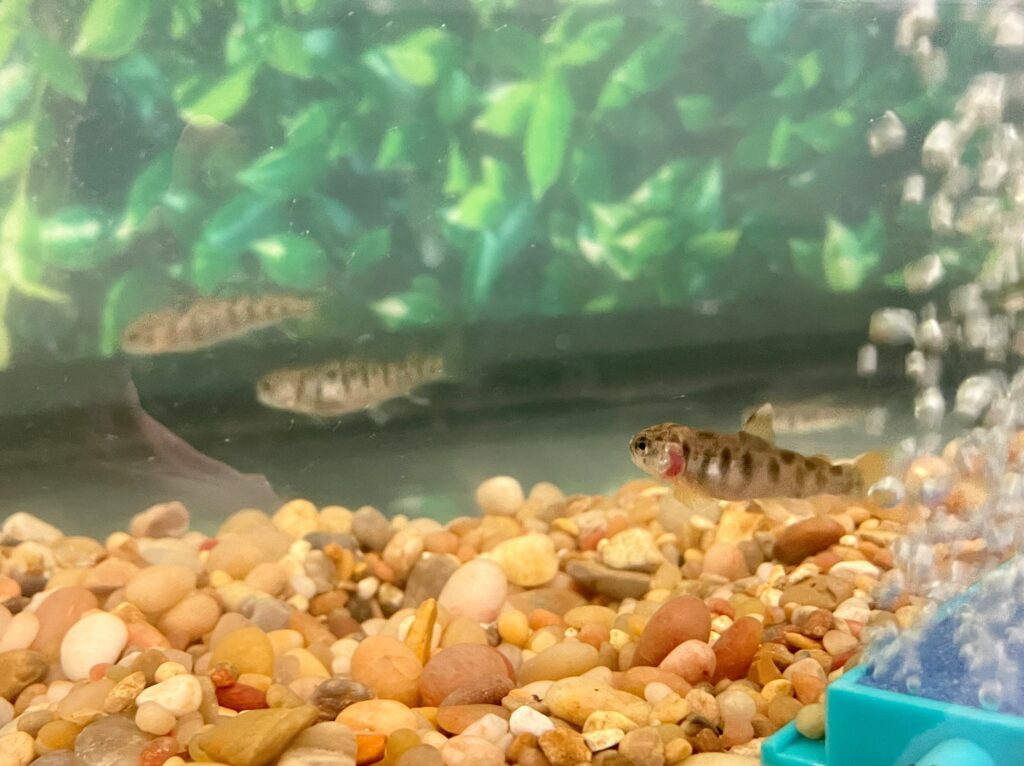
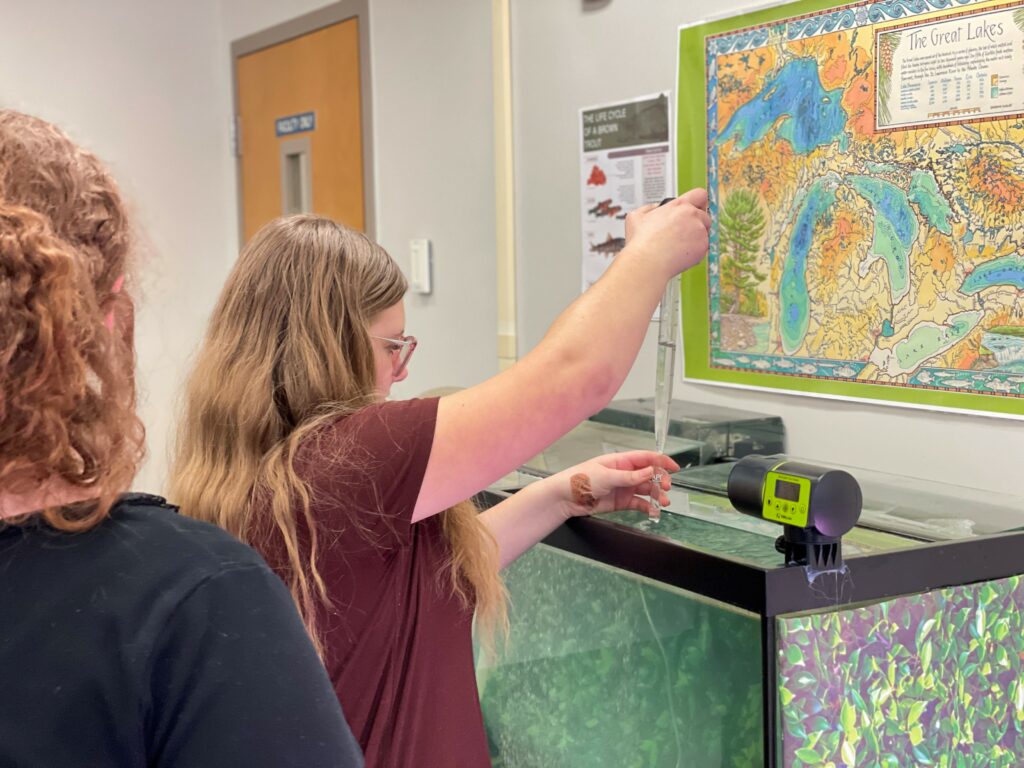
Hurley is also a professor in the Department of Civil and Environmental Engineering at the University of Wisconsin-Madison. His research interests include the cycling of mercury in the Great Lakes. He is the third director in Wisconsin Sea Grant’s history, having taken the helm in 2012. From 2017 to 2019, he also served as president of the national Sea Grant Association.

“I’m fortunate to be able to build on the foundation laid by my predecessors, founding director Bob Ragotzkie and Anders Andren,” Hurley said. “As the Sea Grant program was being created on the national level in the 1960s, Ragotzkie really stood up for the Great Lakes to ensure that these inland seas were a part of the program, and not just our ocean coasts. We are still reaping the benefits of his vision. We’re also actively considering how we can best serve the people of Wisconsin and the Great Lakes in our present moment and moving forward.”

Wisconsin Sea Grant works in many areas, from commercial fisheries and aquaculture, to aquatic invasive species, to dealing with emerging contaminants in our water. It is a program of the University of Wisconsin System, with headquarters on the Madison campus and additional staff at field offices around the state, including Superior, Green Bay, Manitowoc, Milwaukee and Kenosha County.

The organization also funds a robust portfolio of Great Lakes- and water-related research conducted at campuses around the state.

Zoom link:
https://uwmadison.zoom.us/j/95345823876?pwd=QlplY1o3TnJDbXBGRG40U1o3UW1idz09 
Meeting ID: 953 4582 3876
Passcode: 306955
One tap mobile
+13017158592,,95345823876# US (Washington DC)
+13126266799,,95345823876# US (Chicago)  

The River Talks are sponsored by The Lake Superior National Estuarine Research Reserve and the Wisconsin Sea Grant Program.

The post River Talk series ends season with exploration of Sea Grant’s past and future first appeared on Wisconsin Sea Grant.

Original Article

News Releases | Wisconsin Sea Grant

News Releases | Wisconsin Sea Grant

https://www.seagrant.wisc.edu/news/river-talk-series-ends-season-with-exploration-of-sea-grants-past-and-future/?utm_source=rss&utm_medium=rss&utm_campaign=river-talk-series-ends-season-with-exploration-of-sea-grants-past-and-future

Marie Zhuikov

Teacher mentor program connects both teachers and students

Teachers with a passion for the Great Lakes are sharing their expertise across the region with other teachers in a program that benefits the educators and their students. The mentor program, organized by the Center for Great Lakes Literacy (CGLL), is funded through the Great Lakes Restoration Initiative.

Wisconsin is home to five teacher mentor/mentee pairs. They’re organized by Anne Moser, senior special librarian and education coordinator for Wisconsin Sea Grant. She explained that this is the first formal year of the program and that it’s growing.

“The teachers we chose for mentoring are really dynamic Great Lakes educators,” Moser said. “They’re so committed to bringing place-based education to their students and then sharing that love for Great Lakes literacy with either colleagues in their school or with their wider community.”

The mentors were chosen from a pool of teachers who had participated in past CGLL programs. Moser explained these teachers are always, “thinking through the lens of the Great Lakes. Whatever they’re teaching, they’re drawing on their knowledge of the watershed.”

The program kicked off last June with a two-day workshop where the mentors and mentees got to know each other better and plan which activities they wanted to work on. A check-in this past fall included a professional learning opportunity, featuring a presentation by Jackson Parr, the J. Philip Keillor Flood Resilience-Wisconsin Sea Grant Fellow who is working with communities on flooding issues. In January of this year, the teachers were introduced to the Watershed Game, an interactive, educational tool that helps people understand the connection between land use and water quality.

Kelly Kollar, Bay View Middle School. Submitted photo.

One of the mentors is Kelly Koller, technology integration specialist at Bay View Middle School in Green Bay. She actually has two mentees: Mona Forbes, an eighth-grade science teacher, and Chandra Johnson, a special education teacher.

Koller first became involved in mentoring when she applied to one of the CGLL summer professional learning workshop aboard the Denis Sullivan sailing ship in 2019. That experience showed her the value of such relationships. For her current mentoring connection, she’s working with Forbes and Johnson to provide their students with opportunities like raising brown trout in the school library and growing wild rice plants.

Koller works in the library and thought the fish would be a great addition. “We didn’t have any pieces of student engagement that were living. Everything is books and decorations, and I thought fish would be an addition that would capture students’ interest.”

Koller organized the fish rearing through Trout in the Classroom, a program offered by Trout Unlimited. By raising the fish from egg stage to adult, the students gain knowledge about the fish and the environment where they live. The goal is to release the trout into a local stream, under the guidance of the Wisconsin Department of Natural Resources.

The wild rice project is being done in conjunction with the University of Wisconsin-Green Bay, which provided the seeds and equipment. The goal is to plant the rice in a wetland the university is working to restore.

Brown trout raised in the library by students at Bay View Middle School in Green Bay. Submitted photo.

Koller explained she did the heavy lifting to get the projects started so that the weight of organizing didn’t all fall on the mentee teacher’s shoulders, since they had enough challenges already teaching during a pandemic. To orient Johnson’s students to the fish’s environment, she organized a boat trip on Green Bay through Hands on Deck, a local nonprofit.

“So, even before the students started putting together our trout tank and receiving the trout eggs, they were learning about the Great Lakes through being on one of them. Any time you have a shared outdoor experience it helps build relationships and a positive sense of community,” Koller said.

After navigating two months of start-up challenges, Koller received the agency permissions needed to house the tank. Johnson’s students set up the tank and then Forbes’s students took over once the eggs arrived. Three middle-schoolers have shown impressive dedication: Mercades Bryfczynski, Sandra Thompson and Emily Jarmuskiewicz.

Students at Bay View Middle School test the water quality of their trout tank. Submitted photo.

“They do all the water measurements on their own. They take the pH level, the ammonia level, they change out water daily. They’ve been just wonderful about the caretaking involved with the trout and seeing them grow,” Koller said.

Despite a rough start one weekend after the automatic feeder malfunctioned and a third of the larval trout died, the students said the experience of caring for the fish has made them more interested in nature.

“I’ve been having a little bit more fun in science, learning about the fish,” said Bryfczynski. She also said that seeing the tank sparks interest from other students in the library. “We’ve had people come in and ask us questions about the fish, like how big they’re going to get or how old they’re going to live, and what we do with the tank.”

Jarmuskiewicz said that learning about the fish’s life cycle has sparked her interest in biology. Thompson has also enjoyed watching the fish grow under their care.

When asked if they are excited to release the fish into the wild, the girls all replied with a resounding, “Yes!”

“We hope that they’ll be healthy because they grew up healthy with us, and that they’ll stay healthy in the river once we release them,” Bryfczynski said.

A student tends to the wild rice in a project done in conjunction with the University of Wisconsin-Green Bay. Submitted photo.

At the end of the school year, Moser said the mentor/mentees and their students will gather together for a student showcase. This will offer the students an opportunity to present their project and receive feedback from other students across Wisconsin and Minnesota. In summer, mentor/mentee pairs will be invited to their own summit where they can provide the CGLL network feedback about their experiences. The goal of both events is to build a community of educators passionate about Great Lakes literacy and to build a community of youth who will be future stewards of the Great Lakes watershed.

“It’s been an exciting year, even as we have had to navigate the challenges of a global pandemic. To work with such passionate and resilient educators has been a gift,” Moser said.

A new mentor/mentee cohort will be formed in the fall of 2022. Please contact Anne Moser if you are interested in learning more.

The post Thinking through the lens of the Great Lakes first appeared on Wisconsin Sea Grant.

Original Article

News Releases | Wisconsin Sea Grant

News Releases | Wisconsin Sea Grant

https://www.seagrant.wisc.edu/news/thinking-through-the-lens-of-the-great-lakes/?utm_source=rss&utm_medium=rss&utm_campaign=thinking-through-the-lens-of-the-great-lakes

Marie Zhuikov

A free online video game for children about a Great Lakes shipwreck is now available. “The Legend of the Lost Emerald,” is a point-and-click adventure game designed for players grades 4-6. It was developed by the University of Wisconsin-Madison’s Field Day Lab in partnership with Wisconsin Sea Grant, PBS Wisconsin Education and the Wisconsin Historical Society. Teacher fellows offered insights at every step of the game’s development. Funding was provided by PBS Wisconsin Education with additional help from the Wisconsin Coastal Management Program and Sea Grant.

Players must use critical thinking and historical inquiry skills to find the wreck as they step into the shoes of Jules, a maritime archaeologist, with help from a cast of diverse family members. Players dive underwater to gather clues, build evidence and uncover the real treasure – stories of shipwrecks inspired by Great Lakes history. It takes two classroom sessions to complete (about 2 hours).

“The goal of the game is to connect students with the maritime history in their own state – to go beyond the story of the Titanic,” said Anne Moser, senior special librarian and education coordinator for Wisconsin Sea Grant. “It includes topics like lake ecology, maritime archaeology, trade and commerce.”

The post Online shipwreck game educates players first appeared on Wisconsin Sea Grant.

Original Article

News Releases | Wisconsin Sea Grant

News Releases | Wisconsin Sea Grant

https://www.seagrant.wisc.edu/news/online-shipwreck-game-educates-players/?utm_source=rss&utm_medium=rss&utm_campaign=online-shipwreck-game-educates-players

Marie Zhuikov

An ovenbird rests on a branch in the St. Louis River Estuary. Image credit: National Lake Superior Estuarine Research Reserve

The next River Talk will take place at 7 p.m., Wednesday, April 13, via Zoom. Alexis Grinde with the Natural Resources Research Institute and Cole Wilson with the University of Wisconsin-Madison, will present, “Black ash and birds: conserving critical habitat in the St. Louis River Estuary.”

Black ash tree wetlands in the St. Louis River Estuary are unique forests that support diverse bird species. Grinde and Wilson will discuss current research revealing how birds use these habitats and the possible impacts of ash tree death caused by the invasive emerald ash borer. 

Here is the Zoom link and info:
https://uwmadison.zoom.us/j/94381805869?pwd=QXJ6SzZaelpEVVFKdFdUSEhDaUVCUT09 
Meeting ID: 943 8180 5869
Passcode: 582749
One tap mobile
+19292056099,94381805869# US (New York)
+13017158592,94381805869# US (Washington DC)  

The event will last an hour and will include time for comments and questions. The talk will be recorded and posted afterward on the Reserve’s Facebook page and YouTube. A summary will also be posted on Wisconsin Sea Grant’s blog.

The remaining River Talk for this season will be held on May 11. For more information, visit the River Talks page: go.wisc.edu/4uz720.

The River Talks are sponsored by The Lake Superior National Estuarine Research Reserve and the Wisconsin Sea Grant Program.

The post Black ash and birds featured at River Talks first appeared on Wisconsin Sea Grant.

Original Article

News Releases | Wisconsin Sea Grant

News Releases | Wisconsin Sea Grant

https://www.seagrant.wisc.edu/news/black-ash-and-birds-featured-at-river-talks/?utm_source=rss&utm_medium=rss&utm_campaign=black-ash-and-birds-featured-at-river-talks

Marie Zhuikov

A River Talk participant forms a wild rice knocker into shape during the March talk. Image credit: Michael Anderson

The River Talk for March was held as an evening in-person event during the 12th annual St. Louis River Summit at the University of Wisconsin-Superior.

This particular talk required hands-on participation. Marne Kaeske, cultural preservation specialist with the 1854 Treaty Authority, led an activity where attendees constructed their own wild rice harvesting sticks, called, “Bawa’iganaakoog” in Ojibwe. Wild rice is a grass that can grow to reach 8 feet tall.

River Talkers use the wall to brace their work on wild rice knocking sticks. Image credit: Michael Anderson

Kaeske explained that she learned to make rice knockers from cedar because the wood is lightweight. Rice is harvested by two people. One paddles or push-poles the canoe through the wild rice (manoomin) beds found in wetlands while the other uses the sticks to bend the rice over the canoe, tapping the wild rice seeds into it. Hand-harvesting wild rice can be time-consuming, so the lighter the sticks, the less tired a ricer’s arms will get.

Different resource management agencies have different requirements for the length of wild rice sticks. Kaeske said current 1854 Treaty Authority Ceded Territory Code regulations call for “round, smooth cedar, no longer than 32-inch” sticks. In Wisconsin, they can be 38 inches.

One problem in efforts to preserve wild rice beds comes from people harvesting the rice too early. “We live by the clock and the calendar nowadays instead of by waiting and living on the rice lake until it’s time to rice,” Kaeske said. When people harvest the rice before it is mature, it lessens the good seed for the next year’s crop and can damage the plants.

“When you harvest wild rice, you’re also reseeding the lake,” Kaeske said. “Rice is an annual plant.”

Rice knockers aren’t something a person can buy in a store. Kaeske showed the audience how she learned to do it. After a short introduction, she offered the tools needed (measuring tape, planers and an ax) and let participants “go to town” on the wood she provided.

She explained that all the bark needs to be removed as well as any rotten wood. The sticks are usually tapered, larger where the hand grips and smaller on the ends.

By the end of the class, everyone had sticks to take home and they were ready for ricing season, which usually occurs in late summer or early fall.

The remaining River Talks for this season will be held April 13 and May 11. For more information, visit the River Talks page: go.wisc.edu/4uz720.

The post A River Knock first appeared on Wisconsin Sea Grant.

Original Article

Blog | Wisconsin Sea Grant

Blog | Wisconsin Sea Grant

https://www.seagrant.wisc.edu/blog/a-river-knock/?utm_source=rss&utm_medium=rss&utm_campaign=a-river-knock

Marie Zhuikov

Mural #2 in the Superior Public Library by Carl Gawboy. It shows the area where the Ojibwe settled on Wisconsin and Minnesota points on Lake Superior and how the points were separated by a giant otter. Image taken with permission by Marie Zhuikov, Wisconsin Sea Grant.

During the latest St. Louis River Summit, I had the chance to attend a field trip to the library in Superior, Wisconsin. What’s in a library that could relate to the summit? A series of 35 murals line its walls, showing the history of the area. Many feature the St. Louis River, Duluth-Superior Harbor and Lake Superior.

The murals were painted over 10 years by artist Carl Gawboy, an Elder enrolled in the Bois Fort Band of Chippewa. The murals begin with the Ojibwe creation story and continue through the 20th century, reflecting how people have interacted with the landscape through time.

Local historian and retired librarian Teddie Meronek led the tour. “I like to say I was here at the birth of the murals, but that started long before any paint went on canvas,” Meronek said. She described how Paul Gaboriault, the library director who commissioned the murals, was a former co-worker of Gawboy’s. Gawboy was born in Cloquet, Minnesota, and grew up on a family farm outside of Ely. He eventually taught at Ely High School, which is where he met Gaboriault. The friends both ended up back in the Twin Ports.

To research the murals, Meronek studied Gaboriault’s and Gawboy’s correspondence. She said the library used to be a Super One grocery store. “If you really look at this building it was just a big warehouse. It wasn’t built for a library. Dr. Gaboriault knew, in his way, that it needed something, and the first thing he thought of were murals.”

The second mural in the series shows the story of how the Superior Harbor opening was created through Wisconsin Point. A giant otter digs as a Native man approaches.

“The great otter represents the Ojibwe religion,” Meronek said. “He is breaking an entryway from Lake Superior into the harbor. The human figure is Nanabozho. He is bringing arts and fire to the land. That was Carl’s interpretation of the legend. The otter is pictured as being so large because it’s representing power.”

According to Gawboy, Lake Superior ties all the murals together, Meronek said. “You can’t always see it in every mural but it’s there. It influences what is going on, which is very true. I’ve lived three blocks from the bay of Lake Superior every day of my life and I can tell you there’s not a day that goes by that the lake doesn’t influence you in some way.”

The location of the horizon line also links the paintings. Meronek said it’s in the same place in each image. As she walked past the murals, she described each one, sharing her impressive knowledge of local history along with personal observations. Other murals include notable buildings and personages, as well as historic events.

Meronek ended the tour on a somber note at a mural of the Edmund Fitzgerald. She often listens to Gordon Lightfoot’s song about the ill-fated ship. “There’s one line in it that always makes me cry: ‘Does anyone know where the love of God goes when the waves turn the minutes to hours.’ Always beware of Lake Superior, right? I can’t even put my foot in it, it’s too cold! What a beautiful thing though, isn’t it? It’s the greatest of the Great Lakes, right? An inland ocean.”

If you’re ever in Superior, stop in the library and take a look. Of course, if you’re not a Superior resident, you can’t check out a book, but you can check out the murals, so to speak. Not planning a visit soon? You can also see the murals online.

The post Superior Public Library murals tied together by water first appeared on Wisconsin Sea Grant.

Original Article

Blog | Wisconsin Sea Grant

Blog | Wisconsin Sea Grant

https://www.seagrant.wisc.edu/blog/superior-public-library-murals-tied-together-by-water/?utm_source=rss&utm_medium=rss&utm_campaign=superior-public-library-murals-tied-together-by-water

Marie Zhuikov