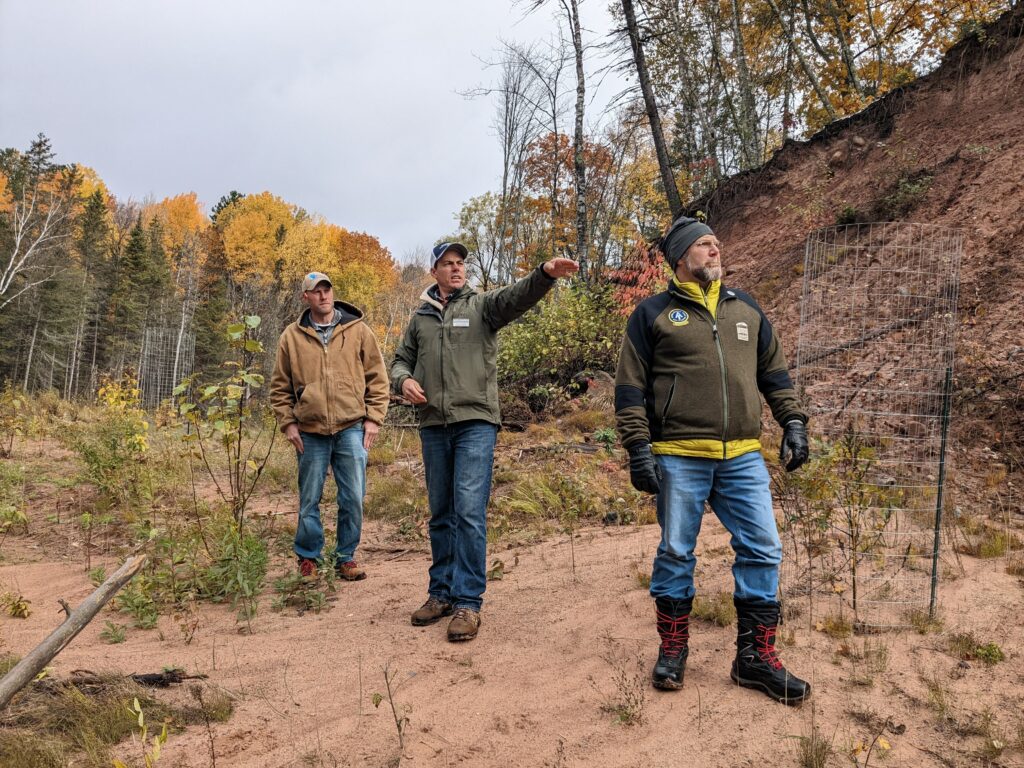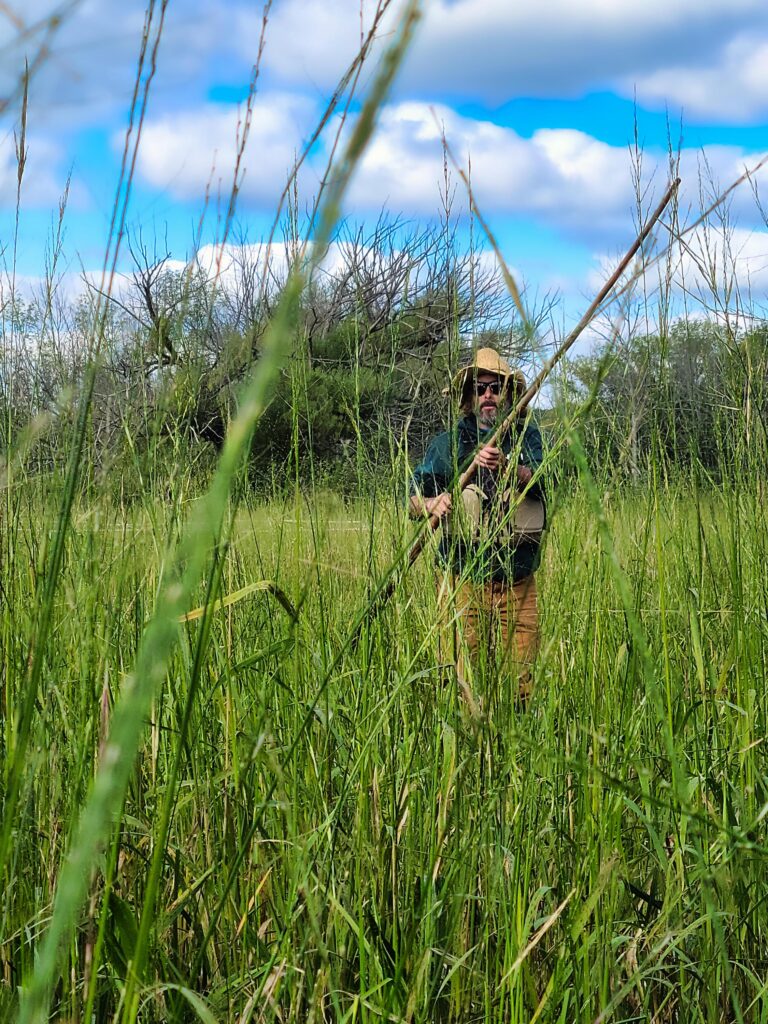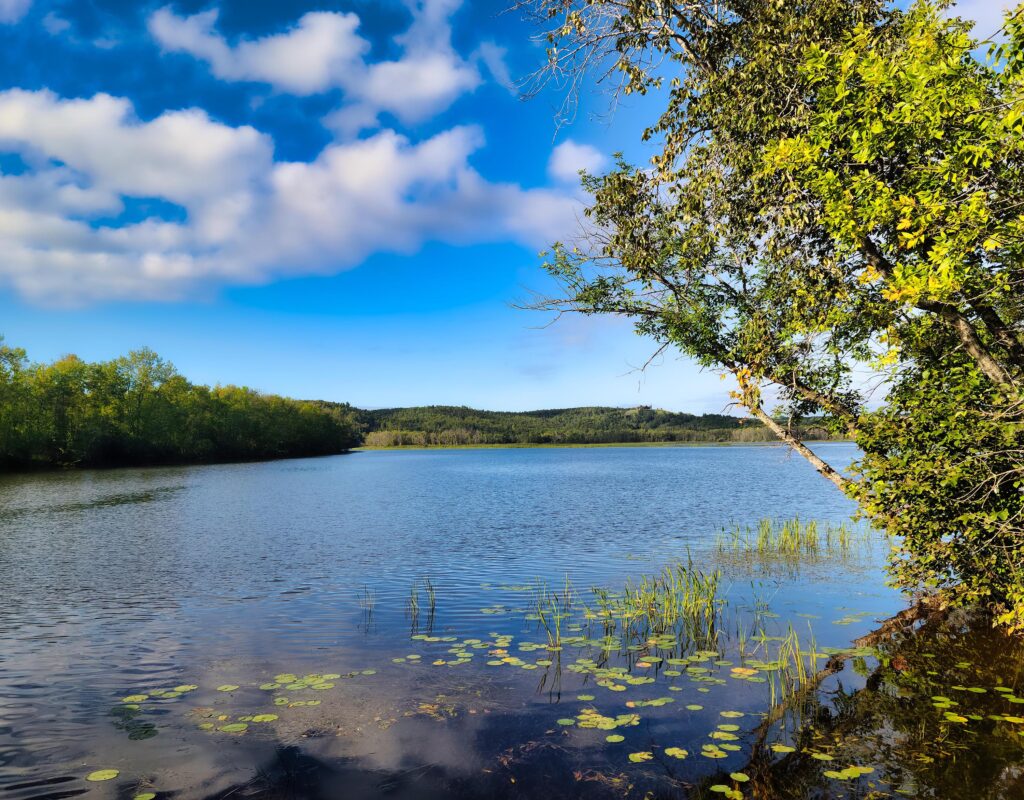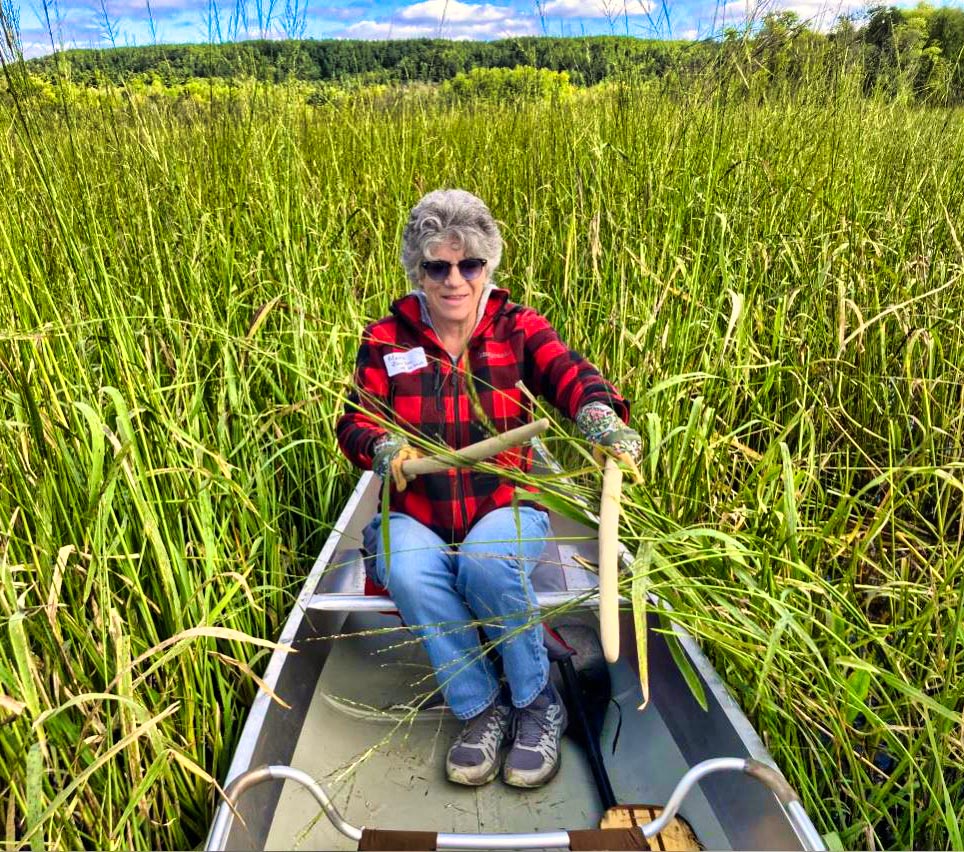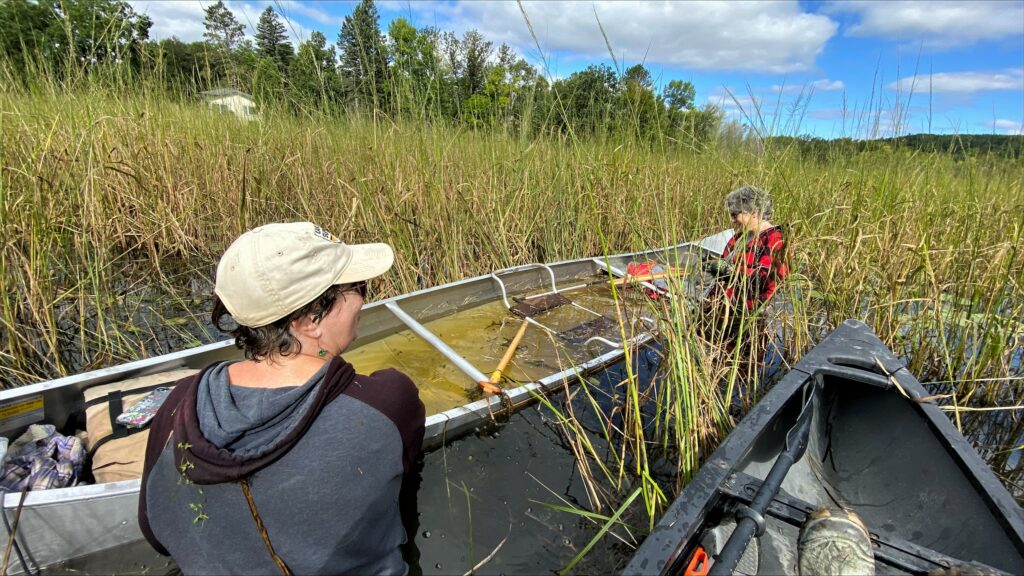
A Wisconsin Sea Grant-funded research project about the role fire historically played on Wisconsin and Minnesota points along Lake Superior is the topic of a new children’s book.

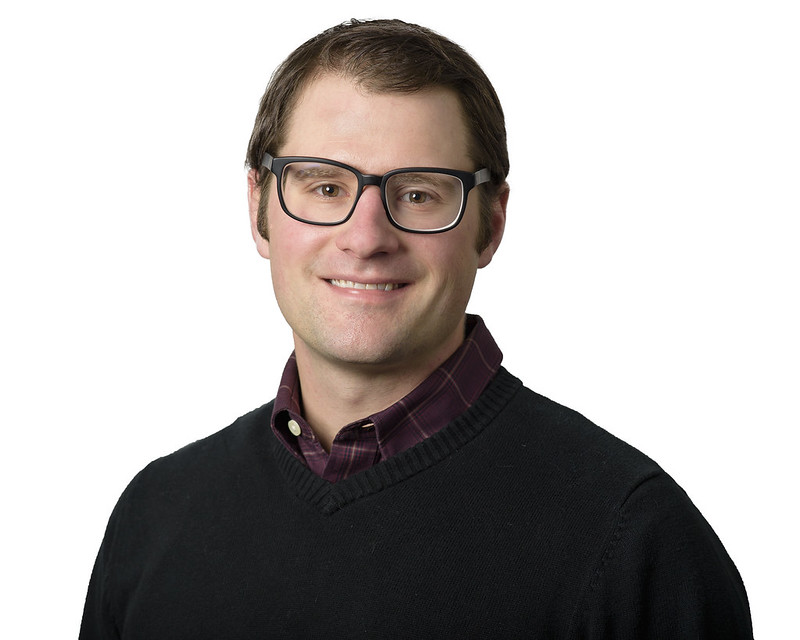
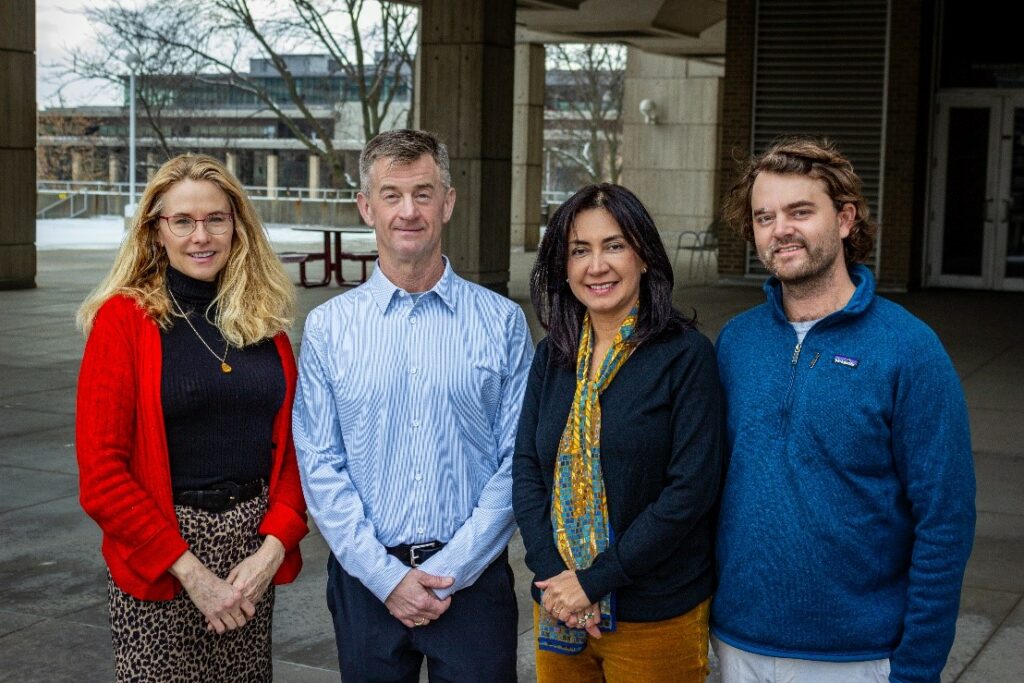
“Ishkode: A Story of Fire” was authored by research project managers Evan Larson and Nisogaabokwe Melonee Montano with a forward by Robin Wall Kimmerer. It features illustrations by Moira Villiard and was published by Black Bears and Blueberries Publishing of Wisconsin. The story invites readers into a stand of ancient red pines where a grandmother red pine, who has witnessed centuries of connection between people, fire and the land, guides a young woman toward healing and renewal.

“The book is a celebration of hope, healing and lessons we can learn from the land,” said Larson, a professor in the department of environmental sciences and society and a dendrochronologist with the University of Wisconsin–Platteville. He said the book emerged from over a decade of collaboration among Great Lakes researchers and community members. “‘Ishkode: A Story of Fire’ intertwines Indigenous and Western scientific knowledge to share a story of the deep, long-term relationships among people, fire and pines—and the wider web of life in Great Lakes ecosystems, including blueberries,” Larson said.

“The Anishinaabe used fire for ceremonies, to promote plant growth, and to care of the land,” said Montano, a Red Cliff tribal member and a University of Minnesota graduate student who is managing the research project with Larson. “The intentional, controlled use of fire by people shapes fire history in the region. Our book brings these connections to light.”

Larson added, “Our intent was to share the lessons we learned through this work, not just scientists and managers, but also children. When we first started talking about creating this book, I had a vision in my mind’s eye of a grandmother or parent reading to a child, and in that way, starting to rekindle the stories around fire that have been shared for generations. This is one way we can help rebuild a positive relationship with fire as a society – from the ground up with our children, creating opportunities for generations to come to recognize fire as an important part of Great Lakes landscapes and cultures.”

More information about the Ishkode project can be found here. “Ishkode: A Story of Fire” is available in hard cover for $17.95 from Black Bears and Blueberries Publishing.

The post Sea Grant research project inspires children’s book first appeared on Wisconsin Sea Grant.

Original Article

News Releases | Wisconsin Sea Grant

News Releases | Wisconsin Sea Grant

https://www.seagrant.wisc.edu/news/sea-grant-research-project-inspires-childrens-book/
Marie Zhuikov

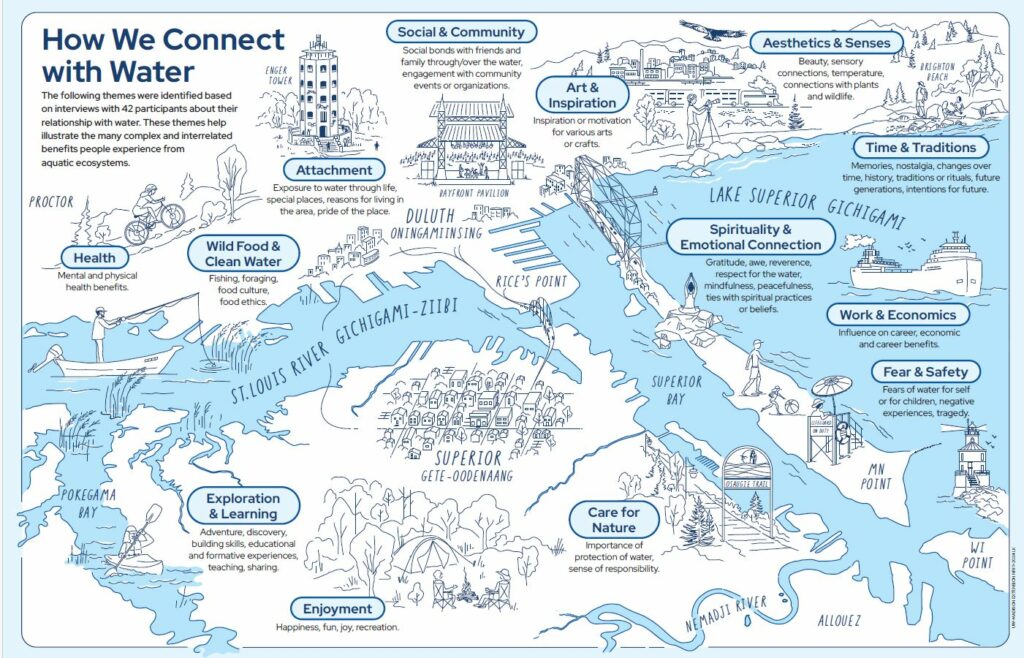
The U.S. Environmental Protection Agency has published the results and recommendations that came from a 2021-22  Waterway Benefits Study of the St. Louis River Estuary. The study was conducted to explore the estuary community’s deep connections to the St. Louis River, Lake Superior, and local streams to help increase access and guide decision-making.

During the study, 532 residents were surveyed about their experiences with Lake Superior, the Estuary, and local streams in the previous year. Follow-up interviews were conducted later with 42 survey participants about their relationships with water. This fact sheet offers an overview of the study’s findings. 

Other project partners include the Lake Superior National Estuarine Research Reserve and the University of Minnesota Duluth.

The post How people connect to the St. Louis River Estuary first appeared on Wisconsin Sea Grant.

Original Article

Blog | Wisconsin Sea Grant

Blog | Wisconsin Sea Grant

https://www.seagrant.wisc.edu/blog/how-people-connect-to-the-st-louis-river-estuary/

Marie Zhuikov

Reverse osmosis membranes could revolutionize nanoplastic sampling in the Great Lakes

Nanoplastics continue to build up, largely unnoticed, in the world’s bodies of water and inside people’s bodies. Image of Lake Mendota by Marie Zhuikov, Wisconsin Sea Grant.

The target is small. Very small. Researchers have shined the light on environmental dangers posed by microplastics – small pieces of plastic from clothing and packaging that pollute waterways. Now, however, they are also focusing on nanoplastics, which are even smaller plastic particles – invisible to the naked eye and even under a regular microscope, and smaller in diameter than a human hair.

Linked to cardiovascular and respiratory diseases in people, nanoplastics continue to build up, largely unnoticed, in the world’s bodies of water and inside people’s bodies. They’re everywhere. Researchers think nanoplastics may be more harmful than microplastics because, “The smaller their size is, the higher toxicity they have,” said Haoran Wei, assistant professor in the department of civil and environmental engineering at the University of Wisconsin-Madison. “There’s a higher surface area on nanoplastic particles, which can accumulate more toxic chemicals and other contaminants on their surfaces. They’re small enough to get into living cells, so can directly harm creatures in the Great Lakes.”

Unfortunately, the presence and distribution of nanoplastics in the Great Lakes is still largely unknown. One reason is that current sampling methods are onerous – requiring collection and transport of hundreds to thousands of gallons of water from the lakes into the lab for analysis.

There’s got to be a better way, right? Thanks to Wisconsin Sea Grant funding, Wei and Mohan Qin, also an assistant professor at the department of civil and environmental engineering at UW-Madison, are working to solve the problem by looking at a new use for an old technology.

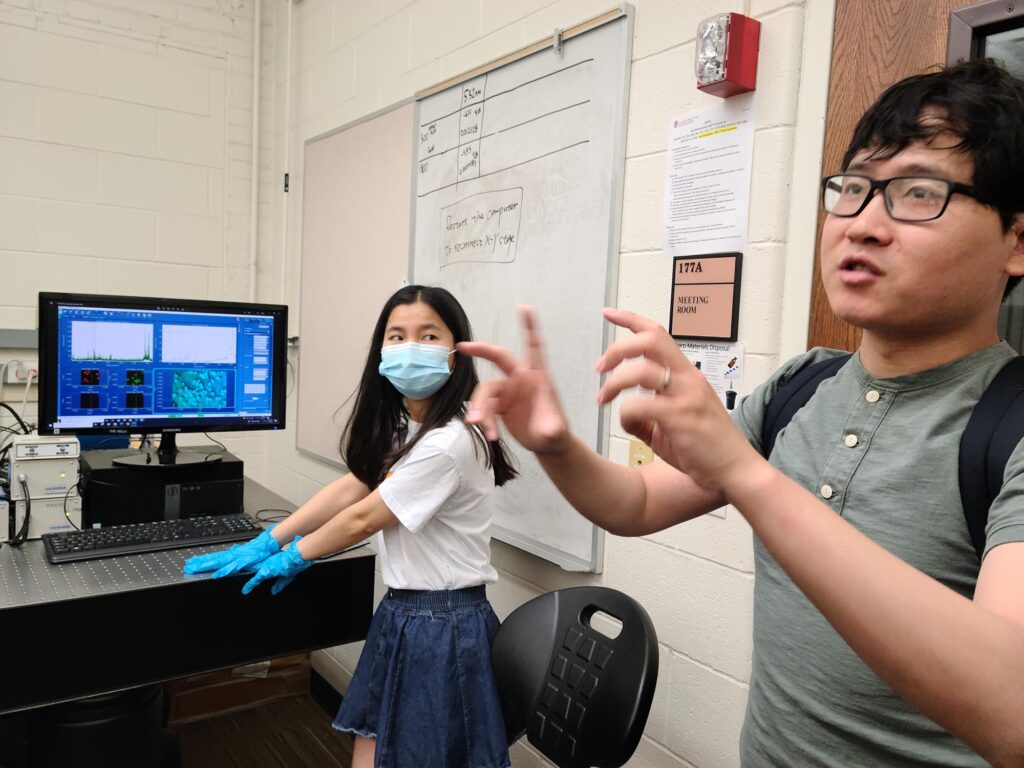
Haoran Wei (right) explains how microplastic and nanoplastic samples are analyzed in the lab while Ziyan Wu, a Ph.D. student on the project, watches. Image credit: Marie Zhuikov, Wisconsin Sea Grant

Desalinization plants have long used semipermeable membranes to take salt out of seawater through reverse osmosis. The membranes, made of polymers, have tiny pores that allow pressurized water to flow through them but catch things like salt. They can also catch nanoplastics. Qin and Wei are developing a portable membrane filtration device that researchers can use on a ship to process large volumes of water out on the lake instead of bringing the water back to the lab. They’ll collect the nanoplastics on a series of membranes and just bring those, or a concentrated water sample, back to the lab for analysis.

Sarah Janssen, a supervisory research chemist with the U.S. Geological Survey, is going to help Qin and Wei with the project this summer in coordination with the U.S. Environmental Protection Agency to collect water samples on their Lake Explorer II research vessel from lakes Superior and Ontario. But before they head out on the ship, they’ll test the membrane filter device with purified water in the lab and later with water from some local lakes, like Lake Mendota.

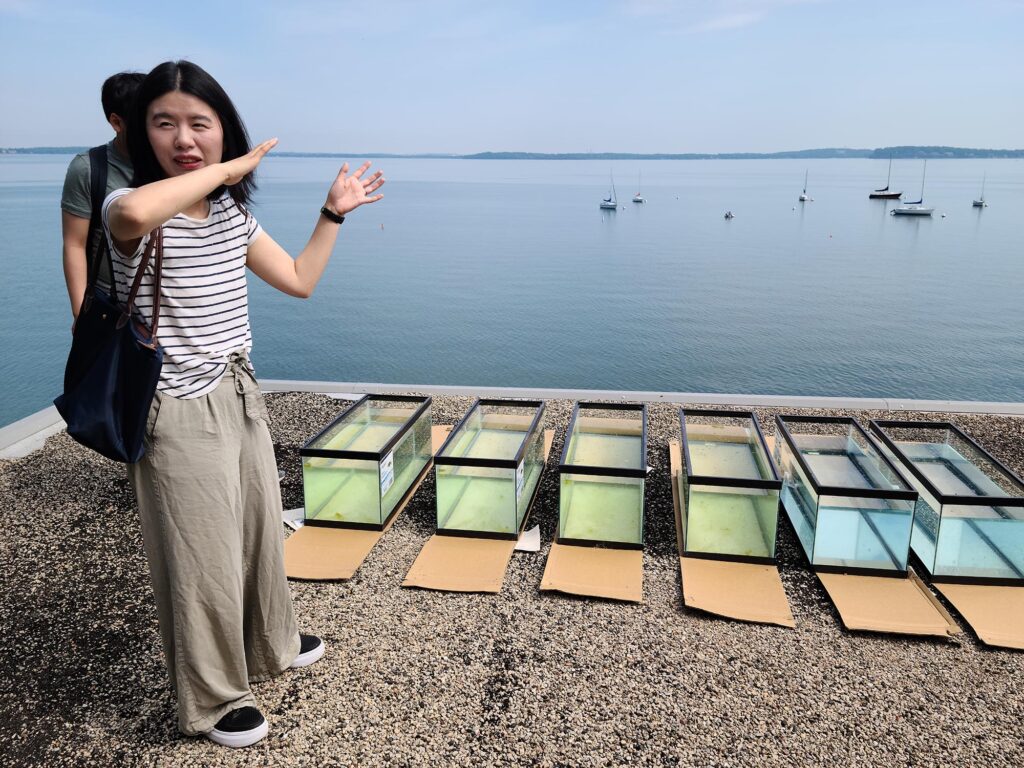
Mohan Qin describes environmental issues caused by nanoplastics while standing next to a different plastics research project conducted atop the Limnology Building at UW-Madison, which looked at how light degrades microplastics. Image credit: Marie Zhuikov, Wisconsin Sea Grant

Wei said that if successful, their project will be the first to develop a sequential membrane filtration sampler that collects and concentrates nanoplastics from a large volume of lake water. “And we definitely will be the first ones to carry this filter on a boat in connection with nanoplastics,” he said.

Qin and Wei will be helped by four college students and hope this method can be used by other agencies and water industries for microplastic and nanoplastic sampling. They also plan to work with Sea Grant’s Emerging Contaminants Scientist, Gavin Dehnert, to bring information about the project to Tribal communities and to participate in events like UW-Madison’s Day at the Capitol. “All my students love Capitol Days,” said Qin. “They will have the opportunity to work with people from the real world and talk about the problems researchers are working on.”

This project is related to a microplastics and food web project that Wei leads which was recently funded by NOAA. He said the goal of that project is to figure out if microplastics and nanoplastics can get into the Great Lakes food web. “We want to see if they get biomagnified up the food chain,” Wei said. “We’re going to do a lot of analysis and bioaccumulation experiments.”

The post A new use for an old technology first appeared on Wisconsin Sea Grant.

Original Article

News Releases | Wisconsin Sea Grant

News Releases | Wisconsin Sea Grant

https://www.seagrant.wisc.edu/news/a-new-use-for-an-old-technology/

Marie Zhuikov

A lake association volunteer works on managing an unwanted aquatic plant in a Wisconsin lake. Image credit: Paul Skawinski

People searching online for control options related to unwanted plants that grow in lakes and rivers use many different terms. Some call them “lake weeds,” other call them “freshwater seaweed,” still others “cabbage.” Rarely do they search with terms that natural resource managers and scientists use, such as the plants’ Latin names or the formal, “submerged aquatic vegetation.”

These are findings of a study on internet keyword search terms conducted by University of Wisconsin-Madison researchers that was recently published in the “Journal of Aquatic Plant Management.”

The Wisconsin Department of Natural Resources estimates that $9.5 million is spent annually on aquatic plant management in the state. About $2 million of this is state funds, the rest is private dollars. Despite this, little funding or effort is dedicated to education specific to aquatic plant management. This study aimed at filling this information gap.

How people search for information about aquatic plants is critical for guiding professionals on best practices for educational programming and outreach. Such education could also steer people away from the ineffective and potentially harmful use of herbicides in lakes and toward more ecologically sound solutions.

The research team composed of Wisconsin Sea Grant’s Tim Campbell and Gavin Dehnert, UW-Madison Department of Life Sciences Communication and Division of Extension’s Bret Shaw, and Luke Huffman, a Ph.D. student in UW-Madison’s Nelson Institute for Environmental Studies, examined 113 search keywords related to aquatic plant management and recorded the top 10 websites that contained those words.

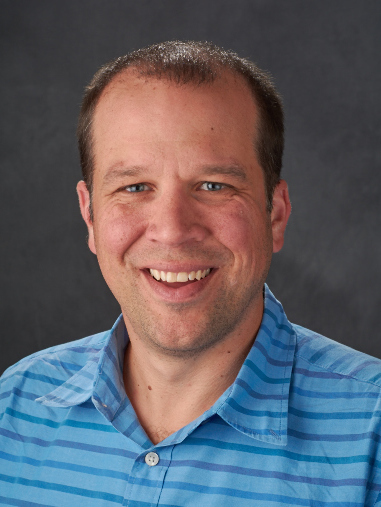
Tim Campbell. Image credit: Wisconsin Sea Grant

“We had 1,130 different websites that popped up,” said Campbell, aquatic invasive species outreach specialist. “What we found across all the keywords was that commercial websites tended to rank higher than institutional and government websites or the mixed websites. Essentially, if you type in a keyword related to aquatic plant management, you’re more likely to get a commercial website than you are a purely information source.

“People appear to be searching for things related to aquatic plant management in a more vernacular colloquial way. As they do that, they’re getting more commercial websites about management, a lot of times, regarding herbicides, which could be why they default to herbicide use as a first choice. And so, the information that we’re putting together, which covers many different management options really isn’t reaching our target audience,” Campbell said.

The research team urged scientists and invasive species program managers to include more generic terms like “lake plants” in their online content and other terms mentioned above so that search engines are more likely to display their content.

Campbell suggested that noncommercial managers, “Just think a little bit more about how we’re writing the content and how that might map out to people looking for it. We probably all want our reports to be seen by our target audience. In this information environment, we need to be using the language of the people we’re trying to reach.”

The study was supported by the Wisconsin Department of Natural Resources and the Great Lakes Restoration Initiative.

The team has a follow-up study planned for this summer where they will produce two versions of aquatic plant management fact sheets — one more scientific and the other with more colloquial terms — and then assess search engine results to see which one captures more internet traffic.

The post When it comes to aquatic plant management, words matter first appeared on Wisconsin Sea Grant.

Original Article

News Releases | Wisconsin Sea Grant

News Releases | Wisconsin Sea Grant

https://www.seagrant.wisc.edu/news/when-it-comes-to-aquatic-plant-management-words-matter/

Marie Zhuikov

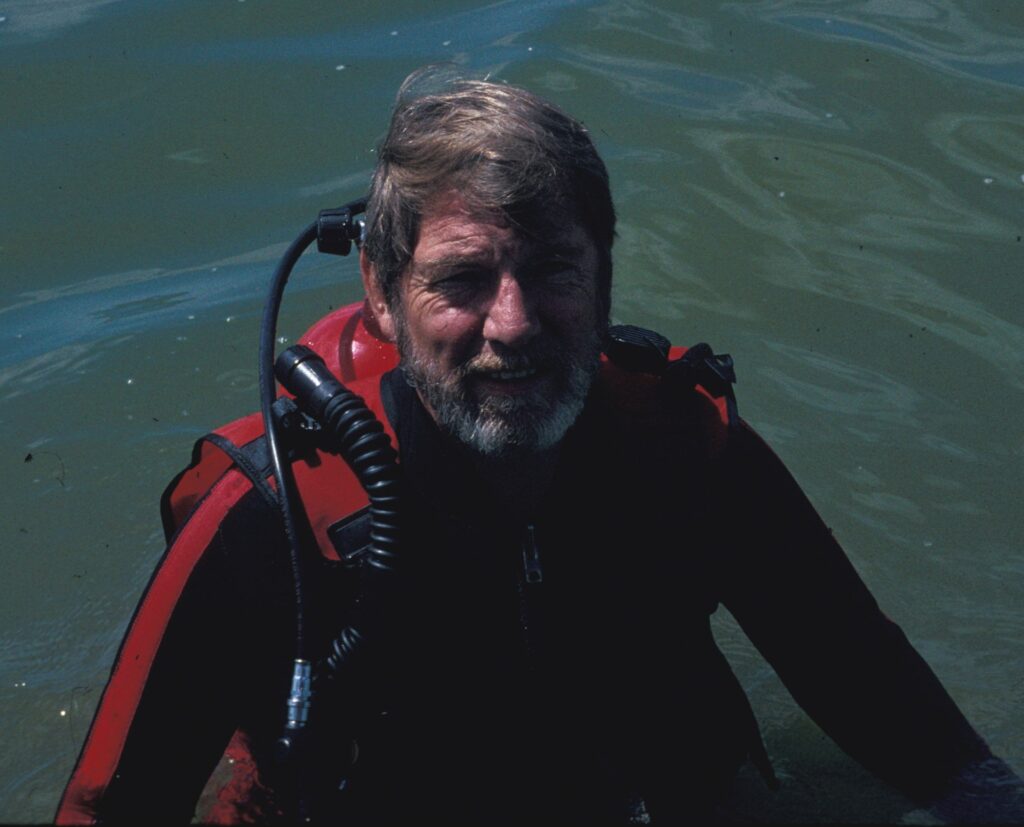
After 34 years of service, University of Wisconsin–Green Bay Professor Emeritus Hallet J. “Bud” Harris is stepping down from Wisconsin Sea Grant’s Advisory Council. During that time, Harris served as chair of the council for 13 years and provided expertise on the bay of Green Bay ecology.

His involvement with Wisconsin Sea Grant began even earlier than that. First Wisconsin Sea Grant Director Robert Ragotzkie supported Harris’ Green Bay research projects and created a Green Bay subprogram that ran for many years.

Bud Harris, submitted image

“If not for Sea Grant, my focus on Green Bay wouldn’t have happened,” Harris said. “A lot of funds were committed to my research and to other researchers who were looking into the ecological health of the bay.”

Harris described his time on the advisory council as, “Great! The diverse Wisconsin geographic connections of people on the council and the diversity of their professions really worked well.”

During his UW–Green Bay teaching career Harris earned many awards. He also amassed a collection of more than 1,400 publications, reports and theses on the bay’s ecology, which is housed in the UW–Green Bay library archives.

“It is gratifying to see how foundational research can result in positive changes for the bay. It’s important for Sea Grant to keep reminding the public that research matters,” Harris added.

With his wife Vickie, Harris worked with the Great Lakes Fisheries Commission, Great Lakes scientists, Green Bay resource managers and stakeholders to create an ecosystem restoration case study, which became the forerunner to the Wisconsin Department of Natural Resource’s Remedial Action Plan for lower Green Bay and the Fox River. The plan was the first of 43 restoration plans in the Great Lakes basin to be approved. It set the bar for stakeholder engagement, involving more than 100 people on eight technical and citizen advisory committees.

For more information on the couple’s careers, please visit this previous Sea Grant story. Harris’ thoughts about serving on the advisory council are noted in this additional story.

The post Harris steps down from Sea Grant Advisory Council first appeared on Wisconsin Sea Grant.

Original Article

Blog | Wisconsin Sea Grant

Blog | Wisconsin Sea Grant

https://www.seagrant.wisc.edu/blog/harris-steps-down-from-sea-grant-advisory-council/

Marie Zhuikov

Nov. 20, 2024

By Marie Zhuikov

We all know that oil spills pollute water. But what might be news is that they can also trigger the release of natural pollutants when the spills reach groundwater. This pollution domino effect is the topic of a current Water Resources Institute-funded study by Matt Ginder-Vogel at the University of Wisconsin–Madison with investigators Beth Parker from the University of Guelph and Jessica Meyer from the University of Iowa.

The team found the perfect real-world location for their two-year experiment in Cottage Grove, Wisconsin, which is about 12 miles east of Madison. This is the site of multiple past organic hydrocarbon (oil) spills from an organic solvent recycling plant. Parker and Meyer actually began studying the area decades ago, tracking the path of the oil pollution in the groundwater of the Tunnel City Aquifer to ensure it doesn’t impact drinking water sources.

A headshot of Matt Ginder-Vogel
Matt Ginder-Vogel. Image credit: UW-Madison

Ginder-Vogel, an associate professor with the UW–Madison’s Department of Civil and Environmental Engineering, said he’s been able to benefit from the hydrological data that Parker and Meyer have collected. Originally, he was interested in looking at radium as a natural aquifer pollutant. But he couldn’t resist the opportunity to study and quantify how the hydrocarbon contaminants might impact radium and other natural pollutants found in the Tunnel City Aquifer, such as arsenic, uranium and strontium. In a previous study, he found that radium levels in the pollution plume were well below the U.S. drinking water standard but were elevated compared to normal background levels.

“It’s just one of these natural experiments that groundwater geochemists like me get really excited about,” said Ginder-Vogel. “It’s rare to find a field site where someone really understands the hydrogeology like Beth and Jesse do and has some historical data on how the water’s been moving around and some basic water chemistry data.” This allowed Ginder-Vogel to ask bigger picture geochemistry questions for this current project.

He described the chemical process by which hydrocarbons release natural pollutants as one where the oil, once it enters the aquifer, depletes the oxygen in the groundwater. “Once you get rid of the oxygen, you drive a whole cascade of geochemical reactions that can dissolve minerals.” The minerals then enter the groundwater from the surrounding rock.

The team is collecting water samples from groundwater monitoring wells placed by Parker and Meyer. They’ll also work with the Wisconsin Geological and Natural History Survey’s core repository (rock cores) to find areas with interesting geochemistry in the aquifer. Then they’ll design lab experiments to explore different conditions they notice in the field to figure out what variables control natural contaminant release into the water.

The results of this research will provide guidance to regulators and water quality managers on the sources of natural contaminants in the Tunnel City Aquifer, which flows under much of southern Wisconsin. In addition, there are other sites in the state where oil spills have occurred, so this research will be applicable to more than just the Cottage Grove area.

“The more we know about how naturally occurring contaminants get released from aquifers and how they move around, the more we’ll be able to keep our groundwater safe for future generations,” Ginder-Vogel said.

The post Oil spills trigger natural pollutants in groundwater first appeared on WRI.

Original Article

News Release | WRI

News Release | WRI

https://www.wri.wisc.edu/news/oil-spills-trigger-natural-pollutants-in-groundwater/

Marie Zhuikov

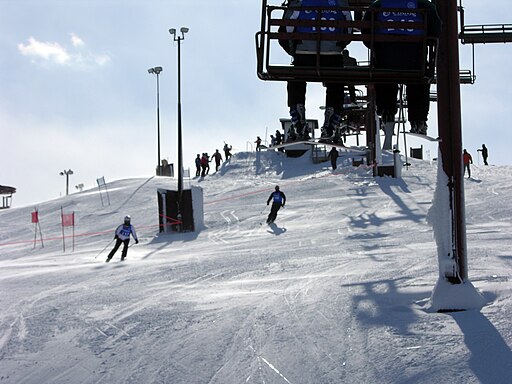
Wilmot Mountain Ski Resort, Wilmot, Wisconsin. Image credit: By Rickdrew at English Wikimedia Commons

Wisconsin ski hills face multiple challenges due to changing snow conditions from climate disruption, plus changes in skier behavior. However, Wisconsin researchers found that the state’s ski operators are adapting to meet these challenges. Their study was published in “Environmental Research Communications.”

During the summer of 2023, Austin Holland, an assistant professor with a joint appointment in the College of Natural Resources and the Center for Land Use Education at UW–Stevens Point and the Division of Extension Natural Resources Institute at UW–Madison, conducted confidential interviews with 25% of the state’s ski hill operators.

From these interviews, Holland discovered that the changing climate, which includes warmer and wetter winters, has shifted the skiing season to later in the year and shortened it. Instead of opening in November and closing in April, hills are now operating from December to March or April. The inconsistency and volatility of weather also makes managing ski hills more challenging. Many interviewees described instances where they made artificial snow only to have temperatures rise quickly to above freezing, followed by rain, which melted the snow or degraded the quality of the ski runs. These weather patterns also required more employee labor to maintain runs.

Wilmot Mountain Ski Resort, Wilmot, Wisconsin. Image credit: By Rickdrew at English Wikimedia Commons

Natalie Chin, Wisconsin Sea Grant climate and tourism outreach specialist and study co-author, said that two adaptations by ski hill operators include snowmaking and subscribing to meteorological data services. “Snowmaking is a necessity now if you’re operating a ski hill in the Midwest. Even though folks started investing in it a while ago, it’s now become something standard,” Chin said. However, increased snowmaking often requires additional equipment. Other adaptations include adding more revenue-generating opportunities in the offseason, like event rentals for weddings and mountain biking.

Natural snowfall and winter conditions are the main things that drive skiers to the hills. If the weather doesn’t feel like winter, they are less likely to participate in winter activities. This is called the “backyard effect.” In other words, if skiers don’t see snow in their backyards, they lose interest in skiing and assume that ski hills aren’t open. Holland said skiers need to understand that, due to investments in snowmaking, “it could be a little warmer than you might expect to go skiing, but you can still go skiing.” Methods to combat the backyard effect involve social media and marketing strategies. Others include livestreams and posting ski condition reports.

Despite concerns about climate change, most study participants felt positive about the future of downhill skiing. “Folks in the ski industry are strongly connected,” said Chin. “So, while they’re not directly cooperating, they can talk to each other about the challenges that they’re facing and try to navigate those together, which is beneficial for everybody.”

A report from Headwaters Economics showed that snow activities accounted for nearly $84 million in gross domestic product in Wisconsin in 2022. “Winter recreation in Wisconsin is really embedded in what people do here,” Holland said. “Everyone has something they do, whether it’s fat tire biking, or ice fishing, hunting, hiking, snowshoeing, cross-country skiing, downhill skiing. It’s part of how people live their life here and has a bunch of different health, mental health and physical benefits, along with tourism revenue.”

Hannah Higgins, a student researcher, contributed to the ski hill study, and input was provided by the Wisconsin Initiative on Climate Change group. The study was collaboratively funded between Wisconsin Sea Grant and the Center for Land Use Education.

This study is just the beginning. Holland and Chin are discussing looking more broadly at winter recreation, what climate impacts are being felt and what winter industries need to do to adapt and prepare. For example, Chin and Holland recently worked with Dylan Cariveau, a UW–Stevens Point Conservation and Community Planning student, to create an interactive story map that outlines regional climate impacts on tourism in Wisconsin.

The post Climate change creates uphill battles at downhill ski areas in Wisconsin first appeared on Wisconsin Sea Grant.

Original Article

News Releases | Wisconsin Sea Grant

News Releases | Wisconsin Sea Grant

https://www.seagrant.wisc.edu/news/climate-change-creates-uphill-battles-at-downhill-ski-areas-in-wisconsin/

Marie Zhuikov

Great Lakes, Great ReadExplore the intersection of science and writing about the Great Lakes during a science café at 6-9 p.m., Nov. 8, Paradise North Distillery (101 Bay Beach Road, Suite 5) in Green Bay.
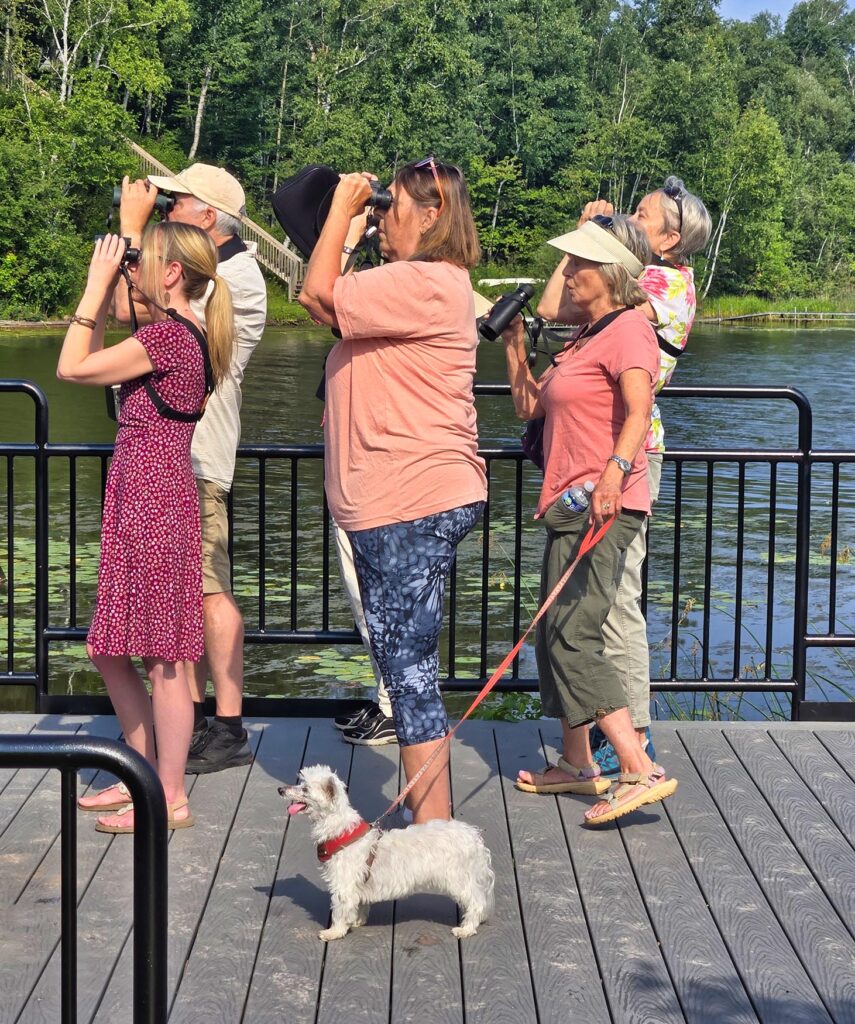
“Connections: The Science + Literature of the Great Lakes,” will feature Sally Cole-Misch, author of “The Best Part of Us,” a book that charts the path of a young girl torn between Great Lakes natural history and urban realities. Cole-Misch will be in conversation with Julia Noordyk, Wisconsin Sea Grant water quality and coastal communities outreach specialist.

Cole-Misch’s book is being featured in the Great Lakes, Great Read Program, which is designed to inspire passion and connection to the Great Lakes Watershed through reading. Noordyk and Cole-Misch will be joined for questions and answers by Joanne Robertson, author of “The Water Walker,” the Great Lakes, Great Read children’s book.

Refreshments will be available. Science café sponsors include Wisconsin Sea Grant, the Green Bay National Estuarine Research Reserve designation, McDonald Companies and the Freshwater Collaborative of Wisconsin.

The post Great Lakes Science Café offered in Green Bay first appeared on Wisconsin Sea Grant.

Original Article

News Releases | Wisconsin Sea Grant

News Releases | Wisconsin Sea Grant

https://www.seagrant.wisc.edu/news/great-lakes-science-cafe-offered-in-green-bay/

Marie Zhuikov

Continuing the tradition of placing early career professionals in Washington, D.C. federal government offices, the National Oceanic and Atmospheric Administration’s National Sea Grant College Program is pleased to announce the finalists for the 2025 class of the Knauss Marine Policy Fellowship program. (Read Sea Grant’s full announcement here.)

This year, for the first time in program history, all eligible Sea Grant programs are represented by a diverse cohort of 88 early-career professionals who will spend the next year working alongside federal agencies or legislative offices in Washington, D.C., applying their academic expertise to critical marine, coastal and Great Lakes policy issues.

Since 1979, the Knauss Fellowship provides graduate students a unique opportunity to gain hands-on experience developing and implementing national policy. This year’s class brings a wide range of experiences and aspirations, reflecting the breadth of the marine and coastal fields. Many of the finalists were motivated by a desire to work at the interface of science and policy and passionate about building sustainable futures and promoting resilient ecosystems.

As in previous years, this year’s finalists were selected through a competitive process that involved review panels composed of national experts in marine science, policy and education. Over the past 45 years, the Knauss Fellowship has supported more than 1,680 students who have significantly contributed to environmental policy and management and built lasting careers. 

“This year’s Knauss Fellowship cohort exemplifies the passion and expertise necessary to address the evolving challenges facing our coasts and oceans,” remarked Jonathan Pennock, Director of the National Sea Grant College Program. “We are confident that their dedication to serving through science will lead to innovative solutions that sustain coastal and marine resources and communities for future generations.”

Knauss Fellow Elizabeth Berg. Image credit: Althea Dotzour, UW–Madison

The Knauss Fellowship is a one-year paid opportunity for current and recent graduates from advanced degree programs to apply their scientific knowledge and experiences to current issues in science, policy and public administration. Students who are enrolled in or have recently completed master’s, juris doctor and doctor of philosophy programs with a focus and/or interest in marine and coastal science, policy, or management apply to one of the 33 eligible Sea Grant programs.

The 2025 finalists represent 70 universities across the country — including 10 minority serving institutions — comprising 44 master’s students, 41 Ph.D. candidates and three J.D. candidates. They are geographers, ichthyologists, ecologists, lawyers, environmental managers and more. They represent communities across the nation and are committed to making meaningful contributions to marine policy.

Among them is Elizabeth Berg, a recent Ph.D. graduate from the University of Wisconsin–Madison in environment and resources. Her research looked at the urban heat island effect in Madison, a phenomenon in which cities experience higher temperatures than surrounding areas due to factors including paved surfaces and buildings that radiate heat. Chris Kucharik, UW–Madison professor of agronomy and environmental studies, was Berg’s advisor.

As part of their fellowship, the 2025 finalists will participate in professional development opportunities, build their networks and have mentorship opportunities. Later this month, the finalists will participate in the placement process, where they will connect with each other and potential host offices. The 46th class of Knauss fellows will officially begin their fellowships in February 2025.

The post UW–Madison grad among 2025 Knauss Marine Policy Fellowship finalists first appeared on Wisconsin Sea Grant.

Original Article

News Releases | Wisconsin Sea Grant

News Releases | Wisconsin Sea Grant

https://www.seagrant.wisc.edu/news/uw-madison-grad-among-2025-knauss-marine-policy-fellowship-finalists/

Marie Zhuikov

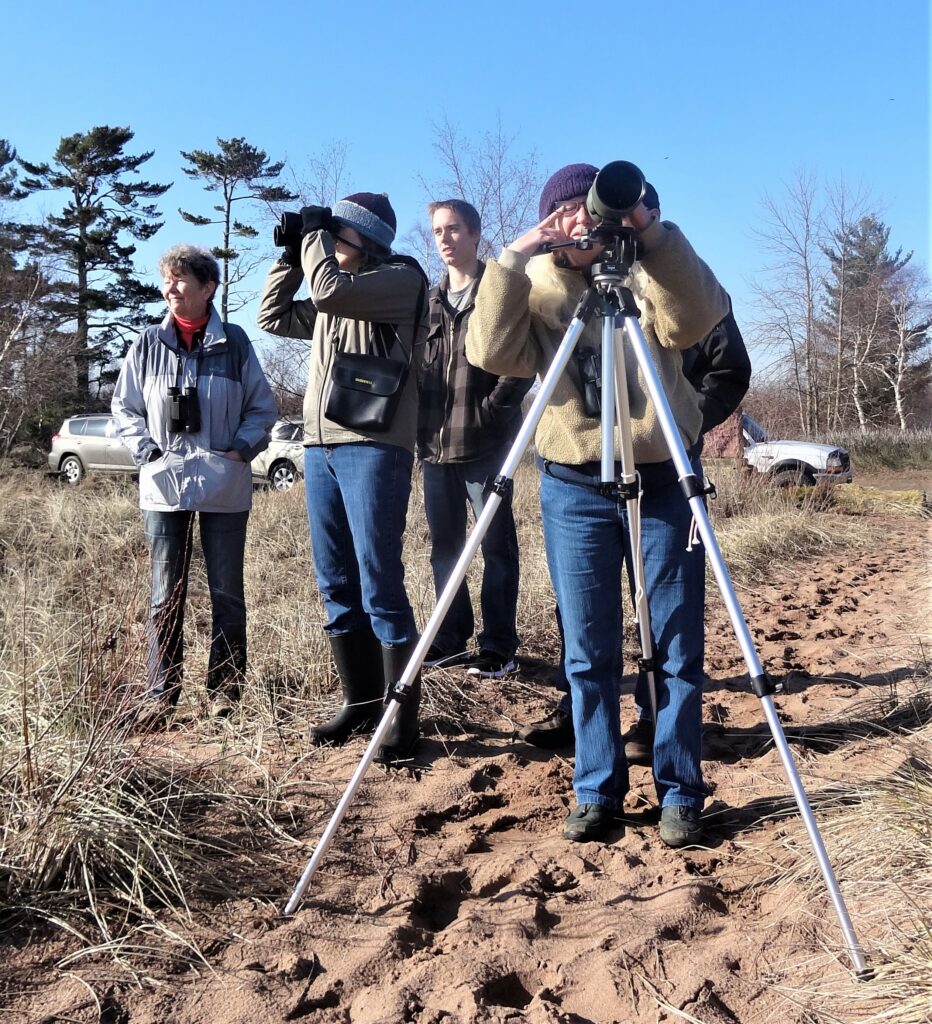
All are invited to attend the final in a series of three free events this year designed for birders of all skills and abilities. Join “Everyone Can Bird: Fall Migration,” 9:45 – 11:45 a.m., Saturday, Oct. 12, at Hawk Ridge Bird Observatory, 3980 E. Skyline Parkway, Duluth, Minnesota.

October is when the largest of the raptors – like bald and golden eagles, red-tailed hawks and American goshawks – migrate through Hawk Ridge. Come join others on fall World Migratory Bird Day to celebrate this movement and indicator of changing seasons.

Birders at the August “Everyone Can Bird” event saw wood ducks in Woodstock Bay in Superior. Image credit: Marie Zhuikov, Wisconsin Sea Grant

People of all ages, disabilities and abilities and bird observation experience are welcome to attend this accessible birding event. A mix of moving and stationary guided activities will be offered, including a special educational program, “Migration Challenge,” starting at 10:15 a.m. Regularly scheduled Hawk Ridge programming continues at 11 a.m. with “Eyes on the Skies.”

American Sign Language interpretation is provided. Binoculars will be available for use, along with a spotting scope, a wheelchair mount for binoculars and portable seating. A track chair – an all-terrain, electric-powered chair that can be used on hiking trails – will be available courtesy of Duluth Parks and Recreation.

Come and stay for the whole time or meet with and leave the group when you need. Light refreshments will be available. There will also be a wheelchair-accessible portable bathroom on-site.

Registration is encouraged but not required. Free bus transportation is provided at 9:10 a.m. from the Superior Public Library (1530 Tower Avenue) and at 9:15 a.m. from Lakeview Covenant Church (1001 Jean Duluth Road, Duluth) to Hawk Ridge. Please register to reserve your spot on the bus. (https://bit.ly/3BpftVA)

This event is designed with access in mind, but people needing additional accommodations should email Luciana.Ranelli@wisc.edu or call Luciana at (715) 399-4085 as soon as possible.

The Friends of the Lake Superior Reserve, Duluth Parks and Recreation, Embark Supported Employment, Hawk Ridge Bird Observatory, Lake Superior Reserve, Minnesota Land Trust and Wisconsin Sea Grant are hosting this event.

The post Everyone Can Bird, Fall Event Scheduled first appeared on Wisconsin Sea Grant.

Original Article

News Releases | Wisconsin Sea Grant

News Releases | Wisconsin Sea Grant

https://www.seagrant.wisc.edu/news/everyone-can-bird-fall-event-scheduled/

Marie Zhuikov

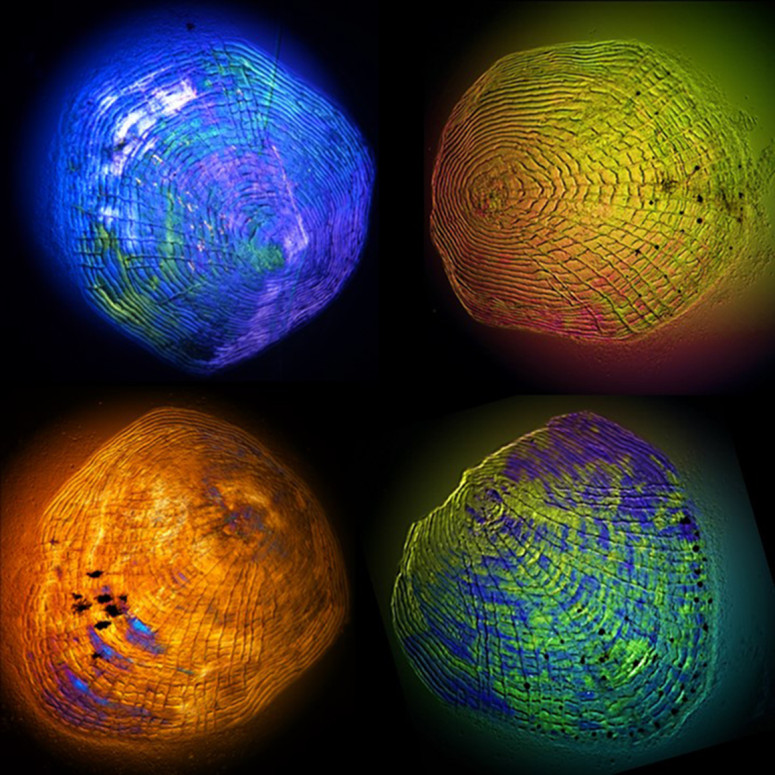
Fish scales from a fathead minnow under a light microscope. Image credit: Serena George, University of Wisconsin-Madison

For the past 14 years, the University of Wisconsin–Madison has conducted a Cool Science Image Contest. This year, one of the winners is Serena George, a graduate student in veterinary medicine and molecular and environmental toxicology who works with Wisconsin Sea Grant Emerging Contaminants Scientist Gavin Dehnert to study how herbicides impact fish health.

George’s image, taken on a light microscope, shows sheets of cells migrating away from the edge of four fathead minnow scales. In a dish in the lab, the cells slough off and move away as they would across the wound of a live fish. By doping the dish with different chemicals, researchers can study the way environmental contaminants affect wound-healing in the wild.

Other images in the contest span a wide range of perception — from molecules interacting in the membranes of individual cells to the stretchy insides of a delicious cheese puff to a sky full of colors made by the strongest solar storm in decades.

The winning entries showcase the research, innovation, scholarship and curiosity of the UW–Madison community through traditional fine art techniques used to study the physics of interacting liquids, the surprising and beautiful results of chemical and geological processes, and new ways to manipulate and reveal biological processes.

The images go on display next week in an exhibit at the McPherson Eye Research Institute’s Mandelbaum and Albert Family Vision Gallery on the ninth floor of the Wisconsin Institutes for Medical Research, 1111 Highland Ave. The exhibit, which runs through the end of 2024, opens with a reception — open to the public — at the gallery on Thursday, Oct. 3, from 4:30 to 6:30 p.m.

The post Cool science image winner! first appeared on Wisconsin Sea Grant.

Original Article

Blog | Wisconsin Sea Grant

Blog | Wisconsin Sea Grant

https://www.seagrant.wisc.edu/blog/cool-science-image-winner/

Marie Zhuikov

Image credit: Wisconsin Sea Grant

Learn the art and craft of telling a Great Lakes story. Crafting experiences into powerful memories to share is an art. Join Jen Rubin, storytelling expert and producer of Love Wisconsin, a multimedia storytelling project, for an interactive workshop that will help storytellers share their love for the Great Lakes.

The first workshop will be held Oct. 4-5 at the Vaughn Public Library, Ashland, Wisconsin. Selected stories will be recorded. For more information and to register, visit: GreatLakesGreatRead.org/story.

Partners in this project include the Wisconsin Humanities Council, Wisconsin Library Association and the Wisconsin Water Library at the University of Wisconsin–Madison.

Great Lakes, Great Read is a basin-wide shared reading experience designed to inspire passion and connection to the Great Lakes Watershed through reading.

The post A Great Lakes, Great Read Storytelling Workshop first appeared on Wisconsin Sea Grant.

Original Article

News Releases | Wisconsin Sea Grant

News Releases | Wisconsin Sea Grant

https://www.seagrant.wisc.edu/news/a-great-lakes-great-read-storytelling-workshop/

Marie Zhuikov

Members of the Wisconsin Sea Grant communications team look into an aquaculture tank at the Northern Aquaculture Demonstration Facility while Emma Hauser looks on. Image credit: Marie Zhuikov, Wisconsin Sea Grant

Each summer, our communications team goes out in the field to see Sea Grant projects firsthand and to spend time with each other. This year’s learning trip took us to the Bayfield Peninsula and northern Wisconsin.

Emma Hauser shows off one of NADF’s aquacultured salmon. Image credit: Wisconsin Sea Grant

Highlights on the first day included a visit to the Northern Aquaculture Demonstration Facility in Red Cliff, where Sea Grant’s Emma Hauser helped us get up close and personal with some salmon. For dinner, we got even closer to fish as we ate Lake Superior whitefish caught by Hoop’s Fisheries in Bayfield.

Lake Superior whitefish (and chips) caught and cooked by Hoop’s Fisheries. Image credit: Marie Zhuikov, Wisconsin Sea Grant

On Day Two, we learned about the Wave Watch Buoy Project in the Apostle Islands National Lakeshore from Jeff Rennicke, director of the Friends of the Apostle Islands. These University of Wisconsin–Madison data buoys allow boaters to access wind and wave information online, making for more safe boating.

Jeff Rennicke (right) with the Friends of the Apostle Islands talks about the group’s projects while Sea Grant’s Natalie Chin (left) and Moira Harrington (center) listen on the Bayfield City Dock. Image credit: Marie Zhuikov, Wisconsin Sea Grant

Next, we toured Bodin’s Fisheries where Bill Bodin showed us how Lake Superior fish are processed after they’re caught. Afterward at a shore lunch hosted by Eat Wisconsin Fish’s Sharon Moen, we dined on Bodin’s whitefish, cooked over a charcoal grill.

Bill Bodin in his fish store. Image credit: Marie Zhuikov, Wisconsin Sea Grant

Lake Superior fish caught by Bodin’s Fisheries. Image credit: Marie Zhuikov, Wisconsin Sea Grant

Sated, we caught the ferry to Madeline Island where we walked through a drizzle on the Big Bay Town Park boardwalk and learned more about the park’s unique lagoon, which is surrounded by a floating fen mat and, on the other side, a beautiful Lake Superior beach.

We caught the ferry back to the mainland only to board another boat for a grand cruise on the Apostle Islands. During the hourlong ride, we learned about the rich history of human interaction with these islands in Lake Superior. We saw lighthouses and sea caves cut into the island sandstone by the lake. We also waved to one of the Wave Watch buoys as we motored past.

Devil’s Island, Apostle Islands National Lakeshore. Image credit: Marie Zhuikov, Wisconsin Sea Grant

On the final day of our field trip, we drove to Superior, Wisconsin, where we met with Melonee Montano, one of the leads for a project that is investigating how  Anishinaabe people connected to and homesteaded the lands of “Zhaagawaamikong Neyaashi” (Minnesota and Wisconsin points) and how they used fire to manage the landscape. She took us to both points and discussed the differences in habitats and uses.

Communications summer student Abigail Brown takes a photo of Melonee Montano on Minnesota Point for a video about her project. Image credit: Marie Zhuikov, Wisconsin Sea Grant

When the trip was over, I, for one, felt like my head was heavier from all the knowledge imparted by our speakers and experiences. These “crash courses” help greatly with our work to interpret Sea Grant research and outreach projects by providing us with vital background information. Plus, it’s not every day I get to watch a colleague hug a 20-pound salmon!

Editor Elizabeth White gets personal with a salmon at NADF while Emma Hauser looks on. Image credit: Wisconsin Sea Grant


The post Sea Grant communications team gets crash course in aquaculture, Lake Superior fish, buoys, bogs, islands and fire first appeared on Wisconsin Sea Grant.

Original Article

Blog | Wisconsin Sea Grant

Blog | Wisconsin Sea Grant

https://www.seagrant.wisc.edu/blog/sea-grant-communications-team-gets-crash-course-in-aquaculture-lake-superior-fish-buoys-bogs-islands-and-fire/

Marie Zhuikov

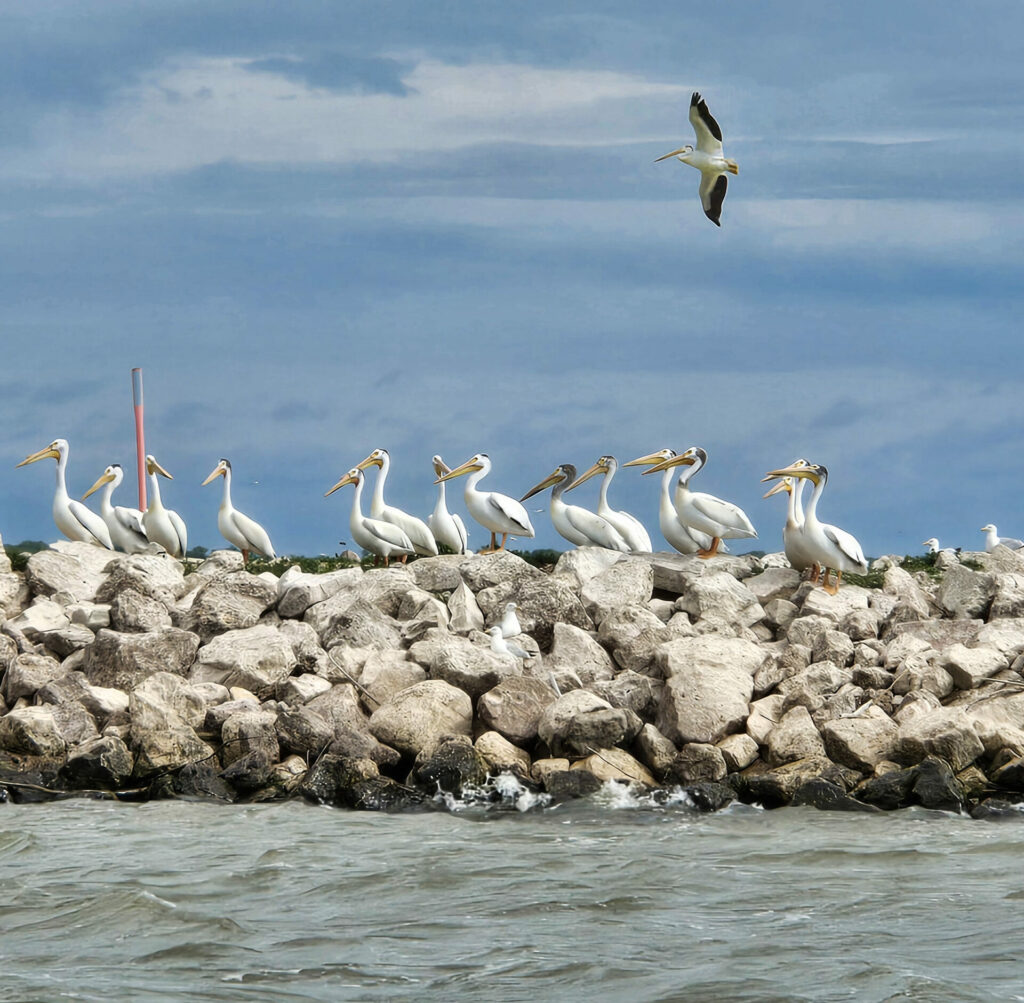
American white pelicans at their nesting colony on Cat Island in Green Bay. Image credit: Marie Zhuikov, Wisconsin Sea Grant

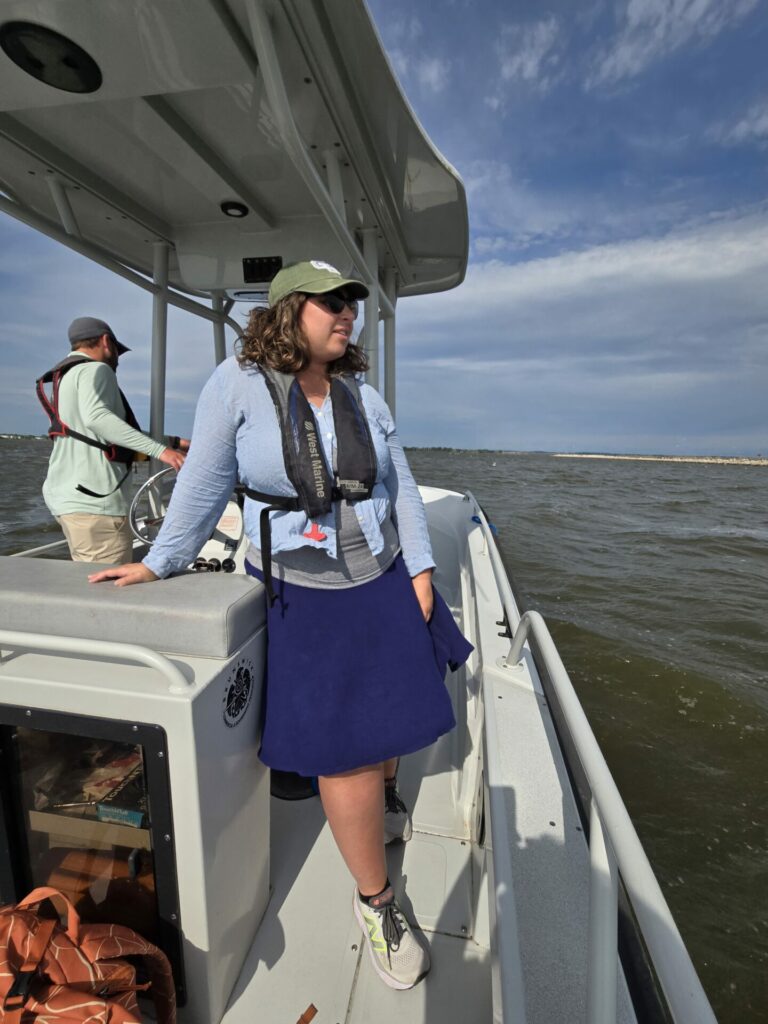
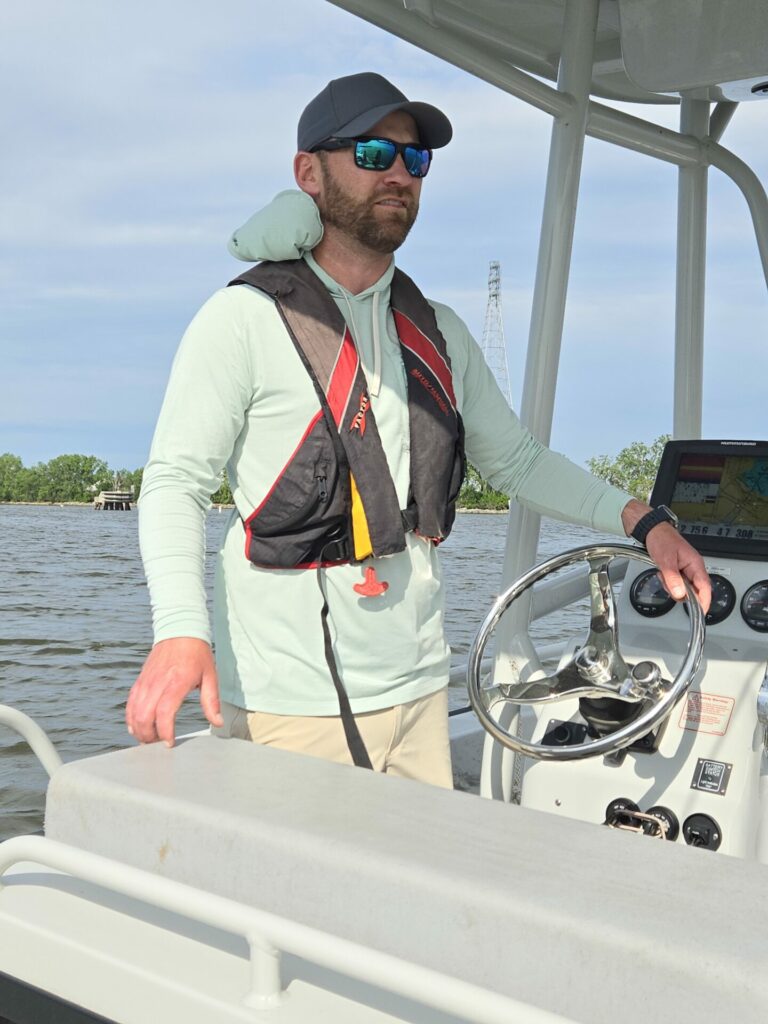
On a sunny morning in mid-June, the University of Wisconsin-Green Bay’s research vessel, Phoenix, headed out onto the bay. Aboard were Sea Grant researchers Emily Tyner and Bill Sallak and a small mound of recording equipment. The boat was piloted by Chris Houghton, assistant professor and fish ecologist, who was assisted by first mate, undergraduate student Jacob Hoffman.

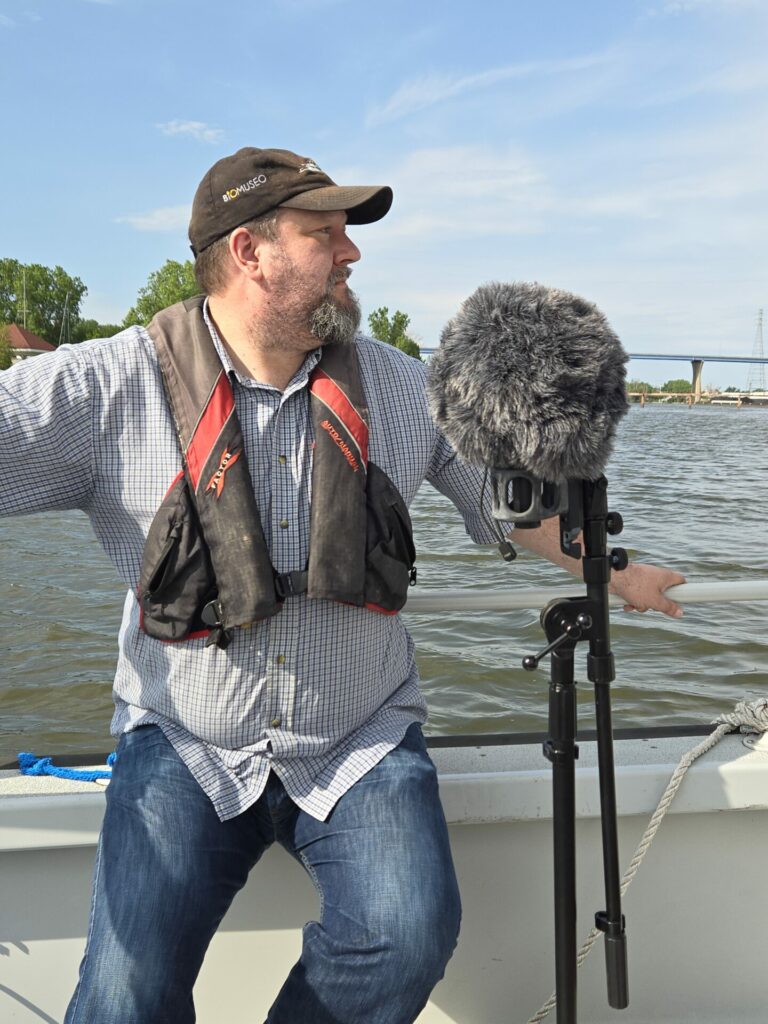
Emily Tyner aboard the Phoenix, UW-Green Bay’s research boat. Image credit: Marie Zhuikov, Wisconsin Sea Grant

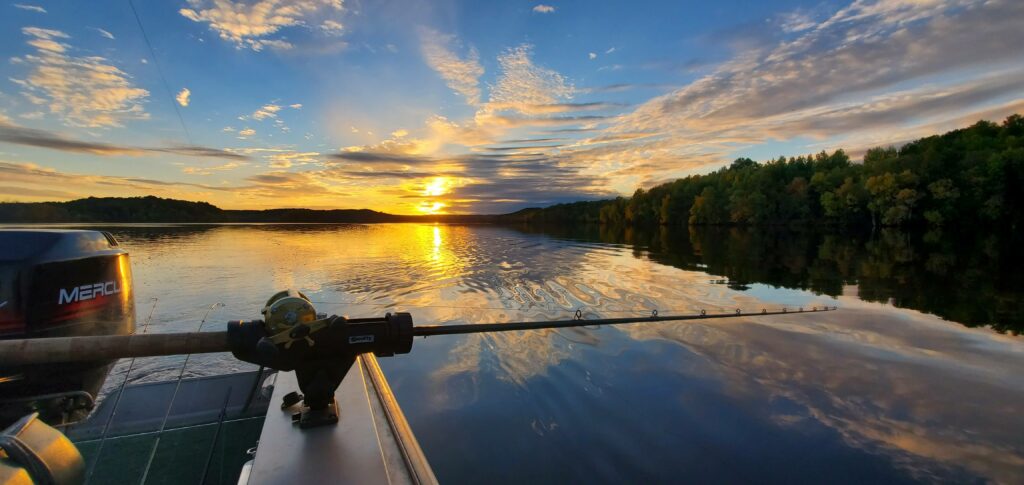
The bay outing’s purpose was to collect the natural noises of the estuary, particularly bird sounds. It was only supposed to last for three hours but like in the theme song for the “Gilligan’s Island” television show, a mishap was involved.

Tyner and Sallak’s project is associated with the development of a national estuarine research reserve on the bay. The National Estuarine Research Reserve System is a network of 30 coastal sites that protect and study estuaries. In the Great Lakes, estuaries are areas where rivers empty into the lakes. The mission of the reserves is to practice and promote estuary stewardship via innovative research and education projects through a system of protected areas. It’s a partnership program between the National Oceanic and Atmospheric Administration and coastal states.

Tyner, director of freshwater strategy at UW-Green Bay, is the state lead on the designation of a new National Estuarine Research Reserve for the Bay of Green Bay. It will be the third reserve on the Great Lakes after Old Woman Creek in Ohio on Lake Erie and the Lake Superior Reserve in Superior, Wisconsin. Sallak is an associate professor of music and was sound recorder for the trip.

Their target was the Cat Island Chain, restored barrier islands in the bay that have created new habitat for migrating and nesting shorebirds. Then, if time allowed, they would visit several other sites.

Bill Sallak with sound recording equipment. Image credit: Marie Zhuikov, Wisconsin Sea Grant

Sallak described how the idea for this project evolved. “Part of our original conception was more of a hard science, bioacoustics angle. But then, we went out on a boat trip and we went, ‘That sounds cool, that sounds cool. All these things sound really fantastic.’ And so, we decided to lean more towards a more humanistic angle, which is also going to work better if we get to the point where there’s a visitor’s center, because we can take these recordings and put them into a room with a surround sound speaker set up, and you can hear the bay in different locations, different seasons.”

In their proposal, Tyner and Sallak stressed the importance of bringing the sounds of the Green Bay estuary to the community. Tyner elaborated, “Right there is a restaurant that’s one of the only places on the lower bay where you can go and have a beer and have a burger and be sitting out on the water. And there’s almost no other places to kind of enjoy the bay. There’s the amusement park, but then there’s no pier or boardwalk for access. There’s no swimmable beaches. Some of that’s for water quality reasons. To get onto the bay, you need to have a boat, an expensive boat, probably. Maybe you can do a bit of kayaking from shore, but a trail system, we don’t really have that.

“For a long time, communities had closed themselves off from around the bay because of smells and harmful algal blooms and industrial uses. But now Green Bay and other communities are reopening and turning their front doors back. Especially with the Fox River cleanup, which was a $1.5 billion effort. And so, with that kind of trying to encourage the city and communities to turn their front doors this way, we also want to reconnect people. This is one step in getting us there,” Tyner said.

Chris Houghton. Image credit: Marie Zhukov, Wisconsin Sea Grant

In sort of a happy accident, UW-Green Bay recently received funding for a new sound auditorium. Plans are for it to be completed this fall, and this Green Bay audio project will be the first to be featured.

Sallak explained. “Now the audio production program at the Resch Institute for Music is going to have probably the best facilities in higher education in the state. We were able to find about 1,600 square feet in the studio arts building and some underused space in the Wiedner Center. We’re putting in four new recording studios, one of which is an Atmos room. So, it’s equipped with a 14-speaker surround sound setup.”

He said it will be the same surround sound audio system that’s used in movie theaters. They’ll have the capacity to make surround sound recordings and present them in an acoustically refined space. When the Atmos room is finished, the Green Bay sounds project will be the first presentation featured in it. The sound files will also be available on a webpage.

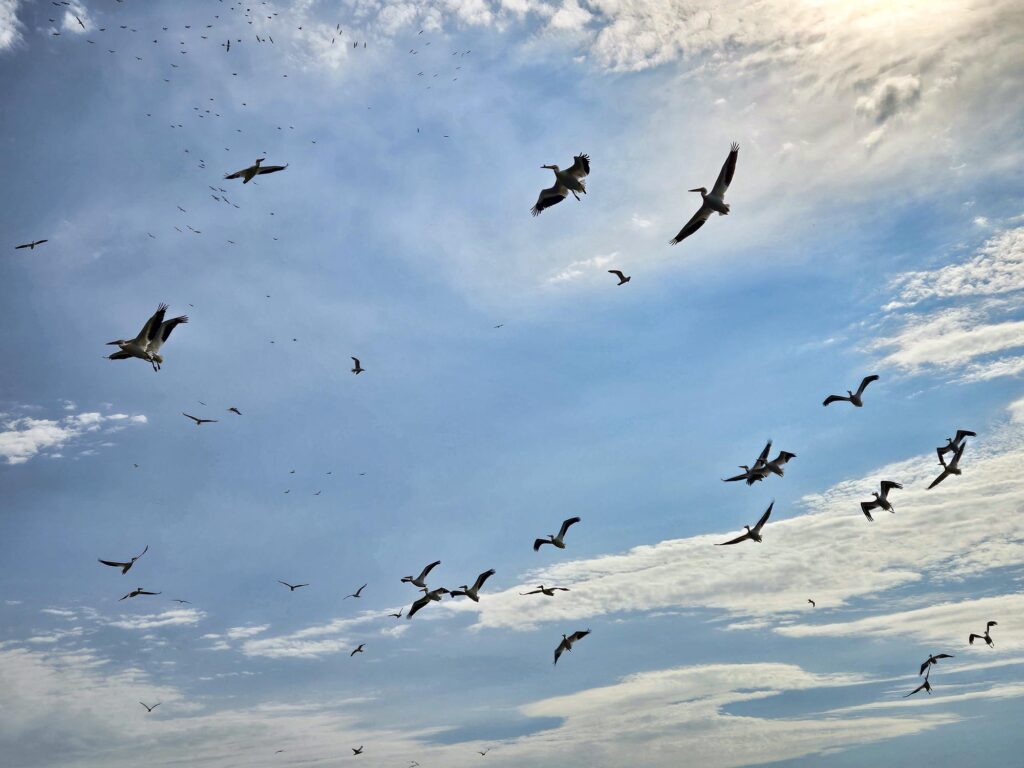
The first of five stops on the boat tour was off the gull colony at Cat Island. Amid raucous gull calls, Sallak set up the recording equipment on the boat. He tagged the sound file with the date, time and location. After capturing several minutes of sound, he turned off the equipment as the Phoenix made its way to the pelican colony at the other end of Cat Island. The pelicans were very quiet, so there wasn’t much to record, but dozens of the prehistoric birds flying overhead made for some inspiring photos.

Pelicans wheel in the sky over Cat Island. Image credit: Marie Zhukov, Wisconsin Sea Grant

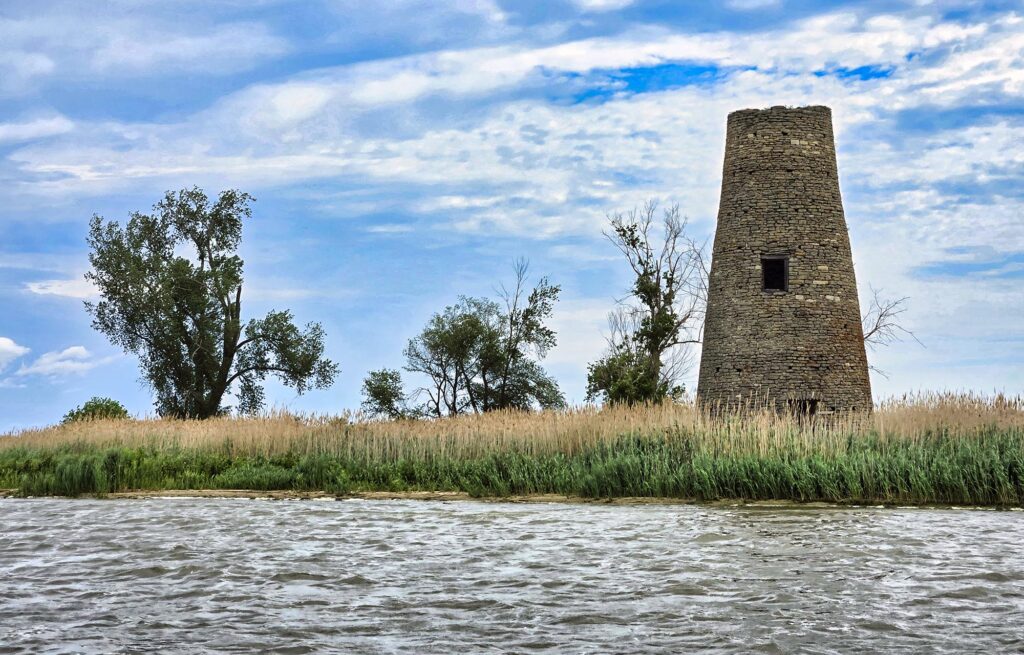
Their third stop was Longtail Point Lighthouse, a crumbling structure on a long sandy point. After Sallak recorded the sounds for several minutes, the unexpected happened.

“We’re beached,” Houghton said as the bottom of the boat came to rest on the sandy bottom.

“Uh oh,” Tyner said.

“Shouldn’t be a problem.” Houghton laughed, “Famous last words.”

Sallak chimed in, “We’re not going to run out of granola bars? Figure out who we have to eat first?”

Long Tail Point Lighthouse. Image credit: Marie Zhukov, Wisconsin Sea Grant

Houghton and Hoffman jumped over the side of the boat and tried to free it from the bottom. After some finagling, they were able to push it into deeper water.

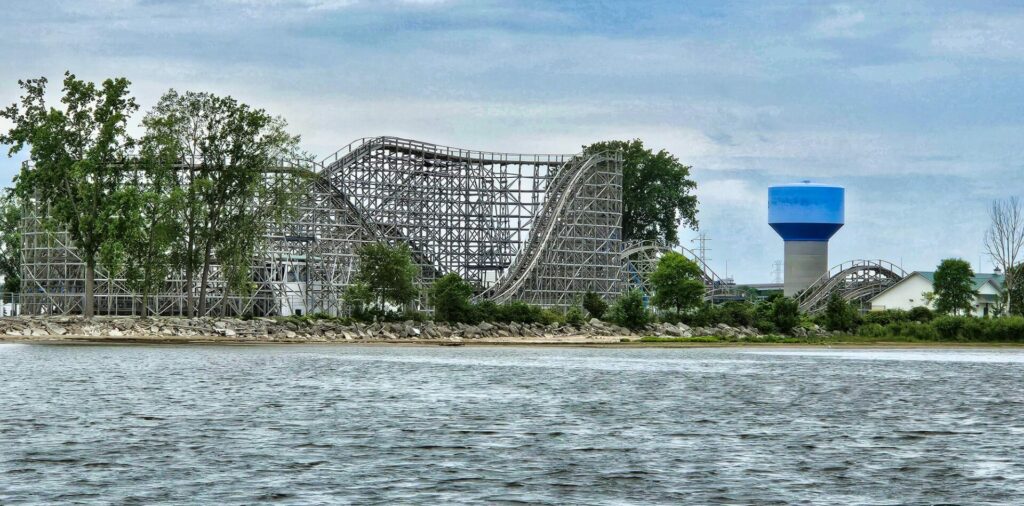
The Zippin Pippin rollercoaster, Bay Beach Amusement Park. Image credit: Marie Zhukov, Wisconsin Sea Grant

Audio captured, the team moved onto the next stop, which had the ominous name of Dead Horse Bay. As they recorded, a bald eagle sat in a tree, watching as songbirds chirped and twittered. A plane flew overhead, and someone fired up a chain saw on shore. Sallak said he would keep those human sounds in the show. “We’re not apart from everything that’s going on. I’m more interested in collecting what’s literally here than trying to erase.”

Their fifth and final stop was full of human sounds offshore of Bay Beach Amusement Park. One of the most noticeable features there is the Zippin Pippin — a rollercoaster. The team watched as the coaster cars made their slow way up to the top of the ride and then plummeted, eliciting screams from the riders. Sallak said he has plans to go into the courtyard in the middle of the ride and get a recording for this project later.

With audio captured, the team motored back to the marina. They agreed there’s nothing like spending a morning on the water, even if it involved getting beached.

To hear a podcast episode of this story, complete with sounds, visit this Wisconsin Water News page.

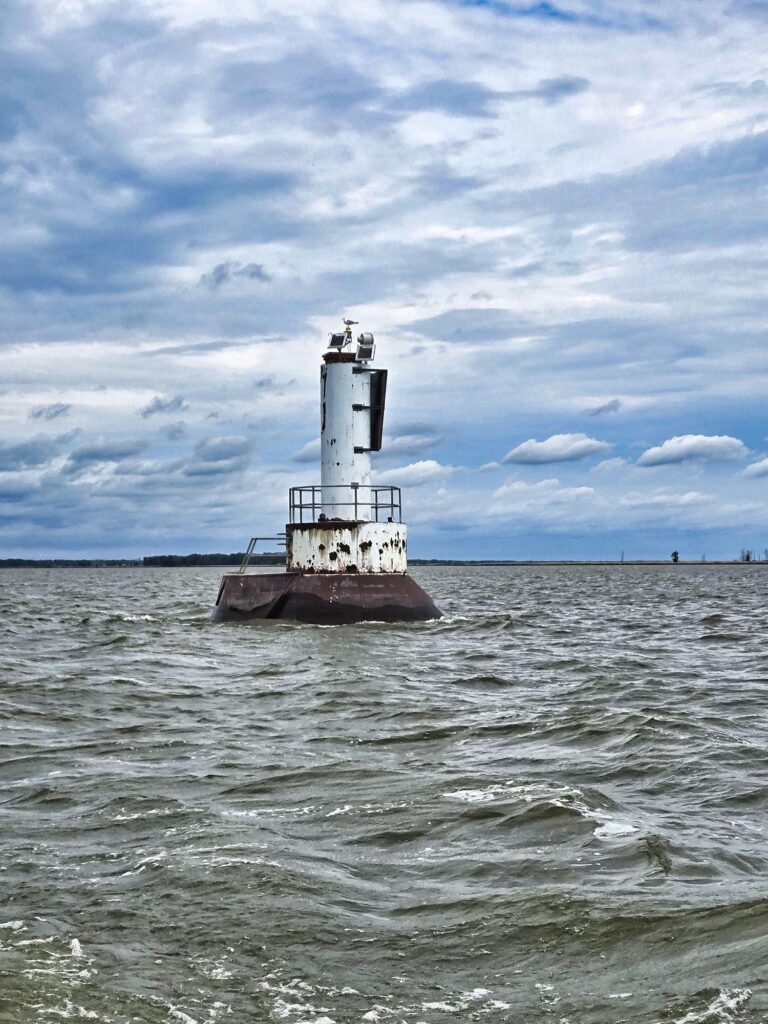
A navigation beacon in Green Bay. Image credit: Marie Zhuikov, Wisconsin Sea Grant
 

The post Using Sound to Connect People to Green Bay first appeared on Wisconsin Sea Grant.

Original Article

News Releases | Wisconsin Sea Grant

News Releases | Wisconsin Sea Grant

https://www.seagrant.wisc.edu/news/using-sound-to-connect-people-to-green-bay/

Marie Zhuikov

All are invited to attend the second in a series of three free events designed for birders of all skills and abilities. Join “Everyone Can Bird: Graduation to Migration,” 9:30 – 11:30 a.m., Sunday, Aug. 14, at the Millennium Trail off N. 28th Street and Wyoming Avenue, Superior, Wisconsin.

In August, baby birds begin to “graduate” into adulthood as they prepare for migration. Come join a celebration of this exciting adventure for the new adult birds.

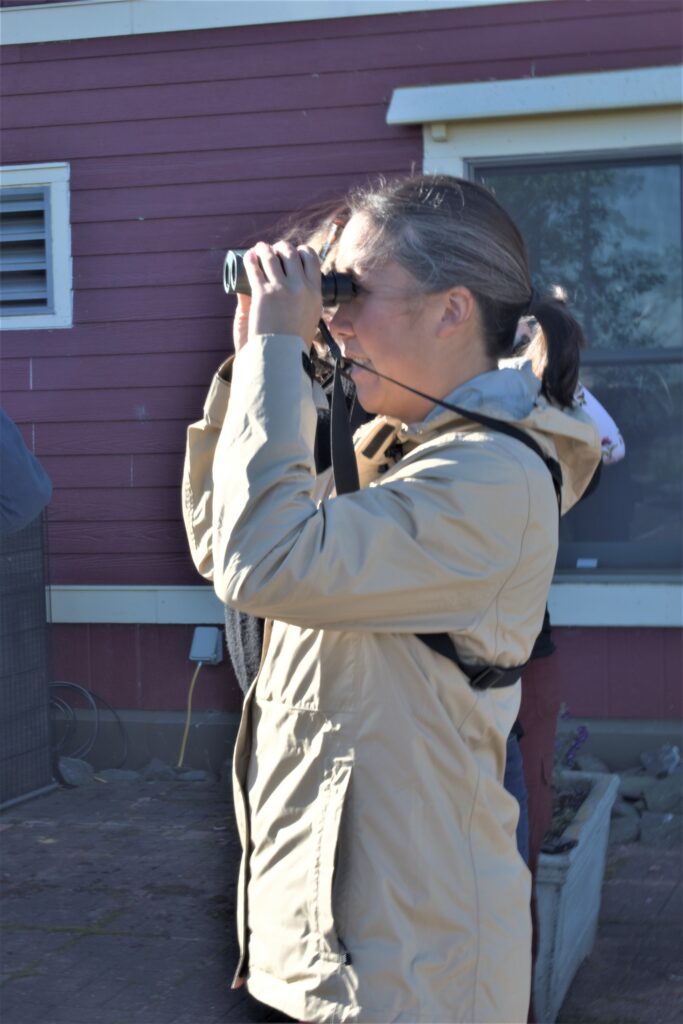
Sea Grant’s Natalie Chin looks for birds on Barker’s Island in Superior during an accessible birding event in 2022. Image credit: Marie Zhuikov, Wisconsin Sea Grant

People of all ages and ability levels are welcome to attend this accessible birding event. Move along the paved Millennium Trail on a guided bird hike or explore bird activities at your own pace.

American Sign Language interpretation is provided. Fifteen pairs of binoculars are available for use, along with a spotting scope, a wheelchair mount for binoculars and portable seating. A track chair – an all-terrain, electric-powered chair that can be used on hiking trails – along with a scooter and walkers will also be available, courtesy of indiGO.

Come and stay for the whole time or meet with and leave the group when you need. Light refreshments will be available. There will also be a wheelchair accessible portable bathroom on-site for this event.

Registration is encouraged but not required. Free bus transportation is provided at 9:20 a.m. from the Superior Public Library (1530 Tower Avenue) to the Millenium Trail. Please register to reserve your spot on the bus. (https://bit.ly/3y6XX7t)

This event is designed with access in mind, but people needing additional accommodations should email Luciana.Ranelli@wisc.edu or call Luciana at (715) 399-4085 at least 10 days before the event.

The Friends of the Lake Superior Reserve, City of Superior, Embark Supported Employment, Hawk Ridge Bird Observatory, indiGO, Lake Superior Reserve, Minnesota Land Trust and Wisconsin Sea Grant are hosting this event.

The final “Everyone Can Bird” outing will be held Oct. 12 at Hawk Ridge in Duluth.

The post Everyone Can Bird, Second of Three Accessible Birding Events first appeared on Wisconsin Sea Grant.

Original Article

News Releases | Wisconsin Sea Grant

News Releases | Wisconsin Sea Grant

https://www.seagrant.wisc.edu/news/everyone-can-bird-second-of-three-accessible-birding-events/

Marie Zhuikov

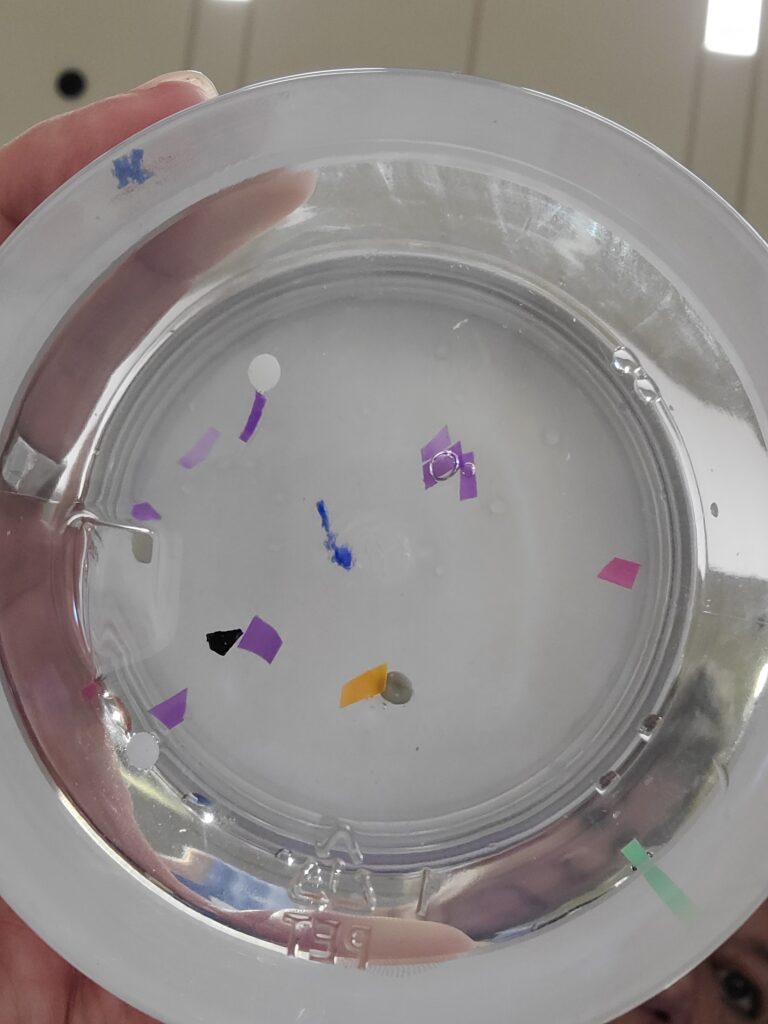
Microplastics may be colorful, but can cause environmental and food web issues in the Great Lakes. Image credit: Marie Zhuikov, Wisconsin Sea Grant

A project that deals with microplastic accumulation in the Great Lakes food web and another that will work with Milwaukee’s fashion community to reduce microplastic debris in waterways were awarded funding by the National Oceanic and Atmospheric Administration through the Marine Debris Challenge and Community Action Coalition competitions.

The first project, “Pinpointing the key drivers for the bioaccumulation of nano- and low-micrometer microplastics in the Great Lakes using a modular pretreatment and plasmonic imaging platform,” is led by Haoran Wei from the University of Wisconsin–Madison. Wei and his team will create a standardized, high-speed testing system to study how tiny microplastics and nanoplastics appear and build up in living organisms in the Great Lakes.

The second project, “Fashioning a model response: Educating members of the fashion industry about microplastics to reduce marine debris in local waters,” is led by Ginny Carlton with Wisconsin Sea Grant. Carlton and partners Milwaukee River Keeper and Mount Mary University will offer workshops for college fashion department faculty, university students and K-12 teachers regarding reducing polyester clothing fiber waste. They will also pilot and launch an online short course for educators about marine debris prevention and the fashion industry.

Funding for these projects and 19 others awarded comes from the Bipartisan Infrastructure Law and the Inflation Reduction Act.

The post Two Wisconsin marine debris projects funded by NOAA first appeared on Wisconsin Sea Grant.

Original Article

News Releases | Wisconsin Sea Grant

News Releases | Wisconsin Sea Grant

https://www.seagrant.wisc.edu/news/two-wisconsin-marine-debris-projects-funded-by-noaa/

Marie Zhuikov

Image by David Nevala

July 1, 2024
By Moira Harrington

Wisconsin has about 1.2 million billion gallons of water underground. If it were above ground, it would submerge the state in 100 feet of water. Simply because there is a lot of groundwater, however, does not mean that volume keeps it immune for challenges related to quantity and quality.

After a rigorous review, the University of Wisconsin Water Resources Institute selected two projects out of 15 that were submitted in a competition held last year. Those new projects got underway on July 1.

“We are so grateful to all of the researchers who submitted proposals to address Wisconsin groundwater challenges. Understanding problems is the first step in finding solutions, and we wish that we could have funded all of the submissions,” said Jennifer Hauxwell, WRI’s director of research. “The projects that we selected for funding this year will go a long way in understanding how surface waters and groundwater are connected as well as how geology interacts with groundwater and contaminants.”

Hauxwell shared these details:

  • Steve Loheide is the lead researcher on a project that will quantify the impact of changing Great Lakes water levels on groundwater storage and flow patterns, lake-groundwater interactions, evapotranspiration and forest productivity to better understand how certain areas can vary in their sensitivity to Lake Michigan’s dynamic water levels. The work will focus in Door County, where ridge and swale topographical features create an ecosystem supporting a diverse plant community. Loheide is in the Department of Civil and Environmental Engineering at UW-Madison. His co-investigators are geology professor Evan Larson from UW-Platteville and UW-Madison graduate Dominick Ciruzzi, now in the geology department at William and Mary.
  • In the second project, Matt Ginder-Vogel will explore the potential for release and transport of iron and manganese from rock within an aquifer underlying Cottage Grove, a village in Dane County. The site has been contaminated by a hydrocarbon spill. The spill could have triggered a release of the naturally occurring chemicals that compromise groundwater quality. Ginder-Vogel, a UW-Madison professor in environmental biogeochemistry water at UW-Madison.
The post 1.2 million billion gallons of groundwater will meet WRI science through new projects first appeared on WRI.

Original Article

News Release | WRI

News Release | WRI

https://www.wri.wisc.edu/news/1-2-million-billion-gallons-of-groundwater-will-meet-wri-science-through-new-projects/

Marie Zhuikov

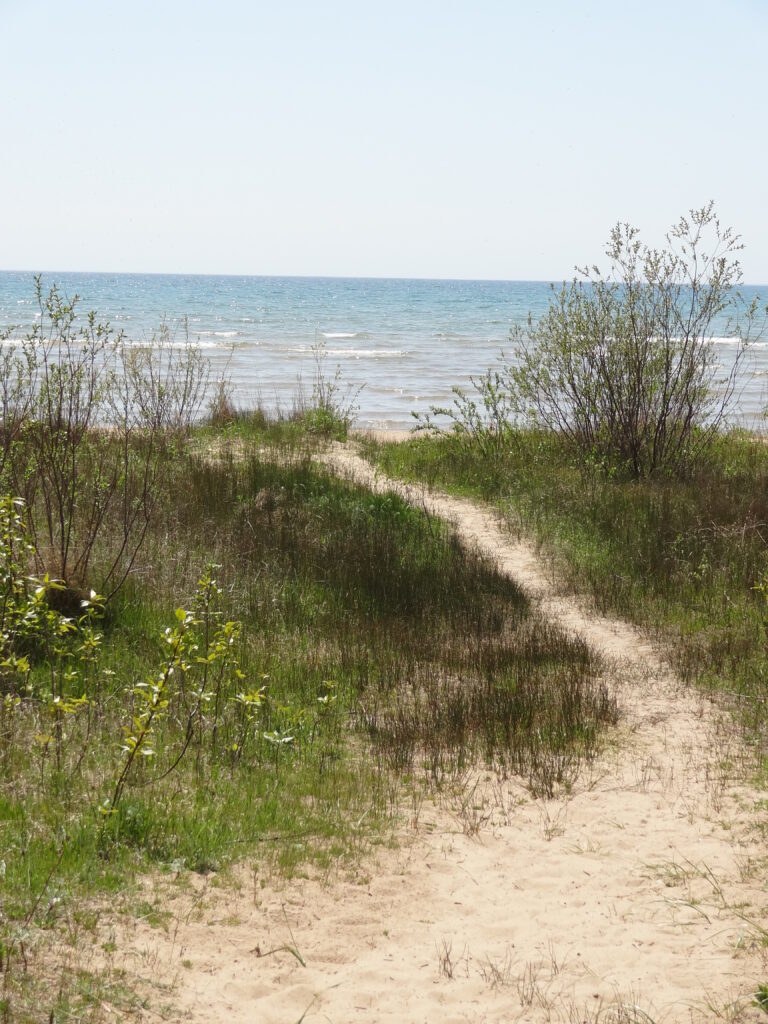
A path to a beach on northern Lake Michigan. Image credit: Marie Zhuikov, Wisconsin Sea Grant

With the unusually warm winter this year, swimsuit season might be approaching earlier than previous ones. With recreational beach season comes the scientific testing to ensure beaches are safe for the public. An estimated 8 million people visit Great Lakes beaches every year. Unfortunately, because traditional testing methods take 18-24 hours to process, information used to evaluate water quality and communicate health risks is generally a day old, meaning swimmers might be recreating when conditions aren’t safe. On the other hand, swimmers could be kept out of the water at times when no problems exist.

An analysis published in 2014* determined that nearly one in five decisions to post or remove swim advisories were made in error in the Great Lakes (between 2008 and 2010), including nearly 3,000 unnecessary advisories/closures and at least 4,500 missed advisories or closures.

A free Windows software developed by the U.S. Environmental Protection Agency named Virtual Beach addresses these shortcomings by providing beach managers with timely and cost-effective alternatives to traditional monitoring. It can help them to decide whether to issue (or lift) swim advisories/closures on a given day.

By using the software to build a model, users can predict water quality conditions at any time, on both sampled and non-sampled beaches that are monitored on the Great Lakes Coasts.

With a grant from the Wisconsin Coastal Management Program, Wisconsin Sea Grant has updated video tutorials that accompany six training modules for the Virtual Beach software and created a training course that can be completed at any time via the Canvas platform. Beach managers can use it to familiarize themselves with the software.

“While our Virtual Beach training modules have been available for several years, the decommissioning of the data service EnDDaT limited their usability. Our new course explains how to collect the data needed to build a Virtual Beach model without EnDDaT and allows beach managers to go through Virtual Beach training on their own time,” said Natalie Chin, Wisconsin Sea Grant’s climate and tourism outreach specialist.

Chin worked with Madeline Magee with the Wisconsin Department of Natural Resources and Casey Garhart with the University of Wisconsin-Madison Division of Extension’s Instructional Design Unit to develop training materials. If you are interested in completing Virtual Beach training, please contact Natalie at nchin5@wisc.edu.

The Virtual Beach software was developed by the U.S. EPA’s Ecosystem Research Division, in partnership with the USGS Wisconsin Water Science Center, the Wisconsin Dept. of Natural Resources and Wisconsin Sea Grant.

* Expanded Beach “Nowcast” Modeling Across Wisconsin, Adam Mednick and Dreux Watermolen, Bureau of Science Services, Wisconsin Department of Natural Resources, August 2014.

The post Checking beach health virtually first appeared on Wisconsin Sea Grant.

Original Article

News Releases | Wisconsin Sea Grant

News Releases | Wisconsin Sea Grant

https://www.seagrant.wisc.edu/news/checking-beach-health-virtually/

Marie Zhuikov

Lake trout fish cheeks as prepared in the recipe below. Image credit: Marie Zhuikov, Wisconsin Sea Grant

Did you know that fish have cheeks? And did you know you can eat them?

Well they do and you can. Several species of fish, both saltwater and freshwater have cheeks that are large enough to harvest. These include halibut, grouper, cod, walleye, whitefish and lake trout. About the size of a scallop, fish cheeks are prized for their firm texture and tenderness.

They’re usually not available in supermarkets, but if you’re near a commercial fisherman, you might be in luck. During a recent trip to the Bayfield Peninsula in Wisconsin I stopped by Halvorson’s Fisheries in Cornucopia where they had frozen lake trout fish cheeks for sale. I’d never had them before, so was intrigued. I bought a half pound and took them home in my cooler.

About a week later, after taking time to peruse different recipes available online, I thawed the cheeks and prepared them based on a halibut cheeks recipe courtesy of The Culinary Chase. Because I only had half the amount of cheeks, I halved the recipe, plus made my own tweaks.

The result was highly edible. Next time, I’ll delete the flour. It made them a bit mealy and I don’t think they need it. In case you want to try, here’s what I did. By the way, the Eat Wisconsin Fish website run by Wisconsin Sea Grant offers many great fish recipes that you may also want to check out.

MARIE’S FISH CHEEKS RECIPE (wheat- and corn-free)

½ lb fish cheeks
½ cup white rice flour
Sea salt and black pepper
1 Tablespoon butter
½ Tablespoon olive oil
3 green onions, green parts, diced
1-1/2 teaspoons capers, rinsed
splash of cooking wine or sherry
1 lemon wedge
1 teaspoon dried parsley

Rinse the fish cheeks and pat them dry with a paper towel. Put the flour in a pie tin or a plate and add salt and pepper to taste. Add the fish cheeks and gently tap off any excess flour.

In a sauté pan over medium-high heat, melt the butter and add the olive oil. Swirl until the butter and oil are mixed and bubbly. Add the scallions and cook briefly until tender. Place the cheeks into the butter and brown until cooked, just a minute or two each side. Time will vary depending on the size of the cheeks, but no longer than 5 minutes total should be needed.

When you flip the fish over, add capers, wine, and squeeze the lemon wedge over the cheeks. Add an additional ½ Tablespoon of butter and allow to melt. Shake the pan and remove from heat. Sprinkle the fish cheeks with parsley and serve right away.

The post Marie’s (Fish) Cheeks first appeared on Wisconsin Sea Grant.

Original Article

Blog | Wisconsin Sea Grant

Blog | Wisconsin Sea Grant

https://www.seagrant.wisc.edu/blog/maries-fish-cheeks/

Marie Zhuikov

Trolling for muskie in the St. Louis River. Image credit: Todd Furo

Between the Fond du Lac Dam and Minnesota and Wisconsin points, the St. Louis River Estuary is becoming a destination for many types of water recreation. Thanks to pollution remedies and controls combined with habitat restoration, the river is cleaner than it has been in decades.

Despite these improvements, there are still safety hazards people should consider before recreating in the estuary. Whether people swim, paddle, hunt waterfowl, fish, sail or pleasure cruise on the river, local partners including the St. Louis River Area of Concern Coordinators and Sea Grant Programs in Minnesota and Wisconsin offer a web page with tips for appropriate precautions.

A shorter, “quick tips” fact sheet with similar information can be downloaded from here.

“We receive a lot of inquiries from people who want to know if it’s safe to swim in the estuary now,” said Barb Huberty, St. Louis River Area of Concern coordinator with the Minnesota Pollution Control Agency. “I reached out to the Sea Grant programs for help because of their community connections and communications expertise. We worked since last fall to gather input on what should be included in the fact sheet and web page from various water safety and harbor groups, and we are happy to have compiled information to give people.”

The text was written by Kelsey Prihoda, Great Lakes transportation extension educator with Minnesota Sea Grant. Editing and design services were provided by Wisconsin Sea Grant, which also distributes the information.

The post Heading for the St. Louis River? Local groups offer water safety tips first appeared on Wisconsin Sea Grant.

Original Article

News Releases | Wisconsin Sea Grant

News Releases | Wisconsin Sea Grant

https://www.seagrant.wisc.edu/news/heading-for-the-st-louis-river-local-groups-offer-water-safety-tips/

Marie Zhuikov

Karmen Anderson was initially drawn to apply for a communications assistant job with the Wisconsin Clean Marina Program due to the organization’s focus on sustainability. An environmental policy and planning major at the University of Wisconsin-Green Bay, Anderson was intrigued by the program’s mission to work with marinas in preventing pollution and protecting fish, wildlife and public health.

She got the job and for the past three years has been learning about the marina industry and gaining communications experience by handling the program’s social media accounts, newsletters and news releases. Anderson was also able to attend several Wisconsin Marine Association conferences and accompany her supervisor, Wisconsin Clean Marina Program Coordinator Theresa Qualls, on visits to marinas.

Karmen Anderson, Wisconsin Clean Marina Program communications assistant. She’ll soon be the village planner for the Wisconsin town of Plover. Submitted image.

“It was interesting learning about an industry I knew nothing about. I got to see all the different practices marinas do for clean marina certification, like implementing oil spill kits and landscaping for pollution prevention. I also loved meeting new people and learning from them,” Anderson said.

Notable among those she met was Wisconsin Governor Tony Evers. “We were at Saxon Harbor Marina, which was celebrating reopening after severe flood damage. Meeting the governor was a highlight.”

Marinas, related industries and services contribute more than $2.7 billion to Wisconsin’s economy. The Wisconsin Clean Marina Program was launched in 2010, and 23 Wisconsin marinas have since taken steps to voluntarily adopt practices to become certified.

One of Anderson’s favorite communications projects was helping develop a promotional video for the program. “I loved hearing the marina manager’s testimonial – that the community actually likes the work done through the clean marina program as well as the resources and benefits it provides to marinas.”

She also enjoyed working with Qualls. “You can definitely tell she loves what she does,” Anderson said. “The way she communicates with the marinas and the relationships she has with them are great.”

Anderson is set to graduate this spring and credits her clean marina experience with helping her nab a full-time job as a village planner for Plover, Wisconsin.

“This position gave me a lot of experience in communication and outreach. I definitely plan to bring that into my new job, which entails a lot of work with the community and developers,” Anderson said.

The Wisconsin Clean Marina Program is administered by University of Wisconsin Sea Grant in partnership with the Wisconsin Marine Association, Wisconsin Coastal Management Program, and Wisconsin Department of Natural Resources with funding from Fund for Lake Michigan. 

The post Student gained valuable experience through the Wisconsin Clean Marina Program first appeared on Wisconsin Sea Grant.

Original Article

Blog | Wisconsin Sea Grant

Blog | Wisconsin Sea Grant

https://www.seagrant.wisc.edu/blog/student-gained-valuable-experience-through-the-wisconsin-clean-marina-program/

Marie Zhuikov

Moira Harrington studies a young fish temporarily collected from Green Bay on Lake Michigan. Image Credit: Marie Zhuikov, Wisconsin Sea Grant

Moira Harrington, Wisconsin Sea Grant assistant director for communications, recently announced plans to retire, effective June 14. Rather than tiptoe into the waters of retirement gradually, Harrington will dive right in, making the decision only three months beforehand.

“I’ve never taken an exercise class scheduled in the middle of a workday, but I feel like I need to plunge right in and try it. I retire on a Friday and the next Tuesday, I’m doing a strength-training class,” Harrington said.

As the head of communications, Harrington supervises a staff of five including writers, podcasters, editors, a videographer and graphic designer. She directs the creation of materials that promote science literacy and coordinated media relations. Harrington also assists with external relations. She was a former reporter for newspapers, magazines and a statehouse news service. She also worked for Wisconsin’s statewide public television broadcasting system, public health tobacco education campaigns, and as the state director and press secretary for former U.S. Sen. Russ Feingold of Wisconsin.

Her departure after almost 15 years will leave ripples felt throughout the program, both locally and nationally.

“We’ve been so fortunate to have a comprehensive science communications team,” said David Hart, Wisconsin Sea Grant assistant director for extension. “Moira crafted and guided that team. She contributed to the success of our Sea Grant and Water Resources missions in so many ways that it is hard to keep track. Besides writing and reviewing hundreds of stories, she did all our reporting, organized legislative visits and prepared us for rigorous program reviews. Then there are the smaller, but priceless ways she helped us stay connected like preparing a monthly newsletter sharing the personal side of our staff and co-organizing a bi-weekly travelogue series. I think we are going to reflect on all those little things she did long into the future.”

A common theme in Harrington’s career was working for organizations that contribute to society in a positive way. In terms of Sea Grant, she said, “It touches so many sectors of a community, it touches our culture and sparks research that has applications in people’s lives. It’s our role as communicators to share that information and it’s so rewarding.”

Not long after she began her job with Sea Grant, Harrington took on a leadership role, chairing the Great Lakes Sea Grant Communications Network (2011-2012). Later, she chaired the Networks Advisory Council, which is a committee within the Sea Grant Association, and the National Sea Grant Communications Network (2016-2018). One of her legacies is reinstating a national communications award program. “I think it’s important to recognize our work through a formal process and I hope it continues after I retire,” she said.

Moira Harrington (in the back) and members of her communications team meet with microplastics researchers who were conducting a Sea Grant experiment atop the Limnology Building on the University of Wisconsin-Madison Campus. Pictured in front: Ph.D. Student Ziyan Wu, Professor Mohan Qin, Science Communicator Marie Zhuikov; Second row: Writer Jenna Mertz, Professor Haoran Wei, Video and Podcast Producer Bonnie Willison,  Creative Manager Sarah Congdon; Back row: Moira. Image Credit: Mohan Qin, University of Wisconsin-Madison.

“Moira has done so much for Sea Grant,” said Jill Jentes Banicki, current National Sea Grant Communications Network chair. “With every initiative she oversaw and every communicator, educator and director she worked with, she showed how important telling the Sea Grant story is to a successful and impactful Sea Grant network. We are so grateful to Moira for everything she has done for Sea Grant Communications over the last fourteen years and will miss her beyond words.”

Another legacy attributable to Harrington’s behind-the-scenes work is the creation of the university’s recent Center of Excellence in PFAS Environmental Science. In 2023, she wrote a story based on research by UW-Madison’s Christy Remucal on per- and polyfluoroalkyl substances and how they were moving via groundwater into Lake Michigan.

“I pushed the story a bit more than I sometimes do, and it got picked up in the media in various places,” Harrington said. “The findings have implications for PFAS contamination everywhere because it can be applied to other situations where people are trying to understand a contamination site.”

A few weeks later, Harrington was contacted by the Federal Relations Office on the Madison campus. “They said they’d like to work with a member of the house of representatives or maybe one of the U.S. senators from Wisconsin. They wanted to figure out some way to put additional money specifically into PFAS research. So, I just connected people. I was like, okay, here’s Christy and you guys work together,” Harrington said.

Remucal, who is now the interim director of Wisconsin Sea Grant, wrote a proposal for the center. “Then we both kind of forgot about it,” Harrington said. But about a year later, after a grueling federal budgeting process, the funding came through for the center.

“I didn’t do the research and I didn’t get the funds from the federal government, but my ability to tell the story of that sparked a bigger thing that’s now resulting in almost a million dollars coming to support even more PFAS research. That feels good,” Harrington said.

A University of Wisconsin-Green Bay student (left) describes restoration efforts undertaken in the Wequiock Creek Natural Area in Wisconsin to Moira and Sea Grant Editor Elizabeth White (right). Image credit: Marie Zhuikov, Wisconsin Sea Grant

Some of her favorite projects involved creating biennial reports for the public and other communications products. Harrington credited her staff, one of the largest Sea Grant communications teams in the country, for their contributions. “It’s been a true honor working with the communications staff here. Everybody brings such a talent set. I love how we come together as a team to create meaningful and useful products. It’s been incredibly stimulating to have an idea and know that I can turn to a colleague in communications and they’ll make it happen. That’s just really fun.”

Harrington expects her retirement will involve four Bs: Brian, Baby, Bees and Books. Brian Koenig is her husband, who has plans for his own retirement and will no doubt enjoy having Harrington around more. One of their daughters had a child in April, so the Baby part is regarding their first grandbaby. Bees is about beekeeping. Harrington learned how to keep honeybees a few years ago. She’s maintained one hive and is getting a second (or more) in retirement. The fourth B is for Books. Harrington has been in the same book club for 24 years and plans to spend more time reading.

Beyond that, she will immerse herself more fully into her current volunteer work, which includes chairing the city of Madison Board of Park Commissioners and serving on the board for Olbrich Botanical Gardens in Madison.

Harrington leaves behind a solid team and significant list of accomplishments. At least one team member was heard musing, “We’ll do our best to stay afloat without her.”

The post Sea Grant communications director plunges into retirement first appeared on Wisconsin Sea Grant.

Original Article

News Releases | Wisconsin Sea Grant

News Releases | Wisconsin Sea Grant

https://www.seagrant.wisc.edu/news/sea-grant-communications-director-plunges-into-retirement/

Marie Zhuikov

All are invited to attend the first in a series of three free events designed for birders of all skills and abilities. Join “Everyone Can Bird: Spring Migration,” 9:30 – 11:30 a.m., Sunday, May 5, at Chambers Grove Park, Highway 23 and 137th Avenue West, Duluth. 

Birders on Wisconsin Point. Image credit: Marie Zhuikov, Wisconsin Sea Grant

Hear the birds sing as they return to the north for breeding season. With spring migration already here, participants may see the first glimpse of a variety of forest birds such as warblers, sparrows, and swallows, and waterbirds such as grebes, mergansers and more.

Designed with accessibility in mind, the event will provide accessible parking, American Sign Language interpretation and binoculars with a wheelchair mount. A track chair – an all-terrain, electric-powered chair that can be used on hiking trails – is also available for use. Sit or walk along a packed gravel path throughout the park with expert bird guides to lead discussion and aid observation.

Free transportation is available from the Superior Public Library (1530 Tower Avenue) at 8:40 a.m. or at Menards in West Duluth (503 N 50th Avenue West) at 9 a.m.

The Friends of the Lake Superior Reserve, Duluth Parks and Recreation, Embark Supported Employment, Hawk Ridge Bird Observatory, Lake Superior Reserve, Minnesota Land Trust and Wisconsin Sea Grant are hosting this series.

In addition to the May 5 event, “Everyone Can Bird” opportunities will be held Aug. 14 at the Millennium Trail in Superior, and Oct. 12 at Hawk Ridge in Duluth.

Registration is encouraged but not required. Learn more or register at https://bit.ly/43ZGeu7.  These activities are designed with access in mind. People who would like to request additional accommodations should email Luciana.Ranelli@wisc.edu or call Luciana at 715-399-4085 at least 10 days before the event.

The post Everyone Can Bird, First of Three Accessible Birding Events first appeared on Wisconsin Sea Grant.

Original Article

News Releases | Wisconsin Sea Grant

News Releases | Wisconsin Sea Grant

https://www.seagrant.wisc.edu/news/everyone-can-bird-first-of-three-accessible-birding-events-2/

Marie Zhuikov

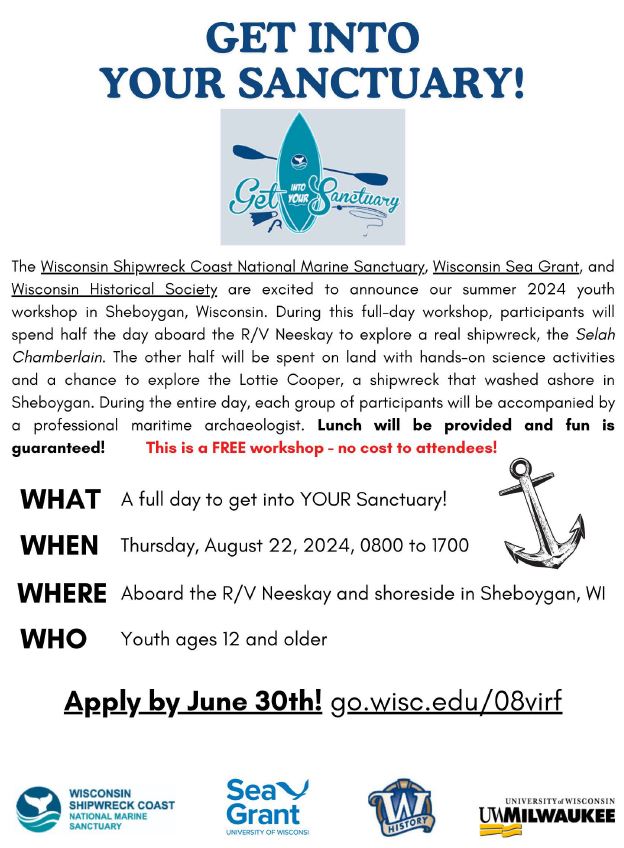
The post Get Into Your Sanctuary Workshop for youth first appeared on Wisconsin Sea Grant.

Original Article

Blog | Wisconsin Sea Grant

Blog | Wisconsin Sea Grant

https://www.seagrant.wisc.edu/blog/get-into-your-sanctuary-workshop-for-youth/

Marie Zhuikov

Keith Okeson. Image credit: Marie Zhuikov, Wisconsin Sea Grant

The next River Talk will be at 6:30 p.m. Wednesday, April 10, with “Muskies and the St. Louis River,” an in-person presentation by Keith Okeson with Lake Superior Chapter of Muskies Inc.. His talk will be held at the Lake Superior Estuarium (3 Marina Dr., Superior, Wis.). Refreshments will be provided.

Okeson has been a board member of Muskies Inc. for over two decades. He’ll offer an angler’s perspective on efforts to restore and manage this sport fish species in the St. Louis River, including information about stocking, numbers of muskie in the river and how the resource has recovered. He will be joined by two other members of Muskies Inc. who will talk about fishing the river for muskie.

For accessibility accommodations related to sound, language and translation, mobility or anything else to make engagement possible, please contact Luciana at 715-399-4085 or Luciana.Ranelli@wisc.edu, as soon as possible.

This is the final River Talk of the season. For more information, visit the River Talks page: go.wisc.edu/4uz720.

The River Talks are sponsored by the Lake Superior National Estuarine Research Reserve and the Wisconsin Sea Grant Program.

The post Muskies and the St. Louis River first appeared on Wisconsin Sea Grant.

Original Article

News Releases | Wisconsin Sea Grant

News Releases | Wisconsin Sea Grant

https://www.seagrant.wisc.edu/news/muskies-and-the-st-louis-river/

Marie Zhuikov

Discovery is part of first-ever study of viruses in healthy fish across the state.

Researchers at the University of Wisconsin-Madison have detected a suite of new viruses in five species of Wisconsin sport fish. Although none pose a threat to human health, one is a type of coronavirus usually associated with birds. It was found in healthy walleyes from Wisconsin lakes. The finding is part of a Wisconsin Sea Grant-funded study of the natural diversity of viruses (or virome) of fish in Wisconsin and is the first project of its kind in North America.

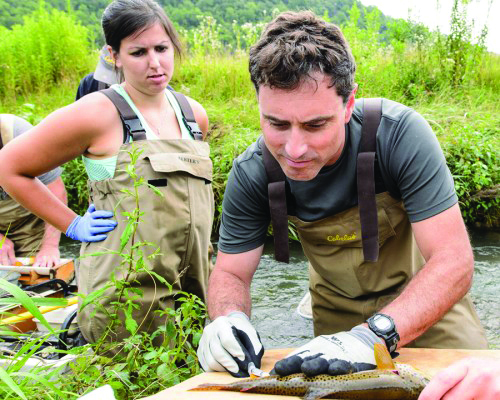
Tony Goldberg takes a blood sample in a non-lethal way from trout caught near Wauzeka, Wisconsin, while Whitney Theil observes. The fish was collected by DNR staff members to test for emerging diseases in the fish population. Image credit: Bryce Richter, UW-Madison

Tony Goldberg, a professor in the Department of Pathobiological Sciences, said his research group identified 19 viruses in blood samples from 103 Wisconsin bluegills, brown trout, lake sturgeon, northern pike and walleye. Seventeen of the 19 viruses were new to science. Among them was the first fish-associated coronavirus from the Gammacrononavirus genus, which differs from the type of virus that causes COVID. It was present in 11 out of 15 walleyes sampled by the Wisconsin Department of Natural Resources (DNR).

While the findings are novel, Goldberg stressed that anglers should not be worried. “None of these viruses can infect people. It’s not a risk for people to catch, handle and eat fish because of these viruses. There’s no evidence that these viruses are causing any problems. They may just be part of the natural ecosystem of these fish,” he said.

The results were recently published in the journal “Pathogens.” Of the different species of fish sampled, lake sturgeon blood contained the most viruses (97% of samples), with brown trout samples showing the least prevalence (6%).

Regarding the coronavirus found in walleye, Goldberg said, “There’s an important poultry disease called infectious bronchitis that is caused by a relative of this new virus, but this is the first example in fish and it is an honest-to-goodness coronavirus.”

This virus survey builds on previous Sea Grant-funded research in which Goldberg studied viral hemorrhagic septicemia in fish. The DNR took blood samples from healthy fish across Wisconsin to test for viral hemorrhagic septicemia antibodies. They saved the blood and used it for this current study on the viromes of Wisconsin fish.

The findings will aid fishery managers when they routinely test the health of fish about to be released into state lakes from hatcheries or for fish that are being shipped out of state.

Wisconsin Department of Natural Resources fisheries technicians collect trout from a creek near Viroqua, Wisconsin. Image credit: Bryce Richter, UW-Madison

“This is a huge problem for fisheries managers that happens all the time,” Goldberg said. “We recently had a case where there were thousands of muskies that were ready to be released and they came back with an unknown virus. So, do you release them? Do you just keep them there? Do you kill them all? Maybe there are viruses out there that are a normal part of the ecosystem and they just infect a lot of fish, but they don’t cause disease.” This study’s findings will help managers decide what is normal and what is concerning in terms of fish viruses.

Goldberg said that one thing anglers can do to ensure fish viruses aren’t spread is not to transport fish between water bodies “If you move a fish from one water body to another, you’re moving everything that lives on and in that fish, and potentially causing problems,” he said.

As a follow-up, Goldberg’s collaborators at the U.S. Fish and Wildlife Service have designed specific tests for the various viruses and the team will test a larger set of fish blood samples from around Wisconsin. They will map the viruses so that fisheries managers can tell what’s normal for a particular watershed and whether stocking can or should not proceed.

He also plans to develop a “Fish Get Sick, Too,” educational program. Goldberg said that fish are “animals, like anything else, and they get sick, too. I think if people were more aware of that, it might help reinforce some of the best-handling practices we do for catch-and-release fishing, some of the harvest practices, and food safety things we do.”

Other members of the research team include Charlotte Ford and Christopher Dunn with the UW-Madison Department of Pathobiological Sciences; and Eric Leis and Isaac Standish with the U.S. Fish and Wildlife Service, La Crosse Fish Health Center.

The post Wisconsin sport fish carry suite of new viruses first appeared on Wisconsin Sea Grant.

Original Article

News Releases | Wisconsin Sea Grant

News Releases | Wisconsin Sea Grant

https://www.seagrant.wisc.edu/news/wisconsin-sport-fish-carry-suite-of-new-viruses/

Marie Zhuikov

The cover of the Northern Waters Smokehaus cookbook, “Smoke on the Waterfront.” Image credit: Amazon.comThe latest informative and fun 27-minute episode of The Fish Dish Podcast features interviews with the creators of “Smoke on the Waterfront: The Northern Waters Smokehaus Cookbook,” and with a staff member from Duluth, Minnesota’s Zenith Bookstore, who reviewed the book. A finalist for a 2024 Minnesota Book Award, the cookbook offers recipes for the Smokehaus’ famous fish and smoked meats.

The Minnesota-based Smokehaus has Wisconsin connections through its fish, provided by commercial fishermen in northern Wisconsin on Lake Superior’s South Shore. Podcast listeners will hear the launch event held for the cookbook; in-depth interviews with Smokehaus staff Ned Netzel and Nic Peloquin about their roles with the cookbook; an insightful review by Jean Sramek, bookseller with Zenith Bookstore; and information on how to cook the Lake Superior Chowder recipe featured in the book.

Wisconsin Sea Grant’s Fish Dish podcast has provided the latest “dish” about Great Lakes fish for over two years and 15 episodes. Hosted by Food Fish Outreach Coordinator Sharon Moen and Science Communicator Marie Zhuikov, the series introduces listeners to the people behind Wisconsin’s fishing and aquaculture industries. Each episode includes a “Fish-o-licious” section where the hosts cook a new fish recipe. Ska music by Twin Ports band, Woodblind, ties it together.

The Fish Dish is available on Google Play, Spotify, iTunes and on the Fish Dish website.

The post Northern Waters Smokehaus and Zenith Books featured on Wisconsin Sea Grant’s Fish Dish Podcast first appeared on Wisconsin Sea Grant.

Original Article

News Releases | Wisconsin Sea Grant

News Releases | Wisconsin Sea Grant

https://www.seagrant.wisc.edu/news/northern-waters-smokehaus-and-zenith-books-featured-on-wisconsin-sea-grants-fish-dish-podcast/

Marie Zhuikov

One of the 21 images painted by Art Fleming that line the walls of the Kom-on-Inn in Duluth. This one depicts the U.S. Steel Plant, which has been torn down and is now a Superfund site that is being cleaned up. Note the St. Louis River in the background. The presence of the river emphasizes the role that water has played and continues to play in shaping the city of Duluth. Image credit: Jennifer Webb, University of Minnesota Duluth.

The smell of stale cigarette smoke is the first thing to strike as I walk into the Kom-on-Inn Bar not far from the St. Louis River. Even though indoor smoking in public places was banned 17 years ago in Duluth, Minnesota, the scent lingers here.

It’s 10:30 a.m.; several patrons sit under dim lights at the bar with their beers, chatting. But I’m not here to drink. I’m on a field trip that’s part of the St. Louis River Summit, an annual conference to share information about the largest U.S. tributary that enters Lake Superior on Wisconsin’s northwestern border, and site of the second-largest Area of Concern in the country.

Bars aren’t typical locations for conference field trips. However, this one in West Duluth was chosen for several good reasons. The old paintings that line its walls are one of them. The other reasons involve the bar’s importance to the community.

Art Historian Jennifer Webb describes the community significance of architectural portraits that hang in the Kom-on-Inn Bar in West Duluth, Minnesota. Image credit: Marie Zhuikov, Wisconsin Sea Grant

According to field trip host Jennifer Webb, an art historian and head of the Department of Art and Design at the University of Minnesota Duluth (UMD), 21 paintings are displayed on the bar’s walls, with another 20 stored in the basement.

A resident of this area of Duluth, Webb has studied the artworks for several years and has written a scientific journal article about their significance. Created between 1950-51 by Western Duluth resident and sign painter Art Fleming, these architectural portraits depict local businesses where many of the bar patrons worked. There’s the U.S. Steel mill that made barbed wire and pig iron, the Coolerator Co. that made refrigerators and a coal-fired power plant. A blue strand of the St. Louis River flows through almost every image. The paintings’ varnish coating has yellowed with age and sealed in the cigarette smoke scent.

To Webb, the bar and the portraits epitomize the area. “As an outsider who didn’t grow up in a community like this, the first thing that I was struck by is how every neighborhood has a place, an anchor and an identity.” Bars like the Kom-on-Inn provided a place for workers to gather at the end of their shifts to “decompress from a very difficult and hard industrial life,” she said.

Many of the industries in the paintings closed only two decades after their depiction, leaving unemployment and pollution in their wakes. In Webb’s journal article she says the portraits are a “testament to the pride in place and the importance of the river and industries in the making and then breaking of the neighborhoods and the larger ecosystems of which they are a part.”

Webb suspects that Fleming painted the portraits from photographs since many similar scenes can be found in the photo archives at UMD. The artworks were commissioned by the original bar owners, the Crotty Family, and their preservation is a requirement each time the bar changes hands.

Webb divides us into small groups so that we can take a closer look. In front of one portrait of the river neighborhood of Morgan Park, comprised mainly of homes built by U.S. Steel Co. for their workers, Webb describes the experience she had interviewing people about this painting and their nostalgia for the way of life it depicts.

The Kom-on-Inn panel painted by Art Fleming, located inside the bar. Image credit: Jennifer Webb, University of Minnesota Duluth.

“People who grew up there, when they talk to me about it, they remember their childhood fondly. They had a perfect community. They never really needed to leave. The doctor was there, the dentist. They had a fire department and a hospital,” Webb said. Many of those services are no longer offered directly in Morgan Park.

Plans for remediating Areas of Concern stress the importance of placemaking, which is the process of using public input to create quality places where people will want to live, and broadening the definition of stakeholders. In her paper, Webb argues that such stakeholder groups should include local historians, archivists and art or architectural historians who can offer insights into the built and visual landscape. She also contends that the most successful community revitalization and placemaking work need not create new places but instead should focus on remaking places already formed and to which community members are attached.

“Duluth is so well situated to build walkable communities. We’ve got these anchors like the Kom-on-Inn that were already built as our communities strung themselves out along the waterways. I can’t wait to see where we’re going,” Webb said of restoration efforts.

I left with a new appreciation for this neighborhood where I went to high school, and a broader understanding of the connections between the St. Louis River, its recovery and some paintings in a neighborhood bar.

If you’d like to see the paintings and can’t travel to Duluth, watch this recent television news story about them.

The post A conference field trip to a bar links river and art to community first appeared on Wisconsin Sea Grant.

Original Article

Blog | Wisconsin Sea Grant

Blog | Wisconsin Sea Grant

https://www.seagrant.wisc.edu/blog/a-conference-field-trip-to-a-bar-links-river-and-art-to-community/

Marie Zhuikov

A map of the underwater substrate near the Superior Harbor Entry with Wisconsin Point in the middle, western Lake Superior. Image by Brandon Krumwiede, NOAA.

The next River Talk will be at 6:30 p.m. Wednesday, March 13, with “What Lies Below? Underwater Mapping Near and in the St. Louis River Estuary,” an in-person and virtual presentation by Brandon Krumwiede with the National Oceanic and Atmospheric Administration. His talk will be held at the Lake Superior Estuarium (3 Marina Dr., Superior, Wis.). Refreshments will be provided.

Brandon Krumwiede. Image credit: National Oceanic and Atmospheric Administration

Krumwiede’s work as a Great Lakes geospatial coordinator is varied and interesting. One day, he might analyze satellite data, the next, he might give a public presentation like River Talks. Krumwiede enjoys finding the connections between people, the land and the water. In his talk, Krumwiede will describe current efforts and technologies used to improve understanding of the underwater world near and in the estuary and its importance in coastal natural resources management.

To join by Zoom, please pre-register at this link:
https://uwmadison.zoom.us/meeting/register/tJcvcumrrj8vGNer4dHKwdZpxEoIVief60nR

For accessibility accommodations related to sound, language and translation, mobility or anything else to make engagement possible, please contact Luciana at 715-399-4085 or Luciana.Ranelli@wisc.edu, as soon as possible.

The final River Talk of the season will be held April 10. For more information, visit the River Talks page: go.wisc.edu/4uz720.

The River Talks are sponsored by the Lake Superior National Estuarine Research Reserve and the Wisconsin Sea Grant Program.


The post What Lies Below? Underwater Mapping first appeared on Wisconsin Sea Grant.

Original Article

News Releases | Wisconsin Sea Grant

News Releases | Wisconsin Sea Grant

https://www.seagrant.wisc.edu/news/what-lies-below-underwater-mapping/

Marie Zhuikov

Podcast host Stuart Carlton calls the Lakie Awards “the least prestigious Great Lakes podcast awards” around. Carlton hosts “Teach me About the Great Lakes,” a twice-monthly podcast produced by Illinois-Indiana Sea Grant where listeners can learn about a variety of Great Lakes topics and issues.

Mixed with tongue-in-cheek award categories like Great Lakes Donut of the Year are more typical ones. Wisconsin Sea Grant fared unusually well in the 2023 competition, earning honors for Great Lakes Research Project, Great Lakes Sandwich, Science Podcast and Great Lakes Titus of the Year.

A Lakie entry so bad that it garnered a first-ever loser award. Image credit: Tim Campbell, Wisconsin Sea Grant

Our staff members earned both the winner and runner-up categories for Great Lakes Research of the Year. Interim Wisconsin Sea Grant Director Christy Remucal and her student Sarah Balgooyen won for their journal article about discovering the source of a PFAS plume into Lake Michigan. Aquatic Invasive Species Outreach Specialist Tim Campbell and his team earned runner-up for their article about Buddhist life release rituals and the risk for unintentionally spreading aquatic invasive species.

Our podcast, Wisconsin Water News (produced by me!) earned runner-up for Science Podcast for the Year.

Fisheries Outreach Specialist Titus Seilheimer earned runner-up for Great Lakes Titus of the Year. Although this category is named after Titus, it wouldn’t look good for him to win it, so this year, those honors went to the Titus Bakery chain in Indiana.

Campbell had the distinction of being named a first-ever loser in the Great Lakes Sandwich of the Year competition. He submitted a photo of a mac-and-cheese hot dog covered with fruit loops cereal, which was too gross for the Lakies judges to even consider.

Despite their lack of prestige, our staff are proud of their showing in the Lakies and appreciate this outreach effort by Illinois-Indiana Sea Grant. To see a list of the other winners, please access the episode here.

The post Wisconsin Sea Grant garners good showing in the Lakie Awards first appeared on Wisconsin Sea Grant.

Original Article

Blog | Wisconsin Sea Grant

Blog | Wisconsin Sea Grant

https://www.seagrant.wisc.edu/blog/wisconsin-sea-grant-garners-good-showing-in-the-lakie-awards/

Marie Zhuikov

Communicating effectively about invasive species, whether the plants and animals are on land or in water, can be challenging. Is it better to “wage a war” on invasives, or should communicators take an alternative approach?

Purple loosestrife, a pretty but invasive plant. Image credit: Wisconsin Sea Grant

In conjunction with National Invasive Species Awareness Week, the Sea Grant programs in Michigan, Oregon and Wisconsin are hosting a workshop with the North American Invasive Species Management Association on the topic of using messaging and metaphors in communicating about invasion biology. The “Invasive Species Language Workshop,” will be held online and in-person on Feb. 27-28. A virtual half-day of webinar presentations will be followed by a full-day workshop in Washington, D.C., where attendees will draft guidelines and research priorities for inclusive communication and naming conventions. Researchers, science communicators and invasive species managers are encouraged to attend.

“Our goal is to learn what everybody’s doing in their respective fields, and then get everyone together to talk it out and describe any successes they’ve had in advocating for better and more inclusive language about invasive species,” said El Lower, Great Lakes Aquatic Nonindigenous Species Information System communications specialist with Michigan Sea Grant. “It’s about how we can work together to promote a set of best practices and present a unified front across invasion biology.

“We can come up with different metaphors that are not just ‘good versus evil, us versus them,’ and actually get into some of the nuance involved in managing invasive species. Sometimes that gets lost in the wash if you’re simply focusing on military metaphors,” Lower added.

Another issue with invasive species are their names. Some species names may contain racial slurs or reinforce xenophobic concepts. Efforts to develop more inclusive guidelines for naming invasive species have been limited, and this will be an additional focus of the webinar and workshop.

“Scientists and natural resource managers often believe that the language and points they make are neutral; that they’re just the facts. However, even when communicating facts, we all use value-laden language or language that may be received differently than intended,” said Tim Campbell, Wisconsin Sea Grant AIS program coordinator. “By embracing this inclusive language and naming conventions, we can reduce unintended consequences of our communication products, and we be more effective in our aquatic invasive species management efforts.” 

Registration is now open for the sessions. Visit the website here.

Funding for the workshop was provided by the National Sea Grant Office.

The post Invasive Species Language Workshop designed to get people talking first appeared on Wisconsin Sea Grant.

Original Article

News Releases | Wisconsin Sea Grant

News Releases | Wisconsin Sea Grant

https://www.seagrant.wisc.edu/news/invasive-species-language-workshop-designed-to-get-people-talking/

Marie Zhuikov

Image courtesy of the Lake Superior National Estuarine Research Reserve and Kate Murray

SUPERIOR, Wis. – The Lake Superior National Estuarine Research Reserve (Lake Superior Reserve) is holding its 14th annual St. Louis River Summit March 6-7 with in-person sessions at the University of Wisconsin-Superior Yellowjacket Union and field trip options on March 8.

The theme for the summit is, “Braiding Visions for an Enduring Future,” which celebrates long-term stewardship of the St. Louis River through various ways. The goal of the summit is to bring together people who care about and work on the St. Louis River and to encourage coordination of activities, programs, and projects.

“We wanted to honor what it takes to care for land and water in a multigenerational sense,” said Deanna Erickson, Lake Superior Reserve director. “To steward the St. Louis River from past degradation into a thriving future takes many visions from scientists, community members, Ojibwe elders and stewards, to engineers, state agencies, and elected officials. The summit braids those perspectives together.”

The keynote session, “Visions: Stories for an Enduring Future,” will be hosted by Mary Fox and Blake Thomas of the live Duluth radio broadcast “Take it With You,” and Zeitgeist Arts. The St. Louis River has seen some wild tales–historic, ecological, adventurous, and personal. In this session, storytellers are invited from the community to share short personal stories connected to the river on the theme of visions in the format of a noncompetitive story slam (think a local version of The Moth podcast).

In-person events include informational presentations, networking sessions, a poster and art session, and field trips. The poster and art session takes place at 5 p.m. on Wednesday, March 6, in the University of Wisconsin-Superior Swenson Hall atrium. It will feature light refreshments.

During the morning of March 8, field trips will be held. Options include touring the Western Lake Superior Sanitary District, snowshoeing in the Superior Municipal Forest, visiting the Grassy Point Restoration Site, and viewing art history murals inside West Duluth’s Kom-on-Inn with interpretation by an art historian and arts enthusiast.

Students from local schools and institutions are invited to attend the summit to learn about land and participate in water stewardship efforts, the research community and river restoration projects. Students attend for free but need to register.

The cost to attend the entire summit (virtual and in-person sessions) is $60 and includes lunches and appetizers at the poster and art session. Online registration closes Feb. 28. The cost for same-day walk-in registration is $90. Visit this link to register and view the agenda.

Sponsorship opportunities are still available. Initial sponsors include Barr Engineering; city of Superior; Duluth Pottery; Duluth Seaway Port Authority; Duluth Eco Rotary; EA Engineering, Science, and Technology, Inc.; Friends of the Lake Superior Reserve; Lake Superior Captain’s Academy; Lake Superior Research Institute; Large Lakes Observatory; LimnoTech; Marine Tech; Minnesota Center for Environmental Advocacy; Minnesota Department of Natural Resources; Minnesota Land Trust; Minnesota Sea Grant; Roen Salvage Co.; University of Minnesota Duluth Natural Resources Research Institute; U.S. EPA’s Great Lakes Toxicology and Ecology Division; Western Lake Superior Sanitary District; W.J. McCabe (Duluth) Chapter of the Izaak Walton League of America; Wisconsin Coastal Management Program; Wisconsin Department of Natural Resources; Wisconsin Sea Grant and Wren Works, LLC.

The post St. Louis River Summit Celebrates an Enduring Future first appeared on Wisconsin Sea Grant.

Original Article

News Releases | Wisconsin Sea Grant

News Releases | Wisconsin Sea Grant

https://www.seagrant.wisc.edu/news/st-louis-river-summit-celebrates-an-enduring-future/

Marie Zhuikov

The PFAS research team: Lyn van Swol, Bret Shaw, Cristina Carvajal, Gavin Dehnert. Image credit: Hannan Hein of University of Wisconsin-Madison

A team from the University of Wisconsin-Madison received a grant from Illinois-Indiana Sea Grant to study PFAS (per- and polyfluoroalkyl substances) messaging to water users in Wisconsin with a special focus on Latinos, since they are the largest and fastest-growing minority group in the state.

PFAS, sometimes called “forever” chemicals, are found in various products and can contaminate drinking water. High levels of PFAS have been linked to health risks, such as increased cholesterol levels, decreased vaccine response, risk of thyroid disease, lower birth weights and reduced fertility in women. However, health risks at lower levels are uncertain. Communicating these risks effectively to increase understanding, avoid undue fear and provide recommendations for behaviors people can do to reduce risks is crucial to the 70% of Wisconsinites who depend on municipal water supplies.

“The Wisconsin Department of Natural Resources now requires monitoring for PFAS in municipal water supplies and reporting when any are detected at over 70 parts per trillion,” said Lyn van Swol, principal investigator and a professor with UW-Madison’s Department of Communication Arts. “Given these new requirements and uncertainty about the health effects of PFAS, particularly at lower levels, public health educators are struggling with how to communicate with the public about the presence of PFAS in their municipal water supplies.”

Van Swol and the grant team will work to develop effective communication strategies about PFAS risks, focusing on engaging messages that encourage actions such as using water filtration systems. They will do this in three parts. First, they will gather data on people’s internet searches related to PFAS information. Second, they will test specific messages with municipal water users, and finally, test which messages engage social media audiences.

They will share their results via webinars, news releases and collaborations with Spanish-speaking media. The team will also develop resources for environmental and health communication professionals designed to enhance public understanding and proactive response to PFAS exposure in their communities.

The grant team is comprised of van Swol and Bret Shaw, professor with the Department of Life Sciences Communication and an environmental communication specialist with UW-Division of Extension; Gavin Dehnert, emerging contaminant scientist with Wisconsin Sea Grant; and Cristina Carvajal of Wisconsin Eco-Latinos.

Other partners include UW-Madison Extension, the Wisconsin Department of Health Services, the Wisconsin Department of Natural Resources, Public Health Madison & Dane County and the UniverCity Alliance.

The study is part of a larger project coordinated by Illinois-Indiana Sea Grant that addresses PFAS knowledge gaps in the Great Lakes region.

The post PFAS in municipal drinking water: New grant designed to improve risk communication in Wisconsin first appeared on Wisconsin Sea Grant.

Original Article

News Releases | Wisconsin Sea Grant

News Releases | Wisconsin Sea Grant

https://www.seagrant.wisc.edu/news/pfas-in-municipal-drinking-water-new-grant-designed-to-improve-risk-communication-in-wisconsin/

Marie Zhuikov

Members of the Lake Superior Climate Champions Program take a field trip to an eroded area in northern Wisconsin. Pictured left to right are Dave Sletten, Matt Hudson and Tony Janisch. Image credit: Karina Heim, Lake Superior Reserve

It’s official: 2023 was the hottest since we’ve been keeping records, according to the National Oceanic and Atmospheric Administration. This can trigger extreme weather events such as storms and flooding. Northern Wisconsin is not immune from the impacts of climate change and communities are taking action.

Leaders in several northern Wisconsin counties and cities were chosen to participate in a Lake Superior Climate Champions Program organized by Wisconsin Sea Grant and the Lake Superior National Estuarine Research Reserve in 2023. The program provided funding and guidance to two teams to work on goals of their choosing that addressed climate change.

Members of the Washburn/Ashland Climate Champions team attend a coastal resilience adaptation workshop organized by the Northern Institute of Applied Climate Science. Pictured left to right are Danielle Shannon, Sara Hudson, Tony Janisch, Bree Schabert, Matias Valero and Jessica Jacobson. Image credit: Karina Heim, Lake Superior Reserve

The first team from the cities of Washburn and Ashland included Tony Janisch, Washburn assistant city administrator, and Sara Hudson, Ashland park and recreation director and city forester. Their project involved creating the outline of a coastal adaptation plan for their cities that focused on flood resilience and climate adaptation. They also developed a project priorities list, connected with other communities at a climate-focused annual conference by the Great Lakes and St. Lawrence Cities Initiative in Chicago and brought a coastal resilience adaptation workshop to the region in collaboration with the Northern Institute of Applied Climate Science and the Lake Superior Collaborative.

During a webinar, Janisch described how the contacts he made during the Great Lakes and St. Lawrence Cities Initiative Conference helped him find funding for a long-standing problem in Washburn.

“We have some significant coastal erosion at one of our parks in the city. I had spent three years trying to find funding to start the work. I was connected with someone and then was able to get some FEMA funding. So, we have an engineer now doing design work for how to solve the problem,” Janisch said.

Another erosion project Janisch found possible funding sources for involves Thompson’s Creek, which runs underneath a local highway and along another road. “There was some erosion going on with one of the creek bends that’s eating away at one of our side roads. It’s very possible that it could start eroding the right-of-way on the highway itself,” Janisch said.

Hudson said the champions program, “…Opened up a couple projects that have been on the back burner in my mind. And then also just creating more of a living shoreline along our Baker City Creek Estuary and along the ore dock shoreline that is there. It’s been a really good process.”

The second team included emergency managers from Ashland, Bayfield, Douglas and Iron counties. These are Dorothy Tank (retired from Ashland County), Dave Sletten (Douglas County), Stacy Ofstad (Iron County) and Meagan Quaderer (Bayfield County) Their project focused on developing a digital form to record road maintenance activities for Great Lakes coastal counties in Wisconsin and beyond.

Quaderer said that development of the road maintenance form was timely. “This spring, the region had a lot of flooding and a lot of [road] damage. So, we actually had a real-world application of the document, especially in Bayfield County.”

The team presented the form at a Wisconsin Northwest Region Emergency Managers Meeting and it garnered their interest as well as that of representatives from Minnesota. The team was asked to present the form again to the Statewide Hazard Mitigation Committee. Those members saw the overwhelming value of the tool.

“I think it’s something that will be used here within our four counties but also hopefully, within both states,” Sletten said.

Tank said the form has already been used in Ashland County for a number of federally declared disasters. “It was not only approved at the state level, but by FEMA. It contained all the information they wanted,” she said.

The Climate Champions Program was facilitated by Karina Heim with the Reserve and Natalie Chin with Sea Grant. They recently released the call for applications for this year. Apply at this link: https://go.wisc.edu/0385yk. The deadline is March 15.

For more general information, visit: https://go.wisc.edu/am468e.

The post Northern Wisconsin communities benefit from climate change program first appeared on Wisconsin Sea Grant.

Original Article

News Releases | Wisconsin Sea Grant

News Releases | Wisconsin Sea Grant

https://www.seagrant.wisc.edu/news/northern-wisconsin-communities-benefit-from-climate-change-program/

Marie Zhuikov

A program for community leaders in northern Wisconsin who are looking for ways to address climate change is available through Wisconsin Sea Grant and the Lake Superior National Estuarine Research Reserve. 

The Lake Superior Climate Champions Program began provides a yearlong opportunity for community teams to work on a goal of their choosing that addresses climate change, with a minimum of $2,500 in funding, guidance from Sea Grant and Reserve staff members and the chance to connect with other communities working on climate challenges. The program completed its first successful cohort last year and is seeking applicants for a new round of support in 2024.

Wisconsin Sea Grant’s Natalie Chin discusses climate change impacts with Climate Champions teams in 2023. Image credit: Lake Superior National Estuarine Research Reserve

Participating teams of two to four people must be from one of the four coastal counties (Douglas, Bayfield, Ashland or Iron) and may include representatives from multiple jurisdictions. The teams can include community members in decision-making roles, such as tribal or county government staff, elected officials, members of local boards and committees or regional intergovernmental committees.

“All across Lake Superior’s coastal communities, we feel the impacts of climate change firsthand,” said Karina Heim, coastal training program coordinator with the Lake Superior Reserve. “Finding time and the capacity to address climate issues can be a challenge for local leaders. Our Climate Champions Program offers dedicated, yearlong support for climate work.”

Teams who want to participate need to apply online by March 15 at: https://go.wisc.edu/0385yk. Teams will be selected by April and the program will begin in May.

The previous year’s projects included creating the outline of a coastal adaptation plan for Washburn and Ashland, Wisconsin, that focused on flood resilience, climate adaptation and a project priorities list; also, emergency managers from Ashland, Bayfield, Douglas and Iron counties developed an online form to record road maintenance activities for Great Lakes coastal counties in Wisconsin.

Applicants are encouraged to seek support for a new climate resilience effort that is relevant to their community. This could include developing a new resource or tool, initiating an assessment, bringing people together in dialog or developing a specific climate plan.

Other possible project examples include: finding and using an assessment or planning tool to prepare for climate challenges (flooding, public health, etc.), planning a workshop or a facilitated process that allows for climate change learning and dialog and incorporating climate change considerations into an existing project or process, such as land-use planning or stormwater management.

For more information, visit: https://go.wisc.edu/am468e.

The post Applications open for community climate support program first appeared on Wisconsin Sea Grant.

Original Article

News Releases | Wisconsin Sea Grant

News Releases | Wisconsin Sea Grant

https://www.seagrant.wisc.edu/news/applications-open-for-community-climate-support-program/

Marie Zhuikov

Actors Neil Brookshire and Cassandra Bissell practice their lines for “Me and Debry,” a play about marine debris held at the Door County Public Library in 2022. Image credit: Bonnie Willison, Wisconsin Sea Grant

What is marine debris, what are its impacts and what can we do about it? These are the central messages of a play written on behalf of Wisconsin Sea Grant by David Daniel with American Players Theatre of Wisconsin.

Me and Debry,” (pronounced “debris”), is a half-hour, whimsical, audience-participation play about litter (marine debris) in the Great Lakes. It had its “world premiere” in Wisconsin’s Door County in October 2022 and was performed three times at the Gilmore Fine Arts School in Racine, Wisconsin, for fifth- and sixth-grade students in May 2023.

The play’s script has been fine-tuned through these performances and is now available for others to use for free, complete with props.

Ginny Carlton, Wisconsin Sea Grant’s education outreach specialist, recently discussed the play and why schools or other educational institutions might be interested in performing it.

Ginny, what is marine debris and what message does the play offer about it?

So, a lot of times people think about gasoline or oil on the water because we often see that on the news. Technically, from NOAA’s perspective (National Oceanic and Atmospheric Administration), that isn’t marine debris. It’s obviously pollution, but the definition requires marine debris to be a solid. It can be anything from something really small, like a microplastic, to something quite large, like a derelict fishing vessel.

Often, environmental messaging can be sort of depressing and doom and gloom. We wanted to provide students with an uplifting message. One of the lines in the play is, “If it’s to be, it’s up to me.” This particular line is repeated a couple times during the play, so that hopefully, the students come to understand that they can have a positive role in at least considering what to do and making a change that would have a positive impact.

Ginny Carlson (left) instructs Racine elementary students in an environmental stewardship day project at Quarry Lake County Park as part of the marine debris project that the “me and Debry” play came from. Image credit: Bonnie Willison, Wisconsin Sea Grant

What is special about the play compared to other marine debris educational materials?

Two reasons: one, it presents the material in a slightly different messaging format. Rather than reading a textbook or watching a video, it has an opportunity for interaction. There’s a lot of audience participation built into the play script. There are four central roles that are performed by members of the audience. One is a crane, another is a kayaker, a fish and a kid. Then beyond those four central roles, there’s also audience participation opportunities when the play starts to talk about what we call the eight R’s. Many teachers and students are already familiar with three of the R’s. Reduce, Reuse, Recycle. The play introduces five others for the students and the educators to think about. (Rethink, Refuse, Repurpose, Refurbish and Repair)

I think another reason is that it has the potential of getting people up moving and actually doing, and inspiring action beyond the actual performance. So, providing an opportunity for the students to consider their own behavior and their own impact on this issue and potentially making some minor adjustments in what they’re doing. Obviously other educational curriculum and formats also attempt to do that, but for some reason, I think just having the audio and visual together and having live interactions with people brings it one step further along than just listening to a teacher talk about it or with a PowerPoint or watching a video, perhaps.

Also, the script design itself is a rhyming format, and that tends to grab people’s attention, and it somehow helps people to remember the content better than just having it in regular prose.

Do actors in the play need to memorize lines?

Even with the actors that were at Door County and in The Gilmore Fine Arts School, we told them that there was no need for them to memorize lines. They could do what they called a reading performance, which means that you can have the script in hand. The desire is to have you pre-read it, so you’re not standing and reading like a storybook-style program, but that you have some familiarity with the script ahead, but have it there to provide a refresher as you move along.

What do students get out of the play in addition to marine debris education?

Students get an opportunity to do some public speaking. I think oftentimes students don’t have the opportunity to publicly speak in front of their peers and or other individuals. So that can be a real confidence-booster to have the opportunity to do that.

They also have an opportunity to consider different worldviews and different perspectives. So, by including the characters of the crane and the fish our intention and hope was that perhaps the students  or youth that are watching the performances and interacting with the performances would understand how humans can and do impact other organisms and our responsibility to them — a stewardship message that is part of the play as well.

The “Me and Debry” script is now available to use for free. Image credit: Bonnie Willison, Wisconsin Sea Grant

How do people get the script if they want it?

The easiest way to obtain it is to simply download it from our Wisconsin Sea Grant Education website. We have it available in English, and then the four main character parts for the audience members are in English, Spanish, and Hmong translations as well. The eight R materials for audience participation, they’re available in English, Spanish, and Hmong directly from our website. We also include all that material in a costume kit and an educational kit that you can make a request to have sent to you within Wisconsin. That link is also on the education website. So, you simply make a request for the materials to be interlibrary loaned to you.

The kit has costumes for the two primary actors. Basically, a T-shirt and a pair of oversized sunglasses, so it’s not elaborate costuming. And similarly, it has costumes for the four main characters. And then supporting props for the various eight R topics.

Does it cost anything?

No. Just like our other educational kits at this time, there’s no charge. We will ship it on our cost, and we also pay for the return shipping.

Me and Debry, is part of a two-year project funded by Wisconsin Sea Grant with grants from the National Sea Grant College Program, National Oceanic and Atmospheric Administration Marine Debris Program, U.S. Department of Commerce, and the state of Wisconsin.

The post Marine debris play script available for free first appeared on Wisconsin Sea Grant.

Original Article

News Releases | Wisconsin Sea Grant

News Releases | Wisconsin Sea Grant

https://www.seagrant.wisc.edu/news/marine-debris-play-script-available-for-free/

Marie Zhuikov

Euan Reavie presents at River Talks. Image credit: Michael Anderson

Harmful algal blooms are becoming more of a concern in the St. Louis River Estuary and Lake Superior. The reasons behind this were described during the November River Talk by Euan Reavie, senior research associate at the University of Minnesota’s Natural Resources Research Institute.

Harmful algal blooms, also known as HABs, appear as mats of bright green algae that float on the surface of the water or sometimes lay on the bottoms of large rivers or lakes. Not all algal blooms are toxic, but some are, and scientists are looking into what triggers the release of toxins in the blooms.

“Based on anecdotal and real observations, it does seem to be something that’s getting worse in Western Lake Superior,” Reavie said. “Whoever thought we’d be getting algal blooms out in the nutrient-poor waters of Lake Superior, making their way all the way up to the Apostle Islands?”

Water quality in the St. Louis River has improved over the years thanks to sanitary sewer districts coming online in Duluth and Superior in the 1970s, environmental regulations, and cleanup efforts. However, excess nutrients such as phosphorus and nitrogen are still of concern and are a focus of attention from management agencies.

Reavie’s research team came into the picture in the early 2010s when they were asked to research nutrient levels in hopes of confirming that they were decreasing. They collected sediment samples (cores) to reconstruct the history of nutrients in the estuary. The scientists analyzed the samples for different types of fossil algae, which offer signals about what types of nutrients were available in the past because different algae species prefer different levels of nutrients.

Diatoms are the most abundant type of algae in the Western Lake Superior system. Reavie showed how the assemblages of these species changed after European settlement and after water cleanup efforts in the 1970s.

Over the past several years, algae blooms have been noted along the shore of Lake Superior near Cornucopia, Wisconsin, and in the estuary at Barker’s Island and Allouez Bay. Reavie said that sediment samples from the present day in sheltered bays like Allouez Bay show diatom species that like high levels of nutrients. He said the data show a “fairly consistent” increase in phosphorus in the system. “Not good news for the bays in the estuary,” he said.

The team also found cyanopigments in the samples, which indicate recent increases in algae. “There appear to be some new problems in these nearshore areas despite the fact that we’ve reduced the flux of nutrients into the system. Something new is going on here,” Reavie said.

One culprit could be more intense storms due to climate change. Storms wash a lot of nutrients from the land into the water and then the currents carry them through the estuary and harbor, and out into Lake Superior along its South Shore.

“Just knowing that the blooms tend to follow storms is not enough. There’s probably a seasonal aspect to all this, as well,” he said. Warmth is one factor, but Reavie said there have also been algae blooms under the ice. Low dissolved oxygen levels in water could be another factor, resulting in a chemical reaction that releases stored nutrients in sediments.

His team has begun developing an early warning system to sort out what is going on. It involves incorporating weather data, water quality data and algae data from eight stations in the estuary. They hope to offer initial findings at the March 2024 St. Louis River Summit.

For more information, visit the team’s website.

The next River Talk is scheduled for March 13, 2024. Brandon Krumwide with the National Oceanic and Atmospheric Administration will present, “What Lies Below? Underwater Mapping of the Great Lakes,” at 6:30 p.m. in the Lake Superior Estuarium (3 Marina Drive, Superior, Wisconsin).

The post Understanding harmful algal blooms in the St. Louis River Estuary presents challenges first appeared on Wisconsin Sea Grant.

Original Article

Blog | Wisconsin Sea Grant

Blog | Wisconsin Sea Grant

https://www.seagrant.wisc.edu/blog/understanding-harmful-algal-blooms-in-the-st-louis-river-estuary-presents-challenges/

Marie Zhuikov

December 4, 2023
By Marie Zhuikov

A new report published by the University of Wisconsin-Madison found that Wisconsin’s rural residents perceived significant risks to water quality from pesticides, PFAS (per- and poly-fluoroalkyl substances) and excess nutrients. They also ranked water as very or extremely important for supporting wildlife and for hunting and fishing, in addition to home uses such as drinking and cleaning.

These findings regarding groundwater and surface water are based on a study by UW-Madison professors, including Michael Cardiff via a research project funded by the University of Wisconsin Water Resources Institute. The report, entitled, “Rural Resident Perceptions of Wisconsin’s Waters” is available for free download.

As part of a larger project, Cardiff, associate professor of geoscience, and his interdisciplinary team surveyed 1,500 randomly selected households across 16 counties in Wisconsin. They received 481 responses.

Cardiff was struck by the importance water held for rural interests in hunting and fishing. “If we’re talking with rural users about why they might want to protect their water, speaking in that natural reference frame about impacts on fish and wildlife might resonate.”

The finding about the “forever chemicals,” PFAS, surprised Cardiff. “People might just be hearing about this through the media and so it’s something they’re worried about even though it might not be as important as other contaminants in rural settings,” he said. “We usually think of dangerous concentrations of PFAS being associated with industrial operations or airports.”

The survey also contained questions regarding water supply, but respondents had fewer concerns regarding this issue. Cardiff agrees with that assessment. “I would generally say we’re in a good place in Wisconsin on water supply. We tend to have more issues with flooding than we do with not being able to reach water,” he said.

Michael Cardiff (Submitted photo)

However, Cardiff expects water pollution and water supply to become more important in the future as the Upper Midwest is touted as a climate haven and more people move here.

Rural residents were also surveyed about how they get their news about water. “Rural residents don’t get a lot of news about their water, or at least they don’t report getting a lot of news. The most cited sources of information were local news or friends and family, but even use of those sources was quite low,” Cardiff said.

Respondents ranked other sources of information more trustworthy than local news or their friends. This included UW scientists, research organizations and private well testers. But rural residents don’t report hearing from them very often.

Cardiff expects the report to be useful for state legislators and water regulatory agencies. Collaborating with him on it were UW student Catherine Christenson; Ken Genskow, professor of planning and landscape architecture; and Bret Shaw, associate professor of life sciences communication.

The post Wisconsin’s rural residents concerned about water quality first appeared on WRI.

Original Article

News Release | WRI

News Release | WRI

https://www.wri.wisc.edu/news/wisconsins-rural-residents-concerned-about-water-quality/

Marie Zhuikov

Science Communicator Marie Zhuikov attended a Wild Rice Symposium recently, along with hundreds of other people. Image credit: Marie Zhuikov, Wisconsin Sea Grant

Wisconsin Sea Grant sponsored a recent symposium on wild rice, which I had the chance to attend as did Deidre Peroff, our social science outreach specialist. The “Manoomin/Psin Knowledge Symposium” was held at the Black Bear Resort in Carlton, Minnesota, in mid-November.

The manoomin display that Wisconsin Sea Grant and Nature Conservancy staff helped create. Image credit: Marie Zhuikov, Wisconsin Sea Grant

Symposium-goers were offered instant inspiration by a large manoomin display at the registration table, which was created by Peroff, our creative manager Sarah Congdon, and Kristen Blann with The Nature Conservancy.

Most interesting were sessions where speakers described what wild rice means to them and tips for harvesting it.

Here are seven key things to keep in mind when harvesting wild rice in the fall and the names of the people who offered the advice:

  • Unprocessed wild rice features a long tail-like barb that can have uncomfortable consequences for unwary harvesters. It can sometimes get stuck in people’s tear ducts, requiring careful extraction! If this happens to you, you’ll be crying “warrior tears.” (Donald Chosa, Bois Forte Band of Chippewa)
  • Harvesters sometimes also inhale the rice and the barbs get stuck in their throats, making it hard to breathe and eliciting coughing. It’s a good idea to bring bread along while harvesting in case this happens. Eating the bread can dislodge the rice barb from a person’s throat. (Deb Connell, ricer, Lac du Flambeau)
  • “Don’t harvest rice at your convenience. Harvest it when it’s ready.” (Todd Haley, Lac du Flambeau Band of Ojibwe)
  • If your canoe tips over while ricing, it does not have any special Ojibwe cultural meaning other than, “It means you’ll get wet!” (Donald Chosa, Bois Forte Band of Chippewa) (I was especially keen on this information after my recent “immersive” wild rice experience.)
  • Lift weights to strengthen your arms for ricing for about a month beforehand. (Donald Chosa, Bois Forte Band of Chippewa)
  • Having music playing in the canoe makes the ricing day go faster. (Various speakers)
  • The best way to learn how to rice better is to copy someone’s movements who is a good ricer. (Donald Chosa, Bois Forte Band of Chippewa)

I also learned about three projects in Wisconsin that were successful in bringing wild rice back to lakes where it had disappeared. These involved Spur Lake (Oneida County), Clam Lake (Burnett County), and Spring Lake (Washburn County).

Nutritious wild rice is a true super food when compared to white rice, as noted in this image from one of the symposium speakers.

Carly Lapin with the Wisconsin Department of Natural Resources (DNR) said that Spur Lake, a historically important wild rice lake, began having trouble in 2009 when water levels became too high for wild rice to grow. She attributed this to beaver population recovery in the area and human alternations of the landscape. Also, aquatic invasive plant growth was out competing the wild rice.

Lapin said the DNR conducted a hydrologic study on the lake in cooperation with the Sokaogon Chippewa community to determine what was causing the water retention. In 2021, resource managers took advantage of naturally low water levels to remove competing vegetation with a mechanical harvester. The next year, they seeded the lake with wild rice and protected several plots with fencing to keep swans from eating the rice shoots. The protected areas grew successfully. A stream (Twin Lakes Creek) that provided outflow from the lake was restored and a harvest was able to occur in 2023.

Tony Havranek, an engineer with WSB, which is a design and consulting firm from Minneapolis, described the Clam Lake and Spring Lake projects. Clam Lake features two parts, an Upper and Lower Clam Lake. The lower part traditionally had wild rice, which declined from 2001-2009. In 2007 and 2008 the lake failed to grow any rice, which concerned the St. Croix Tribe. The tribe undertook studies with partners, who discovered that a steep rise in the population of common carp in the lake was the likely culprit. The age of the carp corresponded to the beginning of the rice crop failure. Havranek said the lake was home to 79,000 individuals, which equaled 670,000 pounds of fish.

“This is four times the tipping point for the lake environment,” Havranek said.

An integrated pest management plan was developed. Actions included installing barriers (nets) around the wild rice beds to keep out the carp, removing the carp from the lake and seeding the beds with local wild rice. Havranek said that over several years, 76,000 carp were removed.

By 2017, rice abundance had increased. Originally, 288 acres of rice beds were in the lake. By 2017, 177 acres had regrown, and harvest was able to begin again.

A successful wild rice harvest. Image credit: Thomas Howes, Fond du Lac Resource Management

Wild rice recovery at Spring Lake is still a work in progress. Problems began in 2000 when the outlet of the lake was changed. Floating leaf vegetation began taking over the lake. Herbicide was applied and unwanted plants were physically removed. After these actions, in 2005, rice was harvested.

However, rice production has declined recently (2016) due to cattail encroachment on the rice habitat. The cattails were mechanically removed and used for compost. Havernak said the rice harvest returned in 2017-2020 but that the lake is still struggling with rice production.

“We hope to remove more cattails and then put the lake on a monitoring schedule,” Havernak said.

Peroff and I staffed a table of publications at the symposium, which included our “ASC Chronicle” newsletter and a wild rice poster that features Ojibwe names for the different life stages of wild rice. The poster was very popular. It’s available online for free download here, or if you want a professionally printed version, you can contact Peroff at dmperoff@aqua.wisc.edu.

I left the event with a new appreciation for the complexities of wild rice management and harvesting. For a foraged food that’s strong enough to cause “warrior tears” or even choking, it remains incredibly fragile and needs our attention and care.

The post Lessons in wild ricing and wild rice lake restoration first appeared on Wisconsin Sea Grant.

Original Article

Blog | Wisconsin Sea Grant

Blog | Wisconsin Sea Grant

https://www.seagrant.wisc.edu/blog/lessons-in-wild-ricing-and-wild-rice-lake-restoration/

Marie Zhuikov

The next River Talk will be at 6:30 p.m. Wednesday, Nov. 8, with “Making Sense of Algal Blooms in the St. Louis River Estuary,” an in-person presentation by Euan Reavie with the Natural Resources Research Institute. His talk will be held at the Lake Superior Estuarium (3 Marina Dr., Superior, Wis.). Refreshments will be provided.

Euan Reavie. Image credit: Natural Resources Research Institute

Reavie will present what’s known so far about the evolving situation with algae and algal blooms in the river and harbor. He’ll also describe plans for a collaborative monitoring strategy with the Lake Superior Reserve to address current and future problems.

For accessibility accommodations related to sound, language and translation, mobility or anything else to make engagement possible, please contact Luciana at 715-399-4085 or Luciana.Ranelli@wisc.edu, as soon as possible.

In an abbreviation of the season, other River Talks will be held in 2024 on March 13 and April 10. For more information, visit the River Talks page: go.wisc.edu/4uz720.

The River Talks are sponsored by the Lake Superior National Estuarine Research Reserve and the Wisconsin Sea Grant Program.

The post Making Sense of Algal Blooms first appeared on Wisconsin Sea Grant.

Original Article

News Releases | Wisconsin Sea Grant

News Releases | Wisconsin Sea Grant

https://www.seagrant.wisc.edu/news/making-sense-of-algal-blooms/

Marie Zhuikov

Wisconsin Sea Grant’s Anne Moser presents the Plastic Panic Kit to Great Lakes educators at a conference in Chicago. Image credit: Marie Zhuikov, Wisconsin Sea Grant

When Anne Moser began her librarian career in Seattle in the early 1990s, one of her first experiences was a tour of the city’s wastewater treatment plant.

“It made a big impression on me, watching their operations and what great, amazing miracles can happen there. Wastewater enters the plant, is treated and is clean enough to discharge into Puget Sound. Creating this kit feels like I’ve come full circle in my career,” Moser said.

Wisconsin Sea Grant’s senior special librarian and education coordinator has now learned enough about wastewater treatment to create “Plastic Panic,” a grab-and-go teaching kit that formal and nonformal educators can use to teach about plastic pollution in the Great Lakes, specifically, microplastics.

Unlike larger plastic containers and pieces, microplastics (particles 5 millimeters and smaller) are too small for wastewater treatment plants to filter. What goes into the plant comes right back out into the environment. Fish and other animals can mistake microplastics for food. A belly full of plastic can make them feel full without providing any nutrients. In addition, heavy metals and other pollutants tend to stick to plastics. These can harm animals that eat the plastic, and the pollutants can work their way up the food chain this way.

The kit got its start after a plastic awareness-raising exhibition at the University of Wisconsin-Madison’s Chazen Museum of Art in 2019 called, “Plastic Entanglements.” That led to a prototype learning kit, which has been updated this year. Information in “Plastic Panic” is based on research by Derek Ho, biological systems engineering Ph.D. student under Troy Runge, UW–Madison. Artwork is by Chelsea Mamott, Wisconsin Energy Institute digital media specialist.

Although the curriculum is designed for fourth- to fifth-graders, Moser said the kit has wide appeal.

“When we presented it at the Chazen, we saw it caught visitors’ attention — from the littlest learners, maybe four or five years old, all the way up to the parents and grandparents. The tabletop’s eye-catching, so many people came over to look at it. We also learned that many people don’t know much about what happens to the wastewater leaving their house. The activity demystifies this weird building that treats wastewater,” Moser said.

Colorful microplastics filtered out in one of the Plastic Panic Kit activities. Image credit: Marie Zhuikov, Wisconsin Sea Grant

Colorful artwork and colorful plastics enthrall and teach.

“We have included a sample jar that has different types and sizes of plastics,” Moser said. “You get different densities, different weights, so they can experience the way plastic behaves in water. Some of it sinks, some of it floats, some stays in the middle. You get to filter and sanitize the sample, then look at what is ultimately discharged into our water bodies. So, it’s kind of high-level thinking that kids get to enjoy without even realizing it.”

Moser said the kit is “grab-and-go” for educators. “It comes with a guide that has clear instructions so they will be able to present the activity right out of the box.” It also provides questions to ask students, background information for educators and worksheets for classroom use. “So, hopefully, they can just grab it and do it.”

Content is aligned with Sea Grant’s Great Lakes Literacy Principles but not yet aligned to specific state educational standards.

With the help of Great Lakes Restoration Initiative funding, 23 kits were produced by Sea Grant’s Center for Great Lakes Literacy and distributed to Sea Grant programs around the Great Lakes Basin. Five are available free of charge in Wisconsin, and the kit is shipped via UPS.

To order “Plastic Panic,” fill out this form.

The post Plastics learning kit educates and enthralls first appeared on Wisconsin Sea Grant.

Original Article

News Releases | Wisconsin Sea Grant

News Releases | Wisconsin Sea Grant

https://www.seagrant.wisc.edu/news/plastics-learning-kit-educates-and-enthralls/

Marie Zhuikov

We’ve all heard that no two snowflakes are alike. But few people know that most are similar enough they can be classified.

Michael Notaro with the University of Wisconsin-Madison is teaching Wisconsin school children the similarities in snowflakes to share the wonder of nature and information about the Great Lakes climate, but also to expand an international environmental database.

An “ordinary dendritic” snowflake crystal. This means it has six branches. Image credit: The Bentley Collection, UW- Madison.

The database is called GLOBE, which stands for Global Learning and Observations to Benefit the Environment. This environmental education youth citizen science program began in 1995 and is run by NASA (National Aeronautics and Space Administration). It is sponsored by the National Oceanic and Atmospheric Administration (NOAA), the National Science Foundation and the U.S. Department of State. According to Notaro, more than 40,000 schools in 127 countries participate by inputting data such as temperature, wind speed, soil moisture and bird migration from their communities into the online GLOBE database.

Notaro, director for the Nelson Institute Center for Climatic Research, said his Sea Grant-funded Snow-GLOBE Youth Citizen Science Collaborative project helps address a lack of climate science education in the classroom.

“There’s very little time allocated toward the topics of weather and climate, particularly climate change,” he said. “Also, a lot of educators have expressed discomfort in terms of their training and teaching related to climate. So, I’m trying to provide the tools for the teachers, the training for the teachers, and also the opportunities for the students to learn how to become citizen scientists – that they themselves, even as a young person, can support some of the missions of NASA, NOAA and other agencies.”

Darien Becker, environmental educator with Welty Environmental Center (right), instructs two interns from Beloit Memorial High School on how to identify snowflakes using the Snow-GLOBE protocol. Image credit: Aaron Wilson, Welty Environmental Center.

He’s currently working with eight schools and three environmental centers across Wisconsin in Beloit, Racine and Door County. The children measure snow depth, snowfall amounts and their liquid equivalents. This data has a home in GLOBE already. What doesn’t have a home is snowflake classification. Notaro would like to change that.

The children take photos of snowflakes with their cellphones and a special lens, which Notaro provides. “They start with a wooden board with black velvet. The flake falls on it. Then you use a clip-on macro lens to take a photo and a high-precision ruler to estimate the crystal’s diameter. I also provided information like images from the Bentley Library,” Notaro said.

The Bentley Collection is housed at UW-Madison’s Space Science and Engineering Center. It contains photomicrographs (photos taken through a microscope) by Wilson Bentley, a homeschooled Vermont farm boy who developed a passion for studying water in all its forms. Snowflakes were his specialty, and he sold collections to universities across the United States, including UW-Madison.

Based on the shape of the crystal, the students can classify what type of snowflake it is. Some of the options include columns, hexagons, two branches, four branches, and the typical Christmas-card version with six branches.

Notaro said the photography activity is a hit. “Kids are interested in their cell phones, as we know. Kids are interested in photography. This connects those interests to science.”

A plate snowflake with simple extensions. Image credit: The Bentley Collection, UW-Madison.

Such data will help track what’s going on with snow in Wisconsin. Notaro’s goal is to expand the project to more middle schools, high schools and environmental centers in Wisconsin and across the Great Lakes.

“Ideally, I hope to find a school where there are three or more teachers interested in participating,” he said. “That helps with the longevity of their involvement. And then I usually set up a professional development workshop near them. I’ll order GLOBE equipment, so I supply all the equipment that they need. Then I provide training and calibration instructions and work with the school.”

Interested educators can contact Notaro at mnotaro@wisc.edu.

“This upcoming winter we’ll be able to get some data collected. The goal is building up the schools and the resources toward data collection. I hate to say it, but hopefully, it snows a lot,” Notaro said.

The post Hoping for snow: Wisconsin snow data project captures snowflake images and students’ attention first appeared on Wisconsin Sea Grant.

Original Article

News Releases | Wisconsin Sea Grant

News Releases | Wisconsin Sea Grant

https://www.seagrant.wisc.edu/news/hoping-for-snow-wisconsin-snow-data-project-captures-snowflake-images-and-students-attention/

Marie Zhuikov

All are invited to attend the last in a series of three events designed for birders of all skills and abilities. Join “Everyone Can Bird: World Migratory Bird Day,” 9:30-11:30 a.m., Saturday, Oct. 14, at. Hawk Ridge in Duluth.

Designed with accessibility in mind, the event will provide American Sign Language interpretation, stationary birding options, binoculars and spotting scopes for use. Expert birding guides will lead discussion and aid observation. The Friends of the Lake Superior Reserve, Hawk Ridge, Lake Superior Reserve, Wisconsin Sea Grant, Embark Support Employment and the Minnesota Land Trust sponsor the “Everyone Can Bird” series.

Birders practicing their craft on World Migratory Bird Day a few years ago. Image credit: Marie Zhuikov, Wisconsin Sea Grant

Free transportation is available, departing from the Superior Public Library (530 Tower Ave.) at 9 a.m. People driving themselves should access Hawk Ridge on East Skyline Parkway from Glenwood Ave. and continue past the first overlook on the paved road another half mile or so on the gravel road to another overlook. Look for Hawk Ridge Bird Observatory signage and the count platform. Accessible parking is available near the welcome table and Hawk Ridge merchandise trailer. Look for parking guidance via signage.

This event will include an “Eyes on the Skies” educational program from 10-11 a.m. in the outdoor classroom at Hawk Ridge, located up a gravel trail from the bird viewing location along the road. Learn about the history of the fall migration along the tip of Lake Superior and how to identify common raptors. In bad weather, the “Eyes on the Skies” program will be held indoors at the nearby Lester Amity Ski Chalet. An additional “Eyes on the Skies” program will be held at 11 a.m. outdoors on Hawk Ridge as part of Hawk Ridge’s Duluth Community Day events.

Registration is encouraged but not required. Learn more or register at https://go.wisc.edu/wwi6l1. These activities are designed with access in mind. People who would like to request additional accommodations should email Luciana.Ranelli@wisc.edu or call Luciana at 715-399-4085 at least 10 days before the event.

“Everyone Can Bird” is part of Duluth Community Day at Hawk Ridge. Both programs celebration World Migratory Bird Day, the raptors migrating through Hawk Ridge and people out enjoying nature together. For more on the family activities happening on Oct. 14 from 9:30-11:30 a.m., visit hawkridge.org.

The post Everyone can bird final outing on Oct. 14 first appeared on Wisconsin Sea Grant.

Original Article

News Releases | Wisconsin Sea Grant

News Releases | Wisconsin Sea Grant

https://www.seagrant.wisc.edu/news/everyone-can-bird-final-outing-on-oct-14/

Marie Zhuikov

The River Talks, a series of informal science presentations, returns at 6:30 p.m. Wednesday, Oct. 11, for the season with “Duluth’s Lost Industries Along the St. Louis River,” an in-person presentation by local historian and author, Tony Dierckins. His talk will be held at the Lake Superior Estuarium (3 Marina Dr., Superior, Wis.). Refreshments will be provided.

The shores of the lower St. Louis River were once lined with ore and coal docks, grain terminals, flour and lumber mills, steel plants, shipyards and dozens of other manufacturers. From the brownstone quarries of Fond du Lac to Gary New Duluth’s giant Minnesota Steel Plant, this presentation explains the rise and demise of the industries that both built the Zenith City and altered and contaminated Lake Superior’s largest tributary. 

Tony Dierckins has written over two dozen books, many of which celebrate historic Duluth, Minnesota. He is a three-time recipient of the Northeast Minnesota Book Award, a past recipient of the Duluth Depot Foundation’s Historic Preservation and Interpretation Award, and the publisher of Zenith City Press. 

Other River Talks will be held Nov. 8, 2023, and Jan. 10, Feb. 7, March 13, April 10 and May 18, 2024. For more information, visit the River Talks page: go.wisc.edu/4uz720.

The River Talks are sponsored by the Lake Superior National Estuarine Research Reserve and the Wisconsin Sea Grant Program.


The post River Talks resume with “Duluth’s Lost Industries” first appeared on Wisconsin Sea Grant.

Original Article

News Releases | Wisconsin Sea Grant

News Releases | Wisconsin Sea Grant

https://www.seagrant.wisc.edu/news/river-talks-resume-with-duluths-lost-industries/

Marie Zhuikov

David Grandmaison, Wisconsin Dept. of Natural Resources, poles through a wild rice bed in the St. Louis River. Image credit: Marie Zhuikov, Wisconsin Sea Grant

A co-worker and I were invited to attend a day of Manoomin (Wild Rice) Camp on the St. Louis River in Duluth, Minnesota. The camp flier said, “Join us in a guided paddle to the wild rice restoration sites and welcome manoomin back to Gichi Gami Ziibi (the St. Louis River). Try your hand at harvesting and experience each step in the finishing process (drying, parching, jigging and winnowing).”

That sounded good to us, so with wild rice harvesting permits in hand, we met in the Fond du Lac neighborhood of Duluth near the Wisconsin border. The event was hosted by the 1854 Treaty Authority, the Wisconsin Department of Natural Resources (WDNR), the Lake Superior National Estuarine Research Reserve and The Nature Conservancy in an area that had been seeded with wild rice three or four years previously.

We were met by Marne Kaeske, cultural preservation specialist with the 1854 Treaty Authority, Martha Minchak and David Grandmaison, St. Louis River wild rice and habitat restoration coordinator with the WDNR. After a sage smudging ceremony and a chance to offer tobacco to the river as the Ojibwe do, they gave us a brief orientation to where the rice bed was located and how to harvest it.

“The rice needs us and we need the rice,” said Minchak, a retired Minnesota Department of Natural Resources wildlife manager. “In places where it’s not harvested anymore, it’s disappeared. Kind of like sweet grass, it needs to be pulled up and picked. Rice needs to be harvested to reseed itself. We’re here to celebrate that today.”

The St. Louis River. Image credit: Marie Zhuikov, Wisconsin Sea Grant

Under a blue sky and calm winds, my co-worker (who shall remain nameless for reasons that will become clear soon) and I clambered into our canoe with our life jackets, a pair of rice knocking sticks and long pole. We paddled toward the wild rice bed where Grandmaison was stationed in a motorboat and kayak to aid us ricers. We spotted a gleaming white pair of trumpeter swans and we watched as a small kettle of hawks circled overhead.

We must have not done our opening ceremonies correctly, because things did not go as planned. I was in the bow of the canoe and my job was to use the rice knockers to coax the rice seeds off the plants. My co-worker was in the stern to pole us through the rice bed. That all went fine, for a while.

Marie uses rice knockers to harvest wild rice in the St. Louis River. Image credit: Sharon Moen, Wisconsin Sea Grant

The soft swishing sounds of the aluminum canoe pushing through the thick rice stand combined with the gentle patter of rice seeds falling into it as I gently bent the rice with one knocker and used the other to tap the plants was soothing. The rice stand had already been visited by other groups earlier in the week. That, combined with a heavy rain the day before, made for a sparse harvest. Still, oblong seeds with long grassy tails slowly filled the bottom of our canoe. Some of the seeds were purple, others were tan. A small sora rail flushed several times as we passed. This secretive water bird needs marshes and rice beds as nesting habitat.

My co-worker began poling us through the shallow rice bed sitting down at first. Then she stood for the task, which is how it is traditionally done. As the manoomin continued accumulating in our canoe, the push pole got stuck in the soft muck and she lost her balance.

Into the chilly river we went, rice and all!

Our shouts of surprise and splashes as we struggled to stand in the deep muck alerted Grandmaison to our plight. He paddled over in his kayak and tied a rope onto our swamped canoe. My co-worker and I waded through the waist-deep water, holding onto the canoe through the wild rice beds until we reached shore, which was about 100 yards away.

The swamped ricing canoe. Image credit: David Grandmaison, Wisconsin Department of Natural Resources

There, we were able to tip the canoe over and empty most of the water (and any wild rice that remained). We took it all in good stride, however, laughing at our plight and commenting about what a good story this would make. I thought up the title of this blog post on the spot. There’s nothing like a real-life experience to provide creative inspiration!

Our misadventure was also probably good for the rice bed. Wild rice is an annual plant and as Minchak mentioned, it needs to be seeded every year to prosper. We just dumped a whole lot of seeds back into the river for next year. Maybe that’s what the wild rice gods wanted us to do?

We were worried about our cell phones and other electronic devices that spent a short time in the water. But our phones, at least, seemed functional.

Cold and wet, my co-worker and I decided we’d had enough ricing for the day. We paddled back to the landing and emptied the remaining water from the canoe, pulling it on land and turning it over.

From the time we overturned in the rice bed to the time we reached the landing we’d been wet for two hours. We headed home for warm, dry clothes. We would miss the rice processing demonstration and a wild rice-themed meal. We were disappointed to cut the experience short.

However, I happened to have a special lunch awaiting me at home: wild rice soup. I swear, I did not plan that. I just worked out that way.

My co-worker and I certainly got “immersed” in the process of harvesting wild rice. The experience was memorable and was not one we could have had only a few years ago, before efforts to restore rice took off in the estuary.

But if we ever do it again, I’m going to volunteer to be the poler.

Marie’s clothes drying out at home. Image credit: Marie Zhuikov, Wisconsin Sea Grant

The post Wild ricing in the St. Louis River Estuary: An immersive experience first appeared on Wisconsin Sea Grant.

Original Article

Blog | Wisconsin Sea Grant

Blog | Wisconsin Sea Grant

https://www.seagrant.wisc.edu/blog/wild-ricing-in-the-st-louis-river-estuary-an-immersive-experience/

Marie Zhuikov

Stockton Island accessibility tour-goers head toward the island in the park service boat, the Phoenix. Image credit: Marie Zhuikov, Wisconsin Sea Grant

Natalie Chin, Wisconsin Sea Grant’s climate and tourism outreach specialist in Superior, Wisconsin, first heard about the “Access for All” campaign by the Friends of the Apostle Islands (Friends) last year. Her personal and professional interests in the accessibility of coastal spaces spurred her to make a personal donation to the project.

This year, she heard a presentation on the campaign while at a conference. The campaign seeks funding for projects to make the Apostle Islands National Lakeshore in Lake Superior more accessible. Afterward, Chin used Sea Grant funds to support a series of four trips that the Friends organized this summer to allow people to see progress the National Park Service has made and other accessibility projects that are in the works in the park.

Lynne Dominy, superintendent of the Apostle Islands National Lakeshore. Image credit: Marie Zhuikov, Wisconsin Sea Grant

Chin said there are, “So many connections to coastal tourism, diversity, equity and inclusion and accessibility. Also, I try to support efforts throughout the geographic coverage that our field office has – the four northern Wisconsin counties.”

Chin was invited to attend one of the Access for All tours last month. Before boarding the Phoenix, the park service boat that would take tour-goers to Stockton Island, Lynne Dominy, park superintendent, and Jeff Rennicke, executive director of the Friends, provided a short orientation.

“This park has been here for over 50 years,” Dominy said. “It has a lot of outdated infrastructure as do many of the national parks across the whole nation, and we’re working on them one step at a time.”

Accessible outdoor privies are among the projects recently completed in the park. On Stockton Island, the group planned to visit the accessible amphitheater, which is used for the park’s popular evening ranger talks, and an accessible campsite.

Other projects in the works include a boardwalk to the lighthouse on Sand Island and a ramp to replace 45 steep stairs that lead down to Meyers Beach, a busy entry point for kayakers who want to visit the park’s mainland sea caves.

In a Wisconsin Public Radio interview, Rennicke explained that, “National parks do really belong to all of us. That has to include the one in five Americans who face mobility challenges every day. That’s 61 million people. And if you add to that the millions more who experience vision or hearing or even cognitive challenges, it quickly becomes clear that for many people, obstacles in national parks can be the difference between the trip of a lifetime and being left behind.”

Tommy Richardson, accessibility coordinator for the park, discusses construction of the accessible amphitheater on Stockton Island. Image credit: Marie Zhuikov, Wisconsin Sea Grant

Rennicke set the charge for the tour. “Look with your eyes, have a great time, but don’t forget to look with your heart at how we can help other people enjoy this as well. That’s what our Access for All program is all about.”

After crossing 13 miles of Lake Superior to Stockton Island, the group assembled at the renovated amphitheater. Park staff explained the former structure had basically been a muddy mess, and that it was impossible for a person in a wheelchair to negotiate the slope.

Tommy Richardson, marine and grounds supervisor and accessibility coordinator for the Apostle Islands National Lakeshore, said that before the accessibility initiative, “We didn’t do much around here except mow the lawn.”

Not so now. Richardson and his eight-man crew ferried supplies for the amphitheater via three or four boat trips and hand carried them to the site on the hillside during renovation. After three weeks of work they had a new structure, which featured a ramp and a tiered deck with benches. A round metal firepit sits on a metal grate on the boardwalk at the front of the amphitheater.

The fire pit was Richardson’s brainchild. He said designing one that could be used safely on a boardwalk was challenging. “If you Google it, not a lot comes up.”

The fire pit on the accessible amphitheater boardwalk. Image credit: Marie Zhuikov, Wisconsin Sea Grant

He gained ideas from consulting with other accessibility coordinators and visiting other accessible outdoors sites in the area. His same firepit design is now used at the three accessible campsites on the island.

Rennicke relayed what the accessible facilities mean to visitors. He said a park ranger was approached after the ribbon-cutting ceremony for the amphitheater in 2022. “One of the visitors that day was from a sailboat. With tears in her eyes, she expressed her gratitude for the amphitheater. Her husband had been hit by a car two years earlier and permanently disabled. As his primary caregiver, this was her first trip out with him to do something they had always done together.”

After a short walk down a boardwalk to Campsite #1, the group was able to see more of Richardson’s ingenuity. The accessible campsite featured a square wooden platform with a fire pit.

“How many of you have ever pounded in a tent stake with a rock?” Rennicke asked. “That’s part of camping. So, if you’re going to camp on a platform, Tommy and his crew said, well, you’ve got to have that experience of putting the stakes in. You don’t want people pounding stakes into your boards, right?”

The box of docking rings, which are used to secure tents to the campsite platforms. Image credit: Marie Zhuikov, Wisconsin Sea Grant

Richardson took a round metal ring out of a wooden box on the railing that surrounds the platform. “They’re docking rings,” he said. “They’re used a lot in Minnesota. They go between the dock boards and you turn them, and they’ll just hold tight.” The rings are available to campers to secure their tents to the wooden platform.

Dominy explained that the park’s accessibility efforts are spreading to the rest of the community and within the park service. “This is how you create change – to show people that it’s possible. Then everybody wants to be a part of it because people want Bayfield to be accessible. . . We set a really high bar and we expect everyone to come on board with us.”

After time to walk the trails and beaches on the island, the group headed back to the mainland on the Phoenix. Chin was impressed by the projects she toured. “It’s obvious that there’s a lot of thought and passion that’s gone into the work, and it was really cool to see it personally. . . We’re trying to help increase access to coastal spaces so that people can come to the lakeshore, learn about the Great Lakes and experience it for themselves. Supporting efforts like these falls within our mission of outreach and education, and also promoting the sustainable use of the Great Lakes, as well.”

To learn more about the Access for All campaign, visit their website.

Visitors enjoy Julian Bay on Stockton Island, Apostle Islands National Lakeshore. Image credit: Marie Zhuikov, Wisconsin Sea Grant

The post Providing access for all to a national lakeshore first appeared on Wisconsin Sea Grant.

Original Article

News Releases | Wisconsin Sea Grant

News Releases | Wisconsin Sea Grant

https://www.seagrant.wisc.edu/news/providing-access-for-all-to-a-national-lakeshore/

Marie Zhuikov

A report published recently by Wisconsin Sea Grant cites a lack of housing as a major barrier to development of nature-based jobs in Wisconsin’s northern tier. This includes Douglas, Ashland, Bayfield and Iron counties.

Lind Reid, owner and principal consultant with Water 365 LLC. Submitted photo.

“I like to think of this as our Forest Gump project because, ‘Life is like a box of chocolates. You never know what you’ll get,’” said Linda Reid, owner and principal consultant with Water 365 LLC, which prepared the report along with Birchline Planning LLC. “Housing supply, housing availability, housing quality and housing costs all rose to the top as key issues for nature-based solutions and green infrastructure implementation challenges. That wasn’t something that was planned.”

The report, titled, “Workforce Needs for Nature-Based Solutions in Wisconsin’s Northern Tier,” is available for free download. The report’s findings were discussed last month during a webinar, “What Does Housing Have to do With Green Infrastructure? Workforce Needs in Northern Wisconsin.”

Reid described the topics they focused on during their interviews with people across the northern region. “We were looking at wetland restoration, urban and rural stream restoration, floodplain restoration, coastal restoration, landscape area restoration, and maintenance and culvert replacement as some of the key topics,” she said.

Three of the people interviewed for the report participated in the webinar. These included Alex Faber, executive director, Superior Rivers Watershed Association; Sara Hudson, director, city of Ashland Parks and Recreation; and Philomena Kebec, economic development coordinator, Bad River Band of Lake Superior Chippewa.

Hudson concurred with the report’s findings about housing. “We definitely have a housing shortage here in Ashland. The houses that are on the market need a lot of work and so most people can’t afford to buy a house in order to fix it up to where you’d want to live there,” she said.

Juli Beth Hinds, principal at Birchline Planning LLC. Submitted photo

Juli Beth Hinds, another report author and principal at Birchline Planning, added, “It’s not economical to renovate properties that are in pretty poor condition because the market for resale just isn’t high enough yet. In other words, one of the flipping shows from HGTV is not coming soon to Washburn or Ashland. Those economics aren’t working and they’re working against the region.”

Hinds also said short-term summer rentals take many homes off the market due to the area’s tourism economy.

In addition to the housing issue, the report found strong capacity, interest and strengths in the region that support use of nature-based solutions.

“Overall, the region’s public, private, educational and nonprofit leaders have an exceptional understanding of nature-based solutions and green infrastructure practices,” said Natalie Chin, Wisconsin Sea Grant’s climate and tourism outreach specialist who commissioned the report. “However, the region is held back by the sheer lack of people available to carry out this work. Also, communities need more capacity when it comes to project management. Writing grants and executing them is a full-time job just by itself for these types of projects.”

Providing employment programs for people emerging from incarceration and addiction was cited as one possible solution to green infrastructure project employment needs during the webinar.

The nature-based jobs webinar panelists. Image credit: Wisconsin Sea Grant

“There is a lack of medication-assisted treatment here. There’s a lack of support services for reintegration. That could also be a big piece in building up capacity to do nature-based solutions and build more community resilience,” Hinds said.

Kebec said the Bad River Tribe is also focused on supportive employment opportunities for people battling addiction.

Hinds concluded, “We need the environmental community’s voice in the dialogue around housing supply, around the problems of Wisconsin municipal levy limits, around addiction and incarceration and around community vitality. Often, these aren’t seen as environmental resilience issues, but they absolutely are.”

As next steps, this report recommends that Wisconsin Sea Grant and its regional partners consider options to build grant and project management capacity, address the regional housing shortage, work toward legislative reform and facilitate training that will support specific needs in the northern tier around nature-based solutions. Case studies of efforts in other rural regions are provided to illustrate successful strategies from other areas.

For more information, watch a video of the webinar on YouTube.

The post Lack of housing looms large as barrier to nature-based jobs in northern Wisconsin first appeared on Wisconsin Sea Grant.

Original Article

News Releases | Wisconsin Sea Grant

News Releases | Wisconsin Sea Grant

https://www.seagrant.wisc.edu/news/lack-of-housing-looms-large-as-barrier-to-nature-based-jobs-in-northern-wisconsin/

Marie Zhuikov

By Margaret Ellis – Yotsi’nahkwa’talihahte (Wild Rose), Oneida Nation
University of Wisconsin-Green Bay First Nations Graduate Assistant, Wisconsin Sea Grant

Wequiock Creek Natural Area is one of six places managed by the University of Wisconsin – Green Bay (UWGB). Other areas include the Cofrin Memorial Arboretum and Point au Sable.

In the early stages of the management and restoration of the Wequiock Creek Natural Area, David Overstreet was hired to work with the Wisconsin Department of Natural Resources to identify interested parties to the land and to conduct an archaeological dig. Overstreet is a consulting archaeologist for the Menominee Indian Tribe of Wisconsin and has been doing cultural digs such as this one for many years. The area is the original homeland to many First Nations: Menominee Tribe of Indians of Wisconsin, Ho-Chunk Nation, Potowatomi and Oneida Nation of Wisconsin. At this point, UWGB knew it had to bring the Indigenous voice back to the lands to ensure any restoration efforts incorporated its original inhabitants.

Consulting Archaeologist David Overstreet, works with Menominee youths on Point au Sable in Green Bay. Image credit: Margaret Ellis
One such effort to bring the voice back is to connect Indigenous youth to the area. Overstreet and Bobbie Webster, the natural areas ecologist from the UWGB Cofrin Center for Biodiversity, hosted an archeological dig at Point au Sable this spring. The Point au Sable area is an important site to the Menominee Nation as it is the ancestral and ceded territories of the Menominee Nation. There are references in surveyor notes from early 1800 to Menominee, Ho-Chunk, Potawatomi and others.

Point au Sable was always a popular spot. We also know Chief Lamotte had a residence at Bay Settlement when he signed the Menominee Treaty of 1831. The goal of the dig was to find any artifacts that may be from Menominee ancestors so they can be analyzed and protected from any further restoration efforts and movement of lands. The dig was also a means of connecting Menominee youth with their original homelands and historical items.

This was the second year that Overstreet organized the dig with Menominee Indian High School students at the tip of Point au Sable, about a mile walk out into the bay of Green Bay. The students were led by Christine Fossen-Rades, a science educator at the Menominee Indian High School. After a quick visit to Wequiock Falls, the students met at Point au Sable.
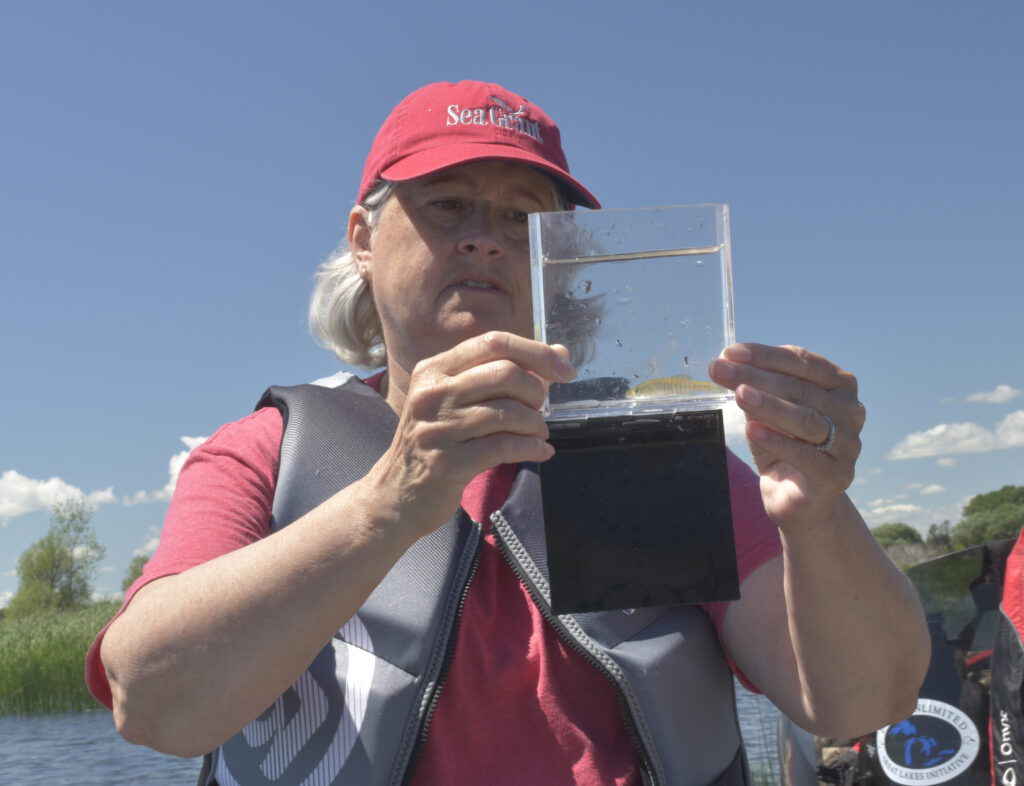
Overstreet and his son, Ryan, marked off archaeological sites prior to the dig so that once everyone arrived, the students could just grab their shovels and sifters and trek the mile to the dig site. They were asked to dig holes to a certain depth or until they hit darker soil. They then used shaker boxes made of screen mesh to sift the soil and sand. The items they were looking for included important artifacts such as cracked rocks, bones, coal and any other objects that may have come from the original inhabitants.  Overstreet educated them in the process of bagging items of interest and labeling them so he could bring them to his lab for analysis. The Menominee youth and Tribe are a big part of this process and benefit from any research and lab results.

Menominee Indian High School students helped uncover the past on Point au Sable in Green Bay. Image credit: Margaret Ellis.
My favorite part about this activity was seeing the elements of past, present and future — Menominee students working on lands that belonged to their ancestors in an effort to support the preservation of their culture while using modern-day science. The activity represented an Indigenous worldview of continuity and the circular nature of our being. Experiencing this connection to the past felt like coming full circle and I’m glad to have been involved in it.

This dig is part of an ongoing effort to bring Indigenous voices and presence to UWGB natural areas. As an Indigenous person and UWGB student, I appreciate the movement toward a more inclusive as authentic relationship between UWGB, its natural areas, and the Indigenous Nations that once called them home.

The post Reconnecting Menominee students with their roots in the bay of Green Bay first appeared on Wisconsin Sea Grant.

Original Article

Blog | Wisconsin Sea Grant

Blog | Wisconsin Sea Grant

https://www.seagrant.wisc.edu/blog/reconnecting-menominee-students-with-their-roots-in-the-bay-of-green-bay/

Marie Zhuikov