
Job Opportunities


Position Available: Water Quality and Water Infrastructure Senior Program Specialist

Application deadline: September 27, 2021  |    Download PDF

Description

The Great Lakes Commission (GLC) has an immediate opening for a self-starting, highly motivated team player to join our Water Quality and Water Infrastructure programs. The incumbent will assist with a wide range of projects focused on protecting and enhancing the use and enjoyment of the water resources of the binational Great Lakes basin and strengthening collective efforts to improve water infrastructure.

Responsibilities

The senior program specialist will be responsible for a variety of activities in support of the GLC’s water quality and water infrastructure programming, including Blue Accounting, the GLC’s initiative to report on progress toward shared goals for the basin. Initial work will focus on data aggregation and analysis related to drinking water. The successful candidate will also support work to build a “blueprint” for water infrastructure investment and improvement and provide support for the Great Lakes Sediment and Nutrient Reduction Program.

Specific responsibilities include:

  • Assist the program manager with coordinating four expert working groups focused on aspects of drinking water (source water protection; water treatment; water distribution; and water access).
  • Obtain, curate, and organize (often large and complex) datasets.
  • Develop and maintain content on project websites.
  • Develop and implement stakeholder outreach plans and develop advocacy materials related to the creation of a water infrastructure “blueprint” for the Great Lakes.
  • Provide grant administration support for the Great Lakes Sediment and Nutrient Reduction Program.
  • Research and write reports and briefing papers upon request.
  • Assist in planning and execution of online and in-person meetings, which may require occasional travel.
  • Assist in developing new work to advance the GLC’s water quality and water infrastructure programs.
  • Track developments in water science and policy.

Qualifications

A master’s degree with two years or more of relevant experience; or bachelor’s degree with at least five years of relevant experience is required, along with the following qualifications:

  • Knowledge of water infrastructure systems (drinking water, stormwater, and/or wastewater) and related policies and programs
  • Experience in freshwater science and/or watershed management
  • Ability to perform qualitative and quantitative analysisKnowledge of federal water policy
  • Experience assisting in the management of complex projects, working on project teams, and working with stakeholders with diverse perspectives
  • Excellent writing skills and ability to translate complex data into easily understood information
  • Excellent organizational and time management skills with the ability to effectively manage multiple projects and deadlines
  • Proficiency with Microsoft Office (Teams, Word, Excel, PowerPoint and Outlook)

The ideal candidate would also bring one or more of the following skills and experience to the position:

  • Experience working with teams that utilize programs such as ArcGIS, Microsoft Power BI or Tableau to transform data into actionable information
  • Experience posting content through WordPress
  • Working knowledge of the Great Lakes basin and its governance
  • Experience working within state or provincial government

Appointment

Position Classification
The position is classified as regular; full-time as defined by the GLC’s personnel policies.

Compensation and Benefits
The salary range for this position is $59,000 – $62,000 per year depending on education, skills and experience. The GLC offers a competitive salary and comprehensive benefits, including generous leave time, flexible schedules, medical, dental and vision insurance, and a retirement match program.

Work Environment
The GLC is located in Ann Arbor, Michigan. It is expected that the majority of work is performed in the GLC’s office; however, telework may be considered. This position requires occasional travel.

Application Process

Applicants must submit their resume and a cover letter stating their interest in and qualifications for the position as a single PDF document via email to vacancy@glc.org. All required items must be provided for an application to receive consideration. No phone calls, please.

About the Great Lakes Commission

The Great Lakes Commission (GLC) is a binational government agency established by the eight Great Lakes states to protect the Great Lakes and the economies and ecosystems they support. The Canadian provinces of Ontario and Québec serve as associate members of the GLC.  Its membership includes leaders from the eight U.S. states and two Canadian provinces in the Great Lakes basin. The GLC recommends policies and practices to balance the use, development, and conservation of the water resources of the Great Lakes and brings the region together to work on issues that no single community, state, province, or nation can tackle alone. Learn more at www.glc.org.

Equal Opportunity Employer
The Great Lakes Commission strives to create an inclusive, diverse and non-discriminatory workplace. The Great Lakes Commission is an equal opportunity employer; the Great Lakes Commission complies with applicable federal, state and local laws prohibiting discrimination. It is Great Lakes Commission policy that no person shall be discriminated against, as an employee or applicant for employment, because of race, color, religion, age, sex, national origin, disability status, genetics, protected veteran status, marital status, political affiliation, sexual orientation, gender identity or expression, or any other characteristic protected by federal, state or local laws.

Contact

For media inquiries, please contact Beth Wanamaker, beth@glc.org.

Recent GLC News

Upcoming GLC Events

View GLC Calendar

ARCHIVES

Original Article

Great Lakes Commission

Great Lakes Commission

https://www.glc.org/news/position-available-water-quality-2021

Laura Andrews

September 8, 2021, Benton Harbor, MI – Today Governor Gretchen Whitmer announced $20 million over the next five years to remove and replace lead service lines in Benton Harbor.

Over the past 3 years, Benton Harbor residents have been subjected to high lead levels, with the latest samples being as high as 24 parts per billion.

“While we thank Governor Whitmer for the $20 million to replace Benton Harbor’s lead service lines, the lead in water situation in Benton Harbor is and has been for the past 3 years a dire emergency,” said Reverend Edward Pinkney, President and CEO of Benton Harbor Water Council. “We have watched our children, loved ones, and my fellow community members be subjected to high lead in water levels. It has been a struggle to get our water utility to properly test and protect the community from these high levels of lead.”

The American Medical Association and CDC have determined there is no safe level of lead in drinking water. Impacts to children exposed to lead include neurological disorders, decreased cognitive behaviors, lower IQ, ADHD, and kidney disease and failure later in life to name a few. A number of studies have also linked lead poisoning to behavioral issues, such as aggression in children and teens, and criminal behavior as adults.

Over the past three years, Benton Harbor water has consistently exceeded state and federal standards in lead for drinking water.. In 2018, residents, with the support of Freshwater Future, formed the Benton Harbor Water Council to educate community members about the dangers of high lead in residents’ water. Together the Benton Harbor Community Water Council and Freshwater Future has consistently pushed the Berrien County Health Department to provide filters to the Benton Harbor Community Water Council to support residents in properly installing and maintaining water filters to protect themselves from dangerous lead levels in their water. Recently, the Benton Harbor Water Council worked hand-in-hand with the local school system to secure funding for water filter stations and reusable water bottles for students, highlighting the success of solutions driven by the community for the community.

“While the state has announced much needed funding assistance to replace lead pipes, what continues to lag is a robust enforcement program that should have required a thorough corrosion control study much earlier,” said Jill Ryan, Executive Director of Freshwater Future. “Without fixing the corrosion control problem first, residents will still be left with lead in their water until pipes are replaced.”

The groups are calling on the city, county, state, and federal government to do more to protect the residents of Benton Harbor, including:

  • Providing a bulk supply of filters to the Benton Harbor Community Water Council, a trusted community resource, to ensure residents have filtered tap water;
  • An immediate emergency supply of safe drinking water to Benton Harbor for residents, including elders and children;
  • Adequate corrosion control now and until the last private and public lead service line is replaced in Benton Harbor; and
  • Training and contracts for local residents to replace the lead service lines to support the economy of a community with a poverty rate of 45%.

Governor Whitmer must work expediently with EGLE and MDHHS to ensure these measures get put into place immediately and remain in place until the last private and public lead service line is replaced. No person should have to worry about whether or not their drinking water, a basic necessity for life, is tainted with lead.


##

Original Article

Blog – Freshwater Future

Blog – Freshwater Future

https://freshwaterfuture.org/uncategorized/immediate-release-benton-harbor-community-water-council-and-freshwater-future-call-on-governor-whitmer-to-fully-protect-benton-harbor-residents-from-lead/

Freshwater Future

NOAA Sea Grant, in collaboration with U.S. Department of Defense, U.S. Department of Energy, U.S. Environmental Protection Agency, U.S. Fish and Wildlife Service, and U.S. Geological Survey, announces six new partnership positions. The Sea Grant Federal Partnership Liaisons will integrate Sea Grant extension expertise with science, products and services from NOAA labs and other publicly supported scientific research programs. These jointly-funded positions expand on a key component of Sea Grant’s work, extending science to end users and doing so through collaborative partnerships.

“The Sea Grant Liaisons provide strong connection points between emerging research and interested parties to tackle some of coastal and Great Lakes communities’ most pressing issues,” stated Dr. Jonathan Pennock, director of NOAA’s National Sea Grant College Program. “By engaging user communities around the country, Sea Grant’s Federal Partnership Liaisons program harnesses the Sea Grant network’s strengths to inform the work of federal science and service agencies.”

Focus areas for the new liaisons include aquatic invasive species, climate resilience, offshore wind energy, aquaculture opportunity areas, harmful algal blooms and community science for underserved communities. They join three existing Sea Grant partnership liaisons who work in ocean acidification, tsunami and coastal resilience, and Great Lakes research with NOAA’s Pacific Marine Environmental Laboratory and NOAA’s Great Lakes Environmental Research Laboratory.

The positions announced today are the result of a competitive funding opportunity announced in 2020. These Federal Partnership Liaisons are as follows:

  • Aquatic Invasive Species Liaison, with Wisconsin Sea Grant and U.S. Fish and Wildlife Service;
  • Coastal Resilience Liaison, with Georgia Sea Grant and U.S. Department of Defense;
  • Community Science Liaison, with Louisiana Sea Grant, Lake Champlain Sea Grant, U.S. Environmental Protection Agency, U.S. Geological Survey, NOAA Office of Education and NOAA Fisheries;
  • Harmful Algal Bloom Liaison, with Florida Sea Grant, NOAA’s National Centers for Coastal Ocean Science and NOAA’s National Environmental Satellite, Data, and Information Service;
  • Offshore Wind Energy Liaison, with Rhode Island Sea Grant and U.S. Department of Energy; and
  • Shellfish Aquaculture Liaison, with Connecticut Sea Grant and NOAA Fisheries Office of Aquaculture and Milford Laboratory.

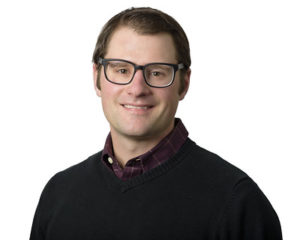
Wisconsin Sea Grant’s Tim Campbell will serve as one of the new liaisons. (Photo: Wisconsin Sea Grant)

Wisconsin Sea Grant’s Aquatic Invasive Species Outreach Specialist Tim Campbell will be the AIS Liaison. He will serve in this capacity part-time while continuing his current role with Wisconsin Sea Grant. As a liaison, he will work broadly on AIS outreach coordination for the Aquatic Nuisance Species Task Force, co-chaired by USFWS and NOAA. He will also work to strengthen Sea Grant connections with the regional aquatic nuisance species panels and assist with AIS work in the National Sea Grant Office.

In addition to closely aligning with Sea Grant strategic goals and Sea Grant Network Vision Plans, the Liaisons support shared priorities in sustaining coastal and Great Lakes communities. These positions will build on agencies’ efforts to address three of the Biden Administration’s Executive Orders, “Executive Order on Protecting Public Health and the Environment and Restoring Science to Tackle the Climate Crisis”, “Executive Order on Tackling the Climate Crisis at Home and Abroad” and “Executive Order On Advancing Racial Equity and Support for Underserved Communities Through the Federal Government.”

“EPA is excited to work with our federal partners to address critical water research needs in coastal communities,” said Dr. Wayne E. Cascio, Acting Principal Deputy Assistant Administrator for Science in EPA’s Office of Research and Development. “By working directly with communities, we can increase scientific knowledge and promote more inclusive public engagement in priority environmental concerns, including environmental justice and climate change.”

The Sea Grant Liaisons will serve as a resource to the public, helping to engage and educate communities. Learn more about Sea Grant’s Federal Partnership Liaisons here.

The post NOAA Sea Grant Liaisons address critical research areas across federal agencies first appeared on Wisconsin Sea Grant.

Original Article

News Releases | Wisconsin Sea Grant

News Releases | Wisconsin Sea Grant

https://www.seagrant.wisc.edu/news/noaa-sea-grant-liaisons-address-critical-research-areas-across-federal-agencies/?utm_source=rss&utm_medium=rss&utm_campaign=noaa-sea-grant-liaisons-address-critical-research-areas-across-federal-agencies

Jennifer Smith

This year marks the 50th anniversary of the Ramsar Convention, which commits countries to the conservation and “wise use” of wetlands, list and manage special sites called Wetlands of International Importance, and cooperate on transboundary wetlands and species. There are currently 2,429 Ramsar Wetlands of International Importance covering more than 983,000 acres in over 170 countries. Read the full story by Great Lakes Now.

Original Article

Great Lakes Commission

Great Lakes Commission

https://www.glc.org/dailynews/20210908-wetlands

Patrick Canniff

Canada is moving ahead with its first ever national adaptation strategy, the government aims to consult with Indigenous groups, youth and environmental organizations to create a framework for actions that businesses, governments and individuals can take to ensure the resilience of their communities. Read the full story by Great Lakes Now.

Original Article

Great Lakes Commission

Great Lakes Commission

https://www.glc.org/dailynews/20210908-climate-canada

Patrick Canniff

Minnesota U.S. Rep. Ilhan Omar and congressional allies urged President Joe Biden on Friday to stop construction on Enbridge Energy’s Line 3 replacement, even as the project nears completion and the options to stop it dwindle. Read the full story by Great Lakes Now.

Original Article

Great Lakes Commission

Great Lakes Commission

https://www.glc.org/dailynews/20210908-line-3

Patrick Canniff

In 2018, a research team from University of Western Ontario examined 66 beaches in each Great Lakes state and Ontario, and found resin pellets used in manufacturing known as “nurdle pellets,” at an average of 19 pellets per square meter. The heaviest concentration site had more than 7,200 pellets found in the top two inches of sand along the high water mark. Read the full story by MLive.

Original Article

Great Lakes Commission

Great Lakes Commission

https://www.glc.org/dailynews/20210908-plastic

Patrick Canniff

Invasive New Zealand mudsnails have been detected in a Michigan creek, the sixth known infestation in Michigan in recent years. The Michigan DNR said the mudsnails were found at the mouth of Shanty Creek, a tributary of the Grass River in Antrim County during routine monitoring in May and confirmed through DNA analysis in August. Read the full story by WDIV-TV –  Detroit, MI.

Original Article

Great Lakes Commission

Great Lakes Commission

https://www.glc.org/dailynews/20210908-invasive-species

Patrick Canniff

Little Traverse Bay Band of Odawa Indians’ fish $2.5 million hatchery’s primary objective is to help native Great Lakes species. In 2021, the hatchery’s goal is to raise and release approximately 500,000 whitefish, 1,000 sturgeon and up to 60,000 walleye. Read the full story by the Great Lakes Now.

Original Article

Great Lakes Commission

Great Lakes Commission

https://www.glc.org/dailynews/20210908-hatchery-fish

Patrick Canniff

A $750,000 grant has been awarded to the Michigan State Historic Preservation Office to fund the Resilient Lakeshore Heritage Program, which helps preserve historic places as a part of rehabilitation projects in communities that participate in the Certified Local Government program, the Michigan Main Street program, or the Redevelopment Ready Communities program. Read the full story by WNEM-TV – Saginaw, MI.

Original Article

Great Lakes Commission

Great Lakes Commission

https://www.glc.org/dailynews/20210908-preservation

Patrick Canniff

In 1911, a 211-foot freighter named the Muskegon sank where the fire-scorched hulk was abandoned, now there’s an effort to make it Indiana’s second underwater nature preserve. If approved, this would protect the site for “exceptional” scuba diving according to Indiana University’s Center for Underwater Science. Read the full story by South Bend Tribune.

Original Article

Great Lakes Commission

Great Lakes Commission

https://www.glc.org/dailynews/20210908-shipwreck-preserve

Patrick Canniff

Water levels in the Lake Michigan-Huron basin are midway between the seasonal long-term average and the record high water levels set last year. Water levels typically fall in September, and this month could decline by 5.9 inches, depending on weather and water supply conditions. Read the full story by Green Bay Press-Gazette.

Original Article

Great Lakes Commission

Great Lakes Commission

https://www.glc.org/dailynews/20210908-lake-levels

Patrick Canniff

An upwelling event brought debris to a 25 mile stretch of shoreline from Eastlake to Perry, OH. Fortunately the impact from the anaerobic conditions, had minimal effect to walleye and perch despite the less than enjoyable view and smell. Read the full story by WKYC-TV – Cleveland, OH.

Original Article

Great Lakes Commission

Great Lakes Commission

https://www.glc.org/dailynews/20210908-erie-fish

Patrick Canniff

Theodore TOO, an iconic tugboat that spent the past 21 years in Halifax, Nova Scotia, has been traveling around the Great Lakes promoting the protection of waterways and the connections between all sorts of bodies of water as it prepares to port at its new residence, in Hamilton, Ontario. Read the full story by WDIV-TV –  Detroit, MI.

Original Article

Great Lakes Commission

Great Lakes Commission

https://www.glc.org/dailynews/20210908-tugboat

Patrick Canniff

Raising Fish: An inside look at how one hatchery is helping to restore native Great Lakes species

Running a Great Lakes fish hatchery requires a thorough understanding of biology, an affinity for mathematics, a solid grasp of physics and engineering, enough plumbing skills to qualify for union wages and a stomach impervious to the aroma of stinky fish.

Kris Dey has been running the Little Traverse Bay Band of Odawa Indians’ fish hatchery for five years.

Read Now at Great Lakes Now.

Original Article

Great Lakes Now

Great Lakes Now

https://www.greatlakesnow.org/2021/09/fish-hatchery-restore-native-great-lakes-species/

Kathy Johnson

During the late summer months, Freshwater Future has been busy working with the Benton Harbor Community Water Council and Nalgene Water Fund to secure filtered water refill stations for all schools in Benton Harbor, MI where municipal water supplies have experienced elevated lead levels since 2018. “There is nothing more important than having clean water for our children. Lead in the water is poisonous and Benton Harbor right now has had three years of nothing but poison in the water,’ said Reverend Edward Pinkney, President and CEO of Benton Harbor Community Water Council.


The work of the Water Council recently brought the first two of eight filter stations to the schools just as schools opened up for the fall semester. In addition, hundreds of reusable water bottles donated by the Nalgene Water Fund are being distributed to students so they can enjoy the water from the new filtered stations and a local Benton Harbor artist has designed a sticker that’s helping to promote the importance clean water to youth. Within the next few months, a total of 8 filtered water refill stations will be installed across all the district’s schools. Freshwater Future will take monthly samples from the water refill stations and test them for lead at the state-of-the-art Flint Community Lab to determine when filters need changing.

Original Article

Blog – Freshwater Future

Blog – Freshwater Future

https://freshwaterfuture.org/drinking-water/water-filtration-stations-installed-at-benton-harbor-high-school/

Freshwater Future

Congresswomen urge Biden to stop pipeline in Minnesota visit

MINNEAPOLIS (AP) — Minnesota U.S. Rep. Ilhan Omar and her progressive congressional allies urged President Joe Biden on Friday to stop construction on Enbridge Energy’s Line 3 replacement, even as the project nears completion and the options to stop it dwindle.

Read Now at Great Lakes Now.

Original Article

Great Lakes Now

Great Lakes Now

https://www.greatlakesnow.org/2021/09/ap-congresswomen-biden-stop-pipeline-minnesota/

The Associated Press

The National Weather Service in Green Bay has issued a * Severe Thunderstorm Warning for... Brown County in northeastern Wisconsin... Central Outagamie County in northeastern Wisconsin... * Until 930 AM CDT. * At 841 AM CDT, a severe thunderstorm was located 7 miles south of

Original Article

Current Watches, Warnings and Advisories for Brown (WIC009) Wisconsin Issued by the National Weather Service

Current Watches, Warnings and Advisories for Brown (WIC009) Wisconsin Issued by the National Weather Service

https://alerts.weather.gov/cap/wwacapget.php?x=WI1261B7F0B8F8.SevereThunderstormWarning.1261B7F0DB58WI.GRBSVRGRB.bc8a27cf45156698223febbd477e6783

w-nws.webmaster@noaa.gov

Great Lakes Moment: International wetlands treaty turns 50

Great Lakes Moment is a monthly column written by Great Lakes Now Contributor John Hartig. Publishing the author’s views and assertions does not represent endorsement by Great Lakes Now or Detroit Public Television.

Most regions throughout the world would be happy to have one wetland of international importance, but the region that includes southeast Michigan and southwest Ontario is notable for having three.

Read Now at Great Lakes Now.

Original Article

Great Lakes Now

Great Lakes Now

https://www.greatlakesnow.org/2021/09/international-wetlands-treaty-turns-50/

John Hartig

Adaptation vs. Mitigation: Canada’s national climate change adaptation strategy needs balance

Amid wildfires, heat waves, drought and catastrophic flooding, Canada is moving ahead with its first ever national adaptation strategy to help Canadians identify and deliver on meaningful ways of adapting to the worsening effects of the climate emergency.

First announced in December 2020 and updated in mid-August, the government aims to consult widely with Indigenous groups, youth and environmental organizations to create a framework for concrete actions that businesses, governments and individuals can take to ensure the resilience of their communities.

Read Now at Great Lakes Now.

Original Article

Great Lakes Now

Great Lakes Now

https://www.greatlakesnow.org/2021/09/adaptation-mitigation-canada-national-climate-change-strategy/

Andrew Reeves

September 3, 2021

This week: Water Filtration Stations Installed at Benton Harbor High School + Invasive Round Goby May be Reducing Muskie Numbers in St. Lawrence + Lake Superior, Once Believed Immune Now Faces HABS + Victory: US District Court Agrees The ‘Dirty Water Rule’ is a Threat to Water


Water Filtration Stations Installed at Benton Harbor High School

Freshwater Future has been working with the Benton Harbor Community Water Council and Nalgene Water Fund, to secure filtered water refill stations for all schools in the City. Benton Harbor, MI has experienced elevated lead levels since 2018. “There is nothing more important than having clean water for our children. Lead in the water is poisonous and Benton Harbor right now has had three years of nothing but poison in the water,’ said Reverend Edward Pinkney, President and CEO of Benton Harbor Community Water Council. The work of the Water Council recently brought the first two of eight filter stations to the schools.


Invasive Round Goby May be Reducing Muskie Numbers in St. Lawrence

Both U.S. and Canadian researchers have found significant signs of the number of muskie (muskellunge), the largest member of the pike family, continuing to drop in the St. Lawrence River.  One culprit may be the Round Goby, which some believe could be eating muskie eggs from nests.  A steep decline in the number of young muskies has alarmed scientists and points to a need for conservation to maintain this important species in the river.


Lake Superior, Once Believed Immune Now Faces HABS 

We used to believe Lake Superior was immune to harmful algal blooms (HABS) due to the water temperatures being so cold, however recently there have been massive blooms surfacing, causing great concern amid climate change. Lake Superior is the fastest warming lake in the world right now, and although to date tests have not shown the level of toxins in the blooms to be high enough to impact human health, there are still concerns for the future. 


Victory: US District Court Agrees The ‘Dirty Water Rule’ is a Threat to Water

The last federal administration passed an environmental policy referred to as the ‘Dirty Water Rule’ that eases or eliminates regulation and monitoring for a large number of our waters. Recently, a Federal Judge of the US District Court found the Dirty Water Rule a serious harm to the environment. The Biden Administration should now move quickly to repeal this harmful rule and ensure protections for all of our waters.

Original Article

Blog – Freshwater Future

Blog – Freshwater Future

https://freshwaterfuture.org/freshwater-weekly/freshwater-future-weekly-september-3-2021/

Freshwater Future

The St. Lawrence River’s muskellunge fisheries has been declining for more than a decade. A recent die off of adult fish due to viral hemorrhagic septicemia and few juveniles being found in spawning grounds have managers concerned over future population trends. Read the full story by Upstate New York.

Original Article

Great Lakes Commission

Great Lakes Commission

https://www.glc.org/dailynews/20210903-muskie-decline

Theresa Gruninger

A fight is brewing in northern Wisconsin over a proposal to bottle and sell water from a well near Lake Superior. Opponents of the plan fear allowing the business to move forward would exploit a loophole in a landmark agreement barring water diversions from the Great Lakes — and could threaten water resources in the region. Read the full story by Wisconsin Public Radio.

Original Article

Great Lakes Commission

Great Lakes Commission

https://www.glc.org/dailynews/20210903-bottled-water

Theresa Gruninger

The Valley View Area of Cascade Valley Metro Park in Akron, Ohio, recently celebrated its opening after Summit Metro Parks invested $6 million in grant funding from the Great Lakes Restoration Initiative through the National Oceanic and Atmospheric Administration to restore the former golf course property to a more natural area. Read the full story by The Plain Dealer.

Original Article

Great Lakes Commission

Great Lakes Commission

https://www.glc.org/dailynews/20210903-summit-metro-parks

Theresa Gruninger

A sinkhole on the floor of Lake Huron, a few miles off the Alpena, Michigan, coast and 100 feet down, is being used by researchers to test theories about what conditions kickstarted an evolution of biology on Earth’s surface 4 billion years ago. Read the full story by WJBK-TV – Detroit.

Original Article

Great Lakes Commission

Great Lakes Commission

https://www.glc.org/dailynews/20210903-sinkhole

Theresa Gruninger

A strong odor noticed throughout Lake County, Ohio, on Thursday is coming from Lake Erie, officials from three communities said, and indicated that the smell is caused by sediment churning at the bottom of Lake Erie. Read the full story by The Plain Dealer.

Original Article

Great Lakes Commission

Great Lakes Commission

https://www.glc.org/dailynews/20210903-lake-erie

Theresa Gruninger

The International Lake Ontario-St. Lawrence River Board announced that it is continuing to assess water level conditions on the St. Lawrence River for potential boat haul out assistance. In recent years, high and low water level conditions have made it challenging for recreational boaters to remove their vessels from the water. Read the full story by WROC-TV – Rochester, NY.

Original Article

Great Lakes Commission

Great Lakes Commission

https://www.glc.org/dailynews/20210903-boat-haul

Theresa Gruninger

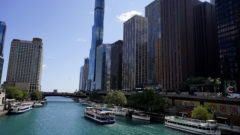
A Chicago nonprofit, Current, installed three sensors in the Chicago River’s three main branches in 2019 to continuously estimate the amount of bacteria from human and other warm-blooded animals’ waste and provide recreational users of the river with real-time reports of this water quality measure. Read the full story by The Washington Post.

Original Article

Great Lakes Commission

Great Lakes Commission

https://www.glc.org/dailynews/20210903-chicago-river

Theresa Gruninger

Sensors provide a real-time glimpse at Chicago River quality

CHICAGO (AP) — Rowers, kayakers and other users of the Chicago River are getting a real-time look at one measure of water quality in the system that weaves through downtown and several neighborhoods.

Chicago nonprofit Current in 2019 installed three sensors in the river’s three main branches to continuously estimate the amount of bacteria from human and other warm-blooded animals’ waste.

Read Now at Great Lakes Now.

Original Article

Great Lakes Now

Great Lakes Now

https://www.greatlakesnow.org/2021/09/ap-sensors-chicago-river-quality/

The Associated Press

The Michigan Department of Environment, Great Lakes and Energy is expanding its testing capacity for monitoring a family of so-called “forever chemicals” called PFAS.

The post Michigan expanding PFAS testing capacity first appeared on Great Lakes Echo.

Original Article

Great Lakes Echo

Great Lakes Echo

http://greatlakesecho.org/2021/09/03/michigan-expanding-pfas-testing-capacity/

Guest Contributor

Illinois Senate passes energy deal governor says falls short

CHICAGO (AP) — A massive energy policy overhaul aimed at making Illinois a fully renewable-energy state by 2050 cleared the Senate early Wednesday despite objections from Gov. J.B. Pritzker and groups who want more environmental and consumer protections.

Negotiations have been ongoing for years on the deal that includes a generous bailout for nuclear plants, closing coal-fired plants, investments in wind and solar energy and ethics measures in the wake of a utility scandal.

Read Now at Great Lakes Now.

Original Article

Great Lakes Now

Great Lakes Now

https://www.greatlakesnow.org/2021/09/ap-illinois-senate-energy-deal-governor-falls-short/

The Associated Press

‘Forever chemicals’ found in groundwater near military bases

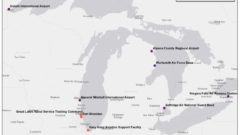
TRAVERSE CITY, Mich. (AP) — High levels of toxic, widely used “forever chemicals” contaminate groundwater around at least six military sites in the Great Lakes region, according to U.S. Department of Defense records that an environmental group released Tuesday.

The Environmental Working Group said PFAS, an abbreviation for perfluoroalkyl and polyfluoroalkyl substances, have oozed into the Great Lakes and pose a risk to people who eat fish tainted with the chemicals.

Read Now at Great Lakes Now.

Original Article

Great Lakes Now

Great Lakes Now

https://www.greatlakesnow.org/2021/09/ap-forever-chemicals-groundwater-military-bases/

The Associated Press

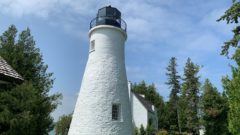
Rising Waters: Great Lakes lighthouse keepers fight to preserve history in the face of climate change

One evening in the late 1800s, a lighthouse keeper named John Herman was drinking, as he usually did, when he decided to play a prank on his assistant. Herman locked the assistant in the lantern room and left him there. 

When the assistant managed to get out of the room, he found himself all alone in the lighthouse.

Read Now at Great Lakes Now.

Original Article

Great Lakes Now

Great Lakes Now

https://www.greatlakesnow.org/2021/09/rising-waters-great-lakes-lighthouses-climate-change/

Rachel Duckett

High levels of toxic, widely used “forever chemicals” contaminate groundwater around at least six military sites in the Great Lakes region, according to U.S. Department of Defense records that an environmental group released Tuesday. Read the full story by the Associated Press.

Original Article

Great Lakes Commission

Great Lakes Commission

https://www.glc.org/dailynews/20210901-pfas

Jill Estrada

In a weekly forecast, the Army Corps of Engineers released a water level update for all of the Great Lakes and their outflow channels. This detailed below-average water levels for most of the lakes and predictions for the next month. Read the full story by WWTI – Watertown, NY.

Original Article

Great Lakes Commission

Great Lakes Commission

https://www.glc.org/dailynews/20210901-ontario-water

Jill Estrada

A federal judge on Monday tossed out a Trump-era rule that rolled back water pollution protections but is still weighing whether to restore Obama-era protections or simply undo the Trump rollback to return to pre-Obama regulations. Read the full story by The Hill.

Original Article

Great Lakes Commission

Great Lakes Commission

https://www.glc.org/dailynews/20210901-pollution-rule

Jill Estrada