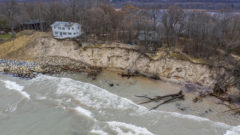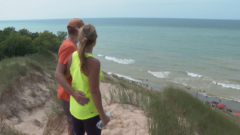
Cuyahoga County planners are proposing a public-private partnership that would give the public access to the lakefront in exchange for using state and federal dollars to shore up private properties along the lakefront. Read the full story by WOIO – TV – Cleveland, OH.

Original Article

Great Lakes Commission

Great Lakes Commission

https://www.glc.org/dailynews/20210714-cuyahoga

Jill Estrada

At the end of June, Detroit experienced its second 500-year flood in seven years. A new preprint of a study by researchers at the University of Michigan and Wayne State University found that recurrent flooding is more prevalent than previously thought in Detroit and that primarily African-American neighborhoods are at risk. Read the full story by Grist. 

Original Article

Great Lakes Commission

Great Lakes Commission

https://www.glc.org/dailynews/20210714-detroit-floods

Jill Estrada

Grosse Pointe Park homeowners who had nearly 8 feet of wastewater surge into their basements June 26 sued the Great Lakes Water Authority on Tuesday, saying officials were aware of the “dangers” posed by two Detroit pumping stations that partially broke down during the summer storm. Read the full story by The Detroit Free Press.

Original Article

Great Lakes Commission

Great Lakes Commission

https://www.glc.org/dailynews/20210714-grossepointe

Jill Estrada

‘Some crumbs’: Critics urge rejection of $641M Flint deal

DETROIT (AP) — A federal judge listened Tuesday to Flint residents who were victims of the city’s lead-contaminated water, a step in determining whether she should sign off on a $641 million deal that would settle claims against the state of Michigan.

More than a dozen people without lawyers signed up to speak, all in opposition.

Read Now at Great Lakes Now.

Original Article

Great Lakes Now

Great Lakes Now

https://www.greatlakesnow.org/2021/07/ap-critics-urge-rejection-flint-settlement-deal/

The Associated Press

Invasive Tracking: Researchers trying to trace zebra mussel infestations

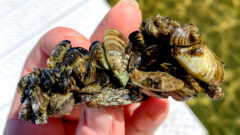
While initial populations of invasive zebra mussels were brought to the Great Lakes on boats and in freighter ballast water, a new source of the invasive species has researchers concerned — pet stores.

The Minnesota Aquatic Invasive Species Research Center has partnered with the University of Minnesota Genomics Center to genetically trace zebra mussels that have been found in aquarium moss balls in pet stores.

Read Now at Great Lakes Now.

Original Article

Great Lakes Now

Great Lakes Now

https://www.greatlakesnow.org/2021/07/invasive-zebra-mussel-research-genetic-testing/

Rachel Duckett

Olivia Dachel, a Merrill High School teacher who is active in Wisconsin Sea Grant educational programs, has again put knowledge she gained through Sea Grant to help her students succeed. Her team of students took home the Judges’ Choice Best Tabletop System Design Award in the 2021 Aquaculture Challenge competition cosponsored by Lake Superior State University in Sault St. Marie, Michigan, and Michigan Sea Grant.

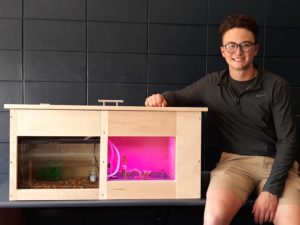
Drew Polak sits next to his team’s award-winning aquaponics system. Image credit: Olivia Dachel

Three of the team members were part of a team that won two awards in last year’s competition. They were team captain Drew Polak, a senior who plans to attend the University of Wisconsin-Platteville for engineering after he graduates; Brendan Blystone, a sophomore who developed the system’s automated monitoring coding; and Teeny, a goldfish who represented an aquaculture fish species.

The students were challenged to create a small-scale aquaponics system, which included developing a way to monitor system parameters such as air and water temperature, luminosity and soil moisture. They also developed an action plan to help ensure the business succeeds.

Their system featured a self-contained aquaponics unit in a sleek countertop cabinet with a built-in 10-gallon aquarium. The adjacent gardening system was accented with grow lights and a mounted touch-screen tablet for system monitoring.

“They really upgraded the automated monitoring system this year,” Dachel said. “I was so impressed with it!”

Aquaponics is a combination of aquaculture, which is growing fish and other aquatic animals, and hydroponics, which is growing plants without soil. To be successful, an aquaponics unit must carefully balance nutrients, fish, bacteria and plants. Anything out of balance will cause the system to collapse. (A video produced by Sea Grant presents one of these systems.)

The Merrill team competed against 19 others from across the Midwest, totaling over 300 students in grades 9-12. The team benefitted from information provided by the Sea Grant-sponsored Northern Aquaculture Demonstration Facility.

“They provided a virtual tour, plus schematics and baseline information that the students needed,” Dachel said.

The pandemic provided challenges to the team last year. This year was no different.

“If anything, it offered even more challenges,” Dachel said. “Even though we could have been face-to-face, due to student options for attending school at home or in a hybrid fashion, and due to the number of quarantines and health factors, it was very difficult to get students to meet in person to discuss the project. Most of the work occurred at home in separate areas or in the classroom at separate times when others weren’t around. When you’re working on circuitry, that’s pretty difficult.”

However, something must have gone right, given the team’s outcome. Just think what they could do if they were all together.

Oh, and Teeny? He now lives at home with Dachel.

The post Merrill High School earns aquaculture system honors a second time first appeared on Wisconsin Sea Grant.

Original Article

Blog | Wisconsin Sea Grant

Blog | Wisconsin Sea Grant

https://www.seagrant.wisc.edu/blog/merrill-high-school-earns-aquaculture-system-honors-a-second-time/?utm_source=rss&utm_medium=rss&utm_campaign=merrill-high-school-earns-aquaculture-system-honors-a-second-time

Marie Zhuikov

Researchers find relationship between invasive zebra mussels, toxic algae

This article was republished here with permission from Great Lakes Echo.

By McKoy Scribner, Great Lakes Echo

Scientists from the W.K. Kellogg Biological Station first noticed an invasive population of zebra mussels in Gull Lake in the mid-1990s. Afterwards, unexpected harmful algal blooms started appearing.

Read Now at Great Lakes Now.

Original Article

Great Lakes Now

Great Lakes Now

https://www.greatlakesnow.org/2021/07/researchers-invasive-zebra-mussels-toxic-algae/

Great Lakes Echo

NEW TRAIL DEVELOPMENT ANNOUNCED

The Fox Locks system and the City of Kaukauna will officially open the five locks on the Fox River in a today, July 13 from 3:00 p.m. to 5:00 p.m. The ceremony will take place at Kaukauna lock 1, located at 701 Canal St., Kaukauna. Repairs to the Veterans Memorial Lift Bridge in Kaukauna are complete and the bridge will raise and lower to welcome the first boat traffic on the Kaukauna section of the lock system in more than 35 years.

“This project is yet another progressive move for our City and for the long-term betterment of our community,” said City of Kaukauna Mayor, Tony Penterman. “Opening these five locks to boater traffic will give Kaukauna an economic boost and connection to the Fox Cities. Boaters will now be able to take in all the beautiful views the Fox River has to offer throughout Kaukauna.”

The one-mile stretch of the Fox River represents the sharpest elevation drop of 50.4 feet from the guard lock near downtown Kaukauna to lock 5 just north of the Grignon Mansion.

“This is a reality we have been looking forward to for generations,” said Jeremy Cords, CEO of the Fox River Navigational System Authority. “Boats haven’t been able to travel on the Fox River from Menasha to Kaukauna for generations and this represents opening the last major stretch of the locks system since they were reconstructed in 2015.”

So far this summer, boat traffic has more than doubled. From May 22-May 31, 372 boats & kayaks traveled through the open locks as compared to 116 boats & kayaks over the same period in 2020. Traffic during last summer also increased significantly over traffic in 2019:

  •             2019 traffic: 2,563 boats, 12,052 passengers
  •             2020 traffic: 3,982 boats, 17,755 passengers

“We’re confident opening the Kaukauna locks will break all of these records and bring more recreational boaters through the system,” Cords said.

Of the 39-mile lock system about 30 miles will be open in 2021 for navigation. Boaters can travel from the bay of Green Bay to the Rapide Croche lock just south of Wrightstown. The river is also navigable from the Rapide Croche lock south through Kaukauna, Little Chute, Appleton and into Little Lake Butte des Morts to the closed Menasha lock. Both the Menasha lock and the Rapide Croche lock are closed to prevent the spread of invasive species.

Kaukauna interpretative trail announced

Cords also announced plans to develop an interpretative trail along the five Kaukauna locks, thanks to a $300,000 grant from the David L. and Rita E. Nelson Family Fund within the Community Foundation for the Fox Valley Region. The 1.3 mile trail will run adjacent to all five locks and give pedestrians and cyclists a chance to see the locks in action. The trail will be constructed on land already owned by the Fox River Navigational System Authority and will link to existing and proposed trails throughout the Fox Valley.

“This project will increase public access to the historic lock system,” Cords said. “The trail will provide one of the most up-close views of how the locks work along the entire lock system and allow citizens to see living history in action.”

When complete, the trail will feature:

  • A curated trail with informational way-finding signage communicating the history and cultural development of the lock system in a park-like environment.
  • Seating areas with benches and lighting.
  • Access for disabled residents.
  • Exploration of an environmental research project conducted by the U.S. Geological Survey at Kaukauna lock 2.
  • The trail will pass one of two swing bridges built in 1901. This railroad bridge is still in use and opens and closes in under one minute.
  • Trail access will pass sites that are scheduled for future development: the only lock tender house in Kaukauna which will be restored in the future, and the Kaukauna dry dock area which was used for boat and lock repair that is also slated for future restoration.

David and Rita Nelson gave an estate gift of more than $100 million to their charitable fund at the Community Foundation for the Fox Valley Region. The priorities they specified for the money include parks and recreation with a focus on water enjoyment.

“David Nelson especially loved spending time on and along the water, and he shared those experiences with so many during his lifetime,” said Community Foundation President and CEO Curt Detjen. “The Nelson family origins are in Kaukauna and I am sure they would have walked a trail like this, watching the locks in action.  It is a living history lesson, and their other passion was history. This is an exciting opportunity to enhance community connections while showcasing the Kaukauna’s rich history and wonderful waterways.”

Construction has already started on portions of the trail and is slated for public opening in Spring of 2022. Design partner for the project is Westwood Professional Services (formerly OMNNI Associates).

For more information on the lock system, please visit this link. 

Original Article

Blog – Fox Locks

Blog – Fox Locks

http://foxlocks.org/2021/07/13/kaukauna-locks-open-this-weekend/

Fox Locks

I’ve always been a fish fan. Though I didn’t grow up in Wisconsin, both of my parents hailed from the Badger State, so the fish-fry culture is in my blood. Of course, there’s a lot more to eating fish than deep frying it, which is why I hopped on to a recent live webinar offered by the Great Lakes Aquaculture Collaborative—of which Wisconsin Sea Grant is a part—and hosted by Ohio Sea Grant.

“Fish to Fork: Grilling in the Great Lakes” featured my colleague here at Wisconsin Sea Grant, Sharon Moen, as well as two Sea Grant-ers from my home state of Michigan, Lauren Jescovitch and Elliot Nelson. Sharon runs our Eat Wisconsin Fish initiative, working with fish farmers, commercial fishers and consumers.

Shrimp and veggie kabobs ready for the grill.

Sharon, Lauren and Elliot put on a lively session via Zoom, with Lauren and Elliot beaming in from their kitchens in Michigan’s U.P., and Sharon from her tree-lined deck in the Twin Ports area (Duluth/Superior).

While I encourage you to watch the recording yourself to pick up some fish tips, I thought I’d blog some of my impressions and takeaways from these three experts.

When possible, they said, it’s great to get your fish directly from local producers, such as a fish farmer in your area or commercial fishers. That way, you know your product is very fresh and you can ask questions about how it was raised or caught. And because these products (whether farmed or wild-caught) are highly regulated in the U.S., you can feel confident you’re getting a safe product.

If you can’t buy direct from a producer or at a specialty fish market, you’re probably picking up your fish at a large grocery store or big-box store. Labels are your friend! Elliot, an extension educator covering Michigan’s eastern U.P., suggests finding out where the fish or seafood came from. You might be surprised to find some local or regional choices.

Also, noted Elliot, don’t assume that the fresh fish counter is automatically superior to the freezer section. Sometimes “fresh” fish at the counter can be past its prime. Avoid mushy textures, strong fishy odors or things that look opaque or cloudy.

In the frozen section, you don’t want to see ice on the outside of the bag or on freezer shelves, but ice inside the bag is fine. Vacuum-sealed products are also a good way to go.

Lauren, an extension educator covering the western U.P., preceded Elliot with an impressive—and only slightly gory—demonstration of how to gut and fillet whole fish.

Lauren recommended gutting smaller fish, leaving them more or less intact, then placing seasonings inside before cooking. She used fish from the Watersmeet Trout Hatchery, as well as a local maple barbecue seasoning rub. For larger fish, she recommended filleting.

Impressively, during the live hour on Zoom, she cooked her clean, gutted trout on an indoor grill and then showed the removal of skin and pin bones before eating. While I know she’s had plenty of practice, it looked very do-able!

Sharon Moen makes a fish kabob during a live webinar hosted by Ohio Sea Grant.

While Elliott focused on food selection and safety, and Lauren showcased her knife skills, Sharon assembled a colorful, healthy kabob for an outdoor grill, using a combo of shrimp, catfish, trout and vegetables. She showed off her finished product at the end of the hour, which looked to have just the right amount of char on the veggies.

I’ll be sure to invite myself over to Sharon’s next time I’m in the Twin Ports—both the skewers and her deck looked fabulous on a summer’s day. Add a glass of wine, and that’s my idea of a perfect summer lunch or dinner!

You can find Sharon’s kabob recipe, Fishes on Sticks, on the Eat Wisconsin Fish website. And to hear more from Sharon, check out her June 19 appearance on the Buckeye Sportsman radio show, when she chatted with host Dan Armitage about grilling fish and more (Sharon’s segment runs from 14:15-30:38 on the recording).

As Elliot said near the end of the hour, there’s “a bounty of flavors when it comes to seafood,” and preparation doesn’t have to be complex. If you watch the archived webinar from this trio of fish experts, I’m sure you’ll agree.

In the meantime, here are some Sea Grant-supported web resources that that can help you find producers, specialty fish markets, recipes, health info and more:

Eat Wisconsin Fish

Eat Midwest Fish

Seafood Health Facts

The post Getting your grill on with Sea Grant first appeared on Wisconsin Sea Grant.

Original Article

Blog | Wisconsin Sea Grant

Blog | Wisconsin Sea Grant

https://www.seagrant.wisc.edu/blog/getting-your-grill-on-with-sea-grant/?utm_source=rss&utm_medium=rss&utm_campaign=getting-your-grill-on-with-sea-grant

Jennifer Smith

Illinois sues owner of plant where fire prompted evacuations

CHICAGO (AP) — Illinois prosecutors on Friday sued the owner of a chemical plant where a fire last month sent dark smoke and ash into the air for days and prompted evacuations, saying the company should be held accountable for air and water pollution and hazards that still exist.

Read Now at Great Lakes Now.

Original Article

Great Lakes Now

Great Lakes Now

https://www.greatlakesnow.org/2021/07/ap-illinois-sues-owner-plant-fire-evacuations/

The Associated Press

Scientists: Pup births hopeful sign for Isle Royale wolves

TRAVERSE CITY, Mich. (AP) — Wolf pups have been spotted again on Isle Royale, a hopeful sign in the effort to rebuild the predator species’ population at the U.S. national park, scientists said Monday.

It’s unknown how many gray wolves roam the island chain in northwestern Lake Superior.

Read Now at Great Lakes Now.

Original Article

Great Lakes Now

Great Lakes Now

https://www.greatlakesnow.org/2021/07/ap-scientists-births-isle-royale-wolves/

The Associated Press

The Fond du Lac Band of Lake Superior Chippewa hopes to reintroduce elk to northeastern Minnesota by 2025, according to a proposal it submitted last week to the Minnesota Department of Natural Resources. Read the full story by StarTribune.

Original Article

Great Lakes Commission

Great Lakes Commission

https://www.glc.org/dailynews/20210712-minnesota-elk

Patrick Canniff

For decades a mill in Terrance Bay, Ontario sent polluting effluent containing endocrine disrupting chemicals into the bay, delaying sexual maturity and reducing hormone levels, fat storage, gonad size, and population size of the fish there. Now, in a recent review of cleanup efforts for one of the original Areas of Concern, results have shown improved conditions for white sucker, a native fish.  Read the full story by Environmental Health News.

Original Article

Great Lakes Commission

Great Lakes Commission

https://www.glc.org/dailynews/20210712-fish

Patrick Canniff

Ten more counties have been added to the H2Ohio farmer incentive program in the new state budget. The H2Ohio program helps farmers reduce their nutrient runoff by installing limiters, plant cover crops during non-growing seasons, and will help purchase new equipment that distributes fertilizer beneath the surface instead of on top. Read the full story by WTOL–TV – Toledo, OH.

Original Article

Great Lakes Commission

Great Lakes Commission

https://www.glc.org/dailynews/20210712-ohio-nutrient-pollution

Patrick Canniff

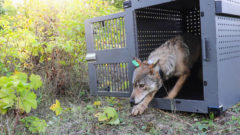
Nineteen wolves were transplanted on Isle Royale’s national park between 2018 and 2019 to bolster its nearly vanished wolf population and counterbalance the island’s swelling numbers of moose, and are now settling in. During the annual survey by Michigan Technological University researchers found evidence of least two litters of wolf cubs. Read the full story by Detroit Free Press.

Original Article

Great Lakes Commission

Great Lakes Commission

https://www.glc.org/dailynews/20210712-wolves-isle-royale

Patrick Canniff

Four piping plover chicks have hatched at Sandy Island Beach State Park in Oswego County, marking the second time this summer that a pair of the rare birds successfully nested on the beach and the first time in about 50 years that two breeding pairs were present on Lake Ontario’s eastern shore. Read full story by Syracuse.com.

Original Article

Great Lakes Commission

Great Lakes Commission

https://www.glc.org/dailynews/20210712-piping-plover-ontario

Patrick Canniff

State biologists and outside experts say wolves are not driving the low deer numbers in Michigan’s Upper Peninsula. Instead, they have reported that weather, habitat availability, hunting and other factors have greater influence over deer population trends. Read the full story by Bridge Michigan.

Original Article

Great Lakes Commission

Great Lakes Commission

https://www.glc.org/dailynews/20210712-wolves-michigan

Patrick Canniff

A doctoral student and aerosol researcher at the University of North Carolina at Chapel Hill has published a study about airborne toxins from algal blooms. The study has evidence to suggest harmful toxins and algae itself are found in the air, indicating that airborne algal toxins may be more of a threat in the Great Lakes than previously thought. Read the full story by The Detroit News.

Original Article

Great Lakes Commission

Great Lakes Commission

https://www.glc.org/dailynews/20210712-algae-pollution

Patrick Canniff

Drinking Water Roundup: Biden administration invests millions in rural water, treatment plant uses ultraviolet, lead pipe removal in Flint

From lead pipes to PFAS, drinking water contamination is a major issue plaguing cities and towns all around the Great Lakes. Cleaning up contaminants and providing safe water to everyone is an ongoing public health struggle.

Keep up with drinking water-related developments in the Great Lakes area.

Click on the headline to read the full story:

Illinois:

  • Discolored water, manganese in Carlinville a recurring problem – WICS

SPRINGFIELD, Ill., (WICS) — High levels of Manganese in the city of Carlinville’s water is causing the water to turn brown, stain clothes, and more.

Read Now at Great Lakes Now.

Original Article

Great Lakes Now

Great Lakes Now

https://www.greatlakesnow.org/2021/07/drinking-water-biden-rural-infrastructure-lead-pipe/

Rachel Duckett

Energy News Roundup: US invests in wave energy, Celebrities urge Biden to stop Line 3, Company seeks damages for Keystone XL cancellation

Keep up with energy-related developments in the Great Lakes area with Great Lakes Now’s biweekly headline roundup.

Click on the headline to read the full story:

Illinois:

  • Illinois coal plants are closing even as fossil fuel objections stall energy bill again – Energy News Network

In a surprise announcement last Thursday, NRG said it would close its Waukegan and Romeoville coal plants, but the community impacts are unclear as “just transition” provisions remain held up in state energy bill negotiations.

Read Now at Great Lakes Now.

Original Article

Great Lakes Now

Great Lakes Now

https://www.greatlakesnow.org/2021/07/energy-investments-biden-line-3-keystone-xl-cancellation/

Noah Bock

Report: Great Lakes region needs about $2B for flood repairs

TRAVERSE CITY, Mich. (AP) — Shoreline cities and towns in the Great Lakes region will be spending heavily in coming years to fix public infrastructure damaged by recent flooding and erosion, with estimated costs approaching $2 billion, officials said Thursday.

Communities already have poured about $878 million into repairs over the last two years, according to the results of a survey by the Great Lakes and St.

Read Now at Great Lakes Now.

Original Article

Great Lakes Now

Great Lakes Now

https://www.greatlakesnow.org/2021/07/ap-report-great-lakes-region-flood-repairs/

The Associated Press

The state of New York is investing $14 million dollars in shoreline protection upgrades on the Olcott Harbor to rebuild and improve the shoreline structures that suffered heavy damage due to flooding in 2019. Read the full story by WKBW-TV – Buffalo, NY.

Original Article

Great Lakes Commission

Great Lakes Commission

https://www.glc.org/dailynews/20210709-shoreline-ontario

Patrick Canniff

NOAA has released a nearly 200-page document for public comment that includes a draft management plan and environmental impact statement for the proposed Lake Ontario National Marine Sanctuary, which aims to protect and promote shipwrecks and other historically significant assets. Read the full story by Oswego County News Now.

Original Article

Great Lakes Commission

Great Lakes Commission

https://www.glc.org/dailynews/20210709-ontario-marine-sanctuary

Patrick Canniff

A clash between elemental forces — sun, rain, heat and ice — is what is threatening to upend centuries of relative stability along the Great Lakes’ 10,000 miles of shoreline, including the 22 miles that define Chicago’s eastern edge. And the best explanation is climate change. Read full story by The New York Times.

Original Article

Great Lakes Commission

Great Lakes Commission

https://www.glc.org/dailynews/20210709-climate-change

Patrick Canniff

Scientists first noticed an invasive population of zebra mussels in Michigan’s Gull Lake in the mid-1990s. Afterwards, unexpected harmful algal blooms started appearing. Now, a long-term research project at the lake has shown that the mussels led to an increase in a type of bacteria called Microcystis that produces the algae. Read full story by Great Lakes Echo.

Original Article

Great Lakes Commission

Great Lakes Commission

https://www.glc.org/dailynews/20210709-mussel-algae

Patrick Canniff

Shoreline cities and towns in the Great Lakes region will be spending heavily in coming years to fix public infrastructure damaged by recent flooding and erosion, with estimated costs approaching $2 billion, officials said Thursday. Read the full story by The Associated Press.

Original Article

Great Lakes Commission

Great Lakes Commission

https://www.glc.org/dailynews/20210709-flooding

Patrick Canniff

Investing in the Lakes: New bill could redirect tech money to neglected Great Lakes cities

As President Joe Biden tries to advance his high-profile legislative agenda in a sharply divided Congress, a low-profile bill that could help the Great Lakes region is progressing with bipartisan support.

If passed, it could finally help the region shake its Rust Belt image.

The legislation is the U.S.

Read Now at Great Lakes Now.

Original Article

Great Lakes Now

Great Lakes Now

https://www.greatlakesnow.org/2021/07/legislation-investment-tech-research-great-lakes-cities/

Gary Wilson

THIS WEEK:  Bringing Water Filter Stations to Benton Harbor Schools + Legislation Would Force Air Force Bases to Swiftly Cleanup Toxic Pollution + U.S. EPA Administrator, Michael Regan Tours the Flint Community Lab + UPDATE: Community Actions Helped–Saginaw Delays Water Shutoffs + Freshwater Future Featured in Water Justice Publication


Bringing Water Filter Stations to Benton Harbor Schools    

Freshwater Future is happy to be working with the Benton Harbor Water Council, Benton Harbor Schools and the Nalgene Water Fund to ensure youth have clean water.  Benton Harbor, Michigan has been out of compliance with the Lead and Copper Rule for nearly 3 years, meaning residents may have high levels of lead in their tap water.  In addition to working with the water council on monitoring, pushing for solutions, and education, we also want to ensure students have safe water at school.  This project will bring filtered water bottle filling stations to the high school in time for fall return to classes.


Legislation Would Force Air Force Bases to Swiftly Cleanup Toxic Pollution

The toxic chemical PFAS used in firefighting foam among other products continues to be found in water sources near Air Force Bases. Legislation was recently introduced that would require  PFAS remediation and cleanup of the worst Air Force Sites known as the ‘Filthy Fifty’. The bill also requires testing at all U.S. Department of Defense sites within two years and the requirement of providing clean drinking water within 60 days of detection of PFAS in the source drinking water.  Freshwater Future sees these requirements as critical to the safety of families living near bases.


U.S. EPA Administrator, Michael Regan Tours the Flint Community Lab

Michael Regan, the new Administrator of the U.S. Environmental Protection Agency, is touring several cities to promote the President’s infrastructure package that will invest billions in replacing lead piping in water systems and to rebuild trust with communities.  On Wednesday, he toured the Flint Community Lab, a partner project of Flint Development Center and Freshwater Future. The lab provides Flint residents with a trusted source of water testing and education as well as job and skill development for Flint youth exposing them to science, technology, engineering and math careers.


UPDATE: Community Actions Help–Saginaw Delays Water Shutoffs

Last week, we shared that Saginaw, Michigan planned to shut off water to 750 customers. Fortunately, the City of Saginaw announced a delay of water shutoffs until July 15, in response to the outcry from people about the water shutoffs and harsh penalties. The delay is helpful, but does not go far enough to help residents. We urge the City and other municipalities to develop an affordability plan that ensures access to water service for all Saginaw residents.


Freshwater Future Featured in Water Justice Publication

A case study of Freshwater Future’s work in Toledo, Ohio and Flint, Michigan on lead in drinking water is featured in  a new publication aimed to help frontline communities with water justice issues.  The “Water Justice Toolkit: A Guide to Address Environmental Inequities in Frontline Communities” produced by American Rivers provides a basic overview of federal laws and policies, legal avenues and case studies that highlight how communities have addressed a variety of water justice issues. 


Original Article

Blog – Freshwater Future

Blog – Freshwater Future

https://freshwaterfuture.org/freshwater-weekly/freshwater-future-weekly-july-9-2021/

Freshwater Future

...RAINFALL AMOUNTS SINCE JUNE 15TH ACROSS NORTH-CENTRAL AND NORTHEAST WISCONSIN... Below normal snowfall this past winter, combined with drier than normal conditions this spring into early this summer caused conditions to deteriorate into the abnormally dry (D0) or moderate drought (D1) conditions across much of central, north- central

Original Article

Current Watches, Warnings and Advisories for Brown (WIC009) Wisconsin Issued by the National Weather Service

Current Watches, Warnings and Advisories for Brown (WIC009) Wisconsin Issued by the National Weather Service

https://alerts.weather.gov/cap/wwacapget.php?x=WI1261AC2353A0.SpecialWeatherStatement.1261AC3297D4WI.GRBSPSGRB.95b10690542ce202768caf22fbfedf5c

w-nws.webmaster@noaa.gov

Excerpts from American River’s “Water Justice Toolkit: A Guide to Address Environmental Inequities in Frontline Communities”

CLEAN AND SAFE WATER GUIDE (Page 30)

COMMUNITY CASE STUDY: WORKING WITH RESIDENTS TO ENSURESAFE DRINKING WATER

When a municipality issues an advisory on elevated lead levels in drinking water, residents are alarmed and looking for answers. Is my water undrinkable? Do I need a filter? Do I buy bottled water?

Freshwater Future partners community groups to make sure residents understand the advisory. Volunteers train neighbors on how to flush their water and install filters. Freshwater Future has even provided grants to pay volunteer stipends, share educational materials, and complete water testing for lead and other metals. And once the results come in, Freshwater Future is there to help analyze the data and communicate to communities and to the Health Department. Alexis Smith, Community Program and Technical Associate explains, “If you’ve ever seen a water analysis, you can imagine how overwhelmed these residents must feel. Environmental chemistry is not my background, so even for me, it was a learning curve. You have to learn the acronyms and the contaminants and what they can do. We translate and communicate what the data is actually saying.”

When it comes to drinking water, says Smith, “zero amount of lead is safe.” Freshwater Future remains engaged until all lead service lines are replaced or tests prove that the water is safe. “The residents tell us how they would like to move forward, and we support them every step of the way,” she says. “Whether that is through strategy for taking actions or funding to support their initiatives.” Freshwater Future offers a great example of how to follow the lead of the community.


PUBLIC PARTICIPATION GUIDE (Page 102)

COMMUNITY CASE STUDY: ORGANIZING FOR WATER SECURITY DURING COVID-19 TOLEDO COMMUNITY WATER COUNCIL

Through robust public participation, the Toledo Community Water Council provides oversight and community support to the city of Toledo. The Council’s collective knowledge and insight have been key to developing the city’s water bill assistance program. Reliable access to water is becoming more expensive, and during COVID, water disconnection can have a devastating public health impact. For years, Freshwater Future has been working with the Toledo Community Water Council to address water issues throughout the City.

For residents experiencing water shutoffs due to nonpayment or leaks, this work has become even more urgent during the pandemic. “Utilities are run by engineers; often they don’t think about the social impact of these shutoffs on people working check to check,” says Alexis Smith, Community Program and Technical Associate for Freshwater Future. “When we organize to find solutions, our goal is—turn the water on, keep the water on.” Members of the Toledo Community Water Council organized to respond to rising water rates and the inequity and harm that results when city governments and utilities are not proactive and transparent. Freshwater Future has helped individual residents request assessments to identify water leaks driving up their water bills and file a Freedom of Information Act (FOIA) request to understand why water rates continue to increase. They also helped the municipality identify funding for full lead service line replacement in order to lower the cost burden on residents.


To view the  full report by American Rivers:  Water Justice Toolkit: A Guide to Address Environmental Inequities in Frontline Communities

Original Article

Blog – Freshwater Future

Blog – Freshwater Future

https://freshwaterfuture.org/environmental-justice/water_justice_sections/

Ann Baughman

Court: DNR can impose farm conditions, consider well impact

MADISON, Wis. (AP) — Wisconsin regulators can impose operating conditions on factory farms and consider high-capacity wells’ cumulative environmental impacts when deciding whether to grant permits, the state Supreme Court ruled Thursday.

The decisions mark a major win for conservationists and clarify that the Department of Natural Resources has broad authority to protect Wisconsin’s waters.

Read Now at Great Lakes Now.

Original Article

Great Lakes Now

Great Lakes Now

https://www.greatlakesnow.org/2021/07/ap-dnr-farm-conditions-well-impact/

The Associated Press

Ohio expands farmer incentive program to clean up Lake Erie

TOLEDO, Ohio (AP) — Farmers in 10 more northern Ohio counties will be eligible to receive financial incentives for using new agriculture practices that improve water quality in Lake Erie, Gov. Mike DeWine said Tuesday.

That brings the number of counties eligible up to 24 through the H2Ohio water quality initiative’s farmer incentive program.

Read Now at Great Lakes Now.

Original Article

Great Lakes Now

Great Lakes Now

https://www.greatlakesnow.org/2021/07/ap-ohio-farmer-incentive-program-lake-erie/

The Associated Press

The Alliance is happy to announce our Lakes Chat Summer Series. Every Tuesday at 1 pm, we’ll Live stream our chat with a special guest about Great Lakes issues and what it all means for you and your community.

In June, we chatted about Washington, DC updates on infrastructure policy and funding, 50 Years of the Alliance for the Great Lakes, Invasive Carp, and the Adopt-a-Beach program.

Want to join in on the conversation? Be sure to join our Linkedin registration event page to receive notifications about upcoming chats.

Or, you can tune into our Facebook page or Youtube channel.

So, dive into timely topics with The Alliance and special guests, and feel free to contribute questions to the live video discussion.

Upcoming Lakes Chat Episodes for July

July 13: Ships, Invasive Species & the Great Lakes
Special Guest: Molly Flanagan Chief Operating Officer & Vice President for Programs

July 20: Environmental Justice
Special Guest: Crystal M.C. Davis Vice President of Policy and Strategic Engagement

July 27: Water Levels
Special Guest: Joel Brammeier President & CEO

If you can’t join live, no worries, we’ll share previously recorded episodes here.

The post Dive into Our Lakes Chat Summer Series appeared first on Alliance for the Great Lakes.

Original Article

News – Alliance for the Great Lakes

News – Alliance for the Great Lakes

https://greatlakes.org/2021/07/dive-into-our-lakes-chat-summer-series/

Michelle Farley

Over the summer, the Alliance hosted our Lakes Chat Summer Series. We chatted with a special guest each week about Great Lakes issues ranging from infrastructure to water levels – and what it all means for you and your community.

Go ahead, dive into some timely topics below.

Water Infrastructure Funding – View from DC: We chatted with Don Jodrey, the Alliance’s Director of Federal Government Relations, about updates from Washington, DC on infrastructure policy and funding.
50th Anniversary & Great Blue Benefit: We chatted with Joel Brammeier, Alliance for the Great Lakes President & CEO, about the Alliance’s history.
Invasive Carp: Invasive carp have been a looming threat for years, steadily moving up Illinois waterways toward Lake Michigan. At the same time, the federal government and Great Lakes states have been debating options for preventing these harmful fish from getting into the lakes. We chatted with Anna-Lisa Castle, the Alliance’s Water Policy Manager. She leads the Alliance’s policy campaign to keep invasive carp out of the Great Lakes.
Enjoy a Plastic-Free 4th of July: The Alliance’s Volunteer Engagement Coordinator, Olivia Reda, shared how to keep plastic off our beaches and out of the Great Lakes.
Harmful Algal Blooms: Each year, a harmful algal bloom forms in western Lake Erie that grows so big that it can be seen from outer space. Todd Brennan, the Alliance’s Senior Policy Manager, walked us through what causes harmful algal blooms and what can be done to fix the problem.
Ships, Invasive Species, & The Great Lakes: Molly Flanagan, the Alliance’s Chief Operating Officer and Vice President for Programs dug into the connections between ships, aquatic invasive species, and the Great Lakes – and what’s being done to fix the problem.
Environmental Justice: Here at the Alliance, we feel that the Great Lakes region has an opportunity to lead the way and showcase how environmental justice can be achieved. Crystal M.C. Davis, the Alliance’s Vice President for Policy and Strategic Engagement, leads much of the Alliance’s water policy work. She also leads the Alliance’s commitment to diverse engagement of Great Lakes communities.
Water Levels: Joel Brammeier, the Alliance’s President and CEO, talked about high water levels and how climate change plays a part.

The post Dive into Our Lakes Chat Summer Series appeared first on Alliance for the Great Lakes.

Original Article

News – Alliance for the Great Lakes

News – Alliance for the Great Lakes

https://greatlakes.org/2021/10/dive-into-our-lakes-chat-summer-series/

Judy Freed

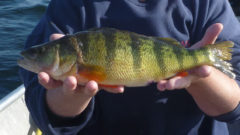
Low but Stable: Yellow perch populations in Great Lakes’ bays and open waters

On first attempt to reach Michigan Department of Natural Resources Fisheries Research Biologist David Fielder, he wasn’t monitoring fish populations or water quality. He was busy with a perch basket lunch.

The yellow perch is a staple of Great Lakes commercial and recreational fishing, and Friday fish fries.

Read Now at Great Lakes Now.

Original Article

Great Lakes Now

Great Lakes Now

https://www.greatlakesnow.org/2021/07/yellow-perch-low-populations-wisconsin-michigan-fishing/

John McCracken

Scientists from the W.K. Kellogg Biological Station first noticed an invasive population of zebra mussels in Gull Lake in the mid-1990s.

The post Researchers find relationship between invasive zebra mussels, toxic algae first appeared on Great Lakes Echo.

Original Article

Great Lakes Echo

Great Lakes Echo

http://greatlakesecho.org/2021/07/08/researchers-find-relationship-between-invasive-zebra-mussels-toxic-algae/

Guest Contributor

Great Lakes Trails: Relief funds spark new investments into outdoor recreation

With a rebounding economy and plenty of federal relief funds, states across the country are finding themselves with extra money to spend.

Michigan Gov. Gretchen Whitmer yesterday announced a proposal to spend $150 million of relief funds from the American Rescue Plan on state and local parks and trails.

Read Now at Great Lakes Now.

Original Article

Great Lakes Now

Great Lakes Now

https://www.greatlakesnow.org/2021/07/great-lakes-trails-new-planned-recreation/

Noah Bock