This article was republished here with permission from Great Lakes Echo.

By Samantha Ku, Great Lakes Echo


A newly restored reef at Channel Island in Saginaw Bay is intended to support native fish spawning and increase their numbers, ensuring the sustainability of local fisheries.

Construction to restore the nearshore fish spawning reef ended last October. 

Recreational fishing is an economic boon to the Lake Huron region, according to Jeffrey Jolley, a fisheries unit supervisor with the Michigan Department of Natural Resources.

“The excellent fishery attracts anglers from all over the state, and they spend money on fuel, tackle, restaurants and shops, and hotels and rentals,” Jolley said.

Therefore, protecting fish habitats is crucial to the local economy, he said.

The construction is an additional reef restoration following the restoration of the Coreyon Reef site and is intended to support a network of spawning reefs and nursery habitat, according to Michigan Sea Grant.

The Coreyon Reef site is a 2-acre offshore rocky habitat about 10 miles north of the Quanicassee River, northwest of the Channel Island site.

By studying the Coreyon Reef, researchers gather valuable data on the spawning habitats of native species. 

According to Michigan Sea Grant, researchers from the state DNR and Purdue University documented lake whitefish and walleye spawning on the reef between 2020 and 2022.

Initial results from the study indicate that fish species don’t show a particular preference for any specific type of cobble that makes up the reef structure.

Following the completion of the project at the Channel Island Reef, fish activity will be monitored by partners in the restoration, said Meaghan Gass, an MSU Extension educator with Michigan Sea Grant.

“With the two completed sites, researchers are able to compare nearshore and offshore locations,” Gass said.

Channel Island is also called Shelter Island, Spoils Island and the U.S. Army Corps Confined Disposal Facility.

Its newly built reef is about 570 feet long and 190 feet wide. It rises about 3 to 4 feet above the lake bottom and sits at least 5.5 feet below the water’s surface, even when water levels are low.

The artificial reefs are built from a mound of rocks that are distinctly different from coral reefs found in the ocean, Gass said. 

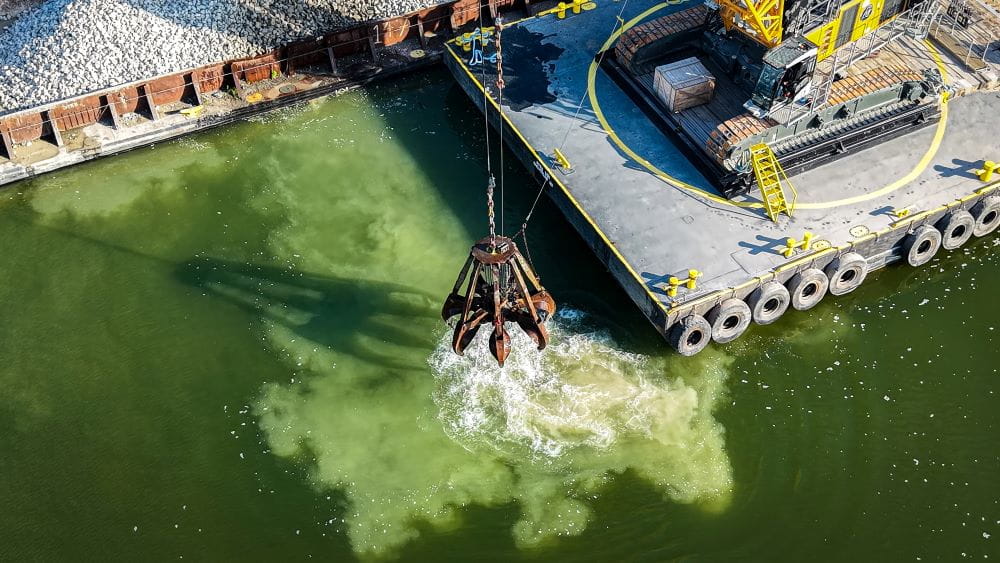
Nearly 20,000 tons of natural limestone, delivered by barge, forms the Channel Island Reef, she said. 

“Historically, inner Saginaw Bay had rocky underwater reefs formed by glacial deposits,” Gass said.

Gass said the rocky underwater reefs provided safe spaces for native fish to lay eggs because crevices among the rocks protect eggs and young fish from predators and strong currents.

The importance of native fish protection for the Lake Huron fishery lies in preserving the ecological balance that has developed over thousands of years, according to Jolley.

“Our native fish species evolved here through the forces of natural selection over millennia, adapting to local conditions, prey, predators and seasonal changes,” Jolley said.

In contrast, invasive species are often introduced abruptly, without natural checks and balances, allowing them to outcompete or prey on native fish, disrupt habitats and destabilize food webs, Jolley said.

Jolley said although some invasive species can temporarily provide new fishing opportunities, they often reduce long-term stability of ecosystems.

In contrast, native species support more resilient, diverse and sustainable fisheries, delivering lasting ecological and economic benefits.

However, artificial reefs designed to support native fish spawning habitats may also benefit invasive species.

“Round goby, an invasive species that prefers rocky habitats, will likely colonize the reef,” Jolley said.

While gobies can prey on fish eggs, native predators such as smallmouth bass feed heavily on them and are also attracted to the area. 

The reef structure and placement support native species like smallmouth bass and walleye, which depend on clean, stable substrate for spawning and feeding, Jolley said.

“This interaction is expected to balance out naturally as predator-prey relationships stabilize,” Jolley said.

According to Jolley, community engagement is crucial for further restoration projects.

Jolley said public opinion often centers on safety, navigation features and aesthetics, as people seek to balance these considerations with the ecological benefits of habitat restoration.

“We have consistently engaged local communities on past, current and future projects,” Jolley said.


The post Lake Huron artificial reef restores fish spawning habitat appeared first on Great Lakes Now.
Original Article

Great Lakes Now

Great Lakes Now

https://www.greatlakesnow.org/2026/04/30/lake-huron-artificial-reef-restores-fish-spawning-habitat/
Great Lakes Echo

This article was republished here with permission from Great Lakes Echo.

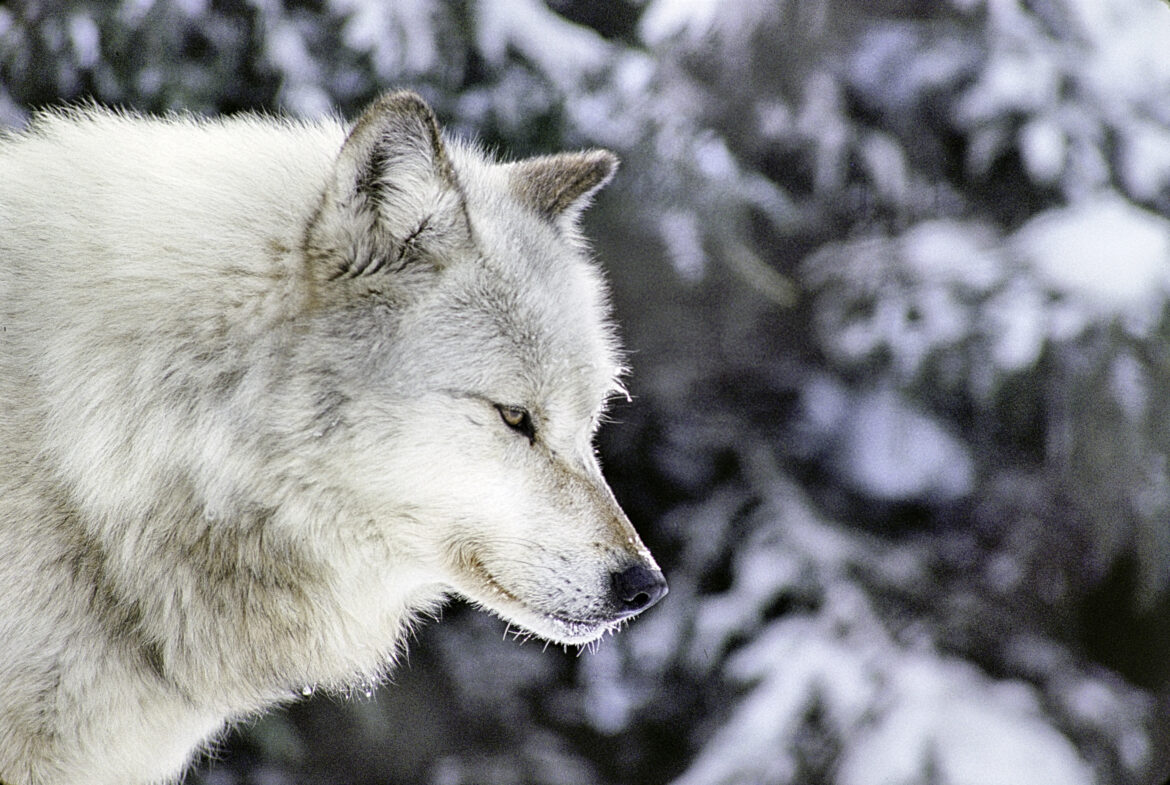
By Sonja Krohn, Great Lakes EchoGray wolf. Credit: Department of Natural Resources


Even though the grey wolf is classified as an endangered species, a new study found that the majority of Michigan’s recorded wolf deaths are caused by humans.

Researchers from Michigan State University and their collaborators used GPS collar and mortality data from 608 wolves in Minnesota, Wisconsin and Michigan between 2010 and 2023 to assess their specific cause of death.

The study found that humans caused 65% of them.

In addition to categories like vehicle collisions (10%) and legal kills (14%), illegal kills represented 38% of cases, making it the leading cause of wolf deaths.

Apart from legal kills, which included depredation control and legal hunting, illegal kills included confirmed and suspected poaching through poisoning, shootings and accidental trapping.

“Despite changes in legislation and public attitudes towards large predators, human-caused mortality continues to impact survival and conservation of carnivore species,” the study said.

According to the Michigan Department of Natural Resources, wolves are native to the state, and research suggests that they were once present in all of its counties.

“Wolves were first added to the federal endangered species list in 1974 after being [wiped out] from the Lower Peninsula by the 1930s and nearly disappearing from the Upper Peninsula by 1960,” the department says on its website.

But since then, there has been a back-and-forth approach. Federal protections for wolves were lifted and reinstated on several occasions through political action and court rulings.

Most recently, a 2022 federal court ruling reinstated gray wolves onto the federal list of threatened and endangered species in the contiguous 48 states.

Based on that classification, “they can only be killed if they are a direct and immediate threat to human life,” the department says.

According to the recent study in the journal Global Ecology and Conservation, illegal kills as a leading cause of death have “the potential to influence population dynamics, affecting population growth and recolonization potential.”

Rolf Peterson, a research professor at Michigan Technological University, said the results are consistent with smaller-scale studies. 

Deer are the primary food source of wolves, and illegal kills – especially during deer-hunting season – dominate the population dynamics of wolves in the upper Midwest, he said.

“Yet wolf populations have persisted in what I would characterize as an uneasy peace,” Peterson said, adding that the coexistence of wolves and people in the U.P. – where wolves live – has required adjustments for both species.

At this point, Brian Roell, a DNR wildlife biologist, said illegal takes don’t appear to be harming Michigan’s population, as wolves can survive fairly high death rates.

“The important thing to point back to is that our population has been stable – it’s not decreasing,” he said.

According to Roell, Michigan’s wolf population has been stable since 2011. The department’s last population estimate in 2024 counted 768 wolves. In Michigan, they “have saturated their suitable habitat,” he said.

While the DNR is currently wrapping up a 2026 population estimate, he said, “I fully expect we’re going to be statistically stable again” based on preliminary data.


The post Michigan’s main cause of wolf mortality? People appeared first on Great Lakes Now.

Original Article

Great Lakes Now

Great Lakes Now

https://www.greatlakesnow.org/2026/04/24/michigans-main-cause-of-wolf-mortality-people/

Great Lakes Echo

Global warming may impact Great Lakes beaches

This article was republished here with permission from Great Lakes Echo.

By Yue Jiang, Great Lakes Echo

Global warming will produce more frequent high rainfall events in the Upper Great Lakes, according to a University of Guelph expert.

Rather than average water levels falling as previously assumed, it’s possible that the average will increase because of more precipitation, which will constrict the beach area, said emeritus professor Robin Davidson-Arnott of the Department of Geography, Environment & Geomatics.

Read Now at Great Lakes Now.

Original Article

Great Lakes Now

Great Lakes Now

https://www.greatlakesnow.org/2022/04/global-warming-impact-great-lakes-beaches/

Great Lakes Echo

FishPass stays off November ballot, will be decided in appeals court

This article was republished here with permission from Great Lakes Echo.

By Max Copeland, Great Lakes Echo

The fate of Traverse City, Michigan’s FishPass project will be decided in court. That’s after city commissioners decided not to put the question before voters in November.

Read Now at Great Lakes Now.

Original Article

Great Lakes Now

Great Lakes Now

https://www.greatlakesnow.org/2021/09/fishpass-november-ballot-appeals-court/

Great Lakes Echo

Researchers find relationship between invasive zebra mussels, toxic algae

This article was republished here with permission from Great Lakes Echo.

By McKoy Scribner, Great Lakes Echo

Scientists from the W.K. Kellogg Biological Station first noticed an invasive population of zebra mussels in Gull Lake in the mid-1990s. Afterwards, unexpected harmful algal blooms started appearing.

Read Now at Great Lakes Now.

Original Article

Great Lakes Now

Great Lakes Now

https://www.greatlakesnow.org/2021/07/researchers-invasive-zebra-mussels-toxic-algae/

Great Lakes Echo

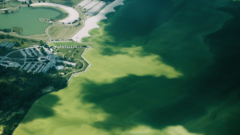
Algae may vacuum microplastics, but also indicates greater health threat

This article was republished here with permission from Great Lakes Echo.

By Hannah Brock, Great Lakes Echo

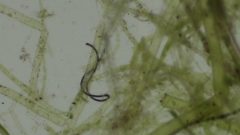
A type of algae that a recent study found collects microfibers brings up questions about microplastic pollution impacts and how it could affect human health.

Read Now at Great Lakes Now.

Original Article

Great Lakes Now

Great Lakes Now

https://www.greatlakesnow.org/2021/05/algae-vacuum-microplastics-greater-health-threat/

Great Lakes Echo

Tsunamis caused by air pressure could resuspend Great Lakes contaminants

This article was republished here with permission from Great Lakes Echo.

By Brandon Chew, Great Lakes Echo

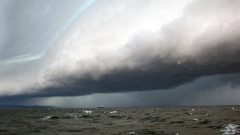
It was atmospheric pressure waves that produced 6-foot water waves in Lake Michigan on April 13, 2018, damaging docks and cottages and submerging breakwalls in Ludington.

Read Now at Great Lakes Now.

Original Article

Great Lakes Now

Great Lakes Now

https://www.greatlakesnow.org/2021/04/meteotsunami-great-lakes-contaminants/

Great Lakes Echo

Oldest Coast Guard cutter with smallest crew and largest Great Lakes responsibility needs replacing

This article was republished here with permission from Great Lakes Echo.

By Eric Freedman, Great Lakes Echo

The U.S. Coast Guard wants to retire its oldest cutter on the Great Lakes, the 57-year-old cutter Buckthorn.

But don’t hold your breath waiting for the replacement of the Sault Ste.

Read Now at Great Lakes Now.

Original Article

Great Lakes Now

Great Lakes Now

https://www.greatlakesnow.org/2020/12/oldest-coast-guard-cutter-great-lakes/

Great Lakes Echo

NASA images show impact of Midland County flooding

This article was republished here with permission from Great Lakes Echo.

NASA’s Earth Observatory worked up this cool comparison to show the impact of the recent dam bursting in Midland.

The images above were captured by Operational Land Imager (OLI) on Landsat 8 and show the Tittabawassee River on May 20, 2020 (right), compared to June 3, 2019 (left).

Read Now at Great Lakes Now.

Original Article

Great Lakes Now

Great Lakes Now

https://www.greatlakesnow.org/2020/06/nasa-images-impact-midland-flooding/

Great Lakes Echo

Warm weather has ice fishing industry on thin ice

This article was republished here with permission from Great Lakes Echo.

By Hunter Hicks, Great Lakes Now

The lack of ice across the Great Lakes region has business booming for those in the ice fishing industry fortunate enough to have safe conditions, but has left others high and dry.

Read Now at Great Lakes Now.

Original Article

Great Lakes Now

Great Lakes Now

https://www.greatlakesnow.org/2020/03/warm-weather-ice-fishing-industry/

Great Lakes Echo

Warm winter changes — but can’t stop — outdoor fun

This article was republished here with permission from Great Lakes Echo.

By Danielle James, Capital News Service

From ski slopes to dog sled races to snow carving contests, warmer weather this season has forced Michigan’s winter sports and tourism groups to adapt to keep participants and spectators coming.

Read Now at Great Lakes Now.

Original Article

Great Lakes Now

Great Lakes Now

https://www.greatlakesnow.org/2020/02/warm-winter-changes-outdoor-recreation/

Great Lakes Echo