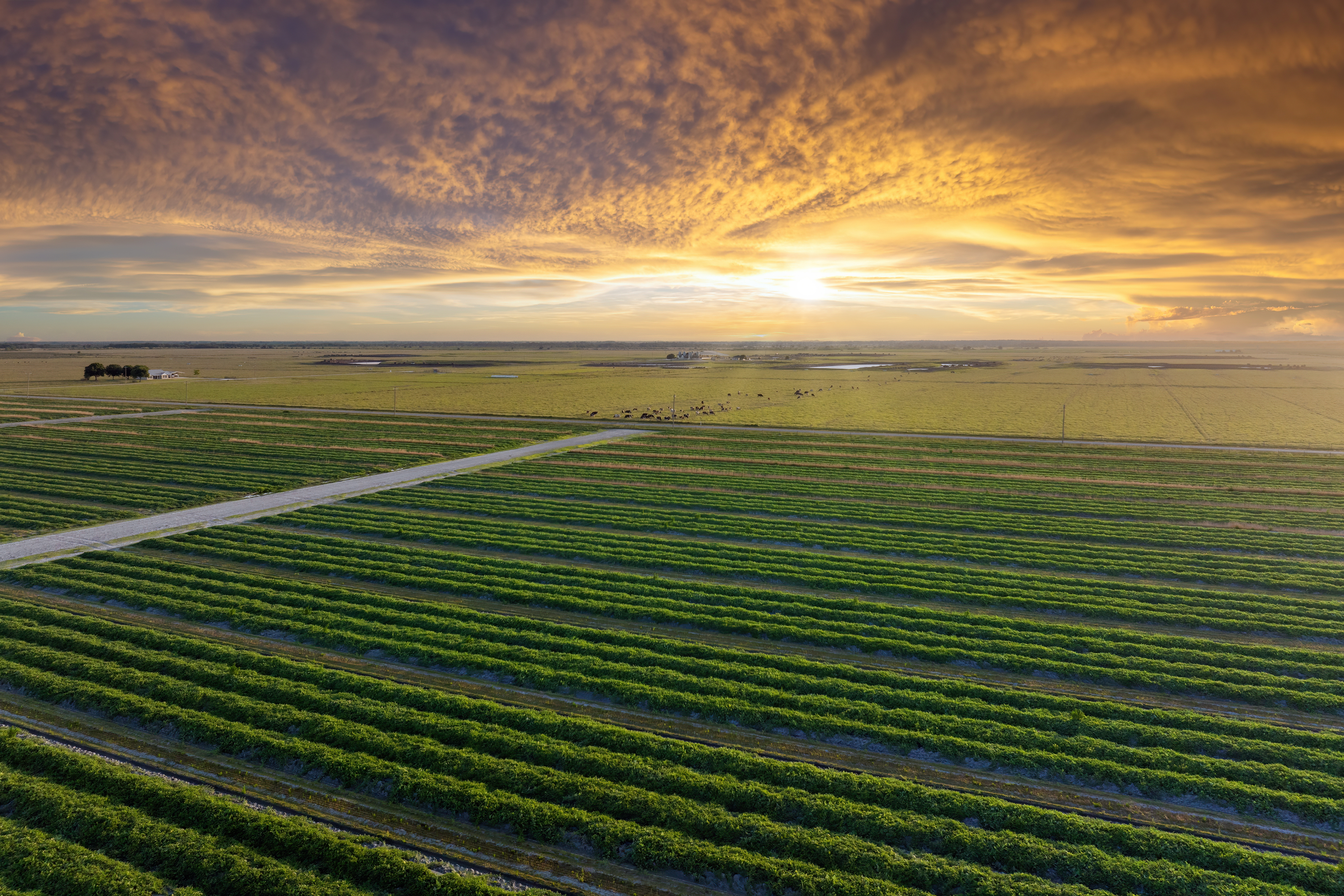
When Brain Neff retired from the Air Force, he had his eyes on a farm on the outskirts of Traverse City, Michigan. 

The land was once operated by his wife’s grandparents before it was leased out for years after her grandparents stopped tending to it. In 2021, the Neffs bought the property back with plans to transform it in retirement. 

“We had it in mind that we were going to turn it into more of a destination farm akin to the types of things that we saw when we were in the military, out in California and other places in the country,” Neff said.  

Neff says he was anticipating 2026 to be their first profitable year, but because of the financial issues they, and many other farmers are facing, he no longer thinks so.  

“My projection would be that we will not turn a profit this year,” Neff said. 

Neff’s story is not an isolated one.  

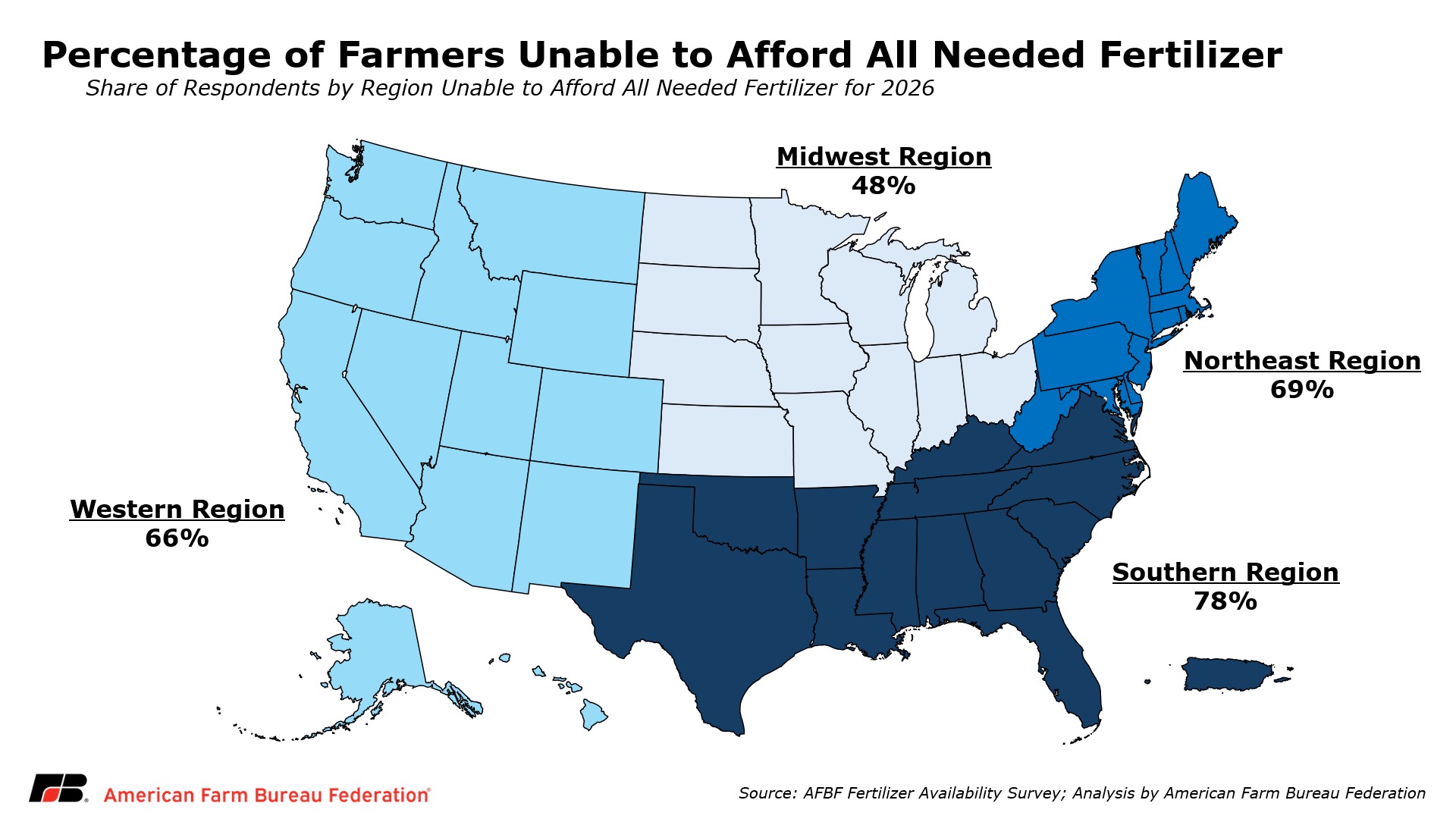
An April survey from the American Farm Bureau Federation found nearly 70% of American farmers say they cannot afford fertilizer. It also found almost half of Midwestern farmers report they cannot afford all the supplies they need.  

Credit: American Farm Bureau Federation

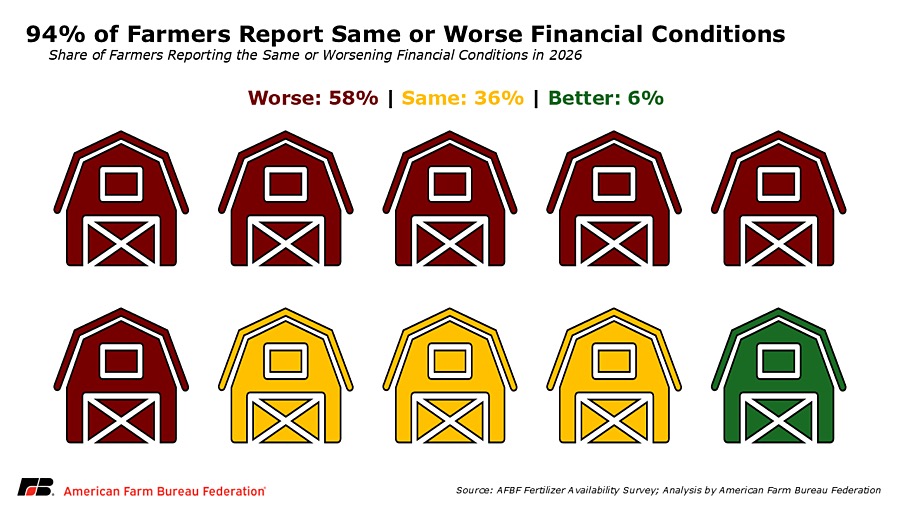
The survey drew from 5,400 farmers in each state and Puerto Rico. According to the responses, 94% of respondents reported their financial situation has worsened or remained the same since last year, while only 6% reported improvement. 

The survey shows Midwestern farmers reported slightly stronger purchasing plans, but nearly half still said they could not afford all the supplies they needed. While farmers in the other parts of the country are less likely to purchase fertilizer ahead of planting season, this could sharpen stress on America’s “breadbasket” which a 2026 report from the Future of Food Coalition described as “one of the most intensively farmed agricultural regions globally.”  

For many farmers across the Great Lakes region, those numbers are not abstract statistics but are shaping what gets planted, harvested and what is profitable. 

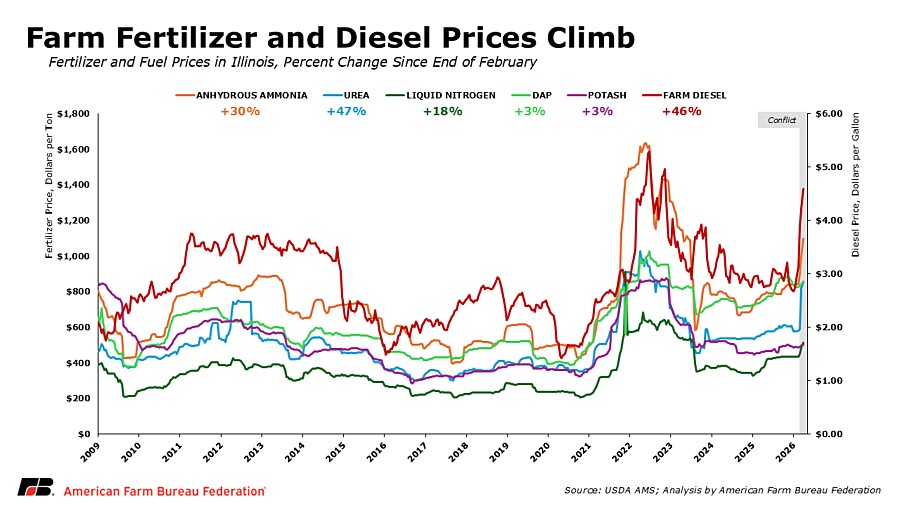
Neff says the cost of urea, a chemical used as a fertilizer, went up from $612 to $892 from April 2025 to April 2026, changing the decisions he is making this year.  

“I chose to forego putting urea down on our grass hayfields this spring,” he said. “Any additional growth I expected to see from the hay would have just been eaten up in cost.” 

The decision to forego the urea will likely impact the outcome of production, Neff said he will “have a reduced first cutting because of it.” 

“We’re continuing to put our own equity into this farm to establish it and hope that things turn around next year,” he said.   

Causes  

National policy decisions have continued to impact farmers.  

Bob Thompson, president of the Michigan Farmers Union, said the first ”hammer” to farmers was “the implementation of tariffs” that “has had a real detrimental effect at the local farm level.”  

Credit: American Farm Bureau Federation

As part of a larger implementation of sweeping tariffs, in February 2025, the Trump administration announced a 25% tariff on all imported steel and aluminum products. Economists warned the tariffs could raise costs for farm equipment, replacement parts and transportation. 

As these tariffs are still in effect, the Iran conflict has only exacerbated these issues, with the Strait of Hormuz being closed. 

In the survey, Farm Bureau wrote: “The closure of the Strait of Hormuz is keeping critical fertilizer supplies and crude oil from reaching global markets, putting a squeeze on supplies around the world.” 

Roughly 25% of the world’s oil supply travels through the Strait of Hormuz.  

As gas and oil prices continue to rise, the blockade has been felt immediately by farmers.  

“I was spending below $3 for agricultural diesel, and I just called to get my tanks filled, and I was told it was going to be $5.98 a gallon,” Neff said.

Credit: American Farm Bureau Federation

And the effects of the Strait of Hormuz being closed will not just be felt by farmers but “consumers are going to continually feel the pinch because virtually all goods move by truck in this country,” Thompson said.   

Farmers are stuck playing the waiting game, Dennis Kellogg, who sits on the Michigan Farmer’s Union Board of Directors, said. 

“It’s very difficult to plan for a future with these unknowns,” Kellogg said.   

For organizations looking to help farmers, like employees at Michigan State University’s Extension program, they are also seeing these effects.  

“This is heightening what’s already a bad situation for many farms,” Jon LaPorte, a Farm Business Management Educator at MSU Extension, said. 

LaPorte said that many farmers are still experiencing loss from the previous years, “Everyone’s worried about it because 2024 and 2025 weren’t the most profitable years either” which is forcing farmers to ask the question of “What’s the bare minimum that we would have to put out (money) to ensure a crop?”  

Outcomes  

Through these difficulties, farmers are forced to make short-term decisions that may have long-term consequences.  

Thompson warned the long-term consequences could extend beyond one growing season. 

“The outlook is pretty bleak right now, right across the board,” Thompson said and later added. “The end result is that there will be fewer farmers. There will be bankruptcies.”  

Though farmers may be resilient, Thompson warned of the mental stress these families are going through, which can include increased drug use and in the worst cases, suicide.  

“We need to try to be aware that our friends and neighbors might look good on the outside, but be torn up on the inside, and we need to try to be friends,” Thompson said.  

The post ‘The outlook is pretty bleak’: Farmers brace for a difficult season appeared first on Great Lakes Now.
Original Article

Great Lakes Now

Great Lakes Now

https://www.greatlakesnow.org/2026/05/15/the-outlook-is-pretty-bleak-farmers-brace-for-a-difficult-season/

Julia Roeder

‘A valuable resource’: Traverse City restaurants aim to reduce food waste, greenhouse gases

By Izzy Ross, Interlochen Public Radio

This coverage is made possible through a partnership between IPR and Grist, a nonprofit independent media organization dedicated to telling stories of climate solutions and a just future.

On an early Thursday evening, people are seated around the dining room of Trattoria Stella, an Italian restaurant on the ground floor of the Grand Traverse Commons, just outside the city’s downtown area.

Read Now at Great Lakes Now.

Original Article

Great Lakes Now

Great Lakes Now

https://www.greatlakesnow.org/2024/01/a-valuable-resource-traverse-city-restaurants-aim-to-reduce-food-waste-greenhouse-gases/

Interlochen Public Radio

Eat Your Heartland Out: You, Too, Can Be a Galley Steward

Eat Your Heartland Out is a Taste Awards nominated  program about the intersection of food and culture in the American Midwest. The show is produced by the Heritage Radio Network, a leader in culinary audio storytelling and distributed on the Public Radio Exchange (PRX), which provides content to public radio affiliates across the United States.

Read Now at Great Lakes Now.

Original Article

Great Lakes Now

Great Lakes Now

https://www.greatlakesnow.org/2023/08/eat-your-heartland-out-can-be-galley-steward/

Capri S. Cafaro

‘Solar grazing’ is a way for farmers and solar companies to use land. But there are challenges

This coverage is made possible through a partnership with IPR and Grist, a nonprofit, independent media organization dedicated to telling stories of climate solutions and a just future.

Along busy M-72 in Traverse City, rows of huge solar panels gleam in the sun.

Read Now at Great Lakes Now.

Original Article

Great Lakes Now

Great Lakes Now

https://www.greatlakesnow.org/2023/08/solar-grazingr-farmers-solar-companies-land-challenges/

Interlochen Public Radio

Grand Traverse group wins praise for preserving key land from development

By Kelly House, Bridge Michigan

The Great Lakes News Collaborative includes Bridge Michigan; Circle of Blue; Great Lakes Now at Detroit Public Television; and Michigan Radio, Michigan’s NPR News Leader; who work together to bring audiences news and information about the impact of climate change, pollution, and aging infrastructure on the Great Lakes and drinking water.

Read Now at Great Lakes Now.

Original Article

Great Lakes Now

Great Lakes Now

https://www.greatlakesnow.org/2022/07/grand-traverse-group-wins-praise-for/

Bridge Michigan

FishPass stays off November ballot, will be decided in appeals court

This article was republished here with permission from Great Lakes Echo.

By Max Copeland, Great Lakes Echo

The fate of Traverse City, Michigan’s FishPass project will be decided in court. That’s after city commissioners decided not to put the question before voters in November.

Read Now at Great Lakes Now.

Original Article

Great Lakes Now

Great Lakes Now

https://www.greatlakesnow.org/2021/09/fishpass-november-ballot-appeals-court/

Great Lakes Echo

Last dam standing: Traverse City fish restoration project on the ropes

By Kelly House, Bridge Michigan, through the Institute for Nonprofit News network

The Great Lakes News Collaborative includes Bridge Michigan; Circle of Blue; Great Lakes Now at Detroit Public Television; and Michigan Radio, Michigan’s NPR News Leader; who work together to bring audiences news and information about the impact of climate change, pollution, and aging infrastructure on the Great Lakes and drinking water.

Read Now at Great Lakes Now.

Original Article

Great Lakes Now

Great Lakes Now

https://www.greatlakesnow.org/2021/03/dam-traverse-city-fish-restoration-project/

Bridge Michigan

PFAS News Roundup: Pennsylvania water utility sues 3M, Dupont, Michigan officials waited 8 months to warn residents

PFAS, short for per- and polyfluoroalkyl substances, are a group of widespread man-made chemicals that don’t break down in the environment or the human body and have been flagged as a major contaminant in sources of water across the country.

Keep up with PFAS-related developments in the Great Lakes area.

Read Now at Great Lakes Now.

Original Article

Great Lakes Now

Great Lakes Now

https://www.greatlakesnow.org/2021/02/pfas-news-pennsylvania-utillity-michigan-officials-wait/

Natasha Blakely

PFAS News Roundup: PFAS found in Indigenous household wells, Wisconsin experimental treatment fails, WDNR fish concerns

PFAS, short for per- and polyfluoroalkyl substances, are a group of widespread man-made chemicals that don’t break down in the environment or the human body and have been flagged as a major contaminant in sources of water across the country.

Keep up with PFAS-related developments in the Great Lakes area.

Read Now at Great Lakes Now.

Original Article

Great Lakes Now

Great Lakes Now

https://www.greatlakesnow.org/2021/02/pfas-michigan-indigenous-wisconsin-fish-dnr-legislation/

Natasha Blakely

Great Lakes Gift Guide 2020: Remember that road trip, boat ride, microbrew or sweatshirt you should’ve bought with this list

Want to give your loved ones a holiday gift that connects to that summer trip up north or the fall color tour you took together? 

Or maybe you have a trip planned for after the COVID-19 vaccines have been distributed and want to give them something to remind them they have something to look forward to. 

Read Now at Great Lakes Now.

Original Article

Great Lakes Now

Great Lakes Now

https://www.greatlakesnow.org/2020/12/great-lakes-gift-guide-2020-list/

Natasha Blakely

PFAS News Roundup: Michigan health study, Wisconsin deer and fish, possible impact on COVID-19 vaccine

PFAS, short for per- and polyfluoroalkyl substances, are a group of widespread man-made chemicals that don’t break down in the environment or the human body and have been flagged as a major contaminant in sources of water across the country.

Keep up with PFAS-related developments in the Great Lakes area.

Read Now at Great Lakes Now.

Original Article

Great Lakes Now

Great Lakes Now

https://www.greatlakesnow.org/2020/11/pfas-news-roundup-michigan-wisconsin-study-vaccine/

Natasha Blakely

PFAS News Roundup: Huron River contamination levels drop, New York PFAS cleanup could be delayed

PFAS, short for per- and polyfluoroalkyl substances, are a group of widespread man-made chemicals that don’t break down in the environment or the human body and have been flagged as a major contaminant in sources of water across the country.

Keep up with PFAS-related developments in the Great Lakes area.

Read Now at Great Lakes Now.

Original Article

Great Lakes Now

Great Lakes Now

https://www.greatlakesnow.org/2020/10/pfas-huron-river-michigan-new-york/

Natasha Blakely

Dams Across the Great Lakes: End of the line for aging infrastructure?

After nearly a century of generating hydroelectric power on the St. Regis River in upstate New York, the Hogansburg Dam came down in December 2016. Fish who could now swim freely along the river weren’t the only ones celebrating. The end of the dam also marked the first time a tribal nation led the decommissioning process for a federal dam.

Read Now at Great Lakes Now.

Original Article

Great Lakes Now

Great Lakes Now

https://www.greatlakesnow.org/2020/10/dams-great-lakes-aging-infrastructure/

Lorraine Boissoneault

Virus threat creates unease in Michigan summer tourism haven

TRAVERSE CITY, Mich. (AP) — Clare Nagrant earns her living from tourism, so she’s taken a beating during the coronavirus-imposed shutdown. A few months ago, she was juggling four jobs. Now she’s down to one part-time gig with a distillery that stayed open by adding hand sanitizer to its product line.

Read Now at Great Lakes Now.

Original Article

Great Lakes Now

Great Lakes Now

https://www.greatlakesnow.org/2020/05/ap-coronavirus-covid-19-michigan-traverse-city-tourism/

The Associated Press

COVID-19 Next Steps: Great Lakes outdoor recreation begins move toward normalcy

After nearly two months of reduced access, various levels of restrictions and outright closures, thousands of national, state, provincial and municipal parks, boating ramps, wildlife areas and other outdoor recreation areas are making their return from COVID-19.

Officials are hoping the move will help push life closer to normal for millions of people.

Read Now at Great Lakes Now.

Original Article

Great Lakes Now

Great Lakes Now

https://www.greatlakesnow.org/2020/05/coronavirus-covid-19-great-lakes-outdoor-recreation-reopening/

James Proffitt

Michigan oversight panel OKs limits on ‘forever chemicals’

TRAVERSE CITY, Mich. (AP) — A Michigan oversight panel Thursday endorsed drinking water standards designed to limit exposure to a group of household and industrial chemicals linked to a variety of health problems.

The proposed rules would apply to seven compounds in a category known as perfluoroalkyl and polyfluoroalkyl substances, or PFAS.

Read Now at Great Lakes Now.

Original Article

Great Lakes Now

Great Lakes Now

https://www.greatlakesnow.org/2020/02/ap-michigan-oversight-panel-pfas-limits/

The Associated Press