Wisconsin Water Library and COVID-19
Wisconsin Water Library
https://waterlibrary.aqua.wisc.edu/wisconsin-water-library-and-covid-19/?utm_source=rss&utm_medium=rss&utm_campaign=wisconsin-water-library-and-covid-19
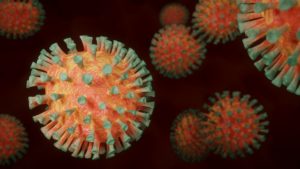
Like so many institutions around the world, the Wisconsin Water Library has temporarily closed its doors today, March 16, 2020 until the UW Madison opens again (after spring break and the alternative instruction period), tentatively scheduled for April 10. Though the physical space is closed, library staff are here in the virtual space to help […]
Wisconsin Water Library
https://waterlibrary.aqua.wisc.edu/wisconsin-water-library-and-covid-19/?utm_source=rss&utm_medium=rss&utm_campaign=wisconsin-water-library-and-covid-19


Due to the effects of Covid-19, these are unprecedented times for all of society, including water science and outreach at Wisconsin Sea Grant. While our staff continues to adapt to this changing situation, we remain committed to the mission of promoting the sustainable use of Great Lakes resources through research, education and outreach.
Our program is one of the University of Wisconsin System’s and is housed on the flagship campus in Madison. On March 15, the University of Wisconsin-Madison chancellor called for telecommuting among staff and programs with that capability. That employee policy also affects our field offices in Milwaukee, Superior, Green Bay and Manitowoc, though local campus policies may additionally affect their office operations. Staff remains available through email and the phone.
Our social media accounts, Facebook and Twitter, are also a good means to stay current with our activities, particularly outreach events that may now be moving from face-to-face to virtual formats as we cancel larger gatherings and meetings in accordance with public health guidelines for social distancing.
In terms of grant submission and management, we work with the UW-Madison Office of Research and Sponsored Programs, and similar offices on other campuses. We will continue that work to ensure continuity during this uncertain time.
The Wisconsin Water Library has temporarily closed. However, please reach out for assistance with reference questions or resource discovery. The senior special librarian, Anne Moser, is available. She has also assembled some useful STEM educational resources for distance learning.
We have a robust website offering publications on the Great Lakes and other water topics. Many resources are downloadable. Under normal circumstances, other items would be available in hard-copy form and at your request that we mail the materials. However, our office is temporarily closed and campus mail service is suspended.
We are offering only an electronic version of issue 2, 2020, of our quarterly newsletter, the Aquatic Sciences Chronicle. Many of our readers continue to work remotely and we have chosen to not expend resources to produce and mail hard copies of the publication to empty offices. Prior to production of issue 3, 2020, we will evaluate distribution plans. You can also sign up to get an emailed version or go here to read our latest edition.
Please contact us if you have questions or concerns, and please stay healthy. Here is a reminder of the reliable sources for Covid-19 information and guidance:
American Public Health Association
News Releases – Wisconsin Sea Grant
https://www.seagrant.wisc.edu/news/operations-during-covid-19/

Due to the effects of COVID-19, these are unprecedented times for all of society, including water science and outreach at the University of Wisconsin Water Resources Institute. While our staff continues to adapt to the new reality, we remain committed to the mission of coordinating research that works to address present and emerging water quality, quantity and management challenges.
Our program is one of the University of Wisconsin System’s and is housed on the flagship campus in Madison. On March 15, the University of Wisconsin-Madison chancellor called for telecommuting among staff and programs with that capability. That employee policy also affects our field offices in Milwaukee, Superior, Green Bay and Manitowoc, though local campus policies may additionally affect their office operations. Staff remains available through email and the phone.
Our social media accounts, Facebook and Twitter, are also a good means to stay current with our activities, particularly outreach events that may now be moving from face-to-face to virtual formats as we cancel larger gatherings and meetings in accordance with public health guidelines for social distancing.
In terms of grant submission and management, we work with the UW-Madison Office of Research and Sponsored Programs, and similar offices on other campuses. We will continue that work to ensure continuity during this uncertain time.
The Wisconsin Water Library has temporarily closed. However, please do reach out for assistance with reference questions or resource discovery. The senior special librarian is available.
We have a robust website offering publications on the Great Lakes and other water topics. Many resources are downloadable. Under normal circumstances, other items would be available in hard-copy form and at your request that we mail the materials. However, our office is temporarily closed and campus mail service is suspended.
We are offering only an electronic version of issue 2, 2020, of our quarterly newsletter, the Aquatic Sciences Chronicle. Many of our readers continue to work remotely and we have chosen to not expend resources to produce and mail hard copies of the publication to empty offices. Prior to production of issue 3, 2020, we will evaluate distribution plans. You can also sign up to get an emailed version or go here to read our latest edition.
Please contact us if you have questions or concerns, and please stay healthy. Here is a reminder of the reliable sources for COVID-19 information and guidance:
American Public Health Association
The post Operations in Response to COVID-19 first appeared on WRI.
News Release – WRI
https://www.wri.wisc.edu/news/operations-in-response-to-covid-19/
The discovery of 51 invasive carp in the Mississippi River on the southeastern Minnesota-southwestern Wisconsin border — the largest number of invasive carp found so far upstream — has state authorities mobilizing to boost netting and monitoring of the destructive fish. Read the full story by Minnesota Public Radio News.
Great Lakes Commission
https://www.glc.org/dailynews/20200316-mississippi-carp
Jia Wang, Ph.D., an ice climatologist at the National Oceanic and Atmospheric Administration, admits that this year’s ice coverage prediction model overestimated ice cover and provides a plan to improve the model. Read the full story by Blackburn News.
Great Lakes Commission
https://www.glc.org/dailynews/20200316-ice-predictions
A Michigan county has hired a diver to keep farm fields from flooding amid rising water levels in Lake Huron and other Great Lakes. Read the full story by the Associated Press
Great Lakes Commission
https://www.glc.org/dailynews/20200316-farmland-flooding
Traces of genetic material can help in tracking the invasive species. But a positive detection may not mean live fish. Read the full story by Undark.
Great Lakes Commission
https://www.glc.org/dailynews/20200316-asian-carp
For the first time, an international community-based effort, the Great Global CleanUp: Detroit River, will hold a one-day river cleanup event from 8 a.m. to noon on Saturday, April 25. Read the full story by the News-Herald.
Great Lakes Commission
https://www.glc.org/dailynews/20200316-detroit-river-cleanup
Visitors to the lakefront in New Buffalo, Michigan will see a wall built to hold back water from a rising Lake Michigan. Read the full story by the Northwest Indiana Times.
Great Lakes Commission
https://www.glc.org/dailynews/20200316-lake-michigan-seawall
The City of Vermilion, Ohio and the Western Reserve Land Conservancy have released a rendering of a revitalized Main Street Beach with an expanded beachfront, increased green space, new public amenities, and handicapped-accessible paths. Read the full story by Cleveland News.
Great Lakes Commission
https://www.glc.org/dailynews/20200316-beach-renderings
Five years ago, lead seeped into the tap water in Flint, Michigan, while state and local officials said everything was fine. Now, the same doctor who proved something was wrong is taking the first comprehensive look at the thousands of kids exposed to lead in Flint. Read the full story by CBS News.
Great Lakes Commission
https://www.glc.org/dailynews/20200316-flint-crisis
The announcement of an expedited review of Plan 2014 comes following the awarding of $1.5 million from the U.S., plus $1.5 million from Canada, to address the continuing water outflow problem that exists in Lake Ontario, according to the IJC Great Lakes Connection monthly newsletter. Read the full story by Niagara Frontier Publications.
Great Lakes Commission
https://www.glc.org/dailynews/20200316-ijc-lake-ontario
Indiana lawmakers have passed legislation to embrace a landmark state Supreme Court decision affirming that the Lake Michigan shoreline is publicly owned and open to all for recreation. Read the full story by the Daily Journal.
Great Lakes Commission
https://www.glc.org/dailynews/20200316-lake-michigan-ruling
The U.S. and Ohio environmental protection agencies need to stop resisting their clear responsibility regarding Lake Erie: Enforce the Clean Water Act. Read the full story by the Toledo Blade.
Great Lakes Commission
https://www.glc.org/dailynews/20200316-ohio-clean-lake
Great Lakes Echo
http://greatlakesecho.org/2020/03/16/environmental-journalism-students-recognized-in-michigan-college-better-newspaper-contest/
PRIORITIES FOR ENSURING ACCESS TO CLEAN, SAFE, AFFORDABLE, & RELIABLE DRINKING WATER FOR US RESIDENTS
Recommendations from Great Lakes Community Leaders—March 2020
Freshwater Future and our partners from communities around the Great Lakes visited Federal Representatives in Washington, D.C. to inform them of concerns and needs to address water safety, toxins in water, and affordability.
Click here to view the complete list of drinking water priorities.
Blog – Freshwater Future
https://freshwaterfuture.org/uncategorized/great-lakes-days-drinking-water-priorities-2020/
|
||||||||||||||||||||||
|
||||||||||||||||||||||
|
Blog – Freshwater Future
https://freshwaterfuture.org/uncategorized/freshwater-weekly-march-13-2020/
March 13, 2020 (Cleveland, OH) – As communities around the Great Lakes region respond to the ongoing COVID-19 crisis, cities and other government entities have take action to halt water shut-offs and restore residential water service.
In response, Alliance for the Great Lakes Director of Policy and Strategic Engagement Crystal M.C. Davis issued the following statement:
“The Alliance for the Great Lakes commends the cities of Cleveland, Detroit, and Toledo for ordering moratoriums on water shut-offs and restoration of residential water services during this crisis.
We also applaud Ohio Governor DeWine for directing utilities under the Public Utility Commission of Ohio’s (PUCO) jurisdiction to review shutoff policies and other practices. We urge the PUCO to act quickly to create these protections against the spread of the virus.
The deepening COVID-19 crisis reminds us of the intrinsic connection between water and public health – especially for those in our community who are homebound. This crisis is going to take a commitment to addressing this issue at all levels of government, and the Alliance is ready to work with any state or local officials looking for guidance in this critical area.
We must do all we can at this moment to keep ourselves, our families, and our communities safe, and these shut-off moratoriums do just that.”
###
Media Contact: Jennifer Caddick, jcaddick@greatlakes.org, (312) 445-9760
The post Alliance: “COVID-19 crisis reminds us of the intrinsic connection between water and public health” appeared first on Alliance for the Great Lakes.
News – Alliance for the Great Lakes
https://greatlakes.org/2020/03/media-statement-covid-19-and-water-shutoffs/
The decrease in ice cover is having culture impacts in addition to environmental impacts in Lake Superior’s coastal towns. Read the full story by the Chicago Tribune.
Great Lakes Commission
https://www.glc.org/dailynews/20200313-ice-culture
NCEI News Feed
http://www.ncei.noaa.gov/news/global-climate-202002
Sarnia, Ontario’s water pollution control facility is one of a handful being used for Environment Ministry testing this year to potentially help ease the amount of phosphorous entering the Great Lakes and contributing to toxic algae blooms. Read the full story by The London Free Press.
Great Lakes Commission
https://www.glc.org/dailynews/20200313-phosphorous-removal-study
The Michigan Senate finalized legislation Thursday that would provide $2 million toward the estimated $20 million cost of the Detroit Zoological Society’s proposed 30,000-square-foot Great Lakes Center for Nature in Macomb County. Read the full story by Macomb Daily.
Great Lakes Commission
https://www.glc.org/dailynews/20200313-nature-center
The Menominee Indian Tribe of Wisconsin asserted that the Menominee River has the right to exist naturally, flourish, evolve, remain unpolluted and carry out its natural ecosystem functions. Read the full story by Great Lakes Echo.
Great Lakes Commission
https://www.glc.org/dailynews/20200313-menominee-river-rights
Two engineers who live on the Lake Ontario, and study its levels on the side, worry it’s going to get worse before it gets better. Read the full story by Duluth News Tribune.
Great Lakes Commission
https://www.glc.org/dailynews/20200313-lake-ontario-high-water
The Niagara County (New York) Legislature voted Tuesday to chip in $221,000 for three projects designed to protect Olcott Harbor from rising water levels in Lake Ontario. Read the full story by The Buffalo News.
Great Lakes Commission
https://www.glc.org/dailynews/20200313-high-water-protection
People in southeast Michigan felt the effects of that severe rainfall last year and again in January 2020, from high water levels in lakes and rivers to roads eroding and flooding neighborhoods and are planning preparing for high water to continue this spring. Read the full story by Second Wave Media.
Great Lakes Commission
https://www.glc.org/dailynews/20200313-spring-high-water
Near record water levels in the Great Lakes have been rapidly eroding our lakeshore and Michigan’s Department of Environment, Great Lakes and Energy says, it’s likely to continue. Read the full story by WWUP-TV – Sault Ste. Marie, MI.
Great Lakes Commission
https://www.glc.org/dailynews/20200313-erosion-presentation
Flooding concerns across Ontario with spring approaching have opposition MPPs and MPs demanding government action at Queen’s Park and Parliament Hill. Read the full story by the Windsor Star.
Great Lakes Commission
https://www.glc.org/dailynews/20200313-ontario-flooding-action
The ArcelorMittal steel mill in Burns Harbor, Indiana has started the process of pursuing ISO 50001 certification, a global standard for energy management. Read the full story by The Times of Northwest Indiana.
Great Lakes Commission
https://www.glc.org/dailynews/20200313-steel-mill-energy
Great Lakes Echo
http://greatlakesecho.org/2020/03/13/wisconsin-tribe-recognizes-menominee-river-rights/
Current Watches, Warnings and Advisories for Brown (WIC009) Wisconsin Issued by the National Weather Service
https://alerts.weather.gov/cap/wwaatmget.php?x=WIC009&y=0
Green Bay, WI
https://www.weather.gov/grb/spotterclasses
Green Bay, WI
https://www.weather.gov/grb/spotterclassescancelled

By Brett Chase, Better Government Association, through the Institute for Nonprofit News network
More than two dozen Chicago young activists Friday called on Mayor Lori Lightfoot to reinstate a city department of environment to combat heavy pollution in black and Latino neighborhoods and increase efforts to fight climate change.
Great Lakes Now
https://www.greatlakesnow.org/2020/03/student-protesters-chicago-lightfoot-campaign-environmental-protection/
Due to concerns related to the spread of COVID-19, three face-to-face public information meetings about Great Lakes water levels have been canceled. These sessions were scheduled for Manitowoc (March 17), Somers (March 18) and Mequon (March 19).
The three in-person meetings have been replaced by a single online session, which will take place on Wednesday, March 18, from 6 to 8 p.m. People may attend this virtual session through Zoom at this web address: https://zoom.us/j/152994777
Additionally, a recording will be posted on Wisconsin Sea Grant’s YouTube channel after the events.
The online information session (like the in-person sessions that were canceled) will include experts from Wisconsin Sea Grant, the U.S. Army Corps of Engineers, the National Weather Service and the Wisconsin Department of Natural Resources. (See our earlier story about these sessions here.)
The issue is timely because Great Lakes water levels have been at or near record highs in recent months, prompting concern among many Wisconsin residents. The Zoom webinar will address what’s in store for Great Lakes water levels through spring and summer of this year.
Said Dr. Adam Bechle, a coastal engineering outreach specialist with Wisconsin Sea Grant who is helping organize the webinar, “It is unfortunate that we need to cancel the three face-to-face sessions, but it is the prudent choice given the COVID-19 situation and public health. We remain committed to sharing important information about Great Lakes water levels with the public, and the online webinar will allow us to do so. We encourage people to watch it live on March 18, or look for the recorded version later.”
Questions about the Great Lakes water levels webinar may be directed to Bechle at (608) 263-5133.
News Releases – Wisconsin Sea Grant
https://www.seagrant.wisc.edu/news/in-person-sessions-on-great-lakes-water-levels-replaced-by-march-18-webinar/
The U.S. Department of Agriculture announced today it is awarding almost $49 million to help state and tribal governments encourage private landowners to allow public access to their land for hunting, fishing, and other wildlife-dependent recreation. Read the full story by WLNS-TV – Lansing, MI.
Great Lakes Commission
https://www.glc.org/dailynews/20200312-michigan-dnr
The Federal Emergency Management Agency has officially declared the Jan. 10-12 storm that hit southeastern Wisconsin an emergency, opening funding avenues for repairing the estimated $10 million in regional damage — $2.58 million in Racine County. Read the full story by The Journal Times.
Great Lakes Commission
https://www.glc.org/dailynews/20200312-fema-shoreline
H2Ohio, described as a data-driven plan to reduce harmful algal blooms, creates the opportunity for Ohio farmers to adopt measures designed to reduce nutrient runoff, while mitigating the financial burden of these actions. Read the full story by the Putnam County Sentinel.
Great Lakes Commission
https://www.glc.org/dailynews/20200312-h2ohio-farmers
Rome Fish Hatchery is undergoing work to mitigate zebra mussels discovered in late January in a lake that supplies water to the hatchery, one of the largest of the New York State Department of Environmental Conservation’s dozen hatcheries. Read the full story by the Rome Sentinel.
Great Lakes Commission
https://www.glc.org/dailynews/20200312-hatchery-mussels
After several houses toppled into Lake Michigan, Wisconsin homeowners in Racine County are taking costly preventative measures to avoid becoming the next casualty. Read the full story by WTMJ-TV – Milwaukee, WI.
Great Lakes Commission
https://www.glc.org/dailynews/20200312-shore-erosion
People in southeast Michigan felt the effects of severe rainfall this past year, from high water levels to roads eroding and flooded neighborhoods. The U.S. Army Corps of Engineers forecasts heavy rains are likely to strike again this spring and summer. Read the full story by Metromode.
Great Lakes Commission
https://www.glc.org/dailynews/20200312-detroit-flooding
A landmark Indiana Supreme Court decision certifying state ownership and guaranteeing public recreational use of the Lake Michigan shoreline is set to be codified in Indiana law. Read the full story by The Times of Northwest Indiana.
Great Lakes Commission
https://www.glc.org/dailynews/20200312-indiana-beaches
Plans for Traverse City, Michigan, to be a stop for massive international cruise ships beginning in summer 2022 have been halted after Discovery Center’s board of directors voted on the decision Monday. Read the full story by The Ticker.
Great Lakes Commission
https://www.glc.org/dailynews/20200312-cruise-traverse
Current Watches, Warnings and Advisories for Brown (WIC009) Wisconsin Issued by the National Weather Service
https://alerts.weather.gov/cap/wwacapget.php?x=WI125F406D417C.HydrologicOutlook.125F406F2960WI.GRBESFGRB.f3f1a1cfbf7fd74e35389b6750377fbf
Current Watches, Warnings and Advisories for Brown (WIC009) Wisconsin Issued by the National Weather Service
https://alerts.weather.gov/cap/wwacapget.php?x=WI125F406D3948.SpecialWeatherStatement.125F406DF0E0WI.GRBSPSGRB.6fc20bf70889aab619ae6ac651c361d8
Great Lakes Echo
http://greatlakesecho.org/2020/03/12/drone-businesses-become-more-specialized/
Current Watches, Warnings and Advisories for Brown (WIC009) Wisconsin Issued by the National Weather Service
https://alerts.weather.gov/cap/wwacapget.php?x=WI125F406C3070.SpecialWeatherStatement.125F406D54A0WI.GRBSPSGRB.5e771a216ff8e52d0625293ab8f2366d