March 6, 2024
By Jenna Mertz

A WRI-funded study is determining the health risk of pathogens found in private wells in southwestern Wisconsin. The research builds upon the findings of the Southwest Wisconsin Groundwater and Geology (SWIGG) project, which found livestock manure and human wastewater in private well water from Grant, Iowa and Lafayette counties in 2018 and 2019.

The new research will also shed light on the relationship between groundwater, human and livestock waste, and antibiotic resistance.
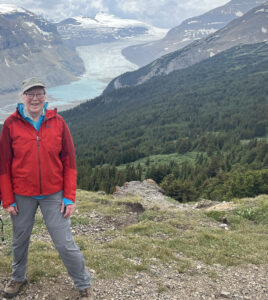
Maureen Muldoon in a red jacket with mountains and a glacier in the background
Maureen Muldoon, submitted photo.

Maureen Muldoon, a hydrogeologist with the Wisconsin Geological and Natural History Survey, is leading the study. Having previously worked on the SWIGG study, she’s now investigating how local geology and well construction influence the contamination of private wells.

She says wells in the southwestern part of Wisconsin are particularly vulnerable to contamination due to fractured bedrock, which has a lot of holes and cracks.

“When you drive down Highway 151 towards Iowa and you look on the sides of the road and it just looks like Swiss cheese, kind of yellowy-brown Swiss cheese, that is [fractured bedrock],” said Muldoon. “You can imagine how quickly stuff moves through that.”

This porous, Swiss cheese-like bedrock means wastewater from septic systems and agriculture can quickly enter the aquifer, carrying pathogens that can end up in private wells. The SWIGG study found viral, bacterial and protozoan pathogens in 66 of 138 private wells sampled, including norovirus, salmonella, and multiple species of Cryptosporidium.

Just how many people could get sick from these pathogens is what Tucker Burch, a research engineer with the U.S. Department of Agriculture, is trying to figure out. Using archived water samples collected during SWIGG, Burch can estimate the risk of gastrointestinal illness using a tool called quantitative microbial risk assessment, or QMRA. He likened it to a weather report.

“It’s a forecasting method; it’s a modeling approach,” said Burch. “We’re using the data we have to make an estimate about what’s going to happen.”

A headshot of Tucker Burch
Tucker Burch, submitted photo.

In addition to determining the public’s risk of gastrointestinal illness, Burch and the research team will identify whether pathogens came from human or livestock waste in the upper or lower parts of the aquifer.

Muldoon said well location matters when it comes to water quality. The lower aquifer is generally more protected from contaminants than the upper aquifer due to a layer of rock that restricts the downward flow of water. Certain types of well construction, however, allow water to pass through to the lower aquifer.

“It is not good to connect the upper and lower aquifer in this environment because we are exporting water quality problems to the deep, relatively protected aquifer,” said Muldoon. She is currently gathering and analyzing construction reports for the 138 wells used in the study.

In addition to microbes that cause gastrointestinal illness, the research team is also testing the water for antibiotic resistance genes (ARGs) to learn more about where they come from. ARGs are the building blocks of antibiotic resistance.

“Antibiotic resistance, like any other biological trait, is mitigated by genes,” said Burch. “So bacteria have specific genes that give them different mechanisms to fight the antibiotics.”

Joel Stokdyk, a biologist with the U.S. Geological Survey leading the research team’s inquiry into ARGs, emphasizes that the study isn’t delving into the impacts of ARGs on human health or antibiotic resistant infections.
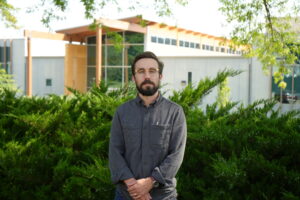
A headshot of Joel Stokdyk standing outside in front of green bushes
Joel Stokdyk, submitted photo.

“A point worth making is that the detection of the antibiotic resistance gene in someone’s drinking water does not mean it’s in a pathogen, does not mean it could make them sick, but it does help us address these other questions.”

One of those questions concerns how many ARGs come from humans versus livestock. Stokdyk said that’s what makes this research novel.

“The research field knows antibiotic resistance genes come from these sources, but we don’t know how much from each. So that’s one of the gaps we’re trying to address,” said Stokdyk.

Although the research team is currently in the data collection and lab phase of the study, they’re already excited about the results. Knowing the amount and source of ARGs could help tailor current manure management strategies and shape future research in livestock production or human medicine.

Said Burch, “There [are] people out there in the real world that take these results and turn around and use them. And that’s always very satisfying. We’re not just running numbers across a computer screen.”

The post Investigating private well water contamination in southwest Wisconsin first appeared on WRI.

Original Article

News Release | WRI

News Release | WRI

https://www.wri.wisc.edu/news/investigating-private-well-water-contamination-in-southwest-wisconsin/
Jenna Mertz

Two Pennsylvania farmers have been found guilty of poisoning over two dozen migratory birds with a restricted substance.

Many species of birds are declining in North America and many are at risk of extinction, Macdonald said.

The post Pennsylvania farmers convicted of poisoning over two dozen migratory birds first appeared on Great Lakes Echo.

Original Article

Great Lakes Echo

Great Lakes Echo

http://greatlakesecho.org/2024/03/06/pennsylvania-farmers-convicted-of-poisoning-over-two-dozen-migratory-birds/

Guest Contributor

Native Farm Bill Coalition Leaders Critical of USDA Equity Commission Final Report

By Levi Rickert, Native News Online

This article originally appeared on Native News Online. Founded in 2011, Native News Online reaches millions of Native and non-Native readers annually including American Indians, Alaska Natives, Native Hawaiians and others interested in Native American concerns.

In a critical response to the U.S.

Read Now at Great Lakes Now.

Original Article

Great Lakes Now

Great Lakes Now

https://www.greatlakesnow.org/2024/03/native-farm-bill-coalition-leaders-critical-of-usda-equity-commission-final-report/

Native News Online

Where will you be for the April 8 total solar eclipse? There’s still time to grab a spot

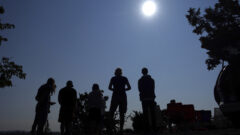
NEW YORK (AP) — Where will you be watching the April 8 total solar eclipse? There are just a few weeks left to pick your spot to see the skies darken along a strip of North America, whether by land, sea or air.

Read Now at Great Lakes Now.

Original Article

Great Lakes Now

Great Lakes Now

https://www.greatlakesnow.org/2024/03/ap-where-will-you-be-for-the-april-8-total-solar-eclipse-theres-still-time-to-grab-a-spot/

The Associated Press

Healing Our Waters-Great Lakes Coalition

Contact: Lindsey Bacigal, BacigalL@nwf.org, (734) 887-7113
Jordan Lubetkin, Lubetkin@nwf.org, (734) 904-1589

WASHINGTON, D.C. (March 5, 2024)—Great Lakes supporters are in Washington, D.C., this week with the Healing Our Waters-Great Lakes Coalition, to urge members of Congress to continue their support for federal investments to protect the drinking water, public health, jobs, and quality of life for the millions of people in the eight-state region of Illinois, Indiana, Michigan, Minnesota, New York, Ohio, Pennsylvania, and Wisconsin. 

“Federal investments to restore and protect the Great Lakes are producing results, but serious threats remain,” said Laura Rubin, director of the Healing Our Waters-Great Lakes Coalition, which organizes the two-day event. “We look forward to continuing our bipartisan work with Congress and the Biden Administration to ensure that every person in the region has access to clean, safe and affordable water. We cannot let up now. There are still many communities that are affected by the serious health impacts of pollution and environmental harm. Cutting funding to core clean water programs will only make the problems worse and more expensive to solve.”

Great Lakes advocates are promoting a policy agenda that asks Congress to:

  • Support the reauthorization of the Great Lakes Restoration Initiative to extend the program through 2031 and authorizes the federal government to invest $500 million annually in restoration and protection action.

  • Fund the Great Lakes Restoration Initiative at no less than $450 million to clean up toxic pollution, restore fish and wildlife habitat, reduce farm and city runoff pollution, and prevent and manage invasive species.

  • Fully fund the Clean Water State Revolving Fund and Drinking Water State Revolving Fund at $4.6 billion and $4.1 billion, respectively, to support community efforts to upgrade wastewater and drinking water infrastructure, targeting the biggest problems and the communities hardest hit by pollution and environmental harm.

  • Support clean water protections by strengthening the Clean Water Act and addressing legacy and emerging contaminants such as toxic PFAS, lead, and plastics.

  • Support clean water in the Farm Bill by increasing funding for conservation programs, rejecting cuts to climate smart agriculture efforts, and tying payments and incentives for farmers to clean water outcomes and the implementation of sustainable practices that protect soil and water quality.

The visit to Washington, D.C., for nearly 100 Great Lakes advocates comes as the U.S. Congress tries to hammer out a budget compromise to get through the current fiscal year 2024 budget and in anticipation of President Joe Biden’s proposed budget for fiscal year 2025. The Healing Our Waters-Great Lakes Coalition is pushing to maintain federal investments in both budget cycles.

“These policies will benefit millions of people in the region,” said Rubin. “Robust investments in clean water coupled with strong clean water protections are essential to protect the health of our communities. The bottom line is: We have solutions, and it’s time to use them, so that we can one day put an end to drinking water restrictions, beach closures, and fish consumption advisories.”

Since 2004, the Healing Our Waters-Great Lakes Coalition has been harnessing the collective power of more than 185 groups representing millions of people, whose common goal is to restore and protect the Great Lakes. Learn more at HealthyLakes.org or follow us on Twitter, Facebook, Bluesky, Mastodon, and Threads @HealthyLakes.

Original Article

Latest Updates - Healthy Lakes

Latest Updates - Healthy Lakes

https://www.healthylakes.org/latest-updates/2024-great-lakes-advocates-in-dc-to-protect-lakes-drinking-water-public-health

Lindsey Bacigal

At Lake Simcoe in southern Ontario, February has traditionally been the peak of ice fishing season.

But this year, the lake’s freezing cycle is in purgatory, continuing to fuel what many locals are calling Ontario’s worst ice fishing season in decades. 

The post Ontario anglers watch their ice fishing community melt. Is there hope? first appeared on Great Lakes Echo.

Original Article

Great Lakes Echo

Great Lakes Echo

http://greatlakesecho.org/2024/03/05/ontario-anglers-watch-their-ice-fishing-community-melt-is-there-hope/

Daniel Schoenherr

News

Regional organizations release annual joint priorities for the Great Lakes

Washington, D.C. – A binational coalition of regional agencies, Indigenous Nations, legislators, local communities, and business, maritime and environmental groups today released shared priorities for restoring the Great Lakes and supporting the region’s economy. The priorities were released in advance of Great Lakes Day, an annual event that brings together regional leaders and members of Congress who play a critical role in shaping Great Lakes policies.

Restoring and protecting the Great Lakes is an enduring, bipartisan priority for the nation and for Great Lakes and St. Lawrence River basin communities,” the priorities read. “Our organizations support the following priorities to accelerate progress, foster equity, build resilience, and ensure the Great Lakes are a source of drinking water, an environmental treasure, and an economic engine for North America.

The agenda urges Congress and the Biden administration to: capitalize on investments in Great Lakes restoration, including by appropriating no less than $450 million for the Great Lakes Restoration Initiative (GLRI) in FY 2025; ensure water infrastructure investments tackle historic inequities; enhance the Great Lakes’ resiliency to the impacts of climate change; develop coordinated regional science plans; strengthen Great Lakes ports and the maritime transportation system; support federal actions to address harmful algal blooms; take action to address emerging contaminants; and protect the Great Lakes basin from invasive carp and other aquatic invasive species.

The priorities are endorsed by the Great Lakes CommissionGreat Lakes Fishery Commission, Healing Our Waters-Great Lakes CoalitionGreat Lakes and St. Lawrence Cities InitiativeChippewa Ottawa Resource AuthorityGreat Lakes Metro Chambers CoalitionAmerican Great Lakes Ports Association, Great Lakes-St. Lawrence Legislative Caucus, Great Lakes Business Network, and Lake Carriers’ Association.


The Great Lakes Commission, led by chair Mary Mertz, director of the Ohio Department of Natural Resources, is a binational government agency established in 1955 to protect the Great Lakes and the economies and ecosystems they support. Its membership includes leaders from the eight U.S. states and two Canadian provinces in the Great Lakes basin. The GLC recommends policies and practices to balance the use, development, and conservation of the water resources of the Great Lakes and brings the region together to work on issues that no single community, state, province, or nation can tackle alone. Learn more at www.glc.org.

Contact

For media inquiries, please contact Beth Wanamaker, beth@glc.org.

Recent GLC News

Upcoming GLC Events

View GLC Calendar

Archives

Original Article

Great Lakes Commission

Great Lakes Commission

https://www.glc.org/news/joint-priorities-030424

Beth Wanamaker

Great Lakes Moment: Gordie Howe International Bridge becomes part of binational trail system

Imagine if the world’s longest trail (located in Canada) connected people even further, into another country, via Michigan’s longest trail. That happened last month when the Windsor Detroit Bridge Authority announced that the Gordie Howe International Bridge would become part of a binational trail system. 

When the initial discussions for a potential new bridge connecting Windsor and Detroit started about a decade ago, residents of Windsor and Detroit, and a coalition of organizations, came together to envision cross-border linkages.

Read Now at Great Lakes Now.

Original Article

Great Lakes Now

Great Lakes Now

https://www.greatlakesnow.org/2024/03/great-lakes-moment-gordie-howe-international-bridge-becomes-part-of-binational-trail-system/

John Hartig

Staff Directory  |  

Jack Guirey – GIS Specialist

Bio coming soon!


Contact

For media inquiries, please contact Beth Wanamaker, beth@glc.org.

Recent GLC News

Upcoming GLC Events

View GLC Calendar

Archives

Original Article

Great Lakes Commission

Great Lakes Commission

https://www.glc.org/staff/jack-guirey

Laura Andrews

This week, the Great Lakes Commission, the Great Lakes Fishery Commission, and the International Joint Commission expect to sign a memorandum of understanding in Washington, D.C.  The new agreement will help the organizations coordinate on things like research vessels and information-sharing, especially as climate change research increases in the Great Lakes. Read the full story by Interlochen Public Radio.

Original Article

Great Lakes Commission

Great Lakes Commission

https://www.glc.org/dailynews/20240304-gl-commission-agreement

Theresa Gruninger

The latest Great Lakes Fishing Decree has taken effect, and its guidelines for certain Great Lakes fisheries in Michigan will be in place soon. The new decree includes many updates, including which areas tribal commercial fishers can use, as well as the reporting requirements for the fishing industry. Read the full story by WLNS-TV – Lansing, MI.

Original Article

Great Lakes Commission

Great Lakes Commission

https://www.glc.org/dailynews/20240304-gl-fishing-decree

Theresa Gruninger

To keep our Great Lakes great, congressional members are pushing to extend the Great Lakes Restoration Initiative. The fund helps projects target the biggest threats to our Great Lakes, like invasive species, contamination and protecting native habitats. Read the full story by WICU-TV – Erie, PA.

Original Article

Great Lakes Commission

Great Lakes Commission

https://www.glc.org/dailynews/20240304-glri-extension

Theresa Gruninger

Starting March 1, 2024, the sport fishing guide license is required in Michigan for anyone guiding on any water except the Great Lakes, Great Lakes connecting waters and bodies of water with a surface area of less than 5 acres. Read the full story by the Manistee News Advocate.

Original Article

Great Lakes Commission

Great Lakes Commission

https://www.glc.org/dailynews/20240304-guide-fishing-license

Theresa Gruninger

A study, published Monday in the journal Limnology and Oceanography Letters, examined 194 lakes in Wisconsin, Minnesota, and Michigan’s Upper Peninsula to assess changes in walleye spawning. The study has found climate change is affecting walleye’s ability to thrive by disrupting when frozen lakes thaw each year. Read the full story by Wisconsin Public Radio.

Original Article

Great Lakes Commission

Great Lakes Commission

https://www.glc.org/dailynews/20240304-walleye

Theresa Gruninger

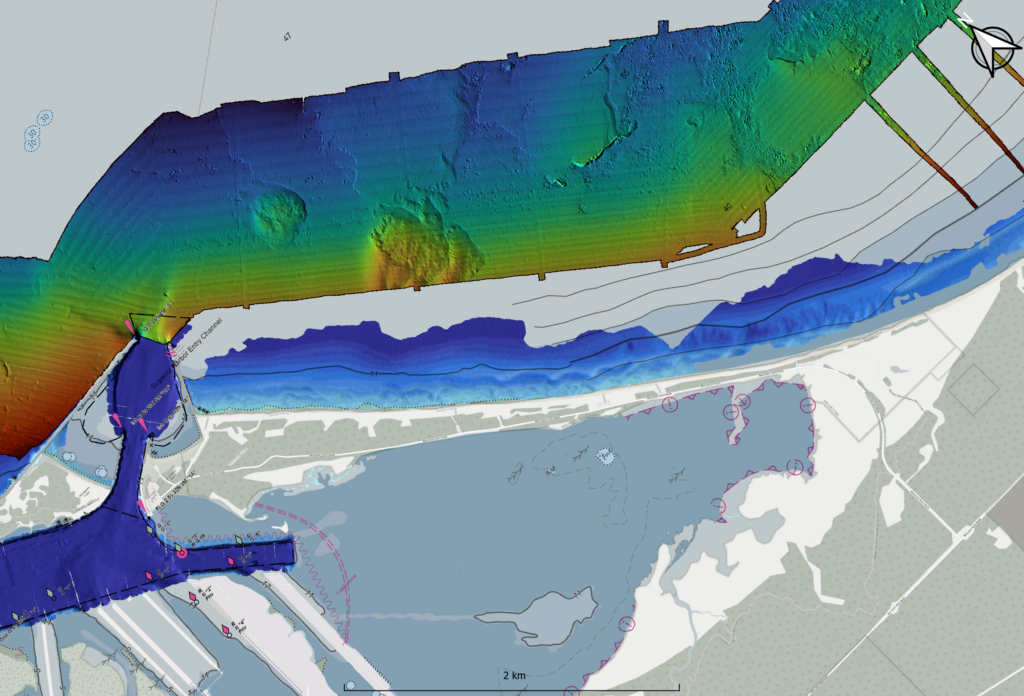
A map of the underwater substrate near the Superior Harbor Entry with Wisconsin Point in the middle, western Lake Superior. Image by Brandon Krumwiede, NOAA.

The next River Talk will be at 6:30 p.m. Wednesday, March 13, with “What Lies Below? Underwater Mapping Near and in the St. Louis River Estuary,” an in-person and virtual presentation by Brandon Krumwiede with the National Oceanic and Atmospheric Administration. His talk will be held at the Lake Superior Estuarium (3 Marina Dr., Superior, Wis.). Refreshments will be provided.

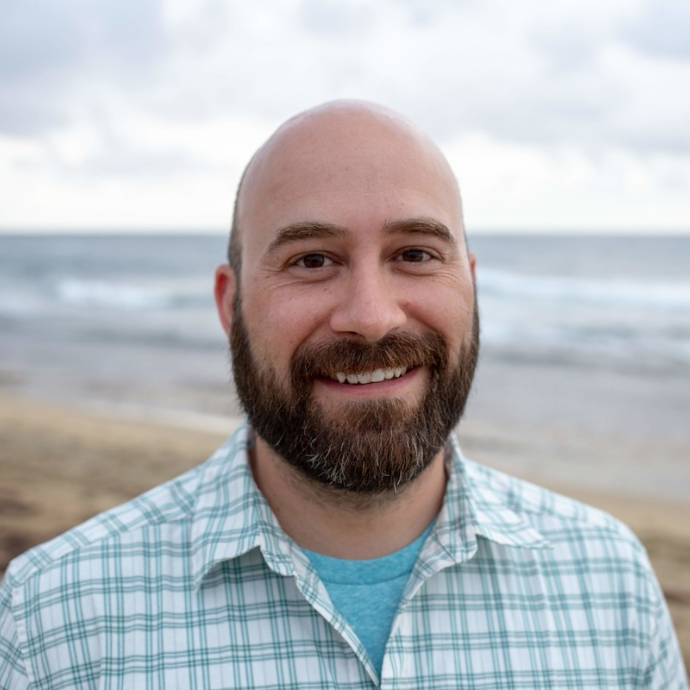
Brandon Krumwiede. Image credit: National Oceanic and Atmospheric Administration

Krumwiede’s work as a Great Lakes geospatial coordinator is varied and interesting. One day, he might analyze satellite data, the next, he might give a public presentation like River Talks. Krumwiede enjoys finding the connections between people, the land and the water. In his talk, Krumwiede will describe current efforts and technologies used to improve understanding of the underwater world near and in the estuary and its importance in coastal natural resources management.

To join by Zoom, please pre-register at this link:
https://uwmadison.zoom.us/meeting/register/tJcvcumrrj8vGNer4dHKwdZpxEoIVief60nR

For accessibility accommodations related to sound, language and translation, mobility or anything else to make engagement possible, please contact Luciana at 715-399-4085 or Luciana.Ranelli@wisc.edu, as soon as possible.

The final River Talk of the season will be held April 10. For more information, visit the River Talks page: go.wisc.edu/4uz720.

The River Talks are sponsored by the Lake Superior National Estuarine Research Reserve and the Wisconsin Sea Grant Program.


The post What Lies Below? Underwater Mapping first appeared on Wisconsin Sea Grant.

Original Article

News Releases | Wisconsin Sea Grant

News Releases | Wisconsin Sea Grant

https://www.seagrant.wisc.edu/news/what-lies-below-underwater-mapping/

Marie Zhuikov

Points North: The Legend of Heike’s Tombs

By Michael Livingston, Interlochen Public Radio

Points North is a biweekly podcast about the land, water and inhabitants of the Great Lakes.

This episode was shared here with permission from Interlochen Public Radio. 

Sometime in the mid-1900s, Henry J.

Read Now at Great Lakes Now.

Original Article

Great Lakes Now

Great Lakes Now

https://www.greatlakesnow.org/2024/03/points-north-the-legend-of-heikes-tombs/

Interlochen Public Radio

Ottawa National Forest creates shaded fuel brakes to help protect communities from wildfires

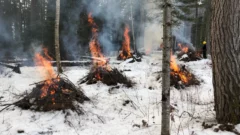
Driving through the Ottawa National Forest north of Land O’Lakes towards Dinner Lake you’ll see snow-covered piles stacked up every few feet in the woods along the road.

Many of the piles are wood debris and branches left over from logging operations on the Ottawa.

Some of the piles have been waiting there for two years as the Forest Service let them dry out.

Read Now at Great Lakes Now.

Original Article

Great Lakes Now

Great Lakes Now

https://www.greatlakesnow.org/2024/03/ottawa-national-forest-creates-shaded-fuel-brakes-to-help-protect-communities-from-wildfires/

WXPR

This week, a group of 30 tribal nations sent a letter to President Joe Biden asking the administration to fulfill its commitment to support tribal sovereignty. In December, the 7th U.S. Circuit Court of Appeals requested federal input in a legal battle regarding Enbridge Line 5, but the Biden administration has yet to respond. Read the full story by the Milwaukee Journal Sentinel.

Original Article

Great Lakes Commission

Great Lakes Commission

https://www.glc.org/dailynews/20240301-sovereignty-letter

Taaja Tucker-Silva

Lake Superior College in Duluth, Minnesota, received a designation from the U.S. Department of Transportation’s Maritime Administration which will provide more opportunities for students who want to work in the maritime industry. Read the full story by KBJR-TV – Duluth, MN.

Original Article

Great Lakes Commission

Great Lakes Commission

https://www.glc.org/dailynews/20240301-maritime-college

Taaja Tucker-Silva

The Canadian federal government is earmarking $50 million for predevelopment work at the Bruce Power site on Lake Huron in Tiverton, Ontario, for what would be the first new nuclear construction project in Canada in 30 years, if approved. Read the full story by The Sun Times (Owen Sound).

Original Article

Great Lakes Commission

Great Lakes Commission

https://www.glc.org/dailynews/20240301-bruce-power

Taaja Tucker-Silva

The nascent cruise industry in Cleveland, Ohio will take a hit this summer as one of the major players in Great Lakes cruising, American Queen Voyages, is going out of business. Last year, its two ships made as many as 30 stops in Cleveland – far more than any other cruise line. Read the full story by The Plain Dealer.

Original Article

Great Lakes Commission

Great Lakes Commission

https://www.glc.org/dailynews/20240301-erie-cruising

Taaja Tucker-Silva

Lake sturgeon have been listed as threatened in Michigan for decades, but now the federal government is considering a petition to list sturgeon as endangered throughout the region. The U.S. Fish and Wildlife Service will decide whether the petition moves forward to public comment by the end of June. Read the full story by WPBN-TV – Traverse City, MI.

Original Article

Great Lakes Commission

Great Lakes Commission

https://www.glc.org/dailynews/20240301-sturgeon-petition

Taaja Tucker-Silva

Starting July 1, service charges for water and wastewater services are going up 3-3.25% in southeast Michigan under a new budget approved by the region’s water authority to make up for cost hikes absorbed in the past. Read the full story by The Detroit News.

Original Article

Great Lakes Commission

Great Lakes Commission

https://www.glc.org/dailynews/20240301-water-charges

Taaja Tucker-Silva

A new documentary, “Bad River,” details the fight of the Bad River Band of Lake Superior Chippewas to shut down the Line 5 oil pipeline that traverses their ancestral land. An interview with the filmmaker dives into the details of the film. Read the full story by Great Lakes Now.

Original Article

Great Lakes Commission

Great Lakes Commission

https://www.glc.org/dailynews/20240301-bad-river

Taaja Tucker-Silva

The Indiana House of Representatives on Tuesday unanimously passed a bill requiring life rings at Lake Michigan entry points. The Indiana Senate unanimously passed the bill earlier this month, meaning it will soon go to the Indiana governor. Read the full story by WBBM-TV – Chicago, IL.

Original Article

Great Lakes Commission

Great Lakes Commission

https://www.glc.org/dailynews/20240301-indiana-life-rings

Taaja Tucker-Silva

Ferries to Put-in-Bay and Middle Bass Island, Ohio, will start on March 2, nearly a month early, due to lack of ice on Lake Erie. The early start allows construction workers to get a head start on work and allows residents and businesses to re-stock supplies ahead of schedule. Read the full story by WJW-TV – Cleveland, OH.

Original Article

Great Lakes Commission

Great Lakes Commission

https://www.glc.org/dailynews/20240301-erie-ferries

Taaja Tucker-Silva

Groundwater is an important source of drinking water in Wisconsin. Image credit: David Nevala

When you turn on a faucet and a stream of cool, clear water pours out, that convenience can mask where the water comes from—underground. It’s there, and in great quantities. In fact, Wisconsin has so much groundwater – 1.2 quadrillion gallons – that if it were on the surface, it would submerge Packer fans in 100 feet of the wet stuff.

Just because groundwater is out of sight, doesn’t mean it’s out of mind – or use. Where does your drinking water come from? For 70 percent of us in the state, it’s thanks to the vast stores of groundwater in aquifers that not only quench our thirst but also fuel the operations of our power plants, breweries, factories and farms. The remaining 30 percent of Wisconsinites get their drinking water from the Great Lakes.

Wisconsin has more than 800,000 private wells and in excess of 11,000 public water systems. In all, Wisconsin’s annual average water withdrawal is 1.91 trillion gallons (some of that comes from surface water, such as lakes Michigan and Superior).

With so much demand and use, groundwater is clearly valuable. And, just as in the case of surface water, we need to be responsible stewards of it. That’s worth noting as the 2024 Groundwater Awareness Week (March 4 – 10) rolls around.

One manifestation of that stewardship is the work done by our sister organization, the University of Wisconsin Water Resources Institute (WRI). WRI runs a statewide research competition through the Groundwater Research Advisory Council (GRAC). As its basic function, the GRAC ensures that Wisconsin citizens have an adequate supply of high-quality groundwater and it funds university scientists to look into current topics such as per- and polyfluoroalkyl (PFAS) in numerous Wisconsin communities and pathogens in drinking water in the Driftless Area.

An example of past impactful GRAC research looked into naturally occurring radium in drinking water serving residents of Waukesha, which led to a binational decision a few years ago to allow that city to secure water from Lake Michigan, even though it lies outside of the Great Lakes Basin.

WRI also offers a robust information transfer program highlighting the work of water scientists through news stories, podcasts and videos. Finally, the WRI supports the Wisconsin Water Library, a resource with more than 30,000 holdings of all types of water-related material free for circulation to any state resident. The library further curates and distributes water-themed learning kits for children in the K-12 educational system.

To access these resources about the veritable tide below your feet—groundwater—and other water information, visit wri.wisc.edu.


The post During Groundwater Awareness Week (March 4-10), consider the tide under your feet first appeared on Wisconsin Sea Grant.

Original Article

Blog | Wisconsin Sea Grant

Blog | Wisconsin Sea Grant

https://www.seagrant.wisc.edu/blog/during-groundwater-awareness-week-march-4-10-consider-the-tide-under-your-feet/

Moira Harrington

Congratulations to Biologist Joel Stokdyk who is a coauthor on a recent paper about antibiotic resistance in well water.

Original Article

Upper Midwest Water Science Center

Upper Midwest Water Science Center

https://www.usgs.gov/centers/upper-midwest-water-science-center/news/quantitative-microbial-risk-assessment-ingestion?utm_source=comms&utm_medium=rss&utm_campaign=news

jvelkoverh@usgs.gov

Indiana conservation groups defend state’s wetlands that lost protection

This article was republished here with permission from Great Lakes Echo.

By Kayla Nelsen, Great Lakes Echo

About 250 acres of Indiana wetlands have been lost in the two years since wetland protections were eased, according to the Hoosier Environmental Council.

Since the 2021 law passed, mitigation requirements have decreased.

Read Now at Great Lakes Now.

Original Article

Great Lakes Now

Great Lakes Now

https://www.greatlakesnow.org/2024/02/indiana-conservation-groups-defend-states-wetlands-that-lost-protection/

Great Lakes Echo

PFAS News Roundup: UW-Stevens Point researchers look to plants to solve PFAS contamination

Keep up with PFAS-related developments in the Great Lakes area with Great Lakes Now’s biweekly headline roundup.   

Click on the headline to read the full story:   

 Indiana  

Critics: Bill cutting protections from PFAS toxic chemicals a step backward for Indiana — IndyStar 

Hoosier lawmakers are advancing a bill to change the definition of PFAS — but only in Indiana.

Read Now at Great Lakes Now.

Original Article

Great Lakes Now

Great Lakes Now

https://www.greatlakesnow.org/2024/02/pfas-news-roundup-uw-stevens-point-researchers-look-to-plants-solve-pfas-contamination/

Kathy Johnson, Great Lakes Now

News

Request for Proposals: Great Lakes Sediment and Nutrient Reduction Program

Ann Arbor, Mich. – The Great Lakes Commission (GLC) today issued a request for proposals (RFP) for the 2024 Great Lakes Sediment and Nutrient Reduction Program (GLSNRP) grant program.

For more than 30 years, grants provided by GLSNRP have enabled local partners to reduce nutrients and sediments entering the Great Lakes. This year’s program will continue to help grantees take action to reduce nutrient loads from agricultural watersheds and eroding shorelines and streambanks in the Great Lakes basin.

Through the program, nonfederal units of government, Indigenous Nations, and incorporated nonprofit organizations are eligible to receive grants for up to $300,000, supporting work over a period of up to four years. Applicants are invited to submit proposals for activities associated with one of the following project types: agricultural nonpoint, or shoreline and streambanks.

A webinar for potential applicants will be held on March 13, 2024, at 2:00 p.m. Eastern. Applications are due at 5:00 p.m. Eastern on April 29, 2024 and will be reviewed by representatives from the eight Great Lakes states, as well as partners at the U.S. Department of Agriculture’s Natural Resource Conservation Service (NRCS) and U.S. Environmental Protection Agency (U.S. EPA). Final decisions on funded projects are anticipated in summer 2024, with work to begin no later than October 1, 2024.

The GLC has managed GLSNRP with funding support through the Great Lakes Restoration Initiative since 2010. Funded projects support progress toward the achievement of GLRI Action Plan objectives and goals. This program is a partnership between NRCS, U.S. EPA, and the Great Lakes states. Please visit www.nutrientreduction.org for more information or contact Connor Roessler at croessler@glc.org.


The Great Lakes Commission, led by chair Mary Mertz, director of the Ohio Department of Natural Resources, is a binational government agency established in 1955 to protect the Great Lakes and the economies and ecosystems they support. Its membership includes leaders from the eight U.S. states and two Canadian provinces in the Great Lakes basin. The GLC recommends policies and practices to balance the use, development, and conservation of the water resources of the Great Lakes and brings the region together to work on issues that no single community, state, province, or nation can tackle alone. Learn more at www.glc.org.

Contact

For media inquiries, please contact Beth Wanamaker, beth@glc.org.

Recent GLC News

Upcoming GLC Events

View GLC Calendar

Archives

Original Article

Great Lakes Commission

Great Lakes Commission

https://www.glc.org/news/rfp-glsnrp-022824

Beth Wanamaker

“Bad River” documentary combines historical treatment of indigenous people with the fight to protect Lake Superior 

For documentary filmmaker Mary Mazzio, the trek from her first film to making her new release, “Bad River,” took 20 years and included a near-epiphany when the Bostonian first viewed a Lake Superior sunrise. Mazzio, an Olympic rower and attorney, has directed 12 significant films, including the Gracie Award winning “A Most Beautiful Thing.”  

“Bad River” will run from March 15-21 in select AMC theaters.

Read Now at Great Lakes Now.

Original Article

Great Lakes Now

Great Lakes Now

https://www.greatlakesnow.org/2024/02/bad-river-documentary-combines-historical-treatment-of-indigenous-people-with-the-fight-to-protect-lake-superior/

Gary Wilson, Great Lakes Now

A coalition between the University of Michigan, Michigan State University and the National Oceanic and Atmospheric Administration has approved nearly $1.7 million in grants to fund six different studies along the Great Lakes. Read the full story by WOOD-TV – Grand Rapids, MI.

Original Article

Great Lakes Commission

Great Lakes Commission

https://www.glc.org/dailynews/20240228-michigan-sea-grant

Theresa Gruninger

New York’s Thousand Islands Land Trust said the lack of ice cover has had major impacts on the local environment, including drastic water temperature fluctuations, changes in animal behavior and shifts in migratory bird patterns. Read the full story by WROC-TV – Rochester, NY.

Original Article

Great Lakes Commission

Great Lakes Commission

https://www.glc.org/dailynews/20240228-low-ice

Theresa Gruninger

During the Anishinabek Nation Councils Panel at the Anishinabek Nation’s 8th Land and Resources Forum, Eshki-niigijig Advisory Council member Lance Copegog of Beausoleil First Nation discussed what is being done to protect the Great Lakes, including work on a program where bodies of water have the recognition of personhood. Read the full story by Anishinabek News.

Original Article

Great Lakes Commission

Great Lakes Commission

https://www.glc.org/dailynews/20240228-great-lakes-personhood

Theresa Gruninger

It may feel like ice fishing season just started, but Ontario Fish and Wildlife is reminding residents that ice fishing huts need to be taken down by specific dates in March. Anglers are also advised to closely monitor ice conditions. Read the full story by York Region News.

Original Article

Great Lakes Commission

Great Lakes Commission

https://www.glc.org/dailynews/20240228-ice-huts-removal

Theresa Gruninger

A much-delayed and controversial plan to build a gas-fired power plant in Superior, Wisconsin, now faces opposition from local leaders who previously supported it. The $700 million project is contentious for its location — bordering a Lake Superior estuary and an Anishinaabe mass grave — and for its potential harm to the environment, property values and health of area residents. Read the full story by the Star Tribune.

Original Article

Great Lakes Commission

Great Lakes Commission

https://www.glc.org/dailynews/20240228-power-plant

Theresa Gruninger

Ice coverage on Lake Superior is at about 3%, making it the lowest recorded coverage since the federal government began measuring it in 1973. The Superior Watershed Partnership says the lack of ice has possible impacts on fish populations come spring, specifically for hatchlings that will not be protected from powerful waves that can wash eggs away. Read the full story by WLUC-TV – Marquette, MI.

Original Article

Great Lakes Commission

Great Lakes Commission

https://www.glc.org/dailynews/20240228-fish-populations

Theresa Gruninger

Earlier this month, Wisconsin Legislature’s budget-writing committee shot down about $1 million in grants under the state’s stewardship program for a boat launch project in the city of Ashland. That’s despite the committee previously signing off on a similar amount of grant funding for another northern Wisconsin project. Read the full story by Wisconsin Public Radio.

Original Article

Great Lakes Commission

Great Lakes Commission

https://www.glc.org/dailynews/20240228-wi-boating-grants

Theresa Gruninger