Governor Gretchen Whitmer had pledged to crack down on bottled water companies taking water at the same time Flint, Michigan, faced a water crisis. Six years later and in her second term, little has changed. Read the full story by ProPublica.

Original Article

Great Lakes Commission

Great Lakes Commission

https://www.glc.org/dailynews/20240607-bottled-water
Taaja Tucker-Silva

Scientists at University of Toledo’s (UToledo) Lake Erie Center have studied lake ecology for years, but after the 2014 water crisis, the center has added new goals for water safety: protecting the water supply and understanding the toxins harmful algae produce. Read the full story by WTOL-TV – Toledo, OH.

Original Article

Great Lakes Commission

Great Lakes Commission

https://www.glc.org/dailynews/20240607-utoledo-science

Taaja Tucker-Silva

Fish fly season has begun, bringing thousands, if not millions, of the winged insects to swarm the backyards, screen doors and car windows of metro Detroiters. Considered by many to be a messy inconvenience, the mayfly swarms are an indicator of nearby freshwater ecosystems’ health. Read the full story by The Detroit Free Press.

Original Article

Great Lakes Commission

Great Lakes Commission

https://www.glc.org/dailynews/20240607-fish-flies

Taaja Tucker-Silva

Global warming is fueling the spread of the nonnative peach blossom jellyfish in the Great Lakes region. Researchers urge the public to submit sightings to various online databases so that their changing distribution can be understood. Read the full story by The Mining Journal.

Original Article

Great Lakes Commission

Great Lakes Commission

https://www.glc.org/dailynews/20240607-invasive-jellyfish

Taaja Tucker-Silva

Health officials recently closed nine Michigan beaches due to high E. coli levels. Of these, eight beaches are back open and four additional beaches are either closed or under contamination advisories. Swimmers should stay out of water infested with high levels of E. coli or risk getting sick. Read the full story by Bridge Michigan.

Original Article

Great Lakes Commission

Great Lakes Commission

https://www.glc.org/dailynews/20240607-ecoli-levels

Taaja Tucker-Silva

A U.S. Fish and Wildlife assessment crew will conduct a sea lamprey assessment project at the Long Lake outlet in Alpena County, Michigan, this month. The study will estimate the abundance of sea lampreys and determine if there is a need for population control operations. Read the full story by The Alpena News.

Original Article

Great Lakes Commission

Great Lakes Commission

https://www.glc.org/dailynews/20240607-lamprey-study

Taaja Tucker-Silva

‘None of us saw this coming’: Michigan confronts bird flu in cows

By Izzy Ross, Interlochen Public Radio

This coverage is made possible through a partnership with IPR and Grist, a nonprofit independent media organization dedicated to telling stories of climate solutions and a just future.

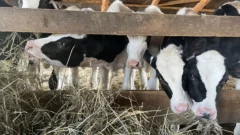
Laurie Stanek shovels hay in front of a group of young, black and white Holstein cows.

Read Now at Great Lakes Now.

Original Article

Great Lakes Now

Great Lakes Now

https://www.greatlakesnow.org/2024/06/none-of-us-saw-this-coming-michigan-confronts-bird-flu-in-cows/

Interlochen Public Radio

Michigan Bottlers Still Get Free Water, Despite Governor’s Tough Talk

By Anna Clark, photography by Sarahbeth Maney

This story was originally published by ProPublica.

ProPublica is a Pulitzer Prize-winning investigative newsroom. Sign up for The Big Story newsletter to receive stories like this one in your inbox.

When Gretchen Whitmer campaigned for Michigan governor in 2018, she took aim at Michigan’s bottled water industry — and the state policy that gave it unfettered access to free water.

Read Now at Great Lakes Now.

Original Article

Great Lakes Now

Great Lakes Now

https://www.greatlakesnow.org/2024/06/michigan-bottlers-still-get-free-water-despite-governors-tough-talk/

ProPublica

Healing Our Waters-Great Lakes Coalition

Contact: Lindsey Bacigal, BacigalL@nwf.org, (734) 887-7113
Jordan Lubetkin, Lubetkin@nwf.org, (734) 904-1589

Great Lakes Restoration Initiative Grants Documenting Continued Improvements

ANN ARBOR, MICH. (June 6, 2024)—A recent audit by the U.S. Environmental Protection Agency Office of Inspector General found that Great Lakes Restoration Initiative (GLRI) grants supported the EPA’s program goals for the Great Lakes, overall, but could benefit from improved monitoring and reporting.

The Healing Our Waters-Great Lakes Coalition supports continued auditing of federal programs, as they are essential to continue to improve successful programs like the GLRI. Overall, the report found no gross financial mismanagement, rather, recommendations primarily focused on issues with reporting and training structures. These are problems across government programs due to insufficient funding for staff capacity and training, further showcasing the need for continued - and increased - funding for core functions of federal programs like the GLRI. 

The report also emphasized the need for EPA to better track and report how projects help contribute to meeting the GLRI’s environmental justice goals. The Coalition, along with other organizations in the region, has been advocating for a stronger emphasis on environmental injustice within the GLRI Action Plans, most recently within the drafting of Action Plan IV, which is set to come out this fall.

“The report affirms that the EPA is running a successful program. Like with anything, it can do better,” said Laura Rubin, director of the Healing Our Waters-Great Lakes Coalition. “Over the last several years, the EPA has committed itself to targeting the region’s biggest environmental challenges and prioritizing areas hit hardest by pollution. We are glad to see this reflected in the recently released draft of the Great Lakes Action Plan IV, but we need to do more. We will keep advocating for EPA and the other federal agencies to make a strong program even stronger so that it can help the people and communities most impacted by environmental harm.”

Since 2004, the Healing Our Waters-Great Lakes Coalition has been harnessing the collective power of more than 180 groups representing millions of people, whose common goal is to restore and protect the Great Lakes. Learn more at HealthyLakes.org or follow us on Twitter, Facebook, Bluesky, Mastodon, and Threads @HealthyLakes.

Original Article

Latest Updates - Healthy Lakes

Latest Updates - Healthy Lakes

https://www.healthylakes.org/latest-updates/great-lakes-restoration-initiative-grants-documenting-continued-improvements

Lindsey Bacigal

Indiana attorney general fights EPA rule that would reduce pollution on Indy’s west side

By Enrique Saenz, Mirror Indy

Mirror Indy is a part of Free Press Indiana, a nonprofit news organization dedicated to ensuring all Hoosiers have access to the news and information they need.

A controversial plan to build a 200-acre retail development along the Indianapolis border with Greenwood is on hold after a state agency denied the developer’s permit application.

Read Now at Great Lakes Now.

Original Article

Great Lakes Now

Great Lakes Now

https://www.greatlakesnow.org/2024/06/indiana-attorney-general-fights-epa-rule-that-would-reduce-pollution-indys-west-side/

Mirror Indy

At 1012 PM CDT, Doppler radar was tracking strong thunderstorms along a line extending from near Oconto to near Clintonville to 7 miles northwest of Westfield. Movement was east at 35 mph. HAZARD...Wind gusts up to 40 mph. SOURCE...Radar indicated. IMPACT...Gusty winds could knock down tree limbs and blow around unsecured objects. Locations impacted include... Green Bay, Appleton, Oshkosh, Shawano, Sturgeon Bay, Waupaca, Wautoma, Bay Shore Park, Menasha, and Kaukauna.

Original Article

Current watches, warnings, and advisories for Brown County (WIC009) WI

Current watches, warnings, and advisories for Brown County (WIC009) WI

https://api.weather.gov/alerts/urn:oid:2.49.0.1.840.0.d136e33d904625dc333f298dca990585e602ddde.001.1.cap

NWS

At 608 PM CDT, Doppler radar was tracking gusty showers along a line extending from near Green Bay to 7 miles east of Black Creek to near Southern Lake Winnebago. Movement was east at 50 mph. HAZARD...Wind gusts up to 50 mph. SOURCE...Radar indicated. IMPACT...Gusty winds could knock down tree limbs and blow around unsecured objects. Strong thunderstorms will be near... Green Bay, Kaukauna, Little Chute, Chilton, High Cliff State Park, Bellevue Town, Northern Lake Winnebago, and Central Lake Winnebago around 615 PM CDT. Bay Shore Park and Brillion around 620 PM CDT. Luxemburg around 625 PM CDT. Denmark, Valders, and St. Nazianz around 635 PM CDT. Manitowoc around 645 PM CDT. Other locations impacted by these storms include Curran, Wayside, Rose Lawn, Freedom, Newtonberg, Howard, St John, Shirley, Potter, and Lincoln.

Original Article

Current watches, warnings, and advisories for Brown County (WIC009) WI

Current watches, warnings, and advisories for Brown County (WIC009) WI

https://api.weather.gov/alerts/urn:oid:2.49.0.1.840.0.947361886fa306755eade3af62c1ef82cc19b1d2.001.1.cap

NWS

Drugs, microplastics and forever chemicals: new contaminants emerge in the Great Lakes

By Fatima Syed, The Narwhal

Rania Hamza calls it “a coincidence” that an engineer, a biologist and a lawyer at the same Toronto university were independently worrying about the harmful substances and chemicals being flushed down Ontario’s toilets. Three years ago, after figuring out they were all interested in the same thing, the unlikely trio came together to highlight a major gap in policy.

Read Now at Great Lakes Now.

Original Article

Great Lakes Now

Great Lakes Now

https://www.greatlakesnow.org/2024/06/drugs-microplastics-and-forever-chemicals-new-contaminants-emerge-in-the-great-lakes/

The Narwhal

More than 31,000 Atlantic salmon raised in a Michigan fish hatchery had to be killed after failing to recover from a bacterial kidney disease, officials said Tuesday. The unhealthy fish would have posed a risk to other fish if they had been released into Michigan waters. Read the full story by the Associated Press.

Original Article

Great Lakes Commission

Great Lakes Commission

https://www.glc.org/dailynews/20240605-slamon-disease

Theresa Gruninger

The federal government’s premiere Great Lakes restoration program, the Great Lakes Restoration Initiative, has improved the health of rivers and lakes across the region, but has sometimes overlooked environmental justice goals, according to a new audit from a federal watchdog. Read the full story by Bridge Michigan.

Original Article

Great Lakes Commission

Great Lakes Commission

https://www.glc.org/dailynews/20240605-glri-audit

Theresa Gruninger

This year’s Michigan Great Lakes and Fresh Water Week, which will take place June 1 – June 9, will focus on events and resources related to physical, mental, and spiritual wellness as a result of connecting with water, as well as continuing to dive into enjoyment, recreation, appreciation, stewardship, and protection of the Great Lakes, their environment, and their communities. Read the full story by WHMI – Howell, MI.

Original Article

Great Lakes Commission

Great Lakes Commission

https://www.glc.org/dailynews/20240605-fresh-water-week

Theresa Gruninger

Great Lakes Moment: Birds of a feather flock together

Great Lakes Moment is a monthly column written by Great Lakes Now Contributor John Hartig. Publishing the author’s views and assertions does not represent endorsement by Great Lakes Now or Detroit PBS.

It was mid-morning on a beautiful early May day. It was clear and sunny and the white puffy clouds were a perfect contrast to the pale blue waters of the lower Detroit River.

Read Now at Great Lakes Now.

Original Article

Great Lakes Now

Great Lakes Now

https://www.greatlakesnow.org/2024/06/great-lakes-moment-birds-of-a-feather-flock-together/

John Hartig

Researchers at the University of Michigan have received a $6.5 million grant to serve as a hub for studies investigating how climate change is impact on the harmful algal blooms on the Great Lakes and the overall impact on human health. Read the full story by WOOD-TV – Grand Rapids, MI.

Original Article

Great Lakes Commission

Great Lakes Commission

https://www.glc.org/dailynews/20240605-algal-blooms

Theresa Gruninger

In Ohio, a city of Avon Lake council member presented at a recent meeting regarding stormwater runoff and allegations of heavy metals leaking into Lake Erie from the ongoing demolition of the Avon Lake Power Plant. Read the full story by the Sun Sentinel.

Original Article

Great Lakes Commission

Great Lakes Commission

https://www.glc.org/dailynews/20240605-avon-lake-power-plant

Theresa Gruninger

On Tuesday, hundreds of Wisconsin residents congregated for a multi-session public hearing on the controversial Enbridge Line 5 pipeline project. The hearing focused on the proposed construction of a new segment of the pipeline, some 40 miles of which would be constructed around and upstream of the Bad River Reservation. Read the full story by the Wisconsin Examiner.

Original Article

Great Lakes Commission

Great Lakes Commission

https://www.glc.org/dailynews/20240605-line-5

Theresa Gruninger

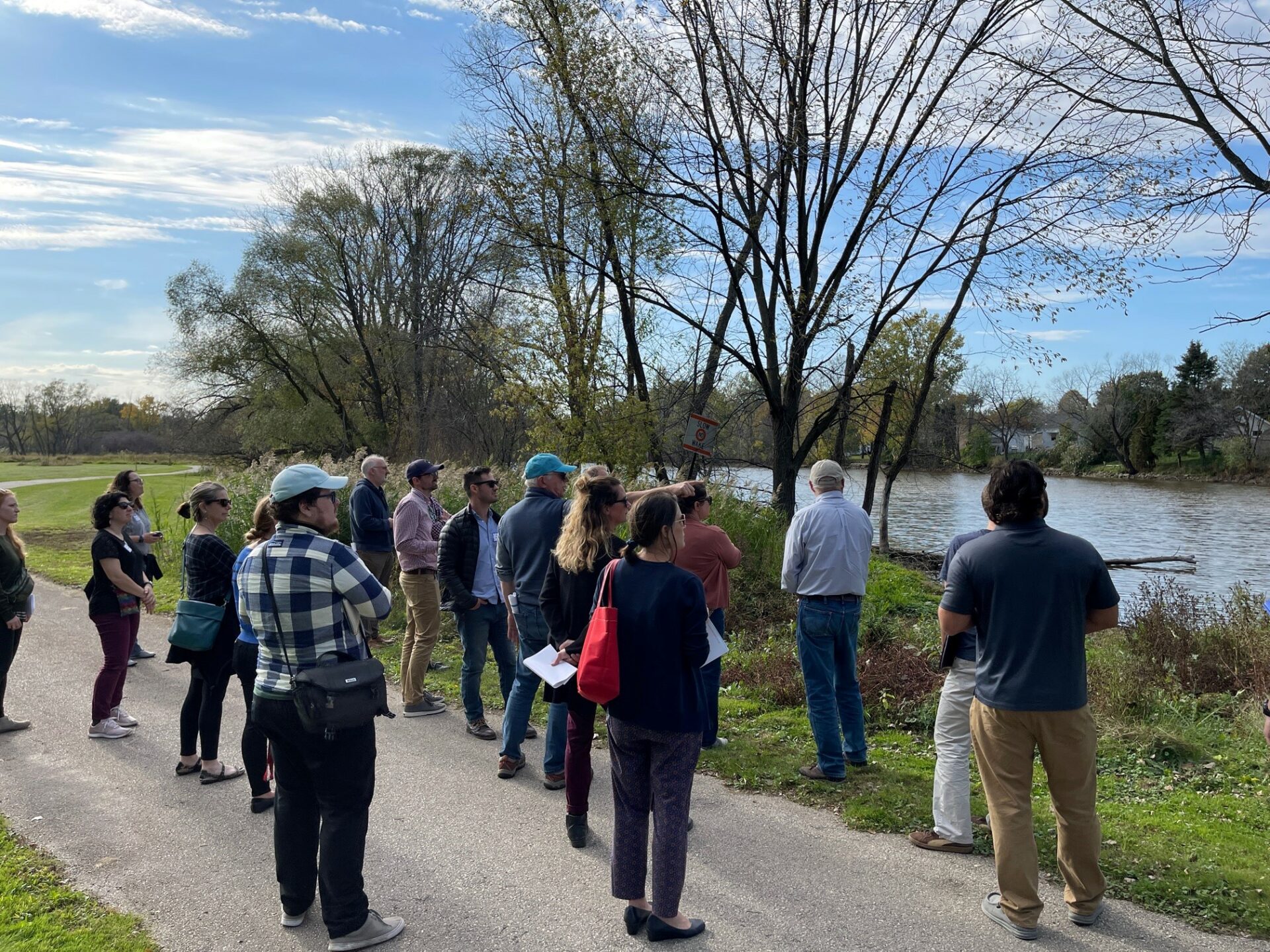
A group of people stand on a paved path alongside the East River in Green Bay near the site of worst flooding in 2019

A group surveys a site along the East River in Green Bay that was hardest hit by flooding in 2019. Photo: Lamont Smith, The Nature Conservancy

Since 2020, the East River Collaborative has demonstrated that it takes a village—and coordination between municipalities, state and federal government, nonprofits and universities—to improve water quality and flood resilience at the watershed level.  

“It’s very challenging for municipalities to work across boundaries with other municipalities,” said Julia Noordyk, water quality and coastal communities outreach specialist with Wisconsin Sea Grant. Noordyk works alongside partners at The Nature Conservancy and NEW Water (the brand of the Green Bay Metropolitan Sewerage District) on a core team that provides coordination and technical assistance to communities in the East River watershed. 

“Every community is extremely different, and we’re not there to tell them what to do,” said Noordyk. Municipalities in the watershed span the rural-urban spectrum and vary in population, budget size and capacity.  

“We’re there to listen and to figure out how to help them achieve flood resiliency based on what their community’s goals are.” 

The 40-mile-long East River spans three counties in northeastern Wisconsin—Calumet, Manitowoc and Brown—and passes through agricultural, suburban and urban landscapes before it meets the Fox River and empties into the Bay of Green Bay. Historic flooding in March 2019 resulted in 50 houses being condemned and spurred the creation of the East River Collaborative the following year. 

Since that time, the collaborative has worked with communities to identify shared goals across the watershed and developed maps and models to visualize flooding impacts. Now, with a new wave of grant funding, the collaborative is moving to the next phase: developing an implementation plan to identify and prioritize new projects. 

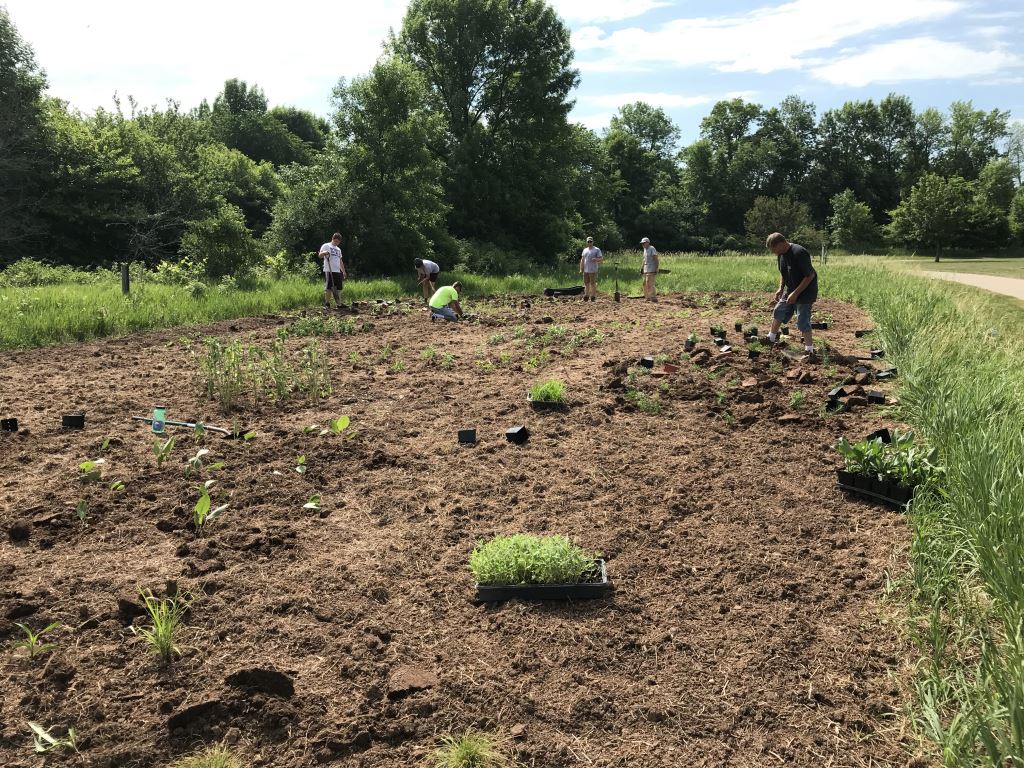
People plant pollinator plants along the East River

Volunteers replace turf grass with native plants along the East River in Ledgeview. Photo credit: Stephanie Schlag, town of Ledgeview

To help communities make these decisions, the East River Collaborative team is building a new tool to evaluate how well different nature-based solutions capture, slow and clean stormwater on the landscape. Nature-based solutions include practices like planting native plants, using rain barrels, building agricultural runoff storage systems and stabilizing streambanks.

Even though the tool is still in the planning stages, communities aren’t waiting to get local projects off the ground.  

At the fourth annual East River Collaborative Winter Forum in February, partners gathered virtually to share their work restoring wetlands, removing invasive species, planting pollinator plants and designing canoe/kayak launches for the East River water trail—among many other projects.  

“[The implementation plan] has really been a catalyst for other communities to think about this and start moving forward on resiliency themselves,” said Noordyk. 

Another goal of the implementation phase is to build relationships with underserved residents who are likely to experience flooding and need the most support to recover from it due to factors like income, language and age.

A federal grant from NOAA Digital Coast will allow partners to connect with and learn from other municipalities that have worked with underserved communities on similar projects. The team is also pursuing funding for a survey that will gather residents’ feedback on strategies to prepare for and reduce flooding.

Adam Bechle, Wisconsin Sea Grant coastal engineering specialist and member of the East River Collaborative core team, is particularly excited to work with partners on establishing a flood warning system for the river. 

“We worked with the Army Corps of Engineers and the National Weather Service and other partners to figure out what needs to happen so that the Weather Service can start putting together a forecast model,” said Bechle. 

Both he and Noordyk said it’s been encouraging to see communities’ sustained interest in working together on these issues, even when flooding isn’t an imminent threat.  

“We still have the same number of people showing up to meetings as when we kicked off,” said Bechle.

The East River Collaborative has been funded by the Wisconsin Coastal Management Program, National Oceanic and Atmospheric Administration, The Fund for Lake Michigan and National Fish and Wildlife Foundation. To learn more, visit the East River Collaborative’s website.

The post Northeastern Wisconsin communities build flood resilience at the local and watershed level first appeared on Wisconsin Sea Grant.

Original Article

News Releases | Wisconsin Sea Grant

News Releases | Wisconsin Sea Grant

https://www.seagrant.wisc.edu/news/northeastern-wisconsin-communities-build-flood-resilience-at-the-local-and-watershed-level/

Jenna Mertz

Job Opportunities

Position Available: Ecologist

Application deadline: June 30, 2024  |  Download PDF

Description

The Great Lakes Commission (GLC) and U.S. Geological Survey (USGS) Great Lakes Science Center (GLSC) are seeking an experienced ecologist with conservation and restoration expertise for a shared position between the two agencies. This position will work under a joint GLC and USGS GLSC team to advance specific outcomes in GLC’s Action Plan for a Resilient Great Lakes Basin (Action Plan) and related efforts within GLSC’s Restoration and Conservation (ReCon) Science Branch. Resilience is a priority for the GLC and a key goal of its strategic plan. The GLC and its partners developed the Action Plan to provide a foundation for regional coordination around climate resilience. This position is designed to support coastal ecosystem resiliency efforts and foster the development of strategic tools and practical on-the-ground actions. The work will involve close coordination with a variety of federal, state, and university partners with vested interest in these topics.

Responsibilities

The ecologist will primarily be responsible for developing a science-based framework for understanding how to build healthy and resilient coastal ecosystems that can adapt to changing conditions and climate-related stressors. This work will give special attention to elucidating economic, ecological, and social return on investment of restoration and conservation activities within nearshore and coastal ecosystems; providing rationale for when and where to use nature-based solutions to accomplish climate resilience; valuing ecosystem services; and/or bridging with indigenous knowledge systems where appropriate. [65%]

Other responsibilities include:

  • Support GLC managers in the planning and execution of meetings and workshops on climate resilience and adaptation to promote co-development of priorities and products, identify information gaps, and transfer knowledge and technology among federal, Indigenous, state, provincial, and local partners in the public and private sectors. [15%]
  • Inform the development of a basin-wide system to understand effectiveness of coastal resilience and adaptation approaches and track progress. [10%]
  • Inform GLSC’s science priorities and portfolio development about climate adaptation and resilience and assist in integrating climate adaptation science throughout the Restoration and Conservation Science (ReCon) branch. [5%]
  • Coordinate with other coastal resilience and adaptation efforts, such as the Great Lakes Coastal Assembly, U.S. Army Corps of Engineers Great Lakes Coastal Resiliency Study, and programs and plans within the U.S. Fish and Wildlife Service and National Park Service. [5%]

Qualifications

Ideal candidates will have at least a Master of Science degree in a related field and four or more years applied academic or professional experience addressing climate related scientific issues. Additional qualifications include:

  • Demonstrated knowledge and expertise related to restoration ecology and/or climate resilience, adaptation science and decision science, with a strong quantitative background.
  • Understanding of theoretical climate adaptation approaches, such as the Resist-Accept-Direct framework.
  • Understanding of the integration of science in decision-making and adaptive management.
  • Demonstrated experience applying theoretical/technical scientific concepts to practical natural resource management decision-making.
  • Strong interpersonal skills and demonstrated ability to work effectively with academic colleagues and stakeholders from diverse backgrounds.
  • Excellent written and verbal communications skills and the ability to communicate complex information to diverse audiences.
  • Excellent organizational and time management skills.
  • Experience using various communications platforms and tools to collaborate and convey findings.
  • Ability to work independently and as part of internal and external teams.
  • Self-motivated and organized with strong attention to detail.

Appointment

This is a full-time, two-year term position. The salary for this position is $70,000. Benefits include paid time off, flexible schedule, and medical, dental, and vision insurance. Desired start date: August 1, 2024.

This position is located at the USGS GLSC Lake Michigan Ecological Research Station (LMERS) in Chesterton, Indiana. LMERS is located within, and shares a close relationship with, the Indiana Dunes National Park. Some telework may be considered. This position requires periodic travel between Chesterton, Indiana, and Ann Arbor, Michigan, and occasional travel to meetings and workshops around the Great Lakes region.

Application Process

Applicants must submit a cover letter and resume stating their interest in and qualifications for the position in a single PDF emailed to vacancy@glc.org. Please use the subject line “Ecologist.” All required items must be provided for an application to receive consideration. No phone calls, please.

About the Great Lakes Commission

The Great Lakes Commission is a binational government agency established in 1955 to protect the Great Lakes and the economies and ecosystems they support. Its membership includes leaders from the eight U.S. states and two Canadian provinces in the Great Lakes basin. The GLC recommends policies and practices to balance the use, development, and conservation of the water resources of the Great Lakes and brings the region together to work on issues that no single community, state, province, or nation can tackle alone. Learn more at www.glc.org.

About the USGS Great Lakes Science Center

The USGS Great Lakes Science Center exists to provide scientific information for restoring, enhancing, managing and protecting living resources and their habitats in the Great Lakes region. The GLSC is headquartered in Ann Arbor, Michigan, and has biological stations and research vessels located across the Great Lakes basin. The Restoration and Conservation Science Branch maintains scientific expertise in coastal wetland restoration; wetland and terrestrial plant ecology; invasive species biology and adaptive management approaches; landscape ecology, assessment, and conservation design; microbiological processes and eDNA; terrestrial coastal migration; and harmful and nuisance algal blooms.

Equal Opportunity Employer
The Great Lakes Commission strives to create an inclusive, diverse and non-discriminatory workplace. The Great Lakes Commission is an equal opportunity employer; the Great Lakes Commission complies with applicable federal, state and local laws prohibiting discrimination. It is Great Lakes Commission policy that no person shall be discriminated against, as an employee or applicant for employment, because of race, color, religion, age, sex, national origin, disability status, genetics, protected veteran status, marital status, political affiliation, sexual orientation, gender identity or expression, or any other characteristic protected by federal, state or local laws.

The United States government does not discriminate in employment on the basis of race, color, religion, sex (including pregnancy and gender identity), national origin, political affiliation, sexual orientation, marital status, disability, genetic information, age, membership in an employee organization, retaliation, parental status, military service or other non-merit factor.


Contact

For media inquiries, please contact Beth Wanamaker, beth@glc.org.

Recent GLC News

Upcoming GLC Events

View GLC Calendar

Archives

Original Article

Great Lakes Commission

Great Lakes Commission

https://www.glc.org/news/position-available-ecologist-2024

Laura Andrews

In an innovative approach to addressing uranium mining's impact in the Grand Canyon region, the U.S. Geological Survey has released a visually stunning fact sheet that combines the power of art and science.

Original Article

Upper Midwest Water Science Center

Upper Midwest Water Science Center

https://www.usgs.gov/news/featured-story/art-illuminates-grand-canyon-exploring-environmental-puzzle?utm_source=comms&utm_medium=rss&utm_campaign=news

jlavista@usgs.gov

Wisconsin’s Jane Elder chronicles personal and professional Great Lake’s journey in new book

For Madison’s Jane Elder, the timing was optimal when she launched a career in environmental activism. She was coming of age and interested in the environment in the early 1970s. At the same time, interest in the environment was “blossoming” as the U.S. Environmental Protection Agency was established and the Clean Water Act became federal law.

Read Now at Great Lakes Now.

Original Article

Great Lakes Now

Great Lakes Now

https://www.greatlakesnow.org/2024/06/wisconsins-jane-elder-chronicles-personal-and-professional-great-lakes-journey-in-new-book/

Gary Wilson, Great Lakes Now

At 156 PM CDT, Doppler radar was tracking strong thunderstorms along a line extending from near Bellevue Town to 7 miles northeast of Brillion to near Valders to St Anna. Movement was east at 35 mph. HAZARD...Wind gusts up to 40 mph. SOURCE...Radar indicated. IMPACT...Gusty winds could knock down tree limbs and blow around unsecured objects. Locations impacted include... Green Bay, Manitowoc, Kewaunee, Algoma, Luxemburg, Denmark, Cleveland, Valders, St. Nazianz, and Two Creeks.

Original Article

Current watches, warnings, and advisories for Brown County (WIC009) WI

Current watches, warnings, and advisories for Brown County (WIC009) WI

https://api.weather.gov/alerts/urn:oid:2.49.0.1.840.0.3f4d1c9eb5fc1c7d5bc422003c3d6e1ccff006f6.001.1.cap

NWS

The United States Coast Guard says hundreds of gallons of diesel fuel spilled into Lake Superior on Wednesday morning, May 29. The Coast Guard estimates the quantity of the spill to be around 300 gallons, and it is now contained. The clean-up effort is still in effect as of May 30, and it’s unclear how long it will take. Read the full story by WCCO-TV – Minneapolis, MN.

Original Article

Great Lakes Commission

Great Lakes Commission

https://www.glc.org/dailynews/20240603-oil-spill

James Polidori

Within the Great Lakes watershed there are 23 nuclear power plants, four sites for mining uranium, six for uranium processing and 12 places where nuclear waste is stored. An interactive map shows all the nuclear power operations within the Great Lakes watershed. Read the full story by MLive.

Original Article

Great Lakes Commission

Great Lakes Commission

https://www.glc.org/dailynews/20240603-nuclear-sites

James Polidori

A piping plover egg has been spotted at Montrose Beach in Chicago and could hatch within the next month. The egg is a culmination of yearslong efforts by nature groups to boost the Great Lakes piping plover population, which has been listed as federally endangered since 1986. Read the full story by WTTW-TV – Chicago, IL.

Original Article

Great Lakes Commission

Great Lakes Commission

https://www.glc.org/dailynews/20240603-plover-egg-spotting

James Polidori

In 2019, Ohio Governor Mike DeWine started a program called H2Ohio to encourage farmers to change the way they manage farm runoff to slow down the entry of phosphates into the Maumee River watershed. Currently, 2,600 producers have enrolled in the H2Ohio program, covering 1.8 million farm acres working to prevent heavy rain from washing out fertilizer and soil. Read the full story by WTOL-TV – Toledo, OH.

Original Article

Great Lakes Commission

Great Lakes Commission

https://www.glc.org/dailynews/20240603-nutrient-pollution-program

James Polidori

Michigan’s Great Lakes and Fresh Water Week is back, running from June 1 to June 9 to celebrate the connection between water and wellness in the state. Free fishing weekend will take place from June 8 to June 9, and the Library of the Great Lakes is offering two free books through their inaugural Great Lakes, Great Read program. Read the full story by WOOD-TV – Grand Rapids, MI.

Original Article

Great Lakes Commission

Great Lakes Commission

https://www.glc.org/dailynews/20240603-freshwater-week

James Polidori

The city of Highland Park, Michigan, has been grappling with a water debt crisis for years, owing millions of dollars to the Great Lakes Water Authority (GLWA). In October 2023, a tentative deal was reached between GLWA and Highland Park to end the dispute, but the agreement is still unsettled and needs approval from all parties involved. Read the full story by WDIV-TV – Detroit, MI.

Original Article

Great Lakes Commission

Great Lakes Commission

https://www.glc.org/dailynews/20240603-water-debt

James Polidori

Great Lakes Tribes are reviving the population of wild rice, or manoomin, an ecologically important wetland species, after two centuries of decline. Today, rising temperatures threaten the rice’s future because the seeds are supposed to grow while submerged in snow and ice, but the lack of snow coverage has made that difficult. Read the full story by The Cool Down.

Original Article

Great Lakes Commission

Great Lakes Commission

https://www.glc.org/dailynews/20240603-manoomin-restoration

James Polidori

In Oneida County, Wisconsin, Crescent Lake has an adequate adult population of walleye, but stakeholders are concerned about the lack of juvenile fish. While reproduction typically fluctuates, with a strong generation every three to four years, reproduction from those adult walleyes within the lake hasn’t been recorded for the last six years. Read the full story by WXPR – Rhinelander, WI.

Original Article

Great Lakes Commission

Great Lakes Commission

https://www.glc.org/dailynews/20240603-walleye-reproduction

James Polidori

To commemorate the 50th anniversary of the sinking of the Edmund Fitzgerald in 2025, open water swimmers will have an opportunity to participate in a 17-stage, 411-mile relay swim from Lake Superior, where the shipwreck lies, to Detroit, the ship’s intended destination. Read the full story by WSTM-TV – Syracuse, NY.

Original Article

Great Lakes Commission

Great Lakes Commission

https://www.glc.org/dailynews/20240603-shipwreck-journey

James Polidori

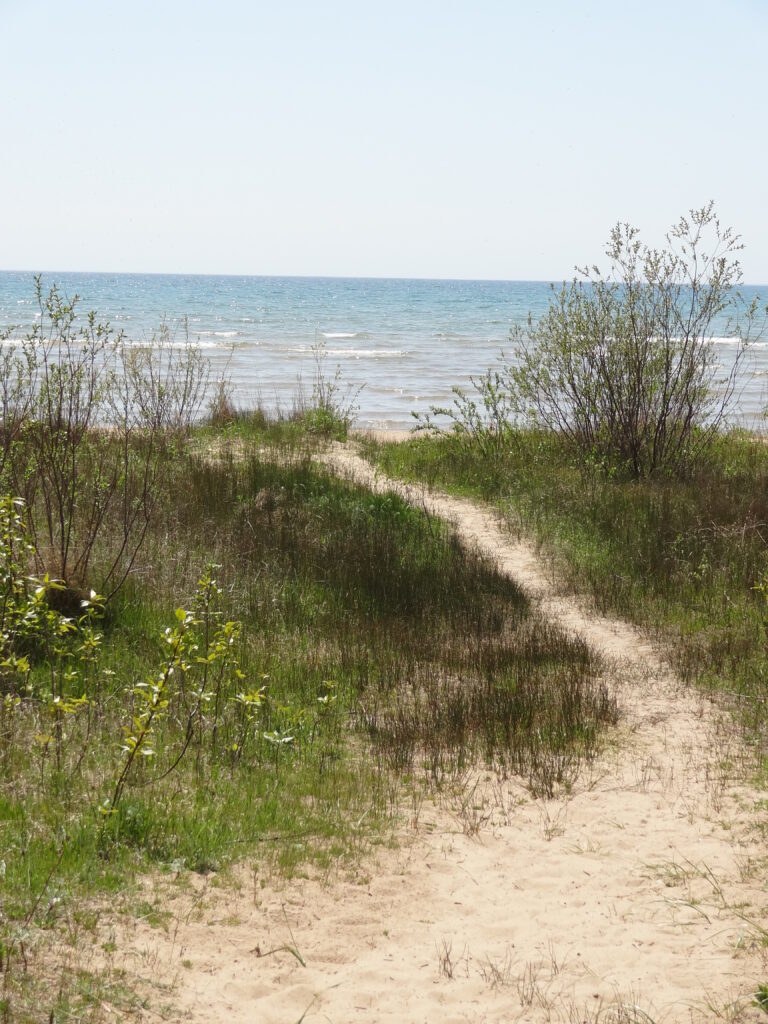
A path to a beach on northern Lake Michigan. Image credit: Marie Zhuikov, Wisconsin Sea Grant

With the unusually warm winter this year, swimsuit season might be approaching earlier than previous ones. With recreational beach season comes the scientific testing to ensure beaches are safe for the public. An estimated 8 million people visit Great Lakes beaches every year. Unfortunately, because traditional testing methods take 18-24 hours to process, information used to evaluate water quality and communicate health risks is generally a day old, meaning swimmers might be recreating when conditions aren’t safe. On the other hand, swimmers could be kept out of the water at times when no problems exist.

An analysis published in 2014* determined that nearly one in five decisions to post or remove swim advisories were made in error in the Great Lakes (between 2008 and 2010), including nearly 3,000 unnecessary advisories/closures and at least 4,500 missed advisories or closures.

A free Windows software developed by the U.S. Environmental Protection Agency named Virtual Beach addresses these shortcomings by providing beach managers with timely and cost-effective alternatives to traditional monitoring. It can help them to decide whether to issue (or lift) swim advisories/closures on a given day.

By using the software to build a model, users can predict water quality conditions at any time, on both sampled and non-sampled beaches that are monitored on the Great Lakes Coasts.

With a grant from the Wisconsin Coastal Management Program, Wisconsin Sea Grant has updated video tutorials that accompany six training modules for the Virtual Beach software and created a training course that can be completed at any time via the Canvas platform. Beach managers can use it to familiarize themselves with the software.

“While our Virtual Beach training modules have been available for several years, the decommissioning of the data service EnDDaT limited their usability. Our new course explains how to collect the data needed to build a Virtual Beach model without EnDDaT and allows beach managers to go through Virtual Beach training on their own time,” said Natalie Chin, Wisconsin Sea Grant’s climate and tourism outreach specialist.

Chin worked with Madeline Magee with the Wisconsin Department of Natural Resources and Casey Garhart with the University of Wisconsin-Madison Division of Extension’s Instructional Design Unit to develop training materials. If you are interested in completing Virtual Beach training, please contact Natalie at nchin5@wisc.edu.

The Virtual Beach software was developed by the U.S. EPA’s Ecosystem Research Division, in partnership with the USGS Wisconsin Water Science Center, the Wisconsin Dept. of Natural Resources and Wisconsin Sea Grant.

* Expanded Beach “Nowcast” Modeling Across Wisconsin, Adam Mednick and Dreux Watermolen, Bureau of Science Services, Wisconsin Department of Natural Resources, August 2014.

The post Checking beach health virtually first appeared on Wisconsin Sea Grant.

Original Article

News Releases | Wisconsin Sea Grant

News Releases | Wisconsin Sea Grant

https://www.seagrant.wisc.edu/news/checking-beach-health-virtually/

Marie Zhuikov

In case you missed it, here are highlights from the Upper Midwest Water Science Center's social media channels from March 1 - May 31, 2024. Follow us on social media, linked below!

Original Article

Wisconsin

Wisconsin

https://www.usgs.gov/centers/upper-midwest-water-science-center/news/upper-midwest-water-science-center-spring-2024?utm_source=comms&utm_medium=rss&utm_campaign=news

jvelkoverh@usgs.gov

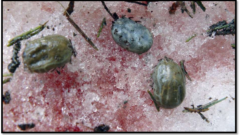
Nibi Chronicles: Krishna’s quest for ticks

“Nibi Chronicles,” a monthly Great Lakes Now feature, is written by Staci Lola Drouillard. A Grand Portage Ojibwe direct descendant, she lives in Grand Marais on Minnesota’s North Shore of Lake Superior. Her nonfiction books “Walking the Old Road: A People’s History of Chippewa City and the Grand Marais Anishinaabe” and “Seven Aunts” were published 2019 and 2022, and the children’s story “A Family Tree” in 2024.

Read Now at Great Lakes Now.

Original Article

Great Lakes Now

Great Lakes Now

https://www.greatlakesnow.org/2024/05/nibi-chronicles-krishnas-quest-for-ticks/

Staci Lola Drouillard

The National Oceanic and Atmospheric Administration has designated a National Estuarine Research Reserve bordering Green Bay on Lake Michigan. It is the 31st national site along the Great Lakes, coastal states, and territories. Read the full story by Public News Service.

Original Article

Great Lakes Commission

Great Lakes Commission

https://www.glc.org/dailynews/20240531-green-bay

Connor Roessler

A cross-border collaboration between stakeholders on both sides of the St. Mary’s River aims to further protect the Great Lakes by bolstering research into oil spills and their impacts upon freshwater environments. Read the full story by Soo Today.

Original Article

Great Lakes Commission

Great Lakes Commission

https://www.glc.org/dailynews/20240531-oil-spills

Connor Roessler

Both state and federal organizations are working to keep Lake Erie and surrounding streams healthy, but an invasive species called the sea lamprey threatens local ecosystems. Many groups are involved in making sure sea lampreys are held in check and they’re bringing in more measures to combat them in west Erie County, Pennsylvania. Read the full story by WJET-TV – Erie, PA.

Original Article

Great Lakes Commission

Great Lakes Commission

https://www.glc.org/dailynews/20240531-invasive-species

Connor Roessler