The David R. Obey Northern Great Lakes Visitor Center near Ashland, Wisconsin, will be closed to the public from June 3 to June 29. During this time, the Center parking lot and entrance drive will be re-paved. Read the full story by the Ashland Daily Press.

Original Article

Great Lakes Commission

Great Lakes Commission

https://www.glc.org/dailynews/20240531-visitor-center

Connor Roessler

It will likely be a few more weeks before anything is physically done on site about the Black River Canal gate since winter floods damaged it and rendered the waterway impassable to boaters this season. However, city officials in Port Huron, Michigan, said that a host of preparations are going on behind the scenes. Read the full story by the Times Herald.

Original Article

Great Lakes Commission

Great Lakes Commission

https://www.glc.org/dailynews/20240531-canal-gate

Connor Roessler

The state of Michigan said it’s willing to step in and oversee property repairs at 1,900 homes in Flint where water pipes have been inspected or replaced but the grounds remain a mess. In March, the City of Flint was found in civil contempt by a judge after blowing past deadlines to get the work done, years after a water switch in 2014 caused lead to leach off old pipes, spoiling the drinking water system. Read the full story by WOOD-TV – Grand Rapids, MI. 

Original Article

Great Lakes Commission

Great Lakes Commission

https://www.glc.org/dailynews/20240531-flint-properties

Connor Roessler

Image by David Nevala

In show of sibling pride on the occasion of the 60th anniversary year of the University of Wisconsin Water Resources Institute, here’s some background about this sister program that is housed along with our Sea Grant Program in the Aquatic Sciences Center at UW-Madison.

On July 17, 1964, President Lyndon B. Johnson signed the Water Resources Research Act to establish a water resources research institute in each state and Puerto Rico. The program was later expanded to include the District of Columbia, Guam and the U.S. Virgin Islands.

“The Congress has found that we have entered a period in which acute water shortages are hampering our industries, our agriculture, our recreation and our individual health and happiness,” Johnson said.

The 54 institutes are charged with undertaking multidisciplinary water research. They are a federal-state partnership, with federal funds coming through the U.S. Geological Survey and providing dollars to support two tracks, a core grant to each individual program and then a pot of money to annually use for national research competitions to address timely challenges. In Wisconsin, state funding through the Groundwater Coordinating Council also supports WRI.

Johnson’s statement continued, “The new centers will be concerned with municipal and regional, as well as national water problems. Their ready accessibility to state and local officials will permit each problem to be attacked on an individual basis, the only way in which complex characteristics of each water deficiency can be resolved.” Johnson also noted that centers, such as Wisconsin’s, “will enlist the intellectual power of universities and research institutes in a nationwide effort to conserve and utilize our water resources for the common benefit.”

Decades later, WRI continues to embody those 1964 presidential words. It has funded more than 140 research projects, including marquee issues as naturally occurring radium in southeastern Wisconsin. WRI research on those aquifers informed the first-ever binational approval of Great Lakes water withdrawals by a community outside of the basin. Waukesha secured that permission in 2016 because its own supplies were dwindling and contaminated.

Other WRI work has explored the long-term balance between water users in the Central Sands Region of Wisconsin. The scarcity of water in the area creates a tug between those wishing to use it for agriculture and those seeing reduced surface water levels, meaning sporting and recreational opportunities could be compromised.

More contemporary research priorities have been examining PFAS in the state’s waters, the effect of climate change on resources and assessing the extent and impact of pathogens in drinking water.

WRI also recruits and trains the next generation of water leaders. Throughout its history, more than 1,250 students have been trained by working on research projects.

“We are incredibly proud of the students and the work supported by WRI these past 60 years. At the same time, we know that water issues remain critical throughout the state. We look forward to supporting innovative and impactful research in Wisconsin,” WRI Interim Director Christy Remucal said.

The post Happy anniversary, sister first appeared on Wisconsin Sea Grant.

Original Article

Blog | Wisconsin Sea Grant

Blog | Wisconsin Sea Grant

https://www.seagrant.wisc.edu/blog/happy-anniversary-sister/

Moira Harrington

Water with a green-brown tint.

The age of Earth’s water has been estimated at 4.5 billion years. While 60 pales in comparison to that astounding age, the work of the National Institutes for Water Resources network — celebrating its sexennial anniversary in 2024 — is critical for the resource’s stewardship.

On July 17, 1964, President Lyndon B. Johnson signed the Water Resources Research Act to establish a water resources research institute in each state and Puerto Rico. The program was later expanded to include the District of Columbia, Guam and the U.S. Virgin Islands.

“The Congress has found that we have entered a period in which acute water shortages are hampering our industries, our agriculture, our recreation and our individual health and happiness,” Johnson said.

The 54 institutes are charged with undertaking multidisciplinary water research. They are a federal-state partnership, with federal funds coming through the U.S. Geological Survey and providing dollars to support two tracks, a core grant to each individual program and also a pot of money to annually use for national research competitions to address timely challenges.

In Wisconsin, the state’s statutorily funded Groundwater Coordinating Council also supports the University of Wisconsin Water Resources Institute. The WRI is a program of the Universities of Wisconsin and is housed on the flagship campus in Madison.

At the time of the centers’ enactment, Johnson’s statement continued, “The new centers will be concerned with municipal and regional, as well as national water problems. Their ready accessibility to state and local officials will permit each problem to be attacked on an individual basis, the only way in which complex characteristics of each water deficiency can be resolved.” Johnson also noted that centers, such as Wisconsin’s, “will enlist the intellectual power of universities and research institutes in a nationwide effort to conserve and utilize our water resources for the common benefit.”

Decades later, WRI continues to embody those 1964 presidential words. It has funded more than 140 research projects, including marquee issues like naturally occurring radium in southeastern Wisconsin. WRI research on those aquifers informed the first-ever binational approval of Great Lakes water withdrawals by a community outside of the basin. Waukesha secured that permission in 2016 because its own supplies were dwindling and contaminated.

Other WRI work has explored the long-term balance between water users in the Central Sands Region of Wisconsin. The scarcity of water in the area creates a tug between those wishing to use it for agriculture and those seeing reduced surface water levels, meaning sporting and recreational opportunities could be compromised.

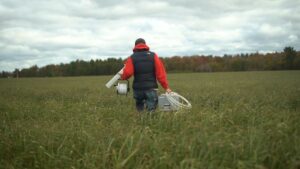
Person carrying equipment and walking through green field.
A researcher studies groundwater in Wisconsin’s Central Sands Region. Photo: Bonnie Willison.

More contemporary research priorities have been examining PFAS in the state’s waters, the effect of climate change on resources and assessing the extent and impact of pathogens in drinking water.

WRI Associate Director Jennifer Hauxwell said, “In a state so enriched with water, we have no shortage of water challenges, including water quality challenges statewide due to excessive nutrients or contaminants, water quantity challenges related to scarcity in some parts of the state and flooding in other parts. WRI’s investment in research helps us better identify and understand these challenges and evaluate management solutions to these challenges. We have a long history of working closely with Wisconsin communities to address their challenges and to connect researchers to real-world Wisconsin water issues.

“We are so fortunate to have had the opportunity to serve as this bridge for the past 60 years and look forward to the next 60,” she concluded.

WRI also recruits and trains the next generation of water leaders. Throughout its history, more than 1,250 students have been trained by working on research projects.

Further, WRI has established a transformative fellowship program. It partners with state agencies to mentor post-graduates who provide cutting-edge knowledge while gaining skills early in their careers. One of the current fellows is Sarah Gravlee. She works in water science policy for the Wisconsin Department of Health Services. She said, “I like working at the intersection between water and public health. I’ve enjoyed fielding questions from the public about water contaminants, sitting in on meetings about newly identified water contamination, and assisting in projects focusing on reducing Wisconsin’s environmental health hazards. I’ve learned a lot.”

Also learning a lot have been the three, and counting, cohorts of undergraduate summer research scholars. It’s a program called the Freshwater@UW Summer Research Opportunities and links researchers who have been funded through WRI, and other grant programs, to competitively selected students from across the nation.

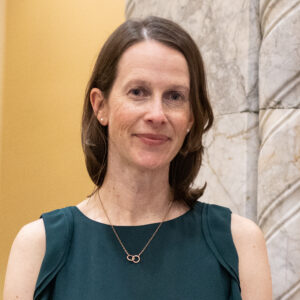
Closeup of smiling person wearing green clothing.
Interim Director Christy Remucal.

“We are incredibly proud of the students and the work supported by WRI these past 60 years. At the same time, we know that water issues remain critical throughout the state. We look forward to supporting innovative and impactful research in Wisconsin,” WRI Interim Director Christy Remucal said.

The post Celebrating WRI’s 60th anniversary year first appeared on WRI.

Original Article

News Release | WRI

News Release | WRI

https://www.wri.wisc.edu/news/celebrating-wris-60th-anniversary-year/

Moira Harrington

Waves of Change: Meet activist and We the People of Detroit president Monica Lewis-Patrick

Waves of Change is an online interview series highlighting the diverse faces and perspectives shaping the environmental justice movement throughout the Great Lakes region.

This month, we spoke with Monica Lewis-Patrick, activist and president and CEO of We the People of Detroit.

Listen to the full interview

We the People of Detroit is a grassroots organization that works to empower Detroiters around key issues in the city, including access to clean water.

Read Now at Great Lakes Now.

Original Article

Great Lakes Now

Great Lakes Now

https://www.greatlakesnow.org/2024/05/waves-of-change-meet-activist-and-we-the-people-of-detroit-president-monica-lewis-patrick/

Great Lakes Now

Healing Our Waters-Great Lakes Coalition

Contact: Lindsey Bacigal, BacigalL@nwf.org, (734) 887-7113
Jordan Lubetkin, Lubetkin@nwf.org, (734) 904-1589

Coalition Supports EPA’s Great Lakes Action Plan

Plan prioritizes community health, along with ecosystem health, as well as actions to confront climate crisis, promote economic revitalization.

ANN ARBOR, MICH. (May 29, 2024)—The Healing Our Waters-Great Lakes Coalition is supporting the EPA’s new draft five-year plan to oversee federal investments to restore and protect the Great Lakes and the interconnected waters that feed it – waters that more than 42 million people depend on for their drinking water, health, and quality of life.

“The EPA’s new plan charts a course for continued success in addressing threats to our Great Lakes, drinking water, and communities,” said Laura Rubin, director of the Healing Our Waters-Great Lakes Coalition. “We are glad to see a strong EPA action plan that prioritizes ecosystem health alongside community health and the need to confront the climate crisis. Federal restoration investments have been producing results for communities across the region, yet serious threats remain. EPA has put forward a plan that can benefit the region’s environment and economy, and, importantly, help communities that have been hardest hit by pollution and environmental harm.”

The EPA’s draft “Great Lakes Restoration Initiative Action Plan IV,” once finalized, will prioritize federal actions to clean up toxic pollution, reduce farm and urban runoff, restore fish and wildlife habitat, and manage invasive species, in Illinois, Indiana, Michigan, Minnesota, New York, Ohio, Pennsylvania, and Wisconsin.

The Healing Our Waters-Great Lakes Coalition, in comments submitted Friday to the agency on the draft plan, applauded the agency for the plan’s focus on community health alongside ecological health; commitment to community engagement; solutions that confront climate impacts; importance of local workforce development and economic revitalization; actions to benefit communities hardest hit by pollution and environmental harm; and equitable access to restoration benefits.

The Coalition also asked EPA to consider updating the plan to better address runoff pollution and help coastal communities adapt to climate impacts.

The action plan, which will run through fiscal years 2025-2029, is expected to be finalized by the start of government’s next fiscal year, which begins October 1. The plan guides the EPA oversight of federal funds allocated by the U.S. Congress through the Great Lakes Restoration Initiative. Currently, the U.S. government invests more than $368 million per year to restore and protect the Great Lakes.

The Healing Our Waters-Great Lakes Coalition and many of its members submitted recommendations for the EPA’s action plan last summer during a serious of public engagement sessions hosted by the agency. Many of those recommendations were accepted and integrated into the current draft plan.

Since 2004, the Healing Our Waters-Great Lakes Coalition has been harnessing the collective power of more than 180 groups representing millions of people, whose common goal is to restore and protect the Great Lakes. Learn more at HealthyLakes.org or follow us on Twitter, Facebook, Bluesky, Mastodon, and Threads @HealthyLakes.

Original Article

Latest Updates - Healthy Lakes

Latest Updates - Healthy Lakes

https://www.healthylakes.org/latest-updates/coalition-supports-epas-great-lakes-action-plan

Lindsey Bacigal

Researchers find a tiny organism has the power to reduce a persistent greenhouse gas in farm fields

By Melina Walling, Associated Press

In the world of greenhouse gas emissions, carbon dioxide gets most of the blame. But tiny organisms that flourish in the world’s farm fields emit a far more potent gas, nitrous oxide, and scientists have long sought a way to address it.

Now some researchers think they’ve found a bacteria that can help.

Read Now at Great Lakes Now.

Original Article

Great Lakes Now

Great Lakes Now

https://www.greatlakesnow.org/2024/05/researchers-find-a-tiny-organism-has-the-power-to-reduce-a-persistent-greenhouse-gas-in-farm-fields/

The Associated Press

NOAA’s Deborah Lee, P.E., P.H., D.WRE, F.ASCE, ENV SP, director of NOAA’s Great Lakes Environmental Research Laboratory (GLERL), is being celebrated with the Lifetime Achievement Award from the Environmental & Water Resources Institute (EWRI) of the American Society of Civil … Continue reading

Original Article

NOAA Great Lakes Environmental Research Laboratory

NOAA Great Lakes Environmental Research Laboratory

https://noaaglerl.blog/2024/05/29/glerl-director-deborah-lee-receives-lifetime-achievement-award-from-the-environmental-water-resources-institute-of-the-american-society-of-civil-engineers/

GLERL Communications Team

Kayakers and boaters heading out to the Apostle Islands in Lake Superior will soon be able to check on real-time wave and temperature conditions on the water with the help of solar-powered smart buoys. Read the full story by Wisconsin Public Radio.


Original Article

Great Lakes Commission

Great Lakes Commission

https://www.glc.org/dailynews/20240529-smart-bouys

Nichole Angell

It’s no big secret that there’s a pollution problem in the Great Lakes. Plastic containers floating in the water or washed up on shore. However, the bigger threat to the lakes comes from the smaller plastic pollution — some of it smaller than you can see with the naked eye. Read the full story by Yahoo! News.


Original Article

Great Lakes Commission

Great Lakes Commission

https://www.glc.org/dailynews/20240529-plasitc-pollution

Nichole Angell

Despite the decline in Lake Sturgeon populations in the Great Lakes caused by overfishing and dam construction which limited access to spawning grounds, these fish have been able to recover in the Detroit River with the help of stocking programs and other regulations.  Read the full story by The Detroit News.


Original Article

Great Lakes Commission

Great Lakes Commission

https://www.glc.org/dailynews/20240529-sturgeon-recovery

Nichole Angell

The combination of heat and storms is increasing Great Lakes basin residents’ exposure to a host of health threats, from waterborne pathogens that formerly couldn’t survive this far north, to bacteria-laden sewer overflows and toxic algae blooms.  Read the full story by Michigan Public Radio


Original Article

Great Lakes Commission

Great Lakes Commission

https://www.glc.org/dailynews/20240529-warming-threats

Nichole Angell

Researchers and bird enthusiasts are working to better understand and limit bird causalities in the Great Lakes region. Some reasons for the recent increase in causalities include diseases like bird flu and botulism in addition to collisions with buildings and cars and outdoor cats. Read the full story by Michigan Public Radio.

Original Article

Great Lakes Commission

Great Lakes Commission

https://www.glc.org/dailynews/20240529-great-lakes-birds

Nichole Angell

The U.S. Army Corps of Engineers will be hosting an information session for residents to learn more about the recommended plan to create a barrier against the invasive sea lamprey in Conneaut Creek in Albion. The meeting will be held on Thursday, May 30 from 5:30-7 p.m. Read the full story by Erie News Now.

Original Article

Great Lakes Commission

Great Lakes Commission

https://www.glc.org/dailynews/20240529-sea-lamprey-barrier

Nichole Angell

Points North: A Struggle for Justice

By Michael Livingston, Interlochen Public Radio

Points North is a biweekly podcast about the land, water and inhabitants of the Great Lakes.

This episode was shared here with permission from Interlochen Public Radio. 

October 15, 1900 was a dark day for a small group of Native Americans near the tip of Michigan’s lower peninsula.

Read Now at Great Lakes Now.

Original Article

Great Lakes Now

Great Lakes Now

https://www.greatlakesnow.org/2024/05/points-north-a-struggle-for-justice/

Interlochen Public Radio

* WHAT...Urban area and small stream flooding caused by excessive rainfall continues. * WHERE...Doppler radar indicated pockets of heavy rainfall between 1 and 2 inches from far southeastern Outagamie County just east of Kaukauna, in Brown County around 3 miles north of Wrightstown, and near Denmark, southward to near Potter and High Cliff State Park in Calumet County, and near Reedsville and near Kellnersville in Manitowoc County. * WHEN...Until 700 PM CDT. * IMPACTS...Minor flooding in low-lying and poor drainage areas. Ponding of water in urban or other areas is occurring or is imminent. * ADDITIONAL DETAILS... - At 519 PM CDT, Doppler radar indicated heavy rain due to thunderstorms. This will cause urban and small stream flooding. Between 1 and 2.5 inches of rain have fallen. - Additional rainfall less than an inch are expected over the area. This additional rain will result in minor flooding. - Some locations that will experience flooding include... Kaukauna, Chilton, Brillion, Denmark, St. Nazianz, High Cliff State Park, Harrison, Wrightstown, Sherwood, Morrison, Holland, Reedsville, , Hilbert and Maple Grove. - http://www.weather.gov/safety/flood

Original Article

Current watches, warnings, and advisories for Brown County (WIC009) WI

Current watches, warnings, and advisories for Brown County (WIC009) WI

https://api.weather.gov/alerts/urn:oid:2.49.0.1.840.0.b7bbef0d923d0eef245b12e2cf58a66b5772219f.001.1.cap

NWS

In warming Great Lakes region, water, heat can be an unhealthy combination

By Kelly House, Bridge Michigan and Lester Graham, Michigan Public

Bill Gurn isn’t sure how he got the mosquito bite that nearly killed him in the autumn of 2019.

He’s an avid fisherman. Maybe on the water? Or it could have happened while he was tinkering in his garage or yard.

Read Now at Great Lakes Now.

Original Article

Great Lakes Now

Great Lakes Now

https://www.greatlakesnow.org/2024/05/in-warming-great-lakes-region-water-heat-can-be-an-unhealthy-combination/

Bridge Michigan and Michigan Public

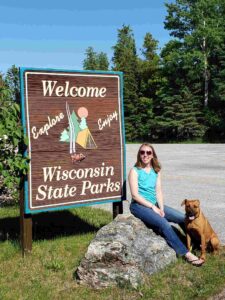
Young woman sits on a large rock in front of a sign that reads Welcome to Wisconsin State Parks. A dog sits at her feet.

Brenna and her dog planned to visit all of Wisconsin’s state parks in a year.

Brenna Spear went to college for something she loved, but when she graduated, there were no full-time jobs in her field. She had to rethink how to include her love of nature in her life.

Brenna grew up on a hobby farm near Omro and was outside all the time — climbing trees, running through cornfields, and caring for the animals. “I was always tromping around in puddles and stuff,” she said. She took all the ag and plant classes the high school offered.

So it wasn’t a huge surprise that Brenna decided to study forestry in college. After graduation, she was excited to get into the work. “But they were not hiring when I graduated.”

After dabbling with some different contract work and part-time jobs, her dad encouraged her to come home and work for a good company outside of her chosen field. Brenna found a good job, but it was not what she had planned. With a job inside, sitting in an office, being outside became an after-work hobby.

Working mostly nights, Brenna needed a way to be active (and outside) during the day. She also needed to find a way to help her dog be active. So she and her pup set out to visit all of the Wisconsin State Parks in a single year.

“They’re all my favorite!” Brenna declared. But seeing so many great parks opened her eyes to the fact that there were amazing outdoor spaces closer to home. “I challenged myself to get outside more without having to drive many hours,” she said.

For several years now, Brenna has been doing just that with the annual Fox-Wolf Watershed Cleanup. The first year she did it by herself, but lately “I’ve been stealing friends to do it with me. It makes it really fun to bring co-workers and their families.”

It turns out, the cleanup combined Brenna’s longing to be outside with her desire to be more involved with the community.

Ironically, it was through her non-forestry job that she first heard about the cleanup. Her employer actively promotes volunteerism, giving employees time and information, but also matching their donations of both time and money.

Brenna figured out how to make the most of this system and looks forward to the cleanup every year.

“I’m starting to recognize faces at the Cleanup,” Brenna said. “I don’t really know them, but people are nice. Everyone is there for a common purpose. And Fox-Wolf staff do a great job connecting with others.”

Brenna readily sees the connection between her time cleaning up trash and her time visiting the state parks.

“I want to visit them all again in 20-30 years to see how it changes. I hope there will be more parks, more green space, more opportunities for people to be out in nature and find their spot.”

Brenna hopes that not just for herself, but for you as well. She likes helping others find their favorite spots. “You have to set yourself up for success,” she advised. “Find the right thing that brings you joy, so that you will enjoy it. And get a snack first.”

Watershed Moments is a publication of Fox-Wolf Watershed Alliance, sharing the stories of how your donations have impacted lives in our community. Read our latest project updates, make a secure online donation, or become a member at www.fwwa.org

The post Watershed Moments: Finding Joy appeared first on Fox-Wolf Watershed Alliance.

Original Article

Fox-Wolf Watershed Alliance

Fox-Wolf Watershed Alliance

https://fwwa.org/2024/05/28/watershed-moments-finding-joy/?utm_source=rss&utm_medium=rss&utm_campaign=watershed-moments-finding-joy

Sharon Cook

A large areas of showers and embedded thunderstorms continues to move across the Fox Valley and Green Bay, east to the lakeshore this evening. Rainfall rates in the heavier showers and storms will be around an inch per hour, resulting in urban street flooding and ponding of water on highways. The heavy rain may also lead to poor visibilities for motorists. The heavier rainfall should diminish from west to east by midnight, although showers are expected to continue into early Monday morning across northeast Wisconsin. If you are planning to travel this evening, slow down to avoid hydroplaning and avoid flooded roadways.

Original Article

Current watches, warnings, and advisories for Brown County (WIC009) WI

Current watches, warnings, and advisories for Brown County (WIC009) WI

https://api.weather.gov/alerts/urn:oid:2.49.0.1.840.0.312ec532ff5b27c47c422490c7970aa9f3a545a5.001.1.cap

NWS

A large areas of showers and embedded thunderstorms will move across the Fox Valley and Green Bay, east to the lakeshore this evening. Rainfall rates in the heavier showers and storms may be from 1 to 2 inches per hour, resulting in urban street flooding and ponding of water on highways. The heavy rain may also lead to poor visibilities for motorists. Some locations that will see the heavier rain: Hortonville, Omro, Winneconne, Oshkosh, Appleton, Green Bay, Chilton, Brillion, Wrightstown, Kewaunee, Algoma, Manitowoc and Reedsville. If you are planning to travel this evening, slow down to avoid hydroplaning.

Original Article

Current watches, warnings, and advisories for Brown County (WIC009) WI

Current watches, warnings, and advisories for Brown County (WIC009) WI

https://api.weather.gov/alerts/urn:oid:2.49.0.1.840.0.e172dfded6240aa313fe456a1eb9e5f526aaea7e.001.1.cap

NWS

Showers and a few embedded thunderstorms will continue across east central Wisconsin this evening. A few of the storms may produce wind gusts to 40 mph and brief heavy downpours. Unsecured objects may blow around, and small branches may break off trees. Motorists may encounter water ponding on area roads.

Original Article

Current watches, warnings, and advisories for Brown County (WIC009) WI

Current watches, warnings, and advisories for Brown County (WIC009) WI

https://api.weather.gov/alerts/urn:oid:2.49.0.1.840.0.3c348feac0aaba1cce0588535ae3be03eb8185a7.001.1.cap

NWS

The warmer than normal air temperatures in April and so far in May are boosting most of the Great Lakes’ water temperatures. While the southern Great Lakes are really heating up, Lake Superior remains amazingly cold. Read the full story by MLive.

Original Article

Great Lakes Commission

Great Lakes Commission

https://www.glc.org/dailynews/20240524-water-temperature

James Polidori

The University of Wisconsin-Milwaukee School of Freshwater Sciences has made its mark on Great Lakes research as the only graduate school of freshwater sciences in the United States. The school’s main research vessel, the Neeskay, is the only one out on the Great Lakes year-round. Read the full story by the Milwaukee Journal Sentinel.

Original Article

Great Lakes Commission

Great Lakes Commission

https://www.glc.org/dailynews/20240524-research-vessel

James Polidori

The Wisconsin Maritime Museum’s newest exhibit, “Wisconsin’s Shipwreck Coasts,” features more than 100 artifacts from Wisconsin shipwrecks dating back to the mid-1800s, including personal items, family heirlooms and cargo salvaged in the 1970s. Many of the treasures in this 3,000-square-foot permanent exhibit are on public display for the first time. Read the full story by the Herald Times Reporter.

Original Article

Great Lakes Commission

Great Lakes Commission

https://www.glc.org/dailynews/20240524-shipwreck-exhibit

James Polidori

Hundreds of cruise ship passengers will once again have the chance to explore the northeast Wisconsin city of Algoma when the cruise ship Viking Octantis makes its first of eight stops there on May 29. Read the full story by WLUK-TV – Green Bay, WI.

Original Article

Great Lakes Commission

Great Lakes Commission

https://www.glc.org/dailynews/20240524-cruise-destinations

James Polidori

The New York State Department of Environmental Conservation has announced that this year’s muskellunge, or muskie, fishing season for Great Lakes waters — which include Lake Erie, the Upper Niagara River, the Lower Niagara River, Lake Ontario, the St. Lawrence River and tributaries to these waters — will begin on June 15. Read the full story by North Country Public Radio.

Original Article

Great Lakes Commission

Great Lakes Commission

https://www.glc.org/dailynews/20240524-muskie-season

James Polidori

A Tulane University professor explored the idea of Duluth being an ideal location for climate migration in a 2019 study that has been receiving greater attention recently. Duluth’s proximity to Lake Superior, among other social and environmental factors, made the city stand out. Read the full story by WDIO-TV – Duluth, MN.

Original Article

Great Lakes Commission

Great Lakes Commission

https://www.glc.org/dailynews/20240524-climate-migration

James Polidori

Cruise season will officially get underway in Cleveland during Memorial Day weekend. On Sunday, ships from Viking and Pearl Seas will dock at the Port of Cleveland, giving passengers a full day’s worth of opportunities to explore the area. Read the full story by WKYC-TV – Cleveland, OH.

Original Article

Great Lakes Commission

Great Lakes Commission

https://www.glc.org/dailynews/20240524-cruise-season

James Polidori

A Michigan man who holds 53 world records has set the new state record for catching a white perch in Lake St. Clair last month. It weighs 2 pounds, 5.92 ounces and measured 16.25 inches, beating the previous state record white perch – 2 pounds, 13.57 inches, that was caught in 2015. Read the full story by WXYZ-TV – Detroit, MI.

Original Article

Great Lakes Commission

Great Lakes Commission

https://www.glc.org/dailynews/20240524-fishing-record

James Polidori

In Wisconsin, Enbridge’s Line 5 pipeline crosses sovereign lands of the Bad River Band of the Lake Superior Tribe of Chippewa Indians. Enbridge seeks to construct a tunnel under the Straits of Mackinac, keeping the pipeline running for the years it will take for approval and construction. Michigan and the tribe are fighting to shut down the pipeline and prevent the tunnel. Read the full story by Bridge Michigan.

Original Article

Great Lakes Commission

Great Lakes Commission

https://www.glc.org/dailynews/20240524-pipeline-concern

James Polidori

Summary

The Chicago Local Partnerships Manager (Manager) leads the Alliance for the Great Lakes’ (Alliance) local water advocacy work in Chicago and Cook County, Illinois to shape policies and practices that help protect the Great Lakes and the communities that depend on them. Broadly, the Manager will support partners in advancing climate-informed, water-focused policies, projects and programs designed to improve the health and quality of Great Lakes waters, address historical inequities in agency decision-making, and strengthen the network(s) of local water advocates to advance solutions to local water challenges. The Manager will leverage and influence municipal and county community engagement and capacity building programs specific to lead service line replacement and urban flooding and sanitation issues. Ongoing coordination and collaboration with a wide range of stakeholders including environmental justice advocates, other non-profits, city and county staff, and elected officials is a key to success. The Manager reports to the Director of Planning, will coordinate with the Director of Clean Water and Equity, and at times will work on specific tasks with members of the Alliance’s regional team of water planning, advocacy, and communication leaders.

A typical week for the Chicago Local Partnerships Manager might look like this… the week begins with a brief call to your supervisor to discuss tasks for the week. You note several upcoming meetings. For the meetings you are supporting, the facilitators asked you to share updates on several planning projects led by the Department of Water Management, like the stormwater tunnel on the southside of Chicago and updates to Chicago’s 2014 Green Infrastructure Strategy. You check-in with partners and draft a summary statement on the engagement opportunities and overall status of these projects, and then send your update to the meeting facilitators.

Facilitators also asked for an update on the Clean Water State Revolving Fund public comment letters for Illinois, as this is state level policy work informed by your local advocacy, you reach out to the Director of Clean Water and Equity to coordinate an update. The meeting you are leading is a work planning meeting with partners to discuss expenses and scope of work for an event to gather feedback on the Department of Planning and Development’s Calumet River Site Design Guidelines. In preparation for this meeting, you develop and send out the agenda and links to shared materials. Asana, the Alliance’s project management system, reminds you that your grant report is due. It’s the end of the week and the Alliance’s Engagement Team is hosting a virtual happy hour, so you hop on for the last 30 minutes to connect with colleagues. 

The Alliance for the Great Lakes sets a protection agenda for the Great Lakes, a resource of global significance and the world’s largest source of surface freshwater. The Alliance seeks to protect the Great Lakes from their greatest threats, build a resilient future for communities and instill the value of clean water throughout the region. Learn more at www.greatlakes.org.


Responsibilities

Local Networks and Coalitions

  • Identify the resources needed to elevate local leadership and strengthen local coalitions, networks and partnerships to collaboratively advance water infrastructure policies and programs. Specific roles or tasks could range from co-creation and coordination of events, workshops, and trainings; work planning or campaign planning; navigating technical and policy decision-making; data and policy analysis; and joint fundraising to advance shared goals. The Manager will be supported by their Alliance colleagues in completion of tasks. For example, tasks related to the policy and technical work will be supported by the Water Infrastructure team; planning and engagement work will be supported by the Director of Planning; fundraising and communication work will be supported by development and communications staff.

Policies and Programs

  • Advocate for community recommended processes that allow agency staff to meaningfully engage with community leaders on the development and implementation of policy and program priorities.
  • Maintain working relationships, individually or through partners, with city staff and elected officials in Chicago and Cook County to build support for, pass policies and regulations, and fund water infrastructure priorities, with a focus on funding and financing lead service line replacement and gray and green stormwater infrastructure to address chronic urban flooding and sanitation issues.
  • Cultivate expertise in navigating the bureaucratic and political decision-making process for passing and implementing water infrastructure policies and programs, including capital improvement programs and capacity building programs in Chicago and Cook County.

Equity, Environmental Justice, and Affordability Frameworks

  • Build upon Chicago’s established environmental justice action planning process to advance complete solutions for flooding and sanitation issues facing historically disinvested communities in Chicagoland.
  • Use agreed upon equity and environmental justice indicators to inform where water infrastructure investments and other needed resources (e.g. housing and social services) should be prioritized in the Chicagoland region.
  • Ensure water affordability measures are included along with efforts to accelerate implementation of water infrastructure priorities. 

Program Development

  • Assist with developing joint fundraising proposals that support the work of multiple coalitions and networks, and which facilitate the development of Alliance programs.
  • Track and report on grant deliverables, project budgets and expenses.
  • Inform the Alliance’s strategic direction in Chicago/Illinois, Detroit/Michigan, and Cleveland/Ohio.

Knowledge/Skills

  • Strong existing relationships in Chicagoland, especially in communities of color or communities disproportionately impacted by failing water infrastructure.
  • At least 3 years of experience,
    • facilitating (lead or support role) collaborative processes that allow a range of stakeholders to meaningfully participate in the co-creation of shared strategies, research and/or communication materials;
    • developing and managing action plans, scopes of work, work plans and budgets that keep teams (internal and external) advancing shared work;
    • planning and running virtual and in-person meetings, workshops, training, or events designed to advance shared and agreed upon scopes of work; and
    • developing communication strategies, tactics, and materials used to communicate complicated information in easy-to-understand language that provides everyone from elected officials to community leaders with actions they can take.
  • In Chicago and surrounding south suburbs, willingness to cultivate relationships and working knowledge on how water infrastructure policies and programs are implemented, with a focus on budgeting and capital planning, and equity focused policies and programs related to drinking water, flooding, and sanitation.
  • Creative thinker with the ability to quickly translate ideas into on-the-ground actions, test for success, and shift tactics as needed.
  • Experience supporting qualitative and quantitative data collection and analysis that furthers local policy and planning efforts, is a plus.
  • Bachelor’s degree, is a plus.

Job Parameters

  • This position is full-time and consistent with Alliance employment policy. The Alliance has defined salary ranges that are evaluated annually, and it is customary for candidates to join at the lower half of the range to leave room for learning and development in the role. It is uncommon for starting salaries to fall above the mid-point. The salary range for this position begins at $75,000 and we negotiate salaries with final candidates based on their experience in similar roles, and expertise related to the qualifications.
  • Excellent benefits, including medical, dental, vision, short- and long-term disability, life insurance, FSA, 11 paid holidays plus the business days between 12/26 and 12/30 (staff who must work on any holidays may take those holidays at another time subject to the employee handbook), 3 weeks’ vacation to start + sick time, and Fidelity 401(k) with employer match of up to 6% of salary, eligible after 30 days.
  • This position is based in the greater Chicagoland region. Applicants must be able to occasionally (or more frequently if preferred) work from and host meetings at the Alliance’s downtown Chicago office.
  • Applicants should expect a combination of sitting at a desk and computer workstation; off-site meetings with partners, city staff and elected officials; and hosting meetings and events in communities. Regular local car travel of less than 40 miles round trip from downtown Chicago is required.
  • Opportunity for professional development such as conferences, webinars, association membership, etc.

Application Process

Please e-mail a cover letter, resume, references and writing sample to: hr@greatlakes.org.

Include job title in the subject line.

Applications will be accepted until the position is filled – we are looking to fill immediately. Materials should be compatible with Microsoft Word or Adobe Acrobat. Applicants will receive confirmation of receipt of their materials and further guidance and updates about the hiring process by e-mail, with interviews provided for finalists. No phone inquiries please.

About the Alliance for the Great Lakes

The Alliance for the Great Lakes is an Equal Opportunity Employer. The search process will reinforce the Alliance’s belief that achieving diversity requires an enduring commitment to inclusion that must find full expression in our organizational culture, values, norms, and behaviors.

The Alliance’s vision is a healthy Great Lakes for all people and wildlife, forever. Its mission is to conserve and restore the world’s largest freshwater resource using policy, education, and local efforts, ensuring a healthy Great Lakes and clean water for generations of people and wildlife.

The Alliance for the Great Lakes is committed to upholding and exemplifying the values of community, respect, accountability, and boldness. These describe the qualities that all members of the Alliance for the Great Lakes community exemplify in their role as environmental advocates and professionals.

The Alliance for the Great Lakes is committed to ensuring everyone in the Great Lakes region has healthy access to the lake and clean water. But acknowledges that not everyone does. Visit our website for more information on the Alliance’s statement on environmental justice: https://greatlakes.org/campaigns/environmental-justice/

For more information about the Alliance’s programs and work, please visit us online at www.greatlakes.org.

The post Chicago Local Partnership Manager appeared first on Alliance for the Great Lakes.

Original Article

News - Alliance for the Great Lakes

News - Alliance for the Great Lakes

https://greatlakes.org/2024/05/chicago-local-partnership-manager/

Michelle Farley