Assessing the U.S. Climate in May 2024
2024-06-10
During May, the average contiguous U.S. temperature was 62.3°F, 2.1°F above the 20th-century average.
NCEI News Feed
https://www.ncei.noaa.gov/news/national-climate-202405
NCEI News Feed
https://www.ncei.noaa.gov/news/national-climate-202405
NCEI News Feed
https://www.ncei.noaa.gov/news/national-climate-202405
NCEI News Feed
https://www.ncei.noaa.gov/news/national-climate-202405
NCEI News Feed
https://www.ncei.noaa.gov/news/national-climate-202405
NCEI News Feed
https://www.ncei.noaa.gov/news/national-climate-202405
NCEI News Feed
https://www.ncei.noaa.gov/news/national-climate-202405
NCEI News Feed
https://www.ncei.noaa.gov/news/national-climate-202405
NCEI News Feed
https://www.ncei.noaa.gov/news/national-climate-202405
NCEI News Feed
https://www.ncei.noaa.gov/news/national-climate-202405
NCEI News Feed
https://www.ncei.noaa.gov/news/national-climate-202405
NCEI News Feed
https://www.ncei.noaa.gov/news/national-climate-202405
NCEI News Feed
https://www.ncei.noaa.gov/news/national-climate-202405
NCEI News Feed
https://www.ncei.noaa.gov/news/national-climate-202405
NCEI News Feed
https://www.ncei.noaa.gov/news/national-climate-202405
NCEI News Feed
https://www.ncei.noaa.gov/news/national-climate-202405
NCEI News Feed
https://www.ncei.noaa.gov/news/national-climate-202405
NCEI News Feed
https://www.ncei.noaa.gov/news/national-climate-202405
NCEI News Feed
https://www.ncei.noaa.gov/news/national-climate-202405
NCEI News Feed
https://www.ncei.noaa.gov/news/national-climate-202405
NCEI News Feed
https://www.ncei.noaa.gov/news/national-climate-202405
NCEI News Feed
https://www.ncei.noaa.gov/news/national-climate-202405
NCEI News Feed
https://www.ncei.noaa.gov/news/national-climate-202405
NCEI News Feed
https://www.ncei.noaa.gov/news/national-climate-202405
NCEI News Feed
https://www.ncei.noaa.gov/news/national-climate-202405
NCEI News Feed
https://www.ncei.noaa.gov/news/national-climate-202405
NCEI News Feed
https://www.ncei.noaa.gov/news/national-climate-202405
NCEI News Feed
https://www.ncei.noaa.gov/news/national-climate-202405
NCEI News Feed
https://www.ncei.noaa.gov/news/national-climate-202405
NCEI News Feed
https://www.ncei.noaa.gov/news/national-climate-202405
NCEI News Feed
https://www.ncei.noaa.gov/news/national-climate-202405
NCEI News Feed
https://www.ncei.noaa.gov/news/national-climate-202405
NCEI News Feed
https://www.ncei.noaa.gov/news/national-climate-202405
NCEI News Feed
https://www.ncei.noaa.gov/news/national-climate-202405
NCEI News Feed
https://www.ncei.noaa.gov/news/national-climate-202405
NCEI News Feed
https://www.ncei.noaa.gov/news/national-climate-202405
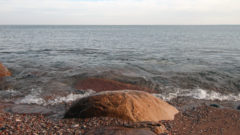
SAULT STE. MARIE, Mich. (AP) — A freighter in Lake Superior hit something underwater on Saturday and started taking on water, according to the U.S. Coast Guard.
The Coast Guard Great Lakes district received reports about 6:53 a.m. that a 689-foot-long (210-meter-long) ship called the Michipicoten had collided with something about 35 miles (56 kilometers) southwest of Isle Royale, which is part of the state of Michigan.
Great Lakes Now
https://www.greatlakesnow.org/2024/06/a-freighter-ship-in-lake-superior-collided-with-something-underwater-coast-guards-says/
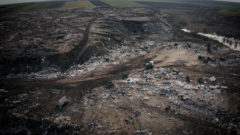
Coal ash is packed with harmful pollutants. Residents of a northern Indiana town less than a mile from Lake Michigan may have been exposed to unsafe levels of contamination for almost a decade, even after being told that they were safe, an IndyStar investigation found. A coal ash cleanup plan developed in 2016 by electric utility NIPSCO was based on flawed data included by a hired consultant with ties to the coal industry, according to the investigation.
Great Lakes Now
https://www.greatlakesnow.org/2024/06/energy-news-roundup-coal-ash-still-a-concern-in-indiana-superfund-town-near-lake-michigan/
The National Oceanic and Atmospheric Administration this week designated a 1,722-square-mile area in eastern Lake Ontario as America’s 16th national marine sanctuary. The Lake Ontario National Marine Sanctuary is the first such sanctuary in New York, and only the third in the Great Lakes region. Read the full story by The Post-Standard.
Great Lakes Commission
https://www.glc.org/dailynews/20240607-marine-sanctuary
Emissions targets set by the International Maritime Organization mean the shipping industry must find a way to decarbonize by 2050. A new, cleaner ship points way as U.S. ports in the Great Lakes region are spending millions on upgrades in pursuit of net zero. Read the full story by The Guardian.
Great Lakes Commission
https://www.glc.org/dailynews/20240607-shipping-emissions
Rain and contaminated air are major sources of PFAS contamination detected by a team of researchers in the Great Lakes. Airborne concentrations of PFAS are much higher near Chicago and other urban areas than at rural monitoring stations in northern Michigan and upstate New York. Read the full story by the Chicago Tribune.
Great Lakes Commission
https://www.glc.org/dailynews/20240607-pfas-rain
Governor Gretchen Whitmer had pledged to crack down on bottled water companies taking water at the same time Flint, Michigan, faced a water crisis. Six years later and in her second term, little has changed. Read the full story by ProPublica.
Great Lakes Commission
https://www.glc.org/dailynews/20240607-bottled-water
Scientists at University of Toledo’s (UToledo) Lake Erie Center have studied lake ecology for years, but after the 2014 water crisis, the center has added new goals for water safety: protecting the water supply and understanding the toxins harmful algae produce. Read the full story by WTOL-TV – Toledo, OH.
Great Lakes Commission
https://www.glc.org/dailynews/20240607-utoledo-science
Fish fly season has begun, bringing thousands, if not millions, of the winged insects to swarm the backyards, screen doors and car windows of metro Detroiters. Considered by many to be a messy inconvenience, the mayfly swarms are an indicator of nearby freshwater ecosystems’ health. Read the full story by The Detroit Free Press.
Great Lakes Commission
https://www.glc.org/dailynews/20240607-fish-flies
Global warming is fueling the spread of the nonnative peach blossom jellyfish in the Great Lakes region. Researchers urge the public to submit sightings to various online databases so that their changing distribution can be understood. Read the full story by The Mining Journal.
Great Lakes Commission
https://www.glc.org/dailynews/20240607-invasive-jellyfish
The Clyde S. VanEnkevort, an integrated tug and barge, spilled red dye diesel into Lake Superior in Silver Bay, Minnesota, on May 29. The cleanup of nearly 400 gallons of fuel is complete. Read the full story by the Duluth News Tribune.
Great Lakes Commission
https://www.glc.org/dailynews/20240607-diesel-cleaned
Health officials recently closed nine Michigan beaches due to high E. coli levels. Of these, eight beaches are back open and four additional beaches are either closed or under contamination advisories. Swimmers should stay out of water infested with high levels of E. coli or risk getting sick. Read the full story by Bridge Michigan.
Great Lakes Commission
https://www.glc.org/dailynews/20240607-ecoli-levels
A U.S. Fish and Wildlife assessment crew will conduct a sea lamprey assessment project at the Long Lake outlet in Alpena County, Michigan, this month. The study will estimate the abundance of sea lampreys and determine if there is a need for population control operations. Read the full story by The Alpena News.
Great Lakes Commission
https://www.glc.org/dailynews/20240607-lamprey-study
By Izzy Ross, Interlochen Public Radio
This coverage is made possible through a partnership with IPR and Grist, a nonprofit independent media organization dedicated to telling stories of climate solutions and a just future.
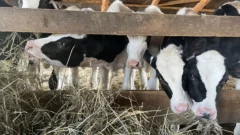
Laurie Stanek shovels hay in front of a group of young, black and white Holstein cows.
Great Lakes Now
https://www.greatlakesnow.org/2024/06/none-of-us-saw-this-coming-michigan-confronts-bird-flu-in-cows/

By Anna Clark, photography by Sarahbeth Maney
This story was originally published by ProPublica.
ProPublica is a Pulitzer Prize-winning investigative newsroom. Sign up for The Big Story newsletter to receive stories like this one in your inbox.
When Gretchen Whitmer campaigned for Michigan governor in 2018, she took aim at Michigan’s bottled water industry — and the state policy that gave it unfettered access to free water.
Great Lakes Now
https://www.greatlakesnow.org/2024/06/michigan-bottlers-still-get-free-water-despite-governors-tough-talk/
Healing Our Waters-Great Lakes Coalition
Contact: Lindsey Bacigal, BacigalL@nwf.org, (734) 887-7113
Jordan Lubetkin, Lubetkin@nwf.org, (734) 904-1589
ANN ARBOR, MICH. (June 6, 2024)—A recent audit by the U.S. Environmental Protection Agency Office of Inspector General found that Great Lakes Restoration Initiative (GLRI) grants supported the EPA’s program goals for the Great Lakes, overall, but could benefit from improved monitoring and reporting.
The Healing Our Waters-Great Lakes Coalition supports continued auditing of federal programs, as they are essential to continue to improve successful programs like the GLRI. Overall, the report found no gross financial mismanagement, rather, recommendations primarily focused on issues with reporting and training structures. These are problems across government programs due to insufficient funding for staff capacity and training, further showcasing the need for continued - and increased - funding for core functions of federal programs like the GLRI.
The report also emphasized the need for EPA to better track and report how projects help contribute to meeting the GLRI’s environmental justice goals. The Coalition, along with other organizations in the region, has been advocating for a stronger emphasis on environmental injustice within the GLRI Action Plans, most recently within the drafting of Action Plan IV, which is set to come out this fall.
“The report affirms that the EPA is running a successful program. Like with anything, it can do better,” said Laura Rubin, director of the Healing Our Waters-Great Lakes Coalition. “Over the last several years, the EPA has committed itself to targeting the region’s biggest environmental challenges and prioritizing areas hit hardest by pollution. We are glad to see this reflected in the recently released draft of the Great Lakes Action Plan IV, but we need to do more. We will keep advocating for EPA and the other federal agencies to make a strong program even stronger so that it can help the people and communities most impacted by environmental harm.”
Since 2004, the Healing Our Waters-Great Lakes Coalition has been harnessing the collective power of more than 180 groups representing millions of people, whose common goal is to restore and protect the Great Lakes. Learn more at HealthyLakes.org or follow us on Twitter, Facebook, Bluesky, Mastodon, and Threads @HealthyLakes.
Latest Updates - Healthy Lakes
Latest Updates - Healthy Lakes
https://www.healthylakes.org/latest-updates/great-lakes-restoration-initiative-grants-documenting-continued-improvements