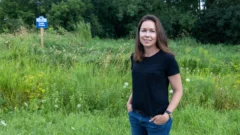
Points North: A New Hope for Anishinaabemowin

By Daniel Wanschura

Points North is a biweekly podcast about the land, water and inhabitants of the Great Lakes.

This episode was shared here with permission from Interlochen Public Radio.

Theresa Eischen would visit her grandparents every summer.

Read Now at Great Lakes Now.

Original Article

Great Lakes Now

Great Lakes Now

https://www.greatlakesnow.org/2024/10/points-north-a-new-hope-for-anishinaabemowin/
Interlochen Public Radio

Monroe is split by the River Raisin, which runs directly into Lake Erie. The city’s residents are not shy about taking advantage of its proximity to the water, even if it means fishing in the draining canal of a power plant. Fishers, young and old, gather at the Monroe fishing site near the DTE Energy […]

The post Residents in Monroe County take part in outdoor activities along the River Raisin first appeared on Great Lakes Echo.

Original Article

Great Lakes Echo

Great Lakes Echo

http://greatlakesecho.org/2024/10/11/residents-in-monroe-county-take-part-in-outdoor-activities-along-the-river-raisin/

Donte Smith

PFAS Roundup: Over $3M awarded to MSU scientists to address PFAS in agriculture, Wisconsin tackles PFAS during hunting season

Two Michigan State University (MSU) scientists were recently awarded grants to address per- and polyfluorinated substances (PFAS) in agriculture. The U.S. Environmental Protection Agency (EPA) awarded Hui Li $1.6 million, and the Michigan Department of Agriculture and Rural Development (MDARD) awarded Cherly Murphy $1.75 million to measure livestock bioaccumulation and plant uptake of PFAS. 

Read Now at Great Lakes Now.

Original Article

Great Lakes Now

Great Lakes Now

https://www.greatlakesnow.org/2024/10/pfas-roundup-over-3m-awarded-to-msu-scientists-to-address-pfas-in-agriculture-wisconsin-tackles-pfas-during-hunting-season/

Lisa John Rogers, Great Lakes Now

Wisconsin towns are trying to limit CAFO growth. Big Dairy is fighting back.

By John McCracken, Investigate Midwest

Investigate Midwest is an independent, nonprofit newsroom. Our mission is to serve the public interest by exposing dangerous and costly practices of influential agricultural corporations and institutions through in-depth and data-driven investigative journalism. Visit us online at www.investigatemidwest.org.

Read Now at Great Lakes Now.

Original Article

Great Lakes Now

Great Lakes Now

https://www.greatlakesnow.org/2024/10/wisconsin-towns-are-trying-to-limit-cafo-growth-big-dairy-is-fighting-back/

Investigate Midwest

Staff Directory  |  

Nate Kroeze – Ecologist

Coming soon!


Contact

For media inquiries, please contact Beth Wanamaker, beth@glc.org.

Recent GLC News

Upcoming GLC Events

View GLC Calendar

Archives

Original Article

Great Lakes Commission

Great Lakes Commission

https://www.glc.org/staff/nate-kroeze

Laura Andrews

Swing state voters along the Great Lakes love cleaner water and beaches − and candidates from both parties have long fished for support there

By Mike Shriberg, University of Michigan

 is an independent and nonprofit source of news, analysis and commentary from academic experts.

If history holds true to form, I expect the presidential campaigns of Donald Trump and Kamala Harris to begin touting their support for the Great Lakes Restoration Initiative as Election Day approaches.

Read Now at Great Lakes Now.

Original Article

Great Lakes Now

Great Lakes Now

https://www.greatlakesnow.org/2024/10/swing-state-voters-along-the-great-lakes-love-cleaner-water-and-beaches-%E2%88%92-and-candidates-from-both-parties-have-long-fished-for-support-there/

The Conversation

RESTON, Va. – The U.S. Geological Survey has announced it will invest approximately $2.8 million in Bipartisan Infrastructure Law funding to collect high-resolution geophysical data focused on areas with potential for critical mineral resources over Wyoming’s Laramie Mountains. 

Original Article

Midcontinent Region

Midcontinent Region

https://www.usgs.gov/news/state-news-release/usgs-invests-geologic-data-collection-across-southeastern-wyoming?utm_source=comms&utm_medium=rss&utm_campaign=news

lrussell@usgs.gov

New York’s Rochester Embayment, a 35-square-mile bay on southern Lake Ontario’s shore, is no longer considered one of the Great Lakes’ most environmentally degraded areas, the Environmental Protection Agency announced Tuesday. Read the full story by Spectrum News.

Original Article

Great Lakes Commission

Great Lakes Commission

https://www.glc.org/dailynews/20241009-rocherster-embayment-delisting

Theresa Gruninger

A recent study published in the Journal of Great Lakes Research is the first to compare all 188 nonnative species in the Great Lakes, spotlighting the plants and animals that pose the greatest threat to the region’s delicate ecosystems, fisheries and recreational waters. Read the full story by Great Lakes Echo.

Original Article

Great Lakes Commission

Great Lakes Commission

https://www.glc.org/dailynews/20241009-invasive-species

Theresa Gruninger

It’s been decades in the making, but Milwaukee’s South Shore Beach is finally on the move. The $8 million federally funded project is a part of the larger effort to tackle the county’s capital improvement projects involving the lakefront and clean up the Milwaukee River Estuary. Read the full story by the Milwaukee Journal Sentinel.

Original Article

Great Lakes Commission

Great Lakes Commission

https://www.glc.org/dailynews/20241009-south-shore-beach

Theresa Gruninger

The state estimates one or more pesticides are found in around 43 percent of 800,000 private wells in Wisconsin, and more than half of the pesticides detected aren’t regulated in groundwater by the state or federal governments. Read the full story by Wisconsin Public Radio.

Original Article

Great Lakes Commission

Great Lakes Commission

https://www.glc.org/dailynews/20241009-pesticides

Theresa Gruninger

On Oct. 17, the New York Sea Grant, the Town of Evans, New York, and the Lake Erie Watershed Protection Alliance will host an informational meeting to help shoreline property owners, municipal leaders, and natural resource managers be better prepared to deal with the potential for seiche-caused coastal flooding and property damage along Lake Erie.  Read the full story by the Observer Today.

Original Article

Great Lakes Commission

Great Lakes Commission

https://www.glc.org/dailynews/20241009-lake-erie-seiche-flooding

Theresa Gruninger

Ohio Department of Agriculture is working to stop the spread of the spotted lanternfly

A dozen Ohio counties are currently under a quarantine for transporting plant material as the state works to get a handle on its growing spotted lanternfly problem.

The invasive spotted lanternfly is being spread primarily by hitchhiking. The quarantine aims to stop by putting in place requirements for businesses that ship goods across county lines, Ohio Department of Agriculture Division of Plant Health Chief Dan Kenny said.

Read Now at Great Lakes Now.

Original Article

Great Lakes Now

Great Lakes Now

https://www.greatlakesnow.org/2024/10/ohio-department-of-agriculture-is-working-to-stop-the-spread-of-the-spotted-lanternfly/

Ideastream Public Media

A decade after Flint, feds require nationwide lead pipe removal

By Kelly House, Bridge Michigan

The Great Lakes News Collaborative includes Bridge Michigan; Circle of Blue; Great Lakes Now at Detroit Public Television; Michigan Public, Michigan’s NPR News Leader; and The Narwhal who work together to bring audiences news and information about the impact of climate change, pollution, and aging infrastructure on the Great Lakes and drinking water.

Read Now at Great Lakes Now.

Original Article

Great Lakes Now

Great Lakes Now

https://www.greatlakesnow.org/2024/10/a-decade-after-flint-feds-require-nationwide-lead-pipe-removal/

Bridge Michigan

Chicago, IL (October 8, 2024) – The U.S. Environmental Protection Agency (EPA) announced a final rule today requiring that water utilities across the country replace harmful lead pipes. The Lead and Copper Rule Improvements (LCRI) address the widespread use of dangerous lead pipes for American drinking water and take decisive action by requiring replacement of lead service lines, after past rules left too much harmful lead in place. The Great Lakes region contains by far the greatest number of lead service lines of any region in the country, so has borne an especially heavy burden from this toxic legacy that still endures. The region thus stands to enjoy billions of dollars in health and economic benefits from removal of lead service lines.

The final rule, announced by President Joe Biden today in Wisconsin, will require drinking water systems nationwide to replace lead service lines within 10 years, with limited exceptions for water systems with the most lead lines, such as Cleveland and Chicago. Under one alternative that the EPA proposed, Chicago would have gotten as long as 50 years to replace its lead service lines. The final rule announced today substantially shortens the exceptions for systems like Chicago and Cleveland, responding to the call from the Alliance for the Great Lakes and other advocates that the rule must not leave vulnerable residents behind for decades more. The rule also requires more rigorous testing of drinking water and strengthens the threshold requiring communities to take action to protect people from lead exposure in water.

While the announcement also highlights that EPA is investing an additional $2.6 billion for drinking water upgrades and lead pipe replacements, funded by President Biden’s Bipartisan Infrastructure Law, billions more in federal funding will be needed to get the job done.

“Addressing lead service lines once and for all will bring huge benefits to the region by reducing negative impacts to childhood development and improving cardiac health, while creating thousands of jobs to get the lead out. President Biden and the EPA should be commended for this final rule,” said Meleah Geertsma, Director of Clean Water and Equity at the Alliance for the Great Lakes. “Now it’s up to Congress to provide the necessary funding to remove lead pipes once and for all, and water systems and states to ensure that community members most vulnerable to lead in drinking water are first in line to get their lead pipes replaced.”  

###

Contact: Don Carr, Media Director, Alliance for the Great Lakes dcarr@greatlakes.org

The post EPA Finalizes Clean Drinking Water Rule That Will Get the Lead Out of Great Lakes Drinking Water appeared first on Alliance for the Great Lakes.

Original Article

News - Alliance for the Great Lakes

News - Alliance for the Great Lakes

https://greatlakes.org/2024/10/epa-finalizes-clean-drinking-water-rule-that-will-get-the-lead-out-of-great-lakes-drinking-water/

Judy Freed

Taking stream flow measurements in Sturgeon Bay. Image credit: Megan Jensik

By Megan Jensik, Freshwater Collaborative summer research student

This summer, 35 undergraduate students from across the country conducted research with Freshwater@UW, the University of Wisconsin’s cross-site, cross-discipline research opportunities program. Freshwater@UW is supported by the Freshwater Collaborative, Wisconsin Sea Grant, Water@UW–Madison, the Water Resources Institute and the University of Wisconsin–Madison Graduate School. In the final weeks of the program, students reflected on what they learned. Here’s Megan Jensik, an undergraduate junior in biology from the University of Central Florida-Orlando, who worked with Greg Kleinheinz, University of Wisconsin Oshkosh.

As I sat on the boat coasting along the Fox River, I felt like a kid again, my feet dangling over the seat as we sped around Little Muskego Lake, heading for the sandbar for a day of swimming. But now, 15 years later, this was my job! We were collecting samples to analyze for nutrients, chlorophyll and more. During a day of learning field sampling techniques, I got a nasty sunburn, but it was one of my favorite days of the whole summer.

A few weeks earlier, I headed to Door County for more field sampling. In Sturgeon Bay, we collected data on stream flow and health. We spent the day in the river, taking flow measurements, but it never felt like work. It made me remember when I was a kid, catching frogs and kicking around in the water in the small creek behind my childhood home.

An algae bloom in Lake Winnebago. Image credit: Megan Jensik

Every week, I traveled around Winnebago County to collect samples for my project. I got to explore local lakes and see both their beauty and reality. Some days the water was clear and beautiful. Other days, algae blooms and dead fish littered the shore. When I returned to the lab, I analyzed my samples and gained a quantitative understanding of what’s happening in these lakes. I used an enzyme-linked immunosorbent assay (ELISA) to determine concentrations of the toxin microcystin. I correlated these to phycocyanin measurements that I took in the field with a probe. I was able to relate and connect what I saw in the field to what I analyzed in the lab.

Experiencing fieldwork this summer helped me remember why I love what I do. As much as I love lab work, it’s easy to feel disconnected from the beautiful environments that I work in. Being in the field reminded me of why I’m so passionate about what I do and why I chose to do this work.

A boat trip for sampling along the Fox River. Image credit: Megan Jensik

It also reminded me that I want to dedicate my work to protecting the environment around me. It can be difficult to see the challenges of aquatic ecosystems firsthand, but I’m always comforted by the people I’m surrounded with who are working so hard to protect these beautiful lakes. Sometimes caring for the environment can be an emotional and professional burden, but it’s a burden I’m willing to carry if it means I can continue to protect this world. 

I’ve been so lucky to travel to my home state and perform research that I’m passionate about. Fieldwork helped me remember my younger self and the desires that brought me where I am today. I’ve also been inspired to continue my work and research in graduate school. This summer solidified how much I want to continue this work. I’m very grateful for these experiences!

The post Summer fieldwork reminds student of childhood and environmental passions first appeared on Wisconsin Sea Grant.

Original Article

Blog | Wisconsin Sea Grant

Blog | Wisconsin Sea Grant

https://www.seagrant.wisc.edu/blog/summer-fieldwork-reminds-student-of-childhood-and-environmental-passions/

Wisconsin Sea Grant

By Eric Freedman Capital News Service The mighty oak may be in trouble in the Great Lakes region – and climate change is largely to blame. A mix of factors is in play, including rising temperatures, more severe and intense rainstorms, increasing susceptibility to plant-eating animals and vulnerability to disease-causing microorganisms, a new study from […]

The post Oaks under threat from invading insects, warming temperatures, disease  first appeared on Great Lakes Echo.

Original Article

Great Lakes Echo

Great Lakes Echo

http://greatlakesecho.org/2024/10/08/oaks-under-threat-from-invading-insects-warming-temperatures-disease/

Eric Freedman

Kevin Boyle getting ready to run all the way around Lake Winnebago.

Lake Mendota tried, but it didn’t turn Kevin Boyle from a runner into a rower.

“Tall runners make good rowers,” Kevin explained. “I was a runner in high school, and I was recruited to row at UW.” He loved rowing, but he only stuck with it for one year. Kevin really wanted to get back to running, and ultimately became the president of the track club.

Lake Winnebago didn’t even try. It just tempted Kevin to show up and do what he does best – run.

Kevin is a writer for Wiscampsin, an online blog and newsletter seeking to further engagement with Wisconsin’s great outdoors. He was researching lake sturgeon for an article he was writing, but he got sidetracked when he learned there was a published record for the Fastest Known Time (FKT) for running all the way around Lake Winnebago.

Kevin has friends who enjoy trying to set new FKTs, and they decided this was a great opportunity. But they wanted to leverage their attempt into a way to protect and restore the waters of Lake Winnebago.

“I started looking into who is helping restore it to the best it can be,” said Kevin. That’s how he found Fox-Wolf Watershed Alliance. Reading through the website, he thought to himself, “I would love to do something with them!”

Kevin wrote an article for his readers, telling them all about what makes Lake Winnebago amazing. And he invited them to follow his attempt to run the 72-mile course around the lake at record pace.

Race day came with beautiful spring weather, and Kevin and his friends enjoyed abundant sunshine. It was a nail-biter to the end, but after 14 hours and 8 minutes, “we ended up breaking the record by 10 minutes,” Kevin said.

Kevin wasn’t the only winner that day. Thanks to his efforts to promote Fox-Wolf, he and his friends raised $600 to support Fox-Wolf’s mission. “Fox-Wolf was easy to work with,” Kevin said. “The mission is clear, and people were very receptive.”

People so often take Wisconsin’s water resources for granted. “You don’t realize until you move away or visit around the world,” Kevin said, “but we have the largest body of fresh water right in our backyard. I really enjoy being right next to the Great Lakes.”

Watershed Moments is a publication of Fox-Wolf Watershed Alliance, sharing the stories of how your donations have impacted lives in our community. Read our latest project updates, make a secure online donation, or become a member at www.fwwa.org

The post Watershed Moments: The Best It Can Be appeared first on Fox-Wolf Watershed Alliance.

Original Article

Fox-Wolf Watershed Alliance

Fox-Wolf Watershed Alliance

https://fwwa.org/2024/10/08/watershed-moments-best-it-can-be/?utm_source=rss&utm_medium=rss&utm_campaign=watershed-moments-best-it-can-be

Sharon

Great Lakes Moment: Mink thriving along the Detroit River

Great Lakes Moment is a monthly column written by Great Lakes Now Contributor John Hartig. Publishing the author’s views and assertions does not represent endorsement by Great Lakes Now or Detroit PBS.

From a distance, I caught a glimpse of a relatively small elongated furry animal moving along the shoreline of the Detroit River.

Read Now at Great Lakes Now.

Original Article

Great Lakes Now

Great Lakes Now

https://www.greatlakesnow.org/2024/10/great-lakes-moment-mink-thriving-along-the-detroit-river/

John Hartig

The state of Michigan has picked a team from the University of Michigan’s Naval Architecture & Marine Engineering department for a nearly $200,000, yearlong project to develop a maritime strategy for the state. Read the full story by The Detroit News.

Original Article

Great Lakes Commission

Great Lakes Commission

https://www.glc.org/dailynews/20241007-maritime-strategy

Taaja Tucker-Silva

New standards adopted by the U.S. Environmental Protection Agency exempt the existing fleet of ships on the Great Lakes from installing new ballast water treatment systems to control the spread of invasive species. But they don’t apply to the current fleet of lakers. Read the full story by Minnesota Public Radio.

Original Article

Great Lakes Commission

Great Lakes Commission

https://www.glc.org/dailynews/20241007-laker-standards

Taaja Tucker-Silva

Last year, Michigan’s environmental agency drafted more rigorous rules to protect state waters from a new tide of farm-based pollution. Stronger regulatory measures could succumb to political pressure from farm and energy interests. Read the full story by Michigan Public.

Original Article

Great Lakes Commission

Great Lakes Commission

https://www.glc.org/dailynews/20241007-water-protections

Taaja Tucker-Silva

Anglers in Pennsylvania’s portion of Lake Erie reported the second-highest walleye catch rates since 1993 for July and landed in the top five highest rates for August. A July survey found a catch rate of 1.99 fish per hour. Read the full story by the Pittsburgh Post-Gazette.

Original Article

Great Lakes Commission

Great Lakes Commission

https://www.glc.org/dailynews/20241007-pennsylvania-walleye

Taaja Tucker-Silva

For many First Nations, securing a water treatment plant is only one hurdle and finding experienced operators is another. A 15-month drinking water internship was created for interns to accumulate 1,800 hours of on-the-job experience, as well as four different certifications. Read the full story by Canada’s National Observer.

Original Article

Great Lakes Commission

Great Lakes Commission

https://www.glc.org/dailynews/20241007-water-internships

Taaja Tucker-Silva

Eight rural communities in Michigan are getting help from the U.S. Department of Agriculture to fix water infrastructure problems like sewage contamination, aging pipes, and flooding. Read the full story by Michigan Public.

Original Article

Great Lakes Commission

Great Lakes Commission

https://www.glc.org/dailynews/20241007-rural-water-infrastructure

Taaja Tucker-Silva

A record amount of federal aid will soon flow to states to help fix, replace, or demolish their aging dams. Midwestern states are largely missing out on that historic pool of money when compared to other U.S. regions. Read the full story by Inside Climate News.

Original Article

Great Lakes Commission

Great Lakes Commission

https://www.glc.org/dailynews/20241007-dam-aid

Taaja Tucker-Silva

The Illinois governor along with state and local officials celebrated the completion of a $73 million project to preserve the rapidly eroding shoreline at the Illinois Beach State Park near Zion, Illinois. The investment preserves several miles of natural Lake Michigan shoreline. Read the full story by the Lake and McHenry County Scanner.

Original Article

Great Lakes Commission

Great Lakes Commission

https://www.glc.org/dailynews/20241007-illinois-shoreline

Taaja Tucker-Silva

By Shealyn Paulis Researchers have revealed the Great Lakes’ 10 worst aquatic invasive species, spotlighting the plants and animals that pose the greatest threat to the region’s delicate ecosystems, fisheries and recreational waters. The recent study, published in the Journal of Great Lakes Research, is the first to compare all 188 nonnative species in the […]

The post Study reveals the Great Lakes’ top 10 most harmful invasive species first appeared on Great Lakes Echo.

Original Article

Great Lakes Echo

Great Lakes Echo

http://greatlakesecho.org/2024/10/07/study-reveals-the-great-lakes-top-10-most-harmful-invasive-species/

Shealyn Paulis