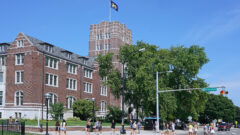
Initiatives such as the Michigan Lighthouse Assistance Program and the Save Our Lights program have raised money to keep historic lighthouses along the Great Lakes coastline intact amidst initiatives to privatize their control. Read the full story by Midland Daily News.

Original Article

Great Lakes Commission

Great Lakes Commission

https://www.glc.org/dailynews/20251015-lighthouse-funding-need
Nichole Angell

The St. Clair Region Conservation Authority is celebrating a successful first year of the Sydenham Phosphorus Reduction Initiative, a project focused on improving water quality in the Sydenham River and protecting the long-term health of Lake Erie. Read the full story by the Sydenham Current.

Original Article

Great Lakes Commission

Great Lakes Commission

https://www.glc.org/dailynews/20251015-phosphorus-reduction

Nichole Angell

Recovery efforts have delisted the once threatened Lake Erie water snake, a native of the Great Lakes islands. The species can grow up to 3.5 feet long and their favorite prey is the round goby, an invasive, nuisance fish species. Read the full story by The Columbus Dispatch.

Original Article

Great Lakes Commission

Great Lakes Commission

https://www.glc.org/dailynews/20251015-water-snake

Nichole Angell

Two statewide environmental advocacy groups and other local leaders met at a library in Erie, Pennsylvania to highlight the threat and urgency of mitigating harmful algal blooms and call the public to action. Read the full story by WJET – Erie, PA.

Original Article

Great Lakes Commission

Great Lakes Commission

https://www.glc.org/dailynews/20251015-erie-algal-blooms

Nichole Angell

The Lake Superior and Mississippi Railroad brings passengers on a 2-hour through the St. Louis River estuary aboard what most call the Duluth River Train. To celebrate the railroad’s 45th anniversary, the train is open for its longest season ever. Read the full story by WIDO – Duluth, MN.

Original Article

Great Lakes Commission

Great Lakes Commission

https://www.glc.org/dailynews/20251015-river-train

Nichole Angell

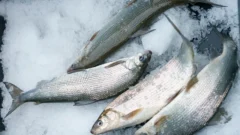
What to know about Michigan whitefish crisis, from limits to solutions

By Kelly House, Bridge Michigan

The Great Lakes News Collaborative includes Bridge Michigan; Circle of Blue; Great Lakes Now at Detroit PBS; Michigan Public, Michigan’s NPR News Leader; and The Narwhal who work together to bring audiences news and information about the impact of climate change, pollution, and aging infrastructure on the Great Lakes and drinking water.

Read Now at Great Lakes Now.

Original Article

Great Lakes Now

Great Lakes Now

https://www.greatlakesnow.org/2025/10/what-to-know-about-michigan-whitefish-crisis-from-limits-to-solutions/

Bridge Michigan

Library

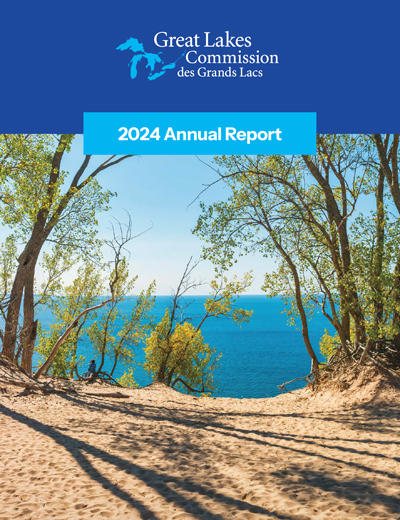
2024 Great Lakes Commission Annual Report

The 2024 Great Lakes Commission Annual Report includes highlights and key accomplishments from the year under the leadership of Chair Mary Mertz and Executive Director Erika Jensen. The Commission’s annual reports traditionally include a summary of highlights from the year as well as financial information and commissioner rosters.

Download PDF | Published October 2025


Original Article

Great Lakes Commission

Great Lakes Commission

https://www.glc.org/library/2024-glc-annual-report

Laura Andrews

A Michigan town hopes to stop a data center with a 2026 ballot initiative

By Tom Perkins, Inside Climate News

This article originally appeared on Inside Climate News, a nonprofit, non-partisan news organization that covers climate, energy and the environment. This is the second of three articles about Michigan communities organizing to stop the construction of energy-intensive computing facilities.

Read Now at Great Lakes Now.

Original Article

Great Lakes Now

Great Lakes Now

https://www.greatlakesnow.org/2025/10/michigan-town-effots-to-stop-data-center/

Inside Climate News

By Lauren Coin

Park trails along Lake Michigan’s shoreline in Wisconsin and Michigan are eroding because of more frequent extreme precipitation events and increased foot traffic from visitors in undesignated recreation areas.

The post Increased precipitation, foot traffic pose trail erosion problems at Lake Michigan parks first appeared on Great Lakes Echo.

Original Article

Great Lakes Echo

Great Lakes Echo

https://greatlakesecho.org/2025/10/15/increased-precipitation-foot-traffic-pose-trail-erosion-problems-at-lake-michigan-parks/

Great Lakes Echo

This year’s Healing Our Waters Conference brought together hundreds of advocates, funders, scientists, and community leaders in Rochester, New York, to explore solutions for the health of the Great Lakes. Over two days, participants shared knowledge, built new partnerships, and reflected on the region’s shared responsibility to protect its water resources. Healing our Waters is a coalition of more than 180 organizations that work to protect the Great Lakes, 

Representing the Alliance for the Great Lakes were Vice President for Programs Megan Cunningham, Senior Agriculture Policy Manager Angela Blatt, and Local Partnership Manager Bre’Shaun Reddick. Each returned from the conference with insights about collaboration, justice, and the power of community-led work. 

Rochester: A City Shaped by Water 

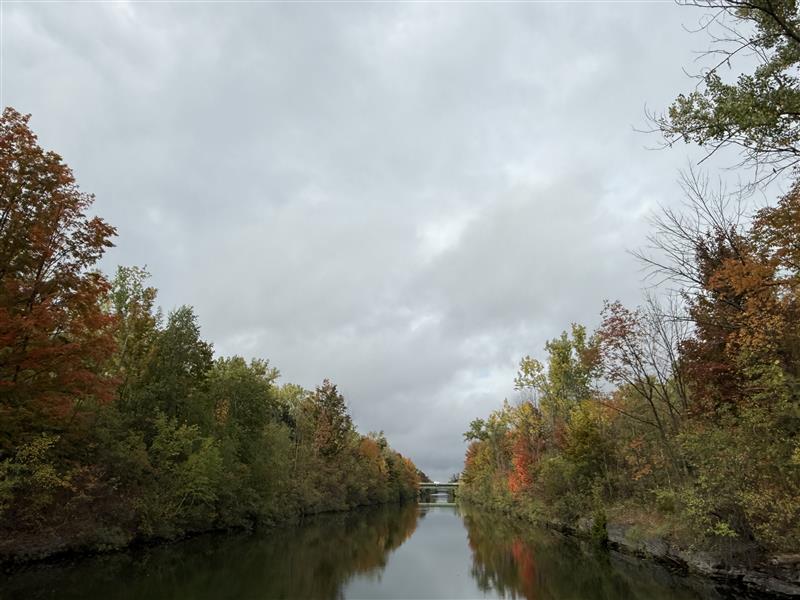
The conference’s location in Rochester offered a living example of the Great Lakes’ connection to history, innovation, and community. During a tour along the Genesee River and Erie Canal, participants learned how waterways fueled the city’s growth and continue to shape its identity. 

“As we marked the 200th anniversary of the Erie Canal, it was a reminder that our waterways have always been drivers of progress,” said Cunningham. “It also pushed us to remember that this progress came at a cost, including the displacement of Indigenous communities. Our responsibility now is to learn from that history and move toward restoration and balance.” 

That reflection framed many of the week’s discussions about equitable growth, resource protection, and accountability. 

Advancing Water Justice Across the Great Lakes 

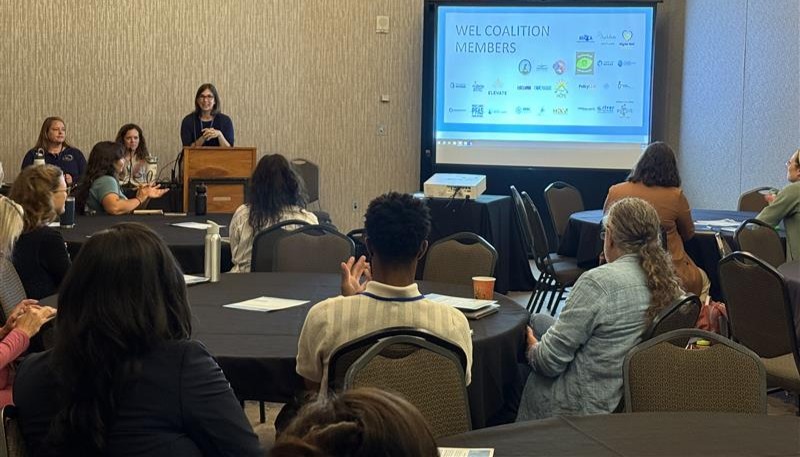
Vice President for Programs Megan Cunningham moderating a panel titled No One Left Thirsty: Advancing Water Justice Across Michigan

Cunningham also served as moderator for a panel titled No One Left Thirsty: Advancing Water Justice Across Michigan, which examined water affordability as a human right. She shared findings from the region’s use of federal funds through the Low-Income Water Assistance Program (LIWAP), which between 2021 and 2024 provided $287 million in relief to nearly 400,000 households. 

“It’s a reminder that this issue extends beyond any one city or state,” Cunningham said. “Families across the Great Lakes are still struggling to afford their water bills. We need consistent, long-term solutions that make access to clean water a right, not a privilege.” 

The panel also featured community and policy leaders who discussed how states can learn from each other’s efforts to make water more affordable and equitable. 

Partnership and Shared Learning 

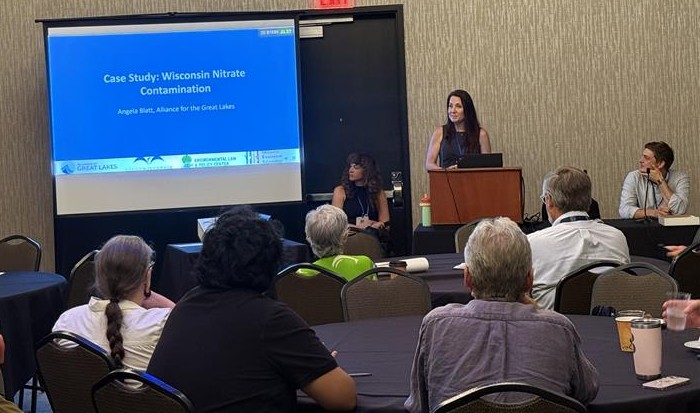
Senior Agriculture Policy Manager Angela Blatt presenting information on AGL’s recent Nitrate report.

For Blatt, the conference reinforced that progress on Great Lakes protection is rooted in relationships. 

“There was a strong focus on community-led solutions,” Blatt said. “The Milwaukee Community Advisory Committee model was especially inspiring. It shows how residents can take the lead in shaping restoration projects that reflect their priorities.” 

Throughout the event, Blatt met with partners from Michigan and Ohio, spoke with funders, and shared updates about the Alliance’s recent reports. “It was encouraging to hear how our work is resonating with people across the Basin,” she said. 

Federal Action and Regional Resilience 

In the closing plenary, Eight Months In: Washington’s Impact on the Great Lakes, Cunningham joined policy experts to discuss how federal decisions are shaping the region’s future. While challenges remain, bipartisan support for the Great Lakes Restoration Initiative continues to signal hope. 

“There’s a lot that feels uncertain in today’s political climate,” Cunningham said. “But the continued commitment to the Great Lakes shows what’s possible when people put the health of our waters first.” 

The discussion also highlighted the importance of maintaining science funding, updating infrastructure, and preparing for long-term challenges such as climate change and water affordability. 

Centering Community Voices 

For Reddick, attending for the first time as a member of the Healing Our Waters Governing Board was both inspiring and grounding. They explored Rochester’s waterways, birdwatched along the Genesee River, and joined sessions that connected art, culture, and environmental justice. 

“The conversations felt grounded and real,” Reddick said. “There was a deep commitment to honoring community voices while building partnerships that create lasting impact.” 

The conference reaffirmed that protecting the Great Lakes requires more than policy and research. It takes people. 

As Blatt reflected, “The energy was hopeful. We’re not just talking about protecting water. We’re building relationships that make real change possible.” 

The post Healing Our Waters Conference Recap: Collaboration and Community at the Core  appeared first on Alliance for the Great Lakes.

Original Article

News - Alliance for the Great Lakes

News - Alliance for the Great Lakes

https://greatlakes.org/2025/10/healing-our-waters-conference-recap-collaboration-and-community-at-the-core/

Michelle Farley

Los Alamos and University of Michigan want to build a national security ‘data center’ in Ypsilanti. Residents and local officials see few benefits.

By Tom Perkins, Inside Climate News

This article originally appeared on Inside Climate News, a nonprofit, non-partisan news organization that covers climate, energy and the environment. It’s the first of three articles about Michigan communities organizing to stop the construction of energy-intensive computing facilities.

Read Now at Great Lakes Now.

Original Article

Great Lakes Now

Great Lakes Now

https://www.greatlakesnow.org/2025/10/los-alamos-university-of-michigan-national-security-data-center/

Inside Climate News

Patchy dense fog is expected across far northeast and east-central Wisconsin through the overnight hours. The fog will reduce visibilities below one-half mile at times. Motorists should anticipate rapidly changing and poor visibilities. If you are traveling and encounter fog, slow down and allow extra room between you and the car in front of you, and be sure to use your low beam headlights.

Original Article

Current watches, warnings, and advisories for Brown County (WIC009) WI

Current watches, warnings, and advisories for Brown County (WIC009) WI

https://api.weather.gov/alerts/urn:oid:2.49.0.1.840.0.5814c9af43bcdba430b71a7f4f0f4bfba247b4bd.001.1.cap

NWS

By Eric Freedman

A Wisconsin bear hunting guide has been barred for a year from hunting on federal land. Timothy Collar’s crime: illegal bear baiting in the Chequamegon-Nicolet National Forest.

The post Bear-baiting bear hunting guide hit with hunting ban first appeared on Great Lakes Echo.

Original Article

Great Lakes Echo

Great Lakes Echo

https://greatlakesecho.org/2025/10/13/bear-baiting-bear-hunting-guide-hit-with-hunting-ban/

Eric Freedman

Once numbering in the thousands, now only dozens of commercial fishers remain in lakes Michigan and Huron as whitefish stock collapse; and unlike other fish crises, this one can’t be fixed by docking boats until stocks recover. Read the full story by Bridge Michigan.

Original Article

Great Lakes Commission

Great Lakes Commission

https://www.glc.org/dailynews/20251013-whitefish-fishers

Taaja Tucker-Silva

The collapse of lake whitefish stocks threatens Michigan’s environment, economy, and culture. Saving lake whitefish requires suppressing quagga and zebra mussels, but now, the infestation is only getting worse. Read the full story by Bridge Michigan.

Original Article

Great Lakes Commission

Great Lakes Commission

https://www.glc.org/dailynews/20251013-whitefish-crisis

Taaja Tucker-Silva

Park trails along Lake Michigan’s shoreline in Michigan and Wisconsin are eroding because of more frequent extreme precipitation events and increased foot traffic from visitors in undesignated recreation areas. Read the full story by The Detroit News.

Original Article

Great Lakes Commission

Great Lakes Commission

https://www.glc.org/dailynews/20251013-trail-erosion

Taaja Tucker-Silva

The preliminary results for the 2025 walleye hatch have been ranked ‘Exceptional,’ the highest on the Ohio Division of Wildlife’s scale. This translates into a high probability that this year’s young will enter the fishery in 2027 in numbers of 20 million or more. Read the full story by The Columbus Dispatch.

Original Article

Great Lakes Commission

Great Lakes Commission

https://www.glc.org/dailynews/20251013-walleye-hatch

Taaja Tucker-Silva

Hundreds gathered in Rome, New York, the birthplace of the Erie Canal, to welcome the Seneca Chief, a full-scale replica of the original vessel that carried New York Governor, DeWitt Clinton, who was credited with the building of the historic waterway. Read the full story by the Utica Observer Dispatch.

Original Article

Great Lakes Commission

Great Lakes Commission

https://www.glc.org/dailynews/20251013-erie-canal-celebration

Taaja Tucker-Silva

For the past 40 years, the Split Rock Lighthouse near Beaver Bay, Minnesota, has observed the anniversary of the Edmund Fitzgeralds sinking with a beacon lighting ceremony. This year’s event will continue that tradition. Read the full story by Minnesota Public Radio.

Original Article

Great Lakes Commission

Great Lakes Commission

https://www.glc.org/dailynews/20251013-edmund-fitzgerald-ceremony

Taaja Tucker-Silva

After nearly 50 years of service, the aging tugboat Arctic was dismantled and beached north of the harbor in Manitowoc, Wisconsin, in 1930. The shipwreck was surveyed in 2017, and its remains can be viewed by divers and snorkelers. Read the full story by the Herald Times Reporter.

Original Article

Great Lakes Commission

Great Lakes Commission

https://www.glc.org/dailynews/20251013-tugboat-arctic

Taaja Tucker-Silva

A plan to redevelop the historic railroad ferry terminal grounds in the Lake Michigan village of Elberta, Michigan, received $1.75 million to create a mixed-use redevelopment and a large public park with a shoreline trail, nature preserve, and expanded lake access. Read the full story by MLive.

Original Article

Great Lakes Commission

Great Lakes Commission

https://www.glc.org/dailynews/20251013-waterfront-revival

Taaja Tucker-Silva


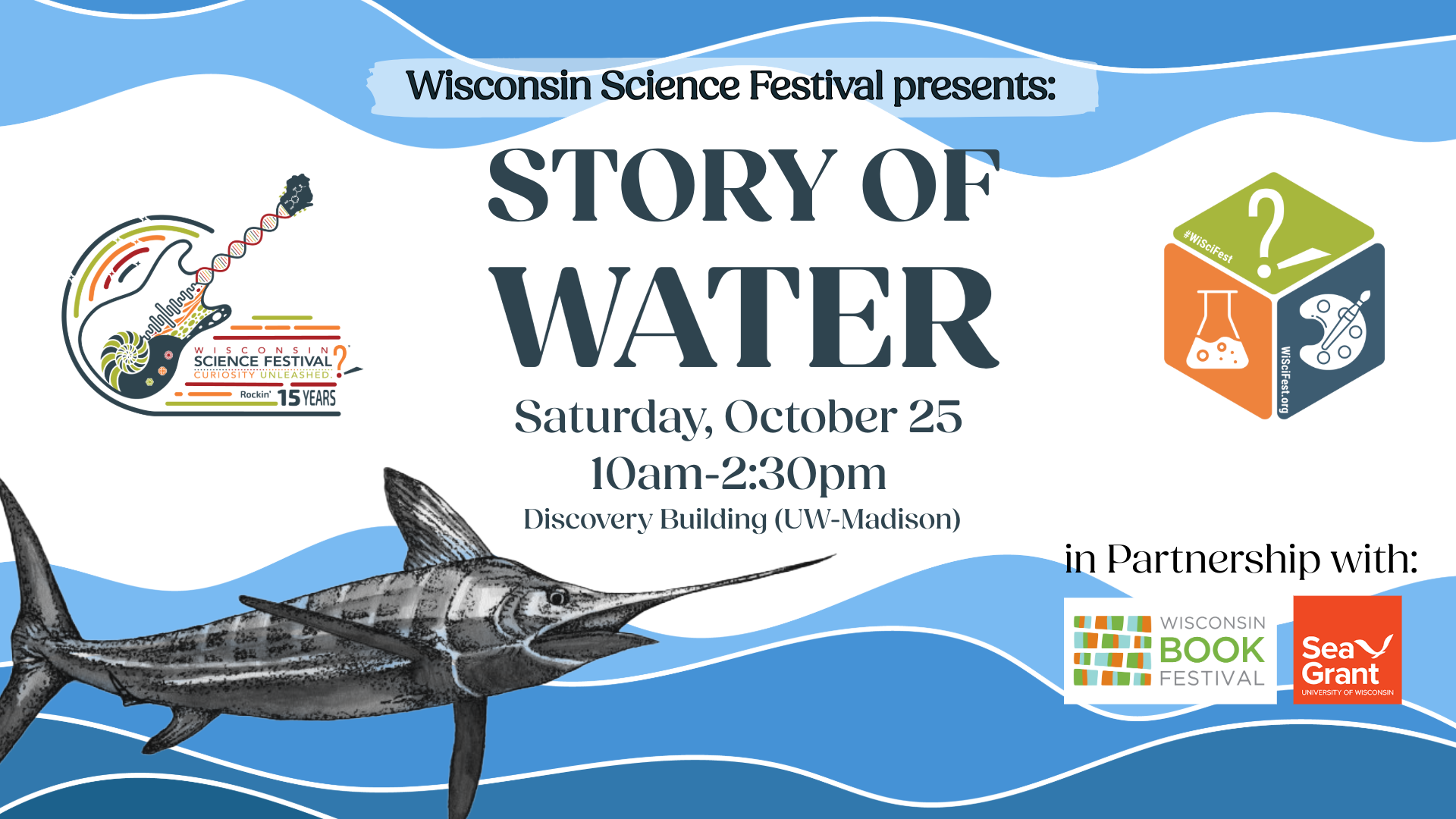
Banner image announcing the Story of Water event on Saturday October 25, 2025 at the Wisconsin Science Festival

On Saturday, Oct. 25, young readers and families can get up close and personal with Wisconsin’s iconic big fish, the lake sturgeon, at the 15th annual Wisconsin Science Festival.

From 10 a.m. to noon, Wisconsin Sea Grant and other University of Wisconsin–Madison staff will be leading hands-on activities for kids at the Story of Water mini-expo on the UW–Madison campus. Education coordinator Anne Moser will be displaying a variety of sturgeon items — including a five-foot stuffed foam fish — and fisheries specialist Titus Seilheimer will dissect a juvenile sturgeon. Kids and families can also explore booths about microplastics, science video games, Great Lakes shipwrecks, a wave tank, and more.

At noon, Moser will moderate a discussion of the newly released children’s book, “Saving our Sturgeon: Protecting Wisconsin’s Ancient Fish,” by Becky Wojahn. Moser served as a consultant on the book and has been teaching kids about sturgeon and other Great Lakes fish for many years at libraries across the state.

The book talk, which is presented in partnership with the Wisconsin Book Festival, will also feature local author Joe E. Meisel. His book, “The Marlin’s Fiery Eye and Other Tales from the Extraordinary World of Marine Fishes,” takes readers to the ocean to explore the wonders of saltwater fishes. The discussion will dive into both marine and freshwater environments and highlight the importance of protecting and celebrating fish.

“I’m looking forward to talking with both authors about writing nonfiction works and the importance of understanding and appreciating our natural world,” said Moser.

The Wisconsin Science Festival runs from October 16-26 and is a statewide celebration of science, technology, engineering, art, and math with activities for people of all ages, backgrounds, and interests throughout the state.

***

The University of Wisconsin Aquatic Sciences Center administers Wisconsin Sea Grant, the Wisconsin Water Resources Institute, and Water@UW. The center supports multidisciplinary research, education, and outreach for the protection and sustainable use of Wisconsin’s water resources. Wisconsin Sea Grant is one of 34 Sea Grant programs supported by the National Oceanic and Atmospheric Administration in coastal and Great Lakes states that encourage the wise stewardship of marine resources through research, education, outreach, and technology transfer.

The post ‘Story of Water’ spotlights sturgeon at Wisconsin Science Festival first appeared on Wisconsin Sea Grant.

Original Article

News Releases | Wisconsin Sea Grant

News Releases | Wisconsin Sea Grant

https://www.seagrant.wisc.edu/news/story-of-water-spotlights-sturgeon-at-wisconsin-science-festival/

Jenna Mertz

By Isabella Figueroa

In his new book “Dead Moose on Isle Royale: Off Trail with the Citizen Scientists of the Wolf-Moose Project," Jeffery Holden turns decades of volunteer field notes and short essays into an off-trail narrative about the people who sustain one of ecology’s longest-running studies. The Wolf-Moose Project at Isle Royale National Park started with scientists from Purdue University, Durward Allen and L. David Mech, in 1958. Since then, volunteers have collected data through on-the-ground fieldwork and built a six-decade record that reveals how climate, disease and food availability shape population cycles.

The post ‘Dig in and get my hands dirty’: New book explores citizen scientists and their contributions to the Wolf-Moose Project first appeared on Great Lakes Echo.

Original Article

Great Lakes Echo

Great Lakes Echo

https://greatlakesecho.org/2025/10/13/dig-in-and-get-my-hands-dirty-new-book-explores-citizen-scientists-and-their-contributions-to-the-wolf-moose-project/

Great Lakes Echo

Scientists are using a remotely operated vehicle to explore and map nearly 100 square miles of lakebed along the Pennsylvania, New York and Canadian borders. The survey area includes the deepest areas of the eastern basin of Lake Erie, with depths ranging from 114 to 180 feet.  Read the full story by Erie Times-News.

Original Article

Great Lakes Commission

Great Lakes Commission

https://www.glc.org/dailynews/20251010-scientists-rov-lakeerie

Hannah Reynolds

Despite low river levels and summer heat, the Michigan DNR’s annual fish egg collection at the Little Manistee Weir in Manistee County saw strong returns this season, a welcome sign after numbers dipped in recent years. Read the full story by WGTU-TV – Traverse City, MI.

Original Article

Great Lakes Commission

Great Lakes Commission

https://www.glc.org/dailynews/20251010-michigans-egg-collection-little-manistee-weir

Hannah Reynolds

The Huron River winds through woods in Ypsilanti Township, Michigan, where thousands of residents fish, canoe and swim. A proposal aims to add a 300,000-square-foot data center with a 20-acre electric substation to the landscape, raising concerns over energy usage and light, noise, water and air pollution. Read the full story by Michigan Advance.

Original Article

Great Lakes Commission

Great Lakes Commission

https://www.glc.org/dailynews/20251010-los-alamos-national-security-ai-data-center

Hannah Reynolds

The U.S. states and Canadian provinces that border the Great Lakes and St. Lawrence River produce $9.3 trillion in total economic activity each year. The region’s leaders are coordinating to boost that higher while also protecting the  environment. Read the full story by The Daily News.

Original Article

Great Lakes Commission

Great Lakes Commission

https://www.glc.org/dailynews/20251010-us-canadian-leaders-enhancing-greatlakes-cooperation

Hannah Reynolds

The state of Michigan’s budget includes notable investments in conservation and restoration. Highlights include waterfront land conservation and funding to support an effort to reintroduce Arctic grayling to select rivers in the northern lower peninsula. Read the full story by Interlochen Public Radio.

Original Article

Great Lakes Commission

Great Lakes Commission

https://www.glc.org/dailynews/20251010-beaches-fishes-trees-northern-michigan

Hannah Reynolds

In Ohio, the combination of drought and the current cyanobacteria blue-green algal bloom in the Sandusky Bay could result in fish kills, but favorable fall weather is likely to arrive in time to avoid the problem. Read the full story by the Fremont News-Messenger.

Original Article

Great Lakes Commission

Great Lakes Commission

https://www.glc.org/dailynews/20251010-fishkills-drought-algalbloom

Hannah Reynolds

More than 120 people recently rolled up their sleeves to tackle litter on the Cobourg shoreline of Lake Ontario, collecting 1,200 pieces of plastic and other debris as part of the inaugural Great Lakes Coastal Cleanup. Read the full story by KawathaNOW.

Original Article

Great Lakes Commission

Great Lakes Commission

https://www.glc.org/dailynews/20251010-greatlakes-coastal-cleanup-coburg-volunteers

Hannah Reynolds

* WHAT...Temperatures as low as 30 will result in frost formation. * WHERE...Portions of central, east central, and northeast Wisconsin. * WHEN...Until 9 AM CDT this morning. * IMPACTS...Frost could harm sensitive outdoor vegetation. Sensitive outdoor plants may be killed if left uncovered.

Original Article

Current watches, warnings, and advisories for Brown County (WIC009) WI

Current watches, warnings, and advisories for Brown County (WIC009) WI

https://api.weather.gov/alerts/urn:oid:2.49.0.1.840.0.7c068c3cf3f6d47c2af73550383e75235cb32b07.001.1.cap

NWS

* WHAT...Temperatures as low as 30 will result in widespread frost formation. * WHERE...Portions of central, east central, and northeast Wisconsin. * WHEN...From 1 AM to 9 AM CDT Thursday. * IMPACTS...Frost could harm sensitive outdoor vegetation. Sensitive outdoor plants may be killed if left uncovered.

Original Article

Current watches, warnings, and advisories for Brown County (WIC009) WI

Current watches, warnings, and advisories for Brown County (WIC009) WI

https://api.weather.gov/alerts/urn:oid:2.49.0.1.840.0.474bc3cd57dfd55114606a376efa3e7581a0d214.002.1.cap

NWS

* WHAT...Temperatures from 32 to 36 will result in widespread frost formation. * WHERE...Portions of central, east central, and northeast Wisconsin. * WHEN...From 1 AM to 9 AM CDT Thursday. * IMPACTS...Frost could harm sensitive outdoor vegetation. Sensitive outdoor plants may be killed if left uncovered. * ADDITIONAL DETAILS...The growing season has ended in Vilas, Oneida, Forest, Florence, northern Marinette, Lincoln, Langlade and northern Oconto counties, so frost and freeze headlines will no longer be issued there this fall.

Original Article

Current watches, warnings, and advisories for Brown County (WIC009) WI

Current watches, warnings, and advisories for Brown County (WIC009) WI

https://api.weather.gov/alerts/urn:oid:2.49.0.1.840.0.03515bd3248ae5555a5cfa234d29312505cb3e72.001.1.cap

NWS

After decades of cleanup efforts and community engagement, Muskegon Lake, between Lake Michigan and the city that bears its name in Michigan, has been removed from a U.S. and Canadian list of most polluted sites. Read the full story by the Detroit Free Press.

Original Article

Great Lakes Commission

Great Lakes Commission

https://www.glc.org/dailynews/20251008-muskeon-lake-delisted

Taaja Tucker-Silva

At a time of rising temperatures and water levels, along with the threat of wildfires and smoke, many are reassessing where to live and Buffalo, New York, is embracing the “climate haven” tag. Read the full story by Great Lakes Now.

Original Article

Great Lakes Commission

Great Lakes Commission

https://www.glc.org/dailynews/20251008-buffalo-climate-haven

Taaja Tucker-Silva

Chicago has more than 412,000 confirmed and suspected lead service lines — the most of any city in the country — but replacements are lagging and millions of dollars in federal and city loans dedicated to replacing lead pipes remain unused. Read the full story by Great Lakes Now.

Original Article

Great Lakes Commission

Great Lakes Commission

https://www.glc.org/dailynews/20251008-chicago-lead-pipes

Taaja Tucker-Silva

The replica Seneca Chief, a floating museum and tribute to the original vessel that carried New York Governor DeWitt Clinton in 1825, will stop at ports in the Mohawk Valley, New York, to mark the 200th anniversary of opening of the Erie Canal. Read the full story by the Utica Observer Dispatch.

Original Article

Great Lakes Commission

Great Lakes Commission

https://www.glc.org/dailynews/20251008-seneca-chief

Taaja Tucker-Silva

Nearly 30 agencies from Michigan, Indiana, and Ohio gathered in St. Ignace, Michigan, this week for a large-scale emergency response training simulating a midair plane crash over Lake Huron near the Mackinac County Airport. Read the full story by WWTV-TV – Cadillac, MI.

Original Article

Great Lakes Commission

Great Lakes Commission

https://www.glc.org/dailynews/20251008-huron-training

Taaja Tucker-Silva

A federal judge ruled that the now-defunct Erie Coke Corporation on the shores of Lake Erie in Erie, Pennsylvania, must pay $700,000 for a multi-year conspiracy to violate the U.S. Clean Air Act, a decision some environmental activists said isn’t enough. Read the full story by WJET-TV – Erie, PA.

Original Article

Great Lakes Commission

Great Lakes Commission

https://www.glc.org/dailynews/20251008-erie-coke-fine

Taaja Tucker-Silva

By Isabella Figueroa Nogueira
A recent collaborative study, conducted through the Great Lakes Indian Fish and Wildlife Commission, the College of Menominee Nation in Kenosha, Wisconsin, nine tribal entities and academic researchers to understand how climate change threatens the lake sturgeon and to develop adaptation strategies rooted in tribal knowledge.

The post Western and Indigenous knowledge will help lake sturgeon, study shows  first appeared on Great Lakes Echo.

Original Article

Great Lakes Echo

Great Lakes Echo

https://greatlakesecho.org/2025/10/08/western-and-indigenous-knowledge-will-help-lake-sturgeon-study-shows/

Great Lakes Echo

* WHAT...Temperatures as low as 30 will result in frost formation. * WHERE...Waushara, Calumet, Winnebago, Brown, Outagamie, and Waupaca Counties. * WHEN...Until 9 AM CDT this morning. * IMPACTS...Frost could harm sensitive outdoor vegetation. Sensitive outdoor plants may be killed if left uncovered.

Original Article

Current watches, warnings, and advisories for Brown County (WIC009) WI

Current watches, warnings, and advisories for Brown County (WIC009) WI

https://api.weather.gov/alerts/urn:oid:2.49.0.1.840.0.a7e2d85619ffa88a5832f45daf534e21795fa4d4.004.1.cap

NWS