They’re known as the gales of November, and they conjure images of hurricane-force winds, towering waves, ice-cold temperatures, and bobbing ships. Maritime historians estimate they are responsible for roughly half of Great Lakes shipwrecks.  Read the full story by The Sault News.

Original Article

Great Lakes Commission

Great Lakes Commission

https://www.glc.org/dailynews/20251103-november-gales

Taaja Tucker-Silva

Environmental activists and lawmakers are pushing for action as abandoned boats are being left on the shores of Wisconsin’s rivers and lakes. Wisconsin law does not currently require swift removal of abandoned boats from state waters. Read the full story by Spectrum News 1.

Original Article

Great Lakes Commission

Great Lakes Commission

https://www.glc.org/dailynews/20251103-abandoned-boats

Taaja Tucker-Silva

Two Ontario fisheries facilities along Lake Erie are getting $10 million facelifts to protect local fisheries and jobs. Planned improvements include replacing aging infrastructure, expanding facility space, and incorporating new technologies to improve efficiency and safety. Read the full story by CK News Today.

Original Article

Great Lakes Commission

Great Lakes Commission

https://www.glc.org/dailynews/20251103-ontario-fisheries

Taaja Tucker-Silva

One of the last remaining large urban coastal wetlands on Lake Ontario received a $1.61 million boost from Ottawa this year, with work restoring the health of under-threat Second Marsh in Ottawa already underway. Read the full story by INsauga.

Original Article

Great Lakes Commission

Great Lakes Commission

https://www.glc.org/dailynews/20251103-ontario-wetlands

Taaja Tucker-Silva

Environmental professionals, business leaders, and others discussed the challenges facing the Great Lakes at the 18th annual Freshwater Summit in Traverse City, Michigan. One focus at the summit is how climate change could impact the health of the Great Lakes. Read the full story by WPBN/WGTU-TV – Traverse City, MI.

Original Article

Great Lakes Commission

Great Lakes Commission

https://www.glc.org/dailynews/20251103-freshwater-summit

Taaja Tucker-Silva

By Eric Freedman

Empty lots in deindustrialized cities like Detroit may contribute to bird species diversity, says a new study by researchers at MSU and Carleton University in Canada. The study is based on sound recordings collected at 110 sites in 11 Detroit neighborhoods. The study recommends that vacant land management in the city takes a balanced approach that considers the needs of both residents and birds. There are other concerns about vacant land, too, including as sites for solar arrays.

The post Vacant lots boost diversity among Detroit’s birds, study finds first appeared on Great Lakes Echo.

Original Article

Great Lakes Echo

Great Lakes Echo

https://greatlakesecho.org/2025/11/03/vacant-lots-boost-diversity-among-detroits-birds-study-finds/

Eric Freedman

West winds gusting to 25 to 35 mph, low relative humidity and mild temperatures will result in elevated fire weather conditions this afternoon. Residents are urged to be careful with any activities that could potentially lead to a wildland fire. Campfires, outdoor grills, smoking materials, chain saws, and all-terrain vehicles all have the potential to throw a spark and ignite a wildfire.

Original Article

Current watches, warnings, and advisories for Brown County (WIC009) WI

Current watches, warnings, and advisories for Brown County (WIC009) WI

https://api.weather.gov/alerts/urn:oid:2.49.0.1.840.0.7cdd7d91a1e00c9a99f68934f0ea8c576f9e2eb6.001.1.cap

NWS

West winds gusting to 25 to 35 mph, low relative humidity and mild temperatures will result in elevated fire weather conditions Monday afternoon. Residents are urged to be careful with any activities that could potentially lead to a wildland fire. Campfires, outdoor grills, smoking materials, chain saws, and all-terrain vehicles all have the potential to throw a spark and ignite a wildfire.

Original Article

Current watches, warnings, and advisories for Brown County (WIC009) WI

Current watches, warnings, and advisories for Brown County (WIC009) WI

https://api.weather.gov/alerts/urn:oid:2.49.0.1.840.0.eead17338e28b8c066f540e99134d45424917077.001.1.cap

NWS

Environmental groups are blasting what some are calling a “premature and unlawful decision” by the U.S. Army Corps of Engineers to approve federal permits for the Enbridge Line 5 pipeline project in northern Wisconsin.  Read the full story by the Wisconsin Examiner.

Original Article

Great Lakes Commission

Great Lakes Commission

https://www.glc.org/dailynews/20251031-line5-reactions

Autumn McGowan

The Wisconsin Department of Natural Resources is proposing to reduce the number of whitefish that commercial fishers can take from Lake Michigan as the population has seen a dramatic decline in the past two decades. Read the full story by Wisconsin Public Radio.

Original Article

Great Lakes Commission

Great Lakes Commission

https://www.glc.org/dailynews/20251031-whitefish-harvest-limits

Autumn McGowan

More than five years after first announcing stricter controls on industrial farm pollution meant to keep pollutants out of Michigan’s waterways, state environmental regulators will finally start enforcing the controls. Read the full story by Bridge Michigan.

Original Article

Great Lakes Commission

Great Lakes Commission

https://www.glc.org/dailynews/20251031-farm-pollution-regulation

Autumn McGowan

A plan is underway to build a massive artificial intelligence data center in Washtenaw County’s Saline Township to support OpenAI. A chief criticism of data centers has been their high usage of water and power. Read the full story by the Detroit Free Press.

Original Article

Great Lakes Commission

Great Lakes Commission

https://www.glc.org/dailynews/20251031-michigan-ai-datacenter

Autumn McGowan

Hellbenders, North America’s largest amphibian, are an endangered species and an indicator of good water quality in Ohio’s streams. The Columbus Zoo and Aquarium recently released 116 eastern hellbender salamanders as part of a program that stretches back a decade. Read the full story by the Akron Beacon Journal.

Original Article

Great Lakes Commission

Great Lakes Commission

https://www.glc.org/dailynews/20251031-hellbender

Autumn McGowan

On Michigan’s Beaver Island, located in Lake Michigan, the cost to ferry a vehicle back and forth to the mainland can be a steep deterrent to removing broken down cars that end up leaking fluids into the water supply. A recent project is cleaning up the clunker cars.  Read the full story by MLive.

Original Article

Great Lakes Commission

Great Lakes Commission

https://www.glc.org/dailynews/20251031-beaver-island-junkcars

Autumn McGowan

News

Great Lakes Commission passes resolutions on AI/computing infrastructure and water use; elects new leadership at meeting in Duluth

Duluth, Minnesota – At its Annual Meeting, held this week on the shores of Lake Superior in Duluth, Minnesota, the Great Lakes Commission (GLC) passed resolutions calling for advancement of non-potable water reuse and coordinated resource management in the development of AI and computing infrastructure, as well as prevention of plastic pollution and harmonization of stormwater management in the Great Lakes and St. Lawrence River region.

“The economy of the Great Lakes region is supported by access to water — from industry to agriculture and outdoor recreation to shipping,” said GLC Executive Director Erika Jensen. “Our commissioners have noted a growing need to understand the impacts that new technologies will have on the Great Lakes and the roles that water recycling and reuse can play.”

At the meeting, the GLC also elected new leadership: Chair Timothy Bruno, Great Lakes Program Coordinator at the Pennsylvania Department of Environmental Protection, and Vice Chair James Jennings, Director of the Illinois Environmental Protection Agency.

“I’m honored for the opportunity to serve as chair of the Great Lakes Commission,” said Chair Bruno. “This critical agency brings the region together to work on issues that no single community, state, province, or nation can tackle alone. On behalf of the GLC, I’d also like to extend our gratitude to immediate past chair Mary Mertz, director of the Ohio Department of Natural Resources, for her incredible leadership over her two terms as chair of the agency.”

The Annual Meeting featured remarks from Duluth Mayor Roger Reinert and journalist Peter Annin, author of Purified: How Recycled Sewage Is Transforming Our Water and The Great Lakes Water Wars and executive director of the Burke Center for Ecosystem Research. Attendees also heard from expert panels on microplastics, harmful algal blooms, and water reuse and students participating in environmental programs at Duluth Public Schools. On Wednesday evening, attendees celebrated the 70th anniversary of the GLC, which was established in 1955 by the Great Lakes Basin Compact. The Compact was ratified by the Great Lakes state legislatures and granted consent by the U.S Congress in 1968.

In advance of the meeting, GLC leadership planted two trees on the Superior Hiking Trail. As a founding member of the Great Lakes St. Lawrence Trees and Green Events initiatives, the GLC has committed to using sustainable practices at its meetings and supporting the initiative’s goal of planting 250 million trees in the Great Lakes basin by 2033. The GLC also hosted a tour of the St. Louis River Estuary on the Duluth River Train; representatives of the Minnesota and Wisconsin Departments of Natural Resources, the Minnesota Pollution Control Agency, and the Fond du Lac Band of Lake Superior Chippewa outlined remediation and restoration work underway in the estuary. Additionally, the GLC hosted a screening of the film Ripples of Plastic, which explores the unseen impacts of plastic pollution in the Great Lakes, including contamination, microplastics, and human health effects, and a conversation with the filmmaker.

The GLC will next convene in Washington, D.C. for its Semiannual Meeting and Great Lakes Day on March 3-5, 2026. More information will be available on the GLC’s website in advance of the meeting. 


The Great Lakes Commission, led by chair Timothy J. Bruno, Great Lakes Program Coordinator at the Pennsylvania Department of Environmental Protection, is a binational government agency established in 1955 to protect the Great Lakes and the economies and ecosystems they support. Its membership includes leaders from the eight U.S. states and two Canadian provinces in the Great Lakes basin. The GLC recommends policies and practices to balance the use, development, and conservation of the water resources of the Great Lakes and brings the region together to work on issues that no single community, state, province, or nation can tackle alone. Learn more at www.glc.org.

Contact

For media inquiries, please contact Beth Wanamaker, beth@glc.org.

Recent GLC News

Upcoming GLC Events

View GLC Calendar

Archives

Original Article

Great Lakes Commission

Great Lakes Commission

https://www.glc.org/news/am-103025

Beth Wanamaker

Patchy fog, locally dense in spots, with a visibility of 1/4 mile or less, has developed across portions of the Fox Valley early this morning. Air temperatures were hovering around freezing as well, therefore some icy spots are also possible. Motorists, including morning commuters, should allow for a little extra time to reach your destination, slow down, and use your low beam headlights if you encounter dense fog. The fog should burn off by 10 am.

Original Article

Current watches, warnings, and advisories for Brown County (WIC009) WI

Current watches, warnings, and advisories for Brown County (WIC009) WI

https://api.weather.gov/alerts/urn:oid:2.49.0.1.840.0.b28612f4990a11d0d8164e70f7a02bfb77d36707.001.1.cap

NWS

Lawmakers from around the Great Lakes are hoping to make the area a little greener. Members from the Great Lakes Commission planted trees on Tuesday near Bayfront Festival Park in Duluth, Minnesota. It’s part of a regional goal to plant 250 million trees around the Great Lakes by 2033. Read the full story by Northern News Now.

Original Article

Great Lakes Commission

Great Lakes Commission

https://www.glc.org/dailynews/20251029-commission-tree-planting

Nichole Angell

Construction of a proposed data center in Hermantown, Minnesota, just off the shore of Lake Superior would include up to four buildings housing equipment on more than 200 acres. Some are concerned about the non-disclosure agreements protecting the interest and trade secrets of companies constructing this center. Read the full story by the North Shore Journal.

Original Article

Great Lakes Commission

Great Lakes Commission

https://www.glc.org/dailynews/20251029-superior-data-center

Nichole Angell

Earlier this month, the state of Illinois announced it had acquired land needed to move along the Brandon Road Interbasin Project, a $1.15 billion barricade aimed at keeping invasive carp from entering the channel that connects the Mississippi River Basin with the Great Lakes. Read the full story by the Outdoor News.

Original Article

Great Lakes Commission

Great Lakes Commission

https://www.glc.org/dailynews/20251029-brandon-road-project

Nichole Angell

The Great Lakes Writers Festival has been bringing together students, readers, writers and authors since 1991. This year, the two-day festival, which is free of charge, will include readings, book signings, master classes and open mic sessions. Read the full story by the Sheboygan Press.

Original Article

Great Lakes Commission

Great Lakes Commission

https://www.glc.org/dailynews/20251029-gl-writers-festival

Nichole Angell

By Isabella Figueroa Nogueria

Frank Boles, a retired Central Michigan University historian, has spent decades documenting Michigan’s past. His latest book, “Visiting Mackinac: 150 Years of Tourism at Michigan’s Fabled Straits,” explores how Mackinac Island and the surrounding Straits region became a hub for travelers from across the country.

The post New book shares how Mackinac Island became Michigan’s tourism gem first appeared on Great Lakes Echo.

Original Article

Great Lakes Echo

Great Lakes Echo

https://greatlakesecho.org/2025/10/29/new-book-shares-how-mackinac-island-became-michigans-tourism-gem/

Isabella Figueroa Nogueira

Illinois one step closer to keeping invasive carp out of Great Lakes

By Juanpablo Ramirez-Franco, WBEZ

This coverage is made possible through a partnership between WBEZ and Grist, a nonprofit, independent media organization dedicated to telling stories of climate solutions and a just future. Sign up for WBEZ newsletters to get local news you can trust.

Read Now at Great Lakes Now.

Original Article

Great Lakes Now

Great Lakes Now

https://www.greatlakesnow.org/2025/10/illinois-one-step-closer-to-keeping-invasive-carp-out-of-great-lakes/

WBEZ

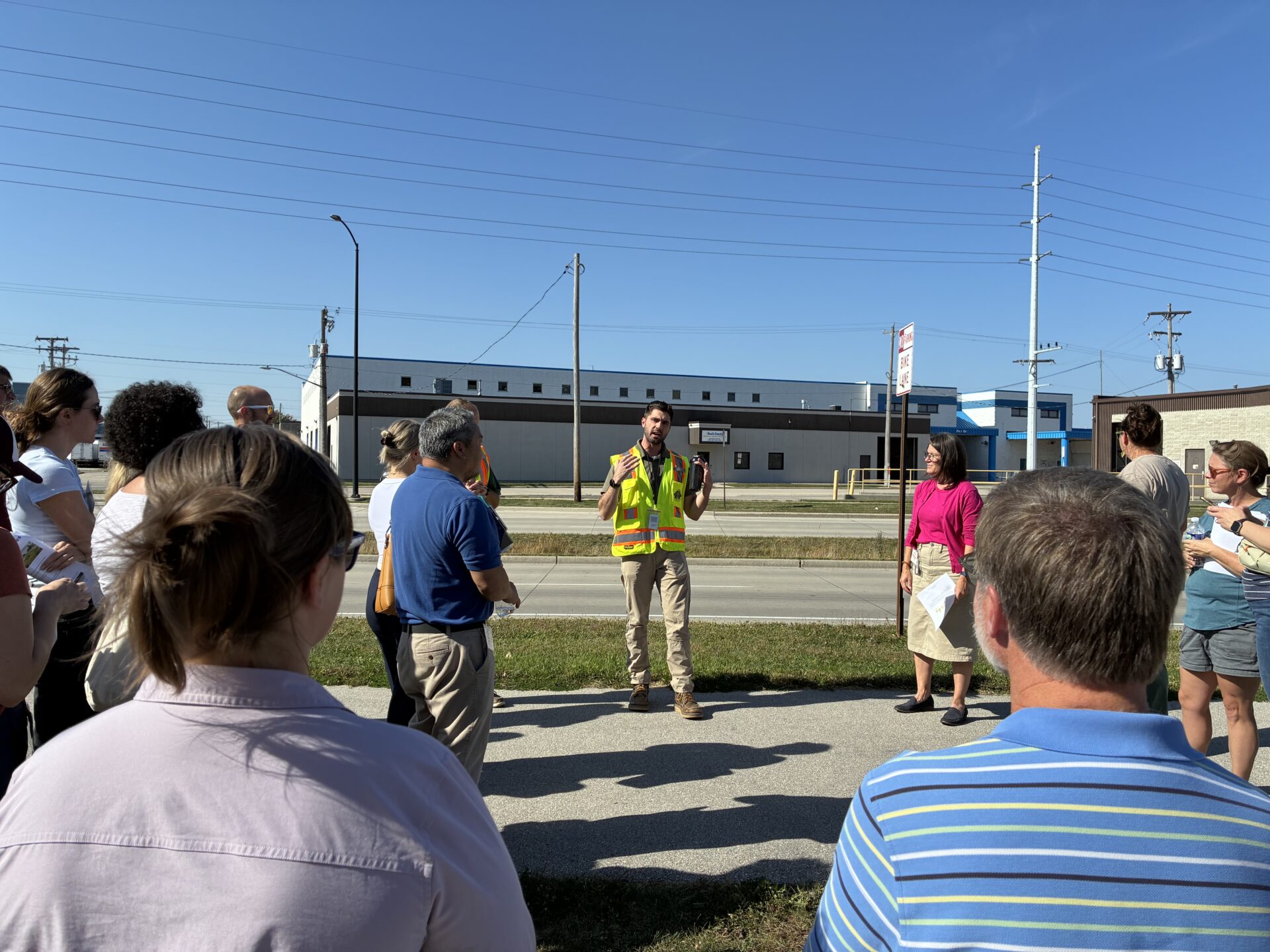
On October 2, a tour group with the East River Collaborative gathered on Webster Avenue in Green Bay, Wisconsin, to learn how the median, bristling with native grasses and late-season blooms, serves as both a sponge and spot of beauty along this busy stretch of road.

“These plant species offer aesthetic value. They also offer pollinator habitat,” explained Adam Meade, a stormwater engineering technician with the city of Green Bay who maintains the median. “And the real key thing is that they treat stormwater.”

The shallow, vegetated depressions, known as bioswales, were one stop on the East River Collaborative’s tour of green stormwater infrastructure projects across the city. The event brought together local municipalities and environmental organizations to learn about natural ways to slow, absorb, and treat runoff. For Wisconsin Sea Grant’s Julia Noordyk, who helped organize the tour, it was a showcase of possibilities.

“We wanted to give people the opportunity to see green stormwater infrastructure in person and ask questions about the design, costs, and lessons learned,” she said. “These projects are possible, and they can take many forms.”

A stormwater engineer in a bright yellow vest explains how bioswales catch stormwater on Webster Avenue in Green Bay.

Adam Meade explains the Webster Avenue bioswales, which are located in the median of the road behind him. Photo: Wisconsin Sea Grant

Unlike traditional infrastructure, which relies on impermeable surfaces like pipes, gutters, and ditches to transport stormwater away from other impermeable surfaces like roads and parking lots, green stormwater infrastructure mimics the way water moves in nature and encourages it to soak into the ground where it falls. That absorption is a good thing. It means fewer contaminants running into waterways and — key to the East River Collaborative’s mission — less flooding.

The collaborative formed in response to historic flooding of the East River in March 2019, which impacted both Green Bay and neighboring communities. Since then, the group has brought together municipal, state, federal, nonprofit, and university partners to build resilience to floods across the East River Watershed. Much of their work revolves around education so partners feel empowered to make choices that make sense for their communities.

“We really want to use this platform to share knowledge and expertise and funding sources with each other,” said Kari Hagenow, a coastal resilience specialist with The Nature Conservancy who helped plan the tour. “So, building the capacity of our partners — that’s what the focus is today.”

The field tour stopped at four locations across Green Bay — the NEW Water campus, Webster Avenue, Eliza Street, and Danz Park — and showcased three different types of green stormwater infrastructure.

Bioswales

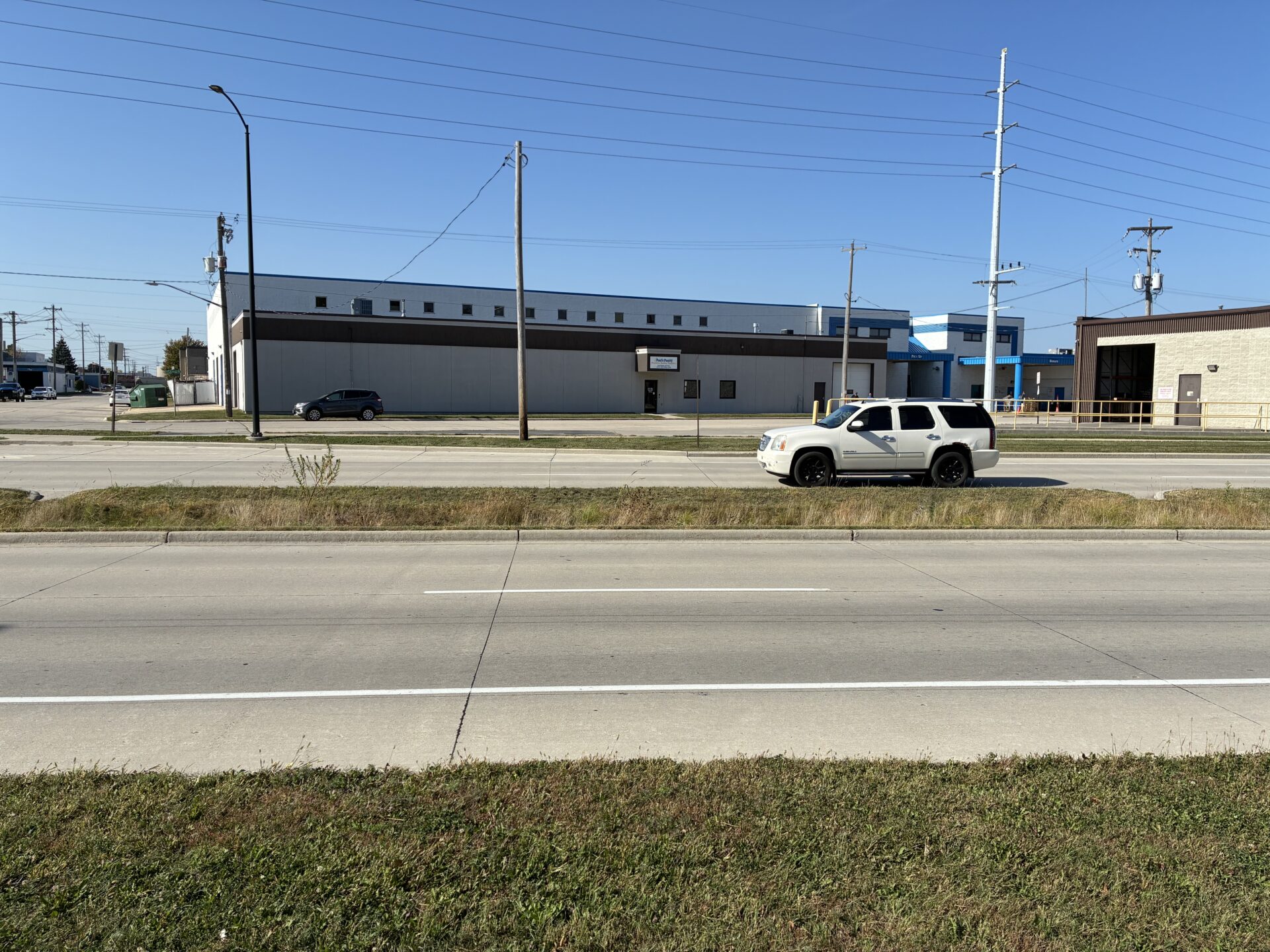
A white car drives past a grassy median

A car drives past the bioswales. Photo: Wisconsin Sea Grant

Built in 2019 as part of a multimillion dollar road reconstruction project, the seven bioswales stretch nearly a mile along Webster Avenue. Curb cuts allow runoff from the road to flow into the shallow depressions, where native plants soak up water and filter contaminants that would have otherwise run directly into storm sewers. The bioswales relieve pressure on the stormwater system and offer natural beauty along one of Green Bay’s main thoroughfares.

They do require some maintenance. “[The bioswales] are the low points of the road,” Adam Meade said. “They’re going to collect all the runoff. So, what that means too is all the trash and debris and sand.”

Increased maintenance in spring, however, is offset by lower maintenance needs in summer. Unlike conventional turf grass medians, the bioswales only require occasional mowing along the borders so plants don’t encroach on the road.

Permeable pavement

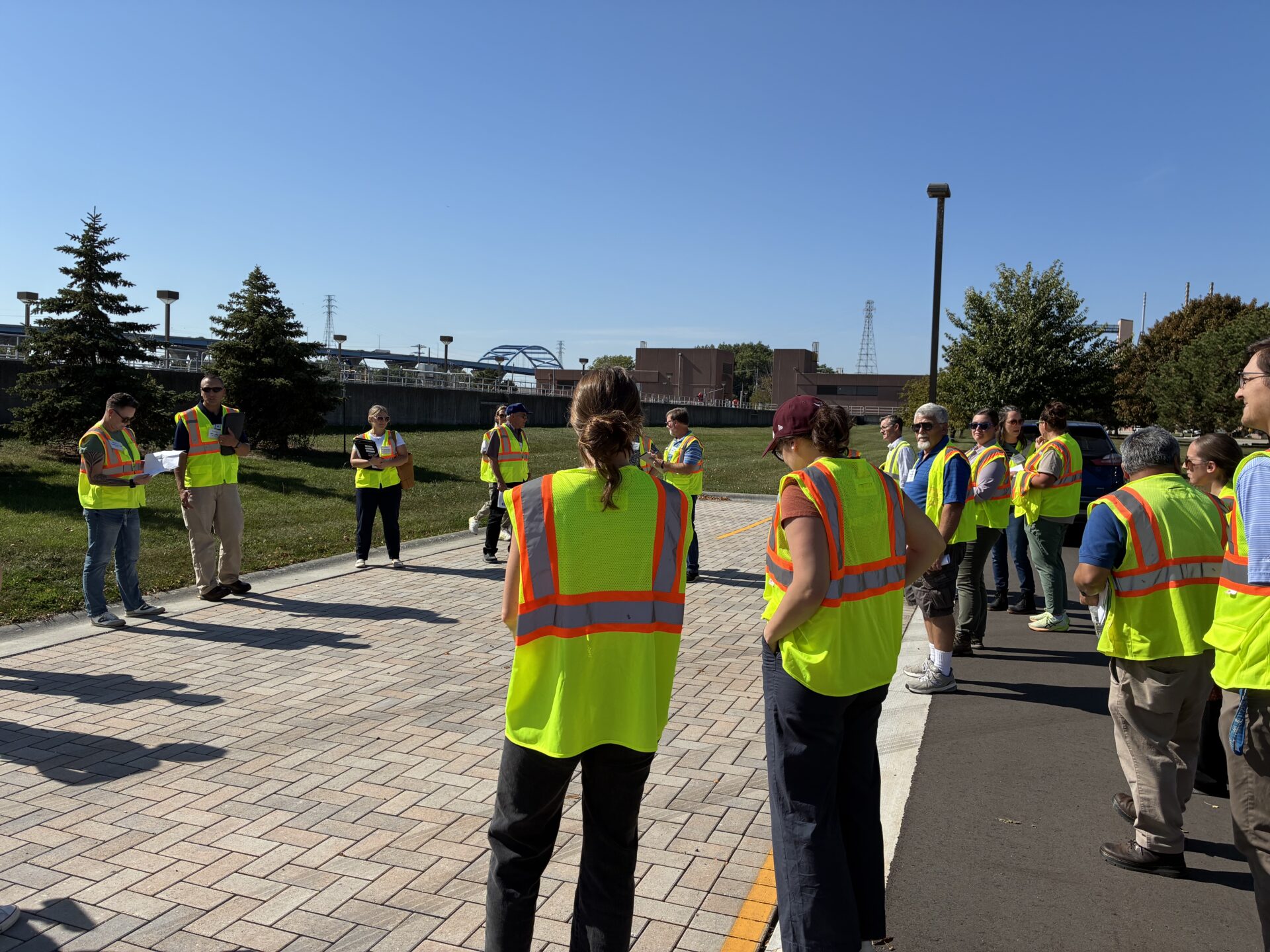
A tour group in high visibility yellow vests looks at a section of permeable pavement

A section of NEW Water’s parking lot is permeable pavement. Photo: Wisconsin Sea Grant

Pavement that allows water to run through it, rather than over it, was on display at two sites on the tour. NEW Water, the brand of the Green Bay Metropolitan Sewerage District, recently installed 2,200 square feet of permeable pavers in its parking lot. Water flows into spaces between interlocking pavers, where it filters through several layers of gravel before entering the storm sewer.

The Eliza Street pavers, located at the bottom of a hill in a residential neighborhood, are a different brand but function similarly. They can capture over 1,000 inches of rain per hour, storing and cleaning runoff before it enters the Fox River.

Both systems require annual vacuuming to remove debris clogging the spaces between pavers. Winter also presents challenges, as salt and snowplows can damage the pavers, so special care is taken when clearing these areas.

Native plants

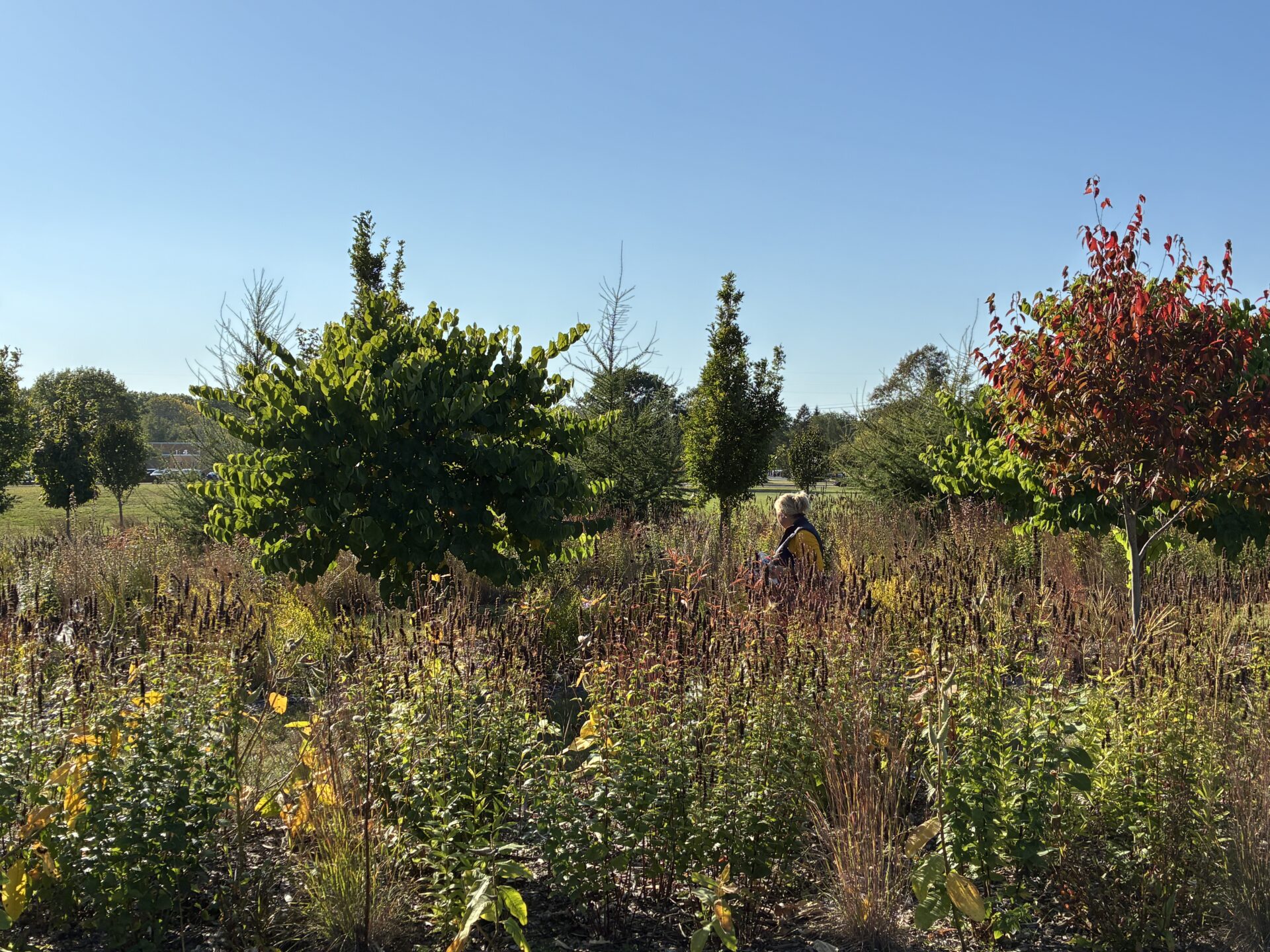
Late afternoon sun lights up a native prairie planting as a person walks through the garden

The Danz Park prairie plants. Photo credit: Wisconsin Sea Grant

Deep-rooted prairie plants are good at soaking up water — and look good while doing it — which makes them suitable for managing runoff and beautifying spaces. In addition to their permeable pavement project, NEW Water showed off their recently seeded prairie, which replaces 1.2 acres of turf grass. Jeff Smudde, director of environmental programs, explained that the planting is part of an effort to increase water infiltration across their properties, of which 46% is impervious.

“We can demonstrate that not only do we talk a good talk, but we walk the walk as well,” he said.

The aesthetic benefits of native plants were clear at Danz Park, the final stop of the tour. Parks Director Dan Ditscheit explained how the city worked with the Green Bay Conservation Corps to install 9,400 prairie plants around Century Grove, an area of 100 trees that commemorates the department’s 100th anniversary. The plants replaced an area of weed-choked wood chips.

“What’s nice about this scenario is that it doesn’t take a lot of maintenance other than coming in and weeding it every so often,” said Ditscheit. “And it reduces the amount of turf that we have to mow on an annual basis.”

The plants are arranged in artful rings and look more landscaped than a traditional prairie. Maria Otto, conservation corps coordinator, said that was intentional to challenge “the misconceptions of native plants looking weedy or wild.” The plantings have attracted attention from neighbors and wildlife alike.

“We actually have homeowners calling us, like, ‘What plants do you have at that site?’” Otto said. “We have a meadow blazing star here, and on one blazing star, there were 10 monarch butterflies.”

***

The University of Wisconsin Aquatic Sciences Center administers Wisconsin Sea Grant, the Wisconsin Water Resources Institute, and Water@UW. The center supports multidisciplinary research, education, and outreach for the protection and sustainable use of Wisconsin’s water resources. Wisconsin Sea Grant is one of 34 Sea Grant programs supported by the National Oceanic and Atmospheric Administration in coastal and Great Lakes states that encourage the wise stewardship of marine resources through research, education, outreach, and technology transfer.


The post Stormwater infrastructure tour puts the ‘green’ in Green Bay first appeared on Wisconsin Sea Grant.

Original Article

News Releases | Wisconsin Sea Grant

News Releases | Wisconsin Sea Grant

https://www.seagrant.wisc.edu/news/stormwater-infrastructure-tour-puts-the-green-in-green-bay/

Jenna Mertz

New study links seasonal pollen to higher suicide risk, experts warn

A new study between researchers at the University of Michigan and Wayne State University, looked at suicide rates in metropolitan areas around the United States. When looking at data from 2000 to 2018, they found a direct correlation to rises in seasonal pollen. While it is still unknown how exactly allergies work as a tipping point for some people, the research adds to a burgeoning body of work that shows this parallel exists.  

Read Now at Great Lakes Now.

Original Article

Great Lakes Now

Great Lakes Now

https://www.greatlakesnow.org/2025/10/new-study-links-seasonal-pollen-to-higher-suicide-risk-experts-warn/

Lisa John Rogers, Great Lakes Now

Every fall, rain plus leaf piles can turn our streets into accidental teapots. Add water to leaves and you get a dark brew. When that wash heads into storm drains, it goes straight to our local waters where it can help fuel algae. The fix is easy and it starts in the yard. [...]

The post Please Don’t Brew “Phosphorus Tea” appeared first on Fox-Wolf Watershed Alliance.

Original Article

Fox-Wolf Watershed Alliance

Fox-Wolf Watershed Alliance

https://fwwa.org/2025/10/28/phosphorus-tea/?utm_source=rss&utm_medium=rss&utm_campaign=phosphorus-tea

Fox-Wolf Watershed Alliance

Turning Fields into Filters New Project alert! Turning Fields into Filters Exciting news! Fox-Wolf Watershed Alliance and Waushara County Land Conservation Department are partnering on our new project - Turning Fields into Filters. We're working with 3 local agriculture landowners to transform over 80 acres of marginal [...]

The post Turning Fields into Filters┃New Project Announcement appeared first on Fox-Wolf Watershed Alliance.

Original Article

Fox-Wolf Watershed Alliance

Fox-Wolf Watershed Alliance

https://fwwa.org/2025/10/28/turningfieldsintofiltersannouncement/?utm_source=rss&utm_medium=rss&utm_campaign=turningfieldsintofiltersannouncement

Tim Burns

Pauline McCleary has been caring for water her whole life, long before she was raising beetles in the kiddie pools in her backyard. Raised on a farm with a spring-fed well, she learned early that water wasn’t just something that came from a tap. “If it goes in the lake, you’ll drink it later,” [...]

The post Pauline’s Butterfly Effect, with Beetles appeared first on Fox-Wolf Watershed Alliance.

Original Article

Fox-Wolf Watershed Alliance

Fox-Wolf Watershed Alliance

https://fwwa.org/2025/10/27/paulines-butterfly-effect/?utm_source=rss&utm_medium=rss&utm_campaign=paulines-butterfly-effect

Fox-Wolf Watershed Alliance

Access to clean drinking water is essential for everyone, which is why the Alliance for the Great Lakes supports a bipartisan Ohio bill designed to eliminate all lead water lines that still exist in the state.  

At a recent hearing on the bill, Meleah Geertsma, Director of Clean Water & Equity, submitted testimony that outlined how the legacy of lead pipes that run through Great Lakes communities are dangerous to our health and our economy.  

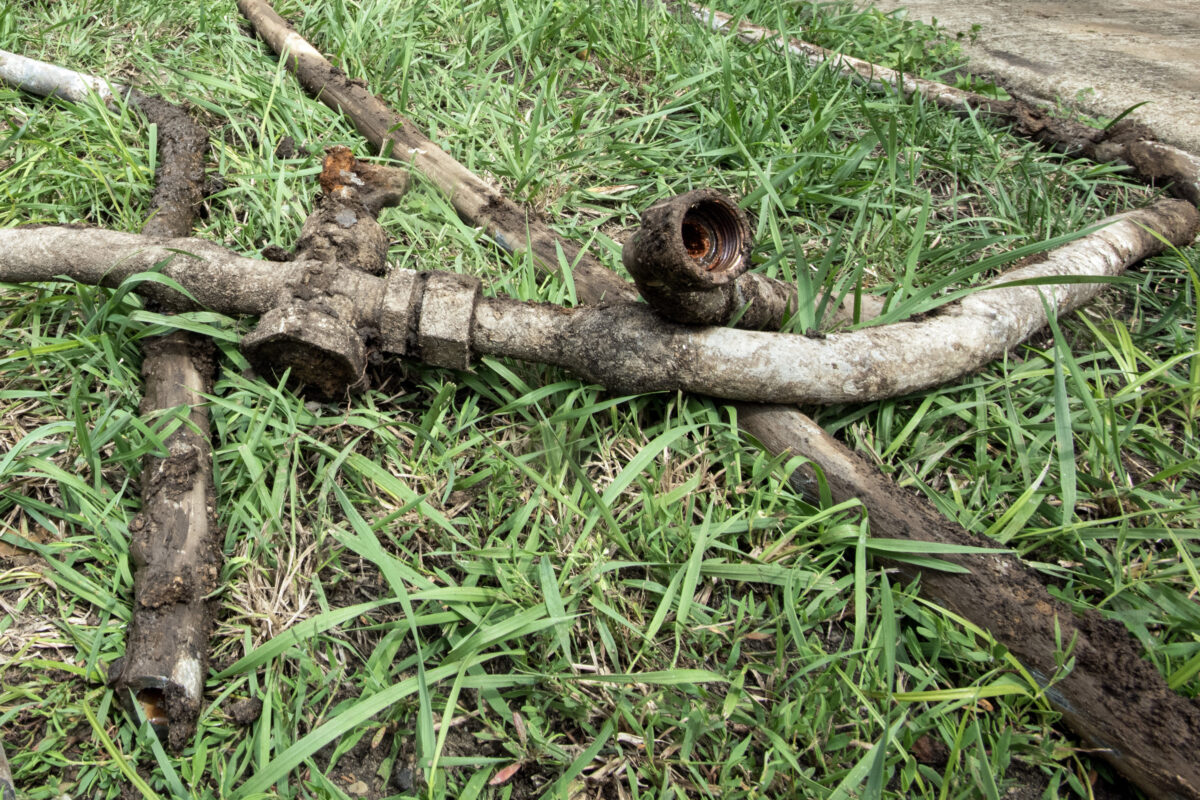
Old lead water pipes lie on a lawn.
Sections of the pulled lead pipe sit on the homeowner’s lawn. Photo by Lloyd DeGrane.

Ohio currently ranks in the top 3 states in the nation for the most lead pipes serving households, with an estimated 745,000 still in use. This problem harms communities throughout Ohio, from smaller and more rural communities like Scio and Delphos, to mid-size communities like Lima and Marion, to Ohio’s larger cities. Communities like this are getting the lead out with the help of funding from Ohio EPA and H2Ohio, Ohio’s flagship program to address water quality issues including lead service line replacement. Lead poisoning from consuming contaminated water can cause irreversible brain damage in children that may take years to emerge. Exposure during adulthood increases the risk of heart disease, as well as kidney and nervous system problems.   

The below testimony was submitted to the Ohio House Development Committee on HB307, the Lead Line Replacement Act, 10/1/25, on behalf of the Alliance for the Great Lakes: 

Chairman Hoops, Vice Chair Lorenz, Ranking Member Abdullahi, and esteemed members of the House Development Committee, my name is Meleah Geertsma and I am submitting written testimony in support of House Bill 307, the Lead Line Replacement Act, on behalf of the Alliance for the Great Lakes, where I direct the Water Infrastructure Team. I hold a bachelor’s degree in public health, as well as a law degree and a master’s of public health. I also bring over two decades of public health, legal and policy experience to the Alliance, including working on lead in drinking water issues at the local, state, and federal levels for nearly a decade. The Alliance, in turn, is a regional organization committed to protecting the health of the Great Lakes and the people and communities that depend on them. 

One of the greatest threats to the health of our region’s people from water is the legacy of lead that runs through our Great Lakes communities. This harmful history continues to negatively impact the health of children and adults today, limiting their potential and putting a drain on our economy. Now is the time for Ohio to do its part to address this legacy once and for all, along with other Great Lakes states like Michigan and Illinois that have stepped up to get the lead out. 

From the outset of my work to understand lead in drinking water, I dug deep into the science and data behind the issue, learning how short we’d fallen as a country and region in adequately identifying, testing for, and controlling or removing lead, despite significant efforts. From my public health training, I already knew that there is no “safe” level of lead exposure – meaning that there are harms to health documented by the scientific research at all levels of exposure.(1) The impacts include not only profound harms to developing fetuses and young children at even low levels of exposure, but also threats to adults’ cardiac, neurological and reproductive health, such as behavioral problems, hypertension, reduced fertility, and miscarriages.(2) 

I learned that lead service lines are still ubiquitous in homes and neighborhoods across our Great Lakes region, and that in many cases, systems did not have a complete picture of how many of their service lines are still made of lead and where those lines are located. In Ohio, important recent work on mapping and reporting lead lines has shed new light on this widespread problem.(3) I also learned that lead levels in residential drinking water can vary widely from sample to sample and day to day and house to house even within the same water system, and that lead service lines are consistently the greatest source of lead in household drinking water – an understanding advanced in labs based in Ohio by scientists and engineers trained at Ohio universities.(4) And I learned that on the whole, Great Lakes water systems have hovered just below the older, inadequate federal action level under the Safe Drinking Water Act, meaning that they have significant amounts of harmful lead in their water even today.(5) 

I also learned that in too many places throughout our Great Lakes region, the burden of understanding the threats posed by lead in drinking water and addressing those threats falls on families and individuals. But not everyone has the resources or the information to understand let alone mitigate this threat. Nor should people have to rely solely on their own resources to protect themselves and their families against a public health emergency that arises from water infrastructure – a core public service – or worry that their children will be poisoned when visiting a friend’s or family member’s home. And water systems should not have to go it alone, but need the full support of the state to address this ongoing challenge. 

With this important bill and the leadership of Representatives Jarrells and Blasdel, Ohio has the opportunity to step up now and ensure that the legacy of lead that is still with us does not continue to harm current and future generations. I invite you to join them, and thank you for your time and attention to this important infrastructure and public health matter, as well as the opportunity to submit testimony on House Bill 307. 

Respectfully submitted, 

Meleah Geertsma, J.D., M.P.H. 

Director of Water Infrastructure, Alliance for the Great Lakes 

1) See Cleveland Clinic, “Lead Poisoning,” available at https://my.clevelandclinic.org/health/diseases/11312-lead-poisoning

2) See id.; see also Ohio State University, “Lead Safety Fact Sheet,” available at https://ehs.osu.edu/kb/lead-safety-fact-sheet

3) See Ohio Environmental Protection Agency, “Lead Lines Mapping,” available at https://epa.ohio.gov/divisions-and-offices/drinking-and-ground-waters/reports-and-data/lead-lines-mapping 

4) See, e.g., Lytle, et. al. (2019), “Sequential drinking water sampling as a tool for evaluating lead in Flint, Michigan,” available at https://www.sciencedirect.com/science/article/abs/pii/S0043135419302647 

5) See, e.g., Washington University McKelvey School of Engineering, “New lead testing method could reveal higher levels in water,” available at https://engineering.washu.edu/news/2021/New-lead-testing-method-could-reveal-higher-levels-in-water.html 

Replacing Lead Water Pipes

Lead pipes that carry drinking water into homes pose a serious health concern for many Great Lakes residents. Great Lakes states have some of the highest numbers of lead pipes in the nation.

Learn More

The post Testimony in Support of Bipartisan Bill to Eliminate Lead Water Lines in Ohio appeared first on Alliance for the Great Lakes.

Original Article

News - Alliance for the Great Lakes

News - Alliance for the Great Lakes

https://greatlakes.org/2025/10/testimony-in-support-of-bipartisan-bill-to-eliminate-lead-water-lines-in-ohio/

tfazzini

Because of the federal government shutdown, a trip to Sleeping Bear Dunes National Lakeshore along Lake Michigan or to Pictured Rocks National Lakeshore on the Lake Superior coast may look quite different this fall. Read the full story by the Detroit Free Press.

Original Article

Great Lakes Commission

Great Lakes Commission

https://www.glc.org/dailynews/20251027-shutdown-parks

Taaja Tucker-Silva

The opening of the Erie Canal 200 years ago was touted as an incredible achievement of human ingenuity, but the lakes would never be the same again. One particularly harmful invasive species that used the Erie Canal to access the Hudson River is the round goby. Read the full story by Democrat & Chronicle.

Original Article

Great Lakes Commission

Great Lakes Commission

https://www.glc.org/dailynews/20251027-erie-canal-invasives

Taaja Tucker-Silva

The Strawberry Creek Chinook Salmon Facility near Sturgeon Bay, Wisconsin, is the primary, and in some years only, site for chinook egg collection. Data collected at the facility helps biologists manage the fishery and make stocking decisions. Read the full story by the Milwaukee Journal Sentinel.

Original Article

Great Lakes Commission

Great Lakes Commission

https://www.glc.org/dailynews/20251027-chinook-eggs

Taaja Tucker-Silva

In a warm fall, the relatively warm waters of Lake Michigan and Lake Huron help us stay warmer overnight. This extra warmth and moisture off the Great Lakes slows down the leaf color-changing process and makes the vibrant colors last longer. Read the full story by MLive.

Original Article

Great Lakes Commission

Great Lakes Commission

https://www.glc.org/dailynews/20251027-fall-color

Taaja Tucker-Silva

The recent Fall Brawl and Walleye Slam fishing derbies usually attract more than 10,000 boat anglers to Lake Erie. But big northwesterly winds and 10-foot waves roiled the lake, and most boats likely remained on their trailers throughout the weekend. Read the full story by The Plain Dealer.

Original Article

Great Lakes Commission

Great Lakes Commission

https://www.glc.org/dailynews/20251027-erie-derbies

Taaja Tucker-Silva

By Karen Rivedal

Published with permission from the Wisconsin Center for Education Research

When Field Day Director David Gagnon wanted to explore making a new online learning game for young students about the Great Lakes, Gagnon’s campus colleague Anne Moser knew immediately what the game should be about — shipwrecks. 

Video game-image of a shipwreck laying at the bottom of a lake

“I knew that shipwrecks really capture kids’ imaginations,” said Moser, the education coordinator and senior special librarian for Wisconsin Sea Grant, part of the Aquatic Sciences Center at the University of Wisconsin–Madison. “The game challenges the kids to solve a puzzle, and the cool thing is that the puzzle exactly mirrors the professional practice of maritime archaeology.” 

“The goal of education at Wisconsin Sea Grant is to spark a passion for the Great Lakes and to inspire the next generation of leaders, and I have seen how shipwreck stories do just that,” Moser said. “We were excited to share this with the educators and youth we work with throughout Wisconsin.” 

Wisconsin Sea Grant also provided seed money for the game and helped Field Day connect with content experts such as the Wisconsin Historical Society’s maritime archaeologists. With a game prototype in hand, Field Day and Sea Grant could then approach PBS Wisconsin, which became a major funding and distribution partner. 

“If it wasn’t for Sea Grant, this game wouldn’t exist,” said Jim Mathews, Field Day’s lead producer on the game, titled “Legend of the Lost Emerald.”

“Anne was interested in developing a game that would promote Great Lakes literacy and complement Wisconsin Sea Grant’s existing Great Lakes-related educational resources, including material aimed at K–12 teachers and students,” Mathews added. “One of the key ideas that emerged from this broad interest was developing a game for elementary-aged students that focused on shipwrecks in the Great Lakes.”  

“Legend of the Lost Emerald” is an immersive, boldly illustrated, point-and-click adventure game that teaches while it entertains. The free, award-winning game invites students to “step into the shoes of Jules,” a maritime archaeologist character working to recover the stories behind shipwrecks inspired by real Great Lakes history. The game gives learners in grades 4–6 the experience of using the same tools, practices, and skills that maritime archaeologists use to locate and dive for shipwrecks in the Great Lakes. Young students use critical thinking and historical inquiry skills in the game, meeting Wisconsin academic standards in English language arts and social studies. 

To kick off creative thinking for the game, Field Day sponsored a brainstorming event at the Wisconsin Maritime Museum in Manitowoc that brought together Field Day game designers with maritime archaeologists from the Wisconsin Historical Society, Sea Grant staff, and Wisconsin teachers who would eventually use the game in their classrooms. 

During that day’s activities, one group of teachers even learned to sing sea shanties, Field Day Creative Director Sarah Gagnon recalled, snippets of which would figure into the game’s music production. Key historical details for the game came from the historical society’s maritime preservation and archaeology program experts, especially maritime archaeologist Tamara Thomsen.  

“All the shipwrecks in the game are fictionalized but are based on real ships that we learned about through the amazing team at the Wisconsin Historical Society and Wisconsin Sea Grant,” Gagnon said, highlighting maritime archaeologists Caitlin Zant and Tori Kiefer, along with Thomsen and Moser. 

To learn more about “Legend of the Lost Emerald,” watch a minute-long, animated trailer for the game, and read the blog post Field Day published when the game was released in 2022. The game also won gold in the 2022 International Serious Play Awards Program.

Wisconsin Sea Grant is a statewide program of research, education, outreach and technology transfer dedicated to the stewardship and sustainable use of the nation’s Great Lakes, the world’s largest freshwater system. Headquartered at UW–Madison, the research institute is part of a national network of 34 university-based water programs and funded primarily through the National Oceanic and Atmospheric Administration, with contributions from participating states and the private sector. 

Field Day is a research lab and game design studio that brings contemporary research to the public, using game data to understand how people learn. Publicly funded through grants, the team at Field Day is committed to providing games to educators for free. Using an ethos that games turn complicated topics into fun, hands-on experiences that reach people, the lab aims to better understand how people learn with games, building out theory and designing effective interventions. 

Among its popular and award-winning games are “Headlines and High Waters,” designed to help students build media literacy, and “Wake: Tales From the Aqualab,” in which students take on the role of a scientist studying ocean ecosystems. Educators and students can access Field Day’s games in addition to many other free educational games in the Vault.

The Wisconsin Center for Education (WCER) at UW–Madison’s No.1 ranked public School of Education is one of the first and most productive education research centers in the world. It has assisted scholars and practitioners in developing, submitting, conducting, and sharing grant-funded education research for over 60 years. 


The post WCER’s Field Day collaborates with Wisconsin Sea Grant to develop shipwrecks game first appeared on Wisconsin Sea Grant.

Original Article

News Releases | Wisconsin Sea Grant

News Releases | Wisconsin Sea Grant

https://www.seagrant.wisc.edu/news/wcers-field-day-collaborates-with-wisconsin-sea-grant-to-develop-shipwrecks-game/

Wisconsin Sea Grant

The Great Lakes Fishery Commission has completed the construction of a 2.5-acre reef built from 20,000 tons of limestone in Lake Huron. Its purpose is to increase spawning habitat for native Great Lakes species such as walleye and whitefish. Read the full story by MLive.

Original Article

Great Lakes Commission

Great Lakes Commission

https://www.glc.org/dailynews/20251024-new-reef

Nichole Angell