By Eric Freedman

Tiny pieces of moss can be crime-busters, says a study examining how law enforcement agencies, forensic teams and botanists have used moss to solve murders, track missing people, calculate how long ago someone died and – in a notorious Mason County case – try to locate the body of a baby murdered by her father.

The post Green clues: Crime-busters turn to moss to help solve crimes  first appeared on Great Lakes Echo.

Original Article

Great Lakes Echo

Great Lakes Echo

https://greatlakesecho.org/2025/11/14/green-clues-crime-busters-turn-to-moss-to-help-solve-crimes/

Eric Freedman

Stanton Yards development merges art, nature on Detroit River, envisions ‘thriving new community destination’

This story is published in partnership with Planet Detroit

Stanton Yards, a Detroit riverfront development, aims to be a gathering place where people find inspiration in art and reconnect with nature.

The waterfront attraction is planned as an extension of the Little Village cultural corridor developed by Library Street Collective co-founders Anthony and JJ Curis.

Read Now at Great Lakes Now.

Original Article

Great Lakes Now

Great Lakes Now

https://www.greatlakesnow.org/2025/11/detroit-riverfront-cultural-hub/

John Hartig

The Michigan Department of Environment, Great Lakes, and Energy says there’s not enough money to take care of Michigan’s dams — especially the ones that have put off maintenance for decades — and it’s putting people and property at risk. Read the full story by WDIV-TV – Detroit, MI.

Original Article

Great Lakes Commission

Great Lakes Commission

https://www.glc.org/dailynews/20251114-dams

Laura Andrews

A northern Michigan tribe along with local environmental organizations have scored a major victory in a legal case in Elk Rapids against Burnette Foods, a nearby fruit processing operation, for allegedly polluting wetlands and Spencer Creek. Read the full story by Interlochen Public Radio.

Original Article

Great Lakes Commission

Great Lakes Commission

https://www.glc.org/dailynews/20251114-elkrapids

Laura Andrews

Increased demand due to residential and industrial growth has strained the water system in North Dundas, Ontario. One long-term solution to this problem is to connect to the water system in South Dundas, which draws water from the St. Lawrence River. Read the full story by The Morrisburg Leader.

Original Article

Great Lakes Commission

Great Lakes Commission

https://www.glc.org/dailynews/20251114-dundas

Laura Andrews

Menomonee Falls, Wisconsin, is studying a neighborhood to see how people deal with their leaves. Leaves naturally contain phosphorus and other nutrients, which are great for growing plants and your lawn, but bad for rivers, streams, and Lake Michigan. Read the full story by WTMJ-TV – Milwaukee, WI.

Original Article

Great Lakes Commission

Great Lakes Commission

https://www.glc.org/dailynews/20251114-mulch

Laura Andrews

In Michigan, the Kalamazoo Water Reclamation Plant emits over a ton of noxious hydrogen sulfide gas annually. The city is pursuing its latest odor-busting project — a $135 million sludge dryer. Read the full story by WMUK – Kalamazoo, MI.

Original Article

Great Lakes Commission

Great Lakes Commission

https://www.glc.org/dailynews/20251114-sludge

Laura Andrews

Lake Erie’s mythical monster, Bessie, was spotted Wednesday in the Cuyahoga River in Ohio. But this Bessie looked a bit different, thanks to the artistry of a plastic pollution awareness advocate. Read the full story by Ideastream Public Media.

Original Article

Great Lakes Commission

Great Lakes Commission

https://www.glc.org/dailynews/20251114-bessie

Laura Andrews

Invasive vs Native Mussels: What's the Difference? When you work in the realm of invasive species, your first thought when hearing the word mussel is "uh-oh". You start thinking, "Ok, which one? Zebra mussel or Quagga mussel?". But then you remember that there's a whole different kind of mussel; Wisconsin's native freshwater mussels. These [...]

The post Show Me That Mussel! appeared first on Fox-Wolf Watershed Alliance.

Original Article

Fox-Wolf Watershed Alliance

Fox-Wolf Watershed Alliance

https://fwwa.org/2025/11/12/show-me-that-mussel/?utm_source=rss&utm_medium=rss&utm_campaign=show-me-that-mussel

Chris Acy

Ontario plans to merge thirty-six conservation authorities to seven to improve efficiencies for the organizations that monitor water levels and erosion, manage recreation, and teach people about the environment. Read the full story by CBC News.

Original Article

Great Lakes Commission

Great Lakes Commission

https://www.glc.org/dailynews/20251112-ontario-conservation-authorities

Autumn McGowan

Every year as summer ends, Indigenous Michiganders head out onto lakes and rivers to collect wild rice, a staple food with cultural significance to these communities. Read the full story by WKAR-TV – East Lansing, MI.

Original Article

Great Lakes Commission

Great Lakes Commission

https://www.glc.org/dailynews/20251112-michigan-manoomin

Autumn McGowan

On October 1, the federal government shutdown began, halting many research projects tied to federal agencies, including those vital to the University of Michigan’s Great Lakes programs. The Cooperative Institute for Great Lakes Research works in partnership with NOAA’s Great Lakes Environmental Research Laboratory and depends on federal collaboration for critical work on water quality, algal blooms, and regional climate impacts. Read the full story by WEMU – Ypsilanti, MI.

Original Article

Great Lakes Commission

Great Lakes Commission

https://www.glc.org/dailynews/20251112-annarbor-research

Autumn McGowan

Hidden in the Milwaukee Public Library’s Central Library is a little-known collection of artifacts related to ships that have traversed the Great Lakes for the past 400 years — including the legendary SS Edmund Fitzgerald. Read the full story by the Milwaukee Journal Sentinel.

Original Article

Great Lakes Commission

Great Lakes Commission

https://www.glc.org/dailynews/20251112-artifacts

Autumn McGowan

By Georgia Hill

Scientists studying the body size and growth patterns of non-native earthworms in the UP’s Huron Mountains say they are disrupting forest ecosystems. Contrary to popular belief, most North American earthworms are invaders unintentionally introduced during European colonization. They have a significant impact on ecosystems, especially in the Great Lakes region where they affect soil structure, nutrient cycling and biodiversity.

The post New research in Michigan’s Upper Peninsula shows how invasive earthworms are changing forest soils   first appeared on Great Lakes Echo.

Original Article

Great Lakes Echo

Great Lakes Echo

https://greatlakesecho.org/2025/11/12/new-research-in-michigans-upper-peninsula-shows-how-invasive-earthworms-are-changing-forest-soils/

Georgia Hill

Roads in the Great Lakes region get riskier after daylight saving ends

Drivers around the Great Lakes region beware. In the weeks following “fall back,” once daylight saving time ends, collisions between wildlife and vehicles rises by 16%. According to data from insurance company State Farm, October, November and December are the most dangerous for animal-related collisions, making up 41% of all animal collision claims.

Read Now at Great Lakes Now.

Original Article

Great Lakes Now

Great Lakes Now

https://www.greatlakesnow.org/2025/11/roads-in-the-great-lakes-region-get-riskier-after-daylight-saving-ends/

Lisa John Rogers, Great Lakes Now

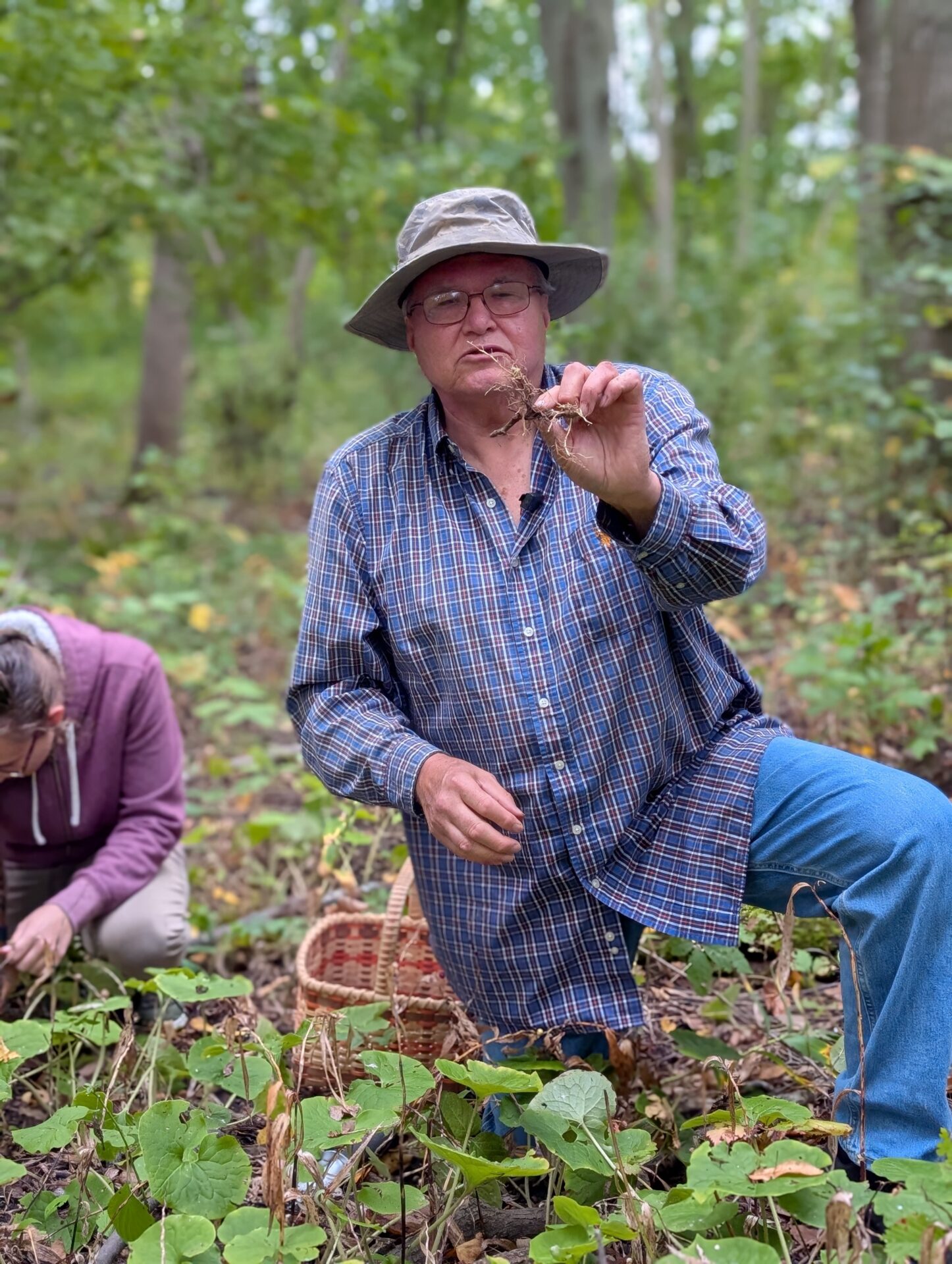
Kneeling on the ground, a man in a blue shirt holds up the root of a wild ginger plant

Randy Cornelius holds up the root of a wild ginger plant. Photo: Julia Noordyk

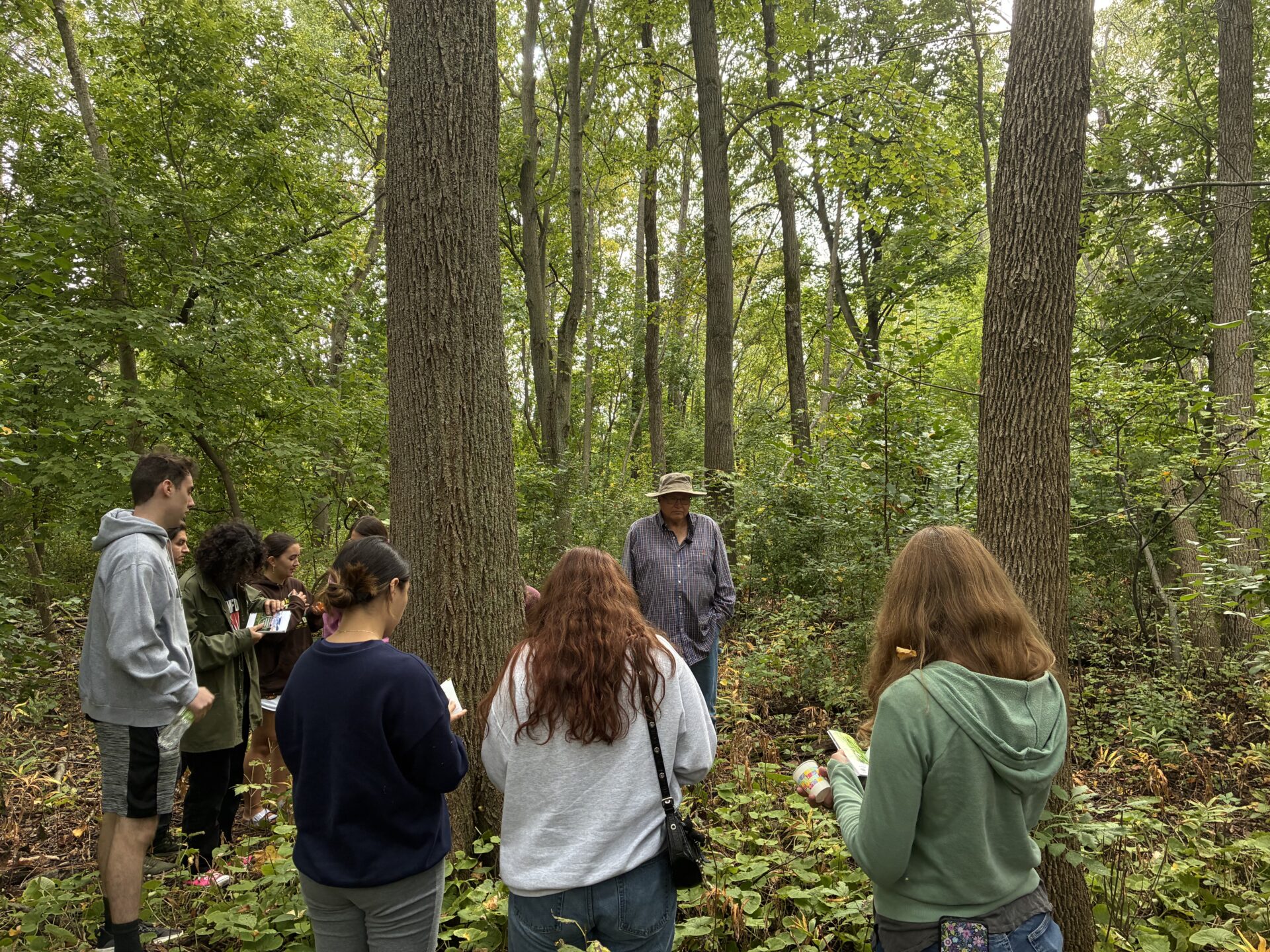
In late September, Randy Cornelius kneeled in the middle of the Communiversity Park woods to greet a patch of wild ginger. Around him, a small group of University of Wisconsin–Green Bay students and staff leaned in to look at the leggy, yellowing plants with heart-shaped leaves. Cornelius pointed to one taller than the rest.

“I call them grandmas, the big ones,” he smiled.

It’s a fitting name. From a young age, Cornelius learned about the many uses of plants from his own grandmother, who took him foraging. Now, the Oneida Nation elder is the teacher, and this fall, he’s sharing stories and knowledge as part of the “Outdoor Learning from an Elder” series.

Organized by the UW–Green Bay Center for First Nations Education and Wisconsin Sea Grant, the series invites students and staff to get outside and learn more about natural areas on and off campus. Evan Brenkus, this year’s Sea Grant First Nations graduate assistant, worked with Julia Noordyk, Sea Grant’s water quality and coastal communities outreach specialist, to plan the events.

“Having our elders come out and talk about their experience with the land, and working with nature in general, and sharing that knowledge with students on campus is just an amazing opportunity in my eyes,” said Brenkus.

The plant walk was the first of three outings with Cornelius. In October, participants visited Trout Creek on the Oneida Nation Reservation to learn about wetland restoration and bird habitat, and in November, they’ll head to the Wequiock Creek Natural Area for a discussion on hunting and sustainability.

“We’re really grateful for Randy,” said Noordyk. “He’s generous with his time and knowledge, and he’s a great storyteller, too. I think people are enjoying the opportunity to get outside and learn from him.”

Sharing language and culture across generations

Headshot of a man with glasses and a dark beard

Evan Brenkus is this year’s Sea Grant First Nations graduate assistant. Submitted photo.

The Oneida language was central to September’s plant walk through Communiversity Park. In addition to introducing himself in Oneida, Cornelius handed out Oneida language field guides and invited participants to practice the tobacco-offering speech he recites when harvesting plants. Offering tobacco, Cornelius explained, shows respect to the plant and strengthens people’s relationship to the land.

The words were familiar to Brenkus, who began taking Oneida language courses in high school. A fan of math, he fell in love with the patterns and continued studying the language throughout college. He loves it so much, in fact, he’s currently developing a keyboard that will allow speakers to easily type the language.

“It’s hard to describe how complex it is, and how formulaic it is, and how interesting and intricate it is,” he said. “It’s like a living math equation. That’s the best way I can describe it.”

As the First Nations graduate assistant, Brenkus’s job is to connect students with elders for learning opportunities like these. He organizes the outdoor learning series as well as weekly elder hours, which bring oral tradition scholars to campus for open office hours. The language, stories, and knowledge they offer are gifts.

“I don’t feel like students really understand how amazing that is, that there’s people in our area who have that knowledge and have that cultural expertise, and it’s being shared with them for free,” Brenkus said.

A former student regent, Brenkus is used to navigating multigenerational spaces. He was one of two student voices on Universities of Wisconsin System Board of Regents from 2023-2024 and provided insider perspectives on campus issues.

“[The regents] were very keen on listening to what the student regents had to say because they’re there on the ground,” he said. “I learned so much. I grew up a lot.”

Back to the woods

The final field trip of the “Outdoor Learning from an Elder” series will be on November 12 at the Wequiock Creek Natural Area, a campus property located several miles northeast of UW–Green Bay’s main campus. The area is important to both Ho-Chunk and Menominee nations, whose creation stories take place on the bay of Green Bay, as well as the Potawatomi and Oneida nations, who later settled there. Wequiock Creek is also the site of recent prairie and wetland restoration projects.

From 3:30 to 5 p.m., Cornelius will lead participants on a walk through the natural area and discuss traditional hunting practices and sustainability. The event is open to all UW–Green Bay students, staff, and faculty.

Brenkus hopes to see some familiar faces at the last event of the semester.

“My goal is just to have people who keep coming back and keep wanting to learn more and hear from our elders because they have a lot of important stuff to share, and they’re not here forever.”

A group of UW–Green Bay students and staff gather around a man in a blue shirt in the woods.

A group of UW–Green Bay students and staff gather around Randy Cornelius as he explains the uses of wild ginger. Photo: Wisconsin Sea Grant


The post Outdoor learning series connects elders, students, and the land first appeared on Wisconsin Sea Grant.

Original Article

News Releases | Wisconsin Sea Grant

News Releases | Wisconsin Sea Grant

https://www.seagrant.wisc.edu/news/outdoor-learning-series-connects-elders-students-and-the-land/

Jenna Mertz

50 years ago on Monday, one of the most “mysterious and controversial” of all shipwrecks on the Great Lakes took place 17 miles north-northwest of Whitefish Point, Michigan, taking the lives of 29 crew members. Read the full story by WZZM-TV – Grand Rapids, MI.

Original Article

Great Lakes Commission

Great Lakes Commission

https://www.glc.org/dailynews/20251110-edmund-fitzgerald-50th-anniversary

Hannah Reynolds

A new era of electrical generation and power demand is taking shape across the eight states of the Great Lakes basin – and with it come potentially treacherous consequences for the region’s environment and its world-leading supply of clean, fresh water. Read the full story by Circle of Blue.

Original Article

Great Lakes Commission

Great Lakes Commission

https://www.glc.org/dailynews/20251110-confrontation-energy-water-greatlakes

Hannah Reynolds

New research funded by Wisconsin Sea Grant shows Anishinaabe fire practices shaped today’s Great Lakes ecosystems. The region’s forests never existed and can’t continue to exist without people – or fire. Read the full story by Great Lakes Echo.

Original Article

Great Lakes Commission

Great Lakes Commission

https://www.glc.org/dailynews/20251110-anishinaabe-fire-greatlakes-ecosystems-research

Hannah Reynolds

There are well over 6,000 shipwrecks between the five Great Lakes, the most well-known, of course, being the SS Edmund Fitzgerald. In recent years, especially around northeast Wisconsin, shipwreck discoveries have been on the rise. Read the full story by WLUK-TV – Green Bay, MI.

Original Article

Great Lakes Commission

Great Lakes Commission

https://www.glc.org/dailynews/20251110-maritime-experts-shipwrecks-wisconsin

Hannah Reynolds

Research from Michigan State University (MSU) is protecting the Great Lakes from a dangerous threat looming specifically in and around Lake Erie. For roughly a decade, MSU scientists have been studying grass carp using acoustic telemetry, which incorporates sound to track populations of fish, where underwater acoustic receivers collect data on fish surgically tagged with acoustic transmitters. Read the full story by Morning Ag Clips.

Original Article

Great Lakes Commission

Great Lakes Commission

https://www.glc.org/dailynews/20251110-msu-led-greatlakes-invasive-carp-research

Hannah Reynolds

Most reefs are associated with tropical waters and colorful fish, not the Great Lakes, but Saginaw Bay was once the home of many rock reefs. Created by glacial activity, the reefs provided a habitat for the bay’s fish. Over time, reef habitat was lost, buried by sediment due to logging, manufacturing and agricultural activity in the area. Now, efforts are underway to restore this lost habitat. Read the full story by WNEM-TV – Bay City, MI.

Original Article

Great Lakes Commission

Great Lakes Commission

https://www.glc.org/dailynews/20251110-reef-restoration-saginawbay

Hannah Reynolds

To commemorate the 50th anniversary of the SS Edmund Fitzgerald going down during a violent Lake Superior storm in November of 1975, dozens of swimmers braved those same waters to finish the journey the ship and her crew never could. Read the full story by WLUK-TV – Green Bay, WI.

Original Article

Great Lakes Commission

Great Lakes Commission

https://www.glc.org/dailynews/20251110-fondulac-lakesuperior-edmund-fitzgerald-memorial-swim

Hannah Reynolds

Fifty years later: The little-known story of the families the Fitz left behind

Wrecked: The Edmund Fitzgerald and the Sinking of the American Economy” is a new book by Thomas Nelson with Jeremy Podair. Below is an adapted excerpt from the chapter “Just Call Toby,” that details the legal mess families were put through after losing their loved ones on the Edmund Fitzgerald. 

Read Now at Great Lakes Now.

Original Article

Great Lakes Now

Great Lakes Now

https://www.greatlakesnow.org/2025/11/fifty-years-later-the-little-known-story-of-the-families-the-fitz-left-behind/

Thomas Nelson

By Victoria Witke

New research shows Anishinaabe fire practices shaped today’s Great Lakes ecosystems. The region’s forests never existed and can’t continue to exist without people – or fire.

The post Anishinaabe fire practices shaped Great Lakes ecosystems, new research shows first appeared on Great Lakes Echo.

Original Article

Great Lakes Echo

Great Lakes Echo

https://greatlakesecho.org/2025/11/09/anishinaabe-fire-practices-shaped-great-lakes-ecosystems-new-research-shows/

Victoria Witke

The sinking of the Edmund Fitzgerald remains a pivotal moment in maritime history, prompting significant safety advancements in Great Lakes shipping over the past 50 years. In the wake of the Fitzgerald disaster, the U.S. Coast Guard implemented stricter training requirements, including the use of life-saving devices and immersion suits to protect against hypothermia. Read the full story by WPBN – Traverse City, MI.

Original Article

Great Lakes Commission

Great Lakes Commission

https://www.glc.org/dailynews/20251107-fitzgerald-safety-legacy

James Polidori

According to the Michigan Department of Natural Resources, European frog-bit, an invasive aquatic plant, has been confirmed in two locations near Lake Michigan: in the lower Grand River, immediately upstream of Grand Haven, in Ottawa County, and in Pentwater Lake in Oceana County. Read the full story by WDIV – Detroit, MI.

Original Article

Great Lakes Commission

Great Lakes Commission

https://www.glc.org/dailynews/20251107-invasive-plant

James Polidori

In Illinois, the city of Evanston’s Climate Action and Resilience Plan Implementation Task Force signed off on the current draft of a Lakefront Protection Ordinance to set a unified policy to regulate development and protect natural habitats and shoreline along Lake Michigan. Read the full story by the Evanston RoundTable.

Original Article

Great Lakes Commission

Great Lakes Commission

https://www.glc.org/dailynews/20251107-lakefront-protection

James Polidori

Edmund Fitzgerald was a businessman in Wisconsin and the president of Northwestern Mutual in Milwaukee, which owned the ship. His roots in the Great Lakes ran deep, with several relatives working in the maritime trade. Read the full story by WOOD-TV – Grand Rapids, MI.

Original Article

Great Lakes Commission

Great Lakes Commission

https://www.glc.org/dailynews/20251107-edmund-fitzgerald

James Polidori

The Michigan Natural Resources Commission voted Thursday to expand the areas where people can spearfish lake trout, northern pike and walleye. Starting in April 2026, anglers will be allowed to spearfish for the three gamefish in parts of Lake Erie and Lake Superior and expanded portions of Lake Michigan. Read the full story by Bridge Michigan.

Original Article

Great Lakes Commission

Great Lakes Commission

https://www.glc.org/dailynews/20251107-spearfishing-access

James Polidori

The S.O.N.S. (Save Our Native Species) of Lake Erie Fishing Club received around 1,500 brown trout from the Linesville Fish Hatchery in Crawford County, Pennsylvania. The fish are only a few inches in size, and will be cared for at the hatchery until they’re ready to be released into Presque Isle Bay. Read the full story by WJET – Erie, PA.

Original Article

Great Lakes Commission

Great Lakes Commission

https://www.glc.org/dailynews/20251107-trout-hatchery

James Polidori

The Ohio Lake Erie Commission is now accepting applications for grants of up to $50,000, which are available to local governments, research institutions and nonprofit groups for projects that will improve water quality, restore habitats, and strengthen the long-term sustainability of Lake Erie. Read the full story by The Plain Dealer.

Original Article

Great Lakes Commission

Great Lakes Commission

https://www.glc.org/dailynews/20251107-sustainability-grants

James Polidori

The New York State Department of Environmental Conservation says 1,000 young lake sturgeon were released into Cattaraugus Creek this week as part of a long-term plan to reestablish the fish in one of its former spawning grounds along Lake Erie. Read the full story by Fingerlakes1.com.

Original Article

Great Lakes Commission

Great Lakes Commission

https://www.glc.org/dailynews/20251107-sturgeon-release

James Polidori

Pre-proposal submissions for the Michigan Department of Natural Resources’ (DNR) yearly fisheries habitat grants are now being accepted. Each year, the DNR allocates $1.5 million in fisheries habitat grants to governments and nonprofit organizations around the state. Read the full story by Great Lakes Echo.

Original Article

Great Lakes Commission

Great Lakes Commission

https://www.glc.org/dailynews/20251107-fisheries-grants

James Polidori

According to the Great Lakes Shipwreck Historical Society, the Edmund Fitzgerald’s 200-pound bronze bell was recovered on July 4, 1995, through a joint expedition. Every year, the original bell is tolled 29 times in honor of the 29 men who perished. Read the full story by WXYZ – Detroit, MI.

Original Article

Great Lakes Commission

Great Lakes Commission

https://www.glc.org/dailynews/20251107-fitzgerald-bell

James Polidori

By Eric Freedman

A horse-drawn carriage. A runaway horse. A crash. Sounds like an old-fashioned drama – not a bizarre 21st-century event. But that’s what happened three years ago when a visitor was injured while riding in a horse-drawn omnibus at Greenfield Village. The Court of Appeals has refused to reinstate her negligence suit against The Henry Ford and the driver.

The post Michigan court refuses to reinstate lawsuit over runaway carriage horse at Greenfield Village   first appeared on Great Lakes Echo.

Original Article

Great Lakes Echo

Great Lakes Echo

https://greatlakesecho.org/2025/11/07/michigan-court-refuses-to-reinstate-lawsuit-over-runaway-carriage-horse-at-greenfield-village/

Eric Freedman

Joel Brammeier headshot.
Joel Brammeier, ​President & CEO

We’re celebrating a major win: Muskegon Lake, a 4,149-acre lake that drains into the western shore of Lake Michigan, has officially been removed from the list of the most environmentally degraded areas in the Great Lakes.

It’s thanks to decades of collaborative restoration efforts among local communities, state and federal agencies, and advocates, as well as consistent federal funding that the Alliance for the Great Lakes has fought hard to maintain.

For years, the lake was ringed by factories, foundries, and paper plants. Locals talked about being able to tell which factory was operating based on the color of the water that day. The heavy industry left behind a legacy of pollution that landed the lake on the federal government’s list of “Areas of Concern” – 43 highly degraded areas along the Great Lakes in need of significant remediation.

Alliance for the Great Lakes Adopt-a-Beach volunteers cleaning shoreline litter at Muskegon Lake. PC: Lloyd DeGrane

In all, more than 190,000 cubic yards of contaminated sediment were remediated from Muskegon Lake – enough to fill roughly 9 football fields, each 10 feet deep. Beaches have reopened, wetlands are restored, and new recreation opportunities are fueling the local economy. A study by Grand Valley State University estimates that for every dollar spent on the restoration, there were six dollars in economic benefit.

On the day Muskegon came off the list, Dr. Alan Steinman, an Alliance Board member who was active in the cleanup efforts for decades, said it best: “It’s a huge day for Muskegon.”

Our work isn’t done. There are 23 remaining U.S. Areas of Concern. And the major federal program that supports their cleanup – the Great Lakes Restoration Initiative – needs to be reauthorized next year. We’re fighting to make sure it’s renewed and fully funded.

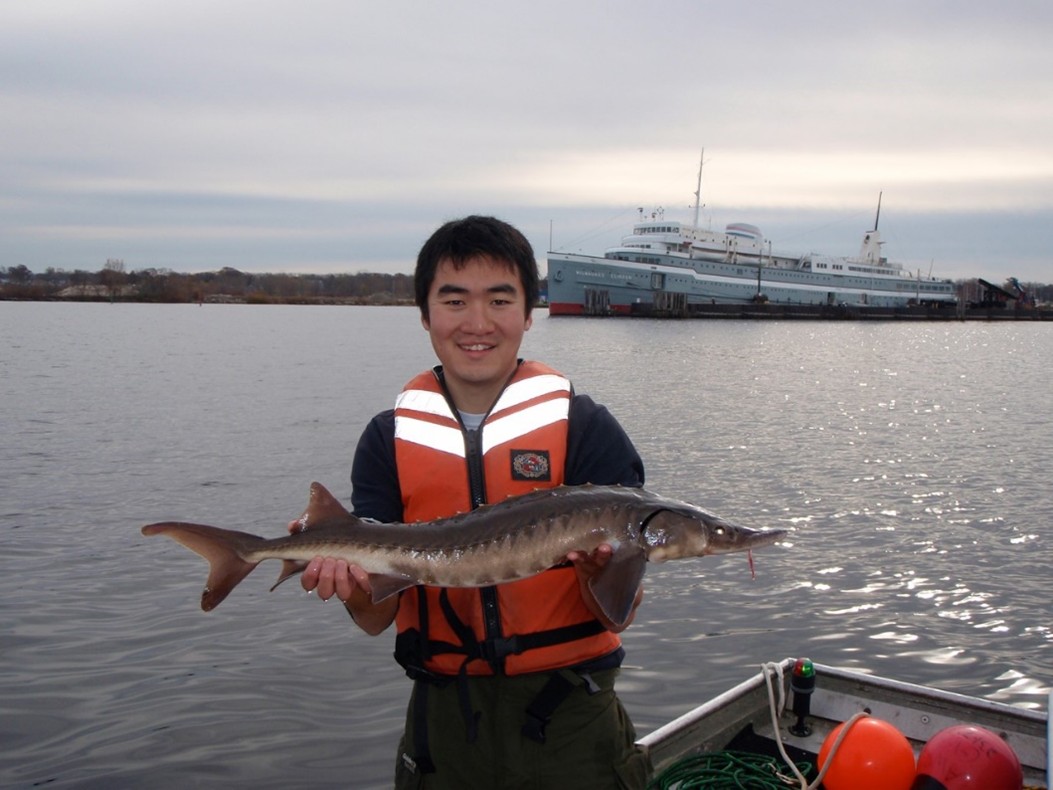
A graduate student with Annis Water Resources Institute at Grand Valley State University holds a lake sturgeon found in Muskegon Lake.

Muskegon Lake’s restoration was possible because The Great Lakes Restoration Initiative had long-term support across many administrations and from both political parties. It’s a model for what we can achieve with consistent bipartisan commitment to the lakes we all share.

And it’s a reminder of why we can’t stop fighting for Great Lakes restoration.

Thank you for your support, which makes wins like this possible.

More about Great Lakes restoration

Read more about the Great Lakes Restoration Initiative, one of the most important tools in the region’s toolbox to support on-the-ground restoration projects, from wetland restoration to cleaning up toxic hot spots.

Read more

The post Big win: One of the most polluted areas in the Great Lakes is now restored appeared first on Alliance for the Great Lakes.

Original Article

News - Alliance for the Great Lakes

News - Alliance for the Great Lakes

https://greatlakes.org/2025/11/big-win-one-of-the-most-polluted-areas-in-the-great-lakes-is-now-restored/

tfazzini