Low ice on the Great Lakes this winter
NOAA Great Lakes Environmental Research Laboratory
https://noaaglerl.blog/2023/02/17/low-ice-on-the-great-lakes-this-winter/
NOAA Great Lakes Environmental Research Laboratory
https://noaaglerl.blog/2023/02/17/low-ice-on-the-great-lakes-this-winter/
People need access to nature, and they need access within reaching distance of their homes, whether it's a walk or a bike because that helps with mental health and connection to community.
The post Greenspace starts with grassroots first appeared on Great Lakes Echo.Great Lakes Echo
http://greatlakesecho.org/2023/02/17/greenspace-starts-with-grassroots-2/
Current Watches, Warnings and Advisories for Brown (WIC009) Wisconsin Issued by the National Weather Service
https://alerts.weather.gov/cap/wwacapget.php?x=WI126636E61B54.SpecialWeatherStatement.126636E66528WI.GRBSPSGRB.e0e3c512b0f9dbf5cdb583d677569077
Current Watches, Warnings and Advisories for Brown (WIC009) Wisconsin Issued by the National Weather Service
https://alerts.weather.gov/cap/wwacapget.php?x=WI126636E5ED3C.SpecialWeatherStatement.126636E61708WI.GRBSPSGRB.e0e3c512b0f9dbf5cdb583d677569077
Current Watches, Warnings and Advisories for Brown (WIC009) Wisconsin Issued by the National Weather Service
https://alerts.weather.gov/cap/wwacapget.php?x=WI126636DA28BC.SpecialWeatherStatement.126636E5EFF8WI.GRBSPSGRB.e0e3c512b0f9dbf5cdb583d677569077
Current Watches, Warnings and Advisories for Brown (WIC009) Wisconsin Issued by the National Weather Service
https://alerts.weather.gov/cap/wwacapget.php?x=WI126636D9FDC4.SpecialWeatherStatement.126636DA3028WI.GRBSPSGRB.e0e3c512b0f9dbf5cdb583d677569077

By Kelly House, Bridge Michigan
This story is part of a Great Lakes News Collaborative series investigating the region’s water pollution challenges. Called Refresh, the series explores the Clean Water Act’s shortcomings in the Great Lakes, and how the region can more completely address water pollution in the next 50 years.
Great Lakes Now
https://www.greatlakesnow.org/2023/02/for-ann-arbor-water-managers-ongoing-battle-to-keep-toxic-chemicals-at-bay/
We seek a highly motivated individual to support the Alliance’s volunteer programs, which involve thousands of people each year across all five Great Lakes. The ideal candidate is a self-starter, a collaborator who is comfortable connecting with different types of people, and an energetic motivator with a passion for helping others make a positive change in the world.
The Volunteer Engagement Coordinator (the Coordinator) is on the front lines of supporting and engaging volunteers across the Great Lakes region. They will support the Adopt-a-Beach program, which includes the Alliance’s flagship volunteer program that involves about 9,000 volunteers per year on all five Great Lakes and all eight Great Lakes states, and the Ambassador program, a growing “speakers bureau”-type program that currently involves about 100 volunteers per year.
The Coordinator will provide day-to-day logistical support to the Adopt-a-Beach and Ambassador programs, including managing program data and reports, sending program supplies, and event planning and coordination. They will be a key resource for new and returning Adopt-a-Beach volunteers throughout the year, working with volunteers both one-on-one and in group settings to ensure they have the information and tools necessary to host successful events. They will represent the Alliance at cleanups and other community events, expanding the Alliance’s presence in the communities in which we work, with a special emphasis on program expansion and new volunteer recruitment. Additionally, they will support program evaluation and annual program planning.
The Coordinator reports to the Volunteer Engagement Manager and is a member of the Communications and Engagement Team.
The Volunteer Engagement Coordinator works on two distinct volunteer programs – Adopt-a-Beach and Alliance Ambassadors – in the below capacities.
Logistics
Communication and Training
Outreach
Evaluation and Strategy
Please e-mail a cover letter, resume, references and writing sample to: hr@greatlakes.org.
Include job title in the subject line.
Applications will be accepted until March 17, 2023 – we are looking to fill immediately. Materials should be compatible with Microsoft Word or Adobe Acrobat. Applicants will receive confirmation of receipt of their materials and further guidance and updates about the hiring process by e-mail, with interviews provided for finalists. No phone inquiries please.
About the Alliance for the Great Lakes
The Alliance for the Great Lakes is an Equal Opportunity Employer. The search process will reinforce the Alliance’s belief that achieving diversity requires an enduring commitment to inclusion that must find full expression in our organizational culture, values, norms, and behaviors.
AGL Operating Principles and Core Values Statement
Our vision is a thriving Great Lakes and healthy water that all life can rely on today and far into the future. We aspire to be a voice for the lakes, and to support the voices of the communities that depend on the lakes and their waters.
The mission of the Alliance for the Great Lakes is to protect, conserve and restore the Great Lakes ensuring healthy water in the lakes and in our communities for all generations of people and wildlife. We advance our mission as advocates for policies that support the lakes and communities by building the research, analysis, and partnerships that motivate action and by educating and uniting people as a voice for the Great Lakes.
For more information about the Alliance’s programs and work, please visit us online at www.greatlakes.org.
The post Volunteer Engagement Coordinator appeared first on Alliance for the Great Lakes.
News - Alliance for the Great Lakes
https://greatlakes.org/2023/02/volunteer-engagement-coordinator/
RESTON, Va. — The U.S. Geological Survey (USGS) and a coalition of state geological surveys are investing about $325,000, to conduct geochemical sampling in across about 2 million square kilometers of the central United States, from the Midcontinent to the Appalachian Basin.
Region 3: Great Lakes
https://www.usgs.gov/special-topics/bipartisan-infrastructure-law-investments/news/bipartisan-infrastructure-law-14?utm_source=comms&utm_medium=rss&utm_campaign=news
In its new report, the Alliance for the Great Lakes and the Ohio Environmental Council, with technical assistance from the Ann Arbor-based company LimnoTech and Chicago-based Delta Institute, found that Michigan and Ohio are not likely to meet the 2025 phosphorus reduction goals agreed to under the Great Lakes Water Quality Agreement. Read the full story by Great Lakes Now.
Great Lakes Commission
https://www.glc.org/dailynews/20230215-report-phosphorus-reduction
A much milder-than-average weather pattern across the Great Lakes for most of this winter has produced the lowest ice cover on record for the Great Lakes. As of Monday, February 13, ice covered only 8 percent of the Great Lakes. That’s far below the average of 41 percent for this date and at record low levels previously set in 2012. Read the full story by Minnesota Public Radio.
Great Lakes Commission
https://www.glc.org/dailynews/20230215-record-ice-cover
Newly elected U.S. Sen. JD Vance will co-chair the U.S. Senate’s Great Lakes Task Force, replacing his predecessor Rob Portman at the helm of a group that pushes to protect the world’s largest freshwater lake system. Vance said his priorities in the job will include fully funding the Great Lakes Restoration Initiative, fighting invasive species like invasive carp, and ensuring the Lakes’ aging lock systems and infrastructure stay in good repair to allow the passage of cargo ships. Read the full story by The Plain Dealer.
Great Lakes Commission
https://www.glc.org/dailynews/20230215-task-force-chair
This month, the National Park Service said it expects to complete its review of the Menominee Nation’s application to list an ancient indigenous burial ground called Anaem Omot on the National Register. If approved, it will mark a victory for the Menominee Nation in a long-running battle to stop Gold Resources Corp. from building a gold mine within part of the proposed site boundary. Read the full story by MLive.
Great Lakes Commission
https://www.glc.org/dailynews/20230215-register-historic-land
Lead levels in Benton Harbor, Michigan’s drinking water continue to decrease as 90 percent of the test results came in at or below 9 parts-per-billion (ppb). Sixty-five residential taps around the city between July 1 and Dec. 31 last year, according to the Michigan Department of Environment, Great Lakes and Energy, marking a decrease from 14-ppb in calculated test results from the first six months of 2022. Read the full story by MLive.
Great Lakes Commission
https://www.glc.org/dailynews/20230215-lead-reduction
The U.S. Army Corps of Engineers has received $1.5 million from the states of Illinois and Michigan to advance the Brandon Road Interbasin Project on the upper Illinois Waterway. This complex ecosystem restoration project includes innovative technological deterrents designed to prevent upstream movement of invasive carp and other aquatic nuisance species into the Great Lakes. Read the full story by KWQC-TV – Davenport, IA.
Great Lakes Commission
https://www.glc.org/dailynews/20230215-brandon-road-funding
U.S. Rep. Debbie Dingell has sent a letter to Michigan’s top environment official Monday, urging him to reject the PFAS remediation plan proposed by Wolverine World Wide after a violation was issued by the Michigan Department of Environment, Great Lakes and Energy for failing to meet a previously approved timeline. Read the full story by The Detroit News.
Great Lakes Commission
https://www.glc.org/dailynews/20230215-letter-pfas-cleanup
National Grid is providing $100,000 to support the Aquarium of Niagara’s innovative “Great Lakes 360” project, which will add 15 new Great Lakes-focused exhibits and expand the cultural attraction’s City of Niagara Falls campus. Read the full story by Niagara Frontier Publications.
Great Lakes Commission
https://www.glc.org/dailynews/20230215-aquarium-great-lakes
Thanks to a mixture of erosion and wind, winter runoff has created more than ten ice formations in the Chequamegon ice caves along the Wisconsin shoreline of Lake Superior. Tour guides will lead thousands of people across the snow and ice to see the natural phenomena through the caves that have just opened for a month-long season. Read the full story by WJFW-TV – Rhinelander, WI.
Great Lakes Commission
https://www.glc.org/dailynews/20230215-tour-ice-caves
NCEI News Feed
https://www.ncei.noaa.gov/news/moving-science-forward
Improving green space equity means increasing the amount and accessibility of green spaces, especially in areas otherwise lacking them.
The post Greenspace starts with grassroots first appeared on Great Lakes Echo.Great Lakes Echo
http://greatlakesecho.org/2023/02/15/greenspace-starts-with-grassroots/
Current Watches, Warnings and Advisories for Brown (WIC009) Wisconsin Issued by the National Weather Service
https://alerts.weather.gov/cap/wwacapget.php?x=WI126636C7C03C.SpecialWeatherStatement.126636C87CE8WI.GRBSPSGRB.a855b1cd49ac32256c0b21a0afbc03bf
Current Watches, Warnings and Advisories for Brown (WIC009) Wisconsin Issued by the National Weather Service
https://alerts.weather.gov/cap/wwacapget.php?x=WI126636C7C03C.SpecialWeatherStatement.126636C87CE8WI.GRBSPSGRB.a855b1cd49ac32256c0b21a0afbc03bf

By Tara Copp, Associated Press
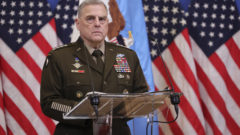
BRUSSELS (AP) — The first U.S. missile fired at an unidentified aerial object over Lake Huron missed the target and “landed harmlessly” in the water before a second one successfully hit, the chairman of the Joint Chiefs of Staff said Tuesday.
The acknowledgment of the errant missile by Gen.
Great Lakes Now
https://www.greatlakesnow.org/2023/02/ap-1st-missile-strike-aerial-object-over-lake-huron-missed/

By Lester Graham, Michigan Radio
The Great Lakes News Collaborative includes Bridge Michigan; Circle of Blue; Great Lakes Now at Detroit Public Television; and Michigan Radio, Michigan’s NPR News Leader; who work together to bring audiences news and information about the impact of climate change, pollution, and aging infrastructure on the Great Lakes and drinking water.
Great Lakes Now
https://www.greatlakesnow.org/2023/02/mi-oh-spend-hundreds-millions-annually-curb-toxic-blooms-lake-erie/
NCEI News Feed
https://www.ncei.noaa.gov/news/global-climate-202301
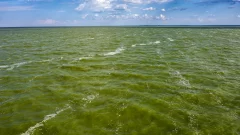
Harmful algal blooms plague western Lake Erie each summer, threatening drinking water supplies, recreation, and the regional economy. Nutrient pollution, specifically phosphorous, flowing off agricultural lands is the largest unchecked source of pollution driving these massive algal blooms.
In 2015, the Governors of Ohio and Michigan and the Premier of Ontario committed to reducing phosphorus inputs to Lake Erie by 40% by 2025. Interim targets set for 2020 were not met. Data consistently shows that it is unlikely the 2025 goal will be met.
On February 14, 2023, the Alliance for the Great Lakes and Ohio Environmental Council released a new study – The Cost to Meet Water Quality Goals in the Western Basin of Lake Erie .
Project partners examined the additional agricultural conservation practices needed and associated costs for Michigan and Ohio to implement them in the Western Basin of Lake Erie to meet water quality goals.

The study found:
Bold action is needed to meaningfully reduce western Lake Erie’s harmful algal bloom problem that threatens our drinking water, recreation, and regional economy.
If Ohio, Michigan, and the federal government are truly committed to protecting the health of our communities and the lake, elected leaders and agency officials must recognize the scale of the problem and what it will take to solve it.
The study highlights shortcomings in current practices and funding and provides insights into what is needed in Michigan and Ohio to reduce phosphorus inputs to Lake Erie by 40%.
Annual, in-field conservation practices are not sufficient to meet water quality objectives – even when implemented on 100% of agricultural acres in the western Lake Erie basin. The study suggests that annual in-field practices, such as cover crops, no-till, and crop rotation, cannot be scaled sufficiently to meet the water quality goals of the western basin.
Changes are needed in the types of conservation practices funded as part of this effort. State and federal agencies must invest sustainably in edge-of-field structural practices like constructed wetlands and two-stage ditches to meet water quality goals in the Western Basin of Lake Erie. These practices deliver more consistent phosphorus reductions year-over-year and are not easily abandoned like annual in-field practices.
The study finds that Michigan and Ohio will need to increase the number of acres using annual in-field and edge-of-field structural conservation practices to meet water quality goals. In-field practices like cover crops and crop rotation will need to be increased by up to 8 times. Edge-of-field structural practices, such as wetlands and two-stage ditches, will need to be increased by up to as much as 25 times current levels.
The study found that state and federal agencies currently are underinvesting by several orders of magnitude. Michigan will need to increase funding by $40-65 million over current spending, a more than six-fold annual increase from current levels. Ohio will need to roughly double current annual funding levels by $170-250 million over current spending.
Funding should be prioritized for practices that make quantifiable, meaningful reductions in phosphorus flowing off agricultural lands. For instance, the H2Ohio program, initiated by Governor DeWine in 2019, has significantly invested in solutions to phosphorus nutrient pollution. H2Ohio dollars have funded wetland construction and incentivized in-field practices. But to truly implement these practices at the scale needed to make meaningful phosphorus reductions, programs like H2Ohio will need to be funded at much higher levels and, over the long term, beyond the biennial budget cycle.
Elected leaders and agency officials must acknowledge the scale of the problem, appropriate adequate funding, and develop strong plans for meeting nonpoint source phosphorus reductions.
For more information, download the full report and fact sheet.

The study, led by Alliance for the Great Lakes and the Ohio Environmental Council, with technical support from LimnoTech and Delta Institute, used readily available, peer-reviewed information, data, and literature to create modeling scenarios.
The project team designed a process to estimate needed agricultural conservation practices in the western basin of Lake Erie and the associated costs for both Michigan and Ohio to implement these needed practices.
The post Bold Action Needed to Meaningfully Reduce Algal Blooms in Western Lake Erie appeared first on Alliance for the Great Lakes.
News - Alliance for the Great Lakes
https://greatlakes.org/2023/02/bold-action-needed-to-meaningfully-reduce-algal-blooms-in-western-lake-erie/
The program offers free seven-day entry passes for state parks. The passes can be checked out from participating local libraries and eliminate the cost associated with entering state parks.
The post Free library program increases access to Minnesota state parks first appeared on Great Lakes Echo.Great Lakes Echo
http://greatlakesecho.org/2023/02/14/free-library-program-increases-access-to-minnesota-state-parks/

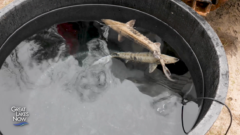
Lake sturgeon, one of the largest and oldest species of fish in the Great Lakes, are in more trouble than we thought.
In December, the International Union for the Conservation of Nature downgraded its status from Least Concern to Endangered based on shrinking populations over the past three generations, which is between 250 and 300 years for this long-lived fish.
Great Lakes Now
https://www.greatlakesnow.org/2023/02/lake-sturgeon-added-to-endangered-list-but-things-are-looking-up/
The U.S. military on Sunday shot down another unidentified object, this time over the Great Lakes region. Read the full story by CBS News.
Great Lakes Commission
https://www.glc.org/dailynews/20230213-us-unidentifiedobject-shotdown-greatlakes
American Queen Voyages has announced it is adding a port for the first time to the Upper Peninsula for lakes and oceans vessels. The Escanaba port will begin being used in May for select voyages that tour the Great Lakes. Read the full story by MLive.
Great Lakes Commission
https://www.glc.org/dailynews/20230213-escanaba-greatlakescruises-2023
Norfolk County, Ontario has an ambitious $290-million plan to build 100 kilometres of pipelines and pump fresh water from Lake Erie to its far-flung rural communities from a single treatment plant in Nanticoke. But first, the county needs to plug some leaks. Read the full story by the Hamilton Spectator.
Great Lakes Commission
https://www.glc.org/dailynews/20230213-norfolkagingsystem-cleanwaterloss
New York State Department of Environmental Conservation (DEC) Commissioner Basil Seggos invites the public to visit the DEC Bureau of Fisheries’ angler outreach programs at the upcoming Greater Niagara Fishing and Outdoor Expo. The event runs from Feb. 16-19 at the Niagara Falls Conference and Event Center. The expo provides excellent opportunities for anglers to interact directly with the biologists who study and manage our Great Lakes and inland fisheries. Read the full story by the Niagara Frontier Publications.
Great Lakes Commission
https://www.glc.org/dailynews/20230213-dec-greaterniagarafishingexpo
An expedited review of the binational regulation plan for Lake Ontario and the St. Lawrence River has moved into its second phase. The International Joint Commission’s Great Lakes-St. Lawrence River Adaptive Management committee is working on a review of the much-scrutinized Plan 2014, which is the basic regulation plan governing Lake Ontario and St. Lawrence River outflows implemented in 2017. Read the full story by NNY360 News.
Great Lakes Commission
https://www.glc.org/dailynews/20230213-lakeontario-stlawrenceriver-regulationplan-phase2
West Creek, a 9-mile meandering tributary of the Cuyahoga River that drains a large portion of Parma and parts of several neighboring suburbs, has received a lot of attention from conservationists over the years. The nearly $20 million stormwater management project, the largest ever undertaken by the Northeast Ohio Regional Sewer District, is designed to enhance water quality, improve fish migration, and reduce erosion. Read the full story by The Plain Dealer.
Great Lakes Commission
https://www.glc.org/dailynews/20230213-cuyahogariver-tributarywestcreek
Water levels in Lake Michigan and Lake Huron have been trending down for the past year or so. Less precipitation has led to the decrease. Read the full story by WSJM – St. Joseph, MI.
Great Lakes Commission
https://www.glc.org/dailynews/20230213-greatlakeswaterlevels
For years, lack of outdoor equity has been something the Michigan Department of Natural Resources has been trying to find solutions for. The primary problems stem from the location of recreation facilities, lack of facilities, discomfort and lack of activity. By promoting and hosting free fishing days in Detroit, the DNR has seen a jump in interest and outdoor activity. Free fishing weekends happen twice a year where residents and non-residents are able to fish the Great Lakes and inland waterways without a license and without charge. Read the full story by Great Lakes Echo.
Great Lakes Commission
https://www.glc.org/dailynews/20230213-outdoorequity-michigan
A couple in Ontario is suing over a beach house they say they’ve never been able to set foot in, alleging the vendor disclosed just three days before their deal closed that the building with “breathtaking million-dollar views” was unsafe for human habitation. Read the full story by CBC News.
Great Lakes Commission
https://www.glc.org/dailynews/20230213-ontario-home-swallowedbylakehuron
Cities like Detroit and Flint are moving to provide more recreation facilities available to the public.
The post Outdoor equity heading in the right direction first appeared on Great Lakes Echo.Great Lakes Echo
http://greatlakesecho.org/2023/02/13/outdoor-equity-heading-in-the-right-direction/

By Colleen Long, Lolita C. Baldor and Zeke Miller, Associated Press
WASHINGTON (AP) — President Joe Biden on Sunday ordered an “unidentified object” shot down with a missile by U.S. fighter jets Sunday over Lake Huron, and it was believed to be the same one tracked over Montana and monitored by the government beginning the night before, U.S.
Great Lakes Now
https://www.greatlakesnow.org/2023/02/ap-unidentified-object-downed-over-lake-huron/
What’s the best way to prevent invasive species from harming the Great Lakes? Making sure they never enter the lakes in the first place.
Earlier this month, the U.S. Fish and Wildlife Service announced a new rule that adds 11 nonnative freshwater species to their “list of injurious species”. The species include 10 fish (crucian carp, Eurasian minnow, Prussian carp, roach, stone moroko, Nile perch, Amur sleeper, European perch, zander, wels catfish) and 1 crayfish (common yabby).
None of these species are currently found in the United States. And, listing them as “injurious” prohibits importation into the country and interstate transport, except for some limited scientific and educational purposes.
According to the experts at the U.S. Fish and Wildlife Service: “The 11 species have the potential to become highly invasive if introduced into the wild in the United States and cause harm to our freshwater habitats and our native species, as well as to the local economies these natural resources support.”
Preventing invasive species introductions is common sense and this proactive new rule is good news for the Great Lakes. However, this is one piece of the bigger challenge of keeping invasive species out of the Great Lakes. In addition to this step, we need to protect rules that require ships to clean up ballast tanks, the number one source of invasive species introductions. And, we need quick action to keep Asian carp out of the Great Lakes.
The post What’s the best way to prevent invasive species from harming the Great Lakes? appeared first on Alliance for the Great Lakes.
News - Alliance for the Great Lakes
https://greatlakes.org/2023/02/whats-the-best-way-to-prevent-invasive-species-from-harming-the-great-lakes/

By Keith Schneider, Circle of Blue
The Great Lakes News Collaborative includes Bridge Michigan; Circle of Blue; Great Lakes Now at Detroit Public Television; and Michigan Radio, Michigan’s NPR News Leader; who work together to bring audiences news and information about the impact of climate change, pollution, and aging infrastructure on the Great Lakes and drinking water.
Great Lakes Now
https://www.greatlakesnow.org/2023/02/new-u-s-climate-law-could-make-midwest-water-contamination-worse/
Steel production fell by 16,000 tons in the Great Lakes region last week, continuing a slow start for the year, according to the American Iron and Steel Institute. Read the full story by the Times of Northwest Indiana.
Great Lakes Commission
https://www.glc.org/dailynews/20230210-steel-production
Pesticides are making their way into tributaries around the Great Lakes, many at toxicity levels that exceed federal thresholds considered safe for aquatic life, according to a recent study published in Environmental Toxicology and Chemistry. Read the full story by the Milwaukee Journal Sentinel.
Great Lakes Commission
https://www.glc.org/dailynews/20230210-pesticides
The population of two types of birds – swallows and martins – have declined sharply and researchers at Colorado State University say weather in the Great Lakes region is the reason. Read the full story by the Brantford Expositor.
Great Lakes Commission
https://www.glc.org/dailynews/20230210-bird-population
In Michigan, Graphic Packaging has agreed to build curbs and take other action at its facility along the Kalamazoo River following an October spill that resulted in notices of violation from the state and the city. Read the full story by MLive.
Great Lakes Commission
https://www.glc.org/dailynews/20230210-kalamazoo-spill
On Monday, the U.S. Coast Guard rescued two groups after they were stranded on ice floes in the Great Lakes, one group in Sebewaing, Michigan and one off Sherwood Point, Wisconsin. The Coast Guard has now issued a warning about unpredictable ice conditions and tips on avoiding an ice disaster. Read the full story by Fox Weather.
Great Lakes Commission
https://www.glc.org/dailynews/20230210-coast-gaurd
Wildlife agencies in the U.S. are finding elevated levels of PFAS in game animals and fish across parts of the country, including Lake Superior and the Great Lakes region. This is prompting health advisories in some places where hunting and fishing are ways of life and key pieces of the economy. Read and listen to the full story by WTIP – Grand Marais, MN.
Great Lakes Commission
https://www.glc.org/dailynews/20230210-minnesota-pfas
Cargill has closed its grain elevator at Burns Harbor in Portage as of Jan. 31, saying a variety of current and expected market conditions led to the decision to not renew its lease. The elevator handled soybeans, corn and wheat on Lake Michigan. Read the full story by Baking Business.
Great Lakes Commission
https://www.glc.org/dailynews/20230210-grain-elevator
The Port Burwell Lighthouse has guided sailors through storms and tourists through its door for almost two centuries. But suddenly, it is feared the 65-foot or 20-metre tall lighthouse, the oldest wooden one on Lake Erie, could topple. Read the full story by CTV News London.
Great Lakes Commission
https://www.glc.org/dailynews/20230210-lighthouse
Michigan Gov. Gretchen Whitmer’s proposed state budget puts billion-dollar priorities on climate action and clean water measures. Read the full story by MLive.
Great Lakes Commission
https://www.glc.org/dailynews/20230210-whitmer-budget